“Oppenheimer’s story is one of the biggest stories imaginable,” says writer/director Christopher Nolan at the top of this new look at his upcoming historical epic about the father of the atomic bomb. “Our film tries to take you into his experience, and IMAX, for me, is a portal into a level of immersion that you can’t get from other formats.”
Nolan has long deployed IMAX cameras to achieve his vision, from the streets of Gotham in his Dark Knight trilogy to his war epic Dunkirk to his time-skipping head-tripper Tenet. For Oppenheimer, however, the technology is also being utilized for a more intimate portrait of a man who is thrust into an inflection point in history. The film focuses on J. Robert Oppenheimer (Cillian Murphy) as he leads the United States’ desperate rush to create the atomic bomb. At the time, the notion was they were racing against the Nazis, who were supposedly already well ahead, and the stakes were literally global annihilation. Nolan has turned Oppenheimer’s work on the Manhattan Project into its own ticking bomb of a narrative, yet much of the film’s intensity will be centered on the war within Oppenheimer himself. This is a man who famously quoted the Bhagavad-Gita when he reflected upon witnessing the first detonation of the bomb on July 16, 1945. “Now I am become death, the destroyer of worlds.”
“IMAX is a format of spectacle, it’s made for vistas and the grandeur, but I got very curious to discover this as an intimate format,” says Nolan’s longtime cinematographer Hoyte Van Hoytema. “The face is like a landscape; there’s a huge complexity and huge depth to it. How can we get this camera closer to people? How can we get this medium also as a very intimate medium.”
One of the important technical aspects of Oppenheimer was Nolan’s decision to mix color and black and white. This presented a unique challenge to the production, as Hoytema explains because 65 millimeter black and white was a format that didn’t exist. So, the Oppenheimer team created the black and white film that they used to shoot, testing it by putting the footage up on an IMAX screen and seeing how it looked.
“The results were just magical and inspiring,” Nolan says.
Emma Thomas, Nolan’s longtime partner, both as a producer and his wife, explains that while they’ve been using IMAX cameras on their movies for a long time now, what they achieved in Oppenheimer was unique. “It sort of makes you gasp; you’re right in their experience,” she says.
“It allows you to fully immerse yourself in the story,” Nolan says. “When audiences see this on IMAX on the big screen, they’ll be able to experience an extraordinary moment in human history.”
Check out the IMAX closer look below. Oppenheimer hits theaters on July 21:
The world of Sex and the City has been made whole again, at least for a single scene. Varietyhas learned that Kim Cattrall will return as Samantha Jones in the season 2 finale of And Just Like That, the Sex and the City revival that airs on Max.
Yet don’t expect Cattrall’s Samantha to become a major part of the crew again, so our dreams of the Fab 4 reuniting for good are still on hold. Variety reports she only appears in one scene and wasn’t on set with any of the stars, including Sarah Jessica Parker and showrunner Michael Patrick King.
Samantha wasn’t completely absent from season one of And Just Like That—we learned that she’d moved to London, and Carrie had a text exchange with her. In the finale of season one, Carrie and Samantha made a plan to meet and try to patch up their friendship.
While a single scene in the season 2 finale isn’t quite the reunion Sex and the City fans have been hoping for (we’re thinking more of a long, boozy brunch), it’s still nice to know Cattrall will be on screen in season two. Her power publicist Samantha Jones was Sex and the City‘s id, the woman who said and did all the things the others mostly talked (or wrote) about. In six seasons from 1998 to 2004 and in two movies, Samantha was one of the four chambers of the heart of Sex and the City, an irrepressible and irresistible force of nature.
And Just Like That carried on without Cattrall after some public disputes over the script for a third Sex and the City Film, with Carrie (Sarah Jessica Parker), Miranda (Cynthia Nixon), and Charlotte (Kristin Davis) becoming a trio and new characters arriving on the scene. It seemed as if Cattrall’s run as Samantha Jones was really at an end.
But as the second season of And Just Like That was being filmed, HBO’s chairman and CEO Casey Bloys approached Cattrall and asked her if she’d come back to the role—as Samantha Jones might have done, Cattrall said yes.
And Just Like That season two premieres on June 22.
For more on Warner Bros., HBO, and HBO Max, check out these stories:
Featured image: LOS ANGELES, CALIFORNIA – JUNE 03: Kim Cattrall attends Peacock’s “Queer As Folk” World Premiere Event, in partnership with Outfest’s OutFronts Festival, at The Theatre at Ace Hotel on June 03, 2022 in Los Angeles, California. (Photo by Kevin Winter/Getty Images)
How confident are the folks behind Spider-Man: Across the Spider-Verse that they’ve got another hit on their hands? How about confident enough that producer Amy Pascal told Varietythe third film in the trilogy, next year’s Beyond the Spider-Verse, is but one of the Spider-Verse projects they’ve got cooking.
Pascal revealed they’re also working on an animated, standalone Spider-Woman film and a live-action Miles Morales movie. Morales, of course, is the main character in the animated Spider-Verse films. Voiced by Shameik Moore, he’s the Brooklyn teenager who becomes the borough’s one and only Spider-Man (remember, Peter Parker is from Queens) and ends up finding out that he’s hardly the only Spider-Man, or even Spider-Person, in the multiverse. His first adventure, Into the Spider-Verse, was a mind-melting, Oscar-winning game-changer. Across the Spider-Verse, which premieres on June 2, might be even better.
“You’ll see all of it,” Pascal told Variety in regard to the animated Spider-Woman and live-action Miles Morales movies. “It’s all happening.” Producer Avi Arad added that the Spider-Woman movie would appear “sooner than you expect.”
Hailee Steinfeld, who plays Gwen Stacy in the Spider-Verse films, said she’d be extremely game for a standalone Spider-Woman film. “This is my dream job; sign me up over and over again,” she said about voicing the character. “I got to be comfortable! And it’s a dream to be in a space that feels so comfortable but also creative and free and just exciting to be a part of.”
When asked about the fourth film in the Tom Holland-led live-action Spider-Man franchise, Pascal said it was still in the works but was on pause due to the writer’s strike.
Spider-Man: Across the Spider-Verse is directed by Kemp Powers, Justin K. Thompson, and Joaquim Dos Santos. Joining Moore and Steinfeld in the cast as Spider-Man and Spider-Gwen, respectively, are Oscar Isaac as Miguel O’Hara/Spider-Man 2099, Issa Rae as Jessica Drew/Spider-Woman, Daniel Kaluuya as Hobart ‘Hobie’ Brown/Spider-Punk, Jason Schwartzman as Spot, Jorma Taccone as Adrian Toomes/The Vulture, Karan Soni as Pavitr Prabhakar/Spider-Man India, Andy Samberg as Ben Reilly/Scarlet Spider, and Amanda Stenberg as Margo Kess/Spider-Byte.
Spider-Man: Across the Spider-Verse swings into theaters on June 2.
For more on Spider-Man: Across the Spider-Verse, check out these stories:
Featured image: Spider-Man (Shameik Moore) and Spider-Gwen (Hailee Steinfeld) in Columbia Pictures and Sony Pictures Animation’s SPIDER-MAN: ACROSS THE SPIDER-VERSE.
We are two days away from the premiere of Spider-Man: Across the Spider-Verse,which means the reviews are now out, and the question of whether they could possibly top the Oscar-winning 2018 original seems to have been answered. That first film—so insanely ambitious in content, tone, storytelling, and style—set the bar extremely high. It introduced us to Miles Morales (Shameik Moore), a young Brooklynite whose adventures across the Spider-Verse as he becomes Brooklyn’s one and only Spider-Man were dazzlingly realized, borrowing the spirit and vivid color palette from the original comic books and imbuing every single frame with their spirit. It was a triumph in animation and one of the best superhero movies in recent memory, so it was a reasonable question as to whether the new film could swing over that incredibly high bar.
“The film makes you feel like you’re dropping through the floors of a modern art museum on acid, yet there’s a thrilling moment-to-moment logic to it all,” writers Variety critic Owen Gleiberman in his rave review. Bar cleared, it would seem, and he’s not alone in his assessment. Major outlets, from Variety to The Hollywood Reporter to Rolling Stone and Deadline are enthusing over the “sheer panache” (Rolling Stone) of the film, a “dazzling reminder of what superhero movies can be” (IndieWire). “This feels like it could have been the first movie designed to earn a thumbs up from Andy Warhol and Stephen Hawking,” Gleiberman adds.
The film comes from the directing trio of Kemp Powers, Justin K. Thompson, and Joaquim Dos Santos, with a script by returning writer/producers Phil Lord and Christopher Miller and David Callaham. Across the Spider-Verse finds Miles growing in confidence and ability as Brooklyn’s Spider-Man, but his world is about to get upended after he follows Spider-Gwen (Hailee Steinfeld) across the titular Spider-Verse and comes into direct contact with an elite supergroup of Spider-People led by Miguel O’Hara (Oscar Isaac), also known as Spider-Man 2099. There are a reported 250+ Spider-People in Across the Spider-Verse, and soon Miles will find himself the target of their suspicion.
Joining Isaac are newcomers Issa Rae as Jessica Drew/Spider-Woman, Daniel Kaluuya as Hobart ‘Hobie’ Brown/Spider-Punk, Jason Schwartzman as Spot, and Jorma Taccone as Adrian Toomes/The Vulture, and Karan Soni as Pavitr Prabhakar/Spider-Man India, Andy Samberg as Ben Reilly/Scarlet Spider, and Amanda Stenberg as Margo Kess/Spider-Byte.
Spider-Man: Across the Spider-Verse swings into theaters on June 2. Check out the spoiler-free reviews below:
REVIEW: “‘Spider-Man: Across the Spider-Verse’ is pure nirvana not just for superhero fans but animation nuts — the fluidity and sheer panache of the visuals in virtually every frame of the movie is mind-blowing.” https://t.co/2JHX8k9OCb
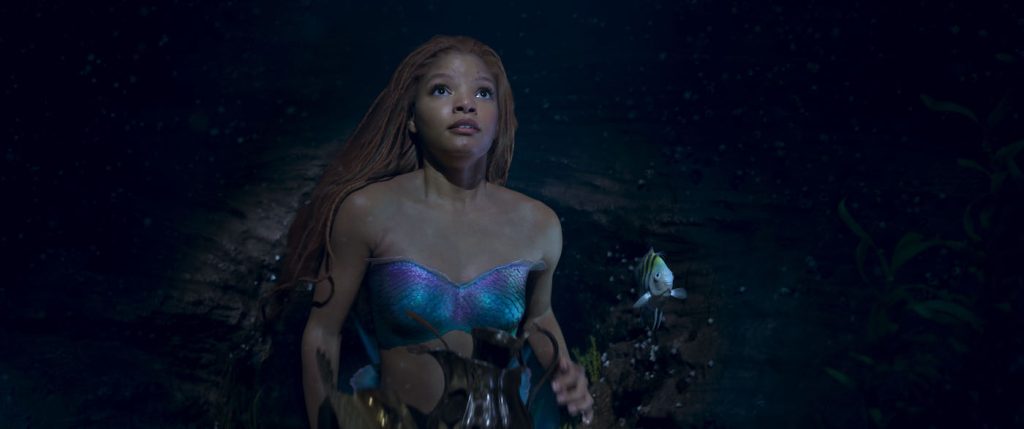
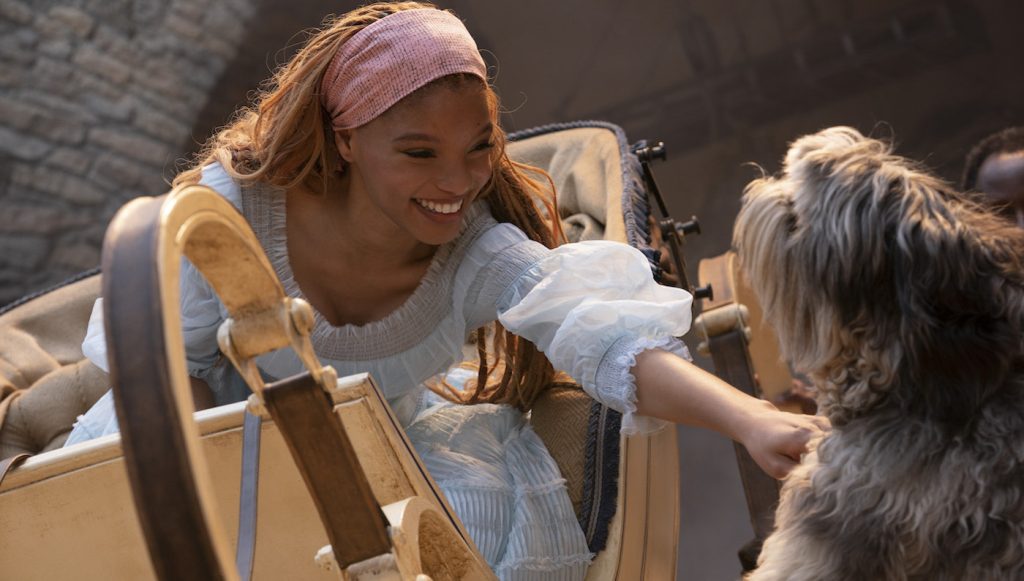
When director Rob Marshall cast Halle Bailey to play Ariel in the new live-action film The Little Mermaid, he knew it was important to both bring mermaid energy and believability to everything about this updated version of the character, and that included Halle’s hair. Of all the memorable aspects of Ariel from the 1989 animated feature, her redheaded, flowing locks became one of the most iconic.
Marshall enlisted hair designer and educator Camille Friend to create an equally iconic design for Ariel’s hair in the new film, which follows our mermaid princess as her curiosity about the world on land is amplified by her encounter with Eric (Jonah Hauer-King), the prince of a fictitious Caribbean island kingdom. She gives up her voice for a pair of legs in a deal with sea witch Ursula (Melissa McCarthy) but must share a kiss of “true love” within three days or lose her soul to Ursula forever.
Friend was the perfect person to create looks for Halle’s Ariel, both on land and sea. She had recently come off her Oscar-nominated work as hair department head for Black Panther: Wakanda Forever, much of which was filmed in and underwater. Also, as the founder of Hair Scholars, which offers master classes and mentorships to hairstylists wanting a career in entertainment, Friend was an expert in working with all textures of hair.
The Credits caught up with Friend about how she collaborated with Bailey and the hair, makeup, and special effects teams to create an Ariel that audiences have embraced as the newest live-action Disney princess.
Your credit on The Little Mermaid is as hair designer and personal stylist to Halle Bailey. How did you approach this role, and what was its scope?
They had already started a bit when I came on. Disney and Halle herself were looking for somebody who could design her look and just be there for her. I got the call in LA, and I started with a sketch artist, sending them my thoughts and ideas. We weren’t sure if we were going to wig her or what. After that, I went to meet Halle and her family and really got a sense of who she is. She said, “Camille, I really want to wear my natural hair. Can we figure this out?” And I said, “Yeah, we can figure it out.” So then I went to London, and we just started really playing with color and texture. I want to give so much credit to Rob Marshall and Disney. They were so kind and patient. Rob said, “Camille, work the process. Just keep going.” We started camera testing things, and some things worked, some didn’t, but he’d ask, “What was successful from this test?” It was really beautiful to have that kind of time to figure it out and, in the end, to be able to use Halle’s own hair and make the look really her own.
How did you collaborate with hair and makeup stylist Peter Swords King and costume designer Colleen Atwood to bring various aspects of Ariel’s look together and be cohesive?
I worked really closely with Colleen and Peter. It’s tough sometimes coming in on a movie, but Peter and his team welcomed me more than any team I’ve ever worked with, and it was a great collaboration from start to finish. Colleen laid out everything and discussed it all with me, “When she gets on land, is she going to wear a headband? What’s that going to look like? What’s going to work with her outfit? What’s going to look pretty on her skin?”
Speaking of looking best against her skin, how did you come up with that great color?
Well, no matter what character I design, I start looking at a couple of things, including their facial shape, eye color, skin tone, and the undertone in their skin. What’s going to look best on them? If you design a character and it doesn’t look good on your actor, you’ve failed anyway. That’s why we decided to do more of a mix of gold and ginger or an orange kind of red, which looked beautiful on Halle’s skin. All of those things went into the design process and working with Peter and Colleen.
Ariel wears cowrie shells in her hair. Did the fictitious Caribbean location where The Little Mermaid is based influence your designs?
Well, we did a lot of different research on the Caribbean and what’s there. What we wanted to do is just play with little accouterments in her hair, and there are all kinds of different things in there. There are gold pieces and little jade pieces, and they’re all sewn in her hair, as are the shells, and it’s just reflective of who she is, but we didn’t want them to be right in the front where every time you see her, it’s there. It’s all something just to give a little personality. So it peeks out here and there, kind of like how the water moves. We wanted to keep all those fun elements because she’s a girl.
Ariel’s hair is a sort of a spin on Goddess locs. Can you talk specifics about how you came to the look?
Originally, there was a lot of discussion about putting a wig on her, so we started out trying that, but I’m the professional, and I know Halle’s hairis to her waist. It’s 24 inches of locks. Where do you hide these locks under a wig? You can wrap it tight, but it still creates bulk in the hair. I told Rob, “If we do a wig every scene, you’re going to have to go in and reduce the size of her head so it can look natural.” He didn’t want to do that, so we moved on. Then I chose shading instead of coloring her whole head and just went completely custom when adding hair extensions. It’s 30-inch, custom-colored, and custom-permed hair, which was done by one of my secret weapons, Helene Stahl, who owns Extensions Plus. She does beautiful custom work. She and the girls in her place are artisans. We probably spent $100,000 or $150,000 on hair. We had to take the extensions out every 6 to 8 weeks and start again with all-new hair. I’m so grateful to the producers who understood the process and made it happen.
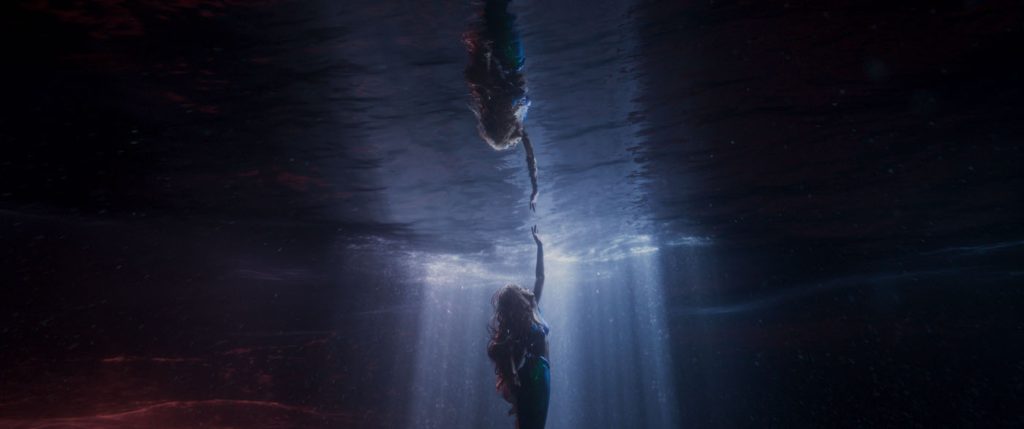
For this production, the underwater scenes were shot on land, wet-for-dry, as they call it. The performers used skullcap, and their hair was created inside the computer. Was that the case for Halle as well?
Yes, but it goes in and out, so we’d have a scene where part of it was shot that way, and part was with Halle’s hair, so I worked with the effects department before we even started shooting. I built the effects team a wig, a replica of her hair, so they had something tactile. That way, they could see the color, put it in water, or do whatever they needed with it. I’d never done that before. From there, it was very back and forth to really dial in the look. Something else that Rob Marshall did that was new for me was have his editor Wyatt Smith show me where the cuts would be. I got to see where the live-action would switch to visual effects, back and forth in the editing.
Now that the film is in theaters, have you seen a screening and gotten feedback on Halle’s finished look from fans?
I haven’t seen the finished film yet, because I’m working all the time, but the day the first trailer came out was amazing. Instagram had so many posts of joyful little girls, even some talking about Halle’s hair, and my friends sent me so many of those clips. I just laid in bed and cried. I do movies because I love making movies, but when you have the added bonus that you touch people’s hearts? It’s overwhelming. I really have a great job.
The Little Mermaid is in theaters now.
For more stories on Century Studios, Searchlight Pictures, Marvel Studios and what’s streaming or coming to
It’s rare enough to see a production design team and rarer still to see a team of two female Asian American designers, but Cindy Chao and Michele Yu have been collaborating together successfully on both the large and small screens for over a decade. Recently they got a Primetime Emmy nomination for their work on A Black Lady Sketch Show, and now their new project, American Born Chinese, has arrived on Disney+ boasting rave reviews.
American Born Chinese, which is based on the groundbreaking graphic novel by Gene Luen Yang, follows the struggles of everyday teen Jin Wang (Ben Wang) when he unknowingly befriends Wei-Chen (Jimmy Liu), the son of a mythical god, The Monkey King. The story takes place in Southern California but visits mythical realms, including heaven. Ke Huy Quan and Michelle Yeoh, fresh off their Oscar-winning performances in Everything Everywhere All at Once, co-star, and the show features lots of Kung fu, magic, and action but is firmly rooted in immigrant family life.
The Credits sat down with Chao and Yu to discuss their high-profile new series, which has begun streaming just at the tail end of Asian American Pacific Islander Heritage Month. They talk about their collaboration, their cinematic inspirations for the look of the show, and the hundreds of family photos that went into authentically recreating the world of an Asian American teen in Southern California.
You’ve worked as partners since college. In what ways do your aesthetics match and diverge, and how does that help bring together your united vision on the projects you choose?
Cindy: Michele and I are very similar, actually; that’s why our partnership works so well. Oftentimes, we finish each other sentences. A lot of it has to do with starting as the art department, just the two of us. That collaboration and our similar tastes in design and artists that we like really brought us together.
Michele: That said, both of us grew up in Southern California, and both of us are daughters of immigrants, but I will say we do have different personal histories. Cindy grew up in Hollywood. I grew up in the suburbs, towards Orange County. We, aesthetically, are very similar, but our differences really come into play in a way that enriches what we do. We dovetail a lot in our decision-making and what we choose to put onscreen, but you’re getting the benefit of two very different life experiences.
How does that express itself in American Born Chinese?
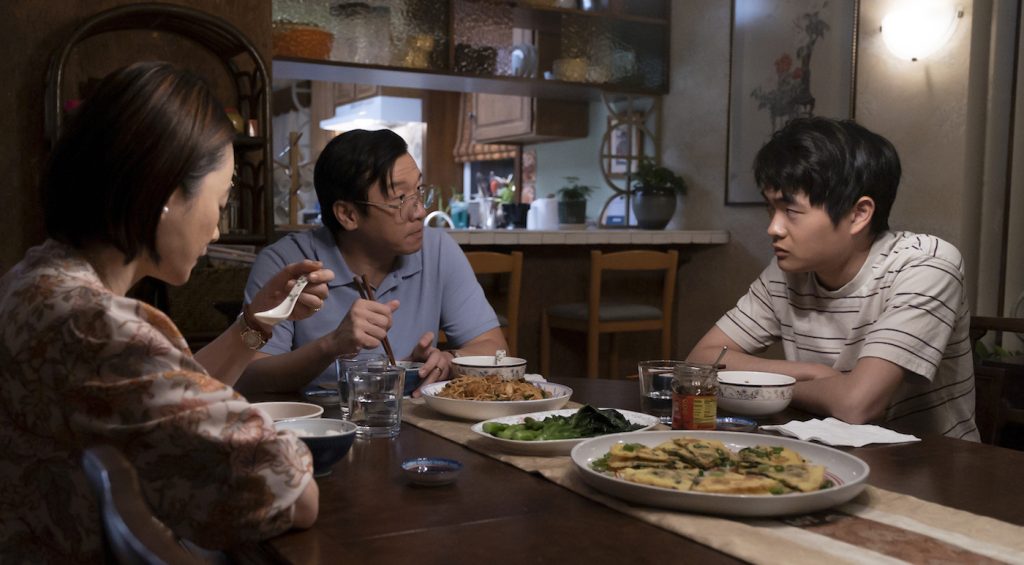
Michele: It was such a benefit because we were telling the story of a Chinese American boy and his family. We had a lot of fun comparing how we grew up and our personal histories and experiences. The really interesting part was the points of difference that we discovered about those things because there’s an assumption, and we went in with the same assumption, that there are more similarities than differences. It’s true growing up as a Chinese American middle-class first-generation person in Southern California is very specific. But there are details that are different. Like Cindy would say, “This is what my kitchen looked like,” and ninety percent of it would be the same as what I grew up with, but that ten percent difference was something that we encountered over and over again with the other Asian American crew members, above and below the line that we were working with. Everybody could walk into the same space that we had created, dressed and decorated with our wonderful set decorating team, and all be wowed by how much the same it is, then there’d be one or two little things that are different. It was always surprising what those differences were.
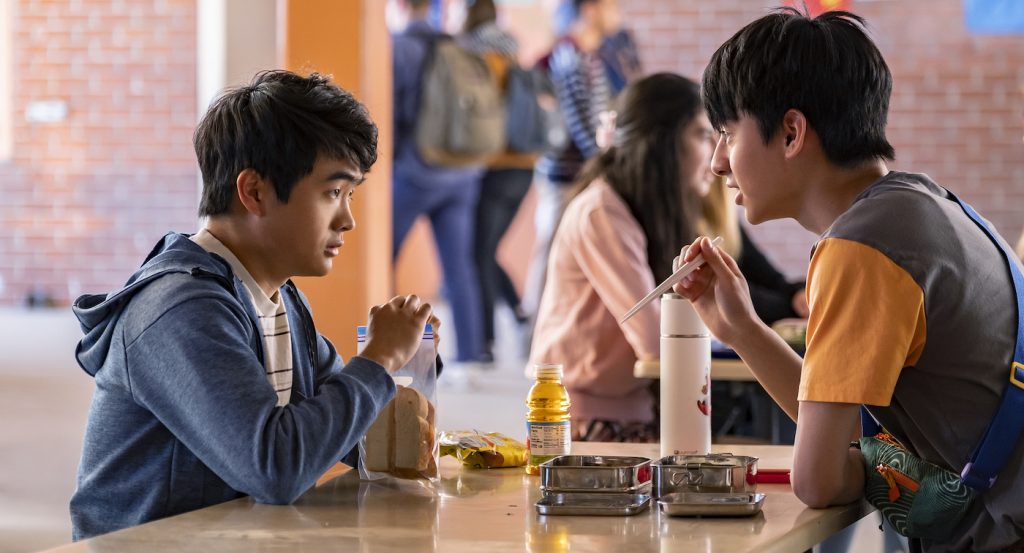
“What Guy Are You.” YEO YANN YANN, CHIN HAN, BEN WANG. Courtesy: Disney/Carlos Lopez-Calleja.
There are little touches in Jin’s room, like including graphic novels by Asian Americans, that really speak to who the character is and what he loves.
Michele: We worked with a really great team. Our set decorator Lizzie Boyle, and our prop master Todd Daniels, we’ve been working with for years at this point. They’re great at having creative conversations and pitching their own ideas, as well. Cindy and I came to both of them and had a very general framework of what’s important to us, that we feature Asian American artists, and that we understand, geographically, that he is in Southern California, and what that gives him access to in terms of San Diego Comic-Con, stores, and local artists. There were a couple of specific artists that we pointed Lizzie towards, for instance, like Brenda Chi, a local artist who does a lot of plein air paintings of Chinatown. She’s so involved in the culture and Asian American art scene here. We also mentioned Jerome Lu, who has this whole line of toys and art around his character, “the hyperactive monkey.” Then Lizzie and Todd ran with that, did the research, and reached out to a bunch of other artists.
“What Guy Are You”: BEN WANG, JIM LIU. Courtesy: Disney/Carlos Lopez-Calleja
What are a few things fans of American Born Chinese would be surprised to see on your mood board for the show?
Cindy: we referenced Zhang Yimou, the Chinese film director, when we were looking at concepts for heaven a lot. He really filmed artfully, and the way he used color in his films was beautiful in a way that was hyperrealistic. In our show, heaven had a very specific color to it, and that was influenced and inspired by a lot of his films, particularly House of Flying Daggers.
Michele: The other thing that you would never know, unless you asked us, is for the Wang family house in particular. We incorporated so many details from our own lives and our upbringings. It really was a love letter to our families and our parents.
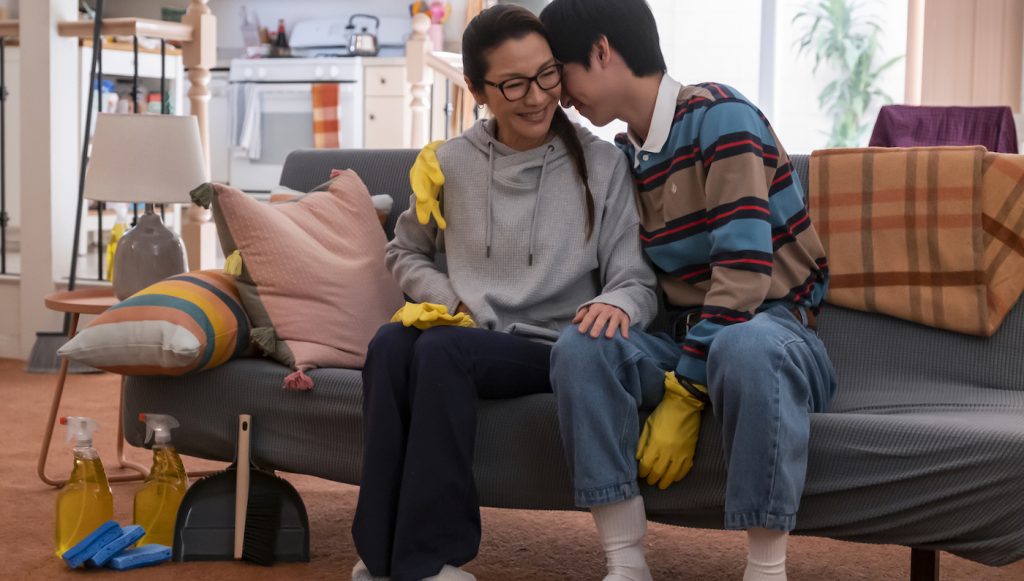
MICHELLE YEOH, JIM LIU. Courtesy (Disney/Carlos Lopez-Calleja.
What are some examples of that?
Michele: Our team was very diverse, but not everybody grew up as an Asian American kid in the 80s and 90s with the specific upbringing that Cindy and I had. So Cindy and I would add this or that little detail. Like in the kitchen, sometimes we’d have to explain, “No, the dishwasher is not used that way. It’s used as a drying rack for dishes and storage. It’s not actually a dishwasher.” Or, “This is the kind of rice cooker you would use for this number of family members in the house.” Or, “You’ve never seen this hot water dispenser? It’s very common.” Those sorts of details, like what kinds of utensils are in the kitchen, we’d have to explain all of those things to our team decorating the house and getting the props. There are not a lot of resources that already exist for reference photos for things like that, so we actually created our own reference photo database internally for ourselves, with Cindy and I collecting literally hundreds of family photos between the two of us and our friends, scanning them all in, and putting them up online, so that our set decorator, our props person, construction, costumes if they needed it, and the producers and director if they were interested, everybody had the login and could look at this resource of just family photos that we had exhaustively tagged.
Cindy: About those little details, I remember someone was saying, “This is stuff that I was embarrassed to have when my friends came over.” It’s so cluttered. It’s just covered in Saran Wrap and foil and plastic containers to collect food scraps. All this is stuff that I would normally never be proud of, but the fact that we were able to recreate that memory of most people’s childhood homes on film was just a very gratifying experience for ourselves and to share with others, too.
American Born Chinese is streaming now on Disney+.
For more stories on Century Studios, Searchlight Pictures, Marvel Studios and what’s streaming or coming to
“Steven’s creativity is phenomenal,” says producer Lorenzo di Bonaventura at the top of a new behind-the-scenes video for Transformers: Rise of the Beasts. “He’s got really inventive and fresh ideas, and he’s bringing a totally different sensibility to this movie.”
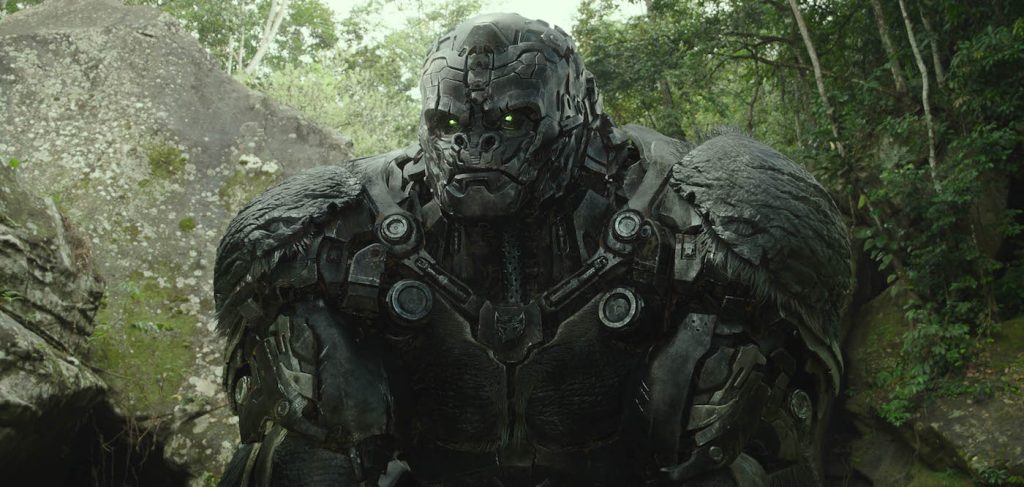
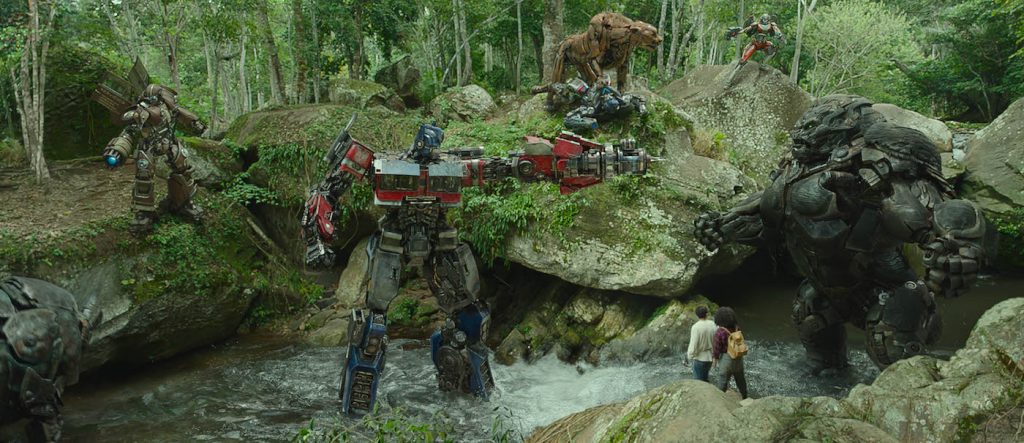
“This is the first time the Maximals are ever seen in live-action,” Caple Jr. says, referring to the beastly robots who transform into animals and play a central role in Rise of the Beasts. In a recent clip, we got to see the moment when Optimus Prime (voiced by Peter Cullen) came face-to-snout with Optimus Primal (voiced by Ron Perlman), the leader of the Maximals. Caught between them are a pair of humans, Noah (Anthony Ramos) and Elena (Dominique Fishback), whose lives will be forever changed as they’re plunged into a coming war with creatures the Autobots and Maximals are wise to fear.
PRIMAL in “Transformers: Rise of the Beasts.” Courtesy Paramount Pictures.
Rise of the Beasts introduces not only the Maximals but also the Predacons, villainous beasts who are to the Maximals what the Decepticons are to the Autobots. The film will explore how these ancient yet secretive factions factor into the larger war between the Autobots and Decepticons while revealing new truths about the origins of the Autobots’ connection to Earth. There’s more; Rise of the Beasts also introduces the Terrorcons, a sub-group of the Decepticons that transform into metallic monsters.
“The story takes place in the 90s, so we worked really hard to capture that era, everything from the type of music we’re playing to the clothes Noah and Elena are wearing,” Caple Jr. says. He also adds that when it came to casting, it helped that rising stars Anthony Ramos and Dominique Fishback are both from Brooklyn. “They brought that authentic Brooklyn attitude that just really pops on screen.”
L-r. RHINOX, WHEELJACK, OPTIMUS PRIME, MIRAGE, CHEETOR, ARCEE, OPTIMUS PRIMAL and Anthony Ramos and Dominique Fishback, below. Courtesy Paramount Pictures.
One way Caple Jr. set out to give Rise of the Beasts a different look and feel was by choosing epic locations that reflect the size and scope of the story he’s telling. One of those locations is one of the most gorgeous places on earth—Machu Picchu, Peru—where the stunning visuals were only matched by the challenges moving part of the production there presented.
Yet despite whatever challenges the production presented, Caple Jr.’s cast has nothing but love for their director. Both Ramos and Fishback explain in the video that working with him was “all about humanity,” and longtime Transformers legend Peter Cullen said he’s never had more fun on a set. “He instills confidence, and he really is sensational.”
Joining Anthony Ramos and Dominique Fishback are a slew of talented performers voicing new machines, including Michelle Yeoh, who voices the Maximal Airazor (she transforms into a peregrine falcon), Pete Davidson, who voices the Autobot Mirage (he transforms into a Porsche 964 Carrera), as well as Tobe Nwigwe, Peter Dinklage, Liza Koshy, John DiMaggio, David Sobolov, Michaela Jaé Rodriguez, and Cristo Fernández.
Check out the new video below. Transformers: Rise of the Beasts roars into theaters on June 9.
For more on Transformers: Rise of the Beasts, check out these stories:
Featured image: BUMBLEBEE and CHEETOR in PARAMOUNT PICTURES and SKYDANCE Present In Association with HASBRO and NEW REPUBLIC PICTURES. A di BONAVENTURA PICTURES Production A TOM DESANTO / DON MURPHY Production. A BAY FILMS Production “TRANSFORMERS: RISE OF THE BEASTS”
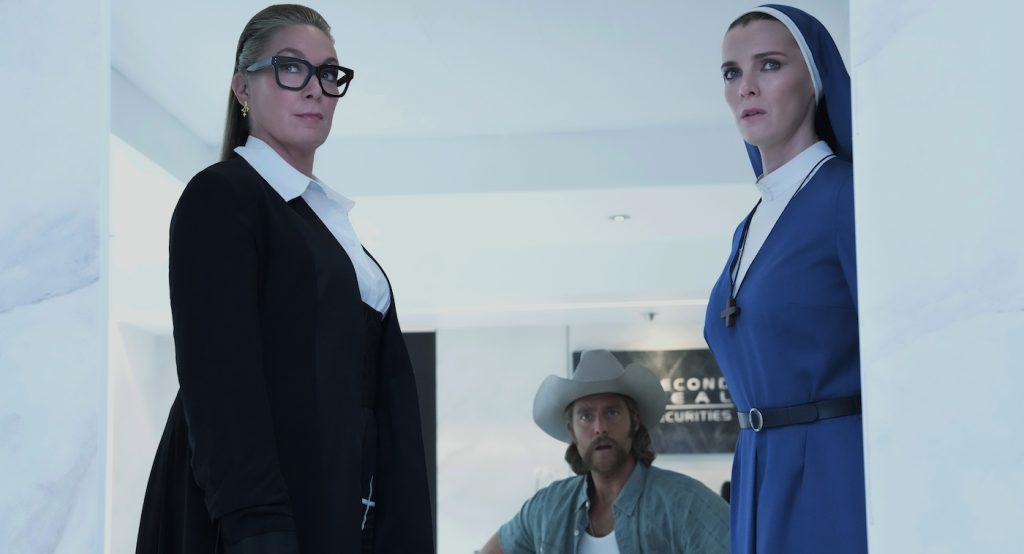
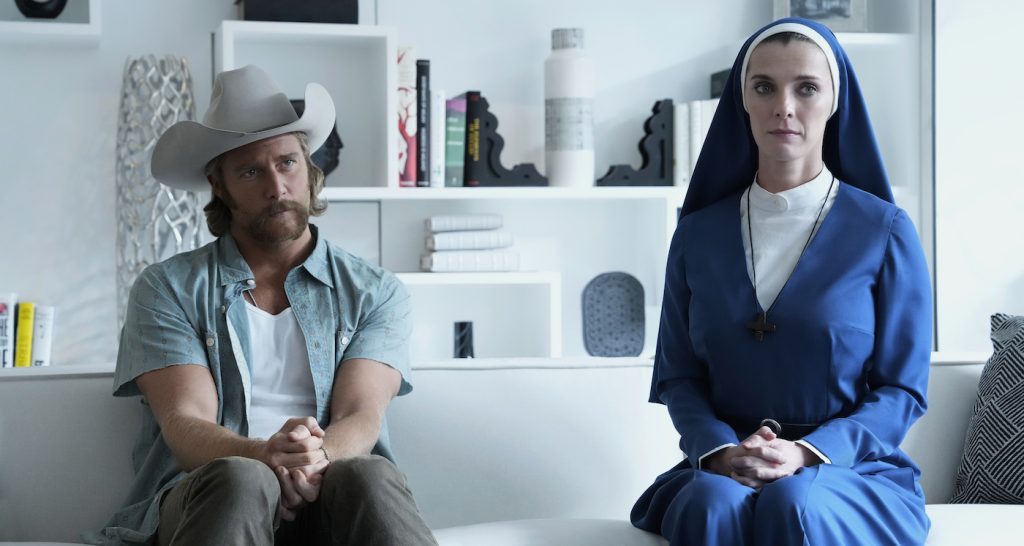
A marauding nun married to Jesus takes on an omniscient artificial intelligence in Mrs. Davis, Peacock’s irreverent new thriller set across the globe. Simone (Betty Gilpin) makes a deal with Mrs. Davis, the ubiquitous AI, wherein should she succeed in a quest to find and destroy the Holy Grail, Mrs. Davis, whom Simone believes killed her father, will self-destruct. After linking back up with her wealthy failed rodeo rider ex-boyfriend Wiley (Jake McDorman), the pair set off on a globetrotting journey that’s as much about our complex relationships to technology, faith, and family as it is a madcap caper.
Owen Harris, who directed “San Junipero,” a critical and fan-favorite Black Mirrorepisode, directed this series’ pilot, finale, and episodes two and five. “My episodes were part of this bigger whole we were trying to create, but every single episode was like a pilot,” Owen says. “Each one does something in some crazy way, and it’s big and ambitious and tonally ingests another genre.” By way of example, Owens points out that the series opens with a seemingly free-floating, over-the-top medieval bloodbath and adds a new main character halfway through the season. “I think we ask a lot of our audience in Mrs. Davis, but I feel that we repay their investment in us.”
Punctuated by Simone’s visits to her husband Jay/Jesus (Andy McQueen), Simone and Wiley’s quest levels up thanks to a mysterious man on a desert island, an even odder cabal of women in business suits, and Simone’s mom, Celeste (Elizabeth Marvel). Through it all, Mrs. Davis persists, speaking to the nun doing her bidding via a docile public willing to act as the AI’s literal mouthpiece. We spoke with Harris about the show’s surprisingly retro references, making a theme as outlandish as exploding heads ring true, and the real-world AI that coincidentally came on the scene on the heels of the debut of Mrs. Davis.
What kind of references, if any, did you look to when making the show?
We wanted Simone’s convent to have a particular character and unique twist to it, which was the fact that these were Reno nuns. We built this whole atmosphere that she was going to live within. It was also fun to echo the famous dramatization of that, which was, for all of us, The Sound of Music. And also, there’s a joy to that tonality of being a nun, which we wanted to reflect — when she was in this world, it was a very safe, happy existence that gave her security. The shot where she goes running down the hill in Episode 4 is that moment. But for all of us, it was a show that allowed us to draw on cinematic references that we felt fit within this world. Betty Gilpin coined the phrase “no country for old Looney Tunes,” which sums up one ingredient, which was a mix of this Coen brothers feeling with something sillier and more wacky.
MRS. DAVIS — “TBD” Episode 106 — Pictured: (l-r) Elizabeth Marvel as Celeste, Jake McDorman as Wiley, Betty Gilpin as Simone — (Photo by: Greg Gayne/Peacock)
Looney Tunes is a great reference.
I had Looney Tunes plastered all over the office when I was making it. All those lovely pastels and washed-out colors. We would have liked to have pushed it more, but you’re always using these things as a reference. For us, it was about trying to pull that back down into reality so the more extreme elements of your reference aren’t pulling you into something that feels too cartoonish or takes away from the emotional side of the story.
Speaking of balancing extreme elements with reality, how did you approach the different exploding heads?
The whole show is playful in terms of its storytelling. There’s always a sense of play underlying the fake ones, just as there’s also a sense of play underlying the real, emotional ones. I think it’s that tonality that leads to a really interesting reaction to heads exploding or being decapitated, all of which is quite ghoulish, but in this show, the way you manage to pull it off is to land a certain energy or note. Certainly, in the pilot, the decapitation in the car, as they go under the billboard, is meant to ratchet up the absurdity. I think the moment you see this decapitated corpse; you’re already thinking, now you’re really playing with me. Then the fun of that moment is the fact that within that scene, we solve it. But you’ve set it up that in this show, not everything is going to be as it seems and to expect the unexpected.
MRS. DAVIS — “TBD” Episode 106 — Pictured: (l-r) Jake McDorman as Wiley, Betty Gilpin as Simone — (Photo by: Greg Gayne/Peacock)
The show hinges on a lot of religious elements without being religious at all. How did you manage that?
I don’t think for either [creators] Tara [Hernandez] or Damon [Lindelof], it was ever to create an attack or particular commentary on faith or religion or technology, for that matter. These were very important parts of everyone’s lives in one shape or form, so why can’t you tell a story about a nun’s faith and what it means to have that sort of unshakeable faith? On the flip side of that, you have people putting an enormous amount of unshakeable faith into technology. It was just a way of looking at the human condition and how we interact with these things. A lot of us are putting all our faith into technology, but maybe we’re starting to realize that that leaves us a little bit cold. And maybe that faith we turned our back on, maybe we need a little bit of that in our lives. When this was written during the pandemic, I think it brought out feelings in everyone about what it is that we’ve been investing a lot of our time and effort and attention and focus and faith in, and how happy are we with the status quo at the moment? The show lets us open up these points of the human condition and then polarizes it by picking a nun and picking this piece of AI to be at odds with each other and takes you on this ride.
It must be wild having worked on this, and then ChatGPT and Midjourney are released.
The timing is pretty incredible, I think. Again, it just illustrates where we are on the journey in terms of AI. I’ve certainly played around on both ChatGPT and Midjourney and been both impressed but also, like many of us, slightly concerned because we don’t know where this goes and, certainly, in a creative industry, what that could mean. And on the one hand, it’s quite exciting because I think it could accelerate ways of communication, breaking ideas, and looking at things, which I think could be useful, but at the same time, I think we’re so used to creativity, in particular, having a large human component, and the idea of reducing that further and further, is something we should be conscious of and concerned about, in terms of how it affects people’s livelihoods but also how we express ourselves. Mrs. Davis is something that has fun playing in this playground asking these questions, but ChatGPT and Midjourney are in the real world and are affecting people’s lives. We shouldn’t blindly accept what’s put in front of us. We should think about what we do with our time, what we put into these things, and what we get back out of them. I’m not terrified about it, and I will probably embrace it the way we’ve embraced every other piece of technology, but I think we should be a lot more conscious about our choices than maybe we have been.
Mrs. Davis is currently streaming on Peacock.
For more on Universal Pictures, Peacock, and Focus Features projects, check out these stories:
“I love you, and I can’t f**king stomach you.” This sentiment, expressed by Shivon Roy (Sarah Snook) to her older brother Kendall (Jeremy Strong), captures the essence of the Roy children’s pain and confusion and the seed of the self-destruction that they’ve tended, with varying degrees of attention, ever since they were old enough to understand just how messed up their family was. Shiv delivered these lines in the climactic final moments of Jesse Armstrong’s pitch-perfect series, revealing that the answer to the question posed by the show’s title is this; it won’t be a child of Logan Roy (Brian Cox).
The battle for who would succeed Logan Roy at Waystar turned out to be one long, bitter joke on the children he so deeply wounded with the intensity and intermittency of his attention. While Shiv’s words were the death knell for Kendall’s dream of becoming successor, it might have been Roman (Kiernan Culkin) who finally broke through to him; “We are bullsh*t,” Roman says to his brother. “We’re nothing.” These are very similar to some of the last words their father ever said to them; “I love you all, but you are not serious people.”
Is any amount of money worth all this psychic pain?
The patriarch and power-hungry world builder-and-destroyer Logan had toyed with his three kids (Connor was never in contention) for years, dangling the possibility of running WayStar after he stepped away or was laid to rest just close enough to their noses they’d run through every wall he erected in their path. Instead, in the end, with the crown tantalizingly at hand for Kendall, Shiv couldn’t stomach giving him the vote that he needed. The board voted in favor, by the slimmest of margins, to hand the company over to the gum-chewing, reptilian-blooded Swedish billionaire Lukas Mattson (Alexander Skarsgård).
And it had looked so promising for Kendall for a decent part of the finale’s run time. “With Open Eyes” began with Kendall and Shiv heading to Barbados to their mother’s Caribbean estate to track down an emotionally wrung-out Roman sporting fresh facial wounds from his run-in with Mencken protestors in the penultimate episode. The kids all go for a late-night swim, and it’s there that Shiv decides she’ll be the deciding vote. They swim over to Kendall and tell him, with mock pomp, they anoint him. For first the time in forever, Kendall smiles from actual joy.
“Finishing production in Barbados, on the one hand, it was magical; on the other hand, it was so incredibly sad,” says finale director and series executive producer Mark Mylod in HBO’s “Inside the Episode” video. “The only way I could do it was to be somewhat robotic, actually. Because I kept getting hijacked by the tsunami of, ‘Okay, that’s the last time we’ll do that…I think the actors felt that as well; there was an odd emotional tension.”
After anointing their brother, the Roy kids take the meager provisions stored in their mother’s fridge and create a disgusting meal—they fix up a smoothie from things that should not go into a smoothie, and then Roman has Kendall dump it on his head. They are acting like children. Like siblings. Like they’re happy.
“We called that ‘The Meal fit for a King,'” Mylod says of the sequence, “that sense of recaptured innocence, kids being kids no matter their income, everything seemed possible, and yet my understanding of the show is always been that it’s a tragedy, and therefore everyone moment of hope like that is so cruel because you’re just waiting for that shoe to drop and for their essential natures to be exposed and to break your heart again.”
While Lukas Matson has been the obvious threat as far as Kendall and Roman are concerned, it’s been Tom Wambsgans (Matthew Macfadyen) who has proven to be the source of Shiv’s most horrific pain. So for Lukas and Tom to come together and join forces would seem like the thing to bring all three Roy siblings together, and this is what looks like is shaping up. Lukas takes Tom out to dinner and propositions him in the only way Lukas knows how; by debasing and humiliating Tom while simultaneously offering him the ultimate prize—Tom, not Shiv, will become the new American CEO of Waystar—but the reason is that Lukas’s relationship with Tom’s still-wife is complicated by the fact that they have the hots for each other. It’s the cruelest way possible to make the offer, but Lukas has been around the Roy family and their hangers-on long enough to know that Tom will accept this humiliation for the bauble.
“The idea of Tom being the eventual successor, that had been something that I thought had been the right ending for quite a while now,” says Jesse Armstrong. “Even though he’s not the most powerful monarch you’ll ever meet, his power comes from Matson. Those figures who drift upwards and make themselves amenable to powerful people are around.”
And yet the crown would still have been Kendall’s had Shiv kept her promise and voted in his favor at that last, final board meeting. But Shiv cuts her brother down at the moment of what would be his literal crowning achievement, and Roman, as Roman has always done, casts a sour eye upon all their efforts and finds them all lacking.
“As with Tom’s betrayal at the end of season three, everything was always working towards this idea of Shiv sabotaging herself and sabotaging the deal,” says Mylod. “Jesse stuck the landing with this climatic showdown with the three siblings. This final ripping off of the bandage to expose that terrible, terrible truth said so succinctly by Roman was such a heart-rending moment and yet so inevitable. Good tragedy should feel inevitable, shouldn’t it? It’s the essential truth of these characters and the consequence of their nature and upbringing; everything led to that one moment. On that level, it’s perfect. Perfectly painful.”
Armstrong explains that while the story of the Roy children will still go on, the show’s interest in them ended when the prize they’d been seeking was finally out of reach. Roman ends up at a bar, drinking a martini, another sad billionaire boy with a head full of snakes. Shiv ends up, as Armstrong explains it, still in play, “in a rather terrifying frozen emotionally barren place, but she has got this non-victory, non-defeat. There’s still going to be movement there, there’s still game to play out, but that’s where we leave it. It feels like it’s going to be hard to progress emotionally, given the things they’ve said to each other.”
And for Kendall? Armstrong’s outlook for him is bleakest of all. “This will never stop being the central event of his life… Maybe he could go on and start a company and do a thing, but the chances of him achieving the kind of corporate status his dad achieved are very low, and I think that will mark his whole life.”
Here’s a bit of good news for you hearty citizens of Wick World—Lionsgate has confirmed that John Wick: Chapter 5 is in early development, according to Total Film. And that’s only a fraction of the plans Lionsgate has for the franchise.
And honestly, who can blame Lionsgate for wanting to build out the world of John Wick, which has reliably punched above its weight from its first installment way back in 2014, delivering a singular style of gun-fu mayhem centered on one of the most beloved performers in the business, Keanu Reeves? Chapter 4 was a critical and commercial hit, the highest-grossing film in the franchise (and the longest, running at nearly three hours long of almost constant action), and while it seemed to tie a tourniquet around John Wick’s story once and for all, we now know Reeves’ soulful, semi-retired hitman will be back for more.
But there’s a lot more—not only is Lionsgate eyeing John Wick: Chapter 5, but they’re also building out the franchise into spinoffs, TV series, and video games. They’ve already got the Ana de Armas-led spinoff Ballerina, slated to pirouette into theaters on June 7, 2024. On the TV side, they’ve got The Continental, based on the chain of international hotels where members of the Wick criminal underworld can meet safely (well, most of the time), due out on Peacock later this year.
Here’s what Lionsgate motion picture group chairman Joe Drake said on a recent earnings call: “What is official is that, as you know, Ballerina is the first spinoff that comes out next year. We’re in development on three others, including [John Wick 5] and including television series… And so, we’re building out the world, and when that [fifth] movie comes, [it] will be organic — will be organically grown out of how we’re starting to tell those stories. But you can rely on a regular cadence of John Wick.”
For citizens of the Wick World, you are now officially members of the Wickverse.
For more on John Wick: Chapter 4, check out these stories:
Ethan Hunt’s about to go on his longest mission yet.
IGNreports that Mission: Impossible – Dead Reckoning Part One has made its runtime official, clocking in at two hours and 36 minutes, cruising past the previous longest film in the franchise, 2018’s Mission: Impossible – Fallout, which ran for two hours and 27 minutes. As the franchise has grown bolder, with more intense (and very often practical) stunts, complex plots, and far-flung locations, the run times have steadily clicked up. The 1996 original was a brisk hour and 50 minutes long.
Dead Reckoning Part One is the seventh film in the franchise and the first in the final two-part conclusion to Cruise’s career as Ethan Hunt. The film’s plot has been kept pretty tightly under wraps, but the most recent trailer hinted at a deadly weapon, possibly having to do with artificial intelligence, falling into the wrong hands in what is being promised as Hunt’s deadliest mission yet. Co-writer/director Christopher McQuarrie is back at the helm, guiding Cruise’s super spy and many of his longtime allies, including Rebecca Ferguson as Isla Faust, Simon Pegg as Benji Dunn, and Ving Rhames as Luther Stickell. Vanesa Kirby also returns as the White Widow, and the cast gets a boost with newcomers Hannah Waddingham, Pom Klementieff, Hayley Atwell, Shea Whigham, Indira Varma, and Cary Elwes.
As always, the practical stunts in Dead Reckoning Part One will attempt to top all the insane set pieces they’ve already accomplished over the past 27 years. Many of the stunts are done by Cruise himself, who is guided by veteran stunt coordinator Wade Eastwood. Dead Reckoning Part One boasts Cruise barreling off a cliff on a motorcycle and going into a BASE jump, a stunning feat that required a year of BASE training, advanced skydive training, canopy control, and a slew of other skills.
With two hours and 36 minutes to work with, we’re guessing that’ll be but one of the many wild stunts the film offers.
Mission: Impossible – Dead Reckoning Part One is due in theaters on July 12.
For more on Mission: Impossible – Dead Reckoning Part One, check out these stories:
Barbie (Margot Robbie) is used to everything being perfect in Barbie Land. Perfect health, perfect weather, perfectly happy, all the perfect time. But at last, we’ve gotten a hint at what writer/director Greta Gerwig is up to with the official trailer for Barbie, in which Barbie’s forced to take a trip to a deeply imperfect place—the real world. As the logline puts it, “To live in Barbie Land is to be a perfect being in a perfect place. Unless you have a full-on existential crisis. Or you’re a Ken.”
Joining her on the trip to the real world is Ken (Ryan Gosling), and the trailer reveals how Gerwig plays with both Barbie’s fantasy world and the real world of fantasy-making that is Los Angeles. As onlookers gawk and gape at Barbie and Ken, one doofus makes the mistake of touching the doll-come-to-life, and for his efforts, he gets a punch to the face, and Barbie gets booked. This is how much Gerwig is playing with the idea of a real-world Barbie; from the perfection of Barbie Land to the imperfection of Los Angeles, captured in a Barbie mug shot.
The film boasts a bevy of Barbies—including Issa Rae’s President Barbie, Dua Lipa’s Mermaid Barbie, Kate McKinnon’s gymnast Barbie, Nicola Coughlan’s diplomat Barbie, Alexandra Shipp’s writer Barbie, Ritu Arya’s journalist Barbie, Emma Mackey’s physicist Barbie, Sharon Rooney’s lawyer Barbie, Hari Nef’s doctor Barbie, and Ana Cruz Kayne’s judge Barbie.
Meanwhile, Gosling’s Ken isn’t the only Ken—he’s in direct competition with Simu Liu’s Ken, and their rivalry will make up at least part of the plot. Joining the Kens and Barbies are Emerald Fennel’s Midge, Barbie’s longtime best friend, Will Ferrell, Ariana Greenblatt, America Ferrera, and Jamie Demetriou.
Gerwig said one of the things that drew her toward doing the film was terror, which she revealed on Dua Lipa’s podcast At Your Service: “It was something that was exciting because it was terrifying,” she said. “It felt like vertigo, starting to write it, like: ‘Where do you even begin, and what would be the story?’ And I think it was that feeling I had, knowing that it would be really interesting terror. Usually, that’s where the best stuff is, where you’re like, ‘I am terrified of that.’ Anything where you’re like, ‘This could be a career-ender — then you’re like, ‘I should probably do it.’”
She did it. It looks wild. Check out the official trailer below. Barbie lands in theaters on July 21.
Featured image: Caption: Caption: (L-r) RYAN GOSLING as Ken and MARGOT ROBBIE as Barbie in Warner Bros. Pictures’ “BARBIE,” a Warner Bros. Pictures release. Photo Credit: Courtesy of Warner Bros. Pictures
In a brand new clip from director Andy Muschietti’s The Flash, two versions of Barry Allen (both played by Ezra Miller), together thanks to the future Barry speeding back through time to save his mom and coming into contact with his past self, find themselves in the Batcave. There, Past Barry (just go with it) rips the protective cover off a car, and sure enough, it’s the Batmobile. But not just any Batmobile; it’s the version made famous in Tim Burton’s 1989 Batman and 1992 Batman Returns. In the universe that Future Barry has sped back into, Michael Keaton’s Bruce Wayne is still Gotham’s protector.
And here is the moment Keaton’s Batman makes his entrance (while his Batwing is lowered on metal cables), saying, “I’ll help you get this Superman, then, you’re on your own.” Past Barry is so stunned to meet Batman that he faints. Future Barry smiles—finally, he’s found another superhero who can help him sort out the trouble he’s caused by meddling with the past.
Check out the clip here:
The clip comes just a day after the final trailer revealed another Batman that Barry will be relying on—the version played by Ben Affleck. When Barry meets with Affleck’s version of Bruce Wayne, he explains that he has the ability go go back in time, which means he can change the past; heck, he can even go back and not only save his own mom but Bruce’s parents, too. But Bruce Wayne is no fool; he reminds Barry of the fundamental rule of time travel; you can’t meddle with the past without changing the future.
The Flash will explore what happens when Barry does just that, heading back in time to try and save his mom and right the wrongs of the past. Barry won’t just come into contact with his past self and Keaton’s Batman, but he’ll also be forced to reckon with General Zod (Michael Shannon), killed by Superman in 2013’s Man of Steel in that universe, but alive and even more horrible in this one.
Barry’s biggest allies will be Keaton’s Batman and Sasha Calle’s Supergirl, and The Flash is easily one of the most eagerly anticipated films of the year. You’ll be able to see it soon—it speeds into theaters on June 16.
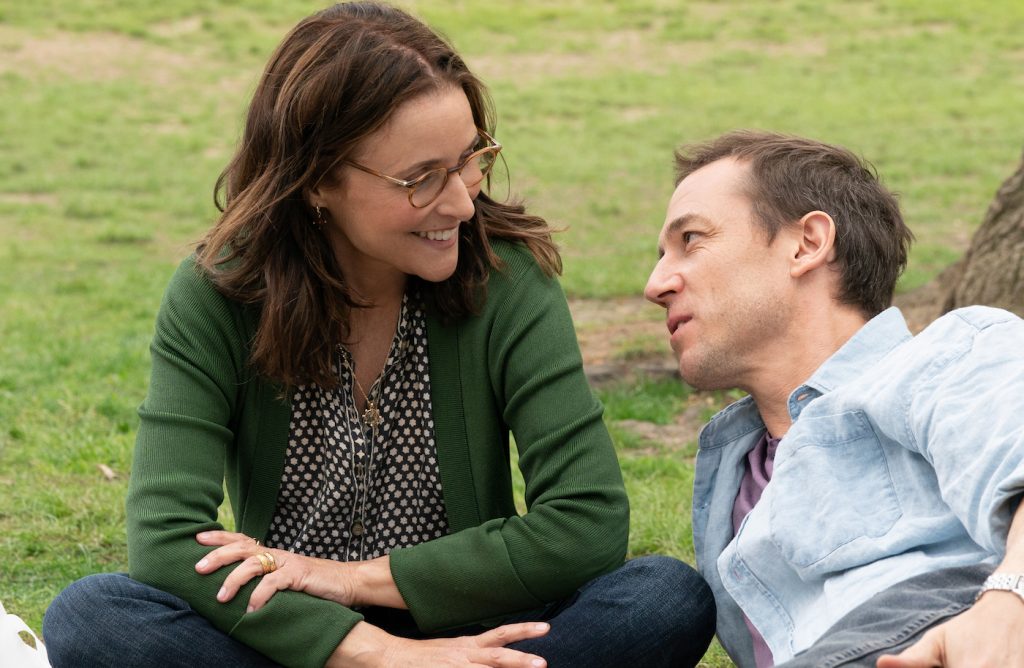
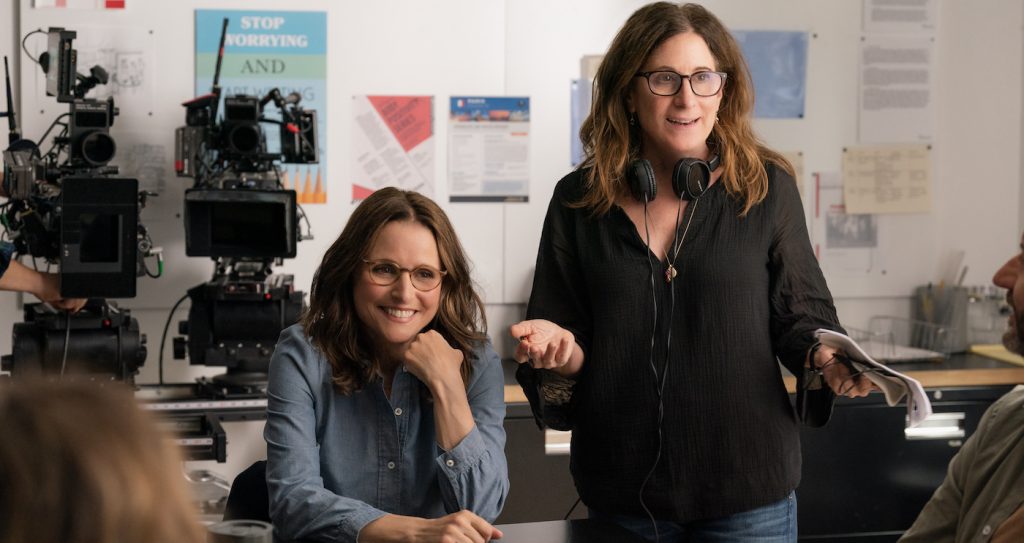
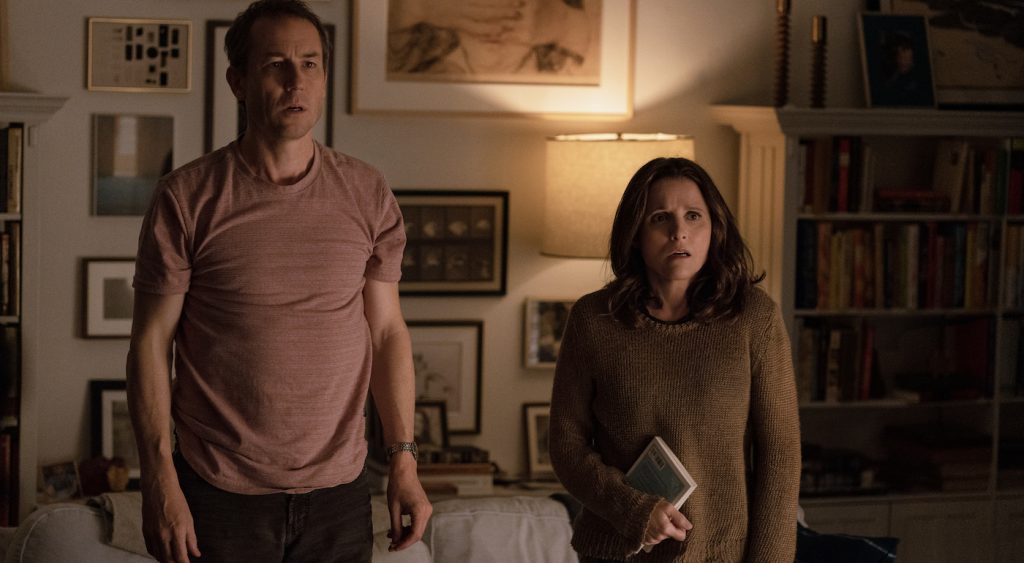
When is it ok to hide the truth from your partner? That’s what writer-director Nicole Holofcener (Enough Said) examines in her latest film, You Hurt My Feelings. The Sundance premiere was scooped up by A24 and reconnects Holofcener with Julia Louis-Dreyfus as Beth, a novelist writing her latest book who overhears her husband Don (Tobias Menzies) sharing his no-so-flattering opinion about it. Now, it’s a matter of if and when Beth will confront Don (and what will become of it).
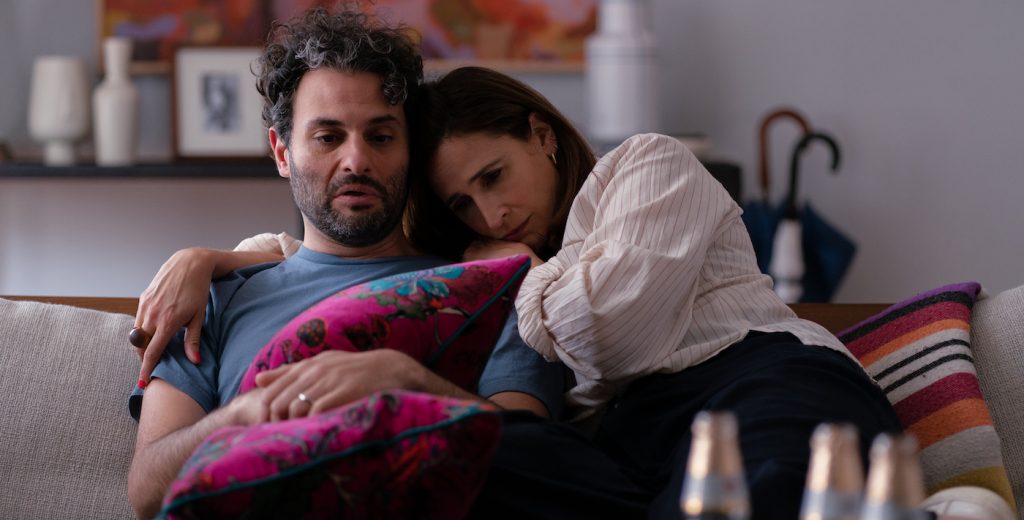
New York is the backdrop for the circling drama that entangles Beth’s sister Sarah (Michaela Watkins), and her husband, Mark (Arian Moayed). The contentious moments play out in living rooms, bedrooms, and dinner tables. Cinematographer Jeffrey Waldron (Little Fires Everywhere) was tasked with creating the intimacy of the story, and through a tapestry of texture, contrast, and composition, he deepens each scene with nuance.
Waldron sits down with The Credits to detail his collaboration with Holofcener, creating the visual language on a limited schedule, and how working with women has influenced his decisions on set.
You’ve worked with director Nicole Holofcener on the HBO series Mrs. Fletcher. How was it reconnecting with her on You Hurt My Feelings?
I actually almost didn’t get to shoot this project. I was working on the film Haunted Mansion with director Justin Simien when Nicole first called, and sadly our schedules overlapped. When I later checked in with Nicole to see how the shoot went, she told me it was pushed and asked if I might be able to do it. The timing turned out to be perfect. She admitted they had very little money and a very fast schedule, the fastest she’s ever had for a feature, but I loved the script and was excited to do this one.
(L-R) Julia Louis-Dreyfus, Tobias Menzies Credit: Jeong Park
Since you’re shooting on a tight schedule, how thoroughly did you want to approach prep?
Nicole is a very instinctual filmmaker, so we didn’t do a lot of visual prep until we were able to visit locations with Julia Louis-Dreyfus and Tobias Menzies to work out the scenes ahead of time. Then I would find compositions based on the blocking I saw, which meant I wouldn’t have to come up with them during the scramble of the day. I’d also go to locations like Central Park and photograph areas, create compositions and then draw characters over them on my iPad to present to Nicole. Each scene had its own punctual composition, so it was about finding that for each of them.
What’s refreshing about the visual style of the film is its controlled frame. Was that the intention going into production?
Nicole has a cinematic style of her own that tends to be understated. Handheld isn’t used unless it’s very motivated. With this project, we wanted to keep this down-to-earth, indie vibe that’s almost static with very subtle moves. For certain moments there’s a very slow, almost invisible push to add weight without calling attention to itself.
(L-R) Arian Moayed, Michaela Watkins Credit: Jeong Park
That approach worked well for the story because when you do go handheld, it has a greater impact. For instance, the scene where Beth overhears Don talking about her in the store.
Exactly. That scene is the crux of the film. Beth becomes sick to her stomach and then runs out to the street. We suddenly switch to this handheld vibe to parallel the scene’s chaotic energy, and you really feel it because we’ve been so restrained.
(L-R) Julia Louis-Dreyfus, Nicole Holfcener Credit: Jeong Park
One of the larger locations is the home of Beth and Don. The lighting seemed to be motivated by the practical fixtures sprawled throughout the house. How did you work with production designer Sally Levi to create the setting?
After we were able rehearse and get a sense of the blocking, I worked with Sally to make sure there were practicals in ideal places for lighting motivation. That location was on the Upper West Side, not far from where Nicole grew up. The apartment was located on the 16th floor of the building so we couldn’t really push light through the windows, and because it was somebody’s home, we couldn’t drill or rig any lights to the ceiling. Everything was motivated by the practical lights in each scene and had to be done on the floor with the space we had. The realness and appropriateness of the location was worth all of the challenges, and by working around them, I think we created a more authentic look.
(L-R) Tobias Menzies, Julia Louis-Dreyfus Credit: Jeong Park
There is a grounding realism to the lighting but there’s still a subtle inherent style to it. Was there a balance you were towing with your lighting setups?
I set out to make a heightened natural style to complement the voice of the script, which strikes this very nuanced tone between comedy and drama with a sort of heightened realism. I think a lot of the big conversations in Beth and Don’s home lean more dramatic, so in terms of lighting, we emphasized softness but also shape and drama to give weight to the stakes for Beth and Don. Some viewers might see what they’re going through to be petty and small, but to them in this moment, it’s almost life and death. We wanted to play into what the characters were feeling during this somewhat existential incident in their marriage.
How did you approach shooting the birthday dinner where everything between Beth and Don comes out?
That was another real apartment, and the space was quite limited. That kind of scene with four people is pretty open-ended, with potentially dozens of eyelines to cover. I decided to put Julia’s character Beth on the camera side of the master, with Tobias’s character Don opposite her. This made it easy to anchor all of the eyelines to Beth and Don and naturally gave those two the tightest eyelines in the scene. The subtext is played in the looks between all of the characters and towards the fighting couple, so this worked perfectly for both the schedule and the story.
Near the end of the scene, we see Beth leave and start walking the streets of New York at dusk. How did you time out that climactic moment?
We shot the dinner table scene through a big chunk of a day. I wanted to create a consistent lighting tone that was unique to that half hour after sunset, knowing we’d shoot Don chasing Beth down the street at blue hour right before all of the street lights started to come on. We actually blue-gelled and ND’d all the windows in the apartment for that dinner scene so the high noon sun went darker and bluer and the practicals could do a bit more of the work, giving that magic hour feeling. Then during the actual 35 or so minutes after the sunset, we ran out to get the continuation of the scene.
And then you had to contend with the challenges of shooting in New York. How did production approach those hurdles?
It’s such a unique place to shoot. It’s inherently cinematic, but it doesn’t stop for you. You’re out there in a chaotic world where you don’t own the roads, there are paparazzi walking right into the set, and there’s nothing you can really do about it. We’d have these one-shot walk and talks, like with Don and Mark coming from Union Square to the Paragon store where we don’t own any of the streets and have no real control. You could have a great two-minute take, and then someone with a COVID mask walks right in, and you have to start over. A bright white van can just park right in the middle of your shot. Those things can be really tricky as you don’t have the control you might shooting in places like Atlanta or Los Angeles, but hey, you’re shooting Central Park, you’re shooting Union Square, which is amazing.
In your career, you’ve worked with women at the helm and as camera operators. How has that influenced your work?
Jennie Jeddry was our main camera operator on this film, and she offered so many great suggestions and ideas. It’s always amazing to have another set of talented eyes on everything, but she was also great at running the set with the second team and our on-set dresser while we would scramble to put together a lighting setup. I love working with female directors and female operators because there always tends to be this attention to certain details and instincts outside of my own that help broaden my approach. I also just love working with kind, giving, supportive people like Nicole and Jennie. They both bring a unique nuance and perspective to things, which in the end, made everything better.
You Hurt My Feelings hits theaters on May 26, 2023.
Featured image: (L-R) Tobias Menzies, Julia Louis-Dreyfus Credit: Jeong Park
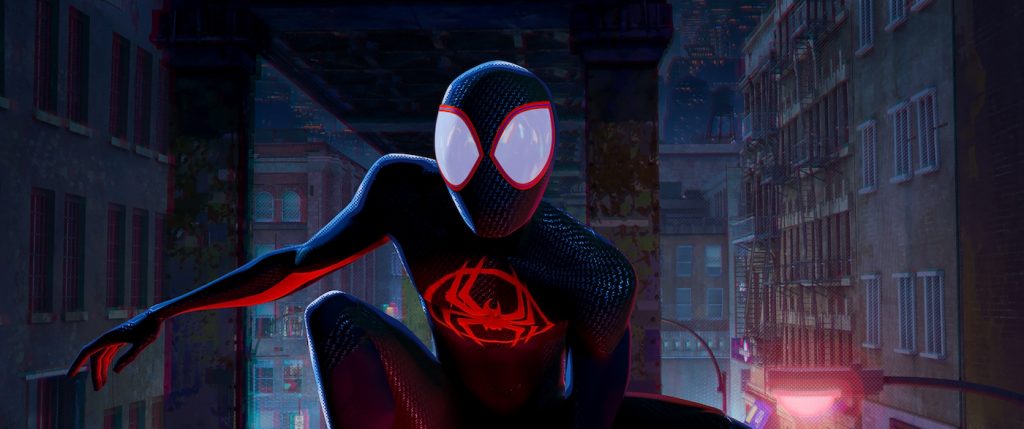
The first reactions to Spider-Man: Across the Spider-Verse are spinning across the internet, and they’re definitely going to catch your attention. People are, in a word, stunned. The sequel to the 2018 Oscar-winning original is being hailed as a true work of art, darker, deeper, and even better than the first. In a film that boasts some 250 Spider-People, the story is centered on the maturation of Miles Morales (Shameik Moore), Brooklyn’s one and only Spider-Man, as he’s introduced to an elite group of Spider-People by Gwen Stacy (Hailee Seinfeld). This supergroup is led by Miguel O’Hara, aka Spider-Man 2099 (Oscar Isaac), and soon Miles will find himself defying the supergroup’s codes and coming into a world—or worlds—of trouble.
Joining Isaac as newcomers to the franchise are Issa Rae as Jessica Drew/Spider-Woman, Daniel Kaluuya as Hobart ‘Hobie’ Brown/Spider-Punk, Jason Schwartzman as Spot, Jorma Taccone as Adrian Toomes/The Vulture, and Karan Soni as Spider-Man India.
Across the Spider-Verse is directed by the trio of Kemp Powers, Justin K. Thompson, and Joaquim Dos Santos. Phil Lord and Christopher Miller return as producers and as writers, co-writing alongside David Callaham.
Across the Spider-Verse is the second film in the planned trilogy, with Spider-Man: Beyond the Spider-Verse set for a March 29, 2024 release.
Without further ado, let’s get a peek at those spoiler-free first reactions:
Spider-Man: Into The Spider-Verse raised the bar with its unique animation style & way of storytelling. Minds were blown when it was released & fans thought there was no way it could be topped. Think again. #SpiderManAcrossTheSpiderVerse raises its own bar which seemed impossible pic.twitter.com/F1Tay5Aif6
— Tessa Smith – Mama’s Geeky (@MamasGeeky) May 25, 2023
#SpiderManAcrossTheSpiderVerse is a stunning achievement. Yes, it’s visually dazzling, with expansive, expressive new realms (Gwen’s world is my favorite). But the movie’s real superpower is its emotional depth and its beautiful, melancholic tone. I love this movie so, so much 🕷️ pic.twitter.com/ofHvWCrNqy
Absolutely loved #SpiderManAcrossTheSpiderVerse. Wanted to push pause about a hundred times to study the incredible artistry on display. Cannot recommend this film enough and already looking forward to seeing it again. Next time in @IMAX! pic.twitter.com/R4dQFQwSpH
#AcrossTheSpiderVerse is yet another milestone for animation. Yes it’s gorgeous & visually mind-blowing, but this sequel surpasses the first for always putting Miles AND his family front and center.
Spider-Gwen also rightfully steps deeper into the spotlight, co-owning the film. pic.twitter.com/maYL97vAeg
OK. #SpiderManAcrossTheSpiderVerse lives one step above Masterpiece. It’s an actual work of art. Every frame deserves to be hung in a museum. The jokes and nods to Spidey lore are perfect. It’s OUTSTANDING. The best #SpiderMan movie. Might be my favorite movie ever. Cherish it. pic.twitter.com/mQxSnfKF0N
#SpiderManAcrossTheSpiderVerse is yet another resounding win for the Lord Miller-produced universe. Hailee Steinfeld really comes into her own as Gwen Stacy, and her scenes with Shea Whigham’s Captain Stacy are truly special. It’s darker and sadder than I expected, but necessary. pic.twitter.com/BekW4nVAyv
Spider-Man/Miles Morales (Shameik Moore) in Columbia Pictures and Sony Pictures Animations’ SPIDER-MAN™: ACROSS THE SPIDER-VERSE.Miguel O’ Hara (Oscar Isaac) clashes with Vulture (Jorma Taccone) in Columbia Pictures and Sony Pictures Animations’ SPIDER-MAN: ACROSS THE SPIDER-VERSE.Jessica Drew (Issa Rae) and Miguel O’ Hara (Oscar Isaac) in Columbia Pictures and Sony Pictures Animations’ SPIDER-MAN™: ACROSS THE SPIDER-VERSE.
For more on Spider-Man: Across the Spider-Verse, check out these stories:
Featured image: Spider-Man 2099 (Oscar Isaac) and Miles Morales (Shameik Moore) in Columbia Pictures and Sony Pictures Animation’s SPIDER-MAN: ACROSS THE SPIDER-VERSE.
If there’s anyone on planet Earth you want to explain how dinosaurs protected their eggs, it’s Sir David Attenborough. In a new clip from Apple TV’s docu-series Prehistoric Planet 2, the legendary broadcaster, biologist, natural historian, and author describes the lengths the titanosaur went to protect her egg. A freshly laid titanosaur egg weighed a kilo and a half (3.3 lbs) and was two millimeters thick. The eggs were pretty tough, Attenborough explains, but they still needed to be kept safe and warm, so dinosaurs like the titanosaur developed a host of strategies, including building a nest and then sitting right on top of it.
How do we know dinosaurs did this? As Dr. Darren Naish, the series lead scientific consultant, explains, we have fossils of dinosaurs sitting on top of their nests. This provided the first evidence that some dinosaurs looked after their young. Yet one issue with incubating an egg is that, well, you’re a sitting duck (er, dinosaur). Another is it’s vastly time-consuming. A third is that dinosaurs could be, you probably recall, very massive.
Sauropods, for example, weighed far too much to sit on their eggs—they’d have been making omelets—so what they did was excavate a massive trench with their back feet and buried their eggs there. (Turtles do the same thing today). Other dinosaurs collected rotting vegetation and piled it atop their egg nests, essentially creating a compost heap. Bush turkeys in Australia do the same thing today, and as the vegetation breaks down, it produces enough heat to incubate the eggs for around seven weeks.
Yet a discovery in 2010 revealed an even s stranger method that dinosaurs deployed for protecting their eggs; they used heat from the earth itself. In one site in Argentina, fossils of sauropod eggs have been found right next to geothermal springs. Scientists believe that the sauropods might have been using volcanic activity to keep their eggs warm.
Check out the fascinating clip below. Prehistoric Planet 2 is now streaming on Apple TV:
Here’s the official synopsis for Prehistoric Planet 2:
Experience the wonders of our world like never before in this epic docuseries from Jon Favreau and the producers of Planet Earth. Prehistoric Planet combines award-winning wildlife filmmaking, the latest paleontology learnings and state-of-the-art technology to unveil the spectacular habitats and inhabitants of ancient Earth for a one-of-a-kind immersive experience. The series is produced by the world-renowned team at BBC Studios Natural History Unit with support from the photorealistic visual effects of MPC (The Lion King, The Jungle Book) applied to concept art created by Jellyfish Pictures (The Book of Boba Fett, Spirit: Untamed). Prehistoric Planet presents little-known and surprising facts of dinosaur life set against the backdrop of the environments of Cretaceous times, including coasts, deserts, freshwater, ice worlds and forests. Travel back 66 million years to when majestic dinosaurs and extraordinary creatures roamed the lands, seas and skies.
For more stories on Apple TV series and films, check these out:
The final trailer for The Flash opens not with a bang but with a comedic beat. Barry Allen (Ezra Miller) is all set to use his super speed to break the sound barrier and dash off, but first, he’s stopped by some screaming fans, and next, by Alfred Pennyworth (Jeremy Irons), who is patching a call through from Bruce Wayne (Ben Affleck), who needs to see Barry immediately. This is what life is like for the youngest man in the Justice League—he’s at the beck and call of his elder superhero statesmen.
The trailer is our longest, most expansive look yet at director Andy Muscietti’s The Flash, which is speeding into theaters with a tremendous amount of positive tailwind. Tom Cruise has seen it and loved it, Stephen King has seen it and loved it, and, perhaps most crucially, newly minted DC Studios co-chief James Gunn has seen it, loved it, and called it one of the best superhero films he’s ever seen.
I got an advance screening of THE FLASH today. As a rule I don’t care a lot for superhero movies, but this one is special. It’s heartfelt, funny, and eye-popping. I loved it.
In the universe the trailer begins in, it’s Ben Affleck’s Bruce Wayne who’s the protector of Gotham, and he’s just finding out that Barry’s abilities let him travel back in time. Barry tells him this means he can fix things. Save people. And then, the real reason for his desire to speed back into history—to save his mom. Heck, he could even save Bruce’s parents. But Bruce Wayne is no fool; he’s likely seen a few time travel movies in his day, and he reminds Barry he could also destroy everything. You can’t meddle with the past without changing the future, and you have no way of knowing whether that change will be for the betterment of everybody.
The Flash will explore what happens when Barry does just that, heading back in time to try and save his mom and right the wrongs of the past. One of his first tests will wear a similar face, in fact, his face, as Barry will come into contact with himself. Another issue Barry will come into contact with goes by the name General Zod (Michael Shannon), killed by Superman in 2013’s Man of Steel in that universe, but alive and even more horrible in the one Barry has raced off into.
The trailer offers fresh footage of Sasha Calle’s Supergirl and Michael Keaton’s Batman, two allies the two Barry’s will not survive without. Set appropriately to Pink Floyd’s epic song “Time,” the final trailer for The Flash seems to dare the people who claim superhero fatigue to miss out on the fun.
Check out the final trailer below. The Flash speeds into theaters on June 16:
Cinematographer Fabian Wagner is no stranger to the realm of superheroes and super epic action. The Justice League and Game of Thrones DP has been tapped to lens Sony’s Venom 3, The Hollywood Reporterscoops. He’ll bringing a very suitable skillset that includes crafting some of the most breathless action set pieces ever scene on the small screen, to say nothing of his work helping Zack Snyder (eventually) realize his vision for his superhero team-up.
The Emmy-nominated Wagner, who lensed one of the best Game of Thrones episodes of them all, “Battle of the Bastards,” will be working with Venom and Venom: Let There Be Carnage scribe Kelly Marcel, who will be making her directorial debut here. Tom Hardy returns, of course, as Eddie Brock/Venom, everybody’s favorite investigative journalist/alien symbiote tag team. Marcel will direct off her own script and share story credit with Hardy.
We spoke with Wagner about his efforts on Zack Snyder’s Justice League, who brought Wagner on board in part because he loved his work in the larger-than-life Game of Thrones. Yet Wagner’s not just comfortable working on maximalist epics—he’s also lensed episodes of Netflix’s The Crown and BBC’s Sherlock. With Venom 3, he’ll likely get to flex all his cinematography muscles; Venom remains one of the most singular, oddball antiheroes in the Sony/Marvel canon, and while his appetite for destruction is outsized, so, too, is his fondness for a quip.
While gossip is the prevailing currency on Bridgerton, the emotional depth of Queen Charlotteis Her Majesty’s greatest asset. For a woman who can seem quite cold in the original series, a peek into her own lonely bedchamber is, at times, searing.
The intertwining pasts of the Queen (Golda Rosheuvel), Lady Danbury (Adjoa Andoh), and Violet Bridgerton (Ruth Gemmell) reveal the women as tender, formidable, and most passionate in their own ways. Their journeys are accompanied by a grandiose score and string versions of hit songs from both then and now stewarded by Music Supervisor Alex Patsavas.
“For Queen Charlotte, understanding the story was really going to focus on a character we already knew and loved and was going to delve into Charlotte’s backstory and so many characters’ backstories,” says Patsavas. “How could we access that DNA of Bridgerton but define it as Queen Charlotte music? Definitely dug into some of the most famous composers of the era. Mozart and Haydn, but also quite a lot of source is from the Chevalier de Saint-Georges catalog. Lastly, of course, covers of songs written, performed or made famous by women of color. It seemed like what better way to tell Queen Charlotte’s story?”
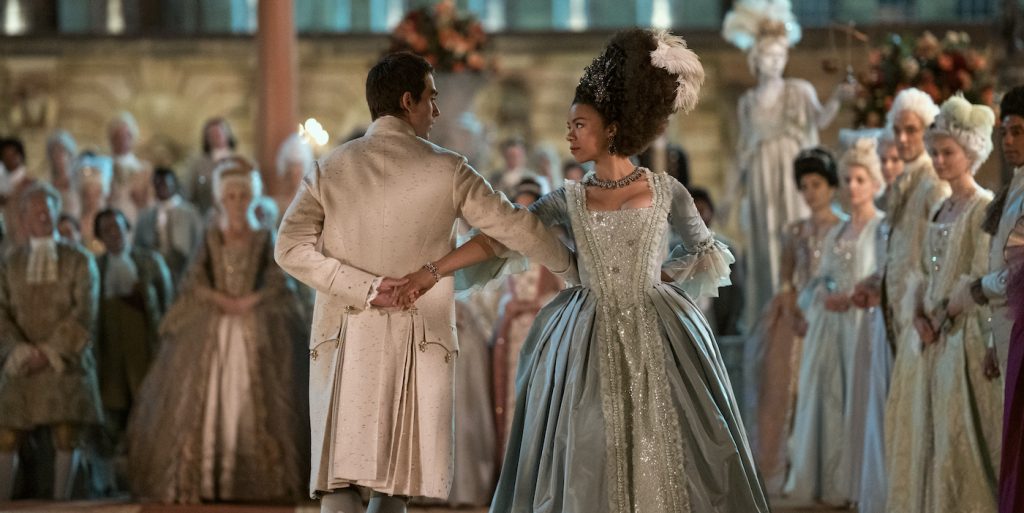
Although betrothed as strangers, Charlotte (India Amarteifio) and King George (Corey Mylchreest) instantly feel a spark and become true partners. As they break through societal barriers and make a statement at Lady Danbury’s (Arsema Thomas) ball, their intimate bond and influence as a couple grows.
Another heart-catching romance sees its first glimmer in this scene, and all that emotion calls for a major musical moment. Dancers swirl to a string version of Alicia Keys’ “If I Ain’t Got You,” which also received a 20th-anniversary bonus version featuring more than 70 women musicians of color as a treat for fans. That blend of classical style with modern pop has become synonymous with the Bridgerton universe.
“First of all, [we were] so lucky to be able to have the opportunity to sync three Beyoncé songs in one show, and Alicia, and SZA, and ‘I Will Always Love You.’ Those artists made sense,” Patsavas said. “It was seamless with the storytelling.”
Of course, Queen Charlotte is inimitable, and her wedding called for custom composition. Composer Kris Bowers collaborated with songwriter Tayla Parx to craft “A Feeling I’ve Never Been.” It is a majestic and mesmerizing song that fills the stately hall and seems to bubble out of the dazzling couple themselves. “That was created specifically for that moment. I think you can feel that it was written for that precise moment as all of Kris’ score is,” Patsavas reflected.
In the afterglow of their nuptials, Beyonce’s “Halo” carries the young Charlotte to her new home. However, she is gutted to find that just as bliss was setting in, George does not intend to stay.
“Both of the tracks in the first episode were perfect for this. It’s like picking your favorite children,” Patsavas said. “It’s tough to pick. I’m pretty thrilled about how the Kris Bowers and Tayla Parx original song came together and being able to hear iterations, and early demo versions, to be able to hear that process and understand where the song is going and how it ultimately worked in the scene. Then, of course, the Caleb Chan and Brian Chan instrumental version of ‘Halo.’”
Misunderstanding and misdirection eventually put Charlotte and George’s marriage in jeopardy. The plot finally spins back to George’s perspective and begins to justify all the reprehensible acts he’s appeared to have committed set to a cover of Beyoncé’s “Déjà vu.” In the season finale, one storyline reveals that some love is only meant to last in memory, which is heartbreakingly played out to a gorgeous rendition of Whitney Houston’s “I Will Always Love You.” “Run the World (Girls)” by Beyoncé and “Nobody Gets Me” by SZA each drop in on some of the show’s most potent moments.
“We very much were looking for quartets, small ensembles,” Patsavas explained. “We knew there was that through line that was essential to include in Queen Charlotte, but there are multiple instrumental versions available. These were the versions that we ultimately were able to license and sync in the show that were the most emotional and the best at telling the story.”
The impact of a music supervisor can be felt throughout the entire creative process. From planning budgets to song clearance negotiations, Patsavas calls the job “nuanced.” Eventually, though, every project reaches the stage where the musical landscape begins to form.
“One of my favorite parts of the job is attending something called the spotting session,” Patsavas described. “A spotting session is all the creatives – post producer, editor, music teams, music editor, music supervisors, and of course, composer. We used to do this in person in an editing bay, and during the pandemic, we moved to a virtual spotting session. We watch the episode from beginning to end. Everybody watching it. A lot of stops and starts, and really acknowledging this is how the score should sound. These are the important moments. And not telling Kris how it should sound, but what are we emphasizing in these scenes? An hour-long show can easily be a two-hour or two-and-a-half-hour spotting session. There are conversations and stopping and starting, but it’s a pretty cool part of the process.”
Patsavas has worked on Shonda Rhimes’ biggest titles. Shondaland has always leaned into statement-making songs, even launching the careers of up-and-coming musicians.
“I’ve had the unbelievable luck to work with Shonda Rhimes and Betsy Beers since the Grey’s [Anatomy] pilot. So, it’s been a long, wonderful ride,” Patsavas reflected. “I’ve worked on Scandal and Private Practice. I think every project you really approach with a creative conversation, looking at outlines and early scripts, and of course, the first season of a show like Bridgerton is really a lot of experimenting and conversation. It felt like the scripts were so delicious; it was so fun. But then to see it come to life on screen with those early dailies and early cuts, understanding the way the time period was honored, but also the way that it was so Shondaland, so modern.”
Queen Charlotte takes the regal approach of invoking big-name artists and bringing back Bridgerton composer Kris Bowers for a magnificent score. The woman who changed the face of the monarchy deserves nothing less.
“It’s really about enhancing the drama rather than getting in the way of the drama,” Patsavas said. “We define this world with the composer. Obviously, Queen Charlotte was a patron of musicians and a lover of art. I think all of those cues run through the six episodes.”
Queen Charlotte is now streaming on Netflix.
For more on Queen Charlotte, check out these stories:
A bevy of Spider-People in “Across the Spider-Verse” made recreating this iconic moment from a beloved episode of a cartoon something of a cinch. It’s also a moment that was lovingly recreated in Jon Watts’ beloved live-action Spider-Man: No Way Home. You’ve seen it yourself in countless memes, two cartoon Spider-Men pointing at each other. Or, in the case of Jon Watts’ live-action film, three Spider-Men pointing at each other. In Across the Spider-Verse, you can jack that number way up.
In the clip, we’re in a world filled with Spider-People. These include a Spider-Cat, a Spider-Tyrannosaurus Rex (yes, you read that correctly), and more, all having a leisurely time at what appears to be a cafeteria created specifically for them. Then the alarm sounds and Spider-Man 2099 (voiced by Oscar Isaac) calls for everyone to be on the lookout for Spider-Man. This leads to that iconic moment pulled from the old cartoon—a slew of Spider-people all pointing at each other, like, are you the one we’re looking for? Then Spider-Man 2099 specifies they’re looking for Miles Morales (voiced by Shameik Moore), Brooklyn’s one-and-only Spider-Man and the star of this Oscar-winning franchise. They find him hiding on one of the Spider-People’s backs. Cue an epic chase scene.
The Spider-Man-pointing-at-Spider-Man moment originally hails from the very first Spider-Man cartoon, which aired on ABC for two seasons beginning in 1967. In season 1, episode 19, naturally titled “Double Identity,” Peter Parker faces off against the actor-turned-criminal Charles Cameo, who impersonates Spider-Man to steal art treasures. When he’s interrupted by the real Spider-Man, they point at each other. Decades later, a viral meme was born. Now, thanks to the trio of Spider-Men in No Way Home and the dozens, if not hundreds of Spider-People in Across the Spider-Verse, the original cartoon and following meme have helped inspire a brand new world.
Miles will be introduced to this world of Spider-People, and to an elite group that functions within it led by Spider-Man 2099, by Gwen Stacy (voiced by Hailee Steinfeld). As we learned in a previous clip, Gwen explains to Miles that this super-group of Spider-People is led by a “Ninja/Vampire Spider-Man, but a good guy.” But soon enough, Spider-Man 2099 thinks that Miles is a threat and the thrust of Across the Spider-Verse‘s action will be instigated by this belief.
Joining Isaac as newcomers to the franchise are Issa Rae as Jessica Drew/Spider-Woman, Daniel Kaluuya as Hobart ‘Hobie’ Brown/Spider-Punk, Jason Schwartzman as Spot, Jorma Taccone as Adrian Toomes/The Vulture, and Karan Soni as Spider-Man India.
Across the Spider-Verse is directed by the trio of Kemp Powers, Justin K. Thompson, and Joaquim Dos Santos. Phil Lord and Christopher Miller return as producers and as writers, co-writing alongside David Callaham.
Across the Spider-Verse is the second film in the planned trilogy, with Spider-Man: Beyond the Spider-Verse set for a March 29, 2024 release.
Check out the clip below. Spider-Man: Across the Spider-Verse swings into theaters on June 2:
For more on Spider-Man: Across the Spider-Verse, check out these stories: