“Easter Sunday” Director Jay Chandrasekhar on Channeling the Comedy of Jo Koy

Easter Sunday marks the first starring movie role for popular stand-up comedian Jo Koy. And like his routines, the film mines laughs from his family foibles, Filipino heritage, and its unique traditions based around the title holiday. Director Jay Chandrasekhar, known for both acting in and directing the Super Trooper films, Club Dread and Beerfest, was tapped to direct. (He also appears as Koy’s agent.)  In a recent conversation, Chandrasekhar discusses bringing Koy’s comedy to the big screen.  


How did you get involved with Easter Sunday? 

Well, I was at home during the pandemic, and the phone rang. It was my agent. He said, “Hey, do you like Jo Koy?” I’m actually a stand-up, so I’m a big Jo Koy fan. And my agent said, “Well, you know Steven Spielberg is also a big fan of Jo. They (Amblin Entertainment) want you to go up to Vancouver and make his first movie.” And I said, “Yeah!”

How did Jo’s comedy influence your directing choices?

He’s got a ton of charisma. There’s a reason he fills 16,000-seat arenas night after night. The only question was — can he act? Once he got on set, I was his acting coach. But he’s a very naturally gifted performer, and he’s very personable. 

And you and Jo workshopped the script together?

To some degree, I make my own films with my friends where we write every word of it, and we’re all in it. But this was his film, right? The important thing was that it had to connect to his particular audience. So we mined his stand-up act. We needed a mother character. We needed to do this food thing. I sat down with him and said, “What do you want in this movie? What’s funny to you that might be culturally interesting or might be specific to your stand-up audience?”

(from left) Susan (Lydia Gaston) and Joe Valencia (Jo Koy) in Easter Sunday, directed by Jay Chandrasekhar.

What comes to mind is Jo’s monologue during the church scene. How much of that was him riffing?

We started with a bit about where he takes the phone from his son. I believe that’s actually from his act. Because I’m a stand-up, I had an idea about the Last Supper, and I wrote it into what I would have done. Kate (Angelo, who shares screenplay credit with Ken Cheng) and I wrote some bits around it. Then I put it into stand-up language and handed it to Jo. I said, “This is what I would do. But you should do whatever you’re going to do.” 

And his reaction?

I watched him examine it. I would have taken a computer and rewritten everything. But he’s saying, “Okay. Oh, I like that. I like that. Uh, no, no, no, no.” And then he just did a take. He reconstructed it and added jokes. But he did a really incredible first take. And he goes, “No, no, no… That’s not it.” Then he did a second take. It was flowing out of him. But he said, “No.” The third take was even better. And it just kept getting better. It was a beautiful working moment between him and me and Kate Angelo. We were able to go, “Wow, this is somebody that’s skilled at stand-up. We can hand him an act, and he’ll do something even better.”

Jo Koy as Joe Valencia in Easter Sunday, directed by Jay Chandrasekhar.

What was the challenge of bringing the different elements of a caper comedy and a family comedy together?

We wanted to make a movie like Friday in that it takes place over two days. In my view, those kinds of movies have to be somewhat fast. You can’t wait around too long and overstay your welcome. The family portion of it had to be in the movie, for sure. For me, all the jokes in the caper part had to fit within a tone. If it looks too big or too broad, I’d cut it even if it’s funny. 

(from left) Tito Manny (Joey Guila), Regina (Elena Juatco), Eugene (Eugene Cordero), Joe Valencia (Jo Koy), Tita Teresa (Tia Carrere), Tita Yvonne (Melody Butiu) and Susan (Lydia Gaston) in Easter Sunday, directed by Jay Chandrasekhar.

You had a lot of good characters to work with. How did you get the most out of the performances? 

A lot of these actors are very talented. Up until more recently, they got to play one scene. Maybe they’re the deli person or the cab driver. I said at the beginning, “This is your chance to be in 10 scenes and make 25 jokes.” I told them we wrote the lines for a rhythm, and it’s at this very fast pace; we’ll pause only where it makes sense. 

There are some offbeat cameos in the film, like Lou Diamond Phillips. How’d he get involved in the film?

Lou Diamond Phillips is part Filipino and has made a career playing everything but. I got on the phone with him, and he goes, “So I get to play a Filipino, huh?” And I said, “You’re gonna play Lou Diamond Phillips.” And he goes, “I’m in.” You know, he’s never really gotten a comedic opportunity. I knew he was a great actor, but I’d say to him, “We’ve done the take where you get to act it. Now let’s do it at 100 miles an hour.” He got up to about 50, but he’s really funny.

(from left) Eugene (Eugene Cordero), Joe Valencia (Jo Koy) and Lou Diamond Phillips (as himself) in Easter Sunday, directed by Jay Chandrasekhar.

And Tiffany Haddish?

Tiffany and Jo started in stand-up together. I think it might have been when they were 18. Jo had a baby soon after that, and when he would do his sets, Tiffany would watch that baby and change his diaper. That baby’s 17 or 18 now. So when it came time for Jo to do his first movie, he said, “I need you to lend me your star power and your genius.” The problem was in order to be in the movie, you had to quarantine in Canada for two weeks. Tiffany came up, sat in a hotel room, and then shot two or three days with us.

What happened when you got these two old friends together?

We wrote a little scene for her and Jo where they dated, and he ghosted her. That’ll be the gag of the scene, and we’ll write her a bunch of good jokes. And then I said to them, “We’ll shoot it, and you guys add whatever you want.” The two of them spent about six hours the day before and ran it, and ran it and ran it. When we got there the next day, they were like, “We wrote about five or six little riffs.” There were a lot of things they came up with that fit the tone of the movie. She did the thing that directors love —  improvising within the character. It really worked well. It was that twisted spark that helped things.


I have to ask, where did you find the guy who plays Jo’s agent?  

I always say that acting in a movie and directing that movie ruins two perfectly good jobs. When I’m trying to get directing jobs, the last thing I’m doing is begging to be in it. I don’t need studios to be like, “We don’t want to send it to him. He’s going to shove his face in the movie.” But when we were trying to get people to come up, a number of people told us, “I can’t come up for two weeks and sit in a room and then work for a day.” For the agent role, we were going through all these great comics that couldn’t come up. The head of Amblin Entertainment told me, “You know you’re gonna have to play that part if we can’t get somebody.” Jo Koy said, “You have to be in the movie.” And I said, “Hey, I’m available.” But it came from them, not me.

Jay Chandrasekhar as Nick in Easter Sunday, directed by Jay Chandrasekhar.

For more on Universal Pictures and Focus Features projects, check out these stories:

How “Nope” Production Designer Ruth De Jong Built & Bloodied the Haywood Ranch

“Nope” Editor Nicholas Monsour Dives Into the Macabre of Jordan Peele’s Sci-Fi epic

“Nope” Cinematographer Hoyte van Hoytema on Capturing the Epic Scope of Jordan Peele’s Latest

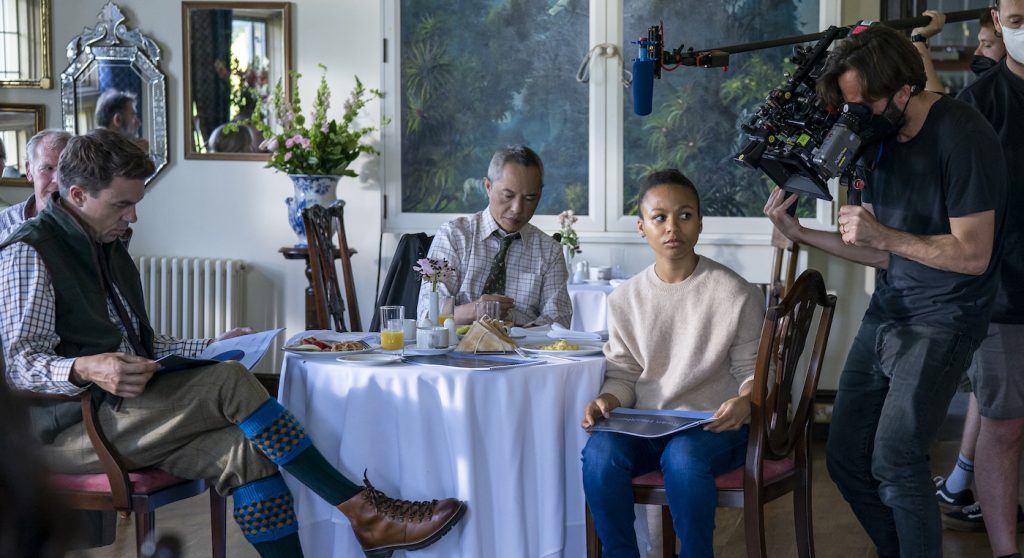
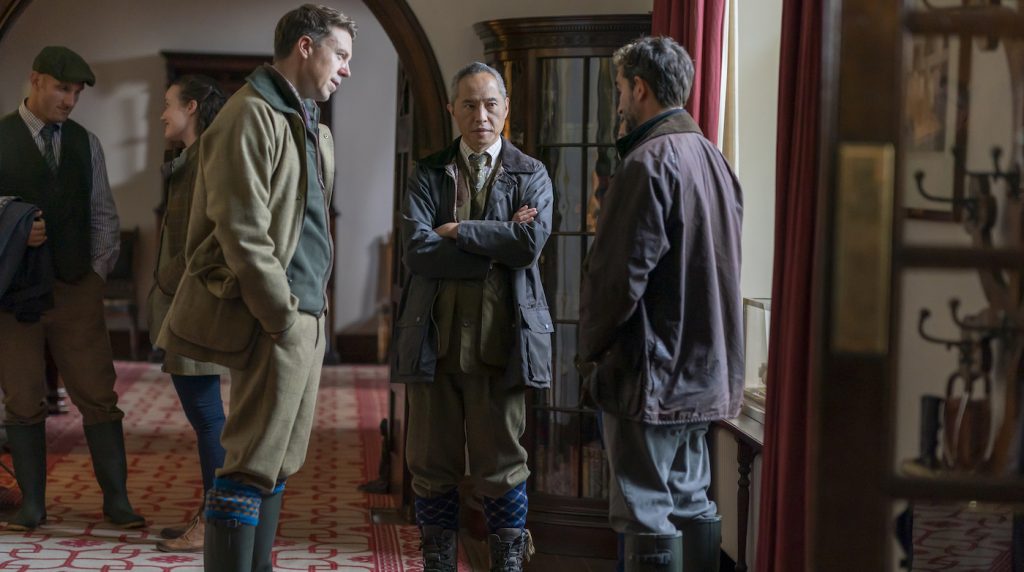
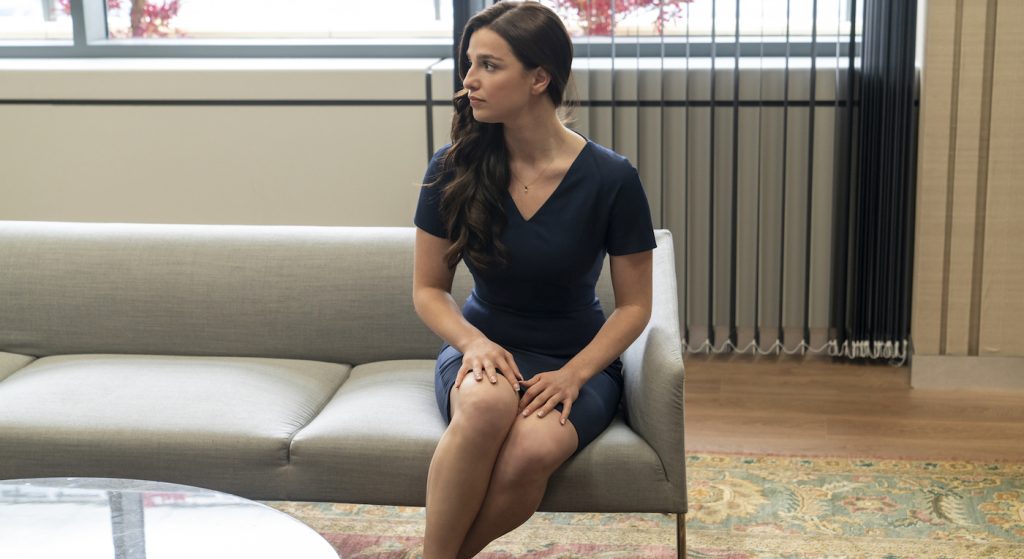
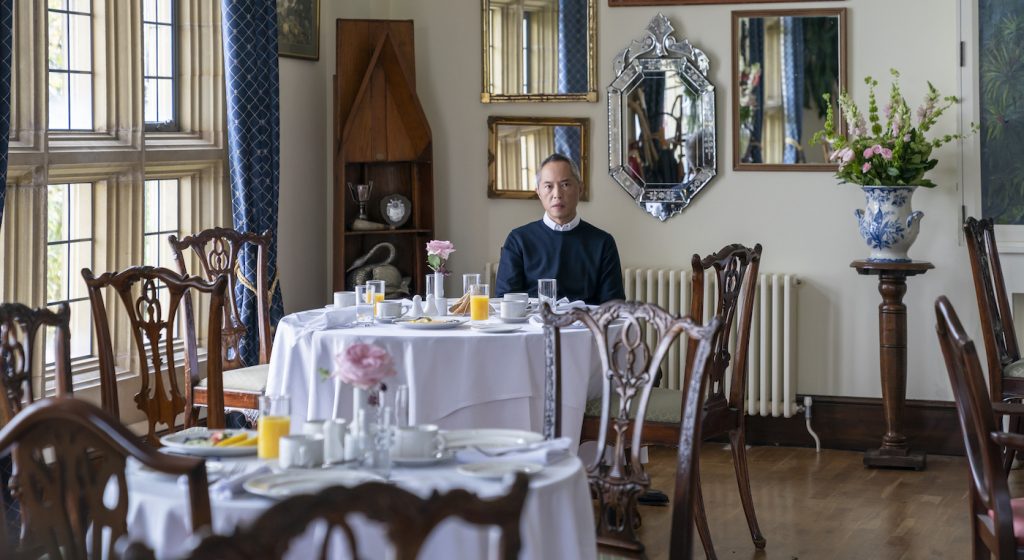
Featured image: Jo Koy on the set of Easter Sunday, directed by Jay Chandrasekhar.


Watch “She-Hulk: Attorney at Law” Star Jameela Jamil Become Supervillain Titania

When Marvel Studios’ She-Hulk: Attorney at Law premieres on Disney+, we’ll get to see co-star Jameela Jamil in the juicy role of supervillain Titania, the nemesis of Jennifer Walters/She-Hulk (Tatiana Maslany). It’s going to be a hoot to see Jamil go from playing the lovable if frustratingly perfect Tahani Al-Jamil on The Good Place to a Marvel baddie, and Jamil herself seems to be having a ball. In a new video she posted on Twitter, you can watch her transform—with a little help from the She-Hulk hair and makeup team—into the immensely powerful Titania.

The time-lapse video shows Jamil applying makeup, the makeup and hair department adding crucial touches, and becoming Titania in just 41-seconds. Have a look.

Jamil joins Maslany, Mark Ruffalo (reprising his role as Bruce Banner), Tim Roth (reprising his role as Emil Blonsky/the Abomination), Benedict Wong, Ginger Gonzaga, and Charlie Cox (another role reprisal, with Cox returning as Matt Murdock/Daredevil). She-Hulk: Attorney at Law is the second-to-last MCU installment in Phase 4, to be followed by the phase-capping Black Panther: Wakanda. The series follows Maslany’s Jennifer Walters, an attorney, cousin of Bruce Banner, and, eventually, a Hulk herself. Walters’s work will put her into contact with Roth’s Emil Blonsky as she’s tasked with heading up a superhero (and villain) legal team. When Titania shows up, Walters will faceoff against someone just as powerful as she is.

Jamil’s role as Titania is a big one, and she’s certainly not only got the acting chops but apparently the makeup design skills, too. She-Hulk: Attorney at Law debuts on Disney+ on August 18.

Check out this image of Jamil as Titania from the series:

For more on She-Hulk: Attorney at Law, check out these stories:

First “She-Hulk: Attorney At Law” Clip Reveals a Lesson in the Hulk Lifestyle

“She-Hulk: Attorney at Law” Trailer Reveals Two Hulks, One Abomination & One Frog-Man

Marvel Studios Chief Kevin Feige Teases “She-Hulk,” “Secret Invasion,” “Loki” Season 2 & More

First “She-Hulk: Attorney at Law” Trailer Reveals Two Hulks for The Price of One

Featured image: Jameela Jamil as Titania in Marvel Studios’ She-Hulk: Attorney At Law, exclusively on Disney+. Photo by Chuck Zlotnick. ©Marvel Studios 2022. All Rights Reserved.

Zazie Beetz Circling a “Joker 2” Return

It sounds like Sophie Dumond might have survived Arthur Fleck’s descent into madness in the original Joker. Or, we might be seeing a fantasy version of her.

Zazie Beetz, who played Sophie, one of Arthur Fleck’s (Joaquin Phoenix) neighbors and his eventual love interest in Joker, is being eyed for a return in the upcoming sequel,  Joker: Folie à Deux. Variety has the scoop that Warner Bros. is looking at bringing Beetz back as the single mother who has a romantic relationship with Fleck in the original film. Or so it seemed. It turned out (spoiler alert) that Fleck had imagined the entire affair, one of the crucial moments in the story that shows just how far down the rabbit hole he’s traveled. Once his delusion is revealed, we see Arthur leaving Sophie’s apartment, but her fate is never revealed. Beetz could return as the actual Sophie, or, another fantasy version of the character.

Joker director Todd Phillips is back to helm the sequel, which, you may have heard, will be a musical co-starring Lady Gaga, who is playing Harley Quinn, the Joker’s main squeeze and partner in crime. The script is being written by Phillips and Scott Silver, with the film set to begin shooting this December and slated for an October 4, 2024 release date. That date is significant—it’s exactly five years after the release of the original film.

Beetz can currently be seen in Bullet Train, director David Leitch‘s star-studded action flick, co-starring alongside Brad Pitt, Michael Shannon, Sandra Bullock, her fellow Atlanta co-star Brian Tyree Henry, and more. Beetz will return for Atlanta‘s fourth and final season, as well as appear in season 2 of Amazon Prime’s Invincible and the long-awaited return of Netflix’s sci-fi anthology series Black Mirror.

For more on Joker: Folie à Deux, check out these stories:

Lady Gaga Releases “Joker 2” Teaser Hyping Upcoming Musical Mayhem

“Joker 2” With Joaquin Phoenix & Lady Gaga Gets a 2024 Release Date

Lady Gaga Eyeing “Joker 2” Harley Quinn Role in Musical Sequel

“Joker” Sequel Official: Working Title & Pics of Joaquin Phoenix Reading Scripts Revealed

Featured image: Caption: (L-r) ZAZIE BEETZ as Sophie Dumond and JOAQUIN PHOENIX as Arthur Fleck in Warner Bros. Pictures, Village Roadshow Pictures and BRON Creative’s “JOKER,” a Warner Bros. Pictures release. Photo Credit: Niko Tavernise

The Late, Seriously Great Olivia Newton-John Remembered By Fellow Singers & Stars

The beloved, bountifully talented Olivia Newton-John passed away at the age of 73 on Monday. John was at her ranch in Southern California when she passed, surrounded by family and friends. Newton-John’s passing was announced by her husband, John Easterling, who cited the breast cancer diagnosis she has lived with since 1992. Newton-John has been an advocate for cancer research for years.

Newton-John was a pop icon, a movie star, portrayed the girl next door and a bad girl with equal charisma, and a generational talent whose role in Grease confirmed her as one of the most versatile talents working in film or music. Grease became one of the most popular movie musicals of its era, and its influence can hardly be understated. She also released No. 1 hits and massively successful albums, and yet along with her superstardom, Newton-John was adored not just by fans but the people who knew her.

Her daughter, co-stars, fellow stars, and a legion of performers who Newton-John inspired poured their hearts out on social media. Her daughter, Chloe Lattanzi, posted photos on Instagram of her and her mother.

“My dearest Olivia, you made all of our lives so much better,” wrote her Grease co-star, John Travolta, in a statement. “Your impact was incredible. I love you so much. We will see you down the road and we will all be together again. Yours from the first moment I saw you and forever! Your Danny, your John!”

Australian singer and actress Olivia Newton-John and American actor John Travolta as they appear in the Paramount film 'Grease', 1978. (Photo by Paramount Pictures/Fotos International/Getty Images)
Singer and actress Olivia Newton-John and American actor John Travolta as they appear in the Paramount film ‘Grease’, 1978. (Photo by Paramount Pictures/Fotos International/Getty Images)

We’ve captured just a snapshot of the outpouring of love Newton-John has received in the past 24 hours. There is plenty more where this came from, like this tribute from Kylie Minogue.

Dionne Warwick, who had Newton-John on her 2006 album “My Friends and Me,” wrote this:

Fellow singer Richard Marx shared photos of him and Newton-John, and recollections of her character.

Actress Daisy Fuentes Marx shared an image and all the love.

RuPaul touched upon Newton-John’s talent.

Another fellow singing star, Melissa Etheridge, shared a personal anecdote about how Newton-John reached out to her when she was diagnosed with cancer.

Stars like Star Trek’s George Takei, Gabrielle Union, and Leslie Uggams shared the love, too.

And finally, Paramount Studios, the home of Grease, relayed their love for Newton-John.

Featured image: DETROIT – 1975: Singer Olivia Newton-John performs in 1975 in Detroit, Michigan (Photo by Michael Ochs Archives/Getty Images)

James Gunn Reveals “Peacemaker” Season 2 BTS Image

“Our friend will still be making lots of peace in Season 2,” James Gunn wrote on Twitter, assuring fans that the conflicted, beefy superhero played by John Cena will be returning for more mayhem in Peacemaker.

Gunn shared an image of Cena, his face looking a little battered and bruised—peacemaking is a tough job—to ensure fans of the series that the story will continue:

Gunn’s HBO Max series was a hit, giving Cena’s maladjusted superhero plenty of room to grow after proving himself to be one of the villains of Gunn’s feature The Suicide Squad. Peacemaker offered a quirky, often very funny look at what made this anti-hero tick, which included some absolutely awful parenting from his monstrous father, Auggie Smith (Robert Patrick), also known as the White Dragon. The series benefited from a sensational supporting cast, including Danielle Brooks as Leota Adebayo, Freddie Stroma as Vigilante, Chukwudi Iwuji as Clemson Murn, Jennifer Holland as Emilia Harcourt, and Steve Agee as John Economos. Season one saw this super-team taking on an alien invasion and revealing the machinations of Viola Davis’s Amanda Waller, who was pulling plenty of strings behind the scenes. Season two has plenty of storylines to explore, including the fallout from outing Waller, a woman not known for taking insubordination lightly.

For more on Peacemaker, check out these stories:

Viola Davis in Talks to Play Amanda Waller in “Peacemaker” Spinoff Series on HBO Max

“Peacemaker” Composer Kevin Kiner About Harnessing The Power of Hair Bands

New “Peacemaker” Video Reveals Vigilante’s Unwanted Attention

“Peacemaker” Official Trailer Reveals One Beefy Brute’s Rude Awakening

Featured image: John Cena. Photograph by Courtesy of HBO Max

“Top Gun: Maverick” Passes “Titanic” As Seventh-Highest Grossing Domestic Release Ever

Top Gun: Maverick has sunk Titanic.

Director Joseph Kosinski and star Tom Cruise’s sequel has now surpassed James Cameron’s iconic 1997 film and become the seventh-highest grossing film of all time at the domestic box office, with $662 million in sales. Cameron’s sweeping Titanic hauled in $659 million during its total run, which included re-releases. Maverick is still soaring high after its Memorial Day Weekend release and is also now the biggest film in Paramount Pictures history, nudging Titanic from that perch and sitting atop the studio’s leader board, which includes 110 years of films.

It will take Maverick kicking into a higher gear to catch Titanic globally—Cameron’s film cruised to $2.2 billion worldwide, with $1.5 billion of that scored at the international box office. Maverick, meanwhile, has an almost perfectly even split between its domestic and international gross, with $690 made abroad that, added to its $662 million domestic total, equals $1.3 billion worldwide. Its international haul has not included the major markets of China or Russia.

Next in Maverick‘s sights is the Russo Brothers’ Avengers: Infinity War, which made $678 million domestically and sits in the sixth-highest spot, followed by Ryan Coogler’s Black Panther at $700 million, Cameron’s Avatar at $760 million, Jon Watts’ Spider-Man: No Way Home at $804 million, the Russo Brothers’ Avengers: Endgame at $853 million, and J.J. Abrams Star Wars: The Force Awakens at $936 million.

Maverick‘s appeal has been multi-layered and goes far beyond mere nostalgia (although it has helped). Incredible (and incredibly real) flight sequences involving the cast, Navy pilots and Navy jets helped create old-school movie magic that was genuinely thrilling. Add to the peerless practical effects a heartfelt story of regret and redemption, and winning performances by the film’s cast (led by Cruise, of course) have created the year’s biggest hit, and now, one of the biggest success stories of all time.

For more on Top Gun: Maverick, check out these stories:

“Top Gun: Maverick” Now the Biggest Film in Paramount Pictures History

How the “Top Gun: Maverick” Sound Team Ingeniously Captured Raw Emotion Mid-Flight

Going to Flight School With “Top Gun: Maverick” Stars Glen Powell & Greg Tarzan Davis

“Top Gun: Maverick” Gets Five-Minute Standing Ovation at Cannes

“Top Gun: Maverick” Soars as Critics Hail Riveting Sequel

Featured image: Tom Cruise plays Capt. Pete “Maverick” Mitchell in Top Gun: Maverick from Paramount Pictures, Skydance and Jerry Bruckheimer Films.

“Better Call Saul” Composer Dave Porter on Playing Jimmy McGill Out

Dave Porter has been creating music for the universe of Breaking Bad since the beginning in 2008, starting with the award-winning, Zeitgeist capturing fan favorite, then continuing with Better Call Saul in 2015, and scoring El Camino: A Breaking Bad Movie in 2019. That’s a long time to be living in a world so beloved by ‘Heisenbergers’ from the inside. Now, as Better Call Saul comes to a conclusion with its last show (the penultimate episode airs on August 8, the finale on August 15), character motivations are being revealed, fates are being disclosed, and the web is bursting with theories of how things will tie up. 

No matter how the storyline for Bob Odenkirk’s Jimmy/Saul/Gene resolves, creators Vince Gilligan and Peter Gould have many talented collaborators who have helped make good on their vision. Dave Porter has unerringly aided mood and storytelling through his score for the show, with his sonic landscapes, eerie cues, and rich, multi-layered melodies. The Credits spoke to Porter about his part as the composer in building to Better Call Saul’s long-anticipated climactic finale.  


Over the course of the whole show, there are so many examples where sound and music are complementary, and that continues this final season. Can you talk about your collaboration with the sound department and your own aesthetic of incorporating found sound into your scores? 

Where we have to start is just the unbelievable fortune we’ve had as a group to work together for as long as we have. We’re coming to the end of an incredible journey here that’s lasted almost 15 years, and the core of the sound and the music departments have remained unchanged through that entire run. The pillars of that are Nick Forshager, who is the sound supervisor, myself, and Thomas Golubic, our music supervisor. At this point, we’ve been doing it for so long that some of it has become second nature, but we don’t take it for granted. We have enormously in-depth and lengthy sound spotting sessions, in which we do spot the music and all the sound effects and sound design and dialogue, all of us together, in the old days in the same room, now on the same Zoom, to really talk about not only what we each individually need to be doing in the best service of the show, but how we can collaborate, knowing in certain moments who is most likely to take the lead. We do spar from time to time about these things, but Vince and Peter have always been the ultimate arbiters. We are always all on the same page when it comes to helping make the show the best it can be, and working together is a joy. 


At what point are there conversations about using music or silence, and which works better for the scene? When are those decisions made? 

I think we do take it on a case-by-case basis. Part of that is in, again, the collaborative nature of what we do and have been doing it all together for as long as he has. As I always say, you make the movie a few times, and the last time you make the movie is in post. Some of the original ideas always survive, and some you change because we think we can do better. One of the great hallmarks that Vince started in Breaking Bad, and everyone has continued since, is this idea in our meetings that no idea is a bad idea. Everybody’s welcome to speak up, down to the newest assistants. We weigh everything. We talk about everything. It takes time, but we weed through all these ideas, and we inevitably come to the best ones.

Do you take into consideration when an episode this season has been in black and white, in color, or both, in terms of creating the cues for those episodes? Has the tone darkened? 

I think the music has absolutely changed. From early on, we’ve teased these Gene aspects of the larger story as something that is joyless and dark in a new way, dark in a lonely, frustrated way. I think that’s part of the reasoning behind their choice to choose to shoot it in black and white. For me, going back into the early seasons of Better Call Saul, whenever we were teasing some of these moments from the Gene world, I very specifically chose to use a low bass clarinet that’s very low, very lonely, on its own, drenched in reverb, just kind of there, sad and plaintiff. Then when we came around to really starting to tell the Gene story, which is episode 610 and in many ways like a whole new show. Everyone had to reinvest and re-evaluate everything they were doing to figure out how it could be done differently and in a way that was in service to this new story. For me, that meant taking that original bass clarinet idea and fleshing it out into an ensemble of very low woodwinds, so alto flute, bass flute, clarinet, and bass clarinet. That was all very intentional and very by design to feel connected but distinctly different.

Bob Odenkirk and Carol Burnett on "Better Call Saul." Courtesy AMC.
Bob Odenkirk and Carol Burnett on “Better Call Saul.” Courtesy AMC.

And there’s an element of hopelessness, even using more instruments, because the energy is the same, just with added intensity and depth. 

I originally started with a larger ensemble, probably twice as many woodwinds, and a whole string section, and it felt like with that many players, it was doing more musically than we wanted it to do for the story. So it ultimately got pared back to just the low winds, and even that, while the orchestration has changed, the way I’m writing hasn’t changed. I’m writing for those instruments in a way that I would have written for a lot of the other instruments I used earlier in the show to help make that connection that it’s not a whole new show; it’s a whole new tone.


It’s like a deeper, richer depth of despair. 

We have mined many, many layers, and believe me, we have not found the bottom yet. 

In the length of time that you’ve worked on Breaking Bad, El Camino, and Better Call Saul, how has it shaped you in terms of your aesthetic and as a composer and musician?

Oh, wow, in every possible way, I am fundamentally and completely different and a better composer than I was when I started on Breaking Bad. I have these shows, without question, and the loyalty from Vince and Peter to stick with me through all that to thank for it. There were some bad cues in there. There were some left turns that I tried on them that did not sail, but you know, having the ability to do all that, to fall on my face a few times, to grow as a composer, and to show them some new things, that was a gift. There’s been a lot of pressure to do our best work on these shows. While it’s been obviously very supportive, nobody wants to be the weakest link in the chain, so we’ve pushed each other to become much better at what we do. We’ve all grown together as a family of people working on the shows. It’s been an absolutely unique experience, and I’m so blessed to have been a small part of it. 

Better Call Saul airs on Mondays on AMC. 


Featured image: Saul Goodman (Bob Odenkirk) in “Better Call Saul.” Courtesy AMC.  


“Bullet Train” Director David Leitch on His Breathless Brad Pitt-Led Action-Comedy

When suggesting to Bullet Train director David Leitch that he should be known as one of the “Godfathers of fight-vis,” a technique where complex fight sequences are filmed to visualize the action prior to shooting the real thing, he modestly said he’d take the credit. “Chad and I were definitely on the forefront of something that now every stunt team on the planet does.” The Chad he’s referring to is Chad Stahelski, who Leitch co-directed the original John Wick with.

Before helming Atomic Blonde (2017), Deadpool 2 (2018), and Hobbs & Shaw (2019), Leitch had a decades-long career as a stunt performer, fight choreographer, and stunt coordinator. He and Stahelski were innovators in the craft, filming elaborate sequences as a way to pitch studios to land second unit or coordinator jobs. “We would choreograph something, then shoot, edit and present it. It became something everyone wanted from us. And then it became people saying that it’s an effective tool to get your ideas across, so other stunt performers began to do it.” 

Fight-vis is now commonplace and still very much part of Leitch’s workflow. On Bullet Train, he tapped second unit director Greg Rementer and fight coordinator Kirk Jenkins to put together action sequences that heighten the drama and stakes without losing sight of the characters or story. 


Leitch attributes his approach, in part, to his working with Hong Kong director Ringo Lam, who’s known for City on Fire (1987) and directing a number of Jean-Claude Van Damme movies like Maximum Risk (1997) and Replicant (2001) before his passing in 2018. 

”I was directing second unit for him, and it was my first second unit job [In Hell (2003), Van Damme’s character is sent to prison after avenging his wife’s death]. He was like, ‘You always worry about where to put the camera. But what you need to worry about is performance. Because truth in front of the lens is all that matters. If it’s funny, it’s funny. If it’s dramatic, it’s dramatic. If the action works, the action works. You can’t control it. You can’t manipulate it. You need to be aware of what’s happening to make sure you’re getting the truth.”

“He was screaming at me with a cigarette in his mouth, and I think I was just shooting an insert of a knot breaking,” Leitch says with a laugh. “It’s not completely true, but it’s absolutely true in the sense that truth in action is the same as the truth in comedy and truth in drama. If you see something that’s compelling and it speaks to you viscerally, you check the gate on that.” (Checking the gate refers to a director reviewing the footage of a scene). 

With Bullet Train, Leitch navigated an ensemble cast of protagonists and anti-heroes, including reuniting with Brad Pitt, who he stunt-doubled for on several occasions, including Fight Club (1999) and Troy (2004). Pitt plays Ladybug, an assassin with a streak of bad luck that’s been given an assignment to retrieve a briefcase on a high-speed train heading from Tokyo to Kyoto. (Locals refer to the train as the Shinkansen). But the snatch and grab doesn’t go as planned. Standing in his way are six unruly killers: the “twins” Tangerine (Aaron Taylor-Johnson) and Lemon (Brian Tyree Henry), the seemingly innocent Prince (Joey King), Hornet (Zazie Beetz), who is a master of disguise, the lovesick Wolf (Bad Bunny) and the revenge-driven Kimura (Andrew Koji). 

Even with the rag-tag group, Leitch instantly gives a sense of who they are and where they’ve come from as their backstory is cleverly plotted through punchy vignettes that serve as side dishes to the main course. Nuanced themes of distrust, luck, fate, and karma emerge as the journey unfolds and, in part, what drove Leitch to the script to begin with.

“It wasn’t the comedy or the action, but this meditation on fate and this big existential question was at the center of it. I felt that was so subversive and irreverent in a big bombastic assassin movie,” he says. Zak [Olkewicz, screenwriter] did a really good, big screen version of adapting those themes. (Bullet Train is based on a novel by Kōtarō Isaka of the same name.)


The production was one of the first out of the gate post-pandemic. Production designer David Scheunemann built two full-sized train cars on the Sony Lot along with a train station set that could be redressed for each stop to Kyoto, while the Los Angeles Convention Center stood in for the Tokyo Station. Outside the windows, large LEDs walls surrounded the train cars which displayed images captured by a Japan unit that filmed routes similar to the trip. 

Inside, teams re-decorated the train cars depending on the scene. There was a lounge car, café car, a quiet car that Tangerine and Lemon travel in, and a Momomon-themed family car, which is the film’s version of a mascot similar to Japan’s Domo-kun, but instead of a cute teethy brown rectangle, she’s a cuddly looking cat with big, pointy pinkish ears.

Momomon in Bullet Train. Courtesy Sony Pictures.
Bryan Tyree Henry and Brad Pitt star in Bullet Train.

The hurdle for the director was giving scope within the tight sets. With cinematographer Jonathan Sela, who has worked on each blockbuster Leitch directed, they relentlessly shot-listed an ambitious action movie that connects us to the emotional beats while giving us genuinely laugh-out-loud (and jaw-dropping) moments. 

“We were in such confined spaces that it lent us to do two or three moves and then cut, or two to three moves and change the camera angle. And that heightens the physical comedy in the fights,” says the director. “It all had precise timing for the comedic beats.”   

Though the fight scenes were undoubtedly entertaining and fun, stealing the show was the dynamic relationship between Tangerine and Lemon. “Normally, I wouldn’t ask somebody like Aaron [Taylor-Johnson] to read, but he wanted to read for the part of Tangerine. Thirty seconds in, I was like, ‘He is perfect,” says Leitch. “He brought this West Ham, East End [of London] thug to life in a fun, irreverent, and witty way.”

With Brian Tyree Henry as Lemon, the director admits he was a huge fan of his work from the start. “I knew a lot of his abilities, but I had no idea until we got on set for a rehearsal day. I was like, “Oh my god, we have lightning in a bottle.” he says. “First of all, these guys love each other. They’re great at improv, understand each other’s characters, and are both giving actors, so they’re setting each other up for payoffs. It was a masterclass in improv and just beautiful to watch.” 

You can see who gets away with the briefcase today—Bullet Trains is in theaters now.

For more on Bullet Train, check out these stories:

New “Bullet Train” Clip & First Reactions Hype Hilarious, Hardcore Action-Comedy Led by Brad Pitt

Official “Bullet Train” Trailer Takes Brad Pitt on a Wild Ride

First “Bullet Train” Trailer Reveals Brad Pitt in Upcoming Action Thriller

Featured image: Aaron Taylor-Johnson and Brad Pitt star in “Bullet Train.” Courtesy Sony Pictures.

Lady Gaga Releases “Joker 2” Teaser Hyping Upcoming Musical Mayhem

Earlier today, we wrote about how Joker: Folie á Deux, the sequel to Todd Phillips’ 2019 blockbuster hit Joker, is coming to a theater near you on October 4, 2024. Now, none other than Lady Gaga, who will be co-starring alongside Joaquin Phoenix as the Joker’s main squeeze and comrade-in-crime, Harley Quinn, released this jaunty little teaser on Twitter:

Think Lady Gaga is excited? Yeah, and so are we. Joker: Folie á Deux is following in its predecessor’s footsteps by going its own way—the film will be a musical, of all things. After Joker shocked the world by offering a superhero-free, dark, gritty origin story for the titular Clown Prince of Chaos, garnering 11 Oscar nominations (and a win for Phoenix) and more than a billion dollars at the box office, a sequel was all but assured. What wasn’t assured, however, was exactly how Phillips, Phoenix, and the rest of the Joker team were going to follow up on an origin story that defied expectations with something equally unexpected. It would have been simple enough to continue Arthur Fleck’s story as the would-be stand-up comic and seriously maladjusted loner who became a folk hero to downtrodden Gothamites for all the wrong reasons.

Joker: Folie á Deux will continue to tell Fleck’s story, but it’ll do so with Gaga playing Quinn and via song, dance, and more mayhem, we’re guessing. It’s a delicious conceit, daring and unexpected. And if Lady Gaga is excited, well, then so are we.

For more on Joker 2, check out these stories:

“Joker 2” With Joaquin Phoenix & Lady Gaga Gets a 2024 Release Date

Lady Gaga Eyeing “Joker 2” Harley Quinn Role in Musical Sequel

“Joker” Sequel Official: Working Title & Pics of Joaquin Phoenix Reading Scripts Revealed

Featured image: R-l: Caption: JOAQUIN PHOENIX as Arthur Fleck in Warner Bros. Pictures, Village Roadshow Pictures and BRON Creative’s “JOKER,” a Warner Bros. Pictures release. Photo Credit: Niko Tavernise; LAS VEGAS, NEVADA – APRIL 03: Lady Gaga performs onstage during the 64th annual GRAMMY awards on April 03, 2022 in Las Vegas, Nevada. (Photo by Emma McIntyre/Getty Images for The Recording Academy). 

Keanu Reeves to Star in “Devil in the White City” Series for Hulu

Talk about an incredible combination of talent. Keanu Reeves is set to take on his first major TV role in a series produced by Leonardo DiCaprio and Martin Scorsese. Reeves will star in Hulu’s Devil in the White City, an adaptation of Erik Larson’s best-selling book of the same name. It’s a project that both DiCaprio and Scorsese have been nudging along for years.

DiCaprio first optioned the book back in 2010, with a script by Billy Ray and Scorsese set to direct. Eventually, the potential feature became a potential series in development at Hulu. Now, Hulu has announced the news at the Television Critics Association’s summer tour that the series is a go with Reeves set to star. Devil in the White City will be led by Castle Rock creator Sam Shaw, who will serve as showrunner, writer, and executive producer. DiCaprio, Jennifer Davisson (his partner in Appian Way), and Martin Scorsese will executive produce alongside Shaw.

Initial reports say that Reeves will star as Daniel H. Burnham, an iconoclast architect who is trying to pull off his greatest feat at the Chicago’s World Fair in 1893. The story has one of the most memorable villains in recent literature, Dr. H. H. Holmes, the first serial killer in modern America. Holmes worked in the so-called “Murder Castle,” a terrifying structure that utilized its proximity to the World’s Fair to allow him to operate (in the most ghoulish sense of the word) amid the hubbub of throngs of people descending on the fair. The depiction of Holmes and his Murder Castle in the book was unbelievably haunting and offers ample opportunity for creators as talented as Shaw, DiCaprio, and Scorsese to make something unforgettable.

Todd Field is set to direct in a co-production between Paramount Television Studios and Disney’s ABC Signature. More information, including who the rest of the cast will include, will be coming soon.

For more on Hulu, check out these stories:

New “Prey” Video Connects Latest Film to Original “Predator”

Going Behind-the-Scenes With Some of This Year’s Emmy Nominees

“Maid” & “Under the Banner of Heaven” Production Designer Renee Read on Building Trust

Featured image: Caption: KEANU REEVES as Neo/Thomas Anderson in Warner Bros. Pictures, Village Roadshow Pictures and Venus Castina Productions’ “THE MATRIX RESURRECTIONS,” a Warner Bros. Pictures release. Photo Credit: Courtesy of Warner Bros. Pictures

“Joker 2” With Joaquin Phoenix & Lady Gaga Gets a 2024 Release Date

Joker: Folie á Deux is going to be laughing its way into theaters in 2024.

The sequel to Todd Phillips’ smash hit will feature Joaquin Phoenix, of course, in the title role, joined this time by none other than Lady Gaga. Joker: Folie á Deux is now set for an October 4, 2024 release date, which means it’ll bow on the five-year anniversary of the original film.

The specifics surrounding Joker: Folie á Deux are wild. Not only will Lady Gaga be on board as Joker’s main squeeze Harley Quinn, but the film is set to be a musical. It’s a decidedly novel way to go following the mega success of the original Joker, but it’s in keeping with the entire offbeat vibe of what has become a new franchise for the DCEU. The original Joker was a comic book movie without a superhero, with a pitch black storyline, and a ferocious Phoenix in the central role of a mentally unhinged failed comic Arthur Fleck, whose delusions devour him in as he becomes a killer, inspiring millions of forgotten and downtrodden Gothamites to take to the streets in his name.

This major news comes on the heels of other, less happy news, the canceling of Batgirl, which was set to be released in theaters and on HBO Max. Joker: Folie á Deux is now one of the biggest and most important films on the DCEU slate. Aquaman and the Lost Kingdom arrives on March 17, 2023, with Jason Momoa returning and, as was recently revealed, Ben Affleck reprising the role of Batman for the movie. After that, director Andy Muschietti’s The Flash is set to premiere on June 23, 2023, with Michael Keaton returning as Batman and Ezra Miller (in the headlines lately for all the wrong reasons) reprising his role as Barry Gordon/The Flash.

A recent bright spot for the DCEU was Matt Reeves’ The Batman, which was a critical and commercial success, and has already been greenlit for a sequel. Joker itself was a commercial and critical hit, garnering 11 Oscar nominations and grossing more than $1 billion at the global box office. Phoenix himself nabbed an Oscar.

For more on Joker 2 and Joker, check out these stories:

Lady Gaga Eyeing “Joker 2” Harley Quinn Role in Musical Sequel

“Joker” Sequel Official: Working Title & Pics of Joaquin Phoenix Reading Scripts Revealed

Featured image: R-l: Caption: JOAQUIN PHOENIX as Arthur Fleck in Warner Bros. Pictures, Village Roadshow Pictures and BRON Creative’s “JOKER,” a Warner Bros. Pictures release. Photo Credit: Niko Tavernise; LAS VEGAS, NEVADA – APRIL 03: Lady Gaga performs onstage during the 64th annual GRAMMY awards on April 03, 2022 in Las Vegas, Nevada. (Photo by Emma McIntyre/Getty Images for The Recording Academy). 

New “Black Panther: Wakanda Forever” Images + Synopsis Reveal Villain Namor

A fresh batch of photos and a synopsis for Black Panther: Wakanda Forever? Yes, thank you.

Marvel Studios has released a slew of new photos for Ryan Coogler’s upcoming sequel, revealing looks at the cast as they venture into an uncertain future without their leader and king, T’Challa (Chadwick Boseman). Boseman’s tragic passing in August of 2020 meant that Coogler and the Black Panther: Wakanda Forever team had to shift their approach completely, and the first trailer gave us a sense of how they approached the loss of their Black Panther.

The first half of the trailer was a somber, gorgeous sequence of images of T’Challa’s family, friends, and allies mourning his loss, all set to Tems’ version of Bob Marley’s iconic “No Woman, No Cry.” The second half of the trailer revealed Wakanda Forever‘s villain, Namor (Tenoch Huerta), the king of a secret undersea nation. With Wakanda facing a major power vacuum with the loss of T’Challa, they’ve never been more vulnerable. Namor likely understands this.

The images include shots of Lupita Nyong’o’s Nakia (called War Dog Nakia in the synopsis), the fierce fighting force known as the Dora Milaje, Letitia Wright as T’Challa’s sister, Shuri, and Angela Bassett as Ramonda, T’Challa’s mother. The synopsis describes how Queen Ramonda and the rest of T’Challa’s friends and allies must band together during this uncertain new chapter and face this new threat.

Tenoch Huerta was a great choice to play the new villain, a performer with gravitas to spare. And gravitas was going to be necessary following Michael B. Jordan’s thrilling turn as Erik Killmonger in the first Black Panther. Needless to say, Black Panther: Wakanda Forever is one of the year’s most eagerly-anticipated films.

Check out the new images and synopsis below. Black Panther: Wakanda Forever hits theaters on November 11, closing out Marvel’s Phase 4.

Lupita Nyong’O as Nakia in Marvel Studios’ Black Panther: Wakanda Forever. Photo courtesy of Marvel Studios. © 2022 MARVEL.
Tenoch Huerta as Namor in Marvel Studios’ Black Panther: Wakanda Forever. Photo courtesy of Marvel Studios. © 2022 MARVEL.
The Dora Milaje in Marvel Studios’ Black Panther: Wakanda Forever. Photo courtesy of Marvel Studios. © 2022 MARVEL.
(L-R): Dorothy Steel as Merchant Tribe Elder, Florence Kasumba as Ayo, Angela Bassett as Ramonda, Danai Gurira as Okoye in Marvel Studios’ Black Panther: Wakanda Forever. Photo courtesy of Marvel Studios. © 2022 MARVEL.
Letitia Wright as Shuri in Marvel Studios’ Black Panther: Wakanda Forever. Photo courtesy of Marvel Studios. © 2022 MARVEL.
Angela Bassett as Ramonda in Marvel Studios’ Black Panther: Wakanda Forever. Photo courtesy of Marvel Studios. © 2022 MARVEL.
Danai Gurira as Okoye in Marvel Studios’ Black Panther: Wakanda Forever. Photo courtesy of Marvel Studios. © 2022 MARVEL.
Angela Bassett as Ramonda in Marvel Studios’ Black Panther: Wakanda Forever. Photo courtesy of Marvel Studios. © 2022 MARVEL.

Here’s the official synopsis for Black Panther: Wakanda Forever:

In Marvel Studios’ “Black Panther: Wakanda Forever,” Queen Ramonda (Angela Bassett), Shuri (Letitia Wright), M’Baku (Winston Duke), Okoye (Danai Gurira) and the Dora Milaje (including Florence Kasumba), fight to protect their nation from intervening world powers in the wake of King T’Challa’s death. As the Wakandans strive to embrace their next chapter, the heroes must band together with the help of War Dog Nakia (Lupita Nyong’o) and Everett Ross (Martin Freeman) and forge a new path for the kingdom of Wakanda. Introducing Tenoch Huerta as Namor, king of a hidden undersea nation, the film also stars Dominique Thorne, Michaela Coel, Mabel Cadena and Alex Livanalli. “Black Panther: Wakanda Forever,” directed by Ryan Coogler and produced by Kevin Feige and Nate Moore, opens in U.S. theaters Nov. 11, 2022.

For more on Black Panther: Wakanda Forever, check out these stories:

Listen to “Black Panther: Wakanda Forever” Prologue Soundtrack With Tems’ “No Woman, No Cry”

“Black Panther: Wakanda Forever” Trailer Explodes With 172 Million Views in 24 Hours

First “Black Panther: Wakanda Forever” Trailer Hails a Lost King & Introduces a New Threat

“Black Panther: Wakanda Forever” Star Letitia Wright Says Sequel Honors Chadwick Boseman

Featured image: Tenoch Huerta as Namor in Marvel Studios’ Black Panther: Wakanda Forever. Photo courtesy of Marvel Studios. © 2022 MARVEL.

A Sweeping Look Behind-the-Scenes of “Lord of the Rings: The Rings of Power”

A new behind-the-scenes look at Amazon Prime Video’s The Lord of the Rings: The Rings of Power gives us a sense of why this is the most ambitious series the studio has ever produced and, arguably, one of the most ambitious series of all time.

“The second age is the great unfilmed story in Tolkien’s entire legendarium, with the forging of the rings and the last alliance, and we felt that that was the story that deserved to be told,” says showrunner and executive producer Patrick McKay at the top of the new video.

“Galadriel has been on a quest for over a thousand years, scouring Middle-earth searching for this elusive, undiscovered, very real evil,” says Morfydd Clark, who plays Galadriel. “Ultimately, she knows this danger exists, and this evil has to be stopped.”

The thrust of The Rings of Power is a quest story, and every great quest through Middle-earth needs a fellowship. “From the beginning, we knew she couldn’t do this alone,” says co-showrunner and executive producer John D. Payne.

“I think the scope of this show is massive,” says Ismael Cruz Cordova, who plays Arondir.

“This is the time where the characters and species that we know and love become who we know them to be,” says Benjamin Walker, who plays High King Gil-galad.

The new video offers fresh footage, including new beasts (at the 1:20, 1:43, and 1:46 marks specifically), epic action, and a sense of how big a swing The Rings of Power really is.

Check out the new featurette below. The Lord of the Rings: The Rings of Power arrives on Amazon Prime Video on September 2.

The official synopsis for The Lord of the Rings: The Rings of Power:

Prime Video’s The Lord of the Rings: The Rings of Power brings to screens for the very first time the heroic legends of the fabled Second Age of Middle-earth’s history. This epic drama is set thousands of years before the events of J.R.R. Tolkien’s The Hobbit and The Lord of the Rings, and will take viewers back to an era in which great powers were forged, kingdoms rose to glory and fell to ruin, unlikely heroes were tested, hope hung by the finest of threads, and the greatest villain that ever flowed from Tolkien’s pen threatened to cover all the world in darkness. Beginning in a time of relative peace, the series follows an ensemble cast of characters, both familiar and new, as they confront the long-feared re-emergence of evil to Middle-earth. From the darkest depths of the Misty Mountains, to the majestic forests of the elf-capital of Lindon, to the breathtaking island kingdom of Númenor, to the furthest reaches of the map, these kingdoms and characters will carve out legacies that live on long after they are gone.

For more on The Lord of the Rings: The Rings of Power:

Roam the Elven Realms in “The Lord of the Rings: The Rings of Power” Second Trailer

Watch a Sneak Peek of “The Lord of the Rings: The Rings of Power”

“The Lord of the Rings: The Rings of Power” Trailer Reveals a True Epic

Amazon’s Mysterious “The Lord of the Rings” Series Reveals Title & Release Date in New Video

Featured image: “The Lord of the Rings: The Rings of Power.” Credit: Ben Rothstein/Prime Video. Copyright: Amazon Studios

How The “Westworld” Makeup Effects Team Built Body Doubles & More in Season 4

Every season of Westworld is an ambitious undertaking, requiring hundreds of talented artists to create HBO’s gorgeously wrought sci-fi puzzle box. Season 4 has been especially complex, owing to the fact that the line between “real” and synthetic, between host and human, has been blurred to the vanishing point. Season one’s western-themed rebellion story, in which the synthetic hosts of the titular park eventually rebelled against their human abusers, is now a distant memory as some of those hosts wield enormous power and control over their human subjects in the real world.

Keeping up with who’s human and who’s a host is one of season four’s twisted delights. Dolores (Evan Rachel Wood) is living a quiet life as a corporate writer named Christina at Olympiad Entertainment, writing stories for the non-player characters in video games, haunted by intimations of some larger truth she can’t quite grasp. Maeve (Thandiwe Newton) and Caleb (Aaron Paul) are on the move together after surviving assassination attempts at the behest of William (Ed Haris), looking to unpuzzle their reality’s mysteries. Meanwhile, Charlotte (Tessa Thompson), who is actually a rogue copy of Dolores, has been replacing U.S. government officials with host copies in her ongoing effort to create a new world order.

These are but a few plot points in a remarkably intricate season, but one through-line you’ll notice throughout Westworld season 4 is the idea of copies—hosts made in the image of a particular human with the express purpose of taking over without alerting the rest of the world. To that end, we spoke with special makeup effects designer Jason Collins and special makeup effects design department head Jennifer Aspinall about what it took to create body doubles of Westworld‘s cast (and more).

When you get the script for an episode, are you breaking it down into the pieces you’ll need to create? 

Collins: It’s funny because that’s where Jen and I shine. I break the script down from a design perspective and what we’re making, while Jen breaks the script down for planning, and then we sit down and talk together and decide what needs to be made, what the approach is, what the design aesthetic will be, and then we go through and hit it all from a unified front. The show creators are sculpting in real-time, which means they’re always crafting the scripts to the last minute. Even into editing, they’re moving around the chess pieces and sculpting with live clay as they go, so you have to be on your feet and know that things are going to change because this is Westworld, it’s world-building. 

Aspinall: We’re blessed enough to get the scripts a little bit ahead of time. The variable is that what we break down in the initial script does change by the time we get to shoot it. By the time it gets to a production meeting, it could be a completely different script.

Collins: Westworld isn’t a show like any other; it’s not like you can go to the cabinet of ideas and pull one out. It’s a multi-layered show, and you have to think about what came before and what came later, and that affects design. Westworld is a very design-heavy show. 

Aaron Paul, Thandiwe Newton. Photograph by John Johnson/HBO

Let’s discuss the aesthetics of Westworld, which have remained remarkably consistent and consistently gorgeous, so much so that it’s sometimes hard to decipher what’s a practical effect and what’s the work of visual effects artists. 

Aspinall: That’s one of the things that’s special about this show. It’s shot on film, so it has film quality, which makes it very beautiful. And these are all top-level designers; it’s so inspiring to go to work with these people because everyone in the room is at the top of their game. This year, we had to create dummies, or copies, of a lot of our actors, and that’s something you as a viewer aren’t going to know whether we created it or if it’s just the actor. I think this show is a great marriage of practical and visual effects.

Collins: There’s so much the VFX artists have to do, not just from an effects standpoint, but a world-building standpoint, so anytime you can give visual effects the assets to build on or handle the effect completely in camera, it’s one less thing for them to do. The show is so vast and expansive. Jay Worth, the VFX supervisor on the show, he’s incredible. I think if I had his position, I’d be freaked out every day. Like the episode when a synthetic version of Caleb’s daughter’s head opens up [episode 3], that’s completely a VFX shot. I was excited when I read it because I thought we’d build it, but Westworld had already established that in the first season. But you get plenty of other opportunities.


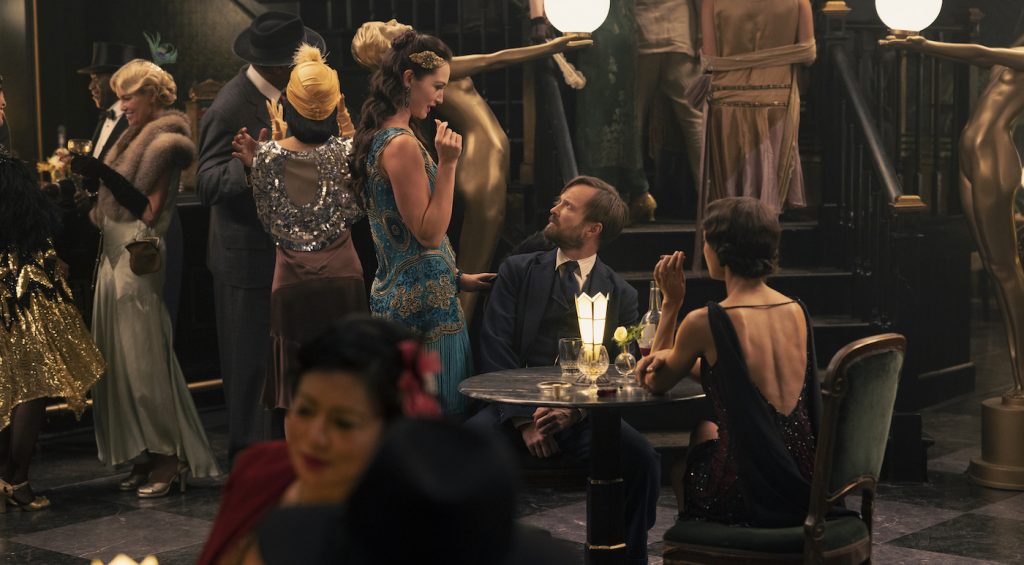
This season of Westworld introduces a new park, Temperance, that is a recreation of 1920s-era Chicago, but there are resonances to the original western-themed park. How much fun was it to play with those echoes from the first season?

Collins: What I thought was fun was we got to re-envision these knockoff characters. At the Butterfly Club in Temperance, it’s the same story beats as there were at the Mariposa [in the previous Westworld park]; you get to re-envision those characters, but as cheap knockoffs. They kind of look like them, like with Hector and his scar and with Artemis and her face tattoo. In the first season, she had a snake tattoo; in this season, she still has it, but it’s an Art Deco snake. We had fun with a lot of that stuff, it’s a nod to the people who have really stuck with the show.

There are a lot of duplicates of the Westworld cast in season 4, from Ed Harris’s William early on in the season to some big reveals throughout. How do you build those body doubles?

Aspinall: We took the duplication of the actors to another level this year. Jason and his shop did an amazing job. I’ve been doing this for 45 years, and I’ve watched the technology transition to something that is so lifelike it’s breathing in the space with you. I find that beautiful as an artist.

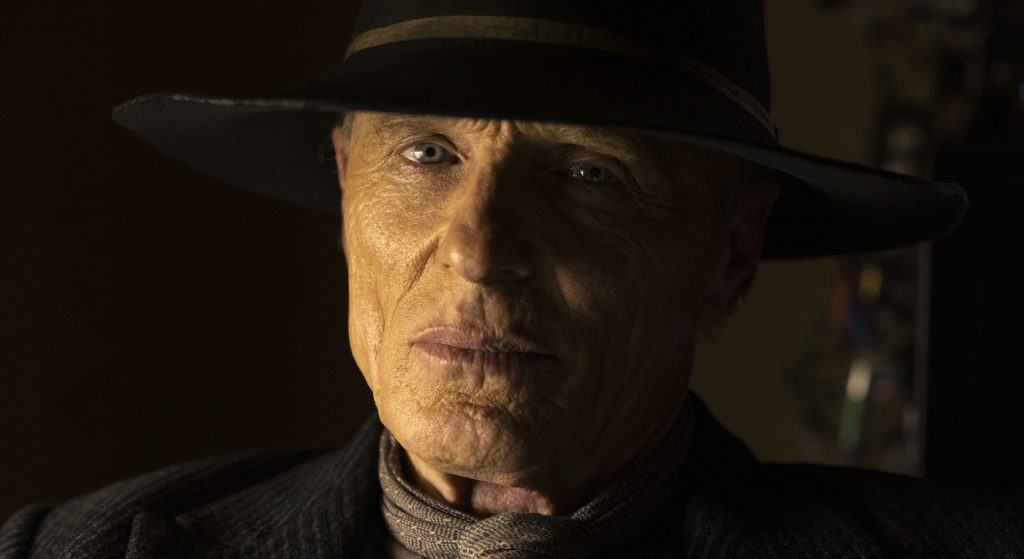
Collins: A lot of the actors you can’t get in for a full live cast due to their schedules. Take Ed Harris, for example. Ed’s on the show all the time, so what we did is we asked visual effects if they’d done a scan of him in the past, and they had. We then take that scan, clean it in a Z-brush application, then print out his head out and do another mold on it. We do a clay pour, we add the details, nuances, the little things that Ed has that maybe the average viewer wouldn’t see, but you see it in their totality, their essence. That’s what is really difficult in these body doubles, you want to find the essence of the actor. You can be technically right on the money to the exact measurement and skin tone of a person, but if you don’t have their essence, like the way they hold their head, or there’s a slight asymmetry in the eyes, you don’t know what you’re looking at, but you feel it. And those are the really important nuances that we as artists have to capture.

Ed Harris. Photograph by John Johnson/HBO

It must be difficult because you’re not just re-creating someone to look identical in a two-dimensional image but to look identical in three-dimensional space. 

Collins: Sometimes it goes against your better judgment because it’s not technically clean, but none of us are perfectly symmetrical. Those are the things we really have to focus on so the camera can find that allure that makes the real actor appealing to the audience. In episode 2, when they’re freezing Ed, that’s a body double in there because we can’t have a real person in there when they’re shooting the CO2, and they were able to park the camera on Ed’s head, and most people couldn’t tell that was a dummy.

Aspinall: That was a magical moment for us. The visual of Ed in that chamber and then the visual of our dummy in there was stunning. And it really worked.

What are the dummies made out of?

Collins: We create a master mold, and then we cast it in silicone. Most of what we’re creating are hosts, so there’s the pearl husk that goes inside of the head. That pearl husk opens up, and there’s the cradle where the pearl sits, and all of those things have to be there on our host dummies. That’s speaking to that cool aesthetic design of the show; there are rules to Westworld when you’re designing it, the aesthetic has been set up, and you have to follow through with those things. Even when you open up the head and see the pearl sitting in the husk, there’s nothing to change there because it looks perfect, like something you’d get at an Apple store.

Aspinall: We then do the hair punching, which is an art form of its own. You’re trying to find the natural hair pattern of someone’s beard or hairline, and it’s a detail we have to nail. Hair can be over-punched or applied, and things sometimes need to be removed because what you see on camera isn’t what’s always in real life. You have to adjust our fake stuff as if it has eyebrow makeup on, for example. Sometimes we have to style the dummy, then do the makeup on top of the dummy, so it matches the character. The eyebrows are always a tricky thing. You can’t duplicate it from a photo because that’s a two-dimensional image, and you’re making a three-dimensional thing, so it’s about looking at where the planes of the face are as opposed to just the shapes. I love doing that work. 

Collins: I love working on the show with you, Jen, because you’re my second set of eyes. I can present designs to you and say, ‘I think this is good?’, but then you can look at it and help tweak it. That’s the lovely part of being able to do a show with a friend.

Aspinall: We’ve got trust and respect. 

Westworld season 4 is currently streaming on HBO and HBO Max.

Featured image: Aaron Paul in “Westworld” season 4. Photograph by John Johnson/HBO

“The Sea Beast” Writer/Director/Producer Chris Williams on His High Seas Animated Adventure

Chris Williams began working on The Sea Beast around four years ago, but telling an action-adventure story in animation is something he has wanted to do for a very long time. “It’s almost no exaggeration to say most of my life,” says the Academy Award-winning filmmaker (Moana, Big Hero 6, Bolt) about his latest movie, now streaming on Netflix.

Directed, co-produced, and co-written by Williams — he collaborated on the screenplay with Nell Benjamin, a writer and composer of musical theater — The Sea Beast follows Jacob Holland, known for his legendary prowess in hunting sea monsters, and Maisie Brumble, a young stowaway on Jacob’s ship, as they begin a life-changing journey together on the high seas. Karl Urban (Lord of the Rings) and Zaris-Angel Hator (Morbius) play the leads alongside a supporting cast that includes Jared Harris (Chernobyl), Marianne Jean-Baptiste (Blindspot), and Dan Stevens (Beauty and the Beast). 

Being a member of the animation community is clearly still a thrill for Williams, as evidenced by his enthusiasm for the art. “It’s a great time right now to be working in animation because you just feel everyone kind of push the boundaries and redefine what animation can be,” he notes. “We’re all rebelling against the idea that animation is a genre and that all animated movies are the same and should all reach the same audience. I hope that [The Sea Beast] can be part of that.”

The Credits recently chatted with Williams about his inspiration for the film, the design of his star sea monster, and the importance of collaboration in animation. This interview has been edited for length and clarity.


What inspired this story? I see the influences of King Kong and “Moby Dick.”

Correct (laughs). Yeah, it’s definitely a movie where I didn’t mind wearing my influences on my sleeve. Certainly, when I was a kid, King Kong was one of my favorite movies. I know the 70s version is not considered the best version, but it was my version, and I loved it. And I also loved the old Harryhausen stop-motion films: Clash of the Titans, the old Sinbad movies, all those classic action-adventure fantasy stories. And then Raiders of the Lost Ark was a big lightning-bolt moment for me. As a kid, I loved visual storytelling. I used to draw all the time, and I used to make stop-motion movies with my dad. But I remember the experience of being in a theater and watching Raiders of the Lost Ark and just being so enthralled with it but also feeling this is what I want to do; I want to make movies. I love adventure stories where characters leave the known world and venture into the unknown, and so I wanted to make a movie that would capture the spirit of those films.

What impact did your other roles as director and co-producer have on the storytelling?

Well, the directing process was not unlike other movies that I’ve worked on. I think animation is the most collaborative art form there is. It kind of boggles the mind when you think it’s one work of art that takes shape over the course of many years and involves hundreds of artists. As a director, I always have to be able to articulate what I think is the best version of the movie, scene, or moment at any given time. But I also have to be receptive to other points of view and other ideas, and if someone has a fantastic idea, then guess what, it’s in the movie. Working with the story team and Nell [Benjamin] as well, we had a great back and forth. A lot of it was remote, especially with the pandemic happening, so for nearly two years, we were working through a lot of Zoom conversations. It’s all about just creating an environment where people feel comfortable challenging assumptions.  

THE SEA BEAST - (L-R) Karl Urban as Jacob Holland and Zaris-Angel Hator as Maisie Brumble. Cr: NETFLIX © 2022
THE SEA BEAST – (L-R) Karl Urban as Jacob Holland and Zaris-Angel Hator as Maisie Brumble. Cr: NETFLIX © 2022

The movie’s female lead, Maisie, is a person of color and a young girl. Additionally, Sarah Sharpe, the captain’s right hand, is also female and a person of color. Were these decisions intentional from the outset or did they come about as you were writing the story?

Boy, when you say intentional, it gets so complicated, doesn’t it? Because on some level I think it’s nice to think in terms of colorblind casting, that a hero can be of any ethnicity, right? But sometimes you think there’s a lack of balance, and you start to cast more intentionally. This is a movie that takes place with the technology of around 1700, so it’s obviously not our world, and it’s not our planet. It’s a fantasy world and so we made a decision early on that the crew of the ship would be all of different ethnicities and genders and, in making that choice, we were able to make the ship’s crew more resemble our world today. That was something that we were all really excited about. It wasn’t going to be all white men. We knew we had a white male lead in Jacob and wanted to create a nice balance with Maisie.

THE SEA BEAST – (Pictured) Zaris-Angel Hator as Maisie Brumble. Cr: NETFLIX © 2022
THE SEA BEAST - (Pictured) Karl Urban as Jacob Holland. Cr: NETFLIX © 2022
THE SEA BEAST – (Pictured) Karl Urban as Jacob Holland. Cr: NETFLIX © 2022

Speaking of Jacob, he undergoes a transformation, thanks to Maisie and the Sea Beast. 

That, I think, was so much of the fun. The center of the movie, the center of the plot, and the center of the emotion is the Jacob and Maisie relationship. We were so lucky with the actors. First, Zaris-Angel Hator, who plays Maisie, was just incredible. We didn’t want to cast someone older who was pretending to be young, we wanted an authentically young actor. Obviously, Zaris-Angel was sophisticated beyond her years as an actor and was able to really create an amazing character and really articulate powerful moments along the way. And Karl Urban, who plays Jacob, is so much fun and can be self-effacing. Jacob’s definitely a good-hearted and courageous guy. He cares about other people and wants to keep them safe. But he’s also very powerful and used to things going his way. So it was so much fun to basically throw Maisie at him. She starts spinning circles around him, and he’s just not used to that, and Karl knew just how to play that. I think the dynamic between characters is more important. Characters have to be foils for one another, and I think Jacob and Maisie bring the best out of each other because they’re always pushing on each other. 


What went into determining the design of Red, the Sea Beast? I read in the end credits that you enlisted a marine biology consultant.

Everything with animation, especially in a movie like this where world-building was so essential, all starts with research. So when we got to design Red, a creature like this that lives in the water, we first looked at sea animals in our world. We looked at walruses, seals, sea lions, whales, of course, penguins. We looked at lots of animals that can go up on land but primarily live in the water and are more comfortable in the water. And we saw right away one of the most critical aspects was that it needed to be very streamlined, very sleek. It had to have a very frictionless design to be pushing through the water and not expend too much energy. Then we thought of her as the queen of the monsters and wanted to give her a very regal and noble bearing, so we looked at lions and tigers. Her general demeanor was very much informed by lions. And we also knew, because she had to pull her massive weight across the ground, that she’d have to move like a gorilla, so we gave her these really powerful shoulders as well. A lot of different elements went into it.    

THE SEA BEAST - (Pictured) Brickleback and The Inevitable . Cr: Netflix © 2022
THE SEA BEAST – (Pictured) Brickleback and The Inevitable . Cr: Netflix © 2022

The animation is incredible. In many scenes, it’s like you’re looking at a live-action film. You spent years at the most prominent creator of animation, Disney. What was it like working with Netflix Animation and Sony Pictures Imageworks? How was that transition?

For me personally, it was a seismic change in that I’d been working at Disney Animation for nearly 25 years. I’d known and worked with people for decades, and I’d had a great experience. I was always treated very well and worked on movies that I’m really proud of. That was almost a double-edged sword of it. I was concerned that I was getting too comfortable, becoming complacent, and I really wanted to throw myself into something very different. And so I looked around to see what else was out there and saw that Netflix Animation was just getting off the ground. I remember that very first day I drove to work, not to Disney Animation after 25 years but to Netflix, I parked my car, and I realized I was a crew of one at that point. That felt very unfamiliar, and I realized that I had a lot of work to do just to try to assemble a team that was going to make the movie. Ultimately, we partnered with Sony Imageworks, and they have a lot of experience working on big movies as well as live-action event movies with lots of big special effects, so they were primed and ready for a movie like this. Things I’d worked on in the past were primarily comedies, going from laugh to laugh, whereas in this movie, it was more of an action-adventure with a stronger sense of peril, and that was going to be the primary source of engagement. Of course, we want to have fun and funny moments along the way, but we’d sort of get there when we get there as opposed to feeling there’s an urgency to get there. So tonally, it was a different beast for sure. 


For more on big titles on Netflix, check these out:

Guillermo del Toro’s “Pinocchio” Reveals Official Trailer

Netflix to Expand “The ” With a Sequel & Spinoff

“Stranger Things 4”: Watch Jamie Campbell Bower Become Vecna

Featured image: THE SEA BEAST – (L-R) Zaris-Angel Hator as Maisie Brumble, Jared Harris as Captain Crow, Karl Urban as Jacob Holland and Marianne Jean-Baptiste as Sarah Sharpe. Cr: NETFLIX © 2022

“Atlanta” Final Season Trailer Reveals the Swan Song of one of TV’s Most Fearless Shows

We’re nearing the beginning of the end of Donald Glover’s Atlanta, one of TV’s most consistently ambitious, relentlessly unique series of the past six years. FX has revealed the trailer for the fourth and final season, which will find the series returning to its namesake city after season three’s European sojourn.

The crew is back in their hometown—Ern (Donald Glover), Paper Boi (Brian Tyree Henry), Darius (LaKeith Stanfield), and Van (Zazie Beetz)—after a surreal journey in Europe during Paper Boi’s international tour. Glover has said that the final season will be the most grounded, focusing more on the central characters rather than what has become one of the series’ trademarks, a willingness to deviate from the lives of its four leads and explore bizarre, oftentimes unsettling tangents that, more often than not, have been pulled from real life insanities.

“I think it explores people more than we have before because I feel like we are right now kind of living in a time where you just don’t give people the benefit of the doubt,” Glover said at the Television Critics Association press tour.

Donald Glover’s younger brother Stephen Glover, a writer and executive producer on Atlanta, has said that his hope is their show’s fearless approach to getting weird will inspire other creators to follow their creative vision, no matter how off-kilter it might seem.

“How much weird stuff we’ve been able to do, hopefully that leads other people to take risks and do weird things too,” he said.

Atlanta hasn’t just consistently defied expectations—it’s been an excellent character study, a launching pad for the careers of not just the leads, who are movie stars now, but the creatives behind the scenes as well, including longtime Atlanta director Hiro Murai. It’ll be sad to say goodbye to one of the most iconic shows on television, but the ride has been joyous, defiant, and, yes, delightfully weird.

Check out the season 4 trailer below. Atlanta returns on September 15.

Featured image: Courtesy of FX.

How Skylight Studios Transforms Inaccessible Spaces into Inspiring Locations

What people love, fear and crave are constantly defined by their location. From first noticing the otherworldly star band the Milky Way presents in a clear night sky to reading about CERN potentially ending the world while strapped to an airline seat 10,000 feet above the earth – the location of every moment serves as a lens through which we all see the world. And all those moments stay with us.

For storytellers, this presents a treasure trove of opportunities to immediately tap into what their audience cares about, allowing them to see the relevance of their own experiences. The metallic walls of a dank armory, the expansive green rows of a California vineyard, and the wide-open ranges of Montana can become a source of audience gravity for any motion picture production. 

Skylight Studios are masters of transforming purpose-built spaces into creative landscapes for film and TV studios. They don’t pursue the cliché locations that lack originality. Rather, Skylight prides itself on selecting sites that have been forgotten or abandoned, including power plants, warehouses, train stations, and more. By bringing new life to these venues, Skylight aims to build bonds with surrounding communities and create opportunities that benefit everyone.

In August 2020, for example, Skylight brought “Stranger Things: The Drive-Into Experience” to life at ROW DTLA, a historic compilation of industrial buildings built a century ago in Los Angeles. This was one of the first major immersive events to launch during quarantine and was a major success in bringing people back together. It sold 150,000 tickets and brought together 20 retailers, including cafes, restaurants, and lifestyle storefronts.

The Stranger Things Drive Into event. credit: Scott Clark Photography
credit: Scott Clark Photography
The Stranger Things Drive Into event. credit: Scott Clark Photography

Skylight Studios has the gravitas needed to be successful working with industry giants such as Netflix, Apple, Disney, and HBO, but their impact doesn’t end there. They understand that at the ground level, it is everyday people whose lives are impacted through their work. That’s why Skylight makes a point to preserve key property stakeholders and small businesses across the communities they partner with and build ongoing relationships at all levels of a property to honor its ecosystem.

When film and television production happens locally, Skylight is able to bring a new life to more underutilized locations, buildings, and venues in communities that have been deemed architectural pillars of the past. It’s not only the buildings that are being impacted. Countless jobs for sub-contractors and property staff like security personnel, janitors, engineers, and electricians created and supported are all propped up by the work that Skylight does. Small businesses located around productions that Skylight helps drive also experience an economic boost. On active production days, local businesses can see an average 20% increase in sales at their businesses, cafes, and other storefronts.

Skylight leaves a positive impact on the community in which they do business. With the help of California’s film and television production incentives, more local productions mean Skylight can transform more underused locations into creative hubs, create job opportunities for Californians in their home state, and continue sound stage and studio development across the state. If tax incentives are extended in California, it can lead to greater possibilities for economic growth between Skylight and the California communities it represents. 

Skylight has been in operation across more than 20 mixed-use venues in over 5 different markets for more than a decade, and they’re not slowing down any time soon. Skylight’s commitment to honoring and supporting a local ecosystem through film and television production is evident, and they are happy to play a part in such an outsized community role. 

Featured image: STRANGER THINGS. (L to R) Millie Bobby Brown as Eleven and Jamie Campbell Bower as Vecna in STRANGER THINGS. Cr. Courtesy of Netflix © 2022

New “Prey” Video Connects Latest Film to Original “Predator”

“There’s something out there waiting for us, and it ain’t no man.” These are the first words we hear spoken in this new Prey featurette, but they’re not from director Dan Trachtenberg’s upcoming film. These lines were spoken during director John McTiernan’s original Predator (1987), when a team of commandos led by Arnold Schwarzenegger’s Dutch first tangled with the extra-terrestrial hunter in a Central American jungle. Now, Trachtenberg’s Prey takes us back well before the events in Predator to the Comanche Nation some 300 years ago, when our hero Naru (Amber Midthunder) doesn’t have any military-grade firepower to fight off the Predator on the prowl on her lands.

“I was excited about telling a Predator story in a different time,” Trachtenberg says. “And it’s this creature’s first time to this planet, and there’s great root-ability watching someone whose made their own weapons and see how they’re going to use those things to take down something with alloy and laser advantages. This is a David and Goliath story.”

The Predator (Dane DiLiegro), shown. (Photo courtesy of 20th Century Studios.)

Trachtenberg’s film comes from a script by Patrick Aison (Jack Ryan), and the production was committed to making sure their portrayal of the Comanche was accurate. A key to this effort was producer Jhane Myers, an acclaimed filmmaker and member of the Comanche nation, and the cast, along with Midthunder, is comprised entirely of Native and First Nation talent. This includes Dakota Beavers, Stormee Kipp, Julian Black Antelope, and Michelle Thrush.

“The very first Predator set the bar for all future franchise films,” says Jhane Myers. “So it gives us some of that backstory, and also indigenous survival.”

Speaking of indigenous survival, this might be the key to the film. At the end of the ripping new featurette, Naru acknowledges that the Predator knows how to hunt. But she adds a crucial caveat. “I know how to survive.”

Check out the new featurette below. Prey begins its hunt on Hulu on August 5.

For more on Prey, check out these stories:

“Prey” Trailer Reveals Hulu’s Ambitious Predator Prequel

“Prey” Trailer Reveals “Predator” Prequel Coming to Hulu

“Predator” Prequel Reveals Title & Release Window

Featured image: Naru (Amber Midthunder) and the Predator (Dane DiLiegro), shown. (Photo by David Bukach.)

New “Bullet Train” Clip & First Reactions Hype Hilarious, Hardcore Action-Comedy Led by Brad Pitt

Brad Pitt has proven, time and time again, that his leading man looks belie an astonishing ability at playing goofy, weird, wild, and wasted. From his scene-stealing turn as the pothead Floyd in a brief sequence in True Romance to his paranoid asylum patient playing opposite Bruce Willis in 12 Monkeys to his lunatic bare-knuckled boxer in Snatch—and dozens of films between and after—Pitt has proven again and again he’s very comfortable providing off-kilter energy and some killer comedic timing. Now, in David Leitch’s star-studded assassins-on-a-train action/comedy Bullet Train, Pitt is coming in for some stellar reviews as the glue that keeps this breathless, butt-kicking movie together.

Barry Hertz of the Globe and Mail writes: “Bullet Train’s biggest weapon, of the secretly funny variety, rests in the chiseled form of star Brad Pitt, who once again proves that he is as charming a buff-and-tough movie god as he is a wry, self-deprecating comedy star.”

Bullet Train is centered on Pitt’s Ladybug, an assassin who wants out of the business but has a new job to take care of, one that takes him on the titular bullet train. Once onboard, Lady Bug learns he’s not the only trained killer on the job, and what ensues is a go-for-broke action-comedy that benefits from director David Leitch’s mastery of the fight scene (he’s the man who brought us Atomic Blonde and Deadpool, to name a few). A new clip highlights the kick-ass tone of the film:

With Bullet Train opening on August 5, the reviews have started to pour in. Let’s check out some of those spoiler-free reactions and reviews, shall we?

For more on Bullet Train, check out these stories:

Official “Bullet Train” Trailer Takes Brad Pitt on a Wild Ride

First “Bullet Train” Trailer Reveals Brad Pitt in Upcoming Action Thriller

First “Bullet Train” Teaser Reveals Brad Pitt in Action Thriller

Featured image: Brad Pitt and Bad Bunny star in Bullet Train. Courtesy Sony Pictures.

First “She-Hulk: Attorney At Law” Clip Reveals a Lesson in the Hulk Lifestyle

In the first official clip from Marvel Studios She-Hulk: Attorney at Law, we learn some pretty intriguing new information on what life is like as a Hulk. Bruce Banner (Mark Ruffalo) is schooling his cousin Jennifer Walters (Tatiana Maslany) on the finer points of living life as a superhumanly strong person. It’s mostly negative. Here’s what Bruce has to say when he feels his cousin isn’t taking him seriously: “Jen, when you have powers like this, it’s like putting a target on your back and the backs of all the people that you care about.” Sounds bleak!

Yet, it’s not all bad being a Hulk as Bruce explains that along with the superhuman strength, your Hulk-ian body metabolizes alcohol super quickly, which means it’s “All buzz, no barf.” This is some welcome news for Jen, who will have plenty of reasons to drink once the world finds out that, like her cousin, she’s an impossibly powerful superhero.

She-Hulk: Attorney at Law comes from directors Kat Coiro and Anu Valia, with Jessica Gao as the head writer. The series will be the second-to-last MCU installment in Phase 4, followed by Ryan Coogler’s Black Panther: Wakanda Forever. The tone of She-Hulk is that of a workplace comedy, only with a healthy dose of MCU magic, of course. Joining Maslany and Ruffalo are Tim Roth as Emil Blonsky/the Abomination, Benedict Wong as Wong, as well as Ginger Gonzaga, Josh Segarra, Jameela Jamil, Jon Bass, and Renée Elise Goldsberry.

Check out the official clip below. She-Hulk: Attorney at Law arrives on Disney+ on August 17.

Here’s the official synopsis for She-Hulk: Attorney at Law:

In Marvel Studios’ She-Hulk: Attorney at Law, Jennifer Walters (Tatiana Maslany)—an attorney specializing in superhuman-oriented legal cases—must navigate the complicated life of a single, 30-something who also happens to be a green 6-foot-7-inch superpowered hulk. The nine-episode comedy series welcomes a host of MCU vets, including Mark Ruffalo as Smart Hulk, Tim Roth as Emil Blonsky/the Abomination, and Benedict Wong as Wong, as well as Ginger Gonzaga, Josh Segarra, Jameela Jamil, Jon Bass and Renée Elise Goldsberry. Directed by Kat Coiro (Episodes 1, 2, 3, 4, 8, 9) and Anu Valia (Episodes 5, 6, 7) with Jessica Gao as head writer, She-Hulk: Attorney at Law streams exclusively on Disney+ beginning August 17, 2022.

For more on She-Hulk: Attorney at Law,  check out these stories:

“She-Hulk: Attorney at Law” Trailer Reveals Two Hulks, One Abomination & One Frog-Man

Marvel Studios Chief Kevin Feige Teases “She-Hulk,” “Secret Invasion,” “Loki” Season 2 & More

First “She-Hulk: Attorney at Law” Trailer Reveals Two Hulks for The Price of One

Featured image: (L-R): Mark Ruffalo as Smart Hulk / Bruce Banner and Tatiana Maslany as Jennifer “Jen” Walters/She-Hulk in Marvel Studios’ She-Hulk: Attorney at Law, exclusively on Disney+. Photo courtesy of Marvel Studios. © 2022 MARVEL.