“Captain America: New World Order” is Officially Filming

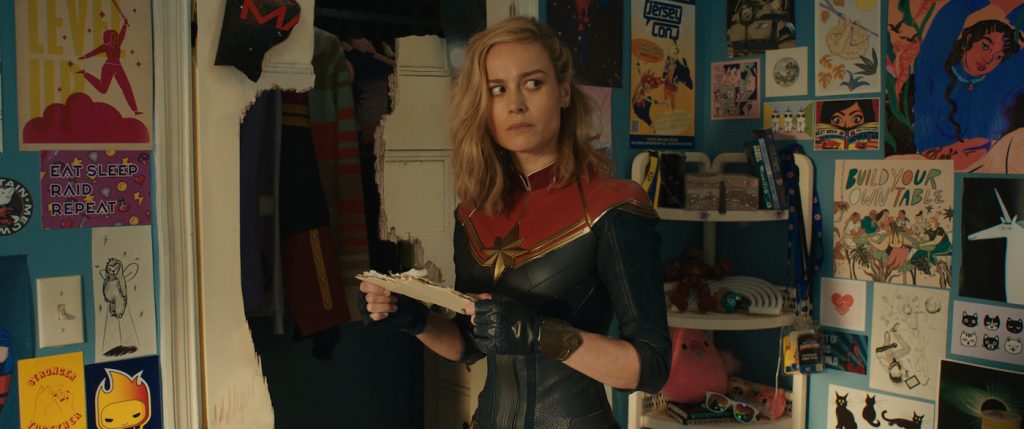
Anthony Mackie has officially suited up for his first lead role in a Marvel movie. Captain America: New World Order has begun filming, the fourth film in the Cap franchise, with Mackie reprising his role as Sam Wilson after leading Marvel’s epic Disney+ series The Falcon and the Winter Soldier. 

New World Order will find none other than Harrison Ford playing General Thaddeus Ross (replacing the late William Hurt) and will continue Sam Wilson’s story after the events in The Falcon and the Winter Soldier saw him finally accepting the shield Cap (Chris Evans) gave him at the end of Avengers: Endgame. 

Naturally, there’s little by way of plot details at this early stage, but we know The Falcon and the Winter Soldier creator and head writer Malcolm Spellman co-wrote the script alongside Dalan Musson (who also wrote for the Disney+ series), with Julius Onah directing.

New World Order will include Sam’s right-hand man, Bucky Barnes/The Winter Soldier (Sebastian Stan), who was there with Sam during his struggle with the Flag Smashers in The Falcon and the Winter Soldier. Tim Blake Nelson is on board with a crucial role as Samuel Sterns/The Leader, Danny Ramirez plays Joaquin Torres/Falcon (taking over for Sam, now that he’s the new Cap), Shira Hass as Sabra, Carl Lundry reprising his role from the Disney+ series as Isaiah Bradley, and Xosha Roquemore in an undisclosed role.

Captain America: New World Order is slated to hit theaters on May 3, 2024.

For more on Captain America: New World Order, check out these stories:

Harrison Ford Joins the MCU With Role in “Captain America: New World Order”

“Captain America: New World Order” Reveals Cast at Disney’s D23

“Captain America 4” Has Its Director in Julius Onah

Anthony Mackie is Suiting Up For “Captain America” 4

Featured image: Falcon/Sam Wilson (Anthony Mackie) in Marvel Studios’ THE FALCON AND THE WINTER SOLDIER exclusively on Disney+. Photo courtesy of Marvel Studios. ©Marvel Studios 2021. All Rights Reserved.
“Daisy Jones & the Six” Makeup Department Head Rebecca Wachtel Captures the Many Faces of Stardom

Daisy Jones and the Six makeup department head Rebecca Wachtel dedicated herself to the details in shaping the on-screen look of the music group. “It’s a fictional band, but it’s in factual times,” Wachtel said of her approach to the project. She spent two months researching and planning for the series that spans from the mid-1960s to the 90s.

The electric success of the band and acrimonious split, originally chronicled in the best-selling novel by Taylor Jenkins Reid, mostly takes place in the 1970s. Wachtel examined trends of the time to give the characters complexity and depth as if they had truly lived. “[People] didn’t actually wear a lot of makeup [in the 70s],” Wachtel reflected. “The only time you’d see a lot of makeup on someone was if it was a TV announcer or a model or somebody really overdone. But in general, you even watch the Oscars from back then, and it’s like they did it themselves. Everything is very organic. For me, that sells the era, especially with this project and the band, specifically, is that kind of LA hippie Laurel Canyon vibe.”

Riley Keough (Daisy). Credit: Lacey Terrell/Prime Video.

Hippie style has become caricatured in the decades since the lifestyle was popular. Halloween costumes emphasizing fringe and flower power have come to define our perspective on the style of the era, but Wachtel wanted to give each character more authenticity.

“I’m not trying to make a character show of the 70s and every person has to look like this generic 70s look that we think of. People look like people. Some people never wear makeup. Some people don’t really change, or some people are held back in style from years before,” Wachtel observed. “There are subcultures and genres happening too. It’s all individual based on their personality, and the character and makeup help to tell the story of who a person is. I didn’t want things to look perfect and like there was a makeup artist who did their makeup.”

Suki Waterhouse (Karen). Courtesy of Amazon Studios.

Achieving a natural look on screen comes with a lot of challenges. Self-expression took different forms half a century ago than it does today. Tattoos are now much more popular but wouldn’t fit the show’s era. Wachtel and her team had to put in much prep work to bring several actors to a blank slate before even applying their style.

Riley Keough (Daisy Jones), Sam Claflin (Billy Dunne). Courtesy Amazon Studios.

“You’re watching a show like this; they all look natural and easygoing. It’s effortless like there wasn’t much done, but in reality, it was a lot to get to that point,” Wachtel acknowledged. “We would cover their tattoos. Riley [Keough] has eight tattoos. She’s also super fair-skinned, so she was getting spray tans sometimes, but it was not consistent, so 80% of the time, I would do body makeup on her from the neck down. I covered all her tattoos, I did her face, I did her body makeup, and then I added a sheen to it to make it look like natural skin, like it has a little bit of a glow. Everything to make her look effortless.”

Riley Keough (Daisy). Credit: Lacey Terrell/Prime Video.

As some of the band members’ hard-partying rock star habits begin to catch up with them, that glowing skin begins to tarnish. As the episodes progressed, Wachtel turned to more effects techniques to reflect the toll of drugs on several of the characters.

“As [Daisy’s] doing more drugs, in her performance looks, she’s high, so she’s getting shinier and sweatier, so I had Josie Maran intensive oils,” she explained. “It’s more natural, and I put that on top of the makeup. There are all kinds of techniques and tricks that you learn along the way in your career. Sometimes I do use cream blush for the redness and break it up. It was the same for Billy (Sam Claflin). I had to add the redness around his eyes and nose, making him a little more like he was drinking too much and performing. He didn’t look that great.”

Sam Claflin (Billy Dunne) and Riley Keough (Daisy). Credit: Lacey Terrell/Prime Video.

Daisy’s journey with addiction takes a toll on her career and relationships. In addition to the physical effects of her drug use, she begins to make new style choices as she tries to cope, and her character evolves.

“She’s losing color in her skin. She has more redness, deep set around her nostrils because she’s doing a lot of coke and not wearing much makeup,” Wachtel noted. “Her under eye becomes deeper set, and she gets the dark circles. She’s becoming a little gaunter, a little more washed out, but she’s putting more makeup, eye shadow, and lip color on for her shows. She’s becoming more washed out until she has a breaking point and she ODs. At that point, she’s almost naked in her face, and I break down her skin tone, texture, and redness. I think that by not having a lot of makeup on her face and even breaking down the skin tone more and making her look a little worse just shows this vulnerability and shift in who she is.”

Riley Keough (Daisy) and Sam Claflin (Billy Dunne). Credit: Lacey Terrell/Prime Video.

By the end of Daisy’s public performances, she begins to make bolder choices. The transition signals the dawning of a new and now iconic era in makeup. Wachtel deliberately positioned Daisy at the forefront of fashion.

“Especially if you’re someone famous, you’re ahead of the trends,” she explained. “[Daisy] is doing these heavier eye shadow colors and darker, which is what we think of as 80s makeup, but it was really late 70s, early 80s when all of that was popular. For her and Suki [Waterhouse], her show look at the end is a slightly heavier, stronger eye makeup. Then the final show look, [Daisy] looks like a crazy mess because she’s supposed to look like a crazy mess. She’s never worn black eye makeup, and now she has all this black eye makeup on, but it’s very messy in a catlike way that she put on herself. She comes out with what we think of as a really 80s style. Strong cheek and a red lip. Everything is heavier. We haven’t ever seen her like that before, and it’s new and different.’

One detail Wachtel chose is a tender gesture to a friendship on the rocks. “[Daisy] also has some glitter that she put on. She doesn’t really wear glitter. I did a little bit for her shift in who she is and also a play to her relationship coming back together with Simone (Nabiyah Be),” Wachtel explained. “She’s a disco queen and her best friend. They had a falling out, and then they get back together. Simone is like a glitter queen. I wanted to tie all that in together.”

Nabiyah Be (Simone). Credit: Lacey Terrell/Prime Video.

Wachtel worked with Leslie Devlin on a trademark style statement of the 1970s – men’s facial hair. “Anything that is on the body or the face, other than the top of the head and is hair related, it’s considered makeup department,” Wachtel explained. Creating and applying beards, goatees, and sideburns is an intensive process. “You do a tracing of the shape of their face and measurements and do color matching to match their hair tone. Then I just gave her images of the style I wanted, and each hair is hand knotted on really, really fine lace. So, they’re sheer. We just glue them on, and they blend into the skin. You have to reset them after every time you pull them off at the end of the night.”

osh Whitehouse (Eddie Roundtree), Suki Waterhouse (Karen Sirko), Sebastian Chacon (Warren Rojas), Sam Claflin (Billy Dunne), Riley Keough (Daisy Jones), Will Harrison (Graham Dunne. Courtesy Amazon Studios.

Wachtel considers Daisy Jones & the Six to be a highlight of her career that spans more than two decades. Shaping the style of your favorite novel characters is an experience most book fans only dream of.

“You envision what characters look like when you’re reading a book. If it’s something you really like, it’s so fun to bring that to life, but also a lot of responsibility,” Wachtel said. “I want to make everybody happy. There are always going to be people who are going to pick things apart, but it was really important to me to make sure that things that were really staples of their character made it to the show in some fashion. If it was talked about in the book and was makeup related, I wanted to ensure it stayed that way. It was really a dream.”


Daisy Jones and the Six is now streaming on Amazon Prime with new episodes each Friday.


For more on Amazon Prime Video, check out these stories:

“Daisy Jones & the Six” Cinematographer Checco Varese on Evoking 70s Vibe Through a Contemporary Lens

“Harlem” Costume Designer Deirdra Elizabeth Govan on Season Two’s Evolving Looks

“Spider-Man Noir” Live-Action Series Coming to Amazon

Ben Affleck & Matt Damon Chase Michael Jordan for Nike in First “Air” Trailer

Featured image: L-r: Suki Waterhouse (Karen Sirko), Will Harrison (Graham Dunne), Josh Whitehouse (Eddie Roundtree), Sebastian Chacon (Warren Rojas), Riley Keough (Daisy Jones), Sam Claflin (Billy Dunne.) Credit: Pamela Littky/Prime Video

“Scream VI” Cinematographer Brett Jutkiewicz on Framing Scenes So They Cut Deep

Brett Jutkiewicz wanted the images to cut a little deeper in Scream VI. Inspired by the franchise’s move to New York City, the cinematographer wanted a crueler and harsher mood. To achieve this effect, Jutkiewicz ditched anamorphic lenses and brought a new aesthetic to the long-running series.

Filmmakers Matt Bettinelli-Olpin and Tyler Gillett, known as Radio Silence, embraced Jutkiewicz’s idea for a new style. The trio collaborated on Ready or Not and the previous Scream film. There’s trust between the collaborators, resulting in some exhilarating sequences in Scream VI that Jutkiewicz recently explained.


What were some lessons from the previous Scream film you kept in mind this time around?

It was familiarizing myself again with the characters and with their backstories. It allowed me to get a bit deeper than with the directors in talking about how Scream 2022 fits into the overall franchise. Visually, Scream VI is a bit different just based on the setting. I also took some things from the past film in terms of understanding how to photograph Ghostface in a way that feels scary and intimidating. It was something that started early on in the last film in the camera testing. What brought out the mask? What made it look scarier? What’s nice about Ghostface is his mask is white, so it pops in these dark environments, which is helpful. You have to be careful not to overlight it, to make it still feel menacing. And then understanding how Ghostface moves, his robe looks, and his mask looks in certain environments. Obviously, in Scream VI, the mask that he’s wearing is a bit different. It’s aged, it’s older, and it has more texture to it. Avery [Plewes], our costume designer, and her whole team did a fantastic job creating this mask that’s so creepy and iconic.

Ghostface in Paramount Pictures and Spyglass Media Group’s “Scream VI.”

How’d you approach shooting the mask this time?

You know, lighting from below generally tends to give a more sinister vibe to faces. When we brought in the light from below, it brought out the texture. When it made sense for the environment and the close-ups, that’s what we were doing. In Gale Weather [Courtney Cox]’s apartment, when he steps out from behind this shattered bookcase, we were lucky that the bookcase had some lights in it that kind of motivated lowlight. I went with a light right below Ghostface, coming almost straight up.

Ghostface in Paramount Pictures and Spyglass Media Group’s “Scream VI.”

The other advantage of Ghostface is he has no eyes. As a cinematographer, you’re often trying to get light into somebody’s eyes. You try not to compromise the overall look of the lighting to introduce a little sparkle into a character’s eyes. But with Ghostface, we don’t have that issue at all. 

Ghostface in Paramount Pictures and Spyglass Media Group’s “Scream VI.”

Which lenses work best for Ghostface?

We used different lenses on this film. Previously they’d all been shot on anamorphic lenses. On this film, we switched to spherical lenses, which are a bit different. Spherical lenses are cleaner. Being in this grittier urban environment, I wanted these lenses that embraced that look. It’s subtle, but there’s one less layer of artifice between the audience member and the action of the film.

Since there’s a bit of Ghostface action in a theater, as well as history from the franchise and a lot of character moments, what challenges came with shooting in that space?

That theater was interesting. It was a great find by our locations department in Montreal. Michelle [Laliberte], our production designer, did an incredible job aging the theater and adding all these elements. It was a complex space to light. There was a lot of action there. We wanted to allow the characters and the actors to move freely in the space. We wanted to light the environment but, at the same time, keep it moody.

Ghostface in Paramount Pictures and Spyglass Media Group's "Scream VI."
Ghostface in Paramount Pictures and Spyglass Media Group’s “Scream VI.”

I was happy with how the space turned out, especially the stage with all the Ghostface robes and the spotlighting that we did there. I mean, it certainly stretches the bounds of reality that the people who set up the shrine would’ve lit it so, you know, specifically. I think that’s okay, though. When I talked to the directors about it, I asked, ‘Is it okay that this feels lit by a professional?’ We decided the mood was right. We think it looks good. It has the right energy.

L-r, Hayden Panettiere (“Kirby Reed”), Jasmin Savoy Brown (“Mindy Meeks-Martin”), Jack Champion (“Ethan Landry“), Melissa Barrera (“Sam Carpenter”), Jenna Ortega (“Tara Carpenter”), Mason Gooding (“Chad Meeks-Martin”) and Courteney Cox (“Gale Weathers”) star in Paramount Pictures and Spyglass Media Group’s “Scream VI.”

When you’re working in horror, are you more accepting of going beyond the limits of reality?

I think it’s all about enhancing the audience’s experience of watching the film. Through every element of the filmmaking process, from the blocking and how the characters move in the space, the directing, the production design, the camerawork, and the lighting, it’s creating the right mood that supports the emotion of the scene or what the characters are going through. You can push that a little more in a horror film because it helps create an ambiance, mood, and tension.

Do you and Radio Silence still spend time discussing Wes Craven and how he’d approach scenes?

Wes’s work is always on our minds, especially the original Scream. We always talked about how amazingly effective the blocking and the camera movement are in that first film. You know, it’s not a super dark film in terms of the lighting. It’s even more impressive how tense and scary it is without relying on too many very dark scenes to hide things.

Let’s talk about blood. Some cinematographers say it’s hard to get the red just right in the light. How was your experience there on Scream VI?

It starts in testing. The special effects people bring in different blood and mixtures, and we’ll look at them on camera. It’s about defining the right mixture of blood that looks good on camera and the color treatment we’re giving the film. So, that’s where it starts. On set, it’s a lot about sneaking in a little light to create some shine on the blood. When it’s a relatively static closeup, it takes a bit of finessing to create a little dimension and a little sheen on the blood, so it doesn’t feel too flat. Blood is a fairly dark red color, so if it’s on darker clothing, it takes work to make it pop and stand out. Our special effects and makeup effects team did a great job with the blood mixture, and it was very consistent. It usually took very little work to look good. Sometimes it just needs a little extra pop from an additional lighting source.


How did you approach filming the epic subway scene?

The train sequence is probably the scene we discussed most in prep. It was just a complicated scene. There’s a lot of action, a lot of characters, and a lot of extras. Michelle, our production designer, and her team wound up building the train car from scratch. We shot on a stage in Montreal. For me, the biggest challenge was creating the movement of the train because the train wasn’t moving. I mean, we were able to pull it in and out of our station, just enough to get the sense that it was pulling in or pulling out. When they were moving through the tunnels, that was all the lighting effect.

How did you light it?

There were hundreds of lights hung spanning the length of the train and then programmed to create this sense of movement. We tested that and tried to find the right combination of color and the right speed. We put a layer of black silk between the windows of the train and the lights. It blurred them enough so you couldn’t tell that it was a light just hanging there that was flashing. Also, using a shallower depth of field with our camera helped.

And for inside the train?

We programmed some clicker effects for the inside of the train that I could cue over the walkie-talkie when I wanted it to flicker at certain moments. I don’t think it was ever realistic, but there was briefly some talk of, well, can we somehow shoot this on a real moving train? Looking back on it, I’m so glad we did it the way we did. We would never have had the amount of control that we did.

Even in the shortest of exterior scenes, what did you want to do to help transform Montreal into New York City?

Knowing New York as well as I do is hard for me. It doesn’t really look like New York. In this case, many of our exteriors were at night, which helped, and our art department did a great job of dressing in street signs and bringing in taxis, buses, and the subway. We had a subway entrance that we could plop down on a corner where we needed it. I was involved early on in looking for locations, specifically streets that felt like New York. I had some input on where things would be staged. It was done to make it feel as New York-y as we could. We took some liberties, but locations and lighting were important. I tried to light things in the way that I know they’re lit in New York, in terms of the streetlight color and the mood of things. 

Melissa Barrera (“Sam Carpenter”) stars in Paramount Pictures and Spyglass Media Group’s “Scream VI.”

What are some unexpected challenges with Scream VI?

What’s always challenging for cinematographers is daytime exterior scenes. The sun is always moving and never stops moving. If you shoot an exterior scene that’s supposed to take place in the movie across five minutes, but it takes you 10 hours to shoot it, the sun is in a very different place at the beginning of the day than at the end of the day. Clouds come in and go. The scene at their apartment the morning after the ladder escape scene was particularly challenging. We had a lot of equipment to try to control the sun, but it was moving in and out of the clouds. It’s always a challenge to create continuity across a daytime exterior scene. When you watch it, you might think, you just bring the cameras outside, and the light’s already there, right? You put the cameras where they need to go and shoot the scene. Those scenes are always challenging, just trying to control the sun, which always refuses to be controlled.


For more on Scream VI, check out these stories:

“Scream VI” Editor Jay Prychidny on Stitching Together an Epic Slasher

“Scream VI” Review Round-Up: A Clever, Homicidal Shell Game in the Big City

Paramount Reveals “Scream VI” Super Bowl Spot

“Scream VI” Trailer Finds Hayden Panettiere Back Fighting Ghostface in NYC

Featured image: Ghostface in Paramount Pictures and Spyglass Media Group’s “Scream VI.”

“John Wick: Chapter 4” Stunt Coordinators on How They Crafted the Craziest “Wick” Yet

Editor’s Note: Leading up to the release of John Wick: Chapter 4 on March 24, 2023, The Credits is publishing a “Wick Week” of content, weaving stories about the film’s fighting style, and cinematography, along with an interview with director Chad Stahelski. Some mild spoilers follow.

“No one department works by themselves,” says Scott Rogers, stunt coordinator and 2nd unit director, about the exceedingly thrilling action sequences in John Wick: Chapter 4. “When [director] Chad Stahelski comes to you with an idea, you’re talking to an entire team.” The team Rogers alludes to includes stunt coordinator Stephen Dunlevy, fight coordinator Jeremy Marinas, cinematographer Dan Laustsen, and others, like stunt performers, props, and visual effects. Together, they pulled off fourteen delectable and brutal set pieces –all unique in performance and artistry.

JW4 bleeds grandiose action, but a culminating story picks up where John Wick: Chapter 3 — Parabellum left off. Wick (Keanu Reeves) still carries a bounty on his head via The High Table but has no thoughts on stopping to finish the mysterious all-controlling council. Standing in his way this time around is The High Table’s frontman Marquis (Bill Skarsgård) and a new crop of killer assassins played by Donnie Yen, Shamier Anderson, and Scott Adkins. Wick fights foes in Japan at the Osaka Continental Hotel, a Berlin nightclub, and through the streets of France leading up to an epic showdown on the Rue Foyatier, a giant 222-step stairway that leads to the Basilica of the Sacred Heart of Paris.

Donnie Yen as Caine, Bill Skarsgård as Marquis, and Marko Zaror as Chidi in John Wick: Chapter 4. Photo Credit: Murray Close

One epic moment takes place in the middle of France’s Arc de Triomphe, where Wick dodges speeding cars and bullets as an onslaught of henchmen fights to bring him down. Prep for the scene started in late 2020, with Reeves connecting with pro racer and stunt driver Tanner Foust to learn how to drive, drift, and slide the hot rod appearing in the scene.

Keanu Reeves as John Wick in John Wick 4. Photo Credit: Murray Close

“Originally, it was not going to be at the Arc de Triomphe but near the Louvre,” Rogers says. “We scouted Paris in 2021, and when we got to the Arc, we said we had to do it there,” notes Rogers. Training for the intense action, which has cars crashing, bullets flying, and, of course, Wick kicking butt, took Reeves nearly nine months. Rogers and the team recorded the training sessions, editing the footage to develop the sequence. A big part in finishing the sequence was an assist from visual effects, led by Jonathan Rothbart and Janelle Croshaw. Since production was only permitted at the Arc de Triomphe for a few hours, a number of locations stood in for the final product. Visual effects did some lifting to bring all the pieces together. An element in the camera work was the use of a drone which provided an intimate, up-close frame of the performances and car crashes while giving the director longer takes in the cutting room.


Reeves elevated his fighting craft for the hand-to-hand combat scenes by connecting with Dave Camarillo, a judo and Brazilian jiu-jitsu black belt. This proved handy for scenes with Donnie Yen, who plays Caine, a blind assassin. For the Osaka hotel sequence, Reeves learned how to fight with nunchucks. The challenge was making the hits look believable. To do so, stunt performers wearing tactical suits play the henchmen that Wick thrashes. The suits distinguish who’s who in larger fight scenes and provide padding for practical hits to the body and face. The prop departments tied it together, preparing different nunchucks to look like the real thing but were soft to the touch. 


Keanu Reeves as John Wick in John Wick 4. Photo Credit: Murray Close

A big part of the Wick world is the arsenal of guns and how Wick seemingly moves from hand-to-hand combat to shooting someone at close range. It’s an effortless dance that Dunlevy says starts with Stahelski. “Chad is one of the greatest fight coordinators of our time. When developing the script, he’s developing the fighting styles for different characters and sequences,” Dunlevy notes. “All the guns on the John Wick set are what we call plug-guns, so they will eject a cartridge, but the barrel is completely blocked. Nothing can physically come out of the barrels, so it allows us to do close contact shooting.” Visual effects also play a part in the action, allowing production to avoid using blood packs for kills and adding the gunfire flash to the muzzle. “For the number of people John Wick shoots, using blood packs, we would only be able to get less than half the work done,” laughs Dunelvy. “To facilitate the amount we get in any given day, we walk visual effects through the entire sequence so they can do their scans and passes to get the information they need. We are all working as a team.”


In making the movie Rogers says, “The reason John Wick is such an extraordinary franchise that gets better and better is because Chad is making the movie in front of him. He’s fighting as hard as he can. He’s not working to make this a good movie. He’s working as hard as he can to make this the best movie. He has a different level of intensity than any other director I have worked with. And he again has topped himself.” 

Tomorrow we will uncover the cinematography of John Wick: Chapter 4 with Dan Laustsen.


For more on the John Wick franchise, check out these stories:

“John Wick: Chapter 4” Fight Coordinator Jeremy Marinas on Building Balletic Mayhem With Keanu Reeves & Co.

“John Wick: Chapter 4” Review Round-Up: Bigger, Badder, Bolder

Keanu Reeves to Return as John Wick in Ana de Armas-led Spinoff “Ballerina”

John Wick 3 Costume Designer Conjures Elegance Amid the Carnage

Featured image: Keanu Reeves as John Wick and Donnie Yen as Caine in John Wick 4. Photo Credit: Murray Close

“Everything Everywhere All At Once” Filmmakers the Daniels Working on “Star Wars” Series “Skeleton Crew”

The Daniels are headed to a galaxy far, far away.

Daniel Kwan and Daniel Scheinert, the Oscar-winning writing and directing duo of Everything Everywhere All At Once , affectionately known as the Daniels, are working on the Disney+ Star Wars series Skeleton Crew. 

The Hollywood Reporter scoops that the Daniels are involved in the upcoming live-action series, which began filming last summer and wrapped recently. Little is known about the project, including just how many episodes the Daniels directed. What is known about Skeleton Crew is that the series stars Jude Law and comes from Jon Watts, directing of the Tom Holland-led Spider-Man trilogy for Sony. Two steady Star Wars hands are also behind the project—The Mandalorian‘s Jon Favreau and Dave Filoni.

We also know that the storyline is centered on a group of kids who are lost somewhere in the galaxy and are trying to find their way home. The series is set during the New Republic Era, and it will join a slew of upcoming Star Wars series, including Ahsoka, starring Rosario Dawson as the titular character, and The Acolyte, starring Amanda Stenberg as a student studying the Dark Side of the Force under a Sith Lord. The Mandalorian, The Book of Boba Fett, Obi-Wan Kenobi, and Andor have all paved the way for the expanding Star Wars universe on Disney’s streamer. The Mandalorian season three is currently streaming on Disney+, and Ahoska is expected to premiere later this year.

The Daniels are riding galactically high themselves after winning three Oscars for Everything Everywhere All At Once; Best Director, Best Original Screenplay, and Best Picture. The film won seven in total, including Best Actress for Michelle Yeoh and Best Supporting Actor for Ke Huy Quan.

For more on all things Star Wars, check out these stories:

“The Mandalorian” Season 3 Trailer Finds Din Djarin & Grogu Attempting a Dangerous Homecoming

Jedis Unite in New Season 3 Teaser for “The Mandalorian”

“Star Wars: The Bad Batch” Season 2 Trailer Finds Our Rogue Clones in Trouble

Carrie-Anne Moss Joins Cast of “Star Wars: The Acolyte”

Featured image: HOLLYWOOD, CALIFORNIA – MARCH 12: In this handout photo provided by A.M.P.A.S., Best Original Screenplay winners for “Everything Everywhere All at Once,” Daniel Kwan and Daniel Scheinert are seen backstage during the 95th Annual Academy Awards on March 12, 2023 in Hollywood, California. (Photo by /A.M.P.A.S. via Getty Images)

Jordan Peele’s 4th Film Officially in the Works & Set for Christmas 2024 Release

There’s a Christmas gift for film lovers in the process of being created, and it should be wrapped and delivered by 2024. Universal Pictures has announced that Jordan Peele’s fourth film will arrive on Wednesday, December 25, 2024.

Peele has proven with his three previous efforts that he’s the kind of filmmaker whose movies are not only must-sees but that you (impatiently) look forward to. The mere announcement of a Peele film is big news. This is because he’s already delivered a trio of thrilling, chilling movies that began with his phenomenal debut, Get Out (2017), followed by his delicious doppelganger slasher Us (2019), and last year’s neo-western/sci-fi thriller Nope (2022). All carried Peele’s singular sensibility and revealed his immense (and growing) gifts as a filmmaker, yet each was markedly different, creating brand-new worlds which were all surprising, scary as hell, and often very funny.

There is, of course, no word yet at this early date on anything about the film, which is how Peele likes it. Not a single crumb about the title, the plot, what genre it falls in, or who might be involved. All that’s known, and all that we need to know at present to be excited, is that it’s a Jordan Peele movie, and it’ll arrive “only” two years after his last one.

Universal has also revealed that Peele’s production company, Monkeypaw, will be releasing a new film on September 27, 2024. There’s also no word on that film’s title, or anything else, for that matter. What we do know is that if Peele’s fourth film stays the course and the release date holds, it would drop a week after a little film from James Cameron, Avatar 3. 

Peele’s untitled fourth film will be the perfect Christmas treat. We’ll await word about the movie from the man himself as Peele delights in parceling out nuggets of information, typically via a cryptic tweet. He did as much for both Us and Nope, which he revealed piecemeal, offering just the title or the poster image before we knew anything else about the films. He’s kept the titles for his previous films three films short (four words in total), so let the speculation on what his fourth movie might be called begin. We’ll take the first stab at a guess…Duck. (This is an admittedly awful guess.)

We’ll share more when we know more.

For more on Jordan Peele’s last film, Nope, check out these stories:

“Nope” Sound Designer Johnnie Burn Puts the Fear in What We Hear

“Nope” VFX Supervisor Guillaume Rocheron on Creating That Spectacular Alien Creature

“Nope” Composer Michael Abels on Scoring Jordan Peele’s Sci-Fi Epic

How “Nope” Production Designer Ruth De Jong Built & Bloodied the Haywood Ranch

Featured image: Writer/producer/director Jordan Peele on the set of Nope.

“John Wick: Chapter 4” Fight Coordinator Jeremy Marinas on Building Balletic Mayhem With Keanu Reeves & Co.

Editor’s Note: Leading up to the release of John Wick: Chapter 4 on March 24, 2023, The Credits is publishing a “Wick Week” of content, weaving stories about the film’s stunts, and cinematography, along with an interview with director Chad Stahelski. Some mild spoilers follow.

Jeremy Marinas knows how to fight. And for John Wick: Chapter 4, the fight choreographer and stunt performer brought every ounce of experience from the 60+ films and television shows he’s worked on to the table.

Director Chad Stahelski is behind the entertaining franchise, and with the fourth installment, Wick (Keanu Reeves) globe-trots across multiple continents to possibly, maybe defeat The High Table – the shadowy council who’s had a bounty on his head since the original John Wick film (2014). Stahelski does a delicious job expanding the Wick world as the story moves away from New York and our dog-loving assassin finds himself in Jordan, Japan, Germany, and France. As one might hope, the action is even more relentless, with over a dozen large set pieces that have Wick kicking, punching, stabbing, and shooting anyone in his way. There are a number of new characters who enter the fold where Stahelski, Marinas, and the stunt team had to devise their fighting styles and choreography – none more thrilling than mixed martial artist and actor Donnie Yen.

Donnie Yen’s poster for “John Wick: Chapter 4.” Courtesy Lionsgate.

Films like Iron Monkey, Hero, Mulan, Raging Monkey, and the IP Man franchise have made Yen an icon in the industry, standing alongside legends Jackie Chan, Jet Li, and Bruce Lee. In JW4, Yen plays Caine, a punctilious and lethal foe who lacks sight, a characteristic that gave the actor pause, having played Chirrut (also blind) in Rogue One: A Star Wars Story. Stahelski, Yen and the team flushed out the character, discussing how the attribute might affect his behavior and fighting style. Marinas shares that Yen found a “comic and light vibe” to Caine, a result that feels like a mix of Steve McQueen and Bruce Lee with a dash of Zatoichi, a blind swordsman created by novelist Kan Shimozawa.


The storyline paints Caine as having a similar background to Wick, even hinting they’re best friends. But The High Table has Caine under its thumb – threatening the livelihood of his daughter if he rejects their request, which, of course, is to kill John Wick. Separating the two assassins is their prowess. Wick blends judo and jujitsu while using everything near him to defeat an enemy. If his gun runs out of bullets, he’ll throw it. If there is a katana nearby, he’ll grab it. Caine, on the other hand, moves on screen as if watching a ballet, a Swan Lake of effortless kicks, punches, and counters that are graceful yet powerful enough to put Wick on the ground.

“Donnie is a proud Chinese martial artist, so we knew he would want to stick to his Chinese roots when it came to Caine’s fighting style,” says Marinas. “But we also wanted to tie the two characters [Caine and Wick] together and show that they had a history of training together. We made sure to weave in glimpses of Caine doing jujitsu. This shows that they are brothers from a long time ago and know how each other thinks and moves within a fight.”  

The efforts are on full display during a sequence that takes place at the Osaka Continental Hotel, a neutral territory for hired killers. It’s akin to the New York Continental Hotel owned by Winston (Ian McShane), who returns in this film along with the hotel’s concierge Charon, played by Lance Reddick, who tragically passed away on March 17. Keanu and Stahelski released a statement mourning his loss. “We are deeply saddened and heartbroken at the loss of our beloved friend and colleague Lance Reddick. He was the consummate professional and a joy to work with. Our love and prayers are with his wife, Stephanie, his children, family, and friends. We dedicate the film to his loving memory. We will miss him dearly.”

The proprietor of Osaka is Hiroyuki Sanada (Bullet Train, Army of the Dead) as Shimazu, a friend of Wick, and his daughter Akira (musical artist Rina Sawayama) as the concierge. When The High Table strongmen demand to search the premises for Wick, who is indeed hiding out, it turns into an epic bloodbath. It’s here we witness the greatness (and cleverness) of Caine. [Spoiler alert]. In one thrilling moment, Caine takes out a number of men using motion detectors he’s placed around a room. As the men walk past, a beeping sound alerts Caine who then springs into action, cutting them down to the ground.

“We came up with the idea that Caine would use something almost like echolocation,” notes Marinas. “I worked on the television series See [starring Jason Momoa, Apple TV], where they did a lot of tapping on the ground. We thought any blind action star is always using their cane to tap, so we wanted to extend his walking stick into Caine’s hearing to free up his hands to shoot and fight as he needs to.”

Not going unnoticed were the fighting styles of the father-daughter duo Shimazu and Akira. “We had a huge pop star in Rina who could dance, so we wanted to lean in on that strength. Then there’s this idea that she may have learned all her fundamentals from her father, but her father is a lot older and more efficient when he moves. He shows that experience level,” explains Marinas. “She picks up the slack in youth and grittiness and he keeps his head a little more straight, navigating with an experience that doesn’t take as many steps as she does.”


The Osaka sequence is stocked with intense fighting, moving through different levels of the hotel. It’s an all-out battle with fists, guns, blades, and bows and arrows. There’s a showdown between Caine and Shimazu in the hotel garden and an epic fight with Caine and Wick in an exhibition room filled with glass display cases containing all kinds of weapons. Fight choreographer Koji Kawamoto was also part of the team of over 50 stunt performers from Japan, Germany, and the U.S. that were needed to pull off the scene, which took nearly a month to film.

Another large set piece takes place at a Berlin nightclub where Wick clashes with a thuggish, card-playing gangster named Killla (Scott Adkins).  In playing the character, Adkins wears prosthetics and a fat suit which adds to his unassuming fighting style. “He is a bruiser with nice high kicks, and he can hold his own against John Wick,” says Marinas. The two beat the daylights out of each other, fighting through massive amounts of water and falling from one club level to the next. “It is not easy to do what Scott did in the water, especially in a fat suit, and be able to project that much personality through all those prosthetics,” notes Marinas. “It was cool to watch Chad develop that with him.”

In one climactic scene, Wick races up a long staircase fighting off dozens of assassins who are trying to stop him from reaching the top before sunrise. The action sequence became a “playground” for Marinas and the stunt team to string together an insane combat sequence that somehow tops every action scene going back to the original film. “Chad always wants to give a disadvantage to the hero, and the big prize is at the top of the stairs, so John Wick has to make it up there,” says Marinas. “When you look at it at face value, there are no barricades and it is a big gunfight, but people forget how hard it is to walk up or down stairs eating a churro, let alone a guy shooting at you moving side to side. It was a whole new playing field for us.”

The team lined up an array of ideas and chose concepts that would have the most impact as Wick fights his way up. “If anything didn’t fit with the story or purpose, we didn’t put it in. That’s why I think the flow of the scene ultimately works,” says Marinas. 

He also wanted to make sure the spotlight was properly shared with the incredible Chapter 4 stunt team.

“I want to give a shout-out to the other stunt teams involved, the Japanese team with choreographer Koji Kawamoto, Laurant Demianoff, the French coordinator and his team, and all the German, Bulgarian, and Jordanian teams that made the action in this movie come alive.”

Check back tomorrow when we detail the prolific stunts of John Wick: Chapter 4.

For more on the John Wick franchise, check out these stories:

“John Wick: Chapter 4” Review Round-Up: Bigger, Badder, Bolder

“John Wick: Chapter 4” Trailer Finds Keanu Reeves Back in Black

Keanu Reeves to Return as John Wick in Ana de Armas-led Spinoff “Ballerina”

John Wick 3 Costume Designer Conjures Elegance Amid the Carnage

Featured image: Keanu Reeves as John Wick in John Wick 4. Photo Credit: Murray Close

Tom Cruise Loved “The Flash” So Much He Called Director Andy Muschietti

Rarely has a superhero film that’s not out yet generated so much positive A-list attention. The Hollywood Reporter had this interesting scoop right as this past weekend was getting underway—Tom Cruise got a chance to see director Andy Muschietti’s The Flash, and he absolutely loved it.

We already know that new DC Studios co-chief James Gunn has seen the upcoming DC film (made before Gunn and co-chief Peter Safran took over DC Studios) and called it one of the best superhero movies he’s ever seen. Now THR reveals that Cruise got to see a special screening of the movie at his Beverly Hills house after a conversation with Warner Bros. Discovery CEO David Zaslav, and he was so taken with the film that he dialed up director Muschietti to tell him as much.

Sources tell THR that this all happened in late February after Cruise had a meeting with David Zaslav, and the latter mentioned how exceptional The Flash was. Cruise was intrigued and asked to see it. This being Tom Cruise, Zaslav made the movie available to him so that Cruise could watch it at home, with a Warner Bros. employee bringing the film to his house and staying until he finished it, then taking it back to the studio.

Here’s how THR describes what happened next: “Cruise was so taken by what he saw that soon after, he reached out to Muschietti. It was a call out of the blue for the director. Cruise is said to have raved about the movie, saying something to the effect that Flash is ‘everything you want in a movie’ and ‘this is the kind of movie we need now,’ according to insiders.”

Cruise clearly has a feel for what kind of movie the industry needs right now, considering his triumphant Top Gun: Maverick was catnip for audiences and critics alike. And while Maverick had all the ingredients for a gangbusters action-adventure film mixed together perfectly, it sounds as if The Flash, with its stellar cast and ace director, has all the superhero ingredients audiences crave assembled in perfect balance.

The Flash finds Barry Allen (Ezra Miller) using his super speed to race back in time to try and change the course of history and save his mother’s life. In doing so, however, Barry ends up in an alternate universe in which General Zod (Michael Shannon) is very much alive and determined to wipe out Barry and anyone else standing in his way. Making this problem even worse is that in this universe, there are no other meta-humans (that is, superheroes like Superman, Wonder Woman, Aquaman, etc.) which is why Barry has to recruit the only other superhero around who happens to be decidedly human and non-meta—Michael Keaton’s aging Batman.

Getting the Cruise seal of approval is yet another very positive bit of buzz for a film that doesn’t open until June 16. Warner Bros. is so enthusiastic about the film that, like Paramount did with Cruise’s Top Gun: Maverick, the studio is bringing The Flash to CinemaCon to screen the film in its entirety for theater owners. Cruise himself has become arguably the most high-profile champion of the cinema and theaters, with none other than Steven Spielberg telling him, “you might have saved theatrical distribution” at an Academy Luncheon before the Oscars. Spielberg was referring to Cruise’s insistence on keeping Top Gun: Maverick in theaters, which resulted in a massive $1.49 billion haul and helped kickstart the return to theaters for audiences across the globe.

With both Gunn’s and Cruise’s raves, The Flash has a very good chance of getting audiences to speed into theaters again.

For more on The Flash, check out these stories:

Michael Shannon’s Return as General Zod in “The Flash” Surprised…Michael Shannon

“The Flash” Will Premiere at CinemaCon 2023

“The Flash” Posters Reveal Michael Keaton’s Batman in Iconic Cape & Cowl

“The Flash” Trailer Reveals Michael Keaton’s Batman, Supergirl, & So Much More

Featured image: Caption: (L-R) EZRA MILLER as Barry Allen / The Flash, EZRA MILLER as Barry Allen / The Flash and SASHA CALLE as Kara Zor-El / Supergirl in Warner Bros. Pictures’ action adventure “THE FLASH,” a Warner Bros. Pictures release. Photo Credit: Courtesy of Warner Bros. Pictures/™ & © DC Comics

“Scream VI” Editor Jay Prychidny on Stitching Together an Epic Slasher

Scream VI is packed to the brim. It’s an ensemble horror movie with familiar and new characters, not to mention a new location and new rules to go along with the franchise’s history. There was no shortage of moving pieces for editor Jay Prychidny to help assemble.

Prychidny is a new addition to the Scream franchise. With directors Matt Bettinelli-Olpin and Tyler Gillett, he took a more aggressive approach to the series. Prychidny takes us through his character-driven work on the latest Ghostface film. Beware—spoilers abound.


This is the longest Scream movie to date. It’s fast-paced, but that’s because it takes its time, right?

Yeah, that’s an interesting paradox that happens. Luckily on this film, we weren’t under pressure to get it to a certain time. It was only amongst ourselves, the directors and the producers of the film, who wanted it to feel the right length. We were never pressured to get it under two hours or anything. Sometimes something that plays a little longer does feel faster; that’s just one of those funny peculiarities of editing. I love that it takes its time, and I think that’s what gives some of the sequences a bit of freshness.

New York, new rules. How’d you want to deviate from the typical rhythm of the franchise as well as stay true to it?

Naturally, I’m always looking at how we tie it to what came before and spin it in new directions. I mean, I’m a huge fan of the Scream movies. I’ve seen them all many, many times. And so, I’m familiar with the kinds of characters and the style of those movies. I wanted to pay homage to that, especially with Gale Weathers (Courtney Cox). I want to give her strong Gale moments. There are also the Kirby moments (Hayden Panettiere). With New York, all levels of production were guided by the location. We focused on giving it that New York vibe. Something a little bit more down and dirty rough around the edges, certainly when this film gets into the more action sequences. The cutting is a bit rougher, more visceral, and more intense. That’s inspired by New York City.

Melissa Barrera (“Sam Carpenter”) stars in Paramount Pictures and Spyglass Media Group’s “Scream VI.”

The apartment attack sequence is very aggressive. You also have so many characters and moving pieces there.

Yeah, yeah. A lot of the fun of the Scream movies is when you set the table for the audience. Where’s this and that person at the apartment? Where is the core four? Where are the doors? Which way do the doors open? You know, the setup is part of the fun because you know it’s going to go somewhere cool.

Ghostface in Paramount Pictures and Spyglass Media Group’s “Scream VI.”

Like the ladder scene that follows. You sustain dread there so well.

The ladder scene is my favorite action sequence. Most people don’t say that. Most people say the bodega or the subway scene are their favorites. For me, the ladder hits Scream hallmarks that I wanted to touch on in this movie. It’s operatic and emotional. To me, the best kind of Scream sequences have that elevated sense of tragedy. When that scene ends, you saw some intense shit, not just physically but emotionally.

How did you construct the scene?

We probably did the most revisions of the ladder sequence in editing. The issue was that it felt repetitive. The audience is so savvy, so as soon as Mindy goes out on that ladder, they know Anika’s probably dead. Now, there were two ways of addressing that. One way was to continually ramp up the pace, so it’s not just watching one person cross a ladder at a time; it’s crosscutting with Ghostface. Yes, you know who’s going to die the longer you let that sequence go on. I never saw that as a problem because that’s powerful to me, as an audience, to know that Anika’s going to die before she does. That’s suspense, you know? It was about playing the emotion of that, not so much the question of, is she going to die or isn’t she? It’s the emotion of knowing that her time on this earth is limited.


People probably would’ve expected the train sequence to be more challenging, given all the extras and cutting involved there. Did that sequence come together smoothly?

The subway sequence was probably the one that changed the least in editing. The first cut I presented to the directors, they were like, “Oh, this is in great shape.” We made changes and adjusted things, but overall, that’s the sequence most similar to my original cut. What I wanted to do there was set the table for characters and the audience. What can Mindy see? Who’s near Mindy? Who’s not looking at her? Who’s asleep? It was setting all that stuff up that generates excitement in the audience of knowing, oh, some sh*t’s gonna go down. I love being in a theater and hearing those nervous laughs.

Jenna Ortega (“Tara Carpenter”), left, and Melissa Barrera (“Sam Carpenter” star in Paramount Pictures and Spyglass Media Group’s “Scream VI.”

How challenging is editing the foreshadowing in a Scream movie? When do you know if the hints are too much or too little?

We did a bunch of screenings because, obviously, we have our ideas about what’s too far (Laughs). What tips your hand too much? It needs to be set up and led to but not so set up and led to, so it’s not so obvious. That’s the balancing act of it. The first people who saw the film were friends of friends. I think we stopped the film about three times and asked them to answer, who do you think the killers are? What do you think the motive is? The answers were all over the place. There was no sense of there being an obvious killer. From that point, we felt secure we were misdirecting efficiently. It’s funny because when people often say, “I knew who it was from the beginning.” Well, did they, or are they rewriting history in their mind? I can tell you every time we stop the movie and ask people, “Who do you think it is?” No one ever had any idea, or they would always have a different answer depending on where we stopped the movie.

I must say, some of Dermot Molroney’s best work is in the third act of this movie.

(Laughs) He was unleashed, that’s for sure. Dermot came to play and went wild. So much of his dialogue was improvised. He had watched the other Scream movies before shooting, so he came with this manic and crazy energy. It was a process of trying to make it a little more grounded. Again, focus on the emotional core, because he was wild.

Dermot Mulroney (“Detective Bailey “) and Hayden Panettiere (“Kirby Reed”) star in Paramount Pictures and Spyglass Media Group’s “Scream VI.”

Let’s rewind to the beginning, which twists what we expect from a Scream opening. How’d that sequence evolve in post-production?

We ended up changing that scene so that Laura Carne (Samara Weaving) is talking on the phone to Tony Revolori [playing her would-be date, Jason Carvey]. In the original conception, she was talking to Roger Jackson, you know, the iconic phone voice [in the series]. It never felt right to me that she was talking to Roger Jackson in that scene. When I read the script, for some reason, I didn’t imagine it was Roger Jackson. I think that’s what was intended, but I just didn’t imagine that.

Tony Revolori (“Jason Carvey“) stars in Paramount Pictures and Spyglass Media Group’s “Scream VI.”

So how did you tweak it?

When we had the screening, and it was Roger Jackson’s voice, it didn’t feel quite right. I never said anything. As we continued editing, other people had the same feeling as well. Why is a film professor talking to Roger Jackson and going into this alleyway? Even if you don’t like the Stab movies in the universe, you’re going to know the voice, aren’t you? So, we ended up changing that to Tony’s voice. As a fan, you’re trying to guess all the way along, like, what’s the trick here? We wanted people to think maybe Samara [Weaving] wasn’t going to die. Maybe she was going to come into the alley, and she’d see Tony Revolori being killed, and that would be the subversion. We’re paying homage to the earlier films, but you also want to play with that, too, because people have expectations about what they want to see. You want to find ways to surprise them or make them think something else is happening, so it’s fresh.

Samara Weaving (“Laura Crane“) stars in Paramount Pictures and Spyglass Media Group’s “Scream VI.”


For more on Scream VI, check out these stories:

“Scream VI” Review Round-Up: A Clever, Homicidal Shell Game in the Big City

Paramount Reveals “Scream VI” Super Bowl Spot

“Scream VI” Trailer Finds Hayden Panettiere Back Fighting Ghostface in NYC

Featured image: Ghostface in Paramount Pictures and Spyglass Media Group’s “Scream VI.”

“The Magician’s Elephant” Director Wendy Rogers on Her Charming Pixelated Pachyderm

Even in the time of Domee Shi, director of Pixar’s Oscar-nominated feature Turning Red, women as sole directors of animated features are a rare thing. This is partly what makes it so refreshing to see Netflix’s The Magician’s Elephant is helmed by veteran VFX supervisor Wendy Rogers in her feature directorial debut. 

Adapted from Kate DiCamillo’s award-winning novel and animated by Animal Logic, the story follows Peter (Noah Jupe), who inadvertently brings hope to his town through a quest to find his long-lost sister. A fortune teller (Natia Demetriou) tells Peter he must “follow the elephant,” so when a magician (Benedict Wong) magically calls an elephant from the sky, Peter knows the noble beast is the key to a reunion with his sister. The king promises to give Peter the elephant if he can complete a series of impossible tasks. The whole town and all of Peter’s found family root for him as he attempts to win the day and find his sibling.

There are 133 unique characters in The Magician’s Elephant, as well as over 200 buildings designed to give fictional Baltese an aesthetic inspired by towns along the southern Spain/Portugal trade route. The Credits spoke to Wendy Rogers about this complex project, including the distinctive and angular character design and the realistic and evocative look created for the elephant of the title. 


You worked with producer Julia Pistor to bring Kate DiCamillo’s award-winning book to the screen. Can you talk a bit about how you came to be involved? 

Absolutely. You know, I’ve been a visual effects supervisor in both live-action and animation for a long time, so I’ve worked very closely with some pretty amazing directors on a lot of animated projects, and I’ve wanted to direct for a long time. I had actually been attached to projects in development previously that didn’t move forward. But I had met with Netflix through the process of pitching projects, and Netflix animation had a clear intention that they wanted to have more diverse voices and more diverse storytelling. They don’t have a house studio style, they have a very eclectic range of projects and storytellers telling those stories, and so they had reached out to me to meet on The Magician’s Elephant. I read the book and met with the producer—the book is incredible and absolutely captured me immediately, and I was really clear in my own head that I needed to tell the story. 

That producer was Julia Pistor—what was your collaboration like?

We were very in sync from the first meeting, and it’s been an amazing journey with her. I think part of the thing I feel incredibly grateful and blessed for is just that the project came to me looking for a director. I had such passion for it. I really felt from the book these heartfelt moments during Peter’s journey and his belief in the impossible, and the action that he took in that belief. Taking action in that belief is where the adventure lies, and just being able to have such a passionate kind of connection to the story, I think that always comes through when you’re pitching. And so I was very lucky to get this opportunity and really grateful that Netflix had that sort of stated goal of increasing diversity.

THE MAGiCIAN’S ELEPHANT – When Peter (voiced by Noah Jupe), who is searching for his long-lost sister named Adel (voiced by Pixie Davies), crosses paths with a fortune teller in the market square, there is only one question on his mind: is his sister still alive? The answer, that he must find a mysterious elephant and the magician (voiced by Benedict Wong) who will conjure it, sets Peter off on a harrowing journey to complete three seemingly impossible tasks that will change the face of his town forever. The Magician’s Elephant is based on Two-time Newbery Award winning author Kate DiCamillo’s classic novel. Cr: Netflix © 2023

From your long career in film and your experience as a visual effects supervisor, what did you find most valuable in your directorial debut in animation?

Having been a visual effects supervisor previously and being so involved in the filmmaking on previous animations, I inherently felt I could really rely on the department heads because that’s the role I’d had. We had production designer Max Boaz, we had an amazing production team at Animal Logic in Sydney, and an amazing visual effects supervisor and head of animation, and I really relied on that team. Being a director, you want to keep the big picture view, but you’re making a lot of small detailed decisions every day, and I found that having been a visual effects supervisor made that process feel quite easy to me in some ways because I had been used to doing that. 

THE MAGiCIAN’S ELEPHANT . Cr: Netflix © 2023

You’ve mentioned inspiration from artist Rebecca Dautremer, and you worked with, among others, character designer Brittany Myers on the project. What were some of the milestones in developing the finished look of Peter, Vilna, Leo, and the fortune teller? 

Rebecca Dautremer was very much an inspiration visually, in the textural qualities and also the imperfection of that gouache styling, which I really love. We had a whole range of characters that we needed to design that would fit together in this world while still being individual, unique, and different. When we started, we actually worked with quite a broad cross-section of character designers. We had a number of them exploring different chapters because we wanted to try a lot of different things quite quickly, and we wanted to have diverse voices trying those styles as well, but Brittany was going to be our main character designer.

THE MAGICIAN’S ELEPHANT – Visual development art by Max Boas with character design by Brittany Myers. Cr: NETFLIX / © 2020

How did she help you achieve a cohesive look?

Brittany brought everything all together and did the final design for each of the characters. The angularity, long legs, thin limbs, and that quite strong bone structure, which I find really appealing, was really critical because I wanted to keep the animation very physically grounded. That way we had a place for the juxtaposition of magical realism. We’re not a squash and stretch kind of animation style; I wanted the magic and the surreal qualities to play against that physicality. 

There’s definitely a quality that feels like a traditionally animated interpretation of stop-motion animation. 

There’s obviously a lot of action in the film, a lot of emotion, so we needed our characters to be able to emote, and I really wanted to have those moments of stillness where we could see the characters thinking. And that, to me, is a very stop-motion kind of sensibility. 

Courtesy Netflix. © 2023 Netflix, Inc.

The elephant is designed in a very realistic way—what was the research like for capturing the titular pachyderm?

We had an elephant consultant, Dr. Joshua Plotnick. He’s amazing. As we were originally talking about the design, he did a presentation about a lot of elephant behaviors and offered a lot of references. I wanted the elephant to be more physical than the other characters in the film because she’s from somewhere else. She’s yanked into this town, but she lives somewhere else. She’s an elephant, so she feels like a strange presence and needs to feel really out of place. We wanted to keep her more physically real, recognizable as an elephant, even though our character designs are quite stylized. So Dr. Plotnick was amazing in giving us indications of what real elephant behaviors are. At the same time, he was very aware that we were creating a character that needed to work in our film, so we made some adjustments, like animating her to give her more expressiveness in her eyes. We let a little bit more of the eye whites be visible. We stayed very true to the kind of musculature and weight that a real elephant would have. The process then was building her with Brittany and with our art team and then having Animal Logic build the model and do all the rigging. I think they did a wonderful job. 

The Magician’s Elephant is streaming now on Netflix.


For more on big titles on Netflix, check these out:

Oscar-Nominated Sound Designer Frank Kruse Makes Some Noise on “All Quiet on the Western Front”

“Descendant” Co-Writer & Producer Dr. Kern Jackson on Uncovering Living History in Mobile, Alabama

Documentarian Sam Pollard on Courting an Icon in “Bill Russell: Legend”

Featured image: THE MAGiCIAN’S ELEPHANT – When Peter (voiced by Noah Jupe), who is searching for his long-lost sister named Adel (voiced by Pixie Davies), crosses paths with a fortune teller in the market square, there is only one question on his mind: is his sister still alive? The answer that he must find a mysterious elephant and the magician (voiced by Benedict Wong) who will conjure it sets Peter off on a harrowing journey to complete three seemingly impossible tasks that will change the face of his town forever. The Magician’s Elephant is based on Two-time Newbery Award-winning author Kate DiCamillo’s classic novel. Cr: Netflix © 2023


Barry Keoghan is Circling Ridley Scott’s “Gladiator” Sequel With Paul Mescal

Freshly minted Oscar-nominee and BAFTA-winner Barry Keoghan might be trading the misty islands of Ireland (where his award-winning performance in The Banshees of Inisherin was set) for ancient Rome.

Variety reports that Keoghan is in talks to join one of the most high-profile films currently being prepped—Ridley Scott’s Gladiator sequel. If the deal comes to pass, Keoghan would be joining another 2023 Oscar nominee and fellow Irishman, Paul Mescal (nominated for Best Actor for Aftersun), who is starring in the film for Paramount Pictures.

The sequel follows the events depicted in Scott’s masterful 2000 epic Gladiator, which starred Russell Crowe as Maximus, a former Roman General whose journey to topple the corrupt Emperor, Commodus (Joaquin Phoenix), who murdered his family takes, finds him becoming a slave and then a gladiator, seeking his vengeance in the Coliseum. The film was a critical and commercial smash, earning $460 million at the box office and 12 Oscar nominations, winning five, including Best Picture. Scott is on board to both direct and produce. There are few films that are being as closely watched or will be as hotly anticipated as this.

Mescal is set to play Lucius, the son of Lucilla (played by Connie Nielsen), who was the Emperor’s sister (and the object of his depraved lust). She was also Maximus’s lover in the film. Keoghan is in negotiations to take on the role of Emperor Geta, which would give him ample opportunity to flaunt his abundant gifts. Keoghan is the kind of performer who truly disappears into his roles, from the lovable island misfit Dominic Kearney in Banshees to his brief but highly compelling turn as the demented Joker in The Batman. He’s an actor capable of charming, disarming, or deeply disturbing, as he proved in his breakout film, 2017’s The Killing of a Sacred Deer. He could bring a sense of playful menace, or a touch of the unhinged, to his portrayal of a Roman emperor.

The script is being written by David Scarpa, and some of the core crew from the original Gladiator are returning, including cinematographer John Mathieson, costume designer Janty Yates, and production designer Arthur Max.

Keoghan has a lot on his plate at the moment, with roles in Trey Edward Shults’s new film alongside Jenna Ortega and the Weekend, an Apple TV mini-series Masters of the Air, and Promising Young Woman writer/director Emerald Fennell’s second feature Saltburn. 

We’ll be keeping an eye on the Gladiator sequel and will provide any updates, including if and when Keoghan dons the crown and becomes Emperor.

For more films and series from Paramount and Paramount+, check out these stories:

“Mission: Impossible – Dead Reckoning Part One” Poster Reveals Tom Cruise’s Craziest Stunt

Watch Optimus Prime & Optimus Primal Rise at SXSW Ahead of “Transformers: Rise of the Beasts” World Tour

“Mission: Impossible – Dead Reckoning Part 2” Adds “Ted Lasso” Star Hannah Waddingham

“Scream VI” Review Round-Up: A Clever, Homicidal Shell Game in the Big City

Featured image: NEW YORK, NEW YORK – OCTOBER 10: Barry Keoghan attends Searchlight Pictures’ “The Banshees Of Inisherin” New York Screening at DGA Theater on October 10, 2022 in New York City. (Photo by Roy Rochlin/Getty Images)

Early Reactions to “Yellowjackets” Season 2: Brilliant Performances, Abundant Thrills, & Completely Unhinged

Critics are starting to buzz with the first reviews for season two of Yellowjackets, and for fans of Showtime’s phenomenally effective thriller, the buzz is very good indeed. The creative team behind the stellar series, led by creators Ashley Lyle and Bart Nickerson, had the difficult task of avoiding the sophomore slump for a show that was just about flawless in its first run. Then there was the cast, led by a slew of gangbuster performances from Christina Ricci, Melanie Lynskey, Juliette Lewis, Tawny Cypress, and more, tasked with teasing out characters who shocked us in the first season and would be arriving a little less mysterious in the second season. According to the critics, mission accomplished.

Yellowjackets is more than just a thriller; it’s equal parts survival epic, a coming-of-age drama, and a psychological horror story. Season one managed this medley of genres to great effect, brought off by stellar performances from an ensemble of incredible actresses and some ace directing. Season two dives deeper into the horrors of the past, when the titular Yellowjackets (a girl’s soccer team) crash-landed in the Canadian wilderness and had to do the unthinkable—some of them becoming the unthinkable—to survive.

Season two promises to answer some of the riddles of the first season, including what exactly happened in the frozen Canadian forest all those years ago and why those events have come back now to haunt the survivors. Season two also introduces some surviving Yellowjackets that we didn’t follow in season one, while adding new characters, like Walter (Elijah Wood) to the mix. As Walter said to Misty (Christina Ricci) in a teaser for season two, “Kidnapping, cults, death—your friendships are a little more complicated than most.” You don’t know the half of it, Walter—and neither do we!

The returning cast includes the aforementioned Ricci, Melanie Lynskey, Juliette Lewis, and Tawny Cypress. Newcomers joining Wood are Lauren Ambrose (Six Feet Under, Servant) and Simone Kessell (Obi-Wan Kenobi).

Let’s take a peek at some of the early reviews so far. Yellowjackets season 2 hits Showtime on March 24.

For more on Yellowjackets, check out these stories:

“Yellowjackets” Season 2 Trailer Teases One of TV’s Best Thrillers

Bzzzz: “Yellowjackets” Adds Simone Kessell as Adult Lottie Matthews

Featured image: Christina Ricci is Misty in “Yellowjackets.” Courtesy Showtime.

“The Penguin” HBO Series Adds Scott Cohen, James Madio, & Michael Zegen

The Penguin series just added three new stars to the cast in the upcoming spinoff series starring Colin Farrell as the portly patriarch of the Gotham underworld. Variety reports that Scott Cohen, James Madio, and Michael Zegen will all be in appearing in the series, which will center on Farrell’s Oswald Cobblepot and takes place after the events in The Batman. It’s slated for an 8-episode run, with Lauren LeFranc serving as writer, showrunner, and executive producer. The Batman writer/director Matt Reeves serves as executive producer.

While DC Studios co-chiefs James Gunn and Peter Safran are hard at work building a brand new interconnected universe, Reeves is building his own Batverse. His vision for Gotham will extend not just with The Penguin but back on the big screen in The Batman Part II. These titles will fall under the newly created DC Elseworlds banner, while new projects from Gunn and Safran, like Gunn’s upcoming Superman: Legacywill be a part of their new Unified DC Universe.

Cohen, Madio, and Zegen join a cast that now includes Cristin Milioti, Michael Kelly, Rhenzy Feliz, Shohreh Aghdashloo, Clancy Brown, and Deirdre O’Connell. HBO Max hasn’t revealed any character details yet, but Variety reports that Zegen, best known for his role in Amazon’s hit The Marvelous Mrs. Maisel, will play Alberto Falcone, the son of slain Gotham crime boss Carmine Falcone, played by John Turturro in The Batman. Milioti is playing Sofia Falcone, Carmine’s sister. In the comics, Alberto Falcone is not a mere wannabe gangster but rather a gangster killer—he claims he’s The Holiday Killer, a man who takes out a Gotham gangster on a holiday every month.

Madio was most recently in Paramount+’s The Offer and also had a meaty role in HBO’s beloved Band of Brothers. Cohen has appeared in The Americans, The Gilmore Girls, Billions, and the film Killing Jessica Stein. 

For more on The Penguin and the world of The Batman, check out these stories:

“The Penguin” Casts Cristin Milioti as Sofia Falcone

Colin Farrell’s “The Penguin” HBO Max Series Reveals Fresh Details

Collin Farrell Spent 4 Hours Becoming The Penguin in “The Batman”

Colin Farrell Will Star in “The Batman” HBO Max Spinoff Series About The Penguin

Featured image: Caption: COLIN FARRELL as Oswald Cobblepot/the Penguin in Warner Bros. Pictures’ action adventure “THE BATMAN,” a Warner Bros. Pictures release. Photo Credit: Jamie Hawkesworth/™ & © DC Comics

“Daisy Jones & the Six” Cinematographer Checco Varese on Evoking 70s Vibe Through a Contemporary Lens

Cinematographer Checco Varese won a 2022 Emmy for his gripping treatment of Appalachia’s opioid epidemic in Dopesick before taking on the relatively innocent place and time dramatized in Daisy Jones & the Six. The 10-episode series (adapted from Taylor Jenkins Reid’s novel), now streaming on Amazon Prime, follows the rise and fall of a mid-seventies Fleetwood Mac-like L.A. band fueled by drugs, sex, and rock and roll.

Varese, who shot six of the show’s ten episodes, including the pilot, summarizes the clash between mercurial Daisy (Riley Keough) and headstrong band leader Billy Dunne (Sam Claflin). “These human beings are lonely. They come from dysfunctional families, so they’re trying to find a family in the music. The singer becomes the father figure; the audience becomes like siblings they never had. If you look at the story under that optic, you can immerse yourself in this world quite simply.”

Speaking from a hotel room near Vancouver, where he’s reuniting with Keough on the true crime series Under the Bridge, Varese explains how he made classic rock’s golden age palatable to contemporary audiences while incorporating iconic locations like Laurel Canyon, the Sunset Strip, and the hippie-magnet Greek island of Hydra.

Checco Varese on the set of “Daisy Jones & the Six.” Courtesy Amazon Studios.

Daisy Jones & the Six takes place during a very specific time and place in American music culture. Before working on the show, were you familiar with L.A.’s mid-seventies rock scene?

I was born in 63 in Peru, so this period in Los Angeles was extraneous to me, but I do remember my older sister in her colorful shirts and pants that are very wide at the bottom and the platform [shoes]. I remember my brother getting married in sandals and his bride wearing little flowers in her hair. So I lived through a Peruvian version of this era, without the rock and roll and drugs.

Riley Keough (Daisy Jones), Sam Claflin (Billy Dunne). Courtesy Amazon Studios.

So how did you go about evoking this west coast mid-seventies vibe?

There was this appetite [from some people] to make this show look as if I had a [16 millimeter] camera and was running around shooting stuff in the seventies. But my first mantra was to create the world I would have seen in the 1970s through the optics of an audience educated in 2023 and make it polished and attractive and beautiful.

Sam Claflin (Billy Dunne). Courtesy Amazon Studios

The story begins in Pittsburgh, where Billy and his friends form the band that will become The Six.

They’re in the northeast, where the light is gloomy and cold. There’s this whole American mythology where you go to the west for freedom — unless you’re Indigenous, but that’s a different movie. In this story, the guys go west for freedom, to see the sun setting in the Pacific. We created this story arc around the defining idea of going from the gloomy northeast to the shockingly warm light of the west.

Sam Claflin (Billy), Josh Whitehouse (Eddie), Will Harrison (Graham), Sebastian Chacon (Warren), Suki Waterhouse (Karen). Courtesy Amazon Studios.

Where did you shoot the Pittsburgh sequences?

A few blocks from Laurel Canyon. [laughing].

What? The sky looks so drab. How did you create overcast “Pittsburgh” in sun-splashed L.A.?

I put the camera north facing, so the sun was on the other side, and timed it so the sun was more behind the characters. We created rain with rain towers for the scene at the garage where the guys leave home. It’s the magic of manipulating the world in a way that you can take the audience [into your story].


Cut to Laurel Canyon, where the musicians move into cozy little houses suffused with shafts of golden light.

The houses in Laurel Canyon are mostly made of wood with little particles floating in the air, whether it’s pollen or termites. Everybody used to smoke back then, whether it was weed or cigarettes, and if you fried an egg, the whole house would fill with smoke because this is before smoke alarms. We experimented with all of that to imprint this feeling onto the Laurel Canyon scenes. Sometimes the light is the sun and sometimes the light comes from a light that my gaffer puts there.

Sebastian Chacon (Warren), Josh Whitehouse (Eddie), Suki Waterhouse (Karen), Will Harrison (Graham). Courtesy Amazon Studios.

You filmed on the Sunset Strip, legendary in the seventies for its red-hot music scene. Did you shoot some of the actual clubs from that period?

Yeah. We went to the Troubadour, and another club on Sunset Strip called Filthy McNasty’s. I remember people saying, “Let’s get the camera up high so we can see the whole Sunset Strip,” and I said, “Only if you’re ready to get 150 cars from the seventies and park them there.” In filmmaking, there’s a basketful of money; if you spend too much too soon, the basket will get empty. In Episode Two, when Riley goes into this club to play the piano, I suggested we make Daisy the hero and lower the camera, so we see her coming like she’s conquering Troy. That has a kind of double meaning. One was: It’s a hero moment. But also, I didn’t want to put 150 cars behind her!

Riley Keough (Daisy). Courtesy Amazon Studios.

Daisy Jones first joins the Six on stage at a big outdoor festival in Hawaii attended by a rowdy crowd of rock fans. How did you capture that action?

If you’ll recall, there was a thing called the pandemic at that point, so the fear, the question we all had was how do you get 250 extras together, five feet apart, so they don’t create the next pandemic? We took the paramount idea from our producers and directors that this concert is really about the relationships and all these looks the characters give each other, between [Billy’s wife] Camila backstage and Daisy, between Billy and Daisy. By playing those looks, we stay with the characters and the drama behind the curtain. At the same time, we avoid having to get a thousand extras in every shot.

Suki Waterhouse (Karen Sirko), Will Harrison (Graham Dunne), Sam Claflin(Billy Dunne), Sebastian Chacon (Warren Rojas), Riley Keough (Daisy Jones), Josh Whitehouse (Eddie Roundtree). Courtesy Amazon Studios.

But you do show the crowd a few times.

Imagine [the crowd as] a pie in which we [only] show slices, with all the extras moving to the left or to the right [for each shot]. But if you dissect that scene, 85 or 90 percent of the shots are either showing the beautiful sky of Hawaii — actually, Simi Valley [near Los Angeles] where we shot — or looking back at speakers and amps, or roadies, or the musicians. Because in the end, it’s about the music. When the pandemic hit, the actors rehearsed every day among themselves and learned to be a band. When you see Riley singing, that’s really Riley singing, Suki’s really playing the piano. That’s what gives it credibility.

Suki Waterhouse (Karen). Courtesy of Amazon Studios.

How many cameras did you use to capture the live band performances?

Two cameras, maybe three. Working with my brilliant operator Joseph Arena, we designed the shots so the camera was always searching. I believe camera language is like prose or poetry. The camera pauses for a second; it’s a comma. The camera pushes in for a close-up; that’s an exclamation point or a question mark.

Halfway through the series, Daisy gets upset with Billy and runs off to Greece. Was that another location you shot in L.A.?

No, we really did go to Hydra. It’s an hour and a half by ferry from Athens and one of the few Greek islands that doesn’t have any cars, which meant that mules carried our gear. You’d see a $250,000 camera attached to a mule going up the steps. It was a wonderful experience. Everyone wants to see the turquoise waters of the Aegean Sea. The truth is, the turquoise only exists at 8:30 in the morning, and then the sea turns silver like the Pacific. It’s all about timing and when you shoot what.

A crucial member of the camera team. Courtesy Amazon Studios.

You used Sony Venice and Venice FX cameras. What kind of lenses did you work with?

Daisy Jones has such a big ensemble with so many primary characters that they had to do this six-day tour de force hair makeup wardrobe test. During that time, I asked my camera house, “Okay, send me every single lens invented by humanity, and I’ll test them all.” Because I’m agnostic about lenses and cameras. I don’t paint with the same color brush in every movie. For this one, I ended up going with these French lenses called Angénieux Optimo Primes, which have a creamy, gentle quality.

There also seems to be a bit of film grain incorporated into the footage. How did that happen?

The film grain was applied in the final colorization process with Stefan Sonnenfeld at Company 3. Stefan created an algorithm by which you can apply grain that he’s scanned into this library of film stocks from the 70s, 80s, and 90s. It allows you to replicate — not replicate but pay homage to those looks. I used whatever trickery I had up my sleeve so that you feel like you are in the era.

You spent several months working on Daisy Jones & the Six. What comes to mind as your favorite scene?

I think my favorite scene is when Daisy tells Billy, “I love the sound of your voice.” Was it the most difficult scene? By no stretch of the imagination. It’s very simple. But watching it, that scene made me cry. Is it my favorite? Maybe.


For more on Amazon Prime Video, check out these stories:

“Harlem” Costume Designer Deirdra Elizabeth Govan on Season Two’s Evolving Looks

“Spider-Man Noir” Live-Action Series Coming to Amazon

Ben Affleck & Matt Damon Chase Michael Jordan for Nike in First “Air” Trailer

Featured image: Josh Whitehouse (Eddie Roundtree), Suki Waterhouse (Karen Sirko), Sebastian Chacon (Warren Rojas), Sam Claflin (Billy Dunne), Riley Keough (Daisy Jones), Will Harrison (Graham Dunne. Courtesy Amazon Studios.

“Boston Strangler” Production Designer John Goldsmith Recreates a City’s Nightmare

There’s an entire film genre known as Boston movies, many of which are lampooned for their mangled accents. Good Will Hunting and The Town are two of the best, owing in large part to homegrown talents Ben Affleck and Matt Damon.

Boston Strangler, which debuts March 17 on Hulu, can be added to the short list of movies that get many things about Boston right. The film explores the city’s provincialism in the early 1960s and how its sense of identity shatters as 13 single women between the ages of 19 and 85 are murdered in their homes. Boston Strangler is as much a journalism movie as a true crime one. It’s anchored by Keira Knightley as Loretta McLaughlin and Carrie Coon as Jean Cole, two real-life beat reporters for a Boston daily who battled institutional sexism in order to break one of the most notorious crimes in history.


Production designer John Goldsmith understood this was a Boston story and was thrilled that much of it would be shot in and around the city.

“When I first talked to [writer-director] Matt Ruskin, he talked about wanting to make a Boston movie. I’ve done other period pieces like John Adams, which should have been set in Boston, but we made it in Williamsburg, Virginia,” said Goldsmith. “You might find that urban fabric somewhere else, but I wanted to figure out a way to ground Boston Strangler in something specific to Boston.”

Goldsmith drew on his professional and personal knowledge. A Boston native, he studied art history at Boston University and earned master’s degrees in design and architecture from Harvard University. His extensive pre-production research included studying paintings at Boston’s Museum of Fine Arts and Harvard University’s Fogg Museum.

Carrie Coon as Jean Cole in 20th Century Studios' BOSTON STRANGLER, exclusively on Hulu. Photo courtesy of 20th Century Studios. © 20th Century Studios. All Rights Reserved.
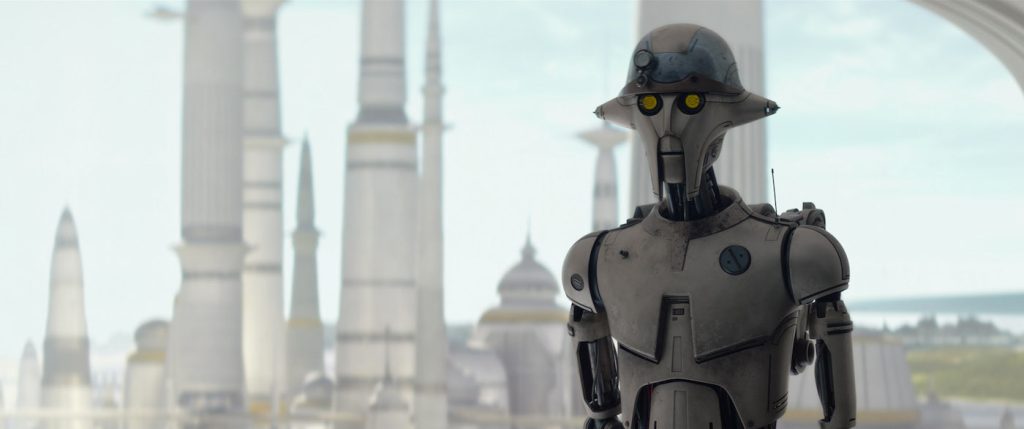
Carrie Coon as Jean Cole in 20th Century Studios’ BOSTON STRANGLER, exclusively on Hulu. Photo courtesy of 20th Century Studios. © 20th Century Studios. All Rights Reserved.
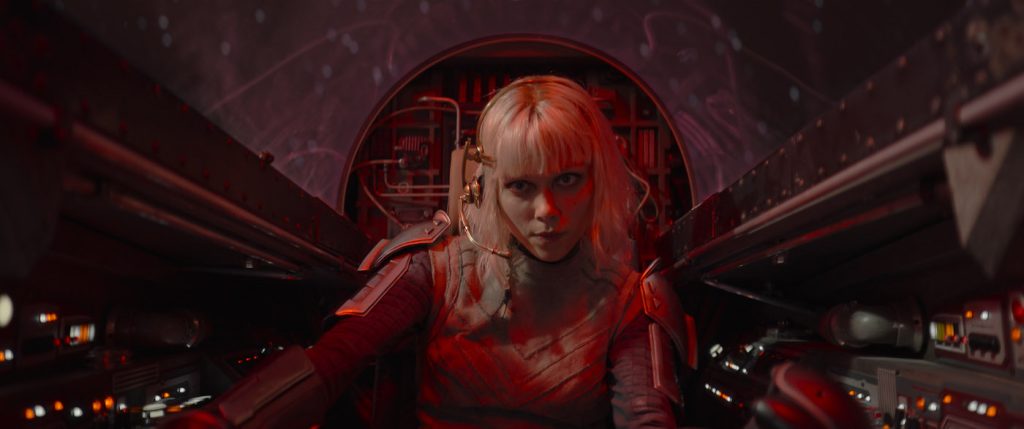
“I looked at Colonial-era paintings by John Singleton Copley and Benjamin West. I thought, ‘What if we made color chords that came from those paintings that we translate for wallpaper, upholstery, and costumes?’ It’s a foundational idea that isn’t obvious to an audience, but we would know that an effort was being made to locate this movie specifically in Boston and its past,” he said.

Goldsmith has long been drawn to period films; he was the production designer for the first season of the TV series Perry Mason which is set in 1930s Los Angeles.

“I love the conceptual part of design. There’s a logistical component in taking modern Boston and making it 1964. But luckily, so much material in Boston is intact. The urban fabric is fantastic,” he said. “This story is about the truth being revealed in a situation that’s complicated. So at one end, it’s a monochromatic, white-and-black world of the reporters and the newsroom. Then it begins to move into a murkier world where patterns and colors start to come in. The victims’ apartments have the most obfuscation and the most complexity because violence has entered in. How do you express that?”

Keira Knightley as Loretta McLaughlin in 20th Century Studios' BOSTON STRANGLER, exclusively on Hulu. Photo courtesy of 20th Century Studios. © 2022 20th Century Studios. All Rights Reserved.
Keira Knightley as Loretta McLaughlin in 20th Century Studios’ BOSTON STRANGLER, exclusively on Hulu. Photo courtesy of 20th Century Studios. © 2022 20th Century Studios. All Rights Reserved.
The police initially dismiss the brutal killings because the victims are unknown single women. McLaughlin and Cole, in Woodward and Bernstein fashion, fight to keep the story in the paper because they feel personally connected to it and did the legwork. Their news editor, played by Chris Cooper, backs them up even when he’s taking heat from the police chief, who doesn’t want publicity.

(L-R): Keira Knightley as Loretta McLaughlin and Chris Cooper as Jack MacLaine in 20th Century Studios’ BOSTON STRANGLER, exclusively on Hulu. Photo by Claire Folger. © 2023 20th Century Studios. All Rights Reserved.
The bustling newsroom is central to the story. Goldsmith worked closely with cinematographer Ben Kutchins to create “an institutional look,” paying attention to the room’s size, color, and the height of the ceilings. “We didn’t just want a box. We built a 3D model that we moved to a stage at New England Studios [in Fort Devens, Mass.], and we shot it there.”

He commended the work of set decorator Sophie Carlhian and the property masters for the look of the newsroom with more than 60-period desks, matching lighting fixtures, paperwork, images on the walls, and news pages tacked to bulletin boards. These details “gave the room so much life and hopefully helped the actors feel grounded in this place,” he said.

(L-R): Keira Knightley as Loretta McLaughlin and Carrie Coon as Jean Cole in 20th Century Studios’ BOSTON STRANGLER, exclusively on Hulu. Photo by Claire Folger. © 2023 20th Century Studios. All Rights Reserved.
Although Goldsmith watched many movies from the ‘60s, there was one he avoided: The Boston Strangler from 1968, directed by Richard Fleischer and starring Tony Curtis as Albert DeSalvo, who eventually confessed to 11 of the slayings. The new version has a different focus, including revelations that the police mishandled evidence and ignored crucial leads. It includes a scene of Detective Conley (Alessandro Nivola) working as a consultant on the 1968 film.

Alessandro Nivola as Detective Conley in 20th Century Studios’ BOSTON STRANGLER, exclusively on Hulu. Photo courtesy of 20th Century Studios. © 2023 20th Century Studios. All Rights Reserved.
In staging that scene, says Goldsmith, the filmmakers “reflected the cheesy, Hollywood version of that story. “I wanted a monochromatic newsroom, but I hoped that was also the world of the police, that they were also at work getting the truth, but that wasn’t the case. It’s a human institution and a complicated one which is one of the reasons why the reporters’ work was so important to fighting that culture of complacency.”

The film’s larger issues include finally giving Cole and McLaughlin their due. “I’m always interested in messages, in conversations we should be having,” said Goldsmith. “We have only so much time, so if you’re going to say something, then say something with meaning. These two female reporters went up against societal norms. If that informs a larger conversation, then I’m pleased that this movie can be part of that.”


For more on what’s streaming on Hulu, check out these stories:

“Kindred” Costume Designer Jaclyn Banner on Dressing the First Octavia E. Butler Adaptation

Let “Hellraiser” Production Designer Kathrin Eder Take You To Hell With The Cenobites

“Reasonable Doubt” DP Robert E. Arnold on Lensing Hulu’s Legal Drama

Featured image: (L-R): Carrie Coon as Jean Cole and Keira Knightley as Loretta McLaughlin in 20th Century Studios’ BOSTON STRANGLER, exclusively on Hulu. Photo by Claire Folger. © 2022 20th Century Studios. All Rights Reserved.
James Gunn Will Direct “Superman: Legacy”

Newly minted DC Studios co-chief James Gunn will be writing and directing Superman: Legacy in one of the studio’s most marquee upcoming movies.

Legacy will feature a younger actor in the role of Clark Kent, will be Gunn’s next directorial effort, and is one of the most important new films for the revamped studio under the new vision Gunn is implementing alongside his DC Studios co-chief Peter Safran. Gunn has been working on the script for a while now—since before he and Safran took the reigns at DC—and it’ll be the first film in their tenure and the first new stand-alone Superman film since Zack Snyder’s 2013 Man of Steel, which starred Henry Cavill. Cavill went on to portray Superman in Batman v Superman: Dawn of Justice (2016) and Justice League (2017) and had a brief cameo in Black Adam (2022). Cavill’s time as Clark Kent has come to an end, and the role will now be one of the most sought-after in Hollywood.

Superman: Legacy will focus on this younger version of the iconic character, which Safran described this way to reporters in January when he and Gunn unveiled the first part of their DC Studios slate: “It focuses on Superman balancing his Kryptonian heritage with his human upbringing. He is the embodiment of truth, justice, and the American way. He is kindness in a world that thinks that kindness is old-fashioned.”

Gunn is no stranger to the superhero realm, of course, with his third and final Guardians of the Galaxy installment coming out this May 5 for Marvel Studios. He also helmed The Suicide Squad in 2021 for DC Studios—well before he took over—and both the Guardians franchise and Suicide Squad allowed him to play with some of the lesser-known, goofier superheroes in the Marvel and DC canon.

Clearly, that will not be the case with Superman: Legacy, which features arguably the most iconic superhero of them all (Batman die-hards will quibble) and will present Gunn a chance to meld his offbeat sensibility with a character his own co-chief described as literally embodying kindness. It will be fun to see what the man who brought us a talking tree (the Guardians‘ Groot), a talking raccoon (the Guardians‘ Rocket), and all those weirdos in The Suicide Squad does with such a beloved, wholesome American hero.

Superman: Legacy is slated for a July 11, 2025 release date and will be the first feature for DC Studios under Gunn and Safran’s leadership.

For more on all things DC Studios, check out these stories:

Michael Shannon’s Return as General Zod in “The Flash” Surprised…Michael Shannon

“The Flash” Will Premiere at CinemaCon 2023

First Look at Lady Gaga as Harley Quinn in “Joker: Folie à Deux” Revealed

“The Flash” Posters Reveal Michael Keaton’s Batman in Iconic Cape & Cowl

Featured image: LOS ANGELES, CALIFORNIA – AUGUST 02: James Gunn attends the Warner Bros. premiere of “The Suicide Squad” at Regency Village Theatre on August 02, 2021 in Los Angeles, California. (Photo by Matt Winkelmeyer/Getty Images)

Quentin Tarantino Working on his 10th & Possibly Last Film

Quentin Tarantino has long said he would eventually stop making films, even offering a specific timeline for his retirement—either 10 films or by the time he was 60. Well, he’s made nine films thus far, and he turns 60 later this month. So, as he preps his new film, there’s widespread speculation that this will indeed be Tarantino’s final film.

The auteur behind some of the most iconic features of the last thirty years, from Pulp Fiction to Inglourious Basterds to his surprisingly lovely (but yes, still bloody) portrait of Tinsel Town in 1969 in his 2019 hit Once Upon a Time in Hollywood, is nearing the moment where he’ll share his latest screenplay to potential buyers. This process requires studio executives to travel to the office of Tarantino’s agent in Beverly Hills and read the script in the conference room. This secretive process was put in place after the script for Tarantino’s 2015 film The Hateful Eight got leaked.

This is the same approach Tarantino took with Once Upon a Time, in which he’ll want both a healthy theatrical release window and eventual ownership of the film’s copyright. With Sony Pictures’ Once Upon a Time, Tarantino struck a deal that will revert the copyright back to him after 20 years.

The Hollywood Reporter scoops that the film is titled The Movie Critic and will be set in Los Angeles in the late 1970s with a female lead, but any further details are being kept under lock and key. THR speculates that the film could focus on the legendary movie critic, essayist, and novelist Pauline Kael, who worked briefly as a consultant for Paramount in the late 1970s—a position she took after a prompt from Warren Beatty. Kael was a brilliant and fearless writer and critic, and THR writes that Tarantino is known to have an abiding respect for her.

Tarantino has the ability to cast pretty much anybody he wants for decades now. Margot Robbie, Leonardo DiCaprio, and Brad Pitt starred in Once Upon a Time, and he’s got a longstanding partnership with Samuel L. Jackson, along with a slew of other massive stars. If The Movie Critic is indeed Tarantino’s final film, there is likely not a single actor alive who wouldn’t leap at the chance to be a part of the movie.

Who will end up with the project is anyone’s guess, but Tarantino has a good relationship with Sony and boss Tom Rothman. That film garnered 10 Oscar nominations, two wins, and made more than $377 million worldwide. There’s always immense interest in any Tarantino film, but his last? Movie lovers far and wide will make sure they see it, and our guess is they’ll want to see it in the theater.

For more stories on Tarantino, check these out:

Quentin Tarantino Eyeing TV Project, Reveals Which Comic Book He’d Adapt

Deconstructing Tarantino’s Once Upon a Time in Hollywood’s With his Cinematographer Robert Richardson

Creating the Look for Tarantino’s Once Upon a Time in…Hollywood

Featured image: Quentin Tarantino, Leonardo DiCaprio and Brad Pitt on the set of ONCE UPON A TIME IN HOLLYWOOD. Photo Credit: Andrew Cooper

“Game of Thrones” Director Taking on Amazon’s “Blade Runner” TV Series

Amazon’s Blade Runner 2099 has landed a director who knows a thing or two about pulling off an extremely ambitious series. Four-time Emmy nominee Jeremy Podeswa—you can read our interview with him about directing Game of Thrones here—will direct the pilot and serve as the series’ producing director and executive producer. Podeswa will also be a vital cog for the creative team in creating the first-ever television series adaptation of one of the most iconic sci-fi film franchises of them all.

The series boasts the original Blade Runner director Ridley Scott as executive producer, with Silka Luisa (Shining Girls) serving as showrunner, and Blade Runner 2049 screenwriter Michael Green as a non-writing executive producer. Tom Spezialy is also on the team, serving as an executive producer and writer.

The series will follow the events depicted in Blade Runner 2049 and the anime series Blade Runner: Black Lotus. Considering the names and talent involved, the series will aim to look every bit as iconically distressed and dystopic as the original films did.

Podeswa is a veteran director who helmed some of Game of Thrones‘ meatiest episodes (including the season seven finale) and HBO’s other epic mafia series, Boardwalk Empire, as well their WWII miniseries The Pacific and Apple’s The Mosquito Coast

There haven’t been any cast announcements yet for the series, which has been in the work now for a few years. Scott first revealed that he was working on bringing Blade Runner to the small screen back in November 2021, and then Amazon said it was in development there in February 2022. There’s also still no description of the plot, but you can be sure that when we hear something, we’ll share it.

For more on Amazon Prime Video, check out these stories:

“Harlem” Costume Designer Deirdra Elizabeth Govan on Season Two’s Evolving Looks

“Spider-Man Noir” Live-Action Series Coming to Amazon

Ben Affleck & Matt Damon Chase Michael Jordan for Nike in First “Air” Trailer

“The Consultant” Teaser Introduces Christoph Waltz’s as a Corporate Hatchet Man

Featured image: A still from Blade Runner: 2049. Courtesy Warner Bros.

“Champions” Cinematographer C. Kim Miles Found Inspiration Everyday on Set

Cinematographer C. Kim Miles has shot everything from TV superhero The Flash and Robert Zemeckis’ miniaturized soldier epic Welcome to Marwen to teen cannibalism drama Yellowjackets and Michelle Yeoh‘s upcoming miniseries The Brothers Sun, which he describes as “Crazy Rich Asians meets John Wick.” But until director Bobby Farrelly’s Champions came along, Miles had never worked with a cast of developmentally challenged actors. “It was one of the most inspiring experiences I’ve ever had on a movie set,” Miles tells The Credits.

Champions, based on the 2018 Spanish comedy Compeones, features Woody Harrelson as a disgraced coach in charge of The Friends, a team of basketball players with disabilities that include Down syndrome and autism. Assisted by a player’s sister (Kaitlin Olson) and rec center manager (Cheech Marin), Harrelson’s Marcus learns to respect the athletes (portrayed by Kevin Iannucci, James Day Keith, Madison Tevlin, Tom Sinclair, Joshua Felder, Ashton Gunning, Matthew Von Der Ahe, Alex Hintz, Casey Metcalfe, and Bradley Edens) in their bid to compete in the Special Olympics.

Miles, raised in Malaysia, shot his first TV commercial at the age of 15, then migrated to British Columbia and studied photography at the University of Victoria before working his way up from gaffer and camera operator jobs to become an ASC Award-winning DP. Speaking from the Georgia set of a new Farrelly-directed movie-in-progress, Miles talks about the thrill of capturing Champions’ pure performances and the chills of shooting on location in Canada during the dead of winter.


You’ve handled a wide range of genres but the field of comedy—not so much. Did you have a specific approach in mind for capturing the comedic beats in Champions?

Not really. The main motivating force for me was to keep it honest and to keep things rooted so it didn’t feel like too much of a comedy. I didn’t want The Friends, in particular, to come across as cartoonish so we were very careful about how we legitimatized these actors on set while still trying to pull some comedy out of the story and make something light-hearted. I think we mostly got there. There were times when I was thinking: “Hmm, I wonder if this is too much?” But all in all, I was pretty happy with how it worked out.

Did you have concerns about working with intellectually challenged actors?

My concerns were obvious: Are we going to be able to make our days? The first day we met the cast, it was sort of what I expected. They’re very private people, sort of withdrawn, a function of not having [much of] a social network. Your world is your immediate family and your co-workers, and now all of a sudden you’re coming to [a movie set] every day with 100 some people — I can’t imagine anything more intimidating. But over the 35 or 40 days of shooting our movie, these actors just blossomed. they were able to express emotion with such purity, and that’s all Bobby because of the care he takes in giving these people the respect they deserve.

(L to R) Actors James Day Keith, Tom Sinclair, Kevin Iannucci, Matthew von der Ahe, Ashton Gunning, Casey Metcalfe, Bradley Edens, Alex Hintz, Joshua Felder, and director Bobby Farrelly on the set of CHAMPIONS, a Focus Features release. Credit : Shauna Townley/Focus Features

If I understand correctly, Woody Harrelson met these actors live on camera at the same time his character Marcus meets the basketball players. Is that scene in the movie an art-imitating-life moment?

I think it was, actually, and the scene went off like gangbusters. The kids really took to Woody. The funny thing was, they knew his lines better than he did. “Come on Woody; your line goes like this.”


Looking back on Champions, what are your favorite scenes?

Moving the camera around for the basketball stuff was fun, and all the stuff between Woody and Katilin was fun because those two had great chemistry. And any time The Friends were on set, that was always a treat—if we could get them to stop bouncing the basketballs. That was the thing. On day three of the shoot, as soon as they saw basketballs, they started shooting hoops. It took Bobby fifteen minutes to calm them down. Then Woody shows up, and what’s the first thing he does? Starts shooting hoops [laughing].


You compose some lovely ensemble shots of The Friends that convey each character’s individuality in a very vivid way. Were you deliberately aiming to capture the spirit of this group?

Very much. Their body language was so indicative of what their characters were going through, so we wanted to stay a bit wider and include all of that. Because it’s very much an ensemble thing, we went with a 2:39 aspect ratio, so the frame’s a little bit wider. Bobby likes to go wide, which felt right for Champions in part because it was an ensemble piece and also because of the basketball sequences—we wanted the wide landscape to hold the courts. Plus wide screen gives you more storytelling opportunities within a particular frame because you’re not cutting quite as much. All those reasons led us to go with 2:39.

(L to R) Alex Hintz as Arthur, Casey Metcalfe as Marlon, Matthew von der Ahe as Craig, Ashton Gunning as Cody, Tom Sinclair as Blair, Joshua Felder as Darius, James Day Keith as Benny, Madison Tevlin as Cosentino, Kevin Iannucci as Johnathan, and Bradley Edens as Showtime in director Bobby Farrelly’s CHAMPIONS, a Focus Features release. Credit : Courtesy of Focus Features

Did you work with storyboards?

We had some boards and got through three or four scenes until Bobby looked up and said, “What are we doing this for? I’m not going to look at them every ten minutes.” So no, very little storyboarding,

How would you map out a day’s shoot?

I’d get to set in the morning and run through all the scenes with my script before anyone else got there. Then Bobby would show up and go, “Okay, C. Kim, how are we going to do this?” I’d pitch him how I imagined it could work; we’d discuss and eventually find a way to shoot each scene. For me, it was nice because I had more creative input than normal. And I think Bobby was grateful for not having to conceptualize everything by himself.

What kind of camera did you use to achieve Champions‘ filmic look?

We shot with ARRI Alexa LF, large format cameras, which I’d also used on Yellowjackets. The beauty of the Alexa is they behave in a way that’s reminiscent of film.

Lenses?

We found two sets of lenses that were built for Moviecam back in the eighties. I’d never heard of these things, but they’d been re-housed to work on large format cameras. We tested them and fell in love because they’re sharp, well-resolving lenses, but they still have a warmth and a vintage-y feel to them. And they take a flare in a warm, soulful way, which is hard to explain, but you know it when you see it.

How did you approach camera movement?

We carried two cameras, but I’m kind of an A-camera hog. I like to use one camera and move it around to develop shots rather than getting too reliant on the editorial process to tell the story. We did a bunch of handheld stuff to keep things off-kilter early on when Marcus is getting to know The Friends. As the show progressed, we went with more Steadicam and then Technocrane and dollies as the story settled in.

(L to R) Casey Metcalfe as Marlon, James Day Keith as Benny, Woody Harrelson as Marcus, Ashton Gunning as Cody, and Tom Sinclair as Blair in director Bobby Farrelly’s CHAMPIONS, a Focus Features release. Credit : Courtesy of Focus Features

Basketball is basically a winter sport, so it’s appropriate that Champions has a wintry feel. What was it like shooting this movie in and around Winnipeg, Manitoba?

Cold. [Laughing]. I got to Winnipeg in October, and within two weeks, the temperature dropped from 75 or 80 down into the teens. The scene where the bus drops the kids off on the side of the road? It was twenty degrees out, and the wind was blowing 30 knots—that was a feat of endurance. But we didn’t want to fight the time of year, which you often have to do. We just embraced the color palette that was in the air.

Shortly before Champions, you filmed half of Yellowjackets‘ first season, and the show became a streaming sensation. Was that a fun shoot?

Yellowjackets was not an easy show. We had to manage all these different looks for different time periods: present day, flashbacks before the accidents, and flashbacks after the accident. There were very specific rules: In the forest, we were always handheld; the present day was always shot on dollies with spherical lenses. And the logistics of shooting in the woods were tricky. Sometimes you’d have fourteen cast members in one seven-page scene. The cast and the crew were great, so it was lots of fun, but that show was tough.

Back to Champions. You had not worked before with Bobby Farrelly. How did you get the gig?

My agent submitted my name, so I was on a list. We had an interview over Zoom. I’d read the script and looked at the Spanish movie Champions is based on. There were some things I thought we could do a little better or differently, so we compared notes on that. And we talked about being respectful of the subject matter. He was very clear that we didn’t want to make The Friends into caricatures or objects of ridicule. I took that to heart right away.

Champions is in theaters now. 

For more on Universal Pictures, Peacock, and Focus Features projects, check out these stories:

“Champions” Star Kaitlin Olson on Doing Improv With Woody, Her Bond With Her On-Screen Brother & More

“The Fabelmans” Oscar-Nominated Production Designer Rick Carter Gets Personal With Steven Spielberg

“Cocaine Bear” VFX Supervisor Robin Hollander on Creating an Ursine Junkie

Featured image: (L to R) Kevin Iannucci as Johnathan, Kaitlin Olson as Alex, James Day Keith as Benny, and Woody Harrelson as Marcus in director Bobby Farrelly’s CHAMPIONS, a Focus Features release. Credit : Shauna Townley/Focus Features

“John Wick: Chapter 4” Review Round-Up: Bigger, Badder, Bolder

If any current franchise out there rivals Mission: Impossible and Fast & Furious for the sheer audacity of their action set pieces, it is John Wick. The series, centered on Keanu Reeves’ un-retirable hitman, is set to release its fourth chapter, and critics are saying it’s the craziest, biggest, boldest installment yet. How good is John Wick: Chapter 4? IndieWire‘s Rafael Motamayor writes that it’s the best action blockbuster since Mad Max: Fury Road. Considering Fury Road is widely considered the best action blockbuster of the 21st century, this is not a minor statement.

Wick’s rival in John Wick: Chapter 4 is Bill Skarsgård’s villain Marquis de Gramont, and he’ll be sending a legion of top-flight assassins after our humble, un-killable hero, who will once again be deploying the gun-fu style he’s been honing for years now. Director Chad Stahelski returns to shepherd the mayhem in Chapter 4, with Marquis de Gramont offering Wick his freedom, but only if he can defeat foes from across the world who appear as skilled in the deadly arts as he is. The set-up lets Wick prep for the big match like a boxer preparing for his title fight. You want nunchucks, car chases, battles on horseback, fighting with axes and swords? Chapter 4 brings all that and more.

Chapter 4 was written by Shay Hatten and Michael Finch. Joining Reeves and Skarsgård are Ian McShane, Donnie Yen (who critics are saying is the film’s standout), Laurence Fishburne, Hiroyuki Sanada, Shamier Anderson, Lance Reddick, Rina Sawayama, and Scott Adkins.

Now, let’s take a quick peek at what the critics are saying:

For more on the John Wick franchise, check out these stories:

“John Wick: Chapter 4” Trailer Finds Keanu Reeves Back in Black

Keanu Reeves to Return as John Wick in Ana de Armas-led Spinoff “Ballerina”

John Wick 3 Costume Designer Conjures Elegance Amid the Carnage

Featured image: Keanu Reeves as John Wick in John Wick 4. Photo Credit: Murray Close