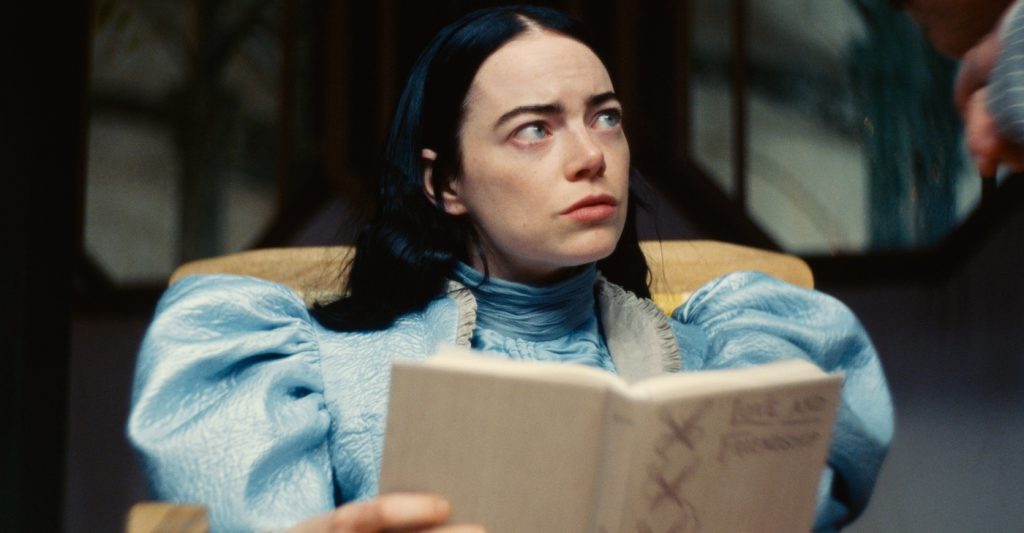
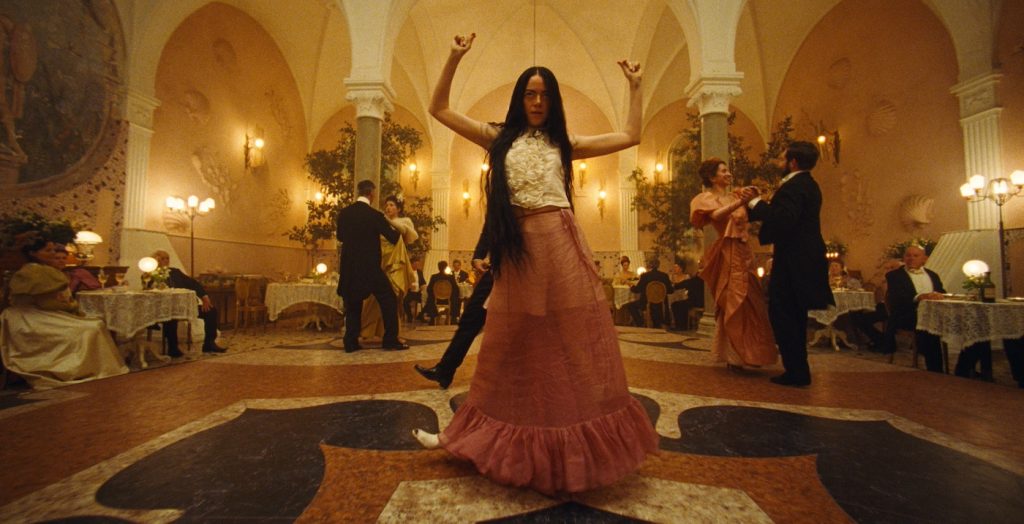
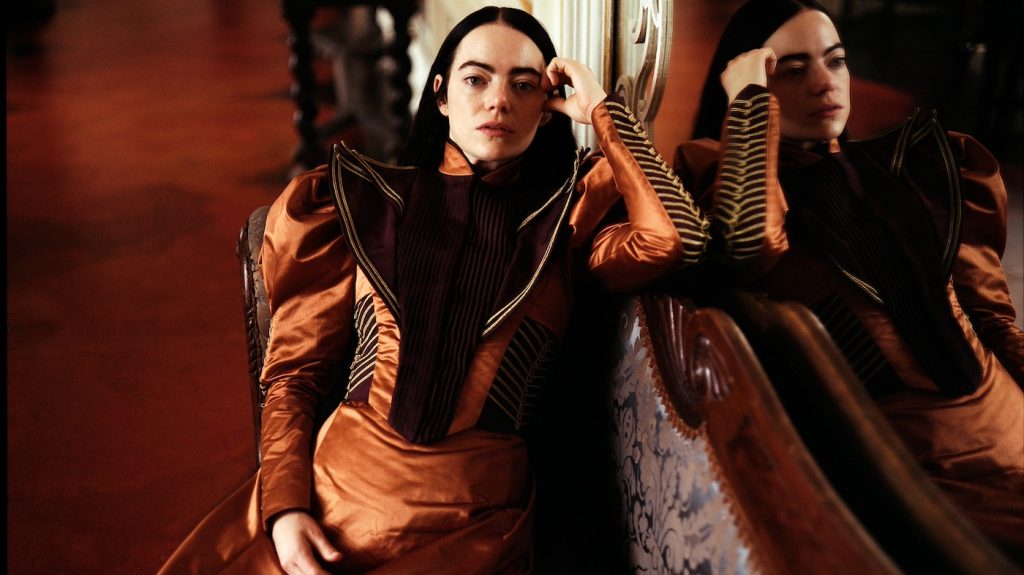
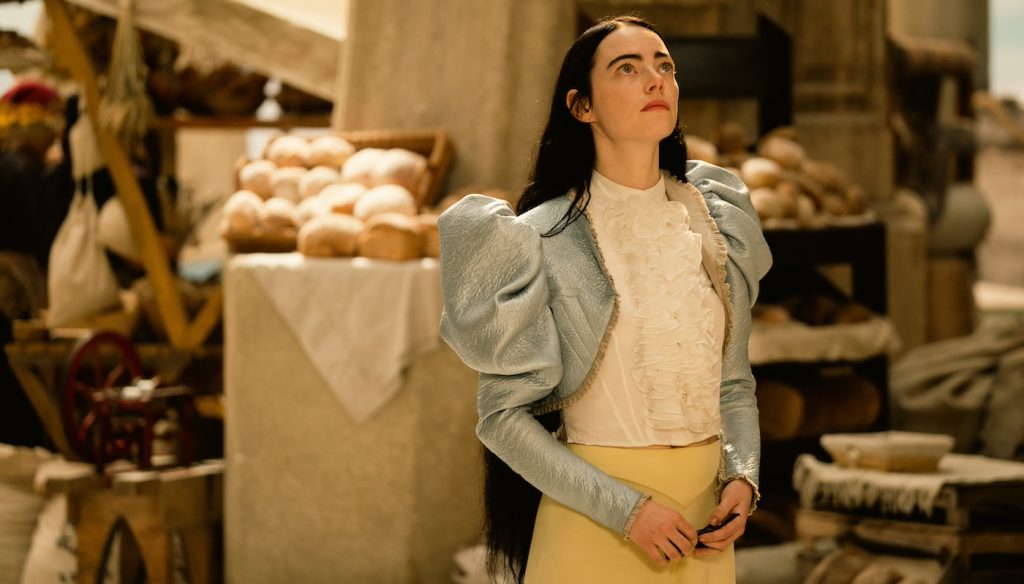
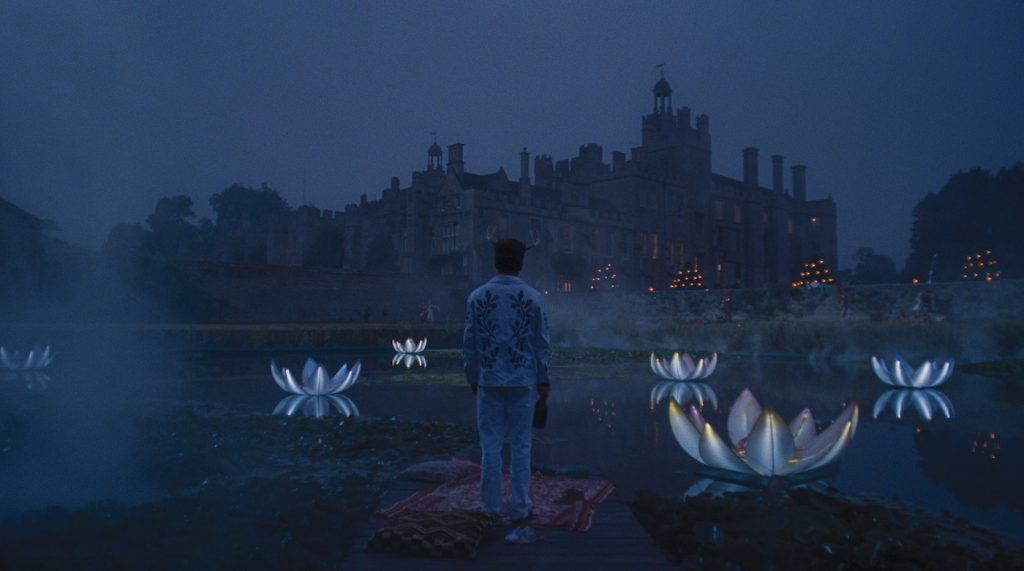
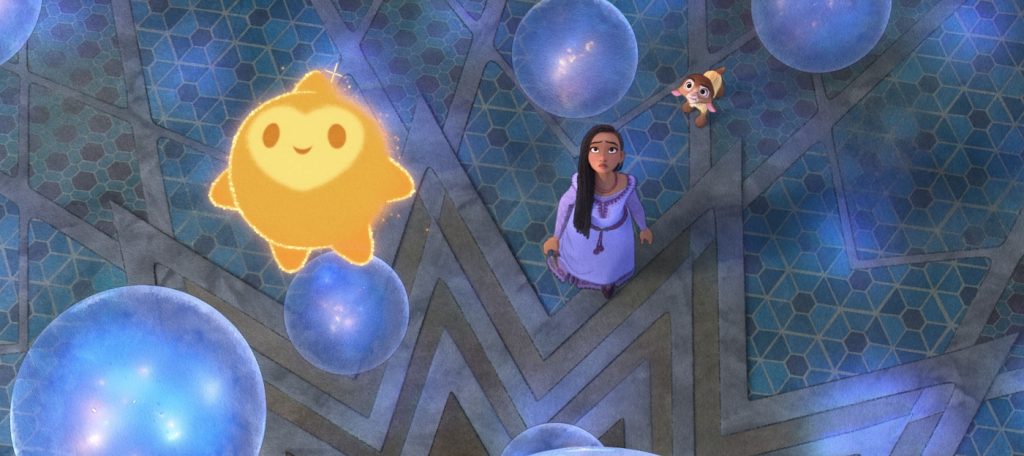
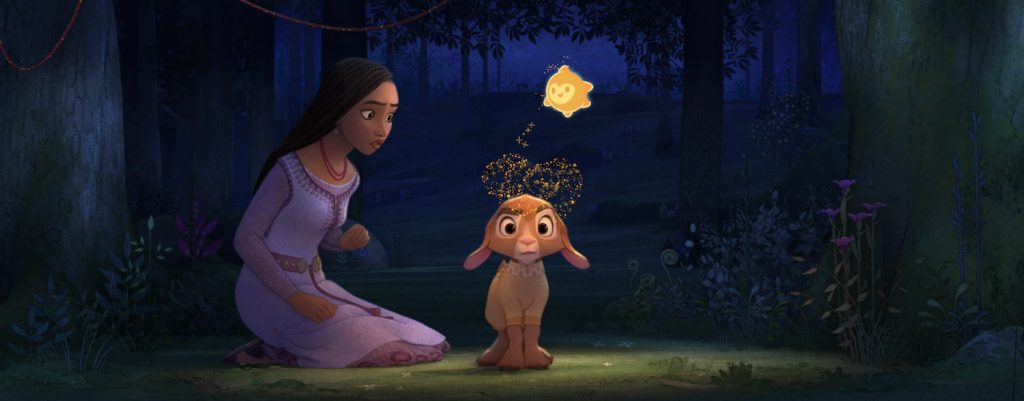
An iconic doll comes to life, a ribald story of a young woman resurrected, and a genius chocolatier’s life as a young man are among three of the subjects of the films that have been notified they’re finalists for the Visual Effects Oscar.
Barbie, Poor Things, and Wonkaare the titles we’re talking about above, and they join 17 other films as they head into the next round of Oscar voting, Variety reports. The Oscars shortlist voting begins on Thursday, December 14. The 20 finalists will now move to this next round of voting, which will take place from December 14 to 18. Ten films will be revealed on December 21, along with nine other categories, and then five nominees will be selected after final voting that takes place between January 11 and 16. All the Oscar nominees will be announced on January 23.
Variety scoops that joining the above-mentioned films are a wide representation across the major studios and streamers, which includes Zack Snyder’s upcoming Rebel Moon: Part One – A Child of Fire, which arrives on Netflix on December 21 (it was recently moved up a day from December 22).
There is only one animated film in the grouping, Spider-Man: Across the Spider-Verse. Variety has learned that some of the other films on the list of 20 are Marvel Studios’ The Marvels, Guardians of the Galaxy Vol. 3, and Ant-Man and the Wasp: Quantumania. As for Marvel’s parent company, Disney, they garnered two more mentions with James Mangold’s Indiana Jones and the Dial of Destiny and Gareth Edwards’ The Creator.
Paramount notches three mentions with Dungeons & Dragons: Honor Among Thieves, Mission Impossible – Dead Reckoning Part One, and Transformers: Rise of the Beasts.
Over at Warner Bros., they have the aforementioned Barbie and Wonka, as well as Aquaman and the Lost Kingdom, which arrives on December 22.
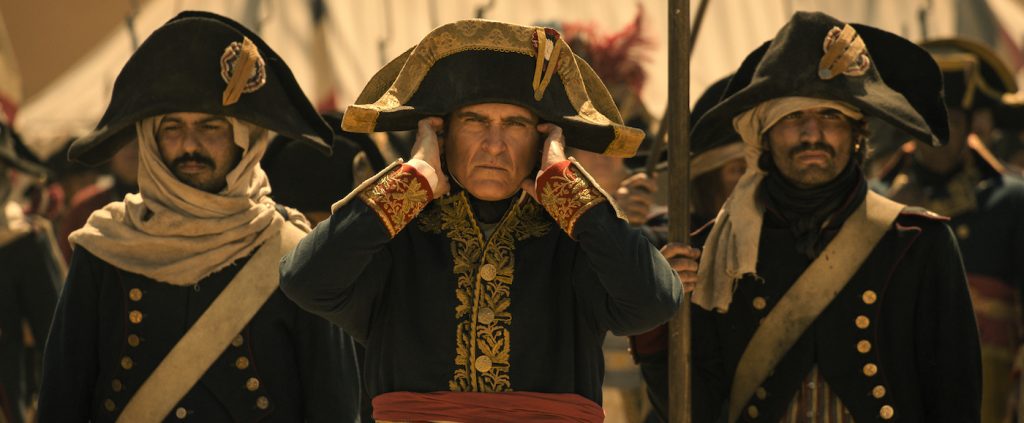
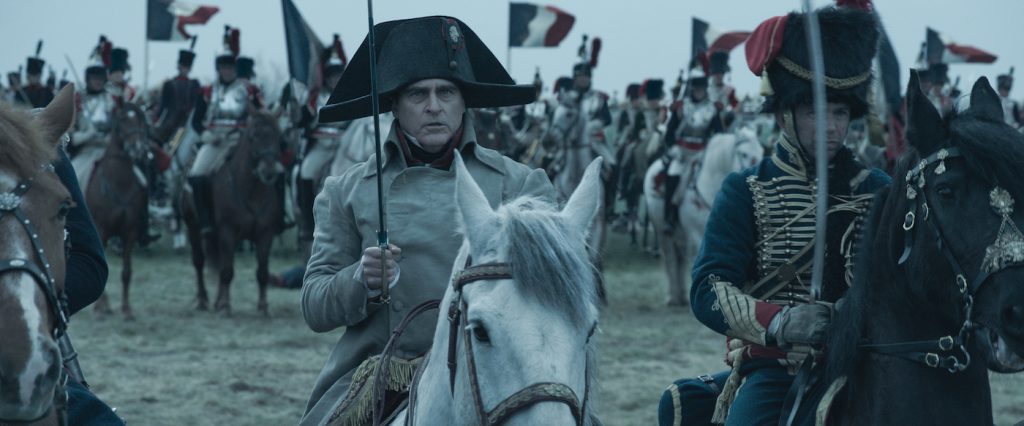
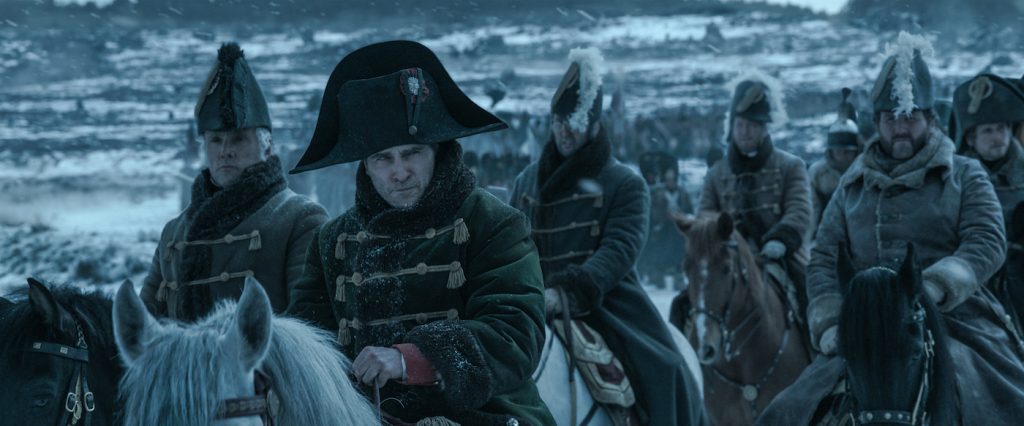
Joining Rebel Moon at Netflix are Nyad and the survival story Society of the Snow. Meanwhile over at Apple, Martin Scorsese’s Killers of the Flower Moon also received a nod, as did Ridley Scott’s Napoleon.
Another film to get a mention was Toho’s Godzilla: Minus One, the first Japanese Godzilla film in seven years and one that stomped over to American shores on a wave of great reviews.
Perhaps the most surprising omission was Christopher Nolan’s Oppenheimer, which didn’t make the cut.
Here’s the full list:
Ant-Man and the Wasp: Quanumania (Marvel Studios)
Aquaman and the Lost Kingdom (Warner Bros.)
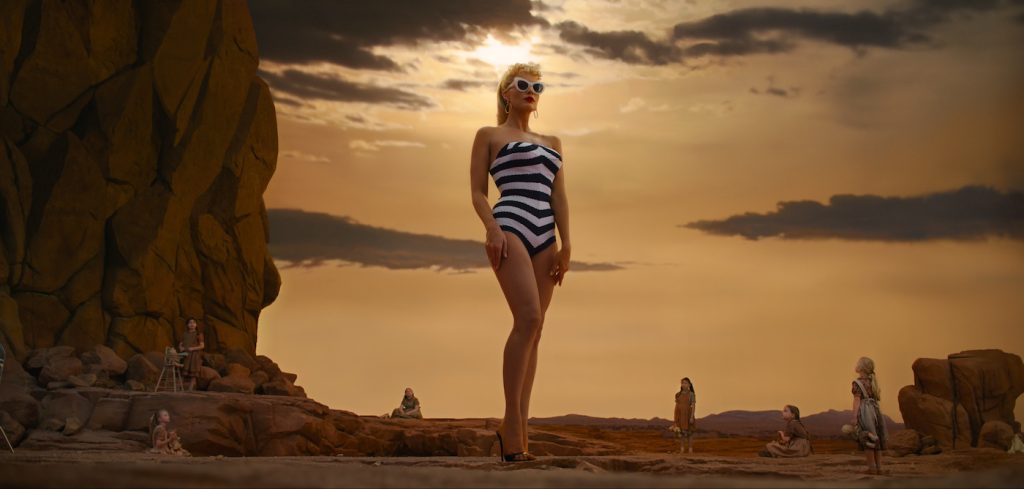
Barbie (Warner Bros.)
The Boys in the Boat (Amazon MGM Studios)
The Creator (20th Century Studios)
Dungeons & Dragons: Honor Among Thieves (Paramount Pictures)
Godzilla: Minus One (Toho)
Guardians of the Galaxy Vol. 3 (Marvel Studios)
Indiana Jones and the Dial of Destiny (Walt Disney Pictures)
Killers of the Flower Moon (Apple Original Films/Paramount Pictures)
The Marvels (Marvel Studios)
Mission: Impossible – Dead Reckoning Part One (Paramount Pictures)
Napoleon (Apple Original Films/Sony Pictures)
Nyad (Netflix)
Poor Things (Searchlight Pictures)
Rebel Moon: Part One – A Child of Fire (Netflix)
Society of the Snow (Netflix)
Spider-Man: Across the Spider-Verse (Sony Pictures)
Transformers: Rise of the Beasts (Paramount Pictures)
Wonka (Warner Bros.)
Featured image: Caption: (L-r) RYAN GOSLING as Ken and MARGOT ROBBIE as Barbie in Warner Bros. Pictures’ “BARBIE,” a Warner Bros. Pictures release. Photo Credit: Courtesy Warner Bros. Pictures
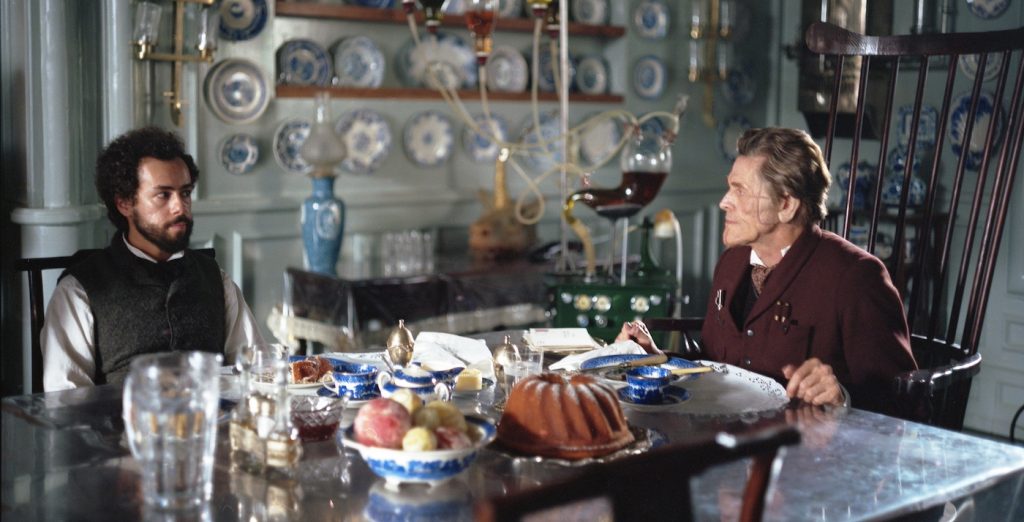
Before costume designer Holly Waddington got started on Poor Things, Yorgos Lanthimos gave her a visual reference: inflatable pants. The futuristic-seeming trousers made by London College of Fashion graduate Harikrishnan buck the movie’s late-19th-century setting, which encouraged Waddington to ignore the norms of time and space. No material would be too anachronistic, no fit too audacious. “I designed a whole series of things based on this idea of inflation and compression,” she says. “It was quite wild what I came up with in response to that.”
Waddington’s eclectic clothing aligns perfectly with Poor Things‘ eclectic story. The Frankenstein riff, adapted from Alisdair Gray’s 1992 novel of the same name, follows Bella Baxer (Emma Stone) as she discovers language, sex, and societal expectations anew. Bella has been reanimated with a childlike brain thanks to a slightly mad Victorian scientist (Willem Dafoe) who sets out to observe her body and mind gradually synchronizing. Bella’s wardrobe is key to her growth. The movie introduces her in what often look like baby-doll dresses, but her fashion becomes more sophisticated as she explores the world and develops unadulterated ideas about how to live in it.
After those inflatable pants jump-started Waddington’s initial brainstorm, her work zigged and zagged as the rest of the movie fell into place. Now an Oscar contender for the film, Waddington, whose past credits include Lady Macbeth and Hulu’s The Great, was able to blend a medley of sensibilities into one eye-popping palette.
Did you know from the outset how hyper-saturated a lot of Poor Things‘ colors would be?
I had this whole journey of exploring these lung-shaped sleeves and plasticity — things that breathe and deflate. Then we had a series of meetings on Zoom, and it was really only at that point that Yorgos showed me what they’d done in the art department. I knew it was going to be rich and elaborate because I was already a big fan of [production designer] Shona Heath’s fashion work. But I was absolutely overwhelmed when I was given this bible, which was this massive, absolutely incredible 200-page document full of descriptions and references and beautiful concept work. Then, I really had something to work with.
How much of what you developed independent of that bible is what we see in the film?
A lot of it shifted because I was really encouraged by Yorgos to just go big. What we ended up with had a lot to do with texture — big textures in the clothing, things that felt organic, things that felt inflated. That manifested itself in the sleeves but not in the way that I had delivered it in this early rendition.
What did it look like at first?
In the beginning, all the big sleeves were for the men. I had a lot of ideas to begin with. It was quite grotesque originally, but Yorgos zoomed in on these images I had of these 1890s sleeves. That was very much his choice — but for the women, not the men, and specifically for Bella. I think he made a very good choice there because those sleeves are incredibly empowering to wear. They really emphasize her otherness. They also transpose into these richly textured fabrics. They feel like a sea creature.
She has an otherworldliness about her because of how her brain functions. As there are in children, there’s a bit of animalistic behavior going on.
Yes. He was very clear about that.
What other kinds of references did that 200-page document contain? I’d assume Victorian, steampunk, and modish stuff from the ’60s.
No steampunk. I know a lot of people have described the work as being steampunk, but we were actually asked not to look at steampunk at all. I don’t think it’s an aesthetic Yorgos is particularly drawn to. But yes, definitely ’60s: André Courrèges, Pierre Cardin, Paco Rabanne, and designers who were doing that whole space-age thing. We referenced astronauts and going to the moon. I was lifting little bits from these designers, like the peep-toe boots that Bella Baxter wears. André Courrèges’ had zips up the back, so we merged that with the Victoria bootie.
Were there any paintings or films referenced in that book?
Paintings, yes. Loads of stuff. And I had masses of stuff, too. I had lots of Otto Dix paintings and German expressionist paintings. The colors often came from those pictures, as well as John Singer Sargent and other things. One of the references that Yorgos had come up with was [Austrian painter] Egon Schiele, this scratchy drawing of a Victorian girl with incredibly long black hair. I’ve heard that production designers were given lists of films, but I didn’t have that.
Did you make everything from scratch, or did you find vintage and archival stuff?
For the principals, everything was made. There are pieces where I might have found something original, and then I looked at it and designed a version of it. An example would be the little frilly ivory thing that she wears underneath a few of the outfits. She wears it quite often. Nowadays, we’d call it a sleeveless blouse. The Victorian women called them modesty pieces. They filled the empty space around the neck and the chest because you’d only expose that part for evening wear in those days. They’re like bibs, and I quite like having that as a thing that she’d wear. As soon as you start going down that route of making everything, if you try to pepper in an original Victorian thing, it looks historical. It doesn’t sit well within the textures.
How much did you use period-appropriate fabrics? I assume you didn’t have to.
I didn’t, but some of the fabrics are really period-appropriate. Some of the bodices and that blue dress at the beginning, and the wool jacket are made in traditional fabrics that you’d use if you were doing a period drama. You can never fully recreate these things, but it’s striving for what the Victorians would have used. But then there were many other fabrics that were not typical of the period. I used a lot of polyurethane and latex. A lot of the blouse fabrics are very light, contemporary silks that have been woven in interesting ways. Madame Swiney [the brothel owner played by Kathryn Hunter] wears this dressing gown that we had woven by a British company to look almost like varicose veins. And Baxter [played by Dafoe] wears a smoking jacket that is quilted and woven in a very modern way. I was mixing and matching.
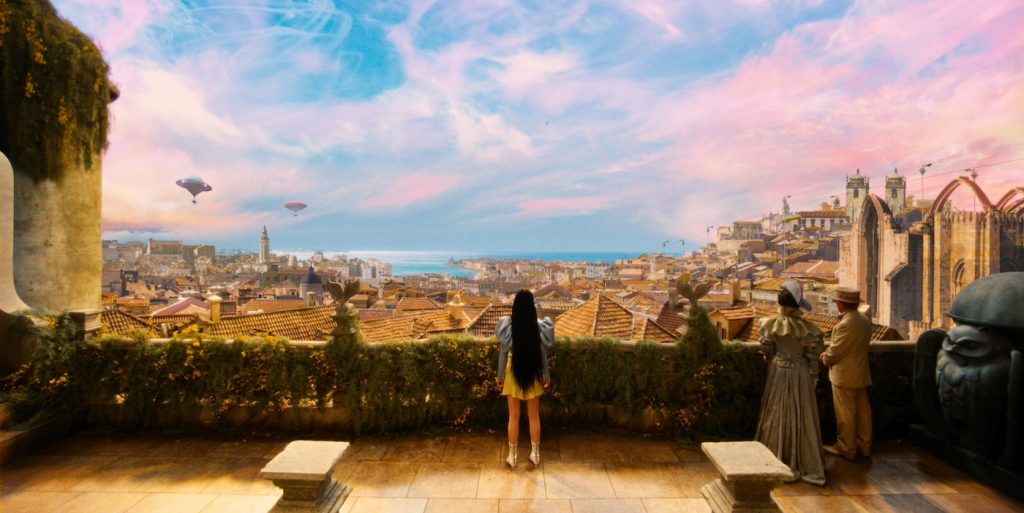
Once Bella sets out on her adventures through Lisbon and Paris, the visual palette becomes very rich and hyper-saturated. The clothes are all these vibrant yellows and baby blues. Were those shades informed at all by the ornate sets or the overly lit skies?
To a large degree. But if I’m truly honest, I think I’m choosing colors based ultimately on what is right for Bella. I wasn’t thinking, “Oh, I must dress her in yellow because this set has lots of yellow in it.” When she arrives in Lisbon, the world has only been black and white. We didn’t know that as creators. That was a very late decision, although we think Yorgos probably knew the whole time. In Lisbon, the whole world is like an explosion of color. I was very much wanting to align my costume choices so those yellows and golds felt like colors that belonged in that world. There’s a softness to them at that point. They’re still very childlike. With the black hair, her wearing a lot of yellow felt like a bold choice. Yellow and black are nature’s warning colors. Wasps and bees are black and yellow, and in the urban world, caution tape is yellow. She is not to be ignored, and I wanted her to be incredibly conspicuous.
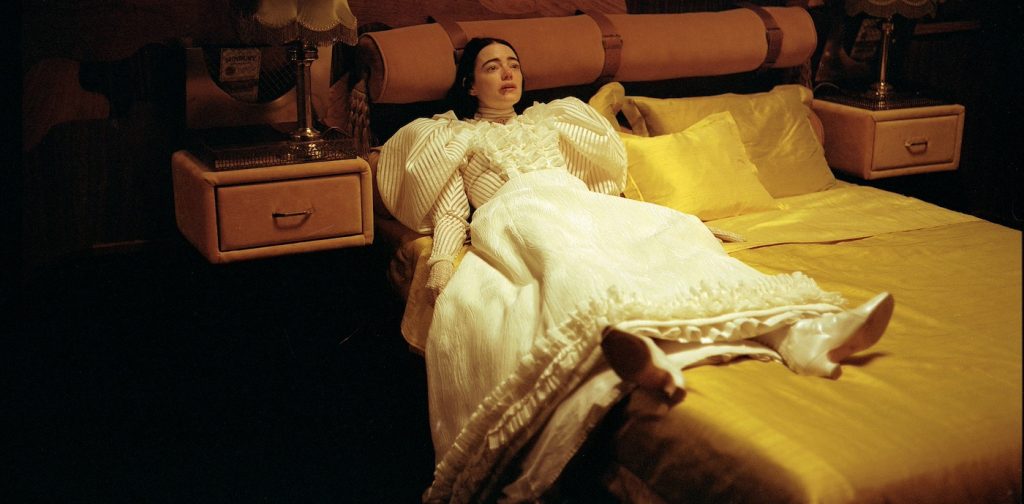
The wedding dress, in terms of how much I was asking of my team. The cutters had to do a lot because it’s made of flimsy nothingness, really. It’s fabrics that are hard to work with because they’re so light. It’s a layer of organza followed by a layer of millinery netting, which is basically plastic, followed by a layer of cotton tulle, and then it has these bands of nylon that are wrapped in the flimsiest habutai silk. And then the sleeves had to be inflated like balloons with no visible structure inside them. They needed to look like clouds. It’s quite decadent in its labor, but it doesn’t necessarily look like the most decadent thing.
I started reading it when we were working on the film, but I quickly stopped. Have you read Frankenstein recently? It’s quite dense. We were not having conversations about Frankenstein at all, which is interesting when you look at what we came up with. The black hair is quite Gothic. Yorgos works more instinctively.
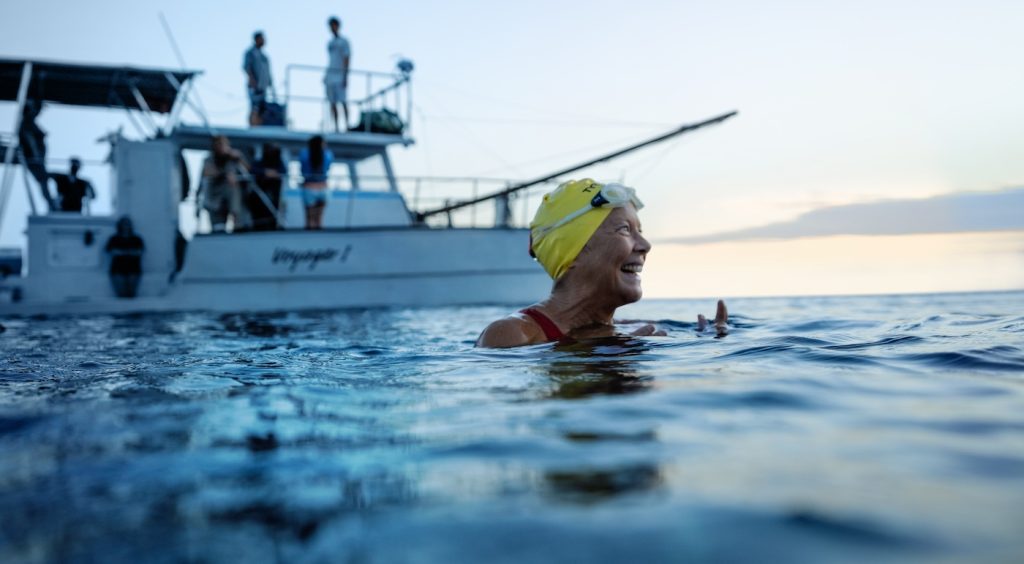
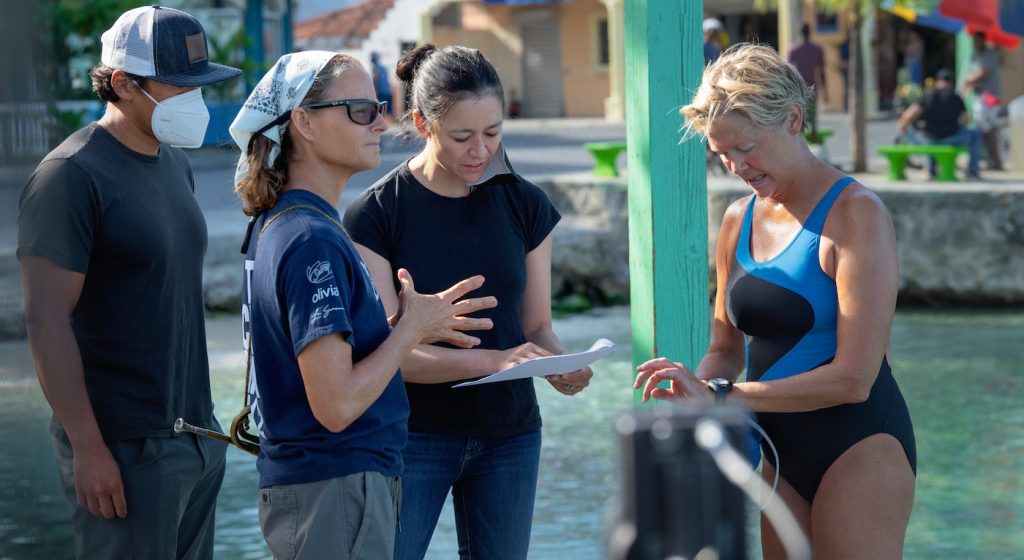
Diana Nyad would not be denied. Nyad attempted the treacherous endurance challenge of swimming from Cuba to the Florida Keys more times than a white-tip shark. The effort could have killed her—the ocean certainly tried—but ultimately, after multiple attempts, Nyad succeeded, cemented her legend, and now is the focus of Nyad, the new film from documentarians Jimmy Chin and Elizabeth Chai Vasarhelyi, the directing duo’s first narrative feature. Chin and Vasarhelyi won an Oscar for their work on Free Solo, their jaw-dropping doc about free climber Alex Honnold’s seemingly suicidal attempt to climb El Capitan in Yosemite without a rope (spoiler alert—he succeeded), so they know a thing or two about human beings who will themselves to do the impossible, possibly irresponsible, and achieve their goals.
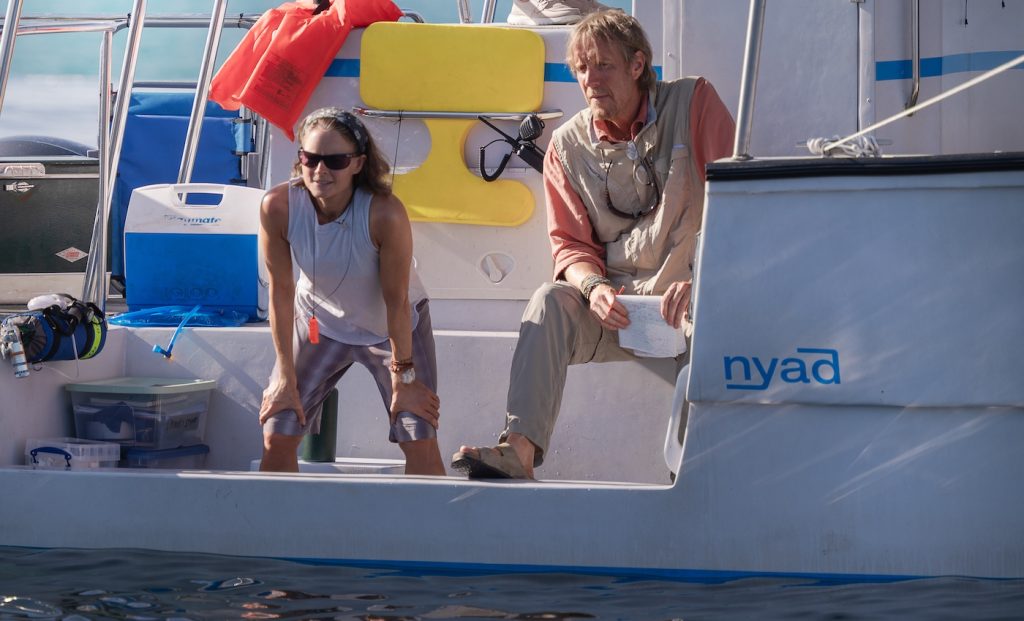
The remarkable thing about Free Solo and Nyad is most people will know going in what the outcome is, yet the thrills remain. Diana Nyad’s decision, at the age of 60, to complete the 110-mile open ocean swim from Cuba to Florida was madness, and it’s in the specifics of each attempt and the web of personalities involved that make the movie work. From the indomitable Nyad (played by Annette Bening) to her coach and best friend Bonnie Stoll (Jodie Foster) to her salty, sui generis navigator John Bartlett (Rhys Ifans) to the box jellyfish that defend their territory and nearly kill Diana in the process, Nyad is an ensemble.
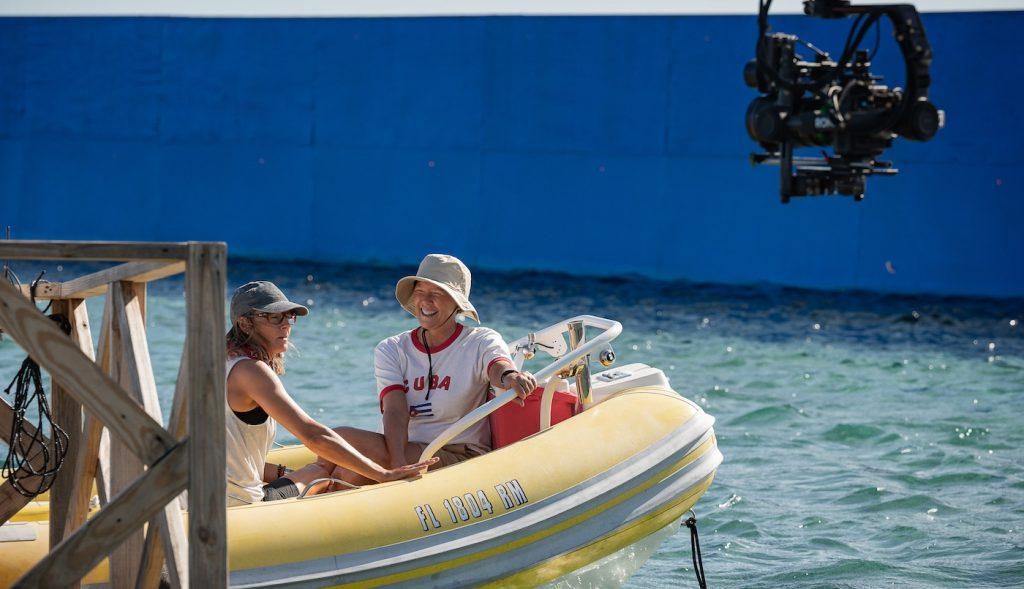
In order to drop viewers into the brutality of Diana’s attempts, however, it was going to take more than just stellar performances from committed stars (Bening trained extensively for the role)—you’re dropping Annette Bening in the dangerous, often unpredictable waters between Cuba and Florida—and that’s where VFX supervisor Jake Braver comes in. Thanks to Braver and his team, Nyad doesn’t sink but instead manages to make each attempt to cross those dangerous waters as unpredictable and downright gnarly as it was in real life. We spoke to Braver about what it took to turn a water tank in the Dominican Republic, where much of the film was shot, into the vicious Straits of Florida.
Most people will understand that Nyad was not filming in the rough waters between Cuba and Florida, so walk me through turning Pinewood’s Horizon Water Tank in the Dominican Republicinto the open ocean.
The water had a job to do in the movie. It had to be something that was holding Diana back, but also something carrying her forward during the final attempt when the current was so strong. The thing that informed the methodology of the water was it needed to be a directable performance. This means we needed to shoot in the tank and needed real-life physics that are imparted on Annette and the boat and Bonnie when she’s in the water. The water needed to be able to perform, so I’d say that easily ninety percent of the water in the movie is fully CG because it needed to have a current, a look to it that matches that of the straight between Cuba and Key West, which is a very punishing current as Bartlett (Rhys Ifans) describes to Diana.
We extended the tank — the tank was about 6500 square feet and had a blue screen on two sides, and one side was open for shooting. Then, the other side was this infinity edge that we ended up replacing anyway. But we were essentially extending the ocean, but also replacing the water around Diana and the boat so that it could move like water in the ocean, so it could have swells, it could drop and fall, and you could feel foam and particulate and these things you can’t do in a tank. Especially because most of the tank was pretty shallow. The center was about fifteen feet deep, but the rest of it was shallow. So it was about extending the tank not just to the expanse of the ocean, but to the depths of the floor of the ocean, too.
What’s fascinating by Nyad is that so much of the film is about her in duress in the water, and the water seems to have so many different personalities. Was every step of her journey a bespoke water environment you created?
A normal part of the visual effects process when you’re dealing with CG-heavy shots is called layout, which is basically taking the camera and taking the objects in the frame and figuring out their relationships to each other. We developed a kind of bespoke layout process for this movie, where we built a couple of different ocean sets that had matching characteristics and a variety of speeds and amplitudes. Then, we used a custom process to simulate those across several hundred shots so that for each shot, we had three or four options for the amplitude and speed of the ocean. So I sat down with Chai and Jimmy, and we went through every water shot in the movie and asked, okay, what should the water be doing here? We were able to really dial in, per shot, what we wanted the water to be doing on a per shot basis. The water needed to be character.
Yet, as much as this film would sink or swim based on how believable the ocean was, it’s really about Diana and her incredible will to accomplish this feat, even at the expense of her relationships and her own health.
Yes, we also had choices that were a lot more story-driven. So this process we created did two things: it allowed myself, Jimmy, and Chai to be able to have a clear blueprint of what were going for, and it also enabled a conversation between all of us and the editor, Christopher Tellefsen, about what the water needed to be doing at that particular moment. I don’t know if this is a movie that could have been made five years ago. Water is still very hard. Our visual effects vendors that handled the water, DNEG, Weta FX, and Scanline VFX, have a lot of water veterans. They all said this was the toughest water movie they’d been a part of because of what we were asking water to do. Here, we had someone performing in the water the whole time, and the water had to work with Annette, or the movie wouldn’t work at all. Simulation technology has progressed to the point where you can iterate faster than ten or fifteen years ago, but our work had this X factor that we had this person that the water had to make sense with.
What was it like working with Chai and Jimmy on their first narrative feature?
The magic of Chai and Jimmy is they have this incredible ability as filmmakers, be it narrative or nonfiction in their doc work, to tell you a story where you know the outcome, but you’re still on the edge of your seat. They’re masters at that. The way we did that in this movie is by differentiating Diana’s attempts. We have different encounters, from the box jellyfish to the storm to the sharks, finding new ways to inject something you haven’t seen before.
I still can’t believe she didn’t use a shark cage. Speaking of sharks…I’m going to assume that wasn’t Annette Bening in the water with an actual shark.
You are correct that we did not put Annette in the water with real sharks, although she probably would have been game. Weta FX did the sharks, and we started by looking at a lot of real references of oceanic white-tip sharks and their behavior. One of the things I spoke about really early with Chris White, Weta FX’s supervisor, was that the sharks were really about the scariness of the open ocean. Emotion was our goal. Lots of movies have done bigger and badder shark sequences, but for us, it was about keeping you with Diana and her fear. We really wanted to keep the shark sequence grounded in the story rather than all of a sudden have a ten-minute break for a shark movie. You don’t have great visibility in the open ocean; you can’t see that far. We don’t cut to a close-up of the shark right away because what we want people to experience is, ‘Oh wait, is that a shark? Oh, that is a shark.’
From the terrifying to the sublime, how did you construct the moment when Diana hallucinates that she’s swimming towards the Taj Mahal?
That was a really fun challenge because it is this break from reality, and this hallucination gives you a sense of just how out there Diana was at that moment. It was about finding the right scale for the Taj Mahal. We wanted it to feel grand and imposing, but it had to fit in the frame with Diana. We did a lot of concept art and a lot of animation tests to figure out how to get a playful performance out of the tropical fish guiding her there. We gave the Taj Mahal this mixed color temperature with these shafts of light coming through, and I think Annette makes you believe Diana thought it was real.
For more on big titles on Netflix, check these out:
The first trailer for Masters of the Air has arrived. Apple TV+’s ambitious new World War II drama is led by Oscar-nominees Austin Butler and Barry Keoghan and boasts a stellar ensemble cast, including Callum Turner, Anthony Boyle, Nate Mann, Rafferty Law, Josiah Cross, Branden Cook, Ncuti Gatwa. (One of the series casting directors, Lucy Bevan, is responsible for populating Barbie Land in Greta Gerwig’s Barbie.) The new series comes from the same team that produced HBO’s Band of Brothers and The Pacific—Steven Spielberg, Tom. Hanks, and Gary Goeetzman.
Masters of the Air is based on Donald L. Miller’s book, adapted by John Orloff (who also worked on Band of Brothers), and follows the 100th Bomb Group, aka the “Bloody Hundredth,” the airmen who ran bombing runs over Nazi Germany in terrifying conditions—war at 25,000 feet is an entirely different beast to the terror of ground combat—and will deep dive into what it was actually like to go on those crucial, devastating bombing runs. Many of the airmen who took to the sky never came back, and those who survived were often wounded, physically or mentally (or both). Others were shot down and captured by the Germans. None of it was easy. Like its predecessors on HBO, Apple TV+’s new series promises viewers a sweeping, exquisitely produced epic.
The production team includes a bevy of incredible directors—Dee Rees, Ryan Fleck, Anna Boden, Cary Joji Fukunaga, and Timothy Van Patten.
Check out the trailer below. Masters of the Air arrives on Apple+ on January 26:
Here’s the official synopsis from Apple TV+:
Based on Donald L. Miller’s book of the same name, and scripted by John Orloff, Masters of the Air follows the men of the 100th Bomb Group (the “Bloody Hundredth”) as they conduct perilous bombing raids over Nazi Germany and grapple with the frigid conditions, lack of oxygen and sheer terror of combat conducted at 25,000 feet in the air. Portraying the psychological and emotional price paid by these young men as they helped destroy the horror of Hitler’s Third Reich, is at the heart of Masters of the Air. Some were shot down and captured; some were wounded or killed. And some were lucky enough to make it home. Regardless of individual fate, a toll was exacted on them all.
For more stories on Apple TV+ series and films, check these out:
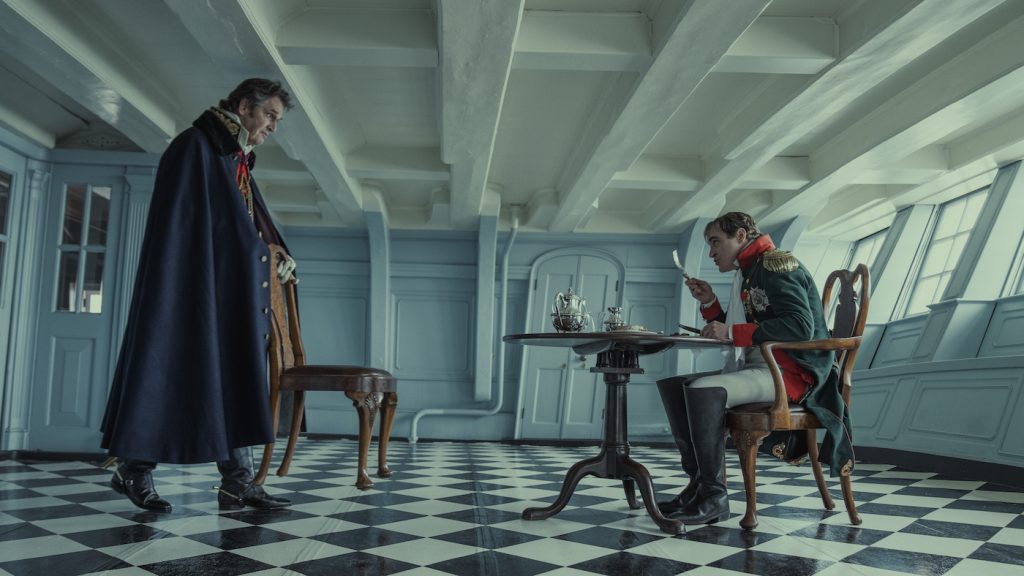
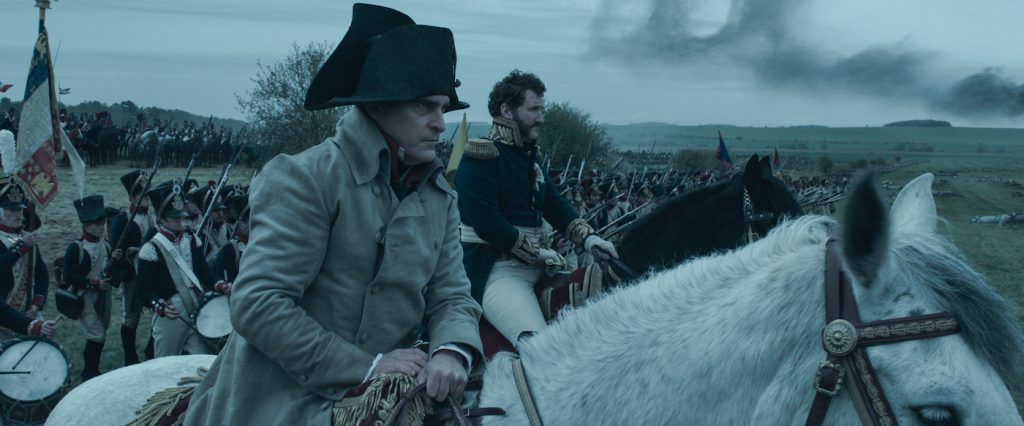
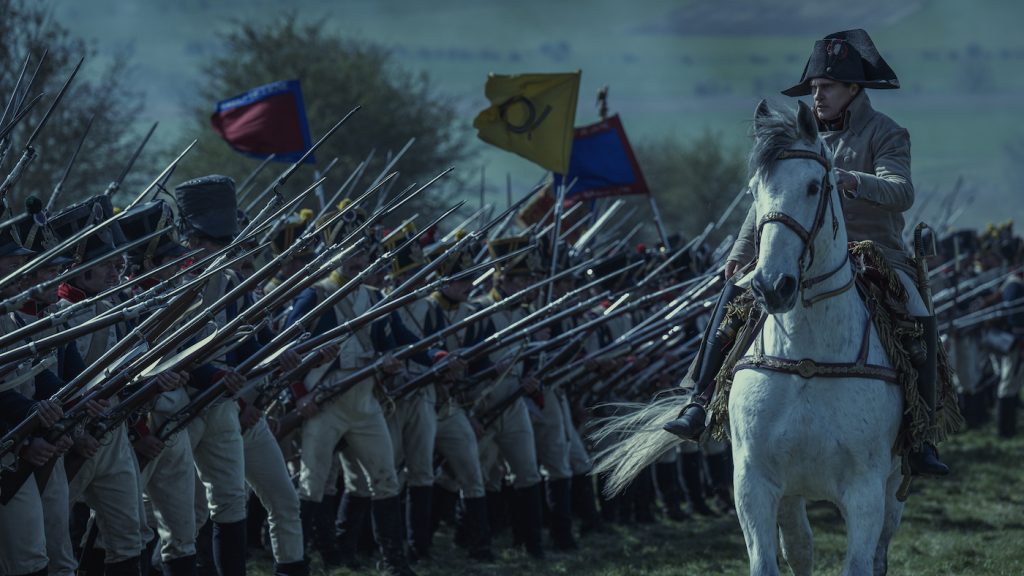
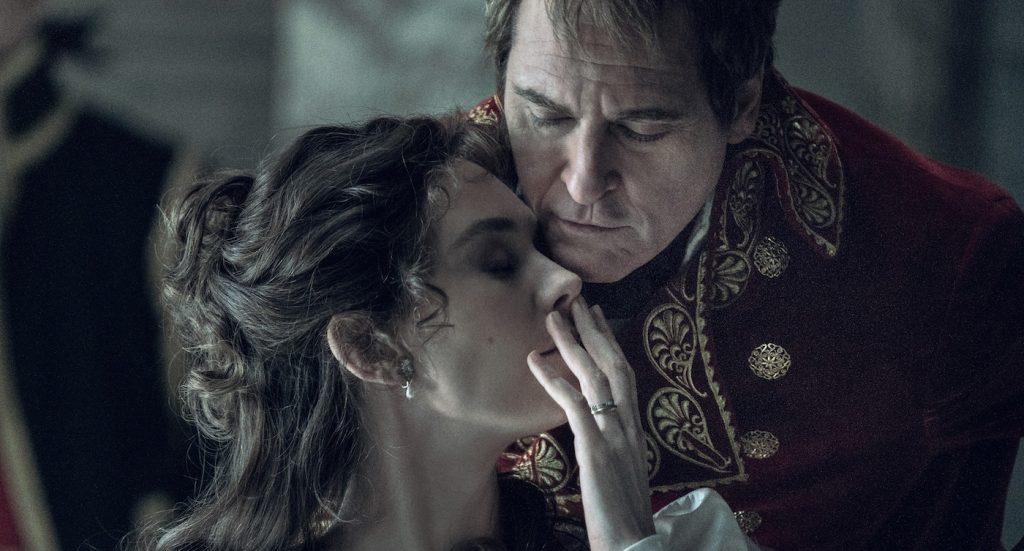
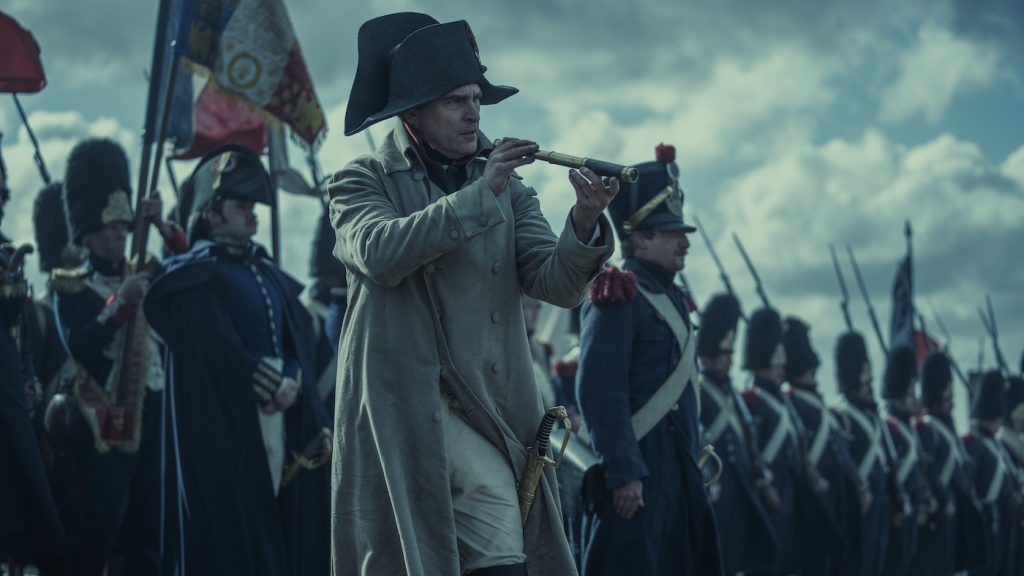
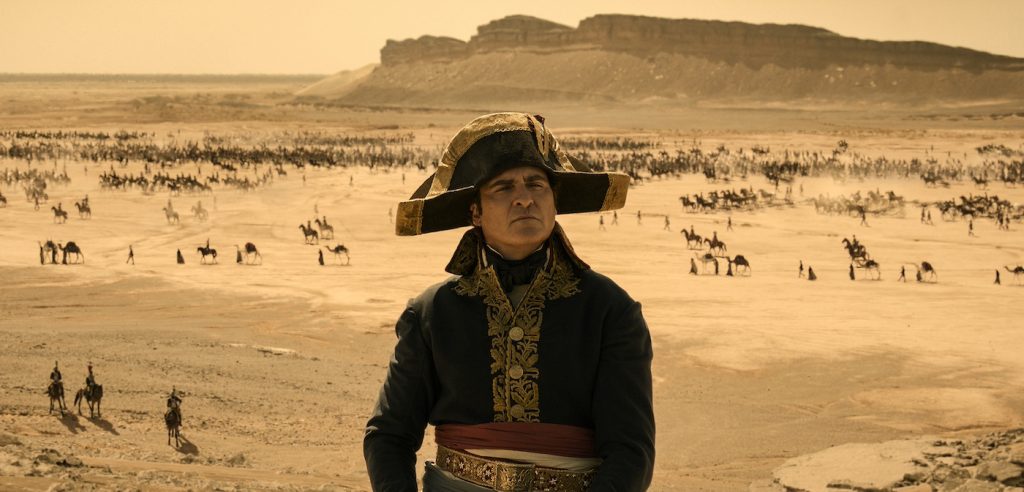
Ridley Scott’s Napoleon takes on the general-turned-emperor who ruled France from 1799 to 1814 and presents him (Joaquin Phoenix) as an indefatigable military strategist but also a tortured everyman obsessed with, and forever a touch spurned by, his wife and subsequent ex-wife, Joséphine (Vanessa Kirby). Running in the background of this love affair are Bonaparte’s imperial conquests, his catastrophic losses in Russia, and finally, his banishment to Elba.
Scott’s portrait highlights a more intimate side of the former emperor, depicting him derailed by aggravation with Joséphine for taking a lover and his worries over who, in their marriage, is the cause of the lack of an heir. But the settings in which both Napoleon’s imperial conquests and his home life play out are purely of the era — grand palaces shot on location (in England, not France) and vast landscapes transformed into colossal battlefields.
Production designer Arthur Max (Gladiator, The Martian), who has worked with Scott for years, looked for neoclassical buildings around London for the film’s location shoots. Like the architecture in France at the time, neoclassical English palaces also relied on Palladian architecture out of Italy. For set decorator Elli Griff (Gladiator, Black Hawk Down), a strong theme of the production was redressing locations as different settings with truckloads of items brought in from France. We had the chance to speak with the pair about using the same location for multiple scenes, creating battlefields for unseen troops, and how this unusual depiction of Napoleon’s character influenced their work.
As far as locations, Blenheim Palace was particularly important. How did you use it to represent multiple locations?
Arthur Max: Mostly for me, it was a set dressing world. We did a bit of construction. We added two fireplaces to the central hall. They were very helpful with us on that score because we wanted to use the main entry hall for many big scenes. But the rest was Elli, to be honest.
Elli Griff: We had all those continuous staterooms at the back of Blenheim to dress. There are a couple of locations where you see Napoleon walking through. There’s his encounter about the peace treaty and his letter being rejected by the English, and how offended he was. There was another set-up of him going to sleep with the young lady to see if he could beget a child with her, and that took him down quite a long passageway, which was a redress of the same stateroom corridor. One day, I think we had four huge dinner parties and a masked ball to dress, so while they were shooting in one area, we were hastily redressing another. Then the unit would scoot over there, and we’d redress the main area again. And they would zip back and forth whilst we were putting in a pre-prepared setup that we’d practiced to cut down as much time as possible.
Rupert Everett stars as the Duke of Wellington and Joaquin Phoenix stars as Napoleon Bonaparte in Apple Original Films and Columbia Pictures theatrical release of NAPOLEON. Photo by: Aidan Monaghan
AM: What I remember was that there was a day the Great Hall was so full of furniture that you couldn’t even walk through it. There were so many revamps. It was like one of those puzzle games where there’s only one space, and you have to move all the pieces around to get where you want to go.
EG: Exactly. That’s what I love about it—art directing that and making it work. There were many comments, ‘What’s all this furniture doing here?’
Elli, in terms of outfitting the set from the Napoleonic era, you had some loans from the Victoria & Albert Museum. Is that right?
EG: In terms of the V&A, we’re very privileged to have access to some of their archives. Obviously deals have to be done, promises have to be made, etc. But the bigger part of the aesthetic, as far as we’re concerned, is that I had a fabulous buyer in Bernard Chedin in Paris, who I worked with many years ago. We’ve all marinated over the years, become more refined and tuned in, and he works so efficiently in getting me as much Napoleonic stuff from Paris that we were going at such a speed I didn’t even get there myself. We were lucky to have truck after truck of the most amazing sets of Imperial and Empire furniture that we could keep moving around, redressing, and recovering. There wasn’t enough furniture in Europe to cater to all the intimate interiors that we had to do. We cleaned out all the UK hire companies. Luckily for us, we have such a good rapport that they were personally buying stuff in to keep us going because we were going at such a speed and multiple units. And France throws off the weirdest vernacular surprises that you’re not expecting.
Like what?
EG: I didn’t realize that the French used to have a water heater that they put in their baths. It was this incredible copper chimney with two little side chimneys. You put all the hot coals in the center; it was taller than the lip of the bath, and air came in one side chimney, and smoke came out the other one. There was enough room to get your legs on either side of it, and it kept the water hot. You’d think, of course, it sounds so logical, but it was made in such a simple vernacular way, all hand-beaten copper with chains on the top to lift it so you didn’t burn your hands. I’d never seen one before, and there certainly isn’t one in a museum. In fact, the French bought it back from us because it was so rare.
AM: Going back to the V&A and them collaborating with us — all I remember was that we came across a red velvet bed, and as far as the V&A was concerned, we couldn’t come within a meter of it. We wanted to use it, but there was no way they were going to let us, so we replicated something. Elli, I think you did a better job than they did.
How did you each approach the battle scenes? What did you need to find to make them work so well?
AM: Muddy fields. Lots of them. Wellington boots, always. And trudging around trying to find some magnificent topographies that would work for imaginary troops that weren’t there. We didn’t have 120,000 troops. We had 500 a day. So you had to design for what wasn’t there as well as what you were putting there. That was a big challenge. And it was a lot of drawings and physical model making and a lot of location scouting in England to find just the right topography and character of ground for horses, for troops, and also the magnificent vistas that you wanted to have. And also finding owners of these properties who were cooperative enough to let us dig great big trenches for the cannons and redoubts that we needed to build.
Joaquin Phoenix stars in Apple Original Films NAPOLEON, released theatrically by Columbia Pictures. Photo Courtesy of Sony Pictures/Apple Original Films
EG: Research, research, research. From the set decoration department, we designed all of the horse dressing, apart from the leather work and the tack, all of the horse cloths, and all of the emblems, for every single different army. It was a lot of stuff, but I’m very proud of everybody who stayed longer than they should have just to make sure they brought in first-class work. We had an amazing art director, Jess, who designed and had approved all the horse blankets, all the under-blankets, all the accoutrements they’d have, all the standard bearers, all the flag bearers. It goes on and on, depending on what regiment you’re dealing with, and of course, we had to go through them all.
Joaquin Phoenix stars as Napoleon Bonaparte in Apple Original Films and Columbia Pictures theatrical release of NAPOLEON. Photo by: Kevin Baker
Finally, we see Napoleon here as a somewhat tortured mortal. How did his character inform your work?
Arthur Max: I am a big fan of the 1927 Abel Gance filmNapoléon. It’s about five hours, as I seem to remember. It wasn’t a warm, cuddly character at all, but at the same time, the way Ridley handled the character and how Joaquin portrayed him, he was at times quite comical and joyful. I think it lets you inside the character much more than the historical versions we’ve seen before. Do you remember the dining room scene in Fontainebleau, when he crawls under the dining table and seduces Josephine at breakfast? Nobody was prepared for that. It wasn’t scripted. It went off-piste. That was a real joy to watch because it’s quite endearing for what that showed of their relationship. There was a love story, in a very unrequited way, between them that continues as a thread through the narrative. In terms of the production design, I’m just an old-fashioned architectural researcher and try to keep it on course and historically accurate. When it comes to the characterizations, I leave that to people like Ridley, who spend a lot more time thinking about that than I do.
Vanessa Kirby and Joaquin Phoenix in “Napoleon,” premiering in theaters around the world on November 22, 2023.
Elli Griff: For me, it is about making the environment quiet enough to cradle them into the scene but also providing enough details to illustrate who they really are or what’s happening at that particular moment. But it’s all led by Arthur and the director, and I’m just there to support and color as much as I can.
AM: With eight or ten cameras daily, and going exterior, interior, through every room in the building, or very elaborate composite sets, it’s creating 360-degree environments for the actors to inhabit, of all sorts of scales and dimensions. It’s challenging, it’s fun. And that’s the joy of our work. Scenic art is just that; it’s an art form. Every scene in the film is a prototype, with Ridley especially. You look at the research, and you think you know what you’re going to do, and you present it to him; he’s already worked out a completely fresh and different way of looking at it that hasn’t been seen before because that’s what he’s about.
Featured image: (l to r) Caulaincourt (BEN MILES), Napoleon (JOAQUIN PHOENIX), Marshal Berthier (SCOTT HANDY), Marshal Davout (YOUSSEF KERKOUR) and Marshal Ney (JOHN HOLLINGWORTH) plan for battle in Apple Original Films NAPOLEON, released theatrically by Columbia Pictures.
A hat is merely a hat unless it’s a Napoleon Bonaparte hat, in which case the detailing and contours need to possess star quality equal to the man who made it famous. Ridley Scott’s Napoleon (in theaters now) casts Joaquin Phoenix as the world-conquering French commander, co-starring Vanessa Kirby as his un-adoring wife Josephine, and a series of scene-stealing “bi-corn” hats designed by David Crossman. An expert in military history, Crossman previously worked on World War 1 epic 1917 and more recently designed Robert Pattinson’s superhero suit in The Batman. Crossman was invited to join the Napoleon team by Oscar-winning costume designer Janty Yates, who’s collaborated with Scott on all of his movies dating back to Gladiator.
Speaking from England, Yates and Crossman tell The Credits about how they conjured early 18th-century Napoleonic splendor with ingredients ranging from tree bark and costume jewelry to gold bullion.
The costumes you crafted for Napoleon go a long way in helping to define these historic characters. Janty, you’ve worked solo with Ridley Scott many times before. Why did you ask David to join you on this one?
Janty: There’s no way I could have done this film without David. He’s a military genius and researched the buggery out of it before we even had our first meeting. After that initial call, David took it upon himself to produce these amazing books of impeccable research that even had gold bullion-embossed embroidery samples — I was completely gob-smacked.
David: We had to hit the ground running and push forward with the embroidery because if we’d waited around for the final script and casting, it just wouldn’t have happened [in time]. Once we knew [the rest of the cast], we were able to hone in.
Joaquin Phoenix stars as Napoleon Bonaparte in Apple Original Films and Columbia Pictures theatrical release of NAPOLEON. Photo by: Kevin Baker
Napoleon’s costumes evolve through the course of the movie, starting with his early triumph at the Battle of Toulon. How do Napoleon’s clothes reflect his status?
David: Post Toulon, Napoleon’s nearly penniless in Paris and couldn’t afford an embroidered general’s uniform, so we actually copied from a civilian coat with a flat collar. When we see him a little bit later, he’s wearing the fully embroidered general’s costume.
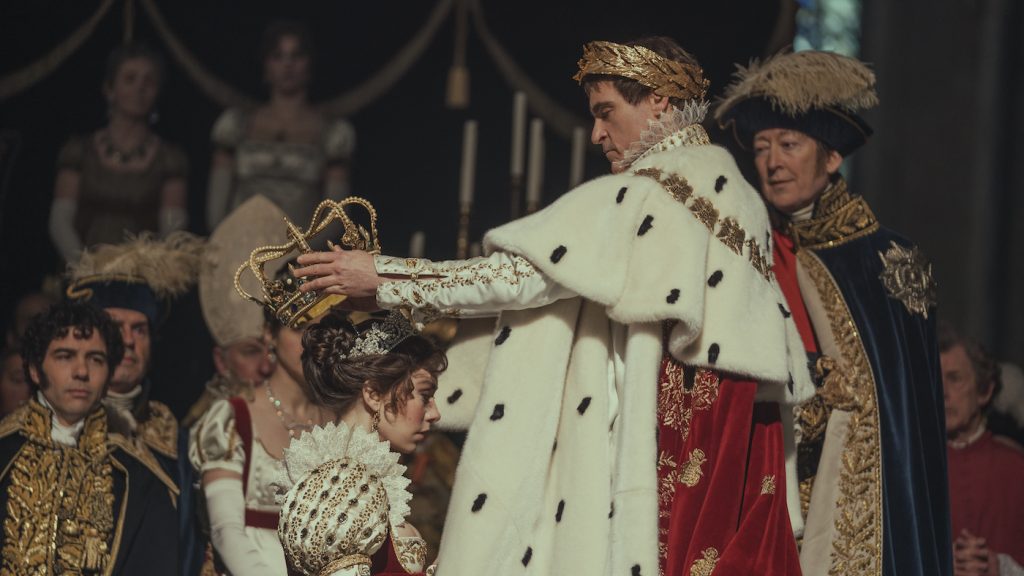
Napoleon eventually crowns himself emperor of France and dresses for the occasion in a gorgeous fur cape. What inspired this cloak, and how did you fabricate it?
Janty: That scene was based entirely on the painting by [Jacques-Louis] David to the point where we counted every single person in the painting, we counted the children, and then tried to duplicate it as well as we possibly could.
Joaquin Phoenix stars as Napoleon Bonaparte and Vanessa Kirby stars as Empress Josephine in Apple Original Films and Columbia Pictures theatrical release of NAPOLEON. Photo by: Aidan Monaghan
How did you construct the garment?
Janty: The cloak took forever. I got quotes from clergymen embroiderers in France and Italy but they were astronomical. Just by luck, we landed on a family in Pakistan who embroidered them beautifully.
Everybody in Napoelon’s entourage looks like a million bucks.
Janty: The dresses for the ladies in waiting were all hand-embroidered with gold bullion in England. David can tell you about the military side.
David: All of Napoleon’s marshals and generals wore even dressier coats than he did, embroidered in pale blue and silver. The marshals wore embroidered capes and feathered caps. There’s actually a book about the coronation that lays out most of the costumes. You’d go bankrupt if you tried to do the entire book, and in real life, people literally did go bankrupt paying for their costumes. We wanted to fill the screen with richness and luxury.
Vanessa Kirby and Joaquin Phoenix in “Napoleon,” premiering in theaters around the world on November 22, 2023.
Joaquin Phoenix is a vegan. Did that cause any complications in terms of fabric choices?
David: The hardest thing was Napoleon’s wool-felt hat. Joachim wouldn’t wear wool, so we experimented with tree bark from Uganda.
Wow, how did you make that work?
David: It’s a fibrous material that they’re able to process into big square pieces. You can make a hat from this [bark] because it will take the stiffener and the heat to form a lovely shape. It could have easily been a disaster, but when the milliner made the first bi-corn, Janty and I were so excited because the tree bark gave the hat this lovely texture. Marry that with the lovely antique braid and the beautiful cockade, and it all came together nicely.
Napoleon (JOAQUIN PHOENIX, center) looks onto the battlefield in Apple Original Films and Columbia Pictures theatrical release of NAPOLEON. Photo by: Aidan MonaghanJoaquin Phoenix in “Napoleon,” premiering in theaters around the world on November 22, 2023.
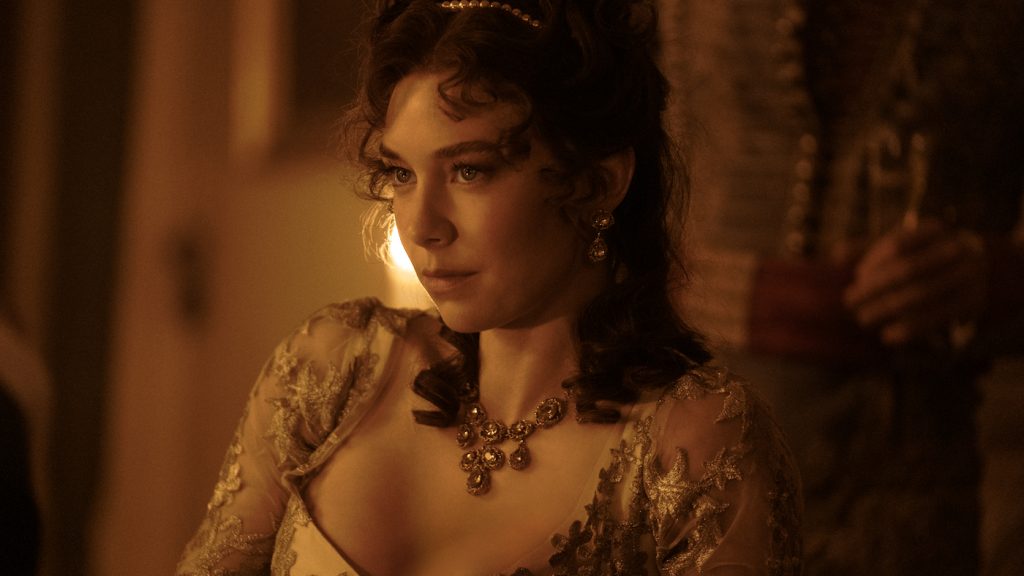
This story pivots back and forth between battle scenes and the relationship between Napoleon and Vanessa Kirby’s Josephine, who first meets Napoleon at a “Survivors Ball” dressed in this very revealing gown.
Janty: In fact, Ridley would have liked a little bit more [skin], but there’s always a struggle between actors and directors over how much we see. [laughing]. Ridley was very keen that the “survivors” who’d just gotten out of prison would wear very few items of clothes because they didn’t care anymore; they did not give a rat’s ass. There was quite a lot of nudity at that party, topless women, breasts bared, which, of course, didn’t make the R-rated movie version but will be in Ridley’s four-and-a-half-hour director’s cut.
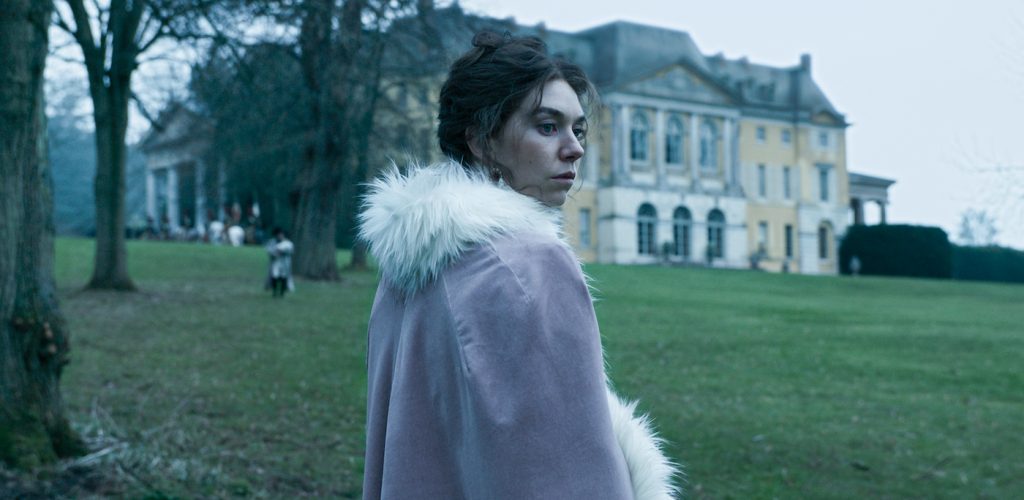
Napoleon marries Josephine, but later, she’s exiled to Château de Malmaison, where she’s dressed in a violet-colored cape unlike anything she’s worn before. What was your intention for this change in palette?
Janty: It’s actually the brightest color she wears. I told Ridley I wanted to keep Josephine in silver and gold and white. Then this pink, pale cerise cloak made of silk velvet comes out, but I think it works in this rather gloomy setting by the lake where she greets the baby [borne to Napoleon’s second wife, Anna]. It’s very emotional, so we wanted something with depth and warmth.
Vanessa Kirby stars as Empress Josephine in Apple Original Films and Columbia Pictures theatrical release of NAPOLEON.
Josephine’s jewelry also seems to say something about her character.
Janty: Josephine was a complete jewelry whore. All the reports and books say she didn’t think much of Napoleon and set her cap on him for financial reasons. Josephine ran up enormous debt on this huge collection of exquisite jewelry.
Vanessa Kirby stars as Empress Josephine in Apple Original Films and Columbia Pictures theatrical release of NAPOLEON. Photo by: Aidan Monaghan
Are the gold and gems real, or is Vanessa Kirby wearing costume jewelry?
Janty: Costume jewelry. It’s not the real thing because we did not want sixteen security men standing around all day every day going, “Where’s breakfast? Where’s lunch?” We’ve done that in the past, but we avoid it now when we can. I have the most wonderful in-house jeweler who created a huge amount of it, and then I have a jeweler in Rome who created the other half.
David, how did you dress Napoleon when he led his army into battle against Austria, Russia, and England?
David: Once Napoleon becomes emperor, he settles on this almost branded look of blue imperial garb as his favorite at-home costume. Then, on campaigns, he wears the famous green coat, a plain grey riding coat, and a plain black bi-corn. All very plain compared to his marshals, who were covered in medals by then, but Napoleon had done away with all the embroidered uniforms he wore in Egypt. He becomes more pared down. I am not comparing Napoleon to Stalin, but Stalin always wore this plain look, no frivolity: He’s the man in charge.
Joaquin Phoenix stars in Apple Original Films NAPOLEON, released theatrically by Columbia Pictures.Napoleon (JOAQUIN PHOENIX) prepares for battle in Apple Original Films NAPOLEON, released theatrically by Columbia Pictures.
Napoleon’s army is decimated by the brutal Russian winter. How did you dress Napoleon for the cold?
David: What I found in my research is that when the French army came to Moscow, [diplomat and advisor] Caulaincourt, played by Ben Miles, found a shop with furs and velvet. He had these winter coats made for the army so they could travel back [to Paris]. Napoleon had this beautiful green velvet coat along with a fur hat, which you see briefly in the movie.
Napoleon (JOAQUIN PHOENIX) prepares for battle in Apple Original Films NAPOLEON, released theatrically by Columbia Pictures.
The battle sequences in Napoleon involve thousands of soldiers. Dressing them must have been a massive undertaking.
Janty: David will tell you he made just under 4,000 uniforms.
Wow.
David: Plus all the civilian clothing from Janty’s end. We had a huge building storing all the costumes that would go out on trucks every day to different locations, back and forth, shipping them out to Malta.
Janty: [laughing] A logistical nightmare.
What’s next for you guys?
Janty: We’re working together again in Gladiator 2.
Featured image: Joaquin Phoenix stars as Napoleon Bonaparte in Apple Original Films and Columbia Pictures theatrical release of NAPOLEON. Photo by: Aidan Monaghan
British costume designer Jacqueline Durran, unlike Greta Gerwig, barely felt any attachment to Barbie dolls during her childhood. On the other hand, she’d enjoyed a fruitful collaboration with Gerwig on Little Women, for which Durran won an Oscar. So when the writer-director invited Durran to design clothes for Margot Robbie and Ryan Gosling as life-sized dolls in her feminist comedy Barbie, Durran promptly pivoted 180 degrees from Little Women‘s subdued 19th-century aesthetic and conjured a candy-colored wardrobe inspired by Mattel’s line of plastic figurines. How to account for such radically different approaches? “That’s the genius of Greta Gerwig,” says Durran, who previously earned Academy Award nominations for Cyrano, Darkest Hour, Atonement, Pride and Prejudice, and Beauty and the Beast.
The filmmakers’ shift in tone struck a festive chord with audiences over the summer when Barbie strutted to an astonishing $1.4 billion haul at the worldwide box office. The movie also won over critics and now leads the pack as an Oscar front-runner in multiple categories.
Speaking from a Los Angeles hotel, Durran gets into Barbie’s Hot-Skatin’ phase, explains Sly Stallone’s importance as a style icon, and details the color-coded secrets behind Barbie‘seye-poppingoutfits.
Greta Gerwig credits Barbie dolls with being a significant part of her childhood. What about you?
I was not particularly Barbie-oriented. I think I had one, but I don’t really remember because Barbie dolls didn’t figure much for me.
So how did you familiarize yourself with Barbie fashion?
I went through a lot of Mattel history and landed in the late seventies through the late eighties as being the soul of the movie because that was what Greta was thinking about when she wrote the script.
But you start the film with Barbie dressed in her very first outfit — the swimsuit.
From 1959, yes,
Caption: MARGOT ROBBIE as Barbie in Warner Bros. Pictures’ “BARBIE,” a Warner Bros. Pictures release. Photo Credit: Courtesy Warner Bros. Pictures
Margot Robbie first appears goddess-like in the 2001: A Space Odyssey-inspired sequence set to the thunderous music of “Thus Spoke Zarathustra.” It’s quite an entrance. Did you always envision the swimsuit for that opening shot?
That swimsuit was always going to be the starting point because it tied into the whole Kubrick monolith thing and, in a way, it gave me my route into the movie. We had archival Barbie from different periods that we re-produced as exactly as we could. Then we moved on to a more fluid approach, delving repeatedly into the late seventies and eighties until we get to the finale which is pretty much contemporary.
Barbie dresses almost entirely in pink, blue, or white until the finale. When she transforms from a doll to a person, Margot’s wearing yellow for the first time. Why?
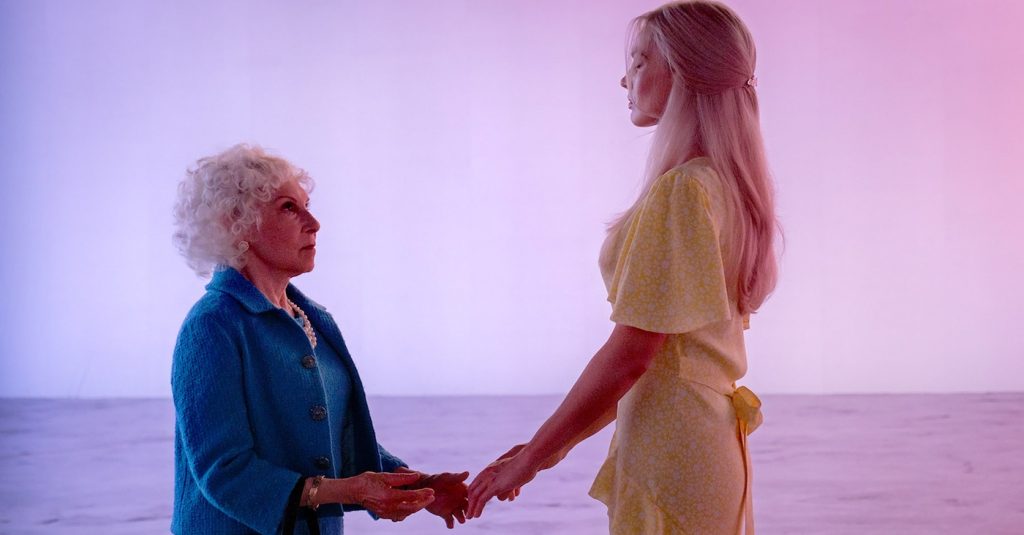
For the contemporary section, I wanted to reproduce the most popular Barbie dress, which was yellow, so we made Barbie Margot’s dress yellow as an homage. But it’s not really a Barbie costume because the way it’s cut is different. This is much more a human costume. Everything we did [with the costumes] was kind of multi-faceted because I wanted to reference the Mattel experience, but I also wanted to tell the story of Barbie.
L-r: Rhea Pearlman and Margot Robbie in “Barbie.” Courtesy Warner Bros.
Movie costumes usually express the hero’s interior life, right?
In a regular film, when an actress plays someone, her character dictates what she wears, but in this instance, it’s not the same relationship to the character. Barbie, all the Barbies, wear things appropriate to what they’re doing. The reason for her costume comes from outside of the character.
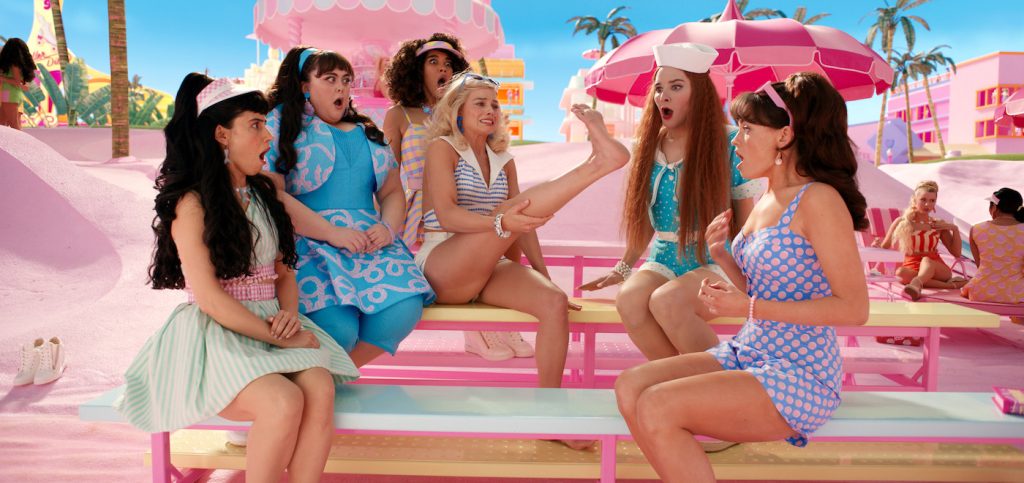
Caption: (L-r) ANA CRUZ KAYNE as Barbie, SHARON ROONEY as Barbie, ALEXANDRA SHIPP as Barbie, MARGOT ROBBIE as Barbie, HARI NEF as Barbie and EMMA MACKEY as Barbie in Warner Bros. Pictures’ “BARBIE,” a Warner Bros. Pictures release. Photo Credit: Courtesy of Warner Bros. Pictures
And in Barbie Land, it’s one activity after another. She’s at the beach. She’s disco dancing. Now she’s camping. That must have been daunting.
When I realized that every scene had a costume change, I nearly had a nervous breakdown! And not just one character. All the Barbies, all the Kens!
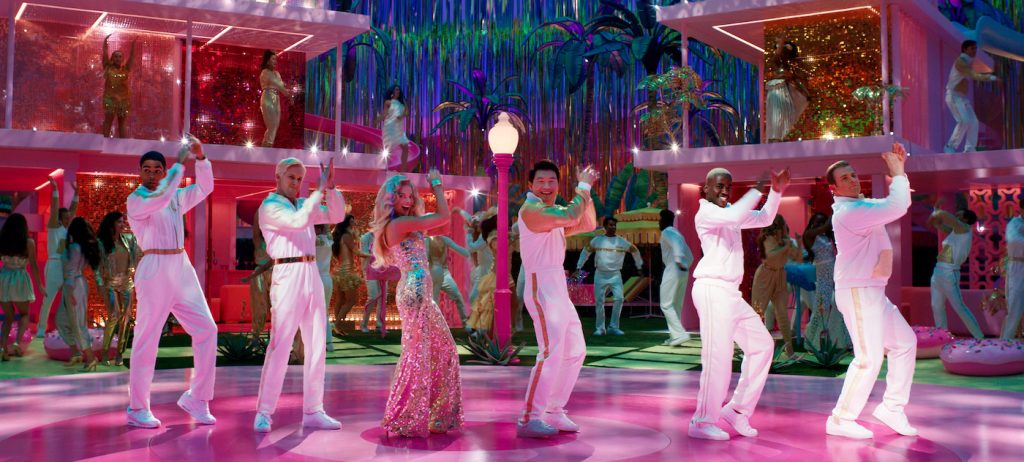
Caption: (L-r) KINGSLEY BEN-ADIR as Ken, RYAN GOSLING as Ken, MARGOT ROBBIE as Barbie, SIMU LIU as Ken, NCUTI GATWA as Ken and SCOTT EVANS as Ken in Warner Bros. Pictures’ “BARBIE,” a Warner Bros. Pictures release. Photo Credit: Courtesy of Warner Bros. Pictures
Given all these multiple versions of Barbie and Ken, you wind up dealing with a big ensemble dressed in very bright colors. How did you organize the palette for these set pieces so the visuals felt cohesive?
I knew the color needed to be controlled, or we’d end up being a mess, so almost the very first thing we did was that we made this chart. I don’t remember how many colors, but the key thing is that they always had to be three color combinations. It was a strict rule. You couldn’t put a costume together if it wasn’t in that combination. It was hard because that meant that you couldn’t buy anything – – we basically had to print all the textiles, like all the fabrics for the beach costumes, in these color combinations. I felt this was the only way to keep a lid on having the film be bright while also tying it all together underneath.
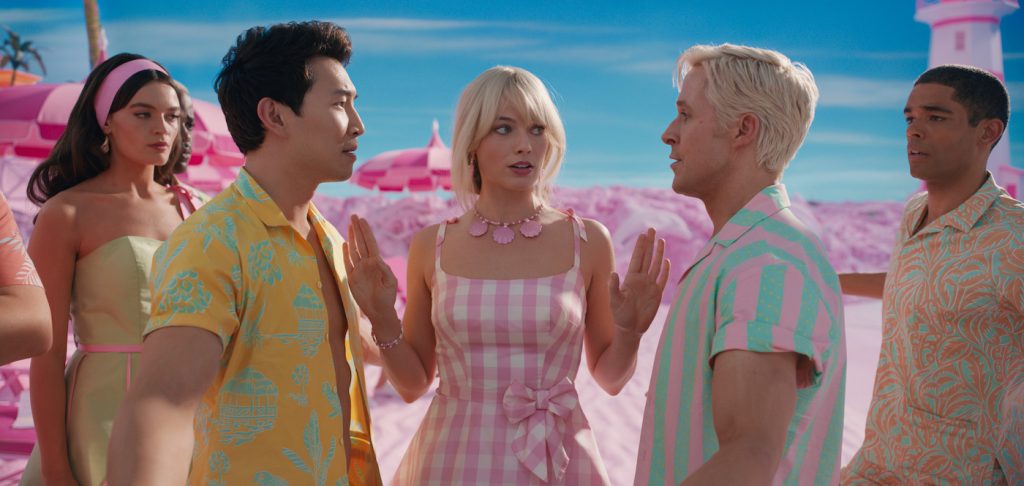
Caption: (L-r) EMMA MACKEY as Barbie, NCUTI GATWA as Ken, SIMU LIU as Ken, MARGOT ROBBIE as Barbie, RYAN GOSLING as Ken and KINGSLEY BEN-ADIR as Ken in Warner Bros. Pictures’ “BARBIE,” a Warner Bros. Pictures release. Photo Credit: Courtesy Warner Bros. Pictures
Those pink and green outfits definitely pop.
It was a way to get pastels that were punchy into the movie but also a way of looking back to the fifties-sixties palette when much of fashion used color in a different way. There was this nostalgic element blended into the story I was trying to tell about the movement from 1959 through to modern while also using a color palette totally appropriate to Barbie Land.
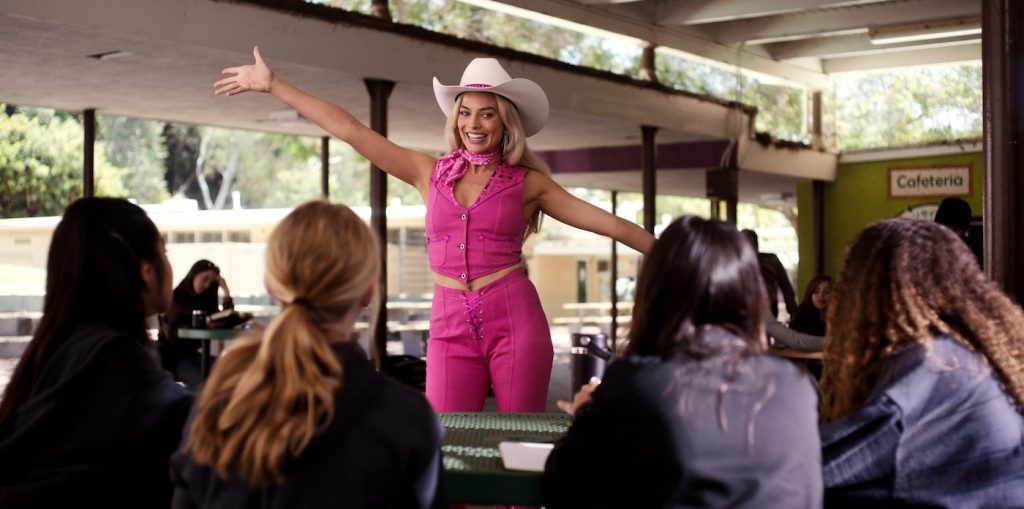
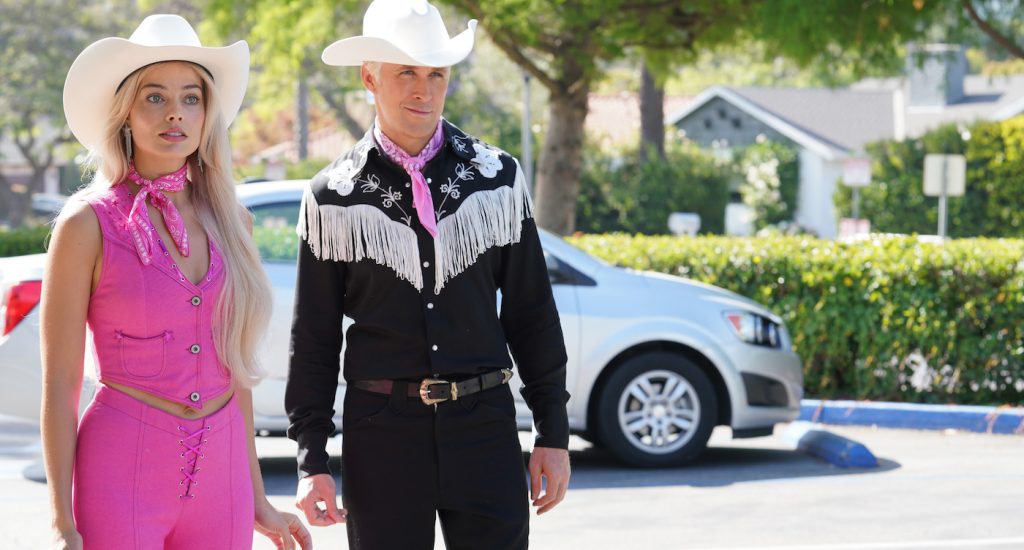
Once Barbie and Ken enter real world Los Angeles, they spend a lot of time wearing cowgirl and cowboy outfits. Was that Western look based on one of the Mattel packages?
No. Funnily enough, someone later found a Ken Doll dressed in something very similar, but I hadn’t seen that at the time. This was Barbie’s idea of what would make people in Ametria like her, and also, the cowgirl fits into that eighties Barbie aesthetic
Caption: MARGOT ROBBIE as Barbie in Warner Bros. Pictures’ “BARBIE,” a Warner Bros. Pictures release. Photo Credit: Courtesy of Warner Bros. Pictures
Like an Urban Cowboy type thing?
Yeah, it had the feeling of being a little bit retro.
-Caption: (L-r) MARGOT ROBBIE as Barbie and RYAN GOSLING as Ken and in Warner Bros. Pictures’ “BARBIE,” a Warner Bros. Pictures release. Photo Credit: Dale Robinette
And, of course, Barbie dolls always come with a complete set of accessories, right?
One hundred percent. With the cowgirl, it was the Stetson and the neckerchief and cowboy boots. It’s always a complete look.
Head to toe… or head to high heels.
That’s what makes Barbie.
Ryan Gosling and Margot Robbie look every bit the perfect couple in some ways, but it’s also funny to see them not fitting in at all in contemporary L.A. Did you deliberately infuse these outfits with a sense of humor?
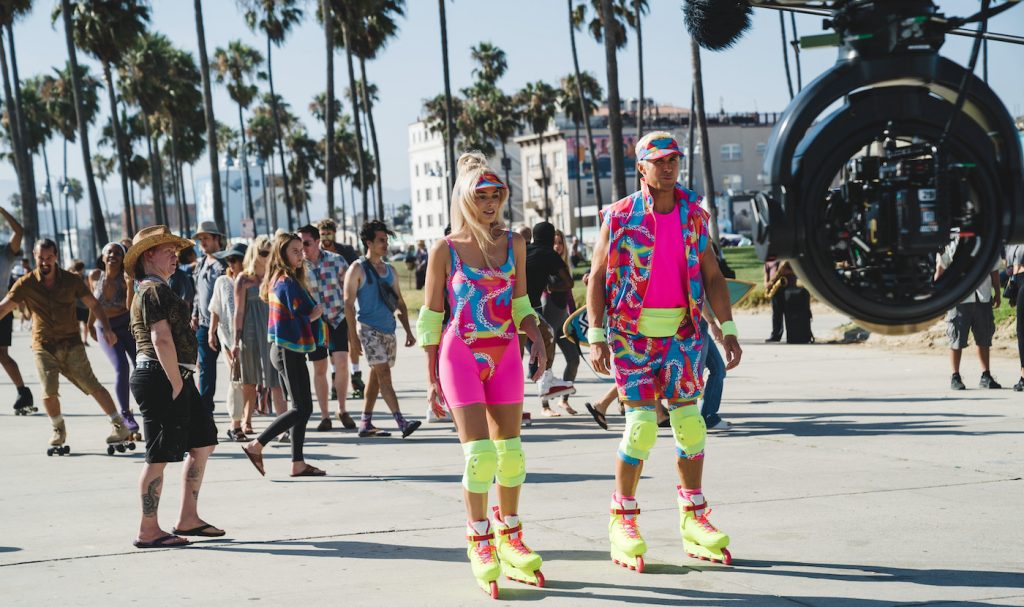
Ken and Barbie had to look strange and stand out in the real world because they have a doll-like quality. If you jump back a minute to Ken and Barbie arriving at Venice Beach, they’re wearing their Hot Skatin’ Barbie look.
Caption: (L-r) MARGOT ROBBIE and RYAN GOSLING on the set of Warner Bros. Pictures’ “BARBIE,” a Warner Bros. Pictures release. Photo Credit: Atsushi Nishijiima
Skin-tight and the colors are burning hot!
Their outfits make everyone look at them and potentially laugh, and this is Venice Beach, where it’s not that easy to look eye-catchingly funny. We investigated lots of different looks but in the end, I went back to the original Hot-Skatin’ Barbie costume from the eighties or early 90s because it was stranger. I didn’t copy it, but I kind of re-invented the costume, changed elements, and made a Ken version as well.
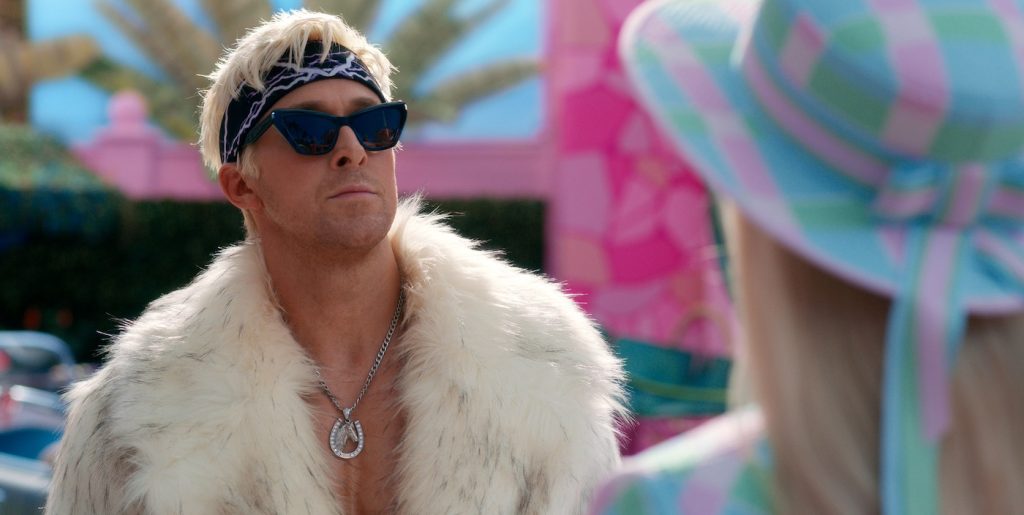
While Barbie’s learning hard lessons about modern America, Ken discovers his inner dude and starts strutting around in a faux white mink coat. How did you arrive at this alpha male piece of wardrobe?
Greta and Ryan had been talking, and between them, they had pictures of Sly Stallone looking fantastic in this fur coat from the eighties. I had not spoken to Ryan Gosling about Ken before and wasn’t quite sure how far he wanted to go. It turned out that he was more than ready to embrace the “Ken-ness” of things. That fur coat became critical in pinning down how far we could go with Ken and how much fun we would have.
(L-R) RYAN GOSLING as Ken and MARGOT ROBBIE as Barbie in Warner Bros. Pictures’ “BARBIE,” a Warner Bros. Pictures release. Photo Courtesy Warner Bros. Pictures
Featured image: (L-r) RYAN GOSLING as Ken and MARGOT ROBBIE as Barbie in Warner Bros. Pictures’ “BARBIE,” a Warner Bros. Pictures release. Photo by Jaap Buitendijk.
Deadpool 3 is on every Marvel fan’s must-see list next year for several reasons, but number one among them is the fact that Ryan Reynolds’ chatty, foul-mouthed superhero is finally teaming up with Hugh Jackman’s Wolverine. (Yes, yes, Wolverine died in James Logan’s 2017 banger Logan, but there are plenty of reasons why Jackman is able to reprise the role.) While the Deadpool/Wolverine team-up is the main course in Deadpool 3, it’s not the only duo worth getting excited for. We’ve got our first image from the film, and it reveals another dream pairing—Deadpool and Dogpool.
The image comes straight from Dogpool’s Instagram account, and it reveals the two old souls together again, both looking spry and ready for action. Dogpool is licking Wade Wilson’s face—a face only Dogpool and Vanessa (Morena Baccarin) could love—with a caption that comes straight from the franchise’s reliable insult factory.
Deadpool 3 is back in production thanks to the resolution of the strikes, so you can expect more images and reveals in the coming weeks courtesy of Dogpool, Reynolds, and Jackman. The third film in the franchise—the first since Disney acquired 21st Century Fox—is directed by longtime Reynolds’ collaborator Shawn Levy, who co-wrote the film with Reynolds alongside Rhett Reese, Paul Wernick, and Zeb Wells. Despite the fact that Deadpool 3 is officially a Marvel Studios film, Levy and Kevin Feige have both gone on record saying it will remain as hardcore as ever.
Reynolds and Jackman star, with a slew of franchise alums returning, including Baccarin as Wade’s paramour Vanessa, Brianna Hildebrand as Negasonic Teenage Warhead, Leslie Uggams as Blind Al, Karan Soni as Dopinder, Stefan Kapičić as the voice of Colossus, and Rob Delaney as Peter. Newcomers to the Deadpool world are Jennifer Garner, reprising her role as Elektra, and Emma Corrin and Matthew Macfadyen in undisclosed roles.
Amazon’s Spider-Man Noir series is swinging into action.
The upcoming series is bringing in The Punisher showrunner Steve Lightfoot to serve as co-showrunner, Varietyreports. Spider-Man Noir was first revealed back in February, with Oren Uziel serving as head writer. Now, Uziel and Lightfoot will serve as co-showrunners and executive producers as the series begins to take shape.
Spider-Man Noir will, as its title suggests, find the titular Spider-Man in a shadow-splashed 1930s New York appropriate for the noir genre, as is the fact that this Spider-Man is older, grizzled, and not Peter Parker. Spider-Man Noir is not the only project at Amazon based on Sony’s Marvel characters. The streamer is also prepping the series Silk: Spider Society with showrunner Angela Kang, as well as some other series based on Sony’s large cache of Marvel characters that are in development.
Uziel developed Spider-Man Noir alongside Spider-Man: Into the Spider-Verse and Across the Spider-Verse producers Phil Lord and Christopher Miller and former Sony boss Amy Pascal, who will also serve as executive producer, with Sony Pictures Television, where Lord and Miller have an overall deal, will be the studio. In Spider-Man: Across the Spider-Verse, Spider-Man Noir was voiced by Nicolas Cage.
Lightfoot developed Netflix’s The Punisher, starring Jon Bernthal as the Marvel antihero, as well as Apple TV+’s recent Shantaram, starring Charlie Hunnam, an adaptation of Gregory David Roberts’ novel. Lightfoot also developed Netflix’s Behind Her Eyes and worked on Netflix’s Narcos and NBC’s Hannibal.
For more on Amazon Prime Video, check out these stories:
The final trailer for writer/director Sam Esmail’s Leave the World Behindis here a few days before the buzzy thriller arrives on Netflix on December 8. With Mr. Robot creator Esmail at the helm, a star-studded cast, and terrific source material in Rumaan Alam’s hit 2020 novel of the name, Leave the World Behind is feels very much like a must-see.
This last look at Esmail’s film drops us immediately into the crisis facing Amanda Sanford (Julia Roberts), her husband Clay (Ethan Hawke), and their children during their weekend getaway in the Hamptons. The Sanfords are joined by G.H. (Mahershala Ali) and his daughter Ruth (Myha’la)—G.H. is the owner of the house the Sanfords are staying in—and the five of them are thrust together as the world is falling apart right outside their door. A cyberattack on an unprecedented scale is starting to unstitch the fabric of society, and as the Sanfords, G.H., and Ruth try to figure out what to do, the catastrophe inches ever closer, and their evolving relationship has the potential to save or ruin them.
Leave the World Behind is both a techno-thriller and a tale of the fragile bonds between people that can either strengthen or snap in times of great peril. Alam’s novel dropped in the middle of the pandemic and felt disturbingly resonant at a time when we were all facing a real-life crisis, and his story about two families forced together in an unprecedented nightmare was both thrilling and distressingly relatable.
Check out the final trailer below. Leave the World Behind arrives on Netflix on December 8.
For more on big titles on Netflix, check these out:
Featured image: LEAVE THE WORLD BEHIND (2023) Julia Roberts as Amanda, Ethan Hawke as Clay, Mahershala Ali as G.H. and Myha’la as Ruth. CR: Courtesy NETFLIX
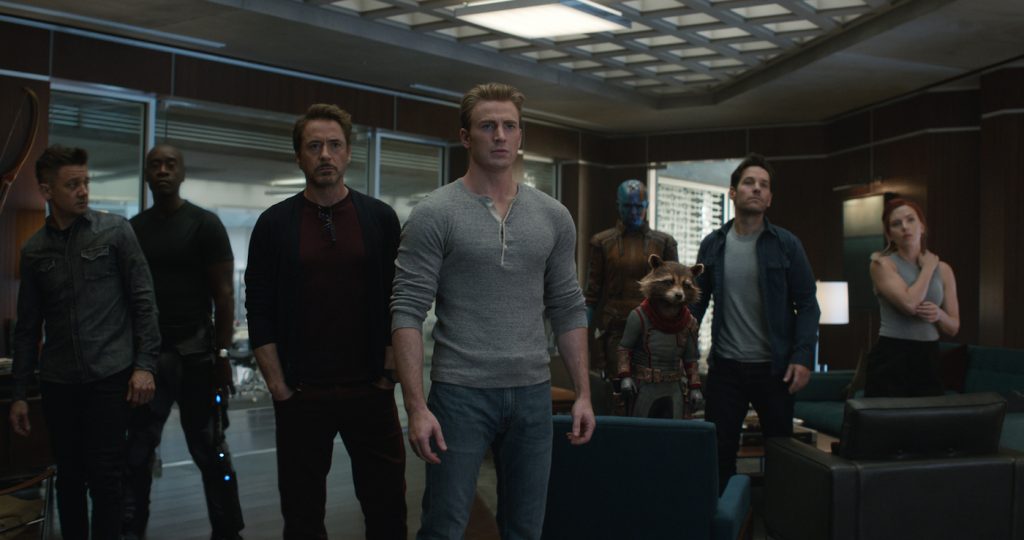
Robert Downey Jr.’s iconic final farewell as Iron Man in 2019’s mega-blockbuster Avengers: Endgamewill remain MCU canon. Marvel Studios president Kevin Feige confirmed this in an interview with Vanity Fair.
“We are going to keep that moment and not touch that moment again,” Feige told VF about Tony Stark’s sacrifice at the end of Endgame. “We all worked very hard for many years to get to that, and we would never want to magically undo it in any way.”
Downey Jr. was one of three major Marvel players to see their characters killed (Scarlett Johansson’s Black Widow also sacrificed herself for the greater good, yet she was still able to appear in Black Widowas that film was set before the events in Endgame) or aged into retirement (here’s looking at you, Captain America). There has been scuttlebutt as of late about the possibility of Downey Jr. and Evans returning to the MCU fold somehow, but Feige has now made it clear that, at least for Downey Jr.’s Iron Man, that’s not happening.
The Vanity Fair piece, which is about Downey Jr.’s career, delves into how he was almost passed over for the role of Tony Stark, with the studio reticent about signing him up despite the vote of confidence from Feige and director Jon Favreau.
“It purely came down to the Marvel board being nervous at putting all of their chips in their future films on somebody who famously had those legal troubles in the past,” Feige told VF. “I wasn’t very good — and I’m still not great — at taking no for an answer. But I also don’t pound my chest to try to get my way. I try to figure out ways to make it as clear to other people why we should head in a direction. And that’s when the idea of a screen test came up.”
Downey Jr., who was coming off an Oscar nomination for his work in Chaplin, submitted to the screen test. The rest is history. Iron Man, which arrived in 2008, was a massive success, and he became one of the most crucial members of the Avengers and was more or less the face of the MCU, alongside Chris Evans as Captain America. Downey Jr. eventually managed to use his own contract negotiations to get higher pay for his co-stars ahead of the first Avengers in 2012.
“We used to joke and say that Robert was the head of the acting department because everybody there looked up to him,” Feige told VF. “He took them all under his wing but not in a subservient sense. He just became their cheerleader.”
For most of the running time of Godzilla vs. Kong, the two legendary titans were battling each other. That changed towards the film’s climatic final battle, when Mecha-Godzilla arrived on the scene, conceived of and controlled by the planet’s truest enemy (human beings, obviously), which made both Godzilla and Kong realize they weren’t enemies. In fact, in a certain light, they could be incredible teammates if called upon. Godzilla vs. Kong ended with the two behemoths tag-teaming Mecha-Godzilla and taking the metallic monster down. Now, in the first trailer for the follow-up, Godzilla x Kong: The New Empire, the cinema’s two most iconic movie monsters are side-by-side again, this time against a mysterious foe that goes unnamed but is certain to be an even bigger challenge.
The new threat has been hidden beneath the surface of our world and is connected to the origins of both Godzilla and Kong, and Kong’s home, Skull Island. Godzilla vs Kong director Adam Wingard returns, along with stars Rebecca Hall, Brian Tyree Henry, and Kaylee Hottle. Newcomers include Dan Stevens, Alex Ferns, and Fala Chen. Wingard directs from a script by Godzilla vs. Kong scribe Terry Rossio, Simon Barrett (You’re Next), and Jeremy Slater (Moon Knight).
Wingard is also once again working with Godzilla vs. Kong alums in cinematographer Ben Seresin, production designer Tom Hammock, editor Josh Schaeffer, and composers Tom Holkenborg and Antonio Di Iorio.
Check out the official trailer below. Godzilla x Kong: The New Empire arrives on April 12, 2024:
For more on Warner Bros., Max, and more, check out these stories:
Featured image: Caption: KONG in Warner Bros. Pictures and Legendary Pictures’ action adventure “GODZILLA x KONG: THE NEW EMPIRE,” a Warner Bros. Pictures release. Photo Credit: Courtesy of Warner Bros. Pictures
Godzilla Minus Onehas now arrived on U.S. shores, and for Godzilla lovers, catching the iconic kaiju on the biggest screen possible stateside is a no-brainer. Yet the reviews for the film are so positive even Godzilla agnostics might want to add the movie to their December watch list. “The result is nothing short of magical: a feast for the eyes, an entertaining epic in every sense of the word,” writes the Washington Post‘s Lucas Trevor. “Godzilla Minus One isn’t just a good Godzilla movie. It’s an excellent Godzilla movie – arguably among the best ever to grace the screen,” says ReelViews James Berardinelli.
Writer/director Takashi Yamazaki’s Godzilla Minus One is the first domestic Japanese Godzilla film in seven years, taking us back to post-war Japan as the iconic kaiju surfaces from the ocean depths to unleash holy hell on a populace still reckoning with the ravages of World War II, a nation that was “baptized in the horrific power of the atom bomb” as the film’s press materials state.
It’s a decidedly different Godzilla from the American incarnations we’ve seen in Godzilla vs. Kong(2021) and Godzilla (2014), taking us back to Godzilla’s roots as a metaphor for Japan’s postwar agony and grief while balancing the beast’s lust for carnage and destruction with a human-level story that focuses on the lives of the people beneath Godzilla’s feet.
Yamazaki is as sure as a hand as you could have hoped for to bring Godzilla back home, a brilliant VFX artist and CG animator in his own right, having worked on The Great War of Archimedes and Lupin III: The First. He’s no stranger to the king of the monsters, either; this is the third time he’s depicted the most iconic movie monster of them all, having deployed Godzilla in Always: Sunset on Third Street 2 (2007) and Godzilla the Ride (2021).
Godzilla Minus One stars Ryunosuke Kamiki, Minami Hamabe, Yuki Yamada, Munetaka Aoki, Hidetaka Yoshioka, Sakura Ando, and Kuranosuke Sasaki.
Let’s take a peek at what some of the critics are saying. Godzilla Minus One is in theaters now.
REVIEW: Going back to basics, Takashi Yamazaki’s “Godzilla Minus One” is a lean Spielbergian period drama that brings the Toho titan back to its former glory.
Godzilla Minus One, one of the best entries in the franchise, goes back to basics for a post-war monster movie with a human focus and killer effects. @eli_gonzalez11‘s review: https://t.co/cAp7LPitk7
The first trailer for George Miller’s Mad Max: Fury Road prequel Furiosa: A Mad Max Saga has arrived, easily one of 2024’s most feverishly awaited films. Furiosa arrives nine years after Miller’s nearly flawless Fury Road, which starred Tom Hardy as the titular Max and an unbelievable Charlize Theron as Furiosa, the ferocious, fearless heroine who was easily the heart and soul of the movie. Furiosa’s exploits in Fury Road were significant—risking life and what was left of her limbs, she freed a gaggle of female prisoners from Immortan Joe, the sadistic ruler of the citadel in the parched, post-apocalyptic wasteland of a ruined world. Furiosa will take us back and follow her in her younger years (played by Anya Taylor-Joy) when she was snatched from the Green Place of Many Mothers and ended up in the snares of Warlord Dementus (Chris Hemsworth), the leader of the great Biker Horde, and thus began her years-long struggle against the lunatics roaming the vast wasteland and vying for supremacy of a broken world.
Furiosa: A Mad Max Saga is set 45 years after the collapse of society, and with a nifty opening text crawl (think of the iconic Star Wars crawl, only appropriately; the words here race at you like souped-up vehicles), we learn that the film is centered on Furiosa’s violent odyssey as she desperately tries to get back home. In order to do so, she’ll be required to master all things mechanical and survive a war between Warlord Dementus and Immortan Joe. The trailer is short on specifics, but it delivers glimpses of the ingenious practical effects and unparalleled stunts that made Fury Road a phenomenon and multiple Oscar winner.
Miller directs from a script he wrote alongside his Fury Road co-writer Nick Lathouris, and he’s built the world of Furiosa with plenty more Fury Road alums, including production designer Colin Gibson, costume designer Jenny Beavan, and makeup designer Lesley Vanderwalt, each of whom won an Oscar for their work on Fury Road.
Check out the trailer below. Furiosa: A Mad Max Saga revs into theaters on May 24, 2024:
For more on Warner Bros., Max, and more, check out these stories:
Featured image: Caption: Anya Taylor-Joy in Warner Bros. Pictures’ and Village Roadshow Pictures’ action adventure “FURIOSA: A MAD MAX SAGA,” a Warner Bros. Pictures release. Photo Credit: Courtesy of Warner Bros. Pictures
You can now say “Beetlejuice” three times and know that, eventually, the supernatural misfit will appear soon. Tim Burton took to Instagram to announce that his sequel Beetlejuice 2 has wrapped filming. The conclusion to principal photography comes as welcome news to fans of his iconic original—the sequel had only two days left of filming but had to shut down during the SAG-AFTRA strike.
Burton told The Independentthat working on the sequel brought him back to the joy he felt making films.
“On this last one, Beetlejuice 2, I really enjoyed it,” he said. “I tried to strip everything and go back to the basics of working with good people and actors and puppets. It was kind of like going back to why I liked making movies.”
Burton directs the sequel from a script by Wednesday creators Miles Millar and Alfred Gough and sees the return of major stars from the original, including Beetlejuice himself, Michael Keaton, Winona Ryder as Lydia Deetz, and Catherine O’Hara as her mom, Delia Deetz. Newcomers include Jenna Ortega, as Lydia’s daughter, Astrid, Monica Bellucci as Beetlejuice’s wife, and Willem Dafoe, Justin Theroux, and Filipe Cates in undisclosed roles.
Keaton also echoed Burton’s sentiments in an interview with Empire Magazine.
“It has to be done as close to the way we made it the first time. Making stuff up, making stuff happen, improvising and riffing, but literally handmade stuff like people creating things with their hands and building something,” he said. “F**kin’ great. It’s the most fun I’ve had working on a movie in, I can’t tell you how long.”
Beetlejuice 2 currently has a release date of September 6, 2024.
Like so many of us, production designer Suzie Davies loved Emerald Fennel’s debut, Promising Young Woman. When she heard that the actress-turned-director planned a sex-drenched thriller called Saltburn as a follow-up to her debut feature, Davies, Oscar-nominated for designing Mike Leigh’s lush period piece Mr. Turner, threw her hat in the ring. “I was like, ‘Let me get in the room with Emerald!'” she says. “My agent got me the script, I put a pitch together, and we got on straight away. Whenever I suggested something, Emerald was like, ‘bigger, bolder.’ Anything even slightly weird, she’d say, ‘Absolutely, that will work!'”
Saltburn (in select theaters now) stars Barry Keoghan, Oscar-nominated for The Banshees of Inisherin, as Oxford University misfit Oliver Quick. Invited by aristocratic classmate Felix Catton (Jacob Elordi of Euphoria and Priscilla) to spend the summer at his family’s palatial estate, Oliver insinuates himself with Felix’s narcissistic mother, father, sister and cousin (played respectively by Rosamund Pike, Richard E. Grant, Alison Oliver and Archie Madekwe) to ruinous effect.
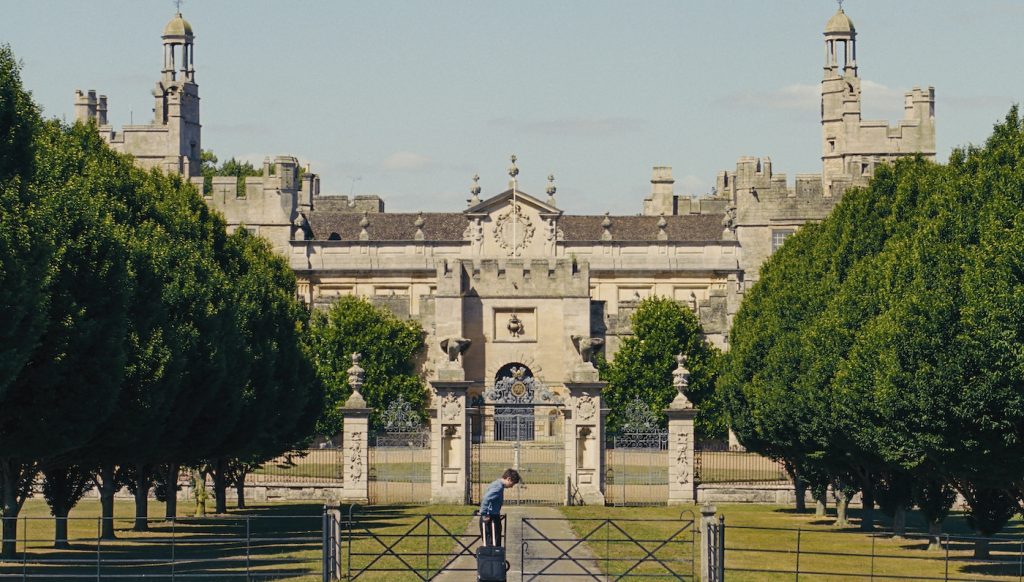
Filmmakers shot Saltburn on location at Oxford University, where Fennel went to school, and at a 200-acre estate in northern England called Drayton House, which dates back to the 1200s and has never before been featured in a movie.
Speaking from her London home, Suzie explains how she reconfigured an ancient castle to serve Fennell’s pitch-black comedy-turned-tragedy of manners.
Oxford University seems posh at the start of the movie, but it’s nothing compared to “Saltburn.” When Felix arrives at the sprawling Catton estate for the summer, he’s dumbstruck by its sheer scale. What was your reaction the first time you saw this place?
Exactly the same as Oliver’s — I was blown away. It’s a beautiful long drive up to this house, this manor, this castle, I can’t even call it a house, and probably a mile long, through the most delicious countryside. We went in the springtime so everything’s green and vivid and lush. You see the house in the distance, and it just gets bigger and bigger and bigger with layers of architecture every which way. Generations of families have lived there since 1066, so everyone’s added their bits — medieval, Georgian, Victorian.
Barry Keoghan is Oliver Quick in “Saltburn.” Courtesy of MGM and Amazon Studios.
Sounds like the house has a lot of personality.
This estate absolutely was a character, like it was smoking a cigarette and drinking a gin and tonic while leaning back — very confident and relaxed in its environment.
Using this formidable historic structure as a foundation, how much latitude did you have in re-shaping the home for the purposes of this film?
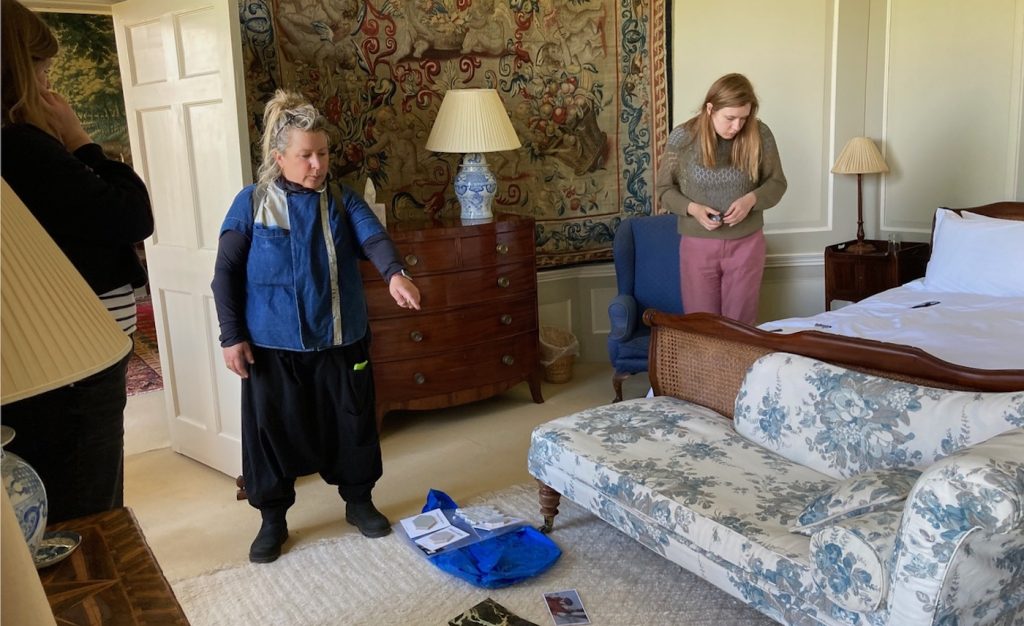
Rather than dealing with National Trust or English Heritage [saying] “Don’t touch anything, don’t paint anything,” this family let me run riot. When we got to the boys’ rooms, they were in the wrong colors and wrong configurations, so the family allowed us to paint the walls this lush, rich, basically red shiny glaze, change the tapestry, put up our own wallpaper, change the floor, rip out a bathroom, put in a dressing room, rip out a bedroom, put in another bathroom. That was really satisfying because you can use the idiosyncrasies of a real location to make something special with composited sets that look out the windows with great views. And this is a house with 127 rooms, so we had a lot to choose from!
Suzie Davies on the set of “Saltburn.” Courtesy MGM and Amazon Studios
Even the wallpaper draws you in.
I’m loving that you noticed the wallpaper because it isn’t just subtext. We did it with intention. For Oliver’s room, we used this brilliant wallpaper, a 1960s print, which you can see in close-up is a maze [pattern]. Felix’s room, we added a tapestry of ancient battle scenes of people slaying dragons. In the bathroom, the wallpaper mimics the muscles on Barry’s back, all sinews and muscle, with lovely marble-like wallpaper in the panels, which sort of looks like oil that’s dripping.
Dripping?
I had this idea that the film, toward the end, should look like an oil painting that’s dripping with the heat of the story.
The home’s vaulted ceilings, rich antique furniture, and million-dollar paintings define luxury, even though the aristocrats who live there seem to take it all for granted.
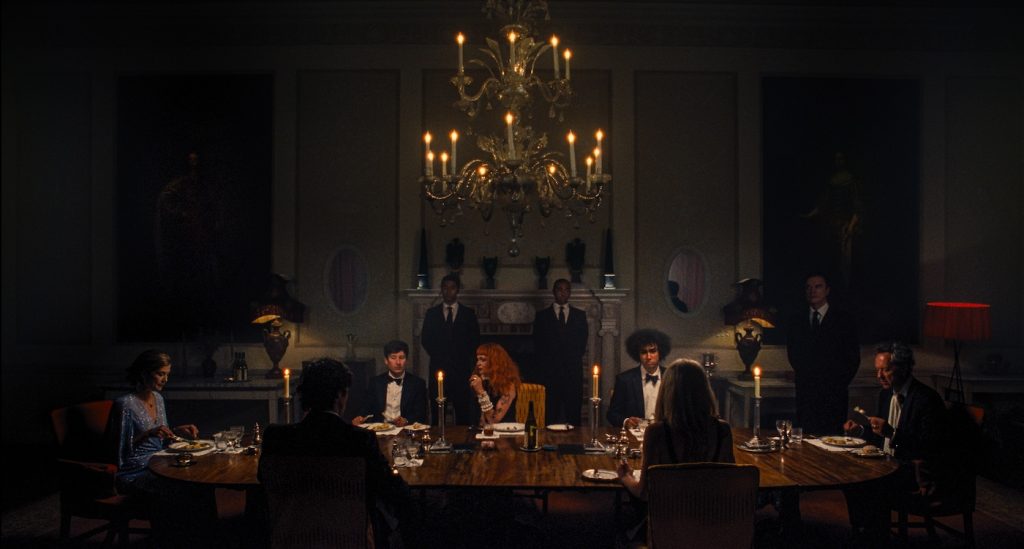
We added elements to make things even grander, but every time we made it grander, we also put in a slightly subversive element. The ballroom, with the beautiful flowers and the paintings, looks clean within an inch of its life, but there’s a fly strip hanging from the chandelier. Little things like that — the house needed to feel lived in.
A scene from “Saltburn.” Courtesy MGM.
The estate’s massive grounds include a maze-shaped garden where Oliver runs around with horns on his head during his wild nighttime masquerade party. Was this maze part of the property when you arrived?
No. The [overhead] top shot was CG, and the maze [on the ground] was designed by this amazing designer, Adrian Fisher. We worked out how our characters would run and then plopped in these hedges so that when you’re in the middle of the maze — that’s all construction. We moved probably twenty meters of real hedges in and out, and because [the big sequence] took place at night, we could make those runs quite short.
Barry Keoghan in “Saltburn.” Courtesy MGM.
At the center of the maze stands this eerie statue of a minotaur, the half-man-half-bull creature of Greek mythology. Did you sculpt the minotaur from scratch?
We found this brilliant artist Nicola Hicks, and she gave us permission to use her artwork as inspiration. From there, we developed our minotaur, which we called Big Willy for obvious reasons. It was sculpted out of polystyrene, which, funny enough, is how I started out in the industry as a polystyrene sculptor. There are four other minotaurs at each point of the maze from our brilliant team of makers in the art department, but I must admit I couldn’t help but get myself in there, covered in paint.
Bad things happen at the party, and the situation goes downhill from there. How did color, especially the color red, figure into your design as a way of intensifying the drama.?
We used every tone — dark red, dried blood red, neon red. At one point, I was going to paint the walls, but there was some ornate plasterwork on the panels in that breakfast room, which would have cost too much time and money to paint around. But it was a bland room, and we wanted to bring more color into the film. Then I noticed the room had an orange-red carpet. “What can we do with this?” Fried eggs were a big part of one sequence, so I started thinking about the white and yellow and the little bit of red you see in a fried egg, and we made these red-striped chair fabrics.
And the curtains?
Massive curtains were a way for me to bring some color in. We got this shot silk fabric…
What’s shot silk?
Raw silk. If you run your hands over shot silk, you feel bumps and lumps, and it’s thicker than the smooth silk you’d wear as a shirt.
So you make enormous shot silk curtains and…
When Emerald came in, the sun was shining through the window, and this orange-red sheer silk curtain looked amazing. She decided this was our chance to go orange-red in the scene where they’re all losing it.
When the curtains are drawn, the entire room takes on this reddish hue, amplifying the characters’ unhinged emotions. It must have been exciting to orchestrate all these tones and details in service of Emerald Fennel’s dark vision?
It’s great when a director uses detail as well as Emerald does. There’s that scene where Oliver pours the wine, and we see wine seeping through the white tablecloth. Or the Pierrot Box, with the little characters dancing.
The spooky marionette theater. Where did you find that?
We made it.
Really!
The Pierrot box is this thing that usually has a little dancing clown in it. We made this box with our little characters dancing but couldn’t quite get the mechanism to work. When Emerald saw it, she liked that it was a bit jolty and a bit mad when they did their little dance. Weird or rude, that’s what Emerald wanted in her storytelling. Weird or rude.
Featured image: Barry Keoghan is Oliver Quick in “Saltburn.” Courtesy of MGM and Amazon Studios.
The Walt Disney Company celebrates its 100th anniversary this year and, in honor of the milestone, released a new animated feature, Wish, just before Thanksgiving. Directed by Chris Buck and Fawn Veerasunthorn (both of Frozen) and written by Jennifer Lee and Allison More, Wish is set centuries ago in the magical Spanish Mediterranean island kingdom of Rosas. Until heroine Asha (Ariane DeBose) gets her bearings, the island’s magic is held in the hands of only one person, King Magnifico (Chris Pine), a megalomaniac who takes his subjects’ dearest wishes when they turn 18 on the premise of a promise to grant them at some undetermined date in the future. He has little to no intention of bringing most of the Rosas citizenry’s wishes to fruition, of course, but by causing them to forget what matters to them most, he maintains a docile population.
The film is peppered with references to Disney films past. Seventeen-year-old Asha’s gaggle of adolescent pals are reminiscent of the seven dwarfs. As a self-congratulatory villain, Magnifico could have taken his notes on how to rule from Jafar of Aladdin. And throughout the film, the score’s refrain is a new melody that intentionally harkens back to the signature Disney tune from it’s second animated feature, 1940’s Pinocchio, “When You Wish Upon a Star.” Wish is the first feature for composer David Metzger, who has had a twenty-five-year career at Disney as an orchestrator and arranger, and among his tasks was to both connect to Disney’s rich history and simultaneously create something brand new. “I think that was important, to nod to what the film is, but it’s its own unique theme,” he says.
Metzger, whose credits include Disenchanted, Frozen, and The Lion King, in addition to composing the score on Wish, worked with songwriters Julia Michaels and Benjamin Rice to arrange and orchestrate the animation’s original soundtrack. By the time he had all of six weeks to compose the score, Metzger had already spent seven to eight months working on the songs, as well as planning how to get into them from the score and back out. “I think it helped me a lot, and I hope helped the film have more of a singular voice,” he says.
As far as this marking his composer debut, “it was honestly a dream come true,” Metzger says. “Needless to say, I was thrilled to have the opportunity, and on such a happy film. I really think it’s a joyful film, and I’m hoping that it brings happiness to people.” We got to speak with the composer about his favorite songs, historical references, and the process of composing for Wish’s most unusual character.
How did you work to make the music feel fresh but still keep it within the Disney ethos?
As far as trying to make it new and fresh, a lot of the time, that depends on what part of the world we’re dealing with and also what era. In the case of Wish, we were working on an island in the Mediterranean with heavy Spanish influences. I wanted to involve North African elements, as well. Rosas is a community where people come from all over. I used North African percussion, I used darbukas, I used ouds, a string guitar-like instrument. Bringing in the Spanish side of things, I used a lot of nylon-stringed Spanish guitars and cajón, which is a percussion instrument that’s been used in flamenco music quite a bit. It was a matter of trying, in the case of Wish, to establish the identity of where it was taking place.
What about placing us in the time period of Wish?
For the era, one of the instruments I used was an oboe d’amore, which is a Renaissance oboe, so it gives more of a historical feel to it than you might get if you just used a regular oboe. I also used a bass oboe, which is rarely used. As far as trying to tie into making it still sound like a Disney film, for me it’s a lot of orchestra. In particular, being the 100th-anniversary film, I was trying to tie in elements historically, and I did that through orchestration choices and also while composing. There were more notes, historically — it was busier music back in the day. In the modern world, it’s a little more whole notes and not quite as motion-driven. So, I was trying to use that as a tool to bring a cinematic vibe to the picture.
Speaking of back in the day, were you inspired by old Disney films while working?
Asha has her friends, the teens. When I was talking about the music with the directors before we even started writing, we discussed that section where you’re first meeting them, and there was an illusion there to Snow White and the Seven Dwarfs, as each of her friends is characteristic of them. I didn’t use any themes, but I worked on so many Disney projects that I have copies of all these original scores, so before I even started writing, I went back and looked through the Snow White score and the Pinocchio score to see what I could borrow from that era, color-wise. I think if a person is listening closely, you’ll hear orchestration tendencies from 1937 that I tried to weave into the teen characters in particular.
When it comes to the soundtrack, one standout is the teens’ song, “Knowing What I Know Now,” as they make their plans against Magnifico.
One of the cool things about working on the songs was that I got to work with Julia Michaels and Ben Rice, the songwriters. They’re incredible. One of the things I had to work with on that song was that Ben is an amazing drummer. A lot of those percussion ideas are the ideas he’d played in his demo. Then, it was a matter of just expanding on those to bring in more percussionists. You’ll see on screen the characters will be playing candlesticks. It was a fun chance to find percussion instruments that sound like what they’re banging on. Probably the most fun thing for me on that song was the orchestra. I’m not much of a novelty orchestrator, but on that one, I thought, what the heck, I really wanted this big, deep, rounded sound. I normally use basses in my orchestra, but I actually brought in sixteen for that song. I had them split on both sides of the sound stage when we were recording. I also had sixteen cellos, so there’s this huge low end that permeates the whole sound stage. I had twelve French horns, whereas I normally have six. But the coolest, most unique thing we used was a contra-bass saxophone, which is about eight feet tall. It has this giant, low-end sound. You can’t really pick it out of a mix, but if you took it out of the mix, you’d notice something was missing.
Working on a project like this, do you have a personal favorite among the songs at the end of the process?
I think they’re all great songs, but the one I enjoyed the most might be the most oddball selection, and that’s the song that’s in the end credits. It’s called “A Wish Worth Making.” Julia and Ben wrote this beautiful melody with very simple chord changes. I was given that as a very stripped-down demo and was able to do my thing on it, which was figuring out a piano part that drives throughout the whole song. I only had an hour to do the string arrangement, but I kind of feel like it might have been the best string writing I’ve ever done in my career, which sounds weird to say. I just really felt it was one of those things that flowed out, and I had the opportunity to do counter lines in the strings that just seemed to work. Then Ben took another pass and put a lot of modern elements on top. I also really liked the way “At All Costs” turned out.
The Star is such a cute but key element to the film. How was composing for a character like that?
When I was brought onto the film, it was all storyboards. I hadn’t seen any animation for Star. I wondered, how is this going to turn out? As we were working on the songs, they were adding animation, and I realized this was going to turn out really well. At the end of the day, Star ended up being this wonderful animation with a range of facial expressions. Whereas I thought I’d have to do a lot of heavy lifting musically for Star, I ended up being able to sit in the background more than I ever would have dreamed because Star is so animated and, through facial expressions, transmits so much of the story. It’s a playful character, so it was fun to be able to do happy, fun things.
Perhaps we shouldn’t be the least bit surprised that Paddington and Paddington 2 director Paul King seems to have delivered a heartfelt and deliriously fun treat with Wonka. The early reactions are pouring in like a river of chocolate, and they’re deliciously positive.
Chalamet’s performance as the young chocolatier and confection wizard Willy Wonka is being hailed as a masterclass in charm and charisma, while the supporting cast and whimsical world in King’s conjuring of Wonka’s early years are all coming in for major praise. Production designer Nathan Crowley, in particular, is being name-checked for his contributions to the film’s sumptuous look.
Wonka reveals how the restless inventor of all things wondrous and sweet became the Willy Wonka that mesmerized millions of children, first through the pages of Roald Dahl’s iconic work and then in the 1971 adaptation Willy Wonka and the Chocolate Factory, in which the playful, ever-so-slightly maniacal magician of chocolate was played by the great Gene Wilder.
Wonka is based on a script by King, Simon Farnaby, and Simon Rich and details how Chalamet’s Wonka faces a mountain of challenges to surmount, mainly in the form of a Chocolate Cartel that aims to thwart his dreams. Wonka includes a ton of music—Chalamet has seven songs himself—and a cast that includes Hugh Grant as an Oompa Loompa, Olivia Colman, Keegan-Michael Key, Sally Hawkins, Rowan Atkinson, Calah Lane, Colin O’Brien, Matt Lucas, Simon Farnaby, Natasha Rothwell, and Rufus Jones.
Let’s take a quick sweep of the Wonka early reactions below. Wonka hits theaters on December 15:
#Wonka cements Timothee Chalamet as one of the greatest up and coming actors. He’s magnetic, delightful & beautifully walks the line between naivete & cleverness. The film is filled with charm, joy & hope. It’s a perfect holiday film. It definitely has the rewatchability factor😍 pic.twitter.com/lldKjVOphm
#WonkaMovie is unabashedly silly, and a perfectly charming family film. Wonka’s world is brilliantly designed, capturing the wonder of his early years.
Embracing a quirky, heartwarming tone, Wonka is funny and sweet enough to overcome any minor bumps in the road. pic.twitter.com/WPCxA2r1A9
Timothée Chalamet is earning raves and being called “infinitely charming,” “intoxicating,” “pitch-perfect” and “a blast to watch” in the lead role of Willy Wonka: “Chalamet is reason alone to see ‘Wonka.'”https://t.co/1nbsgRZBYbpic.twitter.com/l0xPCoMF8c
#Wonka/ #WonkaMovie is a winning confection, filled with perfect amounts of charm, whimsy & poignancy, powered by pure imagination & bright, nimble musical numbers. Timothée Chalamet is a charisma factory. His full committal is intoxicating. Hugh Grant in exceptional IDGAF mode. pic.twitter.com/vjKJqqY6ll
#wonka is an instant holiday classic & a truly magical time at the movies 🥰 paul king’s whimsical style works as well here as it did in paddington, every musical number enchants, & the entire ensemble takes turns stealing the show, led by an endlessly charming timothée chalamet. pic.twitter.com/O887KYp4CY
#Wonka cements Timothee Chalamet as one of the greatest up and coming actors. He’s magnetic, delightful & beautifully walks the line between naivete & cleverness. The film is filled with charm, joy & hope. It’s a perfect holiday film. It definitely has the rewatchability factor😍 pic.twitter.com/lldKjVOphm
Timothée Chalamet is reason alone to see #WonkaMovie. He’s infinitely charming & a blast to watch.
The movie around him isn’t as good but it’s enjoyable. The story & tone fight against each other leaving it a bit muddled. And yet it’s filled with joy & the songs are delightful. pic.twitter.com/s1zlqtzIgv
Featured image: Caption: Caption: TIMOTHÉE CHALAMET as Willy Wonka in Warner Bros. Pictures and Village Roadshow Pictures’ “WONKA,” a Warner Bros. Pictures release. Photo Credit: Jaap Buittendijk
This Thanksgiving, the new animated musical comedy Wish premiered in the midst of the studio’s 100th anniversary, and the inspiration for the film can be encapsulated by “When You Wish Upon a Star,” a song made famous in Disney’s second full-length feature, 1940’s Pinocchio.
Wish takes place in the magical kingdom of Rosas, in the Iberian Peninsula, a crossroads attracting settlers from around the world. Asha (voiced by Ariana DeBose) loves her country, her family and friends, and her baby goat Valentino (Alan Tudyk). Like everyone in Rosas, she is loyal to her king, Magnifico (Chris Pine), a powerful wizard. People come from around the world to give Magnifico their wishes for safekeeping, but are their wishes safe with him? When Asha discovers he is more about control than compassion, she looks up into the night sky and makes a wish, which summons one single star. Star, a small, bright ball of energy, is the symbol of hope, courage, and joy and is the catalyst that changes everything for Asha, her family and friends, and all the people of Rosas.
A twenty-year veteran of Disney Feature Animation, Avneet Kaur was head of character and technical animation on Wish, Disney’s 62nd feature. She led the character assets department, which included teams for character modeling, rigging, simulation, and look development. The challenge for her and her team was to bring together the elements to create believable and compelling 3D computer-animated characters within an aesthetic inspired by the best traditionally animated Disney classics.
The Credits spoke to Kaur about how she achieved a look that was both cutting-edge and an homage to the studio’s great legacy.
There are a lot of references to Disney’s artistic history in Wish. Color stylist and concept artist Eyvind Earle’s designs for Sleeping Beauty and the impressionistic storybook illustration style that art director Gustaf Tenggren used on Snow White, Pinocchio, and Fantasia are definitely inspirations.
Wish has a watercolor style with hand-drawn influences that was created by our artists at Disney Animation. We met with the directors early on, and our unifying vision was to craft a look for all the characters that were inspired by all of those beautiful illustrative works from films like those you just mentioned. The filmmakers really wanted the inspirational artwork to transition to the film’s characters very seamlessly, and this was made possible through a lot of research and development and some cutting edge artistry and technology that was pioneered for this film specifically. In pre-production, the leadership, which includes the directors, the production designer, and me as head of characters, the visual effects supervisor, and other heads of departments, all came together and worked for months to co-create what the stylized look for our film would be based on all of this inspiration.
How did the teams you were overseeing go forward in terms of achieving that goal?
We developed a new workflow that was one of its kind, because we had never done something like that before, and the goal was to accomplish the art direction developed specifically for this film. We did a series of experiments that ultimately resulted in a workflow made with compositing tools, and we also worked in the character asset departments and the teams I was overseeing. Together, we created a stylization package. All the departments worked together to come up with a system of handling all of the different situations in the film because the biggest challenge, in addition to the fact that it had to be inspired and do justice to all of the legacy we had, was the fact that we had many different ethnicities.
The story takes place in the Iberian peninsula, which historically was a crossroads of many different ethnicities and backgrounds. When you talk about designing cloth and hair, that means lots of different kinds to represent the different folks in the film, especially as it relates to crowd scenes.
The film takes place in the fictional trading port of Rosas, where people from all over the world gathered, and that was intentional because we wanted to reflect the diversity and represent many different ethnicities in the world. The ethnic diversity of the film was unprecedentedly huge, and the added stylization made it a very complex challenge. We had our main characters, our seven teens, and the many hundreds in the crowds were from four different ethnicities: African, European, East Asian, and Arab descent. Earlier on in the film, visual development collaborated very closely with my team on a design approach and strategy that respected the individuality and authenticity of these diverse ethnicities while making sure that the stylization felt cohesive. We prioritized the sense of modularity and multiculturalism for an outcome in the costumes and in the overall look. To have maximum diversity in garment, headgear, and hairstyle combinations, not just for the main characters but for the crowds, so our film includes many scenes of that rich diversity.
How did you break that down?
Based on the designs we had from visual development, our modeling team crafted 27 unique faces and diverse body types for the people of Rosas. Then, our simulation team, the one that tailors all of the clothing, created many modular garments that could be mixed and matched to create outfit variations within the ethnicities that we had because they demanded very specific designs. We were very careful about designing groups of accurate costumes. We had palettes of colors as well as patterns and textures that represented each ethnicity. For example, the characters of Arab descent were the ones heavily paired with jewelry, because that is a very integral part of their cultural identity. There was a lot of care from the design through the execution of the characters, so when they appeared on screen, you could recognize their heritage instantly. We made a conscious effort to be representative of the contemporary world today because our world is a melting pot of many different cultures and ethnicities, and that was in the spirit of looking forward to the next 100 years of Disney, as much as to pay homage to the past 100 years.
The crowd scenes are also a great way to reflect the aesthetic of the multiplane camera, used to such great effect in Pinocchio in 1940, in a modern way.
We created something that captured, as much as possible, the look of the multiplane camera by staging crowds in the foreground, mid-ground, and all the way to the background, in layers, with the very last layer almost blending with the architecture and the coloring of the world around it. That was absolutely intentional, not only to create the right art directional effect but to give the right importance to the foreground characters. As we get closer to the background, we lose some detail, which gives it a more watercolor feel and brings the film together visually.
What did you realize from studying Disney’s history that will help you going forward?
I’ve been at Disney Animation for almost 20 years now, and I had the honor to work through many wonderful CG films. The one thing I’ve realized is we just keep pushing the limits of what we are able to create on every single film. Wish is being released at the 100-year anniversary, and it pays homage to our past 100 years of Disney legacy, but it has a spirit and heart of its own. Every time you are presented with a new challenge to make a film like this at Disney Animation, you almost have to start on a new slate. The tools and techniques, the philosophy of creating all of that, is a brand new challenge in every film. Every film pushes the envelope of what we can do that we haven’t done before. That is something I really love about Disney.
Wish is in theaters nationwide.
For more stories on 20th Century Studios, Searchlight Pictures, Marvel Studios and what’s streaming or coming to Disney+, check these out:
Before Barbie, before producing Bruno Mars and Adele, before winning an Oscar for co-writing Lady Gaga’s duet “Shallow” for A Star Is Born, Mark Ronson made a living in New York City as a deejay pulling from his encyclopedic knowledge of musical genres from many eras. Ronson’s talents earned wide acclaim when he co-produced Amy Winehouse’s breakthrough album “Back to Black” in 2006. Since then, Ronson and his frequent collaborator Andrew Wyatt have gained a reputation as studio-savvy hitmakers in collaboration with a wide range of high-wattage talent.
So it made perfect sense when filmmaker Greta Gerwig enlisted Ronson and “Shallow” co-writer Wyatt to oversee the music for Barbie and its companion “Barbie: The Soundtrack” album. Together, they produced the movie’s effervescent tunes featuring pop stars Charli XCX, Nicki Minaj, Haim, Sam Smith, Pink Pantheress, Khalid, and Billie Eilish. The result was 11 Grammy Award nominations.
Speaking from Los Angeles, Ronson and Wyatt talked about their love of 80s-era synths and the experience of being in the recording studio with Ryan Gosling as he belted out Barbie‘s big power ballad “I’m Just Ken.”
You guys usually write and produce songs for pop stars. What’s the difference between collaborating on an album with a singer versus the way you created music for the Barbie movie?
Mark: A lot of time we work with brilliant artists who come in with an idea: “I just broke up with my boyfriend, and I need to get this emotion out” or “I just came up with this funny line,” someone else delivers the inspiration to you. But sometimes you show up at the studio thinking, “What can I possibly say today that I haven’t said before?” When you get a script like Barbie, it’s so emotive; your brain goes to places it never would have gone, and that’s a real gift for a songwriter. As soon as Andrew and I read the script and had our initial conversations with Greta, music started to come out of us.
Greta Gerwig loved her Barbie dolls during the eighties. Did the music from that time period influence your sound?
Mark: Maybe in some ways. With the Cold War still happening, Reagan and so forth, the eighties were kind of the heyday of American triumphalism, so we naturally gravitated to that.
And that eighties synth feel seems to come through in bouncy numbers like “Hey Blondie” and “Speed Drive.”
Mark: 80s synths have never gone away; they just keep evolving in contemporary pop. The eighties mean so many things from Duran Duran to Herbie Hancock’s “Rocket,” but it also means some very rich scores from [film composers] Vangelis and Maurice Jaubert and David Grusin, who were like: “We’ve been using orchestras for 70 years; let’s try something else and see if we can get the same emotive-ness with these other instruments.” Greta loved the emotional wallop and the romance of the orchestra, but she also loved the more synth-y stuff. Andrew and I were just trying to play in this place where we could weave these things together.
Given your collective track record as producers and songwriters, was it an easy sell to get major stars like Dua Lipa, Nicki Minaj, and Billie Eilish on board with Barbie?
Mark: Greta was the easy sell. Especially with younger artists, they’ve grown up with Lady Bird and Little Women so everybody was excited to come to the table because of Greta.
Creatively, what came first?
Mark: Our first marching orders were to write a dance number because they were going to film it soon and were going into choreography rehearsals. With Dance The Night, Andrew and I have both worked with Dua [Lipa], and it seemed obvious: Who else is going to do the killer dance sequence like her? She put her whole boot through the genre of modern disco, so that was really exciting.
It’s incredibly catchy. Who else stands out?
Mark: Well, we didn’t produce every song. On “What Was I Made For?” we just did the string arrangement, but as soon as we heard the first demo from Billy [Eilish], we were like, “Wow, I can’t believe she watched twenty-five minutes of the film and cut right to the heart of Barbie’s experience.”
“I’m Just Ken” has turned out to be the movie’s big showstopper, with Ryan Gosling belting out this emotional power ballad. How did that song come together?
Mark: The Ken character got under our skin as soon as we read the script. Everybody can empathize with the loser. We were just trying to write something that made you feel for this guy, so one day, I was walking to the studio, and I thought of the line, “I’m just Ken; anywhere else, I’d be a ten.” I made a little chorus idea, sent it over to Andrew and he came up with the verse.
Greta Gerwig liked “I’m Just Ken” so much that she rewrote the script to make room for it in the third act. That must have been gratifying.
Mark: Yeah, of course. We’re working with Greta and with [Barbie co-writer] Noah Baumbach, who are kind of comic geniuses with words. So Andrew and I were like, “Oh, they think our words are good enough that we’re not going to ruin their movie if they literally change the entire third act to accommodate this thing.” When they sent us storyboards with our lyrics and a drawing of Ryan on the bed singing, you go, “Oh s***, this is real!”
What’s it like working with Ryan Gosling in the studio?
Andrew: Ryan’s a talented vocalist, so he was easy. I don’t think we did more than a couple of takes. We’ve been doing this stuff a long time, and sometimes, at the end of a session, you go, “Boy, I hope we can make this sound good.” Including my own vocals, I should say. But with Ryan, we just did a few takes, and the sound was already there. We were quite blown away.
Mark: Ryan was in the vocal booth behind this glass window. You don’t want to stare, but I’d look over occasionally and see that he was really far back from the microphone. First rule, producing 101, is to get the singer as close to the microphone as you can so you can go directly to the feeling. But I realized Ryan was singing as if it were both a mike and a camera. He used his whole body, kind of what opera singers did back in the day at Carnegie Hall. Ryan performed that song with every bit of Ken in him.
You recorded him in London?
Mark: Yeah, we went to London because we only had three hours to get this song done in between Ryan’s insane workouts and dance rehearsals. Later, we also recorded the other guys on Skype singing the background, “And I’m enough!” Andrew sang backgrounds, too
Andrew: That was fun.
In addition to all these soundtrack tunes, you also composed the score, which plays underneath that poignant scene when Margot Robbie’s “Barbie” meets Ruth Handler (Rhea Perlman), inventor of the Barbie doll. What were you aiming for in that sequence?
Mark: Greta was like, “I need to be crying here,” so we did probably like seventeen drafts of that thing until we got it right. The music couldn’t get in the way of dialogue, so we used a lot of synths and sound pads to swirl around it, and choirs, and the orchestra, and a glass harmonica, which is this beautiful droning instrument. We knew the emotional crux of the film was in some ways on our shoulders, so on our last pull-out-our-hair night, Andrew sat at the keyboard for the longest time, just watching this scene over and over.
L-r: Rhea Perlman and Margot Robbie in “Barbie.” Courtesy Warner Bros.
Tweaking the music until. . .
Mark: Tweaking until we were f***ing making ourselves cry.
Featured image: Caption: (L-r) RYAN GOSLING as Ken and MARGOT ROBBIE as Barbie in Warner Bros. Pictures’ “BARBIE,” a Warner Bros. Pictures release. Photo Credit: Jaap Buitendijk