Ryan Gosling is returning to host Saturday Night Live this weekend, the first time he’s been back to Studio 8H since way back in 2017, which is significant considering he delivered one of the all-time great SNL moments courtesy of a digital short. In fact, if we absolutely had to pick our favorite Saturday Night Live digital short of the last ten years, the choice would be the Gosling-led Papyrus. Dreamed up by former SNL writer and current feature film director and actor Julio Torres, Papyrus was a pitch-perfect absurdist masterpiece that would have worked with a lot of talented actors but was definitely pitch-perfect for Gosling. Torres and the SNL writers were keenly aware that, like Brad Pitt before him, Gosling has leading man looks and character actor vibes.
Long before he confirmed his comedic chops via Ken in Barbie, Gosling went full, hilarious ham as Steven, a man who is deeply, pathologically troubled by the fact that James Cameron’s original Avatar used the most basic font they could think of for their logo—yes, the dreaded Papyrus. Torres first suggested the idea during an SNL Monday morning pitch meeting, which was based on one of his Tweets: “Every day I wake up and remember that Avatar, a huge international blockbuster, used the Papyrus font for their logo and no one stopped them.”
It took some work to turn Torres’ Tweet into a proper short—and a big boost from Gosling, who saw the cinematic potential in the storyline and fully committed to the idea of a man who can’t shake Cameron’s bizarre font choice. Steven tries to work out his anger with his therapist (played by Kate McKinnon), to no avail. “He just highlighted Avatar. He clicked the drop-down menu, and then he just randomly selected Papyrus.” Steven’s friend (Chris Redd) tries to calm his growing monomania by pointing out that they made some slight modifications to the font in the Avatar logo, hoping this technicality will soothe Steven. Hard no. Steven begins to view the font choice as a crime and eventually tracks down the graphic designer responsible (Kyle Mooney), screaming, “I know what you did.”
Papyrus has had such an impact, James Cameron himself finally admitted to be “haunted” by it…
James Cameron addresses SNL’s Ryan Gosling Papyrus font sketch.
Kudos to Cameron for going along with the joke and for understanding that Papyrus is a cultural touchstone.
It’s been a long seven years since Papyrus proved Gosling will go there, wherever there needs to be to get a laugh, but his return to SNL is a great way to ease into spring. It also follows Kristen Wiig, who joined the 5 Timer club last Saturday night. Here’s hoping SNL has cooked up another absurdist sketch for Gosling to own.
Check out SNL‘s Gosling promo here:
For more on Universal Pictures, Peacock, and Focus Features projects, check out these stories:
Featured image: (L-R) RYAN GOSLING as Ken and MARGOT ROBBIE as Barbie in Warner Bros. Pictures’ “BARBIE,” a Warner Bros. Pictures release. Photo Courtesy Warner Bros. Pictures
The reviews are pouring in for Sam Taylor-Johnson’s Amy Winehouse biopic Back to Black, which tasked rising star Marisa Abela (Industry) with taking on the late, great, Grammy-winning British soul singer who was already an icon when she died, tragically, at 27. Winehouse was a force of nature, with a powerhouse voice and serious writing chops to match her undeniable charisma, so it would have been a tall order for any young actress to step into the role. According to critics, Abela more than rose to the challenge.
Back to Black is written by Nowhere Boy and Control screenwriter Matt Greenhalgh, and Taylor-Johnson’s film was given the crucial support of The Amy Winehouse Estate, Sony Music Publishing, and Universal Music Group. This means they were able to include many of Winehouse’s biggest hits, including, of course, the title track. Winehouse’s life was cut short–she died on July 23, 2001, at the age of 27 of an accidental alcohol overdose—yet she’d already become a worldwide phenomenon, selling more than 30 million records across the globe.
Joining Abela in the cast are Jack O’Connell as Amy’s ex-husband, Blake Fielder-Civil, Eddie Marsan and Juliet Cowan as Amy’s parents, Mitch and Janis Winehouse, and Lesley Manville as Amy’s grandmother, Cynthia.
Back to Black hits theaters on May 17. Let’s take a quick peek at some of the critic reactions:
Marisa Abela nails Amy Winehouse in every look, mood, and musical expression in #BackToBlack, a biopic at once forthright and forbidding. My review. https://t.co/7mIVnb02nh
Featured image: Marisa Abela stars as Amy Winehouse in director Sam Taylor-Johnson’s BACK TO BLACK, a Focus Features release. Credit : Courtesy of Dean Rogers/Focus Features
The scope of 3 Body Problem is planetary. Adapted by Game of Thrones creators David Benioff and D.B. Weiss, alongside Alexander Woo, Netflix’s ambitious sci-fi series presents a grand depiction of a war between humanity and aliens. Prior to the aliens’ arrival, a team of beleaguered scientists and a clandestine agency led by Thomas Wade (Liam Cunningham) engage in both intellectual and physical warfare as they try to find ways to cope with the mind-melting reality of their situation, including trying to ignore the problem considering the aliens won’t arrive on Earth for another 400 years. That’s when things start getting really scary.
Episode five, in particular, gets under your skin. Titled “Judgement Day,” it delivers a significant blow; a ship carrying the aliens’ human followers is destroyed in a spectacularly gruesome set piece. The morally conflicted Auggie Salaza (Eliza Gonzalez) is strongarmed into unleashing nanotech fibers that tear through everyone aboard the vessel. The resulting chaos is captured with horrifying clarity by the filmmakers, including director Minkie Spiro and cinematographer Martin Ahlgren.
Prior to joining the series, Ahlgren was already a fan of the original source material, novelist Liu Cixin’s acclaimed “Three-Body Problem” series. Ahlgren credits cinematographer Jonathan Freeman for developing “the cinematographic approach to it” in the earlier episodes. Collaborating as well with fellow DPs P.J. Dillon and Richard Donnelly, Ahlgren appreciated the “coherent overall approach to cinematography, but also with each episode, finding our own language.”
We spoke to Ahlgren about finding the language for an episode that needs very little of it to shock your system and what it was like working with this talented ensemble cast, including Jovan Adepo, Jess Hong, Alex Sharp, Benedict Wong, John Bradley, and more.
The attack on the ship Judgment Day is horrifying, especially because of how brightly lit the body horror looks. From the beginning, did you not want to hide the body count, as well as the visual effects, in darkness and shadows?
What’s funny with Dan [Weiss] and David [Benioff] is that they’re very averse to anything that kind of borders on camera trickery, and that was a good sounding board for me. Me and my episode director, Minkie Spiro, are both fans of composition and photography in general, and in finding interesting ways of telling the story. Working with Dan, David, and Alex [Woo], of course, it very much taught us quickly to film everything quite grounded. Although it’s obviously awful what’s happening, there is a fine line between showing the horror of what’s happening and veering into gore.
One of the things we set up fairly early in the sequence is what is actually happening, and then after that, you’re kind of left to your imagination to a large extent, as well. Initially, we were working with our long-term storyboard artist, Stefan,and the three of us were coming up with fairly intricate, elaborate ways of how the slicing happens on different levels of the ship and on different people. It ended up being too gruesome in a way that we ended up pairing it back a bit.
We had a sequence where someone comes out into the hallway, and Mike Evans (Jonathan Pryce) sees that person get stopped, fall to their knees, and the slicing happens. It becomes almost like a Damien Hirst art project or something like that, where you see the innards of someone as it’s slowly gliding apart. It was putting the emphasis in the wrong place in a way, so we scaled back from that because of it.
You said Dan and David are not fans of camera trickery. What’s an example of what you didn’t want to do with the camera?
There was a sequence during what we called the Sophon sequence – when Wade and Jin (Jess Hong) are in the virtual reality game and are being told about how two Sophons were sent to Earth. We wanted the camera to travel backward away from the window where Jack (John Bradley) has just been killed, and then suddenly have the camera flip over and continue forward—but now with the view upside down—into the car where an unsuspecting agent is keeping watch. As I was pitching this idea, I could see Dan and David starting to shift and go, “Well, yes, ok, but maybe not upside down!”
Going back to Judgement Day, what questions did you have for the VFX team and supervisor about what they needed?
We had a lot of discussions with visual effects, but we also had a physicist advisor on board as well, partly because of some of the space and quantum dimensions and more intricate elements. He became involved with the nanotech fibersand how they could potentially work as a real thing. A lot of what we were discussing was, like, should you see the lines as the fibers cut through the ship, or is it so fine that it cuts on a molecular level? Is it so fine that you don’t actually see the separation?
What about portraying the logistics of a ship hitting the bank of a canal?
When the ship hits the bank of the canal, it falls like a stack of plates, almost with the top plates going the furthest. So, there were a lot of the physical logistics that we were working out between me, Minkie, and the showrunners, but then also the visual effects team to figure out what parts we were doing practical.
There is a lot of blood in that sequence, to put it mildly. Cinematographers can have a love-hate relationship with shooting blood. What about yourself?
With blood, you can never go too dark, right? [laughs] It’s always the darker, the better. We did some camera tests to find what that should be in advance. To my memory, I can’t say exactly what we ended up with, but it was something that was discussed to some extent.
To contrast the chaos, there’s a lovely lit bar in Panama that Auggie visits before the attack. What mood did you want to strike there?
We wanted it to feel like Auggie in the jungle. It was shot on a soundstage in London, so we were building it all with palm trees and plants inside. We were looking for a way to convey the humidity and ominous feeling of night before this [attack] is about to go down. So, it was finding somewhat of a beauty in that, but then also some oppressive feeling as well.
What’s a challenge for you there as a cinematographer, just showing two people talking on the 3 Body Problem? Whether it’s the bar in Panama or two characters on a beach, what issues do you face?
Part of the challenge is to give the actors the space to find their moments and find the connection between each other. At the same time, it’s a visual medium and you still want to be telling the story with the camera. You’re always blocking scenes. Because we worked a lot together, it sort of becomes a bit of a dance that we do together with the actors, just figuring out how the camera language can help emphasize whatever is going on emotionally in a scene.
The best result is when you sort of echo or find some contrast or interplay between what’s going on in the scene and something that you’re doing visually. So, just because there are two people talking, I don’t think it needs to stop being cinematic. You still want to continue this visual trajectory of the whole film or show. Hopefully, it adds to the emotional quality of those scenes.
For more on big titles on Netflix, check these out:
Was NASA’s Apollo 11 moon landing in 1968 a fake? The short answer to that question, to the chagrin of conspiracy theorists the world over, is no, but an intriguing case is made for why there might have been an emergency fake version of the landing filmed on a set, just in case in the actual mission was a failure, in the first trailer for Fly Me to the Moon.
Director Greg Berlanti is launching a stellar cast, led by Scarlett Johansson and Channing Tatum, in a period piece about selling the importance of NASA’s Apollo mission to the American public. In order to do that, NASA hires marketing genius Kelly Jones (Johansson) to help improve their public image ahead of the launch. This rankles launch director Cole Davis (Channing Tatum), who already has enough worries on his mind about beating Russia to the moon (and keeping his astronauts alive in the process) and finds Jones’ tactics, including hiring actors to play the astronauts and to stage a fake moon landing as backup in case the mission fails, absolutely outrageous. Yet he’s drawn to Jones, as she is to him, as the laws of attraction, like the laws of gravity, cannot be easily counteracted.
Johansson and Tatum are joined by a starry cast, including Woody Harrelson, Ray Romano, Jim Rash, and Peter Jacobson. Berlanti directs from a script by Rose Gilroy, with a story by Bill Kirstein and Kennan Flynn.
Check out the trailer below. Fly Me to the Moon launches in theaters this July:
For more upcoming films from Sony Pictures, check out these stories:
Maxine Minx (Mia Goth) finally makes it to Hollywood in the first trailer for Ti West’s MaXXXine, but Tinsel Town has some awful surprises in store for her. Yet Maxine is not the type of young woman to get bullied, even by a mysterious killer who is stalking the land of dreams and turning it into a nightmare.
The first trailer for MaXXXine is a neon-lit 1980s fever dream, revealing rising star Goth as the titular determined former adult film actress who will stop at nothing to make her name in Hollywood. MaXXXine is the third film in Ti West’s X trilogy, which has seen Goth become one of cinema’s reigning scream queens—there’s even a fun mention of former scream queens who have gone on to have huge careers, including Halloween star Jamie Lee Curtis—and put both her and West on the map. The previous two films, X and Pearl, both dropped in 2022, so it’s been a relatively long wait for fans.
MaXXXine picks up six years after the events in Pearl, with Goth’s lone survivor moving to a ghoulish mid-80s Los Angeles, where she plans on reinventing herself as a proper actress. The Night Stalker, the mysterious killer making Los Angeles a living hell, has other plans, but as the trailer proves, Maxine is unlikely to let a murderer decide her fate.
The cast surrounding Goth is stellar, including Kevin Bacon, Giancarlo Esposito, Elizabeth Debicki, Lily Collins, Bobby Cannavale, and Halsey.
Check out the trailer below. MaXXXine hits theaters on July 5:
For more big stories on films and TV series, check these out:
Stranger Things is creeping toward its fifth and final season on Netflix, the culmination of one of the most successful, consistently engaging shows on the streamer since it burst onto the scene in 2016. And now, one of the series stars, Maya Hawke, who plays the beloved and brave nerd Robin Buckley, has offered a tiny teaser for what fans can expect from the final season of Matt and Ross Duffer’s juggernaut sci-fi show.
Hawke, who is currently promoting her father-daughter project Wildcat, about author Flannery O’Connor (and directed and co-written by her dad, Ethan Hawke), spoke with Colliderabout that project and gamely answered a few Stranger Things-related questions. While Hawke is, of course, not allowed to spill any specific details, she was able to give a sense of what she was feeling filming the final season.
The first thing to note is not even Hawke knows how the series will end.
“I haven’t gotten to read the final scripts yet,” she told Collider. “So I haven’t had a reaction, and I actually genuinely know nothing about the last two episodes of the show.”
While she doesn’t know how the battle royale between the Upside Down’s Main Boss Vecna (Jamie Campbell Bower) and the gang will end, she does believe that audiences will find the final season as emotional to watch as it was for her to be a part of.
“I do know what happens before then, and it’s extremely exciting. It’s always wonderful when the kind of riddle of a world that gets built starts to get resolved and questions start to be answered. I think it was mind-bogglingly wonderful for me and I think audiences will feel that way too. It’s really an emotional thing to go into filming this last season, so I’m excited.”
While not much is known about the shape of season 5, one thing the Duffer Brothers promised is that the entire gang (the survivors, anyway) will be returning to their original formations to take on Vecna back in Hawkins, Indiana. After trips to Russia and California in season 4, it sounds like the final battle will end where the series began.
There’s no release date yet for season five, but we’ll share it when we find out.
For more on Stranger Things, check out these stories:
Beau Willimon knows a thing or two about crafting diabolical characters on the hunt for power. This is what makes it so interesting that the creator of House of Cards has been tapped to co-write director James Mangold’s upcoming Star Wars: Dawn of the Jedi.
Willimon and Mangold will be quite a force working together, and the story they’re setting out to tell couldn’t be more mythic. Star Wars: Dawn of the Jedi aims to reveal the very origins of the Force and will be set at a time well, well before any previous Star Wars film or show—25,000 years in the past.
Dawn of the Jedi (this title is subject to change, by the way) was revealed at the Star Wars Celebration in London in April of 2023. Mangold has a ton of experience dipping into franchises and making something new and memorable. His 2017 film Logan, which portrayed the final days and weeks of the beloved X-Men tough guy Wolverine and his mentor, Professor X, proved that Mangold relishes making myths and dealing in pathos with well-known characters. His agile, riveting 2019 race epic Ford v Ferrari once again showed how creative he was no matter the genre. Not for nothing, he stepped in and sent Harrison Ford’s Indiana Jones on his last mission in 2023’s Indiana Jones and the Dial of Destiny.
For his Star Wars film, Mangold told Lucasfilm President Kathleen Kennedy that he was interested in going deep into the most sacred mythology in the entire Galaxy.
“I thought about a biblical epic, like a Ten Commandments, about the dawning of the Force. Where did the Force come from, when did we discover it, when did we learn how to use it?” Mangold said during the Star Wars Celebration.
There’s a lot going on in that galaxy far, far away at the moment, including Leslye Headland’s upcoming Disney+ series The Acolyte, the return of Daisy Ridley as Rey in a brand new Star Wars movie from Oscar-winning documentarian and Ms. Marvel director Sharmeen Obaid-Chinoy, the feature The Mandalorian & Grogu from Jon Favreau, and the upcoming series Skeleton Crew.
Mangold is currently working on A Complete Unknown, a Bob Dylan biopic starring Timothée Chalamet. After that, he and Willimon will likely turn their attention to Dawn of the Jedi.
This isn’t Willimon’s first time working on a Star Wars project—he wrote three episodes of Tony Gilroy’s excellent Disney+ series Andor, including the sensational prison break episode “One Way Out,” which earned him an Emmy nomination. Now, he’ll be deploying his writing chops for a film that aspires to shed light on every Star Wars film and series, animated and live-action, that have come before, which is the kind of challenge a Jedi would respect.
For more on all things Star Wars, check out these stories:
Featured image: LOS ANGELES, CALIFORNIA – SEPTEMBER 15: Beau Willimon arrives at the special 3-episode launch event for Lucasfilm’s original series Andor at the El Capitan Theatre in Hollywood, California on September 15, 2022. (Photo by Alberto E. Rodriguez/Getty Images for Disney)
Olivia Wilde and Margot Robbie are coming together, alongside X-Men producer Simon Kinberg, to adapt the comic “Avengelyne” into a feature film. The comic comes from “Deadpool” co-creator Rob Liefeld.
Wilde, director of Book Smart and Don’t Worry Darling, will helm the adaptation, with Robbie’s production company LuckyChap, including her partners Tom Ackerley and Josie McNamara, producing alongside Kinberg. LuckyChap produced a little film from 2023 you might have heard of, Barbie, and they’ve got Wilde’s upcoming film, Naughty, a Christmas comedy for Universal, on their docket. They also recently sold the Sundance film My Old Ass to Amazon MGM.
The next step is for Wilde, Robbie, and Kinberg to find their adaptation a home in the coming weeks when they pitch the project to streamers and studios. There’s no word yet on who will play the title character Avengelyne, a literal avenging angel who fights all manner of evil. Deadpool co-creator Liefeld created Avengelyne back in 1995.
This isn’t the first time there’s been an interest to create a feature film version of “Avengelyne.” Gina Carano was attached to star in an adaptation back in 2013, and Paramount is said to have secured the rights in 2016 with filmmaker Akiva Goldsman behind the project.
But now it’s Wilde and Robbie’s turn, and it feels like a fairly safe bet that these two dynamos will bring Avengelyne to the big screen.
For recent stories on filmmakers and their films, check these out:
Featured image: LOS ANGELES, CALIFORNIA – DECEMBER 15: (L-R) Olivia Wilde and Margot Robbie attend the Global Premiere Screening of Paramount Pictures’ “Babylon” at the Academy Museum of Motion Pictures on December 15, 2022 in Los Angeles, California. (Photo by Phillip Faraone/Getty Images for Paramount Pictures)
On Friday, April 5, composer Charles Fox was awarded a star on Hollywood’s Walk of Fame in recognition of his remarkable career creating themes for television series like Love, American Style, Happy Days, The Love Boat, scores for more than 100 movies like Foul Play and 9 to 5, and the Grammy-winner, “Killing Me Softly With His Song.” His orchestral compositions include three full-length ballets. His awards include two Emmys, a Grammy, and two Oscar Nominations, and induction into the Songwriter’s Hall of Fame in 2004.
The documentary about Fox’s career, “Killing Me Softly With His Songs,” is now available for streaming on demand. In an interview, Fox talked about falling in love with playing the piano, working with The Cowsills, Jack Jones, and Roberta Flack, the TV theme that became a pop hit, and the one that ocean-going vessels use to communicate.
When did you first know that you were a musician?
I started playing the piano when I was quite young, eight or nine years old. And I can just tell you that when I took my piano lessons, I used to run home to practice. My friends would go to the baseball field or the basketball field to play basketball, and I said, “I’m going to go and practice.” I can’t say when I firmly decided this is what it is in my life, but I know I was very attracted by my fingers hitting the keys and hearing music that sounded in my ears, and that was the start of it. I became a professional musician at age 15. I had my first band in the Catskill Mountains. We went away for two months at a time. We played for dancing and shows. They put on silent movies and I would sit down at the piano and make up things to accompany them. That was a great background for what I did later in film.
Charlie Fox and a full orchestra at the Havanna Opera House.
And then you studied with one of the greatest teachers of the 20th century, Nadia Boulanger. Were you thinking about a career in classical-style orchestral composing?
I was thinking about going for a classical career. I really had no idea though how, what the future held for me. I knew I just was like a sponge. I was desperate to get information on how you compose music and express what I felt. Now, I also studied jazz. I studied for a year with Lenny Tristano. And when I left Mont Blanc, I went to Columbia University and studied electronic music. So, I’ve always been curious.
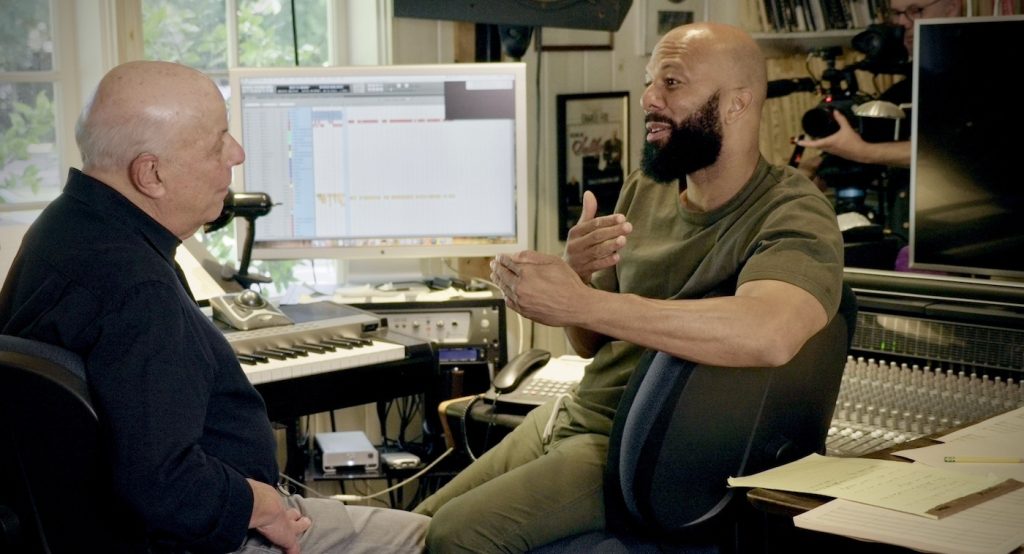
Charles Fox and Common. Photo by Michael Mayhew
What led you away from that?
I really got started trying to earn a living. I began playing in bands and writing music for television, for The Tonight Show.
What was the first TV theme song that you created?
That was Wide World of Sports. There had never been a sports anthology series on television prior, and it was a three-hour show, so they had no idea it would be successful. And it lasted 35 years. And then, two years later, ABC said, “Let’s take another big chance and put football on a Monday night.” They had no idea that women of America would put up with their husbands watching television at night.
You did the theme song for another kind of anthology, Love American Style. How did the Cowsills come to sing that theme?
I suggested The Cowsills. I came out to California to do a movie called Goodbye Columbus. When I finished that, Paramount said to me, “We have a series, a new pilot we’d like you to do called Love American Style. So I stayed around another month or so, and I wrote a bunch of songs with Arnold Margolin, who was one of the co-creators of the show. The show sold. Bill Stinson, vice president of the Paramount music department, said, “You’ve got to go tomorrow morning to see the Cowsills.” They were performing in Schenectady, where it was cold and snowing. So I had to give up my weekend to get on a number of planes to get up to Schenectady. But it worked out pretty well anyway. They even have that song on their greatest hits album.
How do you create a theme for an anthology series that has a variety of tones, silly comedy, romantic, poignant?
Not only that, there were the shot little sketches in between, less than a minute, along with three episodes with individual stars and casts in every hour. I approached each of the three segments as a different film score with different sets of themes that I took and developed. And the other, the interstitial music, I just imagined myself a classical composer scoring those. So some I do Chopin style, some in Mozart style, some in Bach style, just for the fun of it.
What about your work on Happy Days?
Happy Days was originally an episode of Love American Style before George Lucas did American Graffiti. When that was a big hit, ABC said, “Let’s give Happy Days a shot.” They initially used the Bill Haley song, “Rock Around the Clock,” because that was in American Graffiti. Our song was only used as an end title until the second year, and then they used it as the theme and it became a hit on the radio.
Let’s talk about another classic theme—The Love Boat—sung by Jack Jones.
Jack is great, and he is a good friend to this day. Doug Cramer was the president of Paramount Television when I did Happy Days. Then, he became Aaron Spelling’s partner. And when they did Love Boat, they called me and said, “Basically, we’re doing a Love American Style show on the water. Did you see Murder on the Orient Express? That’s what we want, a spirit of adventure, like we’re going to other worlds.” I said, “That’s a big waltz with strings, so that’s what you want.”
Is that what you provided?
Of course, I always feel the job as a composer is to think of what they want but do it the way I wanted to do it. So, I went home, and I wrote a disco. I brought a demo to play for Aaron Spelling, but he did not have a tape deck or a cassette player. I said I would play it on the piano. They didn’t have a piano. So, I just had to sing it for him. He loved it. That show really gave birth to the cruise industry. And here is a little footnote. All the horrible-sounding fog horns play my songs. It’s past midnight, they play my song to each other. It sounds horrible, but I like it.
Where is your new star going to be?
It’s directly in front of the Musicians Institute on Hollywood Boulevard. Diane Warren called to tell me it was happening, and she said, “Now people are going to walk all over you.” That’s how I found out.
I cannot let you go without asking about what is probably your most famous composition, “Killing Me Softly With His Song.”
My long-term collaborator, Norman Gimbel, and I wrote hundreds of songs for hundreds of movies and television shows. We were collaborators for many years. He usually gave me a title or a lyric or a part of a lyric, and then I would develop music from it, and then we’d work together. We were standing around the piano one day, and he had a book of ideas of songs and titles of songs, maybe a line or two. And he’s looking through his book, and he says, what about a title called “Killing Me Softly With His Blues.” He had seen it in a book. He said that sounded old-fashioned and we were not going to write a blues song. He thought for a second, and he said, what if it’s “killing me softly with his song?”
And how did it develop from there?
We talked about what that would mean. We’ve all loved songs that bring us close to moments in our lives that we remember. Someone sings something and it’s like it goes right through you, you know? It could be a happy or a sad moment. He went home and then called me about two hours later. I wrote the lyrics down. And that song just came right out. It may have been one of the fastest songs I ever wrote. The melody just poured out of me. Roberta Flack heard the song on an airplane. She called Quincy Jones, and she said, “How do I meet Charles Fox?” We met for the first time in Quincy Jones’ office. She had just won the Grammy Award for the record of the year with “The First Time Ever I Saw Your Face.” I never had a hit record before, and I get a call one day from Roberta Flack, who said, “This is Roberta Flack, and I’m going to sing your song.” Those are words in my ear that are a song by itself. What’s amazing to me is fifty years later, almost every day I get new audio recordings of that song. I lost track after over two thousand records in every language. A woman from Israel won the Idol. We did a concert together.
Tell me some of the best advice you’ve ever received or given.
This is for people who have a dream of something they want to do and accomplish. If it’s music, if it’s in the arts—I have a granddaughter who’s a ballet dancer in London, I have a grandson who’s a professional baseball pitcher, and I have a younger grandson who’s a hockey player and his twin brother is a dancer and an actor and wants to do theater. I say go for it. Go for your dreams. Go for what’s in your heart. Do everything you can to learn your craft and to be the best you can be in your field. And then go live your dreams.
For more interviews will filmmakers, check these out:
Julia Garner’s set to blast off in a totally new direction with Marvel Studios.
The talented Ozark alum has been cast in director Matt Shakman’s highly-anticipated reboot of The Fantastic Four, as confirmed by The Hollywood Reporter. Garner will be joining a stellar cast in Shakman’s take on Marvel’s original super family, with Pedro Pascal playing Reed Richards/Mr. Fantastic, Vanessa Kirby taking on Sue Storm/The Invisible Woman, Joseph Quinn playing Johnny Storm/The Human Torch, and Ebon Moss-Bachrach as Ben Grimm/The Thing.
The reboot has been a long time coming. Marvel Studios finally got the rights to Fantastic Four in 2019 when Disney acquired 21st Century Fox, and they’ve been making sure to get all the correct pieces in place before reintroducing some of their most iconic characters and possibly the surest bet to make up for the losses of Robert Downey Jr.’s Iron Man, Chris Evan’s Captain America, and Scarlett Johannson’s Black Widow, all of whom said goodbye in various ways during Avengers: Endgame. Marvel’s new-look Four will differ in tone, substance, and style from the three films Fox produced—Fantastic Four (2005), Fantastic Four: The Rise of the Silver Surfer (2007), and a reboot, Fantastic Four (2015).
In fact, when Marvel revealed The Fantastic Four casting news, they included this illustration, which gives us a hint of which direction Shakman’s film might be headed:
By the clues embedded in the illustration, the new Fantastic Four looks like it’s going to be set in the 1960s, the very era they were introduced by Stan Lee and Jack Kirby and helped launch the Marvel Universe. Black Widow and Thor: Ragnarok scribe Eric Pearson is currently penning the script.
As for Garner, she’ll be taking on another iconic character in the Marvel canon. The Silver Surfer first glided onto the pages of a Marvel comic in “Fantastic Four No. 48” as the astronomer Norrin Radd. Yet Garner is reported to be playing a different version of the Surfer known as Shalla-Bal, the lover of Norrin Radd.
Garner was a force of nature in her run on Ozark, where she picked up three Emmys playing the lovable tough nut Ruth Langmore. She earned another Emmy nod for her performance playing Anna Delvey in Netflix’s Inventing Anna. You’ll next see her in Universal and Blumhouse’s The Wolf Man, due next year.
The Fantastic Four is slated to hit theaters on July 25, 2025.
For more on all things Marvel Studios, check out these stories:
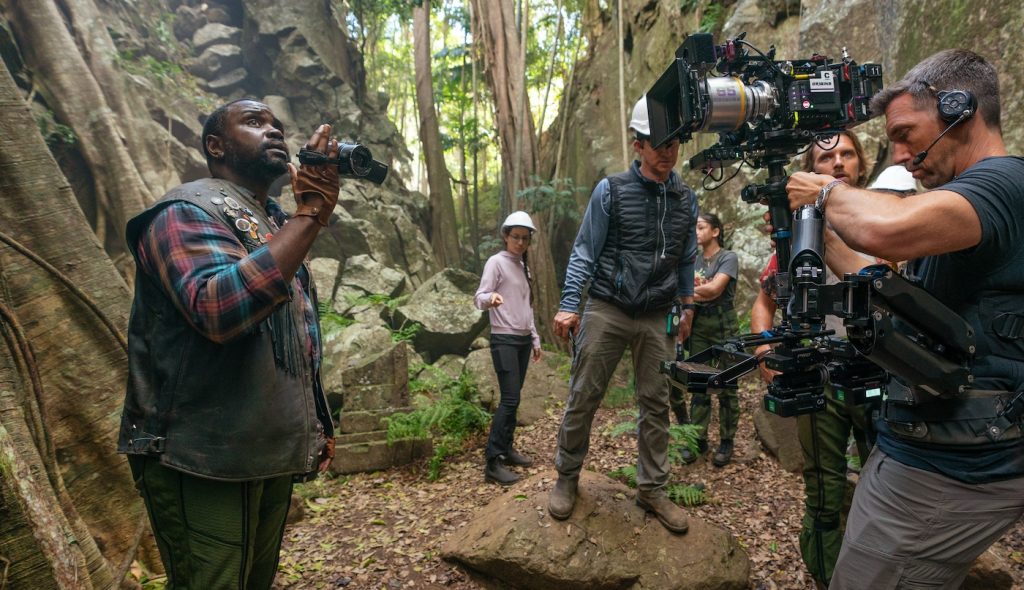
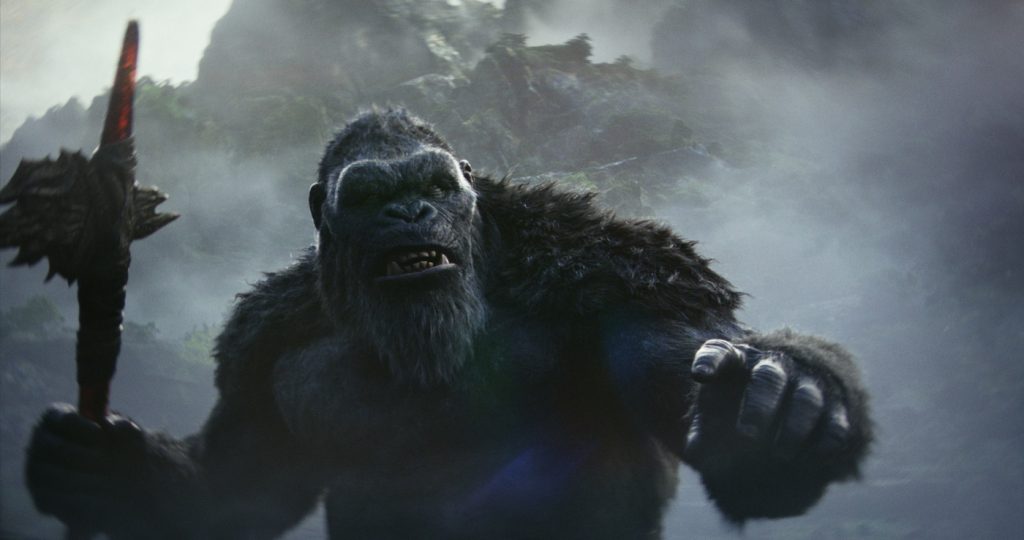
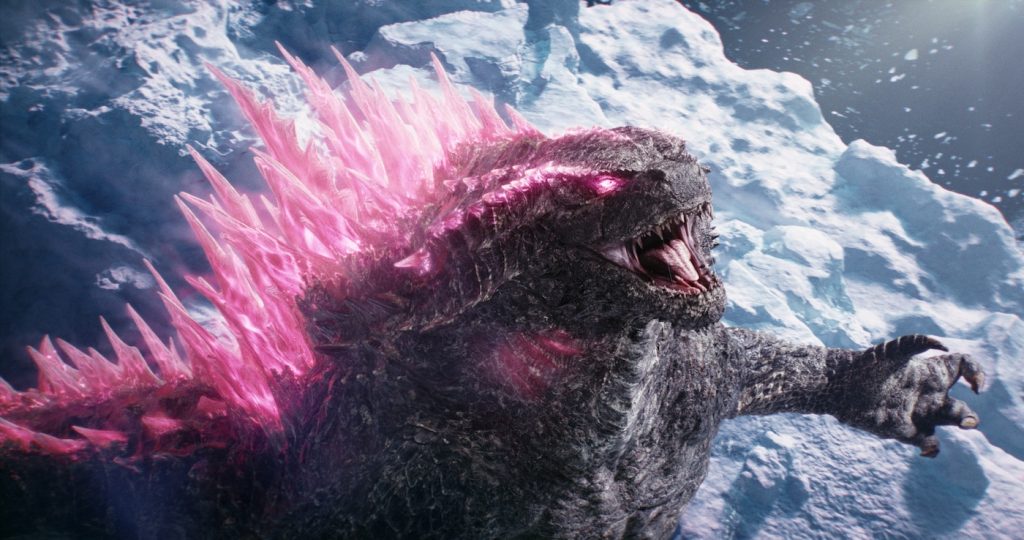
Godzilla x Kong: The New Empire is a vision as large and in charge as its two titular characters. In this MonsterVerse sequel, director Adam Wingard and cinematographer Ben Seresin (Pain & Gain) not only doubled down but quadrupled down on the robust vibrancy of Godzilla v Kong. It’s a pure crowd-pleasing aesthetic, which, for Seresin, is about far more than presenting the cleanest or prettiest sights or the most bombastic Titan takedown.
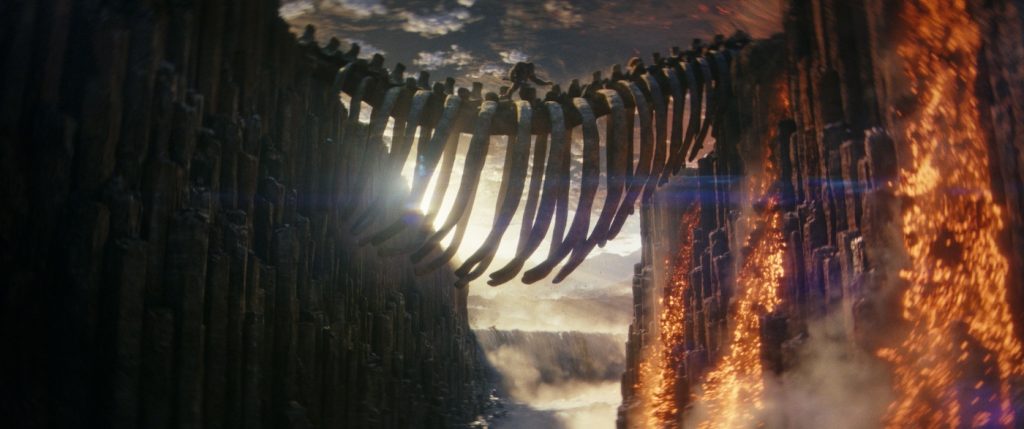
For the hit sequel, Wingard and Seresin wanted a smidge of messiness to render Kong’s home, Hollow Earth, a familiar yet fantastical sight. Friendly faces from Godzilla vs Kong show up, such as Dr. Ilene Andrews (Rebecca Hall), her adopted daughter Jia (Kaylee Hottle), and Bernie Hayes (Brian Tyree Henry), along with newcomer Trapper (Dan Stevens), who all leave Earth and journey to Kong’s world. For this quest into the barely known, Seresin utilized new Panavision lenses with a bit of edge to them.
We spoke with Seresin about how he embedded beautiful, technical flaws in Godzilla x Kong: The New Empire to communicate authentically to audiences and a whole lot more.
Godzilla x Kong: The New Empire is such a candy-colored blockbuster. Which colors did you and Adam want to emphasize?
We didn’t really choose a particular color or color range. What Adam was keen to pursue was a very saturated, heightened reality of color, which served two purposes. It was to bring a totally different aesthetic to the range of environments, but it also opened up an opportunity to add a layer to Hollow Earth to take you to another dimension. The premise was to do something that was saturated and rich.
(Left) BRIAN TYREE HENRY on the set of Warner Bros. Pictures and Legendary Pictures’ action adventure “GODZILLA x KONG: THE NEW EMPIRE,” a Warner Bros. Pictures release. Photo Credit: Daniel McFadden
For Hollow Earth, how did you want to create a heightened but also tangible environment for audiences?
Once we realized we were going down this route of an almost surreal color range, then the challenge was, how do we make it accessible and keep the audience in the space of, let’s say, recognition of an environment that they could relate to? The danger is that it’s a location that’s pure fantasy, and you could lose the audience when you apply a heightened palette that creates an animated feel. So we were riding a fine line between what’s almost too much but is also tangible. It took us to a space of wanting to bring a sort of grittiness to the film.
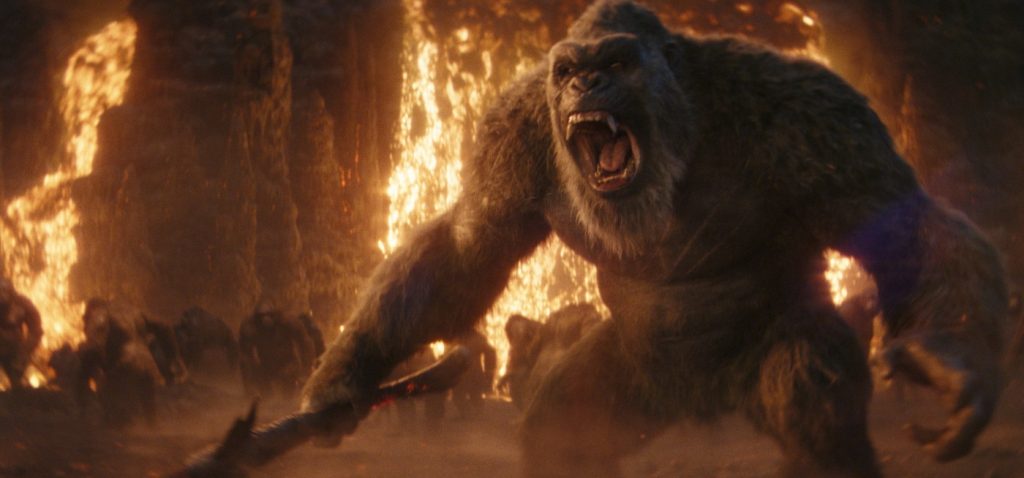
Caption: KONG in Warner Bros. Pictures and Legendary Pictures’ action adventure “GODZILLA x KONG: THE NEW EMPIRE,” a Warner Bros. Pictures release. Photo Credit: Courtesy of Warner Bros. Pictures
You’ve previously worked with Tony Scott and Michael Bay, both of whom played a large role in shaping the modern blockbuster experience. What about this scale speaks to you as a cinematographer?
It might surprise you to hear, but my natural inclination and background is low-key, moody, darker films. I feel more comfortable in that world than anything else, and in a way, it’s an exciting challenge to go into these zones where you’re out of your comfort zone. I guess the most interesting work a person can do is when they’re pushed to somewhere unfamiliar. Not always, but it’s certainly the most interesting journey. The internal conflict is difficult to navigate, but it makes me have to access a space of visualization that is sometimes inaccessible. To your point, Michael Bay was definitely a master at creating that aesthetic, and it’s a language to communicate to the audience.
Caption: KONG in Warner Bros. Pictures and Legendary Pictures’ action adventure “GODZILLA x KONG: THE NEW EMPIRE,” a Warner Bros. Pictures release. Photo Credit: Courtesy of Warner Bros. Pictures
What about your taste for low-key, moody films do you want to bring to Godzilla x Kong: The New Empire?
The nature of effective storytelling is to immerse the audience, bring the audience into the film, into the visual journey. There’s no distance between where they are and their experience of the movie. If you’re an audience that is in it and not standing back observing it, you’ve succeeded. It really transcends genres and approaches. As filmmakers, it’s not really about skills from action movies or drama or comedy. The key rule is to understand that you are communicating truthfully in whatever way you’re telling a story. Whether you are shooting 600-foot monsters or an intimate scene in a love story, you are really doing the same thing.
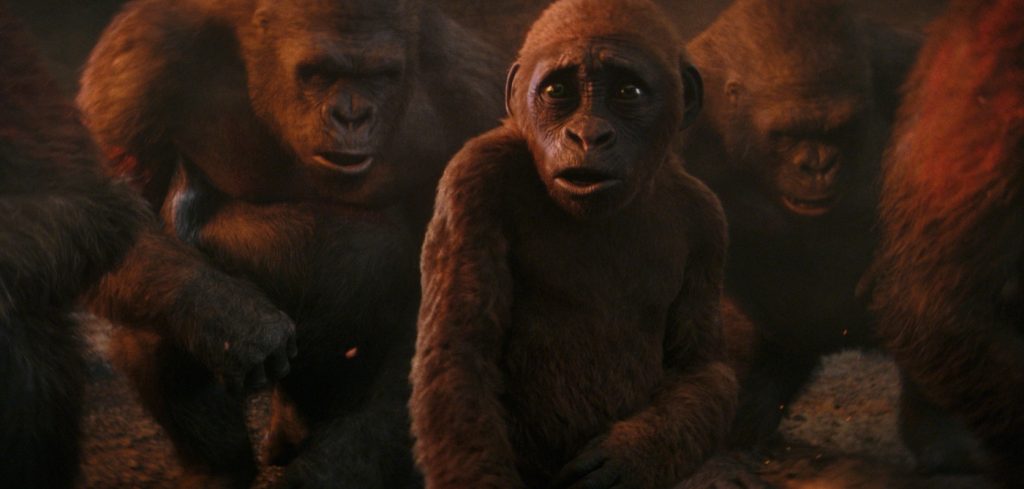
Caption: SUKO in Warner Bros. Pictures and Legendary Pictures’ action adventure “GODZILLA x KONG: THE NEW EMPIRE,” a Warner Bros. Pictures release. Photo Credit: Courtesy of Warner Bros. Pictures
What were some techniques you really wanted to immerse the audience into Kong’s point-of-view?
We did everything we could just to go, “This happened, and there were some guys with a couple of cameras, and they just filmed this sh*t. Look, there’s people, there’s monsters, there’s debris, there’s emotion, there’s humor, there’s all this sort of stuff.” If we achieve the feeling that I was there, that’s success.
Caption: KONG in Warner Bros. Pictures and Legendary Pictures’ action adventure “GODZILLA x KONG: THE NEW EMPIRE,” a Warner Bros. Pictures release. Photo Credit: Courtesy of Warner Bros. Pictures
How do you achieve that effect with the VFX houses and supervisors? What qualities do you want in the light and the motion to sell that feeling audiences are right there with Godzilla and Kong?
In keeping with what I was saying earlier, we decided on a sort of gritty aesthetic for this film, and to support that, I built with Dan Sasaki (Panavision) some bespoke anamorphic lenses. Dan is a legend and a master of lens building. We furthered an idea that we’d had a few movies back based on a particular set of vintage lenses, which Dan adapted for our live-action cinematography. As we were immersed in this process, I said to Dan, “Here’s what my concern is…what happens in a lot of these films, especially when there’s a big CG component, you have this one look for the live-action, and then you go to the big visual effects shots, and they have a different aesthetic. Not to mention there might be three, four, or five different vendors all making different scenes.” It’s a bit like having three, four, or five different cinematographers and or directors on the same movie.
How do you avoid that problem?
I asked Dan how we keep a consistent visualization on the film, and we came up with the idea and went toAlessandro Ongaro, our visual effects supervisor, and said, “We’re doing this look on the live-action, so we’re starting with this. We’re going to have to get you guys onboard because there’s a certain amount of deconstruction with the imagery that we’re going to have to engineer into the visual effects.” We started an exploration and shot tests. Dan then took the lens prescriptions to the visual effects guys and said, “These are the messed up lenses we’re using. Work out a way to apply that to the CG work.” Alessandro got on board with it and loved this sort of messed up, chromatic aberrations and fringing and selectively defocusing, all this messy stuff.
Caption: Godzilla in Warner Bros. Pictures and Legendary Pictures’ action adventure “GODZILLA x KONG: THE NEW EMPIRE,” a Warner Bros. Pictures release. Photo Credit: Courtesy of Warner Bros. Pictures
You described making movies as a conversation. As a cinematographer, how do you think the conversation between these kinds of films and audiences has evolved over the years?
I am just so happy that the audience is more and more rejecting artifice. We go through these periods where a certain sort of genre will appeal very broadly to audiences, and it’s a cycle that takes us somewhere else. I hope I’m not being overly optimistic, but audiences, and many of the younger audiences, are starting to move a little further away from artifice. It has been happening for a bit, from this sort of superhero-type film to something that feels authentic. Truthful in the sense of as outlandish as the movies can be, we just buy this is a world. It’s real, it’s honest, and it’s full of reflection and inner thought.
Godzilla x Kong: The New Empire is in theaters now.
For more on Warner Bros., Max, and more, check out these stories:
Featured image: Caption: (L to r) GODZILLA and KONG in Warner Bros. Pictures and Legendary Pictures’ action adventure “GODZILLA x KONG: THE NEW EMPIRE,” a Warner Bros. Pictures release. Photo Credit: Courtesy of Warner Bros. Pictures
Milly Alcock’s Supergirl is going to take flight with the man behind I, Tonya and Cruella.
Craig Gillespie has been tapped to direct Supergirl: Woman of Tomorrow, which will star Alcock as Kara Zor-El, a Kryptonian with immense powers and a family connection to Superman. Gillespie will direct from a script by Ana Nogueira in a story that will be at least partially based on the comic series by Tom King and Bilquis Evely. King and Evely’s version of Supergirl is a young woman who steps out of the shadow of her iconic cousin, Superman and boasts a personality more in keeping with a young woman who has seen her family and friends suffer firsthand. Kara Zor-El witnessed the destruction of her home planet and had to grow up in its ruins. As Gunn said on Twitter when he and Safran announced the initial slate for their upcoming films and TV series, Supergirl’s childhood was vastly different from what Superman experienced in many ways: “Superman is a guy sent to Earth and raised by loving parents, where Supergirl in this story, she is a character raised on a chunk of Krypton,” Gunn explained on Twitter. “She watched everybody around her perish in some terrible way, so she’s a much more jaded character.”
Gillespie knows a thing or two about centering powerful, pugnacious women— with I, Tonya he unleashed an inspired Margot Robbie as iconic skating villain Tonya Harding, and in Cruella, he delivered the origin story of the iconic Disney villain with Emma Stone in the title role. His last film, Dumb Money, was a whip-smart retelling of the Game Stop madness that struck Wall Street.
Gillespie joins a growing roster of talented directors set to helm films for DC Studios. It will begin with James Gunn himself, who is currently working on Superman, and includes Andy Muschietti, who will direct the Batman reboot The Brave and the Bold. Gillespie’s Supergirl: Woman of Tomorrow joins those films as part of Chapter 1: Gods and Monsters, the initial slate of DC’s offerings under the leadership of Gunn and Peter Safran.
As for Supergirl herself, Milly Alcock, Gunn revealed on Threads that he has been a big fan of hers from even before she auditioned, thanks in large part to her fantastic performance in HBO’s Game of Thrones prequel House of the Dragon:
“In case you missed this exciting news yesterday. Strangely, Milly was the FIRST person I brought up to Peter for this role, well over a year ago, when I had only read the comics. I was watching House of the Dragon & thought she might have the edge, grace & authenticity we needed for the DCU’s Supergirl. And now here we are. Life is wild sometimes.”
Alcock played Princess Rhaenyra Targaryen in House of the Dragon, the daughter of King Viserys I Targaryen (Paddy Considine) and the person he eventually promises the Iron Throne to. If you’ve ever watched Game of Thrones, you know what a death sentence the Throne can be. Yet Princess Rhaenyra becomes one of the prime movers of House Targaryen (she’s played by Emma D’Arcy after a considerable time jump), a strong-willed, doubt-her-at-your-peril force within Westeros who will not allow herself to be bulldozed for the Throne, or for any other reason, by the many schemers around her. Alcock won raves for her performance from critics, fans, and James Gunn himself.
For more on all things DC Studios, check out these stories:
Featured image: L-r: Craig Gillespie attends the 7th Annual Australians in Film Awards Gala at Paramount Studios on October 24, 2018 in Los Angeles, California; LOS ANGELES, CALIFORNIA – JANUARY 15: Milly Alcock attends the 28th Annual Critics Choice Awards at Fairmont Century Plaza on January 15, 2023 in Los Angeles, California. (Photo by Frazer Harrison/Getty Images)
Netflix has revealed the trailer for Dead Boy Detectives, which finds two sleuthing teenagers who are committed to helping folks struggling with intrusive ghosts and mean-spirited demons. The catch? These two teens are not among the living, as the title suggests.
The trailer introduces us to Edwin Payne (George Rexstrew) and Charles Rowland (Jayden Revri), our two heroes behind the Dead Boy Detectives agency. Edwin and Charles have found each other in death, even though they died decades apart, have become both best friends and partners. The strength of their bond has been tested, again and again, by challenges us mere mortals don’t have to face, including facing down Death itself.
Yet Edwin and Charles aren’t alone—they’re aided by friends like the clairvoyant Crystal (Kassius Nelson) and her friend Niko (Yuyu Kitamura), who help our determined detectives take on a slew of bizarre paranormal cases.
Dead Boy Detectives is part of Netflix’s Sandman Universe, which is based on the comic series from Neil Gaiman. The series is run by Steve Yockey and Beth Schwartz, who serve as showrunners. The series also stars Jenn Lyon, Briana Cuoco, Lukas Gage, David Iacono, and Ruth Connell.
Check out the trailer below. Dead Boy Detectives arrives on Netflix on April 25:
For more on big titles on Netflix, check these out:
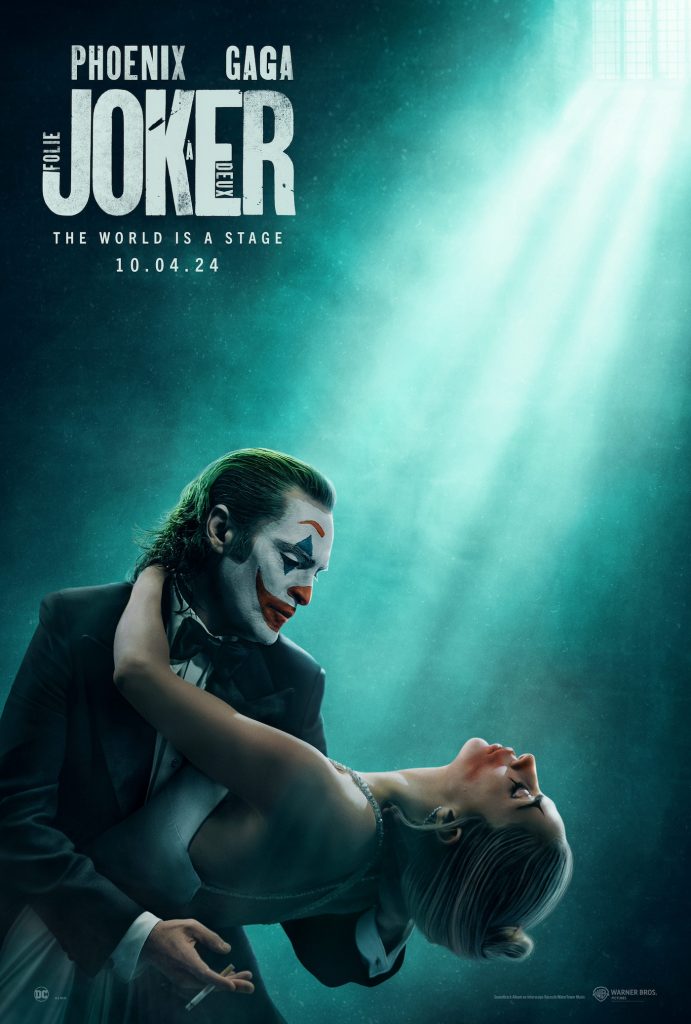
Yesterday, Warner Bros. revealed the poster for director Todd Phillips’ Joker: Folie á Deux, which finds Joaquin Phoenix’s clown prince of chaos dipping his main squeeze, Lady Gaga’s Harley Quinn. The film’s official Twitter page not only revealed the poster but also the date of the first trailer—April 9:
Then, on Wednesday, the sequel’s rating was revealed—like 2019’s Joker, Joker: Folie á Deux has been rated R.
These are some of the things we know for sure, along with the fact that Zazie Beetz returns as Sophie Dumond and newcomers joining Lady Gaga include Catherine Keener, Brendan Gleeson, Steve Coogan, Ken Leung, Gattlin Griffth, and Jacob Lofland. We also know that Phillips directs from a script he co-wrote with Joker scribe Scott Silver and that he brought back more Joker alums, including cinematographer Lawrence Sher and Oscar-winning composer Hildur Guðnadóttir. When it comes to the actual storyline, Folie á Deux remains a mystery.
Yet one thing that has been revealed recently (by Variety) is that Folie á Deux will be a “mostly jukebox musical,” with at least 15 reinterpretations of well-known songs, with a few possible new songs thrown into the mix. “Details regarding who would pen the tracks or sing the numbers are unknown,” wrote Variety‘s Clayton Davis. “We do know, according to sources, Hildur Guðnadóttir, the Oscar-winning composer of the first Joker film, is said to ‘infuse her distinctive, haunting [music] cues’ into each number.”
If you’ve never heard the term “jukebox musical,” a few examples will shed light on what it means—think Mamma Mia! and Moulin Rogue—two movies that did very well incorporating popular music into their narratives.
As for the potential storyline, a few clues are on offer in the casting of Gaga as Harley Quinn and the title itself. There’s a strong suspicion the film will take place at least partly in Arkham Asylum, where Joker and Harley Quinn met in the comics. Considering Joker ended with Phoenix’s murderous comedian in police custody, it seems more than possible he ends up at Arkham where he meets Harley Quinn (who was working there in the comics, rather than as a patient herself). The title Folie á Deux refers to a medical term for two or more people suffering from the same or similar mental disorder, so that bit seems self-explanatory.
We should know more when the trailer drops on April 9. Joker: Folie á Deux is due in theaters on October 4.
For more on Joker: Folie á Deux, check out these stories:
The critics are going ape wild for Dev Patel’s directorial debut Monkey Man. Patel leads his own tour-de-force action film as Kid, an anonymous young man who’s been suppressing his rage for years after his mother was murdered by the ruthless, heartless leaders who prey on the poor and powerless in Mumbai. All that’s about to change.
Kid is ultimately inspired to act by the legend of Hanuman, an icon embodying strength and courage. Kid learns the ropes on how to fight, and perhaps more importantly, how to take a beating and keep going, by submitting himself to the brutalities of an underground fight club where he dons a gorilla mask and gets routinely pummeled by the more popular brawlers.
Eventually, Kid finds a way to infiltrate the enclave of the city’s upper echelons, where he unleashes years of his fury and vengeance on the men who make life a living hell for so many.
Patel directs from his original story and his screenplay with Paul Angunawela and John Collee (Master and Commander: The Far Side of the World). Joining him in the cast are Sharlto Copley (District 9),Sobhita Dhulipala (Made in Heaven), Pitobash (Million Dollar Arm), Vipin Sharma (Hotel Mumbai), Ashwini Kalsekar (Ek Tha Hero),Adithi Kalkunte (Hotel Mumbai), Sikandar Kher (Aarya) and Makarand Deshpande (RRR).
Monkey Man swings into theaters on April 5. Let’s take a quick peek at what the critics are saying:
“Goes bananas in the best possible way.”
Dev Patel writes, directs and stars in action-packed revenge thriller #MonkeyMan.
Dev Patel has created an important, powerful, exciting, emotional action film that uses violence to develop character within a well-structured, propulsive, supremely satisfying story.
— San Francisco Chronicle (@sfchronicle) April 3, 2024
Just saw one of the best action films of the decade so far. I don’t think anyone is prepared for Dev Patel’s Monkey Man. Review soon. pic.twitter.com/qfxH0wrJGB
Dev Patel’s grimy, ultraviolent mixtape of action influences has the chaotic unpredictability of Park Chan-wook’s “Oldboy” and the neon gunplay of the “John Wick” franchise.
“Patel’s commitment to his dual role as director and actor is palpable… Patel’s directorial finesse and meticulous attention to detail in Monkey Man suggests he has a promising future in directing more films within this genre and beyond…”
The most iconic villainous romance in all of comics is coming to the big screen, and a new poster teases just how suitable these two are for each other. Joaquin Phoenix’s Arthur Fleck, better known as the Joker, and Lady Gaga’s Harley Quinn are locked in a romantic embrace in the poster for director Todd Phillips’s upcoming Joker: Folie à Deux. The tagline reads “The world is a stage.”
This is the first fresh look we’ve gotten at Phoenix and Gaga in the eagerly-anticipated sequel to Joker since Valentine’s Day when Phillips shared a few new photos of the most twisted romantic partners in the game. The photos included a shot from what appears to be Arkham Asylum (or prison) and a third shot of the two all dressed up and dancing on a rooftop, an homage to a famous image created by artist Alex Ross, “Tango With Evil.” The new poster reinforces the fact that Joker: Folie à Deux will be, in many ways, a twisted romance.
Joker made quite the splash when it became the first live-action theatrical film within the Batman umbrella to receive an R-rating and had its premiere at the Venice Film Festival in 2019, where it took home the top prize, the Golden Lion. From there, Joker conquered the box office and became the subject of quite a lot of conversation in the broader culture. Phoenix’s performance was unlike anything we’d seen in a superhero movie, or in this case, a supervillain movie, and it eventually netted him an Oscar for Best Actor. Joker: Folie à Deux has some fairly big clown shoes to fill, yet having Lady Gaga on board certainly helps.
The last time we left Phoenix’s sad sack Arthur Fleck at the end of Joker, he’d just gone on a killing spree in Gotham and became a folk hero to the downtrodden, poverty-stricken denizens of a metropolis that otherwise seemed to offer nothing but empty politicians and feckless cops. The orgy of violence that followed the Joker’s killing of TV talk show host Murray Franklin (Robert De Niro) included the murders of two of its most prominent citizens, Thomas (Brett Cullen) and Martha Wayne (Carrie Louise Putrello). The Waynes left behind a young son, you might have heard. The film ends with Arthur locked up in a mental asylum, and there’s an insinuation there that he kills the psychiatrist working with him—it’s not shown, but he has bloody footprints as he leaves a session with her, and we see him being chased shortly thereafter.
How Phillips and his co-writer Scott Silver advance the story from here is anybody’s guess, but we know that Folie à Deux will make the most out of Lady Gaga as Harley Quinn and that there are musical elements in the film. We also know that the title Folie à Deux refers to a medical term for two or more people suffering from the same or similar mental disorder; presumably, this would be Arthur and Harley. The sequel includes the return of Zazie Beetz as Sophie Dumond and the arrival of powerhouse performers like Brendan Gleeson and Catherine Keener. The rest is pure speculation, with the script locked up in Arkham Asylum for the foreseeable future.
Joker: Folie à Deux hits theaters on October 4, 2024.
Check out the full poster here:
For more on Joker: Folie á Deux, check out these stories:
Two of the finest performers of their generation have signed up to go through a comically brutal divorce.
Olivia Colman and Benedict Cumberbatch have signed on to Searchlight’s upcoming The War of the Roses remake, with Recount and Bombshell director Jay Roach on board to helm. The original Roses came out in 1989 and starred Michael Douglas and Kathleen Turner as a pair of squabbling spouses who try every nasty trick in the book to drive each other out of their palatial estate during their divorce. The film was directed by none other than Danny DeVito and was based on Warren Adler’s novel.
The update, retitled The Roses, boasts a script from recent Oscar nominee Tony McNamara (Poor Things), who has no doubt had a blast updating the vicious marital spat. The original film was a dark comedy that didn’t blink at showing the increasingly unhinged efforts of each spouse to drive the other from the old mansion at the center of their war, and with Roach at the helm and Cumberbatch and Colman playing the dueling duo, there’s ample firepower to deliver something memorable.
Cumberbatch and Colman are also on board as producers and will bring their considerable acting chops to a classic tale of marital lunacy and revenge.
For more stories on 20th Century Studios, Searchlight Pictures, Marvel Studios and what’s streaming or coming to Disney+, check these out:
Featured image: L-r: NEW YORK, NEW YORK – MAY 05: Benedict Cumberbatch attends the NY special screening of Doctor Strange in the Multiverse of Madness on May 05, 2022 in New York City. (Photo by Noam Galai/Getty Images for Disney). MARGATE, ENGLAND – JANUARY 08: Olivia Colman attends a photocall following a special screening of “Empire of Light” at Dreamland on January 08, 2023 in Margate, England. (Photo by Stuart C. Wilson/Getty Images)
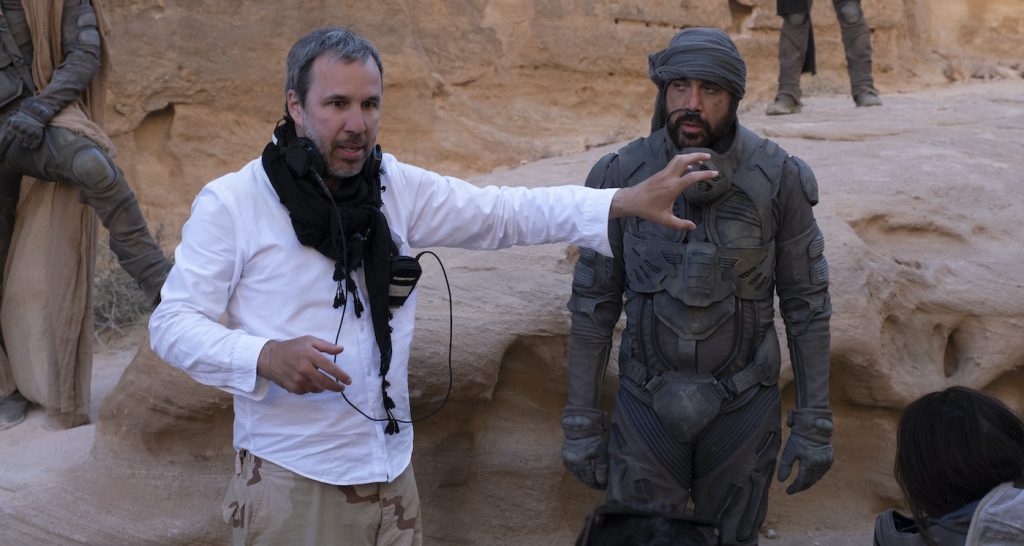
While the fact that Denis Villeneuve’s Dune: Part Two has achieved critical and commercial success isn’t all that surprising given the talent involved, it’s still a remarkable story given the wild ride Villeneuve and his collaborators have been on since they first set to work to adapt Frank Herbert’s legendary novel. Herbert’s first 1965 novel (he’d go on to write six novels set in the Dune universe) is a work of genuine sci-fi genius that was also legendarily hard to bring to the big screen. The previous attempts to adapt Dune, a wildly ambitious and ultimately doomed attempt by director Alejandro Jodorowsky (an attempt that later inspired the documentary Jodoworsky’s Dune in 2013) and David Lynch’s 1984 version (which is beloved by some but which did not set the world on fire when it was released) were incomplete at best and overstuffed and ultimately rushed at worst. Jodorowsky’s vision for the film would have resulted in a 14-hour movie, and the production ultimately collapsed. The film rights lapsed, and then in 1982, they were scooped up by Italian producer Dino De Laurentiis, who eventually produced Lynch’s Dune. Lynch, for his part, attempted to get all of Herbert’s 1965 book into his movie, with mixed results. This brings us back to Denis Villeneuve’s first key insight, in which he and co-writer Jon Spaihts wisely decided to break their adaptation of Herbert’s novel into two parts, betting that Warner Bros. would greenlight Part Two once they saw how compelling (and successful) Part One was.
Caption: (L-r) Director DENIS VILLENEUVE and JAVIER BARDEM on the set of Warner Bros. Pictures and Legendary Pictures’ action adventure “DUNE,” a Warner Bros. Pictures release. Photo Credit: Chiabella James.
And that’s precisely what happened; only it included some sandworm-sized bumps in the road along the way, the biggest of the bunch being the pandemic, which resulted in Part One‘s being released in theaters and in streaming simultaneously, a decision that Villeneuve was understandably not thrilled about. Yet Dune eventually made a highly respectable $400 million at the global box office, despite its hybrid release and audiences’ wariness about going to the theater in 2021. A recent re-release of Part One on IMAX added another $30 million to that total. The film was also a critical smash and garnered ten Oscar nominations and six wins. A rousing success by any measure, and certainly when the context of its release is taken into account.
Dune: Part Two has been an even bigger hit, thrilling critics and audiences and grabbing a stunning $82.5 million during its opening weekend, and it’s still surfing on the Arrakis sands with a current global haul of $626.3 million. Part of what’s so impressive about Part Two‘s success is how well it keeps holding up, weekend after weekend—it dropped a measly 36% last weekend, it’s fifth in theaters, evidence of the film’s quality and lasting appeal, bringing in new audiences and second-and-third timers for another viewing. It’s been hailed as a masterpiece by critics and fellow filmmakers, including a gentleman by the name of Steven Spielberg.
Considering the density of Herbert’s source material, the less-than-successful previous attempts from very good filmmakers, and the lasting effects of the pandemic on the current theater environment, Villeneuve’s Dune films have been a monumental success story. They’re the result of some of the very best filmmakers and performers in the business coming together to create something truly special, and the courage of those filmmakers to believe that as long as they gave it their all, the audiences would come and the studio would let them see their vision to the end. So far, that’s precisely what’s happened, and it might even lead to a third and final Dune film from Villeneuve, based on Herbert’s second book, “Dune: Messiah.” What you can be almost certain of is the success of Dune and Dune: Part Two pretty much guarantees that we’re still only at the beginning of Hollywood’s Frank Herbert phase—the HBO Max series Dune: Prophecy, about the mysterious sisterhood the Bene Gesserit, will be the first of those projects to see the light.
Desert power indeed.
For more on Dune: Part Two, check out these stories:
Featured image:Caption: TIMOTHÉE CHALAMET as Paul Atreides in Warner Bros. Pictures and Legendary Pictures’ action adventure “DUNE: PART TWO,” a Warner Bros. Pictures release. Photo Credit: Niko Tavernise
20th Century Studios has just released a big, brawny new IMAX trailer for director Wes Ball’s Kingdom of the Planet of the Apes, which boasts perhaps the franchise’s most photo-realistic warring apes yet. The new installment promises a ton of action, as the story is set hundreds of years after the events in Matt Reeves’ 2017 War for the Planet of the Apes. and finds apes reigning supreme, with humanity reduced to a feral existence on the margins.
The new trailer opens with a contingent of ape warriors moving through tall reeds on some kind of mission, and what you notice immediately is that these descendants of the apes from the most recent trilogy have advanced considerably. These apes talk, and we mean really talk. Sure, the simians also spoke in War for the Planet of the Apes, but considering the new film is set hundreds of years after War, these apes have become fluent and speak with a clarity that surpasses the humans they’ve displaced at the top of the food chain.
The heart of Kingdom is Cornelius (Owen Teague), a young ape whose journey will force him to look afresh at the ape kingdom he lives in and the way it treats both fellow apes and the detest human survivors. Cornelius’s journey will mirror, in a way, the hero of the previous trilogy, the chimpanzee Caesar (Andy Serkis), who strived to create a peaceful balance between the rising ape world and the humans. By the time Kingdom begins, the apes have built a complex society, with the cities of man now overgrown and re-wilded, with human beings scraping by on the margins. A ferocious new leader is building a formidable empire in which compassion and kindness towards humans are signs of weakness to be crushed.
There’s a young human who plays a crucial part in Ball’s new film—The Witcher‘s Freya Allan. The film’s cast also boasts William H. Macy, Dichen Lachman, Kevin Durand, Peter Macon, Sara Wiseman, and Neil Sandilands in the cast. Director Wes Ball made his name with The Maze Runner series, and he’ll bring his abilities with action set pieces and emotional stakes to bear on the new film.
Check out the IMAX trailer below. Kingdom of the Planet of the Apes swings into theaters on May 10:
Ghostbusters: Frozen Empire has a visual style reminiscent of the iconic 1984 film, a palette cinematographer Eric Steelberg (Ahsoka, Hawkeye) intentionally crafted for this story that sees characters new and old strap on a proton pack to bust a chilling demon terrorizing their city. “We wanted to capture the texture, color, and grit of the original movie so nothing seemed too new,” Steelberg tells The Credits about creating the look that artfully blends rich hues and deep blacks for a heightened, naturalistic appeal.
Frozen Empire picks up where Ghostbusters: Afterlife (2021) left off and sees the Spengler family – Callie (Carrie Coon), Trevor (Finn Wolfhard), Phoebe (McKenna Grace), and Gary (Paul Rudd) – returning to the firehouse. Steelberg collaborated with longtime friend and director Jason Reitman on the revival, but Gil Kenan, who co-wrote Afterlife and Frozen Empire along with Jason, stepped in to direct following the passing of Jason’s father – Ghostbusters co-creator and director Ivan Reitman (75). Frozen Empire became a tribute to the beloved filmmaker who brought us National Lampoon’s Animal House (1978), Stripes (1981), and Kindergarten Cop (1990). “We sat outside with my dad, and we started telling him all our ideas for the next Ghostbusters movie,” Jason stated in the film’s production notes. “We laid it all out for him, and it’s the last story that I ever got to tell my dad – the story of Frozen Empire, a new adventure for the Ghostbusters back in Manhattan.”
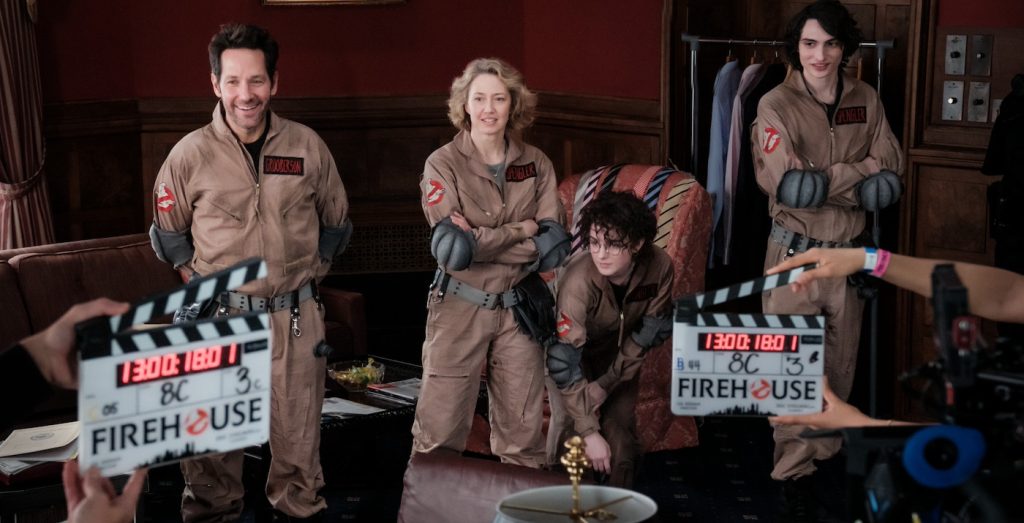
Paul Rudd, Carrie Coon, Mckenna Grace and Finn Wolfhard on the set of Columbia Pictures’ GHOSTBUSTERS: FROZEN EMPIRE.
With Jason serving as executive producer, Kenan saw the story as a family trying to “define a home” and “ground themselves,” all while fighting an evil that turns anything into a frozen popsicle. To pull off the imagery, Steelberg referenced what was successful in Afterlife and carried it over to Frozen Empire, including shooting widescreen anamorphic using Panavision T Series lenses with Arri Alexa LF cameras. Nailing the “gritty vibe of the city” was especially key for the cinematographer, but his biggest hurdle was visually introducing new locations that had never been seen before. “There is more of the firehouse in our movie than any of the other movies, so it became a central character. Trying to learn and reinterpret the lighting and the look of the interior of the firehouse was, to be quite honest, a bit stressful,” he admits. “It’s such a beloved set piece, and people have expectations of what they want it to look like, and I had my own interpretation of that, which may or may not align with people. But I am hoping it pleases everybody.”
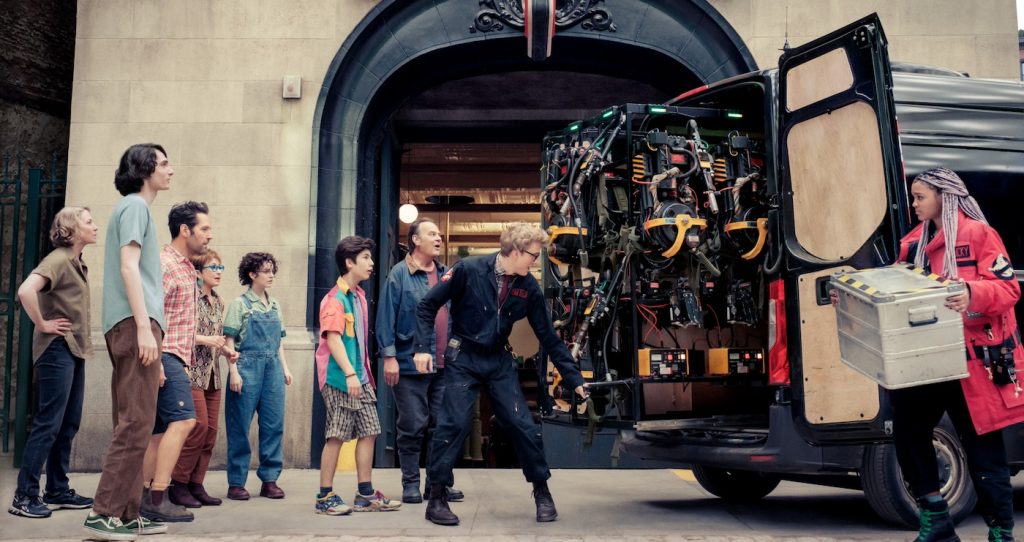
(L to R) Callie (Carrie Coon), Trevor (Finn Wolfhard), Gary (Paul Rudd), Janine (Annie Potts), Phoebe (Mckenna Grace), Podcast (Logan Kim), Ray (Dan Aykroyd), Lars (James Acaster) and Lucky (Celeste O’Connor) in Columbia Pictures’ GHOSTBUSTERS: FROZEN EMPIRE.
Production designer Eve Stewart (The King’s Speech, Les Misérables) created the firehouse sets on London soundstages, building three floors connected by a fire pole. The basement that houses the container of captured ghosts saw the most action. “In that location, we have new angles that will hopefully surprise some people because it reveals parts of the basement that were previously unseen, and that’s really fun to do,” says the cinematographer.
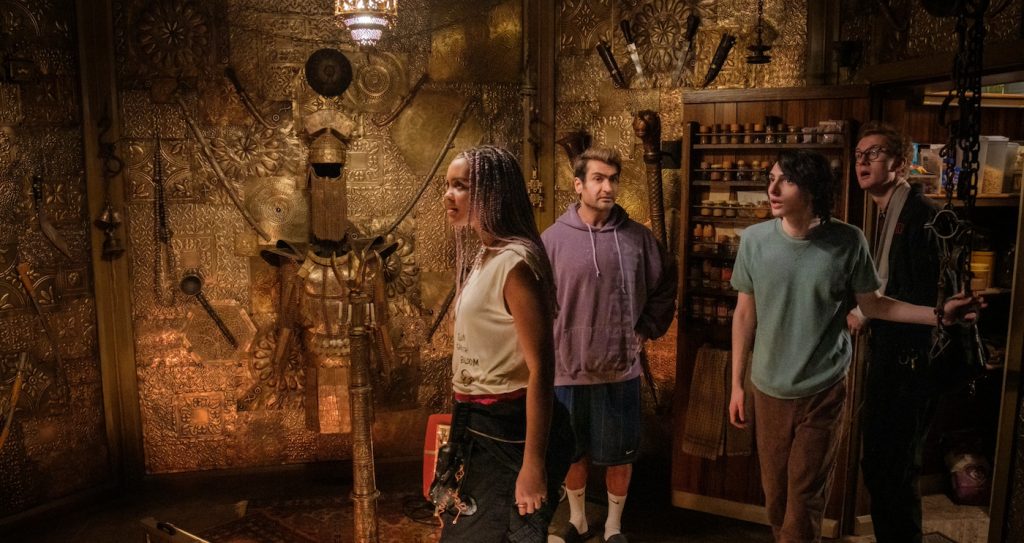
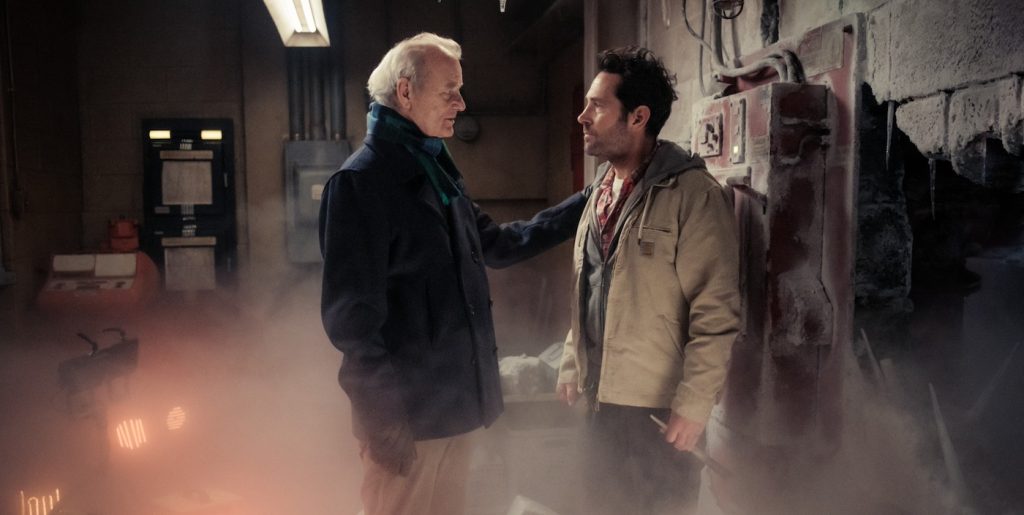
Lucky (Celeste O’Connor), Nadeem Razmaadi (Kumail Nanjiani), Trevor (Finn Wolfhard) and Lars Pinfield (James Acaster) in Columbia Pictures’ GHOSTBUSTERS: FROZEN EMPIRE.Bill Murray and Paul Rudd on the set of Columbia Pictures’ GHOSTBUSTERS: FROZEN EMPIRE.
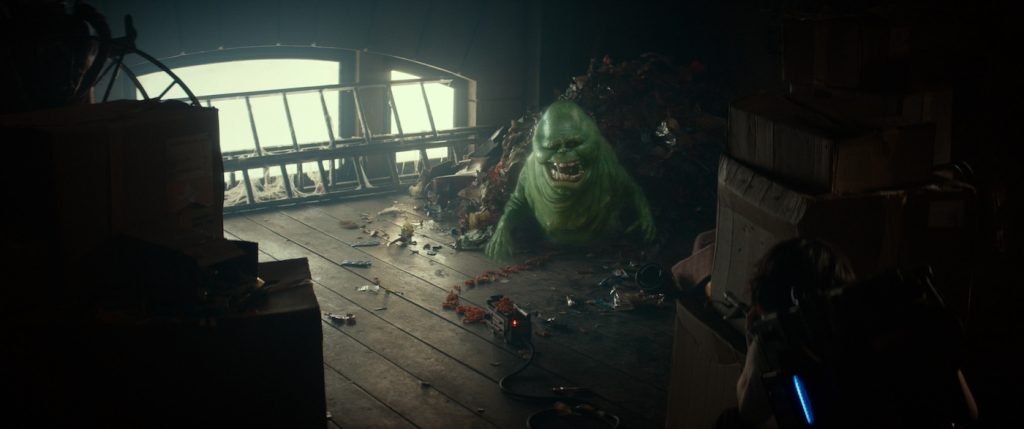
Also, part of the firehouse is a creepy attic where Trevor finds the snack food-eating misfit Slimer. Filming scenes with the green monster was an in-camera creation from special effects headed by John Van Der Pool. A puppet was built, and performers created the movements on set, which were composited into the scene with the actor instead of a CG-created Slimer. A similar technique was used in the original films. Frozen Empire also marked the first in-camera slime, where instead of the camera cutting away to pour sticky goop on an actor, a self-contained pack discharged a gooey mess on the front and back of the actor as Slimer passes through them. “Shooting a puppet looks different than one that’s CG. Where we could, we tried to make them real and make them composites rather than computer generated,” says Steelberg.
Slimer in a trash pile in Columbia Pictures’ GHOSTBUSTERS: FROZEN EMPIRE.
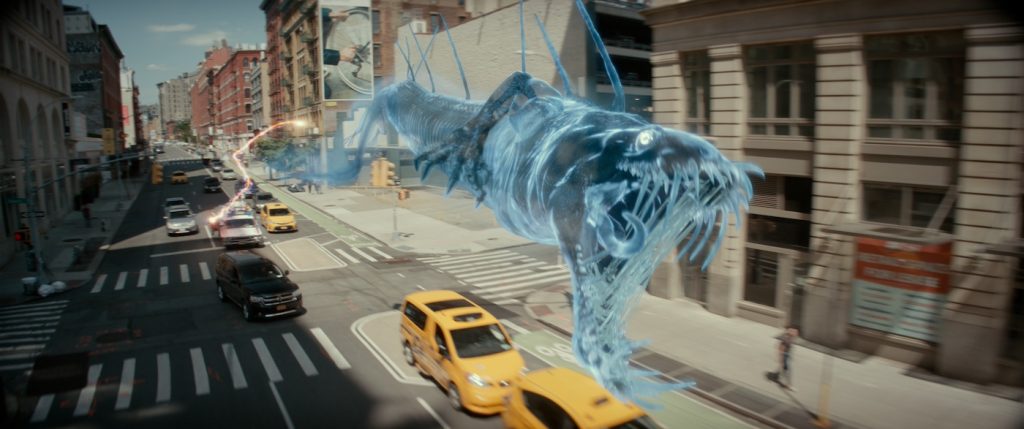
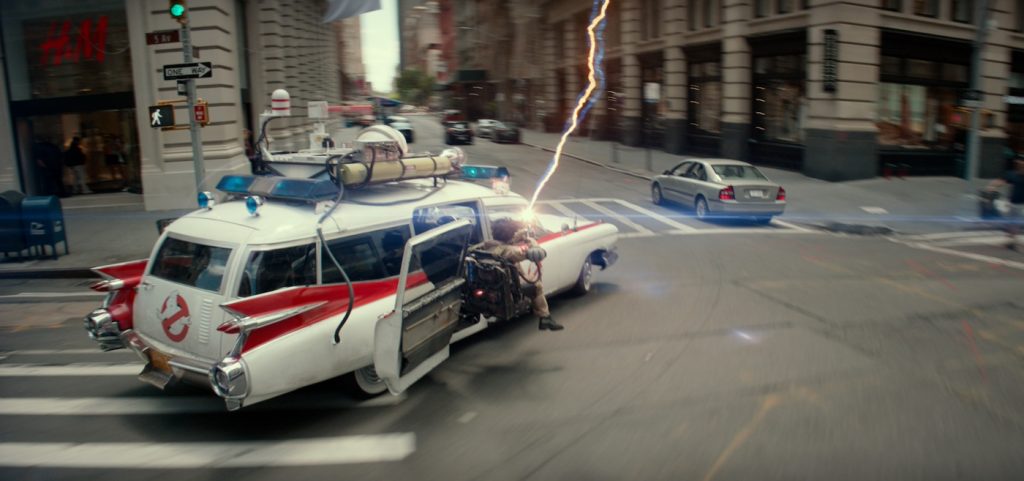
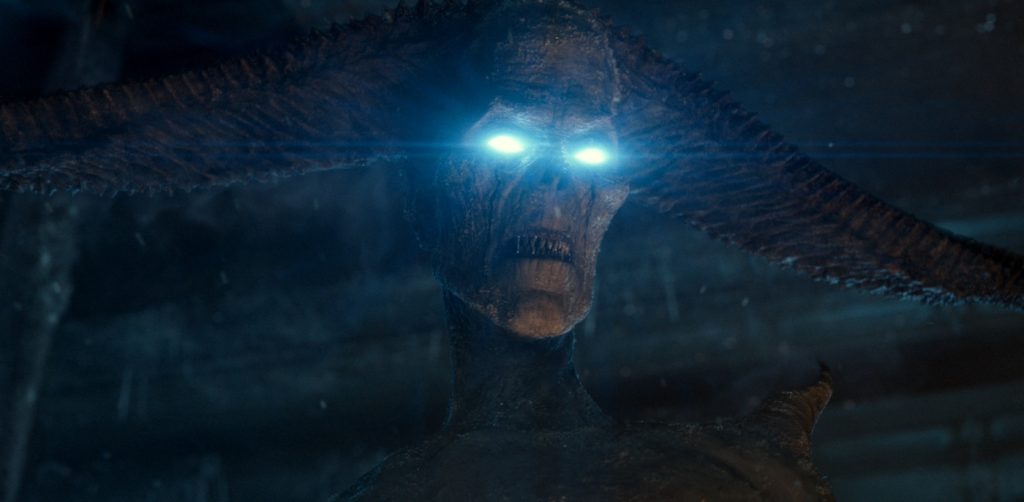
Even with production developing in-camera techniques, the film had its share of visual effects overseen by VFX supervisor Geoff Baumann and VFX producer Nicole Rowley. The larger tasks include the opening Ecto-1 chase sequence that sees the Spengler family race through the streets to contain a snake-like dragon, the Possessor ghost, which can bring any inanimate object to life – including a very funny pizza scene, and, of course, the horned undead monster Garraka. “There were more visual effects by a couple of magnitudes on Frozen Empire than Afterlife,” notes Steelberg. “A lot of our shoot was dedicated to figuring out workflows and previs and how to successfully shoot scenes that play into the success of visual effects. For instance, if we knew better effects could be accomplished, we would try to shoot things to allow for that. It was in our best interest to shoot in a way that gave us the highest chance of success in how they blended, looked, or felt real.” By carrying over a similar camera package from Afterlife, production was able to spend less time testing cameras and lenses and more time practicing techniques in prep that supported visual effects.
Sewer Dragon Ghost being chased through New York in Columbia Pictures’ GHOSTBUSTERS: FROZEN EMPIRE.The Ecto-1 races through New York City in Columbia Pictures’ GHOSTBUSTERS: FROZEN EMPIRE.Garraka in Columbia Pictures’ GHOSTBUSTERS: FROZEN EMPIRE.
By the end, the entire Ghostbusters gang – Winston, Peter, Ray, and even Janine the secretary – are together with the Spenglers to stop Garraka from releasing all the ghosts from the firehouse container. The climactic moment had the cinematographer carefully considering the composition and framing. “Gil and I had a conversation about color and contrast, how bright something was going to be. But we always started with how it should feel and then how we sell that visually. By the end, things do get covered in ice but we didn’t want it to feel like something new. We wanted it to feel like the firehouse was invaded as opposed to turning into something completely different.”
Ghostbusters: Frozen Empire is in theaters now.
Featured image: The firehouse freezes over in New York City in Columbia Pictures’ GHOSTBUSTERS: FROZEN EMPIRE.