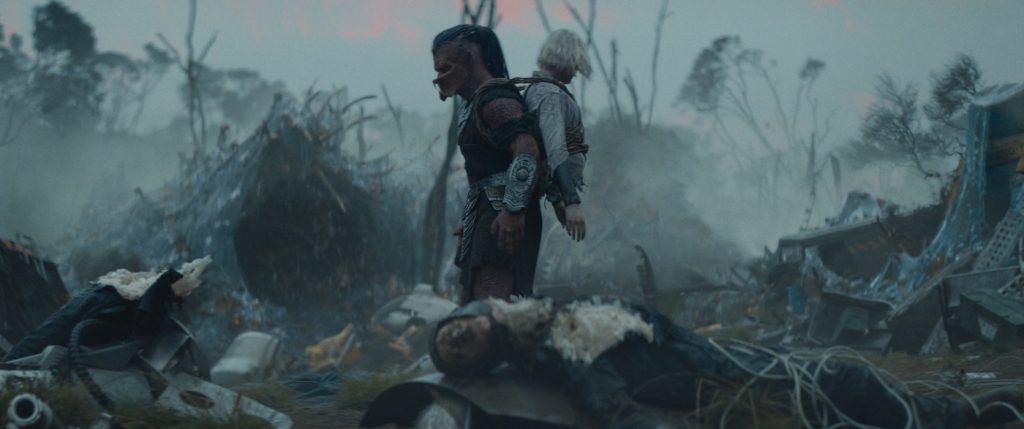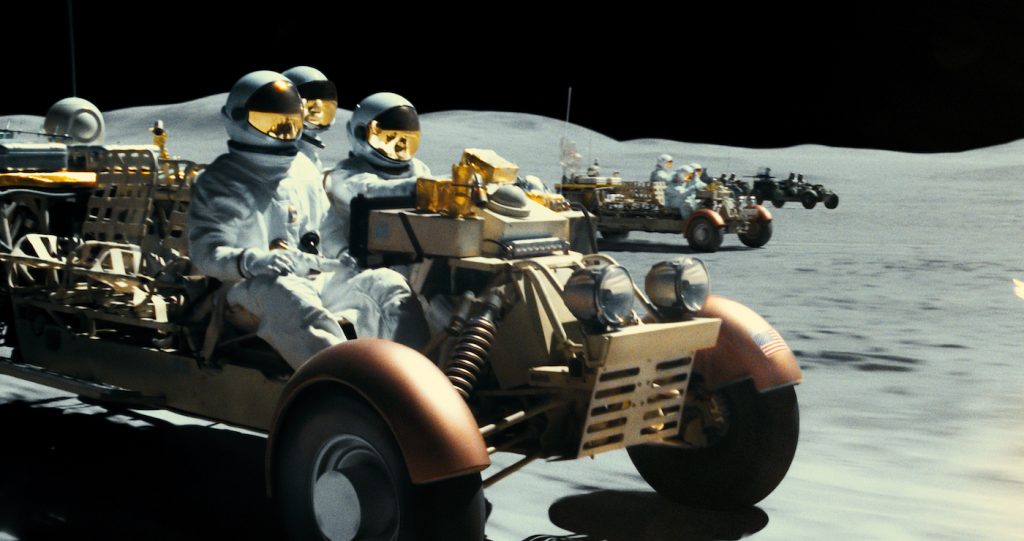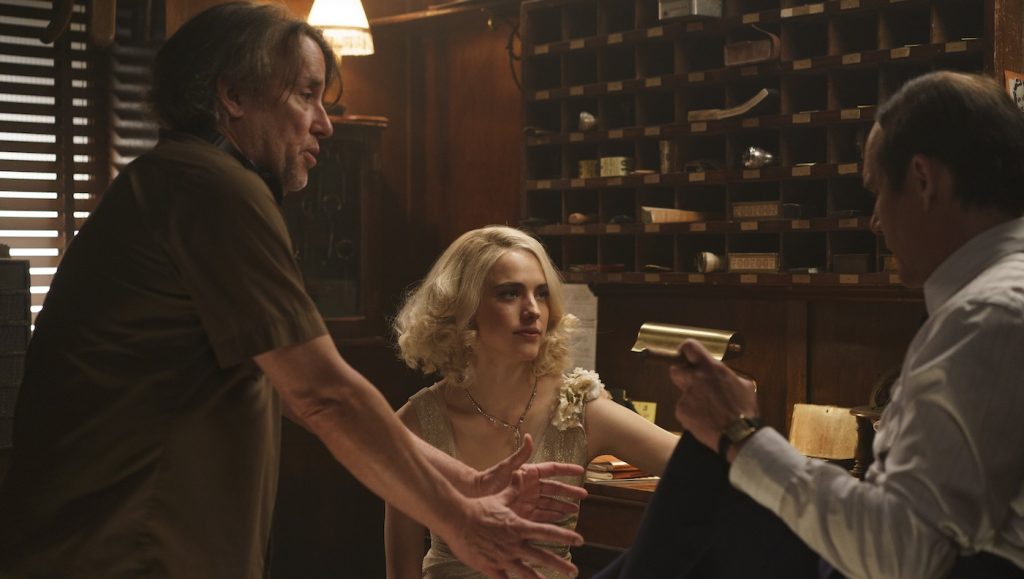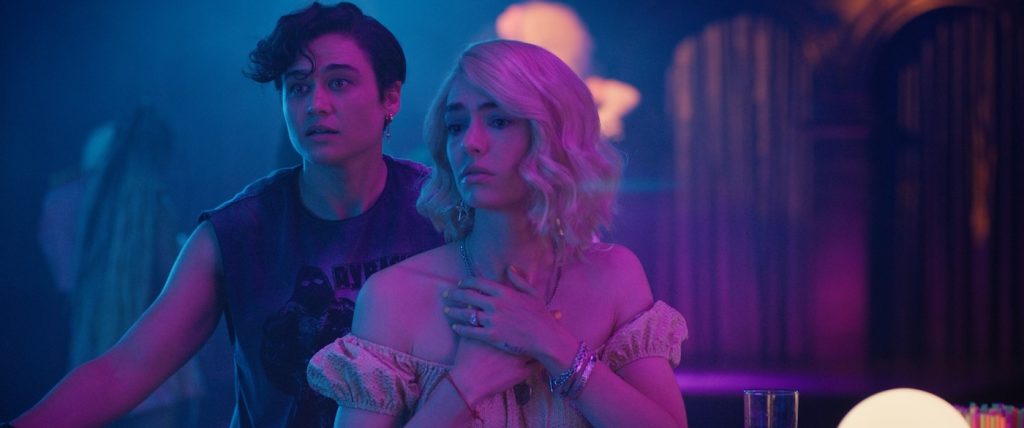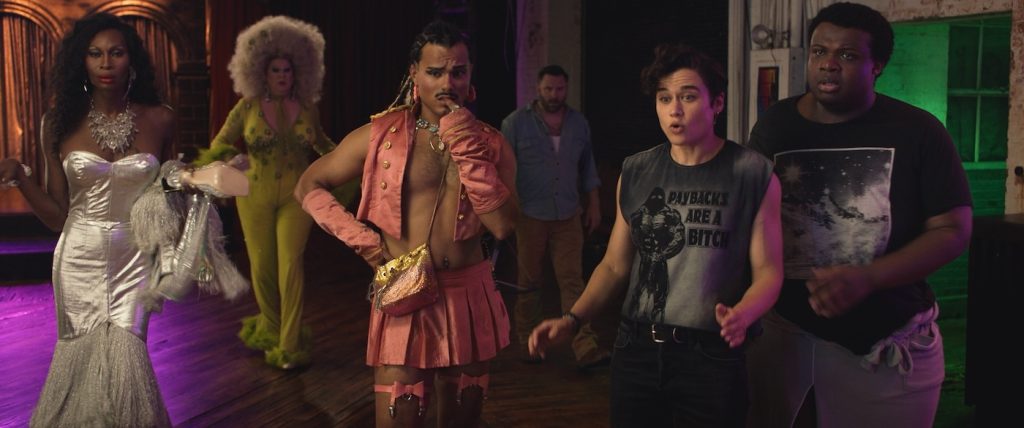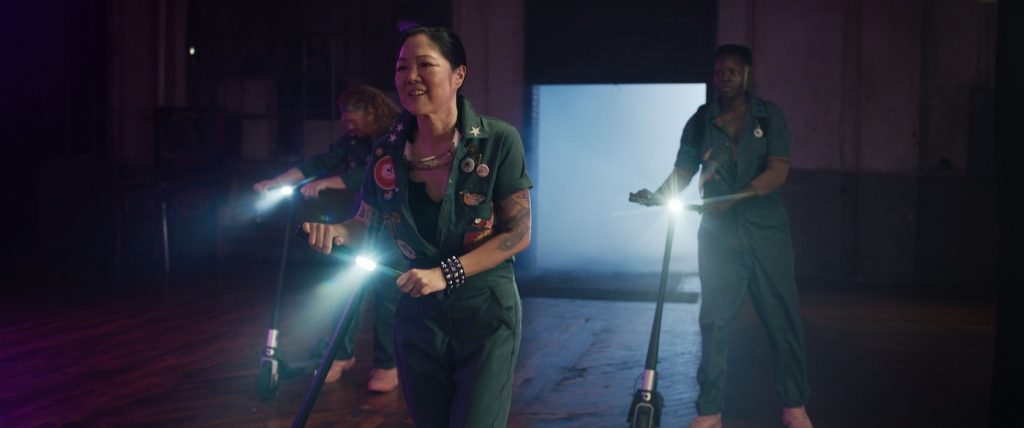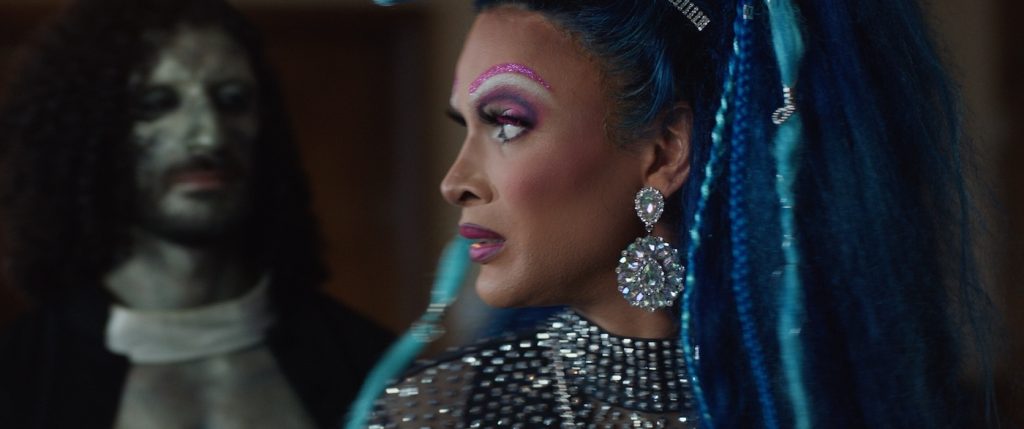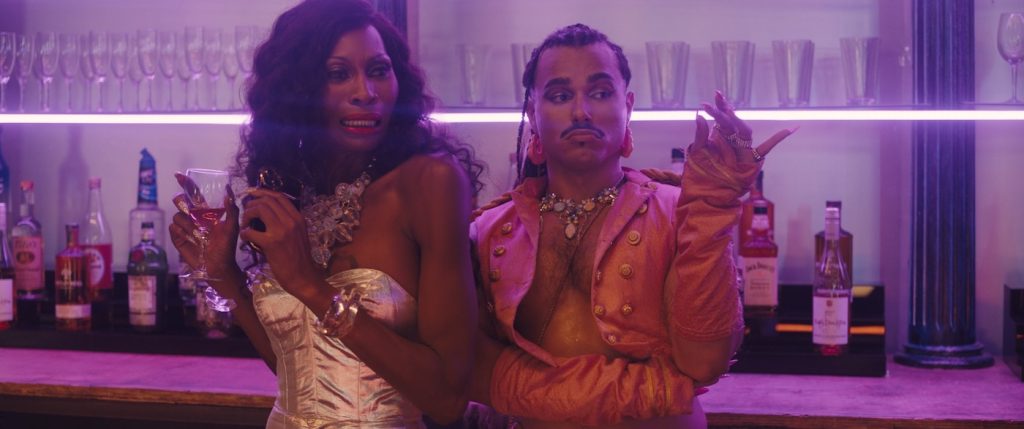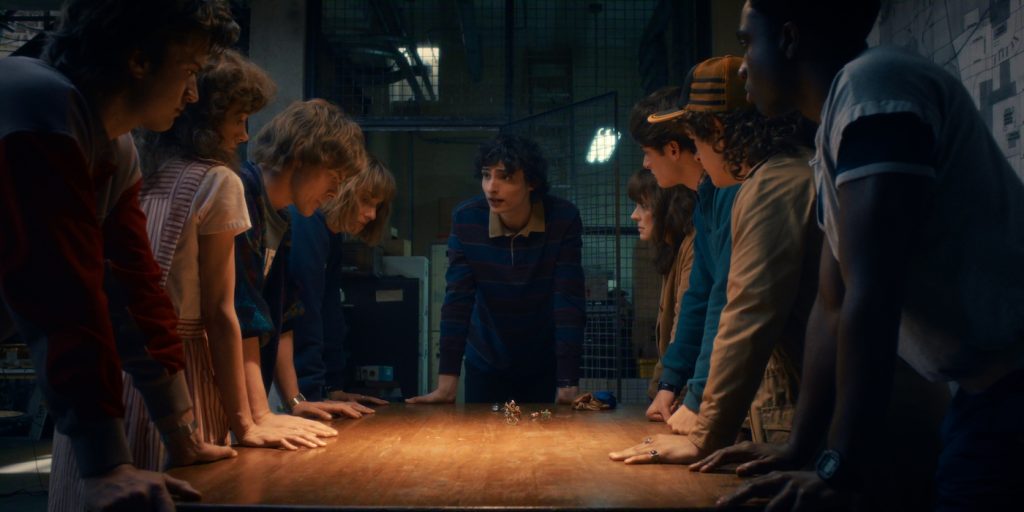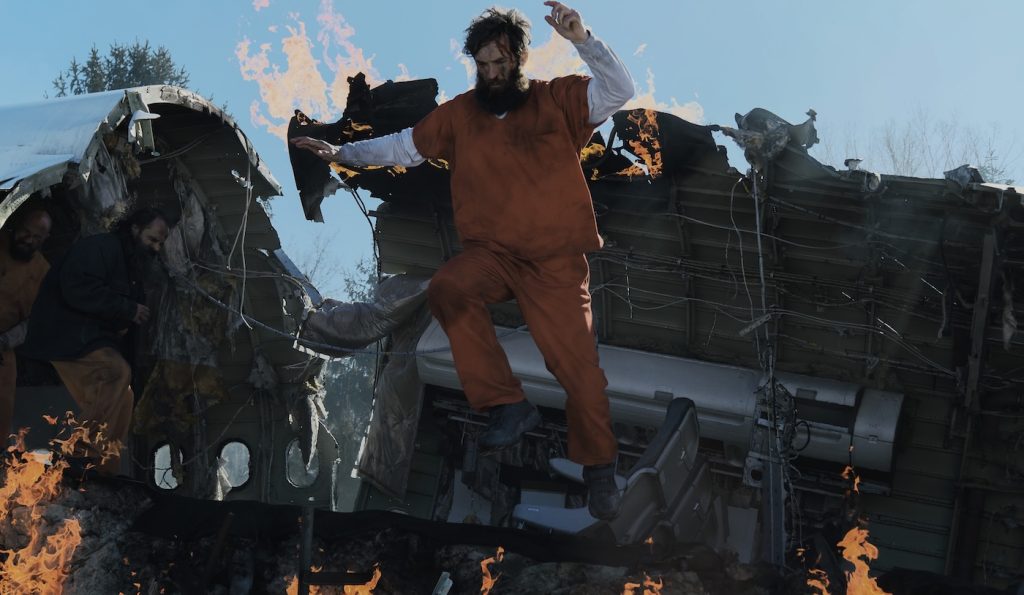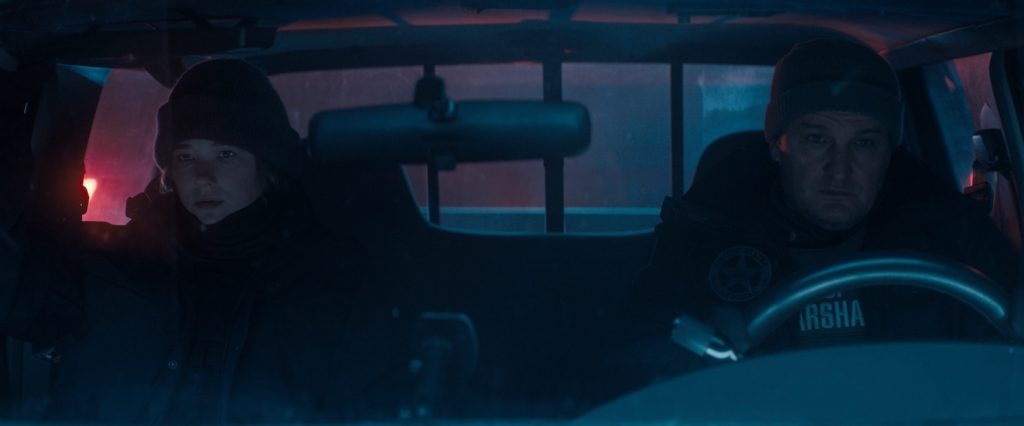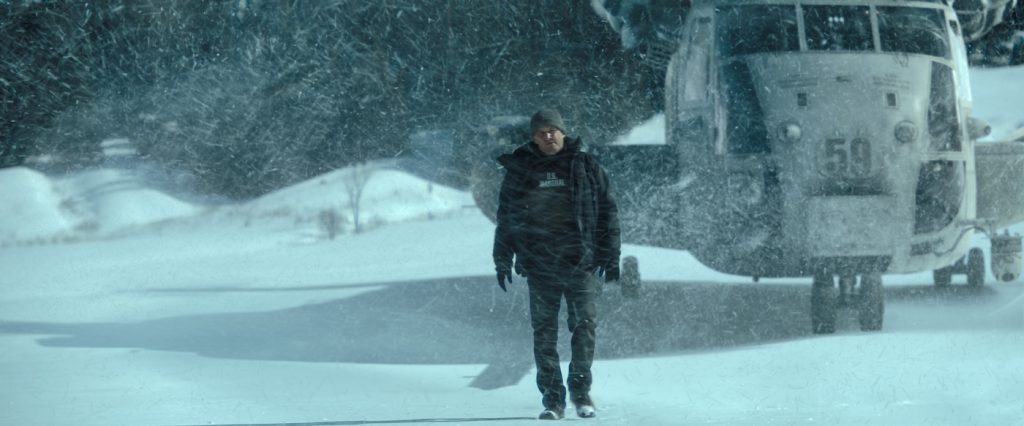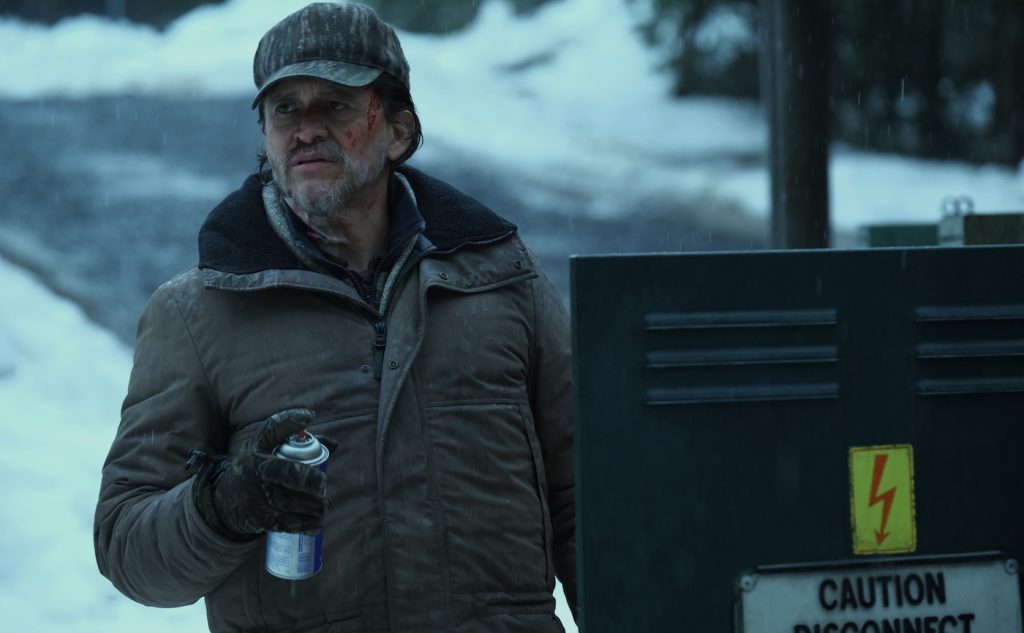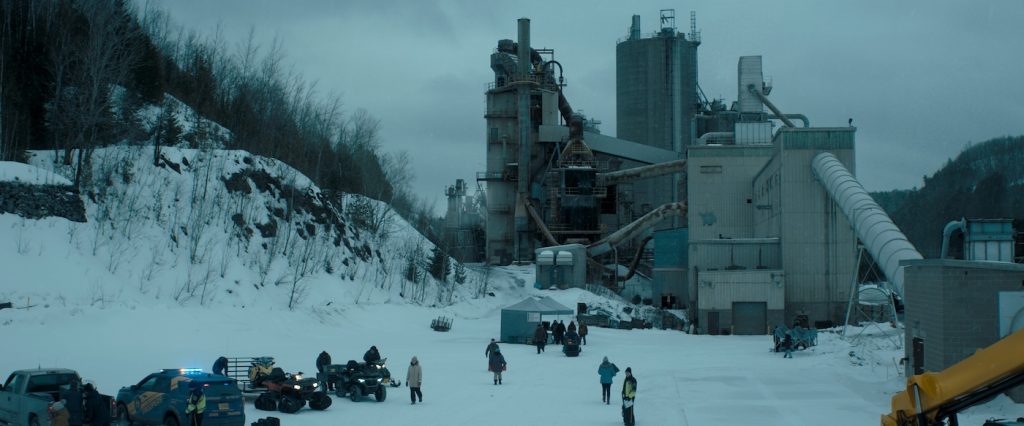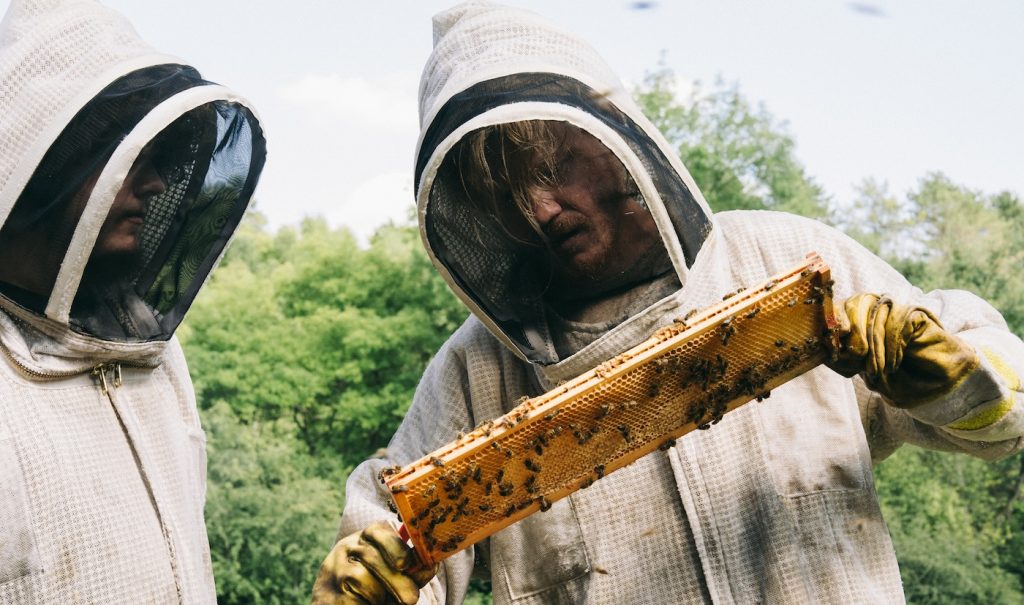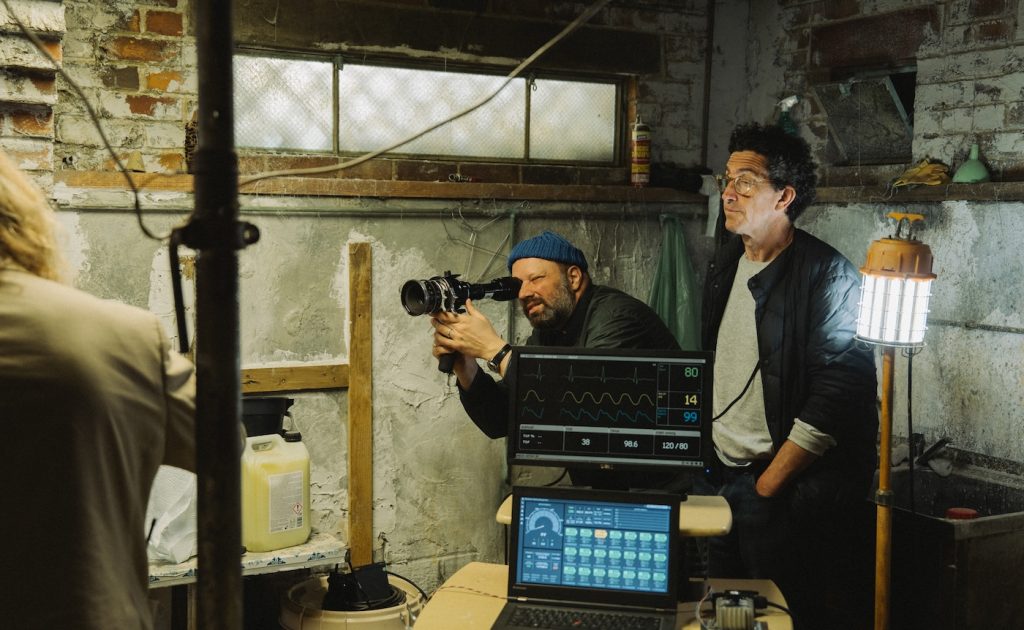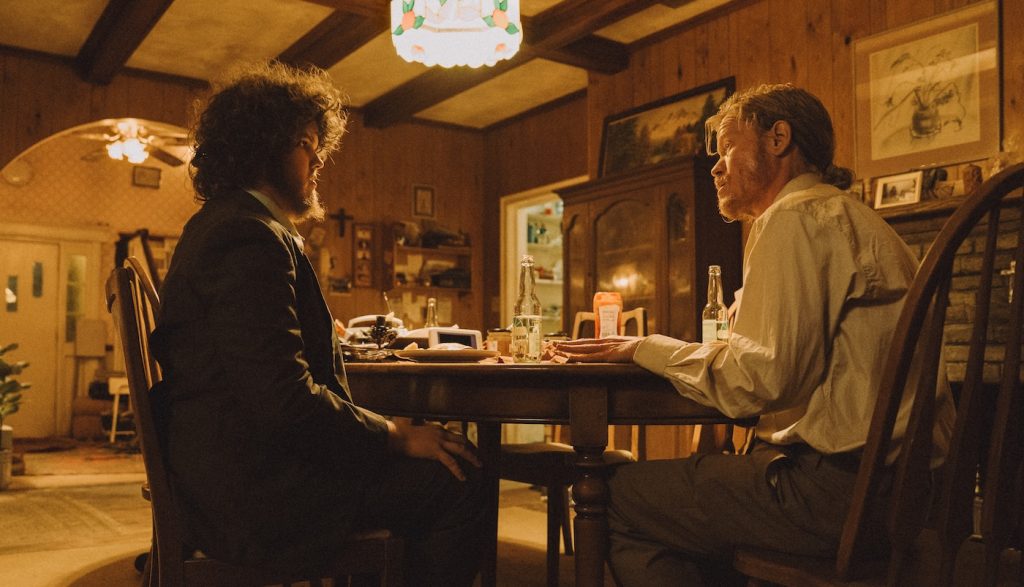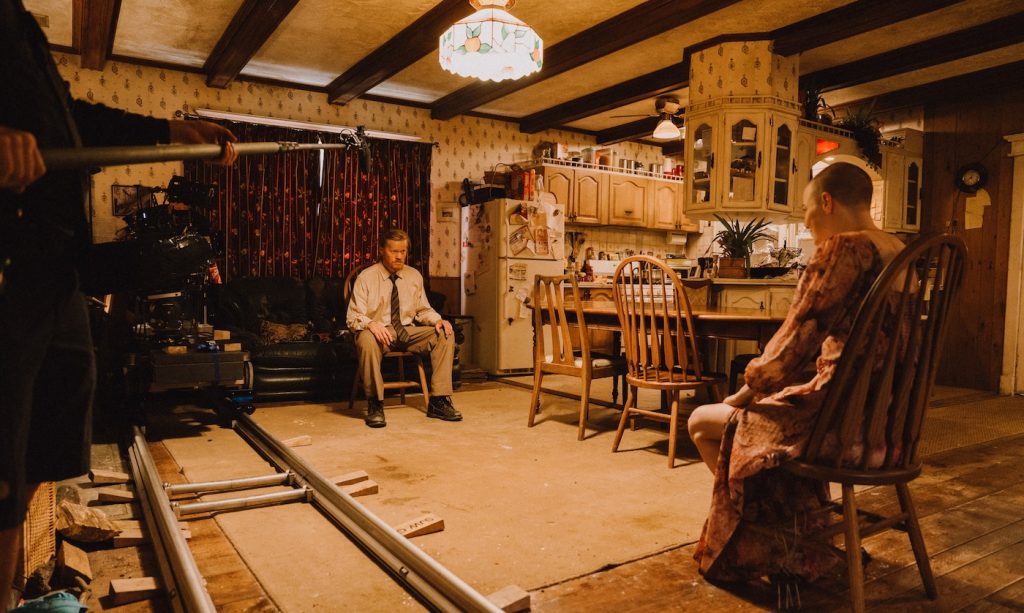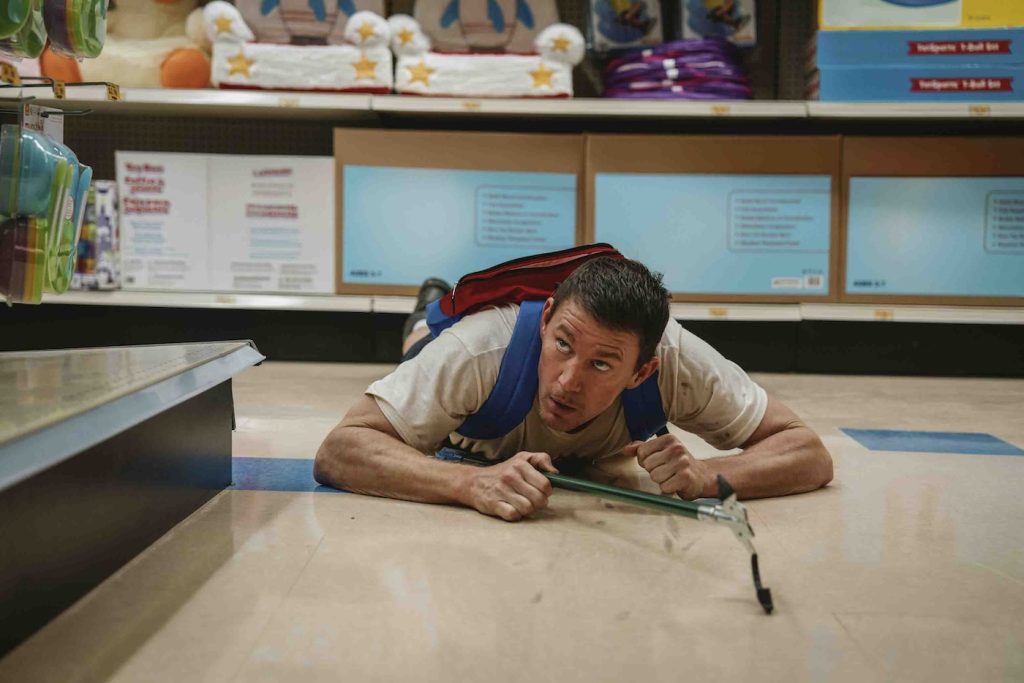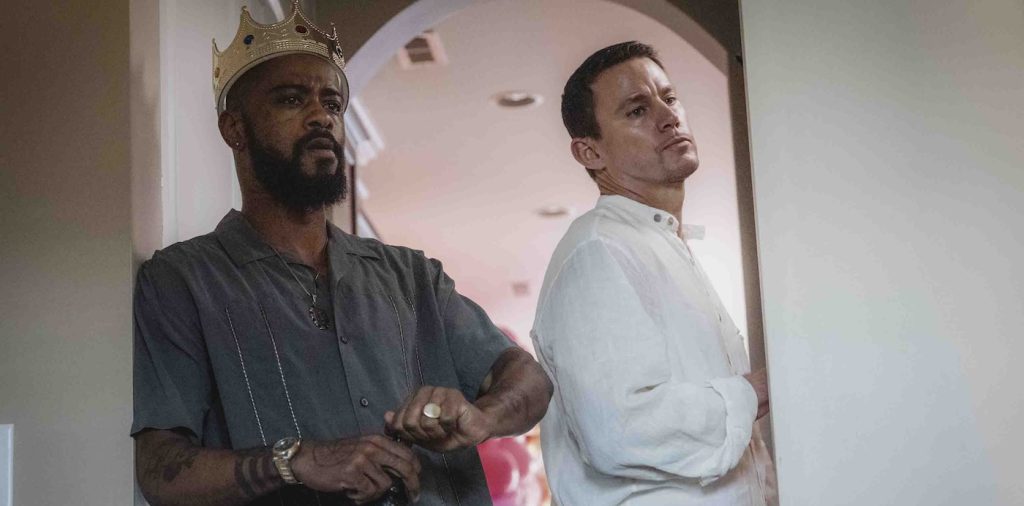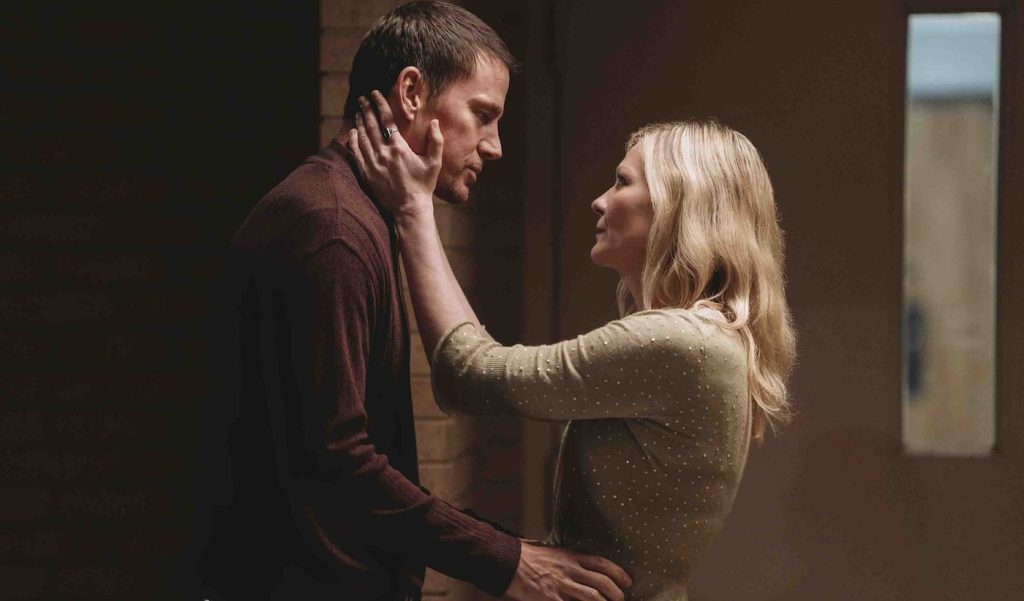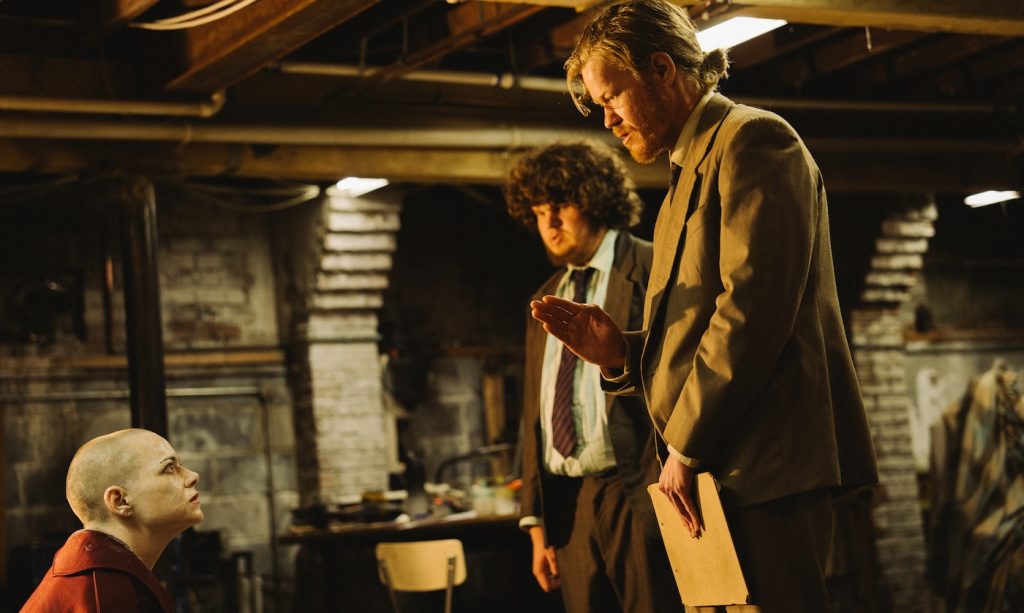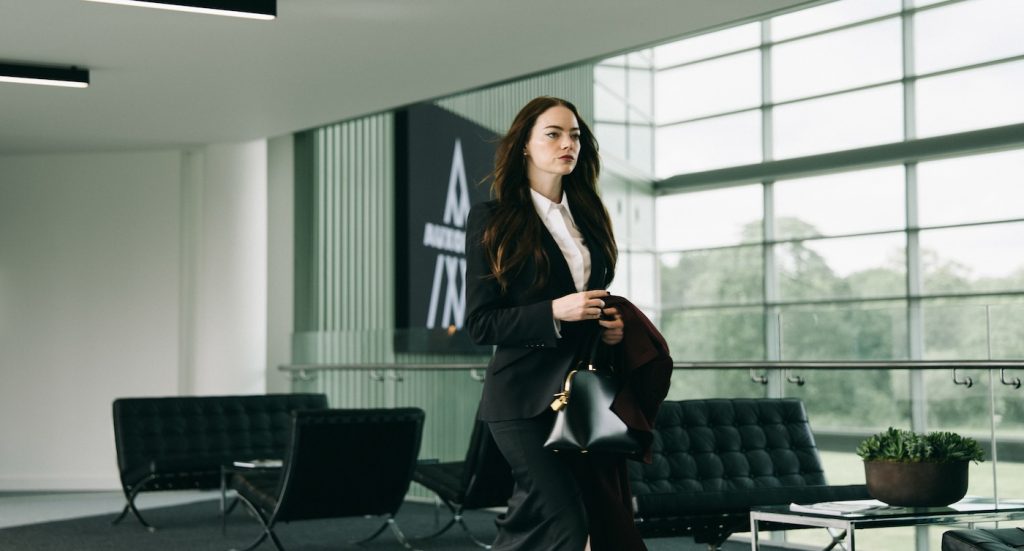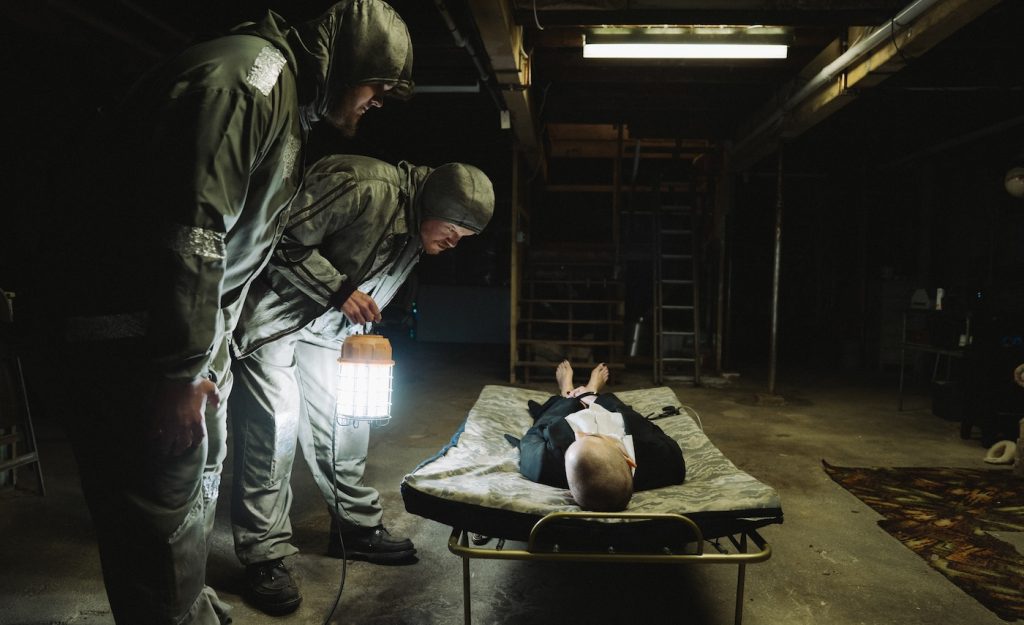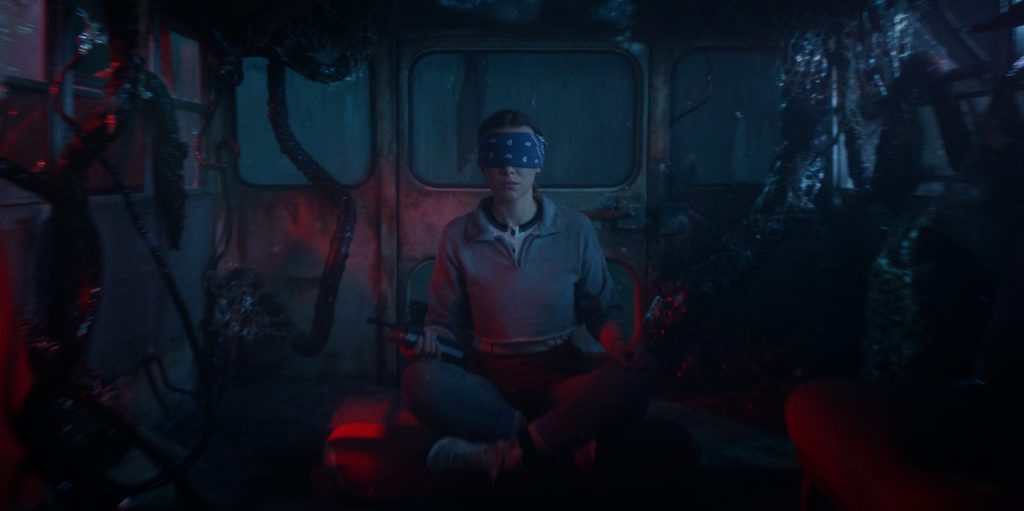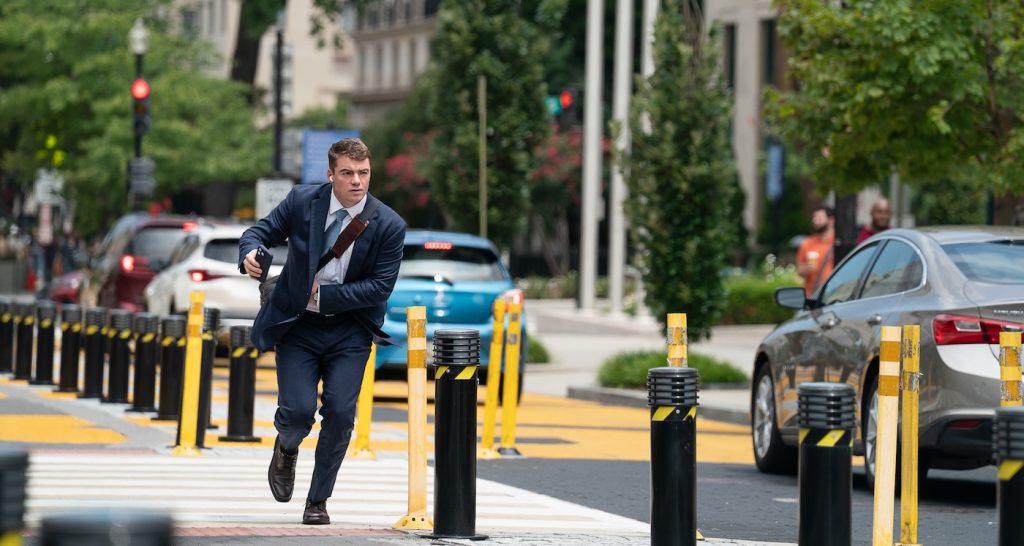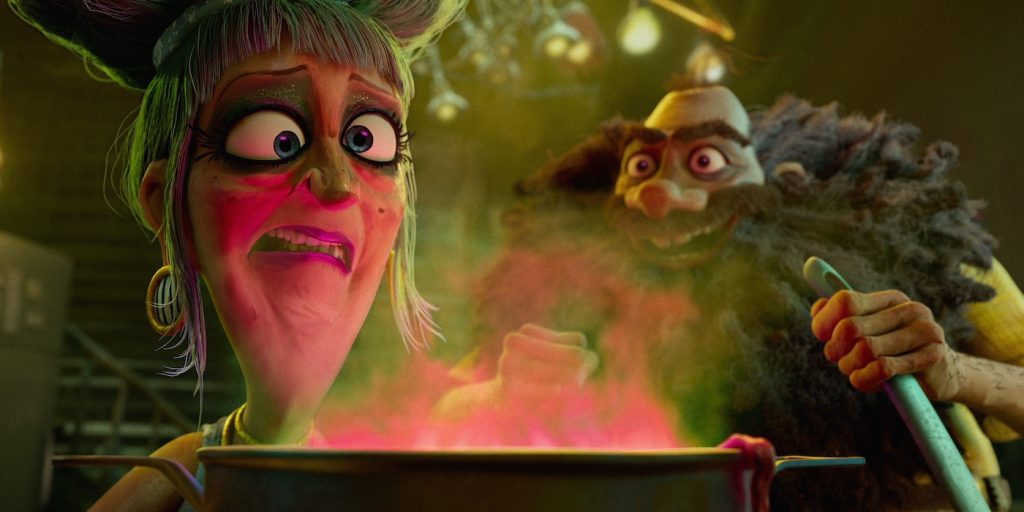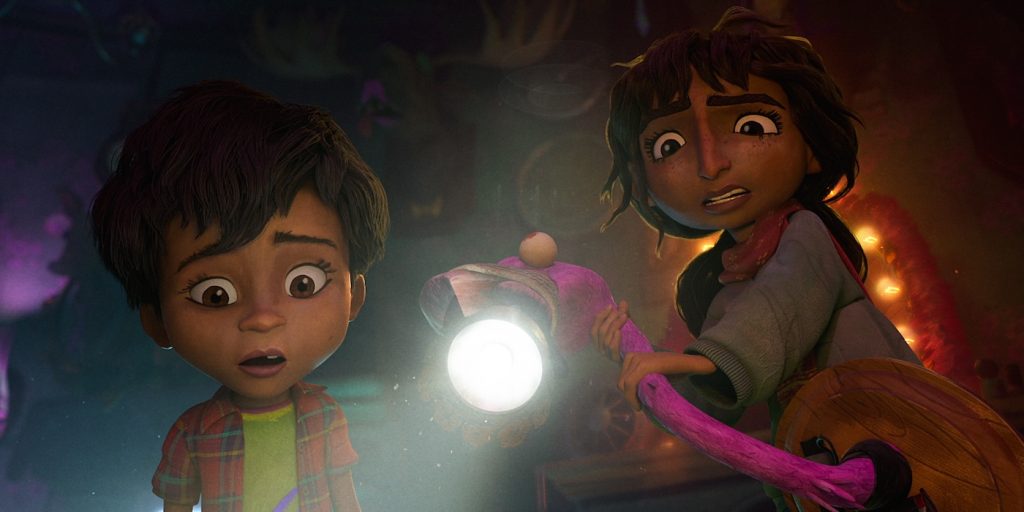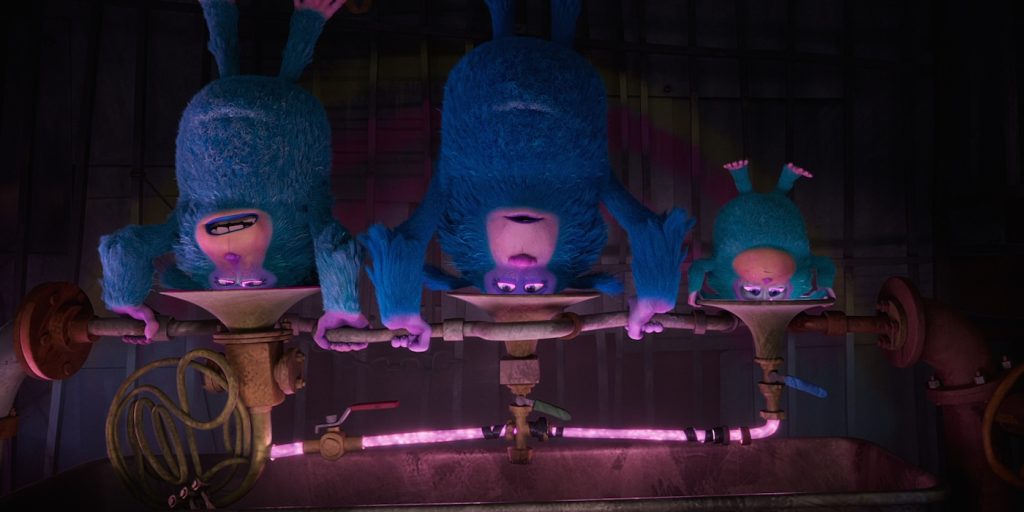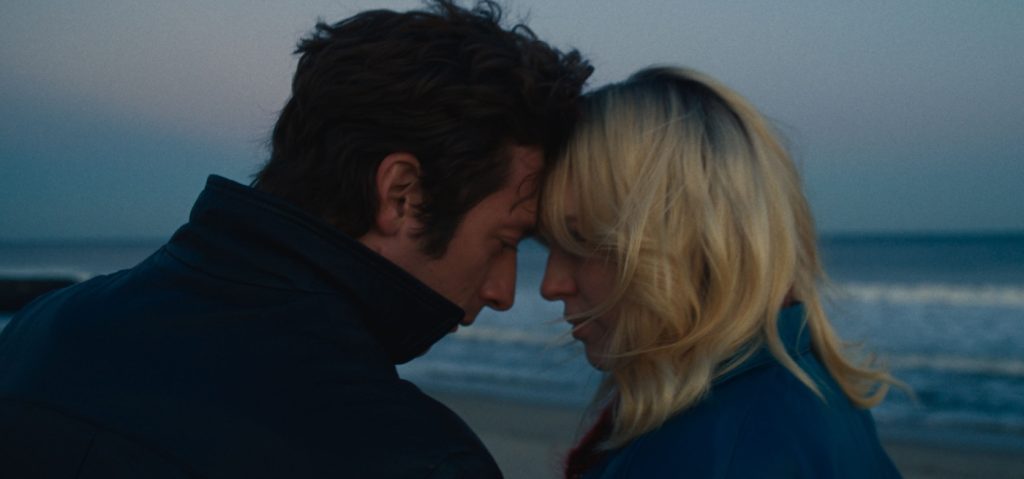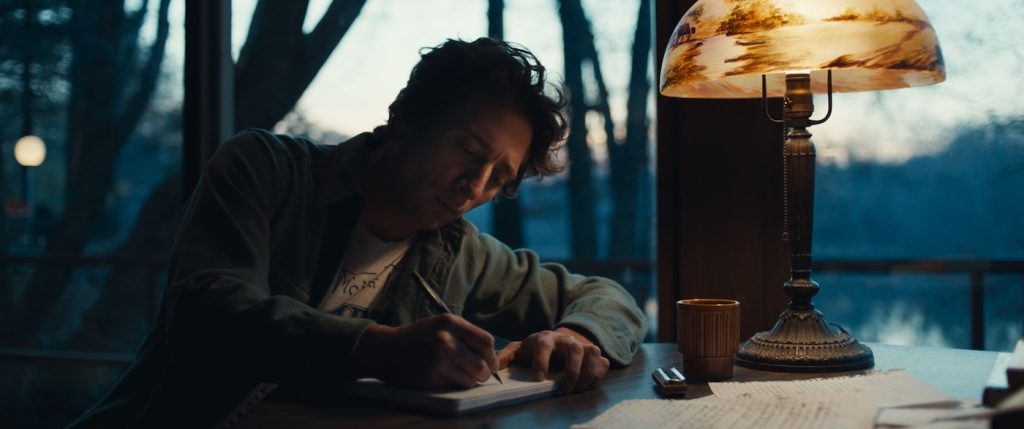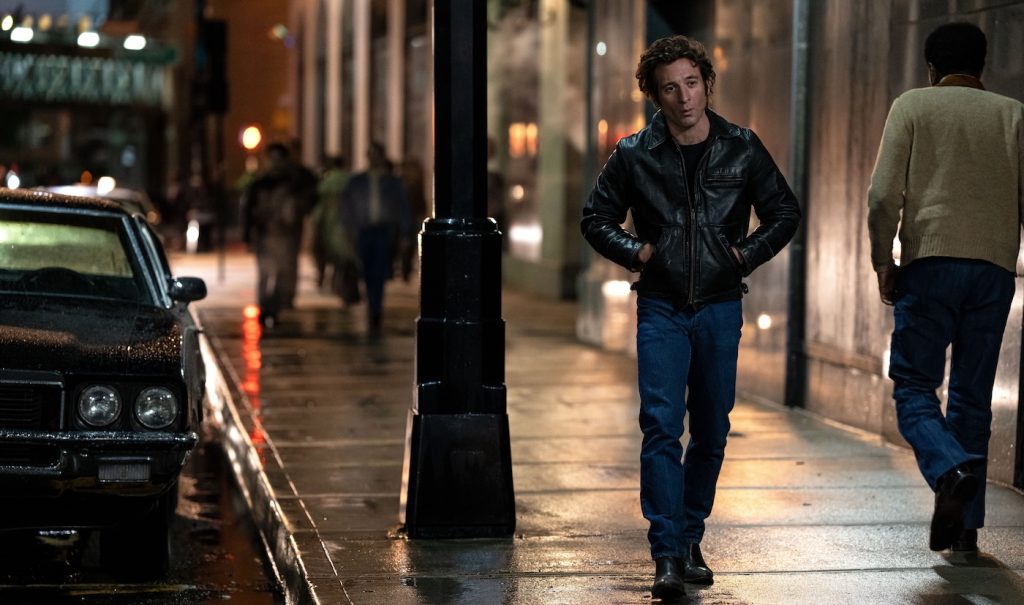
Co-writer and director Tom Gormican has enlisted Paul Rudd and Jack Black for his bonkers reimagining of the 1997 horror film Anaconda in his new comedy (helpfully called Anaconda), and the first trailer is appropriately bananas.
Rudd and Black played best buddies Griff and Doug, respectively, friends since childhood who have sustained one lifelong dream: to remake their favorite film of all time, the cinematic masterpiece Anaconda. The original followed a National Geographic film crew who were taken hostage by a lunatic hunter and forced to join him on his suicidal quest to capture the world’s largest snake.
The film was not short on stars—Jennifer Lopez, Ice Cube, Owen Wilson, and Jon Voight were all involved—and for those of us old enough to remember the film, there was no shortage of goofy joy in watching J. Lo and Ice Cube try to outsmart or outrun a colossal reptile. In the remake, Griff and Doug plan to remake the film on a shoestring budget (the loan they secure tops out at $9,000), turning Sony’s 1997 blockbuster into an indie film. It does not go to plan. The snake the team has arranged for the film shoot meets a grim fate, forcing the intrepid filmmakers to venture into the Amazon to find another one. Guess what? They end up coming face-to-fang with a massive anaconda that’s just as ferocious as the one from the original film.
Rudd and Black are joined by Thandiwe Newton, Steve Zahn, Daniela Melchior, Ione Skye, and more. Gormican directs from a script he wrote with Kevin Etten. Check out the trailer below. Anaconda slithers into theaters on Christmas Day.
For more upcoming films from Sony Pictures, check out these stories:
If the infamous trope “I know a guy who knows a guy” had a poster child, it should be Owen Hanson. Chronicled in a three-part docuseries, Cocaine Quarterback: Signal-Caller for the Cartel, from directorJody McVeigh-Schultz, the shocking events reveal how the former USC walk-on went from National Champion to convicted drug cartel smuggler.
McVeigh-Schultz, best known for helming the school spying scandal docuseries Spy High, gravitated towards the project for its unfiltered access to those involved. The interviews pull no punches – criminals speak with disarming honesty, often sounding a little smug or proud of their exploits. Listening to them recount their past unravels more like a plot to a Sicario film than real life. McVeigh-Schultz dug into the alluring subtext during prep. “We wanted to infuse this with a specific absurdity, unique style, and point of view,” he says of the Mark Wahlberg Unrealistic Ideas produced series. “I’ve compared the world we’re in to Cohen Brothers-esque. They’re masters, so I don’t want to compare this project to them, but that’s the kind of world it felt like.”
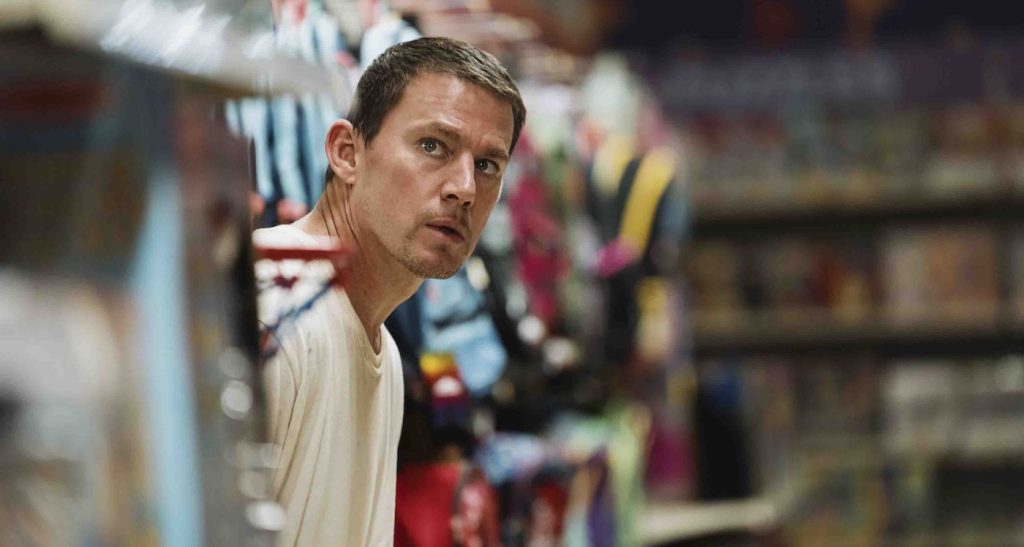
To give shape, the director researched news reports, interviews, and a book Hanson wrote about the incident. “I knew there were points of view that were going to be different from Owen’s, so it was very important to talk to criminals and co-conspirators who felt like he screwed them and talk to people who got involved in various things.”
Some of those connected to Hanson are from the 2004 Pete Carroll-coached USC football team, which was then led by quarterback Matt Leinart and running back Reggie Bush. The documentary frames that chapter of Hanson’s life as a kind of springboard for his future criminal activity, marking when he first connects with a rolodex of who’s who. “It’s interesting because Owen is like this benchwarmer, but he was literally the social center of that USC team,” he says. Speaking to that era is former USC and NFL running back LenDale White, who does not hold back, suggesting at one point that if anyone needed anything during their historic undefeated season, they’d tap Owen. “He’s the doctor. You call Dr. Owen, and he would make a play.”
And that only scratches the surface of what Cocaine Quarterback uncovers. Below, the director talks about the development, the most compelling part of Hanson’s story, and the production’s biggest surprise (which is not Owen laundering money through UGG boots).
You’ve done multiple projects with Unrealistic Ideas. Did this idea come from them or you?
They brought it to me. I’ve been able to do stuff in the true crime space, the sports space, and comedy. What’s interesting about this project is that it’s a little bit of all of those things. It’s tragic at times, but it’s totally absurd and hilarious at times. They also knew that I went to USC, and it turned out, I actually went to USC in the exact same years Owen did. So I think the Unrealistic team, and I should shout out [executive producers] Archie Gips and David Wendell, knew this would be in my wheelhouse.
Were the initial conversations with Owen the catalyst for the narrative?
Yeah, I did start with Owen. I had conversations with him while he was in prison, so they were in 20-minute segments because that’s the longest you can be on a prison phone. We talked a lot, and I think the one thing that you are thinking about speaking to someone who’s incarcerated for their crimes is what version am I getting? And I must say, I was impressed that Owen was so open about the things he did, even the things he wasn’t proud of.
Owen Hanson in “Cocaine Quarterback: Signal-Caller for the Cartel.” Courtesy Amazon Prime Video.
With three episodes, the tension rises fast. Was a tight format always the plan?
This could have been six episodes, but I think it wouldn’t have been as compelling. You want to ramp up the tension, the stakes, each time he gets into a bind. Owen had a whole early career building an offshore sports betting business, which was interesting. But for us, it was about how to tee up the most amazing part of his story, which was this incredible money laundering scheme in Australia, where he loses $2.5 million and everything goes incredibly wrong. It was about how to work backwards from this totally absurd moment and have that payoff in the best, most compelling way.
One opposing viewpoint is R.J. Cipriani, a gambler turned FBI snitch who goes byRobin Hood 702 and plays a crucial role in Owen’s arrest. How did you want to tell his side of the story?
Robin Hood 702 gets embroiled in this, and it culminates in a full-out conflict over the missing money. We also talked to law enforcement, who were hunting him down. Once you get a full picture and get several people saying what Owen’s saying may not be the truth, you can begin to piece together the most honest telling of this story from multiple perspectives.
R.J. Cipriani in “Cocaine Quarterback: Signal-Caller for the Cartel.” Courtesy Amazon Prime Video.
Owen was connected to the Sinaloa cartel. Did you consider connecting with someone from the outfit?
For us, that wasn’t what the story was about. It’s already been litigated so we didn’t think there was a need to create drama around it. But there is something interesting about the fact that in Owen’s telling of this, that guy is like this mythical, almost fictional person. But I can confirm that it’s a real person. Owen made a conscious choice to use essentially a nickname, El Jefe, for the guy who’s a lieutenant in the Sinaloa Cartel.
“Cocaine Quarterback: Signal-Caller for the Cartel.” Courtesy Amazon Prime Video.
Former USC and NFL running back LenDale White is absolute fire as an interviewee. Were you surprised by him?
LenDale White is a legend. That guy says whatever is on his mind, and he has no filter. I just love that about somebody who could decide to play it very close to the vest and not be blunt. But he says exactly what’s on his mind and what was happening. And that’s so refreshing when you get that kind of interview, especially from an athlete. What’s funny is that we shot his interview at the 901 Bar, which, if you went to USC, is a legendary dive bar on campus. So, it was this hilarious, nostalgic moment for me where all these things came together.
LOS ANGELES, CALIFORNIA – OCTOBER 07: LenDale White looks on during warm ups prior to the game between the USC Trojans and the Arizona Wildcats at United Airlines Field at the Los Angeles Memorial Coliseum on October 07, 2023 in Los Angeles, California. (Photo by Katelyn Mulcahy/Getty Images)
The doc revisits Owen’s ties to celebs and USC stars. Do you think they’ll distance themselves after this is released?
I mean, this is a guy who was at Reggie Bush’s wedding, which was not that long before his arrest. [Bush married in 2014, and Owen was arrested in 2015.] Reggie Bush declined to be interviewed, and I totally understand why. These are people with major media deals, and I don’t blame them at all for that. So it’s not like they’re staying good friends, but I don’t think there are hard feelings for him besmirching their name.
Did you know Owen was going to be released during production?
We got very lucky that he was released during the time we were in production, because that’s just such a unique moment. I think it’s been done a lot in documentaries, specifically about incarcerated people, but we wanted to show the reality of that. I don’t want to give away too much, but there’s a real ambivalence with his loved ones about whether he’s going to change. You do wonder with somebody whose entire life has been a hustle of some sort. It’s like, how do you turn that off? Or how do you put that hustle towards something positive? I think that’s the hope in all of it.
Owen Hanson in “Cocaine Quarterback: Signal-Caller for the Cartel.” Courtesy Amazon Prime Video.
Cocaine Quarterback: Signal-Caller for the Cartel is streaming on Prime Video.
For more on Amazon MGM and Amazon Prime Video, check out these stories:
For nearly five decades, Entertainment Partners (EP) has been the secret sauce behind the scenes of your favorite films, TV shows, and commercials, from Barbie to Bridgerton. Headquartered in Burbank, California, the company has revolutionized the way the entertainment industry manages payroll, accounting, and production finance, with a world-class team of experts specializing in a wide range of areas, including global tax incentives, labor compliance, residuals, and healthcare.
Their industry-standard digital platform featuring Movie Magic Budgeting and Scheduling, SmartAccounting, and SyncOnSet is the gold standard for studios big and small. Also part of the EP family is Central Casting, which dates back to 1925 and remains the largest and most trusted background actor service in the United States.
As a member of the California Production Coalition, we sat down with Entertainment Partners to get the inside scoop from Mark Goldstein, EP’s president and CEO.
For those unfamiliar with Entertainment Partners, how would you describe the company’s remit?
At its core, Entertainment Partners is a trusted production partner that’s been supporting the entertainment industry for nearly 50 years. We help productions of all sizes – from small indies to major studio blockbusters – bring stories to life. Whether it’s choosing the best location, forecasting costs, managing budgets, or making sure crew and talent are paid accurately and on time, we support the full production lifecycle. We also help studios make strategic decisions across multiple productions, providing the tools, insights, and expertise they need to plan, scale, and operate efficiently.
What has been the central stepping stone in the company’s growth?
Over the last five decades, Entertainment Partners has grown alongside the industry, constantly adapting and innovating to meet changing client needs. We started as a payroll services company, but quickly expanded into production accounting, residuals, and technology, creating the first integrated software and hosted services systems in the industry. As production became more complex, we broadened our offerings to support every phase of the process. Today, our ecosystem includes payroll, onboarding, timecards, payables, payments, production accounting, and document management. We also provide global-standard solutions for budgeting, scheduling, and script-to-screen document control, along with Emmy-award-winning SyncOnSet for on-set coordination.
Since you mentioned SyncOnSet, what type of productions can benefit from the service the most?
One of the most overlooked challenges in production is keeping track of creative details, such as costumes, props, hair, makeup, and set dressing, which must match from one scene to the next, even when shooting out of order. That’s where SyncOnSet comes in. It’s the first and only digital platform built specifically for those departments, supporting film and TV productions of all sizes. Creative departments use SyncOnSet from pre-production through wrap. It helps with script breakdown and budgeting early on, tracks continuity photos and notes in real time during the shoot, and generates reports that make wrap and archiving more efficient.
SyncOnSet
The industry is evolving much faster now. How has EP adjusted to new trends in the last three years?
The pace of change has been dramatic, and we’ve made it a priority not just to keep up, but to lead. We’ve reimagined our platforms to give production teams greater flexibility and control no matter where they’re shooting, and enhanced our casting technology to meet growing demands for speed, accuracy, and compliance. We’re delivering intelligence, not just technology. With our Insight Solutions, productions can make faster, smarter decisions on everything from budgeting and scheduling to compliance and labor costs. That visibility is a game changer, reducing risk while improving efficiency. We’re also actively investing in advanced technologies that can move the industry forward – building connected tools, scalable technology, and more intelligent insights that work across any size production, anywhere in the world.
EP has introduced SmartStart, SmartTime, and SmartPO. How has that helped users?
What we’ve done with our Production Finance Studio solutions is bring together all the core parts of production finance into a modern, connected system. These solutions take what used to be a paper-heavy, manual process and digitize it for production anywhere in the world. Because everything is integrated, teams aren’t wasting time chasing approvals or re-entering data. It speeds things up, reduces errors, and gives better visibility and control across departments.
Courtesy Entertainment Partners.
For a producer or accountant just starting out, where is the best place to begin on the EP platform?
A great starting point is the EP Academy – our on-demand, online training hub designed for individuals new to the industry or transitioning into new roles. It covers fundamentals, workflows, and how production finance really operates, with walk-throughs of our most widely used tools and courses in production accounting. We also encourage professionals to join The Production Lot, our global online community for people working in production at all levels. It’s a great space to ask questions, exchange ideas, and connect with peers and mentors.
Central Casting is celebrating 100 years. What contributes to its success?
Central Casting’s success over the last century comes from evolving with the industry while staying focused on what they do best: delivering quality, reliability, and great service. It’s the original name in background casting, so iconic that it inspired the phrase “Straight Out of Central Casting.” Since the earliest days of film, Central Casting has made it faster and easier for productions to find, hire, and manage background actors, saving time and money. For background actors, it’s been a trusted gateway to finding work in Hollywood – many actors can trace their first gig back to Central Casting.
Courtesy Entertainment Partners.
How has the EP Casting Portal improved workflow for clients?
EP’s Casting Portal has completely changed background casting. It’s the industry’s go-to platform for casting directors and agencies to find, book, manage, and pay all in one place. Things that used to take days, such as onboarding, approvals, and timecard processing, now happen in hours.
How important are competitive film tax incentives for keeping productions shooting locally?
Production incentives are huge in how film and television are made today. They don’t just influence where a project shoots – they can determine whether it gets made at all. For many productions, especially in the current climate, the incentive can be the deciding factor in both location and budget. Strong incentive programs create a ripple effect, bringing jobs, boosting local economies, attracting infrastructure investment, and supporting workforce development. With more than 120 jurisdictions worldwide offering incentives, studios have more choices than ever. At Entertainment Partners, we support productions globally with the strongest tax incentive team in the industry. We partner with productions from day one, offering strategic guidance to maximize eligibility, structure budgets intelligently, and ensure full compliance.
What is something EP offers its competitors that they do not?
What really sets EP apart is the breadth of our services and the depth of our expertise. We’ve been doing this for decades, and that experience shows up in everything we offer. We bring together a fully connected ecosystem backed by knowledgeable, hands-on support. We’re not just a service provider – we’re a strategic partner. Our platform is backed by the most experienced in-house team in the business, with experts in production finance, legal, labor relations, tax, and incentives. People who have worked in the field, negotiated contracts, and helped pass legislation that shapes how productions get made.
How have EP’s acquisitions contributed to the company’s growth?
Through strategic acquisitions and investments, we’ve expanded globally across Canada, the UK, Ireland, Australia, and New Zealand, allowing us to serve productions of every size in every major production hub. Most recently, we acquired CASHet, a leading provider of digital payment solutions, which will offer our clients a single, integrated process for managing production finance.
What was something EP saw missing in the industry that the company sought to change?
Early on, we saw productions slowed down by disconnected systems and paper-heavy processes. There was no real integration – onboarding, timecards, accounting, and approvals all lived in separate places. EP set out to fix that by developing a truly connected, end-to-end platform designed to work together within a single ecosystem. The difference between our platform and others claiming integration is that we’ve built ours with decades of hands-on industry knowledge. We know what it takes to run any scale production, and we designed our solutions to support both indie and major studio tentpoles with the same precision and control.
This article is part of an ongoing series that raises awareness about businesses in the film and television community. Entertainment Partners is a member of the California Production Coalition. The series includes:
Featured image: aption: (L-r) MARGOT ROBBIE as Barbie, ALEXANDRA SHIPP as Barbie, MICHAEL CERA as Allan, ARIANA GREENBLATT as Sasha and AMERICA FERRERA as Gloria in Warner Bros. Pictures’ “BARBIE,” a Warner Bros. Pictures release. Photo Credit: Courtesy Warner Bros. Pictures
If it is possible to be both larger than life and understated, Robert Redford would be the person who managed the feat. The big screen idol of Butch Cassidy and the Sundance Kid and All the President’s Men became a legendary, Oscar-winning director, helming classics like Ordinary People, A River Runs Through It, and Quiz Show. His work in front, behind, and well away from the camera equaled a singular life in the arts. Redford was an outspoken advocate for environmental causes and the rights of individuals to express themselves as they were, and the driving force behind the creation of the Sundance Film Festival. He passed away on Tuesday morning at his home in Utah at the age of 89.
Redford was a four-time Academy Award nominee and an honorary Oscar recipient. He was the kind of performer, director, and force in Hollywood who was larger than any specific accolade. Redford was one of the genuinely iconic stars of the screen of the past half-century, whose body of work included some of the most compelling and challenging depictions of the country he lived in, loved, and challenged. Those roles included playing irreverent U.S. Senate hopeful Bill McKay in 1972’s The Candidate, the grifter Johnny Hooker, opposite Paul Newman’s Henry Gondroff, in George Roy Hill’s 1973 The Sting (surprisingly, his only Oscar nomination as an actor), introverted C.I.A. codebreaker Turner in Sydney Pollack’s 1975 thriller Three Days of the Condor, and director Alan J. Pakula’s aforementioned classic All the President’s Men, in 1976, in which Redford played Washington Post journalist Bob Woodward who, alongside Carl Bernstein (Dustin Hoffman), investigated the Watergate scandal.
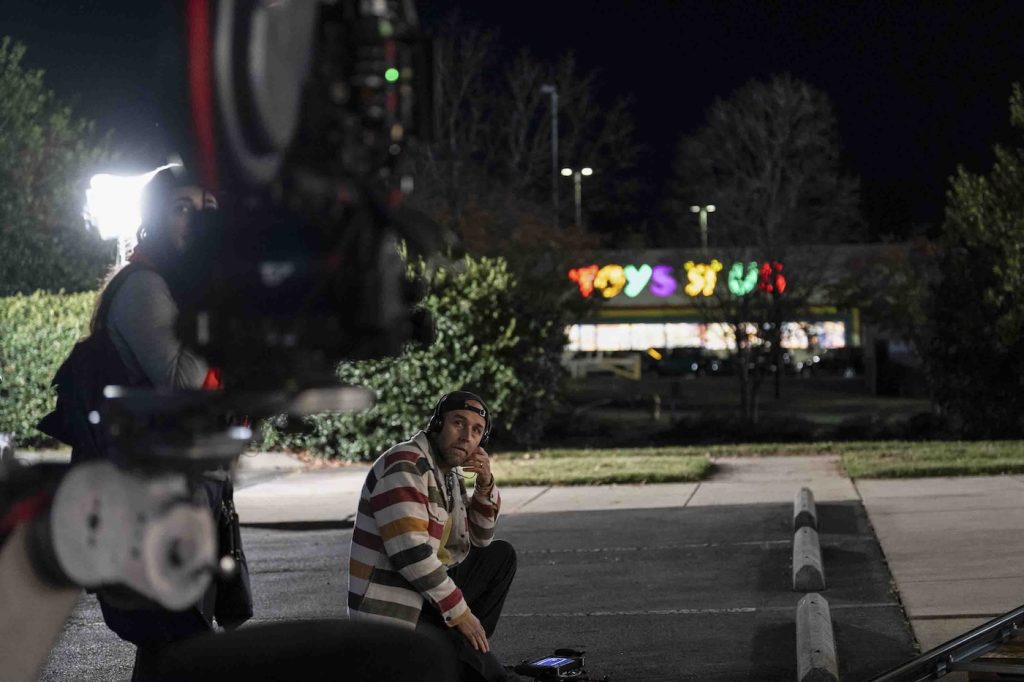
American actor Robert Redford, wearing a brown corduroy blazer over a checked shirt, in a recreation of The Washington Post’s offices, in a publicity still for ‘All the President’s Men’, filmed at Burbank Studios in Burbank, California, 1976. The political thriller based on the Watergate scandal, directed by Alan J Pakula, starred Redford as Bob Woodward. (Photo by Michael Ochs Archives/Getty Images)
He was as comfortable in comedies and romantic dramas as he was in political thrillers—his work in Barefoot in the Park in 1967, The Way We Were in 1973, and Out of Africa in 1985 saw him matched with Jane Fonda, Barbra Streisand, and Meryl Streep, respectively.
Redford used his massive star power to advocate for and make films that dealt with some of life’s weightiest topics, whether they be political corruption or grief. When he began directing in his 40s, he won an Oscar for directing the staggering Ordinary People in 1980, which was centered on a family’s implosion after a child’s death, and which also took home the Best Picture Oscar. In 1992, Redford directed A River Runs Through It, adapted from Norman Maclean’s story, which starred a young Brad Pitt and was a beautifully shot, elegiac story about Montana fly fishermen considering life’s biggest questions. It was nominated for three Academy Awards. His directorial work in his 1994 hit Quiz Show, centered on a 1950s television scandal, was nominated for four Oscars, including Best Picture and Best Director.
In 1981, Redford founded the Sundance Institute, a nonprofit created to help young, emerging filmmakers find a foothold in the industry. In 1984, he took over a film festival in Utah and a few years after that, he renamed it after the institute. The Sundance Film Festival turned Park City, for a week or two a year, into the hottest film hub in the world. It launched the careers of dozens, then hundreds, of star filmmakers, including Steven Soderbergh, Darren Aronofsky, Quentin Tarantino, Nicole Holofcener, Ava DuVernay, Robert Rodriguez, Ryan Coogler, and Chloé Zhao. It has been at the forefront of progressive causes, became a major launching pad for documentaries, and more. It grew, in fact, larger and more influential than Redford himself had possibly intended or imagined. He was not the biggest fan, to put it mildly, of all the hoopla associated with the festival that wasn’t about film itself.
He was a passionate environmentalist and a supporter of Native American and LGBTQ rights throughout his life—he was awarded the Presidential Medal of Freedom by President Obama in 2016. His retirement from acting came nearly 8 years ago, after 2018’s The Old Man and the Gun, yet he remained engaged with the industry (he was an executive producer on AMC’s Dark Winds, which he had an uncredited cameo in early this year). He was a force of nature, an impossibly charming onscreen presence with a ferocious work ethic and a lifelong desire to tell important stories and do important work. In fact, in 2013, he was the sole performer in J.C. Chandor’s brilliant adventure film All is Lost, when he played a sailor staring mortality in the face while adrift at sea. You couldn’t take your eyes off of him—at 76 years old, he was still a commanding screen presence—while he managed to make the business of being resourceful and resolute in the face of overwhelming odds and immense pressure look not only inspiring, but beautiful.
Featured image: Robert Redford walks the red carpet ahead of the ‘Our Souls At Night’ screening during the 74th Venice Film Festival at Sala Grande on September 1, 2017 in Venice, Italy.
In 2008, author Charlie Huston and filmmaker Darren Aronofsky had breakfast. The filmmaker was interested in adapting the author’s debut novel, “Caught Stealing,” the first entry in the Hank Thompson trilogy. The collaboration didn’t come to pass.
In 2022, Huston revisited the script they wrote for Caught Stealing, which tells the story of Hank (Austin Butler), a former baseball star and now an alcoholic bartender, caught in the crossfire of criminals chasing a bag of dirty money.
The script is a lean, mean crime adventure set in ’90s New York City. Hank’s punk neighbor, Russ (Matt Smith), asks the bartender to watch his cat while he leaves the country. The cat holds the key to a considerable fortune, which has caught the attention of various gangsters and the NYPD. After a series of mistakes, mishaps, bruising beatdowns, and chases, all exacerbating years’ worth of bad life choices, Hank places himself and those closest to him, including Yvonne (Zoë Kravitz), in danger.
The crime project came back around 2022, after Huston sent a polished script to Aronofsky. Three years later, Caught Stealing is an acclaimed crime caper, a mad dash through a not-so-distant New York City of the past buoyed by crackerjack performances and Aronofsky’s always able directorial command. Recently, Huston spoke with The Credits about adapting their debut novel, polishing the script until it was ready for prime time, and more.
How’d you approach your first crack at the script?
I was very schematic about it because I had a super cynical motivation, which was that if you option my book, you’ve got to option my script. I didn’t try to reinvent it. I just wrote the story as it was on the page. There were things that I made more cinematic. There were characters I eliminated. There was storytelling that I simplified. I collapsed the moment when he broke his leg in the baseball game, and then had the car crash where his friend died. I turned those into a single event: just the car crash.
How faithful did you want to be to your own story?
It’s irrelevant. The book is the book, and it’s there. As long as we’re not turning Hank into a neo-Nazi, you know what I’m saying? I’m saying this in the context of Darren liking the book, and he wanted to tell the story of the book. He didn’t want to reinvent it either. Things that I thought might get jettisoned – nobody’s going to want to have to deal with all the baseball stuff. They’re going to try to minimize the cat as much as possible. People are going to have a problem with Hank throwing up on himself. All these things that I thought might get eliminated in the process, but not Darren, he wanted all of it.
You two didn’t soften Hank’s edges too much. He’s still an alcoholic and an aimless mess. How crucial was preserving his flaws?
I thought that once we were with the studio and talking to any movie star, I really thought there’d be a push to make Hank more active, because that’s a note you were always getting: “Can they be more active?’ Can they do more? Can they drive the story?” Which, to me, is completely contrary to the point. I’m going to talk about Hitchcock without meaning to make a Hitchcock comparison with myself.
Please, go on.
Nobody’s looking at 80% of Hitchcock’s heroes and saying, “They should be driving the story.” The whole point is that they’re caught in circumstances that are out of their control, which they don’t understand until very late in the story. That’s the satisfaction. Those circumstances come with the suspense of being in their shoes and going on that ride with them. These days, there’s not a lot of appetite for that. But that was not the case here. Part of that is because Darren was telling the story that he wanted to tell. Everybody trusts him for good reason.
[Spoilers Ahead]
When Yvonne dies in the book, Hank acknowledges how an action star would react to her death. Instead of fighting, he wants to sleep. How’d you want to stay true to Hank’s reaction to that death?
I can remember being in Video Village the day that we shot Yvonne’s death. Somebody hanging out, was like, “Shouldn’t he go and check on her?” I said, “I think this is authentic. I don’t think there’s any mystery about whether she’s dead or not. Checking on her is just something that we’re throwing at the audience, like we want them to feel better about Hank.” The reaction of horror and going straight to the phone to see if he can get help is an authentic reaction. And then the other thing that I said was, “If this character were female, I don’t think you’d be asking that question. Because it’s a guy, you expect him to take action in a different way. But I think if a female character walked into a room where the dude was dead and went for the phone to call for help, nobody would be saying, ‘Shouldn’t she blah, blah, blah?’”
Yvonne (Zoë Kravitz) and Hank (Austin Butler) connect back at Hanks apartment in Columbia Pictures CAUGHT STEALING. photo by: Niko Tavernise.
“Caught Stealing” was your debut novel. How do you look back at the writer you were when you wrote it?
I didn’t know I had the self-discipline to write every day, and that was really what I was chasing as I was in a raw place. I didn’t know what I was doing. I didn’t have a creative outlet. I needed one. I needed structure because I was off my drinking, which I didn’t solve, because I kept drinking for 25 more years. But, I needed something that I was doing that was feeding me creatively. I’d been reading a lot of noir and crime, and I’d never written a noir crime story. I’d written a bunch of short stories, but not like, “I’m going to try and write some kind of noirish short story.”
L-r: Yuri Kolokolnikov, Austin Butler, Bad Bunny, and Nikita Kukushkin. hoto by: Niko Tavernise.
What was it that made you tell Hank Thompson’s story at that time in your life?
I had a starting place for it, using my day-to-day life at that time as the framework to hang everything on. It was exciting to feel the story grow, to have things click into place. I was engaged with it when I was away from it, thinking about it, and scribbling things down.The night that I finished it — and of course, this is a long time ago, so I’ve got my mini disc with my book on it — I went down to the bar. That’s where I worked with the brothers, the real Ed and Paris, who are [criminals] in the book but got written out of the movie, unfortunately. I went down to see those guys and told them that I’d finished my book. When you do something that you’ve always admired in others, always thinking to yourself, “Oh boy, I wish I could do that, but I’ll never do that,” and you do it, at that point, anything else would’ve been icing on the cake for me.
I’ve heard from writers that they learned a lot about storytelling from working at bars. Was that your experience?
Specifically for Caught Stealing, obviously, it’s intrinsic to the story. It’s a classic first novel where I used so much of my personal experience — everything up to when the guns came out. Basically, I’m just drawing from all my day-to-day life, the geography of the neighborhood, and how I knew New York at that time, what was going on in baseball. I mean, probably the thing that came out of it that fed a part of me that was already there is just a fondness for human weakness and people who don’t have their shit together.
Usually, the best stories to tell.
You pick up a lot about human nature at a bar. You pick up a lot about vulnerability and how people undermine themselves. You see a little bit of people at their best, a little bit of people at their worst. For someone in their early thirties, it’s probably a bit of a graduate course in that. You can get those kinds of lessons working in an office building or being in some hierarchy. You’ll see a lot about human nature that way, too, but maybe it’s not as raw, perhaps. I mean, being amongst those folks and being one of them is a huge part of my life’s journey.
As someone who’s now sober, how do you reflect on the work you produced during that period in your life?
Since I’ve been sober, it’s one of the things I reflect on — this irony that if I had not been an active alcoholic for so long… I mean, Caught Stealing is a novel about an alcoholic, how it’s destroying Hank, and how he’s destroying other people’s lives through his alcoholism. If you look at it hard, that’s what’s going on. Flat out, if I weren’t an active alcoholic, I couldn’t have written that story. And there’s plenty of other stuff that I’ve written. I wrote a five-book vampire series effectively about addiction. I look at my life experience. I look at how I’ve lived, the choices that I’ve made, and I have to recognize that there’s a great deal that I have been able to draw from those experiences to create opportunities that I wouldn’t have otherwise had. Although I was never a drinking writer. I drank every single day, seven days a week, 365 days a year, but it was always after the work was done. It was always about getting the work done. Now, I can have my drinks. Now, I can maintain it. But it was present in terms of the addiction itself, in terms of the disease itself; it was always present in what I was writing. I just wasn’t aware of it.
Featured image: Russ (Matt Smith) and Hank (Austin Butler) on the move in Columbia Pictures CAUGHT STEALING. photo by: Niko Tavernise
Director Oliver Hermanus calls his latest film, The History of Sound, “a love letter to the films of the ‘90s.”
The period drama stars Paul Mescal as Kentucky singer Lionel and Josh O’Connor as Boston composer David White, who have a brief but life-changing romance in 1920 while hiking through rural Maine to record local folk music on wax cylinders.
Hermanus grew up in South Africa, where American films were plentiful. His family “loved melodrama and sweeping films” such as Legends of the Fall, A River Runs Through It, and The English Patient; the kind of films that “don’t exist anymore,” he said. Older classics, such as Badlands, and other “landscape films” also influenced him.
L to R: Paul Mescal (as Lionel) with Director Oliver Hermanus on the set of THE HISTORY OF SOUND.
With The History of Sound, which premiered at Cannes and opened September 12, Hermanus aimed to “tell the story of an American landscape which, for me, is a cinematic passion.”
Adapted by Ben Shattuck from his own short story, The History of Sound is the first film Hermanus shot in the United States. He was developing the project simultaneously with his acclaimed 2022 British feature film, Living, which earned a Best Actor Oscar nomination for Bill Nighy.
“I was always going to do Living first and naively thought I’d do The History of Sound right after. But I became super busy and it took another year or more to get it off the ground,” he said. “It was a slightly schizophrenic time, doing this very British movie and a very American movie.”
Josh O’Connor is David in THE HISTORY OF SOUND, directed by Oliver Hermanus.
Hermanus read Shattuck’s short story in early 2020 and “was drawn to the wisdom of it,” he said. “Great writing has an idea at the center, a window inside the story. The director in me [wondered] ‘How do I put this in a cinematic context?’ That was to see it as a portrait of a man’s life and to understand that somebody can enter your life for a short period of time but become the resonance of your life. David inspires Lionel’s life; he literally tells him what to do and where to go. Lionel’s voyage of discovery is that he prefers to listen rather than sing; it’s a revelation that’s the association with what he loves about music.”
Mescal and O’Connor remained committed to the project even after it was delayed by the COVID pandemic. “All development took place during lockdown. We were zooming away; I met Paul and Josh through Zoom,” said Hermanus. Shooting finally began in the winter of 2024.
Hermanus has become known for films that treat queerness as another part of life’s textures. “I personally like to watch films where love and romance can be posed in the context of queerness without being about the problems or sadness. I’ve seen enough of that and I’ve explored it in movies myself,” said Hermanus, who made his first film, Shirley Adams, when he was 24. “That was very much about my mother and my understanding of motherhood in South Africa. My second [Beauty, released in 2021] was about queerness and repression, and then I moved on to questions of shame” with 2019’s Moffie.
“This time, I finally made a film where queerness wasn’t the issue or a problem. The relationship is as organic and natural as it can be. It plays out in Lionel and David’s connection at the piano [in an early scene of the film], and there’s no fear about the connection. They both go with it.”
Hermanus took a “deep dive” into authentic American folk music and the oral histories that were passed down through generations, dating to “the Irish influence, the slavey influence. The American tapestry of music is about arriving from other places and telling stories through written song,” he said.
“The Smithsonian’s collection of wax cylinder recordings is the holy grail of how you can find all this stuff. Can you imagine no recorded music? It is almost unfathomable. This story is at the cusp of when people are hearing recorded voices for the first time. The magic trick of that must have been overwhelming,” he said. “There’s poetry to the idea that sound can be this echo to a moment in time and this connection to the past. It’s a beautiful and fortunate thing that we can do, which is time travel.”
Veteran actor Chris Cooper plays the older Lionel, whose memories of David and their bonding over music provide the film with its entry into the story.
“I’ve done enough work in the film business to realize that the other actors and the director have a lot on their shoulders, and I want to make their work as easy as possible. Paul was assigned an accent coach for the Kentucky accent,” Cooper said. “I am from Missouri, and I’ve done a Kentucky accent, but it was a concern that the two of us match, dialect-wise.”
Cooper contacted Mescal’s coach and “told him that once Paul was comfortable with it, to send me his work and I’ll try to match it.”
Beyond the sound and speech patterns of Lionel’s voice, Cooper aimed to bring to the role his own “life experience; love, loss, regrets. I don’t know how else to work,” he said. Like Hermanus, Cooper is drawn to sophisticated, character-driven films that, he said, have become “harder and harder” to make.
“The business has changed. The films I was brought up on — it was person-to-person, one-on-one, not explosions, blue screens, or Marvel superheroes. It was human-to-human; that’s what got me interested. That’s hard to find in film work today.”
The History of Sound is in theaters now.
Featured image: L to R: Josh O’Connor is David and Paul Mescal is Lionel in THE HISTORY OF SOUND, directed by Oliver Hermanus.
The 2025 Emmys Awards telecast crowned the year’s big winners on Sunday night, with The Pitt, The Studio, Adolescence, and The Late Show With Stephen Colbert winning big.
The Pitt nabbed three Emmys, including for Best Drama Series. Star Noah Wyle also took home the Best Actor in a Drama Series win, and his co-star, Katherine LaNasa, topped four White Lotus stars to pull in the Emmy for Best Supporting Actress in a Drama.
LOS ANGELES, CALIFORNIA – SEPTEMBER 14: Cast and crew including Simran Baidwan, Katherine LaNasa, R. Scott Gemmill, Noah Wyle, John Wells, Tracy Ifeachor, Shawn Hatosy, Christopher Meloni, Patrick Ball, Supriya Ganesh and Taylor Dearden accept the Outstanding Drama Series award for “The Pitt” onstage during the 77th Primetime Emmy Awards at Peacock Theater on September 14, 2025 in Los Angeles, California. (Photo by Kevin Winter/Getty Images)
Adolescence earned six awards, including the Best Limited or Anthology Series, and Owen Cooper became the youngest-ever winner in any category when he took home the Best Supporting Actor award in a Limited or Anthology Series or Movie. Executive producer/writer/star Stephen Graham won the Best Actor in a Limited or Anthology Series or Movie, and Erin Doherty won Best Supporting Actress. Philip Barantini won for Best Directing for a Limited or Anthology Series, and Graham won his third Emmy when he and Jack Thorne won for Best Writing.
On the comedy side of the ledger, the night belonged to The Studio, which won Best Comedy Series and co-creator Seth Rogen won again for Best Actor, then again for Best Director and Best Writer, both with Evan Goldberg, while they shared the writing honors with Peter Huyck, Alex Gregory, and Frida Perez.
The Late Show with Stephen Colbert won Best Talk Series, an emotional victory that came two months after CBS announced it was canceling the series. Colbert and his staff enjoyed a standing ovation.
LOS ANGELES, CALIFORNIA – SEPTEMBER 14: Cast and crew of “The Late Show with Stephen Colbert” accept the Outstanding Talk Series award onstage during the 77th Primetime Emmy Awards at Peacock Theater on September 14, 2025 in Los Angeles, California. (Photo by Kevin Winter/Getty Images)
Tramell Tillman became the first Black man to win Best Supporting Actor in a Drama Series for his work in Severance. His co-star Brit Lower nabbed Best Actress in a Drama Series. Meanwhile, Cristin Milioti won Best Actress in a Limited or Anthology Series for her stellar work playing Sofia Falcone in The Penguin.
LOS ANGELES, CALIFORNIA – SEPTEMBER 14: Tramell Tillman accepts the Outstanding Supporting Actor in a Drama Series award for “Severance” onstage during the 77th Primetime Emmy Awards at Peacock Theater on September 14, 2025 in Los Angeles, California. (Photo by Kevin Winter/Getty Images)
In a fun surprise, Jeff Hiller won Best Supporting Actor in a Comedy Series for his superb work in Somebody Somewhere. Jean Smart nabbed another Emmy for Best Actress in a Comedy Series, while her costar, Hannah Einbinder, won Best Supporting Actress.
Dan Gilroy took home an Emmy for his writing on Disney+’s riveting Andor.
SNL50: The Anniversary Specialwon the Best Variety Special (Live) category, which now makes SNL total win haul a staggering 112.
Here’s the full list below:
Best Drama Series
Andor The Diplomat The Last of Us Paradise The Pitt (WINNER) Severance Slow Horses The White Lotus
Best Comedy Series
Abbott Elementary The Bear Hacks Nobody Wants This Only Murders in the Building Shrinking The Studio (WINNER) What We Do in the Shadows
Best Limited or Anthology Series
Adolescence (WINNER) Black Mirror Dying for Sex Monsters: The Lyle and Erik Menendez Story The Penguin
Best Reality Competition Program
The Amazing Race RuPaul’s Drag Race Survivor Top Chef The Traitors (WINNER)
Best Talk Series
The Daily Show Jimmy Kimmel Live! The Late Show With Stephen Colbert (WINNER)
Best Scripted Variety Series
Last Week Tonight With John Oliver (WINNER) Saturday Night Live
Best Variety Special (Live)
The Apple Music Super Bowl LIX Halftime Show Starring Kendrick Lamar Beyoncé Bowl The Oscars SNL50: The Anniversary Special (WINNER) SNL50: The Homecoming Concert
Best Actor in a Drama Series
Sterling K. Brown, Paradise Gary Oldman, Slow Horses Pedro Pascal, The Last of Us Adam Scott, Severance Noah Wyle, The Pitt (WINNER)
Best Actress in a Drama Series
Kathy Bates, Matlock Sharon Horgan, Bad Sisters Britt Lower, Severance (WINNER) Bella Ramsey, The Last of Us Keri Russell, The Diplomat
Best Supporting Actor in a Drama Series
Zach Cherry, Severance Walton Goggins, The White Lotus Jason Isaacs, The White Lotus James Marsden, Paradise Sam Rockwell, The White Lotus Tramell Tillman, Severance (WINNER) John Turturro, Severance
Best Supporting Actress in a Drama Series
Patricia Arquette, Severance Carrie Coon, The White Lotus Katherine LaNasa, The Pitt (WINNER) Julianne Nicholson, Paradise Parker Posey, The White Lotus Natasha Rothwell, The White Lotus Aimee Lou Wood, The White Lotus
Best Actor in a Limited or Anthology Series or Movie
Colin Farrell, The Penguin Stephen Graham, Adolescence (WINNER) Jake Gyllenhaal, Presumed Innocent Brian Tyree Henry, Dope Thief Cooper Koch, Monsters: The Lyle and Erik Menendez Story
Best Actress in a Limited or Anthology Series or Movie
Cate Blanchett, Disclaimer Meghann Fahy, Sirens Rashida Jones, Black Mirror Cristin Milioti, The Penguin (WINNER) Michelle Williams, Dying for Sex
Best Supporting Actor in a Limited or Anthology Series or Movie
Javier Bardem, Monsters: The Lyle and Erik Menendez Story Bill Camp, Presumed Innocent Owen Cooper, Adolescence (WINNER) Rob Delaney, Dying for Sex Peter Sarsgaard, Presumed Innocent Ashley Walters, Adolescence
Best Supporting Actress in a Limited or Anthology Series or Movie
Erin Doherty, Adolescence (WINNER) Ruth Negga, Presumed Innocent Deirdre O’Connell, The Penguin Chloë Sevigny, Monsters: The Lyle and Erik Menendez Story Jenny Slate, Dying for Sex Christine Tremarco, Adolescence
Best Actress in a Comedy Series
Uzo Aduba, The Residence Kristen Bell, Nobody Wants This Quinta Brunson, Abbott Elementary Ayo Edebiri, The Bear Jean Smart, Hacks (WINNER)
Best Actor in a Comedy Series
Adam Brody, Nobody Wants This Seth Rogen, The Studio (WINNER) Jason Segel, Shrinking Martin Short, Only Murders in the Building Jeremy Allen White, The Bear
Best Supporting Actress in a Comedy Series
Liza Colón-Zayas, The Bear Hannah Einbinder, Hacks (WINNER) Kathryn Hahn, The Studio Janelle James, Abbott Elementary Catherine O’Hara, The Studio Sheryl Lee Ralph, Abbott Elementary Jessica Williams, Shrinking
Best Supporting Actor in a Comedy Series
Ike Barinholtz, The Studio Colman Domingo, The Four Seasons Harrison Ford, Shrinking Jeff Hiller, Somebody Somewhere (WINNER) Ebon Moss-Bachrach, The Bear Michael Urie, Shrinking Bowen Yang, Saturday Night Live
Best Writing for a Drama Series
Dan Gilroy, Andor (WINNER) Joe Sachs, The Pitt R. Scott Gemmill, The Pitt Dan Erickson, Severance Will Smith, Slow Horses Mike White, The White Lotus
Best Writing for a Limited or Anthology Series or Movie
Jack Thorne, Stephen Graham, Adolescence (WINNER) Charlie Brooker, Bisha K. Ali, Black Mirror Kim Rosenstock, Elizabeth Meriwether, Dying for Sex Lauren LeFranc, The Penguin Joshua Zetumer, Say Nothing
Best Writing for a Comedy Series
Quinta Brunson, Abbott Elementary Lucia Aniello, Paul W. Downs, Jen Statsky, Hacks Nathan Fielder, Carrie Kemper, Adam Locke-Norton, Eric Notarnicola, The Rehearsal Hannah Bos, Paul Thureen, Bridget Everett, Somebody Somewhere Seth Rogen, Evan Goldberg, Peter Huyck, Alex Gregory, Frida Perez, The Studio (WINNER) Sam Johnson, Sarah Naftalis, Paul Simms, What We Do in the Shadows
Best Writing for a Variety Series
The Daily Show Last Week Tonight With John Oliver (WINNER) Saturday Night Live
Best Directing for a Comedy Series
Ayo Edebiri, The Bear Lucia Aniello, Hacks James Burrows, Mid-Century Modern Nathan Fielder, The Rehearsal Seth Rogen, The Studio (WINNER)
Best Directing for a Drama Series
Janus Metz, Andor Amanda Marsalis, The Pitt John Wells, The Pitt Jessica Lee Gagné, Severance Ben Stiller, Severance Adam Randall, Slow Horses (WINNER) Mike White, The White Lotus
Best Directing for a Limited or Anthology Series or Movie
Philip Barantini, Adolescence (WINNER) Shannon Murphy, Dying for Sex Helen Shaver, The Penguin Jennifer Getzinger, The Penguin Nicole Kassell, Sirens Lesli Linka Glatter, Zero Day
Featured image: LOS ANGELES, CALIFORNIA – SEPTEMBER 14: (L-R) Katherine LaNasa and Noah Wyle, winners of Outstanding Supporting Actress in a Drama Series and Lead Actor in a Drama Series for “The Pitt,” pose in the press room during the 77th Primetime Emmy Awards at Peacock Theater on September 14, 2025 in Los Angeles, California. (Photo by Amy Sussman/Getty Images)
Mr. and Mrs. Smith co-creator and showrunner Francesca Sloane is on board for season 3 and will write the first episode as well as executive produce alongside creator David E. Kelley, Nicole Kidman, and Reese Witherspoon, Variety reports. Kidman and Witherspoon will once again lead the cast.
Sloane’s hit Amazon Prime series, Mr. and Mrs. Smith, has been delayed indefinitely, and the news that she’s boarded Big Little Lies follows her two-year overall deal that she signed with HBO.
Fans have been waiting for season three for a while—season two’s finale aired on July 21, 2019—and we left the Monterey Five at the moment they’d decided to confess to Perry’s (Alexander Skarsgård) murder. The five are made up of Celeste Wright (Kidman), Madeline Martha Mackenzie (Witherspoon), Jane Chapman (Shailene Woodley), Renata Klein (Laura Dern), and Bonnie Carlson (Zoe Kravitz). Season two also ended with Celeste winning her custody battle against Perry’s mother, Mary Louise (Meryl Streep). Needless to say, there was plenty of narrative meat left on the bone, with the Monterey Five’s decision to reveal Bonnie’s complicity (she’s the one who pushed Perry to his death) and all of their lying and evasion about his murder to the police.
The show was an instant hit when it debuted in 2017, and its Emmy wins included Best Limited Series, Best Actress in a Limited Series (Kidman), and Best Supporting Actress in a Limited Series (Dern). The first season was based on the novel of the same name by Liane Moriarty, while the second season was based on original material by the author. She’s set to deliver a sequel novel in 2026.
For more on Warner Bros., DC Studios, Max, and more, check out these stories:
Featured image: LOS ANGELES, CA – NOVEMBER 11: Nicole Kidman and Reese Witherspoon attend the HBO “Big Little Lies” FYC at the Hammer Museum on November 11, 2019 in Los Angeles, California. (Photo by FilmMagic/FilmMagic for HBO )
Sydney Sweeney steps into the ring in the first trailer for Christy, where she stars as the International Boxing Hall of Fame legend Christy Martin. Sweeney and Christy earned rave reviews after the world premiere at the Toronto International Film Festival, where Sweeney revealed she’d packed on 30 pounds in order to play Martin, as well as weight training and, of course, boxing lessons.
Speaking to Varietyat TIFF, Sweeney revealed the extent of her preparation: “I had a nutritionist work with me as well as a weight trainer and a boxing trainer,” Sweeney explained, “We upped my calorie intake and I started taking a lot of protein shakes and supplements and eating everything. I ate a lot of Smuckers, a lot of PB and J sandwiches, milkshakes, kind of just constantly always eating because we were so active. I was constantly burning it all off at the same time. So keeping it all up was quite a challenge.”
Christy was co-written and directed by David Michôd—he worked with screenwriter Mirrah Foulkes—and in Sweeney, cast a rising star more than ready to take a big swing at a meatier role. The reviews coming out of TIFF have been very strong, IndieWire’s Kate Erbland writes, “Sweeney disappears into the role, not just changing her hair color, eye color, accent, and way of moving, but her general air, her overall mien, the space she takes up in a room.” Variety’s Owen Gleiberman says, “Boxing movies have a way of feeling mythological, but what’s so effective about Christy is that it simply tells her story, allowing the heroism to rise up out of it.”
Sweeney didn’t just put on weight and muscle for the role, she also took on some serious shots during filming.
“I was getting pummeled,” Sweeney told Variety. “They were holding ice packs to my face in between takes. I was getting knocked around. I had some gnarly bruises after that.” The film depicts a famous battle between Martin and Laila Ali that Sweeney says left her with a “crazy black eye.”
All her hard work seems to have paid off. Check out the trailer below. Christy hits theaters on November 7.
Featured image: Sydney Sweeney is Christy Martin in “Christy.” Courtesy Black Bear Pictures.
James Gunn has made it clear he has no plans to make fans wait very long between his hit DC Studios feature debut, Superman, and the sequel. Gunn recently revealed that the second part of what he’s calling the Superman Saga is titled Superman: Man of Tomorrow, and now, Gunn has teased a very crucial detail about the upcoming sequel.
Gunn appeared on The Howard Stern Showand delivered a tasty morsel about Superman: Man of Tomorrow, which he’d previously teased in a cryptic tweet. As you can see below, the illustration shows Lex Luthor suited up in some serious battle armor, standing shoulder to shoulder with a satisfied-looking Superman, wrench in hand.
As fans speculated, Man of Tomorrow will find the two archenemies teaming up.
“It is a story about Lex Luthor and Superman having to work together to a certain degree against a much, much bigger threat,” Gunn told Stern. “And it’s more complicated than that. It’s as much a Lex movie as it is a Superman movie. I relate to the character of Lex, sadly.”
Gunn has been, to put it mildly, a very busy man. As the co-chief of DC Studios with Peter Safran, he’s charged with steering the massive slate of films, television series, and more coming out of DC, all of which he and Safran have retooled to create a more cohesive, narratively coherent DC Universe. That includes all the work Gunn did in writing Peacemaker, his HBO Max series starring John Cena as the titular, twisted—but trying to be better—antihero who is battling his way back to some version of humanity. Gunn told Stern that he’s been trying to slow down, despite his huge mandate, and that at least some of the work on Superman: Man of Tomorrow is already complete.
“That was at the beginning when I took on DC and I promised myself I’m slowing down at least a tiny bit,” he told Stern. “Although I am creating the Superman sequel that we’re starting to shoot in April or so.… I’m done writing that for the most part.”
Gunn had already revealed that he’d finished the treatment for Man of Tomorrow, and now it sounds like he’s nearly done the script. The sequel is slated to hit theaters on July 9, 2027, which would be just about two years exactly after Superman flew onto the big screen. Before Man of Tomorrow arrives, however, DC Studios has two big film releases on the docket—Craig Gillespie’s Supergirl will arrive on June 26, 2026, followed by James Watkins’ Clayface on September 11, 2026.
Featured image: Caption: (L to r) NICHOLAS HOULT as Lex Luthor, DAVID CORENSWET as Superman and Director JAMES GUNN in Warner Bros. Pictures’ “SUPERMAN,” a Warner Bros. Pictures release. Photo Credit: Jessica Miglio
Ben Affleck and Matt Damon are back at it again, this time in a distinctly different kind of film from their last collaboration, Affleck’s delightful look at Nike’s formation of what would become an iconic partnership with Michael Jordan in Air. In their new film, The Rip, Affleck and Damon play two Miami police officers who are leading a squad that works “the dope game,” which means they deal with drugs and guns, but their job primarily revolves around seizing money. When they get a tip that a stash house is holding $300,000 in drug money, they go investigate. What they find instead is $20 million —the kind of money that can change lives—or destroy them.
The film comes from writer/director Joe Carnahan, a seasoned helmer of crime capers, and the cast surrounding Affleck and Damon is appropriately stacked—Kyle Chandler, Teyana Taylor, Steven Yeun, Catalina Sandino Moreno, Sasha Calle, and Scott Adkins are among the supporting players. The Rip is based on true events, and the trailer, true to the film’s title, indeed rips. Damon appears to be playing a possible antihero, or at least a character whose defining characteristic isn’t nobility or genius, but greed. Once the officers find the cash and take it, a deadly game of cat and mouse begins, and whatever trust they had among themselves starts to dissolve.
Check out the trailer for The Rip, which arrives on Netflix on January 16.
Born into a family steeped in Indonesian filmmaking, Reza Servia was perhaps destined to find his way into the business one way or another. Along the way, his journey took him through the suburbs of Chicago and Atlanta, via New Zealand and software engineering, with a side quest into competitive e-sports.
When Servia was five, his mother took him and his two siblings to the US after she separated from his father, accomplished producer and Indonesian film industry stalwart Chand Parwez Servia. His father had become involved in the business when he was a child, helping his brothers import Indian films into Indonesia. By the time he was a teenager, he was running theaters. Later, he established one of the country’s largest production companies.
From an upbringing in the house of a successful Indonesian movie business exec, Servia junior’s life took a sharp turn to being an immigrant raised by a single mother holding down two jobs to make ends meet.
“We couldn’t afford much growing up there, but we were able to afford the Monday afternoon matinee show. So that’s how we got our movie fix,” recalls Servia.
Feeling like he didn’t really belong because he looked different from other kids, his discomfort was compounded during middle school when his mom came to work there as one of the lunch ladies. After Servia graduated from high school in 2002, he returned to Indonesia, reconnecting with the large extended family on his father’s side. That led to an introduction to family in New Zealand, with whom he stayed while studying software development and project management.
After working as a software engineer for a couple of years in Jakarta, Indonesia’s sprawling capital, Servia’s father asked him to join Kharisma Starvision Plus. In this family company, cousins and uncles remain the primary producers to this day.
Starvision began life as Kharisma Jabar Film, focused purely on movie production, before expanding into television as the sector flourished in Indonesia. However, with local television now struggling with declining ad revenues and the resulting impact on production, streaming services have expanded their presence.
A still from “Petaka Gunung Gede” or “Haunting of Mount Gede.” Courtesy StarVision Plus.
Having grown up bilingual and bicultural, Servia is the point person for Starvision’s cross-border collaborations with Netflix, Amazon Prime, Disney+, and Korea’s CJ Entertainment.
“Our first Netflix original, A Perfect Fit, did really well, especially in South America. Now we’re working on another Netflix series that’s their biggest yet in Indonesia, though I can’t share details at this point.”
He notes that while Disney+ and Prime have scaled back local production, Netflix remains committed, set to commission four or five Indonesian projects this year.
“Netflix positions itself as the premium choice for Indonesian content with titles like Gadis Kretek or Cigarette Girl. Local platforms like Vidio tend to focus on Asian dramas. Each has its audience.”
In addition to OTT growth, Indonesia is also enjoying a box office boom, driven by an expanding middle class and a growing network of cinemas, particularly outside Jakarta, notes Servia. Competing for this growing market are the two or three local films released every week, alongside a similar number of imports.
With around 600 ethnic groups speaking a multitude of languages across thousands of islands, Indonesia is a proverbial melting pot of a nation. This diversity creates both challenges and opportunities, along with making it hard for Indonesia to develop the kind of cinematic cultural identity that Korea has, suggests Servia.
“If you look at our box office, the number one film changes every year, animation one year, horror the next, then a romance or a comedy. We’re still figuring ourselves out. For now, the only constant is that good stories work.”
Behind the scenes of “Sihir Pelakor” or “The Curse from a Homewrecker.” Courtesy StarVision Plus.
While the official language is Bahasa Indonesia, Starvision has found box office success with films in Javanese and Sundanese.
“Outside the big cities…reading subtitles can be a barrier. That’s why relatable, local stories in familiar dialects work so well. Sometimes we subtitle them in Indonesian, sometimes not, it depends on the audience. For example, a joke in a local dialect doesn’t always work if you translate it. We can mix dialects, Bahasa, even bits of English or Korean slang, but it has to feel authentic.”
Protecting both local and international IP remains an issue, despite some piracy prosecutions and ongoing attempts at education: “People don’t always realize that even posting a five-second clip from a cinema is piracy. We need to make it clear that it’s theft, just like stealing from a store,” Servia says. “As soon as a film hits streaming, it’s going to be pirated. Anti-piracy groups, government agencies, and platforms work to block sites, but pirates just reopen new ones. The real defense is creating a FOMO moment: making people want to see a film in theaters, now, in the best quality.”
Servia has found that the techniques he learned in project management have stood him in good stead as a producer: “It’s like running a 200-person project team for months. Some days you’re the shoulder to cry on, other days you have to make the tough calls.”
That same skill set came in handy when another of his passions – competitive online gaming – led to him becoming head coach for the Indonesian National Esports Team in 2019 for Hearthstone, an offshoot of the popular Warcraft game.
But his heart remains in film: “On release day, you’re checking every cinema app, counting tickets, doing the math in your head. Sometimes it’s gratifying, sometimes it hurts. But if you’re proud of the film, that’s what matters. That’s why we keep making movies.”
For more interviews with filmmakers, producers, and industry professionals taking big swings in Asia, check these out:
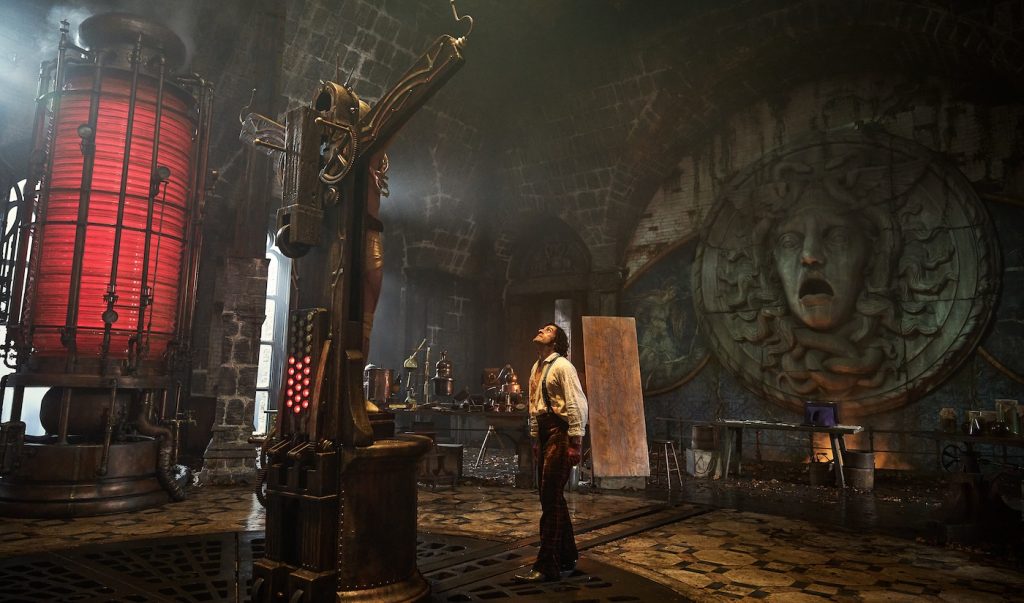
Guillermo del Toro’s Frankenstein is one of the most highly anticipated fall releases. The visionary director reteamed with some of his most trusted collaborators to bring to life the movie he had been dreaming of making for over two decades, including production designer Tamara Deverell, cinematographer Dan Laustsen, and composer Alexandre Desplat. Frankenstein has already electrified audiences, first at the Venice Film Festival, where it received a 13-minute standing ovation (one of the most sustained ovations in the festival’s history), and later at the Toronto Film Festival, where it prompted another lengthy ovation from the audience.
The Hollywood Reporter’s David Rooney writes that it’s “One of del Toro’s finest, this is epic-scale storytelling of uncommon beauty, feeling and artistry.” Steve Pond at TheWrap says, “it’s a filmmaker returning to his roots at a time when he has the skills to make those roots grow into something huge and singular. And Slant Magazine’s Marshall Shaffer pinpoints del Toro’s decision to follow the impact of Frankenstein’s mad science on his monster, played by Jacob Elordi, writing, “As the perspective of Frankenstein shifts to that of the creature cast out by its maker, del Toro’s concerns evolve from the cerebral to the emotional.”
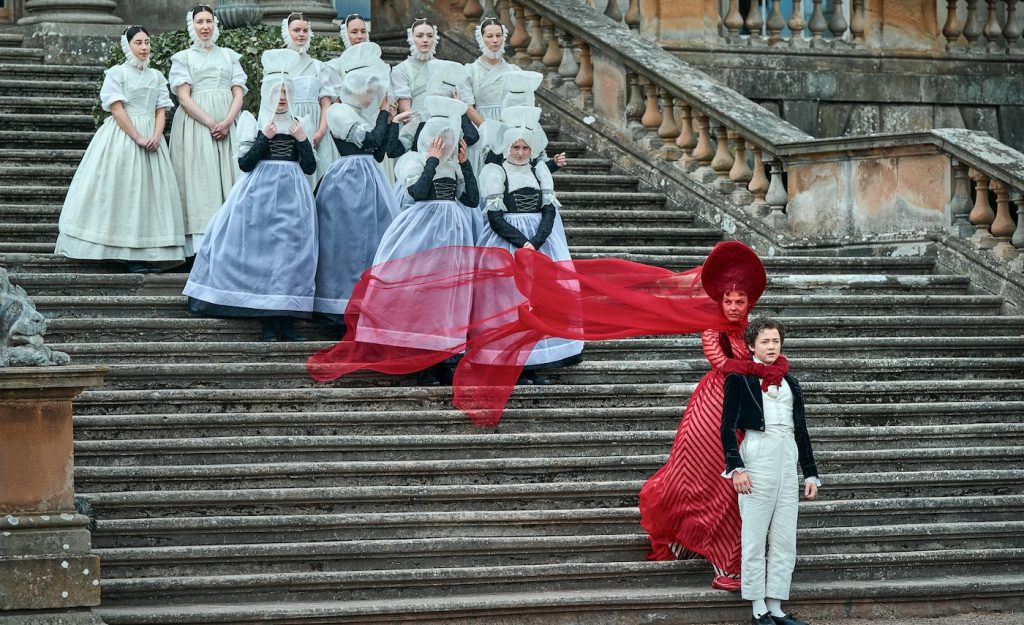
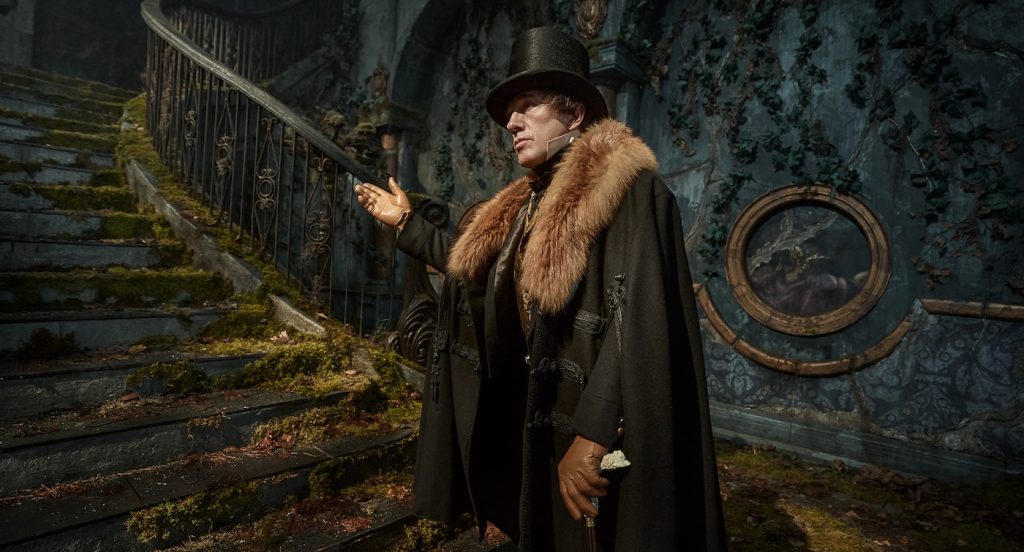
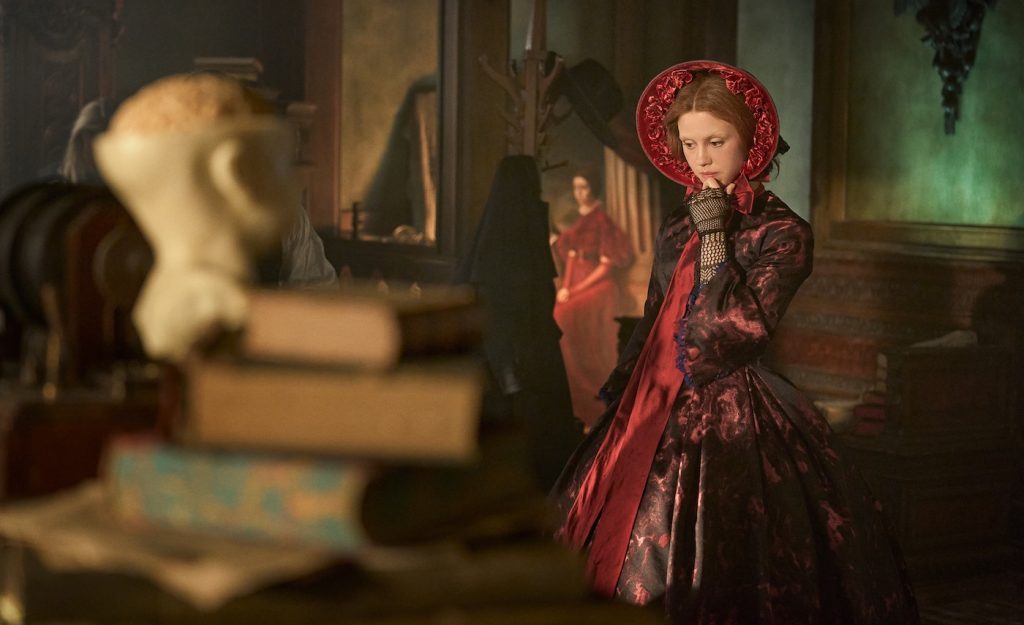
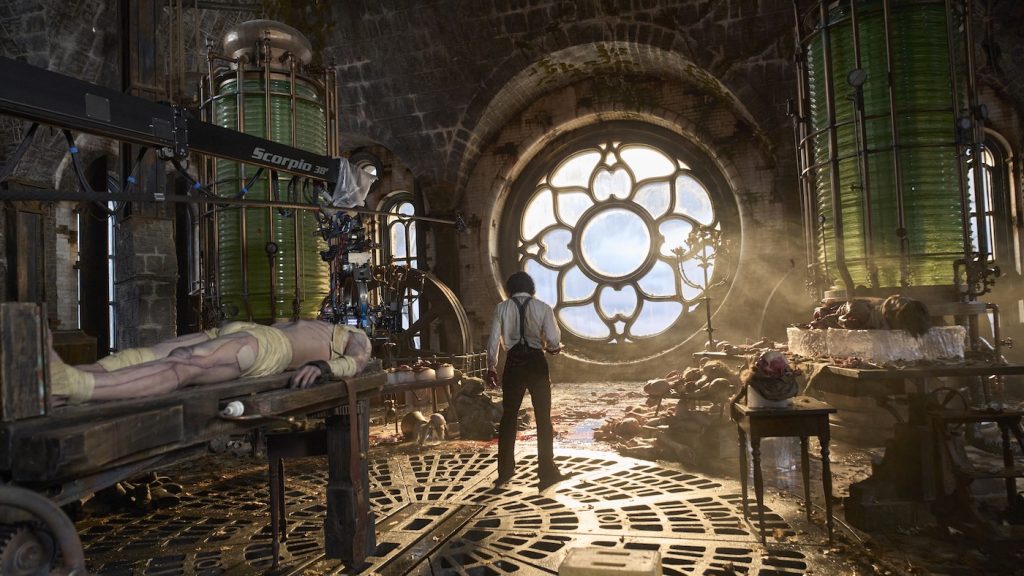
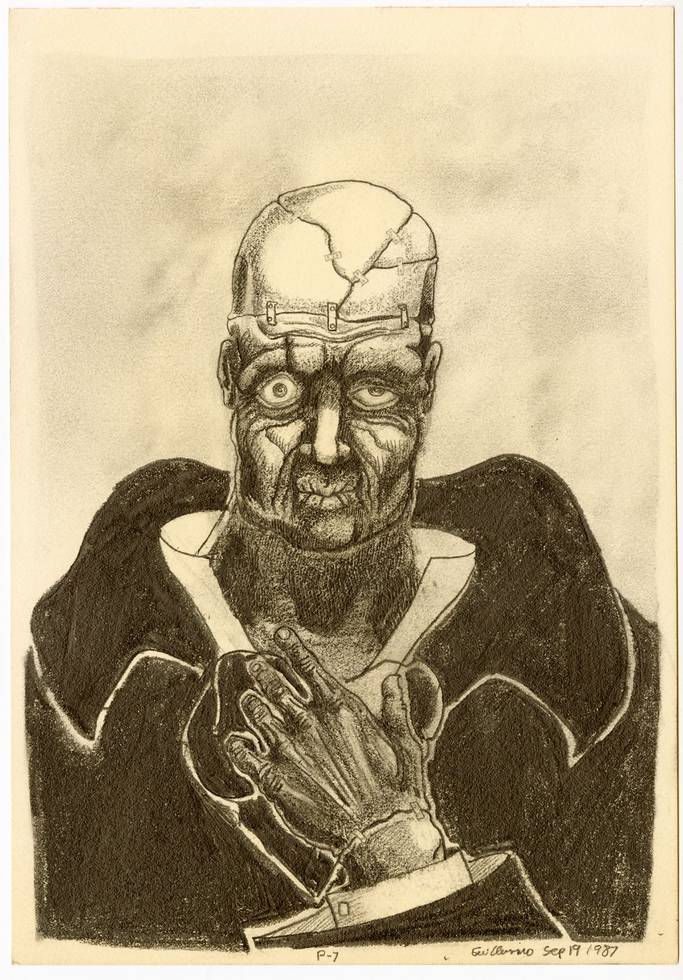
Now, del Toro’s soulful adaptation of Mary Shelley’s iconic book is getting a book of its own—Insight Editions is set to publish “The Art & Making of Frankenstein: Written & Directed by Guillermo del Toro.” Written by Sheila O’Malley, “The Art & Making of Frankenstein” promises to give readers a deep-dive behind-the-scenes look at del Toro’s filmmaking process, along with the work of his cast and crew, which includes the aforementioned Elordi as, officially, the Creature, Oscar Isaac as Dr. Victor Frankenstein, Mia Goth as Elizabeth Lavenza, Christoph Waltz as Harlander (a new character created for the film), Christian Convery as a young Viktor Frankenstein, Ralph Ineson as Professor Krempe, and Charles Dance as Victor’s father, Leopold Frankenstein. The book will feature the work of the crew, including concept art, props, costumes designed by Kate Hawley, and more.
The book also features an introduction from del Toro and Isaac, and will go on sale on October 28. Further limited editions, “Frankenstein: Portfolio Edition,” and “Frankenstein: Artifact Edition” will go on sale later in the year.
Del Toro has made no secret of how long he’s wanted to make Frankenstein, and how many times he shied away. In fact, nearly a decade ago, he told Den of Geekthat adapting Shelley’s book was one of his abiding dreams:
“To this day, nobody has made the book, but the book became my bible, because what Mary Shelley wrote was the quintessential sense of isolation you have as a kid,” he told Den of Geek. “So, Frankenstein to me is the pinnacle of everything, and part of me wants to do a version of it, part of me has for more than 25 years chickened out of making it. I dream I can make the greatest Frankenstein ever, but then if you make it, you’ve made it. Whether it’s great or not, it’s done. You cannot dream about it anymore. That’s the tragedy of a filmmaker. You can dream of something, but once you’ve made it, you’ve made it.”
The dream has been had for del Toro, and now the rest of us get our shot at seeing what he and his cast and crew have conjured. Frankenstein will bow in a limited theatrical release on October 7 before streaming on Netflix on November 7.
For more on Guillermo del Toro’s Frankenstein, check out these stories:
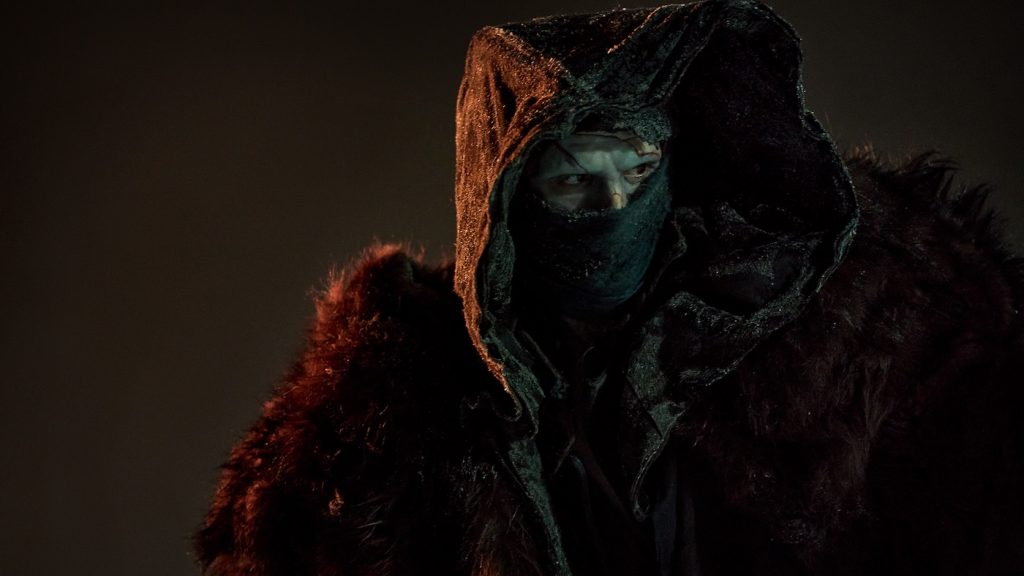
“If These Woes Could Talk,” the fourth episode of Wednesday season two, is an hour of monster playtime from Tim Burton. The fourth episode wrapped up part one of the season and is built as a heist story with Wednesday Addams (Jenna Ortega) seeking family secrets while Uncle Fester (Fred Armisen), a zombie, and a Hyde (aka a mutant) run amok in an institution. It’s exuberant chaos in the hands of Burton’s frequent editor, Jay Prychidny (Beetlejuice Beetlejuice).
On top of all the zombie action, Prychidny must unveil the hooded killer in a monologue. “The biggest challenge was laying out all the pieces,” Prychidny told The Credits. “How does Wednesday know Fester gets imprisoned in the institution? How does Wednesday get that information? What is her plan that comes out of this? What in the plan goes wrong?”
The editor discussed with The Credits refining and sharpening the episode, including Wednesday’s uncharacteristically cheerful reunion with her grandmother and pivotal death scenes.
Episode four is comfortably packed. What were your first impressions and instincts when you saw Tim Burton’s footage?
That episode – well, a lot of episodes – went through a lot of changes. It’s a heist story, so there’s a lot to set up. There were several additional scenes that we shot to pull it all together, and certain scenes we dropped. It was a journey. But even from the first cut, I loved it. The episode had so many great musical moments. You have Billie Piper playing [“Zombie”] on the piano and Wednesday breaking into Fester’s cell, which was very similar to my first cut. I added the song “Dreamweaver.” As an editor, the musical moments are just the most fun and creative thing to do.
What was re-shot in the episode?
In the original version, Wednesday freed [the zombie] Slurp from the cell, causing chaos throughout the institution. It was decided that maybe we didn’t want Wednesday responsible for all those deaths, so we did a little reshoot with a body double. Now, Wednesday leaves the cell, and Slurp escapes on his own.
Is that question often asked in the editing room — how sadistic can we have Wednesday act?
It’s tricky. Some people felt strongly that she shouldn’t free the zombie. So, her intention was to create chaos and escape from the institution, but some people thought, we don’t really want Wednesday murdering or being indirectly responsible for manslaughter. And for some people — for me — I didn’t even think about it until people pointed it out. I didn’t even consider that, but I totally understand that argument.
For Dr. Fairburn’s (Thandiwe Newton) death, how gory could you go?
There wasn’t anything more that was shot. I wanted more violence, more gore, but again, what is the level of the show? I was doing this after Scream VI, so I had those horror vibes in me. I asked the showrunner while I was cutting about how dark we can go. I said, “I’m just going to cut this as scary as I can.” He said, “Go for it.” Even though the footage itself wasn’t really graphic, I tried as much as I could to make it feel horrific and make the zombie as scary as I could. For adults, it’s probably not scary, but for younger viewers, it’s strong material.
Before Marilyn Thornhill (Christina Ricci) dies, how’d you want to continue to define her and Tyler’s perverse relationship?
There’s an almost sexual tension in these scenes, just blurring the lines about their relationship. Seeing it go in this direction, I thought, this is just such an intriguing, unique take on what these scenes are that I kind of leaned into that. That was the most interesting thing that happened on a character or emotional level.
The episode is, first and foremost, a heist story. At any point, did Tim say, “Hey, how can we make this more like The Hot Rock or The Italian Job?”
I don’t think specifically, but what was a common note from him: “This should feel more heisty.” I think for him, what that meant was just the music, the fast-paced editing. Even until probably a month ago, we were still making changes to the episodes. The sequence when Agnes (Evie Templeton) is in the toilet putting the dynamite in and Wednesday is in the trunk of the car – that was his last note on the episode. Only a month or so ago, we made those changes to make it faster-paced, more cross-cutting, and more rapid.
A scene that breathes nicely is Wednesday reunited with her grandmother, Hester Frump (Joanna Lumley). It’s by far the most smiley we’ve seen Wednesday. Was there a debate about her beaming like that?
It’s definitely a question some people have. It’s like, “Why is Wednesday smiling?” I don’t know if it was discussed by Jenna or Tim, how much of it was conscious. I don’t know any of the backstory. The only other time I think we’ve seen Wednesday be that happy is in episode seven from season one, when Fester shows up. Jenna breaks into this huge smile. I think that’s an interesting choice, that she’s having that reaction to the extended members of her family, but not her immediate family.
When Morticia (Catherine Zeta-Jones) reunites with her mother, what about Tim’s blocking and those performances did you want to preserve?
That scene between Wednesday and Catherine, when she throws the book in the fire, was a fabulously performed, wonderfully covered scene. That was one scene in particular where there was a lot of footage, because the room was shot from so many different angles. We had multiple levels of extreme close-ups for that scene. I used them only for very key moments: when Wednesday found out that her aunt Ophelia was in an institution and she had the black tears, I used a close-up for that. When Hester tells Morticia she’ll donate to the Nevermore Gala, there’s a close-up there, too.
What’s unique about cutting Fester’s comedic timing?
Tim had a particular way of shooting Fester. You don’t see him enter rooms or exit rooms. He’s always revealed either in a camera move or people step out of the way and he’s there.
Tim Burton is allergic to exposition. The more explanations, the more questions in his view. How much do you two tend to cut in more dialogue-driven scenes?
That was another big question we dealt with in the first scene of the first episode. It always gets discussed a lot – taking out as much as possible. Tim wants his characters and scenes to be in the moment. He doesn’t want characters standing around and talking, remembering what happened last season. Sometimes that exposition doesn’t get shot. Sometimes they’ll change the script on the day, or sometimes they’ll shoot it, and then in post, it’s a journey to take a lot of that stuff out so the audience can stay in the present.
Was that originally a lot of “previously on” in the season two premiere?
It had all this dialogue and voiceover about what Wednesday had been doing. You have to do some of that, but we want her in the moment – investigating the serial killer. There was more story detail there, but it didn’t matter. You need to launch into the present-day stories as efficiently as possible.
The official teaser for Rian Johnson‘s third Knives Out installment, Wake Up Dead Man, has arrived. Daniel Craig returns as the dandy detective Benoit Blanc to solve what the teaser promises will be his most dangerous case, which involves the seemingly impossible crime of a priest’s murder.
“To understand this case, you need to look at the myth that’s being constructed,” Craig’s Blanc says during the teaser. “A man gives a sermon. He then, in plain sight of everyone, walks into a sealed concrete box. Thirty seconds later, that man is lying dead. A classic, impossible crime.”
That man is Monsignor Jefferson Wicks (Josh Brolin), whose devoted flock are shocked by his murder, and local police chief Geraldine Scott (Mila Kunis) teams up with Blanc to try to solve a case that does something Blanc cannot abide—defies all logic.
Previous glimpses of Wake Up Dead Man have hinted at how Johnson’s third film will skew closer toward horror than the previous installments, the first of which, Knives Out, was set in a Gothic revival mansion and was a classic cozy whodunit, while the second, Glass Onion, was a sun-soaked murder mystery involving bizarro billionaires and ne’er do-wells on a Greek island. Wake Up Dead Man puts Blanc on a case steeped in religious myth and miracle, a rich vein for the brilliant, hyper-rational detective to tap.
As he did in the previous two films, Johnson has assembled a dream cast surrounding Craig, including the aforementioned Brolin and Kunis, along with Kerry Washington, Cailee Spaeny, Josh O’Connor, Jeremy Renner, Glenn Close, Andrew Scott, Thomas Haden Church, Daryl McCormack, Kerry Frances, Annie Hamilton, and Marcus Edward Bond.
Check out the teaser below. Wake Up Dead Man arrives in select theaters on November 26, before streaming on Netflix on December 12.
Here’s the official synopsis: “Benoit Blanc (Craig) returns for his most dangerous case yet in the third and darkest chapter of Rian Johnson’s murder mystery opus. When young priest Jud Duplenticy (O’Connor) is sent to assist charismatic firebrand Monsignor Jefferson Wicks (Josh Brolin), it’s clear that all is not well in the pews. Wicks’ modest-but-devoted flock includes devout church lady Martha Delacroix (Close), circumspect groundskeeper Samson Holt (Church), tightly-wound lawyer Vera Draven, Esq. (Washington), aspiring politician Cy Draven (McCormack), town doctor Nat Sharp (Renner), best-selling author Lee Ross (Scott), and concert cellist Simone Vivane (Spaeny). After a sudden and seemingly impossible murder rocks the town, the lack of an obvious suspect prompts local police chief Geraldine Scott (Mila Kunis) to join forces with renowned detective Benoit Blanc to unravel a mystery that defies all logic.”
Screenwriter Dana Fox made a pact with director Jon M. Chu. After working with Chu on her Apple TV+ series, Home Before Dark, she told him she would sign up for a project with him, no matter what, with no questions asked. She was as serious as a witch, if you’ll pardon the pun.
“I told him at the end of that previous job that I will drop anything, anytime for you,” she says. “I don’t care what it is, I want to do it.”
Chu took her up on that offer, calling her to discuss a project he was working on. A big project.
“I said, ‘Okay, yes, the answer is yes,'” Fox recalls. “He said, ‘Don’t you want to know what it is?’ And I was like, ‘No, the answer is yes.”
Fox enrolled in Shiz University, more or less, to adapt the Broadway juggernaut “Wicked” for Chu’s mega-ambitious two-part film. She didn’t just have a greater partner in Chu, but in the woman who first adapted Gregory Maguire’s novel for the stage, Winnie Holzman, who would prove to be an ideal collaborator, unfussy about answering any and all of Fox’s questions and further exploring the world of Oz and the lives, down to the smallest details, of Elphaba (Cynthia Erivo), Glinda (Ariana Grande), and the supporting cast of would-be suitors, nefarious wizards, flying monkeys and more.
We spoke to Fox ahead of her arrival in Washington D.C. for the MPA Awards, in which Chu is receiving this year’s Creator Award, about working with the director and her co-writer, how she approached expanding the world of Oz for the big screen, and more.
So, how did you feel when you realized the project Jon M. Chu was calling you aboutWicked?
When he told me it was Wicked, I felt a sense of challenge, which, at this point in my life, is the most exciting thing. When you feel a little nervous because you’re like, ‘Oh, this is going to be kind of an extraordinary challenge,’ it means I’m going to have to step up and up my game.
And you’re working on this with Winnie Holzman, who wrote the book for the musical. How did that collaboration work?
Working with Winnie felt a little bit like the best part of a group project. You know, where you go home and you work on your own stuff, but you’re excited to show the other person because you want to impress them, and they’re going to be excited. There was just this real sense of energy. What I felt was that one of my primary jobs was coming in with fresh eyes. Winnie had lived with these characters for 20-plus years and had created this incredible play. I was able to ask Winnie and composer Stephen Schwartz [a Wicked veteran who worked on the musical] questions that I don’t think they had answered in a very long time about this story and these characters.
What kind of questions?
It was stuff like, ‘Okay, so water kills her?’ and they’d be like, ‘Yeah, listen to the lyric.’ And I would be like, ‘But seriously, can it? Or do people just think it can?’ So it was these weird little nuances that helped me get much more inside the story. And then I spent a lot of time asking them what Elphaba’s magic actually was. Can she do anything besides levitate? Is it only spells? Does she need a spell to do something? Is her magic out of her control in the beginning because she isn’t emotionally in control? That’s the kind of worldbuilding you have to do when you make a really big movie that you don’t necessarily have to do on the stage.
How did Winnie and Stephen respond?
They could not have been nicer about it, and they could not have been more open to thinking about it in ways that they hadn’t thought about it before. They weren’t extraordinarily precious about it, even though they could have been. They were actually really open to having it be something different. A lot of times, that led us into these very long discussions about ‘What if, what if, what if,’ and usually what came out of that was: don’t mess with the stuff that fans care about. Deepen it by creating different avenues that you can take and go to different places and see more about these people than you’ve ever been able to see in the play.
The decision to split this into two films was a big risk. How did that feel?
That was a big swing we were aware of and very excited by. I don’t want to call it terrified, but there was a constant sense of excitement because we were like, ‘This has to work. There is no version of this not working because if the first movie doesn’t work, we have already shot the second one.’ That is a very intense sense of challenge, and I think all of us really enjoyed having to rise to that. I happened to see the second movie recently as a double feature after watching the first, because I wanted to see it that way. By the end of the day, I was like a shell of a person who had to be swept off the floor – makeup all over, mascara, sweating, weeping, joyful, happy, singing. It was all of the emotions.
L to R: Cynthia Erivo is Elphaba and Ariana Grande is Glinda in WICKED FOR GOOD, directed by Jon M. Chu.
How is writing a musical screenplay different from writing a regular screenplay?
What was so interesting and fun was mining the lyrics, because the lyrics are never going to change. They’re your preexisting materials. You look at certain lyrics that hit you very deeply emotionally and ask yourself why. Then I would say to the rest of the team, ‘In that moment that lyric creates that explosive feeling inside us, have we seen enough evidence of that to believe that character is feeling that?’
Oh interesting. So you’re reverse-engineering a bit from the lyrics?
One of the things I learned about musical numbers is that the way you stage them—the dancing, where they’re located, what locations they pass through, does the song pass time or does it break linear time—those things are all really important. In a movie theater, every single time someone starts to sing a song, there’s the possibility that person goes to the bathroom because they’re thinking, ‘Nothing’s going to happen during the song, right?’ What I think Wicked did so extraordinarily was we were constantly thinking: how can we make this scene, this song, this number, this dance sequence actually tell a story and say things between characters that you can’t see anywhere else in the movie, and move the story forward in ways that you weren’t expecting?
Were you able to be on set much during production?
This took place in London. I have three kids and there was a large portion of it that took place during the writers’ strike, so I wasn’t allowed to be anywhere. That was a bit of a heartbreak, honestly, because I do think it would have been amazing if we could have been there on set. I was able to visit once and say hello to everybody. When you’re sitting at a computer and your posture when writing is sort of gargoyle-esque, you’re so inside your own head and usually alone. What keeps me going on difficult days is the thought that there’s a group of people who are going to make this real at some point. Stepping on set for Wicked and seeing they had built a town – there was a lake on this set – it was enormous and beautiful. Watching people bring something that was in your imagination to life, with so many people bringing their joy, their creativity, their love and their expertise to bring it to life in the most extraordinary way, was just awesome. That’s what keeps me going in the difficult times – thinking about the fact that I’m lucky enough that someday somebody is going to make this stuff real.
On the set of “Wicked.” Courtesy Alice Brooks/Universal Pictures.
You’ve been a successful screenwriter for years, but this must feel like a new, and very giant, step.
Musical theater was like my team sport growing up. I wasn’t amazing at team sports, so musical theater became my team sport. That’s where I learned that the biggest joy for me is working with other people to create something much better than any one of us could have done on our own. Wicked brought me back to musical theater and absolutely reignited my love of it, my passion for it. Now I can’t imagine a movie where someone doesn’t break into song and start dancing. For the little girl that wanted to do this when she was eight years old, this is like the most beautiful homecoming of all, especially with this particular musical, which is truly so beloved.
What’s it been like working on this with Jon and all your other collaborators?
This is a really difficult time in the business, and to be working and be allowed to work at this level is a real gift, and we know it. I think we try to be happy every day and grateful every day that we get to do this for a job. I cannot believe this is my job. Sometimes I say things like, ‘I would do this if I didn’t get paid,’ and my agent calls me and says, ‘Please don’t say that. Please stop saying that in the press.’ We do all really love each other. I’ve worked with several of the team members on other things, and they’re the people that I wish I could have come home to after school when I was a little kid and made plays with in my basement. The fact that we get to do it on this level is extraordinary.
Featured image: L-r: US screenwriter Dana Fox attends the Los Angeles premiere of Universal Pictures’ “Wicked” at the Dorothy Chandler Pavillon, in Los Angeles, November 9, 2024. (Photo by VALERIE MACON / AFP); L to R: Cynthia Erivo is Elphaba and Ariana Grande is Glinda in WICKED FOR GOOD, directed by Jon M. Chu.
During the second night of the Creative Arts Emmys, SNL 50 garnered seven wins for its massive, decades-spanning celebration, including wins for directing (Liz Patrick), production design, makeup, and hairstyling.
Love on the Spectrumwon for Outstanding Unstructured Reality Programming, while Queer Eye won for Structured Reality Programming. In a nice moment for a veteran director, Jim Hoskinson took home the Emmy—his first—for Directing for a Variety Series for helming The Late Show with Stephen Colbert.
Looking at both nights combined, there were a lot of big wins for beloved performers, too. The great Julianne Nicholson won for Guest Actress in a Comedy Series for her performance in Hacks, while another great, Merritt Wever, won for Guest Actress in a Drama Series for her work in Severance. Shawn Hatosy stitched together a win for Guest Actor in a Drama Series in HBO Max’s The Pitt, while The Pitt casting directors Cathy Sandrich Gelfond and Erica Berger won for putting together the stellar team on the series.
Noah Wyle, Shawn Hatosy. Photograph by Warrick Page/Max
If you want to catch these talented folks getting their due, you can stream the Creative Arts Emmys on Hulu until October 7, or watch on FXX on Saturday, September 13, at 8 p.m. ET and PT.
Here’s the full list of winners from nights one and two.
SHORT FORM COMEDY, DRAMA OR VARIETY SERIES The Daily Show, Desi Lydic, “Foxsplains”; Jennifer Flanz, Ramin Hedayati, Jocelyn Conn, Matt Negrin, Jason O. Gilbert
SHORT FORM NONFICTION OR REALITY SERIES Adolescence, The Making of Adolescence
PRODUCTION DESIGN FOR A VARIETY SPECIAL The Oscars, Misty Buckley, Alana Billingsley, John Zuiker, Margaux Lapresle
PRODUCTION DESIGN FOR A VARIETY OR REALITY SERIES Saturday Night Live, Akira Yoshimura, Keith Raywood, Joe DeTullio, Andrea Purcigliotti, Patrick Lynch, Sara Parks CHOREOGRAPHY FOR VARIETY OR REALITY PROGRAMMING The Grammy Awards, Robbie Blue
MUSIC DIRECTION Kendrick Lamar, Tony Russell MUSIC COMPOSITION FOR A DOCUMENTARY SERIES OR SPECIAL Chef’s Table, Duncan Thum, David Bertok
SOUND EDITING FOR A NONFICTION OR REALITY PROGRAM Music by John Williams, Dmitri Makarov, Tim Farrell, Richard Gould, Ramiro Belgardt SOUND MIXING FOR A NONFICTION PROGRAM Beatles ’64, Josh Berger, Giles Martin
SOUND MIXING FOR A VARIETY SERIES OR SPECIAL SNL 50: The Anniversary Special, Robert Palladino, Ezra Matychak, Frank Duca, Doug Nightwine, Christopher Costello, Caroline Sanchez, Josiah Gluck, Jay Vicari, Tyler McDiarmid, Geoffrey Countryman, Devin Emke, Teng Chen SOUND MIXING FOR A REALITY PROGRAMMING Welcome to Wrexham, Mark Jensen
CASTING FOR A REALITY PROGRAM Love on the Spectrum, Cian O’Clery, Sean Bowman, Emma Choate EMERGING MEDIA PROGRAM SNL 50 Special: Immersive Experience, Lorne Michaels, Michael DeProspo, Michael Scogin, Rick Rey, Matthew Celia
INNOVATION IN EMERGING MEDIA PROGRAMMING White Rabbit
WRITING FOR A NONFICTION PROGRAM The Daily Show Presents: Jordan Klepper
WRITING FOR A VARIETY SPECIAL SNL 50, James Anderson, Dan Bulla, Megan Callahan-Shah, Michael Che, Mikey Day, Mike DiCenzo, James Downey, Tina Fey, Jimmy Fowlie, Sudi Green, Jack Handey, Steve Higgins, Colin Jost, Erik Kenward, Dennis McNicholas, Seth Meyers, Lorne Michaels, John Mulaney, Jake Nordwind, Ceara O’Sullivan, Josh Patten, Paula Pell, Simon Rich, Pete Schultz, Streeter Seidell, Emily Spivey, Kent Sublette, Bryan H. Tucker, Auguste White
HOST FOR A GAME SHOW Jimmy Kimmel, Who Wants to Be a Millionaire?
GAME SHOW Jeopardy!
MAKEUP FOR A VARIETY, NONFICTION OR REALITY PROGRAMMING SNL 50, Louie Zakarian, Jason Milani, Amy Tagliamonti, Rachel Pagani, Young Bek, Stephen Kelley, Joanna Pisani
HAIRSTYLING FOR A VARIETY NONFICTION OR REALITY PROGRAM SNL 50, Jodi Mancuso, Cara Hannah, Inga Thrasher, Amanda Duffy Evans, Chad Harlow, Gina Ferrucci, Brittany Hartman, Katie Beatty
COSTUMES FOR VARIETY, NONFICTION OR REALITY PROGRAMMING Beyoncé Bowl
PICTURE EDITING FOR VARIETY PROGRAMMING (SEGMENT) SNL 50, Ryan Spears, Paul Del Gesso, Christopher Salerno, Daniel Garcia, Sean McIlraith, Rhyan McIlraith
PICTURE EDITING FOR VARIETY PROGRAMMING Cunk On Live, Damon Tai, Jason Boxall
PICTURE EDITING FOR A NONFICTION PROGRAMMING Pee-wee As Himself, Damian Rodriguez
PICTURE EDITING FOR A STRUCTURED REALITY OR COMPETITION PROGRAM The Traitors, Patrick Owen, Seddon-Brown
PICTURE EDITING FOR AN UNSTRUCTURED REALITY PROGRAM Welcome to Wrexham, Sam Fricke, Jenny Krochmal, Mohamed El Manasterly, Michael Oliver, Tim Roche, Matt Wafaie, Steve Welch, Tim Wilsbach
CINEMATOGRAPHY FOR A REALITY PROGRAM The Traitors, Siggi Rosen-Rawlings, Matt Wright, Jack Booth, Alex Bruno, Ned Ellis-Jones, Ollie Green, Quin Jessop, Guy Linton, Joshua Montague, Paul Rudge, James Spencer, Matt Thomson, Alex Took, Melvin Wright CINEMATOGRAPHY FOR A NONFICTION PROGRAM 100 Foot Wave, Michael Darrigade, Vincent Kardasik, Alexandre Lesbats, Laurent Pujol, Karl Sandrock, Chris Smith
DOCUMENTARY OR NONFICTION SERIES 100 Foot Wave, Vince Kardasik, Ryan Heller, Michael Bloom, Maria Zuckerman, Zachary Rothfeld, Joe Lewis, Chris Smith, Nancy Abraham, Lisa Heller, Bentley Weiner
DOCUMENTARY OR NONFICTION SPECIAL Pee-wee As Himself, Emma Tillinger Koskoff, Matt Wolf, Ronald Bronstein, Benny Safdie, Josh Safdie, Paul Reubens, Candace Tomarken
NARRATOR Barack Obama, Our Oceans
HOST FOR A REALITY OR REALITY COMPETITION PROGRAM Alan Cumming, The Traitors
HOSTED NONFICTION SERIES OR SPECIAL Conan O’Brien Must Go, Conan O’Brien, Jeff Ross, Jose Arroyo, Jason Chillemi, Sarah Federowicz, Jessie Gaskell, Mike Sweeney, Aaron Bleyaert, Jordan Schlansky, Matthew Shaw
DIRECTING FOR A REALITY PROGRAM The Traitors, Ben Archard
DIRECTING FOR A DOCUMENTARY/NONFICTION PROGRAM Pee-wee as Himself, Matt Wolf
COMMERCIAL Brian Cox Goes To College, Uber One for Students
LIGHTING DESIGN/LIGHTING DIRECTION FOR A SERIES SNL, Geoff Amoral, Rick McGuinness, William McGuinness, Trevor Brown, Tim Stasse, Frank Grisanti, Reginald Campbell
LIGHTING DESIGN/LIGHTING DIRECTION FOR A SPECIAL 67th Annual Grammy Awards, Noah Mitz, Andy O’Reilly, Patrick Boozer, Ryan Tanker, Erin Anderson, Madigan Stehly, Will Gossett, Bryan Klunder, Hannah Kerman, Matt Benson, Matthew Cotter, Guy Jones, Kevin Faust TECHNICAL DIRECTION AND CAMERA WORK FOR A SPECIAL SNL 50, Bill DiGiovanni, John Pinto, Paul Cangialosi, Anthony Tarantino, Dave Driscoll, Brian Phraner, Daniel Erbeck, Mike Knarre, Ansel Nunez, Rick Fox, Anthony Lenzo
TECHNICAL DIRECTION AND CAMERAWORK FOR A SERIES Saturday Night Live, Bill DiGiovanni, John Pinto, Paul Cangialosi, Anthony Tarantino, Dave Driscoll, Brian Phraner, Daniel Erbeck
STRUCTURED REALITY PROGRAM Queer Eye
UNSTRUCTURED REALITY PROGRAM Love on the Spectrum
EXCEPTIONAL MERIT IN DOCUMENTARY FILMMAKING Patrice: The
Featured image: SNL50: THE ANNIVERSARY SPECIAL — Pictured: (l-r) Amy Poehler, Maya Rudolph, and Mike Myers as Linda Richman during the “Bronx Beat” sketch on February 16, 2025 — (Photo by: Theo Wargo/NBC)
Rep. Darrell Issa (R-CA) is the recipient of the 2025 Motion Pictures Association’s Industry Champion Award, recognized for his efforts to strengthen copyright protections, spur innovation, and preserve free expression. As chairman of the House Judiciary Subcommittee on Courts, Intellectual Property, and the Internet, Issa has been at the forefront of legislative efforts to combat digital piracy and address emerging challenges posed by artificial intelligence to the entertainment industry.
As a California resident and representative, Issa is no stranger to the entertainment industry or its importance to the American economy, and as an engine of creativity, inspiration, and innovation. He also happens to live in the same district as a real-life Maverick, a man who actually lived the life of the character that made Tom Cruisea global superstar in 1986.
We spoke to Rep. Issa about site blocking, artificial intelligence, protecting creators, and why Top Gunisn’t nearly as unrealistic as you might think.
When do you expect to introduce your site-blocking legislation this congressional cycle?
We expect to launch our judicial site blocking legislation in late September or early October. We’ve done the due diligence. We’ve had both field hearings and, quite candidly, we’ve traveled all over the world to see how other countries are doing it.
Speaking of that, many other countries, including Mexico, Canada, Australia, the UK, Italy, Brazil, and South Korea, have site blocking, while the United States doesn’t. How would you explain that to people who don’t want their favorite films and TV shows pirated?
Nobody wants—no country, no legislature—to allow copyright violations. In almost every case, the violations come from outside the country. We are a land of many rights. Our constitutional rights, and particularly our Bill of Rights, tend to err toward not doing things without due diligence, without court oversight, without a decision by a judge and/or jury. The problem arises when someone pops up on the internet at a different ISP or, at the very least, a different IP address, evading the ability to reach a judge in real-time; you can’t use a slow system.
How do we quicken our ability to block piracy sites?
We must use our system, which ensures that there will be a full opportunity for the defendant to appear and a full opportunity for the judge to make a decision. The difference here is that once the decision is made, we want to be able to trace, follow, and enforce that without having to go through that process again. You can understand if you’re watching a mixed martial arts fight – it’s like that scene from Top Gun when the guy says, “I’ll be there in five minutes,” and the response is, “It’ll be over in two.” You can’t get to a judge, even on an emergency basis, in sufficient time to stop these live broadcasts from being destroyed.
How do you see AI intersecting with copyright law? Do you feel new legislation is needed?
I think there is a full answer. Whenever we introduce new laws, we must build upon existing laws, case law, and common law. When we look at copyright, we have a long tradition of rights, laws, and timelines. We also have very unique American fair use standards. When we get to AI, we need to build on it exactly that way, recognizing that there will be some fair use of information. But, when someone tries to monetize and is clearly building on your copyrighted material, we need to have the same recourse that you’ve had historically, either a compulsory license or a willing buyer, willing seller.
Can you give me an example?
I’ll give you one that actors and directors understand: For generations, lookalikes and recreations were almost never the real thing, and actors had to play themselves. With deep fakes that’s no longer out of bounds, you can actually recreate them. Some of our music people are recreating themselves. Billy Joel is recreating not just himself, but three versions of himself in a video album, each at a different age and playing on three different pianos. And none of them is Billy Joel.
Is this related to your work on the PADRE Act?
Yes. When we get to PADRE – people like Lainey Wilson, her voice is better known than her likeness, but her voice and likeness have been flat-out stolen and used commercially for things she has nothing to do with, wasn’t paid for, and wouldn’t approve. Yet people think they’re buying something promoted by one of the great rising music writers and performers. When you see these actual stories of the rip-off, you realize that AI isn’t coming – AI has already hurt and stolen in a way that we must protect, and we must do it in this Congress.
What about internet service providers’ reluctance to block piracy sites?
The way we’ve put together the bill and the way we’ve conducted the hearings have garnered buy-in from major cable companies. We don’t have them all and don’t expect to get them all, but we have enough to prove that it’s not overly burdensome. There will be a first round of judicial action. That action will give immunity to those providers for executing what is, in fact, a judge’s court order. Will there be times when, eventually, after a hundred or a thousand whack-a-moles of knocking down substantially the same person but changing and morphing, you might get a little bit of over-blocking? It can happen. However, on balance, we are giving the ISPs the absolute right to protect themselves and the ability to rectify if they are satisfied that the entity is not the one subject to the court order.
And this would limit piracy sites to the point where they’re no longer capable of causing large-scale damage to creators and the industry at large?
Don’t expect 100% success. What we’re going to do is make it so much more expensive. We’re going to eliminate 95-96% of the worst, the most frequent ones. Most of these blocks will be from foreign actors who will never appear in court, and we cannot obtain any compensation from them. Therefore, the blocking is the only remedy.
Let’s pivot from the law to the movies you’re trying to protect—do you have a favorite film?
There are two, and there’s a reason I’ll use two. One of the great all-time classics is The Godfather, one and two – not three, and Francis Ford Coppola would agree with me. The story, the depth of what it’s about, what it says about America—it’s tells so many stories and does it so well. It’s the real test of a movie – you could literally sit down and watch it again a year after you’ve watched it and enjoy it.
No argument here. Your second?
The second one is Top Gun, for a completely different reason. I love that movie, but I love it more now because in my district, I have a man named Captain Royce Williams. When he was a Navy Lieutenant, Royce Williams flew off the Oriskany on November 18th, 1952, and he and one wingman encountered seven MiG-15s. He smoked one, and his wingmen followed it down. Instead of staying with his wingmen, he was engaged in the longest over-territory dogfight of the Korean conflict for the next 35 minutes.
Incredible. That sounds very TopGun…
When he ran out of ammo, got into the clouds, and escaped what was left of the MIGs, he had 263 holes in his aircraft when he landed on the Oriskany, just like the later movie. His plane was shot to hell. He landed at twice the speed because he had no flaps, and just barely hit the cable, surviving. They then classified that mission, and he couldn’t tell anyone about it for decades because those were Russians out on a kill mission. He not only killed them, but only one made it home.
Every time I get to see Top Gun, I know that Captain Royce Williams was the real Top Gun. He was the real maverick. When people complain that Top Gun is unrealistic, it turns out that it’s not. There is real valor; those are real fights, and some of them really happened.
Featured image: ep. Darrell Issa (R-CA) speaks to the media during a news conference May 28, 2010 on Capitol Hill in Washington, DC. Issa spoke on the allegation about the job offer by the White House to Rep. Joe Sestak (D-PA) in exchange his drop-out from the Democratic senate primary against Sen. Arlen Specter. (Photo by Alex Wong/Getty Images).
Senator Chris Coons (D-DE) is the 2025 MPA Industry Champion Award recipient for his efforts to strengthen copyright protections, spur innovation, and preserve free expression. As a member of the Senate Judiciary Subcommittee on Intellectual Property, Coons advocates for measures that support intellectual property laws and defend copyrighted works from piracy.
Online piracy is far from a victimless crime—in the U.S. alone, it costs the creative industry billions of dollars and thousands of jobs annually. Yet, unlike many other nations, the U.S. is still not at the forefront of anti-piracy laws. This is something Senator Coons aims to change.
We spoke with Senator Coons about his work protecting filmmakers and storytellers across the entertainment industry, why there’s no such thing as a “free” movie, and why a certain Nicolas Cage movie remains his favorite.
Can you tell us about the Block BEARD Act and why it’s important for film, TV, and sports enthusiasts to be aware of?
The Block BEARD Act is a bipartisan effort to bring the same kind of anti-piracy protections to the United States that a dozen of our closest allies and partners have already shown can be effective at protecting the work of the creative community. Whether it’s a live sports event, a film, or a TV show, the United States lacks effective legal protections for the creative community and their work products in combating piracy.
Who have you worked with on this bill?
I am grateful to two Republican senators, Senator Tillis and Senator Blackburn, as well as Democratic Senator Adam Schiff from California. These are my co-sponsors. Senator Tillis and I have worked really hard on this, and the Block BEARD anti-piracy bill is one of the pieces of intellectual property legislation I am proudest of for this Congress.
Many people are unaware of the dangers associated with visiting piracy sites, which extend beyond legal issues. Can you speak to that?
Millions of Americans inadvertently open their computers and expose their personal data and hardware to malware, risk having their data stolen, or experience operating problems with their laptop, computer, or phone after visiting one of these piracy websites. There’s a lot of work being done by the folks who are stealing our intellectual property to also then take advantage of Americans who think they’re getting a deal, but they aren’t. They’re opening a pathway for criminals to gain access to their computers.
Let’s imagine you order pizza for takeout and you’re expecting it in 20 minutes. Five minutes after you order it, this guy shows up at the front door and says, “Hey, here’s a fresh hot pizza.” And you say, “How much?” And he says, “It’s free. You just gotta leave your door open.” Would you take that pizza, go in, feed it to your family, and ignore the fact that you just let this complete stranger roam around your house and take anything he wants?
I can’t imagine that I would, no.
That’s what it’s like when you click download on a free piracy site. You might get to watch Wickedfor free, but you just let someone in the front door of your whole system who’s then going to take it over and steal your data. Then they’re going to send you junk texts and junk emails, and who might actually download ransomware onto your computer that will force you to pay many, many times more than it would’ve cost you to follow the law, to pay the creators, and to just use legal websites.
Why has it been so challenging to implement site blocking in the United States when so many other countries already have it?
More than a decade ago—I believe it was in 2012—a significant debate took place in the Senate over two bills known by the acronyms PIPA [Protect IP Act] and SOPA [Stop Online Piracy Act]. There was a huge blowback because a number of pop stars and popular figures organized online against these bills. I was a co-sponsor of PIPA and SOPA, and I was proud to be one and thought we needed to protect American inventors and creators from online piracy. But it really pushed back the move to legislate in this space by years.
What’s happened since?
For better or worse, two things have happened. The volume and the value of online piracy have skyrocketed. It’s costing tens of billions of dollars in revenue and thousands of jobs in the creative community here in the United States every year. And we have all those partners around the world who’ve demonstrated that, in a free market economy and a democracy, you can impose laws that impose obligations on streaming platforms and ISPs [Internet Service Providers]. They can comply, they can make it work, the technology works, and it stops or dramatically reduces online piracy.
We’re also in the midst of a watershed moment in technology, with the rapid spread in the use and capabilities of artificial intelligence. How do you think about AI, and what do you hope the NO FAKES Act will achieve?
Like a knife that can be used either for an armed robbery or to conduct life-saving surgery, artificial intelligence is a tool. AI is a technology that will permeate every aspect of our lives and will have enormous positive potential. It’ll unlock everything from cures for rare diseases to ways we can deal with climate change and improve energy efficiency, as well as new materials we have never imagined before.
It will also pose some real threats. In the creative space, AI now makes it possible to steal and copy someone’s voice, image, or likeness in a way that makes it hard to distinguish whether that’s the real artist or just an AI-generated likeness. For example, Drake and The Weekend had an AI-generated recording that was so similar to their style that if you listen to it for 30 seconds, you’re like, “Oh yeah, I know who that is.”
And this is where your bill comes in?
What we tried to do in NO FAKES was to come up with a nationwide right of publicity that protects the rights of singers, songwriters, and artists. The NO FAKES Act is broad. It doesn’t just protect those who make a great living from creativity. It doesn’t just protect celebrities. It can also be used to protect everyday Americans. It gives you the right to go sue to have your image or likeness taken down or removed, and it imposes that obligation on ISPs.
We did a lot of negotiating around what these rights look like and exactly how they will be enforced, because there also have to be First Amendment protections, so that users of platforms like YouTube or Meta can still create and post satire, parody, or historical commentary. Out of a great big group of bipartisan senators who spent most of two years studying AI, the NO FAKES Act was the first to be ready to go.
Pivoting to the creators you’re trying to protect, care to share your favorite film?
There are different answers to that question. Movies that I am currently rewatching a lot – partly because of what’s available as I travel around the world – I just rewatched National Treasure. I’m friends with the director, Jon Turteltaub, and I just think National Treasure is an amazing film. It’s fun, engaging, and action-oriented, but it also teaches lessons about history and some of our nation’s treasures.
Any others?
I also watch Gladiator, The Hangover, Guardians of the Galaxy, and We’re the Millers because these are all movies that I can drop in anywhere and watch 10 minutes or half an hour and be entertained, engaged, and distracted. There are deeper films like Schindler’s List and Gandhi that actually touched me, spoke to me, and moved me, and I still remember what it was like to watch them.
Featured image: WASHINGTON, DC – JUNE 23: Senator Chris Coons, D-DE, questions FBI Director Christopher Wray during a Senate Appropriations Subcommittee on Commerce, Justice, Science, and Related Agencies hearing June 23, 2021 on Capitol Hill in Washington, D.C. The committee is hearing testimony regarding the proposed budget for fiscal year 2022 for the FBI. (Photo by Sarah Silbiger-Pool/Getty Images)
Director Ivan J. Arvelo is being honored with the 2025 Motion Picture Association Creative Protector Award for playing a crucial role in advancing our core mission of protecting intellectual property and bringing the magic of cinema to life.
As Director of the National Intellectual Property Rights Coordination Center (IPR Center), Arvelo leads the federal government’s efforts to protect creativity and innovation by enforcing laws that combat intellectual property crimes.
In this conversation, which has been edited for length and clarity, Director Arvelo discusses the challenges of fighting digital piracy, the sophisticated methods used by criminal organizations, and why protecting IP rights is essential for safeguarding the future of storytelling. He also reveals his favorite film franchise, a fitting selection for someone whose work involves protecting creators—we’ll give you a hint, one of the franchise’s most iconic lines is “You shall not pass.”
Can you explain your job to film and TV lovers who may not be familiar with what you do and how it connects to the movie and television industry?
I serve as the director of the National Intellectual Property Rights Coordination Center. The IPR Center, as it’s commonly known, is a federal government center that leads the federal government’s efforts in protecting creativity and innovation, and enforces laws to combat intellectual property crimes.
We have jurisdiction across everything counterfeit and everything related to IPR crimes. We work closely with government agencies, industry, industry associations, and international partners to collaborate on the common goal of combating intellectual property crime. In the film industry, we collaborate with industry associations on content protection and digital piracy. It’s not only the MPA—it’s every industry that involves combating transnational criminal organizations seeking to profit through the theft of intellectual property. That way, we can protect creativity and innovation. We are focused on economic stability in the United States, prioritizing the protection of public health and safety, and maintaining national security across the board.
That’s a massive job with a very large remit. What are some of the biggest challenges that you face in protecting IP rights, specifically in the movie and TV industry?
I’m going to outline the top three challenges that I believe we encounter every day. Obviously, technology and its advancements must be at the top. I’ve been doing this long enough to remember the days when pirated DVDs were being sold on street corners. With the rapid advancement of technology, the methods of piracy evolve and change. Now everything is online, and you have illicit streaming services that can reach millions of people at any given time, and in real time. That makes it harder for enforcement agencies to be successful in countering that.
And it’s not as if there’s a roomful of people in a basement in Ohio responsible for pirating movies—most of these operations are based overseas.
If you add to that the fact that piracy is a borderless crime, but enforcement is not, the networks have moved beyond the United States; they’re outside our borders, which requires us to work with our international partners. Not every jurisdiction has the same understanding of intellectual property rights laws. They don’t have the same resources. They don’t have the same appetite to enforce these laws. Therefore, it requires constant collaboration and capacity building, as well as working with industry and our international partners, to have an impact.
What’s the third top challenge?
Number three is awareness. It has become socially acceptable to a certain extent. People tend to believe that streaming an illegal movie is a victimless crime. They underestimate the harm that piracy has on the creators, on the industry and to themselves, because sometimes when you log into one of these sites, you’re exposing yourself to malware, your information is being stolen, your financial information is being sold, plus you are supporting a transnational criminal organization that might be involved in other things like human trafficking, money laundering, and terrorism. Those are some of the things that we deal with on a daily basis.
In your career, is there a particular case that stands out to you involving a TV series or movie that would help explain this to regular movie and TV lovers?
I’m going to mention one that was recent and I think had an impact. It shows the extent to which piracy has reached. This case specifically involves piracy networks called Streameast, a large-scale illegal streaming network that distributed sporting events worldwide, reaching a level where famous people were using it. [Editor’s note: Streameast was a network of unauthorized domains that generated 1.6 billion combined visits over the past year. Streameast provided access to the world’s most popular sports, including the NFL, NBA, MLB, and Europe’s top soccer leagues, including the Premier League and Champions League.]
Working in collaboration with our partners, such as the MPA, we were able to seize over 470 domains tied to these illegal streaming operations, which is a significant number. A case like this has an impact—it prevents financial damage to the industry because we’re taking it down, and people need to be directed to the legitimate sites. However, I believe it also sends a message across the piracy ecosystem that law enforcement is collaborating with industry, and we’re working together with technology platforms to ensure that we identify these networks and take them down. It’s all about collaboration. This is just one network. Just like that one, hundreds are operating around the globe, and we have hundreds of investigations. However, this recent one, due to the large number of domains we were able to seize, is a good example.
Pirates are getting increasingly sophisticated. How do they adapt to your measures?
Pirates are highly adaptive. For every measure that we put forth, they have a countermeasure. They start by moving their operations overseas. The advancement of technology gives them anonymity. When you move your operation overseas, it becomes more challenging for law enforcement to locate and apprehend those involved.
What kind of new technologies are they deploying?
They utilize every technology they can find for their operations—cryptocurrencies, bulletproof hosting providers, and encrypted communications networks—and continually add layers of complexity to their operations. Every time we take a pathway down, whether it’s through site takedown, domain seizure, or any other technical measure, something else resurfaces quickly. They use mirror sites, decentralized platforms, and peer-to-peer technologies like IPTV.
How do you combat that?
The best strategy for us is to continue to work together with industry and have a more multi-layered approach. It’s not only enforcement—it’s the disruption of revenue streams, because at the end of the day, the motivation for crime is financial. If we hit them where it hurts, we can get them to move away from this arena. We work with payment processors, ad networks, and hosting providers to cut off the financial incentive.
In collaboration with industry and industry organizations, such as the MPA, and working together with government organizations like the IPR Center, as well as technology platforms, we can reach a point where we can tip the scales of risk versus reward. Ultimately, if the risk outweighs the reward, we will be successful. Part of that is education—we need to continue educating people about the dangers of piracy and the value of supporting legitimate platforms. If you don’t have the consumer, then the money won’t be there, and the illegal operations will have to move on.
How do you make that case to consumers that the effect of piracy is real and not just a ledger loss for a big corporation?
One of the things that I’ve learned is that IPR affects everyone. When you consider our mission and the importance of protecting the industry and the economic stability of the United States, it’s essential to remember that there are real people behind it. It’s about protecting the creators. It’s about protecting the people who work behind the cameras. It’s about protecting consumers who enjoy going to the movies. For me, I find that the work we do here—the larger effect we’re trying to achieve—is to continue safeguarding the industry for the next generation. It’s not only about protecting the people who are doing it now. It’s about keeping the industry going for the next generation of creators and storytellers.
This is one of the points we’ve been making for years at The Credits: that the vast majority of the film and TV industry is comprised of hardworking individuals who aren’t earning millions and whose names aren’t featured on posters or ads.
I am a movie lover. I grew up loving watching movies, and it’s a big part of my life. So I take tremendous pride and satisfaction in knowing that the efforts that we put forth here at the IPR Center have some effect on that. What I do here is going to have an impact on the future of the industry. Hopefully, at some point, we will reach an environment where creativity can flourish and innovation is rewarded, not stolen. I don’t think we’re there yet, but that is our goal here at the IPR Center. We’ll continue to work towards that, knowing that, beyond everything we do, at a larger level, the impact we have is really helping a group of people behind the scenes who are not usually getting the attention they deserve for their work.
Okay, let’s pivot then to a movie you love—do you have a favorite movie that you love so much that you rewatch it?
I’m going to geek out now. The Lord of the Rings trilogy is a movie that I rewatch—I try to go through all of them once a year. I can tell you, there are a hundred movies that I love, but for some reason, it’s that trilogy for me, and it’s not only me. I have my oldest son, who is now 30, and he’s also a movie lover. That’s one of the things that bonds us together. He doesn’t live near me—he’s in another city—but when he comes over, we try to sit down, and that’s our movie, our go-to movie. Peter Jackson—amazing work.
Featured image: Ivan J. Arvelo. Courtesy of the IPC Center.