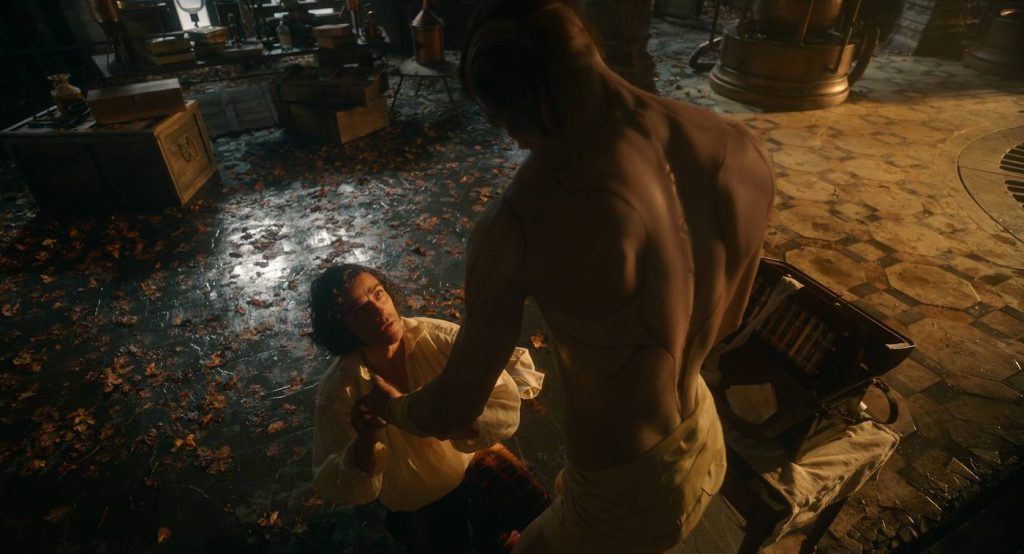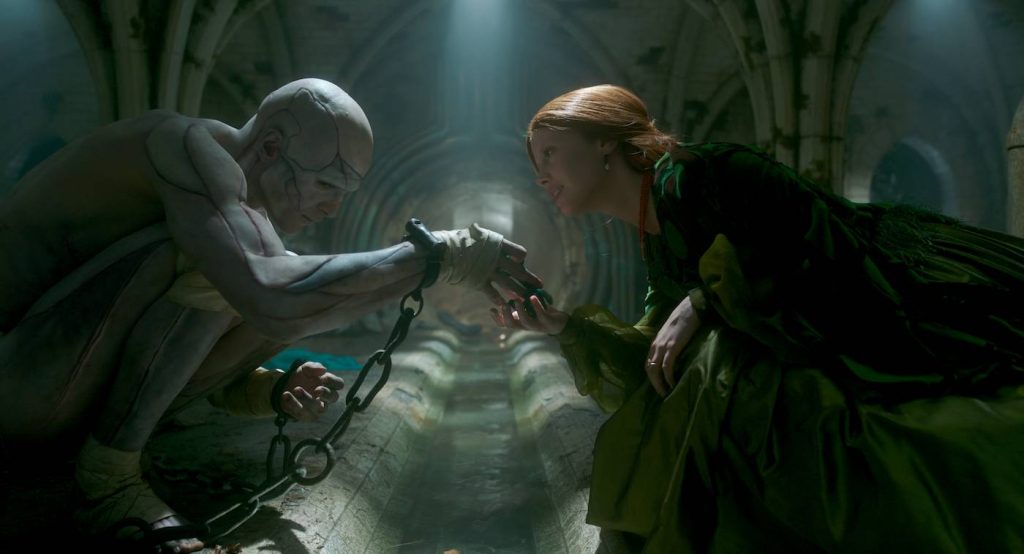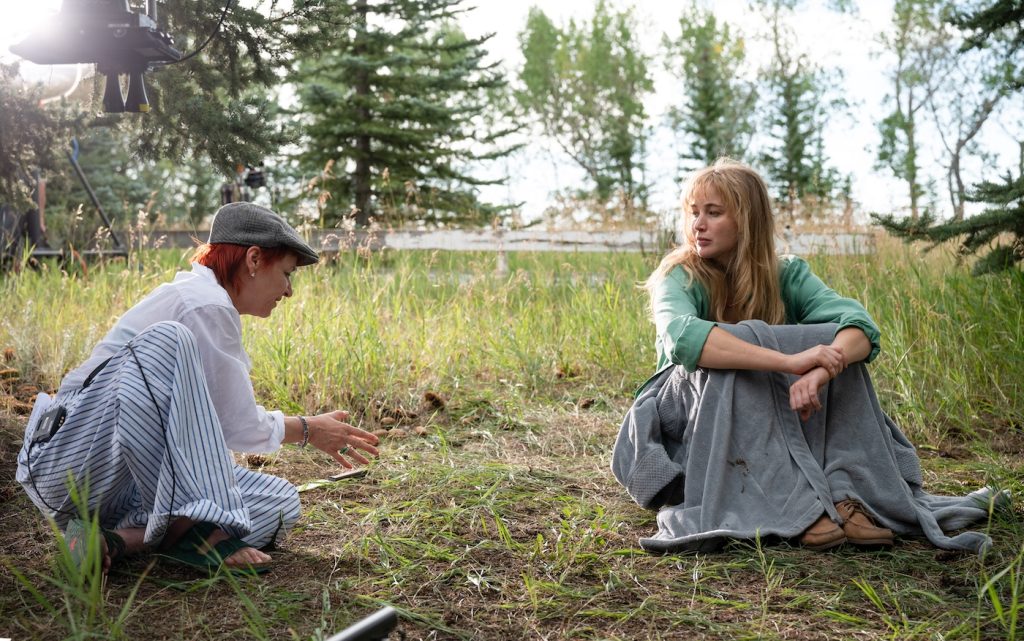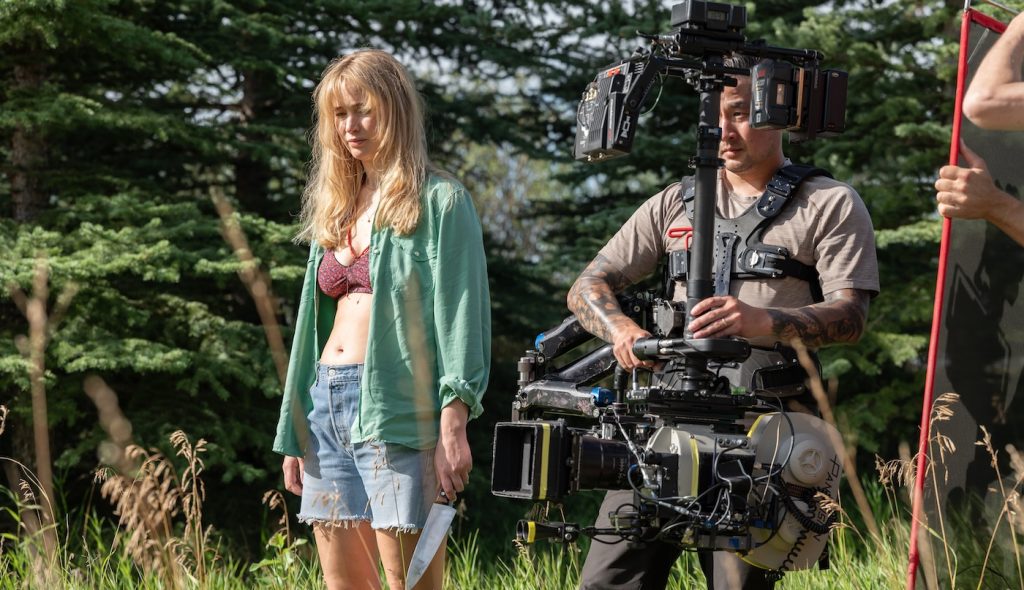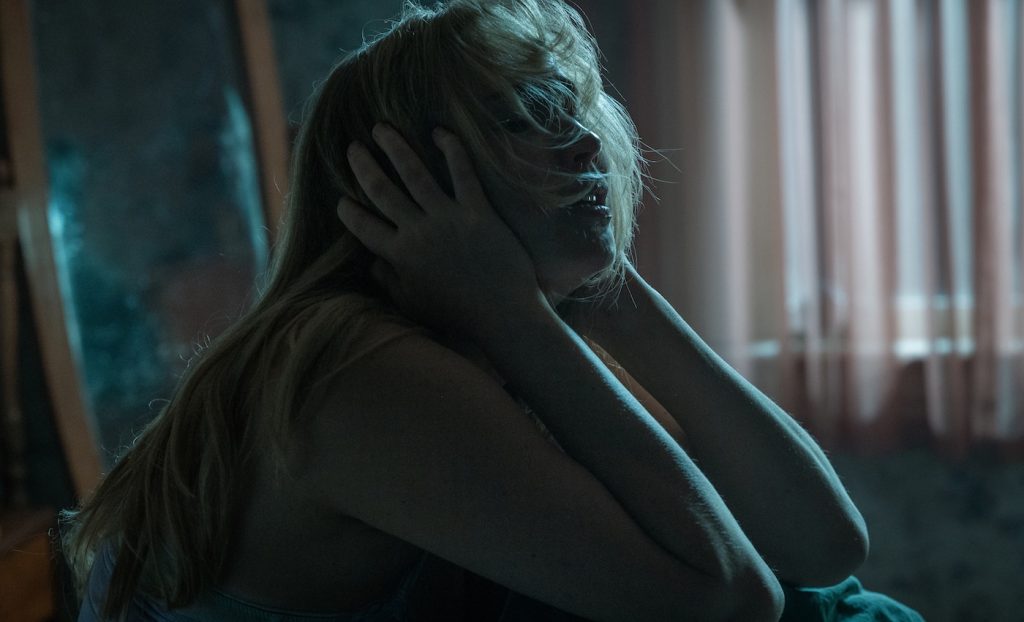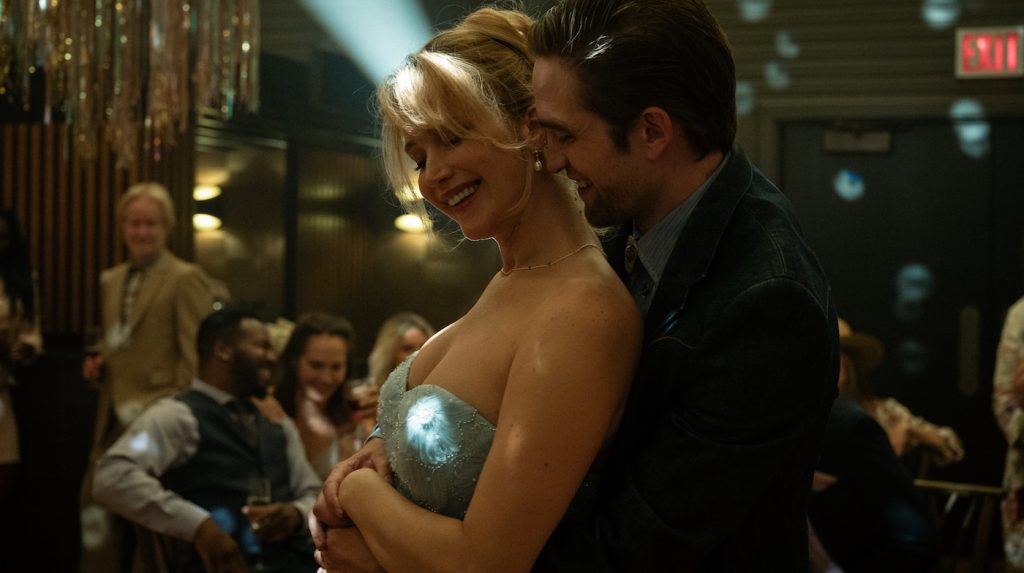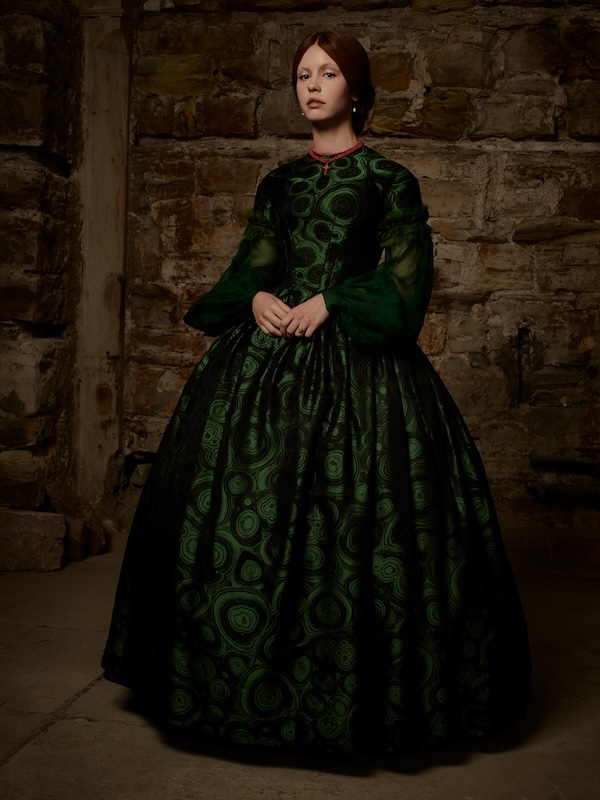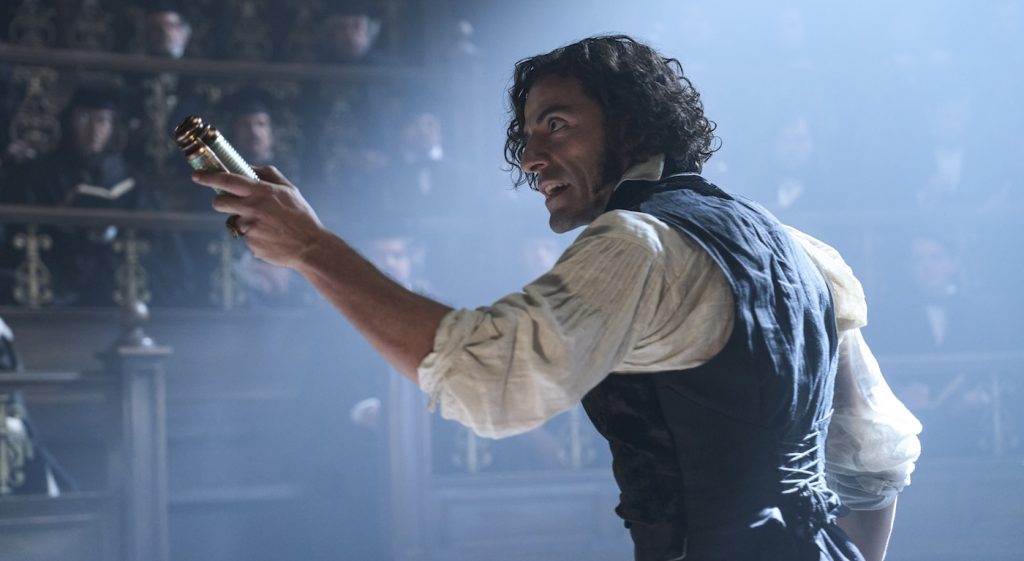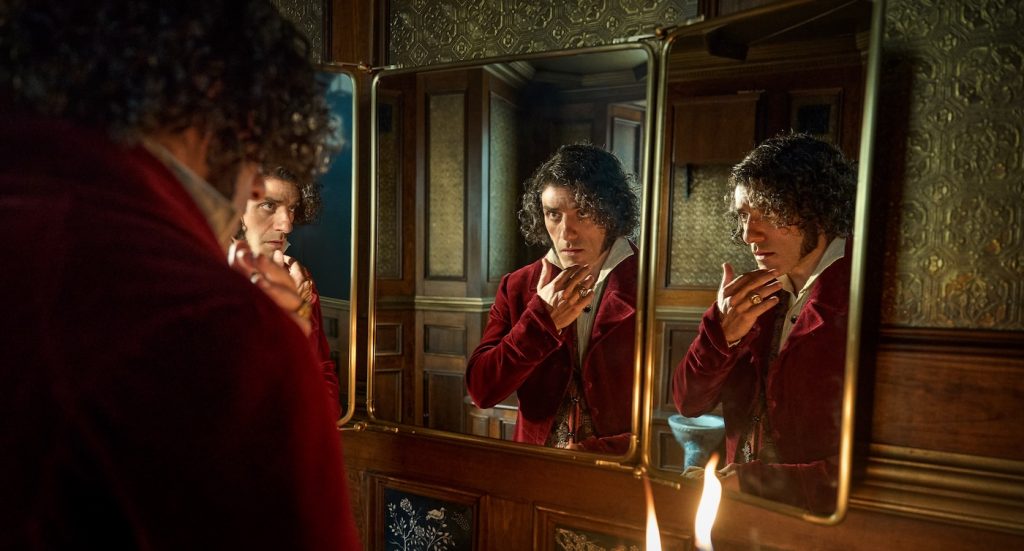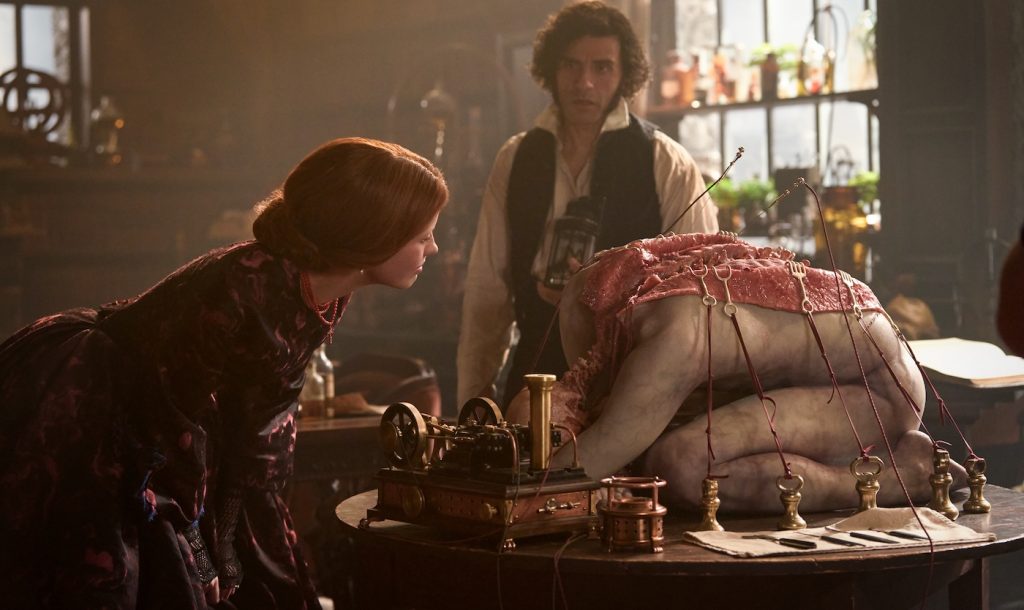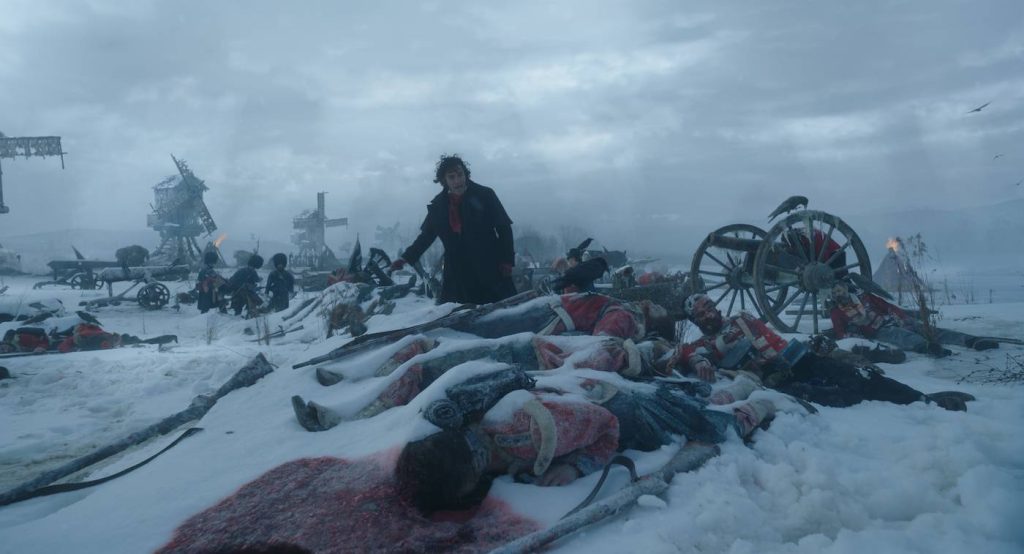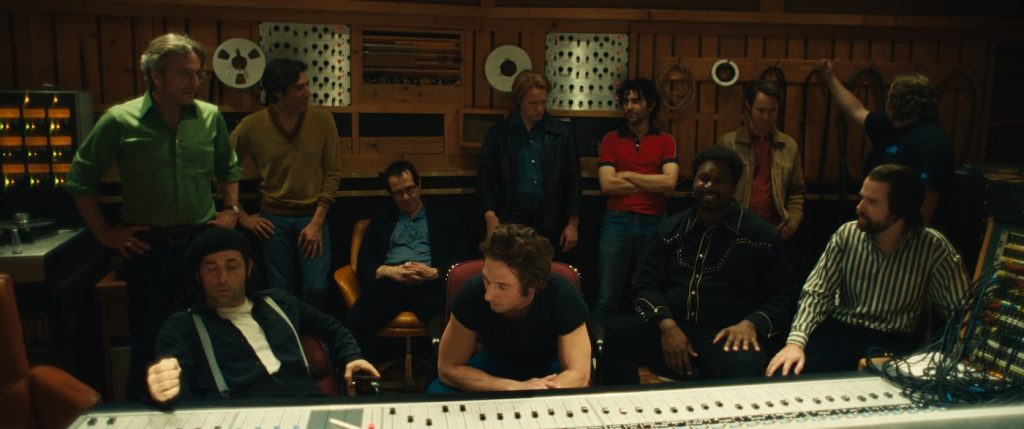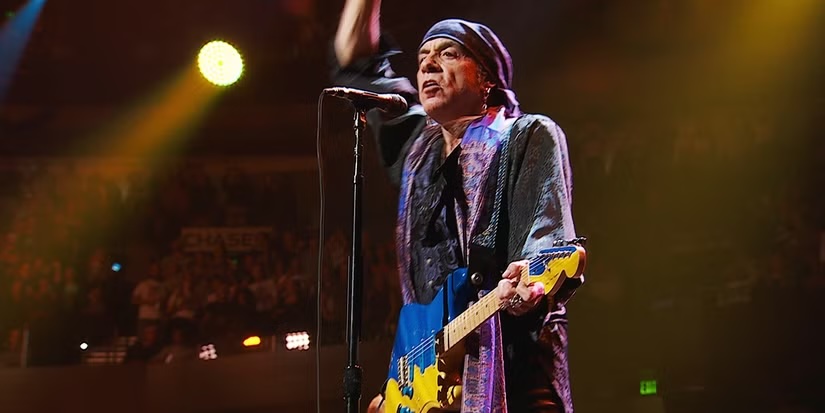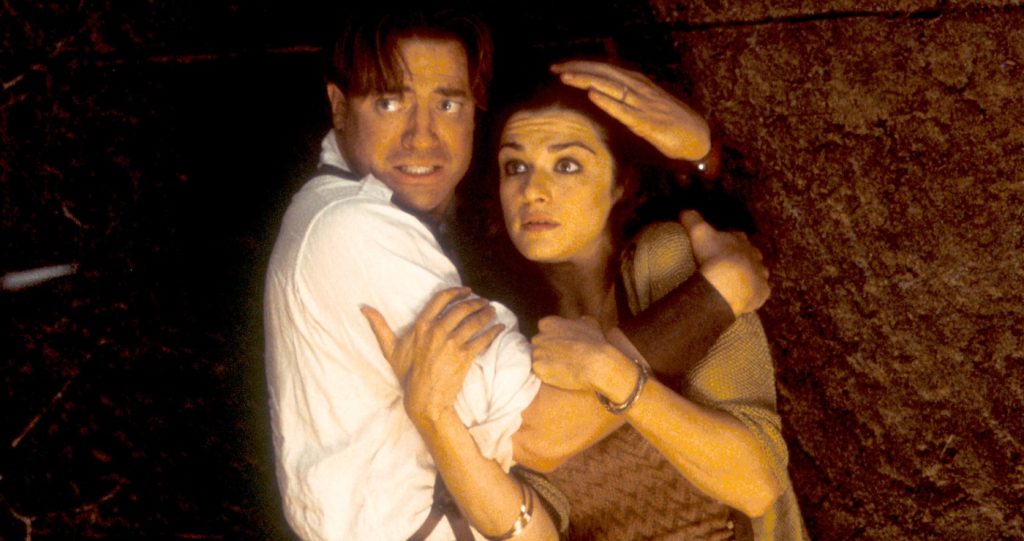
“Anemone”: A Surreal, Haunting Return to the Screen for Daniel Day-Lewis in Son Ronan Day-Lewis’s Directorial Debut

There is something electric in Anemone, the new film that marks the long‑awaited return of Daniel Day‑Lewis to acting after an eight-year absence in the first feature film directed by his son, Ronan Day‑Lewis. It feels like a threshold movie, one that straddles multiple worlds. Past and present, real and surreal, familial love and bitter legacy, memory and myth, all come to the forefront in this cinematic experience.

Ronan Day‑Lewis, known for his work in the visual arts, steps into the realm of commercial film with Anemone. He co-wrote the screenplay with his father, who also plays the haunted hermit, Ray Stoker. This is not simply a comeback role for Daniel, but a collaboration with family, anchored deeply in personal history. Day-Lewis’s return is his first screen appearance since Paul Thomas Anderson‘s Phantom Thread (2017), closing a nearly eight-year break. That break, Day-Lewis has said in interviews, was in part a retreat from the public intensity of acting, but when faced with working with his son, the embers of craft, of purpose, and of emotional urgency were reignited.

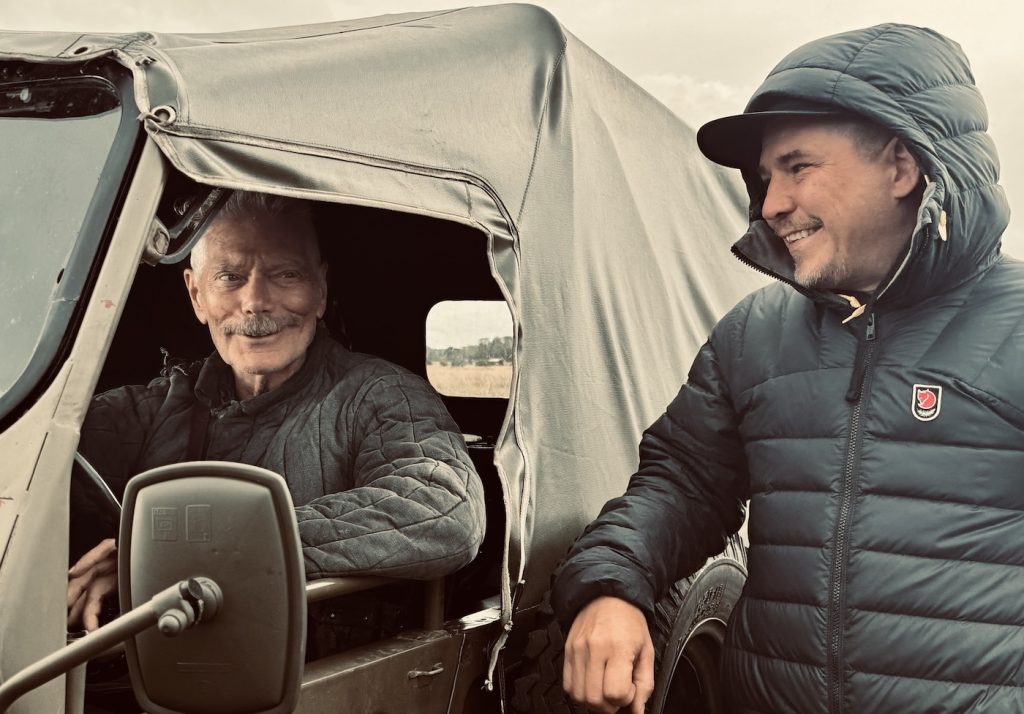
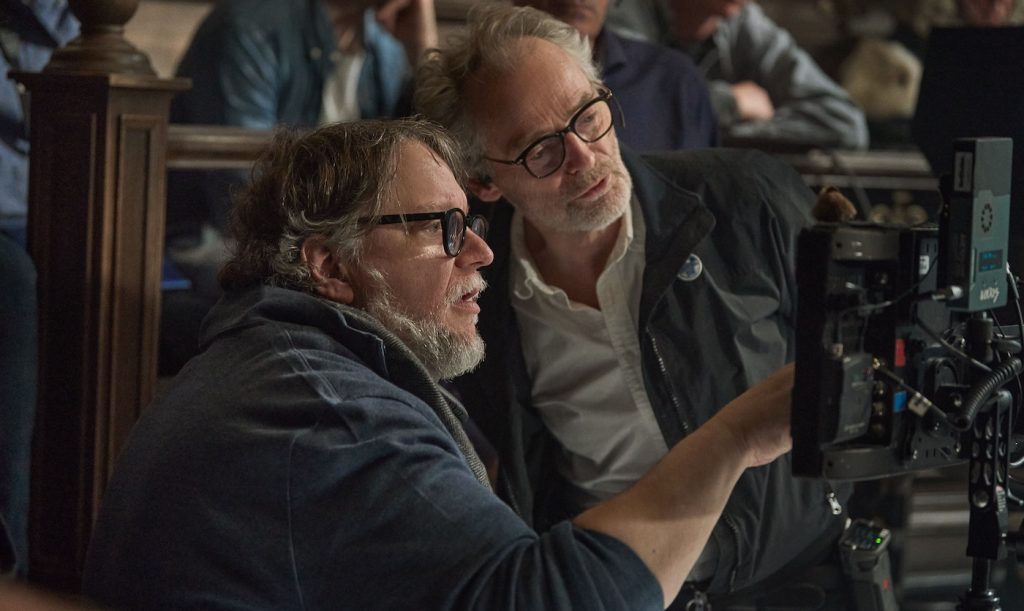
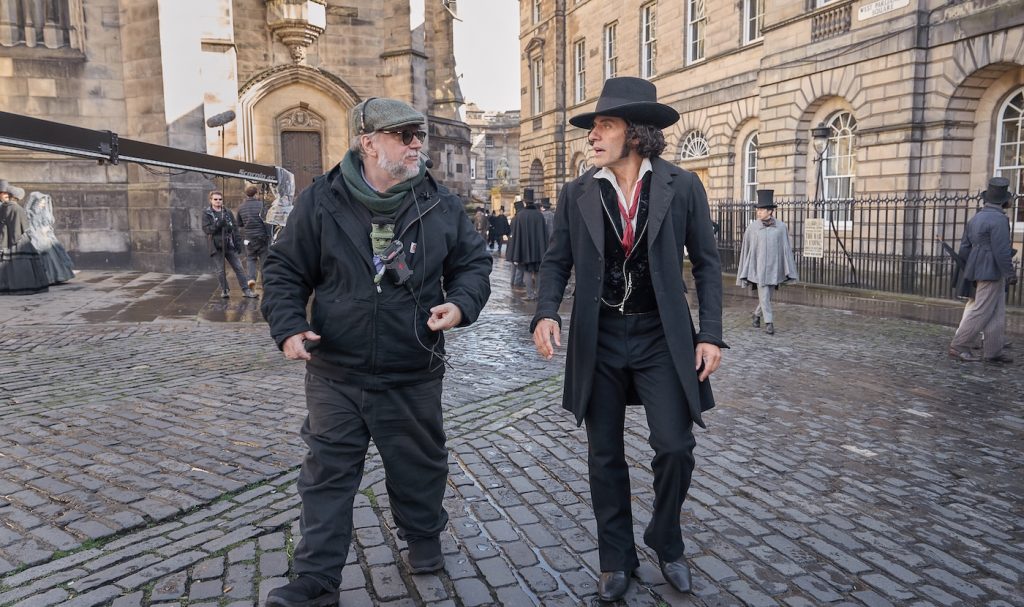
(L to R) Actor Daniel Day-Lewis and director Ronan Day-Lewis on the set of ANEMONE, a Focus Features release. Credit: Maria Lax / Focus Features © 2025 Focus Features, LLC.
All Rights Reserved.

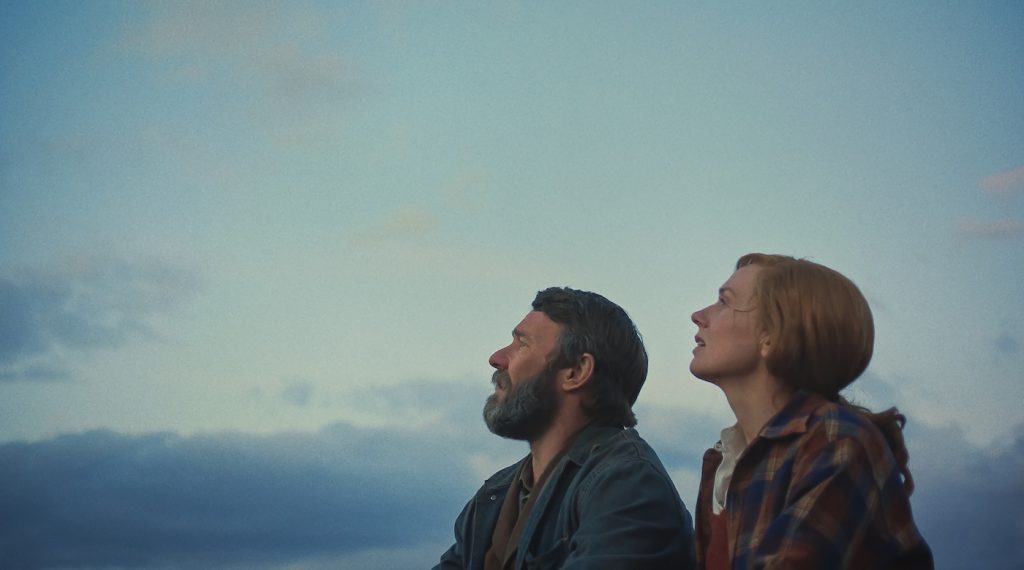
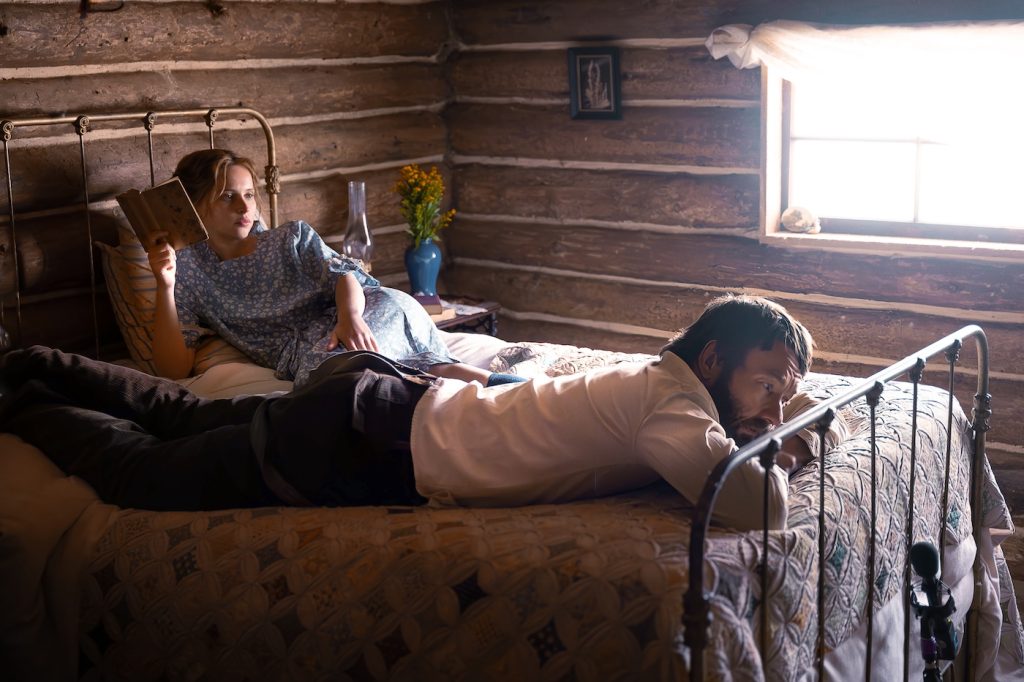
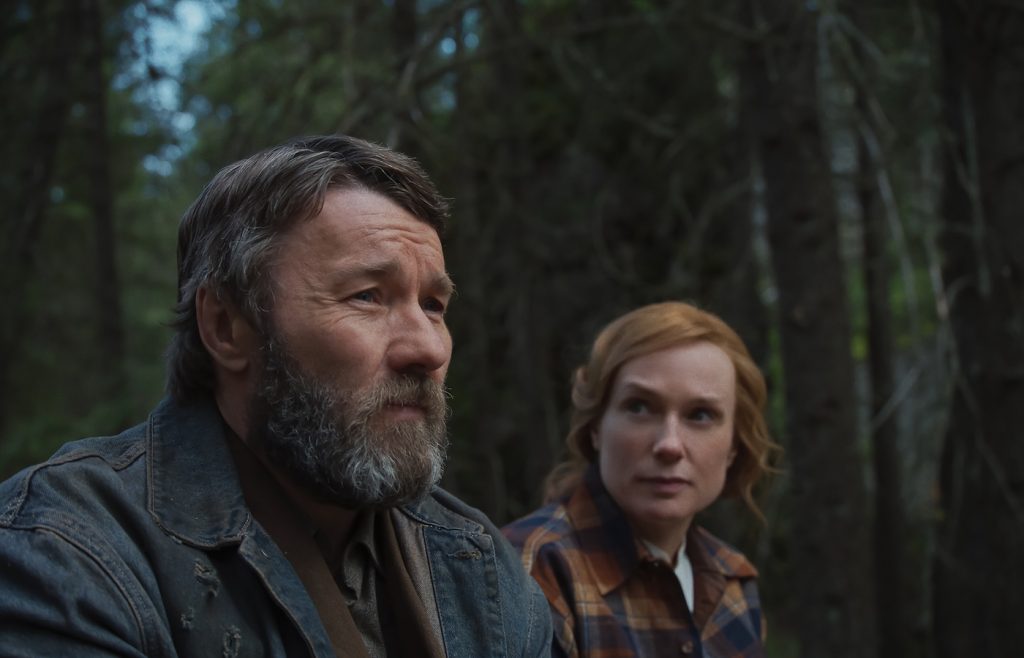
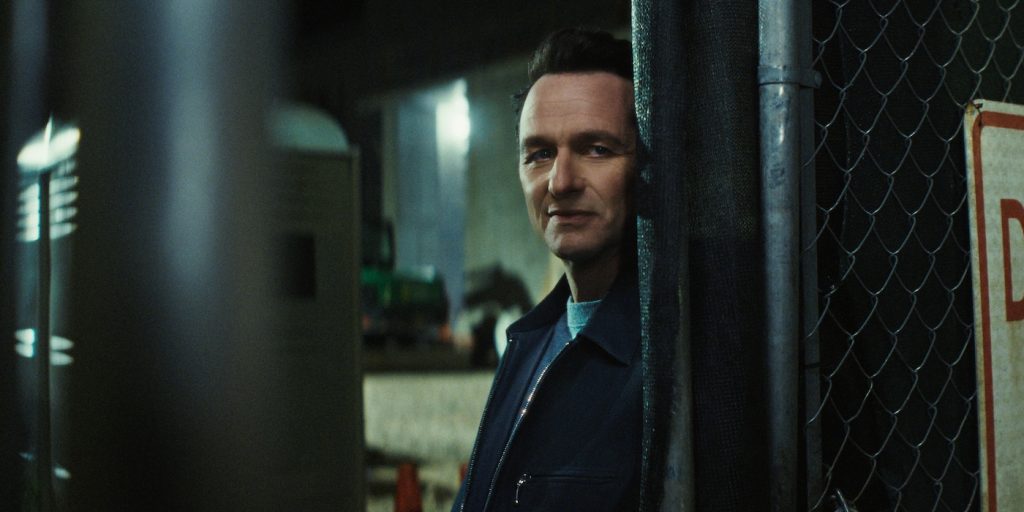
Anemone’s plot centers on Ray (Day‑Lewis), a man estranged from family, living in isolation, a prisoner of his own trauma. His brother Jem (Sean Bean) breaks from his domestic life to reconnect. Every moment between them picks at the deep emotional scab that has never healed over for Ray. Their familial bond feels like a vestige of another lifetime, one in which political strife, deeply personal trials and tribulations, and respective insecurities are all a terrible dream.

(L to R) Daniel Day-Lewis as Ray and Sean Bean as Jem in director Ronan Day-Lewis’ ANEMONE, a Focus Features release.Credit: Courtesy of Focus Features / © 2025 FOCUS FEATURES LLC

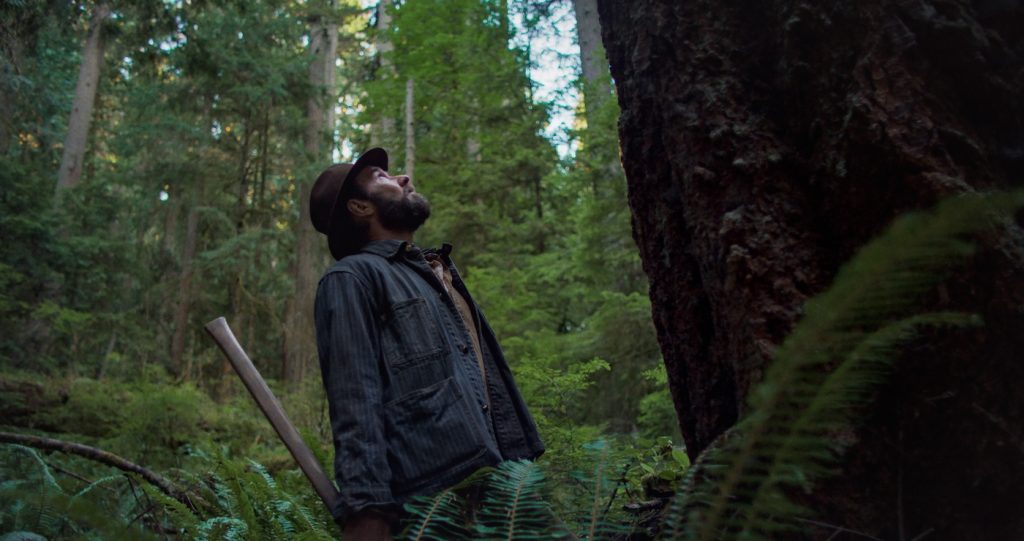
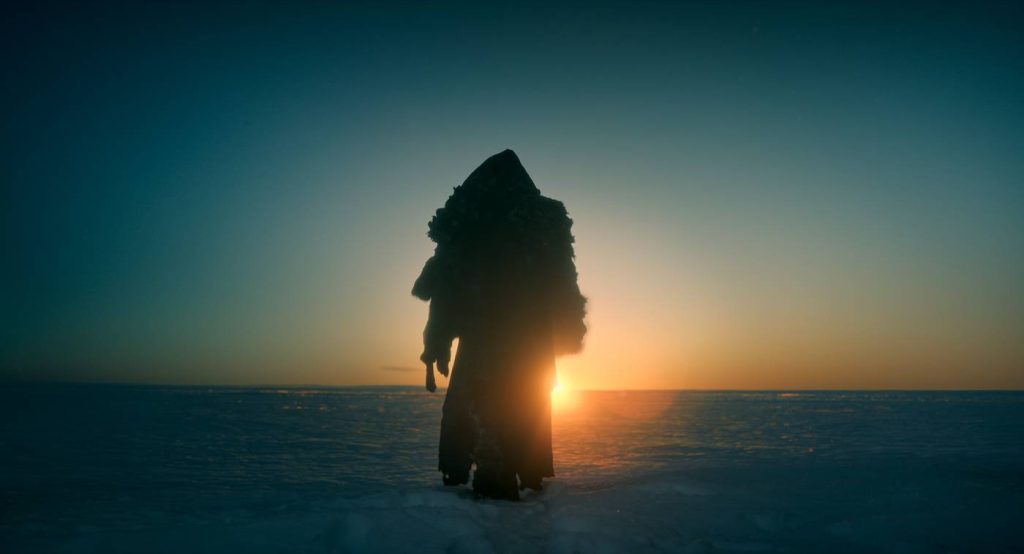
A screening on Tuesday night in New York was followed by a Q&A session with Sean Bean, Daniel Day-Lewis, and Ronan Day-Lewis, moderated by Martin Scorsese. Ronan Day-Lewis revealed that much of the movie was shot in Wales, a landscape that lends itself perfectly to the film’s surreal nature. With its lush, elemental wildness, the director described the challenges of filming in such a location; challenges which ultimately resulted in the dreamy, ethereal atmosphere of the film. Ronan Day-Lewis described to Scorsese one such difficulty of filming on a beach in a windstorm and how the storm affected their ability to shoot, or even see, so filming needed to be done at an adjacent beach in a much smaller location. However, the constraints of shooting that day make for one of the most compelling and beautiful moments in the film. The shots, which had to be tightened to accommodate the new filming location, create a tension in the scene that feels uncomfortably close and personal. And the unexpected gale creates a visual effect on the sand that is so unearthly it forces the viewer to wonder, “Am I watching someone else’s dream?” According to Martin Scorsese, “The elements themselves seem to acknowledge the suffering.”


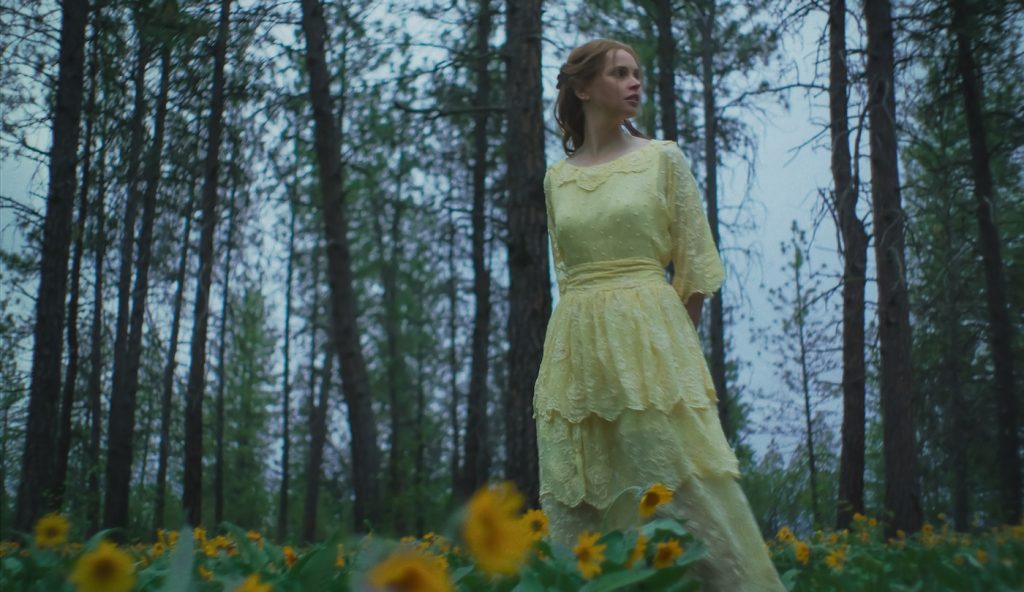
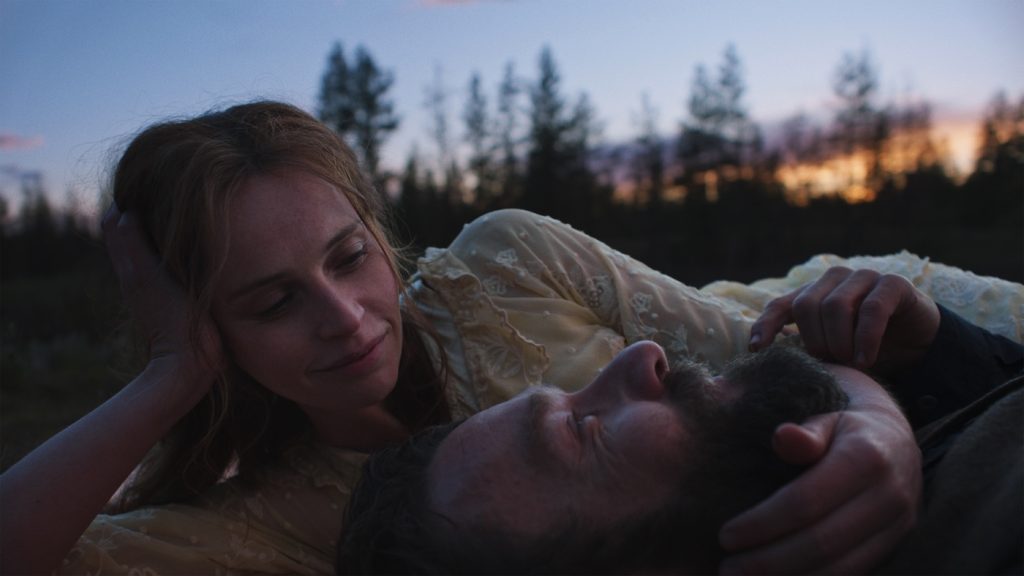
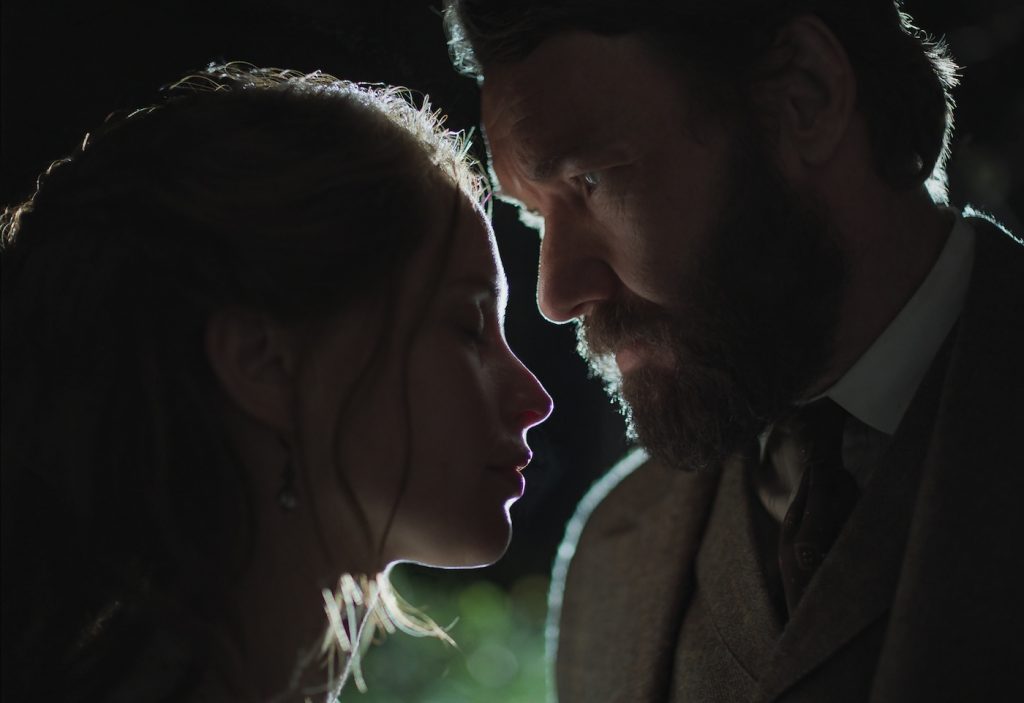
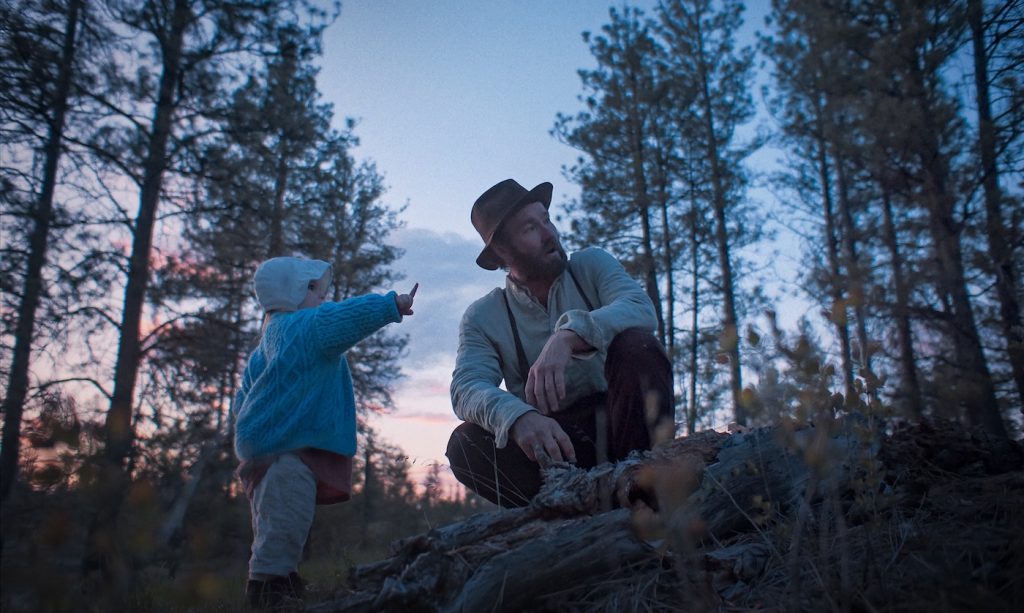
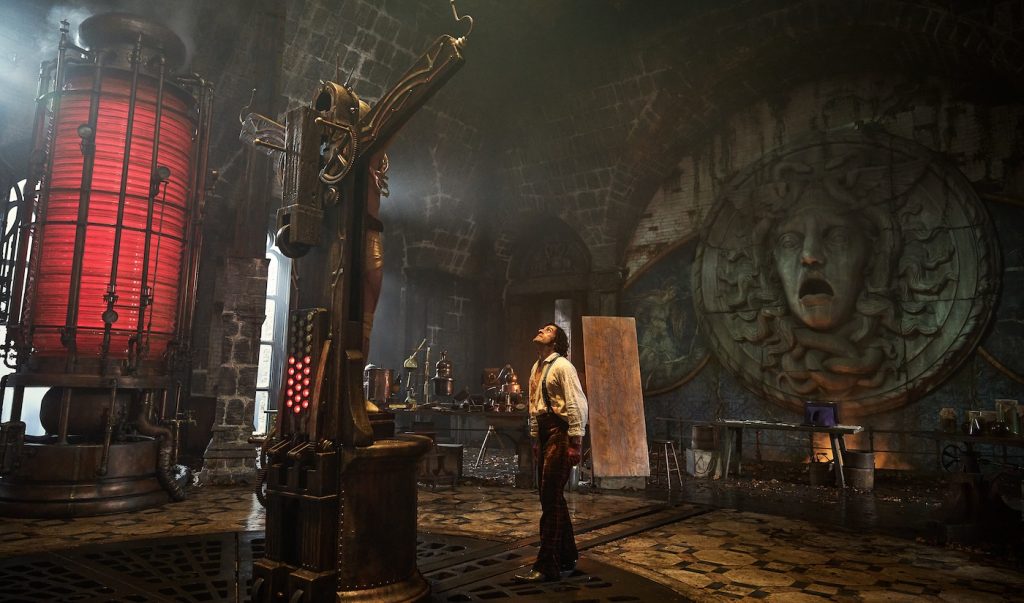
In fact, the most striking aspect of the film is Ben Fordesman’s cinematography, which creates an untamed emotional texture and elemental backdrop for this deeply personal story. The combination of this with Ronan Day-Lewis’s background as a painter and visual artist bleeds through in almost every frame. The mundane is rendered in a highly saturated, almost otherworldly palette, while our characters remain in blue tones, highlighting the contrast between the lush world of love, fantasy, and illusion, and the banality of living in fear and regret. The combination of the pared-down production process and the vision of Fordesman and Day-Lewis, perhaps serendipitously, brings out the best visual aspects of the film. According to Daniel Day-Lewis, “We didn’t need all the ridiculous paraphernalia required to make movies, which can be such a distraction if you allow it to be.”

Daniel Day-Lewis as Ray and Sean Bean as Jem in director Ronan Day-Lewis’s ANEMONE, a Focus Features release.
Credit: Courtesy of Focus Features / © 2025 Focus Features, LLC. All Rights Reserved.

Another powerful aspect of the film is its dialogue. Co-written by Daniel Day-Lewis and Ronan Day-Lewis, Anemone ventures into heavy and unrestrained monologues. As the film progresses, we go from Jem’s measured prayer and controlled conversations with his wife, Nessa (Samantha Morton), to Ray’s tearful and explosive recounting of a moment that changed the course of his life. Nessa is stuck in stasis, her son Brian (Samuel Bottomley) in crisis, wrestling with the truth that would unburden her and lead to healing their family, and protecting her troubled son. While Ray spends much of the film wrestling with his traumas, unable to reconcile the truth from his pain, Nessa faces it head-on every day. Despite the disparity of these characters’ emotional states, they are intrinsically connected, and both Day-Lewis and Morton deliver powerful and deeply moving performances that are almost uncomfortably relatable.

Samantha Morton stars as Nessa in director Ronan Day-Lewis’s ANEMONE, a Focus Features release.
Credit: Des Willie/Focus Features / © 2025 Focus Features, LLC. All Rights Reserved.

Lastly, the film’s score is an emotional element in its own right. Composed by Bobby Krlic, who has scored films including Midsommar, Beau is Afraid, and the TV series Snowpiercer, among others, is responsible for the haunting drone that serves as the background for these characters’ emotional undoings. According to Ronan Day-Lewis, “We were listening to a lot of Shoegaze music from England from the mid-90s that had these angelic vocals but this distorted guitar that the vocals were buried underneath, so that ended up being connected to the repression in the story.” Krlic’s creation perfectly evokes this style, creating a soundscape that feels simultaneously nostalgic and unsettling, mirroring our characters’ pain with the hum of distortion, alluring yet distant, its edges blurred.

Daniel Day-Lewis stars as Ray and Sean Bean stars as Jem in director Ronan Day-Lewis’s ANEMONE, a Focus Features release. Credit: Courtesy of Focus Features / © 2025 Focus Features, LLC. All Rights Reserved.

Whatever aspect of filmmaking the viewer is drawn to, there is no denying that Anemone is a deeply personal film and project for its creators. Brother and brother act as a surrogate for father and son in a world where no one feels the security of home or belonging. The dreamy, color-saturated, otherworldly landscape provides a surreal backdrop for the trauma of a youth unprotected. With its haunting score, unparalleled performances, Daniel Day-Lewis’s long-awaited return to film, and an impressive directorial debut from Ronan Day-Lewis, this highly relatable, magnetic, and powerful film promises to be one of the most memorable of 2025. Look for it in theaters on October 3rd.


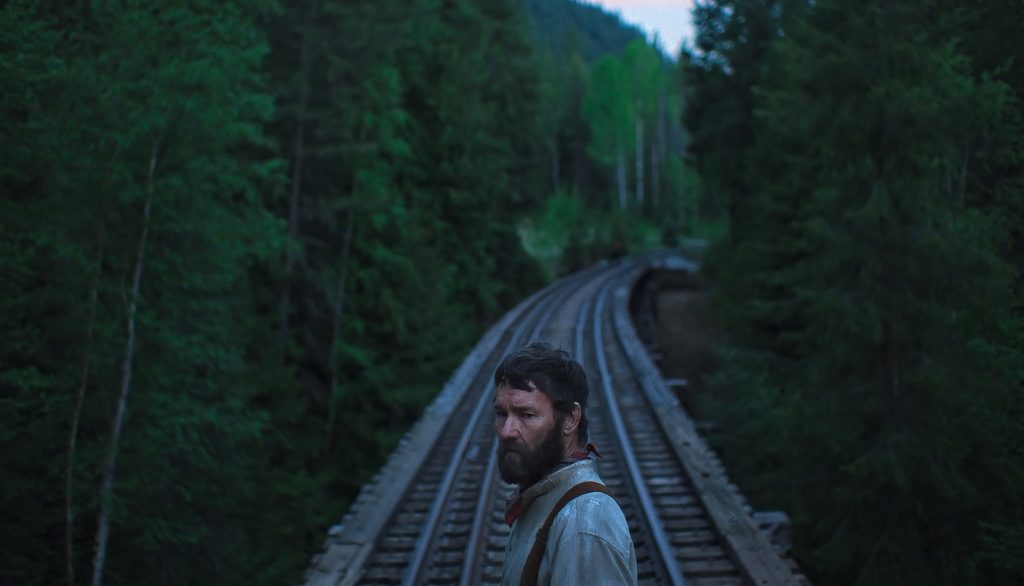
Featured image: Daniel Day-Lewis stars as Ray in director Ronan Day-Lewis’s ANEMONE, a Focus Features release. Credit: Maria Lax / Focus Features © 2025 Focus Features, LLC. All Rights Reserved. 


“The Conjuring: Last Rites” Production Designer John Frankish on Creating the Hellish Smurl House

Production designer John Frankish knew instantly that making the homes the dark heart of The Conjuring: Last Rites was the way to go. From there, everything else would fall into place.

Directed by Michael Chaves, the ninth installment in The Conjuring Universe finds Patrick Wilson and Vera Farmiga’s paranormal investigators, Ed and Lorraine Warren, taking on what could be their most insanely terrifying case yet—and that’s saying something. Over the course of their career, the Warrens have faced an accursed witch named Bathsheba stalking the Perron family’s farmhouse in the original The Conjuring (2013), the Enfield Poltergeist in The Conjuring 2, and a Raggedy Ann doll from hell in the Annabelle spin-off trilogy. Last Rites, inspired by the Smurl family’s real-life supernatural experiences in Pennsylvania, was the couple’s final case.

Here Frankish, who has previously worked on Mamma Mia! Here We Go Again, and was art director on Gosford Park, X-Men: First Class, and 2017’s The Mummy, reveals the challenges behind that creepy mirror, building a house of horrors from top to bottom, and the golden rule of production design.


Was there one element of the production design you knew you needed to crack first?

The Smurl house was the first thing. The house still exists on Chase Street in Pittston. Michael was very conscious that when people saw the film and then went online and looked at the place, they would see exactly what it was. It’s not a working-class area, but Michael wanted to evoke a down-at-heel feeling, like the Pennsylvania depicted in The Deer Hunter or Flashdance, so we began developing a Chase Street that was more blue-collar. Then came the idea of the steel mill at the end of the road, and that works beautifully at night. The real Smurl house is a duplex, so it’s quite a big structure for a working-class house. It’s two homes, so it’s split straight down the middle; the grandparents used to live on the left-hand side, and the family lived on the right. The only difference between our exterior and the real one is that we’ve removed one of the front doors, allowing us to open up the inside space, and the film has the grandparents living with them in the house. We also built two neighboring houses and a little bit of the opposite side of the road as set extensions. VFX did a fantastic job with the rest and cut and pasted a lot of our architecture. 

era Farmiga as Lorraine Warren and Patrick Wilson as Ed Warren in New Line Cinema’s “The Conjuring: Last Rites.” (Courtesy of Warner Bros)

This was shot in the UK, so were a lot of the items in that room brought over from the US and reused?

Well, you would think. It’s true of many films that when filming finishes, things disappear, so, no, not everything was available to us. We had one Annabelle doll, but it was the wrong one, so we had to remake that. Annabelle has slightly changed her look over the years. Richard Van Den Bergh, our special effects guy, did a fantastic job on that. We couldn’t find the Crooked Man Zoetrope used in The Conjuring 2, so we had to rebuild it as well, but we did have the Nun painting. With the Samurai costume, it was a whole thing finding that again, but elsewhere, we were able to pull together enough objects to make it recognizable.

Patrick Wilson as Ed Warren and Vera Farmiga as Lorraine Warren in New Line Cinema’s “The Conjuring: Last Rites.” (Courtesy of Warner Bros)

The mirror has a very distinct design, and it is a character in its own right. Was that look detailed in the script?

No, not at all. It was only described as an antique mirror. We reviewed thousands of them, so it was a lengthy process. I wanted something simpler and almost monolithic like the slab from 2001: A Space Odyssey. Michael wanted to lean into what we thought of as audience expectations, so we examined a wide range of Bavarian and German wood carvings, similar to those found in old churches. In the end, we decided on three cherubs and a mother figure because three ghosts were haunting the Smurls. One morning, we had a variety of design images displayed on the wall and asked the rest of the crew to put a Post-it note on their favorite one. We had to make that decision quite early on. We couldn’t use real glass because it would be used in action, and we didn’t want to risk that, so a lot of the time it’s polished metal. Ultimately, we had approximately 15 or 16 mirrors of varying sizes. We had a ten percent and a 15 percent larger one, and we had them with different mounts so we could attach them to the dolly. We also had a stunt one that was rubber. Much of that work was thanks to our prop master, David Balfour. The sculpting process lasted two or three weeks, but we didn’t get the sculpt quite right at first. It wasn’t quite gloomy or threatening enough, so we went back and did that again. Once we had that right, it was a question of casting the frames and getting them painted and aged properly to look particularly gruesome.

Mia Tomlinson as Judy Warren in New Line Cinema’s “The Conjuring: Last Rites.” (Courtesy of Warner Bros)

Do you have a preferred team of UK creatives you like to work with?

You can’t always guarantee that you’ll get the same people. However, over the years, you learn to trust that even if you’re working with new people, if they’ve been working in the UK and London, there is an expectation that they’ll have a good, solid understanding of what’s required. I’ve rarely been disappointed. The only time you focus a little more on that is when you’re doing any sculpting or scenic art; there are only a few people you would really trust with that. When it comes to the general art department and core crew, from assistants to draftsmen and art directors, I work with the same people as much as I can, just for ease.

Was there a Style Bible to follow for a film in The Conjuring Universe?

We delved into the Conjuring world because it offers a powerful visual aesthetic and a clear through-line for the story, which aligns with people’s expectations. For the Smurl house, I wanted to lean into the 80s, but like any house, they don’t decorate every five years, so a lot of the furnishings and wall coverings were more 70s. Initially, I thought it made it look too retro, but once you’re outside in the world, in the other places in the film, it feels right. Graham Churchyard did a fantastic job with the costumes as well. He was able to bring that 80s vibe into the space. Michael was very keen to let people take authorship, and the studio and producers were very hands-off

What was the biggest challenge that you are most happy about overcoming?

We didn’t have the ending when we started, and I didn’t put any thought at all into the upstairs hallway. We knew the attic would be a set piece; we put a lot of work into the basement with the pool of blood and the house itself. However, once we decided they were going to crash through the floor of the attic, that upstairs hallway becomes quite key. It’s a little under-designed, so I was concerned about that, but in the end, there’s enough going on at that point in the film to carry you through.

Vera Farmiga as Lorraine Warren in New Line Cinema’s “The Conjuring: Last Rites.” (Courtesy of Warner Bros)

When it comes to horror production design, are there cardinal rules?

The cardinal rule of creating settings is the same for almost any film: ‘Don’t try to tell stories with the set.’ It rarely works. Good settings are like a good score in that they help tell and serve the story, but you shouldn’t really hear the music. It just comes in and goes out. There are moments when you want to hear the music, just as there are moments in the film when you want to see the set, and it’s essential to have those moments, but in general, they should serve the story. That is the rule, unless you have a horror film where the set needs to tell the story. I’m thinking of The Overlook Hotel in The Shining, and there’s Hill House in The Haunting. Funnily enough, if you remember in The Haunting, there’s that scene where Eleanor is in bed and there’s an oak leaf design in the wallpaper. That was one of our earlier thoughts about the mirror. We initially put an oak leaf design into our mirror and attempted to create the illusion of a face within the frame, but it all got a bit too convoluted.


The Conjuring: Last Rites is in theaters now.

From Tragedy to Art: How Director Olivier Sarbil’s War Injury Inspired the Deeply Personal “Viktor”

At first glance, Olivier Sarbil doesn’t look like someone who’s danced with death, but once you hear his story, you’ll wonder how he’s still here to tell it.

Born on the French island of Corsica, at 21, he joined the military as a paratrooper. Stationed in Rwanda, he witnessed the genocide of the Tutsi people, where more than 800,000 people lost their lives. The experience set Sarbil on a path documenting social conflicts, first photographing struggles in Myanmar and later protests between the Red Shirts and the Thai government. He picked up a video camera in 2016 to document a nine-month battle between Iraqi Special Forces and the Islamic State to retake the city of Mosul. The project marked his directorial debut, which you can watch online for free thanks to PBS.

The following year, he documented the Philippines’ drug war, where then-president Rodrigo Duterte led a campaign to slaughter the country’s drug addicts. Sarbil’s documentary On the President’s Orders resurfaced at the International Criminal Court as Duterte now faces charges for his alleged crimes. And more recently, Sarbil was embedded with U.S. Special Forces in Afghanistan as the final troops left the war-torn country for the film Retrograde. But the moment that changed his life forever was being wounded by a grenade while documenting a civil war.

“I’ve been covering war and conflict for the last two decades, and in 2011, during the Libyan revolution, during the Battle of Sirte, I was very, very badly injured by an RPG, and I spent nine months in hospital,” he shares with The Credits. “I lost a part of my right hand and I lost hearing in my right ear, so I became single-sided deaf.”

Though tragic, the incident inspired him to create Viktor, a remarkable documentary about Viktor Korotovskyi, a deaf photographer fascinated by samurai films during the early days of Russia’s invasion of Ukraine. “I think over the years, single-sided deafness really reshaped the way I understand the world, and of course, sound. And that’s why I wanted to tell the story of a deaf man with the backdrop of war,” he says.

Behind the scenes with a soldier and director Olivier Sarbil. Courtesy Cinephil.

But Viktor isn’t your typical war doc; it’s a deeply human story told through its subject while being a reflection of its creator. “When I started to talk with Darren Aronofsky [who serves as producer] and his team, what was very important for me was to make a war doc that was going to be different. I really wanted to do something a bit more personal. I think telling the story of a deaf man in wartime also became a more personal journey for me. I think Viktor helped me face my own struggles because there are a lot of similarities between us.”


How did you find your subject, Viktor Korotovskyi?

I was trying to cast someone from the deaf community in Ukraine, and I found Viktor through Facebook, which is still very popular. When I went to meet him in Kharkiv, that’s when the magic happened. As a filmmaker, I could see this amazing character, who is very natural on camera. He had so much aura, and I immediately knew he would be able to carry the film.

Viktor’s Instagram showcases his keen eye for photography, and the images he posts feature a rich, monochromatic aesthetic. Did you want to reflect his style in the visual language?

When it comes to the documentary, I never think about the visual grammar beforehand. I really need to be on the ground, understanding the space, the light, and most importantly, try to build that trust with my contributor. And when my relationship is getting deepened, this is when I start to establish the visual grammar for the theme. For example, the black and white you mentioned, Viktor believed that the black and white bring a greater sense of fairness and balance to the world. This is using his own words. So, that’s one of the reasons why we use black and white. To reflect Viktor’s poetic world, the way he sees it, and the way he wants to be seen.

“Viktor.” Courtesy Cinephil.

Part of the sonic story is told through Viktor’s point of view and how he hears the world. How did that aural landscape develop?

At the very early stage of the filmmaking process, we knew that the sonic impression would play a vital role. I was very privileged and honored to work with an amazing team of sound designers, Peter Albrechtsen, Heikki Kossi, and Nicolas Becker. They have extensive experience working with the deaf community and were the sound team on Sound of Metal. So, the idea was really to use a very organic approach to create the sound of Viktor’s world and to really help the audience understand what’s happening inside Viktor’s body.

How did the team create the sounds we hear from Viktor’s perspective?

Of course, there is always a subjective element because we will never know 100% what Viktor can hear. But we did use some specific tools. We used a stethoscope with a mic. What’s interesting is that it’s not only capturing the heartbeat but also the movement. There is so much sound happening inside our own bodies, and it’s very, very interesting to record this perspective. We also rerecorded all the natural sounds that I picked up during filming and rerecorded them through a hearing aid device. And the way we use those muffled sounds was very subjective. We didn’t have any rules for when to use the muffled sound; we just followed our instinct and the story arc and emotion.

Viktor Korotovsky. Courtesy Cinephil.

Part of Viktor’s story is his desire to make his deceased father proud. How did you find that arc?

It’s interesting that you mentioned this about the father, because I wanted to give Viktor more self-empowerment. The voiceover that you hear is Viktor talking, which was written by Viktor himself. 

Was the narration part of that self-empowerment?

I asked Viktor to document his thoughts, feelings, and emotions in a journal every other day so we could use it for the voiceover. So I will ask him, for example, Viktor, can you write about darkness? Can you write about the night? Can you write about your father, the cat, or even the meal that you just made? He wrote about 50 pages, which we cut down to maybe one page for the voiceover. We opted for narration instead of the classic documentary interview, and I believe we created a space for authentic self-reflection that captures a world with greater intimacy than a traditional interview. 

Viktor Korotovsky. Courtesy Cinephil.

One poignant (yet favorite) scene is when Viktor visits a soldier who recently lost his hearing.

It’s a beautiful moment, and it was something totally unexpected. We had people from the deaf community who contacted us during the filming process, and they told us that one soldier lost his hearing during the battle. And for someone like me, who lost half of his hearing during a battle, and for Viktor, a deaf man who always wants to be better, there was almost like a symbiosis between the three of us. It was a very emotional moment.

Before Viktor reaches the front lines, there is a sense that he romanticizes war. Do you think his thoughts have evolved since?

Is he a different man? I think he is still impressed by the way of the samurai, but perhaps not as much as the warrior, rather showing compassion and empathy. But by the end, I didn’t want to be very literal or have the absolute answer. I know that deep inside, he still may have that desire, or regret, that he has not been able to fight on the front line.

Viktor is released in select theaters on October 3.


Featured image: “Viktor.” Courtesy Cinephil.

Inside the Breakneck Cut of Paul Thomas Anderson’s “One Battle After Another” With Editor Andy Jurgensen

The best-reviewed movie of the season is also the most relentless. Paul Thomas Anderson‘s Oscar front-runner One Battle After Another races through its two-hour fifty-minute run time propelled by adrenalized performances from Leonardo DiCaprio, Sean Penn, Chase Infiniti, Teyana Taylor, Benicio Del Toro, and Regina Hall as revolutionaries in the French 75 (in the case of DiCaprio’s Bob, Teyanna Taylor’s Perfidia Beverly Hills, and Hall’s Deandra), some of them radicalized military goons (Penn’s Col. Steven J. Lockjaw), and one a charismatically calm leader of an underground railroad ferrying migrants to safety (Del Toro’s Sensei Sergio St. Carlos). We’ve left out Chase Infiniti’s Willa, who will become the centrifuge around which the film’s characters rapidly spin, and spin out. 

The sprawling narrative, filmed mainly in California on vintage VistaVision cameras, rarely pauses for breath thanks to a diamond-sharp editing by Andy Jurgensen. Describing the film’s helter-skelter pace, Jurgensen, who earned a BAFTA nomination for cutting Anderson’s 2021 Licorice Pizza, says, “Paul always talks about how we don’t have to spoon-feed the audience about what you’re supposed to pay attention to. If somebody’s confused or doesn’t quite get it, they will eventually catch up. With Paul, it’s about trusting the audience.”

From his Los Angeles home, Andy discusses intercutting for momentum, collaborating with composer Jonny Greenwood’s music cues, and piecing together the film’s epic third-act car chase.


The pacing feels urgent, like the story’s being shot out of a cannon. How did you get started?

Well, I traveled with production to all of our locations because Paul likes to do daily screenings at the end of each day. They’ll shoot, we’ll set up a theater and watch footage from the day before.

That “we” includes the cast?

Sometimes. Department heads, crew members who want to come – it’s a communal experience where Paul’s watching the footage big on the screen – we actually took the VistaVision projector with us – and playing music from his phone that he’s got from [composer] Jonny Greenwood. I’m there taking notes, judging not only performances but also technical things, and that’s how it begins. Since we’ve already chosen the takes we want to use from watching the dailies together, I can start assembling things while they keep shooting.

Caption: (L-r) LEONARDO DI CAPRIO and Director/Writer/Producer PAUL THOMAS ANDERSON on the set of “One Battle After Another.” A Warner Bros. Pictures Release. Photo Credit: Merrick Morton

And that gives you a head start on post-production?

And we also had a hiatus for two or three months while waiting for Benicio [Del Toro] to become available. During that break, we assembled the “Prologue,” which is about forty minutes long, and the high school stuff [16 years later]. That was very helpful.

There’s not an ounce of fat in these scenes. Is that intentional?

Yeah. It’s interesting to see how Paul’s movies have evolved from early in his career to Licorice Pizza, where we always talked about keeping the momentum moving. With Battle, especially for that Prologue, we did the same thing, trying to get a snapshot of a shot. It might have a beginning, but we get out of the scene really quickly, because that creates a dynamic cut. With One Battle, we were always thinking about doing whatever we could to keep the energy up.

Caption: (L-r) TEYANA TAYLOR as Perfidia and SEAN PENN as Col. Steven J. Lockjaw in “One Battle After Another.” A Warner Bros. Pictures Release. Photo Credit: Photo Courtesy Warner Bros. Pictures

The movie opens with this massive orchestral block of music that accompanies Teyana Taylor’s Perfidia walking alongside a noisy freeway. Then, this jittery solo piano ratchets up the tension even more. Did Jonny Greenwood’s music play an integral role in shaping the edits?

Jonny wasn’t really scoring to picture early on. He’d read the script and send ideas to Paul. For example, in the Sensei sequence [where Benicio Del Toro’s Sensei character helps Leonardo DiCaprio’s “Bob” escape from soldiers led by Sean Penn’s Colonel Lockjaw], that’s 25 minutes of music straight through the entire sequence — interrogation, Willa [Chase Infiniti] in the van, immigrants escaping through the trap door, Bob on the phone trying to get information and running up to the roof to escape. Jonny created all those peaks and valleys. I cut up his temp score to hit where we wanted it to hit, then he added layers to make the scene get even more intense.


That “Sensei” sequence is one of several where you intercut between multiple streams of action. With so many moving parts, how do you keep track of all that material?

Everything’s organized by scene number, which I then sort by takes and shots within bins — basically folders in the AVID editing system, which are also thumbnails, so you can see a picture of it. Knocking down the gates would be its own scene. Going up stairs, it’s own scene. Everything interior, its own scene. Then you might go, “What if we moved these shots around?” It’s easy to grab [a scene], lasso it, move it up [in the sequence] so you can see the idea, even if it’s crude. Then you can finesse it.


You make it sound easy, but moving shots around – that’s a major part of your job, right?

Yes, but by now it’s second nature. [laughing] I’m so plugged in to the [Avid] program, my left hand on the keyboard, right hand on the mouse, it’s like I’m one with the system.

The movie’s first car chase, when Perfidia tries to escape a disastrous bank robbery through traffic-clogged downtown Sacramento, feels visceral in an old-school kind of way.

Paul was inspired by The French Connection, so the stunt coordinators and everybody on set had that goal in mind: The French Connection. We didn’t have any music, no CGI. It was all about the car, the revs, the scraping of the metal, real cars hitting each other, and this overwhelming sound of a helicopter. Then we cut out abruptl,y and there’s Perfidia on the ground being handcuffed. We wanted an impactful ending.

Amid all this breakneck momentum, you did slow things down a few times, right?

For the [secret White supremacist] Christmas Adventurers Club scenes, we gave our audience a chance to breathe with static shots and close-ups. There’s another moment when Bob’s in the car, talking to Sensei about not knowing how to do Willa’s hair. It’s a sweet scene that allows the audience to exhale one more time before the action ramps up again and never stops until the end.

Caption: (L-r) Director/Writer/Producer PAUL THOMAS ANDERSON, LEONARDO DI CAPRIO and BENICIO DEL TORO on the set of “One Battle After Another.” A Warner Bros. Pictures Release. Photo Credit: Merrick Morton

The end being that insane car chase in the hills of San Diego County. Did you witness the making of that sequence in person?

I did not go to set for the chase stuff because I kind of wanted to stay objective. It was difficult because we had all these different perspectives: in front of Willa’s car and behind Willa’s car. In front of Tim Smith’s car, behind his car, and once Bob gets in the picture, we’re behind him, with the two cars in front seen from his point of view. I built assemblies of the best shots from each of those different angles. We always knew the final action would take place in the “Texas Dip” [in Borrego Springs], so we had a vague idea of how it would all turn out. But that sequence was definitely created in the editing room.

Caption: LEONARDO DI CAPRIO as Bob Ferguson in “One Battle After Another.” A Warner Bros. Pictures Release. Photo Credit: Photo Courtesy Warner Bros. Pictures

You started working with Paul Thomas Anderson back in 2014 on Inherent Vice, then Phantom Thread, then music videos for Haim, then Licorice Pizza, and now One Battle After Another. Safe to say, at this point, you guys are on the same wavelength?

We are! I think I know his sensibility.

And how would you define that sensibility?

Paul likes things complicated, not black and white. He wants there to be a humanity to his movies, which is why he likes to shoot on film. There’s an organic quality to it, and happy accidents can happen, not just in the look but in the performances. Even sound! We record all sorts of stuff on set, and if there’s some weird thing, we’ll grab that and put it in because it sounds more real than some canned sound effect. That’s the best way I can describe Paul. He embraces imperfections.


Part of Battle was shot in Texas, but most of it was filmed in California, where you and Paul live. Was it meaningful to shoot a project of this scale, given its impact on the local filmmaking economy?

One hundred percent! We were filling up hotels, setting up our screening rooms, and using restaurants for our catering. It was nice to go to all these locations, and they enjoyed having us!

Hitting theaters at this moment in American history, One Battle After Another dramatizes themes of racism, immigration, activism, and fascism in a timely way. Working on your edit of the movie, were you struck by the story’s resonance with current events?

Absolutely. What’s interesting is that we shot before the election, but putting the movie together at the end of last year and then doing test screenings early this year, while ICE raids were happening, this felt very much like a movie for our time. The fact that it’s not fully serious, that it’s kind of lighthearted, that it does have a positive message—all of that hopefully puts an important stamp on the film so it’s not too down.

One Battle After Another is in theaters now. See it.


Featured image: Caption: LEONARDO DI CAPRIO as Bob Ferguson in “One Battle After Another.” A Warner Bros. Pictures Release. Photo Credit: Photo Courtesy Warner Bros. Pictures

“One Battle After Another”: How a Single California Road Became The Year’s Most Hallucinatory Effect

Spoilers below.

Let’s try to ditch hyperbole for a second and get to the heart of the matter, to something we might even call objective: Paul Thomas Anderson’s One Battle After Another is a movie that meets its moment head-on. The visionary writer/director doesn’t make uninteresting movies—this, too, feels like an objective statement—yet he has rarely worked in the present day. For a 19-year period, between 2002 and 2021, Anderson has looked back. From his absolute masterpiece, There Will Be Blood (2007), to his ecclectic period pieces, from the paranoid stoner detective story in 70s LA with Inherent Vice (2014) to his exquisitely tailored dark romance in Phantom Thread (2017) to the psychological warfare between a mentally brittle WWII veteran and a haughty cult leader selling metaphysical snake oil in The Master (2012), Anderson has built a never-miss reputation on films that take us back to a very particular place and time. What makes them PTA films is that they show us people who, at first glance, appear to be leading very different lives than ours, but who turn out to be just as lost, searching, self-loathing, hopeful, hateful, and lovesick as we are. This is to say nothing of Boogie Nights (1997), his bravura look at the fractured, found families of the late 1970s and early 1980s in the San Fernando Valley porn industry.

Yet not since Punch Drunk Love (2002) has Anderson taken on the present, and in One Battle After Another, he does so with a chilling vision of an America that’s become a fascist police state, where our heroes, including a loveable explosives expert called Ghetto Pat (Leonardo DiCaprio), who is in the thrall of his fellow revolutionary Perfidia Bevery Hills (an electric Teyana Taylor). Their love affair leads to a child and the dissolution of their relationship. Perfidia has been carrying on a secret affair of sorts with the enemy, a military man named Steven J. Lockjaw (Sean Penn), in an effort to keep Lockjaw from snuffing out her revolutionary org, the French 75. Eventually, many members of the French 75 are either assassinated or captured, and Perfidia is offered a chance at a new life in witness protection, provided she rats out her remaining crew and continues her dalliance with Lockjaw. She can’t do it—she leaves him a killer kiss-off note and slips from the house the military has provided and goes rogue. Ghetto Pat, who goes by Bob Ferguson in his very non-regular life, takes his child, Willa, and heads to the town of Bactan Cross, where Bob tries to keep himself and his daughter off the grid as much as humanly possible.

Caption: TEYANA TAYLOR as Perfidia in “One Battle After Another.” A Warner Bros. Pictures Release. Photo Credit: Photo Courtesy Warner Bros. Pictures

This leads to years of Bob living in a haze of weed and booze as Willa grows up (a great Chase Infiniti). While Bob might not be winning any father of the year awards, it’s clear he loves his daughter dearly, and she loves him, even if he is a paranoid crank in a faded bathrobe like a washed-up revolutionary Lebowski. Their fortunes change when Lockjaw, now striving to become a member of the club that represents the upper echelon of white supremacist fascist society, the Christmas Adventurers Club (“hail Saint Nick” is their greeting—they are as cartoonish as they are monstrous), gets a bead on where Bob and Willa are. The Christmas Adventurers Club is working toward the goal of racial purification, and Lockjaw is worried that he’s committed the gravest offense: siring a non-white child, Willa. Soon, Willa is taken from her high school dance by a member of the French 75, Deandra (Regina Hall), to keep her safe. Bob goes on the lam, and Lockjaw eventually gets his greasy mitts on Willa. Now Bob needs to become the hero, and enlists the help of Willa’s Karate instructor, Sensei Sergio St. Carlos (Benicio Del Toro), and goes on the hunt for his daughter and his arch nemesis.

Caption: CHASE INFINITI as Willa Ferguson in “One Battle After Another.” A Warner Bros. Pictures Release. Photo Credit: Photo Courtesy Warner Bros. Pictures

There have been many terrific set pieces up to this point, scenes of kinetic energy and a shaggy beauty, all hallmarks of PTA’s work over the decades. The opening sequence, alone, where Bob, Perfidia, and the French 75 liberate a migrant detention center and Perfidia humiliates and titillates Lockjaw, the commanding officer, marking the start of their years-long destructive dalliance, is masterful. There is a crackling, pedal-down energy to One Battle After Another’s entire runtime; the film is as nervy and energetic as a revolutionary living in fascist times. And then, in a thrilling sequence that turns what a car chase can look and feel like on its head, PTA plunges one last syringe of adrenaline into his film, a bravura scene in which Willa, in a stolen car, flees from Lockjaw, in a government-issued bruiser of an SUV, while Lockjaw, unbeknownst to him, is being chased by Tim Smith (John Hoogenakker), a hit man hired by the Christmas Adventurers Club to track Lockjaw down and eliminate him for the crime of having fathered a non-white child with a black woman.

Caption: (L-r) TEYANA TAYLOR as Perfidia and SEAN PENN as Col. Steven J. Lockjaw in “One Battle After Another.” A Warner Bros. Pictures Release. Photo Credit: Photo Courtesy Warner Bros. Pictures

Anderson and his location manager, Michael Glasser, had been scouting the film years in advance. This deep research helped Anderson further flesh out his script (all these juicy details are available in the production notes). One Battle After Another is a very American movie, shot throughout the West, from Sacramento to Eureka, California, to El Paso, Texas. For the climactic car chase on a road carved into a series of hallucinatory undulating hills in Borrego Springs, California, Anderson, his stunt coordinator Brian Machleit, and others on their team blocked each sequence with Matchbox cars, trying to ensure that every chase in the film felt random, decisions being made in real time and under extreme pressure, to give the audience that unsettled, helter skelter sense that Anderson has been a master at for years.

Caption: (L-r) LEONARDO DI CAPRIO and Director/Writer/Producer PAUL THOMAS ANDERSON on the set of “One Battle After Another.” A Warner Bros. Pictures Release. Photo Credit: Merrick Morton

With Willa in the lead car, trying to evade Lockjaw, she goes up and down over the rolling hills, losing Lockjaw in her rearview mirror one moment, only to find him there in the next. The production called that stretch of road the River of Hills. Situated near Highway 78, about an hour east of Borrego Springs, near the Anza-Borrego Desert State Park Road, it looks like Mother Nature was whipping the sheets before making the bed. The location gave Anderson and his team the ability to construct a sui generis chase scene—unlike the set pieces we’ve seen in films with classic car chases, whether it’s James Bond or Ethan Hunt behind the wheel pulling off impossibly tight turns down narrow cobblestoned alleways, the climactic final chase in One Battle After Another wasn’t about hard lefts and turbo-drive—it was about one desperate but increasingly resilient young woman trying to puzzle out how to evade the psychopath behind her when every few seconds, passing over the top of one of those hills, he had a view of her car and the road and everything else between, miles of vision, nowhere for her to hide.

Yet Anderson never gives the viewer what they expect. If you’ve read this far, you’ve (hopefully) already seen the film, so you know Willa will eventually need to escape Tim Smith, not Lockjaw, after Smith pulls up beside Lockjaw, gets him to lower his window, and then shoots him in the face. Smith is driving a much faster car, and Willa, in a moment of inspired desperation, uses the River of Hills to her advantage—she abruptly stops her car on the steepest part of a decline, impossible for her pursuer to see. As Tim Smith comes barreling over the River of Hills to wipe out the rest of Lockjaw’s line and rise another rung in the Christmas Adventurers Club, he’s instead met with the reality of blunt force trauma when he slams into the back of Willa’s car just as he crests the hill. Bloodied, probably concussed, Tim Smith comes staggering out of the wreckage and right into the crosshairs of the pistol Willa pilfered. She takes care of the rest.

“That’s where the journey has taken us,” Anderson has said. “That’s where the journey is going to culminate,” Anderson revealed that during the years of location scouting, when they found that stretch of road, he and his team in the car felt ecstatic. “That maybe like a gift from the movie gods or something that we had, after years of driving and looking for something, anything, it had emerged to us, and we just ran with it.” What this stretch of road gave Willa was to “take control of her story, and take the high ground. That was the best part. Yes, it’s very thrilling going through those roads and everything else, but the best part is the opportunity for her to turn the tables.”

Turn them, Willa did. By the film’s end, with Willa and Bob back in their cozy, ramshackle home in Northern California, Willa catches news coming in on their police scanner that there’s a protest in Oakland. “That’s like three hours away,” Bob says to her, smoking a joint and trying to figure out how to take a selfie on his phone. But Willa’s already getting her jacket on, preparing to leave. “Be safe,” he says. “You know I won’t,” she says, dashing off.

The revolution continues.


One Battle After Another is in theaters now.

Inside “Weapons”: Zach Cregger on Atlanta Crews, Practical Effects, and That Haunting Opening

Weapons became one of the year’s most acclaimed box office hits, and while the film’s success was certainly by design, it still surprised writer/director Zach Cregger. Cregger knows how to craft a movie that gets under your skin—his last film, Barbarian, was one of 2022’s most unsettling and surprising films, not even he could have predicted that Weapons would become a pop culture phenomenon.

The story Cregger presents in his new film is deceptively simple; one night, at exactly the same time, all but one child from a class mysteriously vanishes. Creggor populates the film with excellent actors—Josh Brolin, Julia Garner, Alden Ehrenreich, Benedict Wong, and Amy Madigan—as the townsfolk try to find their children and figure out what in the hell is going on.

With Weapons arriving on Digital, Creggor tells The Credits that the film’s success was a series of happy accidents, good luck, and timing, and a stellar local crew in Atlanta, Georgia.

What do you make of Weapons’ box office success?

I don’t know how to feel about it. I certainly don’t know what to say. It makes me incredibly satisfied, and you hope to God you get a reaction anywhere near half of this, so for it to do what it’s done is a dream come true. It’s been very strange for me, because I’ve been in Prague prepping another movie since before the movie came out. I haven’t been in the States or any English-speaking nation for the release, so I’m experiencing the success through phone calls with friends, and the little I dare to put my toe in on social media.

An iconic scene from ‘Weapons’ (Courtesy of Warner Bros)

Weapons was filmed in and around Atlanta. Was that a creative choice, or partly influenced by incentives?

That was the motivator. I was originally hoping to shoot it in the Pacific Northwest, then I was really trying to get it going in Cincinnati, but the lottery system for their tax rebate is insane, so we couldn’t risk it. At the time, I was a little bummed to go to Atlanta because I was hoping for a grey, cold movie, and Atlanta is the hot South. I was like, ‘Well, I want this to look like Prisoners,’ then I found out they shot Prisoners in Atlanta. We had to do some scouting, and I ended up finding these locations that perfectly suited the story. I hit the jackpot with my crew. The crews in Atlanta were the most lovely, skilled, joyful people.

Josh Brolin with director, writer, and producer Zack Cregger on the set of ‘Weapons.’ (Courtesy of Warner Bros)

Did you need to bring many people in?

I brought in my cinematographer, producer, costume designer, line producer, and special effects makeup person, but everyone else was local. It would be a grave error to bring an outside person in to run locations.

Cary Christopher in ‘Weapons.’ (Courtesy of Warner Bros)

Are you aware of the Weapons tourism, for want of a better phrase, where people are now visiting and checking out the locations?

No, I was not aware of this. It’s funny because the neighborhood where we shot was so good to us. They were so welcoming, really inviting, and didn’t give us hassle at all. We shot in almost every house, with kids running out and all kinds of stuff, so we saturated that place. I remember thinking, ‘If this movie makes any kind of a splash, I do worry.’ You hear about Breaking Bad and people throwing pizza on that house’s roof, driving them crazy. I was like, ‘I hope these poor people don’t get their lives made more hectic.’

Josh Brolin with director, writer, and producer Zack Cregger on the set of ‘Weapons.’ (Courtesy of Warner Bros)

Tell me about the main house because that becomes the dark heart of Weapons.

We must have looked at 150 houses, and that is no exaggeration. We needed one that was situated at the end of a T-junction because when you open the door, you have to look straight down the street. It had to be a two-story house on a slight rise, it had to have woods in the background, and it had to have the neighboring house very close so that when she goes round back, it feels like she’s trespassing. I also had to have an unobstructed view from the front door to the stop sign across the street, the backyard had to not have a dip, even though almost every house in Atlanta does, and the owner had to be willing to let us shoot there. It was a needle in a haystack. It was one of those things where I was losing my mind thinking, ‘We don’t have a movie if we don’t have our hero house.’ I remember the day we turned down that road. I saw it at the end of the block, and I was like, ‘Oh, my God, this might be it.’ You get out, you get excited, and then you knock on the door. They couldn’t have been nicer.

Caption: CARY CHRISTOPHER as Alex in New Line Cinema’s “Weapons,” a Warner Bros. Pictures release.

There were people living there? I assumed it was an empty property.

No, you go and ring doorbells and you say, ‘Hi, your house looks great. We’re part of a movie crew. Would you be down to let us poke around?’ Most people are like, ‘Of course,’ and you go in, they’re living their lives, so you go look in all the rooms. You’re a group of maybe seven people, having conversations about where you’re going to put furniture, and this is right in front of the owners. It’s a bizarre thing, but they were great. They could not have been more welcoming.

The opening scene with all the kids running out of the houses is so haunting. I can only imagine that it was tricky to shoot, even though it looks straightforward.

The hardest part was a looming strike, which meant we could not extend our production. We were shooting six-day weeks. Because of things like that sequence, which is obviously at night, it meant that we would wrap our first unit, and then Larkin Seiple, my DP, and I would start a new shift with a new crew and shoot that montage. Imagine what that does to the human body, and then you’re trying to get kids to run. It was really a difficult, challenging sequence because we were stitching it together on the sidelines of our main production. I’m very happy with it, though, so it was worth it.


Weapons look like you leaned heavily into practical effects. Was a lot of it in camera?

I’m glad you think that, but there’s a lot in this movie that is completely VFX. You would never know. For instance, the scene where Marcus, played by Benedict Wong, gets hit by the car; that’s not a real car, and that’s not a real person, but it looks good. It goes to show how, if you use VFX correctly, you can’t disparage it.

So what did you want to do practical?

We did a lot of practical, don’t get me wrong. The face peel is one example. All the eyeballs in this are VFX. The gun in the sky is obviously a visual effect. The head smash was all practical. We built three different moulds of Terry with his face in various stages of distress, and then you just hide the edit. When Gladys, played by Amy Madigan, cuts her hand, that’s VFX too.


What were the inspirations behind Gladys?

We wanted her to live in that uncanny valley. She has a lot of prosthetics on her face, but we never wanted her to look too crazy. You want her to look just off enough that you’re drawn in. That’s why we have got the little nubbins of teeth, why her nose is just a little bizarre, and she has one contact lens instead of two. There’s a slight asymmetry. The earlobes come down a little too long, so those are prosthetic just to give her a longer head. We looked at Cindy Sherman‘s photographs a lot. For me, I was really inspired by Twin Peaks, particularly when Kyle MacLachlan lands on the tarmac and the woman in the colorful outfit comes out and performs a dance. I saw that as a child, and it scared me so bad. I don’t know why, but it was this woman was so vibrant in this gray world, and it felt perverse.

There are many iconic artists in the new music genre, and it’s not easy to obtain approval to use the music of artists like George Harrison. Did you have a Plan B?

Everything we got was first choice. George Harrison was one I wrote in the script. From day one, I knew I needed that song. It was expensive and it hurt, but if you’re going to get music from a Beatle, you’re going to have to show up. It was money well spent. That song is phenomenal. The Percy Sledge song was in the script, and so was the Harry Nilsson one. I love music, and I was thinking about the music as I was writing it. Luckily, I had a studio that had my back, and we were able to get it.


Weapons is available on Digital and arrives on Blu-ray and 4K UHD on Tuesday, October 14, 2025.

Featured image: Director/Writer/Producer Zack Cregger with Julia Garner on the set of ‘Weapons.’ (Courtesy of Warner Bros)

Costume Designer Suttirat Anne Larlarb on Dressing Scorching, Corporate-Controlled Future in “Alien: Earth”

Alien: Earth (streaming on FX) pictures our future here on Earth as a wildly advanced, increasingly grim corporate kleptocracy—a scorching hot planet that doesn’t get any more welcoming after it’s populated with flesh-eating “Xenomorphs” (thanks to a crashed research vessel owned by one of thoes corporate overlords, Weyland-Yutani) that is then pursued by a private army owned by tech genius Boy Kavalier’s company Prodigy. While face-bursting and brain-controlling eyeballs roam the rainforest, Prodigy corporation’s team of biohacked twentysomething “hybrids” fight to survive.

Starring Sydney Chandler, Timothy Olyphant, and Samuel Blenkin, the series, filmed in Thailand by showrunner Noah Hawley as an offshoot of the Alien franchise, enlisted costume designer Suttirat Anne Larlarb to dress the inhabitants of Earth circa 2120. Larlarb, who previously designed Slumdog Millionaire, Ang Lee film Gemini Man and James Bond’s No Time to Die, says she conjured the future the old-fashioned way. “Everything was drawn by hand by me onto a piece of paper before going through all the people needed to put it together. This is a recycled future where stuff is being re-purposed, so I wanted the uniforms to feel like they were well worn.”

Speaking from her London studio, Larlarb took a break from working on Shawn Levy’s new Star Wars: Starfighter movie to talk about Thailand heat, Timothy Olyphant’s turtleneck, “Boy Kavalier”‘s narcissistic style and the power of Chandler’s action hero outfits.


Putting a fresh twist on the Alien franchise makes for a big swing from showrunner Noah Hawley. What did he want from you in terms of costume design for this futuristic scenario?

First of all, we were tasked with making the aesthetics feel like the truth of where we were filming and why we were filming there.

Namely, a steaming hot Thailand representing a future where global warming has only gotten worse?

Yes. We had to pay homage to the fact that we’re in a hot and humid place, so that was one thing. Noah’s other brief was that corporations control everything, and there are no nation-states anymore. For me, it became about expressing those truths visually through the costumes and not just making generic sci-fi clothes that look futuristic.

FX’s Alien: Earth — Pictured: Suttirat Anne Larlarb. BTS. CR: Roland Neveu/FX.

Nearly everybody on this show is employed by the giant Prodigy corporation. How did that inform the clothes?  

Boy Kavalier [Samuel Blenkin] is the apex of that corporation, so everyone falls under his umbrella of ownership. The hybrids, the staff at [headquarters] Neverland, and the security forces all needed to reflect the arrogance of this megalomaniac at the top. For the security forces, we developed a uniform system that fit into this hot, humid environment.

Samuel Blenkin and Timothy Olyphant in “Alien: Earth.” Courtesy FX Networks.

How did you keep those uniforms cool in hot weather?

The Prodigy soldier costume has zippers. You can unzip the bottom half of the trousers so they can become shorts, unzip the long sleeves so they become short sleeves, and there’s ventilation in the back and under the armpits.

FX’s Alien: Earth — “Metamorphosi” — Season 1, Episode 3 (Airs Tues, August 19) — Pictured (L-R): Adarsh Gourav as Slightly, Timothy Olyphant as Kirsh, Jonathan Ajayi as Smee. CR: Patrick Brown/FX

What about the fabric choices?

There’s a lot of cotton, linen, and breathable nylon Oxford cloth, which is very lightweight. Things that can get doused in water and dry very quickly –  that was my mantra.

FX’s Alien: Earth — “Observation” — Season 1, Episode 4 (Airs Tues, August 26) — Pictured (L-R): Kit Young as Tootles, Sydney Chandler as Wendy, Alex Lawther as Hermit, Jonathan Ajayi as Smee, Erana James as Curly. CR: Patrick Brown/FX

The colors on Alien: Earth are generally pretty subdued. How did you arrive at this muted palette?

I thought long and hard about the color palette. I proposed that we could define systems within this world through colors to identify who’s who. For instance, within Prodigy’s Neverland facility, there are different color schemes for the technical staff, the biohacked hybrids, and the janitorial department. And then for the Prodigy security force, I went with gun-metal grey. Black had to be reserved for the alien Xenomorph.

FX’s Alien: Earth — “Mr. October” — Season 1, Episode 2 (Airs Tues, August 12) — Pictured: Sydney Chandler as Wendy. CR: Patrick Brown/FX

It seems like each of the “Lost Boys” displays a certain degree of individuality.

The backstory there is that somewhere in the Neverland facility, there’s a closet full of [worn] clothing, and each synth is told you can choose three things that you will wear ad Infinium. It’s a very tight palette. But within that, for example, we put that brown on Nibs [played by Lily Newmark], which nobody else has.

FX’s Alien: Earth — “Emergence” — Season 1, Episode 7 (Airs Tues, Sept 16) — Pictured: Alex Lawther as Hermit, Sydney Chandler as Wendy, Lily Newmark as Nibs. CR: Patrick Brown/FX

Sydney Chandler’s Wendy, leader of the Lost Boys, brings an action hero vibe to the story. How did you arrive at her look?

The first time I met Sydney, I noticed she had amazing arms, so we wanted to show that. Wendy had been a sick, weak child preceding her [biohacked] life, so we wanted to dial up the volume on physical strength and fortitude. Sydney herself is so muscular, strong, and confident that I wanted Wendy’s clothing to showcase those qualities. By contrast, Slighty [played by Adarsh Gourav] is shy and scared and confused, so he always has long sleeves he can hide in.

FX’s Alien: Earth — “Observation” — Season 1, Episode 4 (Airs Tues, August 26) — Pictured: Sydney Chandler as Wendy. CR: Patrick Brown/FX
FX’s Alien: Earth — “Emergence” — Season 1, Episode 7 (Airs Tues, Sept 16) — Pictured (L-R): Jonathan Ajayi as Smee, David Rysdahl as Arthur, Adarsh Gourav as Slightly. CR: Patrick Brown/FX

The exception to the understated rule is Boy Kavalier, who runs around in cream-white leisure suits and bathrobes. What inspired his style?

We wanted to stay away from “tech bro in a hoodie,” but that trope reflects a truth about men who are so powerful they don’t have to wear a suit or tie. With him, it’s about ego: “If I like it, I’m going to wear it because I have all the money in the world and all these minions are making one-off outfits for me.” When Boy Kavalier’s called to this big board meeting with [rival corporation boss] Yutani, she’s dressed impeccably, like a grown-up. By contrast, Boy Kavalier waltzes in there and sort of attempts to be in a business suit but not really because the bare feet immediately go up on the table, there’s no tie, the shirt’s unbuttoned, like “I’m pretending to respect this thing you call a meeting.”

FX’s Alien: Earth — “The Fly” — Season 1, Episode 6 (Airs Tues, Sept 9) — Pictured: Samuel Blenkin as Boy Kavalier. CR: Patrick Brown/FX

Where did that slouchy suit come from?

My own collection. I have a jacket I often wear myself. One day at a fitting, I happened to be wearing it, so I said to Samuel, “Try this on.” He tried it on, and we used its free-flowing shape as a jumping-off point.

Timothy Olyphant strikes quite a figure as Boy Kavalier’s right-hand synth-man Kirsh. What’s the deal with his ever-present turtleneck—even in the sweltering heat?

Kirsh doesn’t really sweat, so we didn’t have to worry about that. I wanted it to be about his head and his face and his thoughts and his machine mind and his hair [framing her face with her hands]. There needed to be a bridge from his super-sharp, never-taken-off uniforms, so I decided the best way to honor the power of his platinum hair was to have this black-out [turtleneck] around it.

FX’s Alien: Earth — “Metamorphosi” — Season 1, Episode 3 (Airs Tues, August 19) — Pictured: Timothy Olyphant as Kirsh. CR: Patrick Brown/FX

What was it like setting up shop in Thailand?

Everything was bespoke, and nearly everything was made or sourced in Thailand. It was a massive endeavor, and I brought only one person with me from New York: my wardrobe supervisor, Pastel Clayton Latino, whom I had worked with on the Bond film. Srirattana “Bew” Wattanavitkul put the team together in Bangkok. We had a core group of about 30 people, which expanded to about 50 on days when we had crowd scenes.

You spent about eighteen months on location in Bangkok, which sounds pretty intense. Did you enjoy the process?

It’s a little like abstract expressionist painting: The product at the end is so out there, but at the beginning, you have to know the rules so you can make informed decisions. You had to bring everything in your toolbox, all your experience, all your creative reserves, because that’s what Noah demanded of the department heads. And, you know, creation is… exhausting! When you read the scripts, it’s like they’re pulling these things out of your body. You have to have stamina. There’s no plateau. Every episode has to outdo the previous one.

 Alien: Earth is streaming in its entirety on Hulu.


Featured image: FX’s Alien: Earth — “The Real Monsters” — Season 1, Episode 8 (Airs Tues, Sept 23) — Pictured (L-R): Erana James as Curly, Lily Newmark as Nibs, Sydney Chandler as Wendy, Adarsh Gourav as Slightly. CR: Patrick Brown/FX 


Stripped Bare: A Few of Paul Thomas Anderson’s Most Devastating Portraits of Human Nature

Warning: This article contains spoilers

From the furious ambition of oil magnates to the quiet desperation of lonely souls, Paul Thomas Anderson’s films plunge into the dissonant symphony of the human experience with unflinching intensity. Across his eclectic filmography, Anderson crafts narratives that orbit around deep emotional truths, both exhilarating and unsettling. The hunger for connection, the burden of legacy, and the corrosive pull of obsession — whether in the drug-fueled haze of Boogie Nights, the religious fervor of The Master, or the existential silence of There Will Be Blood — reveal to his audience the rawness of the human experience. His characters often drift through fractured families or surrogate tribes, clinging to found families in the absence of real ones. From pornographers forming a makeshift clan in the San Fernando Valley to a cult masquerading as spiritual salvation, Anderson’s characters yearn for meaning in a world that rarely offers clear answers. Their pain is deeply personal, yet rendered in operatic scale, blurring the line between the intimate and the epic. Through languorous camera movements, hypnotic scores, and unrestrained performances, Anderson excavates the emotional sediment beneath the surface of his characters. His worlds are populated by flawed, often morally ambiguous individuals who are simultaneously monstrous and irrefutably human. Power dynamics play out like ritualistic dances, revealing the fragility of ego and the violence simmering beneath suppressed emotions. Yet amid the loneliness and dysfunction, there are moments of startling grace. A trembling hand held out in forgiveness or a gaze that says what words cannot invite viewers into exposed emotional spaces, not to judge, but to witness the absurdity, tragedy, and beauty of being human. In his universe, the human condition is a kind of unsolvable riddle, one that loops through time, echoing across eras and genres. And as we await Anderson’s newest film, One Battle After Another, which hits theaters September 26th, we can reflect on some of the most powerful moments of cinema Anderson has given us: moments that hold up a mirror to our benevolent and horrific nature, and the scenes ahead are some of the most memorable emotional scenes film has delivered in years.

Amber Waves and Rollergirl (Boogie Nights) 

CIRCA 1997: Actress Heather Graham on set of the movie “Boogie Nights ” , circa 1997. (Photo by Michael Ochs Archives/Getty Images)

In 1997’s Boogie Nights, Anderson’s second feature about a naive young man being consumed by the trappings of the porn industry in the 1970s and 80s, the frenzy of cocaine and disco lights fades sporadically to reveal the deep emotional wreckage beneath the film’s characters. As Amber Waves (Julianne Moore), with her maternal poise, and Rollergirl (Heather Graham), who sails through most of the film with a party-girl bravado, sit cross-legged, high and giddy, a hauntingly tender moment emerges. Rollergirl’s request, “I want you to be my mom, Amber. Will you be my mom?” floats out, a desperate plea from a girl lost in a world that failed to nurture her. Behind her glittering and coke-addled eyes is a longing for safety, structure, and for someone to care when the cameras stop rolling. Amber, who has already lost custody of her own son to the cold judgment of the courts, sees in Rollergirl not only a surrogate child, but a mirror of her own failure to belong and to be loved without conditions. It’s a moment of delusion and realness colliding. In this exchange, we find two desperate people clinging to a fantasy family built from brokenness, unsustainable and erratic, grasping for each other like driftwood in a storm.

Scotty’s Rejection (Boogie Nights)

CIRCA 1997: (L-R) Jack Wallace, Rickey Jay Nicole, Ari Parker, Burt Reynolds, William H Macy, Mark Wahlberg, Julianne Moore, John C. Reilly and Phillip Seymour Hoffman pose on set of the movie “Boogie Nights ” , circa 1997. (Photo by Michael Ochs Archives/Getty Images)

It’s difficult to extract the most powerful scene in a film filled with moments in which our characters’ vulnerabilities are so mercilessly exposed, but this one hits hard. In one of many devastatingly relatable scenes from Boogie Nights, Scotty, played with discomfiting awkwardness by Philip Seymour Hoffman, tries to kiss Dirk Diggler (Mark Wahlberg). It’s New Year’s Eve, and the party is in full swing. However, for Scotty, the celebration masks a storm of unrequited longing. Dirk is the new golden boy of porn with feathered hair, sculpted features, and, of course, his “one special thing.” He is Scotty’s idol, crush, and emotional undoing. When Scotty, nervously showing off his new car in a desperate bid for attention, leans in for a kiss, Dirk recoils, confused, embarrassed, and repulsed. The rejection is swift, but what lingers is Scotty’s quiet, gutting collapse, repeating “I’m a fucking idiot” in the driver’s seat. It’s one of the film’s most poignant scenes, belying the glamour of our character’s surroundings, to reveal the aching human need for love, recognition, and belonging in a world that confuses performance for connection.


Informal Processing (The Master)

TheMaster.jpg
Joaquin Phoenix and Phillip Seymour Hoffman in “The Master.”

In The Master (2012), the informal processing scene, which feels much more like an interrogation, hums with an almost intolerable intensity, drawing us deep into the strange gravitational pull between Lancaster Dodd (Philip Seymour Hoffman), the charismatic, self-anointed prophet of a burgeoning philosophical movement, and Freddie Quell (Joaquin Phoenix), an unstable, war-damaged drifter teetering on the edge of sanity. Seated across from each other in a dimly lit room, Dodd, with all the poise and disquieting focus of Hannibal Lecter, bombards Freddie with a relentless stream of probing questions, commanding him to answer without blinking or hesitation. Every moment brims with unspoken danger as Dodd repeatedly asks invasive personal questions about Freddie’s mental health, predilection for violence, and sexual history, which includes an admission of sexual intercourse with his own aunt. Freddie tries to keep up, fidgeting like a cornered animal, while Dodd leans in with paternal calm, sensing something wild and pure in Freddie that he can either harness or destroy. What unfolds is less a conversation and more a psychic wrestling match, a wordless dance of dominance and vulnerability, where belief and control are the ultimate stakes.


Pharmacy Breakdown (Magnolia)

In Magnolia (1999), the pharmacy scene is an exposed, unflinching glimpse into the unraveling psyche of Linda Partridge, played by Julianne Moore. Linda is a woman drowning in grief, guilt, and the unbearable weight of regret. Having married a much older man for money and now watching him die, she finds herself, too late, genuinely in love with him and emotionally unmoored. When she charges into the pharmacy, desperate for an arsenal of medications, the polite suspicion of the pharmacists feels like an assault. Her tightly coiled nerves snap, and in a burst of anguish and fury, she erupts. “I’m in pain!” Outwardly, this is a justification, but we understand it as a primal confession. It’s a meltdown charged with shame, heartbreak, and the desperate need to be seen not as a gold-digger, but as a woman who has made a tragic mistake and is now paying for it in full. Moore’s performance is shattering and unforgettable, turning an ordinary setting into the stage for a soul laid bare.


Reynolds Drinks the Tea (Phantom Thread)

Vicky Krieps stars as “Alma” and Daniel Day-Lewis stars as “Reynolds Woodcock” in writer/director Paul Thomas Anderson’s PHANTOM THREAD, a Focus Features release.
Credit : Laurie Sparham / Focus Features

In one of the most unsettling turns of 2017’s Phantom Thread, the veil lifts on the twisted intimacy between Reynolds Woodcock (Daniel Day-Lewis) and Alma (Vicky Krieps), as he knowingly sips the poisoned mushroom tea she’s prepared. We watch his eyes locked with hers, a near-smile playing at the corners of his lips. Until this point, well into the film, Reynolds has ruled his pristine, couture world with tyrannical precision. We understand him to be a man with emotional walls as high as his standards for garment-making. At this moment, however, he is sickened not just by the mushrooms but by the weight of his own perfectionism. What Alma brings to him is a perverse offering, a mutual recognition that their love is sacrificial and ritualistic, not soft, not gentle. Alma’s poisoning is an intimate negotiation, a dark pact in which illness becomes a language of care, control, and submission. Reynolds, craving the vulnerability he cannot access on his own, allows her to break him down so she can build him back up on her terms. The moment is grotesque, tender, erotic, and absurdly romantic, revealing their love as a carefully stitched arrangement of pain, devotion, and mutual fantasy. 


Final Confrontation (There Will Be Blood)

How could one discuss the most powerful moments in Paul Thomas Anderson’s films without mentioning the final scene in There Will Be Blood? In the film’s final minutes, we see the ultimate confrontation between two men whose lives have been fueled by abject, narcissistic hunger, as the decades-long tension between Daniel Plainview (Daniel Day-Lewis) and Eli Sunday (Paul Dano) comes to a brutal climax. Set in the cavernous bowling alley of Daniel’s estate, now a decaying monument to his isolation and wealth, the confrontation exposes the emotional and moral rot that has festered between them. A desperate and diminished Eli seeks Daniel’s help, only to be humiliated and ultimately destroyed. Daniel, dangling the carrot of financial salvation before Eli, forces him to repeat, “I am a false prophet, and God is a superstition,” until his timbre reaches the fever pitch of his own sermons. Daniel then reveals that Eli’s proposition is worthless, delighting in Eli’s weakness and haste to betray his purported faith. The exchange lays bare their mirrored narcissism. Both men are manipulative, performative, and obsessed with power, using faith and capitalism as tools of domination. Yet Daniel, now consumed by misanthropy, alcoholism, and madness, holds a deeper contempt for Eli, seeing him as a fraud and a petulant parasite who once dared to best him. In the film’s final violent moments, Daniel murders Eli by bludgeoning him with a bowling pin. This is less an act of passion than of finality, a declaration that the game of pride and vengeance is over. Daniel’s last line, “I’m finished,” is not just an indicator to his butler but a pronouncement signaling the end of the spiritual and emotional war that has defined his life. 

Paul Thomas Anderson has crafted so many moments of cinematic mastery throughout his storied career. He has, with his incredibly flawed and undeniably human characters, reflected to us the nuance of the human emotional experience, and his newest film, One Battle After Another, promises to be a new mirror through which we are shown our very nature. Look for it in theaters September 26th.

Caption: (L-r) Director/Writer/Producer PAUL THOMAS ANDERSON, LEONARDO DI CAPRIO and BENICIO DEL TORO on the set of “One Battle After Another.” A Warner Bros. Pictures Release. Photo Credit: Merrick Morton


Featured image: Caption: (L-r) LEONARDO DI CAPRIO and Director/Writer/Producer PAUL THOMAS ANDERSON on the set of “One Battle After Another.” A Warner Bros. Pictures Release. Photo Credit: Merrick Morton 

How “Nino” Producer Sandra da Fonseca Turned a First Time Director’s Story Into Global Festival Gold

As producer Sandra da Fonseca is telling The Credits about the theatrical release of her newest film, Nino, serendipity strikes. “Oh, I just saw a bus go by with the film’s poster on it,” she says. “That makes me happy — it’s the first one I’ve seen!”

The poster may have been on the bus side, but Nino is gaining acclaim at rocket speed. After premiering at Cannes Critics’ Week in 2025, the film went on to win the MPA-founded d’Ornano-Valenti Award at the Deauville American Film Festival. It has since embarked on what da Fonseca calls a “world tour” of international festivals, from Jakarta to Helsinki, Rio to Rome.

Nino tells the story of a young man whose cancer diagnosis prompts a fragile but tender reconciliation with the people who have crossed his life. Led by a “career-best performance” from Canadian actor Théodore Pellerin (Becoming Karl Lagerfeld), the film is a masterclass in poetic direction and meticulous collaboration with cast and crew.  

It’s not surprising that an arthouse, character-led story finds success in France. But with distribution already secured in more than ten territories, Nino is casting light on the global appeal of genuine, relatable human stories.

What makes this achievement even more remarkable is that Nino is the very first feature film by director Pauline Loquès — and she couldn’t have found a better producing partner. Da Fonseca’s first film, À peine j’ouvre les yeux, also had a first-time director, Leyla Bouzid. And in 2017, she accompanied another director, Léonor Serraille, on her debut feature Jeune Femme. On that occasion, they also took home the Deauville Festival’s top prize, as well as the Caméra d’Or at the 2017 Cannes Film Festival.

“The most important part of supporting an emerging filmmaker [is to] believe in the project,” da Fonseca concludes. Indeed, in her case, believing in young women directors has helped bring their voices onto the international stage.


What first attracted you and Blue Monday Productions to Nino?

Pauline had directed a short film, La vie de jeune fille, which aired on Franco-German public broadcaster Arte in 2019. I found the short film very interesting, and that’s how we first met. At that time, she already had an idea for a feature film, and eventually, she started sharing different stages of her writing, like the treatment and several dialogue drafts. Conceptualising the story was what took the longest. At some point, we brought in Maud Ameline as a script consultant, and she helped strengthen the narrative and refine specific elements. Once the script was clearly defined, we decided to truly embark on the search for funding and make this film together.

Congratulations on the film’s success and on the d’Ornano-Valenti prize. Reviews are even comparing it to Agnès Varda’s work. What are the prospects for the film in the next year or so?

Nino has just been released in French cinemas on September 17. So we’ve been preparing for this for many weeks now. After this major milestone in France, the next step will be the film’s screenings at international festivals, which already started at the Toronto International Film Festival. In Helsinki, as well, it was screened just a few days ago. The film is also programmed to screen in Namur, Hamburg, Rio de Janeiro, Bogotá, Poland, Rome, El Gouna, Mexico, Jakarta, Los Angeles, Montreal, Lithuania, and Cairo. And that brings us to December! So, in two months, the film will have played at fifteen festivals. It’s safe to say the film is truly going on a world tour, which is very exciting.

Left to right: Louis Hallonet, Director of Cultural Affairs at Sacem | Sandra da Fonseca, Producer | Pauline Loquès, Director | Jean Guillaume d’Ornano, son of Deauville Festival founder | Julie Garcia, Head of the Franco-American Cultural Fund | Théodore Pellerin, Actor | Emilie Anthonis, President and Managing Director of MPA-EMEA

It’s also been sold in a few places, too?

It has been sold in a few territories for theatrical release. Canada — the home country of Théodore Pellerin, the lead actor. Then there are Taiwan, Belgium, Spain, Portugal, India, Brazil, and Indonesia, among others, totaling about ten territories so far. We’re still waiting for something in North America, where sales usually take a bit more time.

Reviews are also calling it Theodore Pellerin’s career-best performance, as well as praising the editing, cinematography, and other creative elements. What were you looking for in cast and crew to tell this story?

We chose the cast meticulously. Especially Théodore, of course, since he is in every shot — but it was also essential to carefully select his scene partners.  We didn’t go for the easy option or the most pragmatic or “marketable” option for financiers. That wasn’t our approach at all. It was Youna De Peretti, the casting director I’ve worked with on many films, who introduced us to Théodore’s work. He wasn’t the obvious choice, as he’s based in Canada and doesn’t have a Parisian accent. But it soon became clear that he was exactly the right one.

Theodore Pellerin in Nino. Courtesy Blue Monday Productions/Disney+

What about for your crew?

Selecting the right crew members was also crucial. Pauline has real talent; she writes very well and has a very precise sense of direction, despite not having attended a film school. It was important for her to be surrounded by the right people, who could bring ideas while respecting what she wanted to achieve.

How is it producing an arthouse film like Nino in France? Do you see a difference with international co-productions?

There are national and regional subsidies in France, but they’re by no means a given. France has a very supportive system, but it’s also highly selective because there are many films competing for production. So, producing a film by a first-time director who wasn’t especially visible meant we really had some convincing to do. We had to centre the pitch on the artistic aspects of the project. It wasn’t so much about market factors, even though some of the cast are fairly well-known in France, like Jeanne Balibar or William Lebghil.

With international co-productions, you might have two, three, or four countries involved, with multiple producers. I think that makes the process quite different from the work I did for Nino, which was more that of a lead producer: working closely with the director on major decisions, big discussions, strategies, and directions.

Theodore Pellerin in Nino. Courtesy Blue Monday Productions/Disney+

And how does the process of bringing it to an international audience, in Europe and beyond, unfold?

For Nino, that started with the Cannes Critics’ Week selection. It really was an extraordinary showcase for the film. The Cannes Film Market is where the main activity happens. The film is shown several times to buyers from all over the world, who purchase it either during the festival itself or in the weeks that follow.

After that, there’s the significant work of submitting the film to international festivals. But it’s true that for a film like this, being or not being at Cannes makes a huge difference. Cannes provides visibility, a spotlight. So we were fortunate to have that platform. For a first feature, it’s an incredibly valuable opportunity.

À peine j’ouvre les yeux was your first feature, and also the first of its director, Leyla Bouzid. Nino is Pauline Loques’ first. What advice did you have for her?

There’s also Jeune Femme by Léonor Serraille, which won the Caméra d’Or at Cannes in 2017. A producer friend recently said, “First-time directors are a lot of work because you’re helping to give birth to a filmmaker.” Of course, the filmmaker would have emerged with or without you. But when you’re the chosen one, there is true partnership in the process. I say that sometimes it’s a bit like a marriage: a film takes years to make, and the producer is in contact with the director almost daily. It’s easy to have faith for a month; it’s much harder to keep it alive over the years. So, the challenge is to stay the course, to believe in the project, and to keep telling the director (and yourself) that we’re on the right path. That, I think, is the most important state of mind to be in when supporting a rising filmmaker. What truly sustains the journey is faith and passion.

Out of 27 d’Ornano-Valenti Awards, 17 have gone to women. You have consistently worked with women filmmakers. What drives that choice, and do you see a difference in the industry today from when you started?

I don’t see it as a militant act. For me, it’s about finding meaning. Since I’ll need to fight to get the film made and bring it to audiences, I need to feel a deep sense of purpose right from the start. You really have to fall in love with the person and with the project to be able to dedicate years of your life to it. And it just so happens that recently, those projects have come from women. I work with women directors because the stories they tell interest me, and I find their approach to telling them to be very powerful. We probably share a common outlook on the world, cinematic references, tastes, and a certain sense of meaning.

We’re seeing a new generation of female directors emerge, young women who are also achieving major international recognition. I feel that in film schools, festivals, and other filmmaking circles, there’s more awareness now. It’s very encouraging and exciting.

Featured image: Theodore Pellerin in Nino. Courtesy Blue Monday Productions/Disney+


Scarlett Johansson on Her Directorial Debut “Eleanor the Great”: “I Don’t Think I Could Have Done It 10 Years Ago”

Grief makes people do crazy things. 

And sometimes that includes moving across the country after the death of your closest friend, befriending a 19-year-old college student, and lying about your identity.

Scarlett Johansson’s directorial debut, Eleanor the Great, stars June Squibb as Eleanor, a 95-year-old woman who moves to New York after the passing of her dear friend. The film explores how grief spans generations, both isolating and connecting us. 

JUNE SQUIBB as Eleanor, RITA ZOHAR as Bessie in ‘Eleanor the Great.’ Image: Anne Joyce. Courtesy of Sony Pictures Classics

Squibb delivers a performance as Eleanor that portrays the all-consuming nature of grief, as she begins to lose parts of herself while trying desperately to keep her late friend’s memories alive. The film works to create a sympathetic version of Eleanor, while also showing how “tough” she can be on those around her.

“She’s a hard person to like,” Johansson says, describing Eleanor. “She’s very hard [on] her daughter, and she’s bossy, dismissive, and opinionated.”

JUNE SQUIBB as Eleanor in ‘Eleanor the Great.’ Image: Jojo Whilden. Courtesy of Sony Pictures Classics

Eleanor’s actions throughout the film are also morally questionable, but Johansson says she hopes audiences can understand “why she does what she does…that it comes out of love and loneliness,” she says.

Johansson says Squibb spent a lot of time thinking about Eleanor — “what she wanted out of life, her expectations, her disappointments” — to create a wholly complex character that becomes neither a hero nor a victim, but a realistic portrayal of a woman dealing with a painful loss.

SCARLETT JOHANSSON, JUNE SQUIBB on the set of ‘Eleanor the Great.’ Image: Anne Joyce. Courtesy of Sony Pictures Classics

“All that work that an actor puts into the backstory to make something rich, June did all of that stuff,” Johansson says. “So I knew that my job was just to capture it, and that actually, if you could see that side of Eleanor, then you could have compassion for what she was experiencing.” 

Johansson trusts her actors to allow their faces to tell the story. With tight camera shots on furrowed brows and tear-stained cheeks, lingering looks on a portrait on the wall or a hand stretched out of a car window, she allows the audience to experience the grief alongside the characters. 

JUNE SQUIBB as Eleanor in ‘Eleanor the Great.’ Image: Jojo Whilden. Courtesy of Sony Pictures Classics

“It’s plot-driven in some ways, but it’s a real character study,” Johansson says. “I wanted to spend time with the characters in intimate moments in the natural light.”

Eleanor the Great is minimalist in creation. Johansson allows the audience to spend necessary time with the character’s emotions in an easily digestible format that is both simple and beautiful.

“I think because the emotion is so complicated…I wanted [the film] to look uncomplicated,” she explains of her creative style.  Johansson says that she and her team had a shot list, but ended up just going “in and in and in” on tighter shots, because the actors were so “nuanced” in their performances. “It really feels like you’re inside their mind,” she says of the close-ups. 

JUNE SQUIBB as Eleanor in ‘Eleanor the Great’
Image: Anne Joyce. Courtesy of Sony Pictures Classics

Johansson has had a career in acting since she was eight years old, starring in her breakout role at 17 alongside then-52-year-old Bill Murray in Lost in Translation, and becoming a household name before she turned 20. 

“When I was really young, a teenager, I thought that I would act until I was an adult, and then I would direct, you know, that seemed like the most interesting job,” she recalls. “But then, as I got older, I think just figuring out how to get better at my job as an actor and understand it on a deeper level — that took precedence forever.”

It wasn’t until the founding of her own production company, These Pictures, in 2022, that she started toying with the idea of directing again.

“It felt like it happened at the right time in my life, and it happened at the time where I could read a script like this and know that this is something I think I could actually pull off,” she says thoughtfully.


As a first-time director, Johansson says there were some surprisingly unexpected aspects of the job. 

“Directing is a funny — it’s kind of a weird, lonely gig sometimes,” she says, reflecting. “I never realized that. As an actor, it always seemed like the director was…you’ve got the crew, and you guys are kind of doing your whole other thing, and the actors are kind of isolated from that experience. But the reality is, as a director, it’s like everyone is having fun doing fun stuff and getting together, and you’re not doing any at all. You’re just working all the time.”

JUNE SQUIBB as Eleanor, ERIN KELLYMAN as Nina in ‘Eleanor the Great’ Image: Anne Joyce. Courtesy of Sony Pictures Classics

But despite her occasional feelings of loneliness, she says she loved her cast and crew, and the overall experience was very “warm” and “positive.” 

“I also thought, ‘Oh, directing, you have all this extra time because you’re not in hair and makeup for two hours,’” she laughs. “But that’s not true either. You’re the first one there and the last one to leave.” 

Johansson’s hard work is reflected in the beauty of her storytelling style. Eleanor the Great is a sincere, heartwarming first step into the world of directing.

“I don’t think that I could have done it 10 years ago — I wouldn’t have had the confidence,” she says candidly. 

Johansson has long ago proven herself as an actor—her confidence as a director should only build after this debut.  


Eleanor the Great is in select theaters on September 26.

Featured image: SCARLETT JOHANSSON on the set of ‘Eleanor the Great’. Image: Anne Joyce. Courtesy of Sony Pictures Classics

Final “Wicked: For Good” Trailer Brings Dorothy to Oz

When we spoke with Wicked and Wicked: For Good co-writer Dana Fox, they were just at the very end of the years-long process of bringing the colossal Broadway smash hit to its cinematic conclusion. Fox told us that she’d recently watched both the films, which were shot back-to-back, back-to-back herself, and had this to say, By the end of the day, I was like a shell of a person who had to be swept off the floor – makeup all over, mascara, sweating, weeping, joyful, happy, singing. It was all of the emotions.”

Now, Universal has released the final trailer for Wicked: For Good, which opens with Madame Morrible (Michelle Yeoh) instructing Glinda (Ariana Grande) that “it’s more important than ever: to lift everyone’s spirits, as only you can.” She introduces Glinda to a fantastic piece of technology, her special bubble, which is activated by a button on the floor that helpfully reads “tap to bubble.” When Glinda says, “I’m obsessulated,” (a classic Glinda-ism), and Madame Morrible is pleased. Glinda is, in her eyes, the perfect pitch woman to keep those with real power in control of Oz. To make the point about Glinda’s role in all this crystal—or bubble—clear, Madame Morrible adds, “the wand really sells it.”

When we spoke to director Jon M. Chu, he said that while it’s Elphaba (Cynthia Erivo) whose courage becomes contagious and sparks the challenge to finally overthrow the Wizard’s (Jeff Goldblum) dominion over Oz, Glinda’s own courage will be highlighted in “For Good. It was a courage, Chu told us, that Grande had in pursuing the role in the first place. “When you see Ariana Grande going through her life and trying to find her escape from her own life and finding her authentic self, and you see that in her performance as Glinda, then you can see that it also takes courage for someone with privilege to live in their bubble, to pop their privilege, to come down and see what’s actually happening.”

Glinda the Good, as she’s called, becomes a public figure in For Good, and in that role, she’s supposed to paint Elphaba as, well, wicked. The trailer offers a wand battle between the two old college friends, as well as a glimpse of a house flying through the sky. Yup, enter Dorothy, who, along with her four new friends, is instructed by the Wizard to bring him the Wicked Witch’s wand, so he knows that she’s dead. For Good is set both before and after Dorothy’s arrival in Oz, and the trailer gives us a glimpse of the Cowardly Lion, the Tin Man, and the Scarecrow.

Wicked: For Good will enchant theaters on November 21. Check out the final trailer here:

Featured image: Cynthia Erivo is Elphaba in WICKED FOR GOOD, directed by Jon M. Chu.
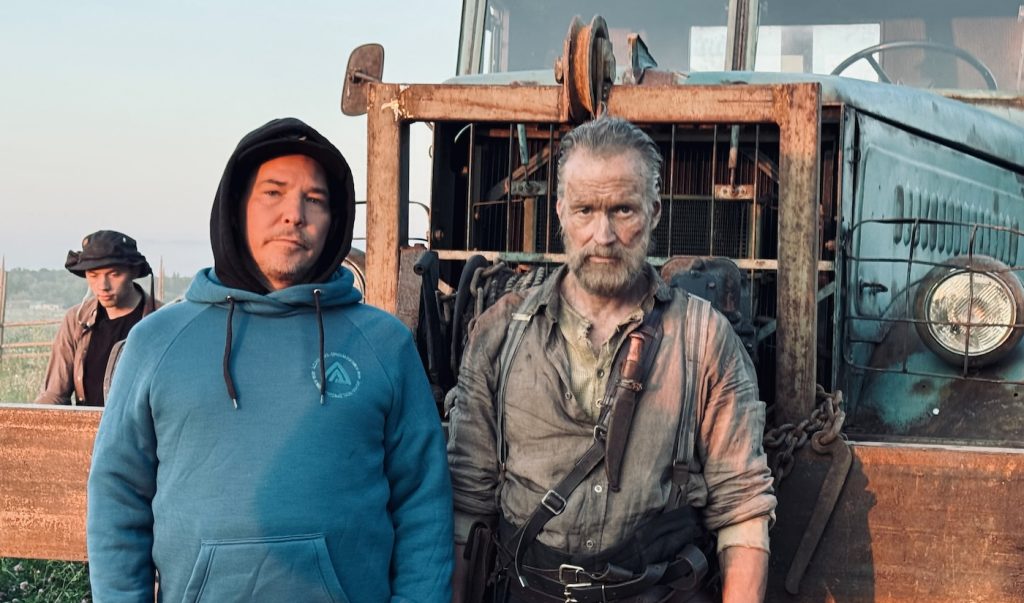
“Alien: Earth” Cinematographer and Director Dana Gonzalez on Bringing Cinema’s Most Iconic Monster to TV

On Earth, everyone can hear you scream. No apologies for the dreadful play on the classic logline for Alien, which continues to reach new, strange heights in FX’s Alien: Earth, created by Fargo‘s Noah Hawley. Cinematographer and director Dana Gonzalez establishes the expressive vision in the pilot, titled “Neverland,” which introduces a young, terminally ill girl named Marcy Hermit (Florence Bensberg) to a future world in which she’ll survive, but not quite as herself. Instead, her consciousness will be uploaded into the body of a young woman, entirely synthetic, named Wendy (Sydney Chandler), thanks to technology invented and lorded over by a tech trillionaire who goes by “Boy Kavalier” (Samuel Blenkin) and his company, Prodigy.

The world that Marcy-turned-Wendy will exist, and potentially thrive in, is one dominated by technology and the five behemoth corporations who control it—Weyland-Yutani (made famous in the Alien film franchise), Prodigy, Lynch, Dynamic, and Threshold. When a Weyland-Yutani research vessel carrying alien specimens snatched from their home planets, including one of the most iconic monsters in all of cinema (and now TV), the Xenomorph, crashes into a Prodigy-owned building in the city of New Siam, the world order is about to be shaken up. Gonzalez was a major creative force in establishing the world of Alien: Earth and the stakes at play, particularly in the thrilling combo of episodes two and three, “Mr. October” and “Metamorphosis,” both of which he directed.

In the pilot, “Neverland,” Wendy searches for her brother, Joe Hermit (Alex Lawther), among the crash site, where the Xenomorph has slaughtered almost everyone aboard the Weyland-Yutani ship, and the nearby apartment building is swiftly becoming its hunting ground. Earth is now under a threat that might prove too unstable even for the corporate overlords to handle. 

Recently, Gonzalez spoke with The Credits about portraying some of the franchise’s more iconic signatures in his visceral episodes in one of the year’s standout series.


Earth was always talked about as a living hell in the franchise. Here, this is the first time fans get to experience it. How did you and Noah want to depict Earth? 

Noah had this whole idea of a wet, overgrown world. And then, between the development, which is about three years before shooting, and the world, the world was changing too. There’s the billionaire situation, now trillionaires, and the Elon Musks of it all that started taking on a whole new meaning. You now have that cerebral atmosphere that people can tap into. If we’re feeling this pressure now from that class of people, it’s likely to be even worse in the future. There’s an inequality in the distribution of wealth, and there’s climate change. These people are dealing with possibly the end of the world. Then you add five corporations that will eventually be two corporations that screw up the world. So, it’s more than just a physical, atmospheric place.

FX’s Alien: Earth — Pictured: L-r: Dana Gonzalez, Adarsh Gourav as Sligthly, Jonathan Ajayi as Smee, and Babou Ceesay as Morrow. BTS. CR: Patrick Brown/FX.

Seeing the rich get eaten is also fairly new to the series. In episode two, there’s a Barry Lyndon party turned into a slaughterhouse by a Xenomorph. How’d you land on the Last Supper image?

It can be bombastic. It’s already ludicrous. The whole thing is like this [rich] guy’s just like, “No, we’re having this party. I don’t care if a ship crashed into the building.” And so, that image of them at the table — I worked with a concept artist. I wanted it to be the Last Supper that a Xenomorph destroyed. I wanted to have this iconic image that you could tap into.

Noah wanted to steer away from the more human qualities of the Xenomorph and approach the alien more like a cockroach. What did that direction mean to you? 

You couldn’t just build the tension and then cut to the Xenomorph, and then boom, he’s cooked. There’s more story that has to be told, even in the Lordship scene — the Xeno jumping and chasing and pinning Hermit. You’re showing more than ever, so you try to get the suit in a great way. The physicality – it’s flying and jumping around. With full CGI, we have more control, but it’s never going to be the tactility of how we photographed it. With eight hours, how many minutes will effectively be spent with the Xenomorph? More than any other movie would have to deal with. In episode seven, you see it outside in its full glory.


What did you discover in early camera tests about which lighting works and doesn’t work for a Xenomorph suit?

There were early tests in New Zealand with Wētā in the first year. You put it on camera, adjusting the color and the sheen. And then in Bangkok, we did the more serious tests. Even in that [party] scene, you’re not able to light it where you just see the Xenomorph in such a way that you’re seeing all these reflective areas and everything. So, a product shot — actually in space, moving around — you’re lighting it more holistically than you’ve ever done. Hopefully, the Xenomorph was presented in a much more controlled lighting space. You have to make this thing scary.


In your eyes, how do you make it scary?

You want to see the details of it, and find out what that is. And so, it was an evolution of designing the suit, the finishes of the suit, and the final testing in Bangkok. Then you start bringing it into the physical space, and you have wires on it, and it’s moving around. Hopefully, you nail all those things throughout that process, knowing that it will work. Adding the goop, does that work as effectively in one shot as the other? When you’re doing practical stuff and you have a time element, it’s tough because it’s not like in CGI, where you could tweak it until you think it’s perfect. So, if suddenly the drool isn’t working as well from the earlier shots, the payoff is that it’s practical, and I think that’s better. So, if the drool is not as good in one shot as in another shot, you’re still winning.

As a director, you had the privilege of shooting a close-up of the iconic egg. What details pop when you’re up that close? How do you want to light it just right?

You start with the design, and you keep hitting it. You keep hitting hard, you add details, and then you photograph it. Where does it photograph the best? How does the color come across? If you look at even Alien, the egg kind of changes a little bit from shot to shot. When you first see the egg, and then when you see the clear egg, or when you see the facehugger through it as it’s coming out — it’s almost like three different eggs. You realize that ours is definitely more consistent because we had to nail it down. But look, we have the luxury of looking at Alien. We could always say, “How did Ridley make this work?” Here, there’s a modern feel to it. There are new materials that didn’t exist in those days. But it does start with the original, thank God. 


A few of the franchise’s practical visual elements remain strong — smoke, shadow, and rain. As a cinematographer and director, how do you master those elements?

I’m always trying to have an atmosphere in everything I do. I don’t feel like I’ve ever nailed it. I’m not sure if I will ever nail it perfectly to what I think it is. I love it when I see things that have an atmosphere. I like places where, as an audience member, I’m transported into a different environment. I love being thrown into this heavy feeling and heavy texture. That, to me, always wins. I’m always taken out of things — like period pieces or even things like this — where they’re just too real. Because I do think that’s a big part of it, even in your earlier question about [showing] Earth. 

FX’s Alien: Earth — Pictured: Sydney Chandler and Dana Gonzalez on set. CR: Patrick Brown/FX.

How so?

You want to feel the wetness and the steam, all kinds of different things going on. We use practical effects for the atmosphere and real water. I have filtration. You’re finding some lenses that give that. So, that’s my big thing that, hopefully, by the time I retire, I’ll say, “Yep, there it is. That’s what I’ve been trying to fight for my entire career.” Obviously, this one has maybe a heightened version of that, but I try to do it in everything I do.

Alien: Earth is streaming on Hulu.

Featured image: Sydney Chandler in “Alien: Earth.” CR: Patrick Brown/FX

Maggie Gyllenhaal’s “The Bride!” Rises: Christian Bale is Frankenstein’s Monster & Jessie Buckley is his Resurrected Companion

The first trailer for Maggie Gyllenhaal’s The Bride! has officially risen.
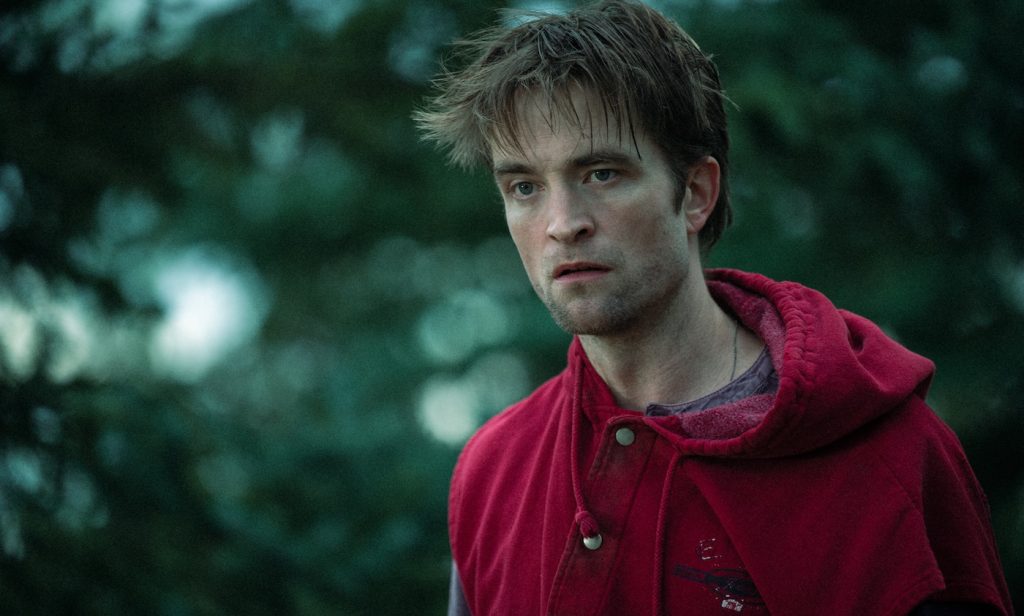
“Was I just the same before the accident?” asks Jessie Buckley’s The Bride in the opening seconds of the trailer for writer/director Maggie Gyllenhaal’s The Bride! The response comes from none other than Frankenstein’s Monster, played by Christian Bale. “There wasn’t any accident,” he says. “Everything we did, we did it on purpose.”

We see Buckley’s Bride murder, and then we see her very much alive—in a manner of speaking—and face-to-face with the man who helped make it happen, Frankenstein’s Monster, who tells her “there’s nothing left to do now but live.”

Gyllenhaal’s script sends a forlorn Frankenstein to Chicago in the 1930s, hoping to enlist the help of Dr. Euphronious (Annette Bening) to help create him a companion. Their solution is to resurrect the corpse of a murdered young woman—Buckley’s The Bride—but when they succeed, they create a being unlike any they could have expected. The trailer reveals that Gyllenhaal’s film is part horror, part romance, part outlaw narrative, with Buckley and Bale’s monstrous couple like a Grimm’s Fairy Tale version of Bonnie and Clyde.

The cast is appropriately star-studded, given Gyllenhaal’s pedigree, which includes her sensational directorial debut, The Lost Daughter. The cast includes Peter Sarsgaard, Jake Gyllenhaal, Penélope Cruz, Julianne Hough, and John Magaro. Gyllenhaal assembled a potent team behind the camera, too, including composer Hildur Guðnadóttir, cinematographer Lawrence Sher, costume designer Sandy Powell, production designer Karen Murphy, and editor Dylan Tichenor.

The Bride! rises in theaters on March 6, 2026. Check out the trailer below.

For more on Warner Bros., DC Studios, Max, and more, check out these stories:

“One Battle After Another” Review Round Up: Paul Thomas Anderson Delivers a Stone-Cold Masterpiece

“Big Little Lies” Season 3 Officially in the Works

James Gunn Reveals Superman and Lex Luthor Will Team Up in “Superman: Man of Tomorrow”

Featured image: Caption: Jessie Buckley as The Bride in Warner Bros. Pictures “THE BRIDE!” a Warner Bros. Pictures release. Photo Credit: Courtesy of Warner Bros. Pictures

Caged Dynamics: How DP Ula Pontikos Frames Willem Dafoe & Corey Hawkins in “The Man in My Basement”

The Man in My Basement marks Nadia Latif’s feature directing debut, and it’s a doozy. Latif adapted author Walter Mosely’s acclaimed 2004 novel of the same name, from a script she co-wrote with Mosely. The film is set in the quiet village of Sag Harbor, New York, where Charles Blakely (Corey Hawkins) is a man adrift until he gets a strange offer from an even stranger businessman, Anniston Bennet (Willem Dafoe), to rent out his basement. What seems like a saving grace quickly turns south when Charles finds his new house guest has locked himself in a metal cage. Kinky? Hardly. What plays out is a psychological thriller steeped in weighty themes – race, colonization, preservation, power, self-reproach – as the two try to understand each other better, the situation, and, for Charles, why the hell this is all happening to him.

For Polish cinematographer Ula Pontikos (Russian Doll), it meant creating a striking visual language that supported the simmering animosity of the characters through light and shadow, camera angle, and shifting eye lines to guide the audience through changing power dynamics. In designing the movement, Pontikos tells The Credits, “Most of our discussions kept coming back to one thing: What’s the intention behind each frame? What feeling are we going for in each moment? Who does the audience need to be with at any given time? Are we seeing this through Charles’s eyes, or are we observing him? That intention was everything. And most importantly, when do we get inside the cage and observe Charles from within? Every shot was a storytelling decision.”

Did you reference any material to create the dynamics between Charles and Anniston? 

Nadia’s a huge fan of Charles Burnett’s Killer of Sheep, and that definitely shaped how we approached our character, Charles—that raw, intimate feel with gentle coverage. We even shot a scene with a girl in a dog mask as a direct homage to Burnett’s film. We were also watching the film Chameleon Street by Wendell B. Harris Jr, and films from Ousmane Sembène, Djibril Diop Mambéty, and Med Hondo. There’s a parable-like quality to all those men’s films, which Nadia used as a reference and a big introduction for me to West African Cinema.


How about defining any visual themes to support the story? 

For Nadia and me, this is fundamentally a story told through a multitude of two-shots. The entire film is woven together with these pairings – sometimes romantic, sometimes antagonistic, and sometimes moments of raw connection. Each two-shot was carefully considered: how we framed it, what the lighting conveyed, what color subtly signaled about the characters’ relationship in that moment. Even the use of split diopters became a deliberate device to visually articulate the shifting power dynamic between Charles and Anniston, keeping them both in focus but emotionally worlds apart.

Willem Dafoe is Anniston Bennet and Corey Hawkins is Charles Blakely in “The Man in My Basement.” Courtesy Hulu.

Most interactions between Charles and Anniston take place in Charles’s basement.  How did you treat the evolving camera language?

Visually, it was interesting to explore artists like Lynette Yiadom-Boakye, whose work both Nadia and I bonded over. The way she not only paints from imagination but also paints the figures against these dark, muted backgrounds. But our biggest reference point was The Silence of the Lambs. We had long talks about how to frame the dynamic between two people when one is almost completely stationary. A lot of it came down to how we reveal the cage — we were super conscious about holding back just enough to make it feel powerful when you finally see it.

We also looked at the controlled chaos in Zulawski’s Possession for inspiration on visualizing a total psychological breakdown, especially the way the camera moves, almost like its own character with intention. The steadicam in that film doesn’t just follow the action—it reveals story points on its own terms.

How did you want to reveal Charles seeing Anniston in the cage for the first time?

So, in that first shot where Charles comes down into the basement, we stay with him – really sit with his expression – and only then do we reveal that Anniston is already in the cage. That said, it was never about recreating a specific shot directly. Our focus remained on what each scene fundamentally needed to feel true. While Nadia shared a list of about twenty films that inspired the overall tone and mood of the project, our on-set conversations were less about replicating those references and more about uncovering the emotional authenticity of Charles’s journey. Those films were a compass, not a map.

L-r: Corey Hawkins is Charles Blakely and Willem Dafoe is Anniston Bennet in “The Man in My Basement.” Courtesy Hulu

You mentioned using the split diopter, which brings two subjects at different distances into focus. Films like Jaws, Pulp Fiction, and Mission Impossible have famously used it. What was the thought process behind this use? 

These shots weren’t just stylistic choices; they were emotional statements to us. We used two split diopter shots in the film, and I believe they were to make an important power dynamic point. Like so much of our approach, it comes back to how you convey a story through two-shot frames. In a single frame, the split diopter visually articulates the power dynamic between Anniston and Charles: Charles appears small and vulnerable, almost receding into the background, while Anniston feels overwhelmingly present and oppressive, whilst keeping them both in focus, giving equal importance to them. Throughout the making of the film, we were asking ourselves: What feeling are we trying to evoke between these two characters? How does framing affect perception of power?  

There’s a moment where Charles turns off the lights on Anniston. “Tonight you’re the prisoner and I am the motherfucking warden,” he says. It’s followed by several sequences of them questioning each other, where there’s a tonal shift in lighting. What went into that language? 

That scene marks the dramatic lighting shift in the film. Charles is struggling to reclaim control, while Anniston is desperately begging him to stop. My initial approach for the basement was straightforward – a simple, diffused tungsten bulb to maintain a raw feel. But for this pivotal moment, when Anniston begs him to leave the light on, I swapped the bulb for a harsh, underused photo flood bulb. Its aggressive, powerful glare is intentionally uncomfortable. It strips away any warmth or subtlety, visually amplifying his panic and helplessness. The light itself becomes a manifestation of his state of mind: exposed, merciless, and utterly hopeless.

Willem Dafoe in Anniston Bennet in “The Man in My Basement.” Courtesy Hulu.

Later, Anniston has a breaking point, telling Charles, “I don’t want to play anymore.” The dramatic scene starts, only lit by a flashlight. How was that pulled off?

The color, intensity, and quality of the light were very important. We tested numerous torches to find just the right hue and brightness. To augment the single-source setup, I positioned a polyboard just off-camera to bounce enough light back onto Charles’s face. Sometimes, you’d find me or Willem himself holding that board to keep the exposure back on Charles’s face to get a return of the single source light. But a little extra came when Willem suggested moving the torch itself during the moment Anniston grabs Charles. That subtle motion – the light shaking, flickering, becoming nervous – didn’t just illuminate the scene; it added great tension to the scene. 


The Man in My Basement is in select theaters now before arriving on Disney+ and Hulu September 26.  


Featured image: Willem Dafoe and Corey Hawkins in “The Man in My Basement.” Courtesy Hulu.

From Abbey Road to “Alien: Earth”: Composer Jeff Russo on Bringing Xenomorphs Home Through Music

Alien: Earth doesn’t rehash the familiar, even if it beats with the acid-pumping heart of Ridley Scott’s original Alien. The series expands on the terrifying world Scott first unleashed on audiences on May 25, 1979 by focusing not only on the iconic Xenomorph, one of the most legendary movie monsters of all time, but by imagining what the world might look like decades later when the Xenomorph, and a slew of other captive galactic creatures, are brought down to a rapidly changing, capitalist-facsist Earth. The series comes from a man who has already taken a beloved film and turned it into a sprawling world, Fargo creator Noah Hawley. There’s little in the way of nostalgia – only faithfulness and creative freedom. It’s heard in composer Jeff Russo’s score alone, as well as in the rock songs from music supervisor Maggie Phillips.

Alien: Earth, true to its title, is a chapter largely set on Earth, which is another rarity for the franchise. possibleSydney Chandler) is a dying girl whose consciousness is placed in a synthetic body, a feat made possible by the talented, narcissistic “boy genius” (Samuel Blenkin) and his company, Prodigy. Even the protagonist of the story is an alien to our world, which welcomes the infamous Xenomorph and a wide variety of new aliens to our shores after a Weyland-Yutani ship crash lands on our planet. Unlike in space, on Earth, people can hear you scream.

Hawley’s long-time collaborator, Russo, looked at scoring Alien: Earth as an eight-hour film. There are over three hours of music on the soundtrack, bursting with organic string instruments and an elegant brokenness. Recently, Russo spoke with The Credits about composing a new sound for the Alien universe.


For the song “Xenomorph,” how did you want to communicate the alien’s inner life?

Xenomorph is a catchall piece of music that was basically meant for anything alien. It is more of a study in the tension between beings, because are they evil, or are they misunderstood, or are they protecting themselves? In the Alien franchise, you never know. There’s no way to know what they’re thinking. I needed to study that idea in music, and that’s what that piece really is in my brain.

What about Wendy’s thought process? How’d that shape her childlike theme?

With Wendy, I had to dive into the feeling of the transition as well: what she was before and what she became. She evolves as a being, whatever that being may be. Transition and evolution, that’s what that piece of music is. It discovers and studies her state of mind, which is tenuous. A lot of push and pull. Sometimes she feels comfortable, and other times, she feels completely uncomfortable in this body.

FX’s Alien: Earth — “Mr. October” — Season 1, Episode 2 (Airs Tues, August 12) — Pictured: Sydney Chandler as Wendy. CR: Patrick Brown/FX

It’s funny hearing you say “push and pull.” In her theme, it sounds like innocence fighting horror.

And that’s what it is. It’s the push and pull against that. She evolves and realizes things about herself as the show continues.

How important is contrast in general when you’re composing?

Contrast is probably the most important thing in any narrative, because white is only white when there is black behind it — or vice versa. You need contrast to see, or everything would be blank. That’s how I look at it in terms of music. For something dark, you need to show the light in order to understand what the dark is — and the same thing in reverse. Contrast, in this particular case, is important. I need to show Wendy’s innocence in order to show what she will become. 

FX’s Alien: Earth — “Emergence” — Season 1, Episode 7 (Airs Tues, Sept 16) — Pictured: Alex Lawther as Hermit, Sydney Chandler as Wendy, Lily Newark as Nibs. CR: Patrick Brown/FX

What about scoring Wendy’s relationship with her brother, Hermit (Alex Lawther)? How’d you want “Siblings” to, musically, bring them together when they reunite?

“Siblings” was a piece of music I wrote early on in the process. I’ve been writing music for this for about five years, and that piece of music has been tooling around in my head for three years. When I read the second and third scripts, I felt they needed some sort of musical moment — because I knew that was going to happen. The scripts had been changing as we were rolling through it, but I always knew there was going to be that moment, and what that moment felt like was going to be very important. 


What was the first track you wrote five years ago? How’d it lay the groundwork for the rest of the score? 

On the soundtrack, that piece of music is called “The Apartments.” That was one of the first pieces I wrote because I had gotten a script — or it wasn’t even a script, it was an outline. They were doing some VFX tests to see what the Xenomorph VFX would look like. Noah sent the outline to me and was like, “Can you do something here to help us along?” That piece of music is what I wrote for that. It was an earlier form than what you heard, but basically, that’s the piece.

Does Noah play your music on set to create atmosphere? 

We did that on Fargo and Legion. I wrote these themes when he first sent me a script. He just sent me a new script for a new project, and I always tell him, “As soon as you send me a script, I have to hold off on reading it — because once I read it, I’m inspired to write. I have other stuff I have to finish before I start something new.” So, I wrote a bunch of music prior to him shooting, and he had it and was listening to it. 

A great element of the Alien franchise is the flaws and the filth of the future, despite the incredible technology they possess. For the score, did you ever want to create a similar atmosphere and embrace the messiness of humanity?

Well, I don’t pay attention to perfect performances pretty much anytime I’m putting a score together. I can’t think of anything that happened by accident. Everything was deliberate, but it is a very broken feeling, so there’s very emotional music in the score.

FX’s Alien: Earth — “Emergence” — Season 1, Episode 7 (Airs Tues, Sept 16) — Pictured: Timothy Olyphant as Kirsh, Sydney Chandler as Wendy, Samuel Blenkin as Boy Kavalier. CR: Patrick Brown/FX

What did you want that brokenness to communicate? 

Playing emotional music against the backdrop of something as cold is great for contrast. There’s also the idea that this narrative, this storytelling, has character connectivity we haven’t really seen in any of the Alien franchise movies — like the brother-and-sister storyline. One of my favorite scoring moments was when Hermit starts to believe that Wendy is his sister in episode two, and they hug. That’s an emotional watershed moment for the characters, and that’s not typical for Alien. Emotional music as a backdrop can be very effective, from a contrast perspective.

FX’s Alien: Earth — “Metamorphosi” — Season 1, Episode 3 (Airs Tues, August 19) — Pictured (L-R): Alex Lawther as Hermit, Sydney Chandler as Wendy. CR: Patrick Brown/FX

You have a “Let It Be” poster behind you, so when you were recording the orchestra at Abbey Road studios, what do you feel and hear when you’re there? 

It’s very evocative of all the scores I loved growing up. When the strings played, or when the brass and winds played, you could hear echoes of those scores — echoes of previous music that’s been made there — because the room is so unique. It’s a unique-sounding space. I recorded in both studios there, Studio One and Studio Two. They’re iconic. I also recorded a little bit at Air Studios, which is the other major scoring stage in London. I don’t really know how to explain it, but it’s an incredible feeling to be in that studio.

You’ve said that the Alien: Earth score presented you with several new opportunities as a composer. Which new territory was gratifying for you to explore? 

I’m always really interested in dissonance, and in this score, there’s a good amount of it. I’m fascinated by how dissonance affects people, because it hits different listeners in different ways. Emotional music affects most people in the same way — it’s the same with scary music. But when you talk about true dissonance, like notes that shouldn’t go together but you put them together to make that weird sound, I’m always interested in how that affects people’s psyches. I did a lot of thinking about that in the making of this score and how to utilize it. A lot of the score lulls you into a sense that everything’s okay, and then gradually turns that on its head to unease.


Alien: Earth is now streaming on Hulu.

Featured image: FX’s Alien: Earth — “Metamorphosi” — Season 1, Episode 3 (Airs Tues, August 19) —  Pictured: Timothy Olyphant as Kirsh. CR: Patrick Brown/FX

New “Mandalorian and Grogu” Images Reveal AT-ATs, Alien Creatures & Sigourney Weaver

We just got a look at the first trailer for director Jon Favreau’s Star Wars: The Mandalorian and Grogu, and now it’s time to parse a slew of new images from Favreau’s film. What we know about what Favreau, his co-writer Dave Filoni, and the rest of the stellar cast and crew have cooked up is scant, but the trailer is nonetheless revealing. There are creatures aplenty—mainly of the classic Star Wars type, meaning they were created practically, and their variety of types, from the small Anzellan creatures, first seen in the form of Babu Frik in The Rise of Skywalker (you may remember the little droidsmith helping fix C-3PO), to the large beasts battling it out in a cage match.

The images reveal a few of those creatures, some classic Star Wars vehicles, plus, of course, our stars, Din Djarin (Pedro Pascal) and his protege Grogu, lovingly referred to as Baby Yoda. We get a still of a trio of the massive AT-ATs, which first appeared in the iconic The Empire Strikes Back and are seen here trooping along a snowy ridgeline, one in their number falling to its destruction. We see Grogu, brandishing a small monocular, as he and his mentor, Din Djarin, engage in some reconnaissance. There’s also an image of an Amani, a species of tall, flat-bodied aliens from Maridun, capable of curling into balls and rolling at high speeds. We’ve also got Sigourney Weaver’s Colonel Ward, a member of the Rebel Alliance and the only non-masked human we saw in the trailer.

The Mandalorian and Grogu is set after the events of The Mandalorian season 3 in the era of the New Republic, after the evil Empire has been defeated and the galaxy is in a moment of transformation. The fledgling New Republic is trying to protect all that the Rebellion fought for, and part of their effort includes calling on Din Djarin and his apprentice Grogu to take on a fresh mission. The cast also includes The Bear and Deliver Me From Nowhere star Jeremy Allen White as Rotta the Hutt, son of the iconic warlord Jabba the Hutt, and Jonny Coyne as an Imperial warlord. The music is composed by the Oscar-winning composer Ludwig Göransson.

The Mandalorian and Grogu is set to hit theaters in May of 2026, followed a year later by director Shawn Levy’s Star Wars: Starfighter, which stars Ryan Gosling and is set five years after the events of Rise of Skywalker.

Check out the photos below:

AT-AT walker in Lucasfilm’s THE MANDALORIAN & GROGU. Photo courtesy of Lucasfilm. © 2025 Lucasfilm Ltd™. All Rights Reserved.
(L-R) Grogu and Mandalorian (Pedro Pascal) in Lucasfilm’s THE MANDALORIAN & GROGU. Photo courtesy of Lucasfilm. © 2025 Lucasfilm Ltd™. All Rights Reserved.
Colonel Ward (Sigourney Weaver) in Lucasfilm’s THE MANDALORIAN & GROGU. Photo courtesy of Lucasfilm. © 2025 Lucasfilm Ltd™. All Rights Reserved.
(L-R) Grogu, Mandalorian (Pedro Pascal), and Colonel Ward (Sigourney Weaver) in Lucasfilm’s THE MANDALORIAN & GROGU. Photo courtesy of Lucasfilm. © 2025 Lucasfilm Ltd™. All Rights Reserved.
(L-R) Colonel Ward (Sigourney Weaver) and Grogu in Lucasfilm’s THE MANDALORIAN & GROGU. Photo courtesy of Lucasfilm. © 2025 Lucasfilm Ltd™. All Rights Reserved.
(L-R) Grogu and Mandalorian (Pedro Pascal) in Lucasfilm’s THE MANDALORIAN & GROGU. Photo courtesy of Lucasfilm. © 2025 Lucasfilm Ltd™. All Rights Reserved.
An Amani in Lucasfilm’s THE MANDALORIAN & GROGU. Photo courtesy of Lucasfilm. © 2025 Lucasfilm Ltd™. All Rights Reserved.
(L-R) Mandalorian (Pedro Pascal) and Grogu in Lucasfilm’s THE MANDALORIAN & GROGU. Photo courtesy of Lucasfilm. © 2025 Lucasfilm Ltd™. All Rights Reserved.
(L-R) Bai, Clang, Keeto and Grogu in Lucasfilm’s THE MANDALORIAN & GROGU. Photo courtesy of Lucasfilm. © 2025 Lucasfilm Ltd™. All Rights Reserved.
(L-R) Mandalorian (Pedro Pascal) and Grogu in Lucasfilm’s THE MANDALORIAN & GROGU. Photo courtesy of Lucasfilm. © 2025 Lucasfilm Ltd™. All Rights Reserved.

For more on all things Star Wars, check out these stories:

Baby Yoda Speaks in the First “The Mandalorian and Grogu” Trailer

“Star Wars: Starfighter”: New Look at Ryan Gosling & Flynn Gray in Cryptic Photo

First Image From “Star Wars: Starfighter” Drops as Film Begins Production, Amy Adams & Aaron Pierre Join Cast

Featured image: THE MANDALORIAN & GROGU – Concept Art courtesy of Lucasfilm Ltd. ©2024 Lucasfilm Ltd. & TM. All Rights Reserved.

Baby Yoda Speaks in the First “The Mandalorian and Grogu” Trailer

The first trailer for director Jon Favreau’s Star Wars: The Mandalorian and Grogu opens on Din Djarin’s (Pedro Pascal) spaceship the Razor Crest curising over a coastline. The next thing we see is one of those images that has made the Disney+ series The Mandalorian such a hit—we’ve got Mando and Baby Yoda doing some recon in a desert landscape, with the little guy sporting a little single-lens pair of binoculars to aid him. It’s an undeniably cute image, and it’s the relationship between the taciturn, almost-always helmeted bounty hunter and the very special child he’s taken under his wing that has made the series so dependably enjoyable. Now, Favreau and his co-writer Dave Filoni are bringing the duo to the big screen in one of the many upcoming Star Wars feature films slated for release.

The trailer introduces Sigourney Weaver’s rebel alliance leader, reveals an alien cage match for the ages, and features those most reliable of Star Wars terrestrial bad guy war machines, the AT-ATs, traversing a snowy landscape (and getting destroyed). We also get the first words ever spoken by Baby Yoda, when he compliments himself on repelling a rat-like creature with, “Good shot, baby.”

The Mandalorian and Grogu are set in a time after the evil Empire, and the galaxy is in a moment of transformation. The fledgling New Republic is trying to protect all that the Rebellion fought for, and part of their effort includes enlisting Din Djarin and his apprentice Grogu on a fresh mission.

The film is set after the events of The Mandalorian season 3, which was set in the New Republic era, five years after the fall of the Galactic Empire in Return of the Jedi. The trailer is chock-a-block with creatures and robots (in fact, Weaver’s Rebel Alliance Colonel is the only unmasked human we see), and the adventure looks decidedly family-friendly. It’s the first new Star Wars film since J.J. Abrams’ 2019 trilogy-capper The Rise of Skywalker. It boasts The Bear and Deliver Me From Nowhere star Jeremy Allen White as Rotta the Hutt, son of the iconic warlord Jabba the Hutt, and Jonny Coyne as an Imperial warlord. The music is composed by the Oscar-winning composer Ludwig Göransson.

The Mandalorian and Grogu is set to hit theaters in May of 2026, followed a year later by director Shawn Levy’s Star Wars: Starfighter, which stars Ryan Gosling and is set five years after the events of Rise of Skywalker.

Check out the trailer below.

For more on all things Star Wars, check out these stories:

“Star Wars: Starfighter”: New Look at Ryan Gosling & Flynn Gray in Cryptic Photo

First Image From “Star Wars: Starfighter” Drops as Film Begins Production, Amy Adams & Aaron Pierre Join Cast

Featured image: (L-R) Mandalorian (Pedro Pascal) and Grogu in Lucasfilm’s THE MANDALORIAN & GROGU. Photo courtesy of Lucasfilm. © 2025 Lucasfilm Ltd™. All Rights Reserved.

How Director Justin Tipping Mixed Art, Nike Ads & Multiple Genres in His Singular Sports Horror Film “Him”

Supernatural sports horror film Him not only blends two hugely popular film genres but also draws inspiration from the art of Jeff Koons and Edward Hopper, as well as Nike ads from the 1990s—a blend of disparate influences that cohere into a singular cinematic experience.

Produced by visionary filmmaker Jordan Peele, a man who had made his own sui generis horror films, from Get Out to Us to Nope, Him is helmed by up-and-coming director Justin Tipping. Tipping’s film is centered on Atlanta‘s Tyriq Withers as Cameron “Cam” Cade, a star football player who suffers a potential career-ending injury but gets taken under the wing of legendary quarterback Isaiah White, played by Requiem for a Dream‘s Marlon Wayans. White promises a once-in-a-lifetime opportunity to train with a titan of the sport; however, Cam’s dream shot at a comeback for the ages devolves into a proper nightmare. Withers and Wayans are joined by Julia Fox and comedians Tim Heidecker and Jim Jefferies in dramatic roles.

Here, Tipping, who also co-wrote the script with Zack Ackers and Skip Bronkie, explains how classic and contemporary art inspired Him, finding unique but perfect locations in New Mexico, and the creatives without whom he couldn’t have realized his vision.


Him melds two major genres that very rarely cross. Did you think it was overdue?

My head was just like, ‘Wait. You’re telling me that no one’s executed this before in this way?’ That immediate reaction was both terrifying and amazing. If it’s done right, you’re taking two very different languages and finding a way for them to have a conversation, and you create a new language out of it. There’s something inherently violent about American football itself. Its roots and the architecture of the game are intentionally analogous to militarism taking land, generals, soldiers, and a hierarchy. It felt like the body horror was already at play, so serving the horror fans in the Venn diagram felt natural and easy. It happens behind the scenes in the locker room. Even to recover, just getting an ice bath can be painful. We’re exploring the psychology of these athletes who strive to be the greatest, so a psychological horror film was the way to go as a metaphor.

L to R: Marlon Wayans (as Isaiah), director Justin Tipping, and Tyriq Withers (as Cam) on the set of HIM, from Universal Pictures.

Many of the visuals appear more rooted in art than in film, particularly the work of artists such as Jeffrey Koons, Edward Hopper, and Tam Joseph. It really comes through in the colors, tones, and use of light.

Absolutely, yes. I wish I could show you the original lookbook I put together. I was talking to Kira Kelly, our DP, and production designer, Jordan Ferrer, about pulling from fine art in terms of color palette and approach to the entire vision. We were also looking at some of the most stylish Nike ads, like the ’90s Freestyle campaign. Jonathan Glazer also made a Jordan ad that is slow motion, and it all dips to black. There was a very seductive marketing and advertising language that we wanted to take and subvert, but at the same time, speak to the iconography of horror language. It was channeling artists and saying, “Let’s find the most batsh*t crazy images that we can reference, whether they’re from the baroque period or more contemporary.” With the architecture, I was inspired by very specific brutalist styles. It was about trying to find a new, interesting way to take on the haunted house, or that there’s a monster in the house, and we don’t know where it is or who it is.

You shot this in Albuquerque, New Mexico. What was already there, and what did you create?

The beauty of shooting somewhere like Albuquerque, New Mexico, is that there are a lot of interiors and locations that haven’t been touched yet. It’s somewhat new, and there are still a lot of gems. Working with the location scout, the most random things started falling into place. I had this lookbook of brutalist architecture and cement-inspired things, and there happened to be a high school football field that was made out of cement with towering cement walls. I was just like, “Why does this exist? I don’t even understand the choices that the town made to use those materials and have it shaped like this.” It was exactly what I wanted to lean into. So I’m using that brutalist, weird high school football field for the field, but then, we also shot some of the interiors of White’s house in the hallways of the stadium. It was a very big puzzle to fit all this into the 30 days we had, but things like that made it work. I’m also a first-time studio director, and I think I have a lot to prove. They made it very clear, saying, “This is the sandbox.” It was a challenge, and it came down to having an amazing crew and a team that could do that.

(from left) Marlon Wayans, director Justin Tipping and Tyriq Withers on the set of HIM.

Did you use a largely local crew? I recently spoke with Ari Aster, and he mentioned that New Mexico has an excellent infrastructure for film and TV.

We brought in our DP, our production designer, and our costume designer, but that was about it. We shot at the same time Ari Aster was filming Eddington. We also attended AFI at the same time, but he was a year ahead of me, and we edited our films at the same place as well. Anyway, there were so many things shooting there at the time that it was like, “Wow, this place is becoming the place to be,” and I can understand why. You can make it look like many different things, the seasons, and there’s a culture of artisans and artists.

They also offer generous incentives and tax breaks.

That was a motivating factor for the studio, but we would have never found some of the locations had we not been there. For instance, the exterior of the housing compound where they go is a space port. The state of New Mexico is leasing it to Virgin Galactic Atlantic. They were taking millionaires into space for five-minute flights, and that’s where they were launching them out of. It was bizarre shit where it’s like, ‘Why does this exist?’ You don’t get that anywhere else. 

(from left) Isaiah (Marlon Wayans) and Cam (Tyriq Withers) in HIM, directed by Justin Tipping.

How did you come together with your DP, Kira Kelly?

She is one of those people who paints with light and is locked in. She can see things that other people don’t see when setting a frame. She was on a very short list of names and had experience shooting there. Kira also had all this experience shooting action, VFX, and her commercial reel is insane. We had the same vision, she spoke the same language, and she also had that documentary background. That was vital to capture this ESPN 30 for 30 sports movie feel and the handheld montage movements. It was very improvisational. Her attention to detail is amazing.


Dominique Dawson’s costume work for Him ranges from the practical to the fantastical. It’s a broad canvas from tinsel mascots inspired by folklore to performance sportswear.

She brought so much to this. We all knew, producers included, that a lot of this hinges on the costume design because they’re so central in the scenes. She even reached out to fine artists. There’s a Native American fine artist who did sculptural work, and she was like, “Yo, what if we got his pieces like the gloves and hat and added that to something we could source from a prop house.” These ideas and combinations all came from a very art-centric point of view. That did force us to come up with creative solutions. One of my favorite costume designs is the tinsel mascot. That was out of necessity because tinsel is cheap, but it is also exciting, because now people can maybe make it at home. She had relationships with Klutch Sports and Nike, but a lot of these scenes are really popped up and dark, so they were like, “Yeah, nope.” She would have to customize some of the sportswear, alter it, and do deep dives on the internet. 

HIM, directed by Justin Tipping.


We can’t ignore the fact that Jordan Peele is a producer on this. What was his input in all of this?

He had a very gentle guiding hand, rather than being like, “Hey, I don’t like this or that.” I would get through a draft, then sit down with him one-on-one, and I could page through and say, “I’m having trouble here because if I undo this thread, then that thread does this, but the studio is blah, blah, blah.” He would also help me navigate how to address the studio without sacrificing too much of my vision, explain what they really mean, so that I can get the note behind the note. Also, being able to be like, “I have this crazy idea,” and having a sounding board in Jordan, being like, ‘That’s crazy. I love it. Also, this could be crazy?” It was a nice, creative tennis match where we could keep riffing, and there was no ego involved. It was getting into fun trouble, making movies.

L to R: Director Justin Tipping, Tyriq Withers (as Cam), Producer Jordan Peele, and Marlon Wayans (as Isaiah) on the set of HIM, from Universal Pictures.


Him is in theaters now.

“One Battle After Another” Review Round Up: Paul Thomas Anderson Delivers a Stone-Cold Masterpiece

A recent re-watch of Paul Thomas Anderson’s There Will Be Blood reminded me—reconfirmed, really—that my experience in the theater watching his masterpiece, with an absolutely mesmerizing performance from Daniel Day-Lewis as the soused, ruthless oilman Daniel Plainview, had been exactly as transforming as I’d always remembered. It was and remains my favorite cinematic experience, and I’d waited years (decades, actually) to rewatch it. While finally sitting down and absorbing Anderson’s tale of carnivorous greed in America of the late 19th and early 20th Century on my couch wasn’t quite as transporting as being plastered to my seat in a New York City theater, it still had me entirely in its grip from the thrilling, wordless opening sequence to the deranged, bloody end.

Now, PTA is back with another film that promises a potentially equally momentous theater experience—with all due respect to the excellent Phantom Thread (2017) and the lovely coming-of-age drama Licorice Pizza (2021)—One Battle After Another looks more akin to TWBB in that it deals with men (and this time, women) in extremis. Only for the first time since Punch Drunk Love, Anderson has set his film in the present day; in this case, in an America that’s turned into a police state, where ex-revolutionaries, including Bob (Leonardo DiCaprio), must reunite after an old enemy resurfaces and Bob’s daughter has been kidnapped.

Caption: (L-r) TEYANA TAYLOR as Perfidia and LEONARDO DI CAPRIO as Bob Ferguson in “One Battle After Another.” A Warner Bros. Pictures Release. Photo Credit: Photo Courtesy Warner Bros. Pictures

The critics have been weighing in on PTA’s latest, and the reviews have confirmed that the writer/director, here adapting and reshaping Thomas Pynchon’s novel “Vineland,” has struck gold (oil?) once again. Reuniting with his go-to composer, Jonny Greenwood, and surrounding DiCaprio with a cast of scene stealers, including Teyana Taylor, Benicio Del Toro, Regina Hall, Sean Penn, Alana Haim, and Wood Harris, Anderson has pulled off a breathless, bonkers tour de force.

Following its world premiere in Los Angeles on September 8, critics have been praising Battle to such a degree that it currently holds a 97% “fresh” rating on Rotten Tomatoes and a 96% critics’ score on Metacritic.

Let’s take a quick peek at what some of those critics are saying. One Battle After Another opens on September 26.

Featured image: Caption: LEONARDO DI CAPRIO as Bob Ferguson in “One Battle After Another.” A Warner Bros. Pictures Release. Photo Credit: Photo Courtesy Warner Bros. Pictures

“Star Wars: Starfighter”: New Look at Ryan Gosling & Flynn Gray in Cryptic Photo

Ryan Gosling and co-star Flynn Gray are ready to make waves in their upcoming film Star Wars: Starfighter. 

Director Shawn Levy posted a photo on Instagram of Gosling and Gray “somewhere in the Mediterranean,” according to Levy’s caption, although the geotag indicates “Sardinia, Italy.” It’s the second glimpse we’ve gotten of Gosling and the newcomer Gray since production began, after that first cryptic shot of Gosling and Gray sitting and leaning on a cruiser of some sort.

Plot details are scarce for Disney and Lucasfilm’s first Star Wars installment since J.J. Abrams’ 2019 trilogy capper Star Wars: The Rise of Skywalker. What we do know, however, is that Starfighter is set five years after the events in The Rise of Skywalker, and that it’s not connected to the broader Skywalker Saga, which has been the driving narrative force of the nine film franchise that began with George Lucas’s 1977 Star Wars IV – A New Hope, and carried on through the original trilogy, the prequel trilogy, and the sequel trilogy that Abrams both launched and concluded.

Here’s the new look provided by Levy:

View this post on Instagram

A post shared by Shawn Levy (@slevydirect)

Levy directs from a script written by Jonathan Tropper. Recent additions to the cast are the always excellent Amy Adams and rising star Aaron Pierre. They’re joined by recent additions Simon Bird, Jamael Westman, and Daniel Ings. It was previously announced that Mia Goth and Matt Smith are on board as villains. 

“I feel a profound sense of excitement and honor as we begin production on Star Wars: Starfighter,” Levy said in a statement when production kicked off in the United Kingdom. “From the day Kathy Kennedy called me up, inviting me to develop an original adventure in this incredible Star Wars galaxy, this experience has been a dream come true, creatively and personally. Star Wars shaped my sense of what story can do, how characters and cinematic moments can live with us forever. To join this storytelling galaxy with such brilliant collaborators onscreen and off, is the thrill of a lifetime.”

Star Wars: Starfighter is scheduled for release on May 28, 2027. Before that, Jon Favreau’s The Mandalorian & Grogu is set to hit theaters on May 22, 2026.

Featured image: Ryan Gosling and Flynn Gray on the set of “Star Wars: Starfighter.” Courtesy Lucasfilm/Walt Disney Studios