
Ready to Roll: America’s Film & TV Workforce Stands Prepared to Deliver – Part 2
As Congress considers the nation’s first federal film and television production incentive, one message echoes from soundstages, editing bays, workshops, hotels, restaurants, and Main Streets across America: the crews are ready. The talent is here. The infrastructure is here. And so are the thousands of workers and businesses whose livelihoods depend on production.
In the coming weeks, U.S. filmmakers and television creators will watch closely as Congress considers the Motion Picture, Television and Entertainment Revitalization Act, a bipartisan proposal to establish a 20 percent federal production incentive to encourage more film and television projects to shoot in the United States.
The proposal arrives at a moment when communities across the country are demonstrating just how much production can contribute to local economies. From California, New Mexico, and Texas to Louisiana, Georgia, New York, and New Jersey, productions support hundreds of thousands of skilled craftspeople and small businesses while helping filmmakers take advantage of America’s unmatched combination of talent, infrastructure, and locations.
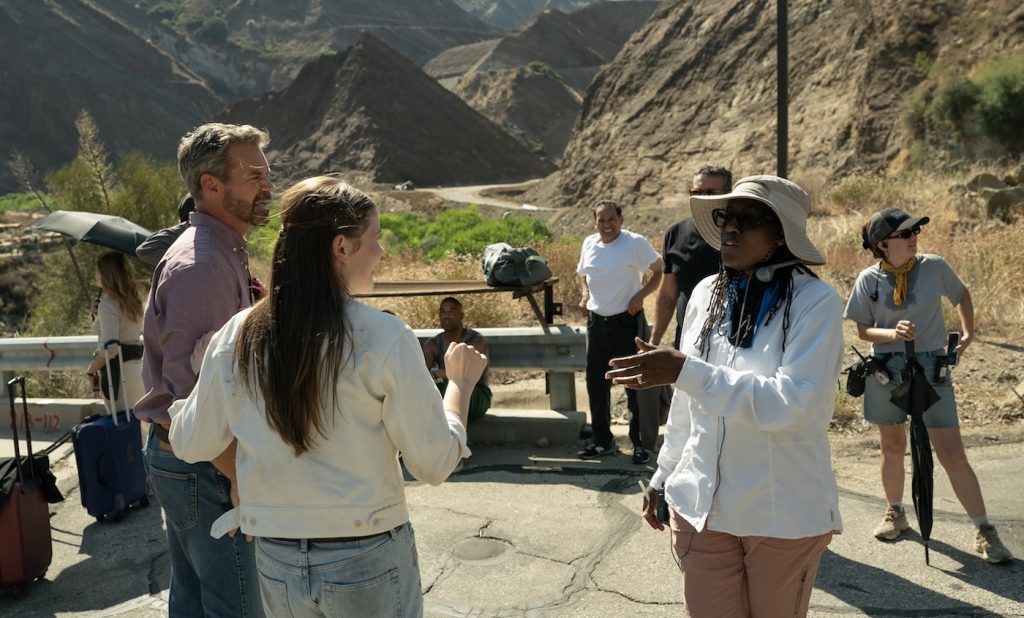
TUC WATKINS, KATE GODFREY, HANELLE M. CULPEPPER (DIRECTOR)
Federal lawmakers are exploring ways to help the United States remain competitive alongside other countries that have already adopted their own incentive programs. A coalition of supporters, including the Motion Picture Association, the Directors Guild of America, labor organizations, and producers, argues that a federal incentive could work alongside existing state programs to encourage more projects to be made here at home, supporting jobs, local businesses, and communities nationwide.
At The Credits, we’ve spent more than a decade speaking with filmmakers, craftspeople, and below-the-line workers from across the country about the value of production in their communities. Their stories reveal how film and television projects create opportunities far beyond the camera, generating work for everyone from costume designers and construction crews to caterers, hotel operators, musicians, and countless other local businesses.
Here are just a few of the voices helping tell that story. (And here’s the first installment of this series.)
California
“What’s great about shooting in California and in LA is my family gets to see me,” says Paradise director Hanelle Culpepper. “I’m usually on the road, and it’s been a really nice three years of being in town and getting to know this family of cast and crew. They’ve been working together for over 10 years, because a lot of them were on This Is Us. The challenge is driving over to Santa Clarita or further to Pyramid Lake for the location shoots, but ultimately I’m able to come home at night, so that’s been just wonderful. I’m really hopeful that all these rebates that the government is now giving us, from what the governor signed, will bring a lot more work back to Los Angeles.”
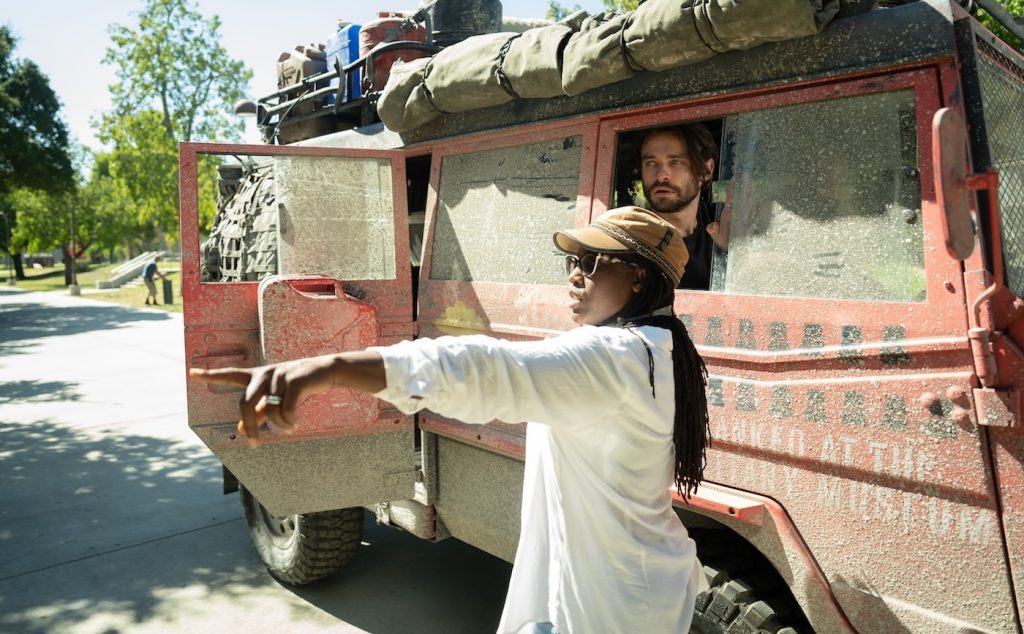
HANELLE M. CULPEPPER (DIRECTOR), THOMAS DOHERTY
Mandalorian and Grogu animation supervisor Hal Hickel helped build entire intergalactic worlds within Los Angeles soundstages and warehouses. “I’m super happy that we could make this whole production in California,” he said. “It’s so needed right now. And I think it’s a good demonstration that you can shoot a complex, big-budget film here that will look great, employ the whole fabric of occupations and keep folks busy and paid.”
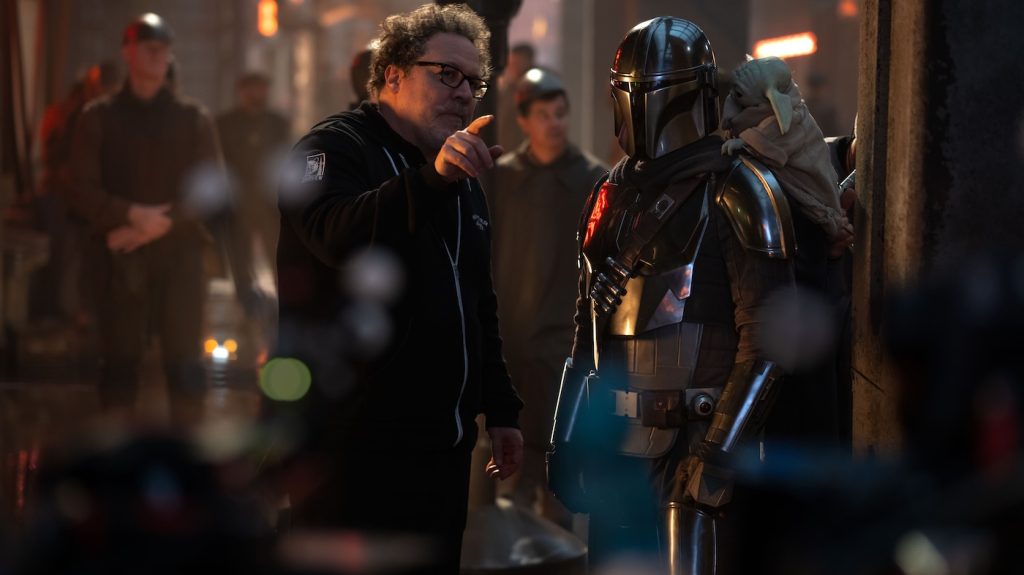
Minions & Monsters composer John Powell savored the chance to employ Los Angeles musicians for the first time in six years, after working in London on Wicked and other projects. For the Minions & Monsters soundtrack, Powell employed about 80 musicians and 60 choral singers to perform on scoring stages in Culver City and Burbank. “My wife is one of the sopranos in the Los Angeles Master Chorale, so she booked a lot of the choir. I love the players in London, but I live here, so it’s easier for me to drive to Culver City than it is to get on a plane and go to London. When we started, I told the musicians, ‘This is the first time in six years that I’ve been able to record a film score without jet lag.’ And the score is perfect for L.A. because I’m referencing lots of things that were recorded right there at MGM. I’m trying to get that sound, so it’s been a delight for me.
New York
Recent movies, including The Bride!, Spike Lee’s Highest 2 Lowest, and Caught Stealing, relied on New York City’s unique streetscape as the backdrop for their stories. Some TV shows, including Severance and Your Friends and Neighbors, also favor the Empire State. The Night Agent showrunner Shawn Ryan shot the last two seasons of his Netflix action series mainly in upstate New York. “When I look at the budgets on our show, I can see they have real economic impacts, not just on the crew, but for all the businesses that support the production and provide props and wardrobe, as well as the location work, because you pay rental fees for the houses,” Ryan told The Credits. “You can’t work on as many shows as I’ve worked on without feeling the impact of all this production moving overseas. We filmed season one of The Night Agent in Canada, but with the success we had the first year, we were able to move production to New York for seasons two and three.”
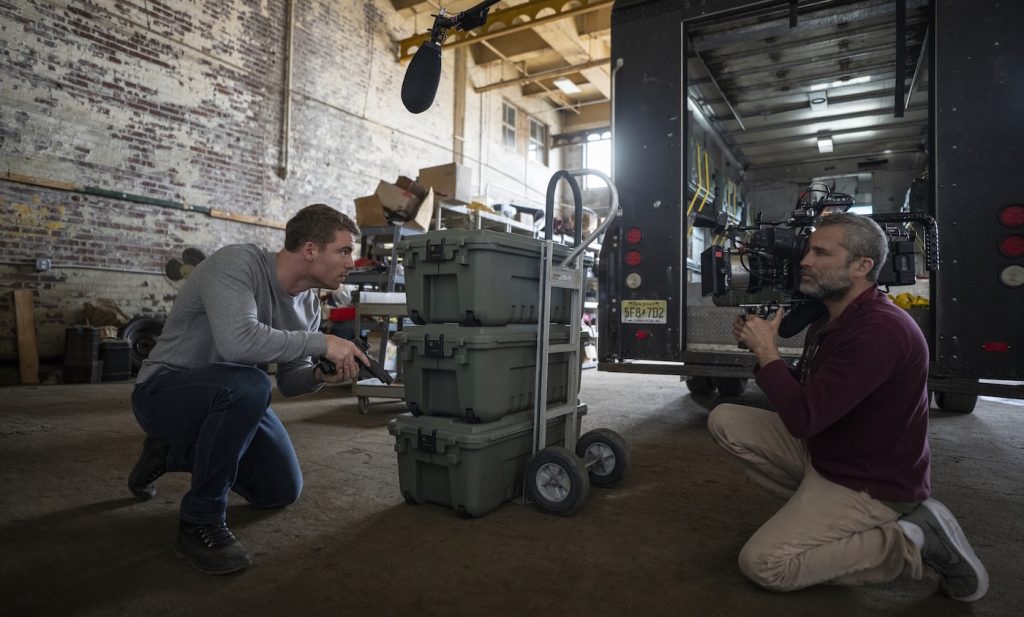
Ryan remembers how his FX Network crime series The Shield, filmed in Los Angeles County, directly benefited local institutions. “Our main scene took place at a police station that our story said had been converted from an old church,” he said. “We essentially took their church over for about a week, and the location fees we paid kept the actual church open so it could continue serving the community, because they were having some financial problems. Local productions can have real impact, and there’s a cascade effect.”
Louisiana
Sinners’ Academy Award-nominated production sound mixer Chris Welcker grew up in Louisiana, where Ryan Coogler‘s Oscar-lauded movie was filmed. While studying music media in college, he said, “I remember my grandmother mailing me newspaper clippings saying the film industry in Louisiana and New Orleans is really taking off and they need people to do all these different things on film sets. I thought, ‘I may as well give it a shot.'”
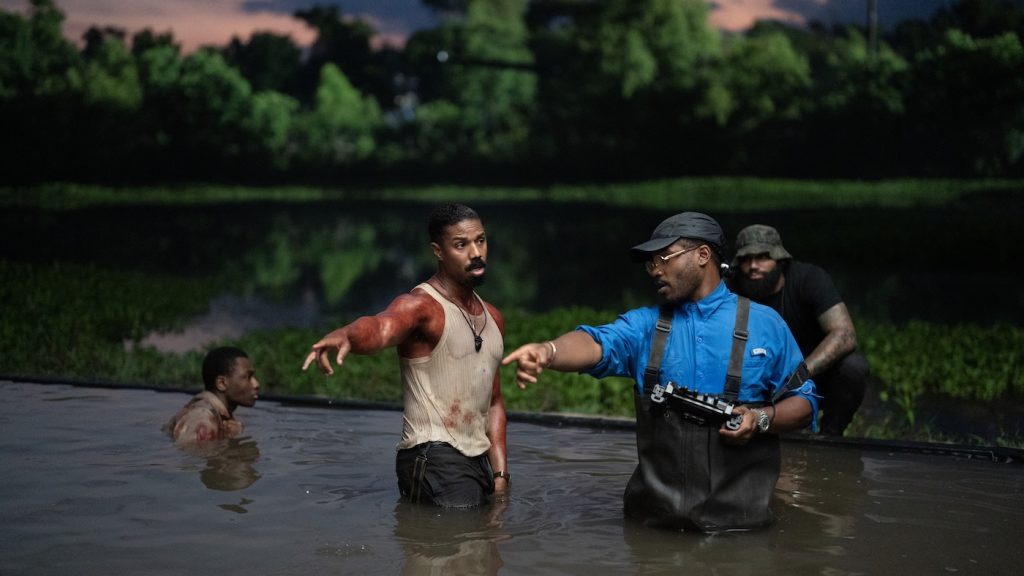
Welcker rose through the ranks and now sees movie production as essential to his home state’s economic lifeblood. “I know people who have bought property to basically house their equipment and to create facilities where they offer services that productions need,” Welcker said. “And then there’s the restaurants and hotels that benefit from the industry, because when you have all these productions coming to town, maybe it’s not the peak tourist season, but then all of a sudden a film production puts up 100 people in a hotel. That can make the difference in any given year for a hotel, for the restaurants, for the lumber sold for set construction, for all of it.”
New Mexico
Production designer Jonah Markowitz shot the HBO Max series Duster in New Mexico, which is also home to Vince Gilligan’s Emmy juggernaut Pluribus. Markowitz told The Credits, “New Mexico has a very robust filmmaking community because of its tax credit, which brings in a ton of jobs that affect all the local businesses. When you have so many artisans coming into the state, it affects the community by training people locally to be involved in a visual craft. That changes the vibe of a city.”
Writer-director Adam Wingard filmed his fall thriller Onslaught in New Mexico too. He said in a statement, “The last time I was filming a movie in New Mexico was for The Guest, all the way back in 2013. In a way… I put my own personal style of filmmaking on hold in order to pursue a larger studio film career, so it was only fitting that, as Onslaught was created as a return to form, we would head back to New Mexico for another helping of the magic there.”
Georgia
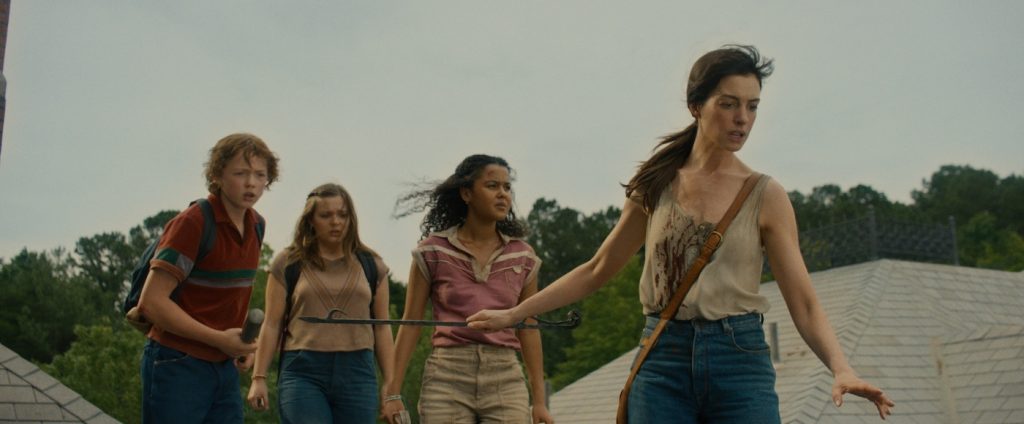
Late summer horror hit The End of Oak Street was filmed in Georgia as a stand-in for writer-director David Robert Mitchell’s home state, Michigan. Post-production took place in Los Angeles under the watchful eye of veteran editor John Axelrad. “I was very lucky to edit the movie locally because I have friends out here in Los Angeles who haven’t worked for up to two years, and before, they were always working.” To help revitalize the movie business, California lawmakers recently passed a post-production tax credit program for editing and visual effects work, which Governor Gavin Newsom signed into law. Axelrad said, “I’ve always been a vocal proponent that we needed a post-production tax incentive to compete with other countries, because we’ve really been struggling in California.”
Massachusetts
Widow’s Bay, the Apple TV horror comedy nominated for 19 Emmy Awards, could have conceivably swapped in Canada’s Nova Scotia coastline as the setting for its titular New England island, but producers chose to shoot in Massachusetts. “I love shooting locations for what they are,” said executive producer/director Hiro Murai. “I learned, when we shot [TV series] Atlanta in Atlanta, that there’s so much joy to be found discovering locations by going to the real place. To me it felt kind of necessary to shoot this show in Massachusetts because of the story. It’s like the oldest part of the country where haunted-ness comes just from seeing these buildings and places that have been around for hundreds of years.”
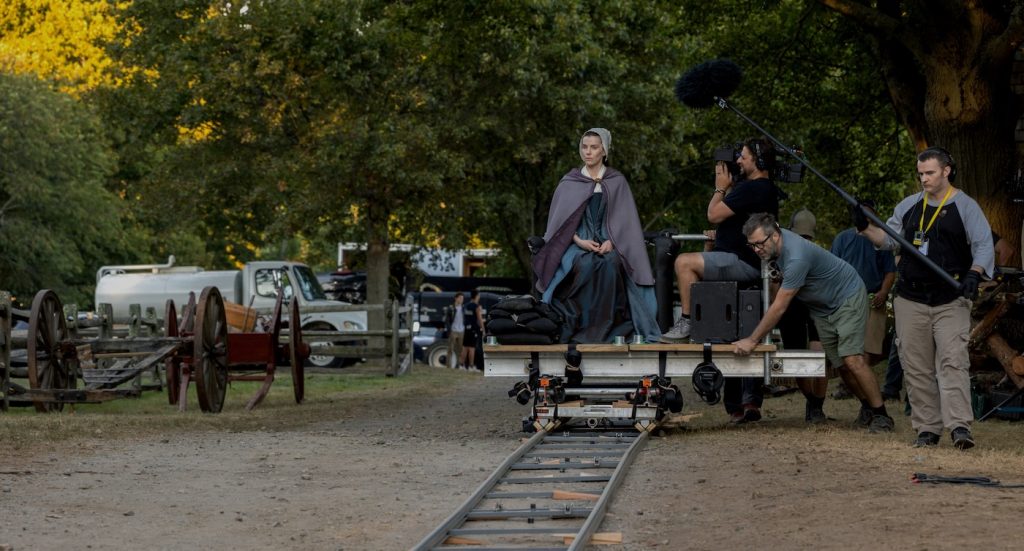
The Widow’s Bay production team rented three soundstages and employed construction crews to build numerous sets under production designer Steve Arnold’s supervision, including the mayor’s house and the quaint town hall. To fully realize Widow‘s Yankee authenticity, producers benefited from a first-rate crafts team, Murai said. “Massachusetts has killer crews. It’s like a real film community, and we were one of the first [shows] to get going in 2025, so we kind of got the A team. Everybody is really skilled and artistic.”
Learn more about the drive for a federal production incentive to bolster the American economy at usfilmandtv.org
Featured image: PARADISE – “Exodus” – Worlds collide. Time is of the essence for Xavier. Link and his team spring into action. Sinatra puts it all on the line. (Disney/Ser Baffo) HANELLE M. CULPEPPER (DIRECTOR), JULIANNE NICHOLSON