
Denim Against Dinosaurs: How Erin Benach Built Anne Hathaway’s Vintage Armor for “The End of Oak Street”
The Platt family already isn’t doing great when a strange cosmic event upends their lives, plunging their suburban neighborhood into a prehistoric era replete with dinosaurs, sweltering heat, and unnavigable swampland. From director David Robert Mitchell and producer J.J. Abrams, The End of Oak Street doesn’t give its characters an easy way out. Denise (Anne Hathaway) and Greg’s (Ewan McGregor) marital tension, teenage Audrey’s (Maisy Stella) longing to attend unaffordable Cornell, and Brian’s (Christian Convery) fear of a neighborhood bully take a sudden backseat to surviving roaming predators long enough for the family to figure out how to escape the Cretaceous era.
Shot in Atlanta, the film is set in 1982, and from the neighborhood’s modest ranch homes to costume designer Erin Benach’s ensemble designs crossing from the late 1970s into the early 1980s, The End of Oak Street evokes a simpler time when neighbors threw block parties, and the only food delivery around was pizza. But the Platts and their neighbors find themselves fleeing a Tyrannosaurus rex and being carried off by pterodactyls, and for Benach, the assignment meant building costumes that both evoked a now-vintage era and could withstand copious action.
We spoke with the costume designer, who worked with local Atlanta vendors like Kali Collection, about drawing on early 1980s hallmarks, designing looks for a long run on-screen, and weaving the Platts’ backstories into their clothes.
What kind of inspiration did you look to shape the overall aesthetic of the film’s costumes?
It was really fun to go back into quintessential early 80s inspiration—everything from Sears and JCPenney catalogs to Harrison Ford references that we used for Greg and classic 1980s movies.
I’ve heard that with 20th-century fashion, the end of the prior decade carries into the early one. Was that part of your process?
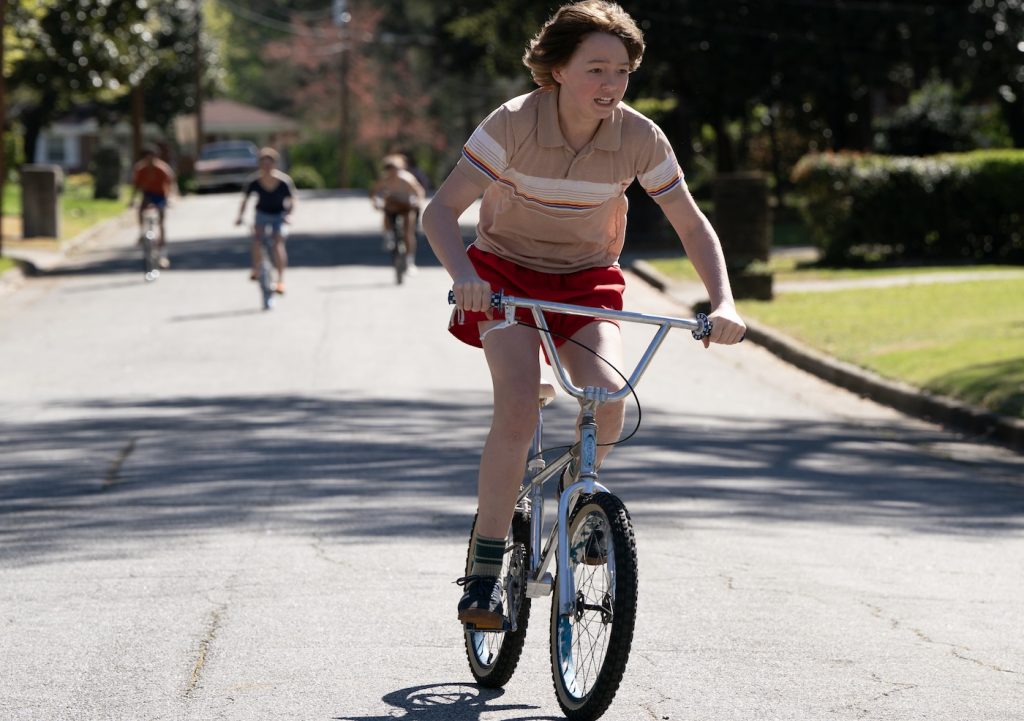
Yeah, for sure. Fast fashion wasn’t what it is today, and we were talking about a small town, not necessarily a big city, where it’s all about trends and fashion. It was about lasting pieces that people still had, so there was a lot of holdover, with 1970s patterns and some 1970s prints. But some of the younger kids’ stuff changed faster, because kids grow out of their clothes.
What are you looking for when you’re figuring out the looks we’re going to see on the main characters for a long time?
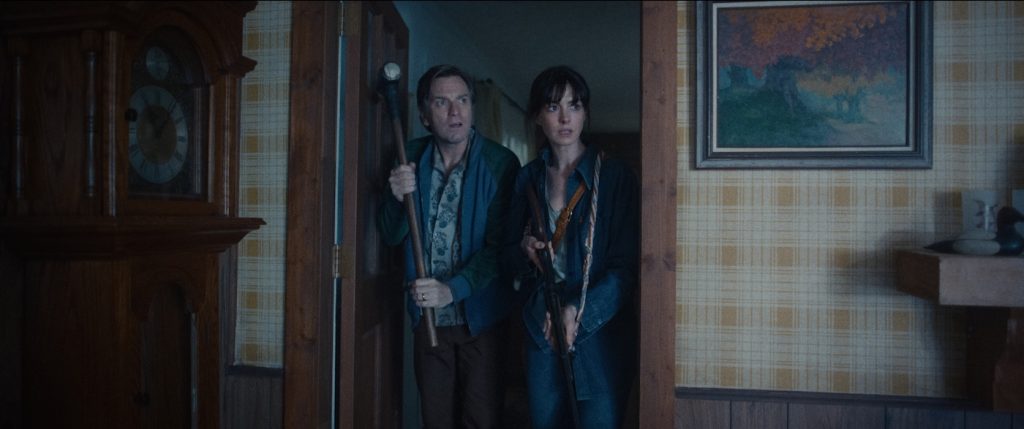
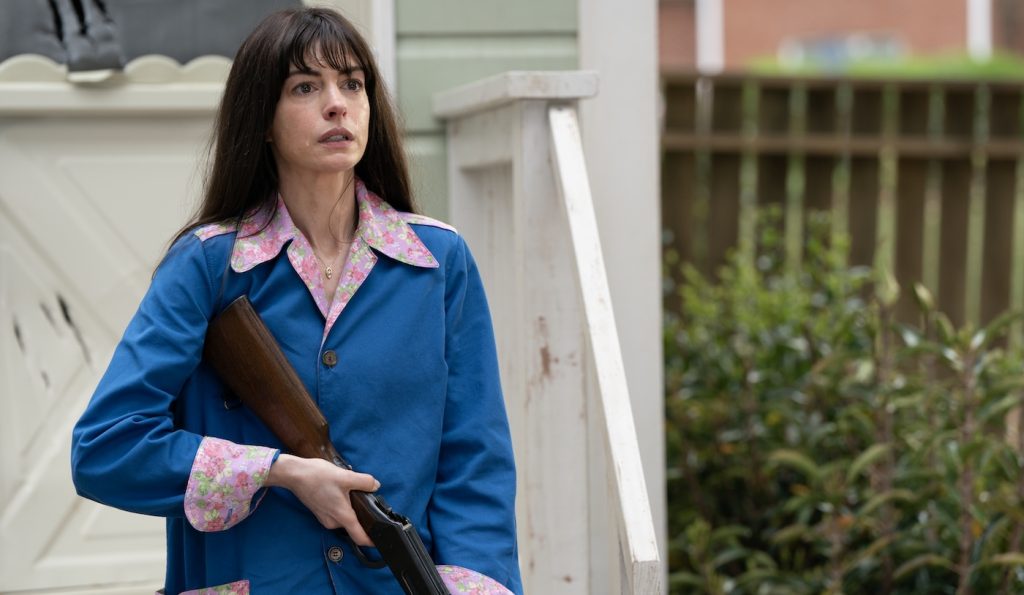
Usually, the way my process starts is I build the character as a whole. I need to land, let’s say, five or eight looks, whatever the number may be. And I think about them as a character evolving, whether that evolution comes from the action that happens or if it’s because it’s an emotional evolution. I plot it out a bit, color and silhouette and what its messaging is, and then for the long day, we found our favorite look. This was the look that we thought Denise would put on because she knows when she gets dressed that things are going down. We think she would gear up, like armor. And that’s why we picked denim, even though it was the height of summer.
How did you use the costumes to help convey who Denise is, as the heroine and most complex character in the film?
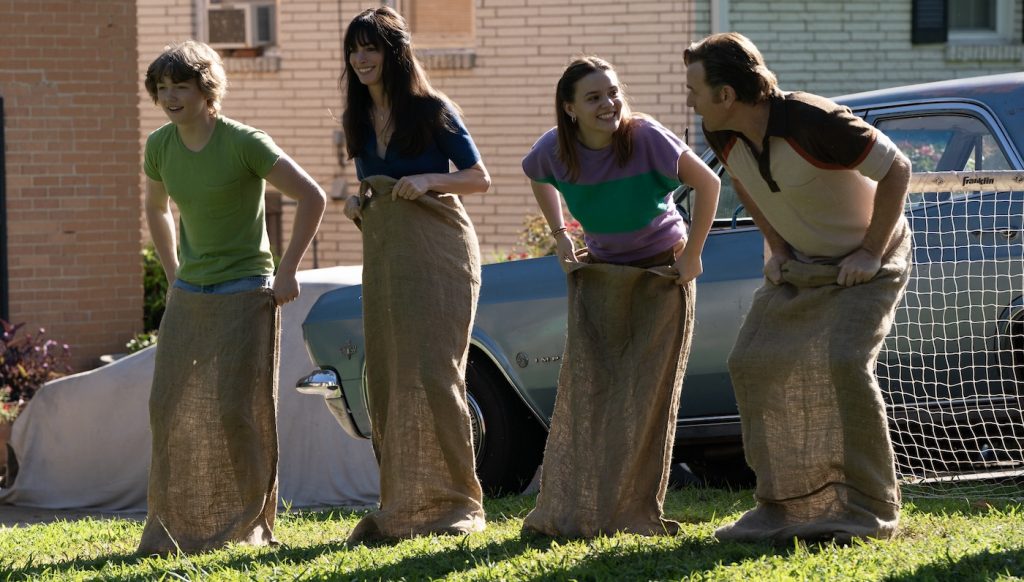
She’s a writer, and she’s a bit daydreamy. I think there’s some longing to her. The idea of just making her feel a little bit to the side of super central norm was part of our design concept for her. She doesn’t look like every other mom in the ‘burb ‘hood—she doesn’t look like a carbon copy in that sense. She has her individuality, and I think we tried to capture that in her wardrobe.
You can see that in the dress she’s in at the block party when the film opens.
Nice. We made that.
Did you have to build a lot? I’ve heard original clothing from that era hasn’t held up well over time.
You know, we have to build so much in a movie like this because of stunts and all the action and blood. Even if we didn’t need multiples, we did it anyway.
While building, were there colors or fabrics you avoided or aimed for?
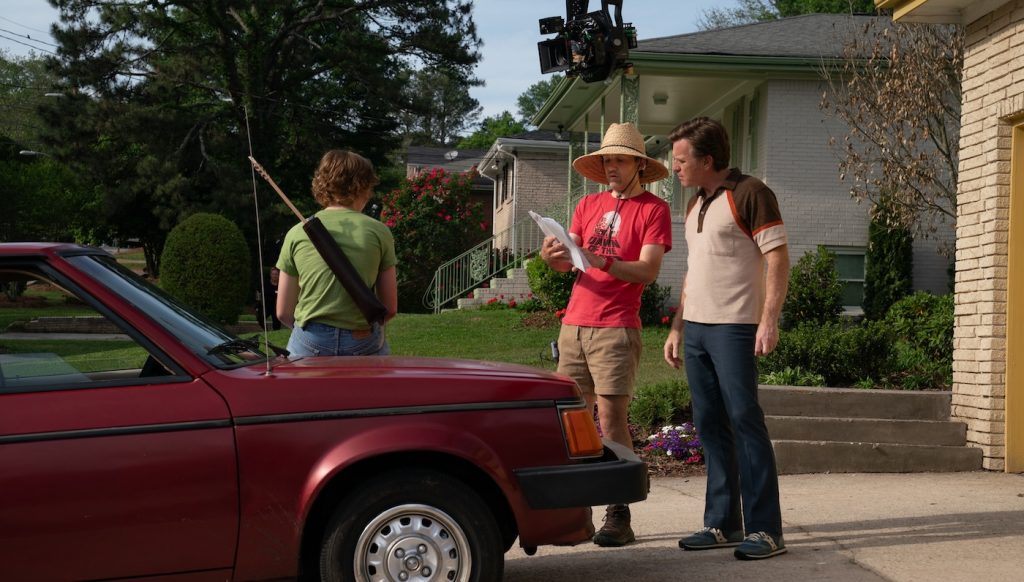
We had color palettes for Denise in powder blue and slate blues. We sometimes cross-referenced those with Greg and sometimes didn’t, depending on the mood of the scene. We tried to use a lot of maroons, oranges, and mustards, per the late 1970s, and then mixed that with the reds and blues of the early 1980s. We loved using terry cloth because it was the heyday of that. I loved building with it. It’s such a unique fabric and texture. Velour was another one that was used a lot. We also used color blocking and stripes, whether it was Adidas stripes or stripes on track pants, shorts, or polo shirts.
Was it a challenge to combine period costumes with action?
You just never know what the action will be, so you don’t necessarily know what will be good or bad. Gunshots with squibs need layers so that you can hide the squibs. Blood needs light enough colors so you can see that it’s blood. You want the shredding and ripping, so you want to see that happen. Cottons and denims and twills do that really well, whereas polyester doesn’t.
We also don’t see a ton of characters. How do you approach outfitting a relatively small cast?
This was always an ensemble between the family, so I always made sure that ensemble looked like each person was an individual. Even though with Brian, I did a little bit of a copycat thing with his dad, because I think that oftentimes happens with sons and fathers. Every time we thought about their changes and their looks, we wanted to put them together as a family unit, make sure they all had their own color schemes and felt like individuals.
And Greg is a bit more casual than Denise for reasons that become clear.
At first, you don’t think he’s doing worse, so it’s important to keep the secret. We have him as a regular dad, suit-and-an-office guy. And then the ruse is up, and you know he’s unemployed. We just wanted him to feel like what a weekend warrior dad would look like in the height of summer.
The End of Oak Street is in theaters now.
Featured image: Caption: (L-r) CHRISTIAN CONVERY as Brian Platt, MAISY STELLA as Audrey Platt, JORDAN ALEXA DAVIS as Jeanette and ANNE HATHAWAY as Denise Platt, in “The End of Oak Street,” A Warner Bros. Pictures release. Photo Credit: Photo Courtesy Warner Bros. Pictures