How “The End of Oak Street” Editor John Axelrad Crafted Anne Hathaway & Ewan McGregor’s Lean, Mean Dinosaur Thriller
If the sight of Anne Hathaway firing a shotgun at a dinosaur and watching a pair of sauropods copulate against the side of a two-story house isn’t enough to engage audiences, there’s also the fact that The End of Oak Street (now in theaters) clocks in at a tight, tense 93 minutes thanks in part to the keen eye of editor John Axelrad.
Axelrad, who cut his teeth on budget horror pictures like Slither before editing five films directed by USC classmate James Gray, including his cosmic epic Ad Astra, applied his characteristic rigor to keep The End of Oak Street streamlined. “I see edits as being like coats of paint,” he tells The Credits. “You paint the house, and then you step back, you look at it, you paint it again. You slowly chisel away at the narrative to keep things moving.”
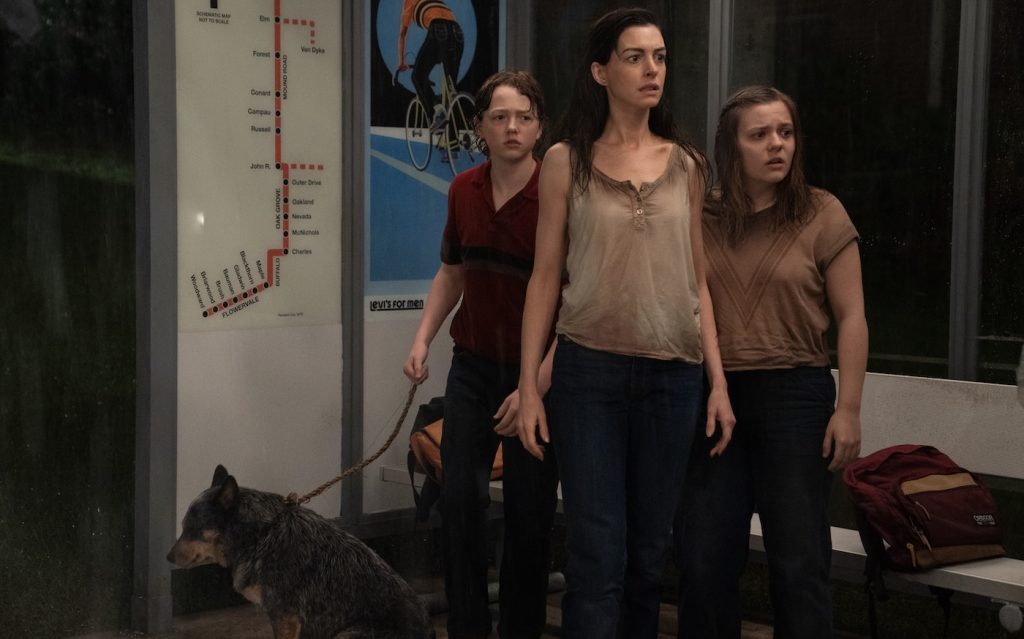
Set in 1982 suburbia, writer/director David Robert Mitchell’s The End of Oak Street casts Ewan McGregor as husband Greg to Hathaway’s Denise, parents to feisty kids Brian (Christian Convery) and Audrey (Maisy Stella). One day, they wake up to discover that their tidy neighborhood has slipped through a time-space wormhole and become the stomping grounds for prehistoric beasts. And while The End of Oak Street lovingly recalls the Jurassic Park franchise, it also cheekily delivers the kinds of shocking thrills that remind you this comes from the same director who delivered the chilling 2014 horror film It Follows.
Speaking from his home in L.A.-adjacent Glendale, California, Axelrad discusses dysfunctional family dynamics and the art of the tease.
The End of Oak Street has to be one of the more insane movies of the summer.
People ask me to sum it up in one word, and I just say, “Twisted.”
It’s a treat to see Anne Hathaway screaming her guts out.
In some scenes, I think she’s channeling Shelley Duvall [in The Shining].
How did you connect with David Robert Mitchell for this project?
I met with David over Zoom, and he gave me the job, but then I had to speak with the producers to get their blessings. J.J. Abrams was on the Zoom meeting, and he said, “You’ve done great work with James Gray, but can you cut action?” I told him, “Yes, I can cut action, but the truth is, if the family dynamic is not working, then the movie is not going to work.” J.J. smiled, nodded his head, and from that point on, I had the job.
Like James Gray, David Robert Mitchell made his name with character-driven indie films rather than VFX-laden studio projects. What was it like working with him on something of this scale?
Oak Street was definitely a departure for David because the amount of visual effects was quite daunting. In fact, we were told to work out of order and prioritize the action sequences. They used this “post viz” process, removing the stunt guys and their puppets and replacing them with temporary visual-effects dinosaurs that could interact with the actors on screen.
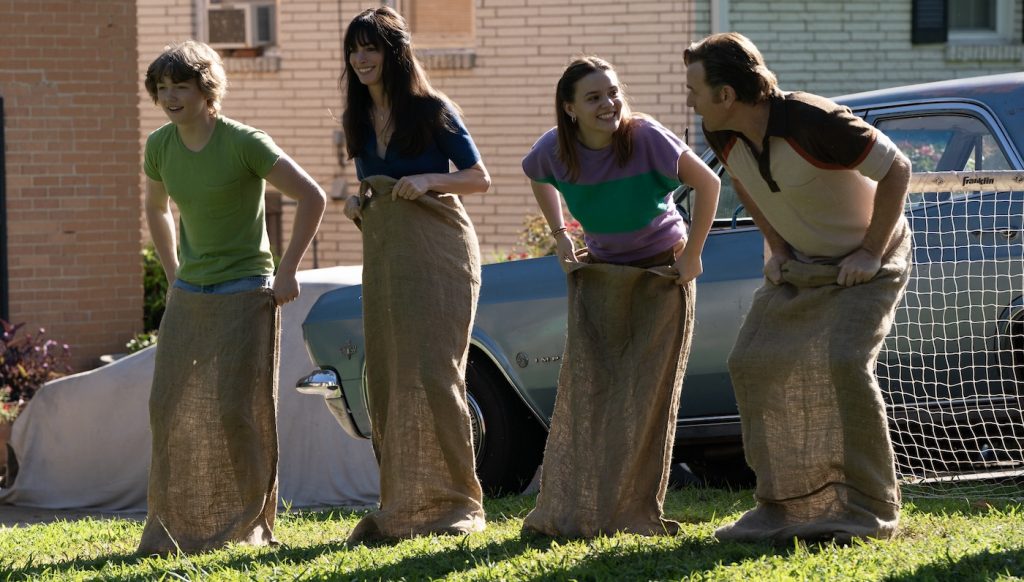
Before the dinosaurs show up, Oak Street spends a fair amount of time setting up this normal suburban environment—a block party, arguments between husband and wife, their independent children, Dad’s pizza delivery gig, the annoying neighbor—all that happens before the fantastical stuff kicks in. What did you want to achieve with those establishing shots?
There is a lot of setup, and David, coming from this sensibility of naturalism, wanted even more because showing real relationships in this real world helps the story. At its core, The End of Oak Street is about understanding this dysfunctional family and how they come together at the end. Every character in this family has a secret they’re keeping from one another.
So you needed to juggle multiple points of view?
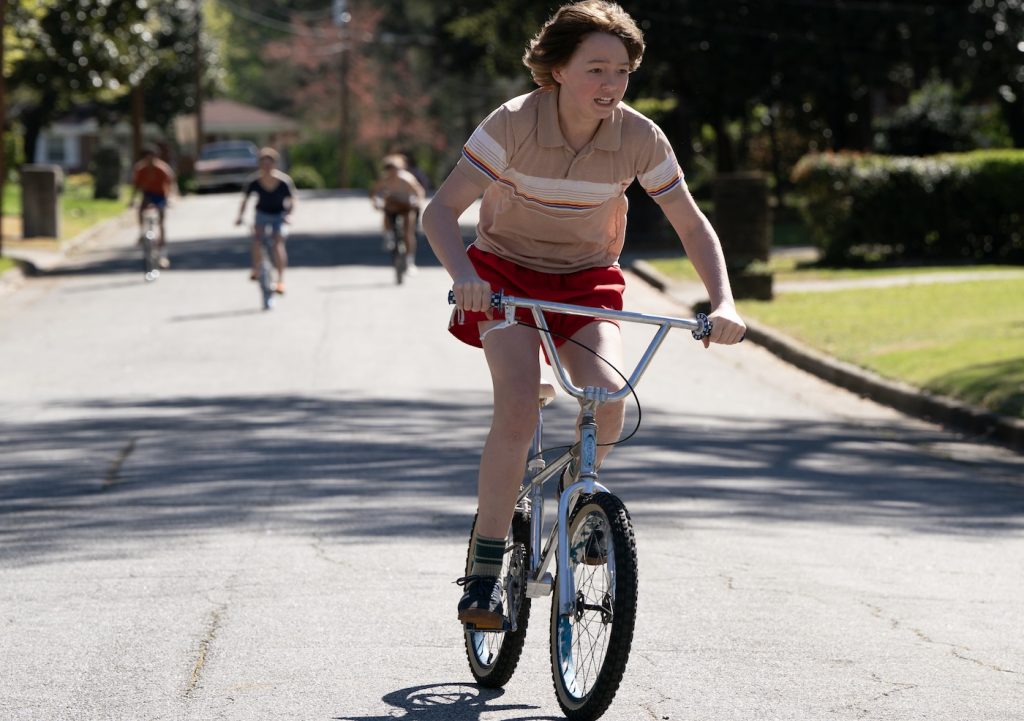
Well, the point of view is shifting. Sometimes we’re with Anne Hathaway’s Denise, sometimes with Ewan McGregor’s Greg, and then there are the kids, Christian Convery’s Brian and Maisy Stella’s Audrey. But if I had to pick someone, I think this film comes from Brian’s point of view, mostly because I think that character is basically David.
How so?
He wrote this film as a callback to his childhood growing up in the suburbs of Detroit. And in terms of camera choices, David loves slow push-ins and slow pans to create an omniscient point of view, which I love because it gives you a sense that the house and the neighborhood are also characters. As an editor, part of my challenge was matching the different tones, styles, and points of view.
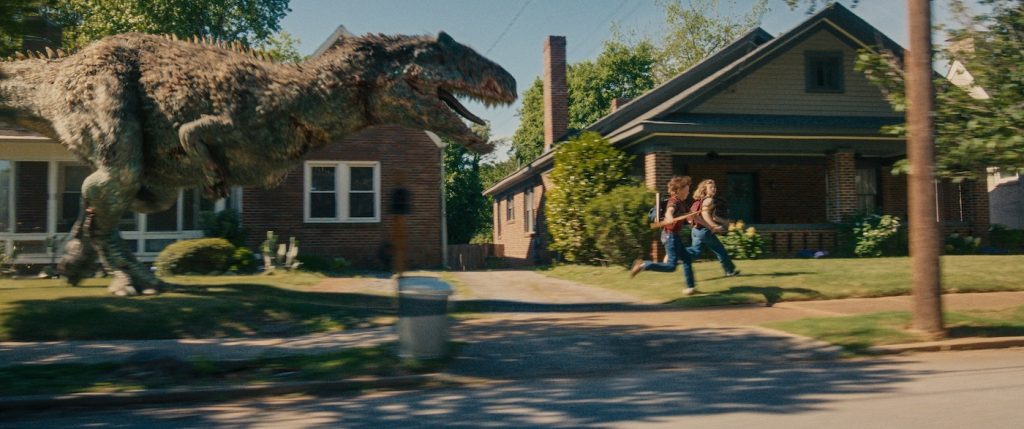
Multiple points of view, which you then have to meld with this shocking dinosaur invasion.
Exactly. I mean, the movie’s got humor. It’s got drama, it’s got horror, you’ve got four characters that you’re following, and even the dog has a point of view.
Starbuck! It’s such a heartwarming Hollywood moment when a flying dinosaur attacks Brian and all of a sudden, here comes Starbuck to the rescue!
The audience always applauds there.
While editing the film, did you reorganize or cut sections to increase the suspense?
Sure. For example, that whole sequence where the characters realize their neighborhood isn’t what they thought it was, that was very modular, so I was able to reorder scenes and move things around to heighten the tension. We also cut things that read great on the page, but once you have the performances, cinematography, and set design, the footage basically tells you, “Hey, the story wants to do this instead of what was originally planned.” One of my jobs is to tease [the audience], but at the same time we don’t want the viewer to get frustrated or bored. That’s why it was so fun to edit the sequence where Ewan McGregor’s character, who’s this sort of lovable dufus, finally sees a dinosaur and then Anne Hathaway, the family’s badass, shoots it. Creating anticipation was a big part of the build.
After that first big confrontation in dinosaur land, how did you sustain momentum?
I would say the biggest challenge came when the family finally sees the flashing light portal in the distance.
The time-space portal on the top of the hill that might be able to transport the family back to their home?
Yeah. I felt that once Denise and her kids see the portal, they have to go there, no distractions. But as it was scripted, they first go back inside the house to pack, and this giant boa, called a “Titanoboa,” starts menacing the family. I said, “Let’s try moving the boa earlier in the movie, just for momentum’s sake.” That was one big thing in the third act that we re-ordered for maximum effect.
When you put together your rough cut assembly, how long was the initial cut?
It came in at two hours and ten minutes. By the time we showed it to the studio, we’d cut 15 minutes, and the end result, without credits, is 93 minutes.
Sometimes you have to be kind of ruthless?
There’s that phrase, “killing your babies.” It can be hard to let go of things [even if it’s] for the greater good of the overall flow.
Oak Street was filmed in Atlanta, but you edited the movie remotely from Los Angeles, where post-production work has declined in recent years. How did you feel about being able to edit locally?
I felt very lucky because I have friends here in Los Angeles who hadn’t worked in two years. I’ve always been a vocal proponent for post-production tax incentives here in California to compete with other countries and other states, like New York, which is kicking our butts right now. We’re really struggling in California, so yeah, I consider myself lucky to have edited The End of Oak Street locally.
Looking back, what did you most enjoy about The End of Oak Street experience?
My favorite aspect of the job is being a mentor. Several assistant editors of mine have gone on to very successful careers, including two—Tom Cross for Whiplash and Andrew Bucklin for Ford v Ferrari—who won Academy Awards. In this case, I was able to get my first assistant editor, Z. Taylor Bynum, an “additional editing” credit. I want my legacy to be that I love championing others and want to see them succeed.
The End of Oak Street is in theaters now.
Featured image; Caption: ANNE HATHAWAY as Denise Platt in “The End of Oak Street,” A Warner Bros. Pictures release.