
Why Movie Theaters Matter: ReelOutreach and the Power of the Big Screen
Growing up poor, trips to the movie theater were rare, but they were where Jordan Maison found escape, and they helped him fit in at school. Now, decades later, he’s providing the same invaluable, life-affirming experience for thousands of underprivileged kids through ReelOutreach, his non-profit based in Dallas-Fort Worth. Just like on the big screen, not all heroes wear capes.
Funding opening night screenings for as many as 200 children and teenagers, the organization’s core belief is that “everyone deserves a night (or day) at the movies and kids and those who have no control over their circumstances need it the most.”
Maison, who has studied film and has a background in film journalism, works with a wide variety of organizations, including shelters, group homes, and foster care groups, such as Jonathan’s Place, Alliance for Children, GRACE, CASA, Girls Inc., and The Boys & Girls Club, to name a few. He holds down a full-time job in addition to running ReelOutreach.
As well as providing kids in need with respite from their realities, Maison hopes the events will inspire a new generation to follow in the footsteps of filmmakers who also came from humble beginnings, a long list that includes Martin Scorsese, the Coen Brothers, and Barry Jenkins, among others.
Here, Maison tells The Credits why ReelOutreach is as important to kids’ social development as it is for local movie theaters and shares his hopes for the organization’s future.
When did you first have the idea for ReelOutreach?
My family didn’t have much, so going to the movies was a once-a-year thing. Every time we went, it was a big deal for me, and those early experiences are what led me to where I am now. I remember kids at school talking about the movies they saw over the weekend and feeling left out of the conversation. It was a little before 2018 when I came home from a press screening and decided I needed to do this.
What was the initial response like?
When you think about charities and people who don’t have much, you think about the needs. We need clothes, food, and shelter, but it’s important to remember that life is about more than just what you need. You have to let kids be kids, and that’s a huge part of this. There is a social aspect that kids are missing out on. It may not be a need in the typical sense, but it definitely helps with socialization and experiencing joy. The response I’ve had from the theaters in my area has been super positive. Our very first screening was Avengers: Infinity War at the Cinemark in Mansfield, Texas, and the manager thought this was the neatest idea and came out with boxes of candy for the kids.
What were the first movies that influenced you?
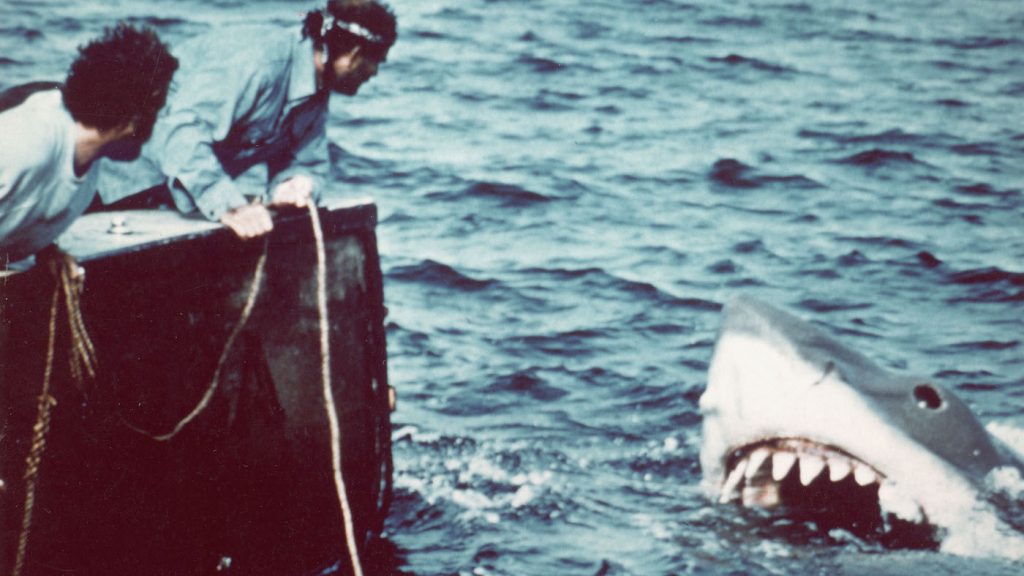
I adored films even before I could go to the theater. I watched those Saturday evening movies on TV, like Jaws and Star Wars, and fell in love. My parents couldn’t afford a babysitter, so they took my brother and me to Jurassic Park even though we were probably too young for it. Even at that age, I would go to the library and read film magazines, so I knew Steven Spielberg was also the director of Jaws, one of my favorite movies. The Lion King is in there, too. That was where I understood animation as being something beyond cartoons on TV and saw what it could do on the big screen.
A lot of kids have never been to a movie theater. What is it like to see them experience it for the first time?
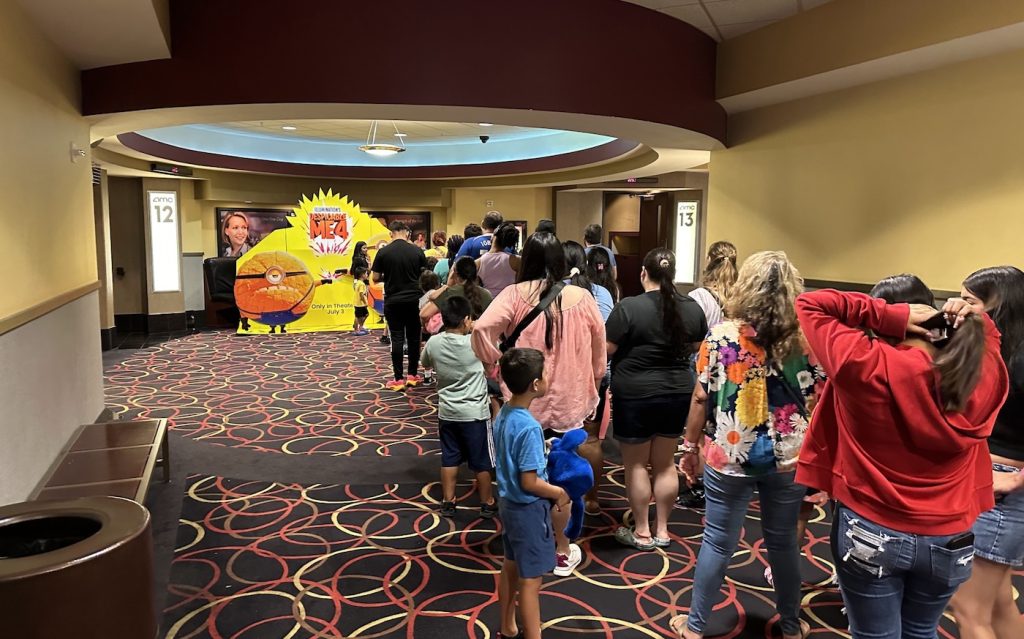
That’s honestly the best part. I’ve had the privilege of walking in behind some of them, and they stop dead as soon as they see the screen. They’ve never seen anything like it. I’ll watch the movie with them, and they’re cheering and actively engaged. It makes me feel like I’m going to the movies for the first time, too, and seeing it through their eyes. Whenever we have an event, someone is there for the first time. When we check them in, we give them gift cards for concessions so they can get whatever they want. Some kids just stare in disbelief, because even if they get to go somewhere, the freedom to choose something is brand new.
What goes into setting up a screening?
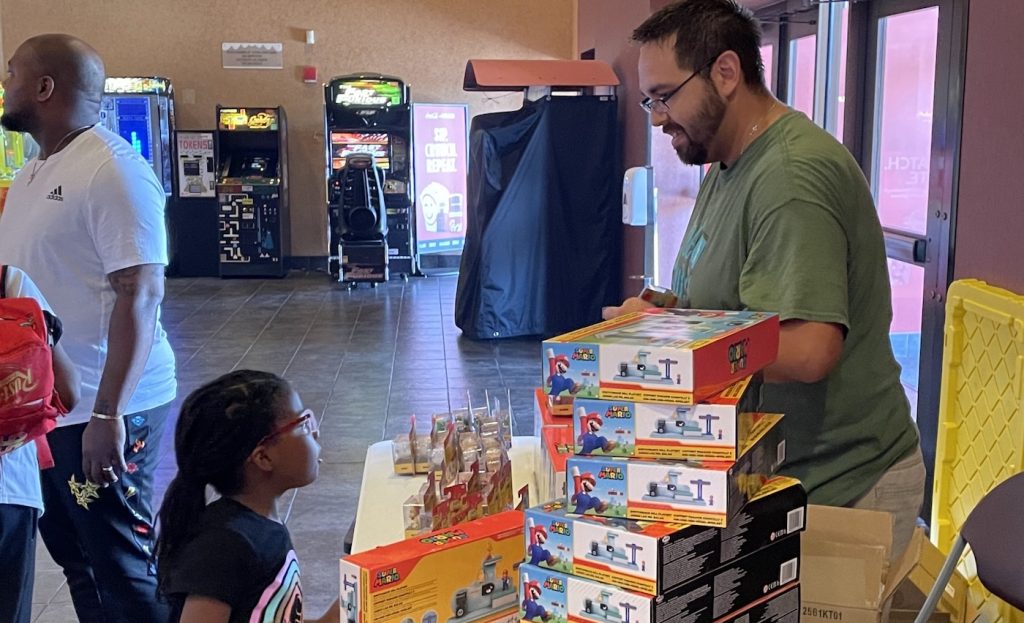
The first step is figuring out which movies we are looking at. Next, it’s about figuring out basic logistics, like how much the movie theater will cost. Right after the pandemic, you could rent a movie theater for $150. Now, with concessions included, it costs about $3,000 per event. Once I know which movie we are going to screen, I try to reach out to companies for toys or posters so the kids can take something home to help them remember the experience.
How do you fund the screenings?
In the past, we would do individual fundraisers for each event. Last year, I switched to a single big fundraiser for multiple events, and it was very successful. Last year, I announced four movies that we were definitely going to do. Superman was one of them, and the director James Gunn donated $1,000. I’m still not entirely sure how he found out about it, but I was really excited about that.
What is on your wish list this year?
Star Wars: The Mandalorian and Grogu and Supergirl are on there. I have a good relationship with Girls, Inc., and for Captain Marvel, we did an all-girls screening. Avengers: Doomsday would hit some of the older kids. Many of the organizations I work with include kids 12 and up and that age range can get left out of things sometimes. People think about helping little kids with the fun activities but these preteens and teenagers often don’t always get the fun stuff. Spider-Man: Brand New Day is on there, too, because everybody loves Spider-Man. Masters of the Universe is one I’m looking at. The kids love the Minions movies, so if I could make Minions and Monsters happen, that would be great. Another one I would be interested in doing is Coyote vs. Acme.
A lot of filmmakers have come from backgrounds similar to yours and the kids’. Is this inspiring a new generation of filmmakers?
I hope so. One of the greatest compliments I’ve had was from a social worker who came up to me after a screening and said, “I think you inspired some of these kids to go on to do this for a living.” I broke down, because that would be amazing. There are so many filmmakers who have this story. Film has always been a powerful storytelling medium that connects people. We’re letting kids feel normal when they have so much other stuff going on in their lives. There’s something about going to the movies and feeling like you’re transported to another place. That can stick with you. I didn’t have a bad family; we were just poor, but sitting in that movie theater made me feel like anything was possible.
You can’t do this without theaters, of course. They also provide vital jobs for local communities.
We need theaters because it is a whole different experience from watching a movie at home. You just can’t beat it. We need theaters to keep going for so many reasons.
What would make it easier for you?
I don’t think the theater exists anymore, but we were talking with one company about an exchange where you buy one ticket, and then they donate a ticket to us. If we could do something like that, it would be amazing. I always thought it would be neat to buy my own theater and have at least one screening every weekend just for these groups of kids. Sometimes they can’t make it to the events we plan for whatever reason, so that would give them options. If I could work with theaters on something like that, then I could give out tickets and be like, ‘You can pick the time that you want to go.’
What are your hopes for the future of ReelOutreach?
Ideally, there will come a day when this could be a full-time gig. Any type of expansion would be great, whether in Texas or elsewhere. I would love to do big events in special places. For instance, the original Star Wars turns 50 next year, and they’re doing a re-release of the original cut. It would be cool to do an event at the TCL Chinese Theatre, where it originally premiered, bring a bunch of kids to experience the original film in the original theater, and maybe have people in costume there to take pictures with them. Those types of events would be a lot of fun.
Featured image: A group of kids got to see Godzilla x Kong: The New Empire with ReelOutreach. Courtesy ReelOutreach.