
Director Hiro Murai Finds the Funny in Fear in “Widow’s Bay”—and a New Side of Matthew Rhys
He directed funny-sad Atlanta for Donald Glover and helped Bill Hader navigate the slippery slope of Emmy-winning hitman comedy Barry, which are just a couple of the reasons writer-producer Katie Dippold (Parks and Recreation, The Heat) reached out to Hiro Murai to helm her Widow’s Bay series. The Mayberry-meets-Poltergeist mystery (Wednesdays through June 17 on Apple TV) deftly blends laughs and horror in its story about a centuries-old New England island whose eccentric residents are haunted by a “Boogeyman,” among other curses. Murai, who served as an executive producer and directed five episodes, recalls, “Katie sent me her pilot script, which was very funny but also wanted to be very scary and maybe outside of my usual vocabulary, so I asked her, ‘Are you sure you want me to do this? It feels like you could get someone funnier to do it.’ But Katie was adamant; she wanted me because her priority was to make something that felt grounded and kind of real, with all the funny and horror elements stuck on top.”
Speaking with The Credits from Los Angeles, Murai describes Matthew Rhys’ surprising obsession with Charlie Chaplin, explains how he assembled a “dream team” of guest directors, and celebrates his fondness for the headless statue that greets tourists when they visit Widow’s Bay.
Widow’s Bay is so compelling in part because it’s so unpredictable. Thanks to your direction, the tone can shift from snarky banter to slapstick to genuine terror in the course of an episode.
Thank you.
And at the center of it all is Matthew Rhys, who shows off a comedic side of himself different from anything he’s done before. How did you wind up casting Matthew as Mayor Tom Loftis?
Katie and I talked a lot about the tone of the show, in that we didn’t want it to be too arch, where nothing’s taken seriously, and we also didn’t want it to be wooden with a dramatic actor who doesn’t know comedic timing. Casting Matthew was a huge part of achieving that. Having loved him in The Americans and also in Perry Mason, he’d always played very interior, smoldering, stoic characters. I’d never seen him be funny before, but he showed interest in the script so we hopped on the Zoom with him. It was crazy to hear Matthew [speaking] in his Welsh accent, which I wasn’t used to, but also, there’s this sort of comedic rhythm to the way he talks, so we were getting to know a whole new side of him. He’s a student of comedy, he loves Chaplin and Buster Keaton, and loves the silent era comedies.
No kidding.
Yeah. And it was clear that he wanted to stretch in that direction, so Katie and I left that Zoom after an hour, going, “I think he’s the guy.”
Widow’s Bay in some ways feels very much like an ensemble piece featuring all these small-town eccentrics, but Matthew—the Mayor—seems to anchor the whole thing.
And he’s doing so much unseen work of holding the dynamics of the show together. He lets the side characters and character actors shine because his reactions to them make those interactions so funny.
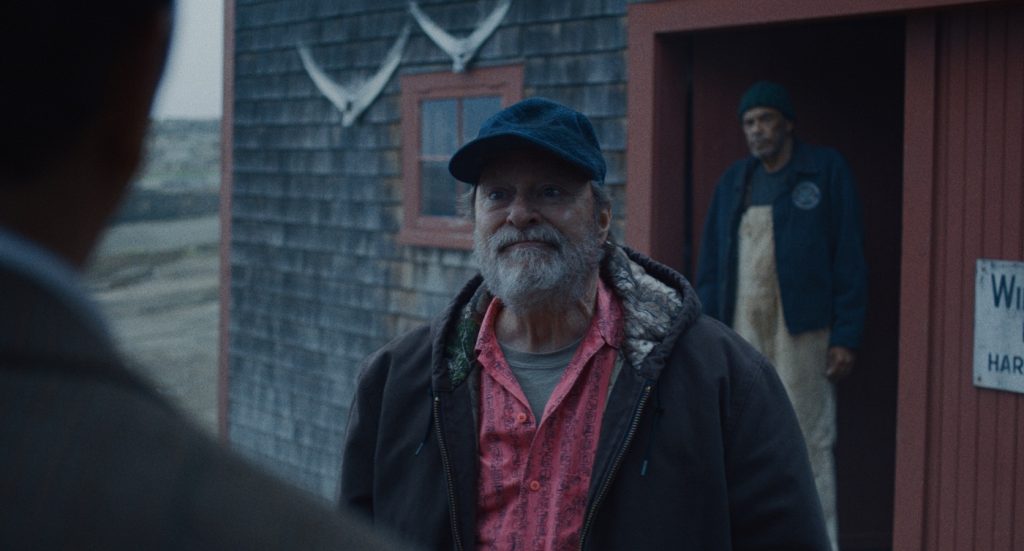
The character actor Stephen Root, whom you directed in Barry, manages to be both edgy and warm as Wyck, the village’s self-appointed horror expert.
We were borrowing from the archetype of the weathered fisherman, so there’s a very kind of cartoony way of playing Wyck, but Stephen immediately got the soul of this guy and understood the heart, hidden deep within.
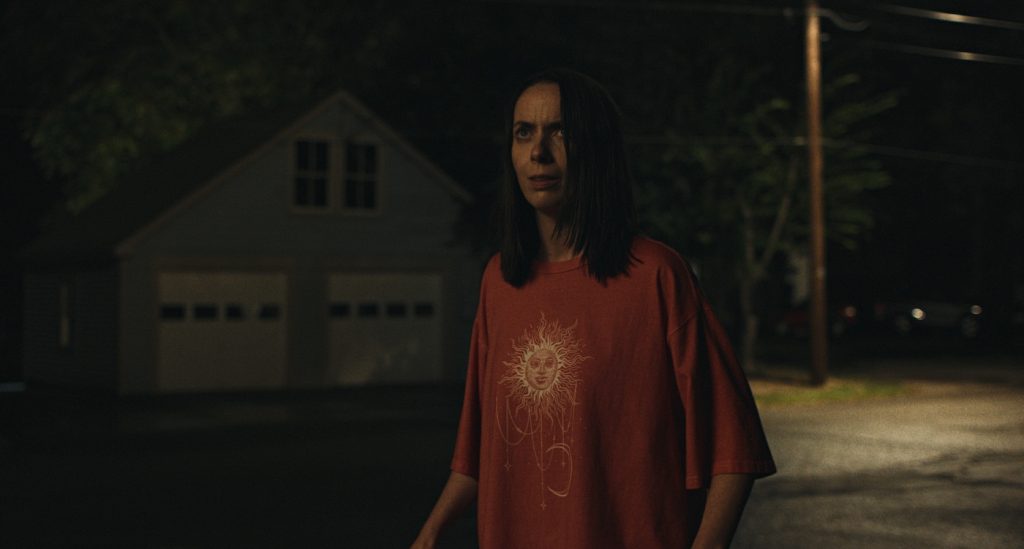
The big Widow’s Bay revelation for a lot of people will probably be the British actress Kate O’Flynn, who plays Patricia, the Mayor’s quirky assistant. Patricia’s sardonic and witty—until she has to run for her life through the streets of Widow’s Bay being chased by the Boogeyman. What did you have in mind for this character?
Even though she’s introduced as this kind of comic sidekick, on the page, it always felt that Patricia was secretly the heart of the show. She gets two bottle episodes, and a lot of Katie’s point of view about horror and gender, and all these things were kind of coming out of Patricia as this millennial, put-upon, insecure character. Kate’s audition tape was just so strange. You look at her, and you go, “Oh, this person was raised on a haunted island.” Even though she wasn’t exactly what we were looking for, Katie and I realized this was lightning in a bottle. Like, “We don’t exactly know where Kate O’Flynn’s going to take this character, but she’s completely unique, and we can’t let that go.”
Besides directing five of the show’s ten episodes, you also hired the guest directors. What was your criteria?
Because this show sort of works as an anthology, each episode can be its own contained world, which means I could tap some of my favorite working directors and plug them into this bigger world. Andy DeYoung, who’s done Friendship and The Chair Company, has a flair for executing the absurd and has killer comedic timing. Sam Donovan, who came from Severance, did two of my favorite episodes of the season and has a really keen eye for character. And then [MaXXXine horror auteur] Ti West doing the stand-alone colonial horror episode—honestly, it was kind of a dream team.
How did you maintain a cohesive aesthetic across the series, with three different directors adding to the mix?
I have to give credit to my DP, Christian Sprenger, and my editors. I’ve worked with these guys since Atlanta, so we have our own ecosystem for constructing things in a certain way. For any episode that goes through that pipeline, Christian will know how to shoot the footage, and the editors will know what to do with that footage. This infrastructure lets me know it’ll have a certain flavor. I think that’s the only way to do something consistent but also super-intentional in television. Otherwise, you’re kind of letting luck decide where we’re going to land.
Widow’s Bay was shot in the state of Massachusetts, right?
Yes. We shot a little bit of B unit stuff in Maine for establishing [shots] of rural island towns and fishing villages, but mostly, it was in Massachusetts.
Given that so much film and TV production has gone overseas in the past few years, did you feel it was important to shoot at real locations that were true to the story?
Yeah. I love shooting locations for what they are. This is something we learned on Atlanta, at a time when a lot of people were shooting Atlanta for LA or Atlanta for New York. But there’s so much joy to be found by just leaning into what made that city distinctly Atlanta. Ever since then, I’ve grown to love the process of discovering locations by going to the real place. With Widow’s Bay, it felt it was kind of necessary to shoot this in Massachusetts. It’s the oldest part of the country, and a lot of the haunted-ness comes just from seeing these buildings and places that have been around for hundreds of years.
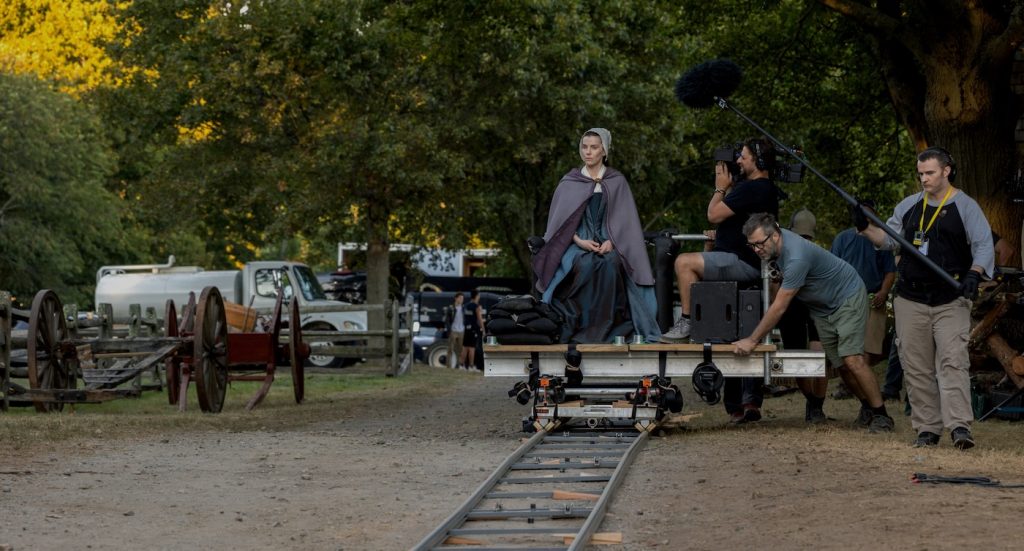
What was it like working with local below-the-line folks?
Massachusetts has killer crews. It’s a real film community, and since we were one of the first [shows] to get going in 2025, we kind of got the A team. Everybody is super pro, skilled, and artistic, so yeah, we just had the best time.
With your crew in place, how did you go about directing the cast when it came to fine-tuning the tone that was baked into Katie’s scripts?
It was trial and error, with the general philosophy being that we shouldn’t play the jokes as jokes. It has to be naturally funny so that if you play the emotions of the scene straight, it’ll be funny just because you know how these characters interact with each other. And then you’re putting the haunts and the horror in there as an accelerant. Sometimes we’d do a scene and feel “We’re leading with a joke too much” or “This feels like we’re getting away from the emotion of the story too much,” so we’d kind of nip and tuck as we go.
How did you approach the visual design of this series, which helps sell the horror, especially toward the end, when literal darkness plays a big role in the image-making?
When Katie and I talked about what we liked about horror, it was clear that neither of us is a big blood and guts person. So, what do we like about horror? It’s the anxiety about what’s going to come out of that door, the anticipation, staring into the dark, squinting and trying to see into the dark. Especially towards the end, we leaned into that feeling when the power grid started going out, and we used darkness as our indicator of dread.
Speaking of dread, you spent months immersed in the off-kilter world of Widow’s Bay. Looking back at it now, what sticks out as your most terrifying or most hilarious memory?
I guess this isn’t either of those things, but something I thought about recently is that there’s a statue of Widow’s Bay’s founding father, Richard Warren, in the port that people see when they arrive, and it’s a headless statue. The reason he’s headless is that we hadn’t cast Richard Warren yet, so we didn’t know what he was supposed to look like. I kept seeing the headless statue, and at a certain point, I was like, “Well, maybe it should be headless.” TV takes a lot of planning and exact execution, but also, it’s a living organism that sort of grows as you build it, so there’s a chaos element to it, right?
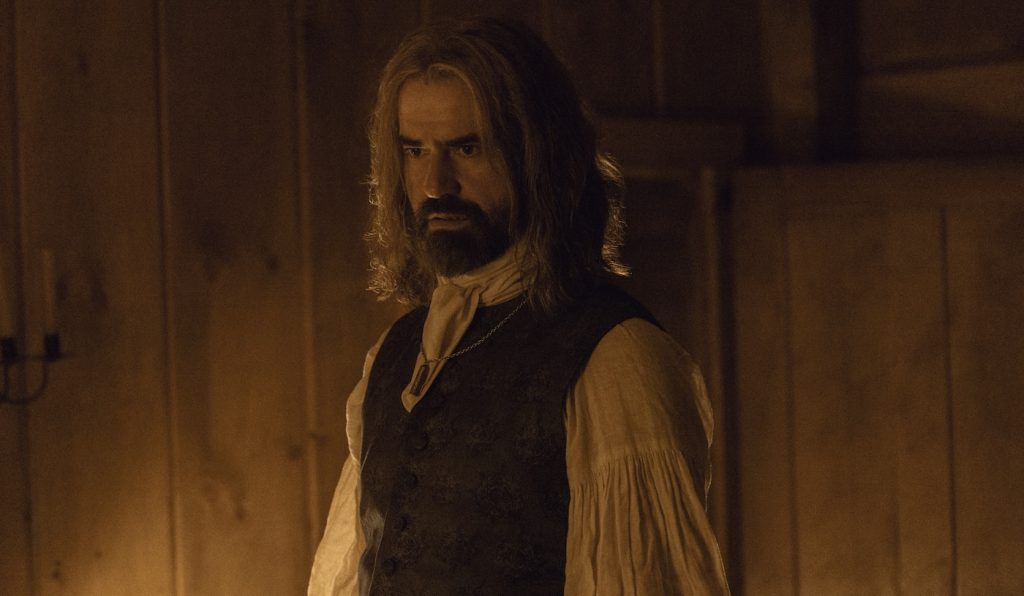
Even after you cast Hamish Linklater as Richard Warren, it sounds like you were going with the flow.
I mean, it’s so evocative and one of those little joys that comes from building a TV world and reacting to your choices, and suddenly it goes in directions that you’re not expecting.
Widow’s Bay is streaming on Apple TV. Episode 10 airs on June 17.
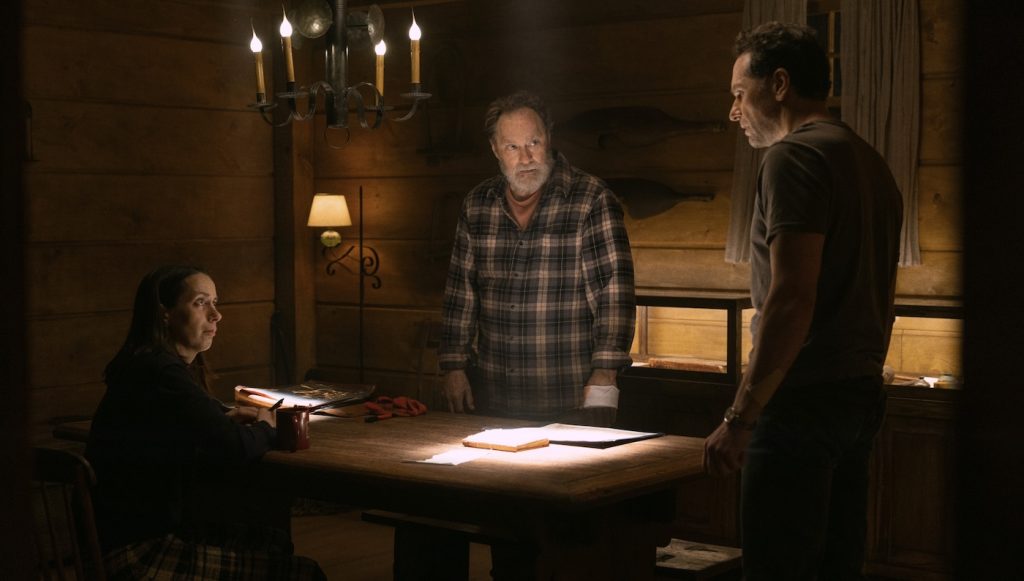
Featured image: Stephen Root, Matthew Rhys, and Kate O’Flynn in “Widow’s Bay,” now streaming on Apple TV.