From an Octopus’s Perspective to Paranoia: DP Ashley Connor on “Remarkably Bright Creatures” & “The Chair Company”
Ashley Connor has built a career on emotional precision. Whether she is photographing the warmth of a heartfelt drama or the spiraling paranoia of a dark comedy, the cinematographer approaches every project from the inside out, grounding visual choices in character psychology rather than visual appeal alone. The duality of this approach is vividly on display in her recent work on Netflix’s newly released film, Remarkably Bright Creatures, and HBO’s comedy thriller, The Chair Company, two projects that could not appear more different on the surface, yet share a deeply human emotional core.
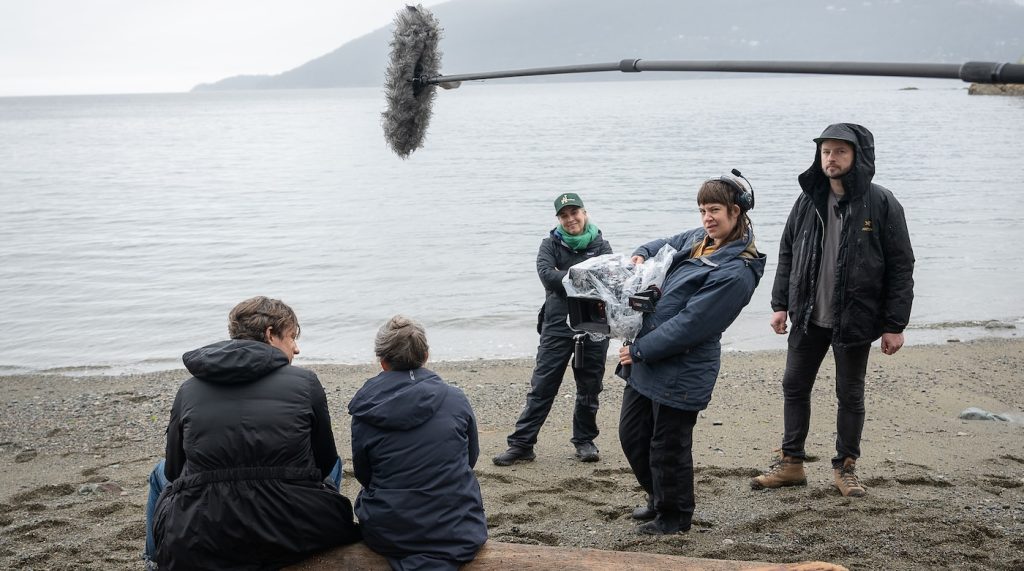
In our conversation, Connor reflected on the wildly different tonal worlds of the two productions, the technical ingenuity required to bring them to life, and the emotional questions that continue to guide her work. From the misty coastal landscapes of Vancouver standing in for the Pacific Northwest to the grimy tunnels and bars of Brooklyn, Connor shaped two distinct cinematic experiences united by empathy, anxiety, humor, and heart. “Both projects for me really speak to humanity on different levels,” Connor explained. “They kind of speak to two sides of my cinematic mind and my interests very strongly.”
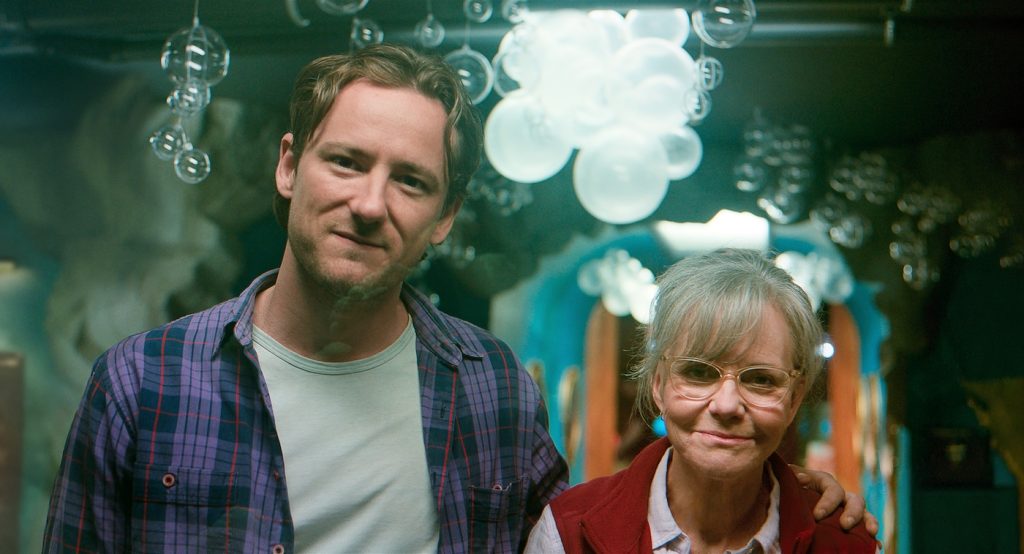
For Connor, Remarkably Bright Creatures began with emotion. Directed by Olivia Newman and adapted from the beloved novel by Shelby Van Pelt, the film centers on grief, loneliness, and unexpected connection, all filtered through the perspective of Marcellus, a giant Pacific octopus. “Remarkably Bright Creatures feels like a warm hug, tonally,” Connor said. “Olivia Newman and I had worked on her first film together almost a decade ago, and we were really aligned from the beginning in terms of what the project’s function was and what the tone needed to be.”
The emotional clarity of the source material became the foundation for every creative choice. Connor described the film as intentionally reminiscent of a more 90s-style film, one designed to appeal broadly while maintaining emotional depth. “We knew that we wanted it to be slightly comedic while carrying a really resonant emotional core,” she said. “It was really performance-based. It was really about celebrating the people.”
The warmth of the story extended into the visual design itself. Shot on the Alexa 35 with Panavision Primos lenses, the film embraced softness and intimacy rather than heavy stylization. Connor, in her appreciation for film, wanted to preserve a classic cinematic texture while still taking advantage of digital technology. “The camera would be speaking more poetically,” she explained. “The Primos are gentle and soft on faces. They have unique characteristics without being overly stylized.”
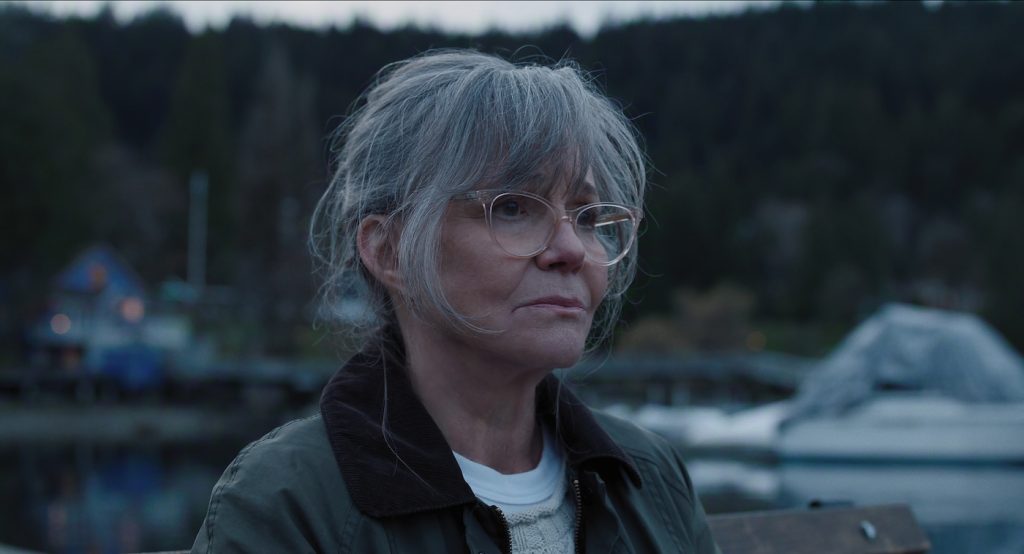
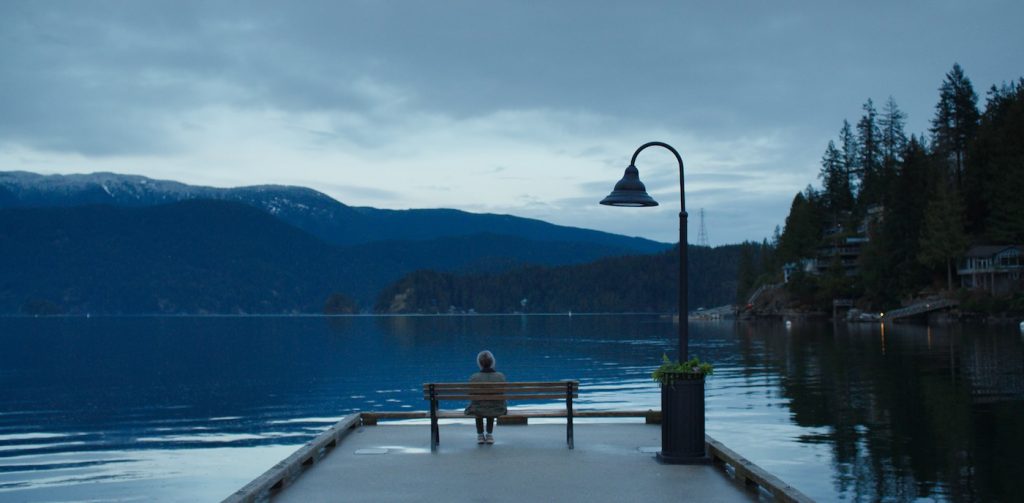
The production filmed throughout Vancouver and the surrounding coastal areas, using the region’s natural atmosphere to evoke the Pacific Northwest setting of the story. Connor leaned heavily into the environment rather than attempting to reshape it. “The light of the Pacific Northwest was so nice to work with,” she said. “The water speaks differently there. The landscape speaks differently. We let that be a palette guide and didn’t fight against it.”
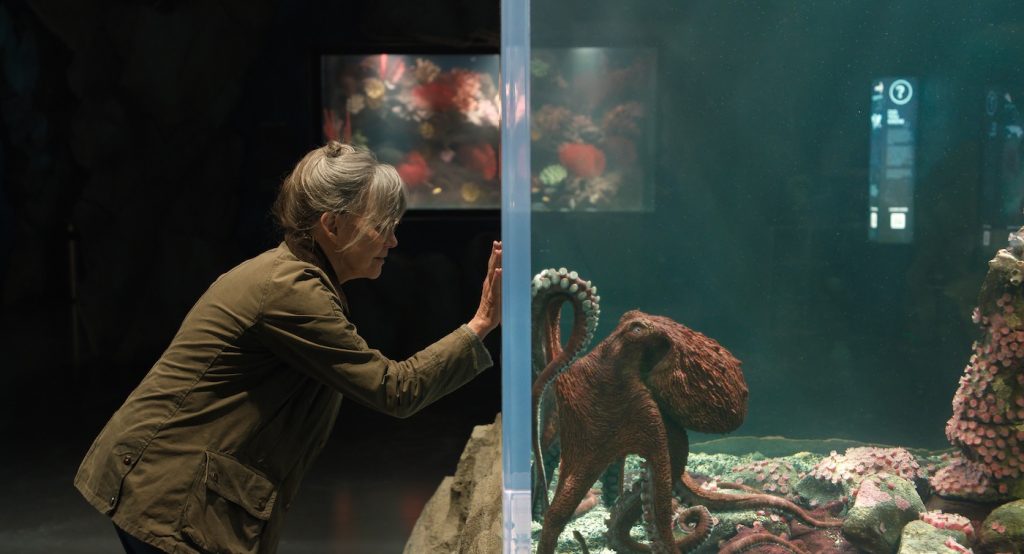
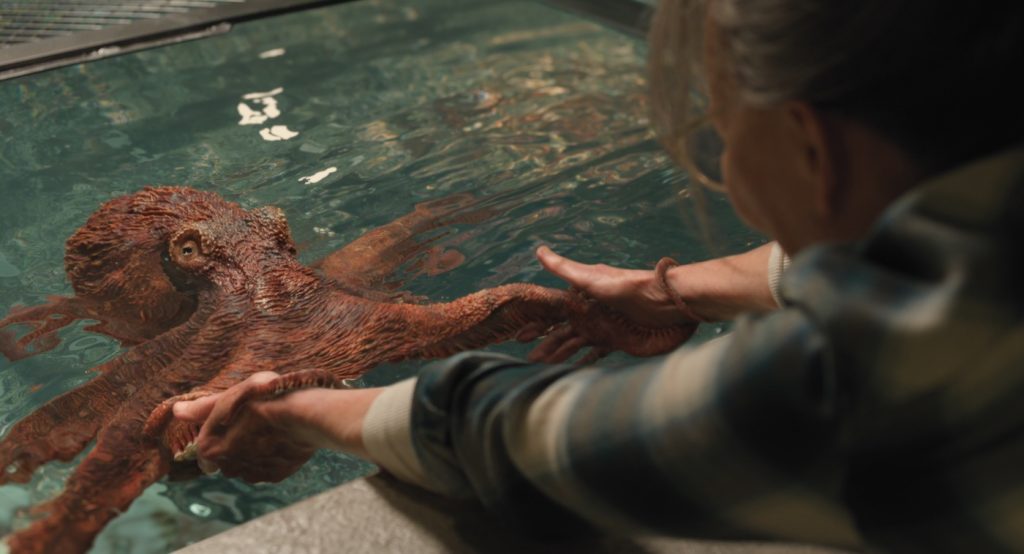
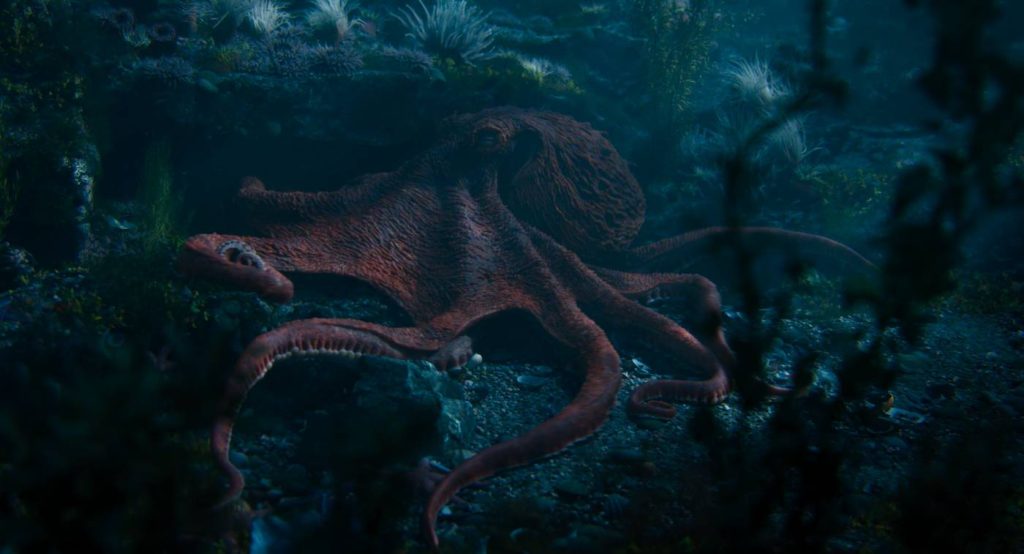
Among the film’s biggest challenges was creating the visual perspective of Marcellus himself. Connor and her collaborators wanted the octopus to feel emotionally present and fully integrated into the movie’s visual language, rather than existing as a detached CGI creation. “We really wanted to honor his perspective,” Connor said. “To me, it was really important to do that in-camera.” Working with Panavision Vancouver, Connor developed a custom filtration attachment that subtly distorted the image whenever scenes shifted into Marcellus’ point of view. The effect created a tactile sensation of viewing the world through glass and water rather than through a clean digital image.
The production also filmed sequences inside a specially constructed aquarium set, including underwater camera work designed to place viewers directly inside Marcellus’ environment. Connor personally operated many of those shots herself, using a handmade rig that allowed the camera to plunge quickly into the tank between takes. “It ended up being kind of a Frankenstein rig,” she recalled with a laugh. “I’d be sitting on top of the tank, hugging the camera while it was in the water.”
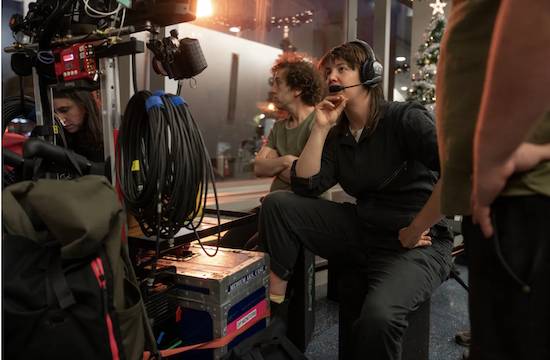
Connor’s physical connection to the camera became essential to shaping the octopus’s emotional presence. She worked closely with visual effects supervisor Chris Ritvo to ensure the CGI performance matched the emotional rhythm established through cinematography and actor blocking. “There was a very active conversation between Chris and me about how to emotionally do coverage of Marcellus,” she said. “You feel the light reflecting off the glass. You feel the thickness of the glass. We really wanted it to feel like he’s in captivity.”
The realism proved so convincing that audiences reportedly questioned whether the production had used a real octopus during certain scenes. “People came up to us after the first screening like, ‘I’m gonna call PETA,’” Connor laughed. “And I was like, ‘No, that’s all CGI.’”
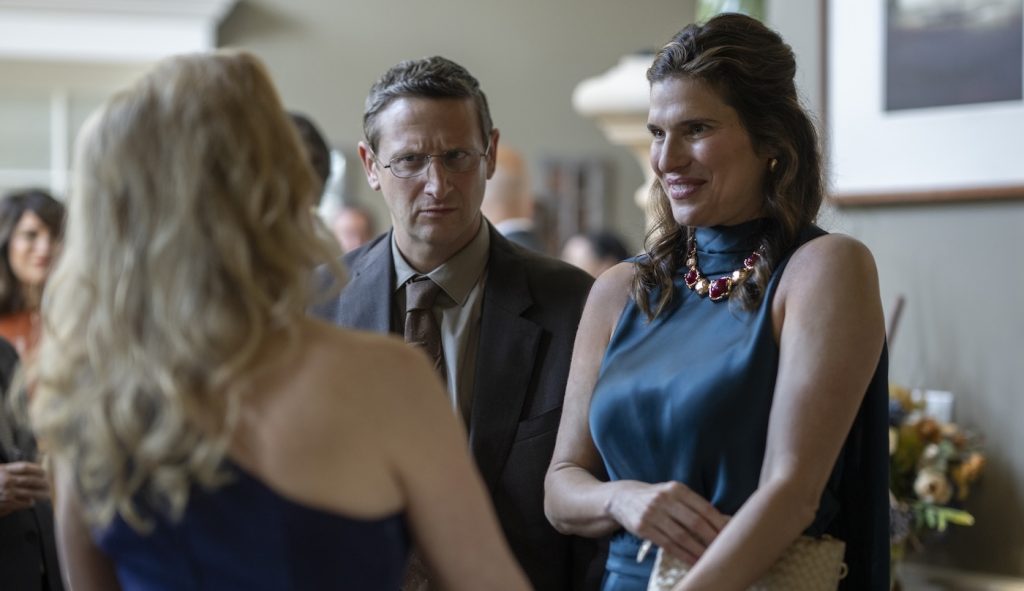
While Remarkably Bright Creatures embraced warmth and emotional vulnerability, The Chair Company pushed Connor into an entirely different visual register. Created by Tim Robinson and Zach Kanin, the series follows Robinson’s increasingly obsessive character, Ron, through a heightened but psychologically grounded world. Connor immediately understood that the comedy would work best if it were treated with complete seriousness. “We knew that we had to take the comedy very seriously and shoot it in a way that didn’t read as a comedy,” she explained. “The world had to feel real and grounded.”
Drawing inspiration from paranoid thrillers of the 1970s and 1980s, Connor and pilot director Andy DeYoung built a visual language influenced by films like The French Connection, Thief, Klute, and Punch-Drunk Love. “We wanted a long zoom language that was observational,” Connor said. “It was really about a man who’s willing to lose it all.”
Unlike the cleaner aesthetic of Remarkably Bright Creatures, the HBO series embraced grit and imperfection. Connor pushed the Alexa 35 much further visually, pairing it with vintage Angenieux zoom lenses and K-35 primes to create a dirtier, stranger image texture. “Every conversation was, ‘How far can we push this?’” she said. “How much character can we add to the image in-camera to really make it feel different?”
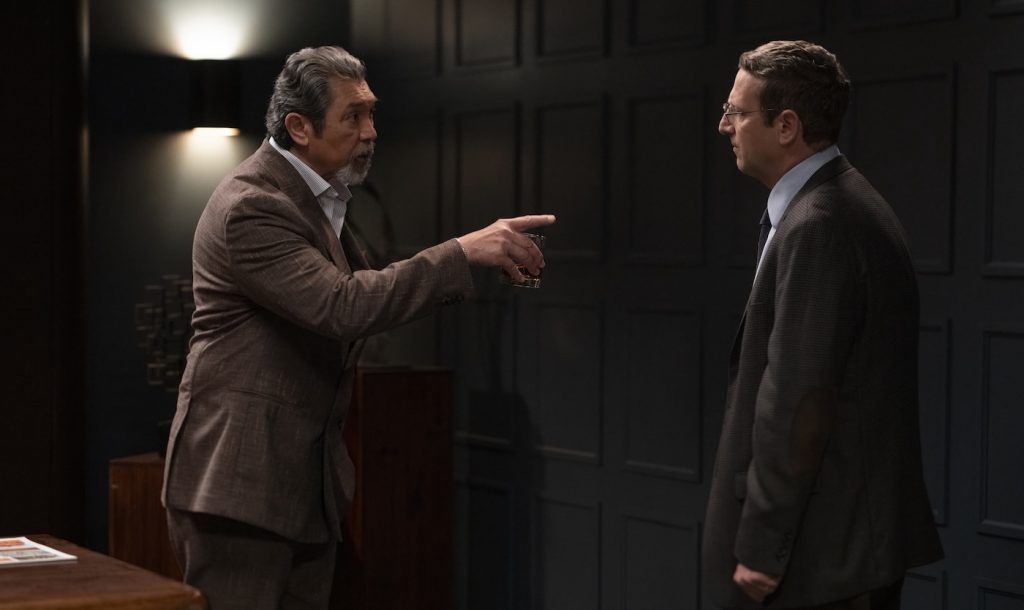
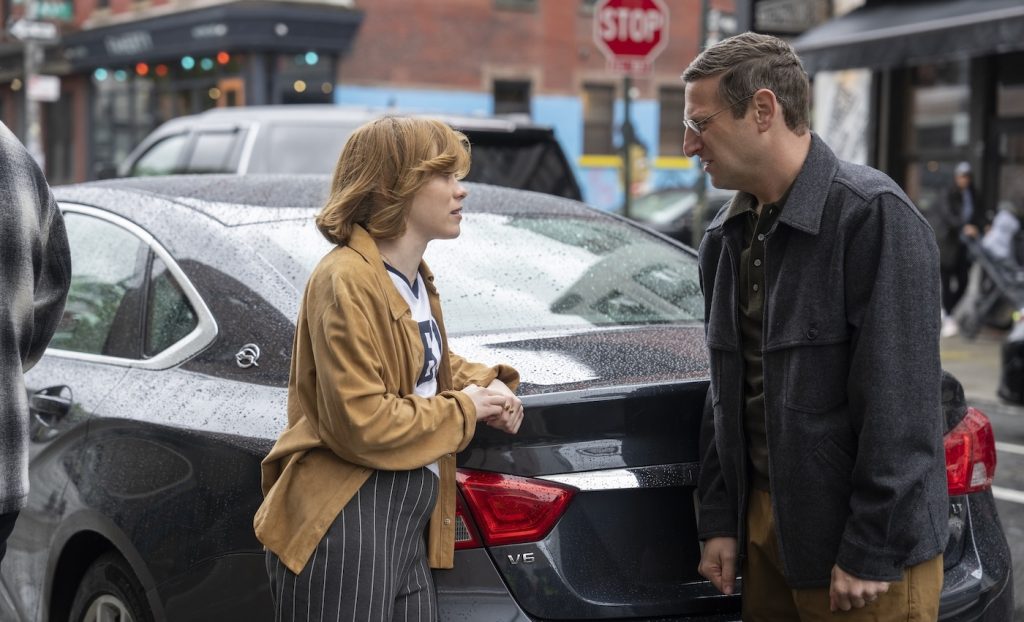
The production shot throughout New York City, including extensive work in Brooklyn neighborhoods like Greenpoint. Connor cited the series’s use of practical locations as both a creative opportunity and a logistical challenge, especially given the constraints of a television schedule and budget. “We’re on an HBO comedy-sized budget,” she joked. “It’s not the Game of Thrones budget.” Yet limitations became part of the creative energy. Connor frequently favored minimal lighting setups and practical solutions over large-scale equipment packages.
“If you can do it with one light, why pull out twenty?” she said. “Sometimes limitations can open your mind to different kinds of ways of working.” Connor’s ingenuity and improvisational energy reached its peak during the show’s ambitious fifth episode, the installment that was submitted for Emmy consideration. Featuring tunnels, chase scenes, large-scale stunt work, and escalating psychological chaos, the episode required the crew to work at breakneck speed. “The episode had to drag the audience,” Connor explained. “You had to get on the ride and then not get off the ride.”
One sequence featuring Robinson sprinting through underground tunnels was filmed in only 45 minutes near the end of a shooting day. “I was just like, ‘Tim, now run!’” Connor recalled. “And then I’d run with the camera.” Crew members pre-rigged practical lighting throughout the tunnels while Connor and her operators captured footage almost guerrilla-style, sprinting alongside Robinson to preserve the manic momentum of the sequence. “It was so much fun for me,” she said. “I knew I had to lock in so hard.”
Connor later attended a public screening of the episode at The Palace in Greenpoint and experienced the audience’s reactions firsthand. “It was one of my favorite screening experiences,” she said. “Just hearing people react in real time.”
Despite the radically different tones of the two productions, Connor sees both projects as emotional mirrors of the current cultural moment. In her view, The Chair Company channels modern anxiety and existential dread, while Remarkably Bright Creatures offers emotional healing and connection.
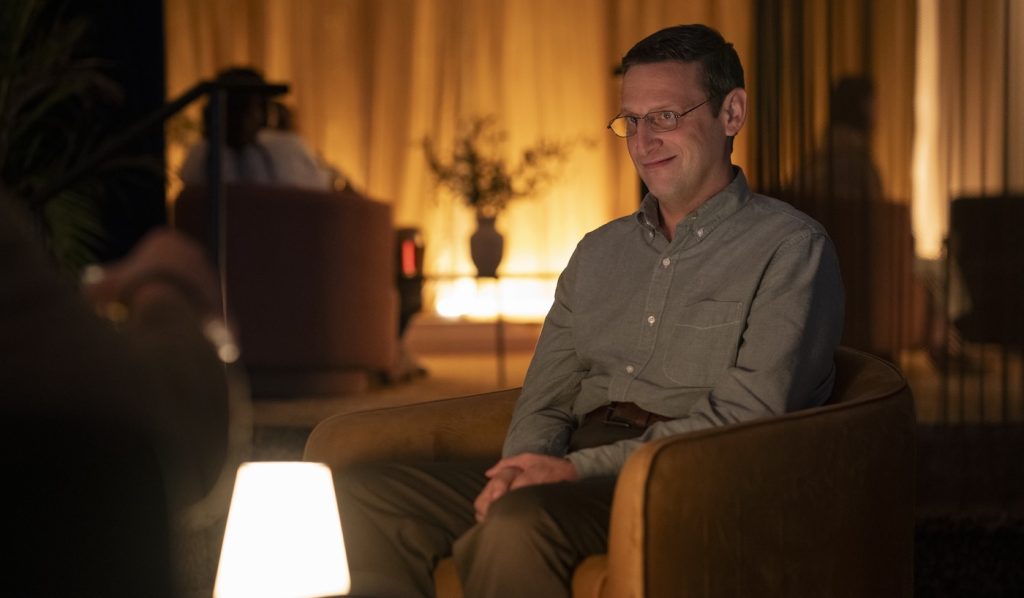
“I think Tim’s work really speaks to that fear and anxiety that exists,” she said. “There’s not a container to put this energy in. ”By contrast, she sees Remarkably Bright Creatures as emerging from the grief and isolation that followed the pandemic years. “That book came out, coming out of tighter pandemic restrictions and isolation and feeling lonely,” Connor said. “What do we do with that weight? What do we do with that grief?”
Those emotional questions shape every aspect of Connor’s philosophy as a cinematographer. While she clearly relishes technical experimentation and visual boldness, she repeatedly emphasized that cinematography must remain in service to character and story. “I’m always asking myself why we’re doing it and what it’s saying about the character’s journey,” she said. That emotional grounding is especially important in The Chair Company, where audiences need to care deeply about Ron, even as his decisions become increasingly irrational. “You have to really connect with Ron as a person who loves his family,” Connor explained. “You have to worry about him and care about him.”
Ultimately, Connor hopes both projects will remind audiences of something essential about human connection, even if they arrive at it through completely different tonal pathways. “These are very different projects and very different experiences,” she said, “but my hope is that they can speak to humanity in a way that touches on why it’s important to be kind or loving, or why family is important, why home is important.”
For Connor, whether she is filming an anxious sprint through Brooklyn tunnels or lowering a camera into an octopus tank in Vancouver, the mission remains the same: find the emotional truth first, then build the image around it.
Watch Remarkably Bright Creatures, now streaming on Netflix, and The Chair Company streaming on HBO Max.
Featured image: