Production Designer Jamie Walker McCall on Crafting the Moss-Covered Chaos at the Heart of “Cape Fear”
“You can go big and go bold and go weird, and it works!” said production designer Jamie Walker McCall. “You don’t have to stay within the cookie-cutter confines.” She learned that lesson on the set of American Horror Story, season 12, where Walker McCall used her vivid imagination and unconventional color choices to create striking scenes. The same lesson served her well on Cape Fear, a thrilling, chilling 10-episode Apple TV series in which every environment conceals a creeping psychological unease.
In Cape Fear, the idyllic family life that Anna Bowden (Amy Adams) and her husband, Tom Bowden (Patrick Wilson), have built in Savannah, Georgia, is twisted into nightmarish shapes when devious criminal Max Cady (Javier Bardem) orchestrates his own release from prison. Anna and Tom were lawyers involved in Max’s potentially wrongful jail sentence many years ago. Now, Max wants revenge, and he’s got the patience and the perversity to make sure he gets it in the most extreme ways possible.
To film Cape Fear, Walker McCall returned to Georgia, where she previously helped to make the Hulu show Candy, about a housewife (Jessica Biel) pushed beyond her limits. Having worked with Walker McCall on that crime series, showrunner Nick Antosca and producer Alex Hedlund recruited her for Cape Fear, a new adaptation of John D. MacDonald’s novel The Executioners. The Apple series was executive produced by Steven Spielberg and Martin Scorsese, two geniuses behind the 1991 film adaptation.
Walker McCall met with The Credits to share insights about production design and filming in Atlanta. Since Cape Fear is set mainly in Savannah, Walker McCall exercised her imagination and resources to transport viewers 250 miles away from Georgia’s inland capital to the drowsy, dream coastal city. She explained the design of the Bowden family home, including a wonderfully macabre print from Southern artist Butch Anthony. Finally, Walker McCall recalled a single day of work in Savannah, where the crew filmed at the Jepson Center and where Walker McCall adopted a cat from Pounce Cat Cafe. “He’s my best gift from the show,” Walker McCall remarked of Meyers, who of course insisted on making an appearance during the interview.
Note: This interview has been edited for length and clarity.
Could you talk about the main concept behind your production design for Cape Fear?
When I initially met with Nick and Alex last September, I read the first episode and thought, “This is so good. It’s intense.” Having spent some time in the South, I knew the summer was hot and humid, and everything was so lush, green, and vivid. When I put my initial pitch together for them, I did a lot of jewel tones and very saturated colors. They really liked it. Then, I pitched to Amblin, and they liked it as well. So that’s what we ran with: dark, moody shafts of light, but those shafts of light are yellow and orange—really saturated to feel the heat of the South in the summertime.
Is that the main way that you created the eerie yet beautiful shots of tree-lined streets and Georgia’s landscape?
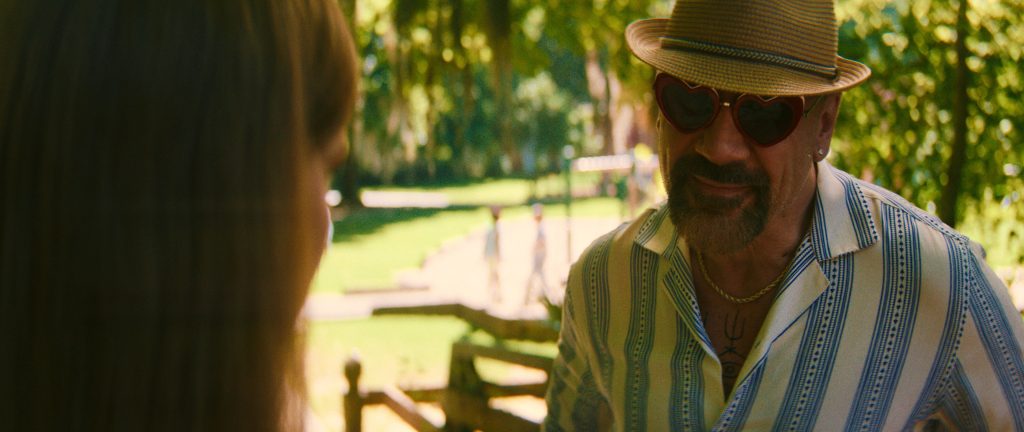
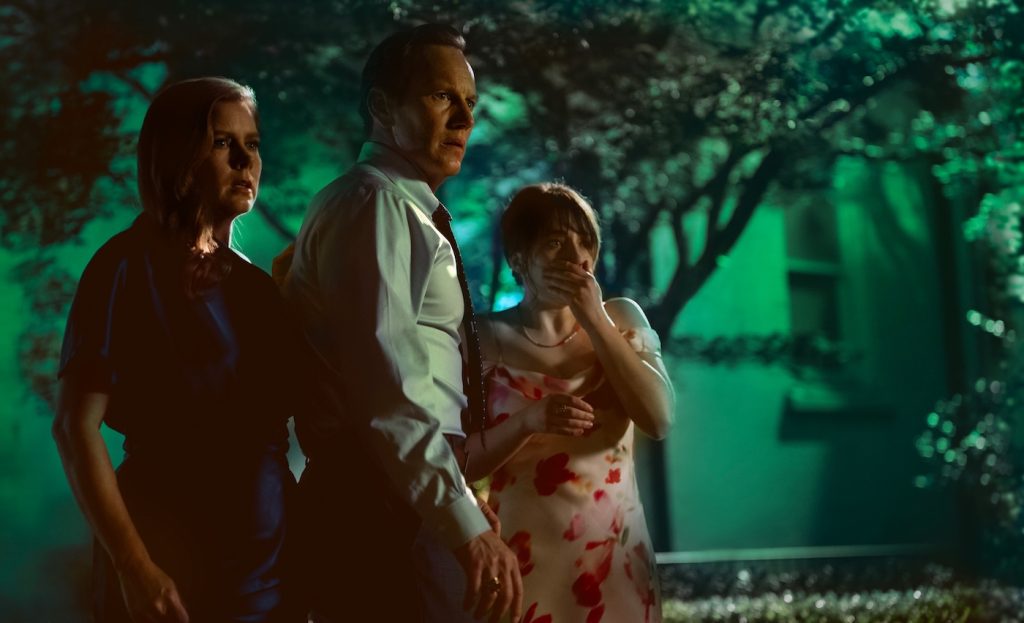
The South has that eerie, haunting vibe to it, especially in the summertime. We brought so much Spanish moss to Atlanta because Savannah is drenched in it. It really is haunting and beautiful, and it creates these dappled effects with lighting. When I got the job, my first call was to my greensman to say, “We’re pretty much going to have to do all of Atlanta in Spanish moss.”
Was the Spanish moss provider a local gardener or greenhouse owner?
Last time I worked with the greensman years and years ago, he got it out of Florida. It has to come fumigated. Spanish moss has a blue tinge to it. When it dies, or later in the summer, it gets a little brown. So we had to paint all of it when we got it. The greensman had rigged these wire things to easily get it up into the trees quickly with the whole team. But before they did that, the painters had to paint it that really pretty silver blue.
How did you contrast the seeming warmth and safety of the Bowden family unit with the sinister elements from the family’s past that are coming back to haunt them now?
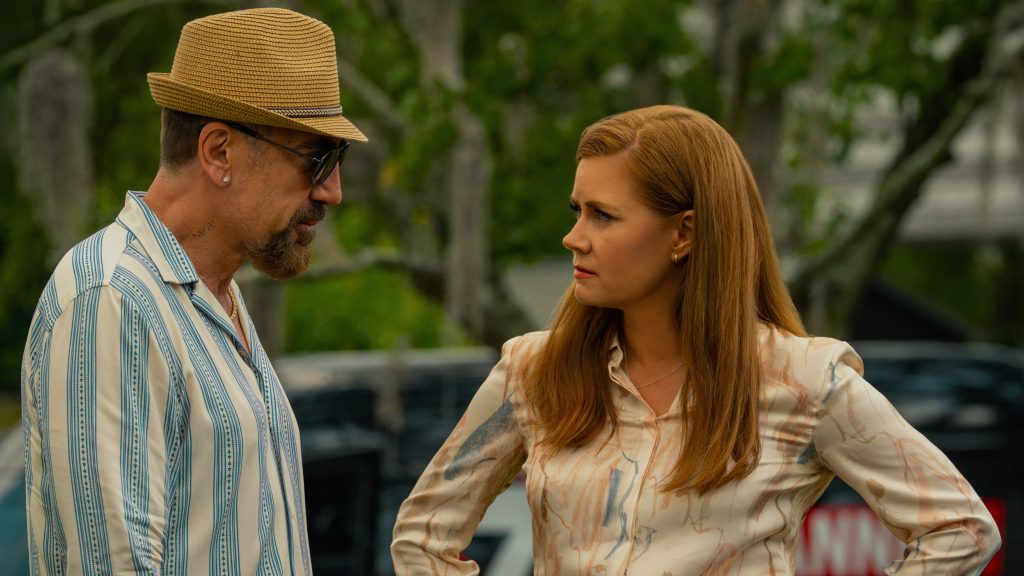
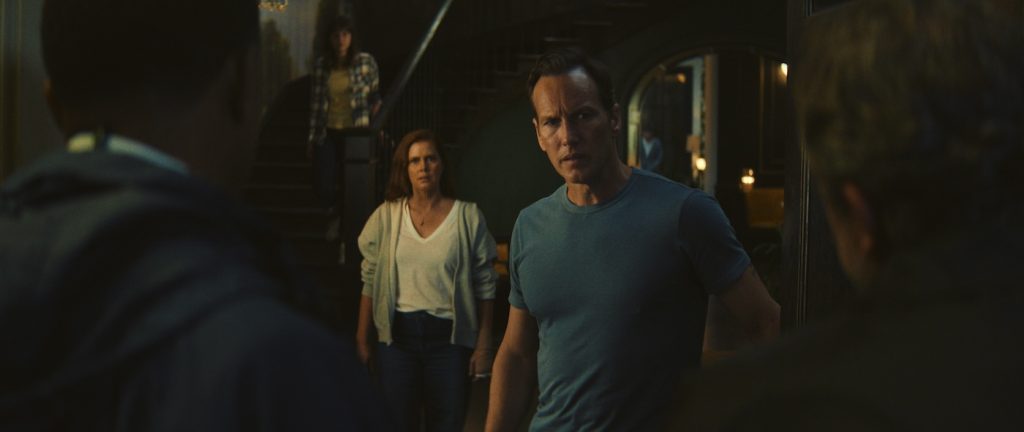
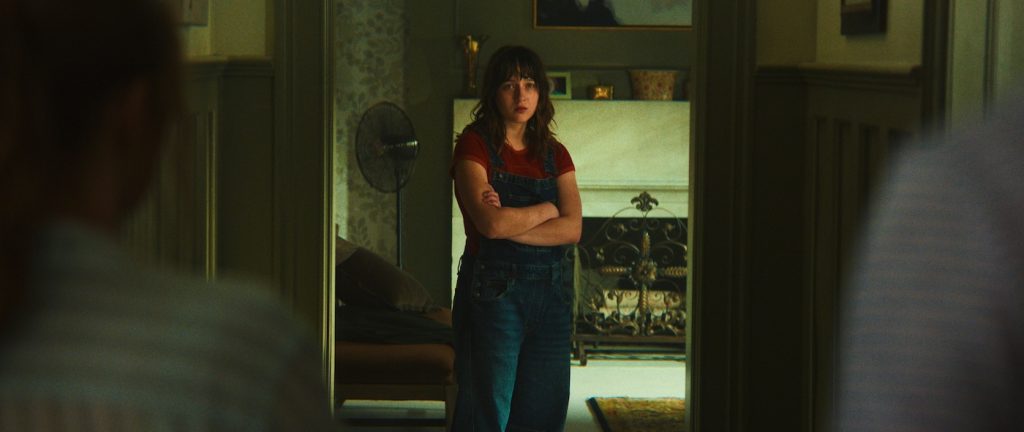
Tom and Anna both are from the South, but Anna came from a lower-income background. When I designed the house, I wanted it to feel like this was her ultimate goal. Tom, having come from a wealthier background, had a little more to say, which is why they kept changing contractors; the house has been under renovation for so long and is not completed. Anna is trying to achieve this look and feel that she has made it. But her vision is what she has always seen from the outside looking in, whereas Tom has grown up with it. The constant renovation is a perfect way—it was so beautifully written—to create constant chaos in their house and to show that there is still very much chaos looming behind their past.
Are there any distinctively Southern design elements that you incorporated into the house?
Savannah is on the river, not quite coastal. People might have thought I was going to go coastal South. I didn’t. I wanted to go with those rich tones and darker woods that are in Southern homes, before they have been ultra-modernized. I did a little bit more of the lighter stuff in the kitchen and family room area, because that is realistic. But I really wanted to hit home in those moody, dark tones that the South so beautifully does. They take pride in their woodworking, and I wanted to hold onto that.
I heard you might have an interesting story about where you sourced furniture and art for the sets.
I was flipping through a Southern design magazine, and I saw this piece of art in the background. First of all, I really liked it. Second, Anna would have that kind of taste. It was haunting, creepy, with bones around it. Butch Anthony ended up being the artist. I had my set decorator reach out to him. He was so kind to give us some digital copies. We printed them, and one is in the dining room.
Max buys a house right across the street. Did you approach the design of his house similarly or differently to the Bowden house?
Interestingly enough, that was actually across the street from the home that we shot for the exterior of the Bowden home. I didn’t have to build the interior because there weren’t enough scenes to justify a build. And the house inside was great! We pared it down because Max buys it as is, with the staging furniture in it. It had a lot of great bones and, again, the darker woodwork that worked for the South. We shot the house pretty much as-is except for changing out furniture and artwork.
I would love to ask you more about the Bowden house. Can you tell us how you made the space under construction feel so secretive, creepy, haunting?
We did so many weird things there. We had knob-and-tube wires hanging. In my backstory for it, one of the light switches had been chopped away because there was an electrical fire at one point. We had those exposed lath-and-plaster areas so that you could feel if somebody was behind there. I put holes in the floor—which we had to cover so that nobody fell through when the camera was in there—just to make it feel like this is a dangerous part of their lives, just like what’s happening in the story. That’s also for the actors, to help them feel like “I’m in the scary part of my house.”
As a production designer, to what extent do you think of the work you do as a kind of collaboration with the actors?
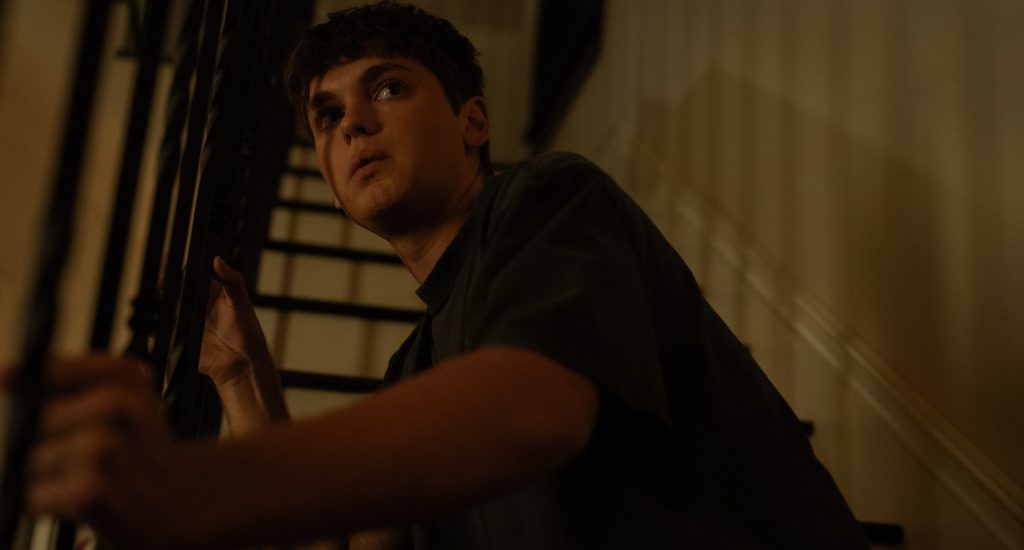
It’s a big part for me to think about what’s going to inspire them and what’s going to make them feel even more haunted. When we walked the actors through the set, Patrick noticed the knob-and-tube wiring. I’m trying to create some backstory to help them with their own characters, to help them get inspired.
I learned that Savannah is known for its hauntings. Were there any Southern ghost stories that you incorporated into the design?
One of my favorite stories about the South that I learned is about Spanish moss. I’m going off memory, but there was this Spanish conquistador who came over with his wife. His wife was murdered and hung by her hair. People said Spanish moss was never there until that happened, and it’s supposed to be her curly hair. Maybe that’s why Spanish moss is so creepy and haunting and beautiful.
To transport viewers to Savannah, was there anything else you did besides bringing Spanish moss to Atlanta?
We tried to find streets for filming that had live oak-looking trees that we were able to hang the Spanish moss from, because live oaks are predominantly what Spanish moss lives in. Atlanta is very hilly compared to Savannah. Savannah is extremely flat. That was another challenge that I put onto the location department: “I need flat, with lots of tree cover.” It was tough because there is a lot of undulation to Atlanta.
In the limited time you had to work in Savannah, what was your priority?
We wanted to get the tree-lined streets, the parks, and then we actually shot at a museum, the Jepson Center. We shot the whole entry area: where Anna first comes in, down near the step-and-repeats, and that check-in, and the beautiful staircase. Then, we picked up at a museum in Atlanta.
Cape Fear is streaming in its entirety on Apple TV.
Featured image: Javier Bardem and Lily Collias in “Cape Fear,” now streaming on Apple TV.