From Albuquerque to Air Force One: Inside Production Designer Denise Pizzini’s Vision for “Pluribus”
An alien virus escapes containment and infects everyone on Earth, with the exception of 12 people. But only one survivor in Apple TV+’s Pluribus, romantasy writer Carol Sturka (Rhea Seehorn), has any interest in finding a cure for the rest of the global population. Written by Breaking Bad and Better Call Saul creator Vince Gilligan, Pluribus is set in the showrunner’s go-to location, Albuquerque, but this time around, honis star’s quest to solve this crisis takes her across the globe.
The hive mind of the alien virus wants the best for the tiny population of those uninfected, which means Carol and her international comrades can have anything they desire. For angry Carol, who lost her wife during the Joining, her desires include hand grenades and straight answers. But her fellow immune want to join the Others, live in luxury, or just enjoy what’s left of their families. In contrast to Carol’s wish to hole up in her house and see her favorite grocery store restocked, her foil, the playboy Koumba (Samba Schutte) splashes out to Las Vegas and travels with a bevy of brainwashed beauties on Air Force One. At the same time, a mysterious 13th member of the immune, Manousos (Carols-Manuel Vesga), secrets himself away in a bunker, refusing all communications.
For Pluribus’s production designer, Denise Pizzini (Better Call Saul, The Muppets Mayhem), the first order of business was to set Pluribus apart, stylistically, from past Gilligan versions of Albuquerque. After that came the technical challenges, from imbuing the sets and built locations, which were in Albuquerque itself as well as the Canary Islands, with a strong sense of the Southwest, to recreating both the world’s most recognizable airplane and the formidable Darién Gap, the remote jungle on the border of Panama and Colombia.
How was shooting in Albuquerque? How did you make sure audiences got a strong sense of the Southwest?
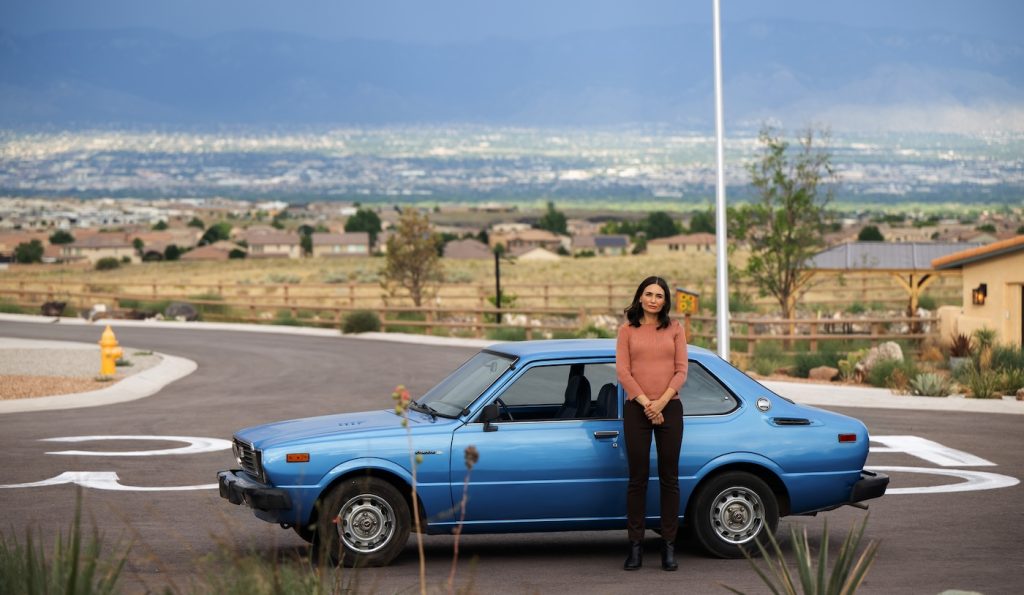
Vince has been there for years. We’re very familiar with the crew, and they’re really good. My set decorator is from Albuquerque. The construction crew is from Albuquerque. The paint department, which is fantastic, is from Albuquerque. There are some limited resources, but these people are very resourceful. Our main objective was to make Albuquerque look a little different from Breaking Bad and Better Call Saul, while also embracing the whole Southwest. Our neighborhood has views of the city of Albuquerque, as well as mountain views and a big, open sky. The light there is so great. We took that as our cue.
Carol’s house feels like an extension of the Southwest. What was the approach to her home?
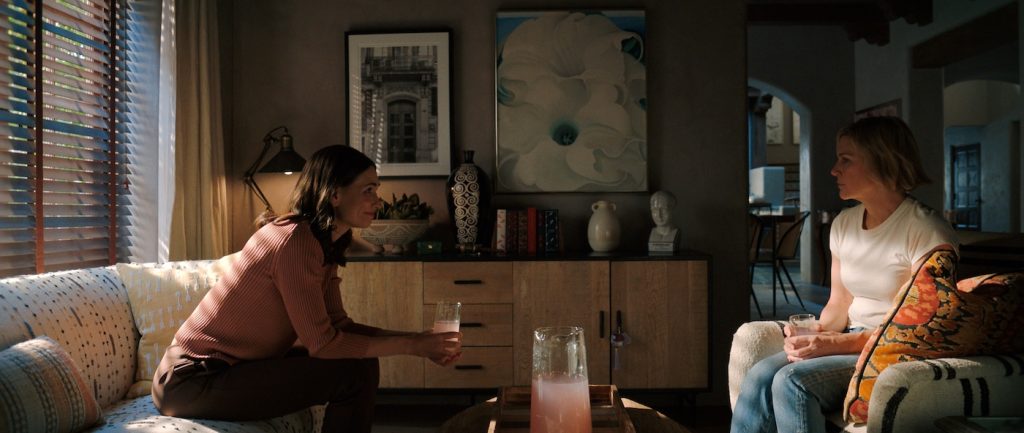
We built that on stage, the downstairs as one set, and the upstairs as another, but we made sure that they could connect. The exterior of Carol’s house, out in our neighborhood, we duplicated everything that you see out the windows. We purposely designed it so that she has lots of room to travel. You’re not just in a room and then stuck. When she’s running around the house, that is all on stage. And then when she’s looking out the windows or standing in front of a window, and you see what’s out the window, that is on our location, and then the backyard is all on location. We built six houses, and we put in the cul-de-sac. That was just an empty lot when we started.
Was there anything specific that you did to make sure Pluribus didn’t resemble Breaking Bad or Better Call Saul?
Because there are only so many locations you can go, we wanted to be sure that we didn’t revisit any locations. And if we did revisit a location, which I don’t think we did, we were prepared to change it completely. It’s just a different look. It’s a different side of Albuquerque. We wanted Carol’s world to be a little more high-end. She lives farther out in the suburbs, in a place where there are all custom homes.
How does Carol being alone on screen so often affect your process?
We have to be aware of the locations we’re choosing and what the action is. There was also a sense that it needed to look like she’s alone. So maybe there’s a bigger location. Maybe the scale is a little bit different to make her feel a little more isolated.
Opposite Carol, there’s Koumba, living it up in Las Vegas. What was the approach to set him apart?
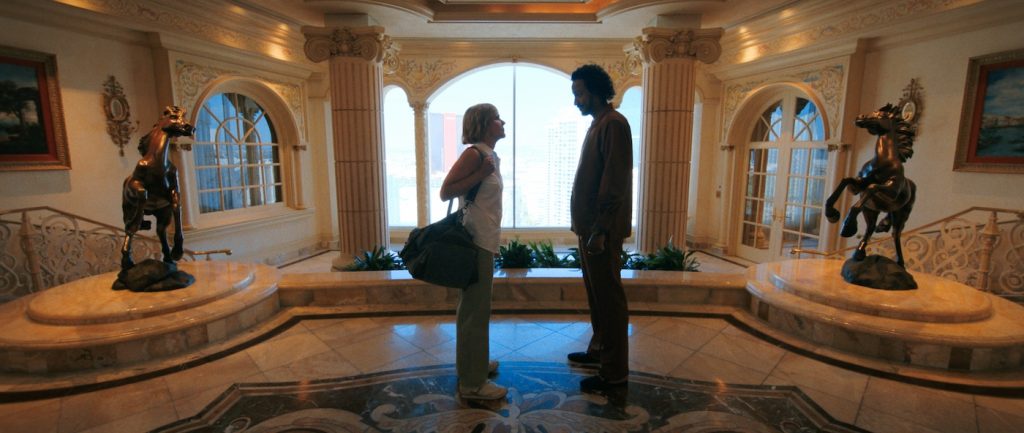
He’s so much more flamboyant, you know? We had a couple of different location choices, and we ended up going with this one because it actually was Elvis’s suite, and we thought, you know, perfect. And it’s done in this kind of faux Italian look. We augmented it a little bit, because it was also supposed to be his fantasy.
How did you handle Air Force One?
We built that whole plane, and we made it look a little different than most Air Force Ones. I wanted to make sure the colors were richer and deeper, and it had a little bit more sophistication than some Air Force Ones might have.
Was Air Force One the most challenging set?
The neighborhood was challenging, but doable in a practical way. But on Air Force One, there were a lot of logistics that I had not dealt with before. We laid 100 feet of concrete for the tarmac, which had to match what would be in Bilbao months later. We built this giant structure because Vince wanted the cast to walk up into Air Force One. We had to have engineers weigh in on that because of the wind there. It kept growing a little more, and we really needed to pay close attention to it because it could be dangerous if it blew over. And then, we’re replicating something that everybody’s very familiar with, so it had to look right.
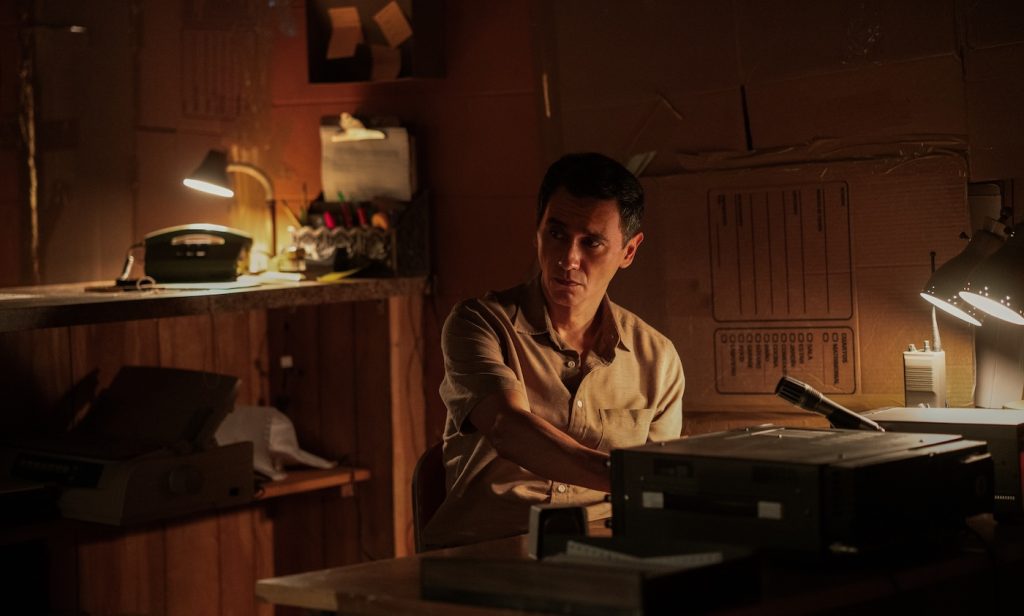
At the other end of the aesthetic spectrum, Manousos’s bunker was darkly realistic.
That was one of my favorite sets because it was supposed to be in Paraguay, but it was in a storage facility in Albuquerque. We built the top story, then built the interior on stage. And then his house and his garage are in the Canary Islands. We had to connect all of that together. Any time we were in a different country, place, or part of the world, I adjusted the colors so they were much more saturated and deeper than our Albuquerque palette.
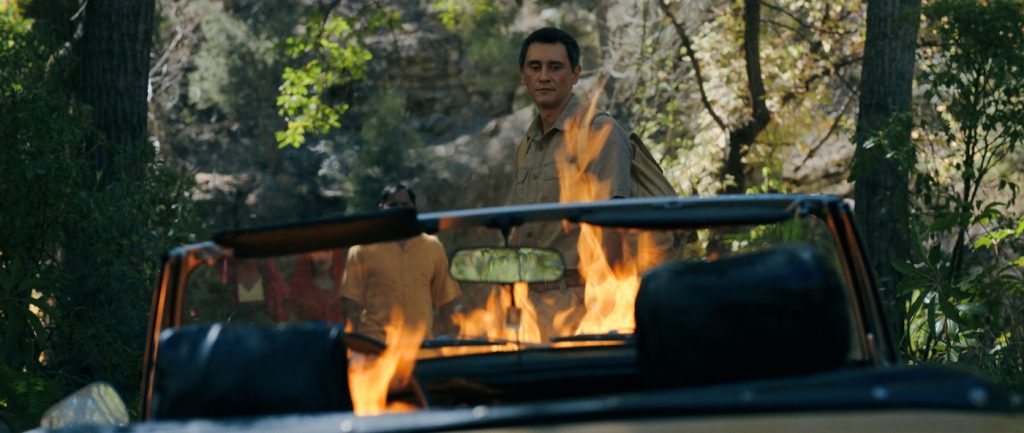
Was Manousos’s trek northward difficult to design? We see him crossing the Darién Gap.
We knew most of the story by the time we were scouting, which is always a great thing. We were scouting in the Canary Islands for the Darién Gap, and of course, I took a ton of pictures. Months later, when we’re in Albuquerque, they wanted to shoot a portion of the Darién Gap there, because we couldn’t burn the car in the Canary Islands. We couldn’t fly a helicopter. So I recreated a big chunk of the Darién Gap, mostly the night scenes and the closer scenes. And with my photo research, I was able to replicate the kinds of rocks and plant life there, and even some of the cliff sides. Because of its scale, we would shoot the wide shots in the Canary Islands. We couldn’t get that in Albuquerque. We took our Chunga palms with us to the Canary Islands.
What was the approach to the frozen body parts storage?
Vince likes to do everything practically. He doesn’t like to do big set extensions and green screens. So we actually carved all those body parts, and it is a huge warehouse. I had sculptors making those body parts, so we had bins of torsos, heads, arms, and legs. The set decoration department did all the shrink-wrapping, and then we added some red paint for blood and stuff like that. And then we just filled it. I had people carving for weeks. Our whole stage was just styrofoam. You think, “Why? Why are we doing this? She’s shooting it with a camcorder and a flashlight.” But it reads as massive and horrifying, so it worked out.
Pluribus is streaming on Apple TV.
Featured image: Rhea Seehorn and Carlos Manuel Vesga in “Pluribus,” now streaming on Apple TV.