Lost in the Labyrinth: Production Designer Jeremy Hindle on Deepening the Designs in “Severance” Season Two

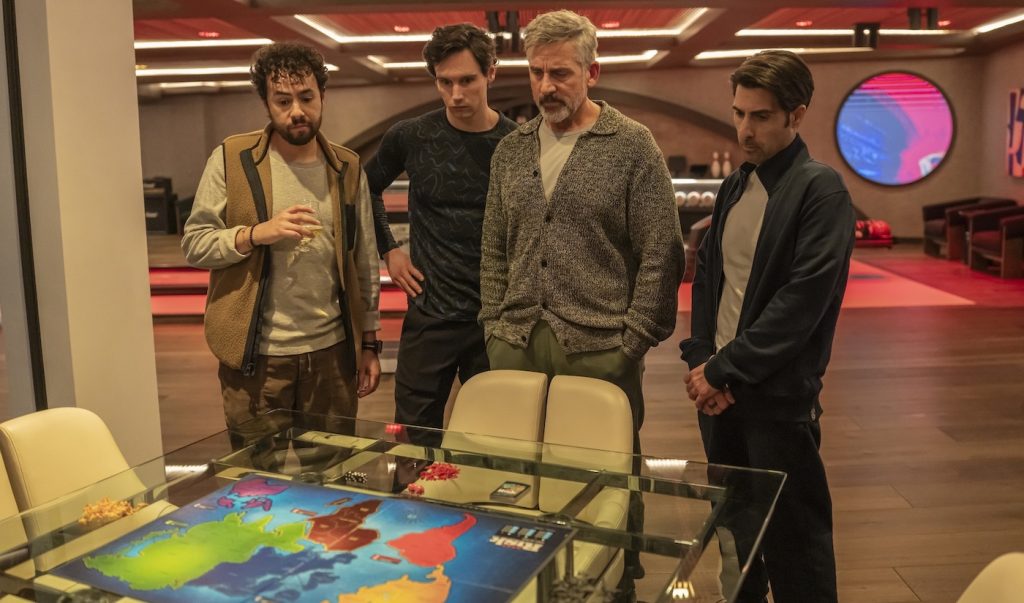
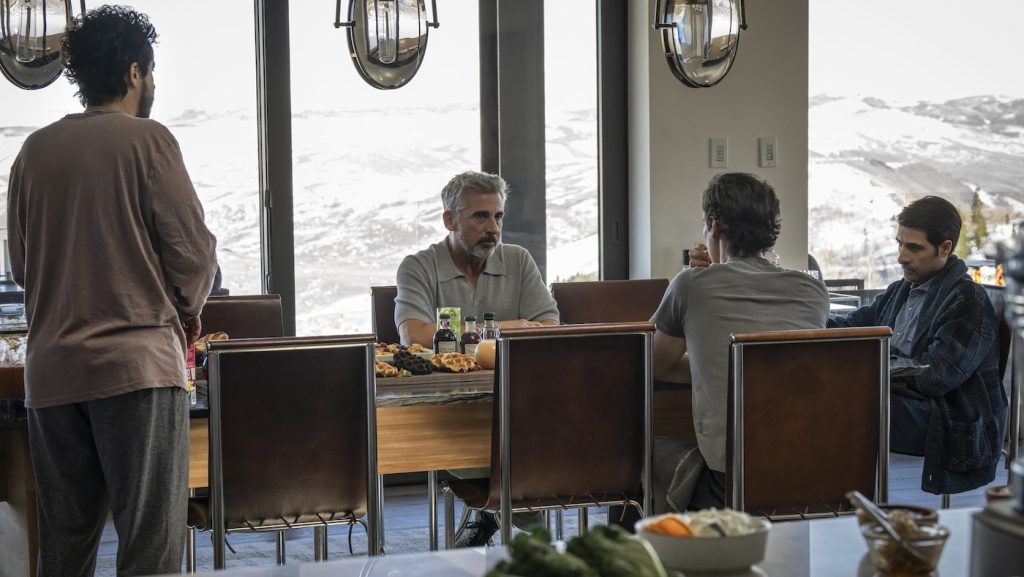
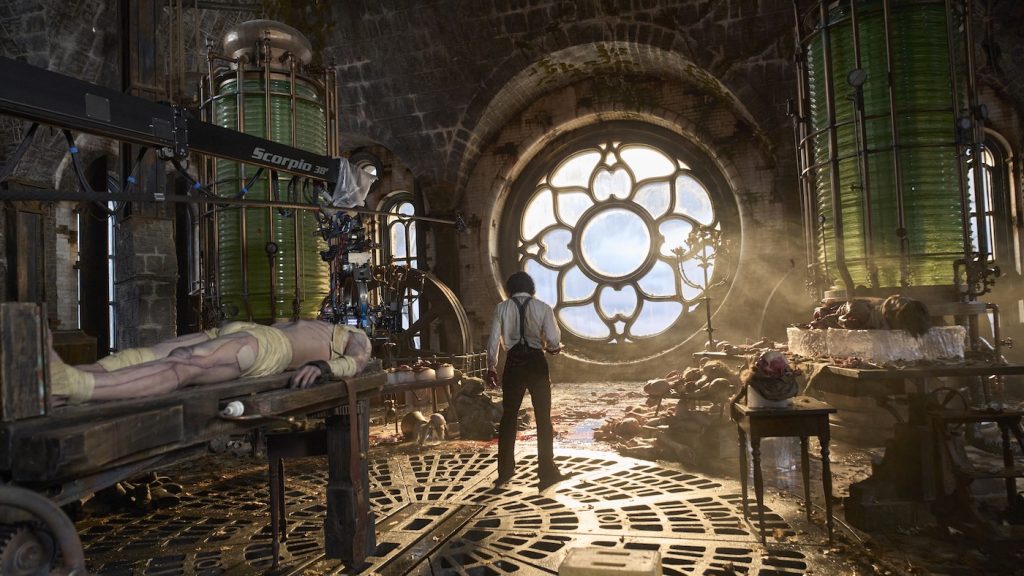
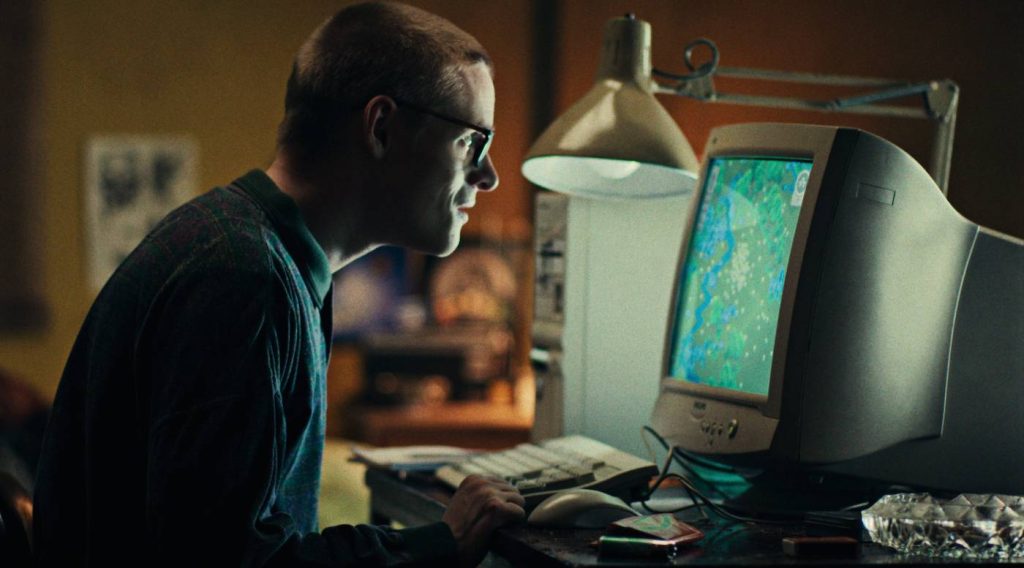
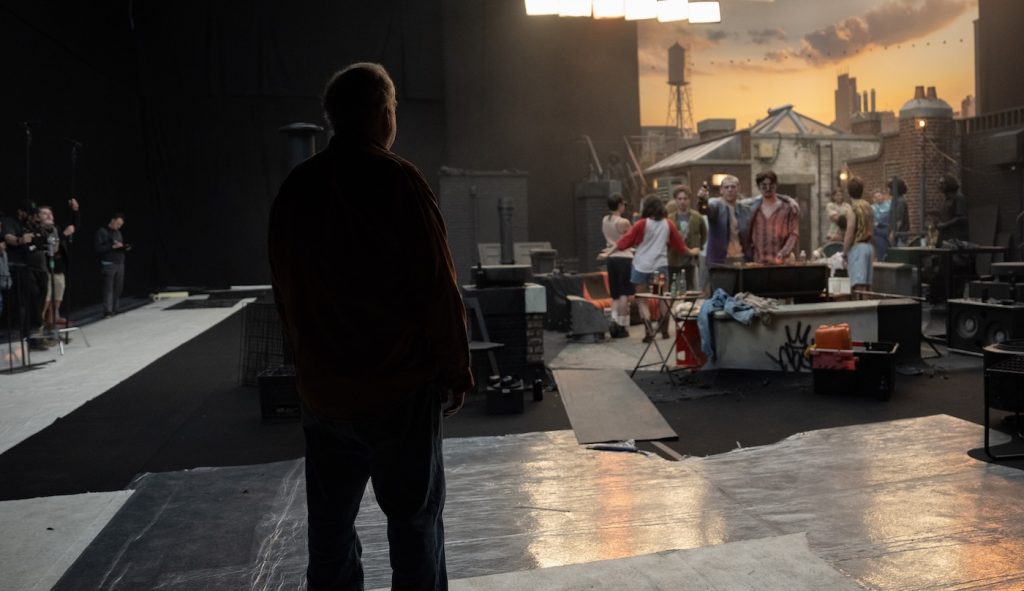
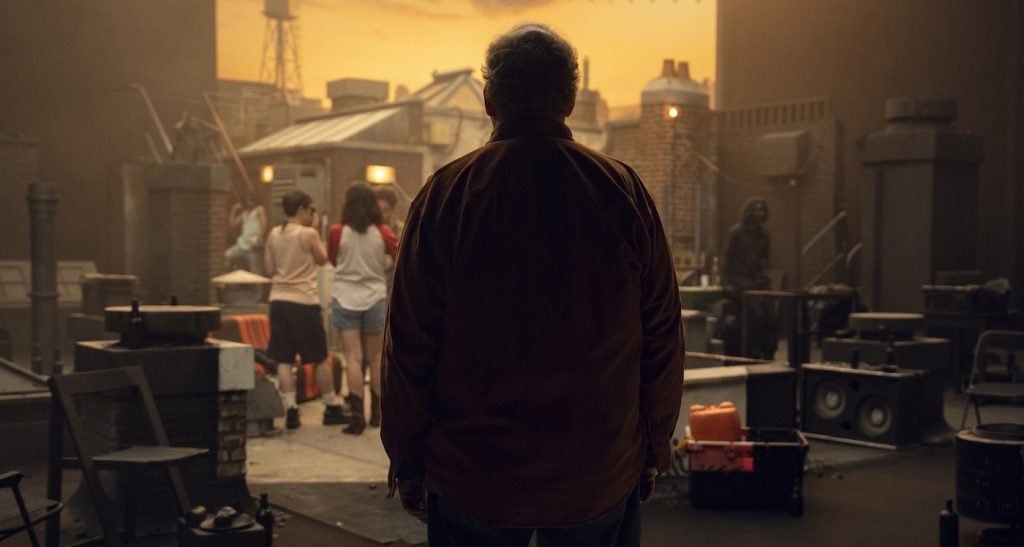
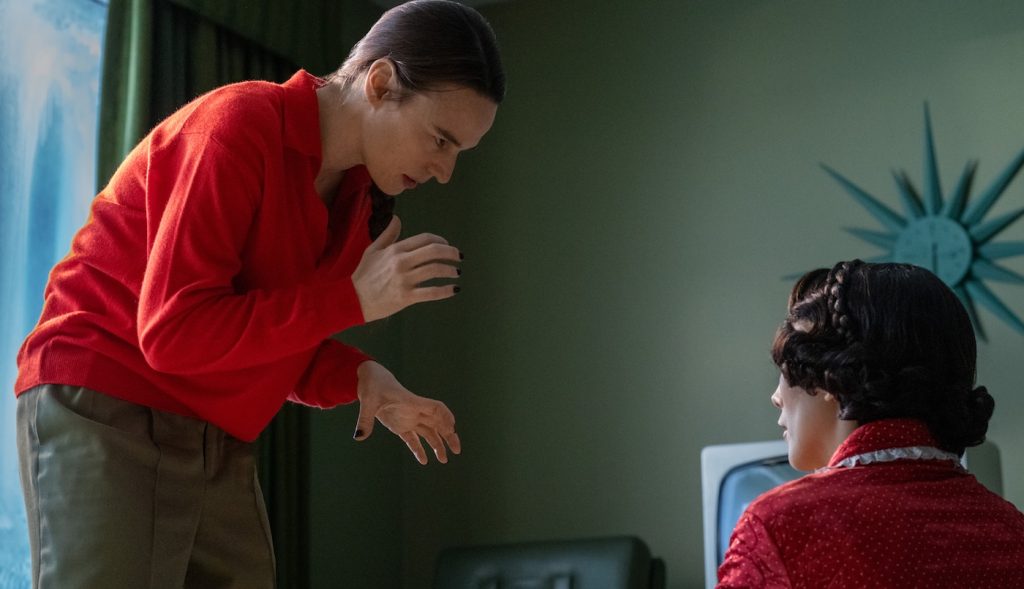
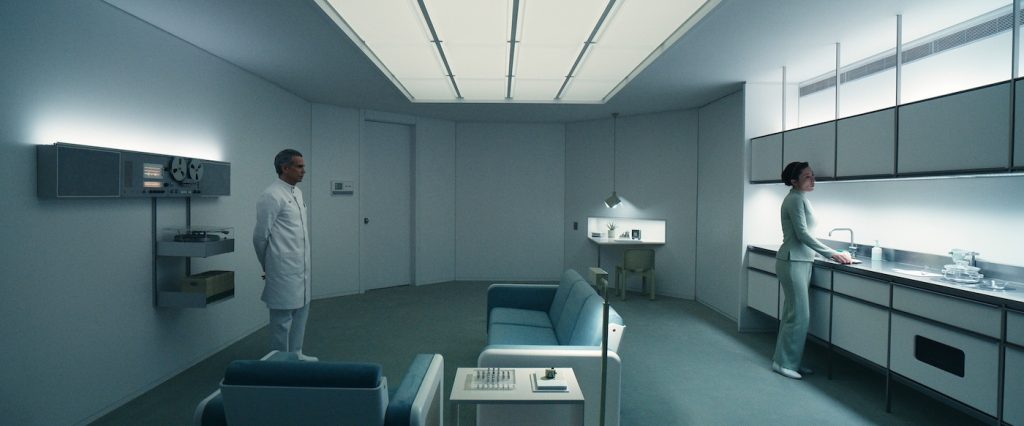
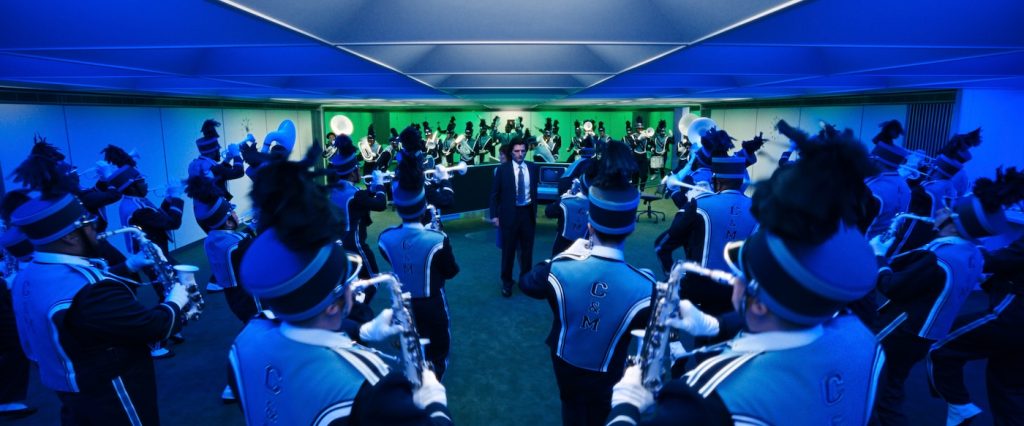
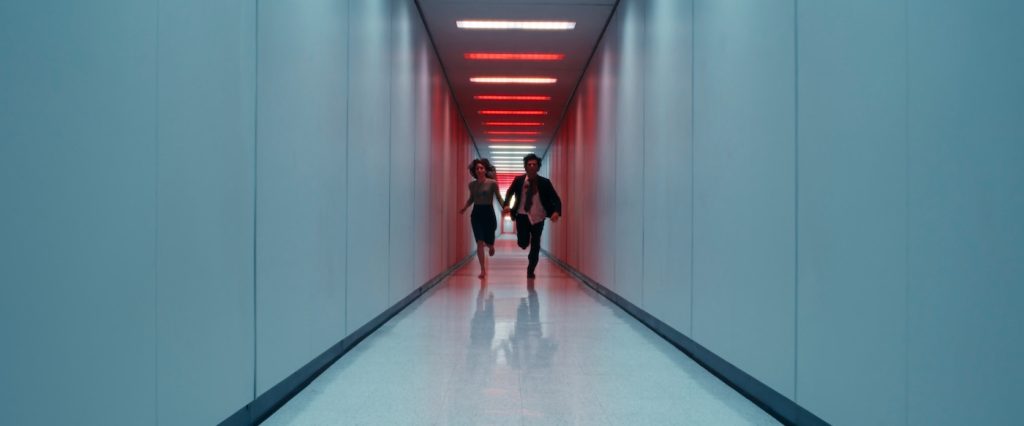
Season two of Severance managed to do the impossible—it justified the historic wait that fans had endured. It delivered a deeply satisfying mind-bender that answered plenty of season one’s pressing questions while leaving more than enough mystery for season three. In the frighteningly real sci-fi show created by Dan Erickson and directed by Ben Stiller, the scale of drama, conspiracy, and fear spreads across a range of new environments, much like a disease manufactured by Lumon Industries. Production designer Jeremy Hindle (Zero Dark Thirty) and his team created new sights and sets that took us deeper inside Lumon’s rococo workshop and well beyond the confines of the creeptastic corporate purgatory. 

In the latest chapter of the Apple TV+ show, Mark’s (Adam Scott) innie and outie unlock more questions about himself and his employer, as well as the company he keeps inside and outside work. Hindle had the joy of crafting new environments and revealing greater depths of the innie’ and outies’ lives. Season two masterfully deepens fans’ understanding of the mystery the characters are enduring while keeping more than enough in the dark for further exploration.

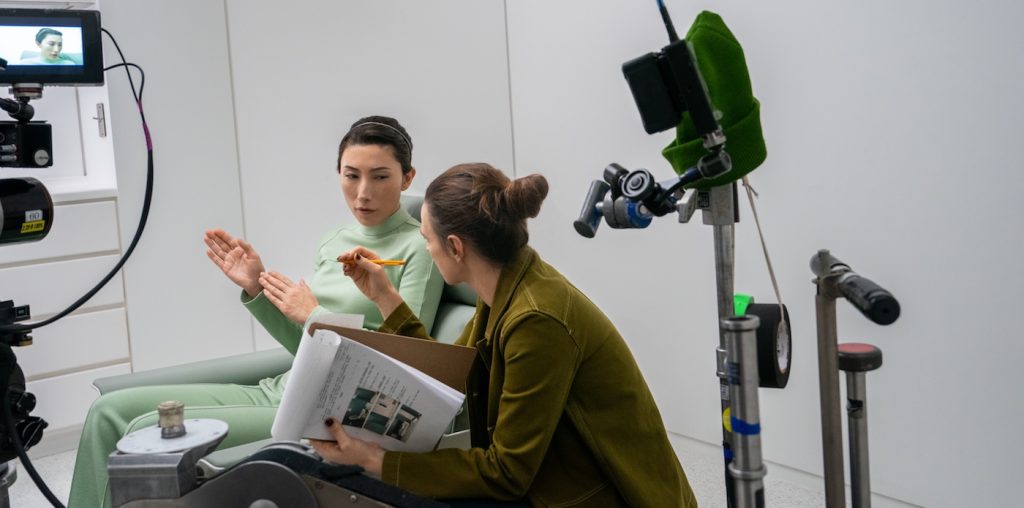
Hindle describes the process of creating these new sets as pure play, often in reference to the film Playtime. “It’s not just the aesthetic,” Hindle told The Credits. “It’s just that they played. We got to make theater, art, all in a television show shot like cinema.” Hindle breaks down the challenges and joys of creation in season two.


There’s usually a contrast between the innies and outies’ lives, but Burt’s (Christopher Walken) homelife is artful in a way similar to his innies’ art-centric gig. How was it decided that Burt’s innie and outie were closer in aesthetic compared to the rest of the ensemble? 

I think that’s the beauty of Burt’s [home]. The interiors are the easiest. Exteriors are hard because we don’t want to give away too much. You have to do a lot of VFX. When Burt is in the phone booth, there’s a ton of VFX work to make him look like he’s in this black space. Since it’s on location, you see a little bit of the bridge, but we really paint over it to bring it into something mysterious, that you can’t find anywhere. For Burt’s interior, what’s interesting about Burt is that I don’t know how many times that dude has been severed. That’s what I love about him – I don’t really know. You could say that about any of them. Burt has probably been there the longest, though. We want to show that, because he’s been doing it for a long time and has this lifelong partner, he’s kind of really living the best of it.


We finally learn more about Gemma (Dichen Lachman), seeing her earlier life with Mark. How’d you want to communicate their love through their homelife? 

It’s a hundred percent David Schlesinger, the set decorator, and Jess Gagné, who shot and directed it. We all worked closely on them, being both professors. There’s so much detail in the paperwork and the posters. You really get what they’re studying. The vibe of the house is that it’s a professor’s house that they’re given while they teach, so some of the stuff probably came with it. They have a really nice space. You get to bring all those colors and warmth into it. It was really just to make you feel like how in love these people are. 

Dichen Lachman in “Severance,” now streaming on Apple TV+.

Those experiments at the beginning of her abduction are especially horrific. How’d you want to make those Lumon spaces unsettling? Did you make them tighter sets than usual compared to most interiors? 

You start to play with angles and make things that are quite not what your brain understands – every angle’s a little bit off. Everything’s a little bit broken, too. Like, the carpet is safe, comfortable, and practical, but also, the table she sits at is a triangle. It’s the sharpest point coming out to you. Everything’s just a little bit violent – but again, practical and comfortable. Also, low ceilings always help there. We play with a lot of low ceilings. 

Robby Benson and Dichen Lachman in “Severance,” now streaming on Apple TV+.

For example? 

The Christmas room was probably the most fun set any of us has ever done. It was hysterical, and the spaces were really playful. You’re making a Christmas room where she writes letters and thank-you cards, and everything in the room is the same color. Literally, every object is 3D printed by them. Everything they do is so fabricated, foreign, and bizarre, yet real.

Dichen Lachman in “Severance,” now streaming on Apple TV+.

What about Harmony Cobel’s (Patricia Arquette) journey to her past? How’d you want those sets to provide new insight into her psyche? 

Whether it was Ether or something else, they’re like a plague. They move from place to place and suck the life out of it. We spent a lot of time at VFX on all those exterior shots. Every building has a sense of decay, which we control. The whole image is controlled to show where she came from, and that her only salvation was leaving. Because she’s so embedded in Lumon, you keep going through the process until you’re disposed of, which she is. Now, when she goes back, it’s powerful, especially in her aunt’s house. 
Jane Alexander and Patricia Arquette in “Severance,” now streaming on Apple TV+.

What did you want that space to say?

In those scenes, I love how beautiful the place is and how hauntingly creepy it is. The wardrobe sells it. What Aunt Sissy wears is amazing. Putting an image of her in that long white gown in those spaces, seeing how everyone is messed up from Ether and decaying, you can’t help but feel sorry for Harmony. You oddly fall in love with her. 
Have you considered what Mr. Milchick’s (Tramell Tillman) home looks like yet?

Oh, I know what that looks like. I already scouted the concept, and we’ve drawn it up. We already know what it is.

How many years of material do you have in mind for designs?

I have a folder of bonus things that we’re always trying to slip in. We’ve designed sets from Season 2 that might be used in Season 3. I had millions of ideas from season one, because when I first met with Dan, I asked, “How far underground does this go?” And he said, “Oh, miles.” My head exploded with ideas, so you start to have all these different ideas of where you get to go with five years of percolating and playing around. 

“Severance,” now streaming on Apple TV+.

One of the most surreal aspects of the Lumon office is the goat department. Where did your mind and instincts first go for that set?

When I read the word “Mammalians,” instantly I knew. That’s what I love about Severance: that Danny writes these worlds that I get to dream up. It’s a football field underground with rolling hills. I get to play with that. That was always in my head – that this is going to be massive ,whenever we get to do it. There are certain things that just resonate with me, why they are the way they are, because we play with scale all the time.

For more on Severance, check out these stories:

How “Severance” Cinematographer David Lanzenberg Captured a Chilling Corporate Nightmare

Featured image: Britt Lower and Adam Scott in “Severance,” now streaming on Apple TV+.

Home Field Advantage: “NCIS: Origins” Showrunners on How Tax Credits Anchored Their Prequel Series in California

Already renewed for a second season, the NCIS franchise spin-off NCIS: Origins has been capturing a new generation of fans. In addition to the 90s set prequel’s heady mix of powerful storytelling, music, and a dynamic young cast, showrunners David J. North and Gina Lucita Monreal credit a lot of the show’s appeal to the fact that it’s set in and filmed in California.

The CBS show follows a young Leroy Jethro Gibbs (Austin Stowell), the iconic character made famous by Mark Harmon, as he begins his career before the events of the original NCIS series. He’s a newly minted special agent at the fledgling NCIS Camp Pendleton. That’s where he starts to make a name for himself and assembles “a gritty, ragtag team.”

Here, North, known for previously writing NCIS and NCIS: Los Angeles, and Monreal, a producer on the original NCIS, explain the importance of California’s tax incentives and its unparalleled pool of creative talent to the fabric and success of NCIS: Origins.


NCIS: Origins has already been renewed for a second season. You must be delighted.

North: We have felt very supported by CBS and Paramount from the beginning. NCIS means so much to us, and I have spent a huge portion of my career on it. Going into Origins, we wanted to find that NCIS magic but also do it differently. Gina and I were not interested in doing cookie-cutter ‘insert NCIS here.’ We wanted to create a character-driven show, and that’s what we did. It’s one of those things where the audience is building, and people are hopefully enjoying the ride with us.


 NCIS: Origins is shot on the Paramount lot in Los Angeles and on location in San Pedro, which doubles for San Diego. How important is it for you to shoot in California?

North: It helps us enormously. For us personally, being here close to our loved ones is great. Shooting in LA is a real gift, and it’s a gift that many people no longer have. For us to have received the tax incentive and be on the Paramount lot, which is so storied, brings energy and history to what we’re doing. There’s something special about Hollywood, and we feel very grateful to be able to make this show here.

Monreal: Even just stepping on set, you feel the happiness of the crew and the cast in being home. We already face the challenge of being a period show because we’re set in the 90s, so being able to be in the actual location helps make the show look more authentic.

Tax credits make shooting in California a lot easier and more appealing. Are you hoping to utilize California and the workforce here even more in season two?

North: We’re always looking for different locations that match each episode. First of all, we have to break each episode. We’re so grateful that we received that tax credit. Beyond that, we write the scripts, then check out the locations and see what we can get. We’re very fortunate to be in LA.

Monreal: We couldn’t shoot here without the incentive, so we jumped up and down when we got it. We knew it was important not only for the storytelling but also for the community we’ve built around the show. It was a huge deal for us to get that.


Los Angeles and greater Southern California offer a wide range of different types of buildings and locations. How much does that help the production because you don’t have to recreate everything?

North: I was driving in Hollywood the other day with my girlfriend, and she looked down and was like, ‘Look at that hotel. It absolutely looks like something out of 1957,’ and I said, ‘Oh yeah, I’ve shot there before. That’s why they keep it that way.’ It’s a totally unique space, and what we have here is so rare. Niels Arden Oplev directed our pilot. He doesn’t do many episodes of television, only pilots and features, but he also directed our season finale. Shooting NCIS: Origins was the first time in his career that he shot in LA, and this guy has had a long career. He was so excited.

Pictured (L-R): Austin Stowell as Leroy Jethro Gibbs. Photo: Robert Voets/CBS ©2024 CBS Broadcasting, Inc. All Rights Reserved.

You did have to recreate Camp Pendleton, located just outside San Diego. What did it take to achieve that, and why did you want to make that creative choice?

North: We spent the day there with our writers and our line producer, Michele Greco. We have an amazing locations team that found San Pedro for us, and we built a little camp there at Camp Pendleton. We took some buildings, painted them up, and brought in our own guard gate. Post-9/11, Camp Pendleton has a huge and very technical guard gate, but in 1991, it was just an armbar that they lifted themselves, so we brought that in.

Monreal: Some buildings there are from our time period, so we pay special attention to those. We looked in books, and in one, there was a picture of the actual building where the National Intelligence Service was at the time, so we used that as inspiration. Our production designer, Rusty Smith, was incredible. He had the idea to make it a Quonset hut.

North: Interestingly, our bullpen’s interior is a Quonset hut. It’s an old World War II thing. This is a true story. Mark Harmon called me and said, ‘Do you know what? The bullpen should be a Quonset hut.’ Mark likes Quonset huts. There are a million things going on when you’re launching a show, and I forgot about it, but Rusty came in and pitched us to be our set designer and threw in the idea of a Quonset hut. I said, ‘Well, that’s there you go. Serendipity. We’ll hire him.’ He’s fantastic.


Shooting in LA means that you have access to an incredible pool of creative talent, many of whom have been struggling to find work. Did that make it easier to assemble the best team?

North: Our line producer, Michele Greco, has been in LA a long time and has worked with a lot of these people, so he brings them to us. In many cases, department heads and Gina and I would also interview them, but we hired Michele and then rely on him. Michele has done a lot of things in Atlanta, and he would often talk to us about the amount of talent in LA sitting at home. We really did feel like we had our pick and hit the jackpot. I know people say this, but I believe we have the best crew in the world. We’re so thankful for them.

Pictured (L-R): Kyle Schmid as Mike Franks. Photo: Erik Voake/CBS ©2024 CBS Broadcasting, Inc. All Rights Reserved.

The show deals with issues like mental health and military trauma. Did you hire advisors to ensure you were covering these issues with accuracy and sensitivity?

Monreal: We did a lot of research when it came to that, but I have personal experience with members of my own family, too. We have some of our staff writers who have had personal experience with the military, so we really drew on all of those resources while trying to stay true to the character of Gibbs, who has this trauma in his past. We’re using that as a core of the story, but we’re also delving into what that does to your personality, way of thinking, and mindset.

North: We have a guy named Daniel in our writer’s room. I don’t know how many tours he did in Afghanistan, but he was a sniper. Those stories and the losses that he suffered are all infused into the show in different ways. We also have two technical advisors, RJ and Leon Carroll. Leon was the technical advisor for the entire run of NCIS. We’ve had a lot of resources, and I hope that’s reflected in the show. We take a lot of pride in how real and grounded we keep it.

NCIS: Origins is on CBS and streaming on Paramount Plus

For more films and series from CBS, Paramount and Paramount+, check out these stories:

From Saddles to Switchboards: Sound Maestro George Haddad Crafts the Symphony of “1923”

Tom Cruise Hangs On For Dear Life in “Mission: Impossible – The Final Reckoning” Trailer

No More Games: “September 5’s” Oscar-Nominated Writers on the Day Terror Took Center Stage

Featured image: Pictured (L-R): Kyle Schmid as Mike Franks, Mariel Molino as Cecilia “Lala” Dominguez, and Caleb Foote as Bernard “Randy” Randolf. Photo: Erik Voake/CBS ©2024 CBS Broadcasting, Inc. All Rights Reserved.

No Character Is Safe: How DP Ksenia Sereda Frames “The Last of Us” Season 2’s Heightened Stakes

Sanctuary is fleeting in The Last of Us. With savage grudges and the ever-evolving infected hordes, who seem to be learning tactics through their cordyceps-controlled brains, no one is safe. Here comes your spoiler alert warning—the savagery proved especially true when antihero Joel (Pedro Pascal) was brutally clubbed to death by vengeful Firefly, Abby (Kaitlyn Dever). You don’t need to be a member of the undead to do dreadful things in this world. 

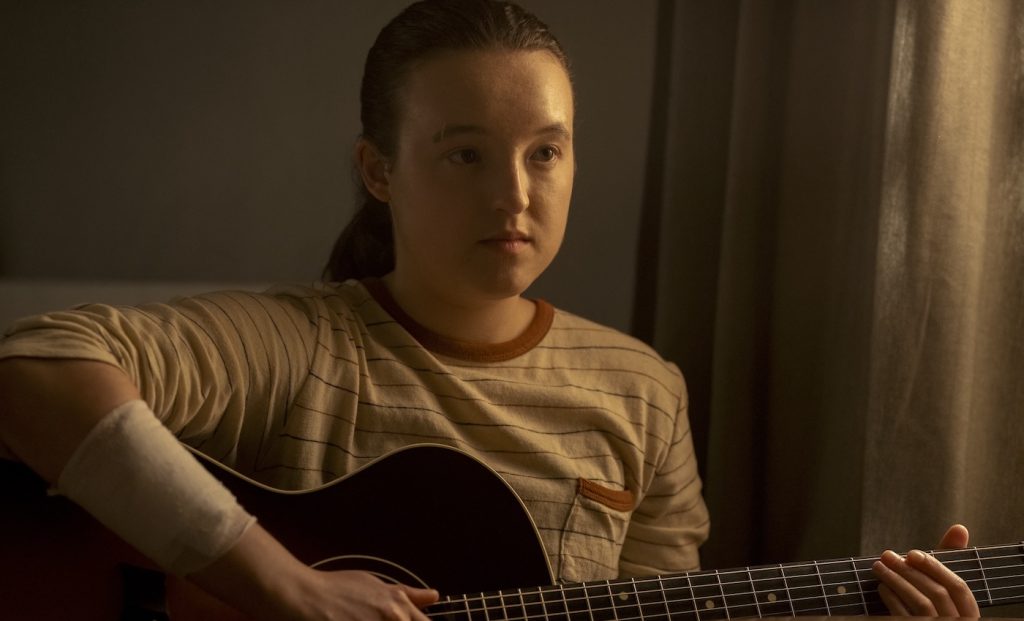
Peace was more promising when we dropped in on Joel and Ellie (Bella Ramsey) at the beginning of the season. The world was still plagued with the infected, but Joel and Ellie were living a more domestic, prosaically turbulent life. In this fragile peace, five years had passed, and relationships had time to flourish and fracture. The pair settled into the Jackson community, built by Joel’s brother, Tommy (Gabriel Luna), and sister-in-law, Maria (Rutina Wesley), with Ellie performing the ritual distaste of a parent by a teenager in the way she kept Joel at arm’s length. 

“This season, [production design] built a huge set for the city center of Jackson,” cinematographer Ksenia Sereda described. “An amazing thing about this show is that so many things are built practically, which gives you a completely different feeling when you’re on set and you have real backgrounds and a real environment. I think it’s also completely different for actors when you’re working in a real environment and not just surrounded by blue screens. For lighting opportunities and composition, it gives us so much more freedom for where we can look. So, shout out to our production designer and their team on giving us that kind of scope.”

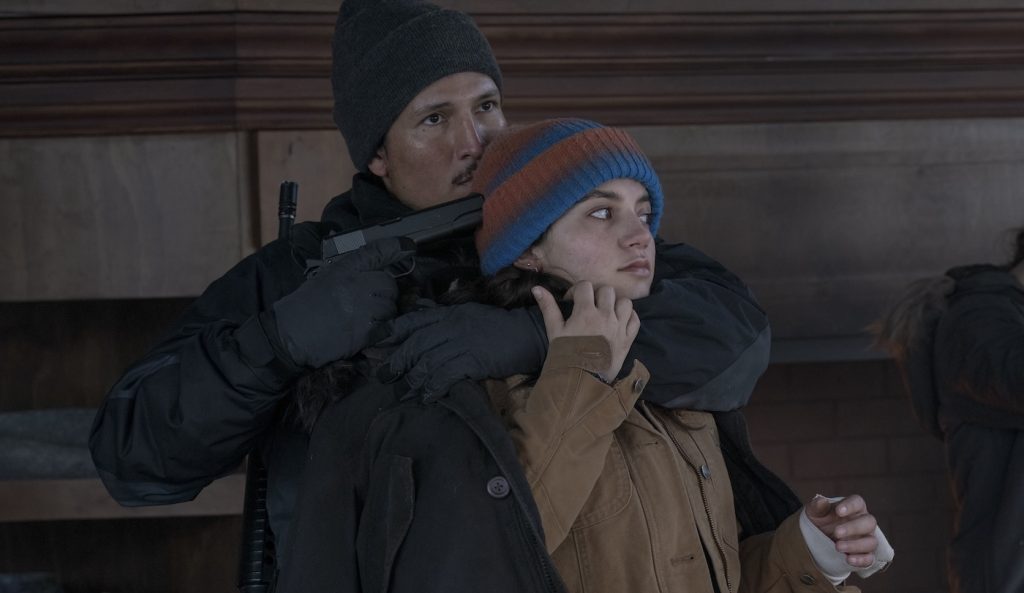
Bella Ramsey, Isabela Merced. Photograph by Liane Hentscher/HBO

Internal tensions within the compound rose as the growing population strained the infrastructure and resources. An older Ellie began asserting her independence as a young woman, resisting Joel’s protection. That included him harboring the secret that he rescued her from the Fireflies’ scientists in a violent defiance when they attempted to sacrifice Ellie for a cure.

Pedro Pascal and Bella Ramsey. Photograph by Liane Hentscher/HBO

“We see the cinematic style grows with Ellie,” Sereda explained. “We find her much older and much more experienced, and we see her going in this scene with [infected] Clickers. Previously, we’ve seen how dangerous they are, and now she’s so playful, and it’s so easy for her. She really knows what she is doing. She has like a very fine workflow with them.”


Ellie’s combat and gun training have prepared her for a violent world, but new threats are quietly manifesting. Now that she’s on her own without Joel’s loving protection, she will have to rely on her wits and skill.

The Jackson community had been able to manage the roaming infected who lurked near town, but a new stage of disease has developed a more sophisticated enemy. Sereda adapted her shooting style for action sequences to reflect the new way characters interact with the infected. Rather than the blind and aggressive Clickers, Stalkers have their vision and can lurk, plotting an attack.


“In this season, we introduce a new type of infection. Their behavior is different. It’s kind of sneakier, and you can see stylistically the camera also changes its behavior,” Sereda noted. “So now we need to be much more aware of your surroundings because these Infected are smarter. It gives us this new perspective of being watched all the time because they’re stalking us and following us. Working through the camera, camera movement, and camera positions helps us build this tension inside of those sequences.”

Kaitlyn Dever. Photo
April 14, 2025 Photograph by Liane Hentscher/HBO

Sereda primarily operates the camera herself. The show’s handheld style gives her flexibility to react immediately to action. That approach also builds a “believable visual experience,” grounding the audience’s perspective.

“It is highly designed even though it looks like it is not,” Sereda revealed. “For me, [operating the camera] is a very big part of cinematography because I feel it is very important for me to be inside the scene and be connected to the actors and the characters. I think the handheld style for this show is so amazing because it brings a very different level of connection to the material and what you see. You trust and believe what you put on screen.”


The Last of Us gripped viewers with its stunning storytelling and fast pace, ensuring that no character was safe. We now know that the show’s leads can’t even depend on their status to survive.

Some of the most memorable scenes have been delivered by characters who have only a few episodes of screen time or less. Sereda set the show’s tone with the series premiere as well as the season two premiere, balancing duties on alternating episodes with colleague Catherine Goldschmidt. Despite the transient nature of the show’s characters, the acting is exceptional, and Sereda is focused on capturing the stellar performances.

“As a cinematographer, one of the biggest parts of your job is to create the atmosphere and help the characters to come to life on screen. With this show, it’s especially very important,” Sereda acknowledged. “The writing is so amazing that even if you have the characters just for one episode, you will be able to, in 60 minutes of television, fall in love with them and have your heart completely broken. In the short time given, you need to be able, as a cinematographer, to build a strong attachment in the viewer to these characters and make them love or hate them. Of course, it is like a very big part of camera work, lighting, and composition—also, the length of the shots you’re picking. I’m trying to give as many long shots as possible so we can stay with the actors in real time. I think it also brings a very different connection to the actors.”

Kaitlyn Dever, Pedro Pascal. Photograph by Liane Hentscher/HBO

This season follows the hit video game The Last of Us Part IIwhich moves the characters to the Pacific Northwest after Abby (Kaitlyn Dever) and fellow Fireflies exact their revenge on Joel and Ellie for the deadly conflict that ended season 1. Sereda tried to create a natural, realistic palette that is influenced by the geographic shift from Wyoming’s snow to the lush, rainy area.

Isabela Merced, Bella Ramsey. Photograph by Liane Hentscher/HBO

“Even for the night scenes, we’re trying not to make them overly blue to preserve these very warm, almost muddy, dusty, rusty feeling to everything,” Sereda said. “In this season, it’s different because we have this shift to Seattle where we are bringing much more blues and as the story unfolds, we have a lot of water and a lot of fire this season. That naturally brings a lot of new lighting and color elements.”

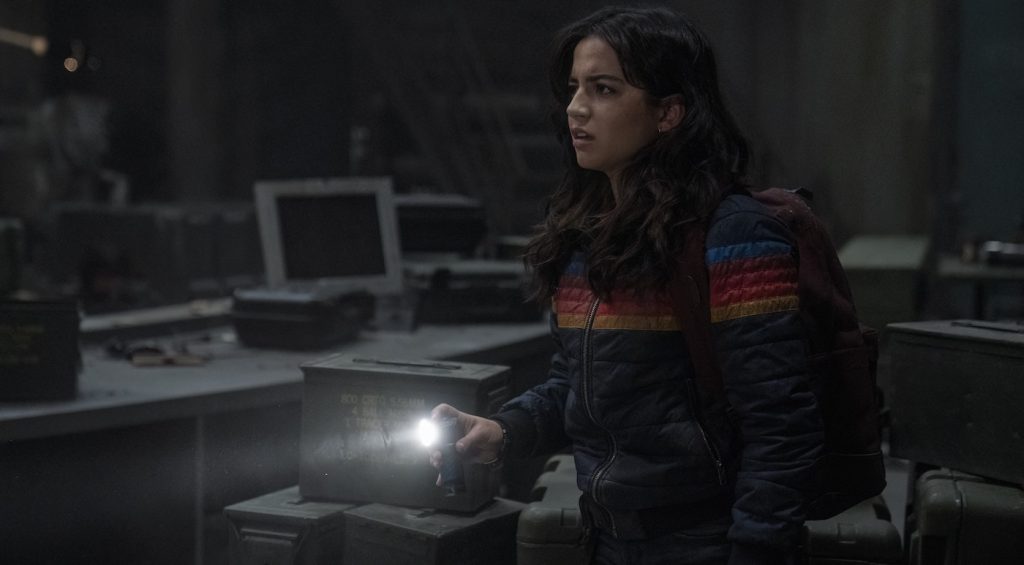
One of the show’s biggest challenges for cinematography is lighting. There are a lot of conflicts in the dark and some surprise attacks. While the scenes typically aren’t practically lit by flashlights, Sereda uses their beams as a tool to track the action. She uses mild color shifts for the different characters’ flashlights.

“It’s pretty subtle, but I think it’s important so the viewer can get the separation of whose flashlight is who when it’s moving so we can identify whose flashlight is that right now,” she explained. “We have different levels of how we can adjust the brightness and color, but it is a very big part of the show. We can reveal things; we can hide things with the flashlight. It’s a very big, dramatic element.”

As a fan of the video game, Sereda said that other players will recognize some of the new storylines and characters. She said that it has also served as inspiration in her work. The striking design is something she has tried to meet and expound upon in the show.

Photograph by Courtesy of HBO

“It is one of the most visual games out there,” she admired. “It is an absolutely incredible piece in the way that it has not only exciting gameplay and infected, but also amazing storytelling and very beautiful cinematography in the game, which makes my work more challenging because you need to match the level at least and maybe even try to push it forward. The biggest ambition is to push everything.”

New episodes of The Last of Us air Sundays on HBO and Max.

Featured image: Bella Ramsey. Photo Courtesy of HBO 

“Sinners” Takes a Big Second Bite: Ryan Coogler’s Vampire Thriller Has Historic Second Weekend

Writer/director Ryan Coogler has officially gone five for five.

The 39-year old auteur can now make the very rare claim to have had five consecutive hit films in his first five attempts, as his wildly ambitious, beautifully composed fifth feature, the R-rated supernatural period thriller Sinners, just boasted the most impressive second weekend for any film in well over a decade, pulling in $45 million for the smallest drop for a movie’s second weekend since James Cameron’s 2009 film Avatar. 

Coogler, whose breakout film Fruitvale Station in 2013 jumpstarted a career that has seen him swing and connect each time, from 2015’s Creed to his 2018 MCU entry, the global juggernaut Black Panther, and his bittersweet 2022 follow-up, Black Panther: Wakanda Forever, has yet to miss. Now, with a film inspired by stories from his Mississippi-born grandmother, Coogler’s deeply personal, deliciously ambitious vampire drama/horror has become a big hit for Warner Bros., proving that audiences will flock to theaters for original films, even period piece genre films, if they trust the filmmaker. The rapturous reviews and excellent word of mouth have fueled the surge in box office sales, with Sinners far outstripping hopes that it would merely compete with the Ben Affleck-led The Accountant 2 for the top spot in its second weekend. Instead, it pulled in an incredible $45 million to win the weekend once again.

This minuscule 6 percent drop from Sinners’ $48 million opening weekend haul is one of the smallest in history for a film playing outside the year-end holidays. It is now a sure thing that Coogler’s film will be a massive win for Warner Bros. and Coogler himself, who earned the deal he signed, taking ownership of the film after 25 years. The music-soaked, moody vampire thriller, shot entirely in Louisiana but set in Mississippi in 1932, stars Michael B. Jordan as a pair of ambitious, morally flexible gangster twins named Smoke and Stack. The two return from serving in World War I and then spend a stint in Chicago, which appears to have gotten them mixed up with both the Italian and Irish mobs (Al Capone is name-checked). They then return to their small town in Mississippi to open a juke joint. Their plan goes all too well—their gifted bluesman cousin, Sammy (Miles Caton) sings and plays his way into the dark heart of a nearby vampire, Remmick (Jack O’Connell), confirming the legend that opens the film that some musicians are so gifted, they pierce the veil between the living and the dead. What ensues is a life-or-death struggle with the undead, in which the growing numbers of vampires, led by Remmick, try to convince the survivors that in the Jim Crow South, a deal with the immortal bloodsuckers and joining their undead legions is far better than the one they’re getting from the Klan, who plan to take back the land Smoke and Stack paid for after killing the brothers and any else left inside the joint.

Caption: MILES CATON as Sammie Moore in Warner Bros. Pictures’ “SINNERS,” a Warner Bros. Pictures release. Photo Credit: Courtesy Warner Bros. Pictures
Caption: JACK O’CONNELL as Remmick in Warner Bros. Pictures’ “SINNERS,” a Warner Bros. Pictures release. Photo Credit: Courtesy Warner Bros. Pictures

The movie is relentlessly entertaining, often intensely moving, occasionally very funny (Delroy Lindo is a gem throughout), gorgeously shot, and meticulously composed with music that runs from almost the first to the last frame. It is bone-deep satisfying as a cinematic experience, exactly what Coogler set out to do. It’s a bloody good time in the theater, a testament to why the experience of seeing a great movie on a big screen in a large, dark room filled mostly with strangers is unimprovable. It was a big swing for Coogler and Warner Bros., but in retrospect, with a filmmaker this talented being allowed to tell a story this personal with a cast this good, it feels about as certain as a great blues song is to get people moving—even vampires.

Sinners is in theaters now.

For more on Sinners, check out these stories:

Ryan Coogler Does it Again: The Auteur’s Ambitious Epic “Sinners” Wins Box Office Crown

Ryan Coogler’s Big Swing With “Sinners” is Also a Love Letter to the Movie Theater

Ryan Coogler Unpacks the Ferocious Trailer For his Genre-Fluid New Film “Sinners”

Featured image: Caption: MICHAEL B. JORDAN as Smoke in Warner Bros. Pictures’ “SINNERS,” a Warner Bros. Pictures release. Photo Credit: Courtesy Warner Bros. Pictures

Ledgers and Lethal Force: Gavin O’Connor on Directing Ben Affleck in “The Accountant 2”

Almost a decade after they first worked together, the action sequel The Accountant 2 reunites director Gavin O’Connor and star Ben Affleck for a third time. First announced seven years ago, the journey to bring the follow-up to the screen has been challenging, but it’s one the Warrior filmmaker is grateful for.

Set and filmed in Los Angeles, Affleck returns as Christian Wolff, the titular number-crunching hero with a brilliant mind and a talent for solving complex problems, some of which are a far cry from the usual role of maintaining and analyzing financial records, preparing tax returns, and providing financial advice. Christian can also kick serious butt, and once again, he’s compelled to eschew his pocket protector for items a little more lethal when a friend is murdered and he has no choice but to unleash that other side of him. It’s not long before he uncovers a conspiracy: a ruthless network of killers that wants to stay hidden but has now fun afoul of Christian’s very hands-on style of bookkeeping. The Accountant 2, which also stars Jon Bernthal as Christian’s no less lethal brother, Braxton, and Cynthia Addai-Robinson as ally Marybeth Medina, lands exclusively in theaters on Friday, April 25, 2025.

Here, O’Connor, who also directed Affleck in The Way Back, discusses how the long-awaited film benefited from the delays, refusing to use locations seen in other movies, and why shooting the film in LA and nearby Santa Clarita was so important.


The Accountant 2 was first announced seven years ago. How did you use that to your advantage?

If you told me it would take seven or eight years, I would have been banging my head against the wall more than I did. I wouldn’t have been as patient. The truth is we did benefit from the time because we were able to be really thoughtful and meticulous with the script, and especially for Ben, the things going on in his personal life informed his performance, his empathy for the character, and his understanding of Christian on a much deeper level. It became a blessing.

The Accountant 2 is the third time you’ve worked with Ben. He’s a filmmaker, actor, and producer. It must make a huge difference to have someone who understands how the cinematic sausage is made.

Ben is such a talented filmmaker and storyteller, but with The Accountant 2, he was just there to act. I didn’t know that other side of him, at least not in the first two movies we made. Ben and Matt Damon started a studio called Artists Equity, and because of Ben’s deal with his investors, we had to make this movie there. As a filmmaker, the benefit of working with Ben is that he understands what it’s like. He said to me, ‘Go and make the movie. You don’t have to answer to anybody. I’ll see you on set.’ I’m so grateful to him for that, and that is all generated by his experience working in the studio system. I remember making a movie where I felt like I was getting rope-a-doped every day, and I was fighting back because I was trying to protect the film from what I thought were people trying to burn it down.


Let’s talk about filming in LA. A lot of films fake it and shoot in other cities. California has had a tough time with production in the last few years, so why did you choose to film here?

It was going to cost more money to shoot it here because the tax breaks are different than those in Atlanta. We both said we were not going to Atlanta or New Mexico. I was willing to go to a couple of places where I could at least get home and see my family, because that’s the most important thing, but Ben said, ‘No, we’re going to do this in LA.’ I was like, ‘That would be my dream.’ All credit goes to Ben for pushing, and he can make that decision because he’s running a studio.

Christian Wolff (Ben Affleck) and Brax (Jon Bernthal) in THE ACCOUNTANT 2 Photo Credit: Courtesy of Amazon MGM Studios © Amazon Content Services LLC

You avoid many of LA’s tropes and landmarks. As fun as those are to see, for me, a great movie made in LA showcases the city’s unique character.

I can tell you what I didn’t look at, and that was any location that’s been used before. My marching orders to Wes Hagan, my location manager, were, ‘Don’t show me anything that’s been in a movie before. If it’s been in a movie, I’m not going to use it.’ That was where we started.

To find those unique locations, you need someone with local knowledge. Did you also do a lot of scouting with them to find those?

It was Wes and my production designer, Jade Healy. She is so talented and smart and has great ideas. There were a couple of locations I had ideas for that I was sending them to, and then she would come back and go, ‘I think there’s something better.’ It would be entirely different, and I’d go there and say, ‘You’re right.’ There were several instances like that. She has a great eye and always comes from character and story. Because we hadn’t worked together before, I needed to develop trust with her. Once I started to trust her taste and artistry, it opened up a lot for me.


The line dancing bar is particularly memorable. Was that a real location, or something you built?

That was a real location we scouted. I remember going up to The Cowboy Palace Saloon with cinematographer Seamus McGarvey and Jade. We all just went up there one night to hang out. We met the owner and went, ‘Can we move this and do this?’ and he was accommodating to everything. I had my camera, and I was shooting stuff. We were like, ‘I think this is the way to do it.’

You use Santa Clarita a lot, too. There have been quite a lot of productions that use that location to double for everything from Mexico to Afghanistan.

It was about researching Juarez and what it really looks like. It was about getting all those photos; they go up on the wall, and you’re trying to replicate that. It always starts with the authenticity of the real locations. Santa Clarita, shockingly, offered a lot to us.


How grateful do you think many local businesses are? So many rely on the film and TV industry.

We’re generating money, and we’re helping the economy. Also, we are all foodies, so all our scouts were built around where we could eat. That was always a critical conversation. We were like, ‘What are we having today?’ and we’d go through the restaurants. Wes is a big foodie. It’s great to be able to give back to the city. If you give the love, they give it back.

The Accountant 2 was one of the biggest productions in LA in 2024, after several years of limited activity. Was everybody wanting to open their doors and offer you their services?

It blossomed into many areas because of that, but also, our crew was the best of the best. The idea that the people who are great at what they do can actually be home and not have to travel helps. You also get great actors here, so even with day players, I’m getting some really wonderful actors. There are many benefits to shooting in Los Angeles, and we took advantage of them all.

What about the talent pool in LA that is unique?

Many people come here to be actors, but they don’t reach the level they wanted to. They’re willing to take a smaller role because it doesn’t require them to travel. It’s a really talented pool of actors, and I discovered that because I’d have a lot of people auditioning. If you look at the scene where they’re at the motel, and you have a guy who’s just going to make a phone call for them, the number of people I saw just for that role was crazy, and so many were excellent actors.

Cinematographer Seamus returns for The Accountant 2.

I brought back a lot of people who had worked on the first film. Spiritually, it was the right thing to do. There are a lot of actors in the movie who are friends of mine, but I’m meticulous about that. There are a lot of friends of mine that aren’t in the film because they weren’t right for the part. If I can work with my friends and think they’re right for the part, it’s much better.

Many people are eager for actors to return and shoot on location in the city, not just on back lots and sound stages, but to actually use the city itself. Has this made you want to make more movies in LA?

We mainly used real locations, but when we had to cheat on certain things, I had another movie I would probably do next that we wrote for California, because I really want to be here. Selfishly, I want to be home with my wife and kid.


The Accountant 2 is in theaters now. 

Featured image: Ben Affleck (Christian Wolff), Cynthia Addai-Robinson (Marybeth Medina), Director Gavin O’Connor, and Jon Bernthal (Brax) in ACCOUNTANT 2 Photo Credit: Warrick Page/Prime © Amazon Content Services LLC

Emergency Realism: Production Designer Nina Ruscio’s Blueprint for “The Pitt’s” Immersive Medical World

Producer John Wells and creator R. Scott Gemmill took a big swing with The Pitt and hit a home run that would have cleared the 410-foot deep left-center field wall of Pittsburgh’s PNC Park. The riveting series, which has garnered the kind of collective enthusiasm we usually associate with dark comedies set at fancy resorts, is powered by gruesome surgical procedures, arcane medical terminology, and volatile personalities. The high concept: each episode constitutes one hour in an emergency room over the course of a 12-hour shift, which expands into heart-thumping overtime when the ER is flooded with victims of a nearby mass shooting.

The Max drama, which concluded its first season last week on April 9, features a crackerjack ensemble led by Noah Wyle as Dr. “Robby” Robinavitch, along with Tracey Ifeachor (Dr. Collins), Patrick Ball (Dr. Langdon), Supriya Ganesh (Dr. Mohan), Fiona Dourif (Dr. McKay), Taylor Dearden (Dr. King), Isa Briones (Dr. Santos), Gerran Howell (Whitaker), Shabana Azeez (Javadi) and Katherine LaNasa (Dana Evans). Launched in January, The Pitt captivated viewers and has now emerged as a front-runner for the Emmys while preparing for its second season.

Robby and team work to pinpoint Nick’s condition. (Warrick Page/MAX)

The Pitt‘s life-and-death scenarios feel well grounded in emergency room aesthetics thanks to production designer Nina Ruscio. A longtime Wells collaborator, she and her Pitt team built the entire ER, inspired by Pittsburgh’s real-life Allegheny General Hospital, on the Warner Bros. studio backlot. Ruscio welcomed the opportunity to employ about 125 professionals over the course of a 10-week build. “There is nothing more essential right now to the California filmmaking community than creating work here,” Ruscio tells The Credits. “With the devastation of the fires and back-to-back strikes, there are many people in the industry who haven’t worked for years. For this show, I had the pleasure of curating an excellent group of colleagues who want to work.”


Ruscio points to The Pitt as an example of “sustainable television.” She says, “You don’t go out on location very often because you have one big asset: the set, built on a soundstage.”

Speaking from her office on the Warner Bros. lot in Burbank, Ruscio talks about her crash course in hospital design, the joy of bringing “cup and curve” sets to life, and the Midwestern work ethic that informs her collaborative process.


You’ve worked with John Wells before on shows like Shameless and Animal Kingdom. How did you get started on this one?

The Pitt was so embedded in movement [through the space] hour by hour, minute by minute, that John Wells felt it was necessary to start the writing process with a ground plan so that each writer wouldn’t have a separate geometry in mind. So I gave them a ground plan before they even started writing.

It’s usually the other way around, right? The script comes first, then the production design.

Never before in my entire career have I experienced this.

Taylor Dearden, Noah Wyle, Shawn Hatosy. Photograph by John Johnson/Max

The ground plan behind you on the wall of your office looks very professional. Do you have an architectural background?

I don’t have a professional architectural degree – I majored in English Literature at UC Berkeley – but I come with badges of honor from building things for shows over the decades. But for The Pitt, I did have to learn an intense amount about hospital design.

How did you do that?

I was very attracted to a hospital design collective led by Jon Huddy. Looking through his books, I began to understand ergonomic efficiencies and learned about template-driven requirements in hospital design. For example, you make sure the nursing stations have a 360-degree view, so the nurses can see everything happening at once. These functional checkpoints became part of how I came up with the design. But then getting to a place where I liked the design and felt it was cinematically powerful, I had to edit and change multiple different layouts, which led to this cup and curve that you see in the ground plan.

Kristin Villanueva. Photo: Warrick Page/Max

Cup and curve?

Curves that cup into each other, that spoon into each other. I made that a requirement of this show because it gives you this expansive feeling of continuous motion, where there’s no beginning and no end.

Isa Briones. Photo: Warrick Page/Max

Serving as The Pitt‘s production designer, were you mindful of the economic impact a project of this scale would have on the local filmmaking community?

When we started, it was very lonely here on the backlot because there was very little work happening. But when you build a set like this, you’re employing 100 to 150 people. There are plasterers, carpenters, painters, sculptors, and laborers. My construction coordinator, Dwayne Franks, I’ve worked with on many projects ever since I met him on Shameless. There’s Ed Nua, the construction foreman whom I love, scenic artist Jason Paolone, and so many others.

Your soundstage ER seems to stretch as far as the eye can see. Intentional?

There’s not an inch of unused stage space. With this sound stage and another half stage next to this one used for the waiting room and the trauma station, you could literally step in there with a camera, walk all day, and never stop to re-light because there are 300 lighting cues embedded within the set. It’s designed in such a way that you can see from one end to the other. There’s nowhere to hide, which lends depth to the storytelling because you have the foreground story, but in the background, you see multiple characters in your peripheral vision. All of this is happening in real time with sedimentary layers of complexity.


Those “layers” look like they’re packed with carefully chosen details.

The macro and the micro were super important to me. On this set, if you open a drawer, it’s got all the correct things in it. Matt Callahan, the set decorator I’ve worked with for decades, did a phenomenal job to ensure the layering on this set is unimpeachable. There’s not a false note, no matter where you look or where you go.

This might be more of a set decoration question, but how did you source all the beds, tubes, bandages, and high-tech medical equipment?

The nurses’ hubs and the nurse stations were designed and constructed by us. But if you’re talking about a gurney, a cart, any piece of medical equipment, that’s all real. Matt and our prop master Rick Ladomade attracted multiple companies to engage in the project before anybody had any idea what The Pitt would become. We’re talking about equipment for a 25-bed facility, so for these companies to get a call from a random set decorator in California asking for equipment, at this scale and this volume? That was a feat extraordinaire.

Left to right: Noah Wyle, Patrick Ball and Harold Sylvester. Photo: Warrick Page/Max

The Pitt celebrates hard-working professionals from all kinds of backgrounds, and it sounds like the crew you put together reflects that team spirit as well. You were born in California but spent most of your childhood in the Midwest. How did that upbringing inform the qualities you bring to the job?

There’s a salt-of-the-earth quality about people from the Midwest. I grew up in Canada, in Iowa, in Michigan. I moved around a lot, so I learned to be adaptable. Filming is like going to a new camp every year, and I think my ability to re-engage intensely with a new group of people is a lot like moving to a new city as a kid.


What did your parents do?

My parents were character actors. They were not spoiled people. They were workaday people. The idea that people in Hollywood are precious or come from privilege? I didn’t come from privilege.

After you put so much effort into perfecting The Pitt emergency room, how did it feel the first time you saw actors populating this space?

What I felt mostly was relief! You make a million choices when you do a design. You hope that most of them work. I had to transcend a lot of personal leaps of faith to wear the hat of industrial hospital designer. So when I saw the first batch of dailies, I felt relief that the world held together, that the camera could move fluidly, and that the design had depth.

Tim Van Pelt, Patrick Ball, Jalen Thomas Brooks, Supriya Ganesh. Photo: Warrick Page/Max

Have you gotten feedback from The Pitt cast members?

Just today I walked into my office and saw a thank you letter from one of the actors who said that being in that space made them feel like they really were in an emergency department. That makes me proud.


Featured image: Robby and team work to pinpoint Nick’s condition. (Warrick Page/MAX)

No Heroes Available: “Thunderbolts*” Clip Showcases Marvel’s First Villain-Centered Film

The vibe of director Jake Schreier’s Thunderbolts* (more on that asterisk in a second) is very much evident in this brief but potent minute-long clip just released by Marvel Studios. In the clip, we find Julia Louis-Dreyfus’s Valentina Allegra de Fontaine being encircled and seemingly entrapped by the misfit antiheroes, the Thunderbolts, she assembled for a mission. The formidable triple agent spy, who has practiced the dark arts of her work in Black Widow, Black Panther: Wakanda Forever, and The Falcon and the Winter Soldier, has a fuller role in Thunderbolts, where she plays a central figure in assembling these very non-Avengers would-be saviors. In the clip, the team has come to make her pay for her various crimes. In the process of letting her know her goose is cooked, she lets them have it, going down the line and verbally abusing Buck Barnes (Sebastian Stan), John Walker (Wyatt Russell), who she calls “Junior Varsity Captain America,” Yelena Belova (Florence Pugh), and Alexei Shostakov (David Harbour), who she calls “Old Santa.” If only Tony Stark were still around, the two of them could have a quip-off.

The clip speaks to the offbeat charm and scrappy vibe that Thunderbolts* is going for, so much so that the talent involved and the entire vibe of the movie had star Florence Pugh say it felt like a “bad ass indie, A24-feeling assassin movie.” The crew of Thunderbolts* certainly speaks to a very different kind of MCU movie.

Thunderbolts* helmer Schreier was the director of the A24-produced, Netflix-distributed gangbusters dark comedy Beef.  The Bear‘s Joanna Calo co-wrote the script, while talent from critically acclaimed A24 films fills out the ranks, including cinematographer Andrew Droz Palermo from The Green KnightMinari editor Harry Yoon, and Everything Everywhere All At Once composer Son Lux.

Schreier told Empire he was advised to make “something different.” He added, “There’s a certain amount of that Beef tone in it that does feel different. There’s an emotional darkness that we brought to this that is resonant, but doesn’t come at the expense of comedy.”

The Thunderbolts are made up of Pugh’s Black Widow butt-kicker Yelena Belova, her dad, David Harbour’s Alexei Shostakov/Red Guardian, Sebastian Stan’s Bucky Barnes/Winter Soldier (although to be fair, he’s been a good guy for a while now), Hannah John-Kamen’s Ghost (from the first Ant-Man), Olga Kurlyenko’s Taskmaster (from Black Widow), and Wyatt Russell’s John Walker (from The Falcon and the Winter Soldier). 

Oh, and about that asterisk…it was added to the title to signify that “The Avengers are Not Available.” This is why it’s up to the Thunderbolts to step in. A new poster hammered the importance of the asterisk home:

Thunderbolts* arrives in theaters on May 2.

For more on Thunderbolts, check out these stories:

“Avengers: Doomsday” Five Hour Plus Cast Reveal Unleashes Retro X-Men, Fantastic Four, Thunderbolts & Memes

Marvel Reveals First “Thunderbolts” Trailer Unleashes the Bad Guys on the Worse Guys

Florence Pugh Plays By Her Own Rules in Set Video From Marvel’s “Thunderbolts”

Featured image: (L-R) Alexei Shostakov / Red Guardian (David Harbour), Bucky Barnes (Sebastian Stan), Valentina Allegra de Fontaine (Julia Louis-Dreyfus), Ghost (Hannah John-Kamen), Yelena Belova (Florence Pugh) and John Walker (Wyatt Russell) in Marvel Studios’ THUNDERBOLTS*. Photo by Chuck Zlotnick. © 2024 MARVEL.

“Wednesday” Season 2 Trailer Finds the Return of Jenna Ortega’s Precocious Psychic

Jenna Ortega’s Wednesday Addams is back in the first trailer for Tim Burton’s Wednesday season 2. Burton’s series returns in two parts, with the first part arriving on Netflix on August 6 and the second part on September 3.

Wednesday’s still trying to master her burgeoning abilities in the psychic realm, while also doing her best to sort out and stop a killing spree and help her parents unpack a mystery that’s been plaguing them since season one. It’s quite a lot to deal with for a teenager, even one as singular as Wednesday Addams.

Ortega is joined by returning cast members Victor Dorobantu (Thing), Catherine Zeta-Jones (Morticia Addams), Luis Guzmán (Gomez Addams), Isaac Ordonez (Pugsley Addams), Emma Myers (Enid Sinclair), Joy Sunday (Bianca Barclay), Moosa Mostafa (Eugene), Georgie Farmer (Ajax), Luyanda Unati Lewis-Nyawo (Deputy Ritchie Santiago), Jamie McShane (Sheriff Donovan Galpin) and Fred Armisen (Uncle Fester).

The new cast members include none other than stars Steve Buscemi, Thandiwe Newton, and, wait for it, Lady Gaga in a mysterious role. New faces this season also include as well as Billie Piper (Scoop), Evie Templeton (Return to Silent Hill), Owen Painter (The Handmaid’s Tale) and Noah Taylor (Park Avenue), Christopher Lloyd (The Addams Family), Joanna Lumley (Absolutely Fabulous), Frances O’Connor (The Twelve), Haley Joel Osment (Somebody I Used to Know), Heather Matarazzo (The Princess Diaries) and Joonas Suotamo (The Acolyte) also join the new season in guest star roles.

Check out the trailer below. Once again, Wednesday returns to Netflix on August 6.

For more on Wednesday, check out these stories: 

Looking Back on What Made Tim Burton’s “Wednesday” a Thing to Savor

How the “Wednesday” VFX Supervisor Created Thing, Nevermore, and More

“Wednesday” Breaks “Stranger Things 4” Record For Most Hours Viewed in a Week

Featured image: Wednesday. Jenna Ortega as Wednesday in episode 206 of Wednesday. Cr. Bernard Walsh/Netflix © 2024

Not Playing Games: “Squid Game” Star Lee Jung-jae on Gi-hun’s Transformation in Final Seasons

Season 2 of Squid Game revealed protagonist Gi-hun’s desperate transformation from spirited and naïve recruit to traumatized and hardened champion. The iconic wide smile he flashed in his player photo has faded with the knowledge that more lives are on the line. Actor Lee Jung-jae appreciated the new depth his character has developed.

“I was really drawn to that personality of Gi-hun, where he is quite optimistic. He always finds a reason or a moment to smile despite those brutal things that are happening around him,” Lee reflected on season 1. “But as he goes through the first round of games, he witnesses so many tragic and brutal deaths. He is now a changed person, filled with vengeance and a strong conviction to find those behind the games. I just loved being able to portray someone who has gone through such a drastic change.”


Despite emerging from Squid Game with his life and the cash reward, Gi-hun has been consumed with returning to the games ever since his victory. He isn’t eyeing another swipe at the prize money. This time, he is determined to save the players and shut down the operation forever.

The web of deception and betrayal grows as the show reveals more about the Front Man (Lee Byung-hun), who leads the games, the Pink Guards, and the deceptive means used to hide and protect the island.

Squid Game S2 Lee Byung-hun as Front Man in Squid Game S2 Cr. No Ju-han/Netflix © 2024

“It was interesting and fun for me, actually, to see the response from the audience,” Lee shared. “They were so rooting for Gi-hun. They didn’t want him to be deceived. People were like, ‘Why are you befriending that guy? He’s the bad guy!’ Hearing those responses, I realized how audiences were rooting for Gi-hun, how much they wanted him to achieve his goal.”

Squid Game S2 (L to R) Director Hwang Dong-hyuk, Lee Byung-hun as Hwang In-ho, Lee Jung-jae as Seong Gi-hun in Squid Game S2 Cr. No Ju-han/Netflix © 2024

The frustrations that the disenfranchised players feel in life are reflected in the games. The organizers have more power and more secrets to maintain control over the competitors. In season 2, viewers are clued into one of the most dangerous traps that remains unknown to Gi-hun. The Front Man, In-ho, has infiltrated the games and keeps Gi-hun under his thumb. The tension between the two men has been one of Lee’s favorite storylines.

“The way that the Front Man wants to control people, and he continues to tempt [Gi-hun] within the game and continues to confuse Gi-hun,” Lee observed. “I think that side of this character was just as intriguing and entertaining. Just looking at that unique characteristic between these two characters and wanting to find out who is going to come out as the winner, right? It was almost like a game within a game. I think that was very much Director Hwang’s intention. I love to see that unfold.”

Squid Game S2 (L to R) Yim Si-wan as Lee Myung-gi, Director Hwang Dong-hyuk, Jo Yu-ri as Kim Jun-hee in Squid Game S2 Cr. No Ju-han/Netflix © 2024

Gi-hun returns to uniform #456 with greater wisdom and new strategies. As he bravely warns the players about the true nature of the competition, they become better armed to strategize. Some use the knowledge benevolently, while others manipulate the rules to prey on competitors. They realize that they can not only gamble with their own lives, but also the other contestants’.

There is a new incentive this season for exiting the game. Enough votes will reward players with dismissal and a split of the accumulated prize money. However, greedy participants and the Front Man’s manipulations from the inside divide the voters into opposing camps. Gi-hun must make quick alliances with new players.


Gi-hun reunites with his estranged best friend Jung-bae (Lee Seo-hwan), who recruits fellow marines into their ranks. Together, they convince a core group to vote for leaving the games early, but alive. Among them are Hyun-ju (Park Sung-hoon), Dae-ho (Kang Ha-neul), and Jun-hee (Jo Yu-ri). Lee explained that Gi-hun’s new relationships were easy to develop because of the experiences they share.

“I think it was easy to make that connection with these different players who came to the game due to very unfortunate circumstances, but they were hard-working people who wanted to escape that by their hard work,” he explained. The characters are new to the fans, but they are portrayed by some of the most respected actors in Korea.

“When you look at the cast that were brought in to play these new characters, every single one of them is an actor in the Korean industry who is known widely to be the most talented batch of actors,” he said. “When you hear their name in Korea, you know that they’re going to be bringing amazing performances. They’re just amazingly talented people. From an actor’s perspective, to be able to work with such a talented group of people, it was truly a huge joy for me.”


As the players turn on each other, Gi-hun stays focused on his goal – to dismantle the operation permanently. Infighting and rebellion erupt, increasing the death toll and disrupting the scheduled games. The season 2 cliffhanger seems to suggest that the games may be off for good as chaos reigns, but a post-season clip of Young-hee “The Doll” facing down a new companion hints at more challenges to come. Lee confirms that the most difficult game lies ahead.

“In the first season, it becomes really difficult for Gi-hun as these episodes go on, both physically and mentally. I would say that the most difficult game I had to shoot was the last game of the first season, which is Squid Game,” Lee reflected. “I think of all of the seasons all together, the most challenging and the most difficult one was the last round that will be seen in season 3. That was the most difficult to shoot.”

Squid Game 3. Lee Jung-jae as Sung Gi-hun

Despite the bloody connotation the games now carry from the show, friendly versions have become popular among fans. Lee delights in this homage to the excitement people have for Squid Game. He explained that because they are designed for younger players, it’s easy for new players to understand and learn the rules.

“I know that each country has its own set of different children’s games, and I heard that while the names of the games or exact directions may be different, actually a lot of cultures have very similar games,” he explained. “If you look at all the games – all the way up through season 3 – the rule of the game is always very simple because, as we know, they are children’s games. We believed that no matter where you are, it would be very easy for you to understand because the rules were simple. To see the games in Squid Game go viral, there are these videos of people actually trying to play the games. Watching all of that is really fun for us to see. To see people playing gonggi these days and marbles and finding additional joy outside of the series with those games, it makes us really happy.”

The game continues June 27 with Squid Game season 3 on Netflix.


Featured image: Squid Game S2 Lee Jung-jae as Seong Gi-hun in Squid Game S2 Cr. No Ju-han/Netflix © 2024


From Barbie to Blasters: What to Know About Ryan Gosling’s Standalone “Star Wars” Film

Ryan Gosling is going from the world of Barbie and Ken to Leia and Kenobi.

With the Star Wars Celebration in Tokyo delivering a galaxy’s worth of news, including a new series from Lost co-creator Carlton Cuse and his son, Nick, a veteran of Watchmen and Station Eleven, it would require an interdiction beam (look it up, Star Wars nubes) to pull all the information together. Yet arguably the biggest piece of news was that Ryan Gosling’s standalone Star Wars film has been confirmed. Gosling is teaming up with Deadpool & Wolverine director Shawn Levy for Star Wars: Starfighter, which now has a May 28, 2027 release date. Gosling joining the galaxy far, far away is about as big a disturbance in the Force as you can get.

Gosling’s surprise appearance in Tokyo, alongside Lucasfilm President Kathleen Kennedy and Chief Creative Officer Dave Filoni, confirmed the reality of Starfighter, which had been mostly well-grounded speculation for months. There have been a slew of big names associated with the Star Wars galaxy, with filmmakers including James Mangold working on Star Wars features, yet none were as big as Gosling. Now, Gosling assured fans that the film is very, very real.

“There are many rumors, some true, some not. This is not a prequel. This is not a sequel. It’s a new adventure,” Gosling said. “It was a great process. This is no longer a Star Wars movie in development. This is a Star Wars movie we’re making this fall!”

TOKYO, JAPAN – APRIL 18: Kathleen Kennedy, Tony Gilroy, Diego Luna, Shawn Levy, Ryan Gosling, Sigourney Weaver, Pedro Pascal, Jon Favreau, Rosario Dawson, Hayden Christensen and Dave Filoni pose for a photo at Star Wars Celebration Japan 2025 in Special Photoshoot at Zojoji-temple on April 18, 2025 in Tokyo, Japan. (Photo by Tomohiro Ohsumi/Getty Images for Disney)

“This script is so good,” Gosling continued. “It’s filled with so much heart and adventure, and there just really is not a more perfect filmmaker for this particular story than Shawn.”

The script comes from Jonathan Tropper (The Adam Project, This Is Where I Leave You), and although no one’s saying much about the plot details, Shawn Levy revealed in Tokyo that the film is set after the Battle of Exegol, which happened in J.J. Abrams’ 2019 trilogy-capping The Rise of Skywalker.  Abrams’ film was the final feature in the Skywalker Saga chronologically, although a new Star Wars film starring Daisy Ridley is in the works.

“Being here and seeing all of you [makes it] more inspiring to do it,” Gosling said during the Star Wars Celebration. “There’s so much creativity and imagination in this room, and there’s so much love. It’s such a great reminder of how much movies can mean to us, specifically how much these movies mean to us. The force is a mysterious thing, but, as I’m here, the force is the fans. All we can hope for is, ‘May the fans be with us.’”

Star Wars: Starfighter joins a fleet of new features in the works, yet since The Rise of Skywalker bowed in 2019, no new features have bowed. Instead, the galaxy has expanded on Disney+, where live-action series, beginning with The Mandalorian in 2019 and growing in leaps and bounds since, has become the most fertile soil for new Star Wars projects to grow. There has been a recent Star Wars feature that is already in the can, however—Jon Favreau’s The Mandalorian & Grogu completed principal photography and is due in theaters on May 22, 2026.

For more on all things Star Wars, check out these stories:

Mysterious “Star Wars” Series in The Works From “Lost” Showrunner Carlton Cuse

“Star Wars” Sensation: Ryan Gosling in Talks to Join Director Shawn Levy in a Galaxy Far, Far Away

James Mangold Offers More Insight Into his “Star Wars: Dawn of the Jedi” Movie

Featured image: TOKYO, JAPAN – APRIL 18: Ryan Gosling and Shawn Levy pose for a photo backstage during Star Wars Celebration Japan Day 1 on April 18, 2025 in Chiba, Japan. (Photo by Tomohiro Ohsumi/Getty Images for Disney)

Mysterious “Star Wars” Series in The Works From “Lost” Showrunner Carlton Cuse

Well before Game of Thrones became the kind of appointment television event that captured the world’s interest and had millions of people tuning in simultaneously, Carlton Cuse’s Lost established the blueprint for serialized TV obsession. When Lost premiered in 2004, Damon Lindelof and Carlton Cuse’s massively ambitious series was evident from the movie-like production values, sprawling cast, and evident chutzpah in telling a story that looked and felt big enough for the big screen. The mysteries Lost doled out episode after episode, as it followed the survivors of a plane crash on a mysterious island, turned the series into a cultural phenomenon. Lost spawned the first major online communities of fans obsessing over every single frame of the show to ferret out clues and theorize on where the story was headed, now a common feature of our modern TV landscape.

So, it makes sense that Cuse and his son, Nick, a seasoned TV writer in his own right who has worked with Lindelof on the excellent HBO series The Leftovers and Watchmen, as well as another excellent HBO series, Station Eleven, and Apple TV+’s WWII drama Masters of the Air, have been tapped to create a new Star Wars series for Disney+, as The Hollywood Reporter scooped. The father-son duo will spearhead the project for Disney+, which has become the most fertile ground in the past few years for the Star Wars galaxy, with live-action series, beginning with The Mandalorian and growing every year, have filled in the gap between since the last feature film bowed, which was JJ Abrams’ 2019 trilogy capper The Rise of Skywalker. 

So what will the new series be about? That detail is currently frozen in carbonite (or perhaps it’s being kept on the remote planet of Bogano, a place absent on most Star Wars maps), but the news itself follows the recent Star Wars celebration in Tokyo and lands right before the premiere of season two of Andor, which is currently enjoying rapturous reviews from critics who are calling season two even better than the first.

We’ll share more when we learn more about the project as the Star Wars galaxy continues to expand, both on Disney+ in the form of live-action and animated series, and with the upcoming feature films.

For more on all things Star Wars, check out these stories:

“Star Wars” Sensation: Ryan Gosling in Talks to Join Director Shawn Levy in a Galaxy Far, Far Away

James Mangold Offers More Insight Into his “Star Wars: Dawn of the Jedi” Movie

Featured image: (LR) Writer Carlton Cuse and composer Michael Giacchino speak at ‘We Have To Go Back: The LOST Concert’ at John Anson Ford Amphitheater on September 23, 2016 in Hollywood, California. (Photo by Tara Ziemba/Getty Images)at John Anson Ford Amphitheatre on September 23, 2016 in Hollywood, California.

From Saddles to Switchboards: Sound Maestro George Haddad Crafts the Symphony of “1923”

Now in its second season, Taylor Sheridan’s Yellowstone prequel, 1923, turns on the hardships of the historic Dutton clan—wolf intrusions, driving snowstorms, and Ellis Island. In Montana, Cara (Helen Mirren) holds down the ranch while her husband, Jacob (Harrison Ford), wheels and deals to keep Zane (Brian Geraghty) and his mixed-race family together. Spencer (Brandon Sklenar) faces a treacherous journey from Europe to the US, then from Texas to Montana. His beloved, Alexandra (Julia Schlaepfer), is up against no small obstacles of her own, entering the country through steerage and the ignominy of being processed at Ellis Island. And having escaped the cruelty of a residential school, Teonna (Aminah Nieves) is evading capture in the wilderness.


For supervising sound editor George Haddad, one of the biggest challenges in 1923 is staying authentic to the era, particularly in the realm of technology, but it’s also one of the perks. The different ships and trains, for a sound person, its a nerd paradise. The most fun I had, personally, was doing an episode with the phone operators department,” Haddad said. Back in Season 1, he and his team consulted with train historians and historic car collectors, and purchased libraries of engine sounds. “But any chance we have, well record it ourselves,” he said, with the team putting together a particularly massive library of horse-related sound. “Theres saddle movement, rain movement, there are a lot of elements that go into horseback riding. The same goes with the cars—the engine, the suspension. We come in with a lot of different layers of sound and find the right balance,” Haddad said. 


Far more so than their contemporary family, the Duttons of 1923 are at the mercy of the elements. Scenes in the snow have a hushed quality, but when a storm comes in, it whips around the characters with credible ferocity. “We like to play it real, we’re not looking for a big Hollywood sound,” Haddad said, with his team using a mix of existing libraries, Foley team recordings, and production recordings from filming to get the weather right. “We dont exaggerate the sound, whether its boots crunching or ice. We basically play what we see on camera.”

Harrison Ford in “1923” season two. Courtesy Paramount +

The process for layering sound in natural versus urban environments poses different challenges. “Oddly enough, when you’re out in the woods and there’s nothing happening, there’s more detail exposed, so we have to be really careful not to repeat any wind sounds or birds or distant sounds, whether it’s a gunshot or a horse,” Haddad said. Urban scenes, meanwhile, are research-intensive, from studying the types of stores that existed in 1923 to ensuring the background voice dialogue is true to the period. “Once I see an episode, Ill call [loop group leader] Fabiana Arrastia and say get ready, we need this kind of language, that kind of language,” Haddad said. “Luckily, being in Los Angeles, we have access to so much talent out there. I wouldnt say its easy to find, but its certainly available.”


On a show like 1923, dialogue is paramount, exemplified in a scene like Alexandra’s intake at Ellis Island. A cacophony could have surrounded her first immigration interview, but the space is quiet, all the better to take in her experience going terribly awry. “We had massive amounts of layers of different accents, and then we had to focus on Alexandra going through her ordeal,” Haddad said. He and his team added layers of sound to the stage, then removed anything that distracted from the scene’s dialogue and Alexandra’s experience. “In certain scenes, we play a supporting role — we dont want to overdo it, we dont want to distract,” Haddad said. “Ive done other shows with these producers, I kind of know what theyre looking for. They have a layer of preferences. Dialogue is always going to win.”

Julia Schlaepfer is Alexandra in “1923.” Courtesy Paramount Pictures.

Featured image: Brandon Sklenar as Spencer in season 2, episode 4 of 1923 streaming on Paramount+. Photo credit: Lo Smith/Paramount+.


Game Changer: “Squid Game” Creator Hwang Dong-hyuk on his Audacious Ambitions for Seasons 2 & 3

Squid Game is a provocative experiment not only in strategy and skill, but also in the addictive pursuit of risking it all – even death – for a big win. Ironically, the show’s episodes are equally addictive, and fans demanded more after the innovative first season. Series creator, writer, and director Hwang Dong-hyuk didn’t intend to return to the intense filming schedule, but demand drove him to continue the captivating competition. Season 2 introduces new games, new opportunities, and new insights into the sinister operations.

“Obviously, it was longer hours than creating a film, and it was very challenging, to say the least. So, honestly speaking, after doing season one, I thought, ‘I will never do a series like this again. It’s not humanly possible,” Hwang admitted. “As we all know, the show got so much love globally, so I took on the challenge once again to do seasons 2 and 3 all by myself, both writing and directing. I don’t think I’ve ever thought of any other option.”

Squid Game S2 (L to R) Lee Jung-jae as Seong Gi-hun, Director Hwang Dong-hyuk in Squid Game S2 Cr. No Ju-han/Netflix © 2024

Season 1 survivor Gi-hun (Lee Jung-jae) has spent years and a portion of his prize winnings on efforts to locate and dismantle the operation. He enlists his former loan shark, Mr. Kim (Kim Pub-lae), and his men to locate the Recruiter (Gong Yoo). Although elusive, he reappears, conning new and desperate players down on their luck. Director Hwang sees alarming patterns in modern society that are mirrored in the show’s themes of gambling and desperation.

Squid Game S2 (L to R) Gong Yoo as Recruiter, Director Hwang Dong-hyuk in Squid Game S2 Cr. No Ju-han/Netflix © 2024

The season premiere, “Bread and Lottery,” is a ruthless reminder of the Recruiter’s principles and his commitment to the bloody game. He orchestrates a malicious experiment offering homeless patrons in a park daily bread or a lottery ticket. Nearly all the players opt for the tickets and end up empty-handed.

“I think that this is a phenomenon that we see – and I have observed firsthand in Korea, but this is not only limited to Korea – globally, less and less people believe that hard work and earnest daily labor will ever lead to their lives becoming better,” Hwang noted. “It doesn’t guarantee better later years in life. Less and less people have hopes of becoming homeowners just by daily hard work. I think so many people are driven into an anxious and insecure state these days because of that.”

Squid Game S2 (L to R) Yim Si-wan as Lee Myung-gi, Director Hwang Dong-hyuk, Jo Yu-ri as Kim Jun-hee in Squid Game S2 Cr. No Ju-han/Netflix © 2024

Throughout the series, the Squid Game organizers target people financially strained by gambling debts, failed investments, or even medical needs that are beyond their budget. Some characters have squandered their savings, while others seek the prize money to improve their lives, despite society having put roadblocks in their way.

“People are driven by wanting to hit a lucky strike,” Hwang observed. “They want to become rich overnight. It’s driving people to stand in lines at lottery ticket places. It’s leading people to invest without much thinking in stocks, cryptocurrency, and gambling. People dream of climbing up the social ladder and becoming somebody different overnight. What’s even worse is that this is something that we see more and more in the younger generation. To put it bluntly, it is really quite ruining the younger generation. When I wrote the ‘Lottery ticket vs. Bread’ episode, I had kind of wanted it to serve as a wake-up call to that phenomenon.”

The whimsical, youthful spaces that lulled players into a false sense of security return this season. Gi-hun is back in the arena and despite his warnings, the new crop of competitors devise callous strategies to win. The straightforward objectives of the children’s games bolster the confidence of the more brazen participants like newcomer Thanos (Choi Seung-hyun). To subvert Gi-hun’s expectations, the organizers introduce new games, “Pentathlon” and “Mingle”.


“Unlike other survival game genres, we knew that we wanted to create a very beautiful, childlike space,” Hwang explained. “Then, when the violence was to take place against that backdrop, I knew that it would maximize the contrast and thereby also amplify the shock factor. That’s why you see the sets like the school yard for the ‘Pentathlon’ and the merry-go-round for ‘Mingle’ creating this very dreamlike space, then having these brutalities take place.”

Squid Game S2 (L to R) Kang Ae-sim as Jang Geum-ja, Yang Dong-geun as Park Yong-sik, Director Hwang Dong-hyuk in Squid Game S2 Cr. No Ju-han/Netflix © 2024

Hwang sees the brutal consequences of being executed for a loss as a reflection of the way modern society treats people facing difficult times.

“I think that extreme contrast also allows us to think about how we go through daily life. It’s actually filled with competition that leads to a lot of ‘losers’ in the game. A lot of people who are eliminated, so to speak, from the game, but we go on as if we don’t really see them,” Hwang said. “However, to those who have lost at the game, it is extremely brutal. I kind of wanted that contrast to serve as this contrast that actually takes place in the real world.”


The most challenging game to film, Hwang says, was the ‘Pentahlon.’ In teams of five, players must walk around a track with their legs tied together and complete a series of challenges before time runs out. With two active tracks and a circle of spectators, Hwang devised a complicated series of shots. In addition to watching the gameplay, the deception and manipulation of the Front Man (Lee Byung-Hun) increase the tension.


“Having to shoot two games at the same time, to what degree do I want each game to be played out at a particular moment in time. All of those decisions had to be made,” Hwang explained. “For each track, there are those that play the game, and then the people that are sitting and watching the game, and it has to move gradually, where they would converse with one another. These small actions show us that they’re gradually becoming more and more involved in the game. So, having to orchestrate all of that as two sets of different players and two sets of people that are sitting and watching, having to orchestrate all four elements because it’s track A and B at the same time, was extremely challenging.”

Squid Game S1 – BTS

For those scouring the scenes for hidden clues, Hwang has ruled out an Easter egg in this scene. The number of players in this round happens to be 365 – the same number of days in a year – but he pointed out that it was a coincidence. However, it did make for a huge crowd to coordinate.

“There were more than 300 actors on the site,” he noted. “While it is one game in round two, there are five games in this round. So, as a director, this was the most challenging sequence all throughout.”

Hwang wrote and directed every single episode of the series. Season 2 and the upcoming final season were all filmed over 11 months, making the physical and creative demands immense. Although he has wielded this kind of artistic control throughout his career, the scale of Squid Game was an unprecedented challenge. The two final seasons were filmed over an intense 200 days.

“I just went into it thinking, ‘I’m now in a boot camp in hell. Let’s just go through it,” Hwang laughed. “Looking back on it now, I don’t know how we did it.”

Squid Game season 3 hits Netflix June 27.

Featured image:Squid Game S2 (L to R) Director Hwang Dong-hyuk, Lee Byung-hun as Hwang In-ho, Lee Jung-jae as Seong Gi-hun in Squid Game S2 Cr. No Ju-han/Netflix © 2024

Dawn of a New DC: Go Behind-the-Scenes of James Gunn’s “Superman”

Did you notice something in the sky on April 18? It wasn’t a bird or a plane, it was, of course, Superman, officially soaring for DC Studios to celebrate his special day. April 18 is Superman Day, in case you were unaware, and to that end, DC Studios gave us a sneak-peak behind-the-scenes of James Gunn’s upcoming Superman, the first feature film to fly out of the gate for the newly unified DC Studios, now run by Gunn and Peter Safran.

“Being a child, I loved the purity of Superman,” Gunn says in the new look, which gives us a glimpse of Christopher Reeve as the Man in Steel from Richard Donner’s excellent 1978 film Superman. “That was a time when I was starting to understand what movies were.”

“James didn’t know that Superman was in his future. He wasn’t sure that was the one that he should be doing,” said his DC Studios partner, Peter Safran. “And then he called me one day and said, ‘I have a way in. I know what I want to talk about.’”

Gunn goes on to say that he’s been trying to crack Superman for years. His patience was partly due, one imagines, to how well he had done in his career at centering his stories on misfits, goofballs, and antiheroes, creating memorable turns for off-kilter characters in his Guardians of the Galaxy trilogy for Marvel and The Suicide Squad for Warner Bros./DC Studios. Superman is decidedly not a misfit or an antihero (although his alter ego, Clark Kent, can be goofy, and in Zack Snyder’s films, Henry Cavill’s Superman could, at times, read as an antihero)…what Gunn needed was to find a way to make a film about a very good guy in a very broken world. A guy who happens to be an alien from Krypton with superpowers, of course.

“This character’s noble, and he’s beautiful,” Gunn says.

The film’s stars are, of course, on hand in the new video to discuss Gunn’s vision. Superman himself, David Corenswet, Rachel Brosnahan, who plays the plucky reporter Lois Lane (and who recently revealed hat Gunn’s vision for Superman picks up in media res, with Superman and Lois already in a relationship), and Nicholas Hoult, originally in the running to play Superman and who ended up nabbing the role of Lex Luthor.

Gunn has made it a point to say that when casting for the film, he didn’t just need a great new Superman and Lois, but two performers who had the chemistry to make their relationship work on screen. He found that with Corenswet and Brosnahan.

Superman soars into theaters on July 11. Check out the behind-the-scenes look here:

For more on Superman, check out these stories:

Rachel Brosnahan Talks “Superman”: It’s Not an Origin Story, But is it a Love Story?

5-Minute “Superman” Sneak Peek: Krypto Unleashed, Fortress Revealed, Robot Helpers in Action

James Gunn’s “Superman” Soars for Warner Bros. at CinemaCon

Featured image: Caption: DAVID CORENSWET as Superman in “SUPERMAN,” a Warner Bros. Pictures release. Photo Credit: Courtesy of Warner Bros. Pictures

Ryan Coogler Does it Again: The Auteur’s Ambitious Epic “Sinners” Wins Box Office Crown

There was a reason why studios were competing to land Ryan Coogler’s ambitious new film, Sinnerswhen the writer-director and his star, Michael B. Jordan, were shopping the script in Hollywood. Coogler’s earned the respect of audiences across the world, having put out four excellent films in precisely four attempts, beginning with his 2013 breakout film Fruitvale Station and carrying through his subsequent three films, 2015’s Creed, 2018’s world-beating juggernaut Black Panther, and the bittersweet follow-up in the wake of star Chadwick Boseman’s death, 2022’s Black Panther: Wakanda Forever. Warner Bros. eventually landed Coogler’s latest, and their belief in Coogler’s vision paid off as Sinners opened with a very healthy $45.6 million in its opening weekend across 3,308 theaters, including IMAX screens, besting another Warner Bros. film, the record-breaking A Minecraft Movie, to take the weekend box office crown.

Yet even with his perfect track record, Coogler’s ambitions for Sinners, an R-rated, original period supernatural thriller starring Jordan as twin brothers Smoke and Stack returning from World War I to their hometown in Mississippi to open a blues club, only to find something ferociously evil awaiting them there, were massive. Inspired by stories his grandmother told him (Coogler’s family is originally from Mississippi), Coogler’s genre-fluid film might have been a challenge to draw a big crowd on its opening weekend were it not for the goodwill and trust Coogler has earned from audiences. Of course, it helped that Sinners is an excellent, wild film, earning rapturous reviews from critics and great audience scores, meaning that it’s “surprise” victory over box office champion A Minecraft Movie, which cleared $700 million globally over the weekend, will likely lead to strong carry-over into the following weekend and weekends ahead.

Caption: (L to r) DELROY LINDO, MICHAEL B. JORDAN and director RYAN COOGLER in Warner Bros. Pictures’ “SINNERS a Warner Bros. Pictures release. Photo Credit: Courtesy Warner Bros. Pictures

“Warner was incredibly supportive of us with this film. I’m so happy we did it there,” Coogler told Deadline in early April. “Part of the deal we had, I don’t want to speak on the specifics, but it was a deal that happened in a competitive marketplace. And while it’s obviously rare, I’m not the only person to have ever gotten a deal like this. I think that the support that they showed the film was great, in terms of us shooting on celluloid…Pam and Mike [Warner Bros. film chiefs Michael De Luca and Pamela Abdy] advocating for the artistic vision of it, and believing it can be an event; Jeff Goldstein securing the ability for us to have IMAX screens and availability for it to be projected on film prints.”

Coogler bet big on himself, and Warner Bros. bet big that the auteur’s daring vision and his deep love for the cinematic experience were going to win the day. Their bets paid off. Coogler told Deadline that a big part of what he aimed to do with Sinners was create a theatrical experience for viewers that would reward them for seeing the movie in a theater.

“That is a major, major thing that I think matters in how this thing will be seen and received by the public,” Coogler said. “The formats that we shot on Ultra Panavision 70, 276 aspect ratio…these formats were invented, along with Vistavision and Cinemascope, at a time when the film industry was competing with television. They had to have a reason to get people in the audience. We’re going to give you more images, let’s get it bigger. Let’s give them images that look different from the box that they are now watching at home. It is more ironic that we are the first film to be shown in that format, in addition to the IMAX 15 format that was popularized, let’s face it, by Chris [Nolan] at a time in 2008 when motion pictures were competing with peak TV. Before the streaming era, when TV got really fu*king good. Mad Men, Breaking Bad, and 2008 were the turning point, right? That was the time when Chris made The Dark Knight and [Jon] Favreau made Iron Man. When it was, how are we going to get people out of the house when they got all this interesting shit to watch at home?”

“As we continue to strive to bring an array of films to moviegoers, we are thrilled to see how Ryan Coogler’s original movie Sinners, and a movie based on the fan favorite Minecraft game, have resonated with audiences in such a stellar way,” said Warner Bros. film chiefs Michael De Luca and Pamela Abdy said in a statement. “Movies have the power to transport us to worlds only seen on the big screen, and Warner Bros. Pictures remains committed to bringing singular in-theater experiences to audiences looking for bold movies, both original and those based on beloved existing properties.”

For more on Sinners, check out these stories:

Ryan Coogler’s Big Swing With “Sinners” is Also a Love Letter to the Movie Theater

Ryan Coogler Unpacks the Ferocious Trailer For his Genre-Fluid New Film “Sinners”

“Sinners” Trailer Reveals Ryan Coogler & Michael B. Jordan’s Mysterious Horror-Thriller

Featured image: L to r) MICHAEL B. JORDAN and director RYAN COOGLER in Warner Bros. Pictures’ “SINNERS a Warner Bros. Pictures release.© 2025 Warner Bros. Entertainment Inc. All Rights Reserved.

Along With “The Amateur,” Sate Your Spy Appetite With These 6 Can’t-Miss Classics

In the wake of the release of director James Hawes’ The Amateur, starring Rami Malek as a CIA decoder who sets out to avenge his wife’s murder despite reluctance from his CIA superiors, now is the perfect time to revisit the genre’s rich history. From breathtaking sets to complex narratives complete with moral dilemmas and characters emblematic of the struggle between good and evil, the spy genre has everything a viewer could want. As a result, the classics have long been a staple of cinema, offering suspense, intrigue, and high-stakes action that keep viewers on the edge of their seats.

From wartime espionage to undercover operations, these trailblazing films present us with a treasure trove of unforgettable characters, intricate plots, and nail-biting tension. They establish timeless blueprints for the spy genre, from thrillers to slow-burn, tense, and atmospheric dramas.

Whether you’re waiting to see it or are simply wanting more thrills after watching The Amateur, a combined effort from screenwriter Ken Nolan and director James Hawes, you can satisfy your appetite for espionage with these 6 classic spy thrillers.

The 39 Steps


John Buchan’s 1915 novel has been adapted several times in the 110 years since its release, including a 2008 TV movie adaptation by James Hawes, director of The Amateur. However, my recommendation is for the 1935 Alfred Hitchcock version. Caught up in a case of mistaken identity, Richard Hannay escapes to Scotland, unfolding a plot to expose a secret society, clear his name of murder, and save his own life.

Not only is The 39 Steps brimming with intrigue, mystery, and genuinely thrilling moments, the 90 year old screenplay feels surprisingly well-preserved, full of humor and naturalistic dialogue. These elements, combined with a more realistic style of acting than the melodrama popular at the time of its release, allow the film to feel much more modern than its contemporaries.

Lauded writer/director, Robert Towne, said of the film, “it is not much of an exaggeration to say that all contemporary escapist entertainment begins with The 39 Steps.” However, once you see it, you don’t need to know the quote to understand the impact of “The 39 Steps” on so many movies within the spy genre.

The Day of the Jackal 

Fred Zinnemann’s 1973 political thriller is an exciting ride that will keep you on your toes for the entirety of its 142-minute run time. Adapted from Frederick Forsyth’s novel, Zinneman immerses the viewer in a world of suspense and danger and creates a gritty and textural visual experience that adds to the realism of its narrative.

Set against the backdrop of Paris, Austria, and Rome, the film follows a methodical and lone assassin hired by the OAS to exterminate the French president. But just as focused as the Jackal is the law enforcement hot on his trail, creating a cat-and-mouse game that is as cerebral as it is thrilling. With minimal expository dialogue, the film invites the audience to piece together its intricate plot, trusting viewers to stay sharp and engaged. Subtle and recurrent placements of clocks in the scenery indicate the passage of time and the relentless pursuit by our would-be assassin, as well as the authorities on his tail.

With its incredibly choreographed cinematography, stunning set pieces, and a brief but delightful cameo by famous French actress, Delphine Seyrig, The Day of the Jackal will linger in your mind long after a watch.

Dr. No


No spy movie list is complete without the film that ignited the legendary James Bond franchise. Adapted from Ian Fleming’s novel, 1962’s Dr. No strikes the perfect balance of stunning imagery, enthralling narrative, and genuinely thrilling spy movie. From the moment we’re met with Maurice Binder’s iconic title sequence (inspired by price tags!), including the image of Bond walking across the screen viewed through a barrel scope, we’re hooked.

This is the film that laid the groundwork for everything we associate with James Bond. From Sean Connery’s portrayal of 007, establishing the character’s charm and suave demeanor, to the concept of the “Bond Girl,” sleekly costumed by Tessa Welborn. Ken Adam’s production design, especially the island lair of Dr. No, have set the tone for the visual style for which the series would become known. And, though we don’t get the more extravagant spy gadgets of future films (no crocodile submarines or invisible cars just yet, folks), we are treated to several clever spy tools that will make any fan of the series squeal with delight (cyanide capsule cigarettes, anyone?)

Why do we love James Bond so much? He’s the ultimate fantasy: the perfect blend of charm, danger, and deadliness, with or without a weapon. He represents the victory of good over evil, and he does so in style. Let’s be honest, whether or not you’re a fan of the spy genre, who doesn’t want to see that? Though every film in the franchise deserves a spot on your watchlist, Dr. No stands apart as the groundbreaking first chapter of this cinematic legacy.

And for a bonus fix of Bond and a dash of modern spy thrills, don’t miss Rami Malek’s gripping performance alongside Daniel Craig in No Time to Die (2021).


The French Connection


A gritty, uncomfortable thriller that immerses the viewer in the world of 1970s New York, The French Connection is not my recommendation, it is my command to you, the reader. Directed by William Friedkin and starring Gene Hackman in his most iconic role, this film is an absolute masterpiece of tension, realism, and heart-pounding action.

The movie follows the dogged efforts of two detectives as they attempt to take down an international heroin smuggling ring. With its blend of meticulous, almost documentary-style cinematography and an unrelenting pace, it’s a film that will keep you on the edge of your seat.

From urban streets to the NYC subway, the city becomes a character in itself. The famous car chase, which is widely regarded as one of the greatest in film history (you’ll be able to see why once you watch), offers a visceral experience that feels dangerously real and unguarded. Every corner, every alley, every crowded platform is captured with such intensity that you’ll find yourself completely immersed in the world of 1970s New York City.

And then there’s the stark, sun-drenched feel of the French locations. Whether it’s the lush backdrops of Marseille or the bustling, anxiety-inducing environment of the Parisian docks, the locations serve to elevate the ongoing chase at the heart of the film.

With a score by Don Ellis that pulses with the same tension as its storyline, The French Connection doesn’t just tell a story of drugs, crime, and pursuit — it puts you in the absolute middle of it. This film is a perfect blend of captivating performances, ground-breaking cinematography, and pulse-quickening action.

The French Connection is an absolute classic. It’s tense. It’s uncomfortable. And it’s a cinematic experience you’ll never forget.


Eye of the Needle


Released in 1981 and set in the United Kingdom during World War Two, this dark and atmospheric thriller, directed by Richard Marquand, is seriously tense. Based on the novel by Ken Follet, it follows three main characters: Henry Faber, Kate, and David Rose. We’re not quite sure how these characters will interconnect until a chance meeting thrusts them into a sexual and deadly entanglement that is equal parts erotic and foreboding.

Eye of the Needle is worth a watch simply for Donald Sutherland’s chilling performance of Henry Faber, a cold-blooded Nazi sleeper agent and killer attempting to glean information about the impending D-Day attack. Every new piece of information Faber receives fuels his paranoia and violence, and we, the audience, are left wondering what calculations are being made behind his emotionless eyes. Who will he eliminate next in order to fulfill his mission? The plot culminates in the movie’s electrifying final 15 minutes, a painfully tense stand-off in which the victor is unclear until the very last moment.

As exciting as it is, Eye of the Needle also somehow feels like a dream, thanks to a combination of the film’s cinematography by Alan Hume and its filming locations, primarily shot on the Isle of Mull, known for its rainy and foggy hillsides.

If you’re a fan of wartime dramas, espionage, Donald Sutherland, or just want to see a movie that will keep your muscles firmly clenched for 2 hours, you won’t want to pass up Eye of the Needle. 


The Spy Who Came in from the Cold 


In one of his many critically acclaimed performances, Richard Burton stars in the film based on the novel of the same name by John le Carré. We’re introduced to Alec Leamas (Burton), an apparently disenfranchised, beleaguered, and alcoholic MI6 agent who’s tasked with disseminating disinformation about an influential East German intelligence officer. As the plot progresses, Alec spirals into a labyrinth of shifting truths, culminating in a shocking conclusion that perfectly encapsulates the uncertain, stark reality of life during the Cold War.

While color films were gaining ground at the time of the film’s release in 1965, director Martin Ritt chose to shoot The Spy Who Came in from the Cold in black and white. Firstly, to enhance the film’s realistic and pessimistic tone, mirroring the bleakness of the novel, and as an attempt to avoid the glamorized feel of spy thrillers, which were prominent in cinema at the time. He succeeded in making something of an anti-James Bond film, intentionally bereft of the style and suavity for which the Bond series had become known,

The Spy Who Came in from the Cold is a movie that stands on its own in the spy genre, offering a much more realistic and darker view of espionage in a cruel and unforgiving world. It may upset you, but you’ll be glad you saw it.          


Featured image: Rami Malek as Heller in 20th Century Studios’ THE AMATEUR. Photo by John Wilson. © 2024 20th Century Studios. All Rights Reserved.

From Script to Scream: Stephanie Allain on Producing Blumhouse’s Latest Nightmare, “The Woman in the Yard”

Stephanie Allain is a trailblazing producer. She was the Senior Vice President of Production at Columbia Pictures, where she oversaw films such as Boyz N The Hood and Desperado. From there, she became the President of Henson Pictures and eventually launched her production company, Homegrown Films. Homegrown Films is behind Hustle & FlowBeyond the Lights, and Exhibiting Forgiveness, a film Allain is deeply proud of.

Teaming up with horror powerhouse Blumhouse for a second time, the producer brings us Jaume Collet-Serra’s spine-tingling The Woman in the Yard. This atmospheric thriller plunges viewers into the nightmare of a family tormented not only by the eerie titular specter but also by their own devastating emotional wounds. At the heart of this Georgia-set chiller stands grief-stricken artist Ramona, portrayed with haunting intensity by Danielle Deadwyler. It was Deadwyler’s commanding presence—previously showcased in acclaimed performances in Till and The Piano Lesson—that proved irresistible to Allain, cementing her decision to shepherd this bone-chilling production.

Recently, Allain spoke with The Credits about the crews in Georgia, her work toward securing more below-the-line work in California, and tales from her career.


Now, after 15 years in the business of making movies, Blumhouse is a well-oiled machine, but you still have to stretch your dollars on their productions. How do you do that these days?

That’s the name of the game for me. My last movie was six or seven [million]. We had a little bit more on this, and that’s what I bring: that scrappy, roll-up-your-sleeves, lets-get-it-done attitude. We’re all in this together. We are asking people to bring their best without throwing money at them. What that means is they’re there because they want to contribute to this. One of the things that’s important to me as a producer when I’m staffing up department heads is that I don’t care how many Oscars you’ve won. Do you feel the passion that we—the writer, director, producer—feel to get this movie done? You go the extra mile when you need to.

Okwui Okpokwasili as the Woman in The Woman in the Yard, directed by Jaume Collet-Serra. © 2025 Universal Studios

You’ve had many experiences shooting in Georgia, right? How do you enjoy it there?

I’ve shot there a lot. This was the first time I shot outside of Atlanta. Atlanta has become so groovy, so cool – a town with great art and restaurants. I love being there because it’s so integrated. Unlike L.A., it’s very cosmopolitan. People don’t cross the street when you’re walking down the street, seriously. I think people in Georgia have been grappling with these issues for a longer time, and I think they’re more advanced than we are, to be honest. It’s the feeling of being in the South. I’m from New Orleans, my people are from New Orleans, so there’s just a home vibe when I’m shooting down South. But this time, we were out in Athens, which is an hour and a half away – a college town, a music town, old buildings, and a cute river runs through it. We were actually working even further than that in Bostwick, which is where the house was.

Director Jaume Collet-Serra and producer Stephanie Allain on set. Courtesy Universal Pictures.

How was the crew there?

I think people are so grateful to be working. There was this mix of, “We just had this big strike to win all of our rights, to solidify our rights as a union, and we’re so grateful to be here working.” There was kind of an up-leveled professionalism, I would say. Of course, sometimes you bring in your department heads, but the fun of shooting there is that, over the years, they’ve built such a good base of crew that you get great folks. 

It is an extraordinarily tough time for crew members, but how much hope do you have for the future of the industry getting crews back to work?

I’m the president of the PGA, the Producers Guild of America. We are engaged, as is every other union, in the movement in Sacramento to get a better, bigger, higher number incentive so that we can lure work back here. It’s hard. But everybody – all the stakeholders – are heavily engaged. They were all in Sacramento yesterday. They were there last week. This is an ongoing effort. Strangely, the fires exacerbated the need more than ever because people have lost their homes. They want to be around and don’t want to be somewhere else while they’re dealing with soil testing and this and that. All I can say is there’s a bunch of smart folks who are trying to help Gavin [Newsom] pass this bill, and hopefully, it will happen. We have our fingers crossed for July. It’s probably not enough because other places are offering better incentives above and below the line. Ours is just below the line. While other places are making it attractive to live and to work, L.A. is going to have a tough road.

(from left) Taylor (Peyton Jackson), Annie (Estella Kahiha) and Ramona (Danielle Deadwyler) in The Woman in the Yard, directed by Jaume Collet-Serra. © 2025 Universal Studios

Is it a day-to-day gig, sorting out those hurdles?

I would say it’s more week-to-week. I have other people on the front line, but I do get apprised of where we are on a weekly basis. We convene some of the smartest producers in town – some of the biggest producers, some of the smallest producers, but the smartest ones – to advise and to travel with us to Sacramento to make the case directly. Yeah, it’s a struggle.

Well, we’re hoping for the best for the crews at The Credits. With Jason Blum, how do you two see eye to eye when you talk about movies?

I’ve known Jason forever because we participate in the Academy executive committees. He called me up on The Exorcist: Believer. I can remember the first two movies that got me into this business, The Exorcist and The Godfather. I snuck into theaters at the El Rey and the Wiltern to see those movies, and I’d already read the books. Who’s going to turn down The Exorcist? I learned so much just on that first shoot about the steps to make horror jump, how to put it together, the shots you need, and the expressions on actors’ faces.

Okwui Okpokwasili as the Woman in The Woman in the Yard, directed by Jaume Collet-Serra. © Universal Studios

What were some other lessons in crafting a horror movie like The Woman in the Yard?

The theory of the jump scare. You need five. You need five good jump scares to make people feel like they’ve experienced a horror movie. I learned that the eyes are important to connect with the audience – the horror in people’s eyes. You gotta shoot that. Jaume taught me this: the three beats it takes to get that jump scare – the ratcheting up of the horror, the deflation of it, and then boom, it comes back. It’s scientific. I’m a teacher’s pet, so when you study anything, the patterns emerge, and you can then use those patterns to quickly get to the end result.

(from left) Ramona (Danielle Deadwyler), Annie (Estella Kahiha) and Taylor (Peyton Jackson) in The Woman in the Yard, directed by Jaume Collet-Serra.

What usually connects you to a filmmaker?

My heartbeat’s fast. Simple. Whether I’m watching something or reading something they’ve created already, it’s like, Wow, I want to be around you. I want to realize this with you. It’s usually tied to the writing, but sometimes, in [director] Craig Brewer’s case, I read Hustle & Flow, and I was like, Oh my God. I could hear the music. There was no music written there, but I could hear the music. I could feel the longing for art and creativity as a means of uplifting this character. With Robert Rodriguez, I saw the first version of El Mariachi in Spanish, and I was like, This kid has some chops. Flew to Texas to meet him. It is a visceral connection to the voice.

You’ve produced such vital films. What screening experiences have meant a lot to you over the years, when audiences really connected to these fresh new voices you were introducing?

I’ve brought a few movies to Cannes, but the Boyz n the Hood experience was crazy. We got on the plane, just scrappy young Black folks, and we got off the plane, and the paparazzi acted like we were Tom Cruise. There was such anticipation, I don’t even know how they did that. When we had our screening, there was a 20-minute standing ovation. I don’t even know if you can imagine that. It was subtitled, a French crowd, you know what I mean? But they got it. That was my first film. It was a powerful moment to say, If you build it, they will come. If you are specific, it will be universal. And that’s never left me.

That’s excellent. 

The last funny one is from when I was working for the Henson Company – a screening of Elmo in Grouchland. I had famously fired the original villain, who was this mild-mannered guy, and hired Mandy Patinkin instead. Mandy scared the bejesus out of these kids so much that they started running for the exits. I was sitting in the back row, sweating. I couldn’t believe what a f**k-up I did, because my first Henson movie was Muppets from Space, where it opens with Kermit singing “Brick House.” I was just bringing my own sensibility to these movies. It got so bad that we had to literally stop the movie and insert Bert and Ernie to reassure the kids: “It’s okay, kids. It’s going to be okay.” 

So that’s when you first learned how to scare audiences?

Yeah, just hire Mandy. So f**ing scary. 

Like Exhibiting Forgiveness, you’re still producing personal movies with exciting voices. As you’ve said in the past, it’s about “the audacity to be authentic.” How has the state of the industry challenged or emboldened you to keep going in that regard?

There are always artists who have something profoundly personal to say. The barrier to entry has lowered in terms of what it takes to make a film. As Steven Soderbergh has shown us, you can shoot a movie on a cell phone. We have more opportunities to create, but perhaps fewer opportunities to get those films out there. At the same time, theaters are saying, “Wait a minute, where are the movies? We need more movies.” People are still making films, but there’s going to be a shift in how audiences access them. The obvious example is Taylor Swift cutting out the studio and going directly to AMC to release her film. I know a lot of people are exploring versions of that model because, at the end of the day, theaters need to sell popcorn.

Any solutions?

A lot of smart minds are working on how to create a fund for marketing movies that don’t have studio backing but are good films. Think of all the movies at festivals that don’t get sold. Where are they? Where’s that graveyard of great movies? Somebody’s going to figure out that mechanism. We’ve been telling stories since humans could talk to each other. The shifts in technology, viewership, pandemics, strikes, all the things that get in our way are kind of just blips. We’ve got to stick it out for the long run. We’ve got to keep supporting art. We have to support other people’s movies and keep our community together. I don’t see it going away. 

Featured image: Okwui Okpokwasili as the Woman in The Woman in the Yard, directed by Jaume Collet-Serra. © Universal Studios

Devil Went Down to Georgia: How Erik Oleson Crafted Kevin Bacon’s Undead Demon Hunter in “The Bondsman”

Writer/producer Erik Oleson definitely knows a thing or two about characters chasing personal demons. He was the head writer on The Man in the High Castle, and went on to be showrunner and executive producer for seasons of both Marvel’s Daredevil and Amazon’s Carnival Row. It makes perfect sense, then, for him to take on Amazon’s new horror-comedy series The Bondsman

In it, Kevin Bacon stars as Hub Halloran, a murdered bounty hunter and former musician brought back by the Devil to trap and return demon escapees from hell. Why he wound up in hell is a question his family is trying to determine. That includes his mom and former bounty hunter Kitty (Beth Grant), his ex-wife Maryanne (Jennifer Nettles) and son Cade (Maxwell Jenkins). The series is an interesting mashup of horror, comedy, and drama. It’s great escapist fun, and the sight of seeing son Hub and mom Kitty brandishing various weapons like some kind of demon-fighting superhero duo is reason enough to watch The Bondsman. 

It’s musical, too. The fact that the actors portraying Hub and his family are all talented performers, then, came in handy when Oleson set about writing the story arc, because at one point, they all sing together. If the whole thing sounds nuts, don’t worry, that’s the fun. The Credits sat down with Oleson to have him explain The Bondsman, which is as heartfelt as it is blood-soaked. 


How did you and your production company CrimeThink get involved in The Bondsman?  

There was a terrific script by another writer that inspired the pilot I wrote. Grainger David wrote the script that got Kevin and Blumhouse attached, and were trying to sell it. I got attached to it through CrimeThink at Amazon. Grainger’s script was great, so I had the seeds of potential show. I redeveloped it and wrote it, and that’s the show that you see. 

What led to casting Beth Grant? She’s a wonderful character actor, and her chemistry with Kevin Bacon, playing his gun-wielding mom, is a major selling point for watching the show. 

Beth is honestly one of the most delightful people I’ve ever worked with, and when I cast her, the other showrunners started emailing me how lucky I was to have such a wonderful human being and great actor on the show. She is just such an enthusiastic, amazing human being that we became friends outside of work. The chemistry between her and Kevin on the screen is amazing, and most shows don’t give an action role to an older actress, but I was like, “Hell no, I’m sticking Beth in there with shotguns versus demons.” Kitty is a combo of Grainger David’s grandmother and my grandmother. A take no prisoners, call it the way you see it person. You reach a certain age, and you’re just going to say what you think, everybody else be damned. That very much inspired the role. My grandmother was always out helping us fence the horse fields and doing the manual labor with the rest of the family, so the idea that Kitty would be a bondsman, prior to Hub growing up to become one as well, felt like a really fun tribute to my grandmother. 

Kitty (Beth Grant) in THE BONDSMAN Photo Credit: Tina Rowden/Prime Video © Amazon Content Service LLC

Some know Jennifer Nettles as a Grammy-winning musician, but to others, she is a serious actress. Her casting is also perfect for the show, and she gets to use both her formidable acting and singing chops.  

Jennifer was brought to Kevin and my attention by Blumhouse. They’d done The Exorcist remake with her, and thought she was terrific. I’d seen her in Righteous Gemstones and loved her in that. I wasn’t aware of her band Sugarland until I started casting this show, and when I saw her perform, I was blown away. At that point, I knew she had to be Maryanne Dice and that we should lean into the music. Kevin and Jen actually wrote a lot of the original music that plays in the show. To have that kind of collaboration, for any showrunner, to get a Grammy-winning musician to come onboard and help create music, is really a pinch yourself moment. 

Jennifer Nettles THE BONDSMAN Photo Credit: Tina Rowden/Prime Video © Amazon Content Service LLC

She creates great harmony with Kevin Bacon, and I’m guessing fans of his musical career will be really into knowing that he performs on the show. 

Funnily enough, initially Kevin was reticent about playing music on the show. The character Hub Halloran is actually someone who gave up on his dream of being a musician and doesn’t want to touch a guitar. He was sensitive to the fact that audiences would say, “Oh that’s just Kevin Bacon wanting to play music” and that wasn’t the case at all. I was the one twisting his arm. Towards the end of the season, after he’s achieved a certain character arc, you see in the flashbacks Kevin Bacon as Hub that’s the musician, and ultimately that becomes part of the storyline. His separation from music becomes a symbol of his failed life in a lot of ways, so seeing Kevin and Jennifer and the family making music when they get to doing that, it’s an important part of the story. 

Kevin Bacon and Jennifer Nettles THE BONDSMAN Photo Credit: Tina Rowden/Prime Video © Amazon Content Service LLC

A great way to describe the show is that it’s Supernatural meets Tremors. How did you come to settle on the tone, which is alternately bloody, creepy, funny, and dramatic? 

Honestly, the world is hurtling off a cliff, and I wanted to write something I’d have fun writing and would be fun watching, an escapist mashup of horror, action, and suspense, but that’s got music. You’re laughing your ass off, then it’s got blood and guts, but there’s also heartfelt family dramedy scenes. The sweet spot for me is making it all those things, like a surprising, twisty-turny rollercoaster ride. When I’m writing these narratives, I want the audience to have no idea if they’re going to leave a scene screaming, laughing, crying, or asking themselves what the hell they just saw. 

Kevin Bacon in THE BONDSMAN Photo Credit: Tina Rowden/Prime Video © Amazon Content Service LLC

The scenes shot inside a studio and on location were all filmed in Georgia. There’s been a thriving film community there for a while. What was your experience of that, and why did you choose those locations? They certainly add an authentic Southern flavor to the show. 

Georgia had some stellar crew members. We never could have made the show we did without them. We had amazing ADs, Jeff January and Robin Bronner, and DP Dave Daniels, who are all local to Georgia. James Lilley ran craft services, and that food was amazing. It may or may not be responsible for increasing my waistline. 

Our stages were in Senoia, Georgia, where The Walking Dead was filmed. When we were looking forward to where to film the show, the Appalachian flavor was important and a cornerstone of the show. We found the hero town of Granville, Georgia, which became our Main Street, so to speak, our small town Georgia. The script was originally in another state, but we shot Georgia for Georgia, and there aren’t many shows that show rural America with respect and love, and since I grew up on a horse farm in rural Virginia, that was really important to me. It was important to Kevin, too, that we treat these people and their towns with respect and not look down our noses at them the way people sometimes do towards people who didn’t grow up in Manhattan or LA. I really think that was our special sauce. 

Circling back to tone, Kevin is a huge part of shifting tone, because Hub is such a complicated character. He can alter the mood of a scene from very funny to horrifying at breakneck speed

Exactly. Kevin was great because he played a range of options in every given take. He makes really interesting in-the-moment choices as an actor. For the same exact scene, he can go very dramatic or very comedic, so we were able to dial in the tone in post-production. He’s such an experienced actor, he’s worked in pretty much every genre and with pretty much every great filmmaker of the last two generations. He’s a chameleon who has done all these different things, so it was really great to have him as a creative partner, figuring out how to dial in a really unique tone to the show. 

Can we expect a second season? I could see this quickly building a very strong fan following. 

We really all laughed and had fun making it, so hopefully audiences will enjoy it, and we’ll be able to make more. I wrote an ending that makes it pretty hard to end it right there. There have been conversations, but there’s nothing official yet. I’m cautiously optimistic based on the testing results, which have been great. I already have what happens going forward in my head, which would be an escalation of certain elements, while still delivering the fun that the first season had, but expanding upon it. I very much like to reward fans who invest their time and effort and fall in love with the characters, as we did, so that there’s going to be more coming. And so if the Amazon gods decide to give us the thumbs up, we’d be all in for a second season. 


All episodes of The Bondsman are currently streaming on Prime Video. 


Featured image: Kevin Bacon and Kitty (Beth Grant) in THE BONDSMAN. Photo Credit: Tina Rowden/Prime Video © Amazon Content Service LLC

Unreliable Narrators: Liz Garbus on Directing Hulu’s Chilling Adoption Mystery “Good American Family”

Good American Family rolled into living rooms last month like a TV Trojan Horse, appearing at first to be a domestic drama peppered with garden-variety stress. Grey’s Anatomy star Ellen Pompeo plays super-mom Kristine Barnett, acclaimed author of “The Spark,” about her autistic son who gained early admission to Princeton University thanks to her nurturing ways and the loving support of husband Michael (Mark Duplass). Everything changes when the Indiana couple adopts Ukrainian orphan Natalia Grace, who has a rare form of dwarfism. She’s portrayed with mesmerizing intensity by first-time actor Imogen Faith Reid.

Created by Katie Robbins (The Affair) and filmed in Los Angeles County, the eight-episode fact-based mystery (which streams on Hulu on Wednesdays through April) unfurls a multiple-perspective succession of lies, forgeries, mutilated toys and accusations of abandonment. The first and fifth episodes of the show are directed by Liz Garbus, a two-time Oscar nominee and Emmy winner acclaimed for her documentaries about Abu Ghraib, the Mississippi prison system, and the so-called “Golden State Killer.”

From her office in Brooklyn, Garbus tells The Credits about applying her documentary acumen to the scripted space and describes the allure of directing a show in which each major character presents a completely different version of the truth.


What attracted you to the Good American Family story?

I’ve worked in the scripted space, I’ve worked in the documentary space, and I do it because film and television storytelling can put you into someone else’s shoes, so you look at the world in a different way. What Katie Robbins has done with Good American Family is tell a story that can be interpreted so differently depending on where you’re sitting and who you’re listening to. Good American Family was a wonderful way to explore how our perspective affects our judgments of people. I directed episode one, which establishes Kristine’s point of view, and then I came back for episode five from Natalia’s point of view. When you switch the shoes that you’re walking in, the world looks very different.

GOOD AMERICAN FAMILY – “Almost Like a Prayer” – Reeling from the grief of a failed adoption, the Barnett family gets a second chance when they get a call about a little girl named Natalia.(Disney/Ser Baffo). ELLEN POMPEO

Imogen Faith Reid portrays orphan Natalia with astonishing zeal. How did you find her?

When I came in, she was already cast. It’s such a tricky part when you’re playing many different versions of the same self, but in the end, Imogen rose to the occasion. She’s fearless and confident but incredibly trusting at the same time.

On set, you must have realized you’d struck gold the first time that Imogen shoots her parents “the look.” Without saying a word, Natalia projects a lot of power.

“The look” you refer to is something we did many takes with different levels of “sauce” and different levels of innocence. Imogen could do it at 90, and she could do it at 20, so we had enormous latitude in the editing room to dial it up and dial it down as we went on this journey of perception. Many parents are familiar with a look like this because it’s really a look of total stubbornness: “I’ve got ya beat.”

GOOD AMERICAN FAMILY – “Jump the Jitters Out” – Natalia has a rocky start at school, and Kristine’s suspicions about the adoption deepen. Michael receives unexpected news at work. (Disney/Ser Baffo) IMOGEN FAITH REID

You and your team swapped locations in Los Angeles County for Indiana. Shooting in southern California, were you mindful of the impact your work has on the local filmmaking economy?

Absolutely. Especially shooting when we did, which was not long after the strike, there were people who’d taken jobs at sporting goods stores, so they were especially appreciative to be back at work. Working out of Santa Clarita, we got the best of the best with a wonderful crew that was deeply respectful. We were often dealing with sensitive subject matter like dwarfism, and everybody was there to learn. It was pretty dreamy.

You’ve recently branched out into scripted shows, including The Handmaid’s Tale and Yellowjackets, but you built your career on nonfiction films. How have you applied your documentary skills to a series like Good American Family?

There are a lot of similarities between working with actors and working with real-life people in documentaries – in fact, actors are actually people! [Laughing]. As a director, part of what you do with actors is to listen and understand their challenges, which is kind of similar to talking to a documentary subject about something in their life or something they’ve witnessed. You’re there to support them and get the best out of them. Both documentaries and scripted shows have that interpersonal element in common.

What’s the biggest difference?

The speed at which a large scripted production moves is much slower than that of a small documentary crew in terms of what you can expect to get done in a day. On Good American Family, there might be 100 people you have to move from one place to another, so the number of things you do to get from A to B is much greater than a documentary crew; you can just get in a van and move. The flip side of the coin is that in scripted, you have all the toys and bells and whistles to control the image. Your ability to tell stories through the visual element is far greater, and that’s why it takes so many more people.

GOOD AMERICAN FAMILY – “Almost Like a Prayer” – Reeling from the grief of a failed adoption, the Barnett family gets a second chance when they get a call about a little girl named Natalia.(Disney/Ser Baffo) IMOGEN FAITH REID

Grey’s Anatomy star Ellen Pompeo reveals a totally different aspect of her acting talent in Good American Family. Was she an interesting person to collaborate with?

Like probably every American, knew about Meredith Grey, but when I first zoomed with Ellen during pre-production, I found that she was humble and really hungry to take on something new. Ellen would be the first to say “I’ve been playing it safe for a long time.” To make herself vulnerable in the way that she did, Ellen really set herself up for success.


Her Kristine seems to hint at some kind of simmering tension underneath all those big sunny smiles.

I want viewers to have their own experience of the character, so I don’t want to spoil that journey, but as we say at the beginning of episode one, “This is a version of events.” Are we wearing someone’s rose-colored glasses as they describe their life story? That’s a question viewers may begin to ask. By the time you get to episode five, a lot of that will become clear.

Kristine’s husband is portrayed by Mark Duplass, an indie film veteran who most recently appeared in The Morning Show. How did you approach his character?

Michael Barnett struggles with mental illness, and Mark’s need for validation within this family is something you can really feel Mark carrying everywhere in his performance. There were lots of discussions about how grounded versus stylized these characters should be. We wanted that to evolve as the season progresses.

GOOD AMERICAN FAMILY – “Almost Like a Prayer” – Reeling from the grief of a failed adoption, the Barnett family gets a second chance when they get a call about a little girl named Natalia.(Disney/Ser Baffo) IMOGEN FAITH REID, MARK DUPLASS

Your work often explores dark territory, and despite the title, Good American Family is no day at the beach. How do you maintain your emotional equilibrium?

I think I’m genetically predisposed to some kind of compartmentalization. I started out making a film [Oscar-nominated The Farm: Angola USA] about people behind bars in a prison where every person I met, the pain was so deep. You have to care, but you also have to be able to shut your brain off sometimes, so a little compartmentalizing in life is what keeps me sane. And my kids really help. The biggest joy is being with family. I never take for granted.

Featured image: GOOD AMERICAN FAMILY – “Jump the Jitters Out” – Natalia has a rocky start at school, and Kristine’s suspicions about the adoption deepen. Michael receives unexpected news at work. (Disney/Ser Baffo) MARK DUPLASS, IMOGEN FAITH REID


“Daredevil: Born Again” DPs Hillary Fyfe Spera & Pedro Gómez Millán on Lensing NYC’s Mean Streets

Daredevil built a fierce fandom when the show first appeared in 2015, introducing Charlie Cox as visually impaired lawyer Matt Murdock, whose alter ego roamed the streets of New York at night as Daredevil, a superhero with heightened senses and lethally honed fighting skills. After nearly a decade, Cox reprises his role in Daredevil: Born Again, and in the first of two already planned seasons, doesn’t disappoint. 

With the tagline, “The devil’s work is never done,” Daredevil: Born Again picks up several years after the last episode of Daredevil, and a year after Matt has cast off the red suit and his nighttime crime fighting. His legal and ethical conflicts with Wilson Fisk (Vincent D’Onofrio), who has declared himself a changed man, continue. The former mob boss has pursued a career in politics as the elected mayor of New York City, but is Fisk truly changed? Or is that just a facade hiding the same violent, merciless mob boss Murdock has fought in the past? 

Like its predecessor, Daredevil: Born Again was shot in and around New York. The city is essential to the storytelling, as there is no substitute for the gritty feel captured in movies like Mean Streets and Dog Day Afternoon. Now that all the episodes of the new series are streaming, The Credits spoke with cinematographers Hillary Fyfe Spera and Pedro Gómez Millán about filming in the iconic city and how they leveraged a stylized visual language to further this beloved Marvel superhero’s story. 


What was the process of you two collaborating to give the show such a distinct visual aesthetic? 

Hillary: I came on about four or five months before Pedro. When production on the show started in 2022, I was meant to do the first block, and Pedro the second. The strike happened, and then things got shifted around. We collaborated to make sure the new work after the break fit with what had already been done, and that his and my episodes had the same visual aesthetic. We did a lot of testing before he joined the show to set the look, and once he came on board to film his episodes, we were in constant conversation. 

Pedro: Marvel had reached out to me on another show that didn’t work out, then came back to me and sent the script for Daredevil: Born Again, and I loved it. I was super excited to be part of a legendary show. Hillary and I worked together by finding time to talk a lot at night after hours. One of us was always shooting, so the schedules were always crazy, but we found time to bounce ideas off each other or problem-solve technical issues one or the other of us had. This was especially helpful when coming back after the strikes, figuring out what worked and what we could do to make the show even more specific or visually stronger. 

(L-R) Daredevil/Matt Murdock (Charlie Cox) and Wilson Fisk / Kingpin (Vincent D’Onofrio) in Marvel Television’s DAREDEVIL: BORN AGAIN exclusively on Disney+. Photo courtesy of Marvel Television. © 2025 MARVEL. All Rights Reserved.

Daredevil: Born Again feels very much inspired by specific, gritty 70s films set in New York. 

Hillary: We used 70s movies as a big north star for us, with specific 70s New York films. The French Connection, Taxi Driver, Friends of Eddie Coyle, The Conversation, and Dog Day Afternoon are some of my all-time favorites, and movies that felt like they were about character. I love big set pieces and big action sequences, but really, Daredevil: Born Again is about people, and being grounded in reality. The original Netflix version had a very noir comic book aesthetic, and we have some of that as well, but with naturalism as a base. We have moments that become heightened, using dramatic lighting and fun camera angles. It was important to me to have it all feel like the same conversation, starting with Fisk and Matt as human beings, and then seeing where they go. 

Wilson Fisk/Kingpin (Vincent D’Onofrio) in Marvel Television’s DAREDEVIL: BORN AGAIN, exclusively on Disney+. Photo courtesy of Marvel. © 2025 MARVEL.

There is a very different visual language used for Wilson Fisk versus Matt Murdock. Can you both talk about that? 

Pedro: Cinematography should always be about supporting the story and character, so we wanted to frame Fisk’s storyline and Matt’s storyline differently. They may have very similar emotional aspects, but they are very different characters, so with Fisk, we used a more steady camera, always on a dolly, and with strong symmetric compositions. We found ways to make him feel a bit ominous or menacing and intimidating, with low angles and monochromatic lighting. With Daredevil, it was the opposite. We had a lot of handheld or loose camera shots, and red light as a motif to visualize Matt’s emotions and troubles. 

Daredevil/Matt Murdock (Charlie Cox) in Marvel Television’s DAREDEVIL: BORN AGAIN exclusively on Disney+. Photo courtesy of Marvel Television. © 2024 MARVEL.

Hillary: Fisk’s world is more oppressive and institutionalized, which is why we used a locked-down camera. For Matt, using the handheld cameras gives it a more intimate feeling, and the audience feels more present with him. It’s meant to feel more part of his experience. Also, with lighting, it’s two distinct looks, with Fisk’s being more top sources and a lot of hard light or whiter light. Matt’s has a lot of warmer tones and sodium vapor for night, stuff that feels a little more textured and naturalistic. We had a lot of flares for him, too, because he’s having a very on-the-ground experience. 

(L-R) Daredevil/Matt Murdock (Charlie Cox) and Devlin (Cillian O’Sullivan) Marvel Television’s DAREDEVIL: BORN AGAIN, exclusively on Disney+. Photo courtesy of Marvel Television. © 2025 MARVEL.

Hillary, in office scenes, Fisk is often filmed at his desk, but in one of the episodes you shot, there’s a great moment showing him with very bright light, which gives him this halo. That’s great visual language to express his conflicted nature and calls into question whether he has really changed. 

Hillary: The halo moment was something we found on the day. Our production designer, Michael Shaw, who is an amazing collaborator, built this set with these three circular lighting fixtures, and we had a reflective table, and we were meant to shoot the table, but realized on the day what was happening. He had this halo around him, and it just fit perfectly. That was just a happy accident, and it plays well with the fact that you’re not exactly sure if he’s a changed guy. I’m glad it ended up in the edit. The same thing happened with Charlie as Matt, when we were out on the streets. We’d just have these moments where he’d come around the corner or come into the frame, and there’d be these perfect flares. It was like the universe was supporting our thesis. 

Wilson Fisk/Kingpin (Vincent D’Onofrio) in Marvel Television’s DAREDEVIL: BORN AGAIN, exclusively on Disney+. Photo by Giovanni Rufino. © 2025 MARVEL.

New York City is so integral to the show, and you actually filmed there, which had to be both a joy and a challenge. Pedro, the episode shot in the bank reminded me of Spike Lee’s Inside Man. Were those scenes shot at the same bank? 

Pedro: Yes! Those scenes were very stressful because we shot multiple days without closing the streets of New York. It was at the Manhattan Trust Bank in the financial district. It wasn’t intentional, like “Oh, Inside Man, let’s shoot at that location,” but we literally had five options, and that was the best location for the story. I did look at the movie for reference, because I was dealing with these technical issues, like where to put the lights, and we weren’t able to close the streets, so I wanted to figure out how they did it, but they had one short scene during the day, and the rest was at night, so much of what they did wouldn’t work, because the whole shoot for that episode is during the day. So I put 18K lights through each window, and added a rig of lights above the windows in the interior of those really big windows on both sides, but we were shooting so much that at some point, you’d see them. I had to come up with a solution. So I wound up taking one whole side of the lights out, so that VFX would only have to take care of a few shots where the lights might be seen. 


Hillary, one of the great locations used is Red Hook, which gives such a great texture to the storyline. What was your experience of shooting in New York City and Red Hook? 

Hillary: We were so lucky to shoot in New York for this, because it was such an important part of the story. We were in the streets, dealing with the elements and weather and rats and all the very specific aspects of New York. One really fun thing for me was that I live in Red Hook, Brooklyn, which is a very warehouse-heavy maritime area of South Brooklyn. There are still cobblestone streets, great architecture, and old warehouses. When Red Hook became an actual location in the story, where Fisk has his port, we shot in real Red Hook, which is a rare thing, to shoot in the place that’s in the story. We got to shoot down by the water and, in the scene where Fisk is meeting about his development plans, use this real abandoned grain terminal in Red Hook that I’ve always loved. It’s beautiful, but it was also really challenging because while the fact that it’s abandoned gives it wonderful texture and production value, we were sometimes shooting at night, in rain or snow, or with high winds. All that was real. Shooting in New York, though, is always worth the challenge. New York really is like another character in the show, so it was essential to be there. 

(L-R) Sheila Rivera (Zabryna Guevera), Wilson Fisk/Kingpin (Vincent D’Onofrio), Daniel Blake (Michael Gandolfini) and Buck Cashman (Arty Froushan) in Marvel Television’s DAREDEVIL: BORN AGAIN, exclusively on Disney+. Photo courtesy of Marvel Television. © 2025 MARVEL.
Daredevil/Matt Murdock (Charlie Cox) in Marvel Television’s DAREDEVIL: BORN AGAIN, exclusively on Disney+. Photo by Giovanni Rufino. © 2024 MARVEL.


All episodes of Daredevil: Born Again are now streaming on Disney+.