The Crews Are Ready: Why America’s Production Strengths Are Worth Building On
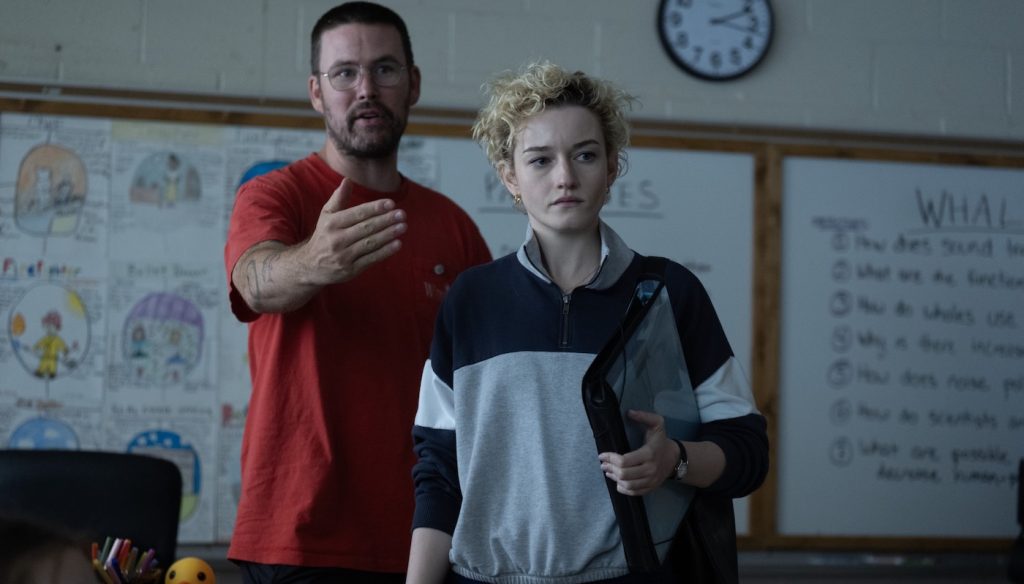
“I was originally hoping to shoot it in the Pacific Northwest,” writer/director Zach Cregger told us when we interviewed him last year for his Oscar-nominated horror hit Weapons. Instead, strong production incentives brought him to Georgia.
“At the time, I was a little bummed to go to Atlanta,” Cregger continued. He had envisioned Weapons looking like Denis Villeneuve’s rainy 2013 thriller Prisoners. Instead, Atlanta became the secret weapon of Weapons. “We had to do some scouting, and I ended up finding these locations that perfectly suited the story. I hit the jackpot with my crew. The crews in Atlanta were the most lovely, skilled, joyful people.”
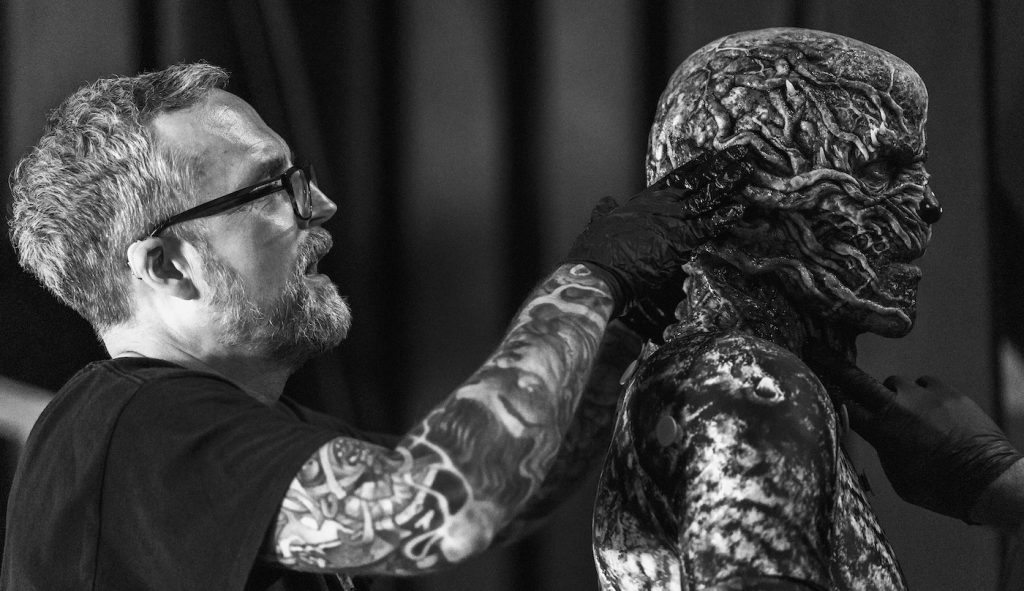
It’s a sentiment we’ve heard repeatedly from filmmakers, TV creators, and craftspeople nationwide. They talk about discovering not only great locations, but incredibly skilled crews, experienced vendors, and communities ready to support production. Costume designers like The End of Oak Street’s Erin Benach are finding the perfect vintage clothing in Atlanta, production designers like Denise Pizzini are relying on local construction crews and painters in Albuquerque to design recently-minted Emmy winner Vince Gilligan’s new series Pluribus, and cinematographers like The Beast in Me’s Lyle Vincent are capturing the perfect backdrops in New Jersey.
We’ve been having these conversations for years, but with lawmakers in Washington now considering a federal film and television production incentive, they feel especially relevant and timely. A recent economic study by Olsberg, commissioned by the Motion Picture Association, concluded that a competitive federal program could add as much as $250 billion annually to the U.S. economy and support roughly 145,000 American jobs across all 50 states. Those are striking numbers, but the story behind them is often told one production at a time, through the crews, vendors, small businesses, and communities that help bring film and television projects to life – and that experience the benefits of production firsthand.
The film and television industry is much, much larger than most people fathom. What audiences see on their screens is the end result of a deep bench of professionals and small businesses contributing to different productions and sets, and every film or television series creates a ripple effect.
Production spending reaches carpenters, caterers, truck drivers, costume shops, hotels, restaurants, lumber suppliers, musicians, visual effects artists, and hundreds of other workers and businesses involved in pre-production, principal photography, and post-production. Long after filming ends, successful projects can continue generating economic activity through tourism and cultural recognition.
Recent conversations with creators already show us what this impact looks like in communities across the country. And the benefits go both ways. When we speak with filmmakers and TV creators, they say the places where they film not only meet their needs but often exceed expectations and improve their work. It’s a symbiotic relationship; everyone benefits.
GEORGIA
Cregger’s realization about what Atlanta brought to Weapons is the kind of anecdote that matters as Washington debates a federal film and television production incentive. Georgia offers a clear example of how productions can become a long-term economic engine. Across five seasons, the Duffer Brothers’ Stranger Things generated more than $1.4 billion in national economic activity and more than $650 million in direct spending in Georgia. Recent interviews with creatives from The End of Oak Street, Cape Fear, and Stranger Things echo why the creative community still loves the Peach State.
CALIFORNIA
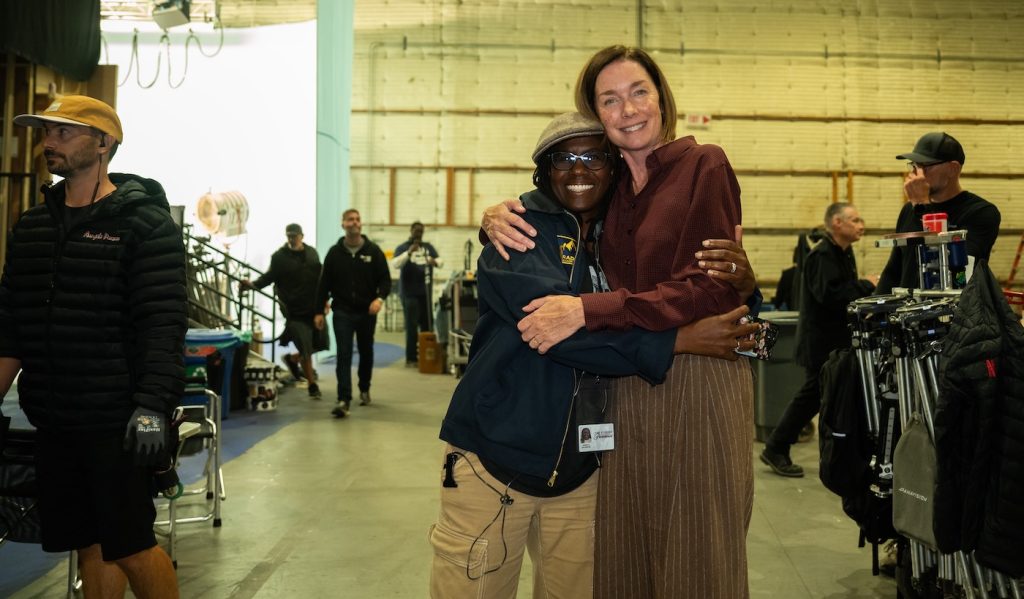
HANELLE M. CULPEPPER (DIRECTOR), JULIANNE NICHOLSON
Similar stories show up across the country. Naturally, one of those locations is California, the historic home to many filmmakers and TV creators.
When we recently spoke with Paradise creator Dan Fogelman, he talked about the importance of filming the series in the Golden State. Season two alone was shot over 96 days and employed hundreds of cast and crew members, and Fogelman has seen up close how a series the scale of Paradise touches a vast network of businesses that support the production. “For the past decade-plus, all my shows have been primarily based here,” he told us. “There is an economy that relies on our business, and when production leaves L.A., it impacts jobs in places you wouldn’t even think of at the outset.”
Two of this year’s biggest hits have the kind of L.A. connection that speaks to the city’s longtime centrality to the business. One is obvious: Curry Barker’s surprise smash Obsession, which was filmed in Los Angeles on a tiny budget and utilized real locations, including Little Toni’s Restaurant in North Hollywood and the Roguelike Tavern in Studio City. The ecosystem in L.A. allowed Barker to go big, even when his budget was small. Meanwhile, the year’s most obviously international blockbuster, Christopher Nolan’s juggernaut The Odyssey, used the city differently. The interior scenes set in Ithaca and featuring Matt Damon’s Odysseus, Anne Hathaway’s Penelope, Robert Pattinson’s Antinous, and more were filmed on Stage 12 at Universal Studios.
While filmmakers and TV creators would love for California to become even more competitive, the state still reveals how much it has to offer. HBO’s beloved Hacks and The Pitt are two such examples. Jen Statsky, co-creator and co-showrunner of Hacks, has seen what it means for creatives in the industry who live in the state to be able to do their jobs and then go home. “Los Angeles is very much our home base,” Statsky told us. “We are very proudly an L.A. show.”
The Pitt cinematographer Joanna Coelho walked us through how they staged the series’ central emergency room on Warner Bros.’ soundstages. The production’s 360-degree sets are fully enclosed on the lot in Burbank, with lighting integrated into the ceiling and walls. “Everything is moving with us, and that’s what allows us to do this 360 and embrace that reality of a documentary.”
Beef creator Lee Sung Jin felt the same about filming in L.A. “It was very important for me in season one, and it remained important in season two. For one thing, selfishly, I’m just kind of tired of seeing all my favorite crew and people I love move out of L.A., because jobs are dwindling. With the success of Beef, I’m going to use that as leverage to continue shooting in Los Angeles as much as I can.”
NEW YORK
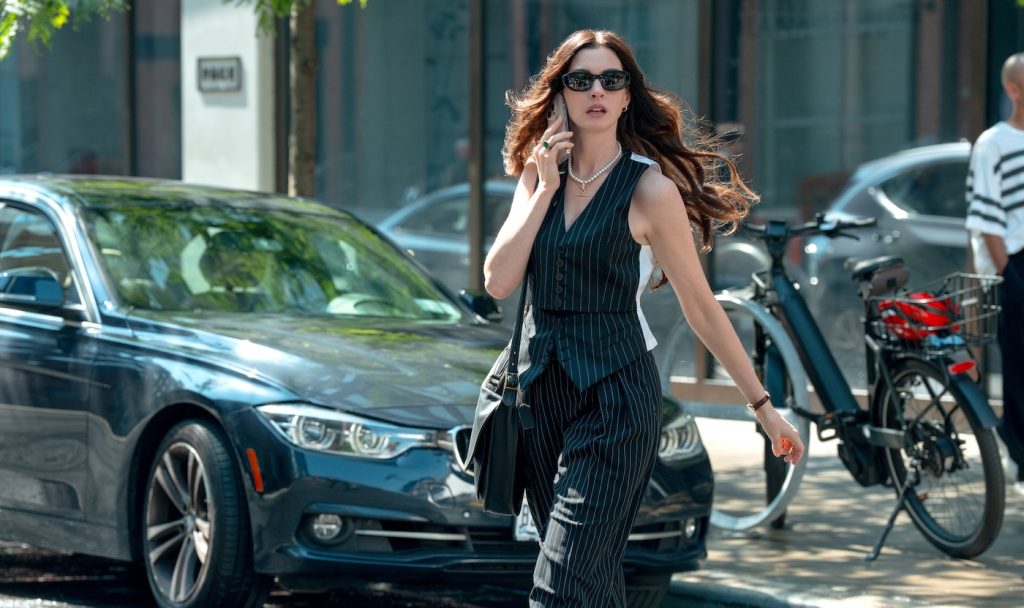
Few places on the planet have attracted storytellers as consistently as New York. For generations, filmmakers have relied on the city’s energy, architecture, and creative workforce to help bring stories to life. For The Devil Wears Prada 2, screenwriter and producer Aline Brosh McKenna talked to us about the importance of filming in the city. “Making a movie of this scale felt like an event; it felt special.”
On Hulu’s buzzy John F. Kennedy Jr. and Carolyn Bessette-centered Love Story, cinematographer Pepe Avila del Pino told us how integral filming in the Big Apple was. “It’s a very specific version and a very fashionable take on the ‘90s in New York. We emphasized the glamor, joy, and sense of freedom in their lives at that time.”
New Jersey
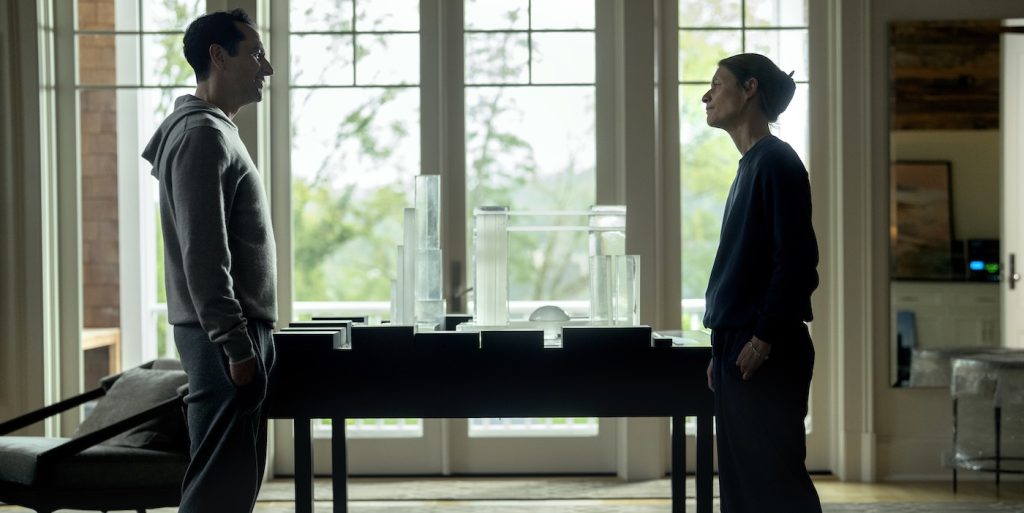
When it comes to being a production hub, New Jersey is no slouch, either. The Garden State has drawn films and series for years, including the recent Emmy-nominated Netflix series The Beast in Me (which won star Matthew Rhys one of his two historic Emmys last night). Creator Gabe Rotter explained that while he loves shooting in Los Angeles (he lives there), New Jersey and the East Coast have the talent required, too. “I was delighted to find that the level of talent and available artists on the East Coast was staggering. I couldn’t believe what a thriving business it’s become in New Jersey, where we were able to get the caliber of artists that we did.”
MASSACHUSETTS
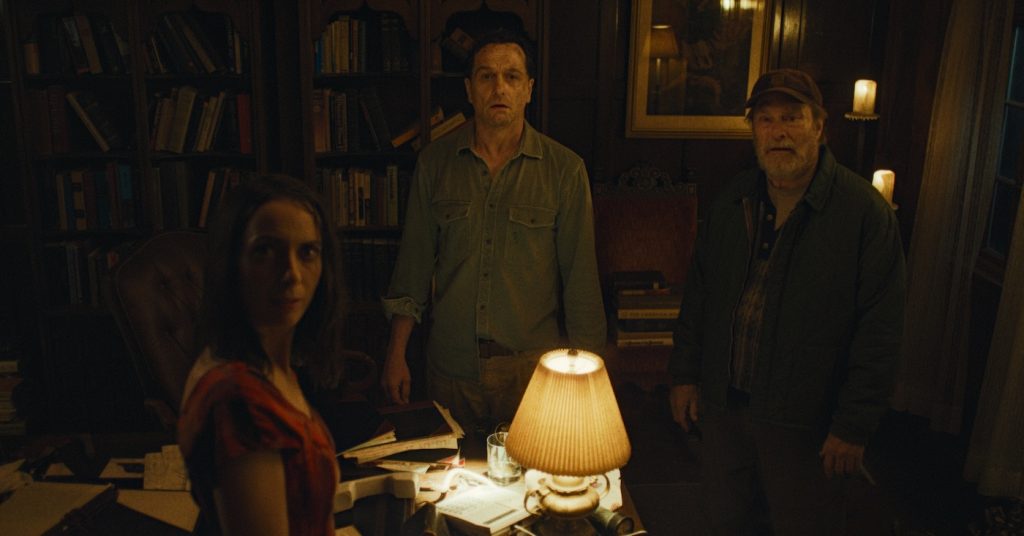
Moving up the East Coast brings us to Massachusetts, where one of the year’s biggest hits and Emmy darling, Widow’s Bay, was filmed. Director and executive producer Hiro Murai, a veteran of Donald Glover’s very location-specific Atlanta, stressed the importance of filming in New England. “I love shooting locations for what they are,” he said. “This is something we learned on Atlanta, at a time when a lot of people were shooting Atlanta for LA or Atlanta for New York. But there’s so much joy to be found by just leaning into what made that city distinctly Atlanta. Ever since then, I’ve grown to love the process of discovering locations by going to the real place. With Widow’s Bay, it felt like it was kind of necessary to shoot this in Massachusetts. It’s the oldest part of the country, and a lot of the haunted-ness comes just from seeing these buildings and places that have been around for hundreds of years.” Composer David Fleming and cinematographer Christian Spenger concurred. Film and television often don’t simply use locations; they help showcase them.
It’s not just the coasts. We spoke with creatives who worked on productions in New Mexico (including the aforementioned Emmy-nominated Pluribus), Louisiana, Texas, Washington state, Florida, and more.
Film tourism is one of the industry’s most durable economic benefits. Productions introduce audiences to places they may never have visited otherwise, transforming local landmarks into cultural destinations. Earlier this summer, the Philadelphia Phillies played the Minnesota Twins at a new permanent ballpark built beside the iconic field showcased in the 1989 classic Field of Dreams in Dyersville, Iowa. Ask an Albuquerque resident about the enduring impact of Breaking Bad, or consider generations of travelers making pilgrimages to Martha’s Vineyard because of Jaws.
If there’s a common thread running through the stories we’ve heard from filmmakers, it’s that the U.S. already possesses extraordinary production assets: world-class crews, iconic locations, cutting-edge infrastructure, and communities eager to welcome productions.
Film and television production supports workers, small businesses, and local economies while showcasing the people and places that make the country unique. A federal production incentive wouldn’t create those strengths. They already exist. It would simply, but powerfully, unlock and amplify them.
If more productions stay and grow in the United States, the benefits won’t be confined to studio lots or soundstages. They’ll be felt in hotels and restaurants, local shops and suppliers, downtown business districts and rural communities, giving more Americans a chance to share in the economic and cultural impact of an industry that has long been one of the country’s most successful exports.
Learn more about the drive for a federal production incentive to bolster the American economy at usfilmandtv.org
Featured image, L-r: Beef. (L to R) Charles Melton as Austin Davis, Oscar Isaac as Josh Martin, Executive Producer/Writer Lee Sung Jin in episode 20 of Beef. Cr. Andrew Cooper/Netflix © 2026 ANDREW COOPER; Zach Cregger and Julia Garner on the set of “Weapons.” Courtesy Warner Bros.; PARADISE – HANELLE M. CULPEPPER (DIRECTOR), THOMAS DOHERTY (Disney/Ser Baffo); On the set of Vince Gilligan’s Pluribus. Courtesy Apple TV