
Inside “Beef” Creator Lee Sung Jin’s Twisty Blueprint: Rise-Fall Graphs, Wealth Wars & Human Frailty
A real-life episode of L.A. road rage inspired Lee Sung Jin to create the first Beef. His tale of toxic drivers turned existential combatants earned the South Korean-born writer-director-producer and his team eight 2023 Emmys, including Outstanding Limited or Anthology Series. This year, Jin raised the stakes with a multi-generational portrait of unhappy couples whose lives collide catastrophically in and around a deluxe Southern California country club. The season’s closing shot, modeled on the Buddhist “Samsara” symbol representing the endless cycle of life, allowed viewers to draw their own conclusions. “I’ve heard so many different reactions to our ending, which I love,” Jin says. “Younger people definitely interpret it a little bit darker, whereas the older audience has an almost Zen-like acceptance of the ending.”
Boasting lofty themes and deeply flawed characters, Beef Season 2 has racked up 16 Emmy nominations, including nods for Outstanding Limited or Anthology Series and costume design by Olga Mills. Actors Oscar Isaac, Carey Mulligan, Charles Melton and Youn Yuh-jung also got nominated, as did Jin, who scored recognition in both writing and directing categories.
Speaking from his home in Los Angeles, Jin talks about using spreadsheets in the writers’ room to chart out the show’s “story math,” describes his brief immersion in country club luxury and details how his own trip to the Emergency Room helped inform the fraught world of Beef season 2.
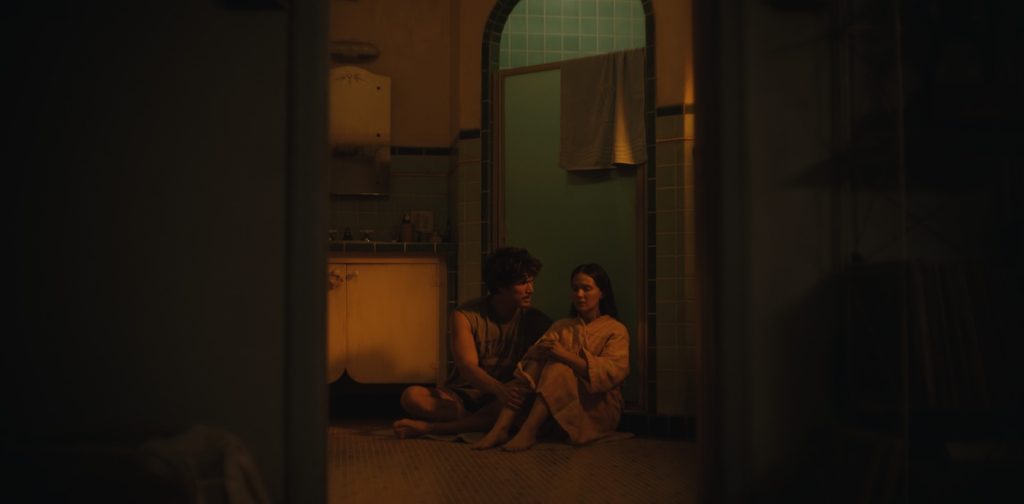
Beef this season tracks feuding couples in a world marked by wealth disparity, which Gen Z Austin [Thomas Melton] calls out when he complains to his girlfriend Ashley [Cailee Spaeny] about “late-stage capitalism.” It’s not often that you hear that kind of critique from a TV character.
Well, we didn’t necessarily set out to tackle that in the beginning, but we discovered that it’s very difficult in 2026 to write characters who are honest and true-feeling without hitting the variable of capitalism dead on. If you’re writing about Gen Z characters, how do you not tackle that theme? It permeates every decision they make. Same with Millennials, same with Gen X. So that’s actually how we ended up at the country club.
Monte Vista Point, where the super-rich go to relax. How did you arrive at this country club-as-metaphor-for-America idea?
I was house-sitting for one of my best friends, Chris, who lives in Montecito. Since our mid-20s, we’ve been broke together, we temped together, and then he started working in tech. About five years ago, he came into an extraordinary amount of money because he was the number three at a company that sold for like four billion dollars.
Oh my gosh.
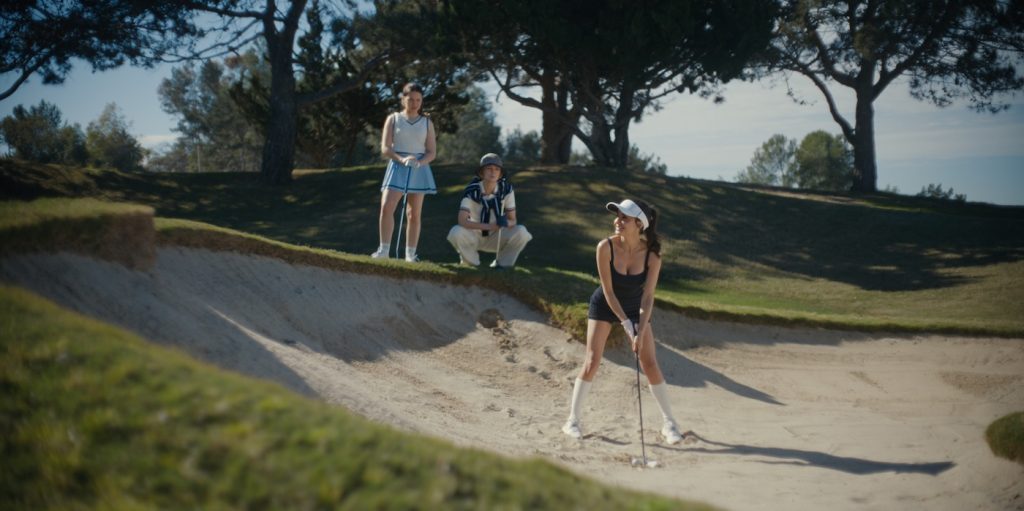
He’s a member of Montecito Country Club, and while I was house-sitting for him, he allowed me to use his membership. At first, I turned my nose up at him because I heard about the exorbitant fees, which, like Josh says to Ashley in Beef, is $300,000, and that’s just to get in the door! I was judging my friend so hard. But then I tried it and the next thing you know, I’ve used the country club membership for four days, and I’m like, “Can I see an application, please?” As humans, we hedonically adapt so quickly. You get used to something luxurious, and if it gets taken away, you’re like, “Wait, wait, wait, no!”
You spend time at this club…
What I noticed was that most country club employees are either Millennials or Gen Z, and most members are Silent Gen or Boomers. To me, that felt like a really good microcosm of society at large because no matter how hard those employees work, there’s a feeling that they’ll never get to be members.
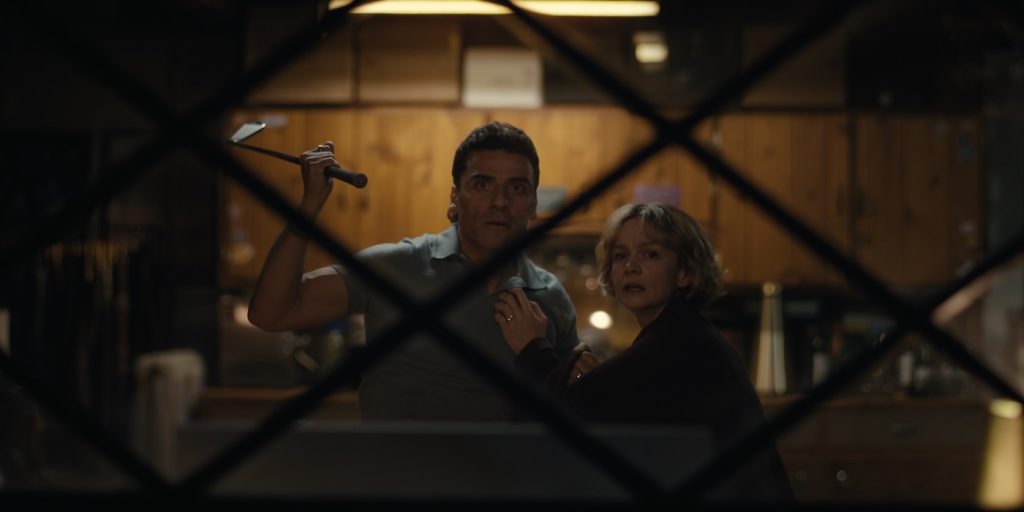
The country club serves as the setting. What about that ferocious argument between country club manager Josh [Oscar Isaac] and his wife Lindsay [Carey Mulligan] that sets everything in motion?
That was inspired by the time I overheard my neighbors fighting.
How did that happen?
I was strolling through my neighborhood with my three dogs when I overheard an older couple fighting inside their house. It was heated. When I retold the story to my peers, all the younger Gen Z people were aghast. “Oh my god, did you call 911?” Whereas my friends who are my age or older – Gen X, or elder Millennial – they kind of shrugged, like “Yeah, I had that fight last week.” I thought it was fascinating that two generations could have such different reactions to the same fight. It felt like an interesting theme to explore.
Beef has tons of plot twists. The characters steal, eavesdrop, lie, flirt, cheat, blackmail, even kill. And yet, nothing feels random. They all have their reasons. Despite bad choices, the humanity shines through. How did you do that?
Early on, the writers and I talked a lot about the balance between bad behavior and empathetic characters. We leaned into the bad behavior extra hard this season because I think there’s a spirit right now in late-stage capitalism, where everything feels rigged at the top. Like Josh says, “Everyone’s scamming.” But at the same time, you don’t want to go too hard, or your audience is going to check out. Look at Tony Soprano. He’s a gangster doing horrible things, but then you see the ducks in the pool, and he loves those ducks. You’re going, “Wait, I thought he was a horrible person, but there’s a human inside that loves ducks. I love ducks.”
So in Beef…
Josh and Lindsay say despicable things to each other, but then you find out Josh has a mom who recently passed away. They spent their fortune [Lindsay’s inheritance] on medical expenses for his mom. So we tried to do that dance of one step forward, two steps back. It required a lot more planning than season one, which had only two perspective characters. Season two, you could argue, had six perspective characters at times, so the math became very difficult.
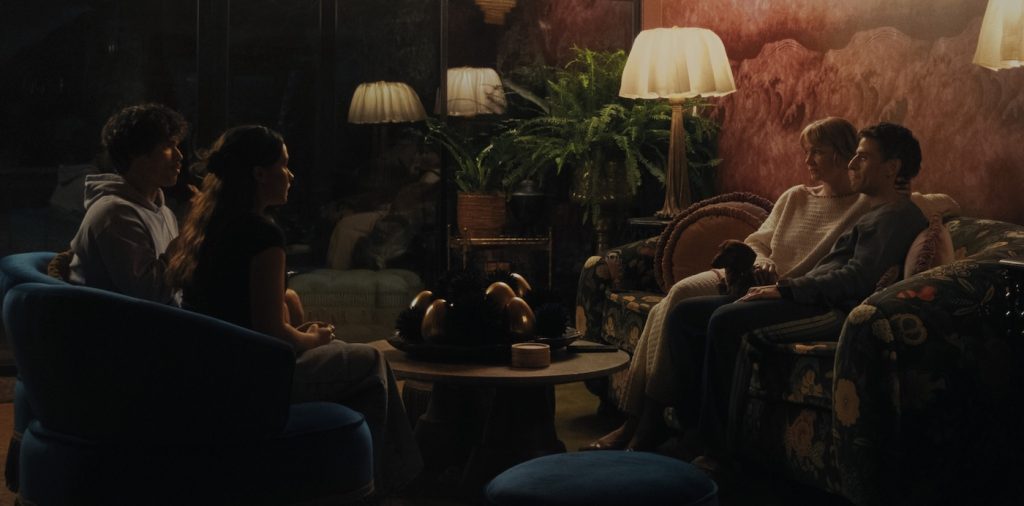
When it came to plotting out all those twists and turns, did you use the traditional index cards-on-a-wall system or…?
You’re the first person to ask me about that, which I love because the writers’ room is such a huge part of making a show. It’s the lifeblood. In this day and age, writers rooms are getting smaller and smaller while you’re seeing one “auteur” writing everything. For me, it’s important to keep the writers’ rooms alive. That means I have to get everybody on the same page tonally. To do that, I use this rise-fall method of writing.
What’s that?
About 10 years ago I read an article about machine learning that got fed hundreds of pieces of classic literature. It concluded that humans tell stories in only six or seven shapes, like rise-fall-rise or fall-rise-fall, which is similar to what Kurt Vonnegut used to lecture about with the man-in-the-hole graph.
How do you apply that approach to story design within the writers’ room?
We draw a lot of graphs charting the rise-fall shapes that we like. Then we track the rise-falls on a spreadsheet.
Spreadsheets!?
For pretty much each character, each episode, each scene, there were spreadsheet columns: Is this a rise beat or is this a fall beat? If you came into our room, it would look like we were trying to solve nuclear physics or something. But it’s very helpful because whenever we got confused about our intention in a story beat, we could just look to our graph and tweak the dialogue a little bit to make it clear that this is a fall moment, for example, not a muddy kind of middle-of-nowhere moment. So that was our process. It’s really arduous, but once you’re on set, you have a firm handle on what everything’s supposed to be.
Of course, it helps to have charismatic actors bringing these flawed characters to life. It also helps that, no matter how outrageous the behavior, Beef feels pretty grounded in a relatable real-world environment.
That’s because even before we do all that story math with the rise-falls, we’re just telling real-life anecdotes to each other. For the first eight to ten weeks, if you came by the room, you’d think it’s just a bunch of adults having an endless sleepover, sharing stories, riffing, and ordering pizza. Someone tells a story about how their husband forgot a birthday present the night before, blah, blah, blah. It all goes into the notes. Later on, we can then put that detail on top of the [story] map. Things that happen in the show feel real because they’re rooted in real incidents.
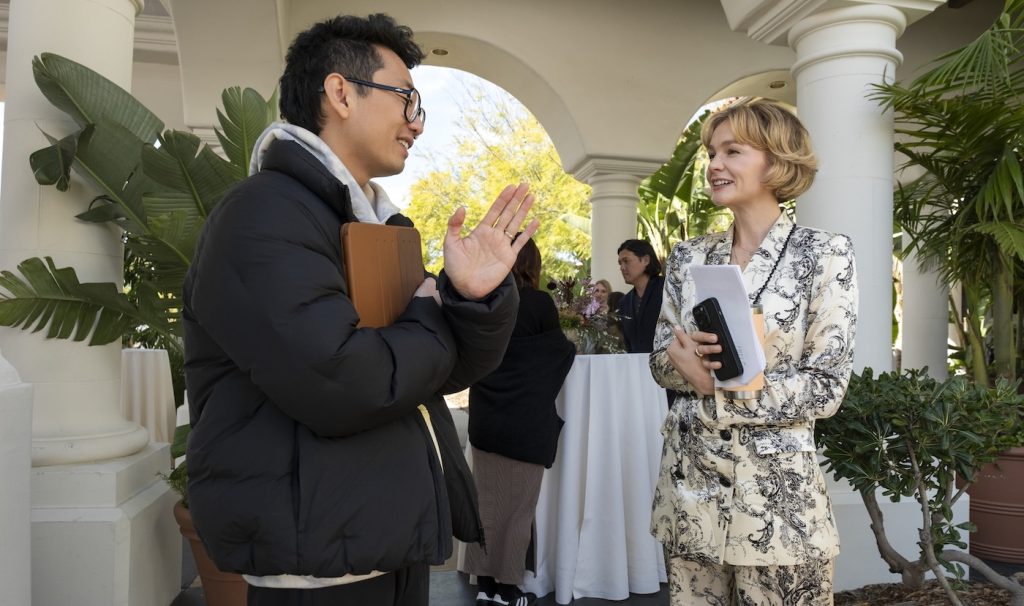
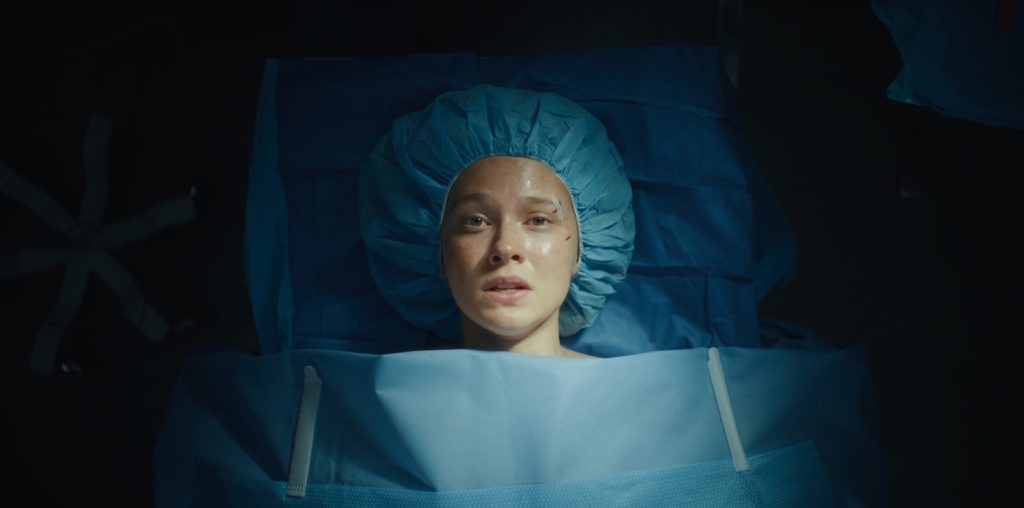
The episode where Ashley goes to a hospital Emergency Room after injuring herself felt especially stressful and realistic.
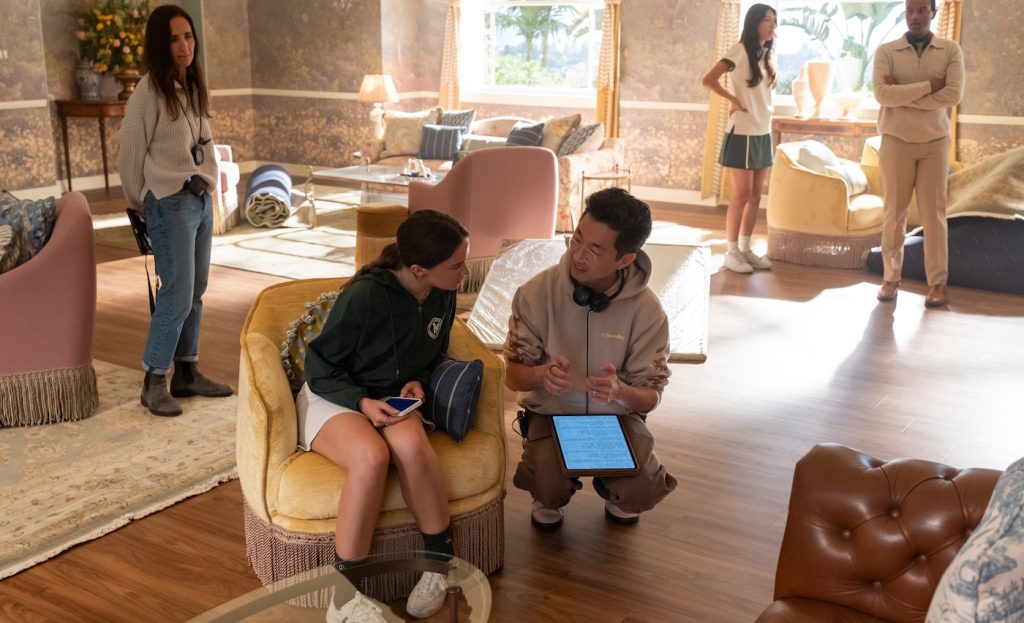
That episode, which I co-wrote and directed, was based on a real-life incident that happened to me at a local LA hospital. Almost every single texture you see—the extras in the lobby, the vending machine interaction, the VIP concierge showing up too late—those are all real events. I’ve gotten so much feedback from people who experienced stays at hospitals saying, “That’s literally what happened to me,” and I’m like, “Well yes, that’s because it literally happened to me as well.”
Except for a few bits filmed in Seoul, Beef was shot in and around Los Angeles. Was it important for you to make the show in California?
It was very important for me in season one, and it remained important in season two. For one thing, selfishly, I’m just kind of tired of seeing all my favorite crew and people I love move out of L.A., because jobs are dwindling. With the success of Beef, I’m going to use that as leverage to continue shooting in Los Angeles as much as I can.
Featured image: Beef. (L to R) Executive Producer/Writer Lee Sung Jin, Oscar Isaac as Josh Martin in episode 205 of Beef. Cr. Andrew Cooper/Netflix © 2026