Building a Better Beast: Prosthetics & Special Effects Guru Barrie Gower on Evolving Vecna for “Stranger Things” Season 5
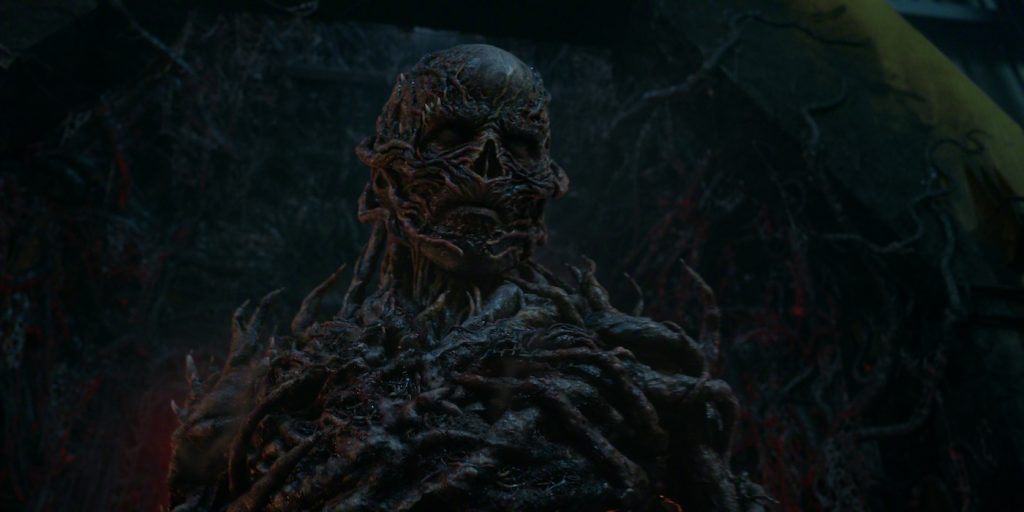
When audiences were first introduced to Vecna in the fourth season of Stranger Things, the malevolent telekinetic being from the Upside Down immediately became one of the most memorable creatures in the series’ history. The character’s grotesque, vine-covered appearance felt tactile and horrifying in a way that distinguished him from many modern monsters. That realism was largely the work of Emmy-winning prosthetics makeup designer and special effects artist Barrie Gower and his team, who joined the Netflix hit in season four to bring the character to life through practical makeup effects layered with visual effects enhancements.
For the fifth and final season, the challenge of bringing Vecna to the screen became even more ambitious. Vecna needed to evolve into something larger, more powerful, and more terrifying than before, while preserving the performance-driven realism that made the character resonate so strongly with audiences. In our conversation, Gower reflected on the enormous technical undertaking behind Vecna’s creation and transformation, the increasingly collaborative relationship between prosthetics and digital effects, and the emotional experience of helping conclude one of television’s most beloved franchises.
“We didn’t join until season four, so we joined primarily to help create Vecna on Jamie Campbell Bower,” Gower explained. “Season five was a different brief from what we had in season four.” In season four, Vecna’s appearance was primarily achieved through practical makeup effects. Jamie Campbell Bower spent hours each shooting day covered head-to-toe in silicone and foam latex prosthetics, transforming the actor into the humanoid nightmare audiences came to fear. The process was extensive and physically demanding, but it was essential to the Duffer Brothers’ vision for the character. “The Duffer brothers were very keen for it to be a practical makeup that we could apply over an actor,” Gower said. “They wanted him to be present on set and able to interact with all the other actors and characters.”
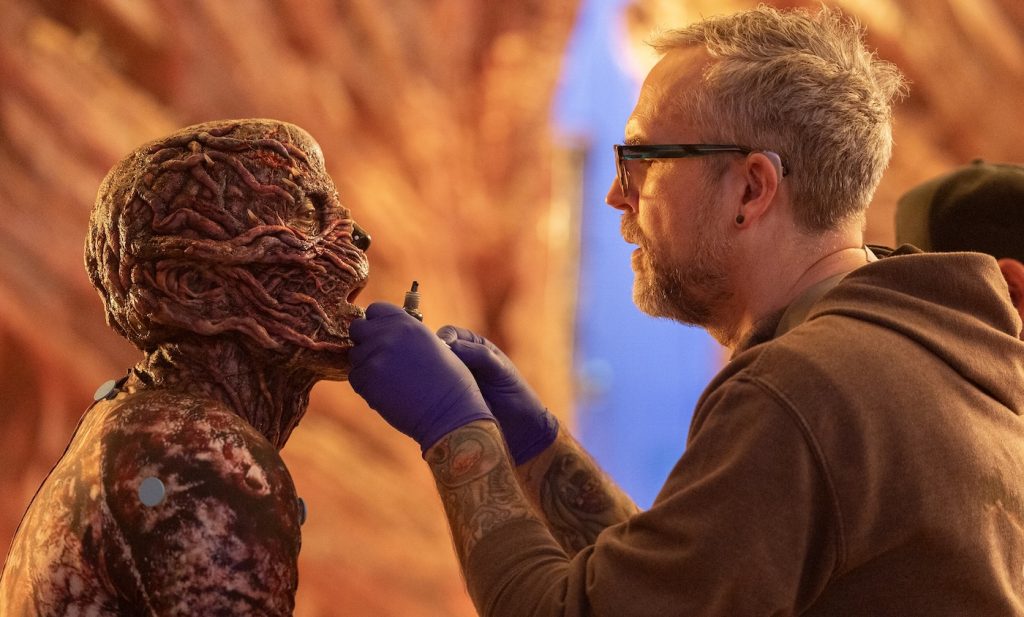
The makeup process itself became a carefully choreographed routine. Gower and his team, including Duncan Jarman and Mike Mekash, worked around Campbell Bower in what Gower described as “an orchestrated dance” that involved positioning the actor upright, laying him down, rotating him repeatedly, and applying overlapping prosthetic sections with extreme precision. “There was always a point during the application process where we used to say, ‘Jamie, now it’s the teapot moment,’” Gower recalled with a laugh. “He would put his arm in this teapot position so we could glue his sides down.”
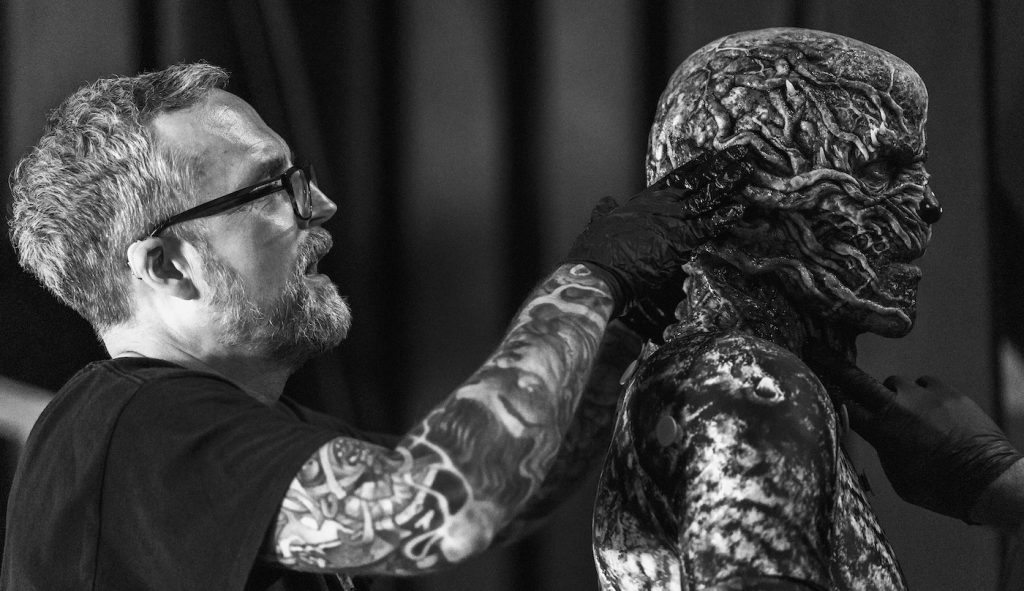
Campbell Bower became such an active participant in the process that the team jokingly referred to him as “the fifth member of the makeup team.” Season five, however, required an entirely new approach. The creative mandate from Matt and Ross Duffer was simple in concept but immensely complicated in execution: Vecna needed to become “bigger, better, badder, more extreme, more intimidating.”
“They basically wanted him to be Vecna on steroids,” Gower said. “They wanted him to be much larger. They wanted his limbs to be made up of this twisted, large mass of pulsating vines.” The expanded scope of the character demanded a far more integrated collaboration between practical makeup effects and digital visual effects. While season four relied predominantly on practical prosthetics enhanced in post-production, season five leaned much more heavily into hybrid effects work. “There was more of a crossover this time,” Gower explained. “It was predominantly practical in season four, and there’s a lot of digital effects in season five.”
A successful collaboration between practical makeup and VFX centered around finding the balance between what should exist physically on set and what should be completed digitally later. Gower worked closely with visual effects supervisor Betsy Patterson and her team to determine how much of Vecna would remain practical without creating unnecessary duplication in post-production. “There’s that rule of thumb,” he explained. “You don’t want to create something twice. You don’t want to do it practically on the day and then completely recreate it in post-production.”
Even with the increased digital augmentation, preserving Campbell Bower’s performance remained a top priority. The Duffers specifically wanted Vecna’s face and upper body to remain grounded in practical makeup so audiences could still connect to the actor underneath the creature. “We had practical prosthetic makeup for his head and shoulders, brand-new contact lenses, new dentures, and a practical right arm as well,” Gower said. “That gave him a lot of performance and dexterity in the camera.”
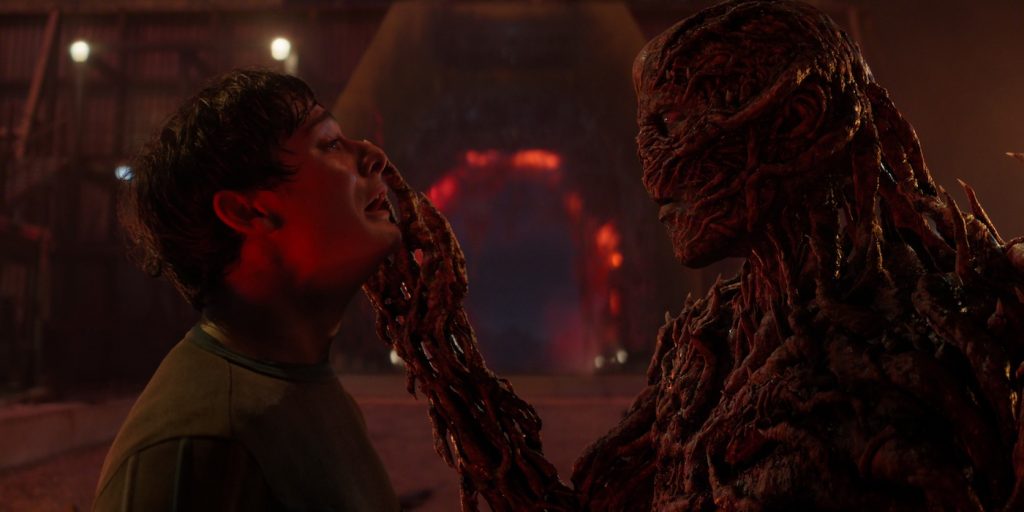
The resulting makeup was still an enormous undertaking. Season five’s Vecna consisted of roughly eleven silicone prosthetic pieces applied like a highly technical jigsaw puzzle. Every section had to align perfectly with pre-marked templates created specifically for Campbell Bower’s face and body. “You only need to be a couple of millimeters out, and you can totally wreck the whole application,” Gower said. “It’s quite painstaking to get everything in the right place.”
One of the most fascinating aspects of season five’s production was the innovative way Gower’s team blended practical craftsmanship with new technology. While the foundation of the work remained rooted in traditional sculpting techniques, the production increasingly embraced digital scanning and 3D printing technologies. “Season five was actually a very interesting project for us because everything has advanced technology-wise just in the space of three or four years,” Gower said.
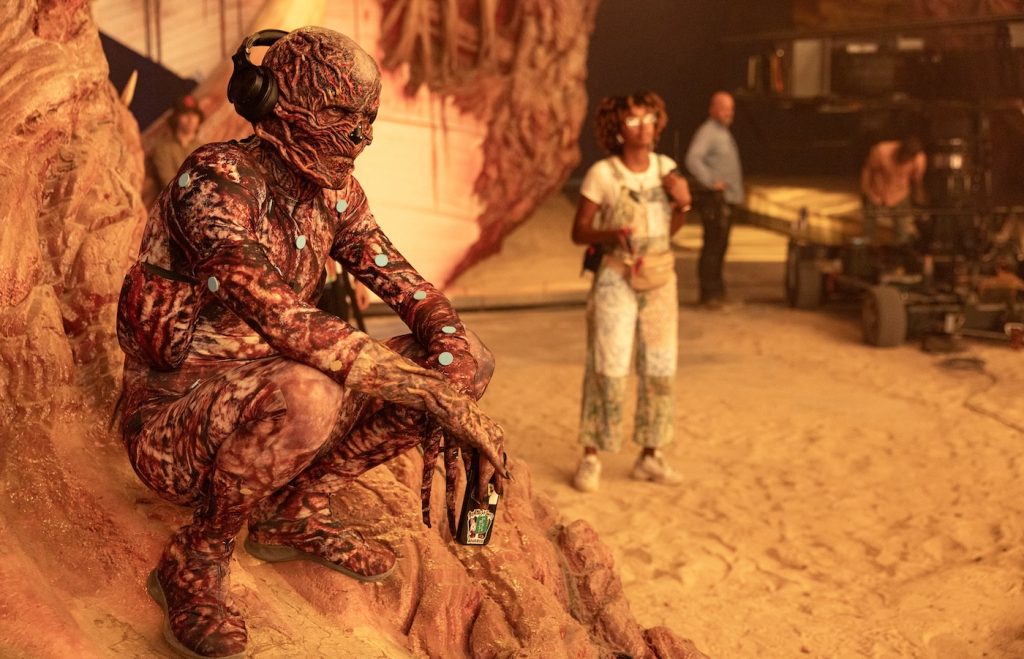
The team incorporated 3D-printed elements directly into Vecna’s prosthetics, particularly in the vine structures layered across the character’s body. The digital tools used by Gower’s team enabled the artists to achieve levels of detail and scale that would have been significantly more difficult to achieve with traditional methods alone. Still, practical solutions remained critical to helping Campbell Bower physically inhabit the role. Because Vecna’s new silhouette was broader and more imposing, the actor worried about maintaining the character’s intimidating posture throughout physically demanding action scenes. “He said, ‘My only concern is that I’m going to forget my spatial awareness,’” Gower recalled.
To solve the problem, the team engineered hidden foam inserts beneath Campbell Bower’s arms to prevent him from fully lowering them against his sides. They also broadened his shoulders using specially designed padding beneath the suit. “It dictated his performance on set every day,” Gower explained. “It made his movement a lot more intimidating.”
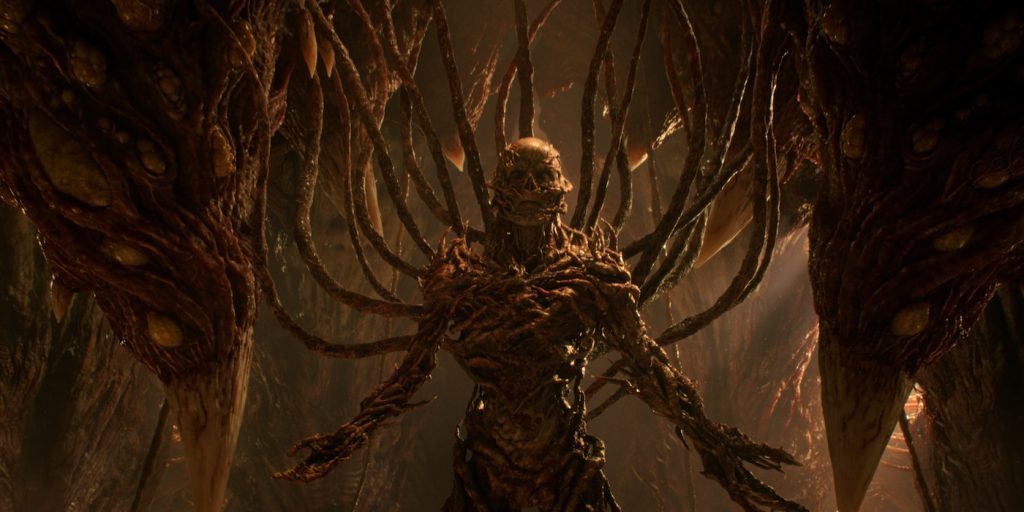
The practical suit itself became another feat of fabrication. Working with the London-based company Stitches and Glue, the team created a digitally printed Lycra bodysuit covered in Vecna-inspired patterns and textures. The suit extended over oversized finger extensions and even included custom “Vecna sneakers,” which Gower jokingly referred to as “the Vecna Nikes.”
Despite all the technical innovations surrounding Vecna, the character was only one part of the extensive effects workload for season five. Among the production’s most ambitious creations was a full-scale, practical Demogorgon constructed for a sequence involving the creature being electrocuted atop a radio station. “They wanted a practical version that they could interact with on the day,” Gower said.
Using digital files supplied by the visual effects department, Gower’s team worked with one of the largest 3D printing facilities in the United Kingdom to create the creature in massive resin sections. The finished Demogorgon stretched roughly eight feet long and required an intricate internal steel-and-aluminum skeleton to support its immense silicone body. “It took us months,” Gower said. “It actually took about six weeks to print the whole Demogorgon.”
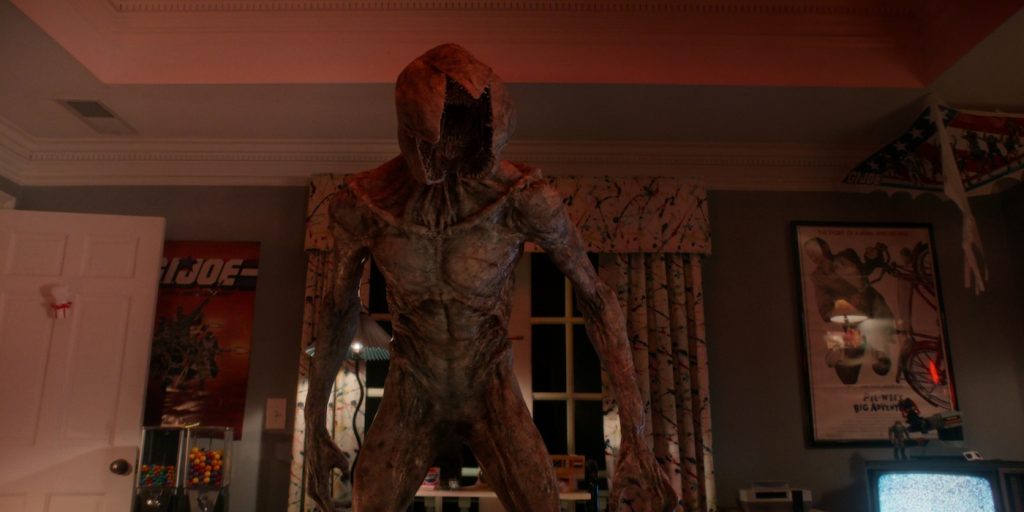
The creature was built at Gower’s company workshop in South London before being shipped across the Atlantic to Atlanta, Georgia, where Stranger Things films much of its production. Once assembled, the Demogorgon weighed hundreds of kilograms. “We felt sort of like Frankenstein building this monster,” Gower said.
The creature’s mouth alone became an exercise in painstaking detail. Thousands of tiny 3D-printed teeth had to be individually installed by hand. “We had a young chap with us called Will,” Gower said. “Bless Will, it was his role to glue all these little 3D-printed teeth inside.”
Beyond the headline creatures, the makeup department handled an enormous variety of practical effects throughout the season, including injuries, burns, and even pregnancy prosthetics. “There were a plethora of makeup effects this season,” Gower said. “It was a really good mix.”
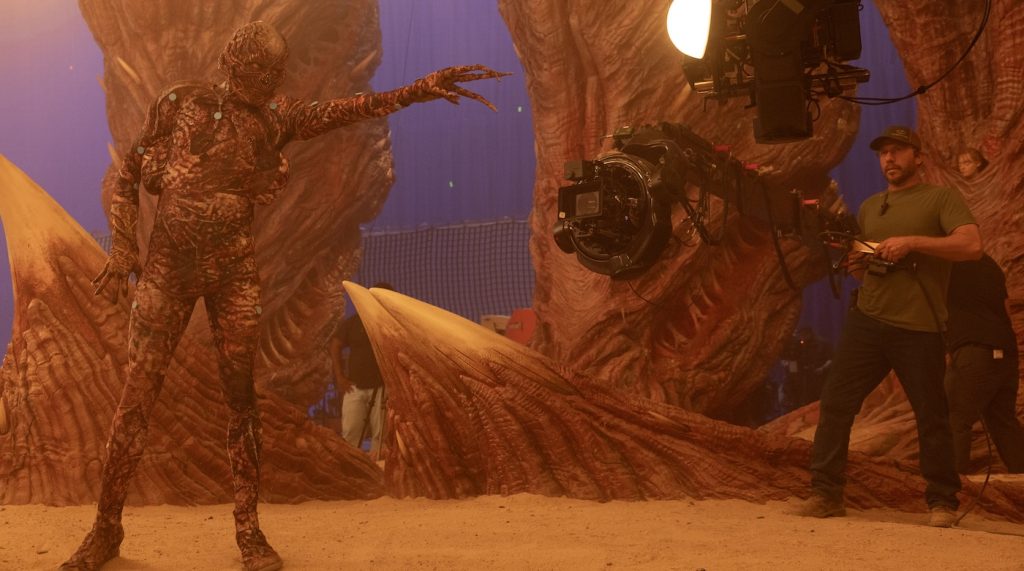
But no discussion of Vecna would be complete without acknowledging the intense physical demands required from Campbell Bower himself. Gower described the experience of applying the prosthetics as “almost like endurance tests,” noting that some shooting days stretched close to twenty hours once application, filming, maintenance, and removal were all factored in. “Vecna is definitely the longest makeup application I’ve been involved with,” Gower admitted.
The team often began working at two o’clock in the morning, applying makeup for six to seven hours before Campbell Bower spent a full day filming on set. Yet throughout the process, Gower said the actor maintained remarkable positivity and humor. “He was probably the most joyous actor we’ve ever worked with,” Gower said. “He never once complained.”
Music became an important ritual during the application process. Campbell Bower, a fan of heavy metal and thrash music, would gradually escalate the intensity of the playlist as the transformation progressed. “As we started getting further and further into the process, and he was becoming more and more like Vecna, the music would change and shift slightly in tone and get heavier and heavier,” Gower said. “Jamie’s got this really lovely soft British voice,” Gower said, “but his voice would start to change into this menacing, intimidating Vecna toward the end.”
Looking back on his experience with Stranger Things, Gower spoke with visible pride about contributing to a franchise that has become a cultural phenomenon. Although his team joined later in the series, the creation of Vecna became one of the defining projects of his career. “We spent over six months creating Vecna for season four,” he said. “I was really apprehensive as to how he’d be received.”
When audiences embraced the character, it provided enormous validation for the years of work poured into the design. “We felt really proud to have been part of such an iconic design of an iconic character,” Gower said.
Now that the series has concluded, Gower believes the Duffers succeeded in delivering a satisfying ending that honors the show’s legacy. “I’ve seen very few franchises where I think everything is rounded up so well and considerately,” he said. “It just felt like the complete package.”
For Gower, the experience was about more than just creating monsters. It was about being part of a creative family that spent years building something meaningful together. “Matt and Ross are wonderful people to work with,” he said. “It’s just been a really joyful experience.” After nearly five years spent immersed in the world of the Upside Down, Gower leaves Stranger Things with both pride and gratitude. “It’s something I’ll always look back on with very fond memories,” he said. “Very proud.”
Watch Stranger Things streaming on Netflix.