Behind the Bruises: Stunt Legends Reveal What the New Oscar Category Really Means
The adage “better late than never” could not be more apropos when it comes to the newest category in the Oscars. Starting with the 100th Academy Awards in 2028, there will finally be recognition of the blood, sweat, bruises, burns, and broken bones of generations of stunt performers, dating back to the daring exploits of Buster Keaton. For the first time, films released in 2027 will be able to vie for the Stunt Design Award, paying homage to the hard work and dedication of not only stunt performers, but also stunt choreographers, fight coordinators, stunt riggers, and a long list of artists who make the bone-crunching brawls in the John Wick films and the gasp-inducing stunts in Mission: Impossible possible. The effort was led by stuntman-turned-director David Leitch and his frequent collaborator, second-unit director Chris O’Hara, who worked together on the cinematic love letter to the stunt community, The Fall Guy.
Following last week’s Actors Awards stunt ensemble win by Mission: Impossible — The Final Reckoning, let’s revisit what some of the top stunt experts in the business have shared with The Credits about this newly-minted Oscar category. “It’s an incredible, long-overdue milestone. Stunt professionals have shaped some of the most iconic moments in film, often without proper recognition,” says second unit director Wolfgang Stegemann, who served as the fight coordinator on Mission: Impossible – Fallout and several others in the storied action franchise. “This award is more than just an acknowledgment; it’s a validation of a craft that demands extraordinary skill, vision, creativity, and risk. It celebrates not only the physical execution but also the design, structure, rhythm, and storytelling that go into crafting truly impactful action,” he adds.
Part of the team that choreographed the savage bathroom brawl and the stomach-churning helicopter chase in M:I – Fallout, Stegemann’s team won a Taurus World Stunt Award for Best Stunt Rigging. Discovered by a casting agent when he was studying electrical engineering in Germany, he credits his engineering background for his stunt work: “It isn’t just physical. It’s calculated to reduce the risks to a minimum, and there’s a lot of technology behind it to invent new techniques.”
Nostalgia for the unsung hero
When Keanu Reeves (as the iconic antihero, John Wick) careens down the Verrazano Bridge while fighting a phalanx of sword-wielding ninjas on motorcycles, the sequence in John Wick: Chapter 3 – Parabellum is masterfully executed by the team behind second unit director Darrin Prescott, whose latest film is Edgar Wright’s remake of The Running Man. While the newly-minted Oscar category is certainly well-deserved, Prescott “still holds nostalgia for the notion of the unknown stuntman. It’s fun for the audience to think the character is doing everything. Most people didn’t know who John Wayne’s stuntman was, so it was cool to think he did all that stuff.”
Second unit director on the Avatar franchise and the rambunctious Road House remake, Garrett Warren, fears that part of the movie magic may be lost with increasing attention to what goes on behind the death-defying cinematic spectacles. “I’m glad the Academy has made this change, but I sort of like the idea that we’re a hidden secret. We’re like the wizard behind the curtain: a magician doesn’t show you how he hides the coin up his sleeve,” he says, adding that “When you watch a movie and go ‘Oh my gosh! I hope this guy doesn’t fall!’ I want everyone to believe that he could’ve died, or that Black Widow really did those things. Our job is to keep doing the magic trick. And if we get an award, that’s fantastic.”
Warren also wants to honor those who have paved the way before mainstream audiences became invested in the secrets behind the magic. “This industry is nothing without certain key figures. Vic Armstrong (Indiana Jones and the Temple of Doom) is a living legend—this man is stunts. Simon Crane (X-Men: The Last Stand) is a genius, Debbie Evans (Carrie-Anne Moss’s stunt double in the Matrix sequels) is another key player, and the 1980s wouldn’t have been what they were without Kenny Bates (Die Hard films). You can’t talk stunts without mentioning Dar Robinson (To Live and Die in L.A.), who invented the descender that keeps people safe when they fall to the ground.”
Working through the category rules
Part of the reason it took so long to get here is that the stunt world lacks its own governing body, unlike the other crafts, as Warren explains: “The Academy was never against stunts having our own award, but the stunt community is so spread out worldwide. Who’s going to lead it? Who will vote and decide the Oscar nominees?” While stunt performers fall under the Actors’ Guild, second-unit directors are governed by the Directors Guild of America.
Decision-makers on these category rules need a broad understanding of the technical nature behind what it takes to accomplish these sequences. For instance, “a 200-foot descender fall on a wire may look like a big stunt, but there’s actually more skill required for lesser spectacles, like throwing a backflip in a parking lot,” explains Prescott, who is behind much of the hair-raising “car-fu” in Wick-verse. “The Taurus Award is voted on by our peers within the stunt community who know what it takes to pull off a sequence,” the three-time Taurus winner explains, acknowledging that stunt design is a tough category to assess. “Action design comes from many places. I’ve had VFX supervisors and storyboard artists come up with amazing ideas, not only stunt performers, directors, and actors.”
Working with Henry Cavill in M:I – Fallout soon led Stegemann to their next collaboration on the Netflix fantasy series, The Witcher, in which Cavill plays the titular monster-hunter, Geralt of Rivia. Together, they came up with some of the gnarliest and most visceral sword-fighting sequences, including the one-take Blaviken showdown and the epic Battle of Shaerrawedd. “Henry wanted to Previs with me so he knew where the camera was. He became my choreographing and directing partner from the first day,” Stegemann reveals. For principal actors who are much more involved in constructing the action sequence, how should their contributions be assessed?
John Wick franchise director Chad Stahelski explains the complexity in evaluating stunt work and stunt design on large-scale productions. “It’s a bit trickier than one award, one person. Let’s look at John Wick 4 – I had four stunt coordinators, three choreographers, a rigging team, a car team, and a dog coordinator,” he says of the extreme collaborative nature of stunt design. “I’m a former stunt choreographer, so I choreograph too and help edit and shoot. So, who deserves the award? For films like John Wick or Mission: Impossible, where you also have an airplane coordinator, a boat coordinator, a martial arts choreographer, we need a way to encapsulate that group effort.” The stunt community is most concerned about “How will the nominating committee sort out what’s a stunt and what’s not a stunt? It can be hard to separate stunts from visual effects. Is it a stunt guy falling into pads from a high fall? Are we judging real-life risk where a real human is being hit by a real car at 20 mph and then landing on his head?”
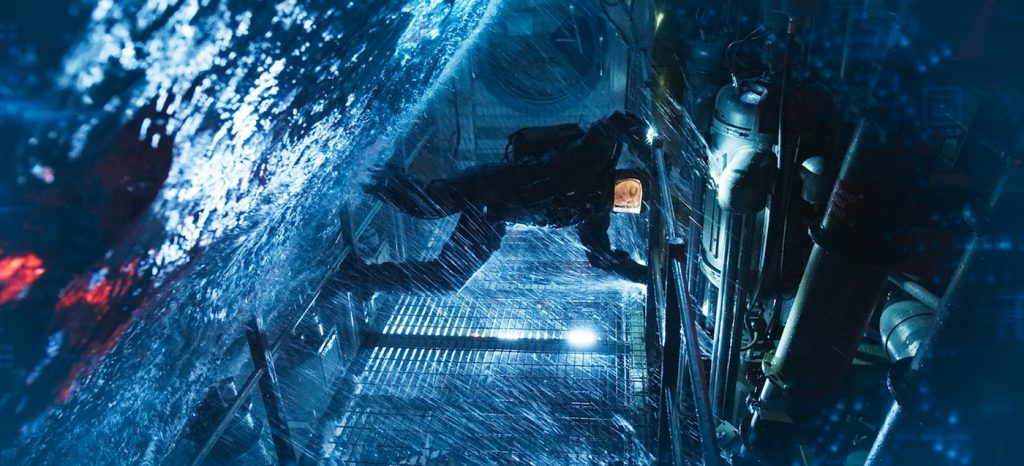
Hollywood has continued to enthrall audiences with more mind-blowing action, whether it is John Wick dodging a barrage of bullets and speeding cars in the Arc de Triomphe or super-spy Ethan Hunt (Tom Cruise) plunging off a vertical cliff 3,900 feet above sea level on a motorbike. While the visceral action may seem increasingly physics-defying, “we’re able to do these crazier stunts because technology makes it safer for us. Even though we’re still performing action in-camera, we can use visual effects to paint out vehicles next to someone and erase the wires. Before, you were pretty much jumping from car to car, and if you missed, you missed,” quips Warren, who started in the business in the 1990s. “I did helicopter transfers onto the top of a moving train for Walker, Texas Ranger, and we never had wires on us. We’re doing bigger-looking stunts now, but we’re safer.”
Character development through action choreography
With every production gunning for never-before-seen action, would a potential Oscar nomination lead some down the path of chasing records? “Are you trying for a world record for the most car turnovers when there’s no reason for it? Now you’ve left the world of being a stunt performer and become a daredevil,” Prescott says. But Stegemann doesn’t think anyone is “chasing risks. It just has to look and feel dangerous, but 100% controlled – that’s the real magic trick.”
At the end of the day, it all comes down to story and character for Prescott. “Does this fit the story and the tone of the film? Does it make sense for what that character would be doing? I try to ground it as much as I can to what’s relevant to the film. What’s the most dynamic way to capture it in-camera? I never allow the camera to dictate the action,” he emphasizes the importance of grounding the action to the story. “I’ve never gone into a sequence and go ‘Okay, I wanna do a oner here. What’s the sequence going to be?’ How does the camera move enhance the story and character? How does it make you feel? If the audience goes, ‘Wow, they did that all in one take!’ Then, I’ve lost you because you’re no longer in the story.”
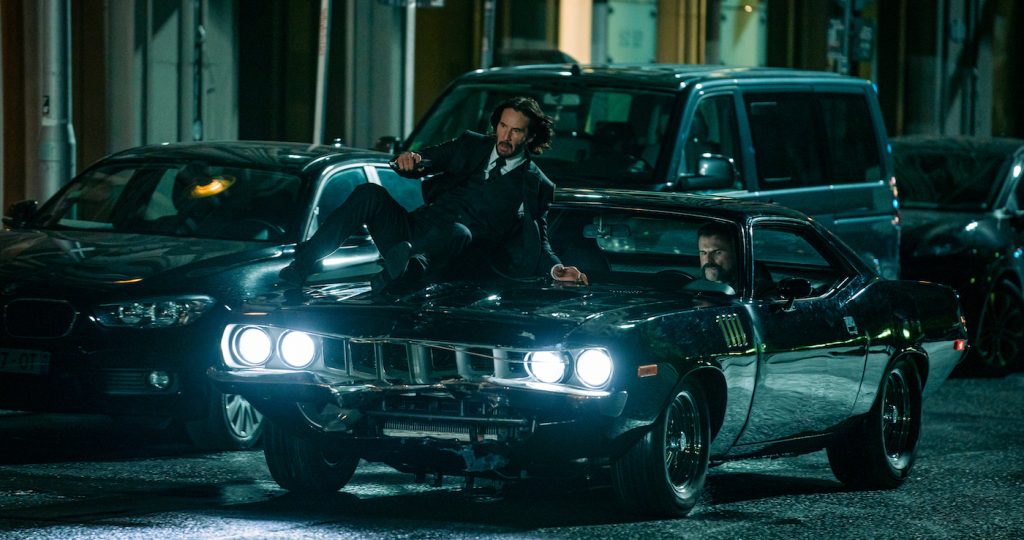
Honing the action as a part of character development clearly paid off in the Wick-verse, as Prescott explains how the “car-fu” idea came about in the first film, which only had a $20 million budget. “Audiences don’t care if you have $2 million or $200 million; they just want a good car chase. Since we didn’t have the money to pull off a Fast & Furious-type car chase, it made us really focus on ‘What would John Wick do?’ He uses everything as a weapon, so why wouldn’t he use his car as a weapon?” Et voilà, car-fu!
Stegemann concurs: “Great stunt work isn’t just about how it’s performed; it’s also about what it means to the story. Who is the character? What do they want and are willing to risk? Action design is like composing a symphony that moves with emotional waves, sparking the audience’s imagination and allowing them not just to see the world, but to feel, taste, and experience it on every level. Audiences may come for the spectacle, but they stay for the stakes.”
The ultimate reward: wowing the audience
While the Academy’s recognition absolutely feels earned, the ultimate reward is audience satisfaction. “If it is well-received by the audience, I’m the happiest person,” Stegemann shares. Stahelski echoes the sentiment: “My goal as a director and action designer is to wow the audience and make you go ‘Holy sh*t!’ I’m always thinking, ‘How do I impress you?’” After 30-plus years in the business, Warren “wouldn’t have it any other way, and I’d do it all over again. When I’m in a movie theater and hear someone clap, cry, gasp, scream, or sit on the edge of their seat at a stunt that I had a part in, it’s all worth it.”
Stay tuned for our next story on the Stunt Design category, where we talk exclusively to Stahelski about crucial factors to consider when establishing the category rules and his overarching note to his team that keeps 87Eleven at the top.
Featured image: Tom Cruise plays Ethan Hunt in Mission: Impossible Dead Reckoning – Part One from Paramount Pictures and Skydance.