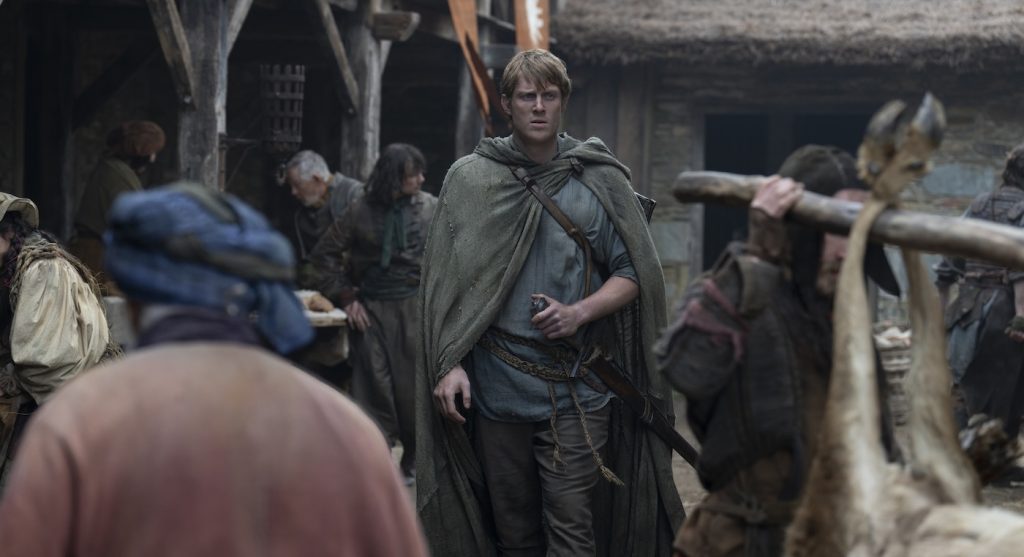
Official “Dune: Prophecy” Trailer Unveils a Powerful Sisterhood Rising in a Troubled Universe

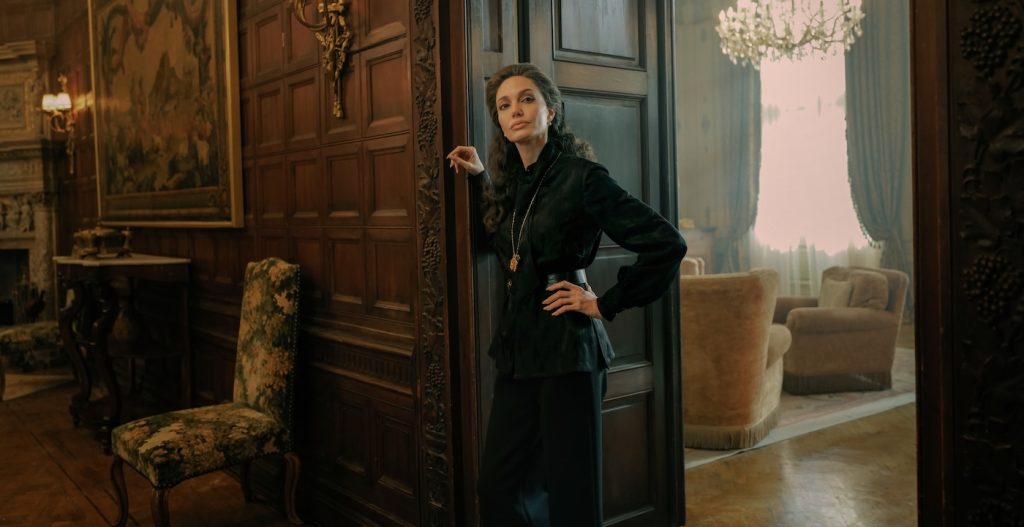
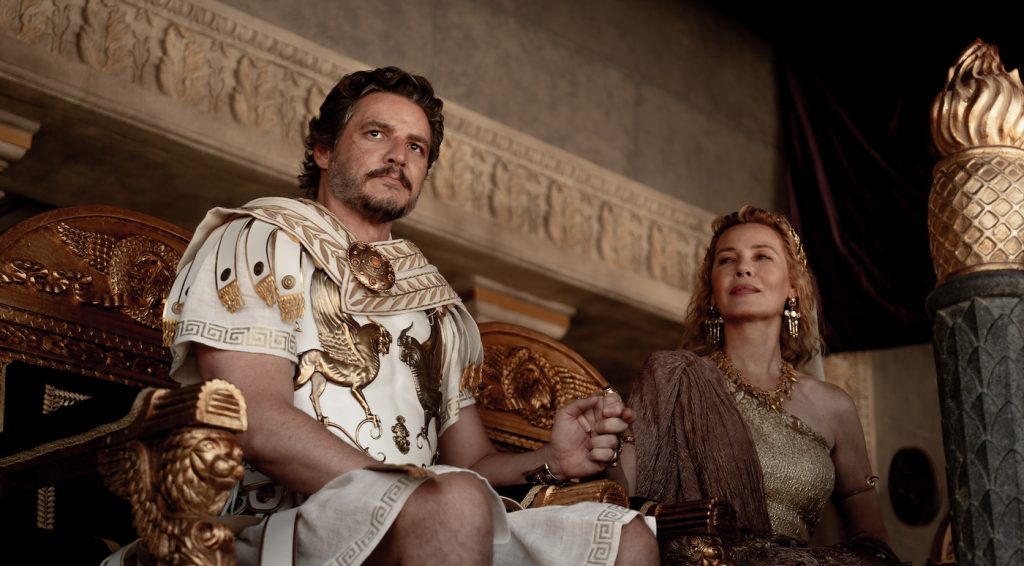
The official Dune: Prophecy trailer has revealed the expansion of the Dune universe that Denis Villeneuve has reinvigorated in his two masterful films. Prophecy, however, is set 10,000 years before the events depicted in Villeneuve’s films, long before Paul Atreides was leading a rebellion of Fremen against House Harkonnen and eventually the rest of the craven galactic Houses looking to enrich themselves from the resources on Arrakis. Yet that dangerous desert planet, filled with the highly-coveted spice and ruled by the colossal, subterranean gods known as sandworms, will play a big part in Prophecy, a series that sets out to reveal how the immensely powerful and secretive sisterhood known as the Bene Gesserit gained their influence and learned the tricks of their dark trade.

Dune: Prophecy is centered on two Harkonnen sisters, Valya (Emily Watson), a Mother Superior of a school of young priestesses in training, and Tula (Olivia Williams), who go on to found the Bene Gesserit, two later members of which were played so vividly by Rebecca Ferguson and Charlotte Rampling in Villeneuve’s films.

“What was really delicious to me as an actor about coming into this world was that these women are from a truly, truly, recognizably messed-up family,” Watson said at the Dune: Prophecy New York Cinema-Con panel. “They’ve had an awful childhood, and it’s sort of propelled them away. And nothing, nothing in this world is good and bad; everything is compromised and strange, and yet what Valya Harkonnen sets her sights on is really determining the right path for humankind. That’s her ambition.”

The new trailer reveals the dangers ahead for both women as they chart their course through the squabbling powers of the Imperium, including Mark Strong’s Emperor Javicco Corrino and Travis Fimmel’s Desmond Hart, a man committed to wiping the sisters off the face of the planet. Prophecy will give viewers an early look at the Harkonnen family we met as the pale, savage clan in Villeneuve’s films, as well as their longstanding interstellar feud with the Atreides clan. Prophecy is based on the work of Frank Herbert’s son, Brian Herbert, and his co-author, Kevin J. Anderson, in their book “Sisterhood of Dune.” 

Watson, Williams, Fimmel and Strong are joined by Travis Fimmel, Jodhi May, Sarah-Sofie Boussnina, Josh Heuston, Chloe Lea, Jade Anouka, Faoileann Cunningham, Edward Davis, Aoife Hinds, Chris Mason, Shalom Brune-Franklin, Jihae, Tabu, Charithra Chandran, Jessica Barden, Emma Canning, and Yerin Ha.

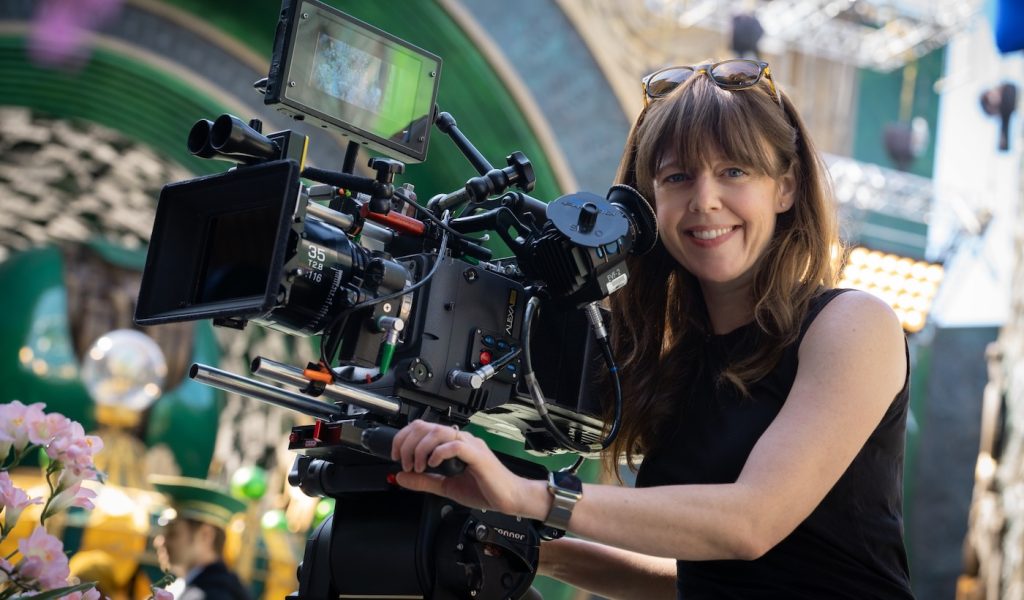
The series hails from showrunner and executive producer Alison Schapker. Anna Foerster directed multiple episodes, including the all-important pilot, and serves as executive producer. Jordan Goldberg, Mark Tobey, John Cameron, Matthew King, Scott Z. Burns, and Dune and Dune: Part Two screenwriter Jon Spaihts executive produce alongside Brian Herbert. Byron Merritt and Kim Herbert are executive producers for the Frank Herbert estate. 

Check out the trailer below. Dune: Prophecy arrives on HBO on November 17.

For more on all things Dune, check out these stories:

The Second “Dune: Prophecy” Trailer Teases the Founding of a Secretive, Immensely Powerful Sisterhood

The First Teaser for “Dune: Prophecy” Unveils the Powers That Shaped the Dune Universe

Desert Power: The Lasting Success of “Dune: Part Two” & Future Adaptations

Featured image: Jihae as Reverend Mother Kasha. Photograph by Courtesy of HBO

Tom Holland Reveals He’s Read a “Spider-Man 4” Script With Zendaya

Tom Holland revealed some major Spidey news when he said that he and his Spider-Man co-star Zendaya (also his real-life girlfriend) have read the Spider-Man 4 script a few weeks ago.
Speaking on the Rich Roll Podcast, Holland admitted that the script “needs work, but the writers are doing a great job.”

Spider-Man 4 will have big webs to fill—the last installment, Spider-Man: No Way Home, boasted not only Holland’s Peter Parker but also the return of previous Spideys played by Andrew Garfield and Tobey Maguire. It was a critical and commercial smash, with a bittersweet ending that required Peter to allow himself to be erased from the memories of the people he loves, including Zendaya’s MJ, as penance for all his multiverse meddling. A month ago, The Hollywood Reporter scooped that Destin Daniel Cretton, the director of Shang-Chi and the Legend of the Ten Rings, was in talks to step in to direct Spider-Man 4. Jon Watts has directed the first three films.

Spider-Man (Tom Holland) in "Spider-Man: No Way Home." Courtesy of Sony Pictures.
Spider-Man (Tom Holland) in “Spider-Man: No Way Home.” Courtesy of Sony Pictures.

Holland feels good about the direction the Spider-Man 4 script is headed. “I read it three weeks ago, and it really lit a fire in me. Zendaya and I sat down and read it together, and we at times were bouncing around the living room like, ‘This is a real movie worthy of the fans’ respect.’ But there’s a few things we need to figure out before we can get that really going, but it’s exciting,” Holland said.

Yet as always with a Marvel movie, there were larger considerations.

“One of the things to bear in mind with Marvel is that your film is a small cog in a large machine,” Holland told the Rich Roll podcast about making Spider-Man 4. “And that machine has got to keep running. And you need to make sure you can fit into that timeline at the right time to benefit the bigger picture. That’s one of the challenges we’re facing. The time in which we need to get that done is a tall order but definitely achievable with the fantastic people we have working on it now.”
Holland has made it clear that Spider-Man is near and dear to his heart, and to do a Spider-Man 4 after three critically and commercially successful films already, it would have to be for a story that really popped.

“I feel very protective over Spider-Man,” he told Collider. “I feel very, very lucky that we were able to work on a franchise that got better with each movie, that got more successful with each movie, which I think is really rare, and I want to protect his legacy. So, I won’t make another one for the sake of making another one. It will have to be worth the while of the character.”

For more on all things Spider-Man, check out these stories:

Will Spider-Man Swing Through “Venom: The Last Dance”?

Tom Holland Slings a Hopeful “Spider-Man 4” Update

Amazon’s “Spider-Man Noir” Series Taps “The Punisher” Showrunner Steve Lightfoot

irst “Madame Web” Trailer Reveals Dakota Johnson in Spider-Man Spinoff

Featured image: Tom Holland is Spider-Man and Zendaya is MJ in “Spider-Man: No Way Home.” Courtesy Sony Pictures.

Could Christopher Nolan’s Next Movie Be a Spy Thriller?

Most of the time, all you can do with a Christopher Nolan project is speculate. For every Dark Knight film, based on one of the most popular characters of all time, or Oppenheimer, based on Kai Bird’s book “American Prometheus,” there’s been an Inception or Interstellar or Tenet, films whose intricate plotting and heady ambition were kept more or less secret from the general public until their first trailers arrived. This is how Nolan likes it, and it also happens to be a great way to entice fans. Nolan is that rare director whose name alone guarantees interest, and it’s in his interest, and the film’s interest, to keep even its genre a secret for as long as possible.

This brings us to Nolan’s next film, which is set at Universal, the studio that released his Oscar-winning blockbuster, Oppenheimer. We know that the film will star Matt Damon, who reteams with Nolan after having a meaty role in Oppenheimer as Leslie Groves, the military man who put together the Manhattan Project and took a chance on the brilliant, difficult Oppenheimer to lead it. Damon also had a brief but juicy role in Interstellar as a double-crossing astronaut desperate to get off an uninhabitable planet. One guess as to the subject of Nolan’s upcoming film is a remake of the cult British TV series The Prisoner, which aired back in the UK in 1967 and in the US in 1968, created by Irish writer/actor Patrick McGoohan. The Prisoner has been knocking around Universal for a while, and its surreal mixture of spy thriller and sci-fi screams Nolan-—Tenet was an outright surreal sci-fi epic that was also the closest Nolan’s gotten to a proper spy thriller, and one could argue Inception, clearly sci-fi ,was at least adjacent to the spy thriller in its own way, too.

L to R: Matt Damon is Leslie Groves and Cillian Murphy is J. Robert Oppenheimer in OPPENHEIMER, written, produced, and directed by Christopher Nolan.
Caption: (L-r) Director/writer/producer CHRISTOPHER NOLAN and JOHN DAVID WASHINGTON on the set of Warner Bros. Pictures’ action epic "TENET," a Warner Bros. Pictures release. Photo Credit: Melinda Sue Gordon
Caption: (L-r) Director/writer/producer CHRISTOPHER NOLAN and JOHN DAVID WASHINGTON on the set of Warner Bros. Pictures’ action epic “TENET,” a Warner Bros. Pictures release. Photo Credit: Melinda Sue Gordon

Yet sources told Variety that Nolan’s upcoming project is not a sci-fi epic, which would seem to rule out remaking The Prisoner. That does, however, leave the spy genre, and one piece of Nolan lore is that he considered jumping into the world of James Bond. Yet as Variety and other outlets have mentioned, Nolan is a director who gets final cut, and the Bond franchise, led by Barbara Broccoli, involves a more hands-on approach. This doesn’t rule out Nolaan deploying Damon in a spy thriller; Damon was Jason Bourne, after all. It’s also a very rich genre that allows Nolan to do a lot of the things he loves: weave together complex plots that often play with time, unleash mind-boggling practical effects, and give an ensemble cast juicy roles involving characters not being who they appear to be at first blush.

Nolan has made a string of astonishing sci-fi films, but he’s proven adept at a variety of genres, including the war epic (Dunkirk), the bio-pic (Oppenheimer), and the thriller (Memento, Insomnia). In fact, Memento, the film that put Nolan on the map, is not a bad film to re-watch for a taste of what Nolan could do with a straight-up spy thriller—it was an ingeniously plotted, generally thrilling race against time centered on a character with anterograde amnesia (Guy Pearce) working with only bits of information he’s left for himself to try and track down his wife’s killer. It wasn’t a spy thriller, but it was complex, thrilling, and genuinely surprising, all elements that the best spy thrillers need to succeed. And who’s going to doubt Nolan at this point? Not us, probably not you, and definitely not Universal.

For more on all things Christopher Nolan, check out these stories:

Christopher Nolan’s Next Movie Set at Universal With Matt Damon as Potential Lead

Legacy Forged: Christopher Nolan & “Oppenheimer” Have Huge Oscars Night

Christopher Nolan on Exploding Myths & Exposing Humanity in “Oppenheimer”

Featured image: L to R: Cillian Murphy (as J. Robert Oppenheimer) and writer, director, and producer Christopher Nolan on the set of OPPENHEIMER.

Will Spider-Man Swing Through “Venom: The Last Dance”?

Will Spider-Man appear in Venom: The Last Dance? This is the question on the mind of Spidey fans as we approach the October 25 premiere date of Tom Hardy’s last turn as Eddie Brock, the investigative reporter turned alien symbiote antihero. For two bloody, funny films, Eddie and Venom have been biting the heads off bad guys (mostly) and battling some of the universe’s most vicious beings, including Carnage (Woody Harrelson), an alien symbiote even bigger and better than Venom. But throughout it all, despite Venom being one of Spider-Man’s chief antagonists in both the comics and previous films, there’s been no peep from Peter Parker. It’s been 15 years, in fact, since we’ve seen Spidey and Venom take swings at each other, despite the fact that Venom, Morbius, and now Kraven the Hunter all exist in Sony’s Spider-Man Universe. That universe has been missing its central star.

Sala 7 posted the Spidey question on Instagram to Tom Hardy, and his response left the door open just a crack for a potential surprise.

“Will we ever meet Spider-Man? You know, see, there are always possibilities. But, I cannot possibly say anything because this is the last movie. I would love that.”

So, Hardy hasn’t ruled out the possibility with this cryptic answer, and that’s exciting. Marvel has confirmed that Tom Holland is returning as Peter Parker, so, one could reason there’s a non-zero chance that Holland swings through The Last Dance before going on to Spider-Man 4. It’s also been confirmed that Knull, one of the most formidable villains in Spidey’s orbit, will appear in the film, so speculation is that Holland’s Spider-Man (or even Andrew Garfield’s, as he’s expressed interest in returning to the character after appearing in Spider-Man: No Way Home) will take on the intergalactic beast.

Director Kelly Marcel told IGN that while, yes, Knull will be in The Last Dance, he’s not the main villain, and therefore, we can expect to see him again. “One movie could never do justice to Knull,” she told IGN. So, it stands to reason we could see Spider-Man for the sole purpose of having a scene or two with Hardy’s Venom (at last!), and then swinging off to take on Knull while Venom deals with the film’s main villain.

What we do know about The Last Dance is Hardy will appear in a story he cooked up with first-time director Marcel, a longtime Venom scribe herself. Marcel has been working with Hardy since the beginning, director Ruben Fleischer’s 2018 hit Venom and then onto Andy Serkis’s Venom: Let There Be Carnage, which co-starred Woody Harrelson as the alien symbiote that made Venom look mild-mannered by comparison.

“Hunted by both of their worlds and with the net closing in, the duo is forced into a devastating decision that will bring the curtains down on Venom and Eddie’s last dance,” the logline states. The Last Dance finds Venom’s home planet and its ferocious inhabitants having zeroed in on Earth, forcing Eddie and Venom to go on the run. 

Newcomers Juno Temple and Chiwetel Ejiofor join Hardy in the new film alongside Rhys Ifans, Peggy Lu, Alanna Ubach, and Stephen Graham. 

Hardy wrote in an Instagram post last November that he loved making the final film with Marcel. “It’s been and continues to be a lot of fun this journey — there’s always hard turns to burn when we work, but [it] doesn’t feel as hard when you love what you do and when you know you have great material and the support at all sides, of a great team. I want to mention very briefly how proud of my director, writing partner and dear friend Kelly Marcel I am. Watching you taking the helm on this one fills me with pride, it is an honour. Trust your gut, your instincts are always spot on.”

Venom: The Last Dance hits theaters on October 25.

For more on Venom: The Last Dance, check out these stories:

“Venom: The Last Dance” Teaser Finds Dynamic Symbiote Fighting Their Last Battle

“Venom: The Last Dance” Trailer Reveals Symbiote Battle Royale

“Venom 3” Resumes Production as Tom Hardy Shares Photo

Featured image: Tom Hardy in the poster for “Venom: The Last Dance.” Courtesy Sony Pictures.

Taron Egerton and Jason Bateman Face Off in First “Carry-On” Teaser

The tense first teaser for Netflix’s Carry-On has arrived, revealing the new thriller from director Jaume Collet-Serra starring Taron Egerton as Ethan, a TSA agent who’s dropped into a dangerous game by a mysterious passenger who turns out to be a terrorist. That passenger is played by Jason Bateman, a man who knows a thing or two about tense thrillers after delivering four seasons of his nervy Netflix series Ozark. While Bateman wasn’t exactly a good guy in Ozark (by the end of the series, there were few “good guys” to be found), it’s fun to see him play an out-and-out villain here.

The gist of Carry-On is that Bateman’s nefarious traveler blackmails Ethan into letting a deadly package onto a flight that could turn the airport into a massive crime scene. The script comes from Michael Green and T.J. Fixman. Green has a lengthy list of successful writing credits, including James Mangold’s beloved 2017 film Logan and Denis Villeneuve’s 2017 Blade Runner: 2049. Fixman was a successful video game writer who worked on the critically acclaimed animated film Rachet & Clank.

Carry-On‘s cast includes Danielle Deadwyler, Dean Norris, Sofia Carson, and Theo Rossi. Collet-Serra has a long resume of thrillers and chillers, from 2005’s House of Wax and 2009’s Orphan to his underrated Blake Lively-versus-a-shark 2016 thriller The Shallows. More recently, he’s worked on much larger films like 2021’s Jungle Cruise with Dwayne Johnson and Emily Blunt and 2022’s Black Adam, again with Johnson.

Check out the trailer below. Carry-On arrives on Netflix on December 13.

For more on big titles on Netflix, check these out

Birmingham Goes Big Time: “Peaky Blinders” Movie Adds Stephen Graham to the Starry Cast

Will Smith And Michael Bay to Re-team for Netflix Action Film “Fast and Loose”

“The Perfect Couple” Showrunner Jenna Lamia on Her Nicole Kidman-led Whodunit on Nantucket

Featured image: Carry-On. (L-R) Tonatiuh as Mateo Flores and Taron Edgerton as Ethan Kopek in Carry-On. Cr. Netflix © 2024.

“The Wild Robot” Head of Story Heidi Jo Gilbert on Motherhood’s Many Meanings

No one is more delighted that The Wild Robot has surpassed all expectations at the box office and with critics than director Chris Sanders. Receiving almost perfect reviews upon its world premiere at the Toronto International Film Festival, the film is headed towards record-breaking box office numbers for DreamWorks. Buzz has begun for The Wild Robot as a strong contender at this year’s Oscars. Only days ago, DreamWorks gave the green light for a sequel, with director Chris Sanders helming once again. 

The story is about the sentient helper robot Roz (Lupita Nyong’o), who crash lands on an island and must adapt to her surroundings, building a relationship with local wildlife and becoming the adoptive mother of Brightbill (Kit Connor), the goose she has accidentally orphaned. She learns friendship and empathy by befriending island creatures, including self-serving fox Fink (Pedro Pascal), overwhelmed possum mom Pinktail (Catherine O’Hara), wise flock leader Longneck (Bill Nighy), and fearless falcon Thunderbolt (Ving Rhames). 

There are a number of reasons for the success of The Wild Robot, including the combined star power of the voice actors and the incredibly collaborative partnership of the cast and crew. Of course, it all starts with a story and the cinematic interpretation of Peter Brown’s book series. 

The Credits talked about the power and importance of story with DreamWorks’ head of story Heidi Jo Gilbert. Named by Variety as one of 2024’s 10 Animators to Watch, Gilbert headed the story team for the film and played an integral part in building the wonderful story lovers of The Wild Robot film see. 


There are storyboards that you specifically did for the sequence when Brightbill and Roz first connect and imprints on her. What was your process on that sequence, and what were some challenges in hitting the right emotional note there?

When I first came on, I felt like Roz and Brightbill’s relationship was the thing that needed to come to the forefront of the story, and the moment where he hatches was very important. I remember having conversations with Chris and our editor, Mary Blee, about light. With Roz, could there be these lights that are emotional versus the ones that are robotic? That just kind of evolved, and then production took it and ran with it, and they created these hexagonal lights that come out of her that represent her emotional expansion. 

Heidi Jo Gilbert’s storyboard for Roz and Brightbill. Courtesy Heidi Jo Gilbert.
(from back center) Roz (Lupita N’yongo), and Brightbill (Kit Connor) in DreamWorks Animation’s Wild Robot, directed by Chris Sanders.

Can you discuss one of the biggest challenges in character development and how you solved it in the film?

Well, we always love when there’s not a lot of dialogue, and especially the scene where she walks through the forest for the first time, we had versions of that with no dialogue. We ran into problems with that because it needed to serve as her character introduction, and when it was silent, we weren’t getting the personality or character from her that we needed for the rest of the movie. Figuring that out was a journey. There was also a lot of trial and error in unlocking or translating the language. It used to be spread out over the movie instead of taking place, as it does now, in one scene. It’s through a time-lapse that she does it quickly. Originally, it happened in chunks. On her screen, the language would start to translate, and there would be an actual bar with percentages. We placed that throughout different scenes in the movie but found the audience wasn’t absorbing it. If you go back and look at the movie now, you can still see scenes with very little dialogue before we solved that, We had to actually add some, like when she chases after Fink after he catches the egg, because before she couldn’t understand the language. It used to be that for the first 15 or 20 minutes, there was no dialogue, but we needed to make changes just based on the greater story needs or the bigger picture. 


You have some great actors voicing characters for this film. Who among them had the most impact on the development of their character? 

I feel like Lupita Nyong’o as Roz and Catherine O’Hara as Pinktail both had a big impact on those characters in the booth. We had a hard time finding Pinktail as a character in the movie. We had earlier versions where she wasn’t even a mom. She was just a wannabe actress. When we got Catherine, she really started to help us find the personality and who that character would be, and I think Chris came up with the idea of having her be a mom who was exhausted and overworked, but she really helped us find that as well. 


And Lupita? 

She was great because she would bring up all these points in her recording sessions that I feel like only she could do because she had to embody that character in her performance and be in Roz’s head. She would find things that were inconsistencies emotionally, in terms of how robotic she needed to be in the beginning and through the end. It was really fun just to see her refine that character, and it made it so much easier for us to track Roz’s robotic versus emotional arcs throughout the movie because she was so aware of it, too. So that just made our jobs a lot easier.


They are very much foils as well, in terms of how they express motherhood, with Roz being more gentle and Pinktail being more blunt and practical. 

All true, but I don’t think we molded that intentionally; we just saw problems we needed to solve. First, Pinktail was an actress, then she was a mother, but she was a mom who had all this wisdom for Roz about caring for her children, but it wasn’t working. We actually did a brainstorming session with Joel Crawford and Januel Mercado, the directors of Puss in Boots: The Last Wish, and they helped us find her as edgier and careless about her kids, and when they pitched it, we knew it would work. It creates two sides of motherhood: the very exhausted and overwhelmed with Pinktail and the gentle and sensitive with Roz. 

(from left) Fink (Pedro Pascal), Roz (Lupita N’yongo), and Pinktail (Catherine O’Hara) in DreamWorks Animation’s Wild Robot, directed by Chris Sanders.

With multiple perspectives on motherhood, the whole story is just better. 

Exactly. It can only happen when you have multiple mother characters. I heard Geena Davis, who is a great advocate for women in film, say that it’s hard to represent all of womanhood when you only have one female character. She brought up A League of Their Own, saying because they had a bunch of different female characters, they could show more facets of being a woman. Because we had multiple mother characters, we could show different sides and not put all the pressure on one character. 

DreamWorks Animation’s The Wild Robot, directed by Chris Sanders.

There’s a very positive aspect in this film that is threaded through the story, and the characters are in part in the service of that. Can you talk about that? 

We have this dramatic argument going on in the characters about kindness as a survival skill. It’s one of the themes of the book we really wanted to represent, and to get that point across, we had to present the counter-argument to that, and we feel that’s most embodied through Fink, with his “dog eat dog” every creature for themselves attitude, doing whatever they have to do to survive. Pinktail represented the motherhood side of things. We wanted to make sure that in all the situations we put them in, we’d stay true to the characters we’d established with Fink, Thorn, and Paddler. Thorn also embodied the worldview of survival. He’s the one who attacks Roz at the beginning. He’s the Alpha predator on the island. In the scene with all the characters together, we land the emotional part first, with Roz saying how sometimes, to survive, we have to be more than we’re programmed to be. That is threaded through any and all story threads or business between characters, especially when they’re all together. 


As much success as The Wild Robot is having, I love to believe it’s in part due to the collaborations of the cast and crew. 

Absolutely. Chris Sanders is just so collaborative. It’s his vision, but if he hears a good idea, he’ll run with it, no matter where it comes from. He grew up through the story department, working on films like The Beauty and the Beast and Aladdin, and he sees the power of collaboration. If you get the right team together, with the right sensibilities, having someone who can challenge the story from a different point of view that supports the greater vision, it always makes the story better. He’s a great collaborator, not just with the story but in all aspects. Working that way has inspired me to prioritize and find that type of collaborative team. It’s very powerful to have that diversity of talent in the storyroom. 


The Wild Robot is in theaters nationwide and available to own or rent as of October 15th. 


For more on Universal Pictures, Peacock, and Focus Features projects, check out these stories:

“Conclave” Trailer Reveals Edward Berger’s Star-Studded Vatican-Set Thriller

See the Magic: “Wicked” Unveils Dazzling New Images From Oz and Behind-the-Scenes

Hear the Magic: “Wicked” Debuts Iconic Songs in New Teaser

Featured image: (from left) Roz (Lupita N’yongo), and Brightbill (Kit Connor) in DreamWorks Animation’s Wild Robot, directed by Chris Sanders.

“The Penguin” Episode 4 Introduced a Classic Batman Villain

In the first three episodes of HBO’s devilishly entertaining The Penguin, Colin Farrell’s Oz Cobb has made daring, painful inroads with Sofia Falcone (Cristin Milioti), the daughter of the late Gotham underworld poobah Carmine Falcone (Mark Strong). As the series kicked off in the wake of the Riddler’s attack on Gotham in Matt Reeves’ feature The Batman, Sofia was freshly sprung from Arkham Asylum, where she spent a decade after being accused of the murder of seven women working at her father’s Iceberg Lounge, earning her the nickname “The Hangman” in the press and within her family. The fragile, budding partnership between Oz and Sofia has been slowly fleshed out over the first three episodes, revealing their tortured shared history—including episode one’s explosive opening sequence in which Oz kills her beloved brother, Alberto—and their common goal of filling the power vacuum left after Carmine’s assassination. Episode 4, “Cent’Anni,” filled in the full extent of Sofia’s banishment to Arkham, Oz’s complicity in her miserable decade of confinement, and the people Sofia met while there. One of those people happened to be a classic Batman villain, although her future as a Gotham ghoul was cut brutally short in the episode.

Cristin Milioti, Colin Farrell. Photograph by Macall Polay/HBO

“Cent’Anni” (an Italian phrase meaning “may you live 100 years”) took us back to life in Falcone family before the Riddler killed Carmine, when he was running the most powerful crime family in Gotham, and Sofia was his chosen successor. Unlike the unreliable, unfocused Alberto, Sofia was smart, composed, motivated, and somewhat in awe of her father. In short, she wanted to do right by him and wanted him to be proud of her. There was one impediment to her transition into the top spot in the Falcone family—the suicide of her mother, who Sofia found in her parents’ bedroom; she’d hanged herself. When a reporter from the Gotham Gazette, Summer Gleeson (Nadine Malouf), approaches Sofia at a benefit for mental health that the Falcone’s sponsor in honor of her mother’s troubles and asks her pointed questions about the string of apparent suicides of young women working at her father’s club, Sofia’s grim fate is set into motion.

Cristin Milioti, Mark Strong. Photograph by Macall Polay/HBO

Sofia agrees to meet with the reporter to hear her out and learns that the young women who keep turning up dead are not, in fact, suicides—they were strangled, and they had fought their killer, as evidenced by marks on their hands and under their fingernails. Confronting this reality forces Sofia to recall a detail from her childhood—the bloody scratches on her father’s hand after her mother’s suicide. The brutal reality of what has actually been happening to these women and what happened to her mother is too much to bear for her. She decides to look away. It doesn’t matter.

Back then, Oz wasn’t the Capo he was when we met him in The Batman or here; he was with Sofia’s driver, and he drove her to meet with Summer Gleeson. Oz goes behind Sofia’s back and tells Carmine about this, and Carmine summons Sofia to meet with her father at his birthday party. In short order, he has her arrested for the murder of Gleeson (which is news to both Sofia and Oz, or so he says), as well as the seven women who had worked at the Iceberg Lounge and its secretive inner sanctum, 44 Degrees. She’s shipped off to Arkham, where she’s tortured, mentally and physically, for the six months before her trial.

Arkham is a legendary breeding ground in the comics and the films for Batman villains, and while Sofia goes into Arkham a sane, innocent woman, she will leave a killer. While there, she meets the woman sharing the next cell over, a patient who calls herself Magpie (Marié Botha), an eccentric, talkative sort who seems desperate to be Sofia’s friend. The problem for Sofia is everyone at Arkham is working for her father, and there will be no end to the brutality she endures—shock “therapy,” unshackled lunatics allowed to attack her, and eventually, the erasure of the one thing holding her together, her court date. The doctors at Arkham have said she’s not stable enough to stand trial, and her family members have all signed affidavits attesting to her insanity. Carmine Falcone has destroyed Sofia’s life and left her no exits whatsoever. And there’s Magpie, chattering away in her ear.

Cristin Milioti, Marié Botha. Photograph by Macall Polay/HBO

Magpie is a classic Batman villain from the comics. She was first introduced in 1986 in the third issue of “The Man of Steel,” in which she is a curator for the Gotham City Museum by day, a serial robber by not. She’s a kleptomaniac and a tech whiz who creates explosive replicas of the objects she wants to steal, eventually drawing both Superman and Batman into orbit. It takes the two of them to track her down and send her to Arkham.

In the comics, Magpie was eventually killed by the Penguin’s associates. However, a new version was resurrected as a Black Lantern in the “Blackest Night” saga, and other versions of Magpie ended up in the Suicide Squad and appeared in the shows Gotham, Beware the Batman, and Batwoman.

Unfortunately for us, despite a riveting performance from Botha, Magpie’s tenure in this particular vision of Gotham is short-lived. Sofia finally snaps at Arkham, and Magpie pays the price—Sofia beats her to death. It ain’t pretty.

It was, in short, a riveting but pitch-black episode devoted to Cristin. Milioti’s sensational performance as Sofia and the injustice she’s endured. It also teased us with a glimpse of some of the colorful villains that have moved across the pages and screens of Gotham-set stories. “Cent’Anni” also made clear that as incredible as Colin Farrell is as the Penguin, as much as we find ourselves rooting for him in a way that’s not so dissimilar from how we rooted for the deeply troubled and decidedly bad Tony Soprano, his complicity in Sofia Falcone’s torture is impossible to look away from. The irony is after screwing over countless dangerous people in Gotham for years, and years, Sofia Falcone might be the one person capable of making Oz finally pay for his crimes.

Go inside the episode here.

For more on The Penguin, check out these stories:

Inside the Shaky Alliance Between Oz and Sofia in “The Penguin” Episode 3

How “The Penguin” Production Designer Kalina Ivanov Helped Bring Gotham Back to New York City

“The Penguin” Trailer Reveals Colin Farrell’s Crime Lord Scheming for Control of Gotham

Featured image: L-r: Marié Botha, Cristin Milioti. Photograph by Macall Polay/HBO

“Saturday Night” Star Lamorne Morris on Lighting Up the Screen as “SNL” Legend Garrett Morris

The camera follows Lorne Michaels (Gabriel LaBelle) as he walks backstage through a line of camera crews, flickering lights, shouting cast members, costume racks, and one very random llama. 

Ninety minutes until air time. Ninety minutes until the first-ever Saturday Night Live.

This is the opening sequence for Jason Reitman’s latest film, Saturday Night, about the creation of a legendary form of comedic television, but more specifically, about the immense pressure felt in the ninety minutes leading up to the first-ever live show. Immediately, audiences are thrust into the night’s commotion, as Michaels struggles to create a show that no one (including himself) can seem to explain.  


The camera follows Michaels backstage and introduces us to each member of the original SNL cast, including the legendary Garrett Morris. 

“It was more so about the energy of the evening,” says Lamorne Morris (no relation), who portrays Garrett in the film. “We were really trying to capture that essence.”

Creatively speaking, Saturday Night is filmed in a lot of what Lamorne calls “oners” — continuous takes filmed as one long shot with all elements of the scene working at once, as opposed to short clips of a few lines at a time. For oners, actors must stay in character for extended periods, remaining committed to the moment even when the cameras aren’t pointing directly at them.

“This man blocked out the whole movie,” Lamorne says of Reitman. “A lot of long, four-minute, five-minute scenes where it’s a well-choreographed dance that you need to have a great dance instructor to put together. And Jason was that dance instructor.”

Lamorne says that being a part of Saturday Night was equal parts thrilling and stressful.

“So you’d be in one scene, and then the camera would be behind you and follow you all the way across to this moment. Then you’re in this scene,” Lamorne explains. “So, you know, that was a fun thing to be a part of; however, it was really stressful in certain aspects because you don’t want them to be like, ‘Okay, we’re on minute three. The scene’s going well… And then Garrett comes in and f**ks his line up.’”


Lamorne said Reitman actually filmed the entire movie with stand-ins first before he brought in the cast.

“You could make another movie,” he jokes.

Lamorne said he was honored to play a living legend who is not only a triple threat but also a historic figure as SNL’s first Black cast member, someone he could learn from, too. Although Reitman didn’t want the Saturday Night cast to spend too much time speaking to their real-life counterparts, he found speaking to Garrett “very beneficial.”

“Workshopping ideas with him — ‘I feel like you had a cigarette in your hand a lot,’ and he’s like, ‘Yes, I did,’ So I was picking up what he was putting down while we were talking.”

Lamorne says he grew up watching Garrett Morris on Martin and The Jamie Foxx Show, but it wasn’t until later in his life that he realized Morris got his start on SNL


“When it comes down to getting his tics and his rhythm and things like that — just being an actor, being a mimic, you can kind of pick things up by just studying them,” he explains. “Tricky part was [that] you’re playing a character while he’s not performing, but you don’t necessarily have footage of that.”

HOLLYWOOD, CALIFORNIA – FEBRUARY 01: Actor Garrett Morris is honored with a Star on the Hollywood Walk of Fame on February 01, 2024 in Hollywood, California. (Photo by Amanda Edwards/Getty Images)

Lamorne spent time going over old interviews and sketches of Garrett, and although the film is a testament to his acting abilities, he says he definitely felt pressure in playing the role of a legend who is still very much alive.

“Especially when it’s someone who has a niece who told you not to eff this up,” he laughs.

Lamorne confirmed Garrett has since seen the film and was “very complimentary” of both his performance and the entire cast. 

“That was a big litmus test for me,” he says. “If Garrett likes it, I’m all good with it.”

Check out our full interview with Lamorne below. Saturday Night is in theaters now.


For more upcoming films from Sony Pictures, check out these stories:

“Venom: The Last Dance” Teaser Finds Dynamic Symbiote Fighting Their Last Battle

How “Afraid” Writer/Director Chris Weitz Cracked the Artificial Intelligence Code in His First Horror Film

“The Room Next Door” Trailer Unveils Julianne Moore and Tilda Swinton in Pedro Almodóvar’s Latest

Featured image: LOS ANGELES, CALIFORNIA – NOVEMBER 15: Lamorne Morris attends the FX’s “Fargo” Year 5 premiere at Nya Studios on November 15, 2023 in Los Angeles, California. (Photo by Rodin Eckenroth/Getty Images)

“Silo” Season 2 Trailer Reveals Rebecca Ferguson’s Survival

The first trailer for Silo season 2 has revealed the survival of Rebecca Ferguson’s Juliette. While the fact that Ferguson’s returning to the series should surprise no one, considering she’s the star of the show, for those folks who haven’t yet watched the first season, you’re in store for one of TV’s most underrated sci-fi series.

Silo is centered on the story of the last surviving people on Earth, ten thousand, give or take, who must live a mile below the surface in the titular structure because the planet has become lethally toxic. What happened to the planet and why these people, in this Silo, carried on was one of season one’s enduring mysteries. Ferguson’s Juliette, a brilliant engineer tasked with keeping the energy-producing drill at the deepest level of the Silo functioning, was ensnared in the mystery after her boyfriend was murdered and she was deputized by the former sheriff (David Oyelowo) for reasons she slowly uncovered toward the season’s climax. The finale ended with Juliette sent into the deadly environment above as punishment for her sleuthing, a fate known as “cleaning,” where, presumably, every other person sentenced as such died.

The season two trailer reveals that Juliette has not dropped dead as previous cleaners had, but the world is as destroyed as the Silo’s powers that be had sworn it was. The revelation in the final shot of season one was that Juliette’s Silo is but one of many, meaning there are thousands upon thousands of other people sequestered in their own claustrophobic worlds, walking distance from where Juliette has spent her entire life, living in their own sunken societies. Juliette’s sacrifice begins to stir the residents of her own Silo into open rebellion as she voyages into new spaces and meets new faces, still dead-set on uncovering the truth.

Ferguson is joined by season one alums Tim Robbins, Common, Harriet Walter, Chinaza Uche, Avi Nash, Alexandria Riley, Shane McRae, Remmie Milner, Clare Perkins, Billy Postlethwaite, Rick Gomez, Caitlin Zoz, Tanya Moodie and Iain Glen. Steven Zahn joins the cast in season two.

Check out the trailer below. Silo season 2 streams on Apple TV+ on November 15.

For more on Silo, check out these stories:

“Silo” Creator Graham Yost Unseals the Secrets of Season 1

For more stories on Apple TV+ series and films, check these out:

“Wolfs” Stunt Coordinator George Cottle on Designing Superlative Stunts For George Clooney & Brad Pitt

“Women in Blue” Cinematographer Sarasvati Herrera on Lensing Apple TV+’s Gripping New Thriller

“Manhunt”: A Visual Journey Through Time with Graphic Designer Gina Alessi

Featured image:

Denis Villeneuve Reveals “Dune: Part Two” Sandworm-Riding Scenes Were Insanely Labor-Intensive

It’s no secret that co-writer/director Denis Villeneuve’s vision for his two Dune films was exacting and inspired. Arguably, the most technically challenging part of a very challenging film was the climactic early-ish moment when Paul Atreides (Timtohée Chalamet) finally rides one of Arrakis’s colossal sandworms. Speaking at the BFI London Film Festival this past Saturday, Villeneuve revealed just how hard capturing this moment truly was.

Speaking with Ted Lasso star Brett Goldstein, Villeneuve detailed that scene, which he’d previously revealed took 44 days to film and required the “worm unit,” a specialized crew within a crew, to help him pull it off.

“I realized that the way I wanted to approach this, I didn’t want to compromise,” Villeneuve told Goldstein. “Most important with visual effects is, how will you shoot it? And I wanted to shoot it with natural light. And I realized it would take months to shoot it. Each shot was very complex. Each shot took sometimes half a day, sometimes a day, sometimes a week for one shot because of the complexity. If I had done it myself, I would still be shooting.”

One of Villeneuve’s key collaborators on this scene was his producer, and wife, Tanya LaPointe, who he said “understood perfectly my vision.”

Another key collaborator was Greig Fraser, Villeneuve’s cinematographer on both Dune films. In our two-part conversation with Fraser, he highlighted the difficulty of filming that sequence.

“It was such a complicated story, and those action set pieces were very complex,” Fraser continues. “I mean, riding a sandworm is very complex—so I tried to make sure that we were telling the story as concisely as possible, which allowed Denis and Joe [Walker], our editor, to hold on shots as long as possible. So I think the trick, for me, is simplicity. Every shot needed to be as clear as possible. To not confuse the audience with too much handheld or too much messiness, but keep things sharp and clear.”

Director/Writer/Producer DENIS VILLENEUVE and Director of Photography GREIG FRASER on the set of Warner Bros. Pictures and Legendary Pictures’ action adventure “DUNE: PART TWO,” a Warner Bros. Pictures release.
Photo by Niko Tavernise


For more on Warner Bros., DC Studios, Max, and more, check out these stories:

“Joker: Folie À Deux” Cinematographer Lawrence Sher Dissects 3 Essential Scenes

“Joker: Folie À Deux” Cinematographer Lawrence Sher Dissects 3 Essential Scenes

Hal Jordan and John Stewart Assemble: Aaron Pierre Joins DC Studios’ “Lanterns” Cast Alongside Kyle Chandler

Featured image:

“Joker: Folie À Deux” Production Sound Mixer Steven Morrow Dissects 3 Essential Scenesew

“We tried to do everything we could to make the best sounding movie,” says production sound mixer Steven Morrow about director Todd Phillips’ Joker: Folie À Deux. “Larry’s cinematography is beautiful, and with the amount of effort and time he puts into it, we wanted to put that kind of energy and emotion into our work for the audience and for Todd.”

For the much-anticipated sequel to the Oscar-winning film Joker, the story takes a musical turn as Arthur Fleck finds himself locked up at Arkham State Psychiatric Hospital awaiting trial for violently shooting late-night host Murray Franklin (Robert De Niro). Struggling with his identity, Arthur uses song and music as a means of expression. His life changes after meeting Lee Quinzel (Lady Gaga), with whom he falls head over heels in love.

Caption: (L to r) LADY GAGA and JOAQUIN PHOENIX on the set of Warner Bros. Pictures’ “JOKER: FOLIE À DEUX,” a Warner Bros. Pictures release. Photo Credit: Niko Tavernise/™ & © DC Comics

Morrow reunites with both Phillips and Lady Gaga from when he mixed A Star Is Born, where Phillips served as a producer. In approaching how to record the singing in Joker: Folie À Deux, Morrow and the sound team, which included boom operator Michael Kaleta and utility Bryan Mendoza, worked closely with executive music producer Jason Ruder. The idea was to record all the vocals live. “I actually got a call from Jason early on before they announced Lady Gaga was going to be the female lead,” notes Morrow. “And what we ended up doing is getting everybody comfortable with the songs, finding the rhythm of the songs, and getting the understanding of what songs Gaga was going to do live on set.”  What transpired from the early prep was a workflow that allowed them to record the actors singing live without sacrificing the tempo, energy, or emotion of scenes.

Below, Morrow dissects three of the most important sonic ideas in Joker: Folie À Deux.


THE INTERVIEW

Years after the events in Joker, Arthur Fleck is being held at Arkham State Psychiatric Hospital. Comatose from a daily dose of drugs, his frail body shuffles the halls as if a stiff breeze could knock him over. His lawyer, Maryanne Stewart (Catherine Keener), is his only lifeline to potential criminal freedom. Her defense: Arthur has a “split personality.” A step in publically shaping that narrative is an interview between Arthur and high-profile news anchor Paddy Meyers (Steve Coogan). The scene becomes a pillar to revealing who Arthur truly is. 

Caption: (L to r) STEVE COOGAN as Paddy Myers, JOAQUIN PHOENIX as Arthur Fleck and CATHERINE KEENER as Maryanne Stewart in Warner Bros. Pictures’ “JOKER: FOLIE À DEUX,” a Warner Bros. Pictures release. Photo Credit: Niko Tavernise/™ & © DC Comics

We get all the period microphones from the props department. We don’t mess with a period mic often because trying to make it usable can be difficult for modern moviemaking. There’s so much electrical buzz around sets now with all the LEDs, dimmers, and everything else like that. So, you end up taking an old mic and putting a new mic inside it.

LIVING IN A FANTASY

Arthur discovers himself through song and music, which is explored on-screen through fantasies, including one on a rooftop, inside the courtroom, and at a wedding chapel. The sequences shape the story of his inner self, and to pull them off, collaboration among camera, sound, choreography, and the actors is required to make them transcendent yet immersive.


We knew Lady Gaga was going to do everything live because that’s just how she works. That’s when the music team, Jason, George, and Randall, came up with the idea that Gaga and Joaquin should have their own pianist to play along to the actors singing. This way, the actors could drive the speed of the scene and the speed of the song instead of listening to it on a playback track and trying to keep up with it. Their own pianist allowed them to perform the song how they wanted on each take.

How did you pull it off technically?

Each pianist would play next to us, and we would take the audio from the piano and feed it into an earpiece the actors were wearing. This way, if there was dialogue in a scene, we could record it cleanly and isolate it from the music. We also sent a feed of the actor’s performance back to the pianist so that they could listen to the scene as it was going on because they needed to hear what they were saying as well. Then, we had video monitors for them so they could watch what the camera was seeing.

We also set up a separate monitoring system for the music department with hardline headphones and good video monitors so they could sit in and listen to what we were recording, what we were feeding the actors and the actors’ live performances. We fed any other person who needed to hear the musical performance through Comtex.


What about when Arthur first meets Lee in the music room of Arkham Asylum? There’s another character playing the piano as they sing along. Did you approach recording the sound the same way?

We did it a little differently. In that scene, there’s a baby grand piano that Harley sets on fire later on. We asked the art department to send out the piano to get digitized, which allows you to pull a lever to disengage the keys, but you can still press down on them. So, as the piano is playing, we don’t hear it in the room, but it is being digitized. We can record what they are playing and send it back to the pianist and all the actors in the room with an earwig so everybody can sing along to what’s being played.

A fun thing about that scene is that the pianist who’s playing is actually Lady Gaga’s pianist, Alex Smith, who’s on tour all the time with her. So he’s the one in that scene playing to all the patients.  


So that setup allows you to record the piano, the singing, and any dialog separately?

Yes. That was a trick we learned from Gaga on The Star is Born. And so, from that point forward, anytime we do any of these big piano scenes we try to use a digital grand piano. This way, if you actually want them to be playing, they can actually play, and if you want to hear what they’re playing later, we can isolate it. Otherwise the other way is for them to be miming to a dead piano.

One of the original songs written and performed by Lady Gaga is “Folie à Deux,” which plays over a rooftop sequence where they dance together. Do you know that song came about? 

That was one of those fascinating moments in the movie because she’s going to be singing, and they’re going to be dancing. It’s this beautiful fantasy sequence. Gaga actually came up with the vocals for that during rehearsal the day before, I believe, and recorded the vocals on a laptop with Noah Hubbell, who’s our audio playback guy. If I recall correctly, she was there during rehearsals then said I have these lines of vocals, let’s record it. They just recorded it using the laptop microphone as a temp track so they could rehearse it. It was one of those movie moments where you have to be ready for anything. And we kind of have everything available all the time because you don’t ever want to scramble.


REVEALING JOKER

When the case against Arthur turns unfavorable, he fires his attorney and chooses to defend himself…as the Joker. This dramatic turn highlights Arthur’s struggle to find his place between reality and fantasy.

We knew going in that each scene would have multiple cameras and a lot of atmosphere, like fog and streaks of light. This looks beautiful, but if you put a boom pole through it, you can see a shadow even if you’re above. So we knew we had to plant radio mics and have radio mics on vocals throughout the whole movie.


Caption: (L to r) JOAQUIN PHOENIX and director TODD PHILLIPS on the set of Warner Bros. Pictures’ “JOKER: FOLIE À DEUX,” a Warner Bros. Pictures releas. Photo Credit: Niko Tavernise/™ & © DC Comics

Since radio mics sound closer to a subject, how did you bring in the location sounds?

With the courtroom scenes, all the newscaster cameras broadcasting the trial were live cameras filming, so we had to record the dialogue with radio mics. There was no easy way to put a boom in there. So the thing we did to make the space more alive, or any of the sets where there was going to be radio mics, was to plant mics. We had about four in every room, kind of in the corners, to capture the room sound and to give it a little bit more life and distance for moments that seemed a little too close in your ear.

There’s a small moment where Arthur speaks into a courtroom mic on the table where he sits. Did you want to make that practical?

Yes, we thought it’d be good to have that be an actual live mic. So we fed that through a speaker in the room, so that loud feedback thing happened in the courtroom, which we thought was pretty funny. That was kind of our choice, and Todd liked it. So that’s what we went with.

How did you approach the transition between courtroom dialogue and song? For instance, when Arthur sings “The Joker.”

There’s a company called Sound Devices that makes these really small wireless transmitters. But the cool thing about them is you can control the gain or volume that the transmitter is sending back to you remotely. So when Gaga is going to whisper a line and then go into a ballad, we can adjust it on the fly remotely so that the transition from her being super quiet to singing doesn’t crush the mic. This is incredible compared to how we had to do before, where we had to pick and choose what we wanted to sacrifice. With the new systems that are out now, you don’t have to sacrifice quality. I don’t know how we would have done the movie otherwise.


 Joker: Folie À Deux is in theaters now.


 For more on Joker: À Deux, check out these stories:

“Joker: Folie À Deux” Cinematographer Lawrence Sher Dissects 3 Essential Scenes

The Villain Returns to Venice as “Joker: Folie à Deux” Makes its World Premiere

New Joker: Folie à Deux” Teasers Unveil Gotham’s Killer New Crooners

Featured image: Caption: (L to r) JOAQUIN PHOENIX as Arthur Fleck/Joker and LADY GAGA as Lee Quinzel in Warner Bros. Pictures’ “JOKER: FOLIE À DEUX,” a Warner Bros. Pictures release. Photo Credit: Niko Tavernise


“Joker: Folie À Deux” Cinematographer Lawrence Sher Dissects 3 Essential Scenes

“The movie is an extension and a further exploration of this idea of our shadow selves as human beings,” Joker: Folie À Deux cinematographer Lawrence Sher tells The Credits. “We all have sides of ourselves that we hide from people. There are also sides we show to people that aren’t really authentic, and that’s what this movie explores.”

Sher, who was nominated with an Academy Award for Todd Phillips’ Joker, returns to collab with the director on a visceral sequel that sees the Crown Prince (Joaquin Phoenix) fall madly in love with Lee Quinzel (Lady Gaga) who gets him in more ways than he could have ever imagined. Music and sound pulsate a story that blurs the line between fantasy and reality as Arthur faces the legal consequences of nonchalantly killing late-night host Murray Franklin (Robert De Niro) under the bright lights of live TV. While the original film was an exploration of a deeply troubled character, Joker: Folie À Deux has Arthur questioning who he really wants to be: Arthur Fleck or Joker…or both. 

Caption: (L to r) BRENDAN GLEESON as Jackie Sullivan and JOAQUIN PHOENIX as Arthur Fleck in Warner Bros. Pictures’ “JOKER: FOLIE À DEUX,” a Warner Bros. Pictures release. Photo Credit: Scott Garfield/™ & © DC Comics

In photographing the proactive imagery, Sher looked to large-format storytelling, pairing the ARRI Alexa 65 with Nikon, Canon, Leica, Hasselblad, and Arri lenses to evoke visually specific emotions and feelings. For instance, a Nikon 58mm was used primarily for emotionally expressive moments with Arthur. Over the 75-day shooting schedule, nine of them were split between New Jersey and New York to film exteriors at a courthouse located at 60 Centre Street and to return to the now infamous Joker stairs in the Bronx, where production hired local kids from the neighborhood to help on set. Time in New Jersey was spent at the shuttered Essex County Isolation Hospital in Belleville, which stood in for Arkham Asylum. The remaining days were filmed at 8 different stages on the Warner Bros. lot in Los Angeles, which gave creative freedom to the actors and crew in a more controlled environment. What it meant for production designer Mark Friedberg was building sets that supported the free-range approach.

“We don’t really plan out specific shots in advance,” notes Sher. “So what we are really doing is settling in an environment in which we can basically shoot as close to 360 degrees as possible and then discover it in real-time with the actors. So, with each take, we’re trying something different and discovering frames and feelings of what Joaquin or Lady Gaga are doing. So we make adjustments based on them.”

Below, Sher dissects three of the most important visual ideas in Joker: Folie À DeuxSpoilers below.


THE INTERVIEW

Years after the events in Joker, Arthur Fleck is being held at Arkham State Psychiatric Hospital. Comatose from a daily dose of drugs, his frail body shuffles the halls as if a stiff breeze could knock him over. His lawyer, Maryanne Stewart (Catherine Keener), is his only lifeline to potential criminal freedom. Her defense: Arthur has a “split personality.” A step in publically shaping that narrative is an interview between Arthur and high-profile news anchor Paddy Meyers (Steve Coogan). The scene becomes a pillar to reveal who Arthur truly is. 

We started everything from the reality of what it would be down to the set build. Todd referenced the famous Tom Snyder interview with Charles Mason, so we started from there and asked what was interesting about it. They did those interviews in a very special way, so that’s what Paddy is doing here with Arthur. He’s putting him in an actual cell with bars behind him and closing the door.

From a practical standpoint, the two cameras that are shooting the interview are live cameras. They would be photographed, so my gaffer, Rafi Sanchez, and I talked about what the units should be because they had to look at the era. We found these Ikegami bodies, which we tested, but instead of shooting with them because we wanted more control over the image, we created a LUT to mimic them. And because we wanted to send a live feed [of the interview cameras] to the monitors that are in the room where Maryanne [Keneer] is watching, we cut the Ikegami bodies in half and hid a RED Komodo inside. One is being operated by our A camera operator Colin Anderson; the other is operated by Home Alone cinematographer Julio Macat because we wanted someone who looks the part.

Caption: (L to r) STEVE COOGAN as Paddy Myers, JOAQUIN PHOENIX as Arthur Fleck and CATHERINE KEENER as Maryanne Stewart in Warner Bros. Pictures’ “JOKER: FOLIE À DEUX,” a Warner Bros. Pictures release. Photo Credit: Niko Tavernise/™ & © DC Comics

How did you want to photograph the moment Arthur confronts Paddy about not wanting to know the real him?

Because it’s a set, we were able to take out a section of the wall that you don’t see, and that’s where the B camera is, which I was operating for the scene. It’s on a small crane, and the camera starts with these eye-level shots. If you remember, at the beginning of the movie, when Arthur is being interviewed by a social worker, she asks what he remembers about the night with Murray Franklin. Arthur basically parodies what the woman said, like he’s trying to play the part and be a good soldier, which is what Maryanne wants until he breaks.

Caption: JOAQUIN PHOENIX as Arthur Fleck in Warner Bros. Pictures’ “JOKER: FOLIE À DEUX,” a Warner Bros. Pictures release. Photo Credit: Niko Tavernise

And when Arthur is like, ‘You don’t want to know the truth,’ we go with this powerful low angle, with different lensing than the rest of the shots, to break us out into what is basically an Arthur/Joker struggle. It’s on a Nikon 58mm, which became our workhorse Arthur lens, our intimacy lens. And when he starts singing, we now have a camera with fluidity, which is a big part of it. So we are breaking out of this sort of traditional coverage at eye level into something much more intimate and off-axis.


LIVING IN A FANTASY

Arthur discovers himself through song and music, which is explored on-screen through fantasies, including one on a rooftop, inside the courtroom, and at a wedding chapel. The sequences shape the story of his inner self, and to pull them off, collaboration among camera, sound, choreography, and the actors is required to make them transcendent yet immersive.

Everything about them was very much intentional. Even the way in which we enter the fantasies, the color, where the light is coming from, the production design—everything wants to be as if we are not photographing it but just capturing it as if we walked into a real place.

When he sings “The Joker,” which happens in the courtroom, he’s exploring his shadow self, so what better way to do that than to start in more dramatic shades of all that, including color? The silhouette is the most dramatic separation of shadow and light. First of all, it’s a violent scene. We are already questioning if Harley is good for Joker or is Harley good for Arthur. She’s a potential danger. There’s also the danger and the threat that is at the scene, so that’s why it’s in the same courtroom. But all the lighting is now this underexposed red light as the base with spotlights that expose Joker and Harley within that courtroom. There’s no other lighting on anybody else in the room. It’s just on them, so inherently, it’s about darkness. It’s about danger and threat with the red and violence. And it’s this exploration of their shadow sides of themselves. It’s meant to be a little bit scary.

Caption: (L to r) JOAQUIN PHOENIX as Arthur Fleck/Joker and LADY GAGA as Lee Quinzel in Warner Bros. Pictures’ “JOKER: FOLIE À DEUX,” a Warner Bros. Pictures release. Photo Credit: Niko Tavernise

A similar silhouette theme appears when Arthur and Harley dance on a rooftop as Lady Gaga sings the song “Folie à Deux.”

Yes, the first thing lit on the rooftop is the big moon, which also reveals the shadow silhouette of Harley doing her metamorphosis. And then we reveal Joker coming out of the blue together. They join once they start dancing together. That’s the warmth of their love. So then the color goes warm, and by the end, it goes sort of green.

Caption: (L to r) JOAQUIN PHOENIX as Arthur Fleck/Joker and LADY GAGA as Lee Quinzel in Warner Bros. Pictures’ “JOKER: FOLIE À DEUX,” a Warner Bros. Pictures release. Photo Credit: Niko Tavernise

Juxtaposing the fantasy inside the courtroom is the wedding chapel sequence leading to the song “Gonna Build A Mountain.” What went into your approach?

When we finally get to the chapel where they get married, it is joy and love. We start in this silhouette in the same way we expose where we are slowly through lighting changes. One is a black void with Harley in a white wedding dress, and the other is Arthur in a white suit in a black void. Then, we show the path to join them. She has to walk through this curved walkway that’s lit up and meant to be almost black and white. Then, when the chapel comes on screen in black and white, this beautiful sunset background reveals the warmest light of the whole movie when they kiss. This scene is where they’re actually in the most joyful state in the whole movie.

Caption: (L to r) LADY GAGA , JOAQUIN PHOENIX, director TODD PHILLIPS and LEIGH GILL on the set of Warner Bros. Pictures’ “JOKER: FOLIE À DEUX,” a Warner Bros. Pictures release . Photo Credit: Niko Tavernise/™ & © DC Comics.

REVEALING THE JOKER

When the case against Arthur turns unfavorable, he fires his attorney and chooses to defend himself… as the Joker. This dramatic turn highlights Arthur’s struggle to find his place between reality and fantasy.

Caption: (L to r) LADY GAGA and JOAQUIN PHOENIX on the set of Warner Bros. Pictures’ “JOKER: FOLIE À DEUX,” a Warner Bros. Pictures release. Photo Credit: Niko Tavernise/™ & © DC Comics

It’s like he now has the freedom, right? There’s a little camera move when he first reveals himself as Joker. That may be the only time we use Steadicam to give it a little different feel. It has its own inertia, and it’s different from the precision of the crane or dolly, where we can move quite slowly and really precisely.

When he interrogates Gary [Leigh Gill], that’s all Steadicam to give us that full fluidity and full 360 degrees. The set is lit so that Joker can go anywhere, and we actually circle him to create a sense of energy. However, that circling is also a little disorienting because his interrogation of Gary doesn’t go great. It’s a bit of a mess. So the idea is to represent with the camera that he’s searching for ideas that don’t go anywhere. He’s trying to evoke power, but he’s stumbling. Then, when he’s basically in his closing statement, that’s handheld, which we don’t do a lot in the courtroom, so that’s a new piece of language for that part of the courtroom.

Joker: Folie À Deux is in theaters now.


For more on Joker: Folie À Deux, check out these stories:

The Villain Returns to Venice as “Joker: Folie à Deux” Makes its World Premiere

New Joker: Folie à Deux” Teasers Unveil Gotham’s Killer New Crooners


Featured image: Caption: (L to r) JOAQUIN PHOENIX and director TODD PHILLIPS on the set of Warner Bros. Pictures’ “JOKER: FOLIE À DEUX,” a Warner Bros. Pictures release. Photo Credit: Niko Tavernise/™ & © DC Comics


“Deadpool & Wolverine” Deleted Scene Finds Peter Falling in Love

While it wouldn’t be quite accurate to call Peter an unsung hero in Deadpool & Wolverine, considering he literally shows up to save the day (as Peterpool, of course), Rob Delaney and his dad bod were currently one of the biggest surprises in this summer’s juggernaut success, doing the absolute utmost with his screentime and providing Ryan Ryenolds’ Wade Wilson with the type of buddy he could count on. Now, in a recently released deleted scene, Peter finds his romantic match with Time Variance Authority agent B-15 (Wunmi Mosaku, reprising her role from Loki). We all saw the romantic tension between the two in the theatrical release, but the deleted scene confirms the match.

The new clip gives Peter the love he deserves as he and B-15 share a smooch. Enjoy:

Deadpool & Wolverine officially hit the digital realm on October 1 and boasts more extras, like this deleted scene. It also includes commentary from director Shawn Levy and star Ryan Reynolds, featurettes, and more.

The only Marvel movie of the year was a massive hit, clawing up $1.33 billion since its July 26th premiere. It trails only Inside Out 2 as the top-grossing smash of the year.

Delaney’s first turn as the lovable Peter arrives in Deadpool 2, where he joins the X-Force as the sole member without a single superpower. Yet he did have one thing in common with X-Force members: Bedlam (Terry Crews), Shatterstar (Lewis Tan), Vanisher (Brad Pitt), and Zeitgeist (Bill Skarsgård)—he dies. But, during a post-credits scene, Deadpool goes back through time using Cable’s time travel gizmo and saves Peter. A nation rejoiced, and Peter came up huge in Deadpool & Wolverine. And now Peter has found love.

For more on Deadpool & Wolverine, check out these stories:

“Deadpool & Wolverine” Editors on Shaping Wolverine’s Masterpiece Emotional Explosion—in a Minivan

“Deadpool & Wolverine” Second Unit Director & Stunt Coordinator George Cottle on Capturing Those Cameos

Gambit Lives: “Deadpool & Wolverine” Deleted Scene Confirms Channing Tatum’s Remy LeBeau Survived

“Deadpool & Wolverine” Stunt Coordinator & Second Unit Director George Cottle on the Comically Ultra-Violent Style

Featured image: (L-R): Ryan Reynolds as Deadpool/Wade Wilson and Rob Delaney as Peter in 20th Century Studios/Marvel Studios’ DEADPOOL & WOLVERINE. Photo by Jay Maidment. © 2024 20th Century Studios / © and ™ 2024 MARVEL.

“Conclave” Trailer Reveals Edward Berger’s Star-Studded Vatican-Set Thriller

The official trailer for the critically acclaimed Conclave has arrived, revealing director Edward Berger’s adaptation of Robert Harris’s book. The film is centered on one of the most covert operations in the world, the selection of a new Pope, a highly secretive, ancient event that draws the world’s attention. The sensational cast includes Ralph Fiennes as Cardinal Lawrence, the man who must preside over the conclave after the sudden death of the Pope. The conclave brings the Catholic Church’s most influential leaders from around the globe inside the Vatican, where they’re sequestered together behind locked doors, to select the person who will next lead the world’s 1.4 billion Catholics.

Fiennes is joined by an exceptional cast that includes Stanley Tucci, John Lithgow, Isabella Rossellini, Jacek Koman, and Lucian Msamati. The task of selecting the new Pope goes from tense to dangerous as Cardinal Lawrence starts to suss out secrets that could rock the very foundations of the Church.

Critics have been raving about Conclave since its premiere at the Telluride Film Festival this past August. Tomris Lafly of the AV Club wrote, “Conclave dares to dream of a kinder, bigger, and more inclusive version of the world—a world where doubt and faith go hand in hand, where one doesn’t have to choose between bad and worse, and absolutism is a sin.” Over at Entertainment Weekly, Maureen Lee Lenker said, “Conclave is packed with unexpected twists and its final reveal is one viewers will never see coming, an increasingly rare occurrence in modern movie-making and the mark of an impeccably crafted thriller.”

Check out the trailer below. Conclave hits theaters on October 25.

For more on Universal Pictures, Peacock, and Focus Features projects, check out these stories:

See the Magic: “Wicked” Unveils Dazzling New Images From Oz and Behind-the-Scenes

Hear the Magic: “Wicked” Debuts Iconic Songs in New Teaser

Christopher Nolan’s Next Movie Set at Universal With Matt Damon as Potential Lead

“The Wild Robot” Writer/Director Chris Sanders on Kindness as a Survival Skill

Featured image: (L to R) Ralph Fiennes as Cardinal Lawrence and Stanley Tucci as Cardinal Bellini in director Edward Berger’s CONCLAVE, a Focus Features release. Credit: Courtesy of Focus Features. © 2024 All Rights Reserved.

Birmingham Goes Big Time: “Peaky Blinders” Movie Adds Stephen Graham to the Starry Cast

The Peaky Blinders movie just added another charismatic performer who knows his way around post-World War I Birmingham. Stephen Graham, who played Hayden Stagg in the sixth and final season of the smashing BBC series, revealed to Deadline that he’s returning for series creator Steven Knight‘s big-screen continuation, which Knight penned and Tom Harper will direct.

Graham joins newly minted Oscar winner Cillian Murphy, the series and now film’s lead, Tommy Shelby, the head of the Shelby gang. The cast is rounding into starry shape, with Rebecca Ferguson, Barry Keoghan, and Tim Roth already in place.

The film will be set during the Second World War, but that’s about all we know about the plot. Graham is a busy guy, with roles in Steven McQueen’s Blitz, Kelly Marcel’s Venom: The Last Dance, and Disney+ show A Thousand Blows, also written by Knight, all upcoming. He’s also playing Bruce Springsteen’s dad, Douglas ‘Dutch’ Springsteen, in Scott Cooper’s Deliver Me From Nowhere, which will star Jeremy Allen White as the Boss.

For more on big titles on Netflix, check these out

Will Smith And Michael Bay to Re-team for Netflix Action Film “Fast and Loose”

“The Perfect Couple” Showrunner Jenna Lamia on Her Nicole Kidman-led Whodunit on Nantucket

“The Perfect Couple” Showrunner Jenna Lamia on Meghann Fahy’s Mesmerizing Merritt Monaco

“Black Mirror” Reveals Cryptic Teaser & Season 7 Cast, Including Issa Rae, Cristin Milioti, Paul Giamatti, and Awkwafina

“The Perfect Couple” Cinematographer Shane Hurlbut on Framing Netflix’s Sun-Soaked Nantucket Noir

Featured image: LONDON, ENGLAND – OCTOBER 05: (EDITORS NOTE: Image has been converted to black and white) Stephen Graham attends the BFI London Film Festival Opening Night Gala and World Premiere of Roald Dahl’s “Matilda The Musical”, during the 66th BFI London Film Festival, at The Royal Festival Hall on October 05, 2022 in London, England. (Photo by Gareth Cattermole/Getty Images for BFI)

Hal Jordan and John Stewart Assemble: Aaron Pierre Joins DC Studios’ “Lanterns” Cast Alongside Kyle Chandler

James Gunn and Peter Safran’s new DC Studios is really starting to take shape. With Gunn’s Superman already in post-production and set for a July 11, 2025 release, their studio’s first feature is preparing to soar. Things are also shaping up with Superman’s cousin as director Craig Gillespie’s Supergirl: Woman of Tomorrow has recently added Matthias Schoenaerts to the cast to play the villain, opposite Supergirl herself, Milly Alcock. Now, on the TV side, one of the studio’s major first series, Lanterns, has set its two leads. Aaron Pierre has been cast as the Green Lantern John Stewart, joining Kyler Chandler’s Hal Jordan as the two cosmic cops set to start sleuthing on Earth.

Lanterns is a big deal for Gunn and Safran’s DC Studios—it’s their first major TV effort, and Pierre has landed one of the most sought-after roles available, playing a fan favorite and one of DC’s first Black superheroes. Pierre joined Stephan James as the final two performers in the casting process, both taking part in screen tests opposite Kyle Chandler last week, with Pierre getting the nod on Tuesday.

Lanterns is being billed as DC Studios’ gritty crime drama with a True Detective vibe. It will follow the legendary intergalactic cop Hal Jordan as he begrudgingly mentors a young member of the Green Lanterns force, John Stewart. Eventually, Jordan and Stewart find themselves drawn into a dark mystery on Earth where a murder in the American heartland upends everything.

Pierre recently starred in Jeremy Saulnier’s critically acclaimed action thriller that pitted Pierre against Don Johnson in a taut, terrifically acted, and shot pulse pounder. It’s been at the top of Netflix’s charts for three weeks in a row.

Pierre was momentarily going to make a big splash in the comic book realm before plans changed—he was set to star opposite Mahershala Ali in Marvel Studios’ Blade, but the movie subsequently changed, and Pierre moved on. He’s had meaty roles in Clement Virgo’s Brother, Barry Jenkins’ The Underground Railroad, and Garth Davis’ 2023 sci-fi drama Foe. Come this December, Pierre will be roaring in Disney’s Lion King prequel as Mufasa—Barry Jenkins helms this, too.

Chandler is no stranger to hit TV, having starred in Friday Night Lights and Bloodline, and makes a no-brainer choice to play Jordan.

The first two episodes of Lanterns will be directed by James Hawes, a veteran who recently filmed two episodes of Apple TV+’s terrific spy series Slow Horses, led by a brilliant, flatulent old spook named Jackson Lamb, played by a brilliant Gary Oldman. Lanterns is led by showrunner Chris Mundy (Ozark), with Mundy, Damon Lindelof (WatchmenThe Leftovers), and comic book writer Tom King all executive producing and writing.

The Green Lanterns have been around for a long time—the first Green Lantern, Alan Scott, appeared in DC Comics in 1940, created by Martin Nodell and Bill Finger. John Broome and Gil Kane reinvented the character as Hal Jordan in 1959, introducing the Green Lantern Corps and moving the genre from fantasy to science fiction. John Stewart arrived twelve years later courtesy of Dennis O’Neill and Neal Adams, becoming one of DC’s first Black superheroes.

For more on all things DC Studios, check out these stories:

Inside the Shaky Alliance Between Oz and Sofia in “The Penguin” Episode 3

Batman Supervillains Bane & Deathstroke Getting Their Own Movie at DC Studios

Alan Tudyk Has Secret Role in James Gunn’s “Superman”

Featured image: Aaron Pierre is John Stewart in HBO’s upcoming “Lanterns.” Courtesy DC Studios/Warner Bros.

See the Magic: “Wicked” Unveils Dazzling New Images From Oz and Behind-the-Scenes

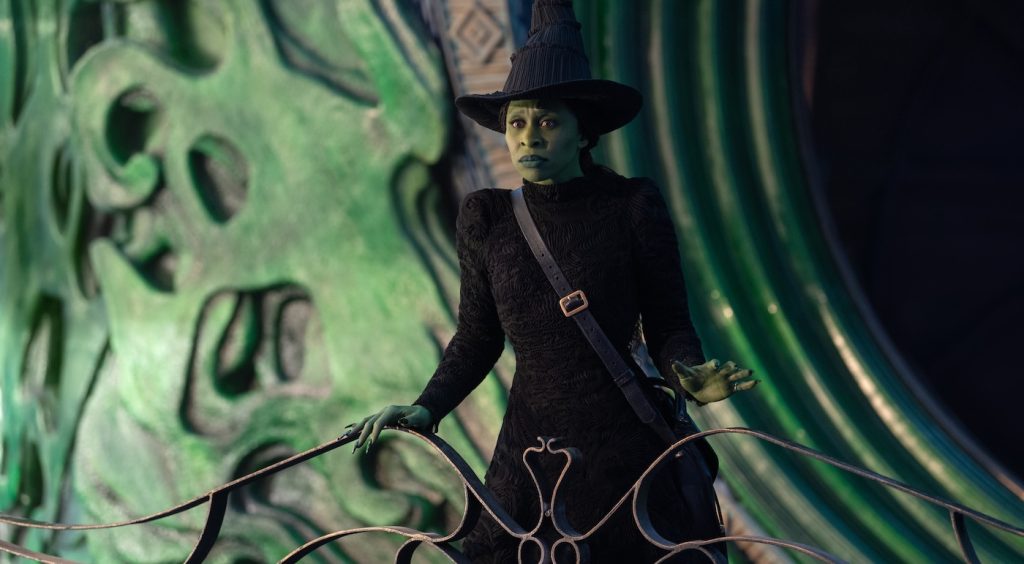
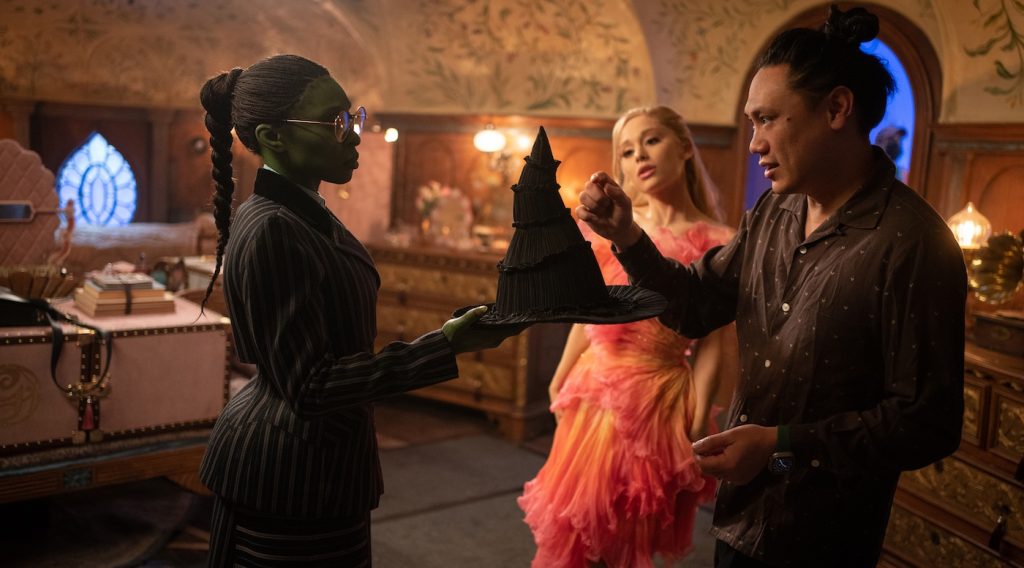
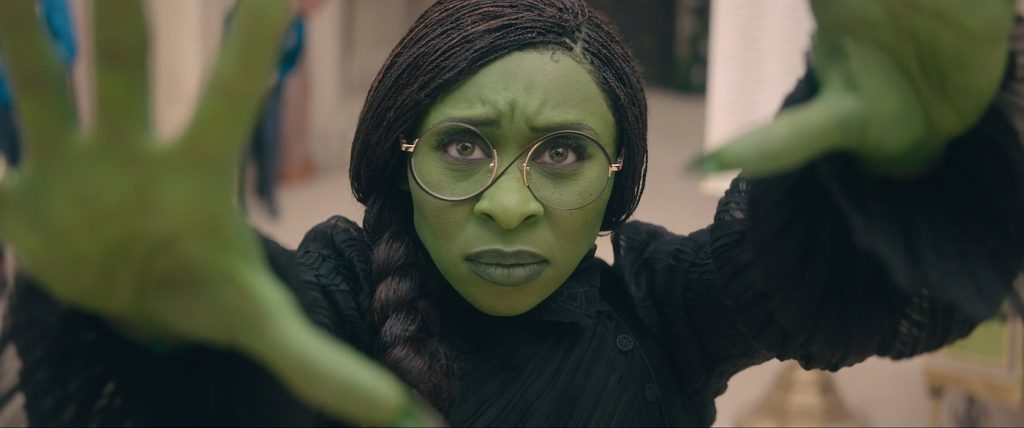
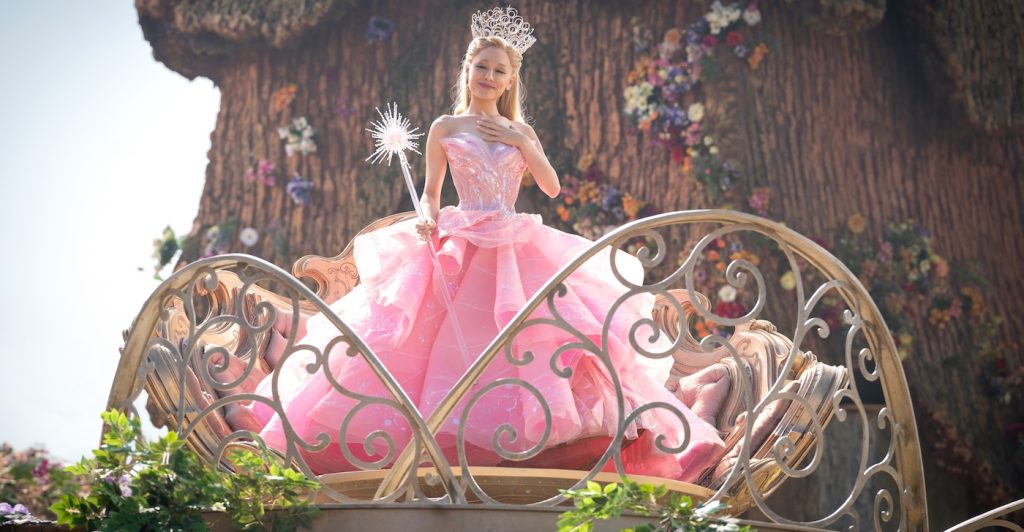
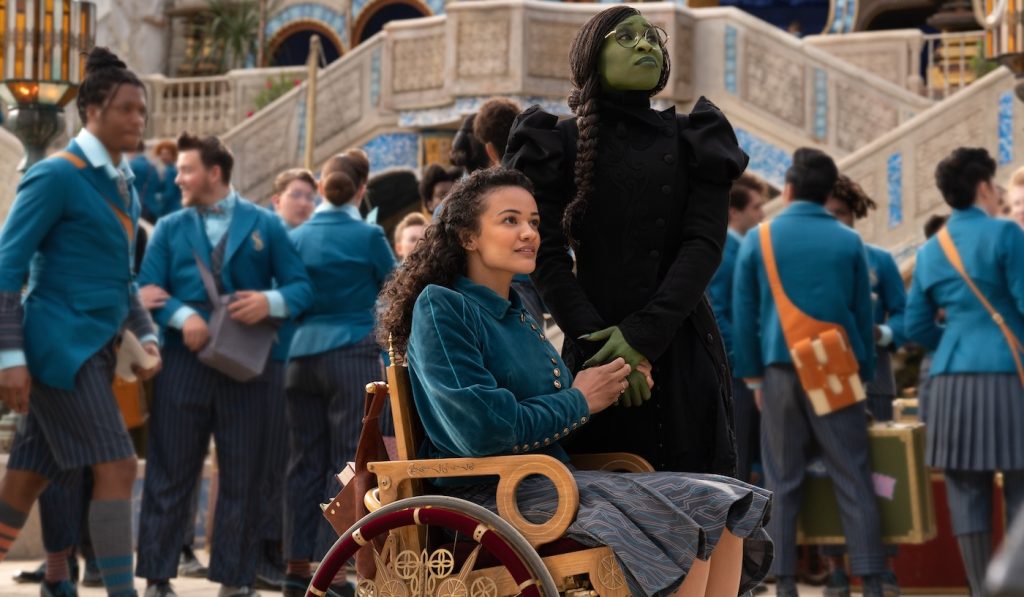
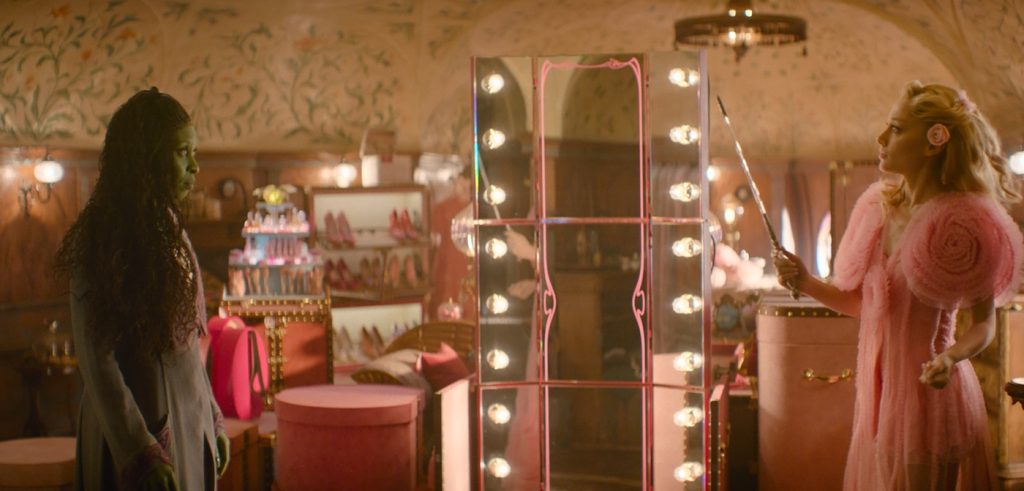
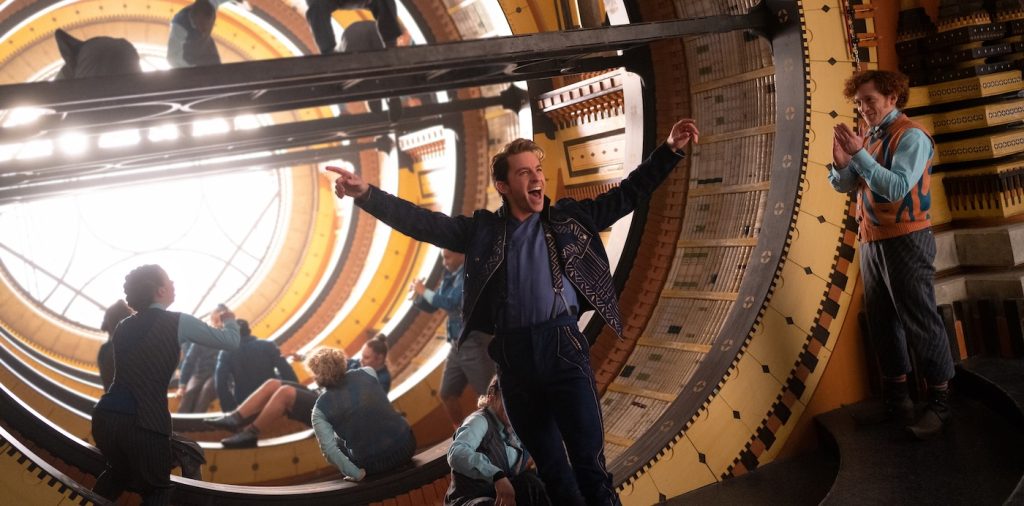
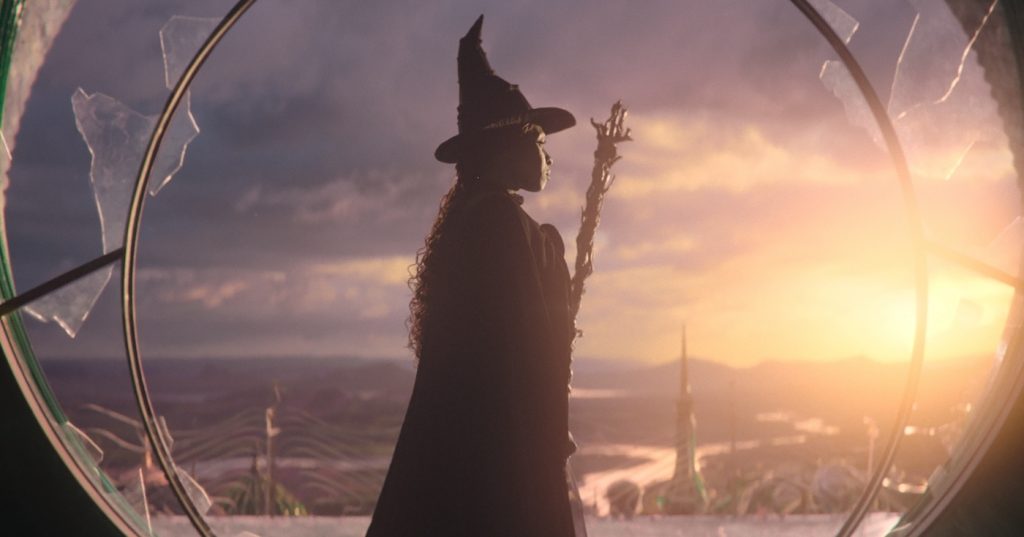
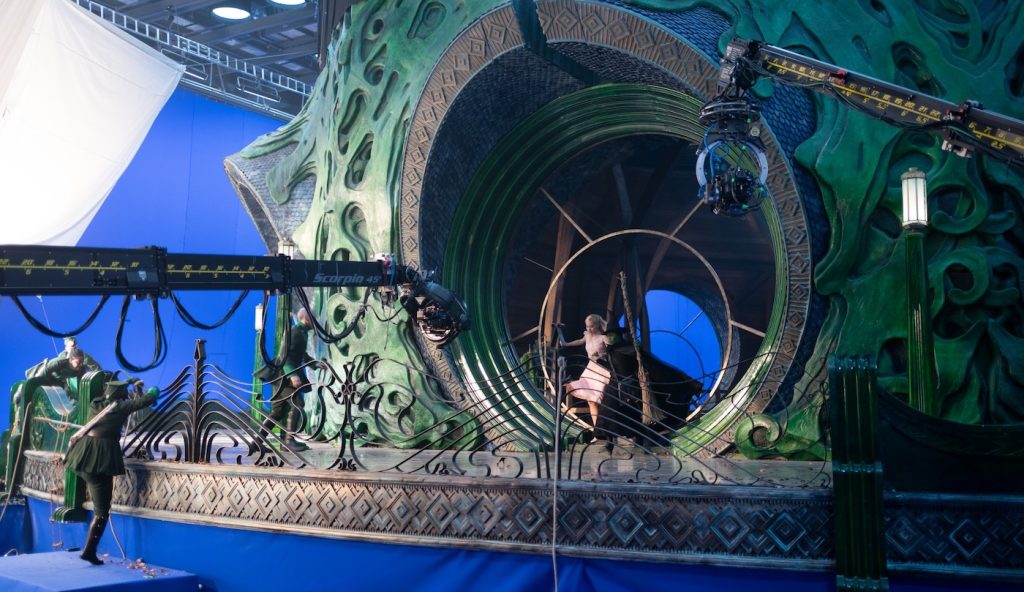
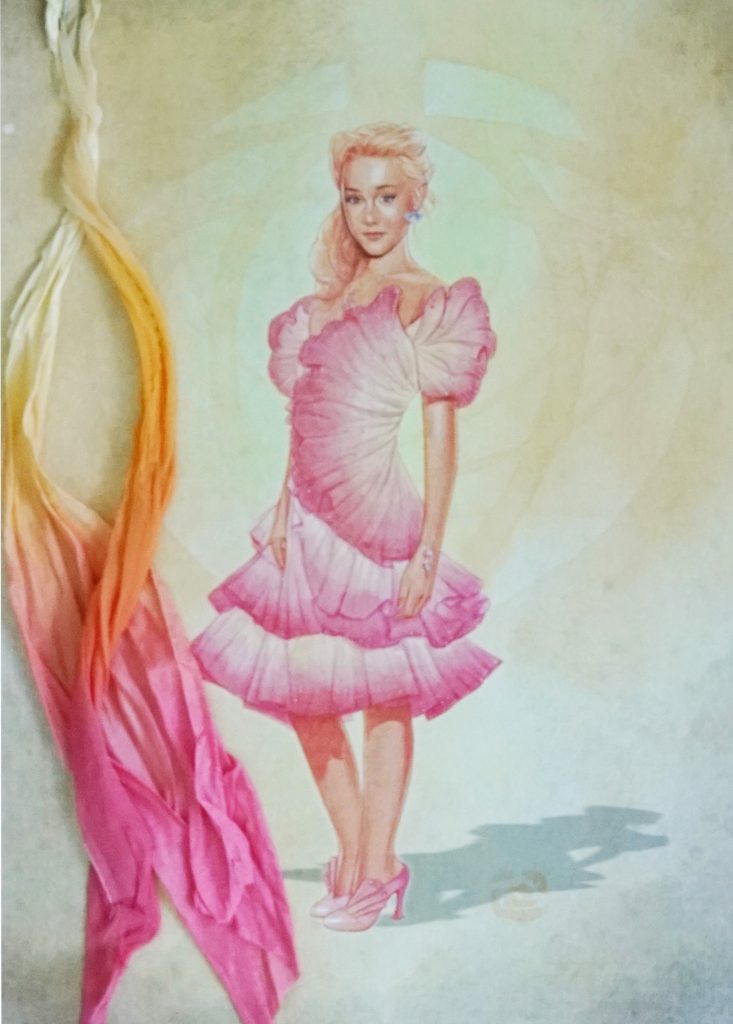
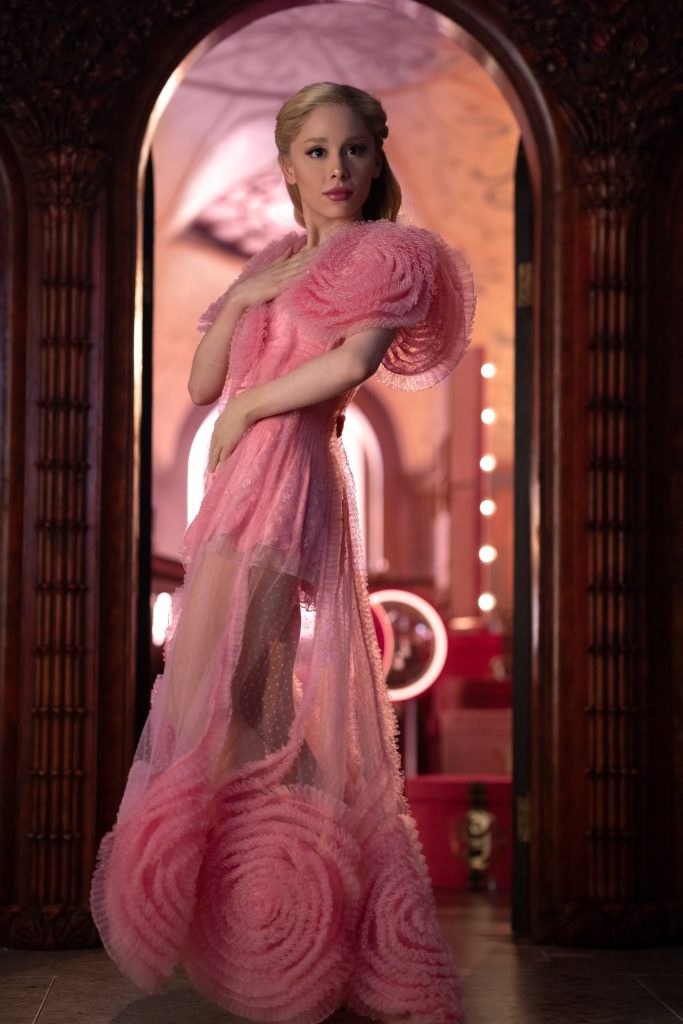
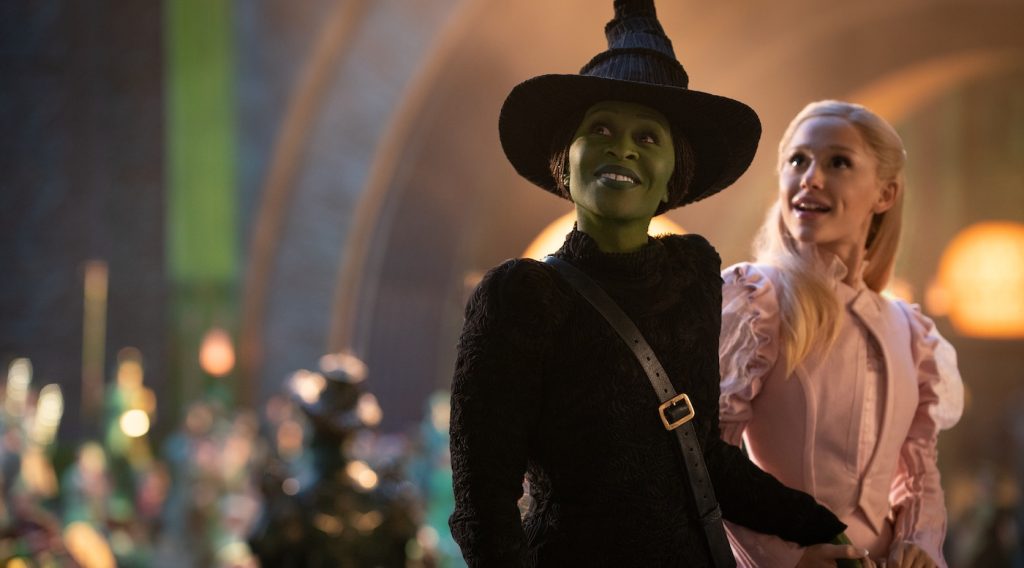
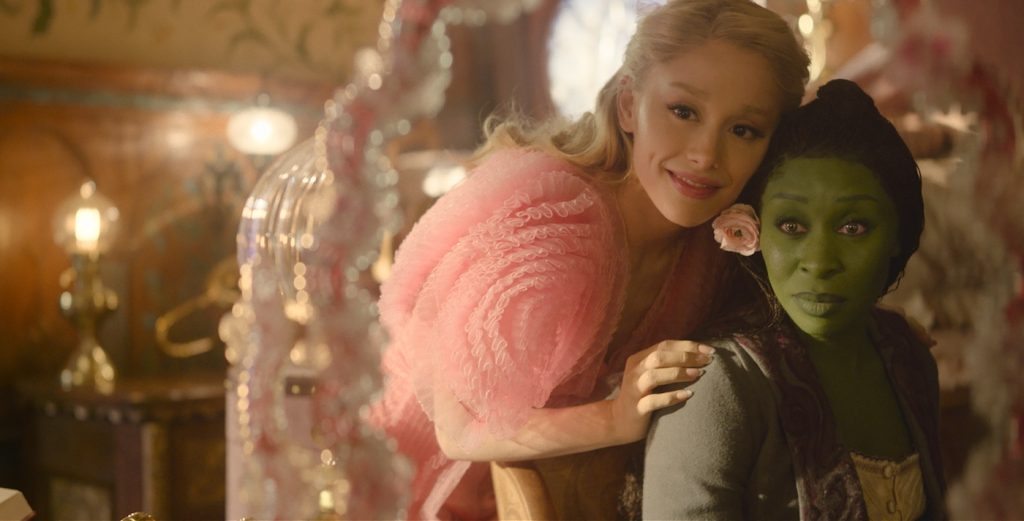
We’ve heard some of the iconic musical numbers that director John M. Chu has in store for us with his adaptation of Wicked, which will unleash the singing chops of superstars Cynthia Erivo (Elphaba) and Ariana Grande (Glinda), as well as a stellar cast that includes Jonathan Bailey (Fiyero), a young man with singing ability to spare. Those tunes include showstoppers  “Popular,” “Dancing Through Life,” “The Wizard and I, “What is this Feeling?” and “Defying Gravity.” Now, Universal has also unveiled a bunch of new images from the film, which gives us a closer look at Elphaba and Glinda’s momentous adventure in Oz.

The new images include looks at the budding friendship between Elphaba and Glinda, Fiyero—a love interest of both Elphaba and Glinda—belting out a musical number, Michelle Yeoh’s Madame Morrible, the headmistress of Shiz University where Elphaba and Glinda meet, Marissa Bode’s Nessarose, Elphaba’s younger sister, Bronwyn James’ Shenshen and Bowen Yang’s Pfannee, Glinda’s friends at Shiz U., and Jeff Goldblum’s Wizard of Oz.

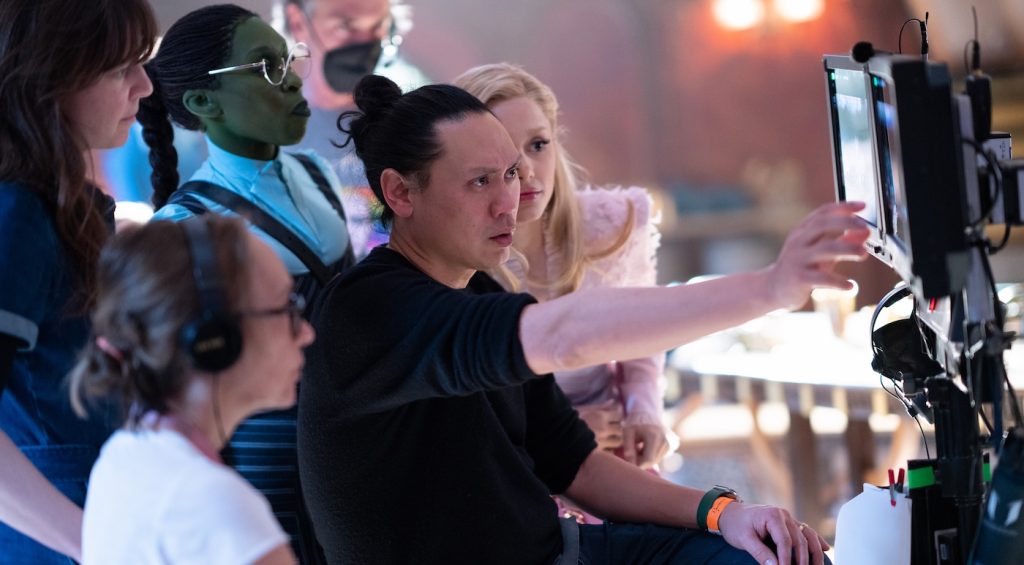
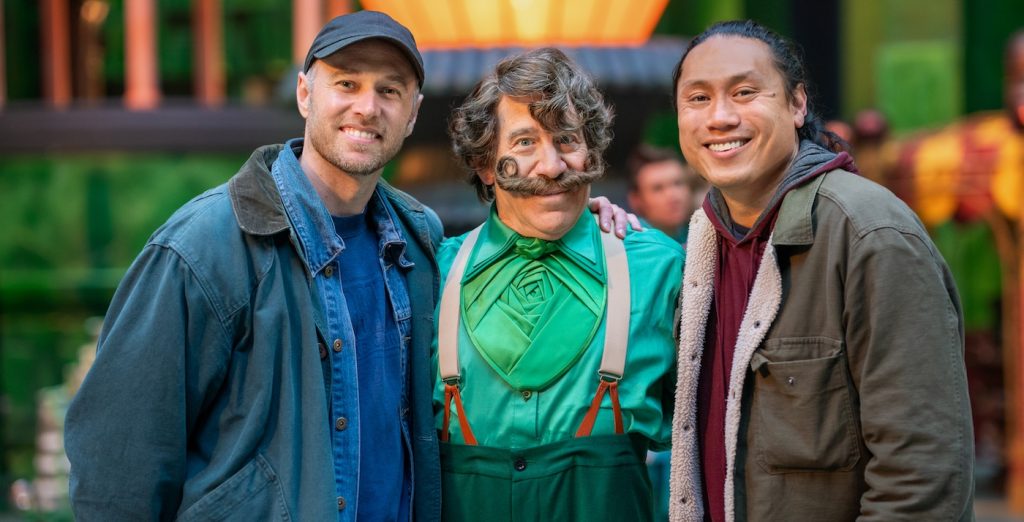
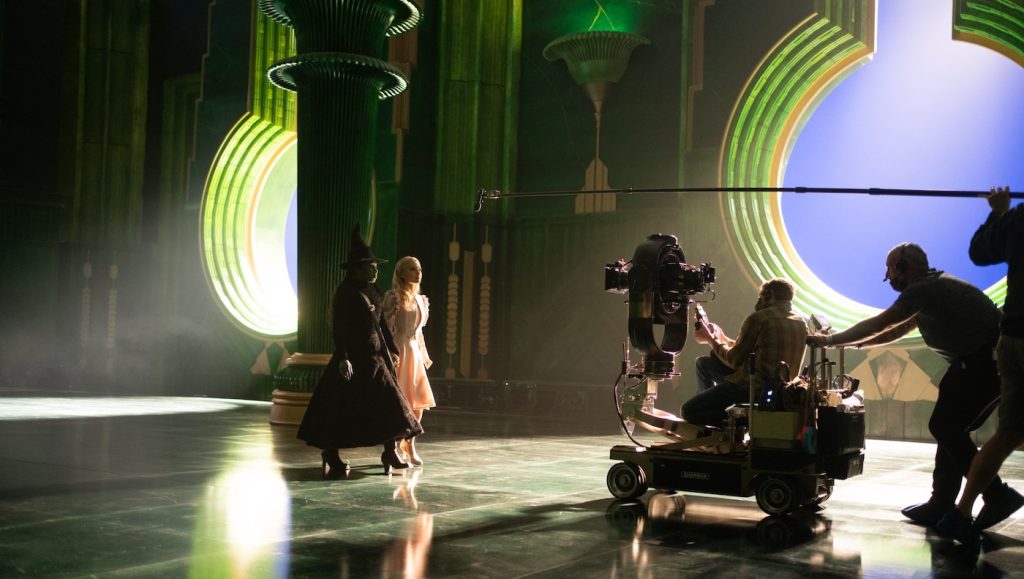
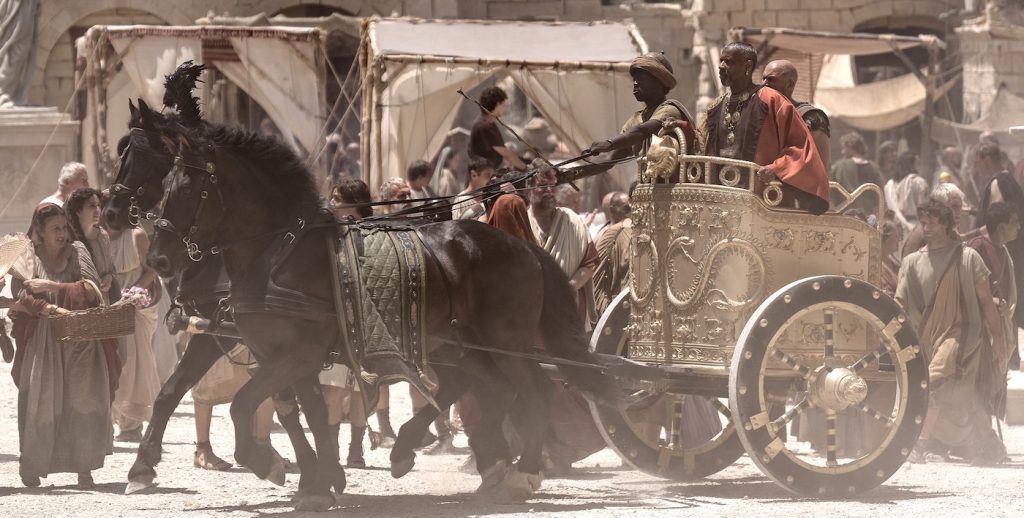
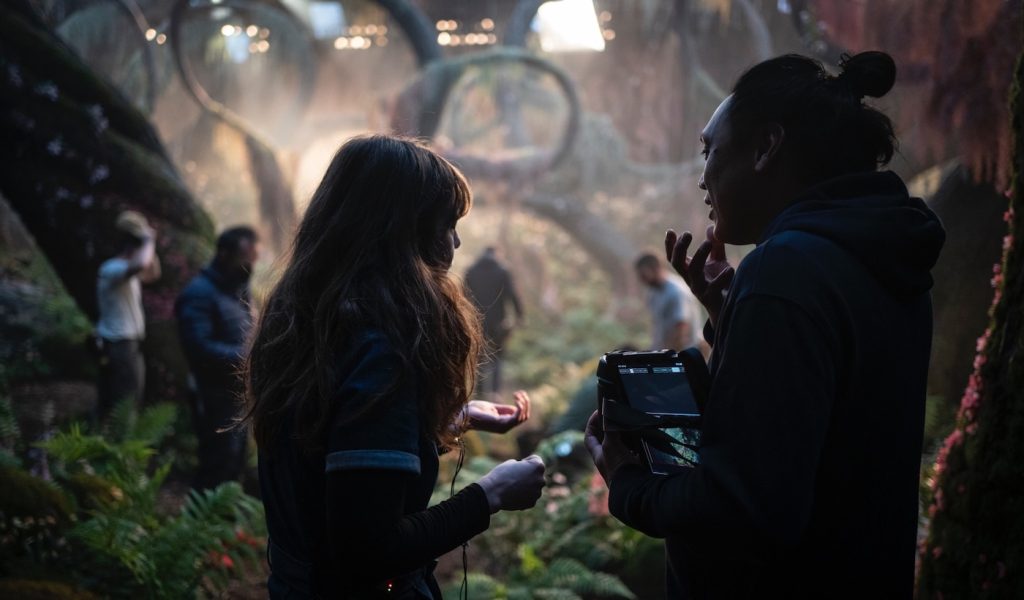
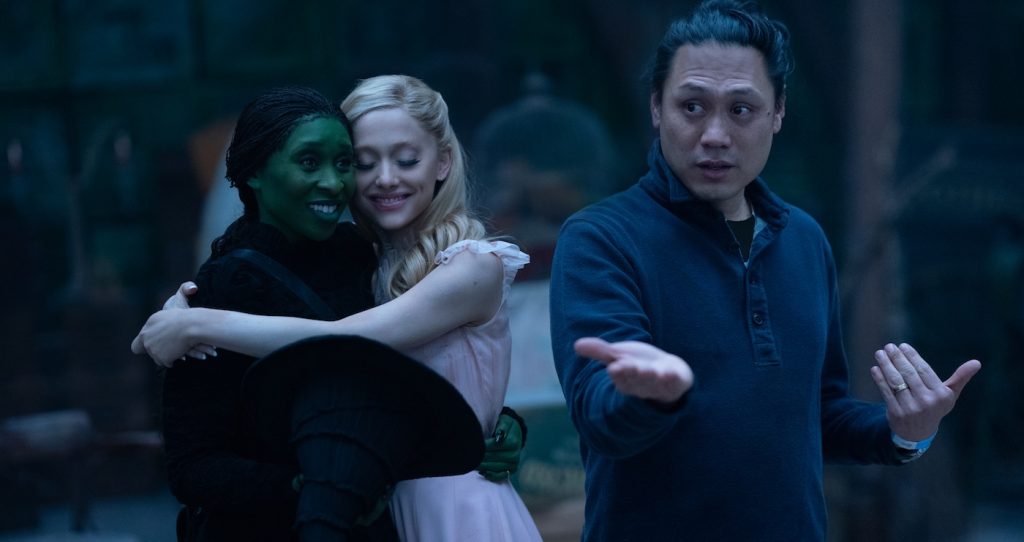
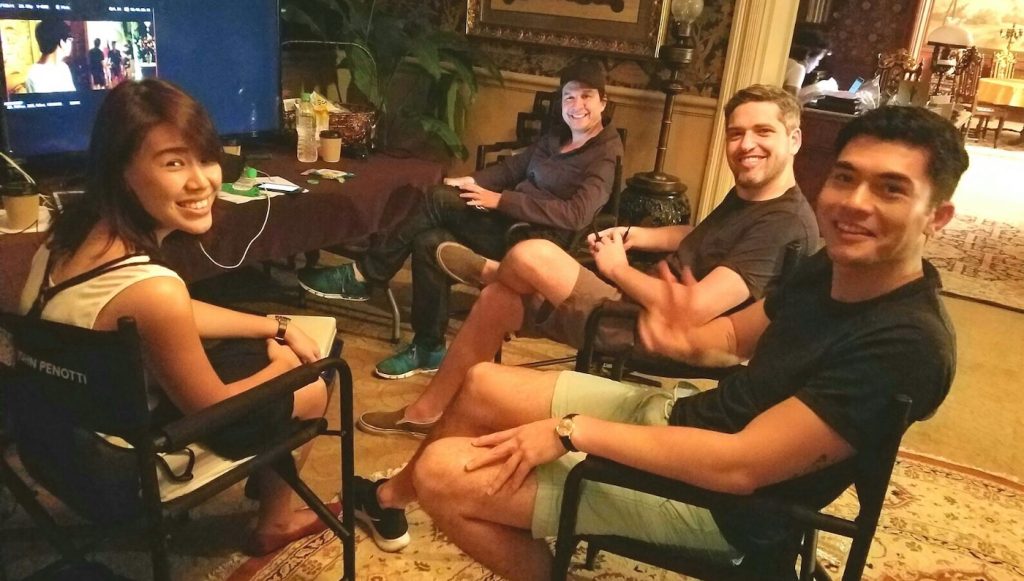
There’s more, including some behind-the-scenes shots of Chu and his stars on set and a wonderful shot of Dr. Dillamond, voiced by Peter Dinklage, a talking goat and university professor.

Wicked is the first big-screen adaptation of the juggernaut Broadway show (which itself was based on Gregory Maguire’s book) and reveals the world of Oz before Dorothy dropped in and changed everything. The adaptation will boast all the power ballads that rocked the Broadway stage and will enroll us at Shiz University, where Elphaba and Glinda cross paths and form an unlikely but profound friendship, one that will change both of their lives forever.

Wicked will enchant theaters on November 22. Check out the photos below.

L to R: Cynthia Erivo is Elphaba and Ariana Grande is Glinda in WICKED, directed by Jon M. Chu
Cynthia Erivo is Elphaba in WICKED, directed by Jon M. Chu
WICKED, directed by Jon M. Chu
Ariana Granda is Glinda in WICKED, directed by Jon M. Chu
L to R: Bronwyn James is Shenshen and Bowen Yang is Pfannee in WICKED, directed by Jon M. Chu
Cynthia Erivo is Elphaba in WICKED, directed by Jon M. Chu
Peter Dinklage voices Dr. Dillamond in WICKED, directed by Jon M. Chu
L to R: Cynthia Erivo is Elphaba and Ariana Grande is Glinda in WICKED, directed by Jon M. Chu
The Emerald City in WICKED, directed by Jon M. Chu
Shiz University in WICKED, directed by Jon M. Chu
WICKED, directed by Jon M. Chu
L to R: Cynthia Erivo is Elphaba and Ariana Grande is Glinda in WICKED, directed by Jon M. Chu
L to R: Marissa Bode is Nessarose and Cynthia Erivo is Elphaba in WICKED, directed by Jon M. Chu
Ariana Grande is Glinda in WICKED, directed by Jon M. Chu
Cynthia Erivo is Elphaba in WICKED, directed by Jon M. Chu
L to R: Director Jon M. Chu with Cynthia Erivo (as Elphaba) and Ariana Grande (as Glinda) on the set of WICKED
Cynthia Erivo is Elphaba, Ariana Grande is Glinda and Director Jon M. Chu on the set of WICKED, from Universal Pictures
Center L to R: Cynthia Erivo (as Elphaba), Director Jon M. Chu, and Ariana Granda (as Glinda) on the set of WICKED
Ethan Slater is Boq and Marissa Bode is Nessarose in WICKED, directed by Jon M. Chu
L to R: Jeff Goldblum is The Wizard of Oz and Michelle Yeoh is Madam Morrible in WICKED, directed by Jon M. Chu
Michelle Yeoh is Madame Morrible in WICKED, directed by Jon M. Chu
Jonathan Bailey is Prince Fiyero in WICKED, directed by Jon M. Chu
L to R: Cynthia Erivo (as Elphaba) and Ariana Grande (as Glinda) with Director Jon M. Chu on the set of WICKED.
L to R: Ariana Grande is Glinda and Cynthia Erivo is Elphaba in WICKED, directed by Jon M. Chu
Ariana Granda is Glinda in WICKED, directed by Jon M. Chu
L to R: Cynthia Erivo is Elphaba and Ariana Granda is Glinda in WICKED, directed by Jon M. Chu
L to R: Cynthia Erivo is Elphaba and Ariana Grande is Glinda in WICKED, directed by Jon M. Chu

For more on Wicked, check out these stories:

Hear the Magic: “Wicked” Debuts Iconic Songs in New Teaser

“Wicked” Casts a Spell and Causes Commotion in a Brand New Trailer

The First “Wicked” Trailer Arrives on the Wings of Flying Monkeys

Featured image: L to R: Director Jon M. Chu with Cynthia Erivo (as Elphaba) and Ariana Grande (as Glinda) on the set of WICKED

Hear the Magic: “Wicked” Debuts Iconic Songs in New Teaser

A new Wicked teaser has arrived on a pair of monkey wings and musical notes, boasting a bunch of the iconic songs that fans of the Broadway Musical adore and are clamoring to see on the biggest screen possible when director John M. Chu’s adaptation hits the big screen.

The new teaser dives right into the music, with Grammy-winning, multiple-platinum superstar Ariana Grande’s Glinda clapping her hands and calling out, “Everyone, I have an announcement!” That announcement, for Wicked fans that is, is that tickets are now on sale, and who better to get that message across than Grande and her equally award-laden, multitalented co-star Cynthia Erivo, playing Elphaba, the eventual Wicked Witch of the West. You want to get people excited for your movie? Unleash these two super-talents on some of Wicked’s most beloved musical numbers. 

In order of appearance, the tunes you’ll hear in the teaser are “Popular,” “Dancing Through Life,” “The Wizard and I, “What is this Feeling?” and “Defying Gravity.” Previous teasers and trailers have included “Popular” and “Defying Gravity,” but the rest are new.

It is no surprise that Erivo and Grande can sing, dance, and act, but so, too, can Jonathan Bailey. He plays Fiyero, a former Arjiki prince, and is both Glinda’s and Elphaba’s love interest in the story. The man has serious pipes.

Chu’s Wicked is the first big-screen adaptation of the juggernaut Broadway show, which was based on Gregory Maguire’s book and tells the story of what actually happened before Dorothy dropped into Oz and changed everything. As this teaser makes clear, Wicked won’t skimp on the power ballads that rocked the Broadway stage and will take us onto the campus of Shiz University, where Elphaba and Glinda cross paths and an unlikely but profound friendship blossoms. That eventually leasd to a life-changing encounter with Wonderful Wizard of Oz (Jeff Goldblum), which will set off a course of events that, as we know, will become the stuff of legend in The Wizard of Oz.

Joining Erivo, Grande, and Bailey are Michelle Yeoh as Madame Morrible, Ethan Slater as Boq, and Bowen Yang as Pfannee.

Wicked will enchant theaters on November 22. Check out the new teaser here:

For more on Universal Pictures, Peacock, and Focus Features projects, check out these stories:

Christopher Nolan’s Next Movie Set at Universal With Matt Damon as Potential Lead

“The Wild Robot” Writer/Director Chris Sanders on Kindness as a Survival Skill

“Wicked” Casts a Spell and Causes Commotion in a Brand New Trailer

Featured image: L to R: Cynthia Erivo is Elphaba and Ariana Grande is Glinda in WICKED, directed by Jon M. Chu

Christopher Nolan’s Next Movie Set at Universal With Matt Damon as Potential Lead

Christopher Nolan and Universal had quite the collaboration with Nolan’s Oppenheimer, the critical and commercial smash hit that was nominated for 13 Oscars and won 7, including Best Picture, Best Director for Nolan, Best Actor for Cillian Murphy, and Best Supporting Actor for Robert Downey Jr. Now, Deadline scoops that Nolan and Universal are reteaming for the director’s next feature, with plans for an Imax release on July 17, 2026.

Deadline‘s scoop includes the nugget that Nolan is eyeing one of his Oppenheimer stars, Matt Damon, as his lead. Damon and Nolan have collaborated twice now; in Oppenheimer, Damon played Leslie Groves, the military man who helped arrange the Manhattan Project that Robert J. Oppenheimer led to build the atomic bomb. Previously, Damon had a brief but explosive role in Nolan’s emotional 2014 sci-fi epic Interstellar, where Damon played Dr. Mann, an astronaut marooned on a brutally cold planet orbiting a black hole called Gargantua. When Matthew McConaughey and his team arrive, Dr. Mann’s true intentions for his distress signal are revealed.

L to R: Matt Damon is Leslie Groves and Cillian Murphy is J. Robert Oppenheimer in OPPENHEIMER, written, produced, and directed by Christopher Nolan.

Nolan’s new project is a state secret, of course. Neither Nolan nor Universal has any comment, but the mid-July release date is similar to the sweet spot when Oppenheimer was released, as well as his 2010 mind-tripper Inception and his most beloved contribution to the superhero world, his 2008 film The Dark Knight.

We’ll share more details about Nolan’s upcoming project when we hear them.

For more on Universal Pictures, Peacock, and Focus Features projects, check out these stories:

“The Wild Robot” Writer/Director Chris Sanders on Kindness as a Survival Skill

“Wicked” Casts a Spell and Causes Commotion in a Brand New Trailer

New “Jurassic World” Film Reveals Title, Plot, & First Images of Scarlett Johansson and Mahershala Ali

“Twisters” Sound Editors on Creating the Ferocious Voice of Six Distinct Tornadoes

Featured: Writer, director, and producer Christopher Nolan on the set of OPPENHEIMER. Courtesy Melinda Sue Gordon/Universal Pictures.

Timothée Chalamet is Bob Dylan in Electric New “A Complete Unknown” Trailer

“You tramped all the way from Minnesota,” says Edward Norton’s Pete Seeger at the opening of the official trailer for A Complete Unknown. “Why is that?”

“I wanted to catch a spark,” comes the answer from a young man named Bob Dylan, played here by an appealingly understated (if still undeniably charismatic) Timothée Chalamet. A Complete Unknown, from director James Mangold and written by Mangold and Jay Cocks, follows one of the most influential and iconic musicians ever produced in the United States, but crucially, aims to capture not Dylan’s entire epic life (at least, up to now), but his early, transformative years in New York City. 

The trailer introduces us to a young Dylan finding his way in NYC and meeting some of the era’s most talented performers, both already in demand and those on the rise. One of the most crucial relationships Dylan establishes at that time is with another extremely gifted singer/songwriter, Joan Baez (Monica Barbaro), who at one point says, “Your songs are like an oil painting at the dentist’s office,” to which she replies, “You’re kind of an a**hole, Bob.”

Another important Dylan relationship explored in A Complete Unknown is with his girlfriend, Sylvia Russo (Elle Fanning), a version of his real girlfriend at the time, Suze Rotolo. A Complete Unknown will track Dylan/Baez/Russo’s love triangle and capture the mounting pressure on young Dylan as he begins to resist the desires of the public and the music industry. “Two hundred people in that room, and each one of them wants me to be somebody else,” Dylan says at one point. “I wish they’d just let me be.” When asked what he wishes they’d let him be, he replies, “Whatever it is they don’t want me to be.”

The new trailer also touches upon one of the most seminal moments in 20th-century music history, when Dylan shocked the folk music world by plugging in an electric guitar during his 1965 Newport Folk Festival performance. This did not go over well with many Dylan supporters and festival organizers, although the decision changed Dylan’s life and the music industry as a whole.

A Complete Unknown includes moments that Dylan fanatics will recognize immediately, including his early performances at Cafe Wha? and Hotel Chelsea. The songs, however, will be recognizable to just about everyone, including “A Hard Rain’s a-Gonna Fall” and “Girl From the North Country.”

The cast also includes Boyd Holbrook as Johnny Cash, P. J. Byrne as Harold Leventhal, Scoot McNairy as Woody Guthrie, Dan Fogler as Albert Grossman, and Will Harrison as Bob Neuwirth.

Check out the full trailer below. A Complete Unknown rambles into theaters on Christmas Day.

For more stories on 20th Century Studios, Searchlight Pictures, Marvel Studios and what’s streaming or coming to

Disney+, check these out:

It’s Always Sunny in Abbot Elementary: Crossover Episode Set for Two Iconic Philly Comedies

“Agatha All Along” Creator Jac Schaeffer on Setting off Marvel’s Witching Hour

Marvel Reveals First “Thunderbolts” Trailer Unleashes the Bad Guys on the Worse Guys

Designed to Shred: How “Alien: Romulus” Costume Designer Carlos Rosario Stylized Horror

Featured image: Timothée Chalamet in A COMPLETE UNKNOWN. Photo by Macall Polay, Courtesy of Searchlight Pictures. © 2024 Searchlight Pictures All Rights Reserved.