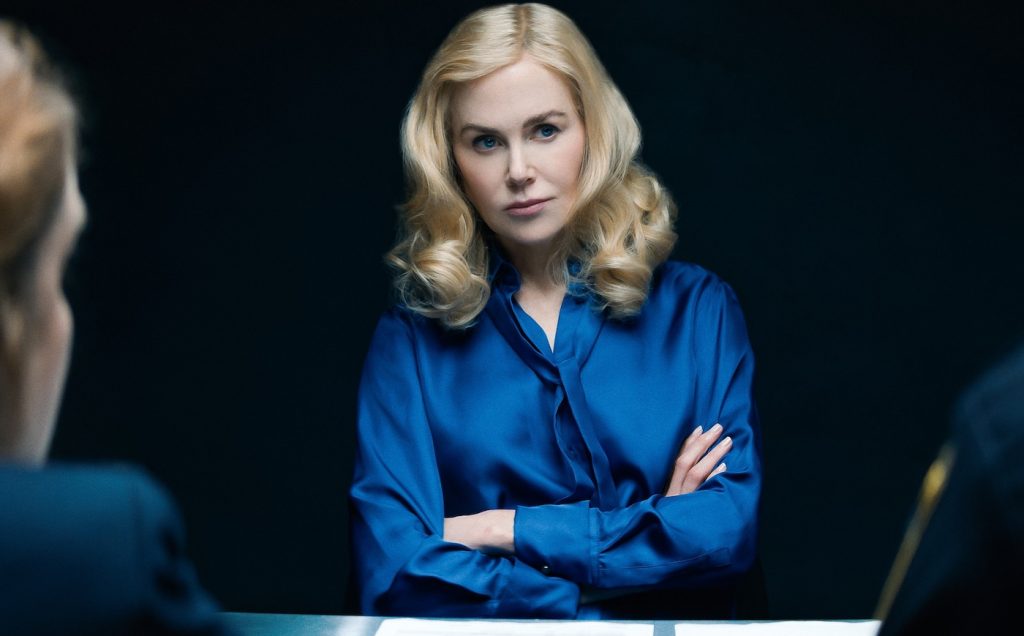
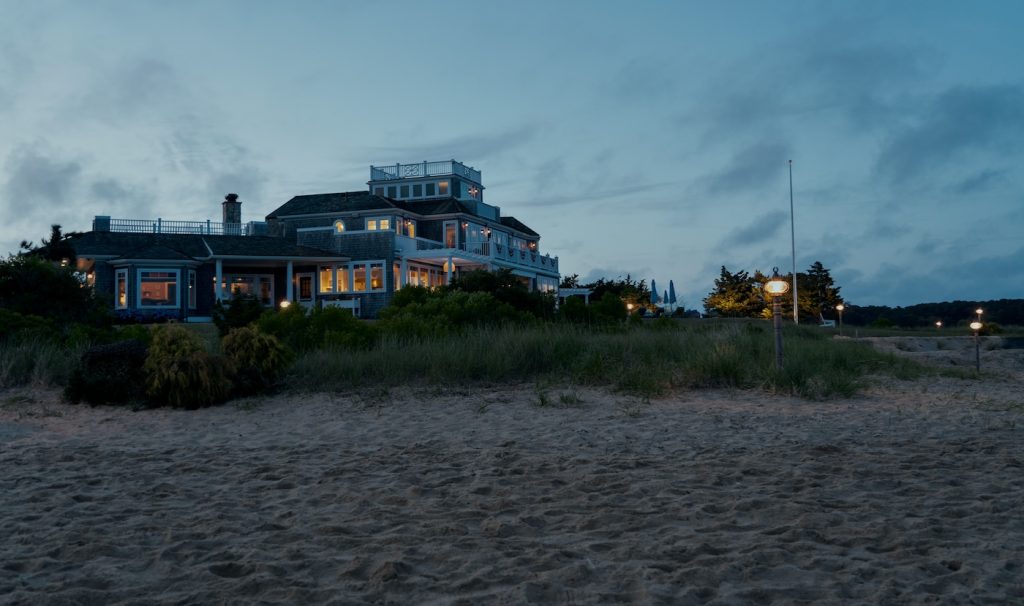
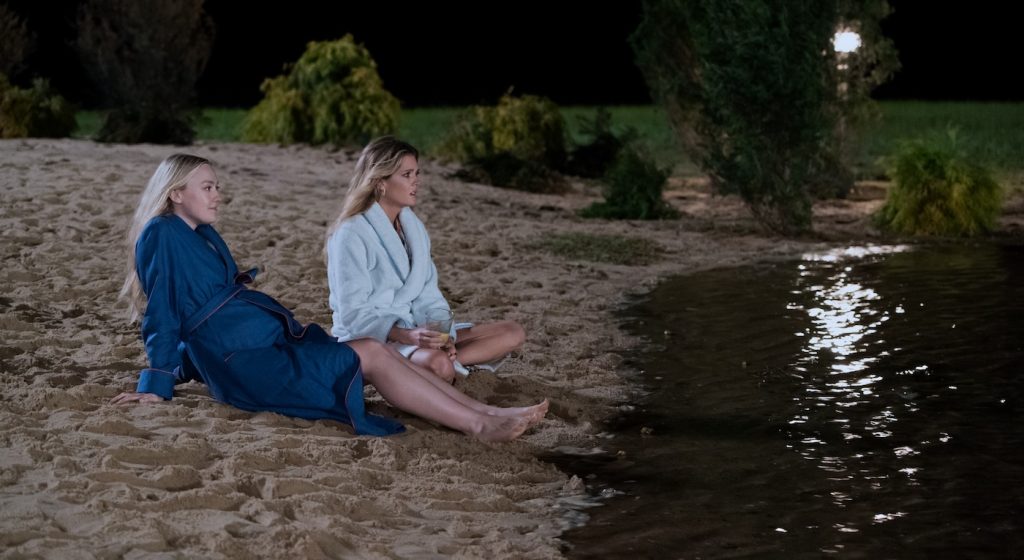
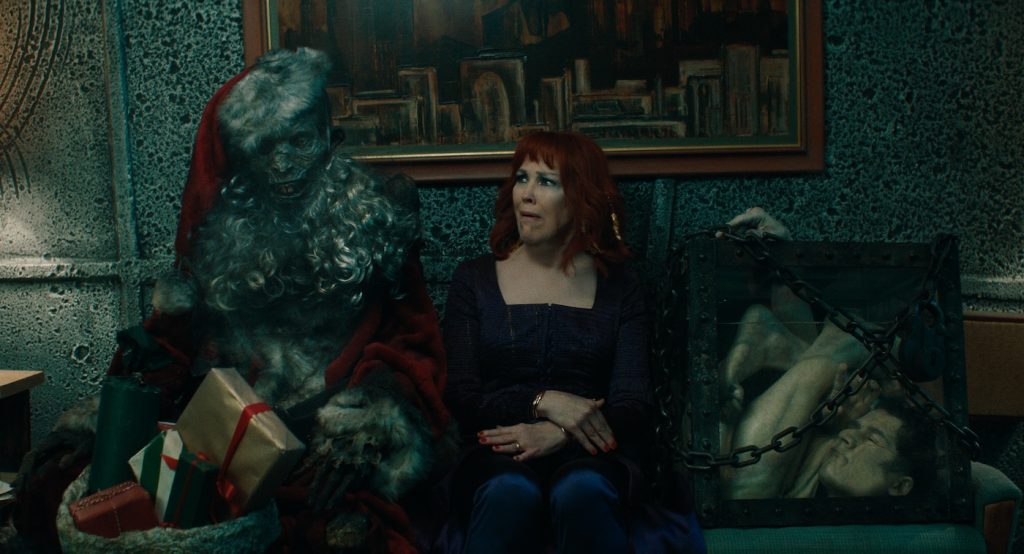
The Streaming Innovation Alliance turns a year old today. If you haven’t heard of SIA, you’ve certainly been impacted by its commitment to giving streamers a unified voice so they can keep creating the films and television series you love – and delivering them to audiences when, where, and how they choose to watch. Once viewed as an upstart to traditional entertainment, streamers have become a beloved part of the visual storytelling landscape. As the advent and deployment of digital film capabilities upended but did not replace the use of film on film and TV sets, the streaming world has also enhanced and enriched the industry. The large, disparate streaming community offers more storytellers from more diverse backgrounds a chance to tell their stories and find their audiences with more freedom and opportunity than ever before.
The SIA counts among its members big players, like Max, Disney+, Netflix, Paramount +, BET+, Discovery +, Telemundo, and Peacock, and smaller, crucial independent streamers like TV AfrolandTV and In The Black Network, which both highlights black voices and original stories, and Skinsplex Network, which features unlimited access to movies and media from Indigenous filmmakers, including original programming, documentaries, shorts, and animation. Streamers have opened the door to one new world after another, allowing millions of people to experience cultures and people they had little access to before or, just as crucially, see themselves reflected in the shows and films they watch for the first time. Whether it’s writer/director Issa López centering a Native American detective in her chilling, thrilling True Detective: Night Country for Max, Shōgun’s Emmy-winning editor Aika Miyake bringing a Japanese female’s perspective to one of the series’ most astonishing episodes, or Iwájú visual effects supervisor Marlon West bringing afro-futurism to Disney+, streamers enlarge our world.
While streaming has become the most popular way for Americans to find films, shows, music, and more they want, it’s also expanded opportunities for the people who make up the vast entertainment industry workforce. This creative explosion has been a boon for everyone who works on a film or TV set, whether it’s a showrunner building out her world on the beaches of Nantucket or the costume designers creating lush looks for worlds beyond worlds in a galaxy far, far away. The desire for more stories has opened up a space for producers and creators like Mann Robinson, a tireless filmmaker and TV creator whose sound and stage studios in Georgia are a creative production hub.
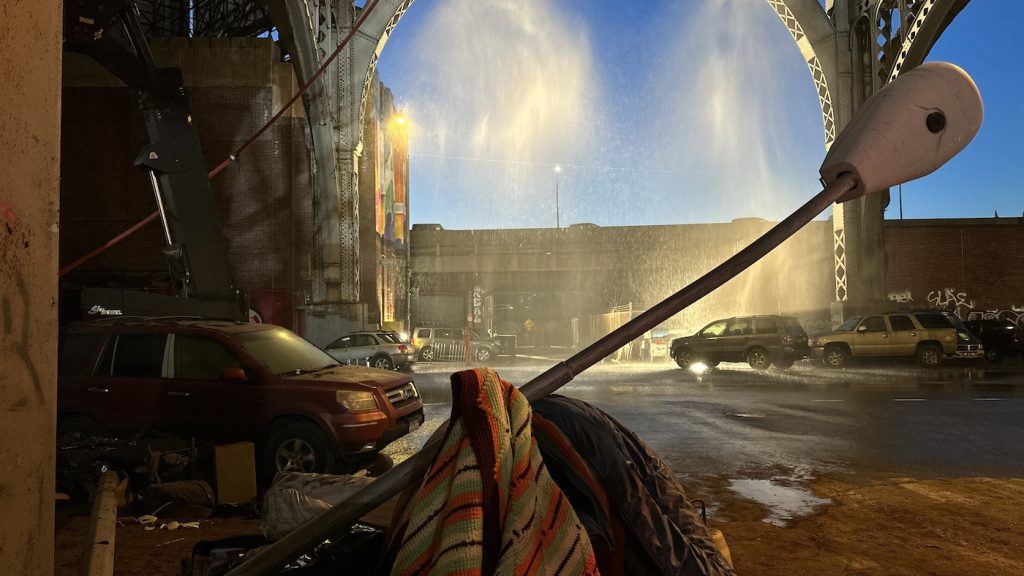
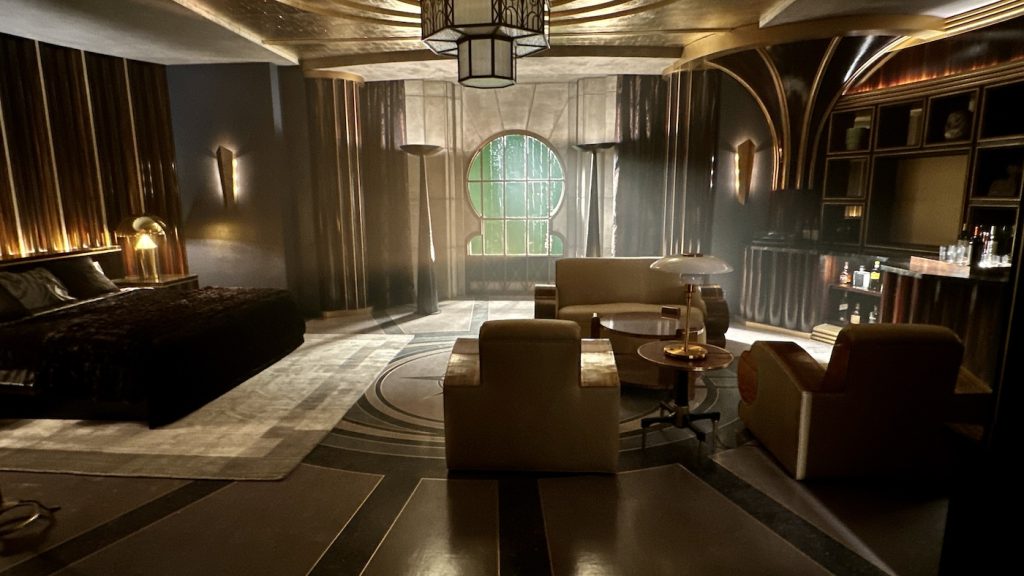
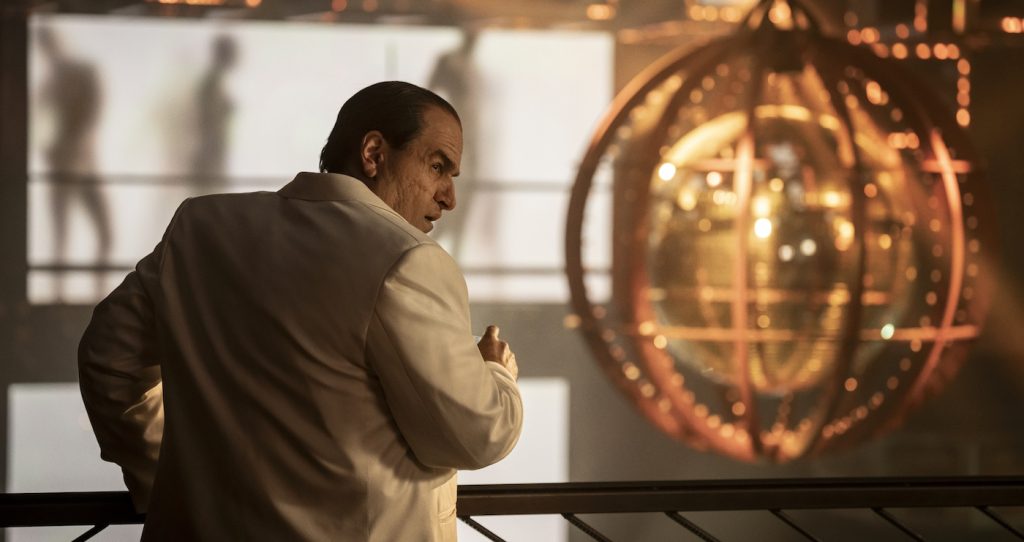
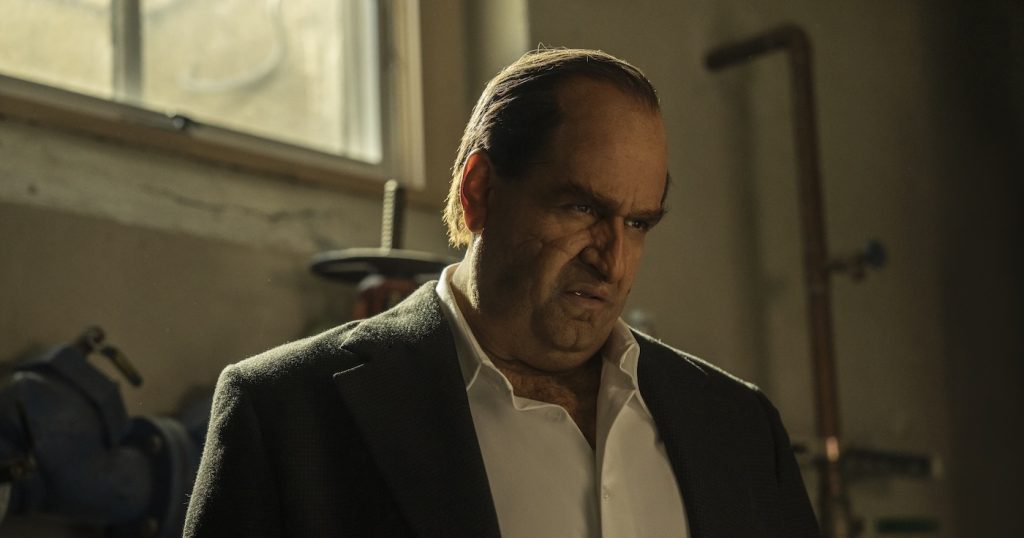
At The Credits, we’ve been covering the creatives working in the streaming industry since its inception (more or less), projects big and small, whether it’s how The Penguin production designer Kalina Ivanov turned New York City into a Gotham for the new Max series or how showrunner and editor Inbal B. Lessner and editor Kevin Hibbard helped construct Netflix’s haunting documentary series Escaping Twin Flames. As the streaming industry has grown, so has the number of incredible filmmakers and TV creators eager to share the craft behind the magic with us.
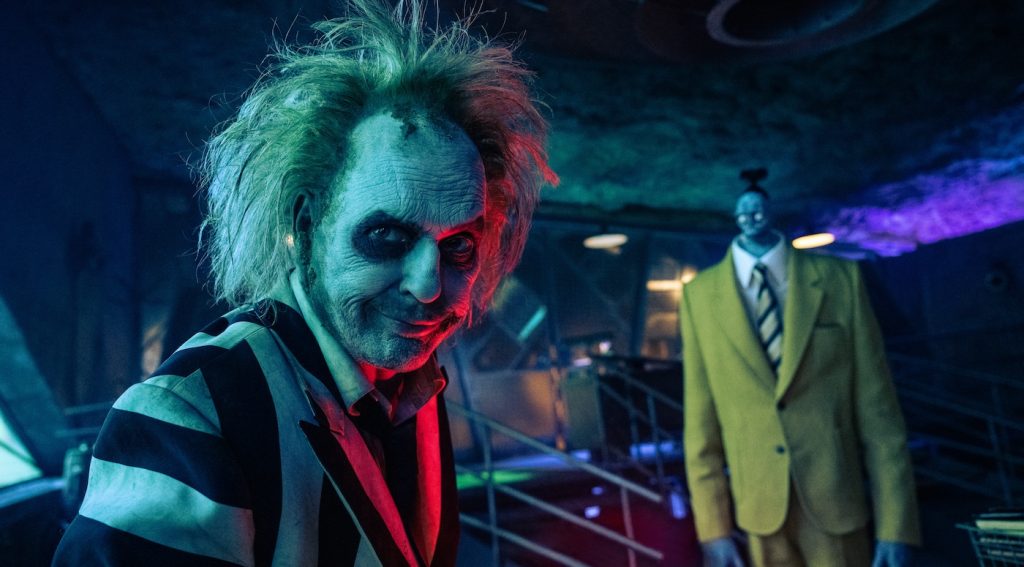
“It was going to be a continuation of the first film and not some sort of reboot,” production designer Mark Scruton says about Tim Burton’s Beetlejuice Beetlejuice, thesequel to the 1988 cult classic that reunites the absurdly talented Michael Keaton and Winona Ryder as everyone’s favorite goth-undead will they won’t they couple.
The story picks up years after the events in Beetlejuice and sees the Deetz family – Ryder’s Lydia, her estranged teenage daughter Astrid, played by Wednesday star Jenna Ortega, and Lydia’s stepmother Delia (Catherine O’Hara) – back in Winter River to mourn an unexpected death.
For Scruton, it meant designing over 70 different sets across Vermont, London, and Massachusetts for the 46-day shoot. A point of emphasis from Burton was to create as much as possible in camera. “Tim wants to be in the world. I think he has as much fun being in the world as he does filming it,” says Scruton. “So we knew we had to build everything and make it feel like the original one did.” Researching the original aesthetics established by production designer Bo Welch was a guide for Scruton, but influences ranged from German Expressionism, 1960s brutalism, and modernism as well as films like Dr. Caligari and the 1924 Russian film Aelita Queen of Mars.
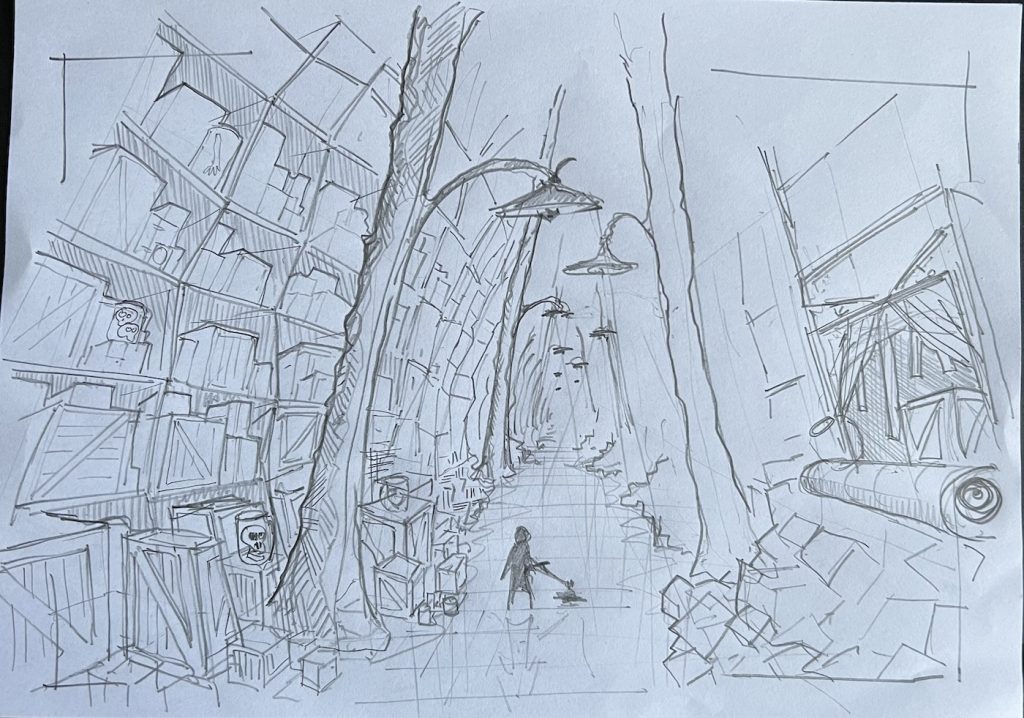
Concept drawing by Mark Scruton. Courtesy Mark Scruton/Warner Bros.
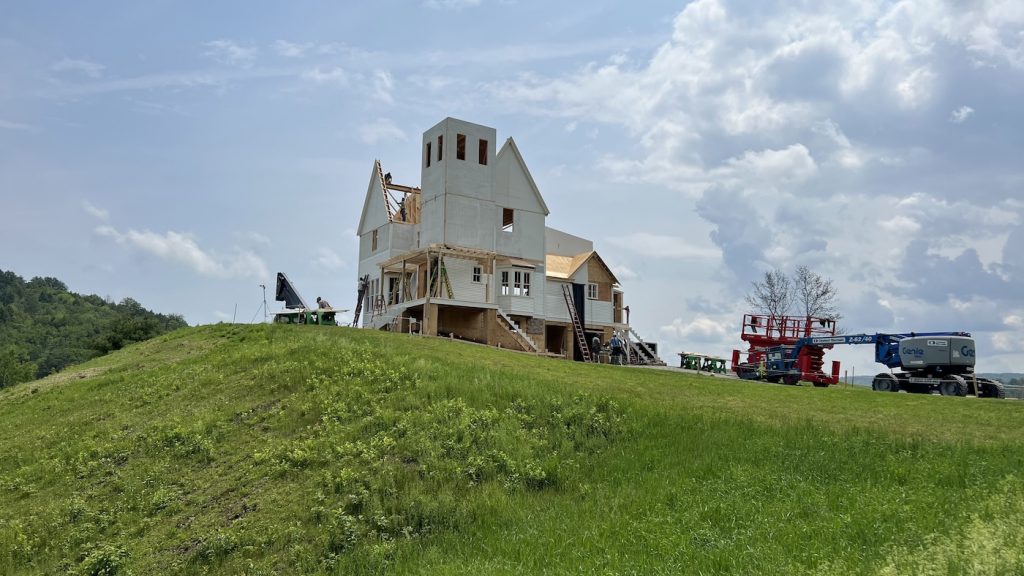
A big part of the work was revisiting the Vermont town of East Corinth, which stands in for Winter River, to construct the Deetz family home while interiors were built on soundstages in London. Making them feel accurate to the first film was crucial for Scruton. “It was important to us that the cast walked into those sets and felt like they were back on because they would be the harshest critic if they walked in and it wasn’t the same. And you don’t want that on the first day because that would be mortifying,” admits the production designer.
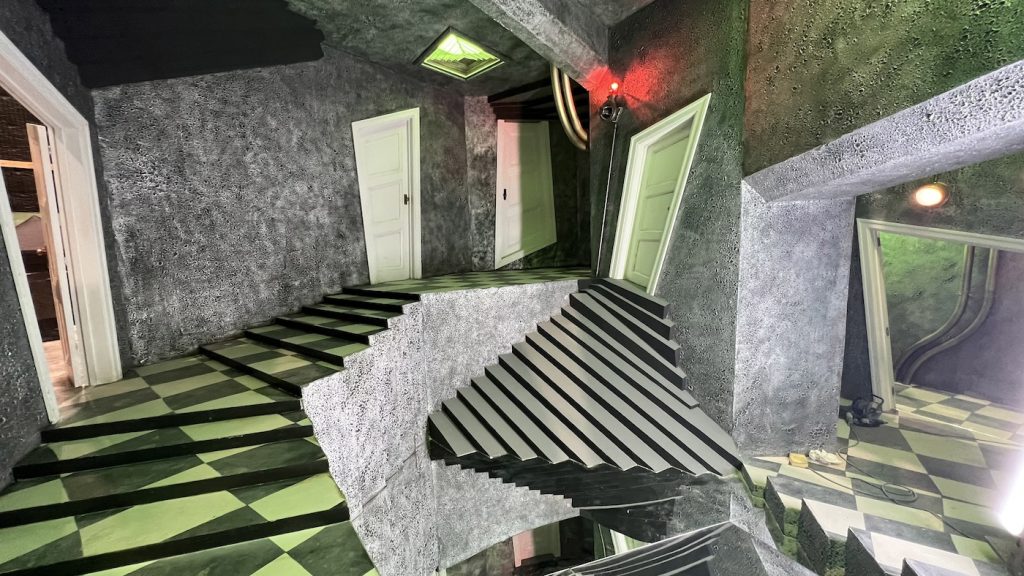
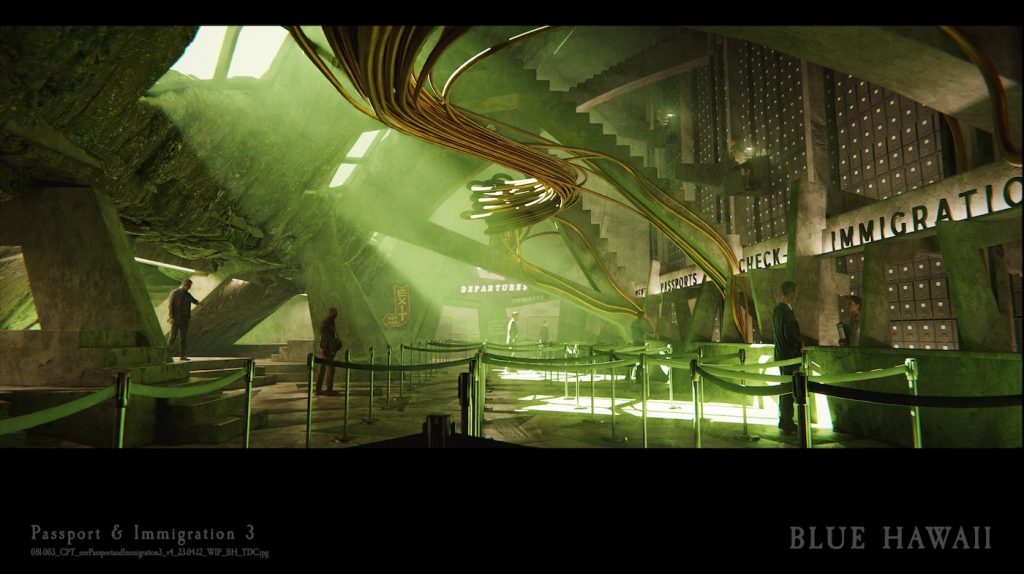
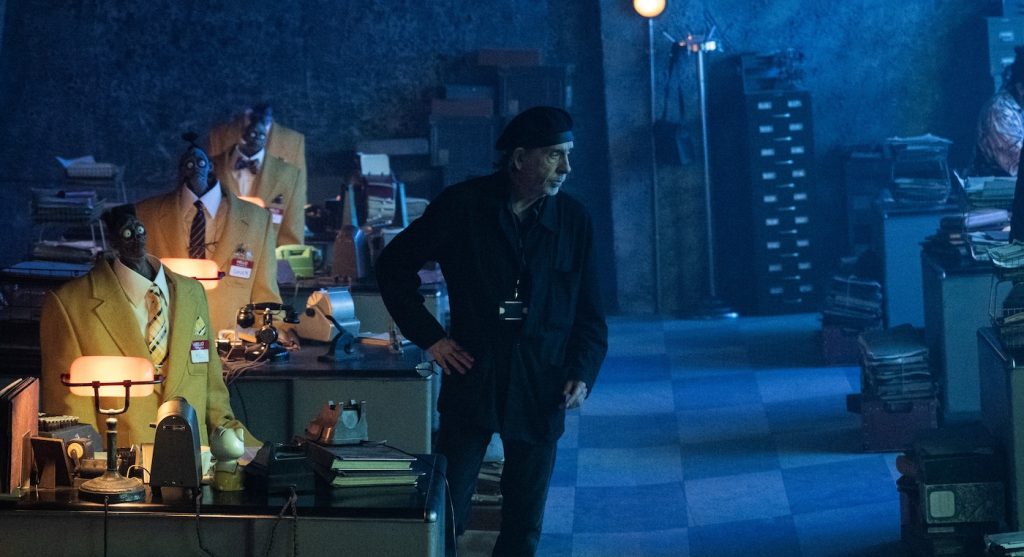
The team spent substantial time figuring out what went into the original sets, especially agonizing over props in the first film that fell into the shadows. Scruton also put his own spin on the forced perspective tricks found in the afterlife and built several new spaces, including a police office, train station, dry cleaners, and immigration area. Below, he discusses what went into recreating the Deetz home, a painstaking but fulfilling process of movie magic at its handmade best.
The Deez family home plays a big part in the film. What went into rebuilding the exterior?
We approached it as another character in the film, and we had to figure out what had happened to that character for 30 years and what Delia had done with it. What I think Delia would have done is restore it back to its original roots and the colonial style. In the first film, it goes through the whole postmodern rebuild, and then at the end, you sort of get the impression it’s being put back, but you never really see where it goes. So everything was sort of lovingly taken back to the actual architecture.
A mock-up of the Deetz family home. Courtesy Mark Scruton/Warner Bros.The Deetz Family home. Courtesy Mark Scruton/Warner Bros.
Do you have any references other than the original film to recreate the house?
We had the original plans and elevations from the first film. They were paper-thin and super fragile, and we weren’t allowed to touch them. We just had to take photographs of them, and they were very blurry and sketchy. So we studied the film as well in great detail to make sure that we built it exactly as it should have been.
The Deetz Family home. Courtesy Mark Scruton/Warner Bros.
Well, your team nailed it – even the small hill it’s on. Did you find the same hill location in East Corinth from the original?
It was interesting because the hill was still there, but the vegetation and everything else had grown up. So we really had to draw a line between what we left and how we reshaped it. We did a lot of landscaping to make sure that it looked like time had passed, but we wanted it to still look like it was cared for.
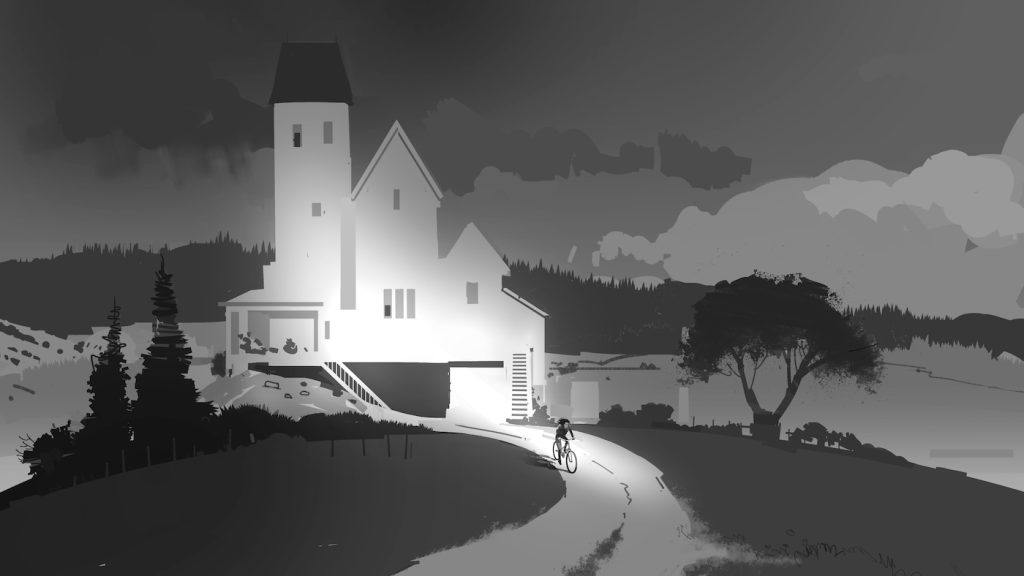
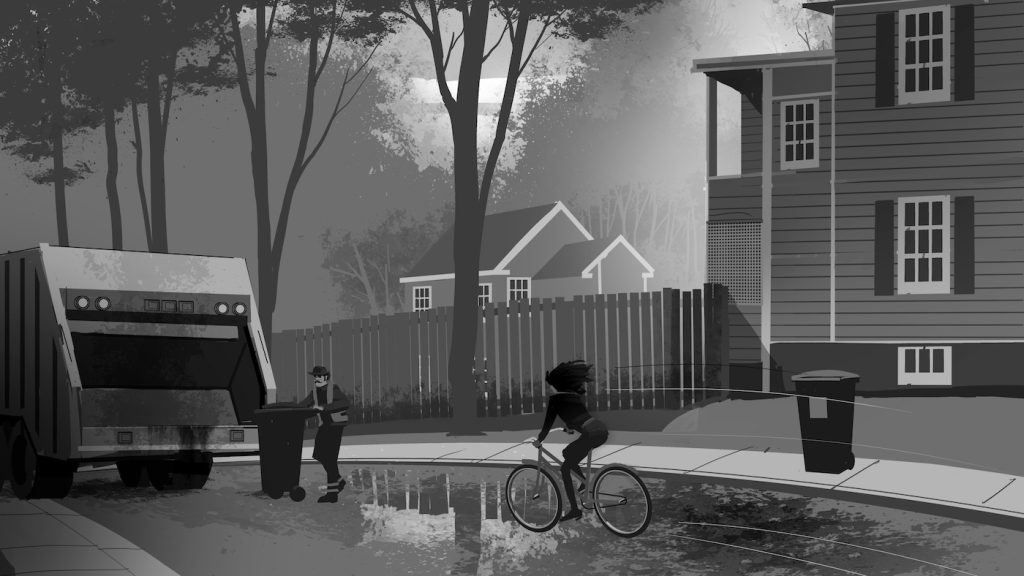
Concept drawing of Astrid (Jenna Ortega) riding her bike through Wind River. Courtesy Mark Scruton/Warner Bros.
Did you consider roughing up the texture to show that time has passed?
Because of who Delia is, because she’s got money and follows trends—one of which is that she restores the house immaculately—we decided to make it super clean. So, the exterior is the same as the first film, but it is pin-sharp in every bit of detail.
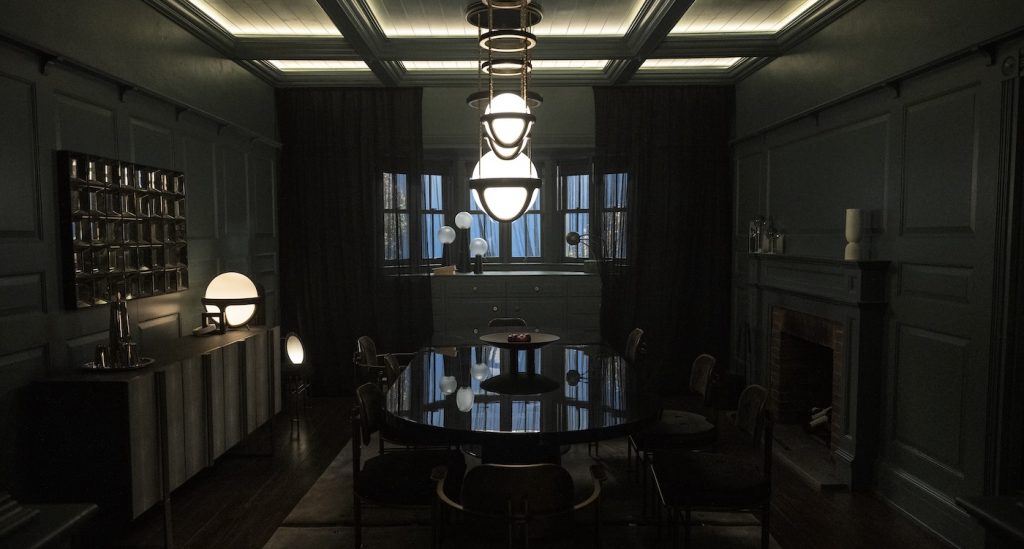
Interior of the Deetz house. Courtesy Mark Scruton/Warner Bros.
Since part of the production was in Vermont, were you able to connect with local vendors?
It was a mixture of things. A lot of the team came from Boston and the Massachusetts area, but we tried to work with local people as much as we could. We rented barns and farms, and I think we took up every hotel and facility available. We even had some of the local kids helping us with security guards. Anybody who wanted to get involved, I think, ended up getting involved one way or the other.
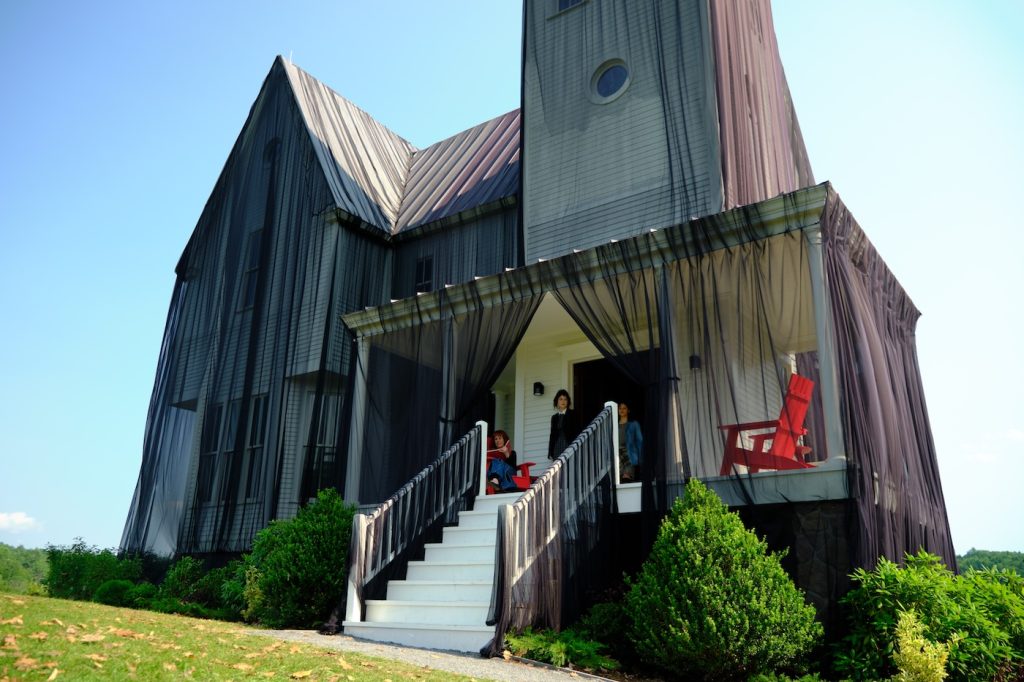
There’s a funeral scene where the Deetz family is in mourning, and to extend that emotion to the house, a black veil covers the entire exterior. How did you pull that off?
Drawing something on paper is quite a different thing from actually making it happen. It was a big house, so the job of covering it was pretty tricky. Once we arrived at the fabric with the right translucency and flow, we didn’t know if the quantities existed. So, my teams in London, L.A., and Boston all had to track down local suppliers to get the fabric shipped in. It was a big undertaking to get that thing done because we didn’t have much time, either.
The Deetz Family home. Courtesy Mark Scruton/Warner Bros.
The interiors of the house are so detailed. Did you approach the aesthetics with Delia in mind, too?
Yes, we wanted them to feel like Delia had restored it, so it’s got modern finishes, modern lighting, and very, very high-end little detailing. The knobs and handles are sort of really expensive, and all the carpentry was pin-sharp and beautifully painted. We wanted it to feel like she’d love it and really poured her heart into getting it back to the original house.
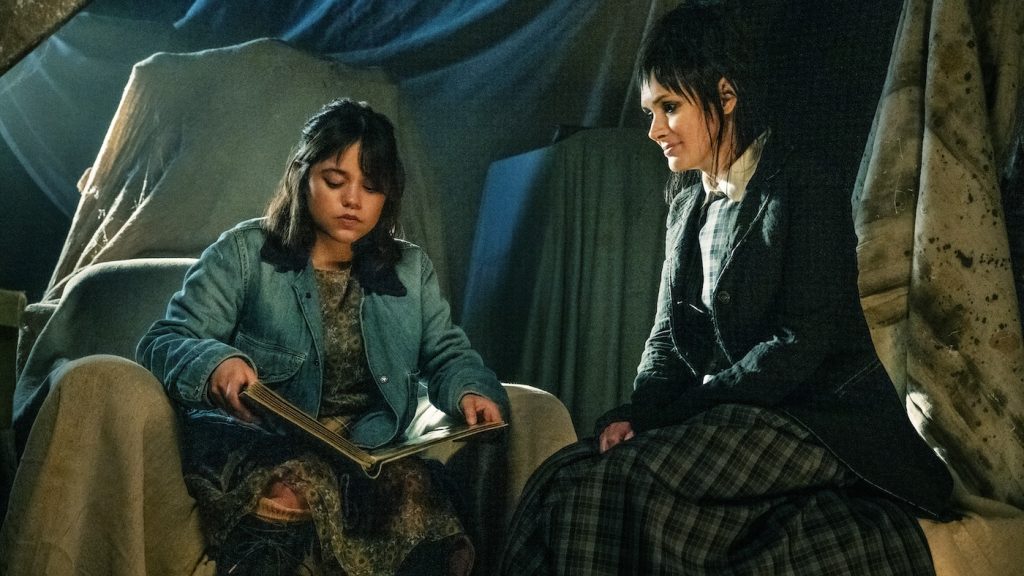
Caption: (L-r) JENNA ORTEGA as Astrid and WINONA RYDER as Lydia in Warner Bros. Pictures’ comedy, “BEETLEJUICE BEETLEJUICE,” a Warner Bros. Pictures release. Photo Credit: Parisa Taghizadeh
You can see how far your team and set decoration went to match the original interior décor in the Deez home and the afterlife sets. How did you manage all that?
We were very conscious that these films would be studied, and if we did it wrong, we would be called out on it, so we studied everything. We had some original drawings and stills from the original movie, but I went through the original film almost frame by frame and put a Bible together that all the departments could refer back to. Since a lot of the stuff in those sets came from antique shops and thrift stores, we had to draw a lot of it up and have it custom-made. Occasionally, we would luck out and find something on eBay, but a lot of the stuff, the lighting particularly, was custom-made as replicas.
One of the afterlife sets. Courtesy Mark Scruton/Warner Bros.Afterlife passport and immigration. Courtesy Mark Scruton/Warner Bros.
The art is such an important element to the Beetlejuice world, especially with Delia being this avant-garde artist. How did that design work evolve?
A problem we did have sometimes was the artwork. The new rules on clearances are now so strict that we couldn’t use some of the original artwork because the clearance didn’t exist, and no one could track down who had painted it or where it had come from. So we had to recreate some things in a similar style and had artists paintwork with the same vibe, feel, and color palette.
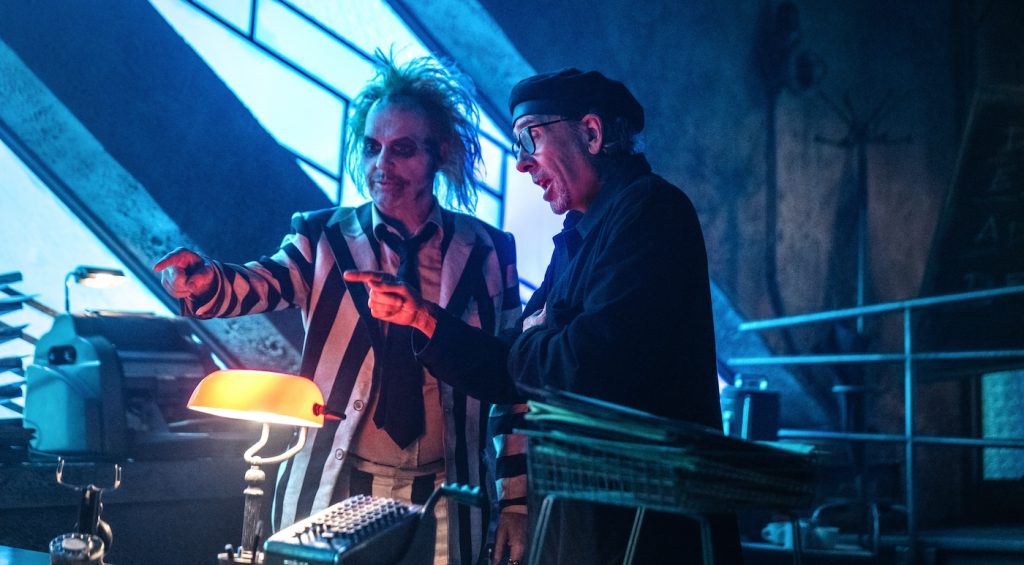
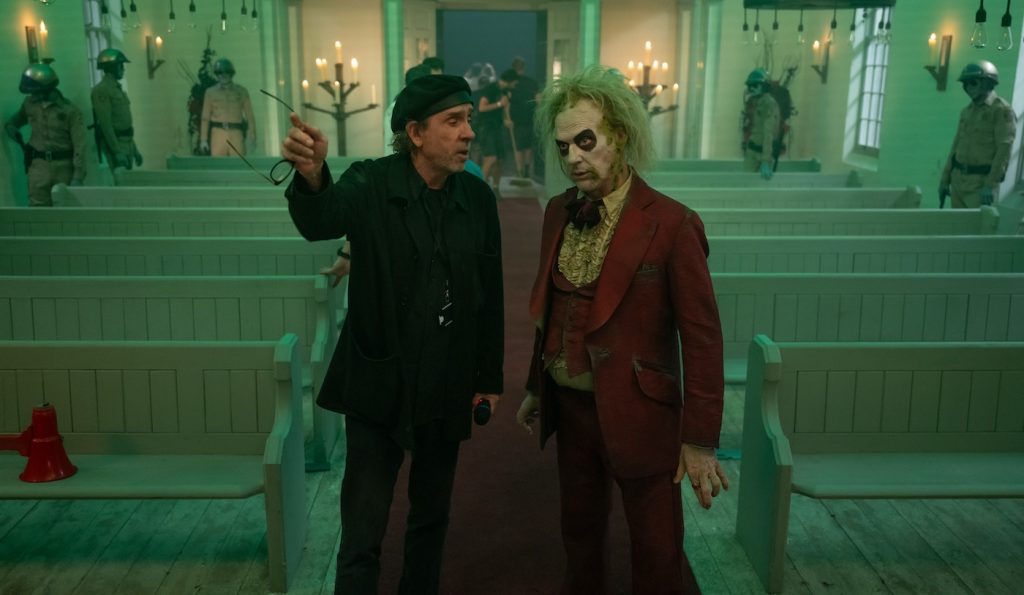
Caption: MICHAEL KEATON and Director TIM BURTON on the set of Warner Bros. Pictures’ comedy, “BEETLEJUICE BEETLEJUICE,” a Warner Bros. Pictures release. Photo Credit: Parisa Taghizadeh
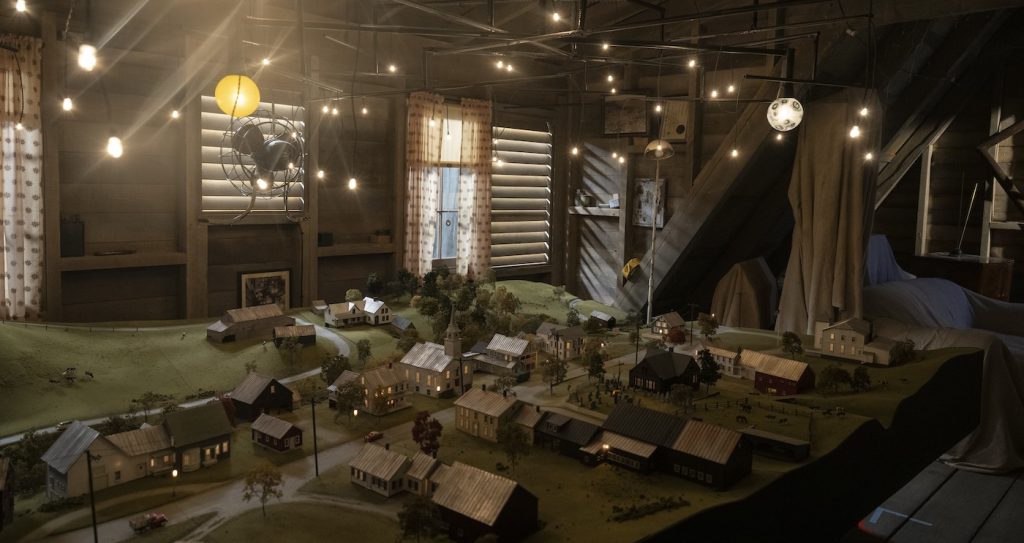
There’s a joy seeing all the throwbacks to the original film, one of them being the miniature model of the town in the attic. What was the approach to it?
That prop really had to be identical because we were going to be inches away from it for almost whole scenes. I had an art director dedicated to it, and it took us 12 weeks to build every detail. It had to look handmade, and the only real way you can do that is by making it by hand, so it was all handmade, and we didn’t 3D print stuff. It was just a very painstaking job.
The model town where Beetlejuice lives. Courtesy Mark Scruton/Warner Bros.
Beetlejuice Beetlejuice is in theaters now.
For more on Beetlejuice Beetlejuice, check out these stories:
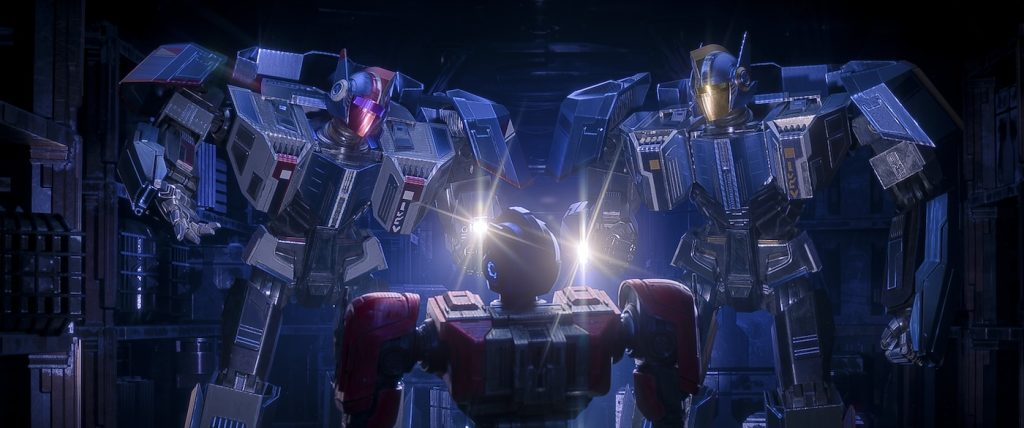
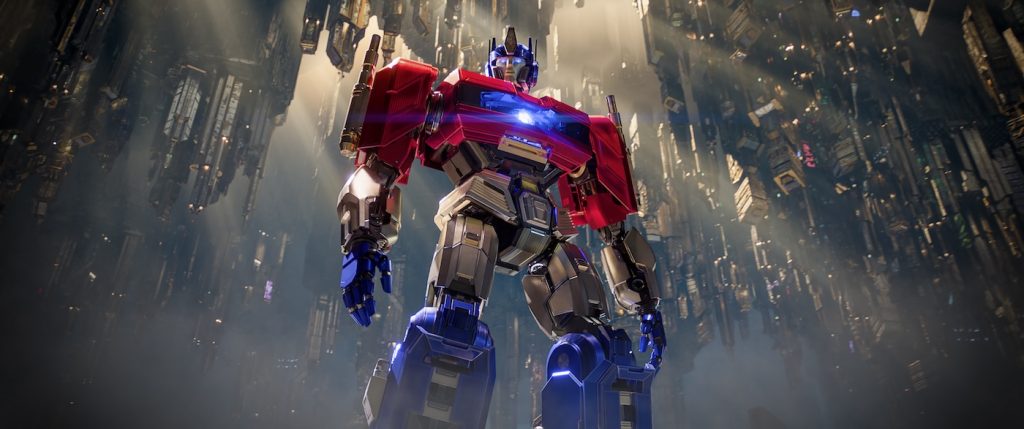
When it comes to toy-inspired movie franchises, Hasbro’s Optimus Prime beat Mattel’s Barbie to the punch by several decades. The franchise includes a 1986 cartoon feature, five Michael Bay movies, and two spinoffs. The seemingly never-ending battle between Autobots and Decepticons finally gets its backstory in the animated prequel Transformers One. Featuring the voices of Chris Hemsworth, Brian Tyree Henry, Scarlett Johansson, and Keegan-Michael Key, the movie follows a young Optimus Prime (Hemsworth) and Megatron (Henry) before they become arch-enemies.
Writing partners Andrew Barrer and Gabriel Ferrari teamed with Black Widow scribe Eric Pearson on the Transforms Origins script after showcasing their action comedy chops on Ant-Man and Ant-Man and the Wasp. “That made us good candidates for working on bright, adventurous, world-building IP, which initially helped us get the attention of Hasbro,” says Barrer.
Barrer, speaking from his suburban Philadelphia home and Ferrari, in his Long Island headquarters, recounts their own origin story, describes “Transformers School” and explains how Stand By Me inspired their concept for Transformers One.
Congratulations on coming up with a fresh take on the Transformers characters nine movies into the franchise. I’m curious about the origins story behind your origins story movie.
Andrew Barrer: We jumped on the project, probably in 2013 when Hasbro Studios approached us to make an animated movie. Then [in 2015], we were down in Mexico in the desert when we got a call from [writer-producer] Akiva [Goldsman] asking us to be part of this writer’s room. The idea was to brainstorm what a Transformers cinematic universe would look like, and then, at a certain point, individual writers broke off and cooked up what their segment might be. So we went up to Los Angeles, and they put us through Transformers school, where you learn all the ins and outs of the canon. But we already had our take. Our mantra was always Stand By Me with robots. Our goal was to write a story where these characters would be interesting even if they weren’t robots.
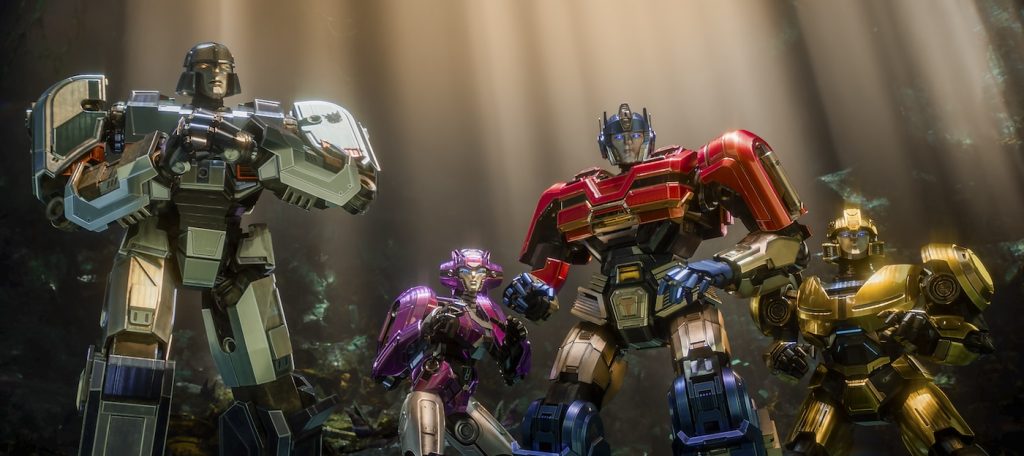
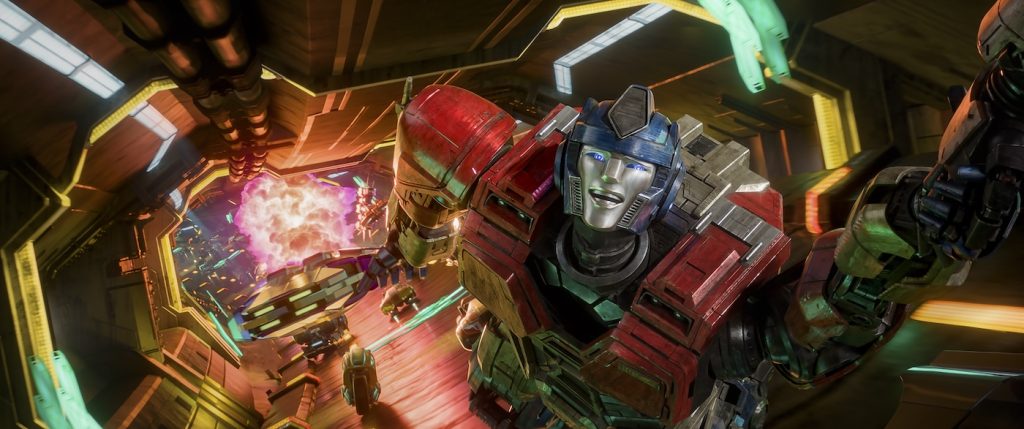
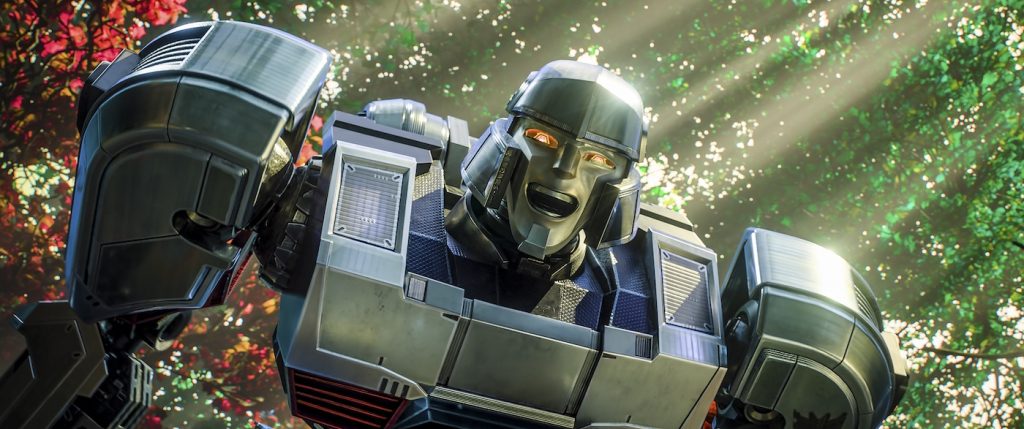
L-r, Brian Tyree Henry (D-16/Megatron), Scarlett Johansson (Elita-1), Chris Hemsworth (Orion Pax/Optimus Prime) and Keegan-Michael Key (B-127), star in “TRANSFORMERS ONE.” Courtesy Paramount Pictures/Hasbro.
How did your screenplay evolve over the years?
Gabriel Ferrari: Going in, we knew this would just be on [the planet] Cybertron and we knew there would be no human characters, and we wanted our script to be part of this interconnected mythology that came out of that [writers] room, but the script went through many iterations. It wasn’t really until Paramount Animation came on and said that they wanted to do an origins story per your pitch in an animated format. That’s when we landed on this more youthful tone that didn’t have much to do with the previous continuity. It was kind of its own thing. And then Josh [Cooley] from Toy Story 4 came in to direct.
Andrew: That’s when the tone and the aesthetic approach solidified because Josh is one of the funniest people on the planet.
Did you initially connect in Brooklyn as writing partners?
Andrew: We’ve actually been friends since we met freshman year at NYU.
Gabriel: Andrew was studying philosophy, and I was an art student.
So, neither of you actually studied film. Did you collaborate on other stuff?
Andrew: In our junior year, we went to Croatia for a photojournalism project on war generation and made a little book. But it wasn’t until after college, living in Chinatown, that we talked about writing a screenplay.
Gabriel: Our process was weird. Since we hadn’t studied film or screenwriting, our knowledge was rudimentary, and we had to learn on our feet with our first script, Die in a Gun Fight. We gave it to our friend Steve, who took it to a producer, who got Zac Efron on board, and from that, we got agents, and our script was on the Blacklist. That launched us.
Scarlett Johansson (Elita-1) stars in PARAMOUNT ANIMATION and HASBRO’s “TRANSFORMERS ONE.” Courtesy Paramount Pictures/Hasbro.
A few years later, Marvel calls you in at the last minute to re-write Ant-Man?
Andrew: Yeah. Edgar Wright left the first Ant-Man very late in the game, just three weeks before production after full sets had been built, and they quickly swapped in director Peyton Reed. We went down to Atlanta at the drop of a hat and worked on set.
Gabriel: We worked around the clock, and everyone felt the pressure.
Andrew: Even though we didn’t get our names on it, we had to be the last writers to touch a lot of the humor, jokes, and dialogue.
Gabriel: But we came through in the clutch, and the sentiment [from the studio] was, “Let’s bring them back for Ant-Man and the Wasp. They earned it.”
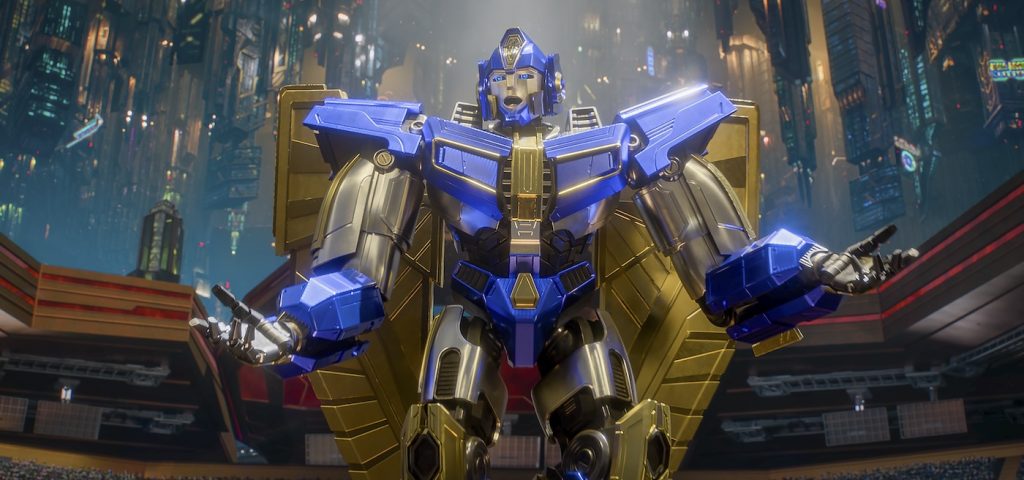
Jon Hamm (Sentinel Prime) stars in PARAMOUNT ANIMATION and HASBRO in“TRANSFORMERS ONE.” Courtesy Paramount Pictures/Hasbro.
The Ant-Man work then leads to this movie. When you were kids, did you guys play with Transformers action figures?
Andrew: I was actually pretty bad as a kid. There’s a joke in the movie about not being getting them to transform fully. Gabriel probably played with them more?
Gabriel: And I definitely watched the Saturday morning cartoons. Then, I saw the Shia Labeouf/Michael Bay movies over the years. Bay did his thing and made it wildly successful, but now we’re at a point in time where a lot of people out there maybe don’t remember or don’t care what the old movies were like. They might be coming to Transformers for the first time, so we were given an opportunity to explore a different way forward, being faithful to much of the old but with the tone maybe feeling more modern for a new era.
Andrew: Particularly because it’s an origins story, there’s a mythological thing happening. It’s like Exodus, it’s Ben Hur, it’s Shakespearean. For us, it was about “Let’s stop thinking about clanking metal and think about Megatron and Optimus as this brotherhood that tragically crumbles.”
Yet, the story details still need to fit within the world of Transformers.
Andrew: Yes. Part of Hasbro school was that there are facts in Cybertronian culture, like what Energon is, what a spark is, and what a Transformer cog is. You can’t just make it up as you go along.
Gabriel: There’s a committee over there at Hasbro who live and breathe this stuff, so sometimes they’d say, “Ah, you can’t do that; it’s not so good for the Transformers brand.
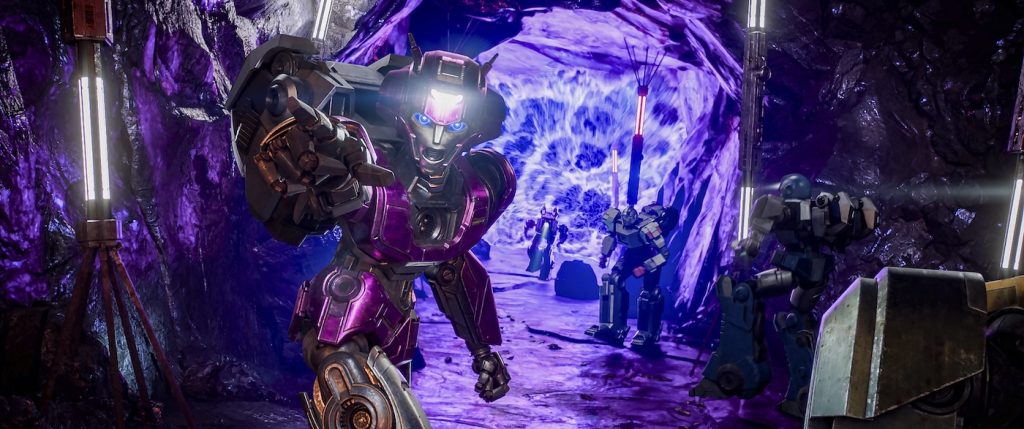
The Guards in PARAMOUNT ANIMATION and HASBRO Present “TRANSFORMERS ONE.” Courtesy Paramount Pictures/Hasbro.
Your story stars sentient robots, and of course, artificial intelligence (AI) has come to play an increasingly powerful role in society over the past few years. How has AI impacted your craft?
Gabriel: AI has not crept into our lives as writers so much.
Andrew: I’m not going to pooh-pooh new methodologies, but I would describe myself as an artist, and I can’t help but see AI as a performance-enhancing drug that you have to be careful about.
You two first hatched your concept for the film back in 2013, and eleven years later, Transformers One is about to hit theaters. What do you hope audiences take away from this movie?
Andrew: That it’s awesome and fun and a good cinematic experience that you should really watch together with other people in a movie theater.
Chris Hemsworth (Orion Pax/Optimus Prime) stars in “TRANSFORMERS ONE.” Courtesy Paramount Pictures/Hasbro.
For more films and series from Paramount and Paramount+, check out these stories:
Featured image: L-r, Keegan-Michael Key (B-127), Brian Tyree Henry (D-16), Chris Hemsworth (Orion Pax), and Scarlett Johansson (Elita-1) star in “TRANSFORMERS ONE.” Courtesy Paramount Pictures/Hasbro.
One of the biggest movies not named Superman currently brewing in James Gunn and Peter Safran’s DC Studios is director Craig Gillespie’s (I, Tonya, Cruella) Supergirl: Woman of Tomorrow. The upcoming feature stars House of the Dragon‘s Milly Alcock as Superman’s cousin, Kara Zor-El, in a film inspired by Tom King and Bilquis Evely’s well-regarded, rough-around-the-edges comic about Kara’s hard-scrabble life and her immense powers. The film has landed Matthias Schoenaerts in the villain role, a performer of considerable charisma and gravitas. It feels like a casting coup, as did putting Alcock in the lead role.
King and Evely’s story of a young alien girl tormented by the killing of her family is decidedly a less heroic and more tortured piece of storytelling than the usual superhero fare, something that has generated excitement among DC fans eager to see what Gunn and Safran are cooking up for their newly united DC Universe. Gunn’s Superman will fly first out of the gate when it arrives on July 2, 2025.
We don’t yet know how much of the Supergirl: Woman of Tomorrow script, written by Ana Nogueira, will adapt from the comic. It’s worth noting that in King and Evely’s story, Supergirl seeks out her cousin Superman to help her exact revenge on the people who killed her family. The villain in the comic was the man who killed Supergirl’s father, Krem of the Yellow Hills. Krem makes the grievous mistake of hurting her super-pet, Krypto. There will be blood.
Schoenaerts most recently starred alongside Kate Winslet in HBO’s miniseries The Regime. He was sensational opposite Marion Cotillard in director Jacques Audiard’s Rust and Bone and has plenty of experience in big-budget movies, having co-starred in the Jennifer Lawrence-led spy thriller Red Sparrow and the Gina Prince-Bythewood directed and Charlize Theron-led action epic The Old Guard.
Supergirl: Woman of Tomorrow is due to soar into the theaters on June 26, 2026.
For more on Supergirl: Woman of Tomorrow, check out these stories:
Featured image: PARK CITY, UTAH – JANUARY 31: Actor Matthias Schoenaerts attends the “The Mustang” Premiere during the 2019 Sundance Film Festival at Eccles Center Theatre on January 31, 2019 in Park City, Utah. (Photo by Matt Winkelmeyer/Getty Images)
Ryan Coogler and Michael B. Jordan’s mysterious feature has finally been revealed. The trailer for their latest collaboration, Sinners, is here, revealing Coogler’s original horror-thriller set in the 1930s Jim Crow-era South. Coogler took to social media yesterday to reveal the film’s poster (which, naturally, features Jordan) and the caption “Dance with the devil…and he’ll follow you home.”
Jordan plays twin brothers trying to return to their hometown to restart their lives, but evil awaits. The trailer is a slow-burn, moody glimpse at Coogler’s original vision, which opens on a shaky Jordan trying to roll a cigarette, visions of violence flashing on the screen. “I been all over this world, I seen men die ways I didn’t even know was possible,” he says.
Shot in New Orleans, Coogler’s period piece has a lush look and a menacing energy that increases as the trailer reaches its climactic finish. While this first look reveals little in the way of plot specifics, the general impression is that the writer/director is unleashing a darker vision than we’ve seen him explore before.
Jordan and Coogler first worked together in the writer/director’s star-making 2013 directorial debut Fruitvale Station, which he wrote on spec. For Sinners, studios were competing for a chance to work with the star auteur and his muse, with Warner Bros. winning out. Jordan has had a role in all of Coogler’s films, including leading his Rocky franchise spinoff Creed in 2015 and starring as the villain Erik Killmonger in both of Coogler’s world-beating Black Panther films.
Coogler is reuniting with more frequent collaborators, like Academy Award-winning composer Ludwig Göransson, who won an Oscar for his recent work in Oppenheimer and Coogler’s Black Panther and who will executive produce alongside Rebecca Cho and Will Greenfield. Returning Coogler compatriots also include cinematographer Autumn Durald Arkapaw, Oscar-winning production designer Hannah Beachler, Oscar-winning costume designer Ruth E. Carter, and editor Michael P. Shawver.
Check out the trailer below. Sinners hits theaters on March 7, 2025.
For more on Warner Bros., Max, and more, check out these stories:
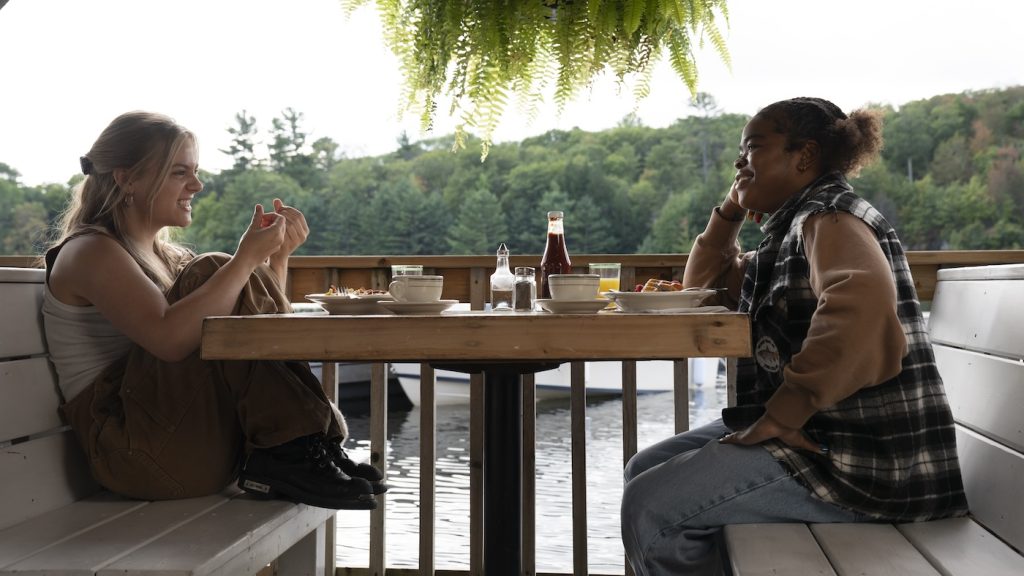
In Megan Park’s wide-eyed, warm-as-the-waning-summer-evenings sophomore feature, My Old Ass, time itself is a trip.
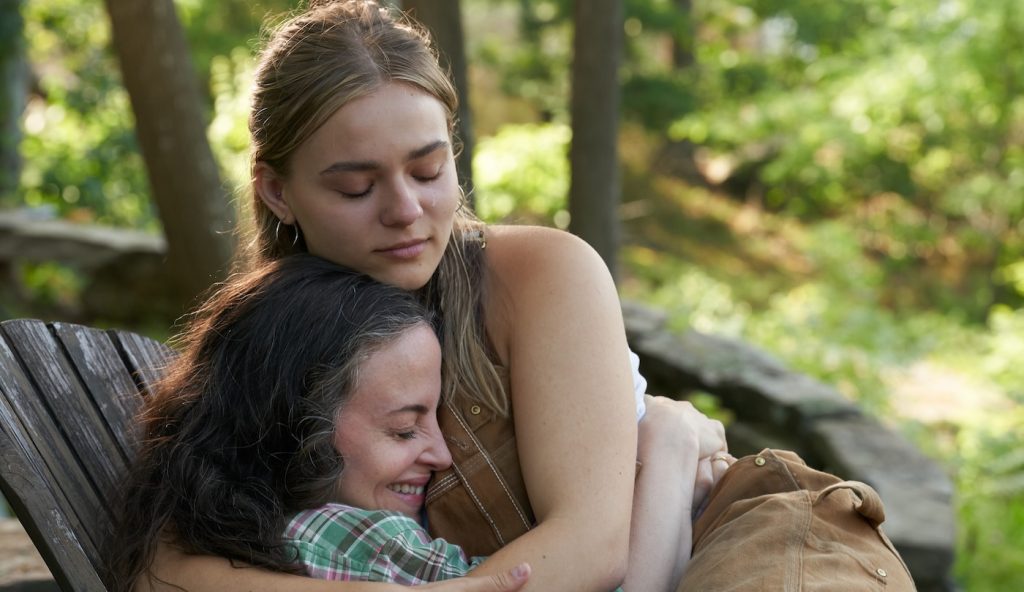
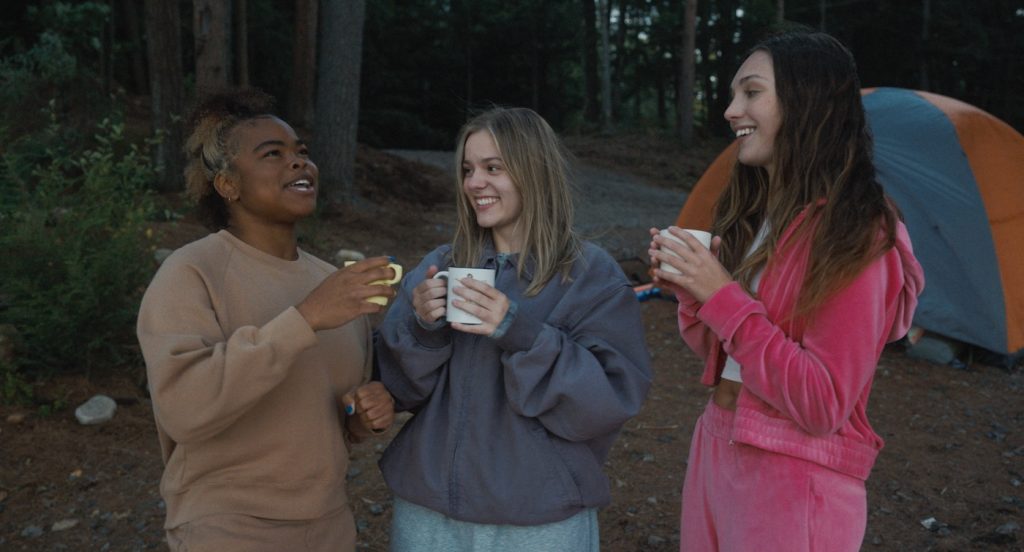
When Elliott (Maisy Stella) ushers in her 18th birthday with a camping excursion à la psilocybin-laced mushrooms, the last thing she expects is her psyche to conjure up an “old ass” version of herself (at 39 years old), portrayed by Aubrey Plaza. With her last summer in the picturesque lakeside town of Muskoka, Canada, before she heads off to the University of Toronto, Elliott must tread the warnings of her future self, all while rethinking her misconceptions about love, family, and relationships.
For Park, who conceived of the film following her critically acclaimed debut The Fallout — about the intimate relationship that blossoms between two high schoolers (Jenna Ortega and Maddie Ziegler, also in My Old Ass) in the wake of a mass shooting — the aim was to follow in the tradition of the movies she grew up adulating, from the comparable time-warping 13 Going on 30 to the Robin Williams classic Mrs. Doubtfire.
“I was selfishly making a movie that I wanted to watch, that I wanted to make, and I was hopeful that other people would like it too,” Park says. “But at the end of the day, this is just very personal to me, and subjects that I want to explore, and I want to make a really earnest, feel-good, heartfelt movie that does wear its heart on its sleeve. It’s a North Star for me as a filmmaker now.”
And while the 38-year-old Park — who is perhaps most recognizable as one of the stars of ABC’s late-aughts soapy teen drama The Secret Life of the American Teenager — created My Old Ass for all the various iterations of herself, from her childhood days in Canada to her nostalgia-tinged understanding of new motherhood (she and her husband Tyler Hilton have two children), it’s a film that has resonated across the board.
“I keep joking,” she said, “the amount of old men that love this movie is so surprising, but it’s true! I was at a couple of screenings yesterday, and these very sweet men in their 70s and 80s were coming up to me like, ‘This is my favorite movie I’ve ever seen.’ I’m like, ‘What?’”
Park discusses the inspiration behind the film and being egoless in crafting a narrative that centers young people’s experiences.
You’ve talked before about how making this film is somewhat corrective to the way young people have been portrayed in the past when you were acting. What was that process like for you, approaching the main character and conveying this authenticity that can sometimes be missing?
I was not trying to make a movie about young people, which I think inherently helps. I was trying to tell a human story. I think a lot of people talk down to younger people and don’t give them the credit that they deserve. So I take that very seriously. For many years, when I was acting at that age, I was playing young people, and I was like, “I would never say this, and this does not feel real. I would never wear this. This doesn’t feel authentic in any way to my experience or anyone that I know.” So I try to create, now, an environment, at the very least on set, that’s like, there’s an opportunity for young actors to speak up and say that, and I try to include them in the process.
Can you give me an example from the film?
The Bieber moment (author’s note: the film includes a trip-induced Justin Bieber-inspired montage set to “One Less Lonely Girl”) is a great example. I was talking to Maisy, “What was that moment? What was that concert for you? Who was that artist who really spoke to you?” I think being egoless is the sense where you know what you know but also know what you don’t know and are collaborative and open-minded. I think that’s not only when you create the best art but also when you create the most authentic environment and, hopefully, experience.
Definitely, being home in Canada [was part of it.] I didn’t grow up right in Muskoka, but close to there, and I spent my summers there, going to camp there, and [I] went to cottages. And I was like, ‘Gosh, why was I in such a hurry to leave this beautiful place?’ Sometimes, I’m very lucky to have grown up in a place that now I go back to, like, ‘This is so beautiful. I can’t believe I was raised here,’ so there was definitely a part of that for me. It’s not my life story—like, I was not Elliott. I was a very different person at that age. But there’s a part of me in each one of these characters, but I would say, as I was writing, I definitely related more to the “old ass,” older Elliott at this point in my life. But they’re also totally imaginary people. It’s such a weird combination.
To that end, how did you approach the casting process?
We cast Maisy first. As soon as I saw Maisy, I was like, “Oh, she is Elliott and more.” And so that was a really easy decision, and then it was great because we got to cast every single person in the movie around Maisy, which was so incredible, and she chemistry read with every single character, except for Aubrey, because we knew they were going to have amazing chemistry. It was really important to build it around her, and I think that’s part of why it feels so organic.
What about casting Maddie Ziegler as Ruthie?
Maisy and Maddie Ziegler have been best friends since they were eight years old, and Kerrice [who plays their friend Ro] — they all just kind of fell in love with each other. Having her and Percy [Hynes White] read together was really important as well. Percy was a local Toronto kid, who I didn’t know who he was, and he just sent in a self-tape, and we were all so charmed. Their chemistry was so instantaneous as well. Both Maisy and I adored Aubrey’s work and are huge fans. And then, as soon as I talked to her, I was like, “Oh, she just gets this,” and she is such the tone of the movie, and all the pieces fell together. As soon as they met in person, they hit it off and just really adored each other, which was very sweet to see unfold in real-time. Their humor is very similar, which is awesome.
The movie is so tonally wide-ranging. Did adding Maisy’s mushroom trip feel like a critical puzzle piece for you in terms of the believability of this concept?
I wanted it to be a buy-in, but it also had to be a buy-in that felt really grounded and real. So the mushrooms — I don’t know where I thought of it, but I was thinking, if you’re 18, it’s your birthday, it’s your last summer. You’re in Canada, you’re camping with your friends. And [it’s] like, “Yeah.” Once that clicked, it also allowed you to really kind of be like, “Did that happen? Did that not happen?” So the mushrooms [were] a really important thing to get right. We talked about 13 Going on 30 and Mrs. Doubtfire and The Parent Trap — all these movies where the buy-in has to work, and you have to love these characters and these people, and then you don’t really care. You’re just along for the ride. And that was important to get right. The mushrooms just seemed like a perfect fit.
The film tackles large, conceptual life concepts, like grief and relationships in a refreshingly earnest way. Is that something you were thinking about as you wrote it?
We wanted to make something earnest. And I think a lot of people don’t think that’s cool?
Yes!
I f—ing love movies like that. Those are the movies that I grew up on. They inspired me so much as an actor, as a human, and as a filmmaker. And I think earnest movies are — yeah, they’re not on trend right now, but I would love them to be, and they’re timeless, hopefully. I want to continue to make really earnest movies, and that was super important to me. as I was writing it, I wanted to tackle those big subject matters but have people hopefully be able to laugh while they’re crying at the same time.
Can you discuss how Amazon MGM and Margot Robbie’s LuckyChap [production company] got involved? I know you have more projects in the pipeline with them.
There’s a reason that they get so much repeat business at LuckyChap with their directors. They’re really, really incredible producers and so, so easy to work with. They have so much trust in their filmmakers, but they’re also really helpful. So it was such a smooth sailing experience that I was like, “Let’s do everything together.” And luckily, they feel the same, which has been really exciting.
Did you pitch them?
They connected after they saw The Fallout and just said, “Do you have any other ideas?” And I just had a very loose logline for this movie, and they said, “We love that. Can we develop it together?” So we put the pitch together and made it with our partners at Indian Paintbrush, and it was such a smooth, incredible process. And then we took it to Sundance [in January] and found our home at Amazon, and it was just such a perfect fit. They really loved the movie. It was so genuine, you could really feel that from them, and they really understood what it was and how to get it to the right audience, and knew how important it was for us to have it out in theaters, and it’s the type of movie that you want to sit in a theater and experience with other people.
With the theater component, there was the Cinespia screening, and there’s such a campfire, cozy, openness, and Gen Z undercurrent to the movie in terms of also dealing with sexuality. Could you speak to any of your favorite moments?
There were so many moments that felt that way. Everyone comes back to me with a different moment that spoke to them in that way, which is really exciting. And it definitely feels like a movie to laugh with a group of people, and to cry with a group of people in a theater setting is really special. What I think is also really cool is it does feel like a movie that you can go see on a date, with your friends, or with your parents.
This interview has been edited and condensed for concision and clarity.
My Old Ass is in select theaters now.
For more on Amazon Prime Video, check out these stories:
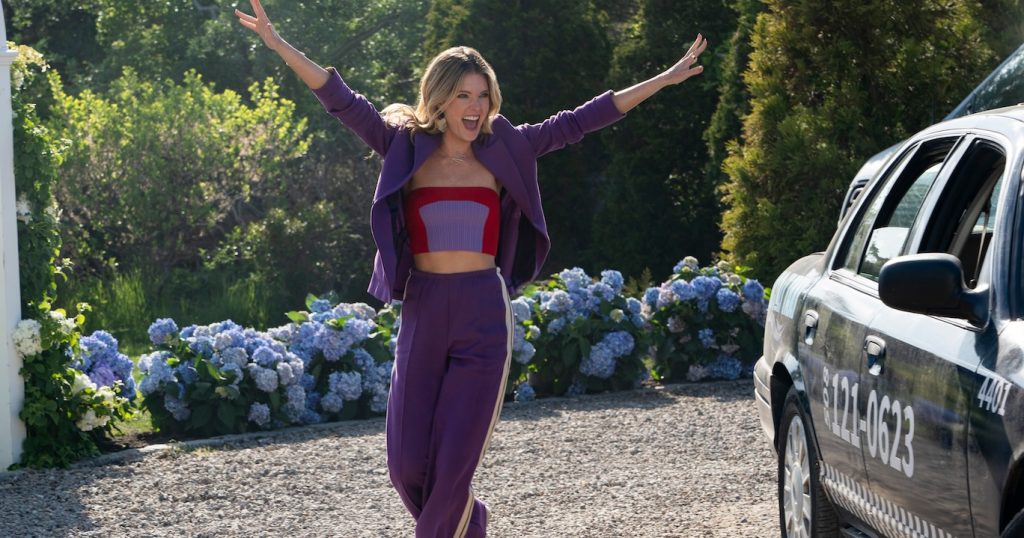
In part one of our interview with The Perfect Couple showrunner Jenna Lamia, she discussed adapting Elin Hilderbrand’s novel, character development, and writing the script. Now we move on to some of the specifics of how Lamia stuck the landing, delivering a satisfying whodunit on the picturesque island of Nantucket, the playground of the uber-wealthy Winbury clan.
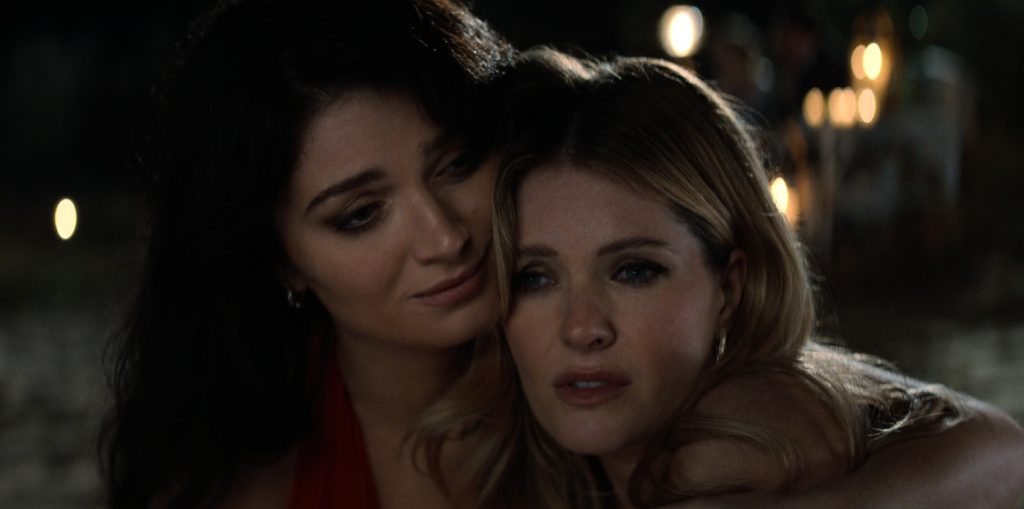
In the final shot of the penultimate episode of The Perfect Couple, Merritt (Meghann Fahy) is sitting on the beach in her robe, tears stained on her cheeks. The night of her murder has been played out in flashbacks in previous episodes, and viewers are aware of almost every possible scenario for who killed her and why, but we’ve never gotten this close to the actual event. As she sits in the wee hours of the morning, she hears footsteps behind her. She turns her tear-streaked face and says, “Oh, hey,” a bit surprised but with enough familiarity for viewers to understand Merritt knows this person. The screen fades to black, and we are left tantalizingly close to Merritt herself, identifying her killer for us.
Lamia delves deeper into the show’s symbolism, creating sympathy for a character who is only alive onscreen for one episode, and the filming schedule for a limited series. Spoilers below.
I want to talk about the final shot of the fifth episode, the cliffhanger, where Merritt turns and says, “Oh, hey.” How did that scene specifically come to fruition? Was that how you originally envisioned that scene in your head?
It’s so satisfying when a moment that you’ve seen for the entire gestation of the project comes to life just the way you saw it, and that is one of those moments. So, I’m so glad you brought it up. Because that was very early in the writer’s room, and we knew several characters had the possibility of having joined her out on the beach. And other things changed since we put that moment in. There were other characters planted nearby in different ways. But I just knew that was going to happen, that her character was going to turn around and say, “Hey” in a way that’s going to make you want to get out your forensic kit. How well does she know this person? She seems kind of friendly but a little bit apprehensive and a little unsure. It came together literally exactly how I saw it in my head when I wrote it, which is such an incredible feeling for a writer.
In perfect world, what did you want the viewer to feel when we find out who the killer is in the finale?
It is my fervent hope that when you find out you will feel satisfied and feel that we have played fair with you as an audience. That was the hardest part about writing this is I love, love to watch these kinds of shows and I really love when I feel that the writer has played fair with me. And I love when I didn’t guess it, but it feels justified.
When we first see Merritt, she’s introduced as this party girl, but that changes over the episodes when we get to know who she really is, especially when we find out she is pregnant. When you’re dealing with a character who is the victim, is it hard to find a way to make her compelling enough and relatable enough to the audience to care about who killed her?
Not when Meghann Fahey is playing her. I can’t imagine someone I would rather take home with me. She is such a beautiful person and made Merritt into such a beautiful person that you can’t help but absolutely adore her and her friendship with Amelia [Eve Hewson], which I think is the true love story of the show. But I love that you noticed that about her character because that’s exactly one of the arcs I was so committed to doing, which is it would be easy to dismiss her at first as a party girl or a gold digger or, dare I say, a slut — which I think is funny when Isabele’s [Isabelle Adjani] character says it. Because, number one, there’s nothing wrong with a woman who wants to have sex with a lot of people. Let’s get that out of the way.
This show features many close-ups of eyes and eye imagery. Can you explain where that comes from?
That definitely comes directly from our director, Susanne Bier. Luckily, we had two DPs who were both incredible, and I know they talked about that early on. But I think this show is asking you to think about the inner lives of these characters, and those kinds of shots bring you so close, but they can’t bring you inside. So, I think they remind you that you may not always know exactly what this person is thinking, but you know they’re thinking more than they’re projecting from a mid-range distance, which is how we all experience one another. The show a lot is about the projection of an image, a perfect image — what we’re telling the world about who we are and how great our life is, which is a very Instagram phenomenon, by the way, and inspired by Merritt’s influencer background. But what Suzanne [Bier] is doing with the camera is reminding us that there’s so much more than we are being presented with from a distance, and we should think about that and think about what’s behind there.
It was filmed like a feature in that all six scripts were completed before we even started pre-production. There was a long pre-production process for this show. I had a team of writers, and we finished our work as a group in June. This show didn’t begin shooting until April. So from that June to the following April, I was rewriting on my own and having the cast join and rewriting for certain casts, getting Susanne Bier on board, and finding locations. So the show had this whole other revision after the team of writers was finished. And then, when we started shooting, we had all the scripts. That enabled us to blockshoot everything that happens in a certain location all at once. We shot almost all of the police station scenes in April because a lot of those are interior, so it was easy for us not to worry about the fact that outside, there were no leaves on the trees yet, and the grass really wasn’t green yet. Then, we were interrupted by two labor actions, a writer’s strike, and an actor’s strike. So when we were able to resume work, we had to shoot a lot of the interiors in London on a soundstage.
For a show like this that’s really character-driven, what are the biggest costs?
I think it was really important to everyone to get Nantucket right, and we did look at a couple of different locations. But you can’t really approximate New England; the flora and fauna are pretty unique. So the sea grass and the dunes and the beaches just needed to look right. Being from New England, I have a sort of bet noir with things where the accents are wrong, or the topography is wrong, and it’s supposed to be New England. So, from a very early stage, I talked to the producers and to Netflix and locations about getting that right. And we did probably save some money by shooting in Cape Cod, not shooting on the actual island of Nantucket. Though a lot of the exteriors are Nantucket. The town is Nantucket. But the house that we shot at is Cape Cod, so we certainly allocated our resources to get the look and feel of New England right. And beyond that, we didn’t want to skimp on the clothes. The clothes are a huge character in the show, and our costume designer, Steven Saland, is an absolute genius with color and sense of place. So those are critical. That’s where our resources were spent. We don’t have a ton of visual effects.
Did you feel any pressure to distinguish this from shows like The White Lotus or Big Little Lies?
Maybe I should have, but the thought that this show would even be included in the same category as Big Little Lies or The White Lotus makes me so happy that no, I only felt the pressure to get this show to a level where it might be included or mentioned in the same breath as those shows, and Succession, which I think is the best-written show I’ve ever seen in my life. So I did aspire to literally be mentioned in the same breath as those shows. I read some David E. Kelly scripts, just the raw form of some of his Big Little Lies scripts, and I of course watched and re-watched all episodes of Succession and The White Lotus because those three shows are really the tops for me.
A bloody, bold new trailer for Gladiator II, Ridley Scott’s long-awaited followup to his Best Picture Winner, has arrived. The new look is the longest, bloodiest, most thrilling yet. We’re introduced to the art of choosing gladiators, as explained by Denzel Washington’s Macrinus, who is usually sorting through prisoners of war and who sees something special in Paul Mescal’s Lucius, a young man with the requisite rage to survive the Coliseum, and all the lesser, no less lethal venues leading up to it.
The new trailer gives us a look into the brutal life of Lucius, who lived in Numidia in Northern Africa before finding himself back in Rome, now owned by Macrinus, who might not be able to offer freedom but can offer something potentially more valuable to someone like Lucius—the head of the man who wronged him.
“A general will do,” Lucius says. “Rome has taken everything from me, but I will have my vengeance.”
It’s not just ferocious men that Lucius will have to conquer in his brutal gladiator bouts—it’s the animal kingdom, too, including blood-smeared monkeys, rhinos, and sharks. Yes, sharks.
The new look reveals that Macrinus wants more than just to make money off the lives of his gladiators; he’s got designs on the throne and wants Lucius to be his instrument to see those designs through. We also know that Lucius is indeed the son of Russell Crowe’s Maximus from the original Gladiator, so he’s got the genetic disposition to carry out his own designs.
Joining Mescal and Washington is a stellar cast, including Connie Nielsen as Lucilla, reprising her role from the original, Joseph Quinn as Emperor Geta, Pedro Pascal as the former general Marcus Acacius, and Rory McCann as Tegula.
Check out the trailer below. Gladiator II arrives in theaters on November 22.
For more films and series from Paramount and Paramount+, check out these stories:
We now have our first peek at Marvel Studios’ upcoming antihero team-up movie Thunderbolts.
The trailer opens with a family reunion—former Black Widow and all-around butt-kicker Yelena Belova (Florence Pugh) arrives at the door of her father, Alexia Shostakov (David Harbour), better known as the Red Guardian. The last time we saw these two together was in Black Widow, the one and only stand-alone movie for Scarlett Johansson’s Avenger and former Black Widow herself, Natasha Romanoff. But Thunderbolts is set in a world bereft of Natasha after her sacrifice in Avengers: Endgame, and posits a whole new kind of super-team getting together. The Avengers these are not.
Yelena has come to tell her dad she feels empty, like she’s drifting without purpose, and even though she thought throwing herself into work was the answer—here we see Yelena doing what she does best, taking out whoever stands in her way—she still feels unfulfilled. That’s when she runs into not one but several bad guys and girls in a warehouse, including Hannah John-Kamen’s Ghost (from the first Ant-Man), Olga Kurlyenko’s Taskmaster (from Black Widow), and Wyatt Russell’s John Walker (from The Falcon and the Winter Soldier). These antiheroes have been gathered, but why?
You can thank Julia Louis-Drefyus’s Valentina Allegra de Fontaine, who has a firm belief that we’ve been misled in thinking the world is made up of good guys and bad guys. In her estimation, there are bad guys, like these newly assembled Thunderbolts, and there are worse guys. The bad guys are then, ipso fact, potential heroes.
Directed by Jake Schreier, Thunderbolts is the MCU’s first proper villains-own-the-day team-up flick, like what Warner Bros. had with The Suicide Squad, and comes from a script by Black Widow writer Eric Pearson. As Schreier told Collider last year, he was excited to take on something new in the MCU.
“It was just a really different approach and a new kind of story to tell amidst that, which I know they’ve made so many things, but it’s not a sequel. Yes, these characters have appeared before, but it is a new story being told and a story, I think, with a very different perspective than maybe people aren’t expecting, and I think that that felt exciting and felt like a real challenge worth taking on.”
Marvel Studios boss Kevin Feige joked way back at D23 in 2022 when Thunderbolts was introduced that the team must be pretty rough around the edges when “beloved Winter Soldier is the most stable among them.”
Thunderbolts is due in theaters on May 2, 2025. Check out all the unstable would-be heroes in the trailer below:
For more stories on 20th Century Studios, Searchlight Pictures, Marvel Studios, and what’s streaming or coming to
Almost four decades after the original, Tim Burton’s follow-up, Beetlejuice Beetlejuice, is a hit for Warner Bros. Reprising their original roles, Winona Ryder’s Lydia is now a television talk show host ghost hunter, Catherine O’Hara’s Delia is still a daffy cosmopolitan creative, and Michael Keaton’s Beetlejuice remains an undead charlatan pining for Lydia. Lydia also has a teenage daughter, Astrid (Jenna Ortega), who misses her late dad, Richard (Santiago Cabrera), and wants little to do with her eccentric mother and cloying boyfriend/manager, Rory (Justin Theroux). But a visit home to Connecticut and the old house on the hill sends the family into the afterlife and Beetlejuice’s open arms.
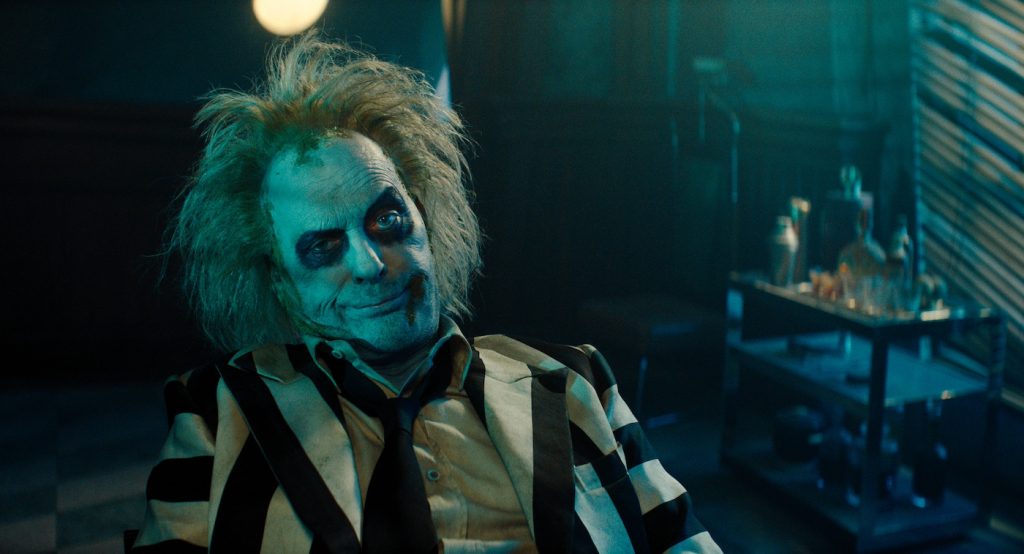
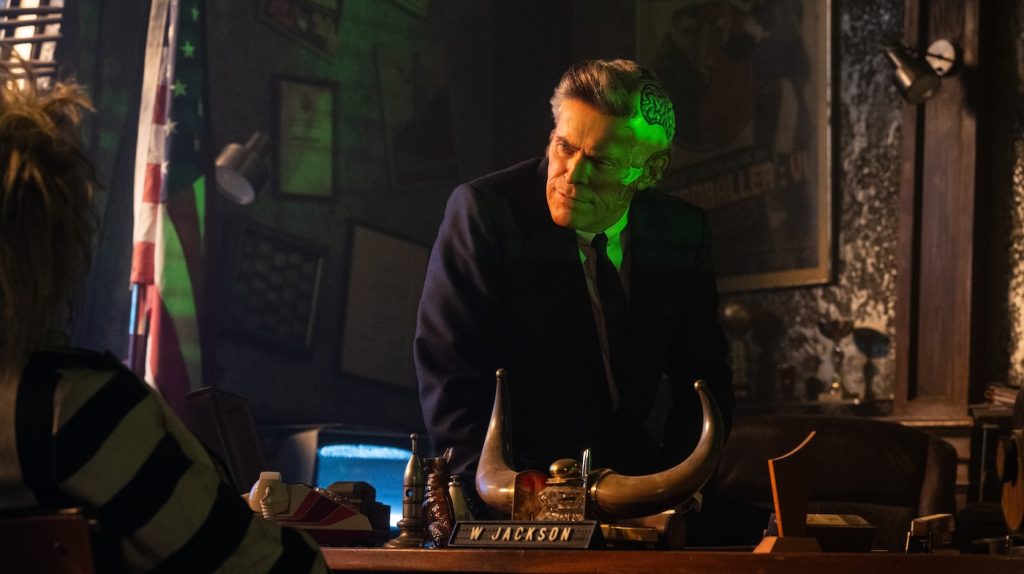
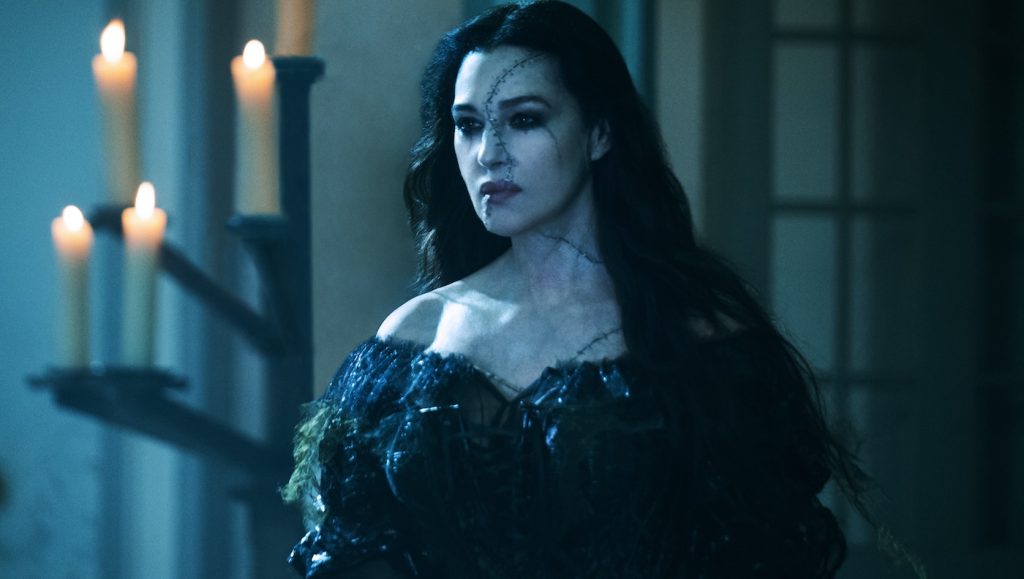
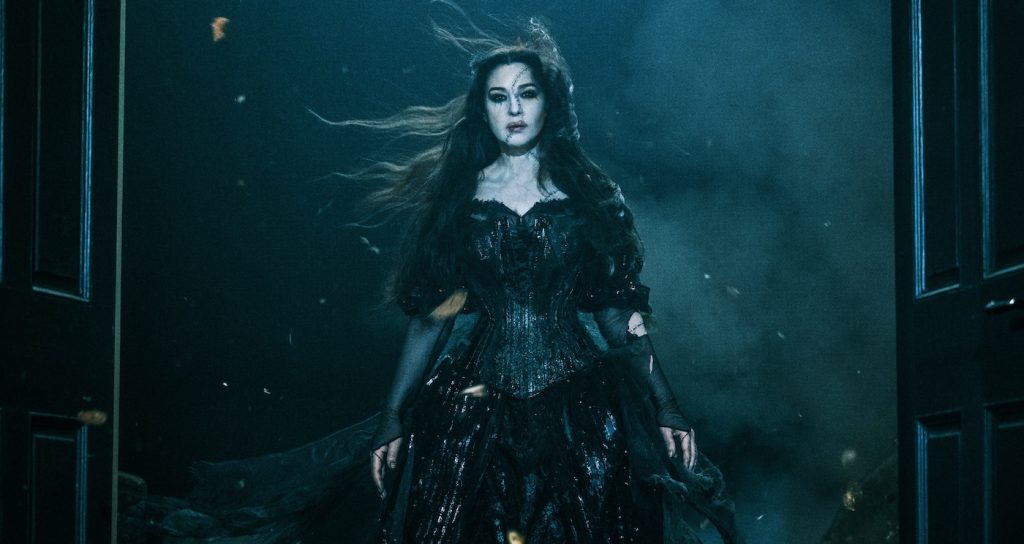
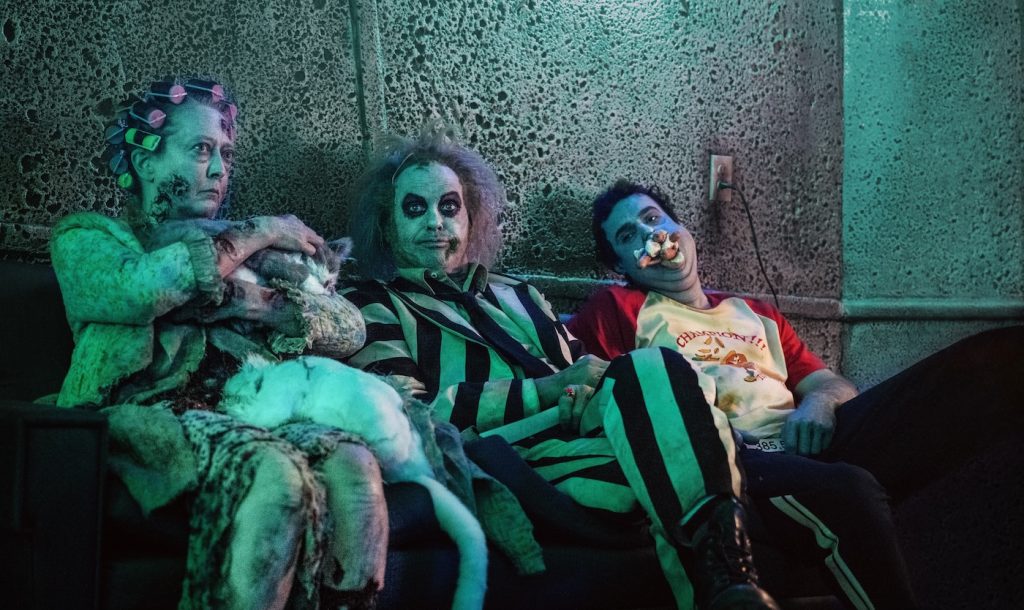
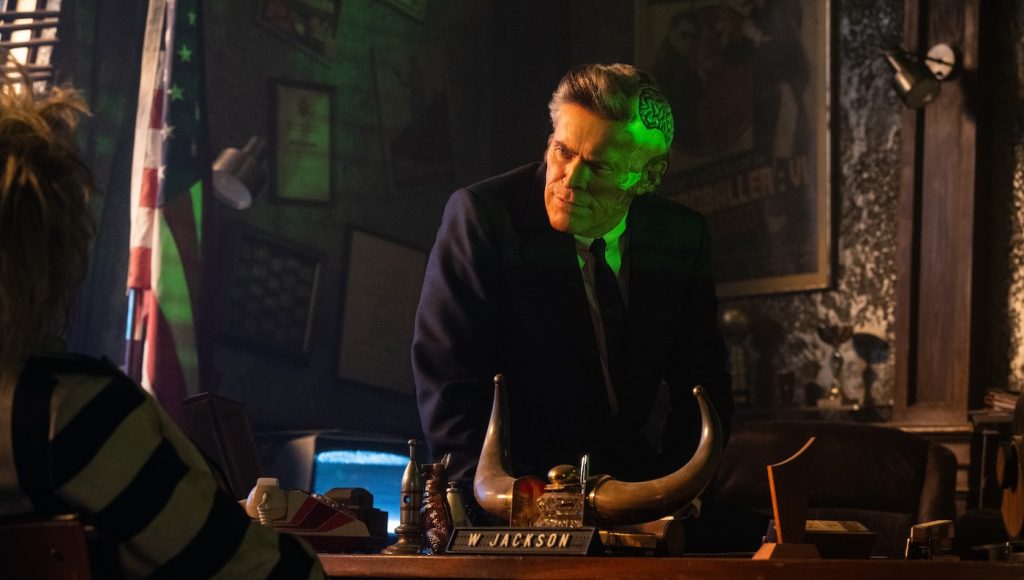
In the realm of the undead, Beetlejuice has company as a specter with an ax to grind. There’s his ex-wife and murderer, Delores (Monica Bellucci), recently put back together and out for revenge. She’s wanted by Wolf Jackson (Willem Defoe), undead actor and self-appointed detective. And the afterlife’s waiting room is full of the recently deceased, from a half-decayed cat lady to a half-eaten surfer. Back above ground, nobody is safe, particularly after Astrid unwittingly strikes up a camaraderie with a ghost hiding in plain sight. For the head of the makeup and hair department, Christine Blundell,the process was all about working together with the prosthetics team, doing as much prep as possible before the actors arrived, and staying true to the beloved Beetlejuice’s original characters while having some fun with the sequel’s new undead denizens.
How much creative license did you have to determine the characters’ overall looks?
Michael [Keaton] had to look close to how he did in the original. The rest of the afterlife was total free rein. We had different levels of color. At the start, we did lots of testing with Haris [Zambarloukos], our DP, just because the afterlife was always going to be really dark, so we had to pump it all up and be very theatrical. Tim was very respectful of the fact that he wanted the actor in the room so that we all collaborated on the look, especially with the returning actors. My job was to prep like mad because, aside from Winona, who got there ten days before, everybody else arrived literally the day before. So, with Catherine, I made six wigs in a very light copper color. We asked her, how vibrant do we want your character to be now? And obviously, she went for the maddest red she could go for. So then my colorist literally just spent the whole night coloring the other wigs, and I cut them into shape.
CATHERINE O’HARA as Delia in Warner Bros. Pictures’ comedy, “BEETLEJUICE BEETLEJUICE,” a Warner Bros. Pictures release. Photo Credit: Courtesy of Warner Bros. Pictures
What was the process like recreating Beetlejuice’s look?
We brought in a body double for Michael so that we could test his makeup, get it down pat, and then show Tim. Tim had a couple of little tweaks. Because Michael was very involved in his original look, he fine-tuned what we had done. We just wanted his look to be a little bit more three-dimensional but as close to the original as possible.
His level of undead makeup does vary from scene to scene, which I liked.
There are definitely minor little tweaks. I have three different variations of teeth for him. With Beetlejuice, your hands are really tied with where you can go with it because, obviously, he is in the afterlife, so he shouldn’t have changed. But we did little bits — the bit where his eyes pop, that was a little mask that Neal Scanlan [the creature effects creative supervisor] and I put together.
Caption: MICHAEL KEATON and Director TIM BURTON on the set of Warner Bros. Pictures’ comedy, “BEETLEJUICE BEETLEJUICE,” a Warner Bros. Pictures release. Photo Credit: Parisa Taghizadeh
What was your process like as it related to the prosthetics? For example, Willem Defoe’s open head?
Tim would do sketches and give them to Neal and me, and we’d work out where Neal and I crossed over. But a lot of the time, like with Dolores and with Willem, it was very much about testing, with Neal doing the prosthetic side of it and me working out the good half of the face and the hair and working out how to hide the joints. It was very deliberate with Willem’s look — it was meant to be almost like a crude, old-fashioned prosthetic. It was all done for comedy effect. When Willem arrived, he had the whole idea that he wanted to look like the guy from Hawaii Five-O. We got it to a certain level with the prosthetics, the hair, the makeup side, and the fake tan, and then he brought it to life.
Caption: WILLEM DAFOE as Jackson in Warner Bros. Pictures’ comedy, “BEETLEJUICE BEETLEJUICE,” a Warner Bros. Pictures release. Photo Credit: Parisa Taghizadeh
Speaking of Delores, how did you create Monica Bellucci’s elaborate, all-new look?
With Monica Bellucci, again, I was over in Neal Scanlan’s workshop, and we got a body double who looked similar to Monica. I met Monica very early on and had her all sized up, ready to have wigs made for her. We spent a fair couple of weeks working out how she could come together. Neal would put together a little reel of it, see if we were getting close, and then we’d come back and go again. Then we had the little flashback of her alive look, and she’s obviously the most beautiful person around. But we wanted her to look a bit deranged and fantasy-monstery. It’s very hard to make her look bad. We initially tried with a massive electrified wig, and it’s a fine line between taking the character into something that is too comically driven for what we want our character to be. We wanted her to be fun but slightly terrifying and, obviously, the only person that Beetlejuice had ever been scared of.
Caption: MONICA BELLUCCI as Delores in Warner Bros. Pictures’ comedy, “BEETLEJUICE BEETLEJUICE,” a Warner Bros. Pictures release. Photo Credit: Parisa TaghizadehCaption: MONICA BELLUCCI as Delores in Warner Bros. Pictures’ comedy, “BEETLEJUICE BEETLEJUICE,” a Warner Bros. Pictures release. hoto Credit: Parisa Taghizadeh
How did you divide the work between makeup and prosthetics?
We worked out early on that Neal would never have time to do all of the afterlife with just prosthetics. So we did a divide, where we crossed over about thirty percent of the time. They’d come to make-up with us first and then go over to prosthetics to get the swollen head or the brain and things. The cat lady came into us, and that was all done with just little makeup effects. We would do whatever Neal could offload onto us with our own out-of-the-kit effects. We just worked very closely with prosthetics. There’s a very fine line that divided us.
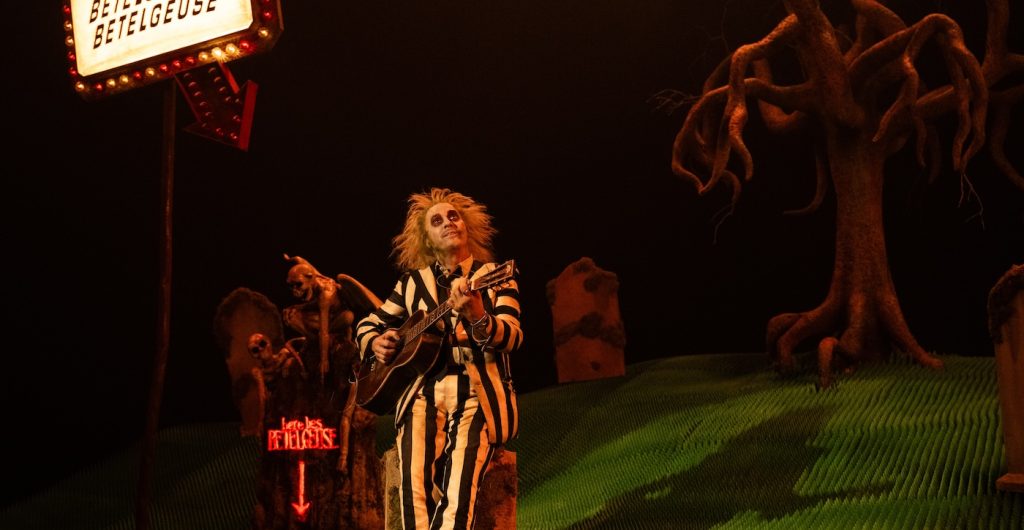
Caption: MICHAEL KEATON as Beetlejuice in Warner Bros. Pictures’ comedy, “BEETLEJUICE BEETLEJUICE,” a Warner Bros. Pictures release. Photo Credit: Parisa Taghizadeh
How did you balance staying true to the original with a raft of new characters?
It’s one of my favorite films, the original Beetlejuice. I think it would be a dangerous thing to say that I didn’t want to give a good, healthy nod to the original because all of us are such loyal fans. I think that’s kind of the driving force behind what’s made [Tim] wait so long to do this remake. I watched the original again and again just before we started. I didn’t want our film to take anything away from the original, but to add, if you like. There were many more featured characters in the afterlife than there ever were in the original. One of the beautiful things about working on this project is that it restored my faith in the industry. I loved every day. My team loved every day. Tim’s a delight to work for, and part of what makes it so fun is you don’t really see him until you’re on set. And if you watch his face when people arrive, you know whether or not you’ve hit the nail on the head with him.
Caption: Director TIM BURTON on the set of Warner Bros. Pictures’ comedy, “BEETLEJUICE BEETLEJUICE,” a Warner Bros. Pictures release. Photo Credit: Parisa Taghizadeh
For more on Beetlejuice Beetlejuice, check out these stories:
Featured image: Caption: WILLEM DAFOE as Jackson in Warner Bros. Pictures’ comedy, “BEETLEJUICE BEETLEJUICE,” a Warner Bros. Pictures release. Photo Credit: Courtesy of Warner Bros. Pictures
When showrunner Jenna Lamia set out to bring Elin Hilderbrand’s beloved novelThe Perfect Couple to life, we were just getting reacquainted with our obsession with mystery and drama. The limited series format, which has seen success in shows like Big Little Lies, Nine Perfect Strangers, and The White Lotus, ushered in an era of mystery, scandal, and a fascination with pulling back the curtains on the imperfections of the uber-wealthy.
Lamia says even now, she can only dream that The Perfect Couple would be uttered in the same breath of comparison as a show like The White Lotus. But the reality is that the six-episode series perfectly indulges in the same qualities of intrigue as its show predecessors — complicated family dynamics that take only a slight tug to unravel, all under the illusion of perfection.
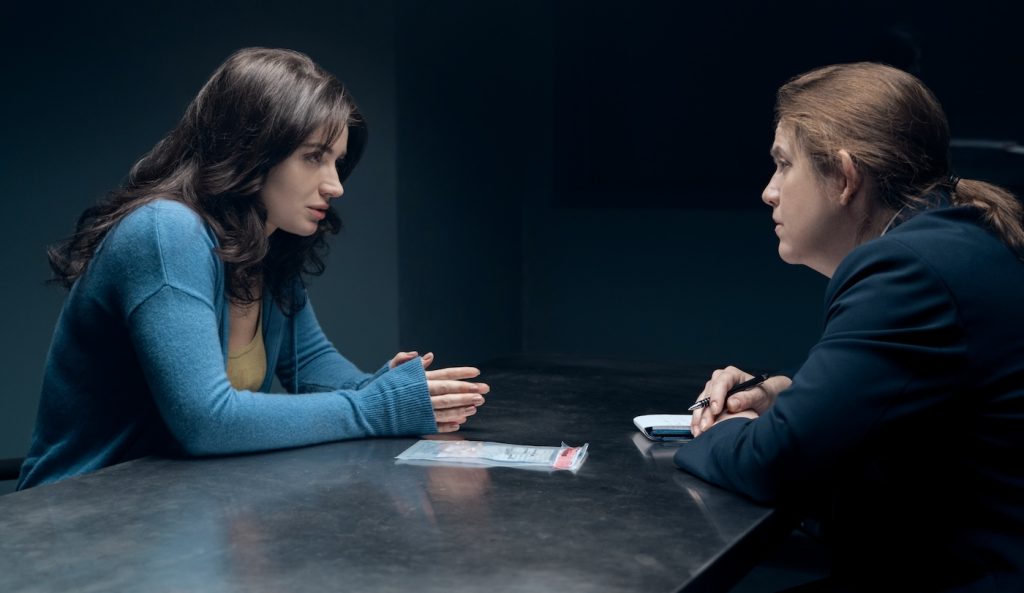
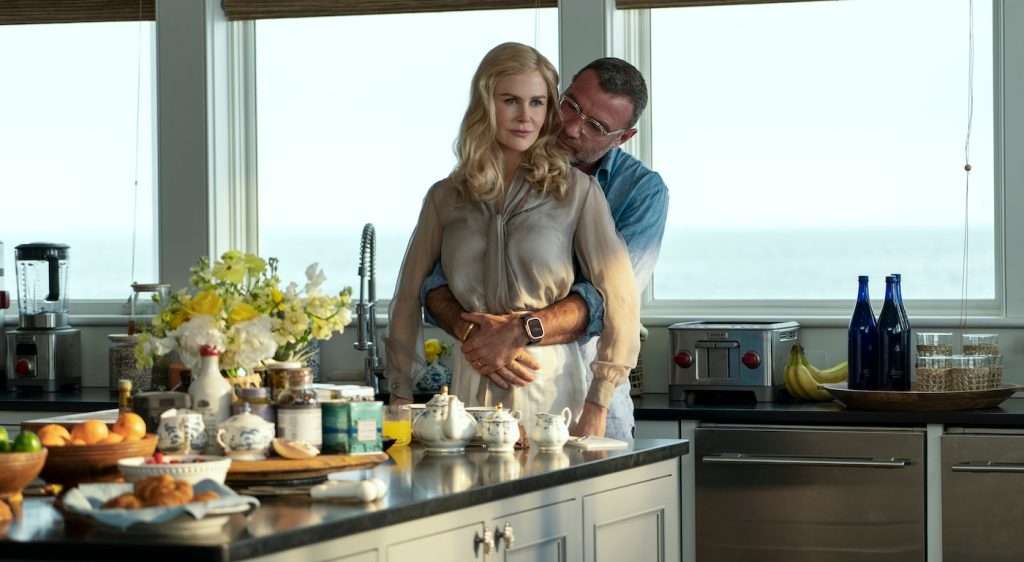
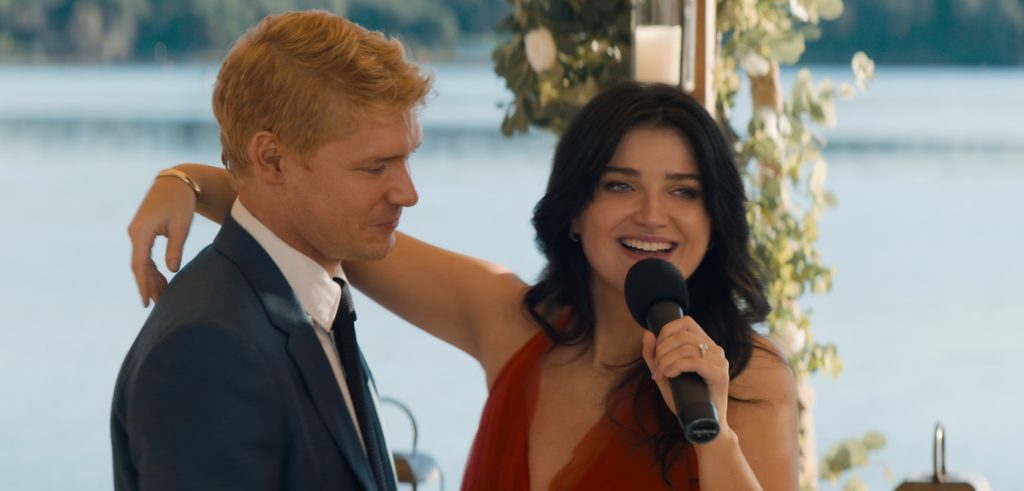
The series centers on the wedding between Benji Windbury (Billy Howle) and his fiancé, Amelia Sachs (Eve Hewson). Benji comes from an elite family that is used to getting what they want and is willing to pay a hefty price to ensure it. Amelia, however, is the black sheep in Benji’s life who can’t quite seem to fit into the polished lifestyle Benji’s mother so desperately wants for him. The night before the wedding, a body is discovered, and thus, the unraveling of family secrets begins.
What was your vision for bringing Elin Hildenbrand’s novel to life on the screen?
It’s been five years, actually. But to sum it up, I was sitting in Maine at this dockside restaurant called the Contented Soul and eating a lobster roll…and I had an email from Gail Burman saying, ‘Hey, I have this book that I just got the rights to. I think you could be the right writer for it. I don’t know if you know the author, Elin Hilderbrand, but I can send you the book so you can read it.’
That sounds like the perfect setting to get that email.
I didn’t even finish reading the email; I just replied immediately. I was like, ‘You don’t need to send me the book; I read it the moment it came out. I’m a huge fan of Elin Hilderbrand, and this is her only murder mystery to date — because it was at the time — I am definitely the right writer.’ I then flew out to L.A. to talk to Gail and Elin — who couldn’t be a more dream author to collaborate with — but we talked a little bit about how I would adapt it and how much it meant to me to get Nantucket right, and to portray New England authentically. She trusted me a hundred percent and said, ‘I write the books, you write the screenplays. Do your thing; I’m your cheerleader.’
What I love about this show, in particular, is that the more you get to know the characters, the more you realize they’re all kind of terrible, but they’re terrible in their own specific, relatable way. Was the goal to make them all so uniquely flawed that the real killer would be very hard to pick out?
Definitely. And I love the way you said that because I think that’s true in real life. I think people that you judge to be, you know, just a bad person or unlikable person at first — stick around because maybe they still aren’t great people, but there are reasons why people act the way they do. Now, I’m not advocating for taking on, you know, mental illness in your life, but I’m just saying that I think our society is at a place where we’re so quick to judge and write others off, be they on the other side of the political spectrum, or they have a different set of beliefs or a different approach to life from yours. And I think it’s important to remember that most people, at their core, are probably decent and good and have had a completely different life experience than you have. So stick around and talk to them, and get to know what makes them tick. I mean, not if they’re treating you horribly, but if they seem like a judgmental jerk or something, there’s probably a reason.
So you complicate the “who done it?” aspect by giving all the characters shades of decency and devilish behavior?
I love that you had that experience watching this show because I ultimately love all of these [characters]; they’re real people to me. In the writing of the show, I got to know them better, not only as individuals but also in terms of their relationships with one another. It is a murder mystery, but I think the audience can also look forward to reveals other than just “who done it?” Meaning, what drives certain characters to act the way they do? To care so much about what others think? Or not really care what others think. I think that’s what I love so much about Amelia; she doesn’t seem concerned with the judgment of others, and I think she is an incredible superpower that I wish I had at her age.
As a viewer, the constant calculation of who the killer is never stops churning….
As you watch the show and get to know them all, they do become more layered and nuanced, and the ones who seemed perfect at first clearly will not be. And the ones who seemed perfectly rootable at first will be revealed to have weaknesses, too.
There are many subtle ways the viewer finds out things are terribly amiss in the Winbury household like Greer looking for the bracelet receipt and realizing Tag is cheating on her. Do you work these types of subtle moments into the script?
That’s absolutely something I worked into the script from an early stage, only because that’s how life is; we almost never state the subtext in our everyday conversations, and the [Winburys] certainly don’t. Especially this kind of family, they are not direct. And there are ways in which you can be harsher when you’re not direct because they have to figure out just exactly how angry you are or just exactly how upset or disappointed you are because you didn’t come right out and say it. I do think that that’s how this kind of family communicates with one another, and I just wanted to be true to that.
So even though the Winburys seem like an atypical family—hugely wealthy, clearly dysfunctional—they’re quite typical in how they communicate with each other.
The only writing choice involved is authenticity. If you can ultimately achieve a certain level of authenticity, then you will naturally achieve humor, intrigue, and drama because life has those things. Even the most serious moments in life have a tad of humor in them. So that’s what I was looking to capture in these scripts.
I want to return to what you said about the rewriting for certain cast members. Do you mean you adapted their dialogue once you saw how they played the character?
Well, that did happen a bit on set. There was some rewriting once I saw things in the mouths of the characters. Also, just for instance, so Susanne Bier came on board to direct, but we didn’t have a cast yet. She had a relationship with Nicole Kidman, and she thought that there was a chance that Nicole might find this fun, and wanted me to take a look at the first script with Nicole in mind. And the fact is, I already had Nicole in mind for months, but I didn’t dare to dream that we would ever actually get her. But I did spend that Christmas rewriting the first episode with Nicole front of mind — which is an incredible exercise for a writer because having a real person whose work you’re lucky enough to already know very well in your mind when thinking about the monologues and some of the scenes, it just brought a whole new layer to the script. And luckily, when Nicole read it, she said yes, which was just…it changed everything.
Find out more from Lamia tomorrow, including how she crafted the crucial penultimate episode five cliffhanger, how Meghann Fahy brought the character of Merritt Monaco to life, and more.
Transformers One isn’t the first animated Transformers film, but it has achieved multiple firsts for the iconic franchise.
The science fiction action film is an origin story that focuses on the early relationship of Orion Pax and D-16, how they changed the fate of their home planet of Cybertron, and how they became Optimus Prime and Megatron, respectively. Directed by Josh Cooley, best known for helming Oscar-nominated Toy Story 4, the starry voice cast includes Chris Hemsworth voicing Orion Pax/Optimus Prime, Brian Tyree Henry voicing D-16/Megatron, Scarlett Johansson voicing Elita, Keegan-Michael Key voicing B-127, Steve Buscemi voicing Starscream, Laurence Fishburne voicing Alpha Trion, and Jon Hamm voicing Sentinel Prime.
Transformers One is Cooley’s first film since leaving Pixar, where he had spent his entirecareer until this project came his way. Here, the filmmaker discusses the parallels between the film’s lead characters and his own life growing up, the films that inspired him when making this, and the creation of the film’s sonic profile, from character voices to the iconic transformation sound.
L-r, Brian Tyree Henry (D-16/Megatron), Scarlett Johansson (Elita-1), Chris Hemsworth (Orion Pax/Optimus Prime) and Keegan-Michael Key (B-127), star in PARAMOUNT ANIMATION and HASBRO Present In Association with NEW REPUBLIC PICTURES. A di BONAVENTURA PICTURES. Production A TOM DESANTO / DON MURPHY Production. A BAY FILMS Production “TRANSFORMERS ONE”
Transformers One is the most human Transformers movie, but it doesn’t have any humans in it. When did you realize that connection was translating from script to screen?
That was always the goal from the beginning and what got me on board. It was this relationship between these two characters that was very human and brotherly. I thought about my relationship with my brother and how I could bring that in. It’s not like we’re enemies, but we grew up together and then went down our different paths, but we’re still brotherly. I became a writer-director and live in a fantasy land, and he became a homicide detective who deals with reality, so we’re two very different mindsets. I have always been fascinated by the idea of two people who come from the same place but end up in different ones. From the very beginning, I was like, ‘That’s something I can relate to.’ Part of it was just to let them emote, which has been complicated with Transformers because Optimus Prime usually has a mask up. You can’t see his face. I made an effort to allow people to see these eyes and faces and allow them to see the thinking going on, making them even more human than ever.
Transformers One is both a prequel and a coming-of-age story, two things no filmmaker has previously explored. How did you approach that evolution?
It was built into this idea that they don’t have the ability to transform. Here are characters you know when they’re younger and can’t do the thing you like to see them do. Seeing that they would get this power along the way made it a story of them learning that things are not how they thought, and they had a chance to do something about it. That’s why there is a tone shift from the beginning of the film, where it’s a little lighter, things are fine, and then they start to learn the truth. It’s like, ‘Now it’s serious. Things are getting real.’
L-r, Brian Tyree Henry (D-16), Chris Hemsworth (Orion Pax), Scarlett Johansson (Elita-1) and Keegan-Michael Key (B-127) star in PARAMOUNT ANIMATION and HASBRO Present In Association with NEW REPUBLIC PICTURES. A di BONAVENTURA PICTURES Production A TOM DESANTO / DON MURPHY Production. A BAY FILMS Production “TRANSFORMERS ONE”
Have you watched specific films that inspired you to tell that story?
I looked at anything I could find that had that brotherly relationship. Professor X and Magneto had that relationship in X-Men, but I also looked like Ben Hur and The Ten Commandments. I like those older epics that explore that theme. Cybertron can be just as epic as Spartacus.
The Guards in PARAMOUNT ANIMATION and HASBRO Present In Association with NEW REPUBLIC PICTURES A di BONAVENTURA PICTURES Production A TOM DESANTO / DON MURPHY Production A BAY FILMS Production “TRANSFORMERS ONE”
You mentioned the lighter tone at the beginning, but the movie’s opening differs greatly from the one you originally tried. What can you share about that?
We had a version where it was a black screen. All you see is a cog falling past the camera, and you realize we’re shooting down a hole. Then Optimus falls past the camera, falling to his death. The reverse shot was Megatron standing up; his eyes were red, and it was clear he had just killed Prime. At that point, a narration kicked in. It was a dark way to start the movie. It was too dark because anything after that wasn’t fun or funny. You had that feeling that it would not end well. This is a good thing about animation. You get to try different things, so we were like, ‘Let’s try it without that,’ and it worked much better.
Chris Hemsworth (Orion Pax/Optimus Prime) stars in PARAMOUNT ANIMATION and HASBRO Present In Association with NEW REPUBLIC PICTURES A di BONAVENTURA PICTURES Production A TOM DESANTO / DON MURPHY Production A BAY FILMS Production “TRANSFORMERS ONE”
The choice of animation style adds so much to the movie. Transformers One finds that space between traditional animation and a hyperreal, almost anime style. How did you find that sweet spot?
Spider-Man: Into the Spider-Verse was the first film to really do that. I remember seeing the trailer and I was like, ‘Okay, this is incredible. The game has changed.’ It was phenomenal. Many studios are embracing that because the audiences are embracing it. I didn’t want it to feel like a 2D drawing, but with the subject matter being robots on their planet, it still needed to be believable. I kept telling the team I didn’t want it to feel realistic necessarily, but I wanted it to feel believable so you could actually touch it; it has weight to it. There’s real physics and real lighting affecting it. One of the things we did with Jason Scheier, the production designer, was to develop a look that still had a little bit of a handmade quality. It could be something as simple as the highlights on their metal. We looked at the work of J. C. Leyendecker, the painter from the 30s and 40s. His work looked featured strong, almost statuesque, humans. They had a very similar feel to a robot, and his highlights would be a glob of white paint, so we developed a look that was sort of handmade but still felt like you could actually touch it.
Brian Tyree Henry (D-16/Megatron) stars in PARAMOUNT ANIMATION and HASBRO Present In Association with NEW REPUBLIC PICTURES. A di BONAVENTURA PICTURES Production A TOM DESANTO / DON MURPHY Production. A BAY FILMS Production “TRANSFORMERS ONE”
Transformers One is very different from what you did at Pixar. Was it refreshing to create something that was outside that traditional animation box?
Transformers One is the first time I’ve worked on a film with real intensity in terms of danger and violence. Ironically, it did feel like playing with toys because we would be working on these fight scenes, and it was important to me that it wasn’t just two guys hitting each other, but these are robots that transform. Even in the fights, they need to be transforming and either duck out of the way or transform in order to punch. Megatron even punches with his gun at one point. I wanted to use their transformation, almost like a superpower within the fight scenes, to make it like a dance.
Chris Hemsworth (Orion Pax/Optimus Prime) stars in PARAMOUNT ANIMATION and HASBRO Present In Association with NEW REPUBLIC PICTURES. A di BONAVENTURA PICTURES Production A TOM DESANTO / DON MURPHY Production. A BAY FILMS Production “TRANSFORMERS ONE”
These are iconic characters. You’ve dealt with iconic characters previously in Toy Story 4. You inherited several voices there, but here, you got to assemble a whole new cast. You also had the legacy of the Transformers vocals that have come before. What were you looking for?
The big one was Optimus Prime because Peter Cullen is Optimus Prime. He was my Optimus Prime and still is. The thing that made me relax and realize we could do it is because the character is Orion Pax in this movie. He doesn’t have the knowledge, wisdom, strength, or power yet, so looking at casting, it was about asking, ‘Who could eventually become that?’ Hearing Chris Hemsworth’s voice, he’s got the depth and the weight, but he also has this real charm that is natural to him and a real sense of fun. Once I heard that, I was like, ‘I totally buy that this will happen. This is who will eventually become this wise character.’ It was the same thing with Megatron but also almost the opposite. I wanted him to sound like a normal guy. I wanted people to come into this movie not knowing he’s going to become a villain, and Brian Tyree Henry has this quality where he is friendly, and you want to hang out with them. I thought that if we could make them sound like friends and brothers in the beginning, it’d be really tragic knowing that they’re going to break up.
How did you create the film’s sonic identity? Two things instantly come to mind with Transformers One. One is the soundtrack, but there’s also the classic sound that accompanies them transforming.
Scott Gershin was our sound designer, and one thing we discussed with him early on was that these are metal characters on a metal planet. I didn’t want it to sound like pots and pans banging around for 90 minutes, and he totally got that. He had just finished working on Guillermo del Toro’s Pinocchio and had the same issue with wood. It’s a subtle thing with the transformation sound. When they first transform in the film, we actually don’t use that sound. He created very similar sounds, but it’s not until the very last shot when Prime transforms and runs to the camera, that you hear the way we’re used to hearing it. There’s not just an evolution of the voices in the film but also the sound of that transformation. Brian Tyler composed our soundtrack, and he’s amazing. He hit exactly what I wanted: an epic score that didn’t sound like it was from Earth. He nailed it in a way I don’t even know how to explain. When I first heard it, I said, ‘You found the soul of the movie.’
Transformers One is in theaters now.
For more films and series from Paramount and Paramount+, check out these stories:
Featured image: Chris Hemsworth (Orion Pax/Optimus Prime), left, and Brian Tyree Henry (D-16/Megatron) star in PARAMOUNT ANIMATION and HASBRO Present In Association with NEW REPUBLIC PICTURES. A di BONAVENTURA PICTURES Production A TOM DESANTO / DON MURPHY Production. A BAY FILMS Production “TRANSFORMERS ONE”
The season 7 cast for Netflix’s sensational, eerily predictive Black Mirror has been revealed, and it’s a stellar group. It also includes, new for the series, some returning stars for a sequel to a beloved episode.
The full cast is comprised of Issa Rae (Barbie, Insecure), Emma Corrin (Deadpool & Wolverine), Cristin Milioti (The Penguin), Awkwafina (Jackpot), Paul Giamatti (The Holdovers), Tracee Ellis Ross (Black-ish), Rashida Jones (Sunny), Milanka Brooks (Mum and I Don’t Talk Anymore), Peter Capaldi (Criminal Record), Patsy Ferran (Firebrand), Lewis Gribben (Blade Runner 2099), Osy Ikhile (Citadel), Siena Kelly (Domino Day), Billy Magnussen (Road House), Rosy McEwen (Blue Jean), Chris O’Dowd (Bridesmaids), Issa Rae (Barbie, Awkward), Paul G. Raymond (Horrible Histories), Jimmi Simpson (Westworld) and Harriet Walter (Succession).
A cryptic teaser on Twitter hinted at what’s to come, mentioning the company Tuckersoft, explored in 2018’s Black Mirror: Bandersnatch.
The returning cast members are survivors of a previous installment, the season four premiere episode USS Callister, the Star Trek parody beloved by Black Mirror fans. The USS Callister crew won’t be returning full force, however. “Robert Daly is dead, but for the crew of the USS Callister, their problems are just beginning,” a teaser revealed this past March. Jesse Plemons played Robert Daly in the original episode, who used the DNA of his colleagues to create the hugely popular multiplayer online game set on the titular spaceship. It’s the first time Black Mirror creator Charlie Brooker has done a sequel.
As Brooker told The Hollywood Reporter, the decision to return to the USS Callister was a long time coming: “The first one ends like you could just carry that story on and follow where they go now. … There were various iterations it went through, various versions we wanted to do and were discussing on and off for several years. But there are a lot of schedules to sort out, and then the pandemic got in the way. It was something that looked like it wasn’t going to happen, and so I was delighted when it did.”
USS Callister was written by Black Mirror Brooker and William Bridges and directed by Toby Haynes. The returnees are Cristin Milioti, Jimmi Simpson, Milanka Brooks, Osy Ikhile, and Billy Magnussen.
Black Mirror season 7 returns to Netflix in 2025. No other storyline or episode details are available yet, and they likely won’t be until the season begins.
Featured image: Cristin Milloti in “USS Callister.” Black Mirror. Photo: Jonathan Prime/ Netflix
36 years after he first burst onto the screen in his title film—for a grand total of 17 minutes, by the way—Michael Keaton’s debauched poltergeist is back in trademark sinister style, black and white suit and hair akimbo, in Beetlejuice Beetlejuice. Tim Burton’s sequel turns up the heart, laughs, and gags, a cinematic feast overflowing with gleeful madness only Burton and his regular team of collaborators—longtime costume designer Colleen Atwood and composer Danny Elfman included—could dream up.
In the long-awaited follow-up, Lydia Deetz (Winona Ryder) returns to her childhood home. She’s no longer the cool kid but a lost medium who needs to reconnect to her roots and estranged daughter, Astrid (Jenna Ortega). Throughout a series of wild events, she calls upon her old enemy, Beetlejuice (Michael Keaton), to help her succeed. Their two worlds collide in ways seismic, cosmic, spiritual, and musical, and hijinks ensue.
The land of the living and the dead is cut together by editor Jay Prychidny, who previously edited Scream VI and episodes of Burton’s Netflix series Wednesday. Early on in the process of editing Beetlejuice Beetlejuice, Prychidny knew the laughs were there but had questions about how to reintroduce the character and world of Beetlejuice. Here’s how he did it.
How was it cutting the real world of the Deetz family versus Beetlejuice’s netherworld? Especially with Michael Keaton’s energy, how does that influence the flow?
There are two styles of the movie, at least in my mind. There’s the netherworld and the land of the living. They are very different. When it comes to the afterlife, the movie is called Beetlejuice, it takes a lot of cues from that character. He is this wild, anarchic character that can just snap his fingers, and he’s something else. With the editing, it was reflecting that tone, just this wildness and trying to infuse it with that Beetlejuice energy as much as possible. It was infused in all of it, but then the land of the living was in more tactile, more gentle moments. I found myself fascinated by the earthiness in many of the costumes and the hair and makeup.
With Beetlejuice, how much material did you have to play with there? How many options did Michael Keaton give you?
In terms of line delivery, it’s not like Michael was giving different line options, but frequently, what you get back is not what was in the script. So you read the scene, you know what they’re going to shoot, and then you get the scene back, and sometimes it could be almost nothing that was written on the page. Catherine [O’Hara] was the same way too. They worked through the script. They figured out amongst themselves what works for them and how they can make it better. How can you change it? How can you do something surprising?
CATHERINE O’HARA as Delia in Warner Bros. Pictures’ comedy, “BEETLEJUICE BEETLEJUICE,” a Warner Bros. Pictures release. Photo Credit: Courtesy of Warner Bros. Pictures
For example?
One perfect example is when Michael does the lip sync of Richard Marx’s song. “Wherever you go, whatever you do, I’ll be here, right here, waiting for you.” That was written as a dialogue scene between Lydia in the attic and Beetlejuice down in the model. But they didn’t shoot it. They just got to set, like, “Oh, we don’t need to do this dialogue.” Instead, they just sang the song. They didn’t know if they had the rights to it. There were no options. On the page, he said something like, “I’ll always be here waiting for you.” I think that just gave them the idea of like, “Oh, that sounds like that song. Let’s just do the song.” They lip-sync and grab a guitar. All of this is happening on the fly.
Caption: MICHAEL KEATON and Director TIM BURTON on the set of Warner Bros. Pictures’ comedy, “BEETLEJUICE BEETLEJUICE,” a Warner Bros. Pictures release. Photo Credit: Parisa Taghizadeh
How much did you and Tim feel like you needed to explain Beetlejuice and the world again to audiences?
It was a big question. There was definitely a lot more in the script. Tim’s feeling about that stuff is just that he doesn’t like it. He doesn’t want to shoot expositional dialogue. Same thing with Michael Keaton. A lot of the stuff that he changed on set was that stuff, not wanting to be an expositional character. We ended up in a place where, because of Tim’s instincts, Michael’s instincts, Catherine’s as well, a lot of that stuff got really pared back in the shooting of it.
How do you pare it back just enough but not too much?
We were kind of in this place with the question of whether we had pared too much back. Is this too difficult to follow? Are people not going to know what’s happening? Very surgically, we try to put in little bits to try to make it clear to an audience, trying to do it as quickly and seamlessly as possible. There was certainly a lot of anxiety around that. I mean, ultimately, this movie’s never going to make sense. That’s just part of the whole world; it doesn’t actually make logical sense. There’s that aspect of it, too.
Were there any lessons there as an editor?
That was definitely a huge lesson for me on this film because Tim’s instinct was so clear that you just don’t want to explain things. The more you explain things, the worse it gets, the less sense it makes. And so, I really interrogated that a lot. This movie really did teach me that you put a lot of faith in your audience, because I talked to people when we were still editing, what do you think this character’s about? What’s this storyline? Were you able to follow? For the most part, people could follow it without having things explained. I knew that, but I just really learned that even more. Audiences often don’t want things explained to them.
Caption: (L-r) Director TIM BURTON and MICHAEL KEATON on the set of Warner Bros. Pictures’ comedy, “BEETLEJUICE BEETLEJUICE,” a Warner Bros. Pictures release. Photo Credit: Parisa Taghizadeh
With a world this big and so many characters, when did you find it all finally clicking together in the editing room?
I think the main time you figure out what you’ve really got is after they’ve shot everything. For me, you don’t really get a sense of the film as a whole until they’ve really shot all of it, most of it, and you’re assembling it in order. That’s when you see if something has a flow or not. With this film, it had a really good 10 minutes, and then it all started to fall apart. So, it’s work to get to that point. It’s just a process of working, refining, and finding that flow and energy. I always knew the individual scenes were great because I loved the individual scenes. It was so fun to watch and so fun to cut, but then it’s a matter of how you work it into a whole. Hopefully, we’ve done it.
You have. The movie is just overflowing with gags, too. Any other major Beetlejuice moment that really changed on the fly?
It is wild. There was just so much inventiveness. Obviously, I’m not involved with the props department, but clearly they were on it, because it’s like they pull a guitar out of somewhere. The whole thing of Beetlejuice telling the story, his backstory to the shrinkers, he just pulls a microphone out and suddenly he’s on stage. That wasn’t planned; they just pulled out a microphone. They’re like, “Hey, Michael, try this. You have a microphone now.” The whole movie is filled with stuff like that.
Caption: MICHAEL KEATON as Beetlejuice in Warner Bros. Pictures’ comedy, “BEETLEJUICE BEETLEJUICE,” a Warner Bros. Pictures release. Photo Credit: Parisa Taghizadeh
Did Tim have any specific requests for you when you got to work?
Tim’s process for the editor is to be at the studio nearby, if not on set, so he can pop in whenever he wants. And so, he’d often come by my room while he was shooting. Two times a day would be pretty average for Tim to look at dailies or scenes. He does things really fast, so he can come into the edit room and get a lot accomplished in 15 minutes while they’re doing a setup on the stage. Right from the beginning, I’m cutting scenes together. He’s looking at them just the next day and giving feedback. It helps inform what he’s shooting. I think one example of that is Michael’s first big scene; his first main scene was that first call center scene.
Caption: MICHAEL KEATON as Beetlejuice in Warner Bros. Pictures’ comedy, “BEETLEJUICE BEETLEJUICE,” a Warner Bros. Pictures release. Photo Credit: Parisa Taghizadeh
What was the feedback there?
It’s the scene with him and the shrinkers. Obviously, everyone’s very anxious. Michael’s coming back, Tim’s coming back. They’re revisiting this huge movie. When Tim saw the cut, I think he realized that he needed to shoot Michael in a different way. We’ve chopped it up a lot. So, you cut over here to the shrinkers, you cut over here to the telephone operator, and just try to get this wild energy. But Michael’s just walking around the room, and Tim saw that’s not the best way to treat that character. When he shot future scenes of Michael, he wasn’t walking around like a normal person so much. He’s more magical. He is more of a demon. He snaps from here to there.
Caption: MICHAEL KEATON as Beetlejuice in Warner Bros. Pictures’ comedy, “BEETLEJUICE BEETLEJUICE,” a Warner Bros. Pictures release. Photo Credit: Parisa Taghizadeh
Beetlejuice Beetlejuice is in theaters now.
For more on Beetlejuice Beetlejuice, check out these stories:
Featured image: Caption: (L-r) WINONA RYDER as Lydia and MICHAEL KEATON as Beetlejuice in Warner Bros. Pictures’ comedy, “BEETLEJUICE BEETLEJUICE,” a Warner Bros. Pictures release. Photo Credit: Courtesy of Warner Bros. Pictures
Previously, we talked to Alien: Romulus costume designer Carlos Rosario about how American farmers’ attire from the 1940s-1960s inspired some of the wardrobe for our Jackson’s Star inhabitants and several sartorial callbacks from the first two films in the franchise.
In part two, Rosario discusses how director Fede Alvarez’s approach to his ferocious interquel helped the designer account for the wear and tear on the costumes, caused, of course, by the endless carnival of extraterrestrial nightmares the characters encounter on a decommissioned space station.
This film was shot chronologically—how did that impact your workflow?
It’s much easier for us to shoot in chronological order, especially in movies with so much action that physically impacts the costumes. We don’t need to reinvent where the tears, or blood and acid blood go; the costumes are worn downnaturally as filming happens.
How long was your team on this project?
We started prep in November 2022 and shooting in early March 2023 until the strikes in July. Then, we had two weeks of reshoots this January in Budapest.
How many costumes were made, and were they mostly done in-house?
Everything was prepped and shot in Budapest. We made about 75% of the costumes. Since Fede had a very specific vision, it was easier to make them in-house because we knew exactly what he wanted for the color palette, etc. Every costume had multiples of 20-25. Even though the costumes were limited and very minimalist, it was a lot of work.We needed all the multiples because of the blood, action, and acid from everything that happens. One of the biggest challenges was that the cast came for the first fitting less than two weeks before shooting, and their costumes needed 20-plus multiples. Except for Rain, I didn’t know who the other actors were until very close to filming. So, I bought multiples in various sizes in Budapest or online to create a stock. I needed at least 10 multiples ready by the first day of shooting, so I needed a big stock for options.
What are some of the statement pieces for this film?
For Navarro’s Hawaiian shirt, we made our own pattern and printed 50-60 yards of that fabric to make 12 shirts for her [spoilers] because of the way she dies. I love that shirt. Her leather jacket is beautiful and based on the ones from the ’80s.
Is there a meaning behind Rain’s [Cailee Spaeny] big red jacket?
We made that for Rain. Red is tricky on camera, especially with the lighting they used. Many scenes are very dark, others are very colorful, and there is a lot of yellow light, so it was tricky. We made three to four prototypes with different red fabrics to see which one would work best and settled on this red waxed cotton fabric that broke down very beautifully. Fede wanted her to wear an oversized, puffy jacket where she could hide herself. Since they’re wearing the same costume for two hours, I gave them a lot of layers. So, as the action evolves, they remove their layers. Deconstructing the costumes makes it more interesting for the audience and lets the actors play more with the characters. Rain wears a green T-shirt with Weyland printed on it, which Fede wanted to incorporate.
Rain’s sneakers were probably the big statement piece. It was a dream come true to collaborate with Reebok—they designed the sneakers for Sigourney Weaver’s Ripley, so that was a really big deal for me. They started selling those online, and I think they sold out in three minutes! Reebok showed me everything they had in their archives with that 80s feel, and there was one that I really loved. Originally, they came with white laces, but I changed them to red, mostly because Fede loves red—it’s always a major color in his movies. Since he wanted Rain to wear the red puffy jacket, I thought it would tie it all together by adding the red laces. He needed a pop of color, so we painted the outer sole red. Since I knew there were a lot of Zero G sequences, we would see the bottom of those sneakers a lot, and the lighting would catch the red. The interesting thing about horror movies is that everything is very dark, and when the characters wear white sneakers, it just grounds them because you actually see their legs.
Since some of the story takes place in Zero G, how did that impact the costumes?
To accommodate the thick harnesses under the costumes, we had to make many costumes in bigger sizes, plus more for their stunt doubles, all in different sizes. Usually, the harnesses are in two wires, but ours had four wires. Depending on the weight of the stunt person and the actor, those wires needed to be placed differently on the harness, impacting where we put the holes in the costume. So, we needed many fittings to make sure they worked with the wires.
[Spoiler alert!]As Fede has mentioned, the violent chest-burster sequence was done with practical effects and not CGI at all, so everything we see happening to the characters happens to these costumes. How did the costumes survive the onslaught?
The characters go through so much, and the way they die is so brutal and complicated, so we needed all those multiples to reflect the impact of the blood on the costume, the acid, and everything that happens throughout the action. Some of the costumes were divided into three parts to make it work because some actors have prosthetics attached to their bodies, like fake bellies, which made it more complicated. For each character, I think they had five to eight stages of breakdown of blood and acid to their costumes. So, for each different step, we needed to keep a couple of multiples. That’s why we got to 20-25 multiples per character. The technical aspect was quite challenging, but the creative aspect was really interesting and a lot of fun.
The official trailer for Oscar-winner Bong Joon Ho’s Mickey 17 has landed, revealing the Parasite auteur’s sci-fi mind-bender with Robert Pattinson playing a young man so desperate for a change he’s willing to die—again and again—for a chance at a new kind of life. Ain’t that a kick in the head? The trailer is set to Sinatra’s version of the iconic tune, and the match makes perfect sense as we watch Mickey get, metaphorically speaking, kicked in the head over and over again.
Mickey 17, adapted by Bong from Edward Ashton’s novel “Mickey 7,” finds Pattinson’s Mickey signing a very unusual contract with a very demanding employer to get himself off Earth. He applies to be expendable, someone who works a horrifically dangerous space colonization job in which he will most certainly die, at which point a new version of his body will be printed—retaining most of the memories from the previous Mickey—and science will gain invaluable insight into the limits of what a human body, and its clone, can withstand and recall, while the dangerous work that killed him in the first place can continue apace.
The trailer reveals several iterations of Pattinson’s Mickey meeting his ultimate fate. In one charmingly dark sequence, they’re disposing of a Mickey, trundled in a body bag, in the furnace only to discover he’s not completely dead. “It’s fine,” Mickey says from inside the body bag, and they shrug and shove him into the fire. Dark. Funny. Decidedly perfect material for the man who gave the world Parasite.
Problems arise when two Mickeys find themselves alive simultaneously, something that’s a big no-no to the corporation that runs this entire employee replacement scheme. “In the case of multiples, we exterminate every individual,” says Mark Ruffalo’s Hieronymous Marshall, and we see our two Mickeys at war with one another and with the powers that be that want to snuff them both out.
The cast is wonderful; Toni Collette, Naomi Ackie, and Steven Yeun join Pattinson and Ruffalo in an irreverent romp that takes a gimlet-eyed look at human cloning, space colonization, and the nature of identity.
Warner Bros. will release Mickey 17in South Korea on January 28, 2025, during the Lunar New Year Holiday. This is three days earlier than its global release on January 31. Bong is one of South Korea’s most beloved filmmakers, making South Korea a fitting choice for its world premiere location.
Check out the official trailer here.
For more on Warner Bros., Max, and more, check out these stories:
Beetlejuice Beetlejuice isn’t a rehash of the past. Director Tim Burton revisits familiar characters and locations to tell a new story about aging, family, and regaining a sense of self that can get lost along the way through life’s trials and tribulations. It’s not just a nostalgic sequel but another personal adventure from the mind of one of contemporary cinema’s most singular filmmakers.
As usual with a Burton film, there are a lot of forces at play, emotional and supernatural. The story of Beetlejuice Beetlejuice seems straightforward and simple, but it’s a complicated beast. Lydia Deetz (Winona Ryder) returns home with her family, including her daughter Astrid (Jenna Ortega); Beetlejuice (Michael Keaton) still creepily pines over Lydia as he’s hunted by his ex-lover Delores (Monica Bellucci); dead cop Wolf Jackson (Willem Dafoe) is thrown into the mix to keep the living and the dead separate; and the story goes on with Lydia’s sleazy partner (played by Justin Theroux), a love interest for Astrid, and Lydia’s mother, Delia (Catherine O’Hara), on an artistic and spiritual journey.
In other words, the sequel is a lot on paper, but in the hands of Wednesday editor Jay Prychidny, all the threads come together and make for a blast at the movies. It was far from an easy task, though, bringing together all the narrative threads, gags, and stakes on display in Beetlejuice Beetlejuice. Prychidny tells The Credits how he accomplished such a creative feat. Fair warning, spoilers below!
Tim Burton purposefully didn’t rewatch the original film. Did you? How’d you want to push that free-wheeling style?
I’d like to think I pushed the style further than the original, just infusing the editing with more energy and a manic feeling. Definitely Tim’s viewpoint was to not rewatch the original. I think that inspired me, but I’m so familiar with it. It was my favorite movie as a kid, so I’ve seen it hundreds of times. I do just have a core memory of what’s going on in that movie, so I didn’t need to watch it. But his energy was like, “We are not trying to copy the original.” He wanted to craft the world of the sequel from a more emotional and instinctual place of what he thought that whole world was and what it meant to him, his emotional memory of the first one, as opposed to literally copying things from the first one.
The sequel is also much more musical, especially the big finish. How did it bring all those elements together?
Yeah, that was really wild. That was definitely the most difficult segment because it was so strange. Another example is where there were [dialogue] scenes all written in that church. At one point, Tim just decided that they’re all going to be singing “MacArthur Park,” and so that change did get into the script. Getting those script changes was utterly bizarre because you’re just going page after page, and all it is a transcription of the song. Page after page, it’s just all of the lyrics of the song written out. It’s just like, what is this?
Caption: (L-r) Director TIM BURTON and MICHAEL KEATON on the set of Warner Bros. Pictures’ comedy, “BEETLEJUICE BEETLEJUICE,” a Warner Bros. Pictures release. Photo Credit: Parisa Taghizadeh
How’d the dailies look?
On the day they just ran the song, different parts of the song, they’d have the actors just lip sync it all. And it’s like, well, how will this go together? It’s the actor’s lip-syncing to different parts of the songs. But Tim’s idea was that it didn’t matter. They just rolled the camera and just sang the song, right? Different sections, but they go through the whole section of the song and it’s like, “Well, but you can’t just use this whole thing. What is this?” But Tim’s idea was like, “Oh, well, it doesn’t matter. You just use that section for as much as you want, and then you can go to another section and then another section. You don’t have to be tied to the song.” [Laughs]
Is that even more difficult than it sounds?
At the time, I was like, “What are you talking about? What do you mean?” [Laughs] You can’t just go from one part of the song to another because, musically, it has to make sense. So, that was a bizarre struggle. You just want to be on the characters for the parts that are good. You don’t want just to be singing endlessly. It was just an insane challenge.
Not to mention, all the story resolution is needed there, right?
Yeah, amazingly, it worked. There were definitely a lot of questions about that sequence from producers and the studio. Is this crazy? Because it just keeps going. We did labor over that as well, should this be shorter? Because there would’ve been ways to cut it down. Ultimately, Tim just thought that we just have to go for broke. We just have to do it all.
Caption: WILLEM DAFOE as Jackson in Warner Bros. Pictures’ comedy, “BEETLEJUICE BEETLEJUICE,” a Warner Bros. Pictures release. Photo Credit: Parisa Taghizadeh
It’s a bigger ensemble and story this time around. There are B and C storylines, with the netherworld cop, Wolf Jackson (Willem Dafoe), and Beetlejuice’s ex, Delores (Monica Belluci). How much experimentation did it take to bring all those threads together?
The biggest red flag of the movie was how disjointed it was, how disjointed it felt, for sure. There are so many characters. It just had that feeling of jumping around to different storylines, which is very, I don’t know, you don’t really get a proper pace or flow or rhythm to it. So, definitely a lot of the work early on was to just find ways that you just don’t cut to a different scene. You try to find the connection, so one scene drives to the next, to drive to the next.
Ultimately, how’d you get that pace right? It’s not disorienting at all.
One of the benefits of editing during shooting is Tim looking at things and talking about them. We can start to see how we could shoot something new, transition pieces that connect this scene to the next one. It made it all feel more interconnected and gave it some forward momentum. It’s just the nature of the beast when you have that many characters, you have to drop off a certain storyline to focus somewhere else eventually. I mean, that’s always going to be what it is, but I’m definitely trying to make it seem as much a single driving point as possible. You’ll never do that, but you try to do that as much as you can.
Caption: MONICA BELLUCCI as Delores in Warner Bros. Pictures’ comedy, “BEETLEJUICE BEETLEJUICE,” a Warner Bros. Pictures release. hoto Credit: Parisa Taghizadeh
Was there more of Delores in an earlier cut?
No. It was actually the opposite as we filmed more of her to put into the film. There were a couple of them. Bob’s death scene was a new scene that was added to give her more villainy and give her something really evil to do. And then there were just a couple more moments that we went and filmed to up her character more.
Caption: (L-r) JENNA ORTEGA as Astrid and WINONA RYDER as Lydia in Warner Bros. Pictures’ comedy, “BEETLEJUICE BEETLEJUICE,” a Warner Bros. Pictures release. Photo Credit: Parisa Taghizadeh
The mother-daughter storyline is the heart of the movie. It feels personal to Tim Burton. Were certain deeply personal qualities that really spoke to you when editing the film?
It is fascinating. The more you know Tim, the more you see how many things he puts in the movie are very personal to him. It’s hard to see that because everything’s just so wild and crazy. A lot of these things he puts in do have a resonance for him. Just a very benign example, at the end of the movie, they go to Dracula’s Castle in Romania, which on Wednesday, he shot in Romania. Tim’s been to Dracula’s Castle several times. Those little individual touches are peppered in the entire film. I think that creates a sense of a personal piece of work, even though it is a big mainstream film.
Well said. You feel it when Lydia and Astrid are in the attic, talking about the horror movies they watched as a family together. How was cutting that more personal scene?
I love that scene with Lydia and Astrid in the attic. Definitely one of my favorite dialogue scenes. I find that really emotionally affecting as well because you really see the relationship between these characters in most other scenes. It’s a bit of a shallow relationship, just kind of the mother and daughter strife. In that scene, though, you really feel the shared trauma between them, the family bond between them, and the importance of movies in their lives.
For more on Warner Bros., Max, and more, check out these stories:
Featured image: Caption: MICHAEL KEATON as Beetlejuice in Warner Bros. Pictures’ comedy, “BEETLEJUICE BEETLEJUICE,” a Warner Bros. Pictures release. Photo Credit: Courtesy Warner Bros. Pictures
Production designer Kalina Ivanov was destined to be part of the HBO spin-off series The Penguin from creator Lauren LeFranc, which stars Colin Farrell as the title character, Oz Cobb, reprising his role from Matt Reeves’ The Batman and remaining, once again, utterly unrecognizable.
“The very first movie I saw in the theater after Covid stopped being Covid was The Batman, and I loved it,” Ivanov says. “I saw it in March, and then I got a call in May asking if I’d be interested in interviewing for The Penguin. And I said, oh my god, that is just phenomenal because out of all the characters that are comic book characters, Batman is my favorite and everything that has to do with Batman.”
The Penguinpicks up after the events of Reeves’s gothic, gorgeously constructed The Batman, which pitted Robert Pattinson’s Batman against Paul Dano’s the Riddler, with Farrell’s gangster stealing every scene he was in. [For a peek at one of the best scenes in The Batman, check out this chase between Batman and the Penguin.)
The Penguin‘s narrative follows the rise of the devious mobster in an eight-part bingeable series that is more a character study of how The Penguin came to be and what he plans to do in a Gotham now short the former reigning gangster king, Carmine Falcon (played in the film by John Turturro), than an action-filled comic book movie. The introduction of new characters like Sopfia Falcone, Carmine’s daughter, brilliantly played by the scene-stealing Cristin Milioti, and Victor (Rhenzy Feliz), an impressionable teen who ends up being Cobblepot’s driver, add a rich dimension to The Penguin’s storyline that explores his backstory.
In creating the dynamic settings of the series, Ivanov first spoke with LeFranc and executive producers Matt Reeves, Dylan Clark, and Bill Carraro about designing an entirely new world for the Batman ethos. Below, she details how she conjured a dilapidated Gotham in the backdrop of a vibrant and very real New York City.
An ambitious project like The Penguin doesn’t happen often. Did anything initially stand out about it to you?
Lauren’s writing is so beautiful. Right away, I could tell that they were taking a new approach and a new direction with the character and the visuals and what part of the city they were going to show. My biggest concern was how do you continue a movie that was shot in England and Liverpool, and you are now doing it in New York.
So what was that like, going from re-conjuring Gotham from The Batman, shot in England, to the city that’s always been Gotham’s real-life inspiration, New York?
England and New York are very different architectural vernaculars, right? So we had great conversations with Matt Reeves, Dylan Clark, Bill Carraro, and Lauren [LeFranc] about how to build our own universe. What exactly is the universe? What is the neighborhood? What is the world that the Penguin embodies? And where does he go? And it was very clear that they wanted to show Crown Point, and they wanted to kind of dwell on the lower depths of Gotham, not so much the fancy part of Gotham and or the Batman world of Gotham. So that was very liberating because that allowed us to create a whole new look.
This series is grittier than the more polished Batman films—even Matt Reeves’ decidedly street-level, darker film. Did you reference any material outside the comic books or previous films to develop the look?
Matt Reeves told us, which was very important to him and Lauren, that we should look at French Connection and be very inspired by the visual language of The French Connection and how that can translate into Gotham and how to use New York as our Gotham. That was extremely influential on the look because it immediately put us underneath tresses, subways, and arches. And we looked for so many underpasses of any kind we can imagine. And it became kind of the show’s vernacular and a great starting point to start building our Gotham.
How much did you work with local vendors in and around New York?
We worked with NYC Film Office and Film Yonkers, and we worked with so many local vendors. First of all, you want to help the city and want to help the vendors, prop houses, and everyone. We always work with Roscoe, which is around New York, and we have our own art department vendors. We’re very much involved with trying to help the economy of New York. And all the locations help because so much of the specific look for us was spending more time in Yonkers and the Bronx and less time in Manhattan.
The series picks up after The Riddler bombs Gotham in The Batman. Part of the opening sequence, Oz enters the Iceberg Lounge. Did you recreate its exterior from The Batman?
The exterior had to be a recreation, so what we did is we found a really great location in New York, which is not under a subway, but it’s actually the West Side Highway. I think 138th Street, exactly. We built the front entrance there. We had the drafting from the movie, and we recreated the entrance, but we broke the letters and we broke the awning because that all would have been broken by the flood. But then that location had the big giant tunnel, too, where we created this mass of debris and piles of broken cars. You’re really trying to set the tone of the series, and the tone that you’re going to see is this city in complete decay.
Iceberg Lounge sketch. Courtesy of Kalina Ivanov/HBO MaxColin Farrell. Photograph by Courtesy of MaxThe Iceberg Lounge, courtesy Kalina Ivanov/HBO Max.
When The Penguin enters the Iceberg Lounge, he ends up in a room we haven’t seen before. How did that come about?
Recreating the inside of the lounge was almost beyond our budget in a sense. So, we agreed to create a new environment that we had not seen, and that captured the spirit of the movie’s design. And so, it was a great opportunity for me because what I said to them is, okay, if Carmine [Falcone, played in flashbacks in The Penguin by Mark Strong] never goes to his mansion, and he’s always at the club working, he must have a flawed relationship with his family. So, if he’s a workaholic, he must have a bedroom adjacent to his club when he stays in town, right? Basically, like his quarters, his bachelor quarters. And that’s what we pitched to Matt, and the interior ended up being his bedroom, literally offsite from the lounge.
Well, you really made it feel like it was part of the movie.
Thank you. What helped was that I tried to capture the spirit of one of the windows. And I remember showing the set; it was one of the first sets we shot when the studio executives came, and they loved it because it had this gold ceiling and everything. With Carmine, it will be tasteful but a little bit in your face. But the important part about it is that it had to be tasteful because when you see The Penguin, you see how he wants to be Carmine, but he doesn’t have taste. So, it became a very interesting way to start contrasting these two gangsters.
Colin Farrell. Photograph by Macall Polay/Max
When we see the Penguin’s place in the Diamond District, we can see the contrast between Carmine’s and Oz’s tastes. How did you approach his living space?
That’s a classic example of taking something very real and elevating it in a sense. So, when I read that he lived in the Diamond District, it was very important for us that he was on the lower floor because there’s a story point where, as he rises, his living quarters will rise too. So, it was very important story-wise that he starts not exactly at the bottom, but he isn’t at the top yet. He’s not Carmine. So, because he was set in the Diamond District, I pitched the idea that he actually transformed a jeweler’s repair shop into his loft. If people start freeze framing, they will see that we actually printed an article about the jeweler who used to have his business there. We created that jewelry business basically and there’s a reference to the history of it. That’s how deep we went into it.
Colin Farrell. Photograph by Courtesy of Max
The touches of metal add a lot to the feel of the space, too.
The metal is so cold, and that character has a very calculated coldness. Yet, the Penguin can be so warm on the outside and be Victor’s father figure. And so, you have this wonderful combination of brick on one side and then the metal on the other. Thematically, it was really, really important to us.
Colin Farrell in “The Penguin.” Photograph by Courtesy of HBO
Since you mentioned themes, the color palette has a unique style. Do you have a reference point for it?
I really loved this kind of palette because if you think about it, it captures what a comic book is like, which is a very high contrast. So, even though I didn’t approach this like doing a comic book, I wanted to have some of the essence of the beauty of the comic books because they’re beautifully drawn. There’s a specific comic book from the 80s that Matt based The Batman on. So, that was a pretty good reference in terms of what kind of style of New York he wanted because New York was still very decrepit. It’s not that really shiny New York that it is now; it’s all stores, clothing stores, and very, very, very wealthy people everywhere. It was really a lot of graffiti and decay. It was building itself up. So, it was an interesting visual point. And I think that the palette followed the movie in many ways, but it definitely had more color than the movie because we were in so much more vibrant neighborhoods
Speaking of neighborhoods, Crown Point becomes an intricate part of the series. How did you want to treat the neighborhood after The Riddler’s bombing?
The Penguin comes from that neighborhood, and where he grew up is the neighborhood adjacent to it. So, we created a map of Gotham and a map of Crown Point. The important part of Crown Point was that it was extremely damaged by the flood due to the bombs [that the Riddler set there]. So, we used all of these references, including Hurricane Katrina. We actually used real FEMA charts to show how they labeled defunct buildings. Our map showed the flooding from level five to level one and when we would have more and when we would have less. It was very thought out throughout the vision of the series, not just part of the visual art but the show’s storyline.
The Penguin premieres September 19 on HBO.
Featured image: Colin Farrell. Photograph by Courtesy of Max
Who wouldn’t want to watch Hugh Jackman deliver a satisfying performance? Better yet, let’s dress him up in one of the most iconic comic book hero costumes of all time and throw him in a minivan in some random forest with an intemperately smart-mouthedpassenger. What could go wrong? Apparently, everything when it comes to Deadpool & Wolverine, this summer’s massive box office hit about two dudes on a world-saving multiverse road trip from director Shawn Levy (Stranger Things).
The scene in mention happens after our heroes convince a psychotic supervillain to let them go. They’re riding high and very possibly on their way to saving their worlds. But Deadpool (Ryan Reynolds) slips up and asks Wolverine (Hugh Jackman) what will he do “if they can fix his world?” The “if” is what Wolverine hangs on, considering the entire reason he was on this insane mission with the lunatic Deadpool was that he was promised he could fix his world. It turns out, as Deadpool desperately explains, it was more of “an educated wish” that the powers that be, in this case, the Time Variance Authority, an organization that controls timelines in the multiverse, would be able to fix Wolverine’s broken past. The flub spirals into one of Wolverine’s most emotionally charged scenes in the film before spilling over into one of the most iconic fight sequences in Marvel history. Shaping the sequence were editorsDean Zimmerman and Shane Reid.
“The special sauce of the movie is Hugh being able to deliver those performances, same with Ryan, because Ryan can do it as well in a heartbeat,” Zimmerman says. “Then, Shawn will be able to pull out these performances from these actors and also write stuff like that. I think that’s where the uniqueness of this movie really took off.”
In navigating the project, Reid says, “Something that I was excited about reading the script, and I’m sure Dean was too, was how we were going to juggle pop culture, music, comedy, action, drama, stakes, visual effects, and then ground the performances. That’s a lot of navigation and a lot of trial and error. And I can’t really imagine a better challenge – it’s what I love.”
The on-screen chemistry between Ryan Reynolds and Hugh Jackman is undeniable. Off-screen, it’s more of the same. Their friendship dates back to 2009’s X-Men Origins: Wolverine, all a part of Wolverine’s pretty twisted backstory. Below, the editors share how they navigated that chemistry into that masterful minimalist minivan set piece where Wolverine drops the rhetorical hammer on Deadpool after finding out he was lied to, calling him out for being the most ridiculous, most childish, most pathetic curse on humanity (for the fact that Deadpool just won’t die), oh, and the fact that when Wolverine begs Deadpool to say just one more word so he can go berserk on him, Deadpool’s choice is, of course, “gubernatorial.”
Zimmerman: Shane had cut that scene, and when I first saw it, the confidence of staying in that shot of Hugh delivering that performance took, and pardon the expression, a lot of balls. Most people would think it’s sitting there too long and be like, I gotta cut to the star. But is the star Deadpool, or is the star Wolverine? We don’t know. And I can let Shane speak to how he cut that, but those are those balances of where you can get Hugh or Ryan in these vulnerable moments and be able to get down to what essentially is one of the most raucous comedies and action films to be done to date and have these very poignant moments of grounded realism and emotionality.
Reid: I love the silence after Hugh’s speech. It’s uncomfortable, and we let the audience sit in that discomfort for a minute. There’s a real power to that in the filmmaking. Dean cut to the fire pit scene with Wolverine as well as the diner scene with him and Deadpool. And those are anchor drama scenes, and they were so well-assembled and adored by everybody. Those were the first scenes that I remember being shared around like, whoa, look at what we have here because this film’s obviously funny, and we obviously have the action, but look at the power of these scenes.
It’s like subverting the audience’s expectations. Let’s sit with this moment, and let’s just watch Hugh, who is a fucking incredible actor, act and not wink and be real and be sincere. And then on the other side of it, you have—I don’t know if it’s underappreciated or not—but can you name me one actor who’s delivering a comedic performance like Ryan is in this film? So you have like these powerhouses that have their own abilities and their own talents. And since they’re friends, and since Shawn [Levy] is their friend, they’re all pushing each other to be the best of themselves.
And I think that’s why audiences love it. I always felt like a film that looks like it is fun to make is one that audiences connect with. And that’s what this film felt like. It was pure. If you could see the other takes of Ryan and Hugh opposite each other in the car, every time it ended, it would be like a beat of silence, and then Ryan would just be like, ‘F**k dude, Jesus Christ. Your spit is in my face. I love it.’ There was such a joy going on there for each other as sparring partners, and that kind of chemistry leaks out into the world.
Zimmerman: And for that scene to have that grounded, powerful moment, then cut to this vicious, bloody fight in the car, set to “You’re The One That I Want” by Olivia Newton-John and John Travolta, is so crazy. That transition has to be perfect in order to do that right. And that perfect transition is Hugh giving us this amazing performance, and then you cut to Ryan, and there’s just a pause, and he goes, ‘I’m going to fight you now.’ That’s what breaks the audience out of this emotional moment.
Deadpool & Wolverine is in theaters now.
For more on Deadpool & Wolverine, check out these stories:
The only film so far to take this summer’s box office juggernaut Deadpool & Wolverine off the #1 spot for a spell was Fede Álvarez’s sci-fi horror Alien: Romulus, which brought back one of the most frightful monsters in cinematic history—the lobster-like face-strangling Xenomorphs! Taking place between Ridley Scott’s 1979 revered original and James Cameron’s 1986 fan-favorite sequel, Aliens, the cortisol-triggering interquel from 20th Century Studios centers on a new generation of colonists in their 20s, led by Rain (Cailee Spaeny). To escape the oppressive conditions on the mining colony Jackson’s Star, Rain and her crew – including her android brother Andy (David Jonsson) – hitch a ride to the sprawling space station Renaissance, where the parasitic creature unleashes two hours of nerve-shredding mayhem.
Recently scoring his first Emmy win for designing this year’s epic period saga Shōgun, costume designer Carlos Rosario (Jolt, The Girl in the Spider’s Web) is thrilled to be on his fourth collaboration with Álvarez. The mutual trust that began when the duo worked on the psychological horror Don’t Breathe almost ten years ago has evolved into a supportive and efficient partnership that he partly credits for his recent successes. “I’ve told Fede this, that one of the reasons I think I was able to design Shōgun with such confidence is because of the trust he put in me through the earlier projects. It empowered me to find my voice as a costume designer,” Rosario says.
First of all, congratulations on the Emmy win for Shōgun!
Thank you so much; it’s all very exciting. And thank you for doing this again – I loved your articles on Shōgun from our interview last time. They were amazing.
Thank you – I’m glad you liked how they turned out! This is your fourth film with Fede. Can you talk about the shorthand that you’ve established after working together for many years?
The trust we’ve built over the years allows us to be more confident when sharing ideas. I know what works for him and what doesn’t. Since we’ve figured out the foundation, it’s easier to take it to the next level. The fact that we both speak Spanish helps a lot because we can connect more organically. My approval process improves when I talk to him in Spanish. [Laughs] Don’t Breathe was one of the first movies I designed, I think it was a $7 million movie. Then, Don’t Breathe 2 was bigger, and now, Romulus is the biggest one we’ve done. We’ve both grown creatively together throughout these projects.
What was Fede’s vision for Romulus when you first discussed the project?
Since Romulus takes place between the first and second Alien movies, Fede wanted it to have an 80s feel. It wasn’t about just doing research on 80s style; he wanted me to design as if we were shooting this in the ’80s, which is really interesting. When you think about sci-fi from the perspective of the ’80s, it’s very different from our current notion of sci-fi.
What was your starting point in the design concept?
The starting point is understanding who all the people living in this colony are. Jackson’s Star is now abandoned, but it used to be successful. Everything is falling apart, so our lead characters want to escape to find a better life elsewhere. The colony has two different groups—farmers and miners. Before designing what they wore, I had to understand who these people were and their function and apply elements from these groups to our leads. For the farmers, it was researching farmers in America from the 1940s to 1960s. I found a lot of really interesting vintage Carhartt pieces that reflect farmers from that period, like coveralls and very thick Canvas pieces. For the miners, it layered different elements from rain gear, Eastern European uniforms, deconstructed jackets and pieces, and ski suits from the ’80s. I also added many vintage pieces that I found in Budapest.
Which character’s wardrobe was inspired by the farmers vs miners?
Andy’s is mostly based on the farmers since he’s wearing coveralls with industrial zippers on the side. His function is always to be by Rain’s side to protect her. But for Rain, it’s different because Fede told me that when the movie begins, she is done with her work day and changes before she joins the rest of the team. That’s why she’s the only one with a more casual look.
Romulus occurs between the first two Alien films. How much did those movies influence your design?
It’s kind of the same thing as Shogun—I usually don’t rely that much on the source material as a reference because I mostly focus on the director’s vision and the script. I’m a big fan of Alien and Aliens, so they had some influence, but they weren’t my main reference. I focused on creating costumes that aligned with these new characters’ personalities and supporting Fede’s vision.
Was there anything incorporated into Romulus as a callback to the earlier films?
There are a couple …. Brett (Harry Dean Stanton) wore that Hawaiian shirt in Alien, so we created our own Hawaiian shirt for Navarro (Aileen Wu) as an homage to him. That was one of my favorites. Kay’s (Isabella Merced) costume was somewhat inspired by Newt (Carrie Henn) in Aliens. The third thing that came up during my first meeting with Fede was working with Reebok to design the sneakers for Rain. Reebok has a long history of partnership with Ridley Scott and Alien because they designed all the sneakers for Sigourney Weaver (who portrayed the lead protagonist, Ellen Ripley, in Alien) in the first few movies. So Fede really wanted to collaborate with them.
Check back tomorrow for the conclusion of our conversation, where Rosario discusses what it took to create 20-25 multiples for each costume for the main cast and designing Rain’s sneaker with Reebok to continue a 40-plus year legacy.
For more stories on 20th Century Studios, Searchlight Pictures, Marvel Studios and what’s streaming or coming to