
“Star Trek: Starfleet Academy” DP Philip Lanyon on Balancing Franchise Legacy With a Youthful Visual Approach
Set after the Burn, a cataclysmic mass-destruction event in Star Trek: Discovery, the new Paramount+ series Star Trek: Starfleet Academy is a fresh, youthful entry into the 60-year franchise. The always welcome Holly Hunter stars as Nahla Ake, the Academy’s chancellor, with another scene-stealer, Paul Giamatti, opposite her as Klingon-Tellarite pirate Nus Braka—the prime foe to both Ake and her students. The Academy is populated by students from across the galaxies, with most of the action centered on the development of former juvenile delinquent Caleb Mir (Sandro Rosta), whose mother—Ake—was regretfully imprisoned for assisting in a food raid led by Braka. After 15 years in and out of jail, Ake finds Caleb, who agrees to attend her academy with the hope that he might still locate his missing mother.
All shot in and around Toronto, the season was lensed by the cinematographers Tommy Maddox-Upshaw and Philip Lanyon. The Academy is in San Francisco and aboard the starship USS Athena, for which the DP duo created a light-filled space, using a camera language that differentiates between the young cadets and their centuries-old elders. Based in Vancouver, Lanyon is a veteran Star Trek DP, with a CV that includes Star Trek: Discovery, Picard, and Strange New Worlds.
We had the chance to speak with Lanyon, who first got into Star Trek as a tween, about Starfleet Academy’s updated visual approach, unexpected comedic references, and strategic use of 16mm film.
How did you visually find a balance between Star Trek’s long-term fandom and making Starfleet Academy a contemporary show?
On its face, it’s for a younger audience. The very down-to-earth, technical changes we made were that we went to a 16:9 [aspect ratio] to fill the TV. We felt that was a little more approachable for all audiences, compared to the 2.40 widescreen format we used for Discovery, Strange New World, Picard, and Section 31. That was the big visual change, [and then] a little less anamorphic feel, a little bit less flare, although we feel like that’s a part of the common collective consciousness of what Star Trek is, visually, so we definitely had that in there.
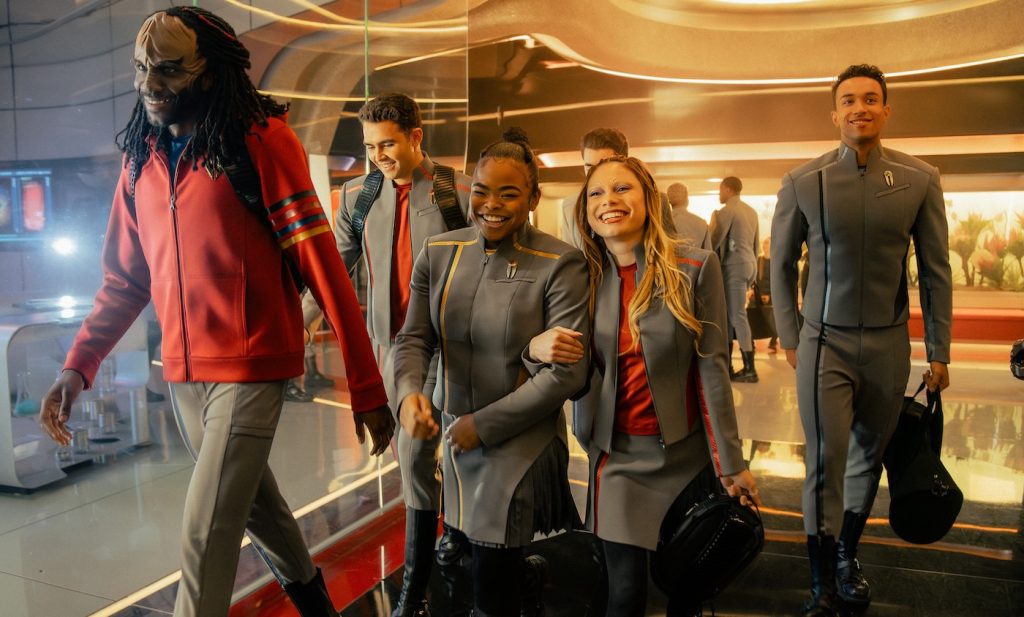
In episode 104, the flare seems to serve as a spotlight on Jay-Den’s emotional journey.
That was a big moment for Jay-Den, and I think that really heightens it—just the pressure, the lights, and being in the spotlight, which wasn’t his comfort zone. It forces him to go into his past, remember his brother and why he’s at Starfleet in the first place, and rekindle the courage within himself.
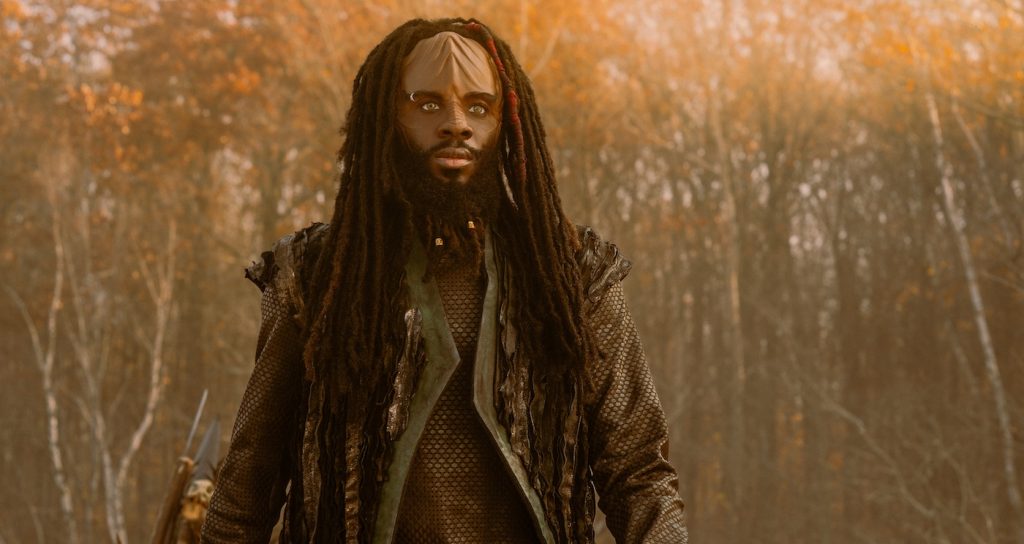
How did you shoot the flashbacks to his family in that episode?
We shot a lot of that on 16mm film. When we watch old film footage, it feels like a memory, so I wanted to bring that in visually. I pitched the producers on it, went to the location to shoot some Super 8 and 16mm, showed them the tests, and they really liked it. We shot it both digitally and on film, and used the film to get in and out of scenes and reinforce that this happened a long time ago in another place. And also just the graininess and texture of it, with the fall colors, it felt like it really gave you a sense that it was real and it was there. We were in this very remote, beautiful location, and it really brought out all the tones. We were blessed with great weather and incredible colors on the trees, which I won’t take credit for.
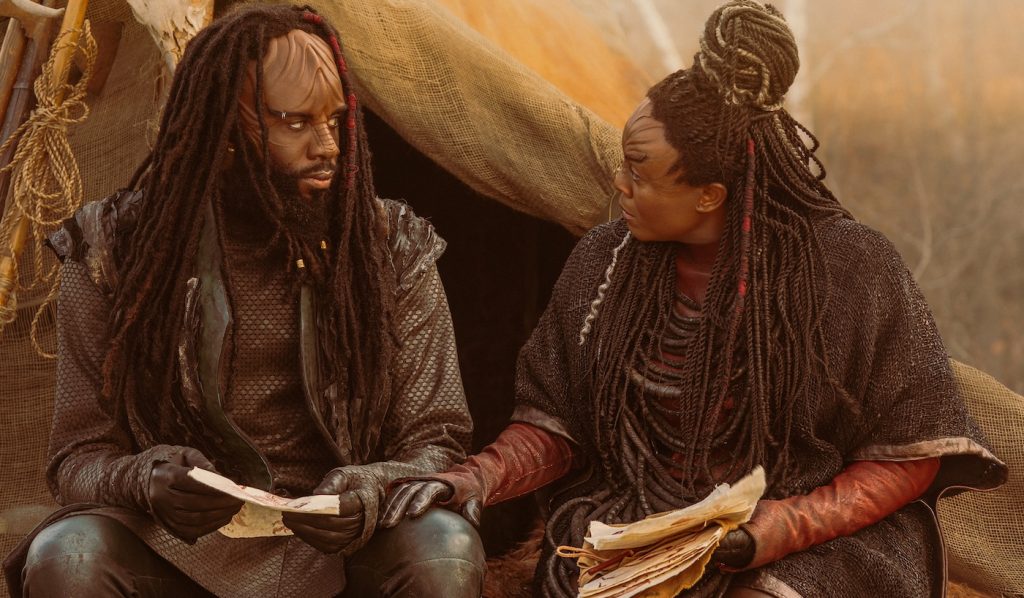
Was 104 the only episode where you utilized film?
Correct. It really felt special to Jay-Den in that moment of flashback. It felt like we could do it there as a standalone piece.
The lighting in that episode also really guides Jay-Den’s arc throughout the Klingon debate.
We wanted to make the beginning like every other day at Starfleet. This was a class that everyone was taking. Jay-Den’s anxiety comes as a surprise to himself and us. As he gains courage, we start to heighten the visuals to support that.
Much of what you’ve worked on across the Star Trek universe has been filmed in Canada. How has that been?
I shot three Star Trek projects in Toronto. I’ve shot a lot on the east coast of Canada, we shot Picard in LA, and I’m based in Vancouver. But yeah, wonderful crews. We have a massive amount of technical knowledge, resources, and gear to create these wonderful worlds. And on top of that, working for years and years, we’ve rolled over a lot of crew, so it really feels like our Star Trek family.
The country seems amazing for advancing a film career.
It’s a big, thriving film community up here, both in Toronto and Vancouver, and everywhere in between. There are a lot of good opportunities.
What was your approach to the student battles of episode 103?
A lot of that credit goes to our director, Doug Aarniokoski. He won’t shy away from three or four cameras at a time. We really plan out the action sequences and push the lenses and push the light. We had tons of fire, smoke, and atmosphere. The scenes shot outside at night were filmed in a gravel lot near Pinewood. It’s amazing how much footage and story we captured in just one night of shooting with four cameras and a drone, using very real-time blocking. We’d find little pieces of action we loved, reset that action, and get all those little pieces to tell a story. We did a lot more planning for the Callica game [a fast-paced, phaser-based team sport] in the atrium itself. We had a lot more time on it to design the look, come up with the two colors that gave you a visual sense of two sides, and program all that color and lighting into the space.
You also get a real sense of practical space and action in-camera.
I think a lot of what we do is practical, and we strive to make it feel grounded, realistic, and believable. These sets you walk onto, you feel like you’re on the bridge, in the dorms, the hallways, or the atrium. Matthew Davis did a wonderful job designing these sets. The visual effects are peppered throughout to make the world feel more like the future. Obviously, gun fire and laser fire, we’re putting a lot of that in, although we used practical lasers in the outdoor scenes. We try to do as much in-camera as possible.
Was there anything on Starfleet Academy that felt like a direct advancement from previous Star Trek projects?
Tommy Maddox-Upshaw, who shot Man Who Fell To Earth with Alex Kurtzman, came aboard this and did a lot of work building Starfleet Academy’s visual world. There’s a lot of new language, and it was really refreshing to get new ways of thinking about it. Again, going to the 16:9, but also different lenses, different size format, we had languages like being a little closer, wider on the cadets, and maybe looking down on them sometimes, or being more in their perspective, and then a little longer lens on the adults to be more traditional about it. The cadets are growing up, and everything’s bright and sunny, so we used harder, more flared lighting for the cadets, and for the instructors, it was a little more traditional and grounded.
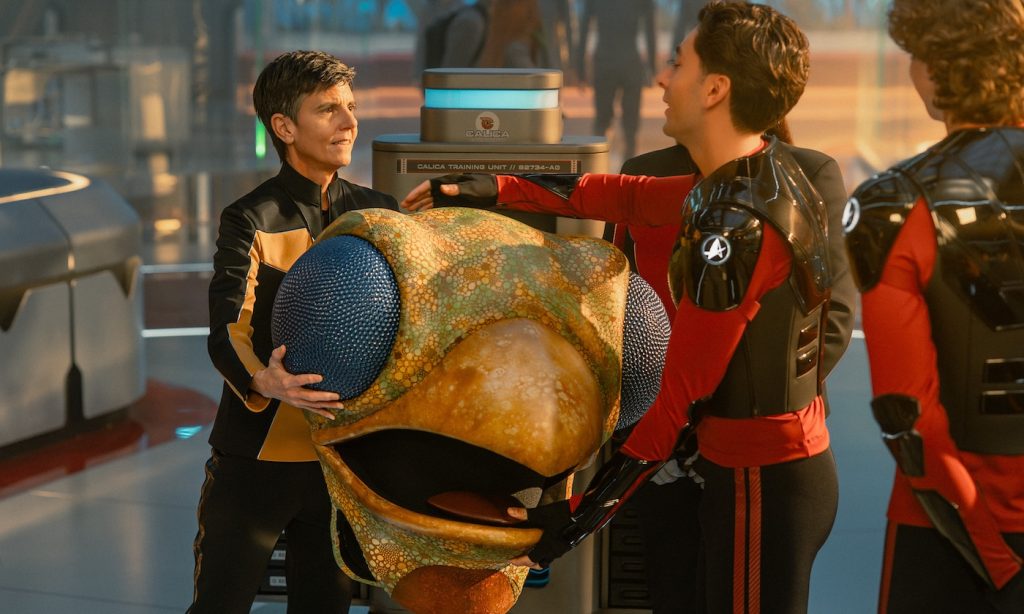
Did you have any visual references from outside the Star Trek world?
There’s a movie called Booksmart, it’s a comedy. We had a lot of early discussions about how to lens comedy and what a funny frame meant. You’ll find those in certain places. Sometimes we just cut wide and let the action take place in a full-body shot.
It’s also incredible that this series represents a 60th-anniversary tentpole.
It’s amazing that this has been part of our culture for so long and continues to thrive, sending a positive message. I think Starfleet Academy hits that note even harder and more beautifully. It’s very appropriate for the time.
Featured image: Sandro Rosta as Caleb Mir in Star Trek: Starfleet Academy, episode 3, season 1, streaming on Paramount+, 3035. Photo Credit: Brooke Palmer/Paramount+.