“How to Rob a Bank” Producer Kelly McCormick on the Emotional DNA of 87North’s Blockbusters
Kelly McCormick’s business is action. She’s the co-founder of 87North Productions, a company behind a slew of crowd-pleasing, kinetically propulsive action movies. There’s Atomic Blonde, The Fall Guy, Bullet Train, and the Nobody and Violent Night franchises. She’s a producer who wants to see character not only between the hits but behind every hit and kick.
McCormick and her partner, filmmaker and 87North co-founder David Leitch, have most recently unleashed How to Rob a Bank (in theaters now). The original film follows a crew of live-blogging robbers, led by The Wolf (Nicholas Hoult) and his partner, Emi (Anna Sawai), as they pull off intricate heists with their fearless crew. The public rallies behind them as they play criminally online Robin Hoods, stealing from the banks and giving back to the people.
How to Rob a Bank was shot largely on film by Leitch and his go-to cinematographer Jonathan Sela. Together, McCormick and Leitch have assembled a committed crew versed in relentless action. McCormick spoke with The Credits about the high-octane DNA at the core of 87North’s mission.
When you and David first started working together, how did you both connect over what you wanted to see in movies?
He comes from action, and I come from, honestly, arthouse. I did a stint at Rudin Productions, and then I worked for Andy Fierberg, who was known for New York arthouse movies back in the day. It was the later stage of his career, but I just wanted to do some production. I got to be on the ground making some stuff and didn’t ever want to leave New York. My story bones and my obsession about arthouse could not be more opposite of where David came from. He comes from basically the beginnings of MMA into stunting, coordinating, and then directing the second unit, et cetera. It’s probably the perfect mix that we have, but I will say, David is an emotional storyteller in his own right.
You two ultimately bonded over story?
There is a synchronicity to how we see the movies. He was my gateway drug to understanding that action is a physical manifestation of melodrama. I don’t know if he knew that or not, but that’s what I call it. He’s like, “It’s action.” I’m like, “No, it’s a physical manifestation of melodrama.” But that’s the yin and yang, high and low of the game that we play.
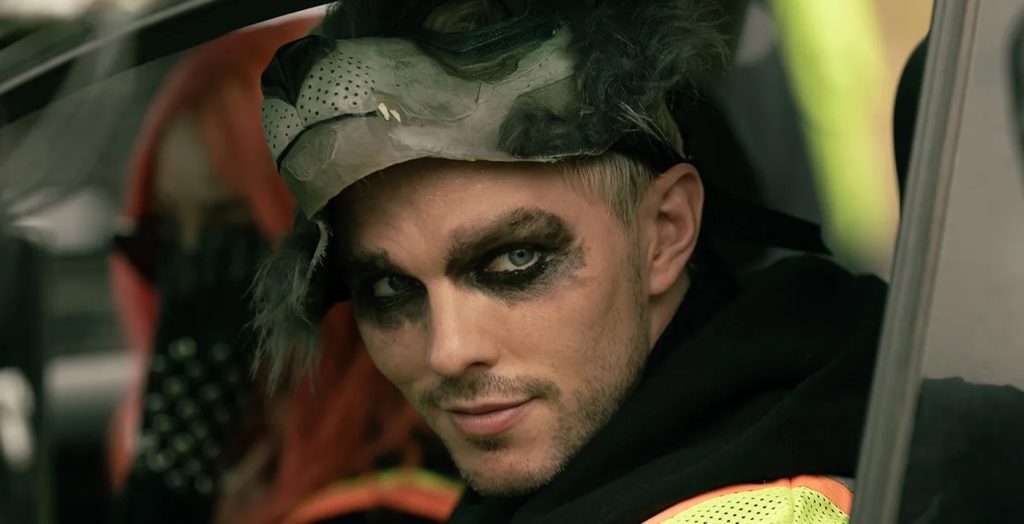
Photo credit: Megan Schoenbachler © 2026 Amazon Content Services LLC. All Rights Reserved.
You two do make action movies that leave enough breathing room for characters and personalities to flourish, like The Fall Guy or How to Rob a Bank. As action-heavy as these movies are, how much do you two fight for character?
I don’t know if we fight for them, but they are requirements for our movies. I think they come from David and Elísabet Ronaldsdóttir, our editor. Elísabet comes from documentaries, and so do I, by the way, which is one of the things that we click on. Before arthouse, I was sort of a failed documentarian, but regardless, she’s also Icelandic. She does have a bit of a European sensibility to filmmaking. She longs for those moments and falls in love with moments of sweetness, absurdity, or hilarity. If you’re telling it as tight as possible, there’s no room for this, but if you let it breathe, it tells you so much more about everybody.
You, David, and 87North work with a lot of the same crew members, almost like a traveling action band. Was that always an ambition for both of you, finding talent and sticking with them?
It is really important to David and me. The fact that we’re married and make films is probably where it starts a little bit, but it’s also that we’re both Midwesterners who just ended up leaving the heartland and moving to the coast. Loyalty means a lot to us. With our core creatives, some of them I can’t even imagine making movies, David’s films, without them.
Do you have consistent production goals for you and the 87North crew?
The challenge is to make sure we’re always pushing each other to not settle. We want to evolve and grow, find our way into different material, and challenge each other when it feels like we’re stealing from ourselves. I think that team is really good at doing that for each other as well. It’s pretty insane. We’re very lucky.
How were the Pittsburgh crews? From protests to car chases, they got a lot done in How to Rob a Bank.
They are really experienced. They’ve done a lot of television there. The Teamsters are real there because that’s a real place for real unions, which is pretty incredible to have been around, and just that energy and that force of that system and unionism. I think that they all fell in love with what we were trying to make. We were stretching to get… I always say 800 pounds of sh*t in a two-pound bag. It’s not sh*t, it’s…
Candy?
[Laughs] Yes, as much as possible. David Leitch and Jonathan Sela, our DP, are machines. They run a crew like nobody’s business. We get so much. We were just going hog wild, and they were like, “What in the world are we on this wild Toad’s ride for?” We were so proud of them. They just stepped up, delivered again and again and again.
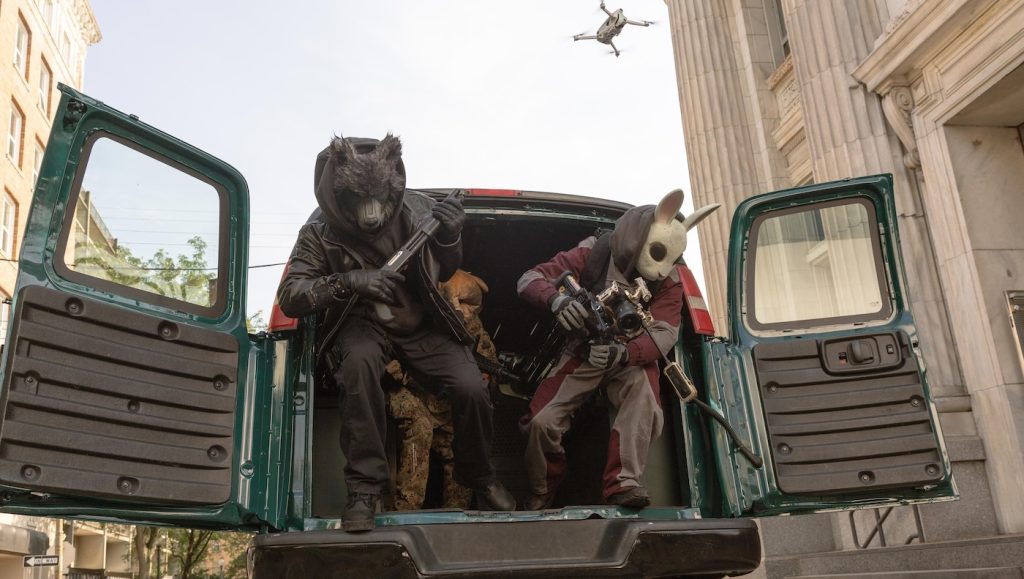
Especially with the finale. A lot of extra and stunt work there.
I have to shout out the background actors in the riot sequence. You come onto a show, and you do a day as an extra. Oftentimes that’s the only day you ever do, even if you’re supposed to be there again, because it’s a lot of work. Especially when you do one at night, all night long. What happened in Pittsburgh was something I’d never seen before, which was not only did everybody keep coming every night, but they started bringing friends. They just kept coming and having basically a party for two weeks of long nights.
Are you a producer with a five-year plan? Is that even possible in Hollywood anymore, to have a five-year plan?
I wish I did a better job at it. It might look like I’m super strategized, and I do have plans, but it’s about the work. It’s about being true to the moment and focusing hard on the work at hand. Our creative team, we don’t want to let them down. Our actors, we can’t let them down. And then our studio partners, we want to do everything we can to make them proud of the material, and hopefully, make a bunch of money too. We’ve had a lot of luck doing that, but that takes so much energy. To think about the next something has to happen after now, if that makes sense. But I spend a lot of time thinking about it.
You and David make movies for the big screen. This past summer was especially inspiring for theater chains and moviegoing. How important is the theatrical experience to you?
I believe people want to go out and do things again, and I think movies are a great way to do it. It is a communal experience, and you can enjoy it at home anytime you want, but that first time, just see what it feels like to go out there with everybody else…if they’re having a blast and feeling all the feels, there’s nothing quite like it. I think we are presenting performances, stunts, moments of shock and awe and joy and all of it in a way that is big enough for a big screen and that you really feel differently when you’re there.
To end with the beginning, as you said, you have a more arthouse sensibility. So, what was the lightbulb moment when you started seeing the beauty in action?
There was a moment when David, early on, I wasn’t supposed to be managing David. I was just working for this manager guy, Lawrence Mattis, who’s amazing, doing his producing, but we weren’t really getting a lot done producing. So he was like, “Maybe you should just meet these guys next time we’re in LA.” I went to LA and met David and Chad [Stahelski], and David took me into the dojo. Somebody was training.
Well, before you produced, David and Chad co-directed John Wick, right?
They were coordinating at the time. David was explaining how even when they’re training somebody, they’re thinking about character, about the way that the person moves, and how they feel about action, even. They were looking for ways to create a character and the character’s toolbox of action. When they were choreographing a scene, there was a beginning, middle, and end. Each action set piece is built around the character’s arc. It resonated with me. It’s storytelling; it’s just an addition to tension, release, highs and lows, the experience that the character is going through. It’s nonverbal.
You were hooked by the visual storytelling.
With cinema, the less talk, the better for me. I know David doesn’t always feel that way, but for me, the less talking, the better [Laughs]. Let them express themselves. Let’s watch this glory of action without speaking. It dawned on me how beautiful that addition to storytelling is, and that was my lightbulb moment.
Featured image: April 8, 2024: KELLY MCCORMICK attends the Australian Premiere of ‘The Fall Guy’ at The State Theatre on April 08, 2024 in Sydney, NSW Australia (Credit Image: © Christopher Khoury/Australian Press Agency via ZUMA Press Wire) EDITORIAL USAGE ONLY! Not for Commercial USAGE!