
How “Marty Supreme” Put Oscar-Nominated Production Designer Jack Fisk in a New York State of Mind
It began just over three years ago with a phone call. Jack Fisk was shooting Killers of the Flower Moon on location in Oklahoma when Josh Safdie reached out. The filmmaker was putting together a new project and wanted Fisk as his production designer. His response? “I sort of said, ‘Okay,’ thinking I had never aspired to do a film about a ping pong player,” Fisk remembers during a Zoom conversation.
Fisk found Safdie’s enthusiasm hard to resist. After watching Uncut Gems, Safdie’s previous film, Fisk knew this was a guy he wanted to work with. Three years later, the phone rang again. Safdie had the money and Timothée Chalamet was on board to star. And that’s when Marty Supreme became Fisk’s next film.
Set in 1952, Chalamet plays Marty Mauser, the aforementioned ping pong player. A master with a paddle, Marty sees it as his ticket to fame and fortune. And he’s willing to lie, cheat and steal to reach that goal. With an oversized ego and confidence to spare, Marty embarks on a frenetic quest that includes romancing a movie star (Gwyneth Paltrow), hustling her ruthless businessman husband (Kevin O’Leary), taking money from a mobster (Abel Ferrara), surviving a couple of shoot-outs (one involving Penn & Teller’s Penn Jillette), and facing off against the world’s top player in Japan (Koto Kawaguchi). All the while, Marty is coping with becoming a father after learning his girlfriend (Odessa A’zion) is pregnant.
In addition to directing, Safdie co-wrote and co-edited Marty Supreme with Ronald Bronstein. Safdie’s passion drew Fisk to the project. But there was another reason he couldn’t resist. Having created the looks for the likes of There Will Be Blood, The Revenant and Killers of the Flower Moon (all of which earned him Oscar nominations), the production designer was ready for a change of scenery.
“The fact that it was taking place in New York,” admits Fisk. “I was excited about that. I hadn’t really worked in New York my whole career.”
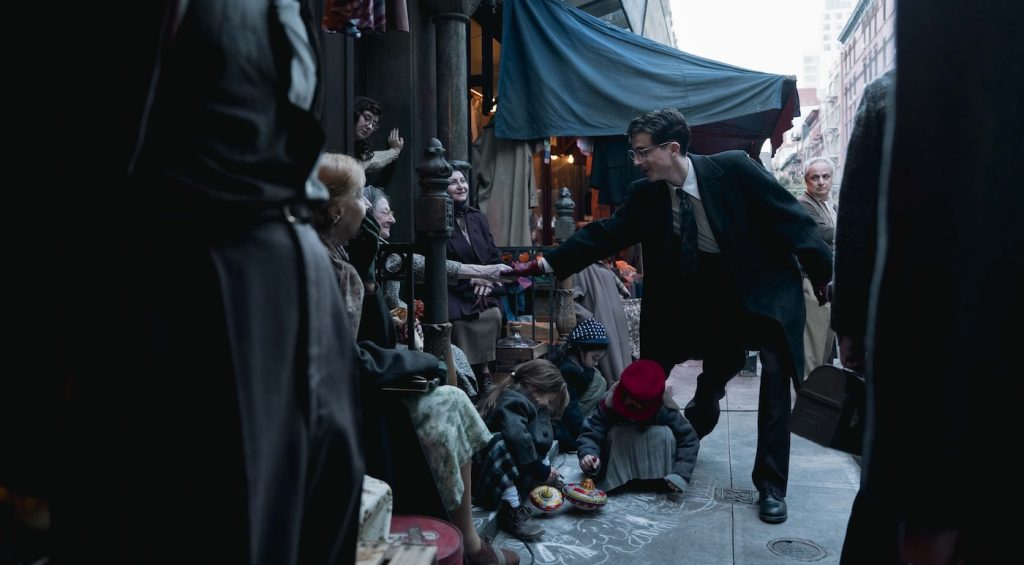
Fisk and Safdie began exchanging archival photos of the Lower East Side. Having grown up there in the 1980s, Safdie knew it well. Fisk called it home in the 1960s, and had insights about its look before the director was born.
Next, the two swapped design sketches each had drawn. Fisk jokes that Safdie would have made a great addition to the art department. They visited the Tenement Museum, a National Historic Site on Orchid Street that features two preserved apartment buildings from the late 1800s. “They had left them intact,” explains Fisk. “You could go in there and see the scale, the colors, the size of what people were living in on the Lower East Side.”
Another key find was Orchid Street, a 12-minute short from 1955 by Ken Jacobs. It richly detailed the street life, as well as the colorful storefronts and street vendors. “I think Josh went to The Museum of Modern Art, saw the film, and recorded it on his iPhone,” says Fisk, smiling. “So it was a bootleg copy. But it informed us, and we shared it around the department. And then we got a nice quality full-blown copy.”
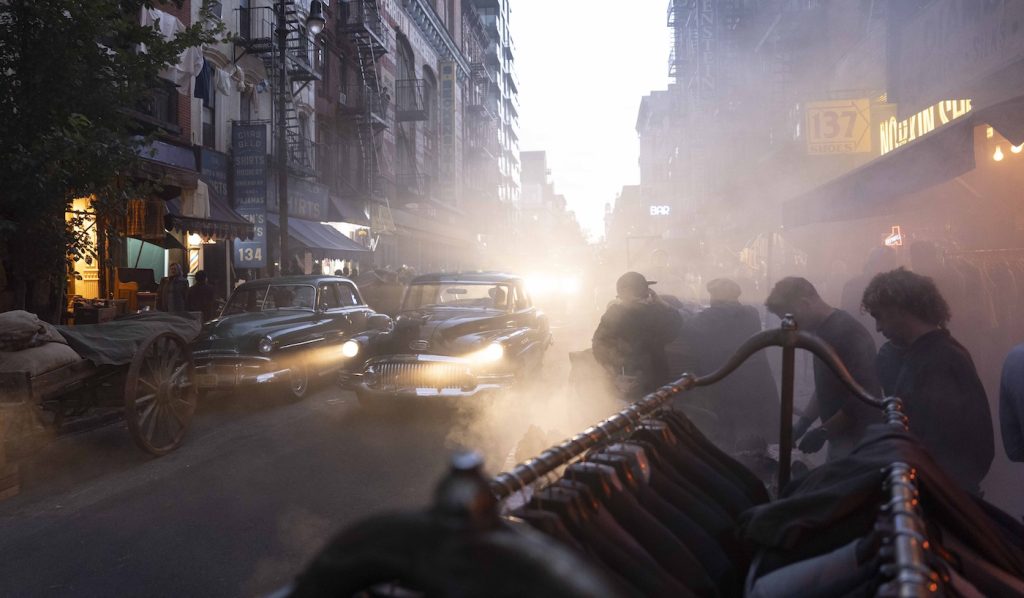
It became obvious. This was Marty’s home. “There’s something that emanates from the streets on the Lower East Side that’s hard to recreate,” Fisk continues. “The scale is right — the width of the streets, the scale of the buildings, textures. There’s just something in the DNA of those blocks that I wanted to take advantage of. And Josh did too.”
Not to say it wouldn’t be challenging.
Some old storefronts were long gone. Solid sheets of glass had replaced wood-framed window facades. “They look like a designer shop in Italy,” Fisk says. “So, studying the old photographs and looking at what we had, I developed a modular storefront system that we could put in front of those stores. That gave us a 1950s texture.”
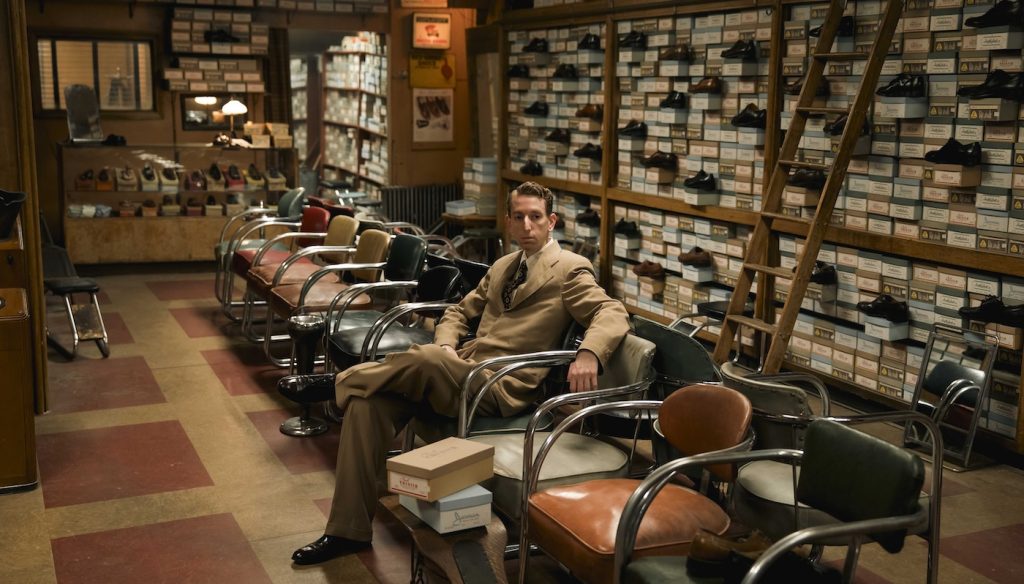
Fisk estimates six or seven modules were created. One fronted a new hotel yet to open, adjacent to the location that served as the shoe store where Marty worked. “They didn’t want us to touch the hotel,” Fisk says. “They rented us the space in front of it for a high dollar, but we couldn’t touch it.”
Many of the storefronts had roll-up metal doors, a feature that didn’t exist in the 1950s. When they could, Fisk’s team removed them. When they couldn’t, they masked them with awnings.
Fortunately, Fisk had a guy for that — set decorator Adam Willis. “He’s a specialist in awnings,” says Fisk. “He had done it on Killers of the Flower Moon and brought that expertise to this. He found the old-style frameworks, and we used them to resurrect the awnings.”
One of the toughest tasks was masking all the graffiti. But Fisk has the perfect tool to address this.
“We were able to hide a lot of stuff not right for the period or offensive with signage,” Fisk reveals. “Some stores were in pretty good shape, and we just painted them. But if you look at the stores, they’re mostly signs. We made hundreds of them. They were in Yiddish and English. Most of them were hand-painted and had heavier moldings. Some of them were paper. Some were cardboard. Some were wood. Some had neon. We had a great graphics department, and we had just a great painting department to age the signs.”
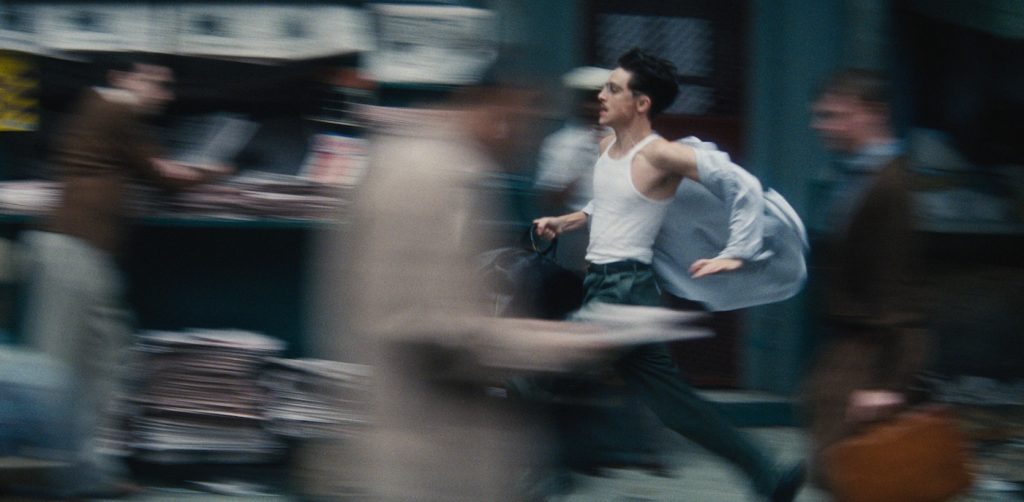
One of Fisk’s favorites was the sign that hung above the shoe shop. Sadly, it didn’t make the final cut. It’s just above the frame in a scene where Marty runs down the street. But Fisk has no regrets. He knows everything his team crafted helped make Marty Supreme so vibrant.
“I was almost like a kid going to an amusement park because there were so many layers. There’s so much that we put into that street that will never be seen,” Fisk continues. “We actually gave Josh a lot more than he needed because he shoots with long lenses and moves quickly. There are films where they do it low cost, but you can’t move the camera. I wanted to give Josh the freedom to do whatever he wanted. It’s such a frenetic film, and you can tell we gave him that option.”
The effort didn’t go unnoticed. Marty Supreme brought Fisk his fourth Oscar nomination. In total, the film received nine nominations, including Best Picture. But as honored as Fisk is by the recognition, just as important to him was the experience.
“First of all, the most important thing is to have fun,” says Fisk. “You hope the sum is greater than all the parts. That’s a magical thing you can’t predict. Some of it’s chemistry, some just luck, some genius. Whatever it is, I thought this film had that. Everybody came together at the same time wanting to make the same film.”
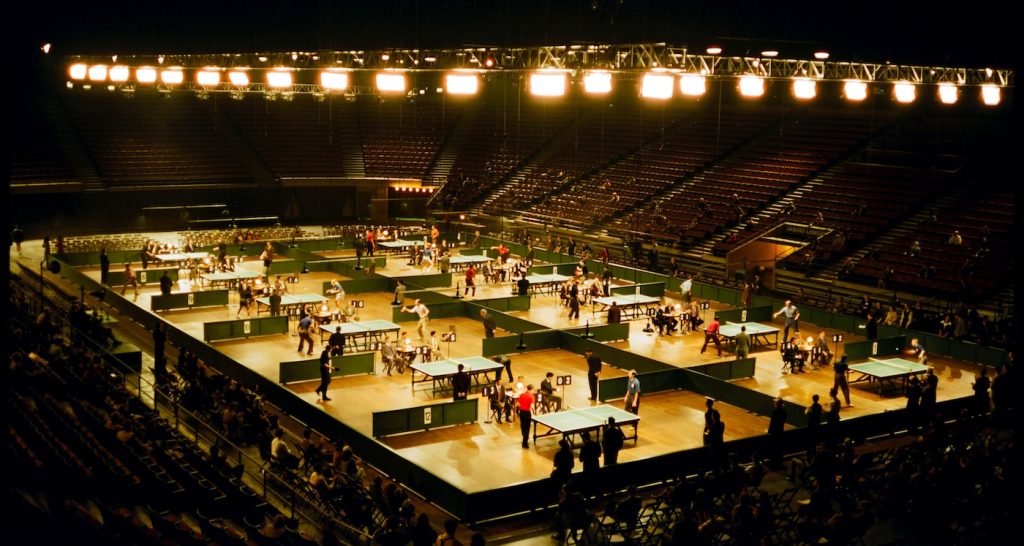
Fisk offers shout-outs to the painting crew, the construction crew, the prop shops, and Alex Gorodetsky, the charge scenic artist. The art department grew so tight that everyone is flying out on their own dime to attend the Art Directors Guild Awards on February 28.
“We had to do some theatre flats. We called a theatre company to do it, and they said, ‘Well, two months out.’ Well, we needed them by Tuesday. I told Alex, and he ended up getting them done a day ahead of time,” Fisk remembers. “And that happened in every department. We had people bringing pets for the pet store. People finding stuff and bringing it in saying, ‘You need this. You need that.’ We made like 8,000 shoe boxes. It was just one of the most fun shoots I’ve been on because there were so many people involved and so excited about it.”
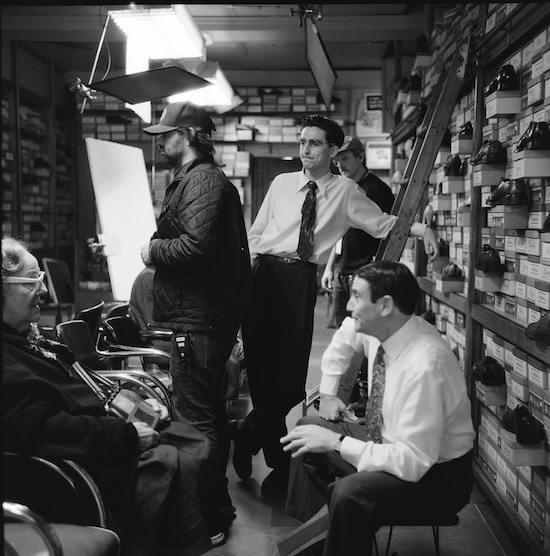
Fisk credits Safdie for setting the tone. “Josh was an inspirational leader,” says Fisk. “He got so excited every time we shot something that it made you want to do more. And then he’d get excited about that. You never really had time to sit and reflect. You had to keep up with him. You can’t say, “Call me in my office.’ He was never in the office. We were always on the street walking around looking at stuff.”
Featured image: Timothée Chalamet and Josh Safdie on the set of “Marty Supreme.”