“Supergirl” Director Craig Gillespie on Embracing Grit, Texture & Practical Magic for Kara Zor-El’s Wild Ride
If director Craig Gillespie could sum up his vision for Supergirl (premiering June 26) in one word, it would be tactile. The filmmaker, known for films such as Oscar-winning I, Tonya, Cruella, and Lars and the Real Girl, wanted the world his superhero heroine existed in to be messy, textured, and real, from her makeup-free appearance to the soles of her shoes.
When a ruthless mercenary called Krem (Matthias Schoenaerts) puts the life of her beloved dog Krypto on the line, Kara Zor-El, aka Supergirl (Milly Alcock), joins forces with two unlikely companions, an orphan called Ruthye (Eve Ridley) and cigar-smoking bounty hunter Lobo (Jason Momoa), on an epic journey of vengeance and justice. Largely filmed in the UK and Iceland, with partial filming in Los Angeles, Supergirl‘s ensemble cast includes David Krumholtz as Kara’s father, Zor-El, and David Corenswet, who returns as Superman.
Talking to The Credits, Australian filmmaker Gillespie discusses combining US and UK expertise to bring his version of the canon DC Comics character to the big screen, and why he tried to capture as much as possible in camera.
Supergirl isn’t the first film you’ve made in the UK. Did you bring back as many people as possible that you’d worked with before?
Always, as much as I can, but it’s so busy in the UK. I had my AD, Alex Oakley, who is a huge part of this process, because the schedule for this was enormous. Other department heads weren’t available, like Fiona Crombie, with whom I did Cruella, who was off doing Mickey 17 at the time, and there were others whom I couldn’t get hold of.
Your cinematographer, Rob Hardy, was a Brit as well.
My regular DP, Nicolas Karakatsanis, couldn’t do it for personal reasons. We worked together on Cruella and I, Tonya, but I had worked with Rob on commercials and love his work. There is a grit and a fearlessness to his cinematography that we really wanted to lean into. He has a messiness that he’ll embrace that I love that you don’t normally get in a tent pole film. There’s an enormous depth to the crews there. There is so much production happening there, and there is real artistry going on in Britain, particularly in the wardrobe department, production design, set decorators, and craftspeople, all the way down. The attention to detail and the creative sensibility are amazing. I do love that about them. There’s such a deep well of talent.
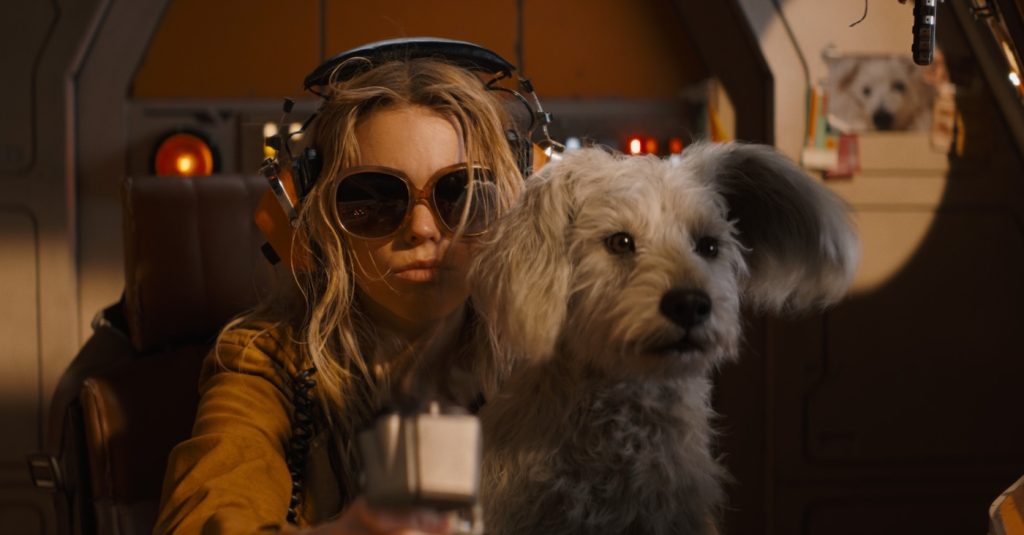
You mention the attention to detail, and I want to talk very briefly about the colors and textures of Supergirl. It has a very rich look, it’s very sticky, and it’s very visually tactile.
Tactile is literally a word that I used to describe the look. There is a grit to it, and it’s something you don’t often see in this world when you go into space. Everything usually looks brand new, everybody’s wearing clean clothes, and I kept pulling these images of things that had this messiness and dirt to them. Rob Hardy was using references from things like Thelma and Louise, just for the vibrancy of the neons and the use of color in the late 80s. It was really interesting. It was also about not being afraid of the flares and the smoke and all that stuff, which, conventionally these days, you don’t necessarily see much of. It often looks a lot cleaner. Everything we were trying to do was make it look messy, add film grain to our colors, and include all those details to try to make it feel lived-in and sweaty. First and foremost, we had Milly looking unbathed for the whole film.
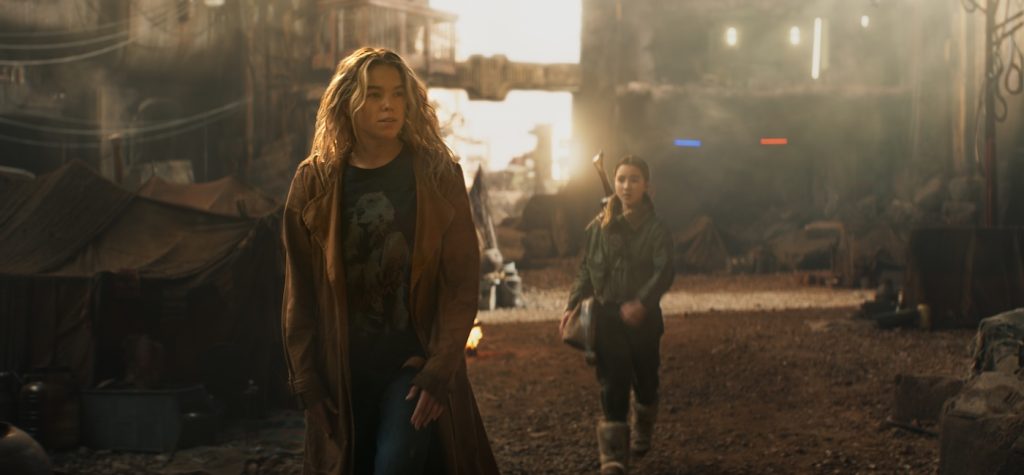
There is an authentic earthiness to her. How did you explain to the creative team the visual muskiness that you wanted?
We had that luxury because her ship is stolen at the beginning of the film, and there’s basically a 72-hour journey where she wears the same clothes the whole time. The last thing she would care about is bathing or grooming. She’s on this very direct mission to save her dog. There were times on this set where I would get her in front of the camera, and I’d turn to makeup and say, “Is she wearing eyeliner? Is she wearing anything right now? She’s not wearing any makeup, right?” I was really critical. I would even ask them to make her look a little messier, dirtier, or dustier. I always keep an eye on that. I’d look at everything, even down to the soles of the shoes. I’d be like, “Scuff them up.”
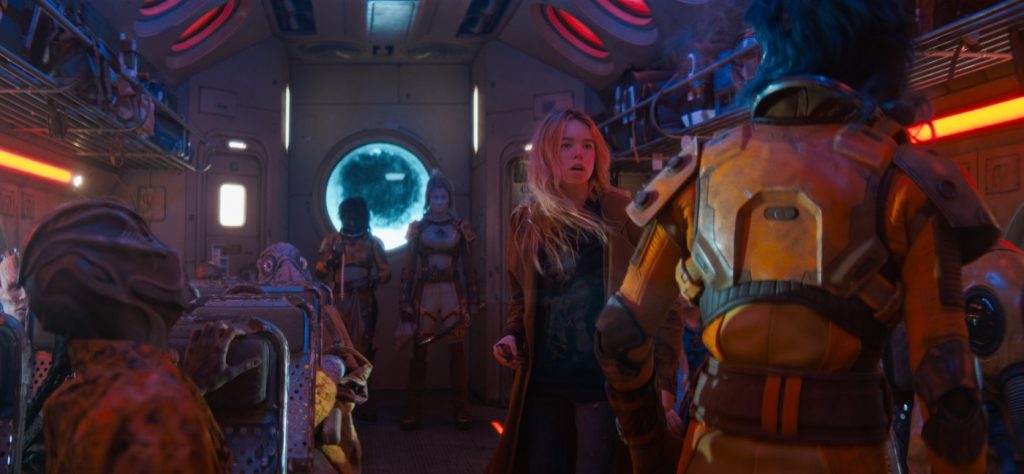
You lean heavily into practical effects and physical production elements in Supergirl. Why was that important?
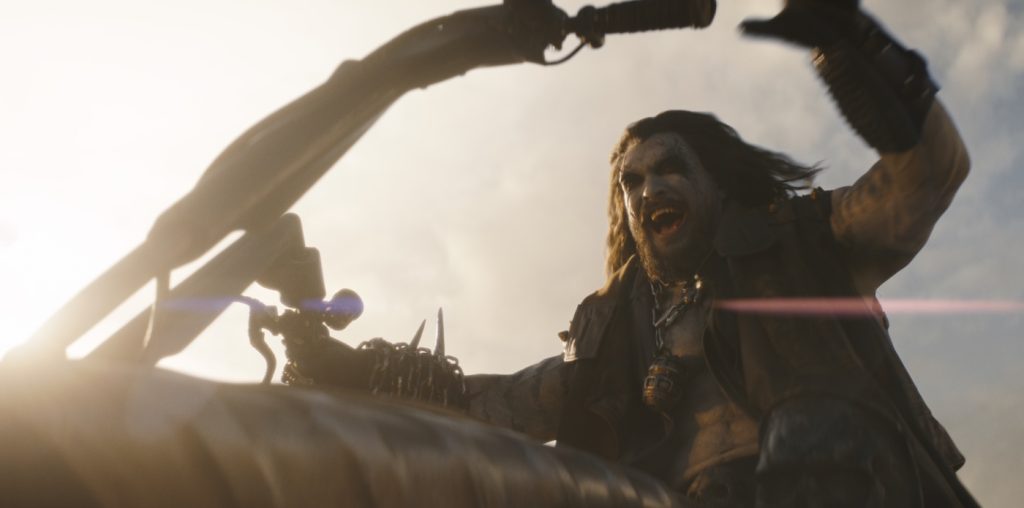
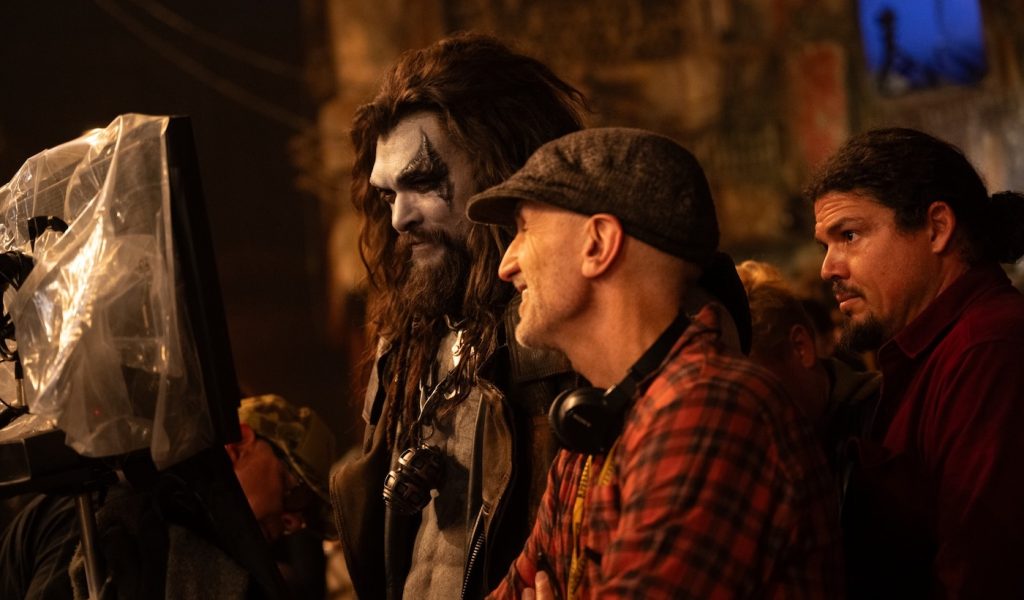
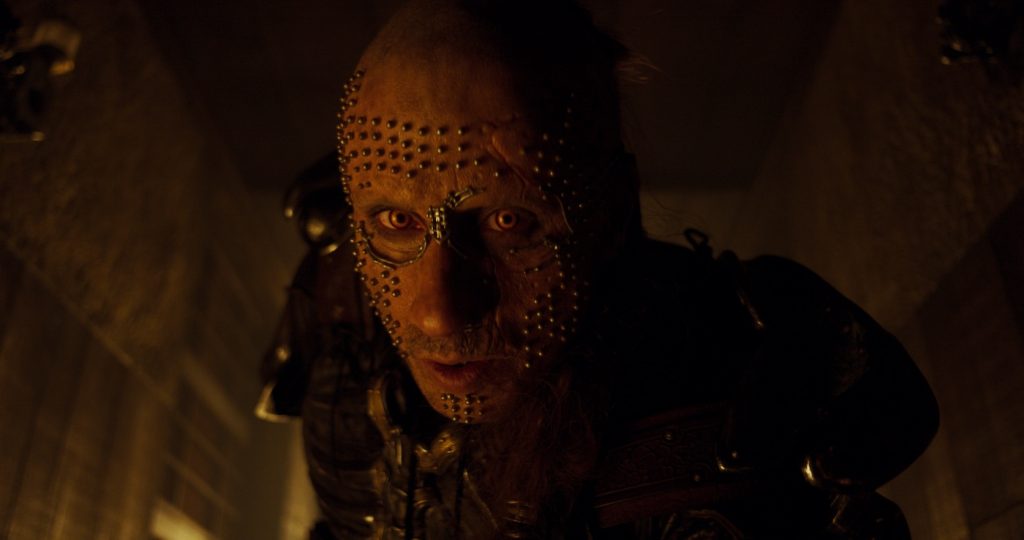
I haven’t done the actual headcount, but we had at least 50 different types of aliens in this film. We had Legacy Effects in California do six that were very complex and performance-driven, but our team in London created all the ones on the Space Bus. They were incredibly talented and created things like the Pooping Alien. I feel like film audiences are so savvy about special effects, especially when they are done poorly. When you start from a practical place, it sets the bar. We’re going to add digital blinking and things like that, but when you’re dealing with interactive light and movement, and being in the space with these prosthetics and complex animatronics, you have to make it work. That makes it much trickier, in a good way, for visual effects. We had the actual tanks that were a ton and a half that would drive around on set. I insisted on Lobo’s motorbike being practical. They were like, “Can we put it on rails?” and I was like, “Nope, he’s going to ride it, and he’s going to ride it through 50 stuntmen on, with explosions.” We went old-school and had stunt guys on fire in the background, so we did as much as we could in-camera.
That level of practical effects at this scale is quite new to you. Was that a challenge?
Candidly, it was more about the length of it. I’ve been shooting commercials for 30 years, so I’ve done some big practical effects, and The Finest Hours was a very effects-heavy movie. I’m familiar with all the tools, but it was the longevity. The action sequences were the fun of it. I was excited about the action and getting to work at a larger scale than I have before. We shot that middle sequence for almost six weeks. I want to handle all the first-unit work myself, and there’s no second unit for this. That’s because I’m very particular about where her character is emotionally, and I wanted the sequence centered on that, whether it’s more kinetic and aggressive or more fluid.
I wanted to ask about shooting with the red, green, and yellow suns. Was that done practically or in post-production?
That was a big conversation that Rob and I had. Ultimately, we decided we didn’t want it to look like an effect that happened in post, so we generally added a little green or red hue, but it was more about making it look like you’d see it in the sky. That’s something that you can get away with. There’s a slight color change, and we’re making sure we have room to place the sun in the frame so it reminds the audience without being too overt.
It can be a struggle to get butts in seats for a lot of movies, tentpole or not. From an audience perspective, but also a creative perspective, why is it really important for people to turn out and buy tickets?
Honestly, the one thing about theaters is the community and this shared experience. That is obviously very current, because horror films are the best form of a shared community experience, but it also happens in comedies and in these large-scale films. Go to a film and experience that. One of my best experiences of late was watching Friendship, which could easily have been a film that you see at home. There’s nothing large-scale about it, but the way that it resonated, the tone of that, and I was in a sold-out crowd in a theater. One of the most memorable parts of it was that we had tears running down our faces; there was this shared experience of connecting with the sense of humor running through this film. It would not have been the same at all at home.
You mention horror. Have you seen Backrooms and Obsession?
Not yet, but I can’t wait to. I’ve been a little busy, but they’re at the top of my list to get out and see as soon as I can. I’m so excited about how well they’re doing. I’ve got 20-something-year-old kids who have all seen them already and loved them.
Supergirl soars into theaters on June 26.
Featured image: Director Craig Gillespie, Milly Alcock, and Eve Ridley on the set of DC Studios’ and Warner Bros. Pictures’ “SUPERGIRL”, a Warner Bros. Pictures release. (Photo by Parisa Taghizadeh)