
Five Boroughs, One Pickpocket: DP Sam Levy Captures the Big Apple in “The Only Living Pickpocket in New York”
On the wall behind Sam Levy hangs a checkerboard of photographs on dark canvas. They’re images of different light patterns that could easily pass for track artwork on Pink Floyd’s “The Dark Side of the Moon,” but for the cinematographer, they’re reminders of the sensibilities that shape his craft.
“I often dream about light, so I started taking photos because we’re always looking at light when making films. And even leaving set, you’re still looking at the way light falls,” Levy tells The Credits over a video call. Those instincts have informed Levy through a career spanning more than two decades, crafting the texture of Kelly Reichardt’s deeply humane Wendy and Lucy (2008), Noah Baumbach’s bittersweet black-and-white Frances Ha (2012), and Greta Gerwig’s sharp-witted Lady Bird (2017). His latest, Noah Segan’s The Only Living Pickpocket in New York, finds him establishing the visual language of a film steeped in old New York, where the city is every bit as central to the story as the characters themselves.
“I’d never worked with Noah before, and when we met for the first time in a coffee shop, a film he brought up was The Friends of Eddie Coyle starring Robert Mitchum. It’s a fantastic crime thriller from the ‘70s set in Boston, which is where I grew up. I was happy he brought up that film because it’s wonderful and not obvious.” The conversation turned to what they hoped to draw out of the script, which follows Harry (John Turturro), a thief who steals from the wrong person and finds himself trying to put things right.
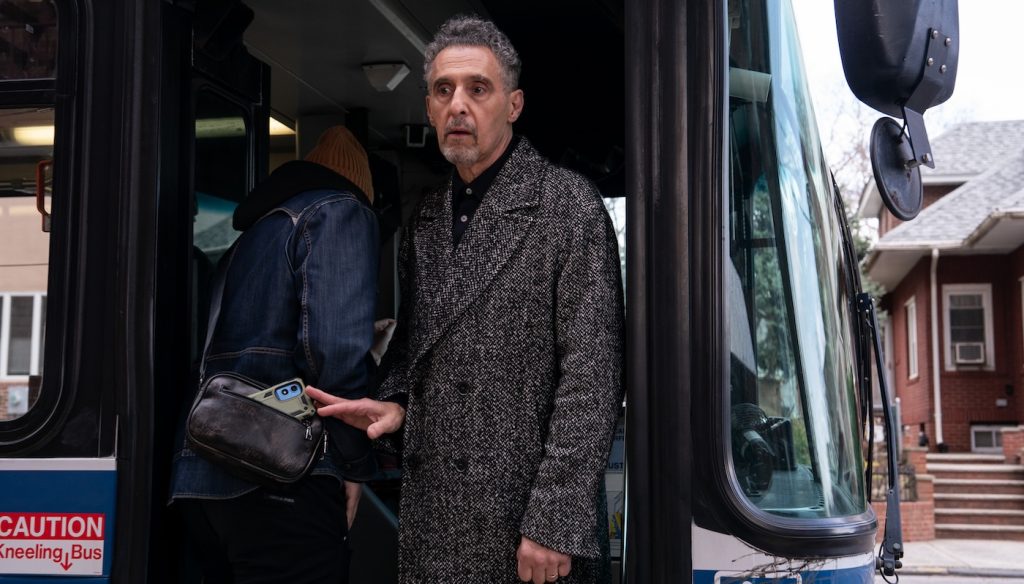
“I think we wanted the film to be extremely balanced in terms of the kind of shots we were building and creating,” notes Levy. “To me, a film is a lot like writing, and one thing that I learned about writing is you can have it be one style, but if you vary the structure of each sentence or phrase and look at the flow of words, it might be more interesting. The same goes for the tempo of shots.” The result is a film that plays out almost theatrically, with an observational camera that draws us into the dramatic moments, like inside Harry’s Bronx apartment with his bedridden wife Rosie (Karina Arroyave), before shifting during the action, particularly when Harry puts his fingers to work among the crowded streets and trains of New York.
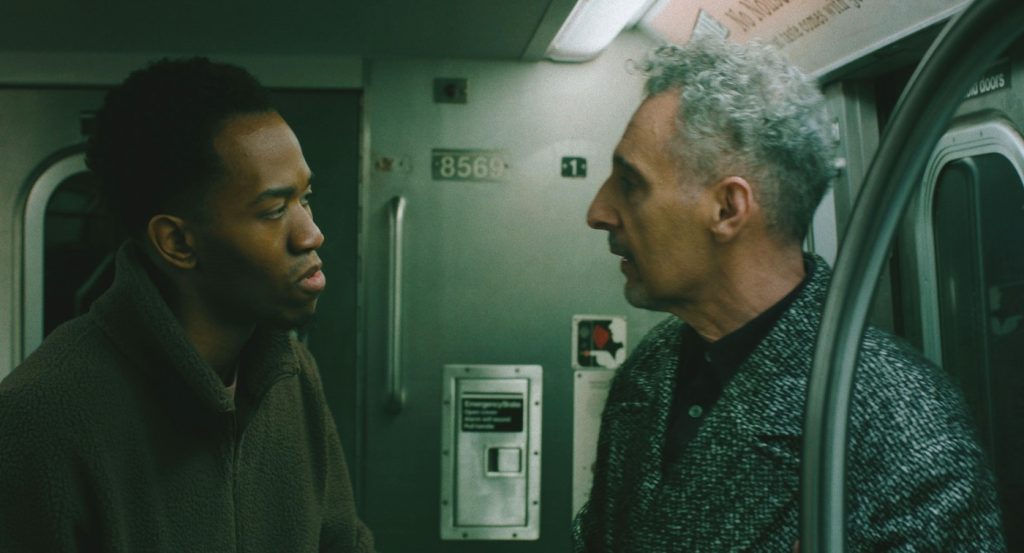
“A film we talked about with John Turturro was Robert Bresson’s L’Argent. It’s an arty crime thriller, and the thing I was more interested in about it is these close shots often turn into something else. And that was really interesting for this film because Harry is always doing stuff with his hands,” says Levy. “And there’s also this very tactile quality to the story. He’s one of those people society discards, even though he’s also a criminal and has attributes that aren’t so admirable. He’s not a violent person, and he tries to go about his business in an honorable way. So we got into the habit of shooting these tight shots. We started calling them Bresson inserts.”
Beyond a shared admiration for L’Argent, the two bonded over a connection to acclaimed cinematographer Harris Savides, who shot Turturro’s Illuminata and Baumbach’s Margot at the Wedding, which Turturro was in, and Levy worked as Savides’ camera assistant. “Harris was a wonderful man and a brilliant cinematographer. We shot this film on Super Baltar lenses, which are lenses Gordon Willis used on The Godfather, but I also had a set of Harris’s original Baltars. Harris’s daughter had them rehoused with the camera rental house TCS, and we had them with us for certain shots. It was nice to have a piece of Harris there.”
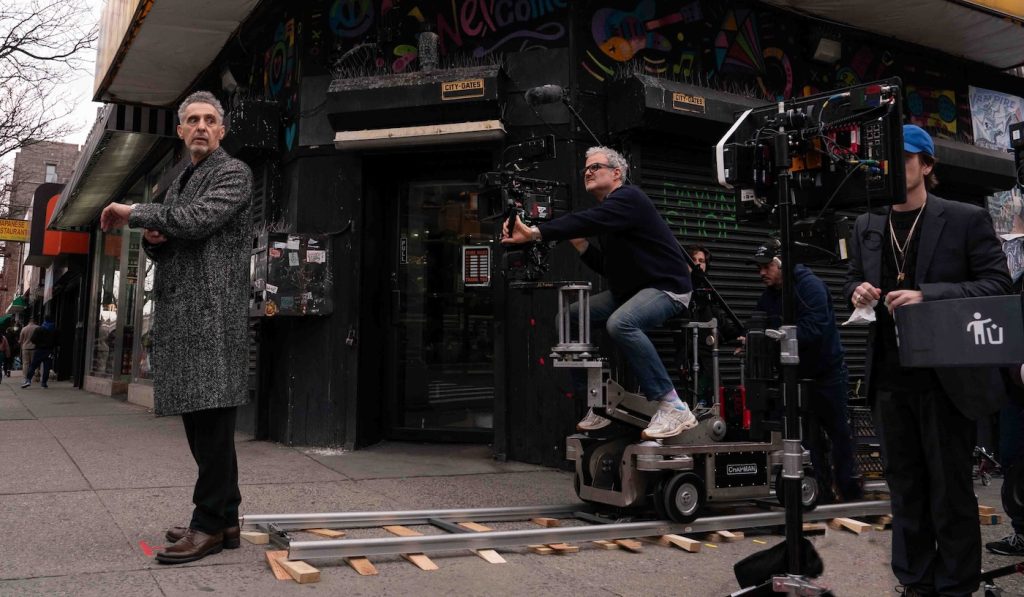
The kinship allowed the cinematographer and actor to try things out on set and present them to Segan as an option. “John’s going to give a brilliant performance because he’s a great actor and he’s extremely prepared. He’s very aware of space, how his body fits into it, and how all of that fits into the story and his character. I tried to be similar with the cinematography,” says Levy. “A big part of my job is anticipating the edit. I wanted to anticipate how these shots can go together in a particular way and be purposeful in laying moments out. John is the same way. We were very aligned.”
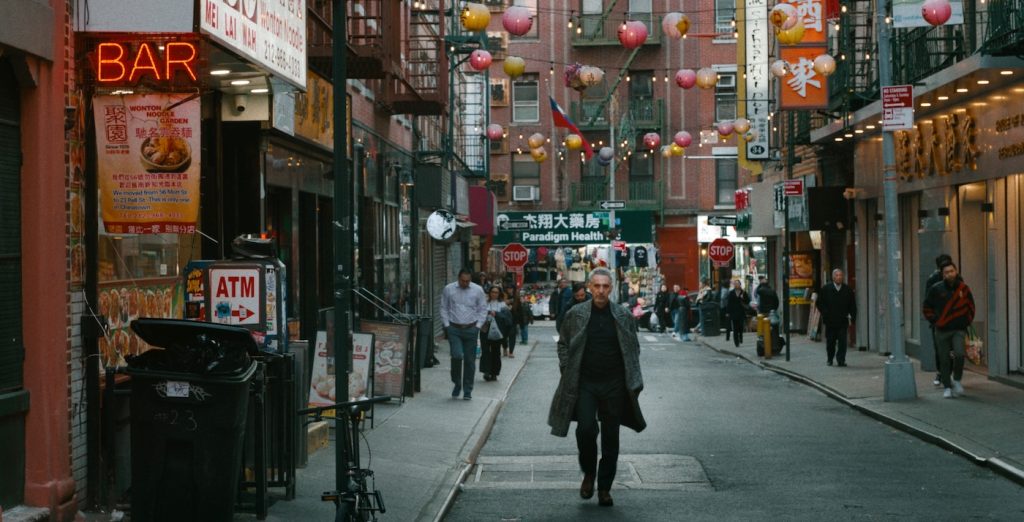
The film was shot over just 20 days, with locations spanning all five boroughs, including Pell Street in Manhattan’s Chinatown, Sunnyside, Queens, the Bronx’s Little Italy, East Village, Manhattan, and, for its climactic ending, the New York skyline from the Staten Island side of the Verrazano-Narrows Bridge. The production grounded the film’s look in real streets, restaurants, shops, and subway stations, with only a couple of days devoted to stage work. The approach makes the film feel quintessential New York. One of Levy’s favorite locations is the pawn shop where Harry tries to sell his stolen goods to the owner played by Steve Buscemi.
“The pawn shop in particular I really loved because there’s this big window. It looked out onto a big boulevard with cars and people walking by, and they couldn’t have cared less what we were doing,” he notes. “And in the pawn shop there are tons of mirrors. And I love mirrors because I think they look magical, but also they give a great sense of depth. So when you’re looking at Steve Buscemi talking to John Turturro, it’s a gigantic mirror behind him with shelves and objects. But it’s reflecting cars and people on the street, but they’re obscured, and you can’t see their faces, so there are no issues around releases.”
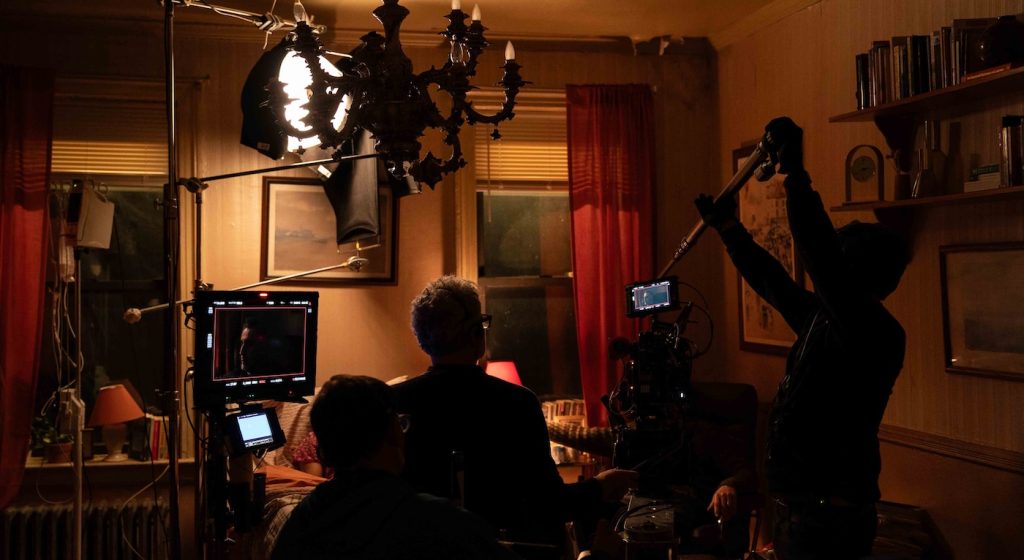
When it came to lighting, Levy pointed out his collaboration with gaffer Jason Velez and key grip Chris Keenan. “The three of us had worked together before, so that was a great help, having a shorthand with really talented crew members. And lighting in a film like this is very collaborative. To me, blocking is the first step of everything. Before composition, before lighting, before all of the other textural elements of photography and motion pictures, blocking is my primary concern. So we read a scene, and I try to anticipate what kind of blocking we might have,” he says.
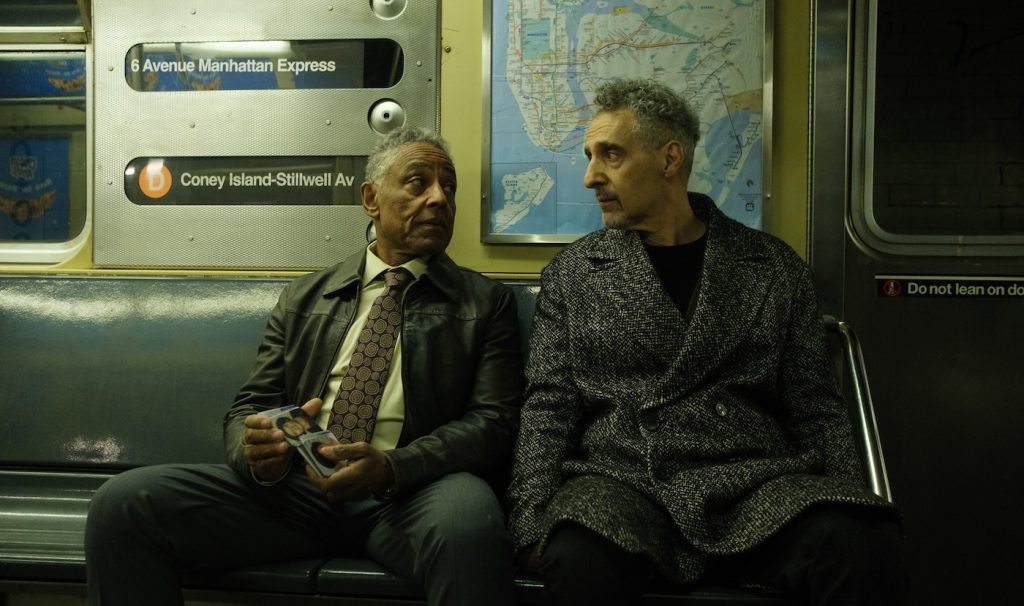
For scenes on the subway, the cinematographer leaned into fluorescent lighting. “Depending on how old the train is, there’s still a lot of fluorescent lighting. The newer ones are LED, but they feel like cool white fluorescents. So I would light those scenes to feel green, kind of like an American dollar bill.” The color palette also informed moments of Harry pickpocketing people and counting the stolen money, which extended to night exteriors like when Harry steals a bag from a connected goon. “Green became a really important color, and a lot of that was circumstantial, but a lot of that came from Harry.”
The Only Living Pickpocket in New York is in theaters now.
Featured image: John Turturro in “The Only Living Pickpocket in New York.” Courtesy of Sony Pictures Classics.