
Islands of Meaning: How Editor Daniel Garber Found “Primetime”‘s Emotional Logic
For editor Daniel Garber, working on Lance Oppenheim’s Primetime meant embracing the unexpected. Blending documentary instincts with narrative filmmaking, Garber helped shape a visually daring film whose fragmented images, shifting perspectives, and unconventional rhythms reflect the unsettling world at its center.
Despite the differences between the two forms, Garber found that his experience editing documentaries proved invaluable. Rather than approaching Primetime as a scripted film with a predetermined structure, he and Oppenheim treated the edit as a space for discovery, experimentation, and occasionally radical reinvention. “I actually felt like there was more continuity than difference,” Garber explains of the transition from documentary to narrative filmmaking. While skilled actors and a large production crew introduced new considerations, the fundamental editorial approach remained interestingly familiar.
Oppenheim’s documentary work, Garber notes, is often highly stylized and controlled, with an aesthetic that approaches the heightened visual language of narrative cinema. Conversely, his narrative filmmaking seeks the spontaneity and frenetic energy associated with documentary. The two approaches meet in the editing room, where carefully constructed images can be rearranged to create something that feels immediate and alive. “I felt like, even though I was lucky to have this amazing script to draw on, there was still a lot of room to play in the edit,” Garber says. “We were making tons of discoveries even very late in the film.”
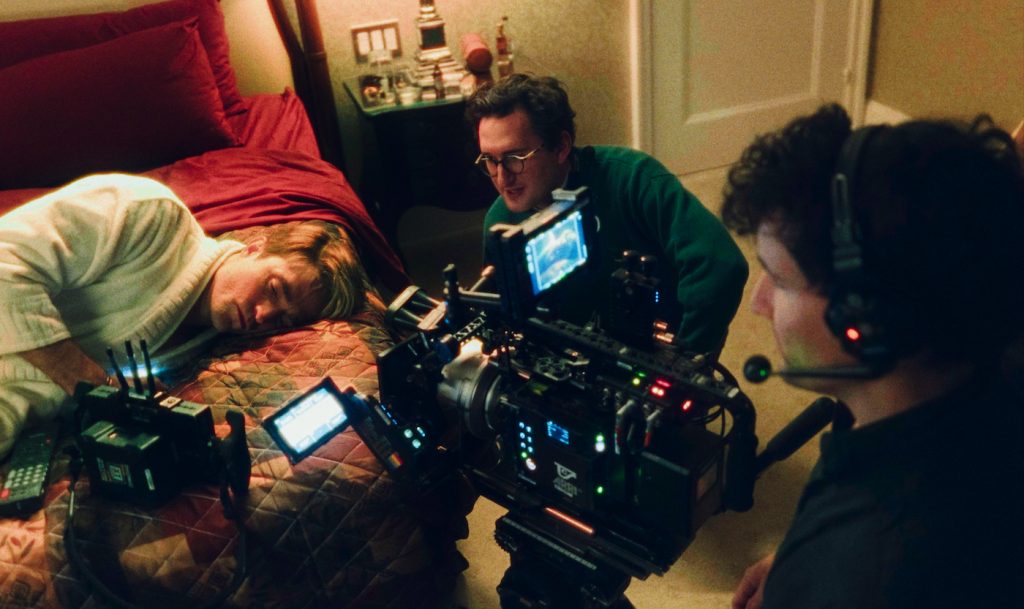
Documentary editing, by contrast, often requires an editor to imagine the many different ways a collection of images might ultimately form a story. Those editorial instincts proved particularly useful on Primetime, where the variety of camera formats opened up possibilities beyond the scenes’ original intentions. Garber points to the sequence involving network executive Jeff Zucker and Chris Hansen (Robert Pattinson) as an example. In the scene, Zucker tells Hansen he has been moved into a prime-time slot. Originally, the material consisted of multiple separate scenes. During the editing process, however, Garber and Oppenheim realized that combining them into a single, larger montage gave the sequence greater energy.
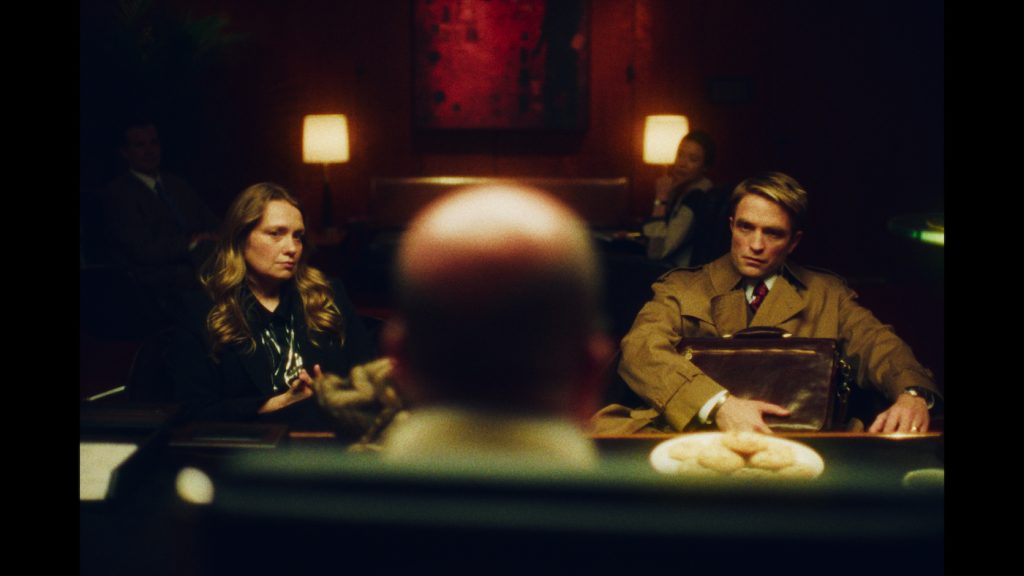
Much of Primetime’s visual identity emerges from its interplay between different camera formats. Conventional cinema photography exists alongside surveillance footage captured with Panasonic DV cameras and images produced by a television camera with a distinctive Plumbicon tube. Cinematographer David Bolin, Garber emphasizes, was instrumental in establishing the visual character of these different formats. “I have to credit our great DP David Bolin, who is the master of all these different camera formats,” he says, praising Bolin’s sophisticated approach to determining how each camera would look in the finished film.
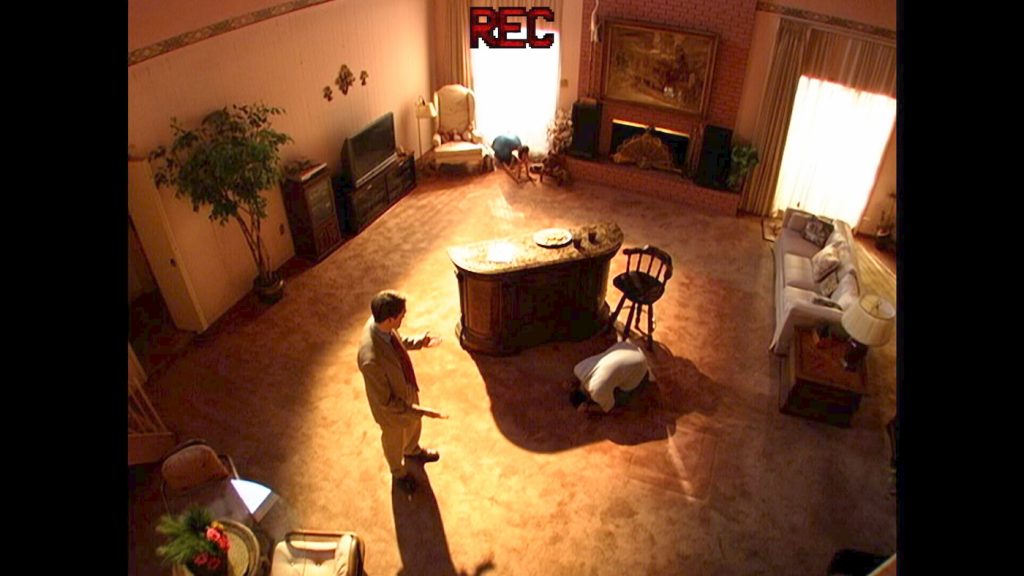
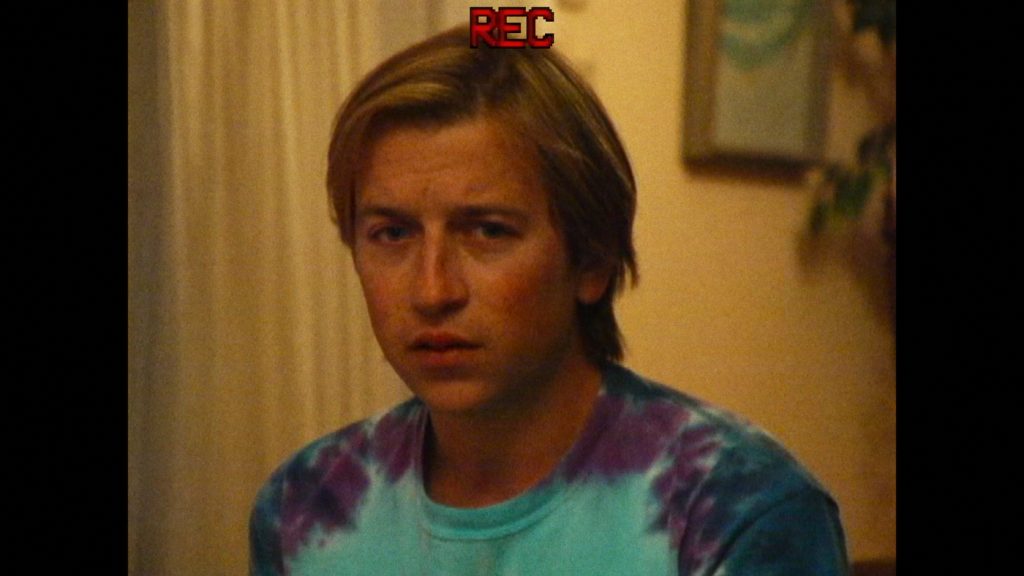
Garber’s task was to find a way to bring these disparate images together without losing their individual characteristics. Interestingly, some of the surveillance footage was never originally intended to appear in the film itself. The Panasonic DV cameras had been used to create images for playback on set, allowing characters in the control room to watch footage captured during the sting operations. After the first operation was filmed, however, Garber began incorporating the DV material directly into the movie. When he showed the results to Oppenheim and Bolin, they immediately recognized its potential. The footage became a powerful editorial device, allowing the film to contrast the apparently objective perspective of hidden cameras with the subjective experiences of its central characters.
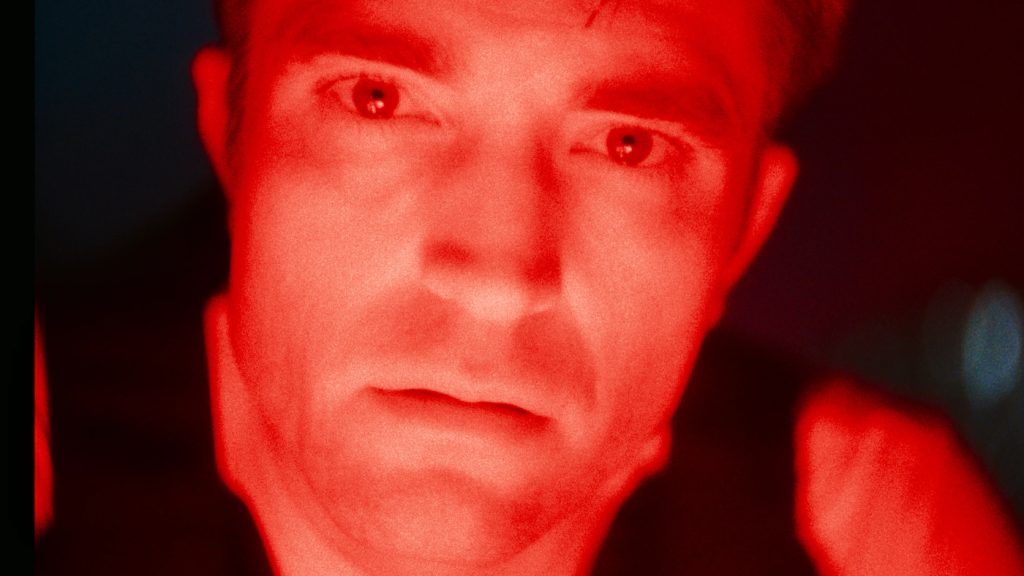
Garber describes finding the right balance between these formats as one of the biggest editorial challenges. In a particularly haunting scene involving a rabbi (Bob Ari), whose encounter with Chris marks the first time Chris becomes visibly disturbed by physical contact with one of the men he has caught. The scene combines extreme close-ups, conventional cinematic photography, DV footage, and images from the unusual television camera. Each format offers a different visual texture, but using them together requires careful judgment. “The form of the scene really needs to reflect the degree of his disturbance,” Garber explains.
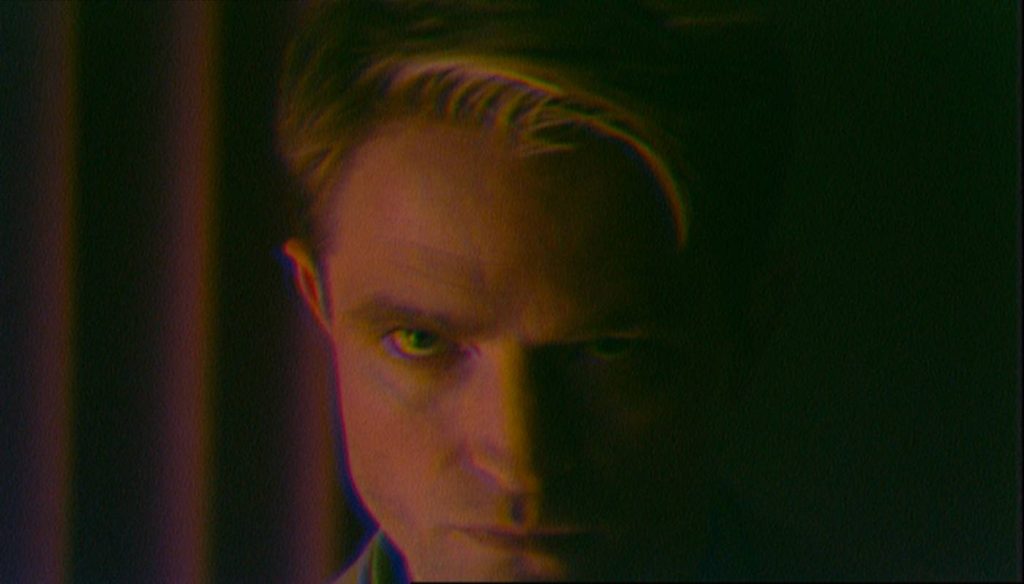
The filmmakers experimented extensively with the available footage, ultimately deciding to use the television camera only briefly as a visual accent. Most of the sequence relies on a combination of DV and cinema camera images, with extreme close-ups emphasizing the confrontation between the predator and the person who catches him. The result demonstrates how editorial choices can do more than establish geography or maintain continuity. Here, the camera itself becomes part of the emotional storytelling, with changes in image texture reflecting a shift in the characters’ psychological experience.
The observation captures a central paradox of the film’s aesthetic. Its visual experimentation is immediately apparent, yet the transitions between formats must eventually become seamless enough that viewers can remain absorbed in the story. Garber believes that establishing an emotional connection through the conventional cinema footage helps make the more radical transitions possible. Once audiences understand the characters and their emotional lives, the film can move into DV footage and television imagery without losing their trust. “I think that there’s a good reason why the scenes that start entirely in DV camera land don’t come until later in the film,” he explains. The gradual shift allows the visual language to evolve alongside the audience’s understanding of the story. What initially appears to be a stylistic choice becomes an increasingly integral part of the film’s narrative and thematic structure.
Color also plays a significant role in distinguishing the formats and giving the film its particular atmosphere. Garber credits Bolin and colorist Damian Vandercruyssen with creating the film’s striking palette. Much of the digital material was pre-graded before being transferred to film, after which the images underwent further color grading. The process added a tactile quality to the digital footage, allowing the images to be reinterpreted through their transfer to celluloid. Garber is particularly enthusiastic about the filmmakers’ willingness to embrace saturated colors at a time when many films favor more desaturated palettes. “Lance and David are such fans of using color as a major storytelling tool,” he says. “I think that’s really refreshing to see.”
Although Garber approaches every project with an openness to experimentation, he also looks for a sequence that can serve as a guiding principle for the entire edit. He traces this practice to a college professor he and Oppenheim once shared, who described the idea of “islands of meaning” as a way of thinking about the editing process. The concept involves identifying pieces of footage that seem to speak to one another, then combining them into an abstract sequence that captures something essential about the film’s aesthetic or themes. The sequence need not fit neatly into the larger narrative. Instead, it becomes a creative reference point, offering a glimpse of what the finished film might become. On Primetime, Garber found that reference point in the sequence introducing Dan (Skylar Gisondo) and his friend Troy (Eric Rahill). The montage explores Dan’s ambitions as an actor, his relationship with Troy, and his efforts to develop the voice he will use as a decoy throughout the film. It also incorporates clips of Billy Bob Thornton appearing on Inside the Actors Studio, introducing found media as another element in the film’s visual collage.
He and Oppenheim sought to capture a similar feeling of spontaneity and fluidity in the relationship between Dan and Troy. The sequence ultimately became a guidepost for the film’s broader editorial approach, influencing later sequences, including the Jeff Zucker montage. It also illustrates Garber’s belief that an edit can discover a film’s underlying logic rather than execute a plan established in advance, and that sometimes the most revealing sequence is the one that allows different elements to collide before anyone fully understands how they belong together.
Despite the film’s many visual challenges, Garber identifies the ending as one of the most difficult elements to resolve. Initially, Primetime concluded with Chris repeating the chat logs in a seemingly endless loop. The filmmakers explored several variations, including endings in which Chris appeared within a four-panel DV feed, remained in close-up, walked away from the camera, or continued repeating his incantations until the image faded or cut out. Although these versions tied up the narrative’s loose ends, they fell short in achieving the desired emotional effect. “We still felt like it wasn’t quite tonally delivering what we were hoping for,” Garber recalls. “It read to us as unnecessarily bleak.”
The filmmakers also became increasingly aware of the importance of Dan’s journey. Introduced as a naive actor drawn into an unfamiliar world, Dan is gradually consumed by the machinery surrounding him. The team felt that the ending needed to return to his experience in a more substantial way than simply showing him leaving the set after a tragic event. The solution emerged during conversations with Oppenheim, when Skyler Gisondo suggested that Dan could receive his SAG card. The scene was filmed months into the editing process, making it a late but consequential addition. It provided a more grounded emotional conclusion without diminishing the unsettling power of Chris’s ending.
Even then, the filmmakers kept experimenting. Some versions had Dan answer the question, “Are you an actor?” Ultimately, they left him silent, allowing him to consider the question without providing a definitive response. For Garber, the uncertainty gives the ending its strength. “It makes it come alive for audiences because they can put a little bit more of themselves into it,” he says. “That ambiguity invites interpretation.”
The decision reflects a broader principle underlying the film: a refusal to dictate precisely how audiences should understand what they have seen. Garber hopes viewers will respond to Primetime’s collage-like visual language, but he is equally interested in what its unconventional approach might encourage other filmmakers to attempt. “I felt really liberated in the edit on this film,” he says. “I hope that helps inspire other people to take greater risks in the edits of their own films.” That kind of freedom comes from a process in which experimentation is not simply permitted but essential. Images can be repurposed, scenes can be dismantled and reconstructed, and even the ending can change when the filmmakers discover that their original intentions no longer serve the story.
Asked whether he and Oppenheim might collaborate on another narrative feature, Garber laughs. Although nothing has been confirmed, he is enthusiastic about working with the director again. “Lance is somebody who always has something in the works,” he says. “I’m always keen to work with him on whatever he does next.”
After Primetime, it’s easy to understand why. For Garber, the editing room is not just where a film is assembled, but where its possibilities are tested, its assumptions challenged, and its most unexpected meanings discovered. The finished film bears the marks of that process, inviting viewers into a world where the boundaries between performance and reality, observation and interpretation, are never quite as clear as they first appear.
Featured image: Skyler Gisondo and Robert Pattinson in “Primetime.” Courtesy A24.