
Reality, Rearranged: “Primetime” Production Designer Alex DiGerlando on the Design of Robert Pattinson’s Chris Hansen
“Every character in the movie is presenting a version of themselves that’s not entirely authentic. So that factored into our calculus for choosing the design,” production designer Alex DiGerlando says of Primetime, starring Robert Pattinson as Chris Hansen, the controversial host of NBC’s To Catch A Predator, the hidden camera series that confronted suspected predators trying to meet minors.
Director Lance Oppenheim (You Can See Everything) revisits the show’s tense production, weaving in Hansen’s personal life, including an alleged affair with a television reporter, and the psychological toll of being exposed before the show’s trajectory takes a devastating turn following the suicide of a Texas assistant district attorney caught in its crosshairs. Production took place in Louisiana – familiar territory for The Beasts of the Southern Wild production designer – but is set in areas of California, Connecticut, Florida, New York, and Texas, requiring DiGerlando to find locations to fit the period and sprawling world. At the center of his search were the homes where To Catch A Predator staged its elaborate sting operations. “Why don’t you have a seat over there?”
In finding the practical locations turned sets, DiGerlando says, “We had a great location manager named Tyler Hohmann. When I was first working with him before I had gone down to New Orleans, we were talking over the phone, and I said it’s really important that we find places that are kind of trapped in time.” The scouting trick for the team was searching out homes owned by the elderly who would be less likely to renovate in order to match the desired late-90s aesthetic. “Tyler scouted a million places and a lot of them didn’t work, while some did work technically but just weren’t inspiring to us. Then we found three different houses, and one was more special than the next. They often had the exact correct period appliances. Sometimes we would add wallpaper, change the furniture, or rearrange things. Sometimes we had to modify the kitchens a little bit, but it was fun.”
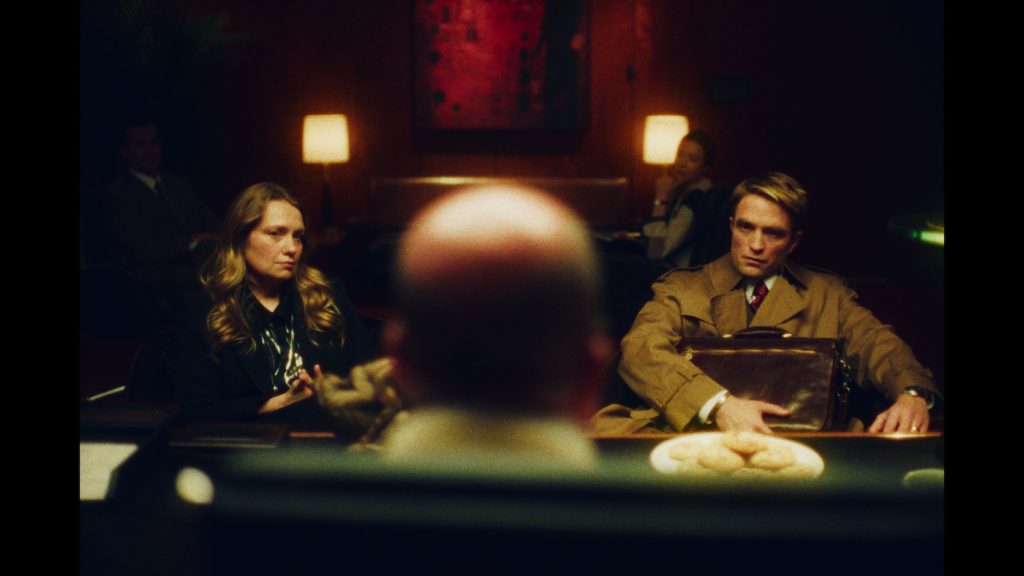
One such house opens the film with Hansen confronting a predator portrayed by actor Tony Revolori. This, before To Catch A Predator is placed in a primetime television timeslot opposite ABC’s Lost – a detail that plays out later in the story when Hansen and show producer Andie Bender (Merritt Wever) visit the leather-bound offices of NBC to meet with top brass, cleverly cast with Jeff Zucker, the CEO of the network during that time. The centerpiece of the home is a staircase that leads down into the living room. “That first house is pretty out there with that grand staircase coming down. We talked about Dracula, and there’s an element of To Catch A Predator that’s vampire-like. The whole idea of inviting a vampire into your house…inviting predators in. But then also Chris is sort of descending down that grand staircase that is very reminiscent of Bela Lugosi.”
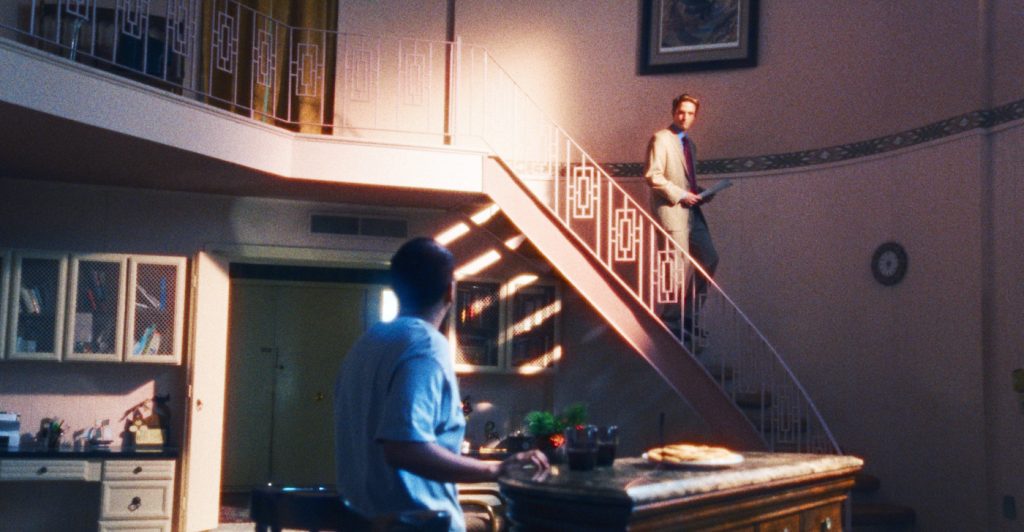
Set decoration, overseen by Chere Theriot, captured the era and how the show staged its sting operations. The art department recreated the show’s mini control room, with period-correct monitors, cameras, and equipment. Then areas where Hansen confronts predators would reflect a similar style. “From a filming perspective, not just the filming of Primetime, but also for Chris Hansen and his crew filming To Catch A Predator, they didn’t want to shoot into a wall. They needed to rearrange the furniture in the houses to make it work for their purposes, and that didn’t necessarily always make sense for living. That’s why they put a second bar in the middle of the room where a sofa should have been,” notes DiGerlando. “So if you notice when Tony Revolori’s character walks into that house, he’s looking around like something doesn’t feel right. And I think you get the sense that he knows he’s screwed before he actually is.”
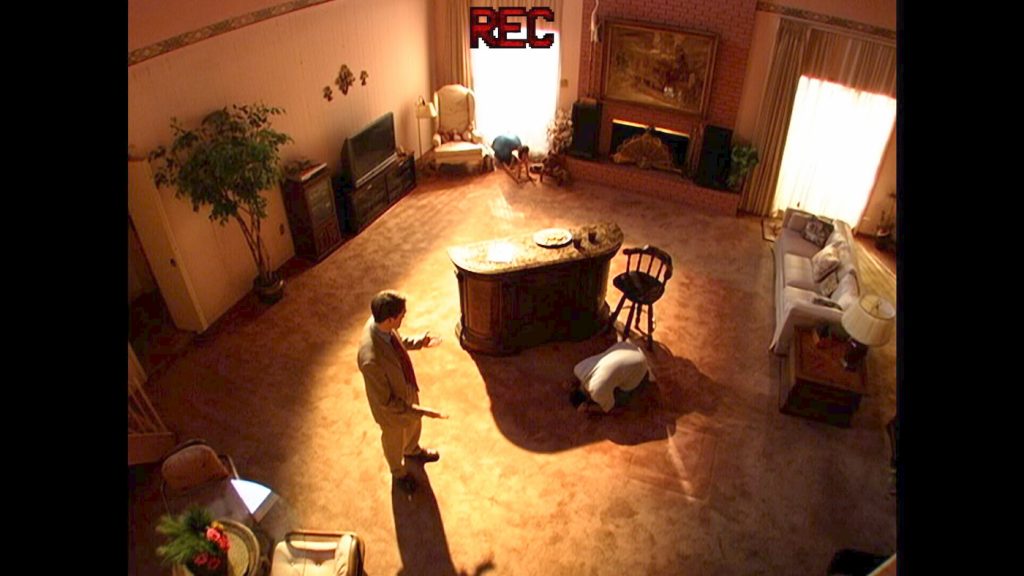
In creating the style which blended reality with artifice, DiGerlando says they referenced Larry Sultan’s photo series “The Valley,” which documents California’s San Fernando Valley homes that were rented out as temporary film sets for the adult entertainment industry. “Lance, [cinematographer] David Bolen, and I were all very taken by these photos because they mixed these movies shot in real houses, but they’re obviously contrived scenarios. They have this kind of uncanny feel to them because there are fake elements put into real locations. And that’s very on point with what happened in To Catch A Predator.
Another layer influencing the visuals was a 4:3 aspect ratio, which recalls the time before television switched to widescreen in 2009. The approach gives the narrative a tight, suffocating sense of confinement. “Sometimes aspect ratio comes into play when you’re building sets because that’ll determine if the frame is taller than it is wide. But in this case, we found and modified locations, so we were kind of inheriting things that way,” he says. “But I think the aspect ratio helped add a period patina to it. We can kill ourselves to make all the period details right, but then sometimes, when you shoot in high-def, it looks fake because you’re not used to seeing those objects or those clothes through that type of lens. Primetime kind of exists in the same space. We were able to be pretty controlled about what the art department was putting in front of the lens. But it was nice to have that little final layer to kind of sand the edges off. I think that’s why it’s so important for filmmakers to shoot certain things in the appropriate format for the time period because it really can throw you out of whack.” Bolen primarily shot on digital cameras but printed the movie on 16mm film to add texture and grain.
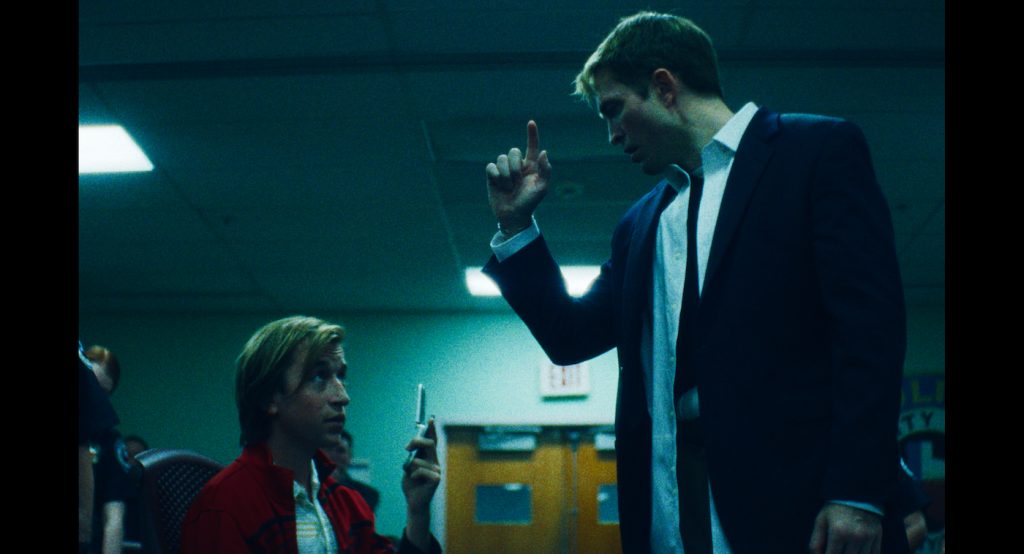
In depicting Hansen’s home life, the production designer tracked down source material. “I don’t know if he still does, but at that time, Chris lived in Stamford, Connecticut. We found pictures of his house and then found a similar house, which is a tricky thing to find in New Orleans because it’s not really the same type of architecture,” he says. DiGerlando also designed the location to play into the character. “This is a guy who feels like he’s doing very important work and should be recognized for it more than he actually is. I mean, he won Emmys, but I think he always felt, at least from what we understood in our interpretation of the character, the work he was doing was very important. He took it very seriously, and he felt like he should have gotten more praise for it. So I think we were trying to give him a house that he imagined he was deserving of.”
As Hansen reaches a breaking point, the palette shifts from earthy, muted pastels to darker shades of blues, greens, and blacks. The climax unfolds inside a house as a torrential storm rages outside, stirring the tension. “Lance showed us a lot of films during prep. We looked at Ace in the Hole, Natural Born Killers, and The Exorcist. Movies that were sort of like a descent into madness. We were kind of trying to create this manic feeling in the final product, and a lot of that is in the camera work, but a lot of that is also in the colors that we use, the patterns, and the busyness,” he says. “There’s a John Cassavetes movie called Love Streams, and that film was a touchstone of Lance’s. There’s a scene that takes place in this kind of cool, dark mid-century house during a rainstorm. We watched that as inspiration for this scene. It’s very complicated to do rain and sustain it for that long period of time, but it was really important to Lance because tonally it really is a big shift in the movie.”
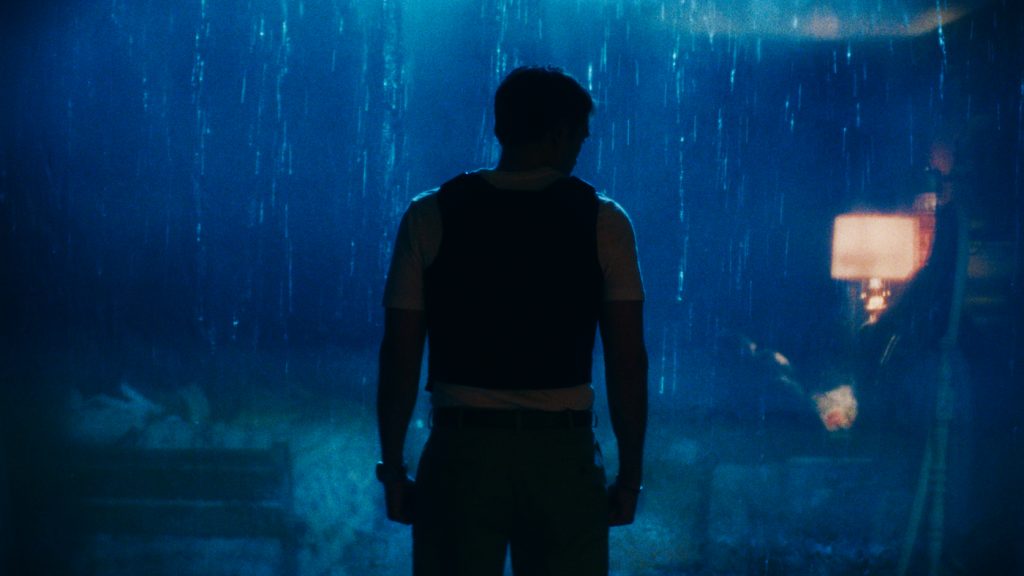
For the production designer, all the hard work proved worth it. “That house was interesting because it had this sort of semi-indoor pool you could see from the living room and a really cool flow of spaces. And the way the walkway lights would shine on the house to create interesting shadows as all those trees are swaying while the last predator walks in. Each house needed to create a movement in tone because the movie keeps on shifting. When you’re watching the movie, it gets more and more insane.”
Shaping the creative drive was the production designer’s collaboration with the director. “Lance is very cool because he’s like he’s an idea fountain, both input and output. Like he absorbs them and he spits them out. Sometimes it becomes like a challenge to keep up because he’s always iterating. But it’s also really exciting because you come up with ideas that you wouldn’t have necessarily thought of immediately because it’s maybe counterintuitive. I think this movie kind of is a showcase for that. If I described to you a movie about To Catch A Predator, this is not the movie you would imagine in your head.”
DiGerlando’s work with Oppenheim extends to You Can See Everything, co-directed with Nathan Fiedler, chronicling the 34 days before disgraced Theranos founder Elizabeth Holmes reports to prison. Shot in San Diego, the production marked another opportunity for DiGerlando to work in the U.S., something the production designer doesn’t take for granted.
Asked about the potential passing of federal film tax incentives across the industry, he says, “As a person who has two kids, I do everything in my power to be home on the East Coast as much as possible. I think it would be great from a personal standpoint. But it would be great for anyone who works in film to have a chance to shoot where they live. I also think nothing beats shooting in the place that serves the story. We could not have made Beasts of the Southern Wild in any place but where we shot it. So I think a lot of great stories don’t get told because they can’t afford to do it in the place where it needs to be. Or they do it in some other city or country, and it just becomes a diluted version. So I’m all for it. Obviously, if a story calls for traveling abroad, great. But if a movie takes place in the States, it’s a shame to send it away.”
Primetime is in theaters now. You Can See Everything releases into theaters October 16.
Featured image: Robert Pattinson and Merritt Weaver in “Primetime.” Courtesy of A24.