Mirror Image: “Primetime” DP David Bolen on Robert Pattinson and the Many Sides of Chris Hansen
Chris Hansen saw Primetime last week and was not pleased. But cinephiles at the Venice International Film Festival applauded the movie’s behind-the-scenes look at To Catch a Predator and its host, Hansen, portrayed by Robert Pattinson. Primetime (in theaters now), scripted by Ajon Singh and directed by Lance Oppenheim, dramatizes the NBC show’s approach to filming pedophiles after they’ve been unwittingly lured to a house by a 25-year-old “Decoy Dan” (Skyler Gisondo) posing as a 13-year-old boy.
Assembling a cast that also includes Merritt Wever and Phoebe Bridgers, Oppenheim enlisted longtime cinematographer David Bolen to mimic the hidden-camera setups that made To Catch a Predator a ratings smash in 2006 while capturing the backstage personality conflicts. “Lance and I are huge fans of the show, but it’s incredibly complex,” says Bolen. “I think what Chris Hansen was doing is really important, but it does bring up ethical questions. They were taking this idea of child predators and turning it into a form of entertainment.”
Speaking to The Credits, Bolen unpacks his assortment of Primetime cameras, explains why he threw away his shot list after the first day working with Robert Pattinson, and discusses the tiny colonoscopy camera that leads to the movie’s big reveal.
Primetime hits on all cylinders—performances, music, cinematography…
Thank you. It was a crazy experience making it.
What was crazy about it?
Lance and I come from a documentary background, so we’re used to very small crews and having a lot of control. All of a sudden, we were swept into this world where there’s a hundred people on set and big Hollywood actors and tons of cameras. It was definitely a creative battle for us, like: “How do we retain the intimacy of the way we shoot documentaries and bring that to a big movie?”
One way you achieve that intimacy is through the camera choices. Can you walk us through the different formats?
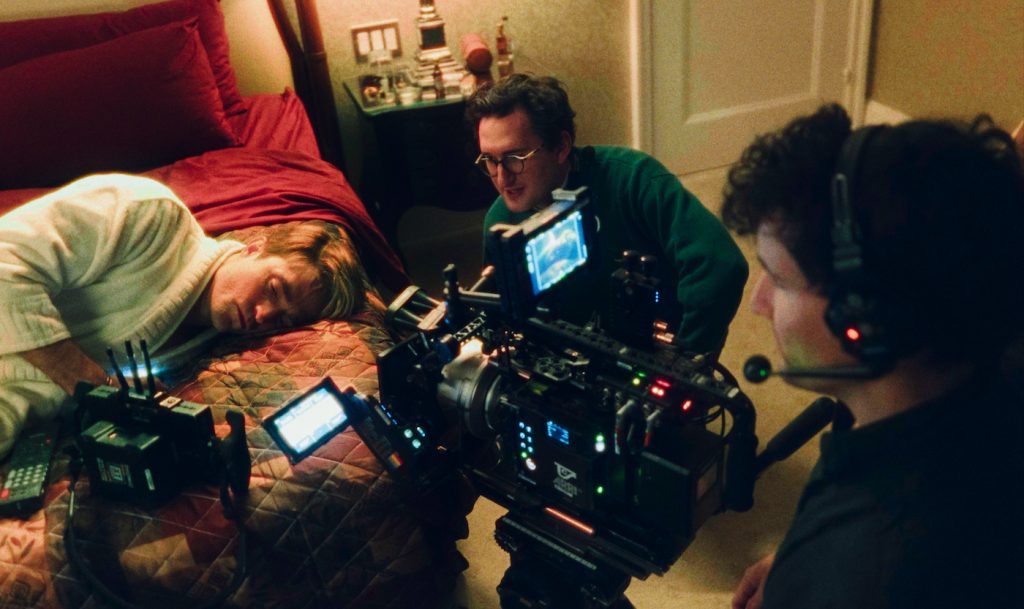
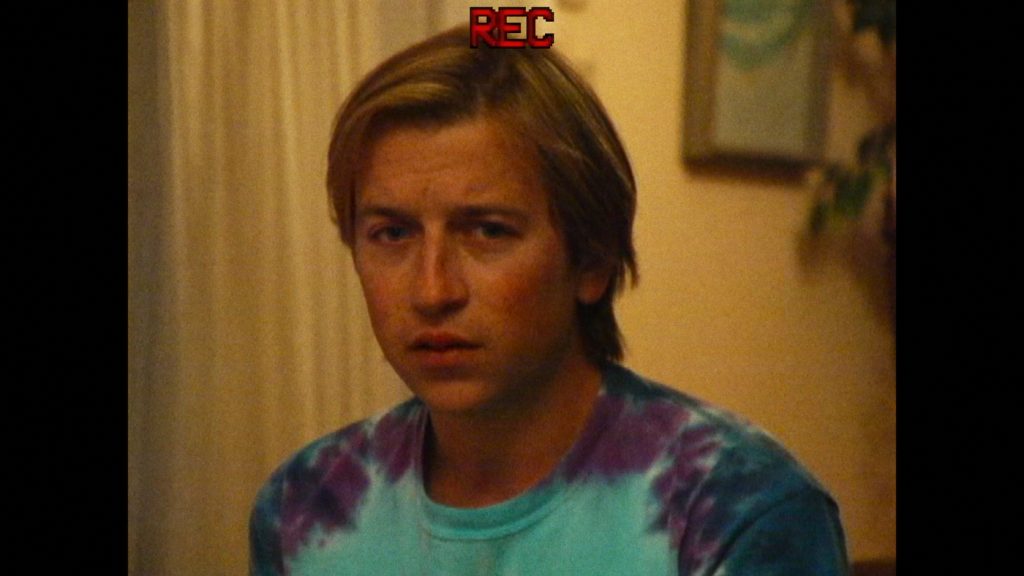
Our primary camera was the Alexa 35, which a lot of people use. But what we did was shoot it all the way at exposure index 6400, which makes the image really grainy. Then we printed that to 16-millimeter film, which added all this additional texture of grungy richness.
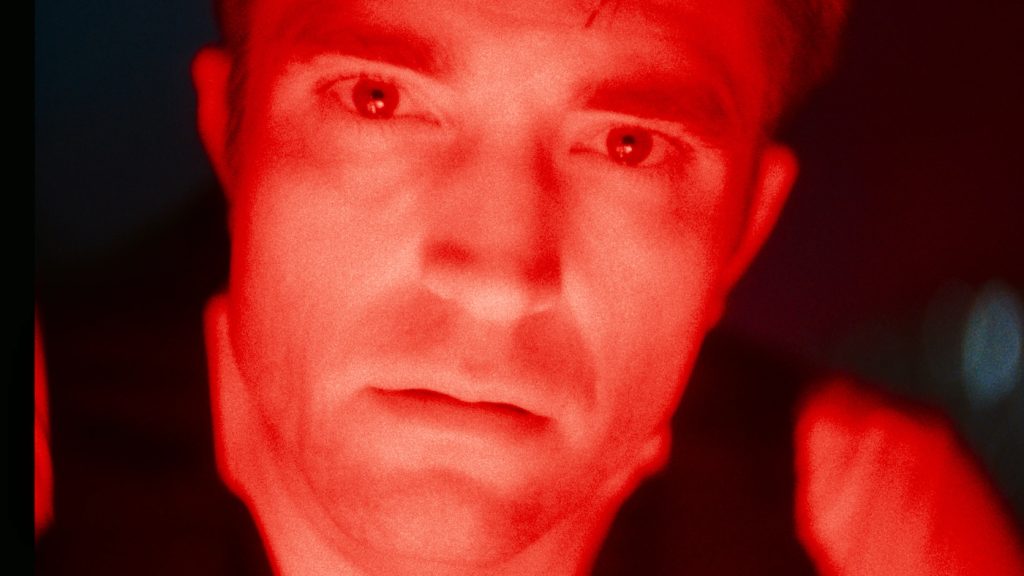
Some sequences feel a bit surreal, drenched in blue tones or red tones.
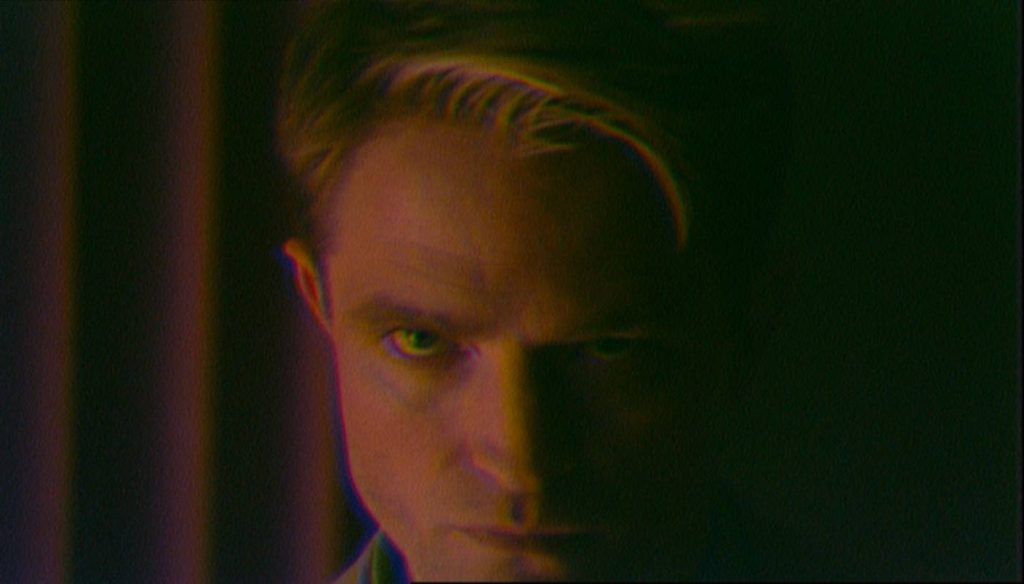
We used Japanese broadcast cameras made in the 1980s by Ikegami, which contain a red tube, a green tube, and a blue tube. These RGB tubes have a lifespan, so they rot away as you film. Whenever we went deep into Chris Hansen’s psyche, we would use that camera. It’s very blue at times, very red at other times. It was our experimental camera to get into the subjectivity of Chris.
How did you research the type of cameras you should use to emulate the TV look of To Catch a Predator?
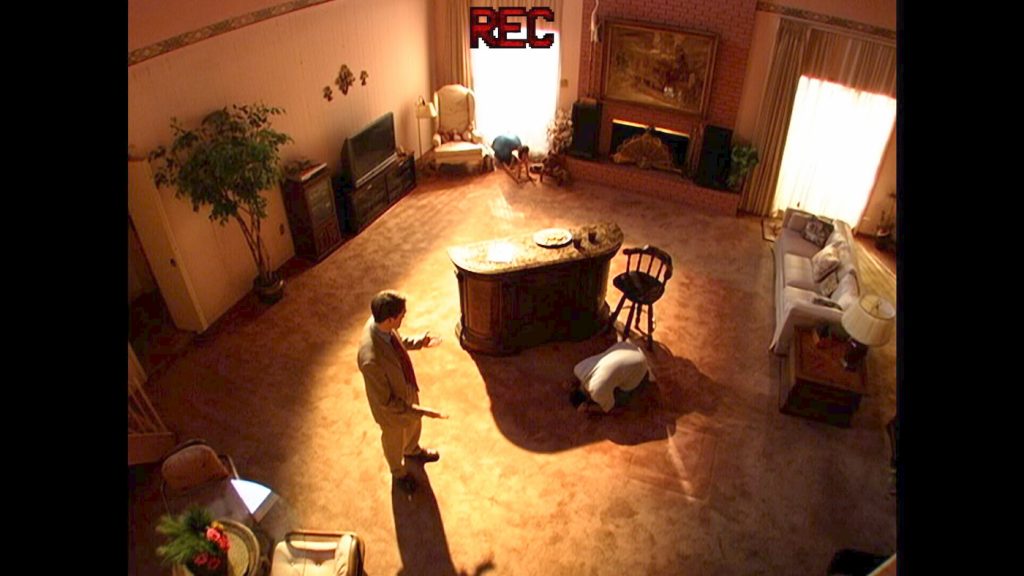
We talked to one of the old technicians and camera operators who worked on the show. We kept asking him, “Tell us the exact camera you used,” and he’d be like, “I don’t know, man. I was using all sorts of random stuff,” like a little hidden camera here or a big camera there that was rigged on the other side of a two-way mirror. It was all over the place, and that liberated us to experiment with the formats. Ultimately, we ended up mainly using eight DVX 100 Bs, which were the first mini DV cameras to shoot 24 frames per second. When we tested it, we were like, “This feels most like the show.”
And then there’s the colonoscopy camera, normally used by doctors to inspect their patients’ innards. What’s that about?
Yeah, the colonoscopy camera was fun. In our movie, Chris Hansen is trying to track down this predator he calls The Whale, and they finally get his phone number. The script says, “The camera moves through the computer from Chris to the other side where we reveal the face of the predator.” I was like, how do I travel through a computer? I can’t just push a giant cinema camera through a computer screen! Then I started thinking about really tiny cameras. I ordered all sorts of ear exam cameras and finally landed on the colonoscopy camera. We showed it to our production designer, Alex DeGerlando, and he built a mini-LED tunnel on a rotating gimbal that had spinning lights. We were able to push the colonoscopy camera all the way through the tunnel and land on our actor’s face.
This movie begins with an extreme close-up of Robert Pattinson rehearsing his lines…
“You know how this looks, right?”
And that’s just the first of many extreme close-ups. Even when two characters are in a scene, it’s usually one face at a time, very close up. What was the thinking behind these in-your-face shots?
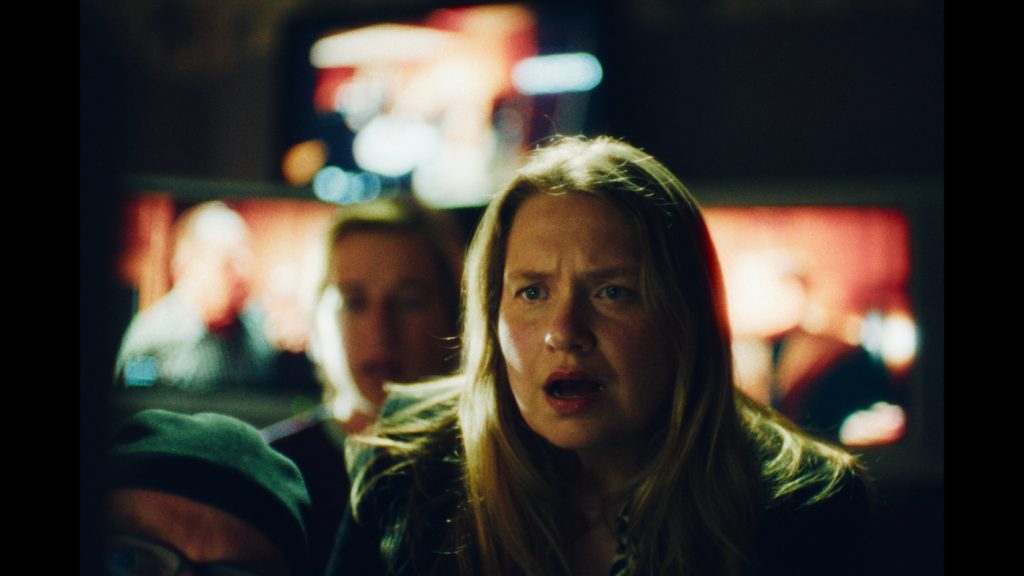
We wanted each camera to have a set of rules. If the DV cameras represent the objective reality and wide perspective of the TV show, then the Alexa that we used for close-ups was a way to get into the subjectivity and inner psyche of our characters. We wanted to experience the world through what they’re seeing, hearing, and feeling.
Those close-ups seem to underscore a sense of isolation.
Exactly. Even though they’re making this show together, everyone’s going through their own issues and feeling somewhat isolated from each other. In TV, I think there’s a tendency to shoot from a distance, right? You bring a bunch of cameras onto the set, and they’re all on zoom lenses, and you cover a scene very quickly to get coverage. Lance and I hate the feeling of coverage. We want the camera to feel immersive. That’s why we often shot with a single Alexa, trying to get physically close to the actor. When the camera is a couple of inches away from an actor’s face, I think it does something to the intensity of the performance. There’s an intimacy you don’t get when you’re shooting with multiple cameras.
Robert Pattinson is having a big year this year. What’s he like to work with?
Every single take, Rob does something completely different, which I learned very quickly. On day one, Lance and I threw out the shot list and said, “Look, we’re going to have to adapt to what Rob’s doing.”
How did you guys collaborate on set?
Before every single shot, Rob would be like, “Hey David, can you flip around the monitor for a second?” Not to judge the image or judge how he looks, but because he wants to understand the frame and see where his eye catches the light and where his face goes into shadow. Then, based on his understanding of the image, he’d maybe hide his face for the first part of the scene and then, right at the perfect line, he’d reveal his eyes.
The man plays to the camera.
Robert really understands cinema, which is a dream for a DP because a lot of the time, actors have no clue what’s going on with the image.
A significant chunk of Primetime takes place in Florida. Did you shoot there?
Lance and I have a deep love of Florida. It’s where we’ve done most of our films in the past, so we really wanted to shoot Primetime in Florida. But for tax incentive reasons, we ended up shooting in New Orleans.
Louisiana is very versatile in terms of locations and infrastructure. You mention tax incentives, and as you may know, Congress is considering a federal tax incentive bill that would make it more economically feasible to produce film and TV projects in the United States. How do you feel about that?
Programs like this would be really important because, as filmmakers, it can get frustrating when we’re away from our families so much of the time. I’ll read a script and go, “This is a beautiful script. Oh, it’s gonna shoot in South Africa.” Or “It’s gonna shoot in London.” Those are interesting places, but I just had a new baby four months ago. I want to be close to my family. I want to be able to bring them to the set and keep my job from being so disruptive to our life.
Primetime is in theaters now.
Featured image: Robert Pattinson in “Primetime.” Courtesy A24