
Old Tricks, New Faces: How Hollywood’s Greatest Aging Transformations Make Time a Character
Tom Cruise has made a career of saving the world. Mostly, he does it through immensely entertaining, action-packed films with stunning vitality. Whether he’s breaking the sound barrier in planes, flying off alpine mountains on motorcycles, piloting helicopters in epic chases, climbing sheer cliffs, or detonating pesky elements of civic infrastructure while escaping evil, billionaire villains, Tom Cruise delivers. His collective adventures transcend acting to become an archetype. This guy represents Human Vitality itself.
In Digger, that vitality is melted into a creaking, crusty caricature of decrepit old age. Through an astonishing transformation, Cruise darkly portrays an archaic industry titan circling the final spirals of this mortal coil. Or perhaps the proverbial drain. Venal, brutal, chiseled by hideous business decisions that have enriched him obscenely, Digger is wickedly old. But this first-class jackass is humanity’s last hope to save our planet from impending annihilation. Because that annihilation was triggered by his reckless business bravado, Digger gets the job of cleaning it up. And saving the whole world. Which Tom Cruise kinda likes to do in his movies.
But this mission promises to be impossibly comic. Scenes of Cruise dancing the tango with a shovel hint at the nature of that absurdist mission. Digger’s brutally portrayed age is a stark part of that mission, played for laughs as Cruise channels his inner, wrinkled ogre. Creaky, crude, and crumbling, Cruise’s character brilliantly broadcasts the decrepit destruction of old age. Digger’s makeup tricks, lighting, film techniques, and the actor’s craft are the latest in a long list of Hollywood “Old Movies.” These cinema dreams take great delight in aging the beautiful stars who shine within their films. Some transformations are breathtaking. Others are disturbing. All of them make us look at time and ourselves a little differently.
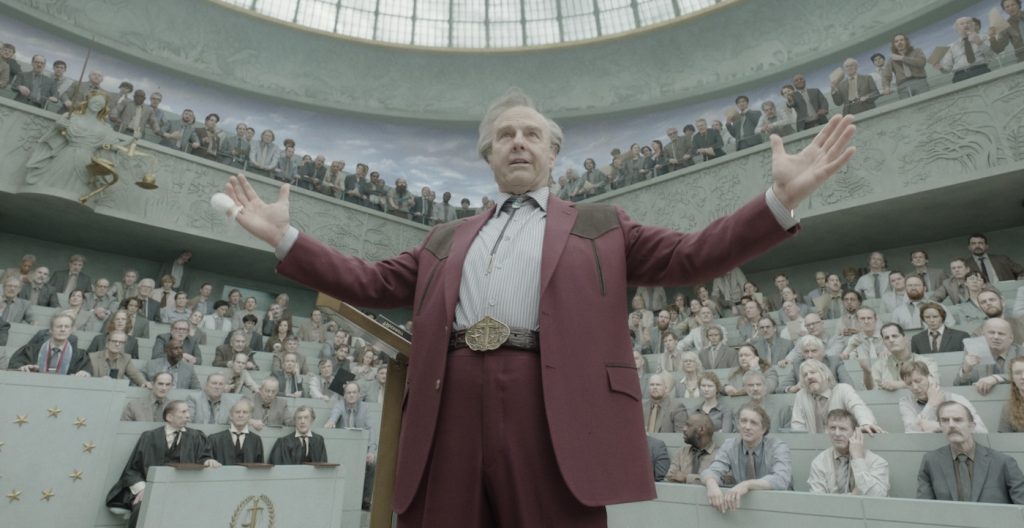
The trick of aging on camera happens through a trifecta of camera craft, actor’s art, and makeup mastery. Film angles and lighting enhance shadows and frame decay. Acting changes voice, posture, movement, and bearing. But the real superstar of Old Movies is makeup and prosthetics. Lots of makeup and prosthetics. Makeup and prosthetics that take ages to apply, molded and printed and piled up in long hours before cameras roll, adding decades (or, in the case of monsters, centuries) with every layer, accomplished through the artistry of industry experts.
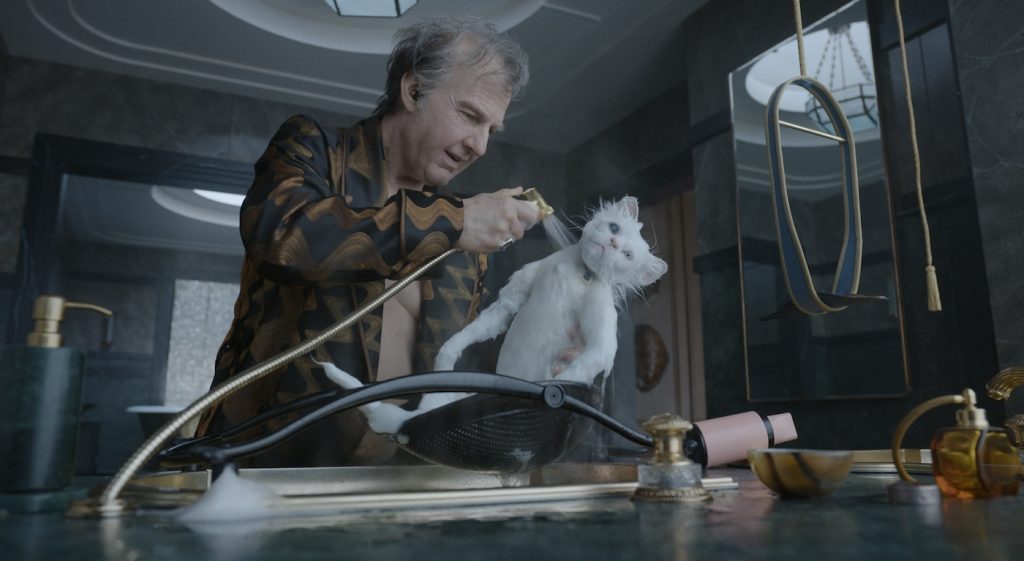
Kazu Hiro is one of those Old Movie makeup experts whose artistry has projected many famous players into the ranks of senior citizenry. His credits are a Who’s Who of “Damn! They look old” moments, including the fantastic aging of Brad Pitt in The Curious Case of Benjamin Button. Hiro also helped Gary Oldman live up to his name, piling on artful layers to help the actor portray an aging Winston Churchill. Another acclaimed application involved Bradley Cooper’s uncanny transformation into the iconic composer Leonard Bernstein, in the lauded biopic Maestro.
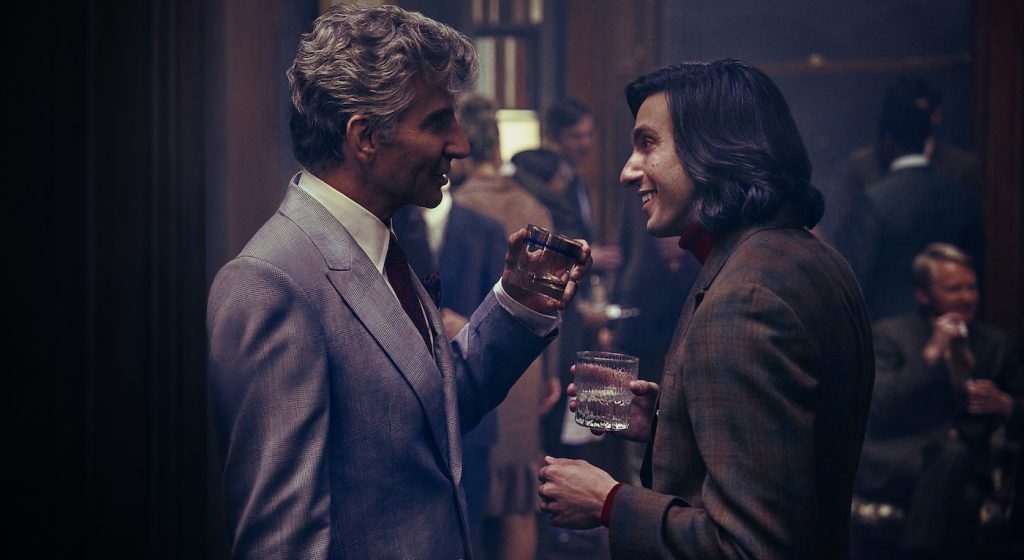
Spanning Bernstein’s life like his sweeping orchestral triumphs, the film required a symphony of talents, intuitions, and improvisations to age Bradley Cooper into one of the world’s foremost composers. Evolving Bradley Cooper through the eras of Bernstein’s life, Hiro’s artistry was a collaboration achieved with technological innovation and artistic invention. Cooper’s brilliant talents, endurance, and uniquely human limitations were the central instrument of that process. Maestro makeup sessions sometimes lasted five hours, progressing partly as meticulous creation, but also veering into improvisation.

When Cooper’s eyes proved too sensitive for the large, drooping prosthetic eyelids Hiro had painfully molded from scratch, the team escalated. That happened literally, on Bradley Cooper’s face. Trading eyelids for eyebrows, Hiro reached higher and achieved innovative construction of shading along the actor’s supraorbital ridge. To compensate for the lack of eyelid prosthetics, these enhanced eyebrows worked with strategic camera angles to achieve old-movie magic.
Beyond biopics, that magic has been fundamental in a slew of classic movies about magic, witchcraft, and creatures of unsearchable evil. Vampires are particularly known for their disdain of aging, with most of them trading their souls for eternal life. Deals like that look good on paper, but the majority of vampire movies feature at least one scene of buyer’s regret, where ballistic aging crumples their screaming faces in rapid collapse. The Hunger, a 1980s cult classic, is entirely structured around this premise. The twist is pacing. Trading classic Hollywood’s instantly disintegrating vampires for a painfully neurotic descent into twilight, The Hunger turns old age into a monster. That monster is a master you can’t cheat, and he plays for keeps.
This dreadful drama is played out by David Bowie, wilting in his role as vampire John Blaylock. Seduced in his youth by a beautiful vampire mistress, Bowie strides the world for several fulfilling centuries as a charming, dashing young man. But when the devil’s deal presents unexpected left turns, they hit hard. Aging in damning stages, Blaylock scours New York City for cures. With typical 80s bombast, Blaylock’s lurch into old age is less a transition than an eviction. Hurled mercilessly from beautiful youth into the ugly reality of old man isolation, Bowie’s crushing descent from golden years plays out like vehicular manslaughter.
And vampires, it seems, are always crashing in that same car. Every stake through the heart, across decades of Hollywood films, shows them instantly disintegrating into eternal damnation. But The Hunger treats age like a sickness. David Bowie’s aging advances like a slow-moving wound. The person wounded magnifies that pain.
Smashing one of the era’s most strikingly attractive pop stars with the hammer of time hit the Boomer audience particularly hard. Terrifying this “eternally young” generation with a glimpse of inevitable future, The Hunger turned natural aging into high, horrific drama. The makeup, atmosphere, and acting combine to show how Old Movies can transcend special effects into the realm of storytelling thunder. By reframing the loss of youth within this gothic, stylized horror, Bowie (and his makeup team) raise the stakes of age. Turned from a rite of passage into a long night of terror, Bowie’s elderly descent predicted the perhaps terrifying loss of youth for the generation that invented “youth culture” itself.
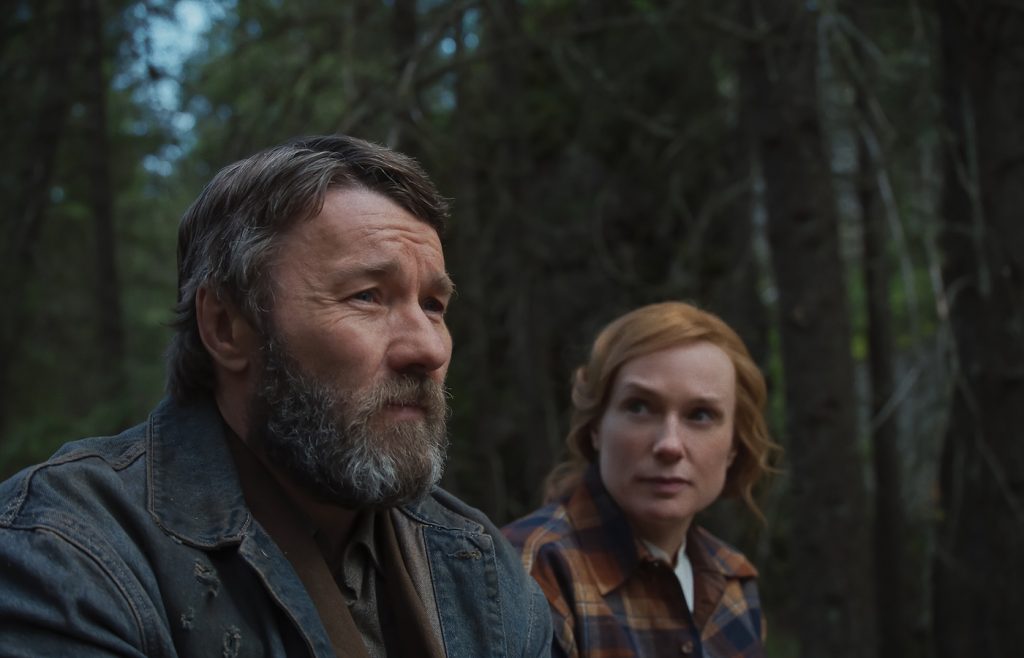
But aging can also be shown as a more natural, essentially human experience that transforms more than it terrifies. This happens as a character’s entire presence blends with time’s transformation. In Netflix’s Train Dreams, Joel Edgerton delivers a powerfully subtle yet resonant example of such a transition. Playing logger and railway worker Robert Granier, Edgerton’s face is only part of his transition through eras. Through body movement and positioning, Edgerton shows how time changes the way people project their physical existence. Beaten down by years of hard work but uplifted by inner strength and personal connection, the character evolves through decades of hard living in the Pacific Northwest. Posture, movement, and body become just as powerful as the brilliant makeup and lighting that enhance that portrayal. Through his performance, Edgerton shows how aging doesn’t just affect our appearance. It impacts our awareness and our projection of that awareness throughout our environment. Such insights make Train Dreams our more subtle, human, and heartwarming old movie.
For a more tripped-out, existential look at what Old Movies can do, Christopher Nolan’s Inception delivers a breathtaking character sequence by Ken Watanabe. As the powerful executive Saito, lost and aging in the depths of an endless dream, Watanabe’s fallen face becomes a tarnished token of lost humanity. Projecting old age within the shadowed, shifting reality of dreams, Nolan suggests the ephemeral nature of time and consciousness itself. Showing that fragility in a gruesomely detailed mask of ancient, aging regret, Ken Watanabe becomes almost primeval. Warning mortals not to play with time and dreams, his tragic, surreal inhabitation of Inception becomes masterfully haunting.
When this savagely aged character is juxtaposed with his powerful, younger self, the impact is even greater. Watanabe’s natural fluidity between roles anchors the craft. The artistry of the makeup studio WM Creations adds the magic. Through their collaboration and Nolan’s direction, Watanabe didn’t just turn old—he became infinite.
Check out Inception for that journey, along with the other Old Movie classics mentioned. Then dig into Digger’s darkly comic stylings. That’s probably a great attitude for our own inevitable dance with time. Judging by the gravitas of these films, that dance won’t be a simple cha-cha. Digger suggests the way to handle that is by channeling the immortal (old?) advice of George Bernard Shaw: “You don’t stop laughing when you grow old, you grow old when you stop laughing.”
Featured image: Caption: TOM CRUISE as Rockwell in Warner Bros. Pictures’ “DIGGER,” a Warner Bros. Pictures release. Photo Credit: Photo Courtesy Warner Bros. Pictures