Courtney Grace on Anchoring the Emotional Finale of Steven Spielberg’s “Disclosure Day”
For almost the entire runtime of Steven Spielberg’s Disclosure Day, the world—and the audience—waits for an answer. When that answer finally arrives, it’s delivered by Courtney Grace. As the television anchor entrusted with delivering the most consequential news break in human history, Grace becomes the human face of Spielberg’s cosmic mystery and has but a few minutes of screen time to make a lasting impression. No pressure. Grace delivered and then some.
As longtime Steven Spielberg collaborator and Disclosure Day screenwriter David Koepp says, Grace lands in the plane in Spielberg’s latest. Grace delivers a two-page monologue exposing the truth about our alien visitors in the film’s grand finale. The world watches as Grace, playing a television anchor, breaks the news: “You are not alone.”
The entire movie builds up to this moment – the promised disclosure in the film’s title. Margaret Fairchild (Emily Blunt) and Daniel Kellner (Josh O’Connor) go on the run and risk their lives to expose it, while Wardex, a shady organization led by Noah Scanlon (Colin Firth), fights to stop them. It’s a classic Spielberg chase in the vein of Minority Report, Catch Me If You Can, and his very first film, Duel. The chase all leads to Grace, the human endpoint to a cat-and-mouse game with cosmic consequences.
The release of the top-secret information—the film’s emotional catharsis—is largely handled by Grace. It’s an empathetic, passionate performance that’s earned raves from audiences and critics alike. She represents the audience in the film, highlighting the human consequences of everything we’ve seen so far and making the incredible (yet increasingly plausible) disclosure resonate.
We spoke with Grace, a former journalist herself, about her experience working with Spielberg to serve as the human face of the disclosure at the heart of his film.
Did you have a backstory for your news anchor?
Well, the backstory was my backstory. Whenever I play a journalist, I have to ask myself, should I use my backstory or should I explore her in a new way? I inserted myself into this. I thought about, okay, I am a young journalist on a network stage. I’ve been given this opportunity. They’re entrusting me, not only the audience but my company, this network is entrusting me to execute this moment.
Did you get any images from the exposed files to go off of when delivering the news?
I didn’t. I had a prompter and my imagination. Fortunately, the script is so good that when I read it, my imagination went wild thinking about what I could be seeing. The script did a lot of the heavy lifting for me.
Where did your imagination go?
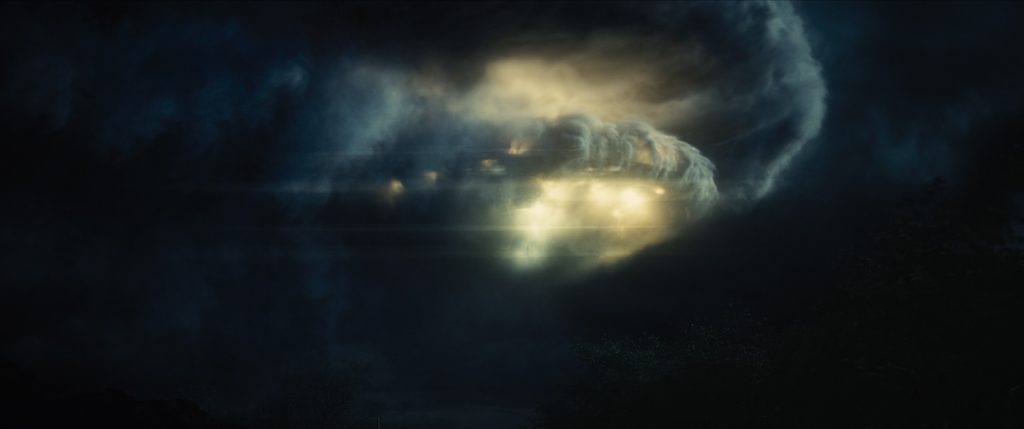
The main thing in my mind is a line in the monologue that David Koepp wrote. It got me in the gut because it was so beautiful, and it says, “Footage that raises profound questions about what is happening in our skies and what is the nature of who we are and our place.” How would I react if the skies opened up, I saw something extraterrestrial, and the whole world was seeing it for the first time alongside me? Your whole sense of reality is instantly changed. I was working through this visceral element of beliefs being dismantled in a moment, and that being okay and, in some way, feeling a sense of home in a way that you have never experienced before.
How so?
When truth is revealed, it’s a beautiful thing because I think as humans, we’re all searching, we’re all questioning, we’re all wondering what is beyond this? Getting to experience what that could be in a moment was something I thought about for the majority of my time working through that script in real time on set.
How did you approach the way David Koepp wrote your news anchor?
When I read that monologue, I thought, oh my gosh, they see us as journalists. When you’re reading material as an anchor, there is a whole human behind that person, and they have real emotions. There have been times when I’ve reported on something in real life, and I’m in the field recording something that is hard to really stomach, and behind the lens, I’m crying. It’s the realness of being a human in that seat.
Did you ever ask Steven Spielberg, “What is the bigger picture here?”
I did not. It’s not because I wasn’t curious. In my mind, I’m going to go to that set, I’m going to do my job, and I’m going to get out of the way. If they want me to do anything else, I’ll be there and do it to the best of my capabilities. But this was such a secretive project that I wanted to honor whatever he wanted to share with me. I was open to it, but I didn’t want to press for anything that wasn’t ready to be shared. I just wanted to come in and be as respectful as possible of the material.
What did he share with you on set?
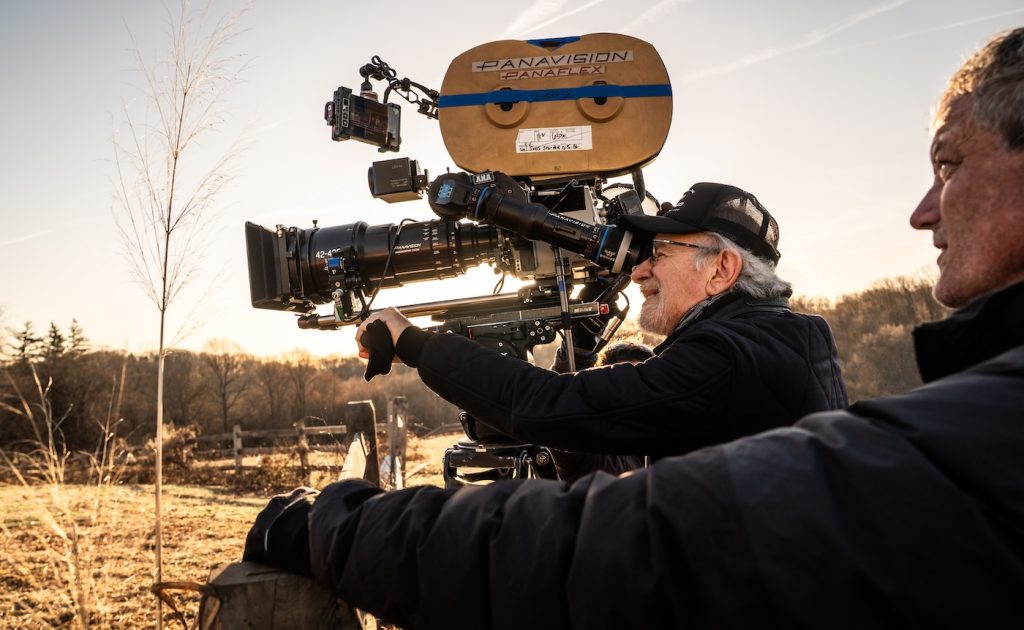
There was a moment in here where I said, “This is extraordinary.” I remember him coming in, and he said, “I want you to think of this as little Courtney. It’s a childlike wonder.” I love that he gave me that opportunity that got me emotional, because we’re always thinking about the inner child. I think about the inner child a lot, and him just being able to pull that out of me and say, “This is a moment in all of this; you’re going through authority, then you’re going through shock and fear and confusion.” Then he said, “And now in this moment, this is your child just being amazed.”
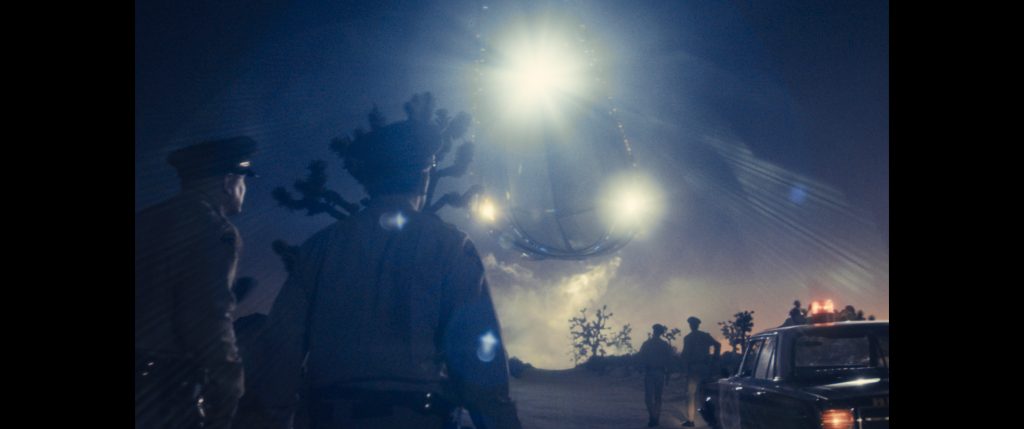
It’s incredible that you got to embody the awe that has been so central to many of his most beloved films. What was your first discussion with him on the set?
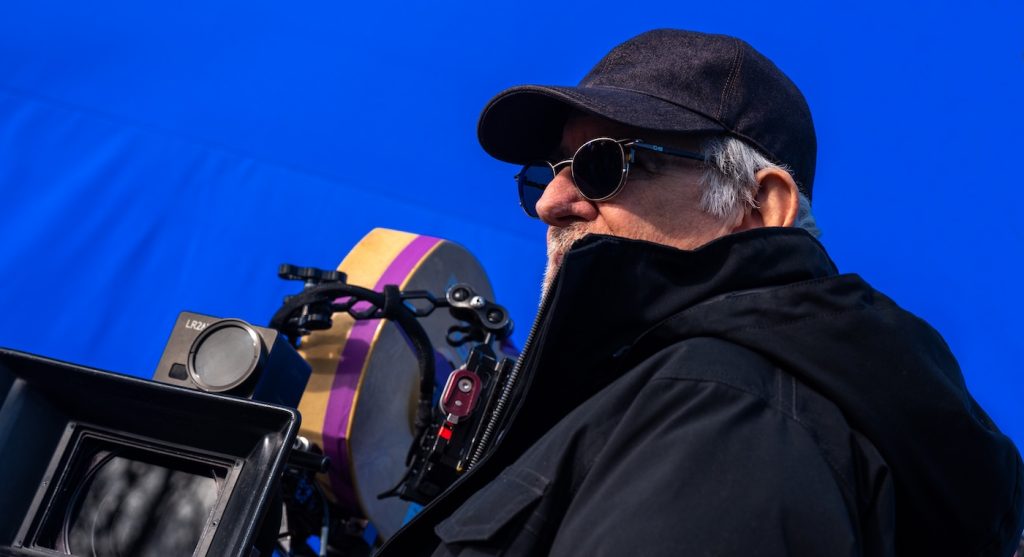
I was going through the scene, but my mic wasn’t hot, and I had somebody in my ear giving me directions on all of it. Then eventually they said, “Okay, we’re going to open up the mic, and we’re going to go for one.” We went for one, and they said, “Okay, cut. Steven is coming up. He would like to speak with you.” I went, “Oh my, Steven Spielberg. Steven Spielberg is coming up.” At that point, I hadn’t met him yet. I was like, “Okay, I’m going to get a note, be open and be ready, don’t be starstruck, just listen.” I can’t remember his exact words, but the message was that what I was doing was what he was looking for. It moved me, overwhelmed me, and shed a lot of tears right in front of his face [Laughs].
[Laughs] He must be used to it.
Oh gosh, I’m sure. He was so kind and so gracious with his words about my work. I think in those moments you envision the best-case scenario of how a day like that will go. I realized I was dreaming way too small. He was like, “You should work here,” meaning NBC. I was like, “I’m actually pursuing acting.” He said, “Oh, what are you working on?” As a journalist, and I have a feeling you’ll understand why I said this, I said, “Oh, I can’t tell you; I signed an NDA.” He went, “Okay.” But I said, “I hope you know that I will also honor this, knowing that this is precious to me, too.” I talked to my [acting] coach after, and she said, “Courtney, I think it’s safe for you to be able to tell Steven Spielberg what you’re working on.”
[Laughs] Any parallels between telling a story on film and on TV?
A newsroom crew is going after the same goal in the same way that you are with a movie. Everyone is trying to achieve something: getting this movie done, getting this scene done efficiently and effectively in the way the story needs to be told. It’s the same for a newsroom, but the only difference is the timetable. With the movie, you have some time; you’re trying to make your day, and in a newsroom, you’re getting this stuff out by 5:00 PM or 6:00 PM. You’re trying to make your day on a set. You’re also trying to make your day in a newsroom. There are ebbs and flows within the two.
All your lines are extremely pivotal, including “You are not alone.” You give it the right amount of gravitas. What did you and your acting coach discuss about delivering that line?
Knowing how precious this material was, I did not show my acting coach or anybody this script, these pages, nobody. All I could lean on her for was getting my mind right and making sure I was prepared for the day, mentally, and counting on all the training and all the coaching. So, that line specifically, that was something that Steven Spielberg and I worked on.
How did you two work on it?
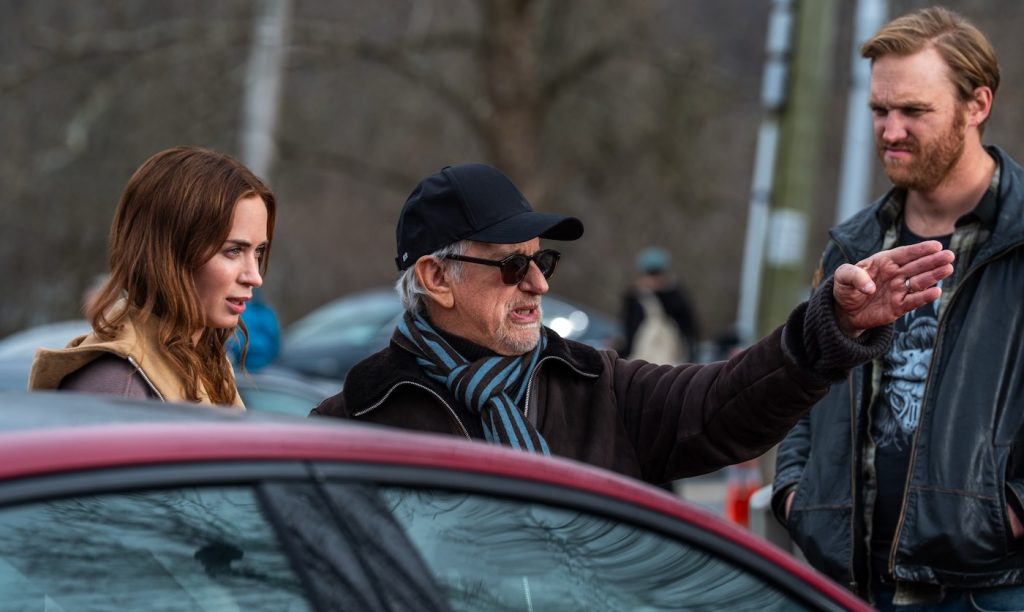
It was the second day. He knew exactly how he wanted that line communicated. There was: “If you’re watching this, if you’re seeing this, you are not alone.” In one of the takes, I said, “You are not alone.” He came in, and he said, “I want you to say, ‘You are not alone.’” And so, he knew exactly how to land that plane in the way that it needed to land. He was my coach that day.
You landed the plane. Over the years, you questioned whether or not acting was the right career path for you. Given the response to your work here, how have you reflected on the journey towards Disclosure Day?
I was talking with somebody the other day, and I said, “This is right on time. It’s not late. It’s not early. It is right on time.” Everything I’ve done before has made me ready for it. Sometimes we want things a lot faster simply because we see that we desire them. For me, something that’s put in my heart as a desire and something that is a dream, it’s not going to miss me if it’s for me. It’s not going to miss me. I can rest in this moment, honor this moment, do the best I can in this moment, and believe that when the next thing comes, I will be ready for it.
It’s a fantastic moment. Congratulations, Courtney.
I’m just thanking all the people in my life who have helped me get to this place, because though I’m the one speaking to you, there is a village all around me that is my anchor. Though I was an anchor in this movie, they are my anchors. So yes, just a lot of gratitude right now for such a time as this, and it did not delay.
Disclosure Day is in theaters now.
Featured image: Courtney Grace in Disclosure Day. Courtesy Amblin/Universal Pictures.