“Disclosure Day” Cinematographer Janusz Kamiński on 35mm, Drones, and Decades with Spielberg
For over three decades, when two-time Oscar-winning cinematographer Janusz Kamiński gets the call from Steven Spielberg, he says yes. The collaborative relationship that started with Schindler’s List has led to Spielberg’s return to science fiction thrillers with Disclosure Day, their 21st movie, but the first set in the present day.
Disclosure Day follows cybersecurity expert Dr. Daniel Kellner (Josh O’Connor), who steals secret government files proving alien contact. While running from Noah Scanlon (Colin Firth), a ruthless corporate security CEO, Kellner connects with a Kansas City meteorologist, Margaret Fairchild (Emily Blunt), who has inexplicably developed telepathic and linguistic abilities, and together they race to reveal the truth to the world. Disclosure Day also stars Colman Domingo, Eve Hewson, and Wyatt Russell.
Here, Kamiński, who won Academy Awards with Spielberg’s Schindler’s List and Saving Private Ryan, discusses their collaborative process, his indispensable New York crew, and how drones helped take Disclosure Day to the next level.
When Steven Spielberg comes to you with something, is it always an instant yes?
Of course. He’s the greatest, but his whole process of making movies is amazing, too. There’s a clear sense of storytelling and decision-making. It’s not that other people don’t have it, but it’s just the way he presents it. You want to do the best possible work, because it’s so inspiring.
When did the conversation start?
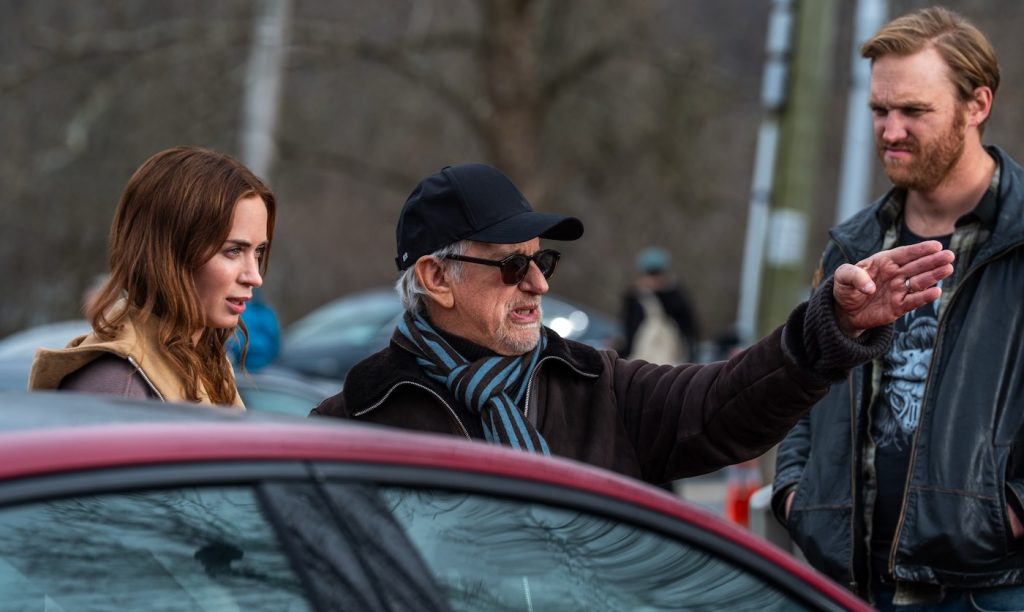
He gives me a script, I read it, and usually the stories are so massive that I’ll ask, “How are we going to do it?” He’s like, “I don’t know, but we’ll figure it out.” I asked the same question when I read War of the Worlds. We only had three months of prep on that one, but we figured it out. We don’t have conceptual conversations, and we rarely watch movies relevant to anything we might do. Minority Report was the only time we did. Steven told me to watch The Ipcress File because he liked the director’s use of angles. With Disclosure Day, we knew we were making a contemporary movie. We’ve never made a movie together that’s set in the present day. The closest we came to it before was Minority Report, and that was set 40 years into the future. There are certain aesthetics in contemporary movies that I’m not interested in. They’re often overly soft, underlit, and everything becomes a bit flaccid. I like telling visual stories that have oomph.
Disclosure Day feels like a companion piece to Close Encounters of the Third Kind and E.T. the Extra-Terrestrial.
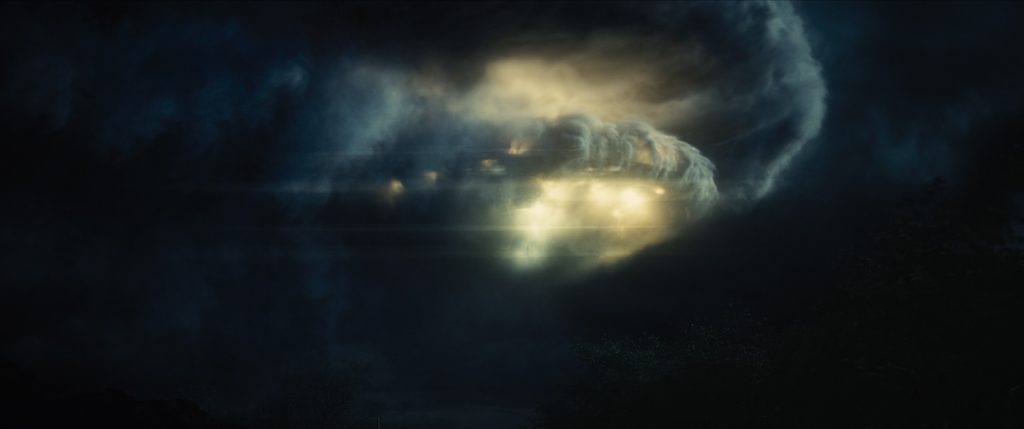
That’s inevitable because Steven made those movies too. In pre-production, he told the art department and visual effects, “I’m not interested in recreating a ship that I had in Close Encounters. It’s not that I’ve done it, but I want to take it to another level.” So, the conversation became, “How do we make this so that it will imply the ships are landing, but in a way that you can’t define what they look like.” When making a movie that talks about revealing authentic material, it is essential that we not create false impressions. Another way he introduced the events authentically was by not putting them on the big screen. We shot them for the big screen and spent hundreds of thousands of dollars to do so, but with all those spectacular elements we captured, he reduced them to the device screens. That way, they became immediate, familiar, and common because that’s how the news presents those events and how we watch them. That made it believable.
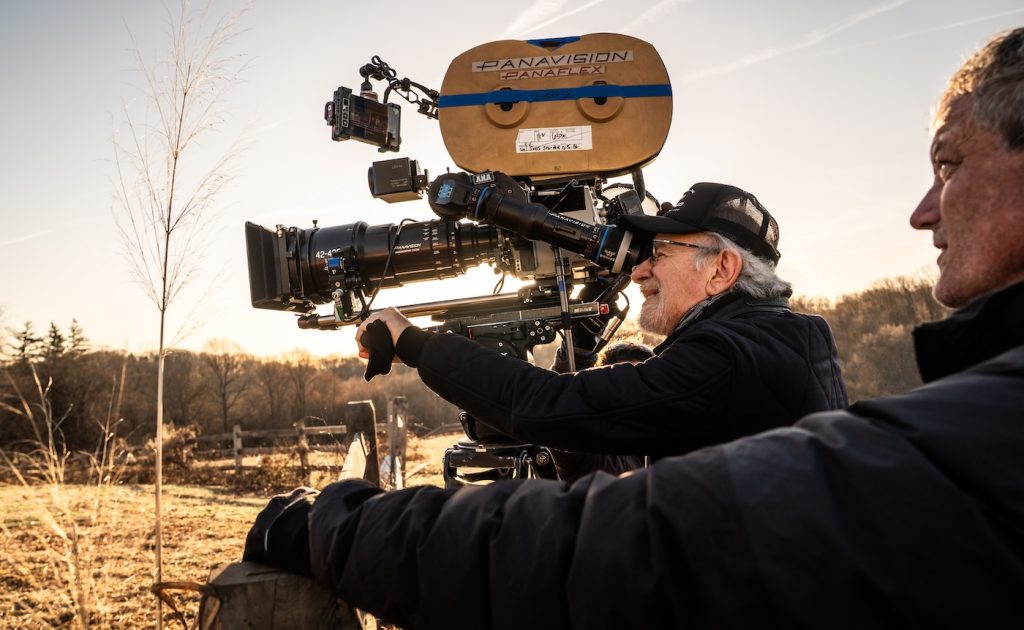
You shot Disclosure Day on 35mm film to deliver high fidelity with a cinematic texture. Today’s audiences seem engaged in formats.
I went to see it with my son yesterday. We saw it in 70mm at Universal, and it’s spectacular how he delivered that. It feels so authentic. However, I don’t think the audience really gives a flying f**k about formats. Filmmakers try to emphasize it and make themselves stand out, like “I’m doing IMAX” or “I’m doing 70mm.” Just make a good movie, that’s what matters. Tangerine was made with an iPhone, and it’s amazing. The formats are inconsequential. This 20-year-old kid made Backrooms. What a smart, sophisticated, emotionally complicated individual. Format doesn’t matter. Just make a story.
Do you get excited by this next generation of filmmakers?
I get excited, but there’s also an aspect where the visual metaphors seem to disappear, and everything starts to look the same. There was a certain beauty in shooting on film, and cinematographers trained to do so have control over those images. There’s a little bit of a mystery. The film goes to the lab, it comes out, and that’s when everyone sees what it looks like. The transparency of digital images is wiping out that uniqueness.
Just like War of the Worlds, Disclosure Day was filmed in and around New Jersey and New York. Did you use local crews again?
I’ve got a great crew in New York. Over the last three years, I’ve spent two and a half years there. Those technicians are more like artisans. They are not just manual labor. They are smart individuals who constantly have to improvise, and that requires a unique type of person. I’ve got great electrical people and camera crew there, so I only brought two people from Los Angeles: the focus puller and an operator. With people I’ve worked with before, there’s a continuity in language and familiarity in what we’re making.
Was there anyone in particular who came into play during key moments on this shoot?
There is a scene in which the landing craft emits light and has to interact with the environment. We wondered how we were going to move a light from the ground up to the sky and see the shadow playing on the ground, on people’s faces, and so on. We found a spectacular drone company in New York called Flying Monster. I could attach a very strong light, so I did a tandem of them, meaning we were able to ascend, descend, and move across, so the light would hit the lens and create shadows. I needed to do it in a way that was fast, repeatable, and could adjust to terrain. I used drones in Ready Player One, but in that case, the lights and the drones were small. Here, once we discovered how we were going to do it, everything became much simpler. Now we had a platform that the CGI company could build landing crafts around based on the light.
The train sequence looked complicated.
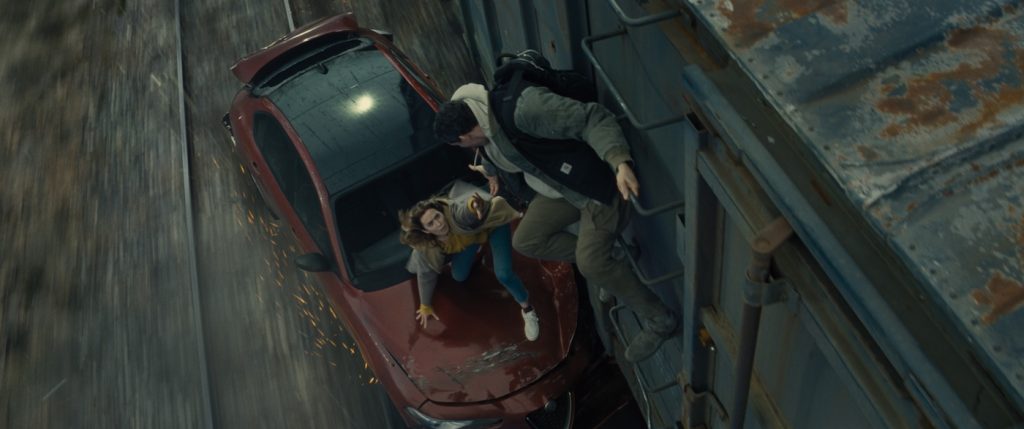
It was very difficult. 90% of that is live photography. Everything you see we created on camera. Sometimes the train would not move, such as when Emily and Josh were climbing onto the train. We had that car attached, along with effects like smoke, wind, and dust. Brian Machleit, the stunt coordinator, spent several days with the second team on the active railroad track we had under control, where the train was moving at maybe 15 miles an hour, and he made all the wide shots. We sped it up a tiny bit, added some extra trees, and there was one little moment where we did face replacement on the stunt people, but that was it.
Did your work on Minority Report, A.I. Artificial Intelligence, Ready Player One, and War of the Worlds influence Disclosure Day?
We made those movies, so there will be certain similarities. Do our stories evolve? Of course. From early Spielberg to social commentary, political movies, and historical drama, we essentially use the same tools to tell our stories, but we put restrictions on ourselves. On Schindler’s List, we were not going to have a crane. On Amistad, we were not going to do any dollies other than maybe one push, and we used a single crane. The paint is the same, the brush is the same, we’re not repeating the same story, but we’re using the tools that we’re familiar with to tell the stories.
Featured image: Josh O’Connor is Dr. Daniel Kellner in DISCLOSURE DAY, directed by Steven Spielberg.