
“Paradise” Season 2 Cinematographer Yasu Tanida on Reunions, Ruin, and Radiant California Light
The first season of Dan Fogelman’s post‑apocalyptic thriller Paradise featured a seemingly idyllic life in a vast underground bunker after an extinction-level event. The titular city is controlled by Machiavellian tech billionaire Samantha “Sinatra” Redmond (Emmy winner Julianne Nicholson), who remains traumatized by the loss of her young son years ago. Among the city’s 25,000 handpicked residents is Secret Service agent and widower Xavier Collins (Emmy winner Sterling K. Brown). Three years after the fallout, Sinatra finally reveals that his wife, Teri (Enuka Okuma), is still alive. Leaving their two children in Paradise, he sets out to find her at all costs.
Thanks to $15.5 million in production incentives from the California Film & Television Tax Credit Program, the Hulu series shot its second season in Southern California over 96 shoot days with 450 cast and crew members. Among the crew is cinematographer Yasu Tanida, a frequent collaborator of Fogelman’s after working on This Is Us and Fogelman’s upcoming NFL family drama, The Land. Grateful for the opportunity to keep working in his hometown, Tanida feels “very lucky to be able to shoot in Los Angeles with the crew that I’ve been working with for over a dozen years. I love shooting in L.A. I’ve been working here on four shows for the past 10 years, so I feel very fortunate.”
Tanida recently spoke to The Credits about how the year-round California sunshine delivers classic Hollywood icons, the arc to season one’s visual language, and how he imbued a long-awaited reunion with beauty and chaos.
How big is your team? Are they mostly based in Southern California?
Yes, they’re all based here. The camera department is about 10-16 people, the electric and grip department are roughly 40 people, so probably around 50-60 people. The overall team is huge – on any given day, we have up to 100-120 crew and cast members.
What makes shooting in California unique?
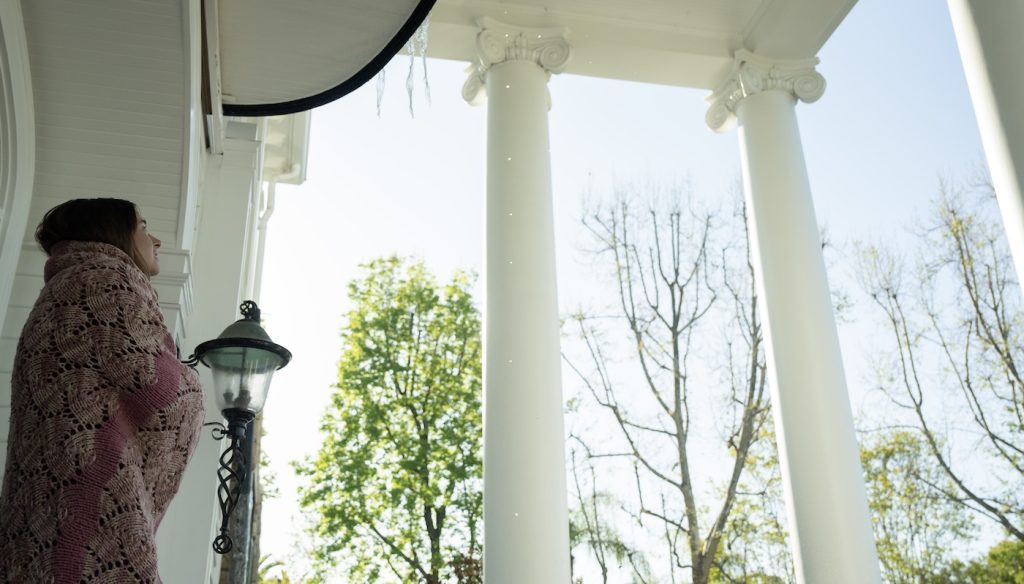
The best thing about shooting in L.A. is that the sun is shining most days, which means I can alter that sun. If I’m outside on a day exterior scene, I can use it as a beautiful sunlit day or soften it to make it more romantic. Or I could diffuse it to the point where it’s shadowless and make a cloudy day. As a cinematographer, consistent weather is very important. I’m shooting Dan’s football show, The Land, right now, and we had a full week of bright blue skies to shoot a 130-minute sequence for one game, which can take five days to shoot. That’s why D.W. Griffith and Charlie Chaplin shot here — the light is so beautiful. It’s Los Angeles — it’s Hollywood.
Has that influenced your cinematography style?
From Paradise to This Is Us, my photography style is in the Hollywood tradition that’s meant to make actors look amazing; the sunlight here really helps with that. When you see Tom Cruise or Brad Pitt in those big close-ups, that’s iconic Hollywood. I think we sometimes lose that with many productions shooting in other places these days. I gravitate toward making the actors look appropriate for the story, and L.A. lets you do that in different [natural] lighting conditions.
As Season Two begins, it almost feels like an entirely different show. Since you also shot Season One, what were some of the changes you anticipated going into the new season?
The very first shot of the pilot was Xavier in the blue fake moonlight of Paradise as he reaches his hand out to the other side of the bed, where the warm sodium light is hitting.
Yes, I remember that opening shot with Xavier waking up alone was very memorable.
That scene is the mirror opposite of the last shot, when Xavier is in the airplane, the doors open, and it’s warm light. My whole thing with Season One’s arc was at the beginning, he’s in cold light trying to reach his warm wife, and by the end, he’s embraced by this warm light and hopefully closer to his wife. So, when I started Season Two, I was like, ‘What am I going to do now?’ I put everything into the first season; there was a finality to it. The sets for Season Two are very different because they are now in the real world. So visually, they’re very different.
What cameras and lenses are on this?
Arri Alexa 35 with Panavision Ultra Panatar II’s 1.3x squeeze anamorphic lenses and 2.39:1 aspect ratio.
[Spoiler warning!] This season opens with a museum tour guide, Annie (Shailene Woodley), who has survived alone at Elvis Presley’s Memphis estate, Graceland, for the past three years. What was special or challenging about setting a crucial episode there?
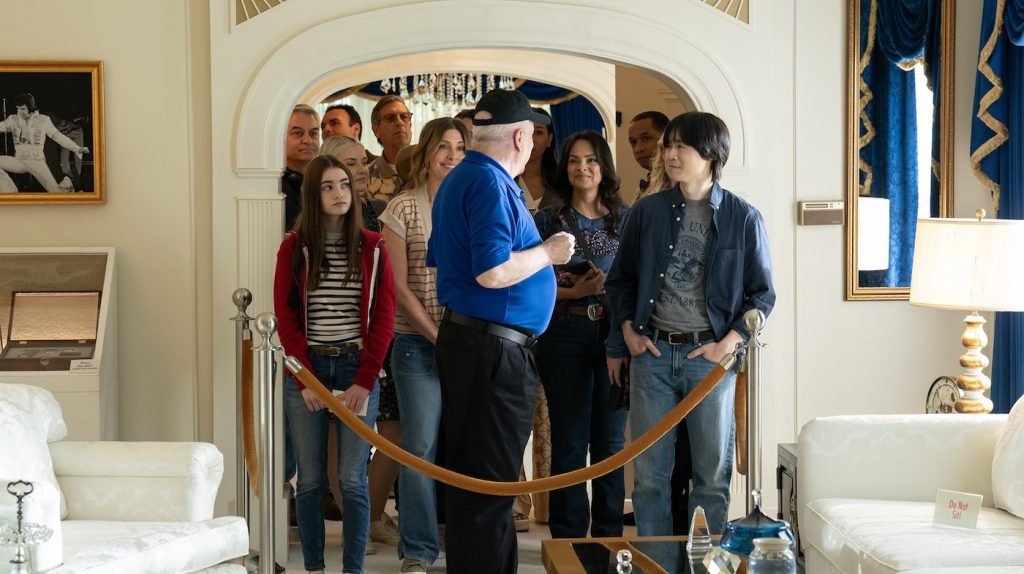
Graceland may seem like an expansive place, but it’s basically a normal home. To shoot all those scenes in a normal-sized home was challenging. So, the production designer, Kevin Bird, and I embraced Graceland’s smallness. We added a foot or two max to the living room, which was originally 14 feet wide. Movie sets sometimes make a space bigger for room to put in a crane or a dolly. But we kept Graceland small, so the light through a window bounces in a more natural way. If you “Hollywood” it and make it bigger, that light takes more time to reach the other side of the wall. We tried to make it feel like a lived-in, real place.
Teri has been living with a group of survivors, including mail deliveryman Gary (Cameron Britton), in the basement of a post office in Atlanta. What was it like to shoot at RSI Pomona?
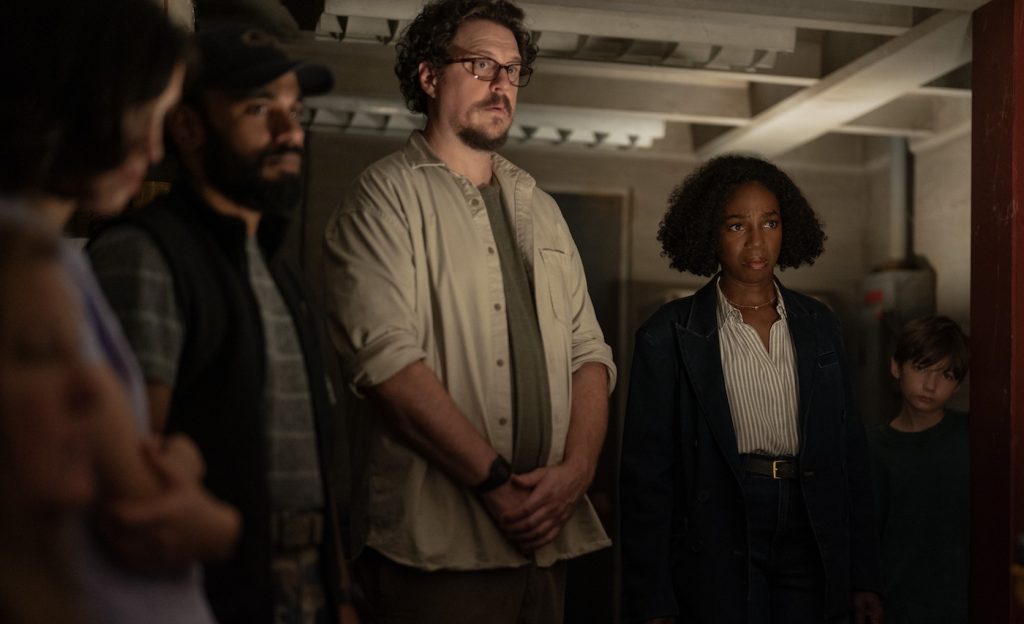
The exterior was at RSI Pomona, but we built the interior on stage 32 on the Paramount lot. Figuring out where to put the radioactive sign on the bunker door was fun. Kevin and I went back and forth with a 40-by-40 box and plugged in where the door, backroom, or kitchen could be. Or where the scenes could fit in the lobby, which has a 12-foot ceiling that feels more open and grand. We made the ceiling in the basement 7 feet tall, so that Gary is literally touching it with his head. We wanted that bunker to feel very oppressive. The upstairs is more vast, but downstairs is super crammed, which gives it a very interesting visual difference.
Xavier learns that Teri has been kidnapped by a ragtag group of survivors who have commandeered a working train line. So, he plans to set off an explosive as a distraction to get her out. What went into that set piece?
Finding the path for the bomb was very exciting because you basically map out how he’s getting there with the cable wire. It’s as close as we can get to a spy show. Once he figures out that Gary might not be telling the truth, he decides to throw the bomb to save himself. So, we put Xavier in a place where he could be backlit and look really heroic. There’s a great close-up when he’s looking at that photo – for that, we used a 35mm lens to push in on his face very dramatically.
The fans have been waiting for Xavier and Teri’s reunion for a long time. How did you heighten the emotions of that pivotal moment?
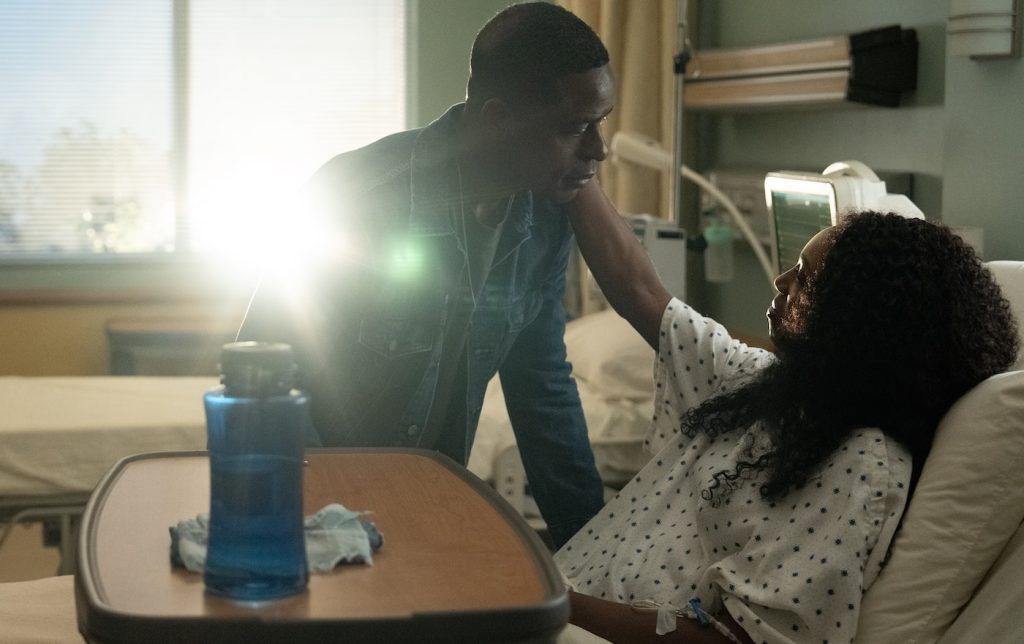
We shot that at sunset when the sun was low in the sky to get this beautiful lens flare when they hug for the first time. But it’s also jarring because it’s handheld, so it’s beautiful and chaotic at the same time, which was the feeling we wanted to give the audience.
At one point, one of Xavier’s children is trapped in an elevator shaft. What went into that sequence?
We shot the elevator in three parts. One was the actual elevator shaft — we shot scenes in the shaft by itself. Then we shot the flooring, which is on the ground floor with an actual door that opens. Then, the stunt part is where the shaft was suspended and dropped before the girls are saved. To make all three sections appear seamless was great fun.
In the finale, a nuclear reactor meltdown threatens Paradise, and chaos ensues: while Xavier and Teri scramble to locate their children, Sinatra is finally released from the pain of losing her son. What was it like to pull that complicated finale together?
As Sinatra walks through Paradise one last time, somebody grabs her hand, and it’s her late son, Dylan. We had so much to shoot on the Warner Brothers lot, and that was the very last thing, and the sun was going down. But I think Julianne gave an amazing performance. As far as the explosion, the Warner Bros lot played the exterior of the town center and the dome. Johnny Weckworth, our VFX supervisor, put the dome in the background of Pyramid Lake, and that’s where you see the bunker imploding. In Episode 7, where Agent Robinson (Krys Marshall) and her group try to destroy the bunker from the inside, that was shot at the Budweiser factory off the 405 freeway. There were so many pieces to make it all come together, but it was fun, like a big puzzle.
Renewed for a third season, Paradise is streaming on Hulu.
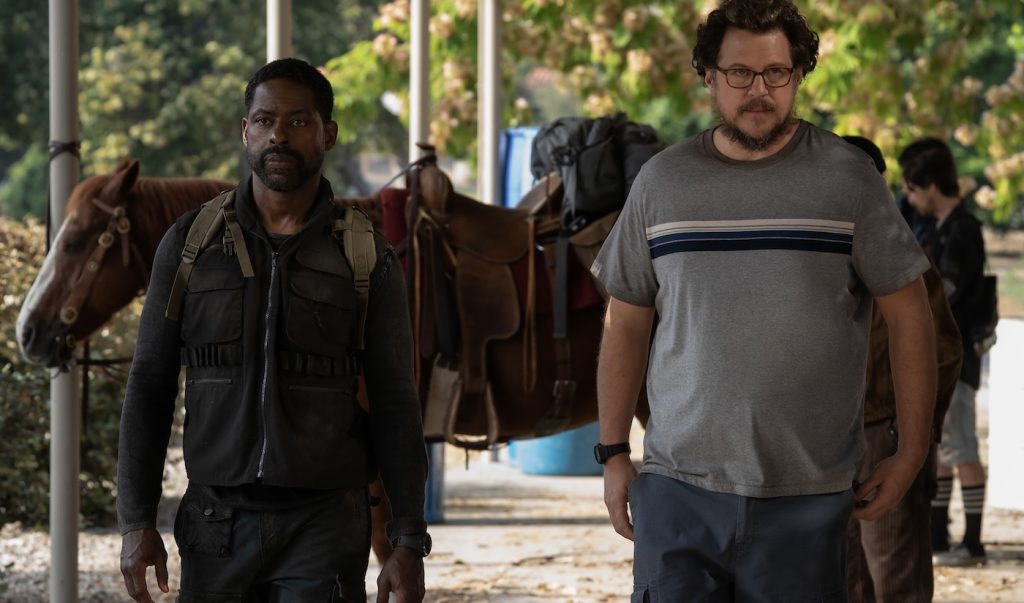
Featured image: PARADISE – “A Holy Charge” – Xavier and Annie travel to Atlanta, contrasting life in this new world and the one he left behind in the bunker. (Disney/Ser Baffo) CELESTE OLIVIA, STERLING K. BROWN