“Michael” Director Antoine Fuqua on Jaafar Jackson’s Brilliance, Los Angeles, and Bringing “Thriller” Back to Life
When director Antoine Fuqua took on Michael (in theaters on April 24), the biopic of music legend and pop culture icon Michael Jackson, he knew authenticity would be the cornerstone of the project. From filming at Hayvenhurst, the Jackson family compound in Encino, California, to the exact location where the King of Pop filmed his “Thriller” video, and from meticulously recreating the iconic costumes Michael wore on stage, it all had to be exactly right.
Michael tells the story of Michael Jackson, played by his nephew Jaafar Jackson, from his early days growing up in Gary, Indiana, his time in the Jackson 5 under the strict guardianship of his father Joe Jackson (Coleman Domingo), and his early solo career. Michael is produced by Graham King, who previously gave audiences Bohemian Rhapsody, the Oscar-winning Freddie Mercury and Queen biopic.
Fuqua spoke to The Credits about why he wanted to film Michael in Los Angeles, where he previously filmed Training Day and The Guilty, among other films, not just because that’s where seminal moments in Jackson’s career took place, but also because he had access to local artisans who had worked with the superstar.
When did it all click into place on set?
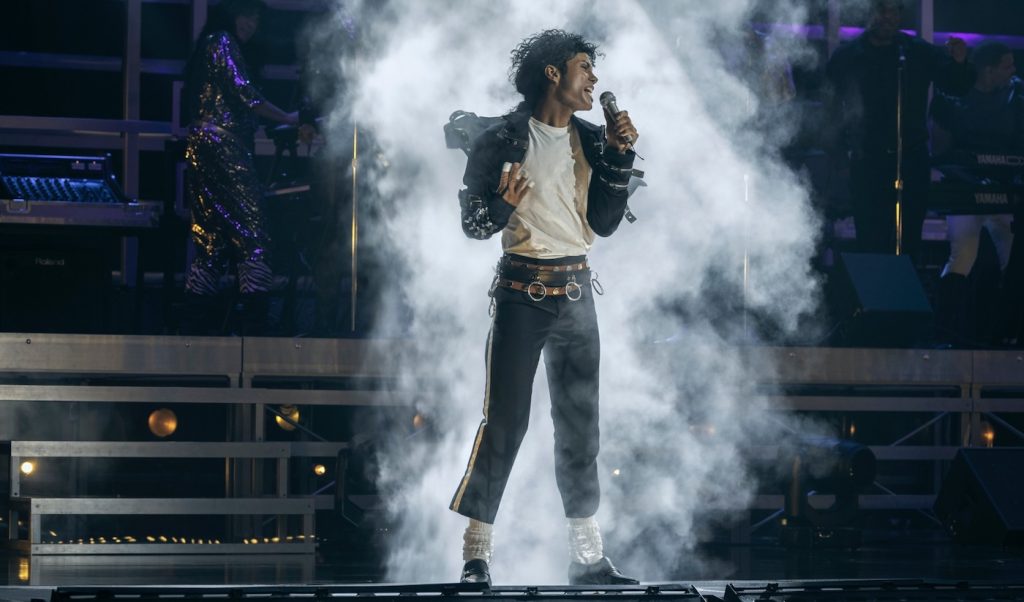
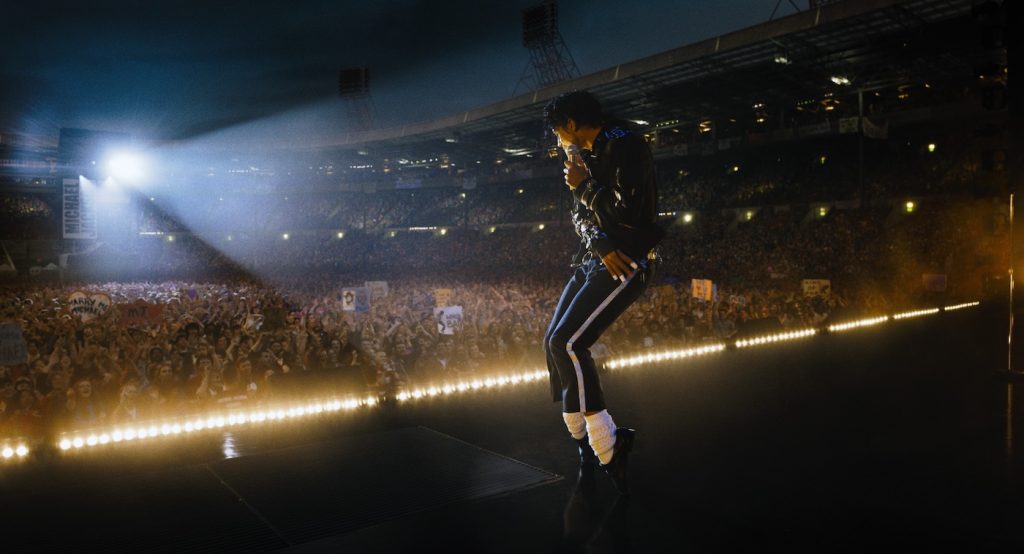
It was on day one, seeing Jaafar perform Bad. That was the tour where Michael got his wings and creative freedom. To see Jaafar do that, when he had never acted before, in front of 500 or 600 screaming extras, felt like a real concert, and that was a pivotal moment for me. I was understanding Michael from a more intimate perspective.
It’s a big gamble to start with such a pivotal moment.
This is Michael Jackson. You’ve got to put the cape on the superhero to see if he can be a superhero, and Jaafar pulled it off. I was shooting that scene for a few days, so he had to do it over and over at the same level, every time, from every angle. At that point, Michael had such veracity and energy, and we had to capture that.
For the crew, did you try to find people who had worked with Michael?
We had band members come by, and Rich and Tone 9, Michael’s choreographers, worked with Jaafar every day. As a Jackson, he had his own connections with his family and his dad, Jermaine, but all those things came into play to make it authentic.
You also brought in LA-based Don Boyette, Michael’s bassist on the “Bad” and “Dangerous” tours, who is another canon figure in the MJ legacy.
We also had Paul Massey, the re-recording mixer on Michael Jackson’s This Is It, a great sound-mixing team, and other great musicians behind the scenes. We had to make sure the bass and drums were just right and spent a lot of time in the mix.
Did you have a list of people you trusted that you wanted to bring in?
That’s always the case, but I had never worked with Dion Beebe, my DP, before. He’s fantastic, and I’ve always wanted to work with him. He did the test for us, and we were both kind of like, “Am I going to make the movie? Can this kid pull us off?” I remember I threw something at Jaafar, and he started speaking as Michael. There were tears all around the room. I looked at Dion, he had tears in his eyes, and was like, “I have got to make this movie.” Our crew had so much love for Michael. We even had people come out of retirement to do it. It was pretty amazing.
How key was it to shoot in many of the original locations rather than recreate them?
It’s not quite the same when you do that. I spoke to Graham a lot about it, and he was able to secure certain places. To have access to Hayvenhurst was incredible. To film in the actual studios in Los Angeles where you recorded “Off the Wall” was incredible. You could feel the history in the air. We used the Pasadena Playhouse 9 for the Motown 25 show, we shot “Thriller” at the original location, and we had a full moon every night. It was perfect. That was eerie because the place looks the same. LA is unique. Just like with Training Day, it’s a character for me. There’s a certain light that I’m drawn to. Hayvenhurst is hidden behind the gate, so you would never know that Michael Jackson lived on that street. It’s all so unassuming sometimes, but right in front of your face at others.
“Beat It” was a personal touchstone for you. What was it like recreating that from the behind-the-scenes perspective?
It says so much about Michael and how much he cared. At that time in LA, gangs were killing each other, and Michael wanted to do something about it. He believed music could help bring people together, and allowing some of the gang members to be part of something more than just their day-to-day meant they could see the possibilities of a better life. I did that on Training Day. That’s the influence of wanting to go into a real neighborhood and bring people into a creative environment. The kids can see something different, feel like someone’s paying attention to them, and that someone cares.
The “Thriller” scene looks like a behind-the-scenes featurette of the original shoot, right down to the guy playing the original video’s director, John Landis.
The extra we hired to play John Landis didn’t realize he was going to be on a Chapman crane, and we were going to take him up in the air. He was scared of heights, so I was like, “Well, who’s going to play John? “It just so happened that I saw one of my ADs smoking a cigarette by the Ritter fan, very 80s, and I was like, “He looks just like John Landis.” I got him, dressed him up, and that’s what happened. My daughter’s in it as well; she’s the girl, so it was really special. There were so many moments where I couldn’t believe I was recreating the “Thriller” video.
For the “Don’t Stop ’til You Get Enough” video, did you manage to get the original assets and production tools? The recreation is so authentic.
Absolutely. We were trying to be as authentic as possible because we know Michael fans will be looking at every nuance. Being a fan myself, I’m looking at the same things. We talked a lot about the look of 80s films, the different lighting, and the flares people used back then. We used longer lenses, too, so the audience really felt like they were going through a time period. We shot some 16mm, a little 35mm, but most of it was digital. We would use old film shots to set the tone, and then digitally recreate the look for each period.
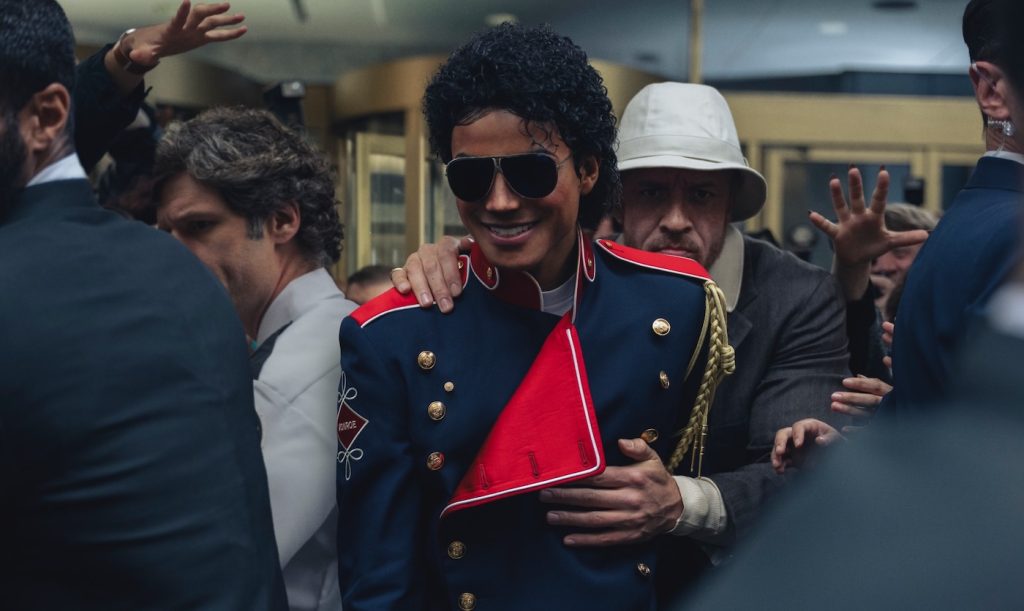
The costuming is incredible. Were you and they able to look at the originals?
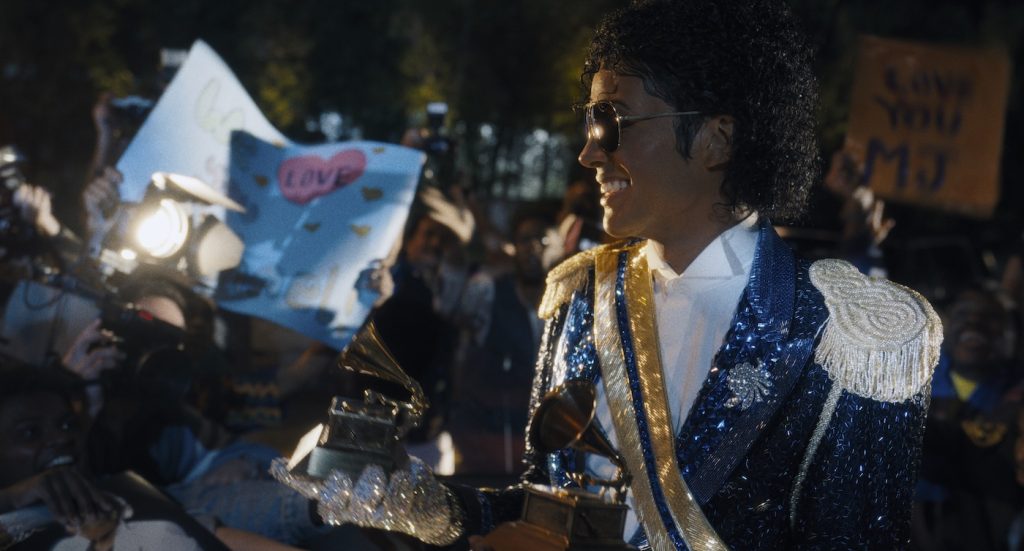
Yes. We brought in costume designer Marci Rodgers, and she did a fantastic job. We would literally put Michael’s costumes next to what she made and compare. Everything was authentic. Everything was handmade. The jacket he wore for the Grammys weighed 15 pounds. Those are Michael’s actual Grammys that Jaafar is holding.
You often don’t use entire songs, but weave elements of Michael’s tracks into scenes. How did you find the balance?
Paul Massey, our music mixer, was fantastic, and so were our editors. Some songs we wanted, but they didn’t fit the moment. However, when you take the lyrics out, the melody still feels right. It’s like score. You had to craft it along the way. With Michael’s music, you want to listen to it all, but you can’t; you don’t have the time. With “Wanna Be Startin’ Somethin’,” you start to hear it, and it becomes a through line. It took a long time to find that.
You also didn’t want to change the music’s character.
You can’t do that, so you have to try to find moments that have the right tone and rhythm and are authentic to what Michael did. That’s his music. We didn’t use anyone else’s music; it was just whether he was singing on it.
When it came to crowd scenes, there was some VFX. Did you want to use real crowds as much as possible, and why?
We brought as many people in as we could. I had to add more cameras because I would look at the monitor and be like, “This young lady is crying, and this guy is over here grooving. We have got to get all this stuff.” It started to feel organic. They were rooting for Jaafar and Michael, and it became very emotional.
Michael is in theaters on April 24.
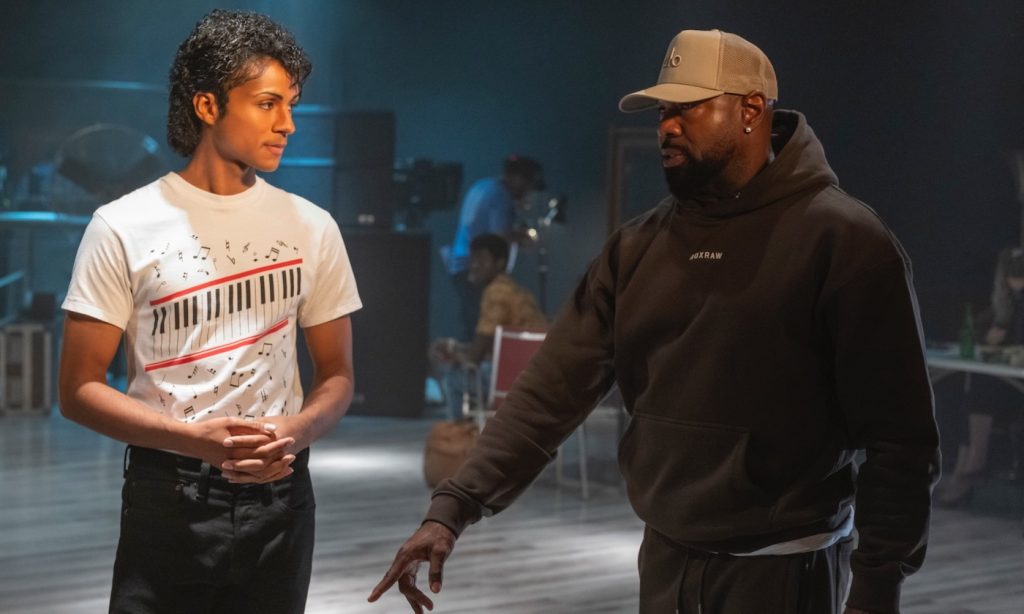
Featured image: Jaafar Jackson as Michael Jackson and Director Antoine Fuqua in Michael. Photo Credit: Glen Wilson/Lionsgate