Inside the Creative Engine of “The Pitt”: How Four Writers Built on a Breakout Hit
When The Pitt burst onto the scene on January 9, 2025, the airwaves were a veritable emergency waiting room, packed with medical shows. New series last year alone included St. Denis Medical, Doc, and Pulse. Returning shows included the 21st season of Grey’s Anatomy, the 10th season of Chicago Med, and the 8th season of 9-1-1. We had plenty of doctors and nurses staffed and ready to go. Granted, The Pitt boasted a slew of ER alums in creator/showrunner R. Scott Gemmill, actor/executive producer/writer/director Noah Wyle, director/executive producer John Wells, and writer/producer/doctor Joe Sachs, but even that pedigree of talent was no guarantee of success. The series, however, beginning with the premiere episode “7:00 A.M.,” was a tour de force of narrative immersion and emotional immediacy. People all over the country were hooked. It wasn’t just the best medical show on TV; it was one of the best dramas, period.
Plunging viewers into a single, relentless 15-hour shift in a Pittsburgh hospital, The Pitt offered a bracing, intimate portrayal of the staff and the patients they do everything they can for. With Wyle surrounded by veteran actors and newcomers alike—kudos to casting directors Cathy Sandrich Gelfond and Erica Berger—the series earned every one of its 13 Emmy nominations and five wins, including Outstanding Drama Series, Lead Actor (Noah Wyle), Supporting Actress (Katherine LaNasa), and Guest Actor (Shawn Hatosy). The show’s ambitious structure, which frames the action in real time, meant high stakes for all involved, demanding a level of continuity rarely attempted in a television series.
To that end, we wanted to talk to a few of the people responsible for maintaining that continuity and creating the intimacy and harrowing realism that make The Pitt such a standout. We once again got to speak with writers Cynthia Adarkwa and Valerie Chu, and were able to include their fellow scribes, Danny Hogan and Kirsten “Cookie” Pierre-Geyfman.
This talented quartet discusses how they approached the challenge of following a breakout debut, what actually happens inside The Pitt’s writers’ room, and how personal experience, medical research, and current events shape a show that feels urgently of the moment.
To start, I’d love to go around and have everyone share a bit of background—how you found your way into The Pitt.
Hogan: I was the script coordinator for the first two seasons. I’m originally from San Diego, grew up in a family of surfers and scientists, and that’s sort of been my worldview ever since. Before scripted TV, I worked at National Geographic and Discovery as a story developer and AP. I worked my way up through the writers’ room ladder—assistant, script coordinator—on a few shows, including the Gossip Girl reboot, and then very serendipitously landed on The Pitt. It’s been magic ever since.
Pierre‑Geyfman: I served as the writers’ assistant for the first two seasons. I was born and raised in the San Fernando Valley—there’s only one Valley, by the way. I started out in representation, working in the mailroom at an agency, realized pretty quickly I needed to get out of there, and eventually found my way into the room on The Pitt, which I’m very grateful for.
Adarkwa: I’m from Silver Spring, Maryland—born in D.C., raised in Maryland. I studied writing at SCAD and took a bit of a roundabout path into TV. I started as a PA in reality TV and realized that wasn’t where I wanted to be. I used social media to connect with writers and landed a job as a writer’s assistant, including on Sweet/Vicious at MTV. From there, I staffed on Legacies, then worked on another John Wells show, Emperor of Ocean Park, right before the strike. That relationship led me to The Pitt, and I’ve been here since season one.
Chu: I went to USC for film school and studied screenwriting. I worked my way up as an intern, PA, and showrunner’s assistant, and I was lucky to work for two incredible women of color who gave me freelance episodes early on. My last assistant job was on Better Call Saul, which felt like getting an MFA in writing. I honestly thought I might never make the staffing jump—it’s such a tough business—but The Pitt was the first time I worked with John Wells Productions, and they were open to bringing in writers who hadn’t worked with them before. That’s how I landed here.
Making that leap into the writer’s room and being on staff is a formidable transition.
Chu: It’s such a hard business, and I know so many incredibly talented people who just haven’t gotten there—not because of ability, but because of timing or access. That’s why The Pitt was so meaningful to me. I’d always heard that John Wells Production tend to work with people they already know, so the fact that they were open to bringing in writers who hadn’t worked with them before—it really mattered. It felt like someone opening a door that doesn’t always open.
Season One felt like it came out of nowhere and became a phenomenon. Season Two didn’t have that luxury. Before breaking the story, what were the conversations with Scott [Gemmill] and John [Wells] about how to approach the follow-up?
Adarkwa: A big part of the conversation was acknowledging that sophomore seasons are tough. We wanted to highlight what worked in season one without replicating it exactly. You can’t do another mass-casualty event—that’s not something that happens every day. The question was: how do we get the same juice without copying ourselves?
Chu: Scott really emphasized keeping our heads down and doing the work. Not trying to one-up ourselves—just telling the best story we could.
Hogan: We also got a little lucky. We were already deep into breaking season two when the show really exploded, so it was too late to let it get into our heads. We were already in the weeds.
Pierre‑Geyfman: Character-wise, it was freeing. Ten months had passed in the story, which allowed things to happen off-screen. The challenge became how to seed that naturally without exposition. Langdon [Patrick Ball] became a great audience surrogate because he hadn’t been there for those ten months. My husband said something really interesting when we watched the first episode of season two together. He said it felt familiar—like coming home—but also different. And I think that’s because we’re more comfortable now. We’re not introducing everyone from scratch anymore. We know these characters, we know the world, and that confidence shows up on screen.
For readers who will never step foot in a writers’ room, can you walk me through what yours actually looks like? How does the work get done?
Chu: We’re all in a room together on the Warner Bros. lot, sitting around a big conference table, surrounded by whiteboards. We start with a discussion—literally just talking. Scott usually comes in with his big tent poles, and then we talk through every character: where we left them, where we pick up ten months later, and what’s possible within 15 hours of real time.
Hogan: It’s very macro at first—story, pacing, structure—then it gradually becomes micro. We break out episodes, mini-arcs, and patient stories.
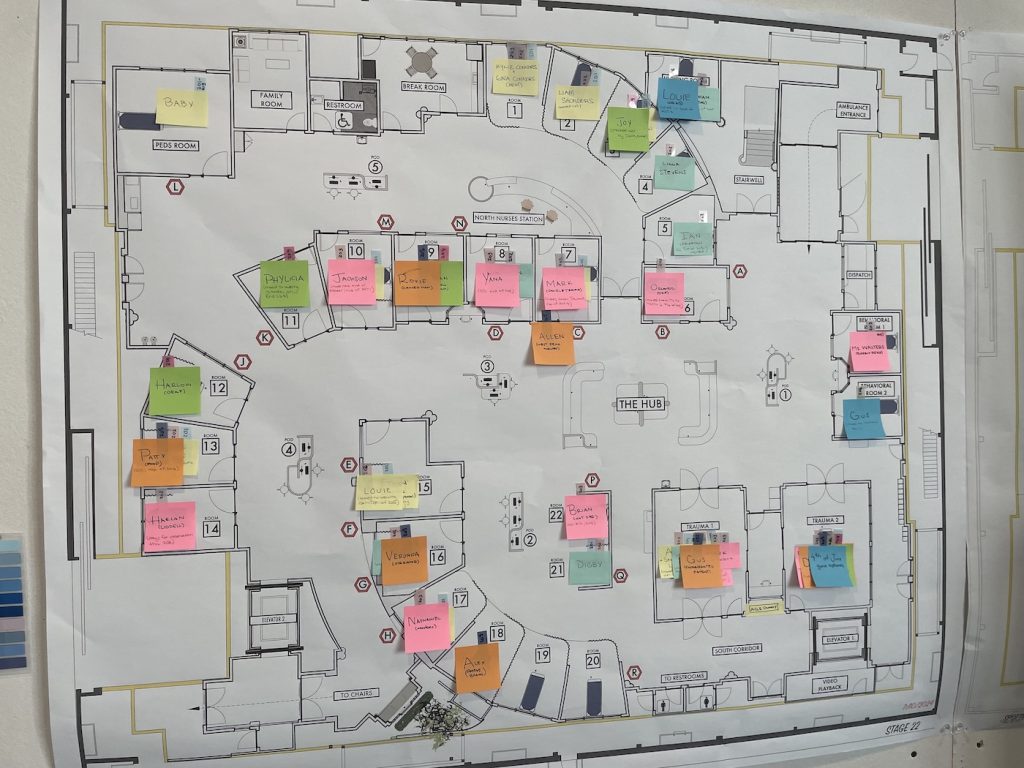
Pierre‑Geyfman: We also have a physical map of the hospital. Danny and I are always tracking where patients and characters are. Writing the show is like choreographing a 15-hour stage play—single location, continuous time. The logistics matter as much as the dialogue.
Adarkwa: And nothing is set in stone. We’re constantly erasing and rewriting. Scott is very flexible—there’s no rigidity. We’re always asking what’s best for the characters.
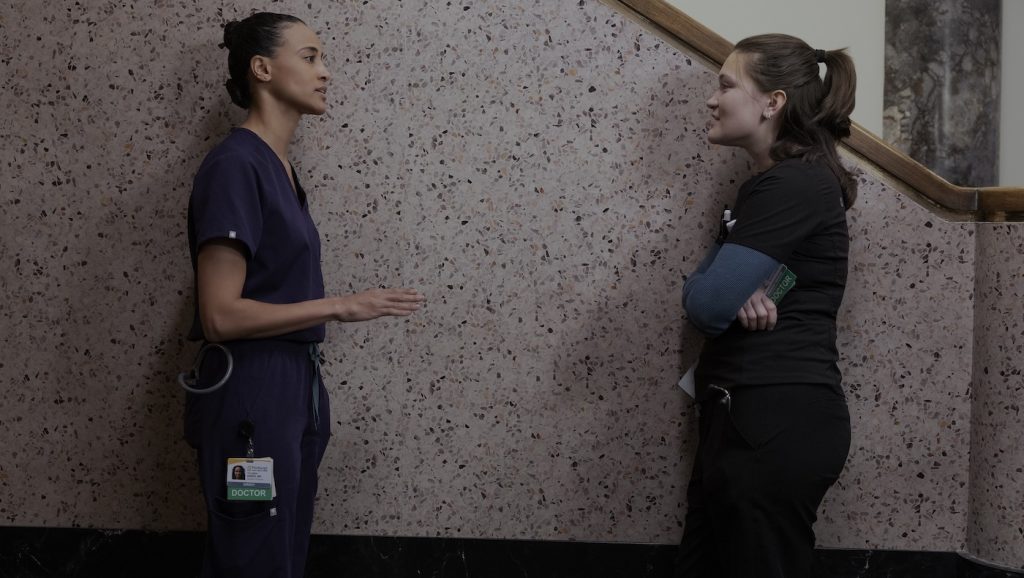
One thing the show does beautifully is explore different medical personalities—ER doctors versus surgeons, for example. Is that something you talk about deliberately?
Adarkwa: Absolutely. We talk about it a lot. It’s a mix of personality and specialty. ER doctors tend to thrive on adrenaline and improvisation. Surgeons can have a very different energy.
Chu: We also talk to a lot of medical experts, and it’s fascinating to hear how different specialties perceive each other. That helps us build characters that feel real without leaning too hard on stereotypes.
You’ve said before that writers are encouraged to bring their personal lives into the room. How does that shape the show?
Adarkwa: I think a writer’s job is to bring their life experience to the table. This season, I got to tell a story about Black women and eating disorders—something I felt passionate about. Healthcare touches everyone’s life, so the show naturally allows for that kind of personal storytelling. That was in episode four. I also wrote an episode later in the season that touches on something else very personal to me. Being in a room where that kind of vulnerability is welcomed makes a huge difference. You feel safe bringing those stories to the page.
Chu: The subject matter really helps. On other shows, there’s sometimes no way to bring in your personal experience. Here, it feels both safe and encouraged.
The show feels incredibly current—sometimes eerily so. How intentional is that?
Hogan: Very intentional. We’re all constantly sharing articles, medical studies, and journalism. Everyone’s doing their homework. One of the most meaningful things I’ve heard from viewers is that they’re just trying to root for good people right now. There’s so much happening in the country, and people respond to watching competent doctors doing their best within a broken system. We don’t control timing—we just try to do the work honestly—but sometimes those things line up in ways you couldn’t predict. That’s been really humbling to witness.
Chu: We sometimes debate whether something will still be relevant when the show airs—and often it ends up being even more relevant than we expected.
Adarkwa: We try to focus on the human impact rather than overt politics. We don’t want to knock people over the head—we want to show the real-world consequences.
Last question: if you had to go to the ER, which doctor would you not want treating you?
Pierre‑Geyfman: Joy [Irene Choi]—only because I really need a good bedside manner.
Hogan: Garcia [Alexandra Metz]. If she’s there, something very bad has happened.
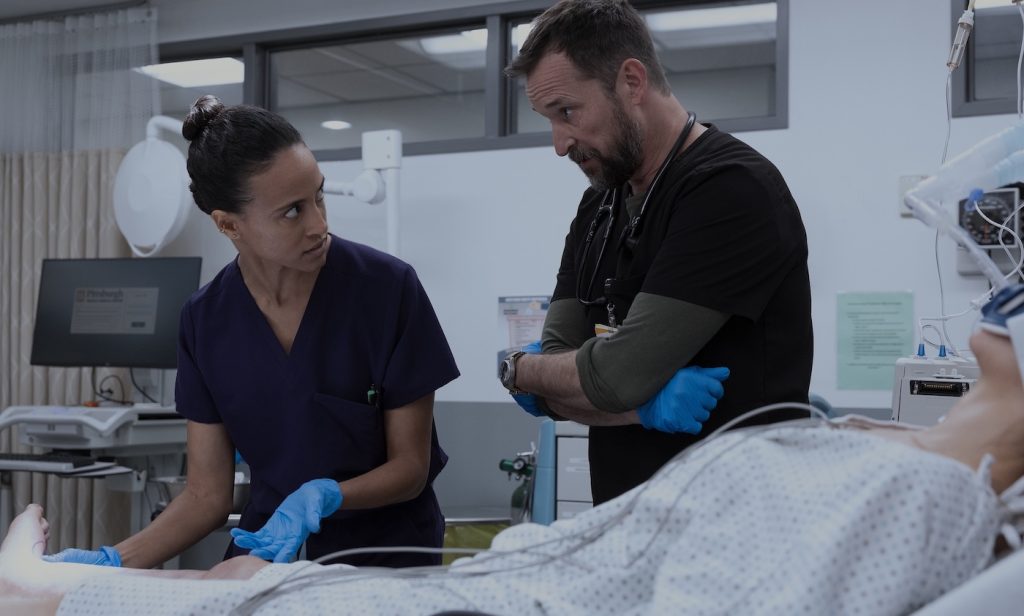
Adarkwa: Ogilvie [Lucas Iverson]. I love him, but no.
Chu: Also Ogilvie. Double down.
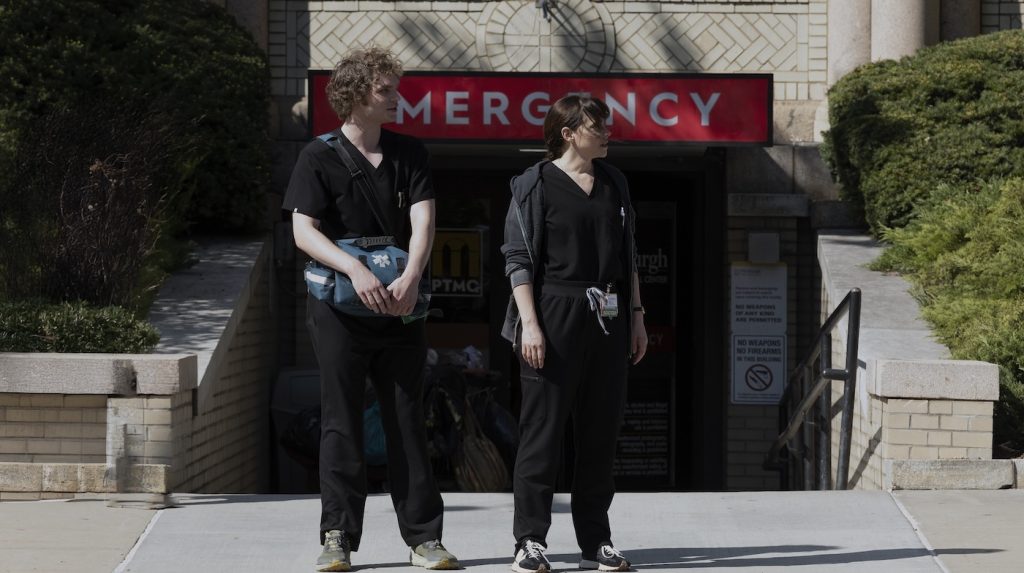
Featured image: Alexandra Metz, Patrick Ball, Noah Wyle, Gerran Howell, Amielynn Abellera. Photograph by Warrick Page/HBO Max