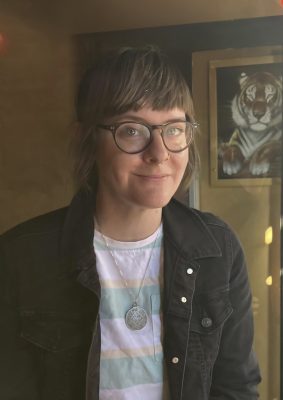
“Sinners” Oscar-Nominated Prosthetics & Makeup Designer Mike Fontaine’s Beautiful, Horrifying Vamps
Warning: This article contains spoilers.
There are films you admire, films you enjoy, and then there are films that burrow under your skin and stay there. Sinners is one of those rare cinematic experiences that lingers visually, emotionally, and viscerally, far beyond the roll of the credits. A genre-defying blend of period drama, musical, action spectacle, and supernatural horror, the film has captivated audiences and critics alike, earning a record-breaking 16 Academy Award nominations and redefining what a vampire movie can be.
At the heart of its striking imagery is the meticulous, inspired work of prosthetics and makeup designer Mike Fontaine, who was nominated for one of Sinners’ 16 Oscar noms and whose artistry brings the film’s vampires to life. Fontaine’s approach is grounded in practicality, collaboration, and an almost poetic relationship with nature, resulting in effects that feel both disturbingly real and strangely beautiful. In conversation, Fontaine opened up about the creative philosophy, technical innovation, and collaborative spirit that shaped Sinners, offering a rare behind-the-scenes glimpse into how some of the film’s most unforgettable images were born.
From the outset, Fontaine knew that Sinners demanded something distinct. “I always start with the script,” he explained. “And in this case, Ryan wrote this really incredible story. The characters are so alive, and almost everyone in the movie goes through some sort of transformation or death by the end of it.” This meant that virtually the entire ensemble cast would pass through Fontaine’s department, requiring an exceedingly comprehensive design approach. Fontaine’s central challenge? How to reinvent the vampire. “There have just been so many vampire films in the past,” he said, “so we had to figure out, ‘What was the look of these vampires going to feel like? What was going to distinguish this approach?'”
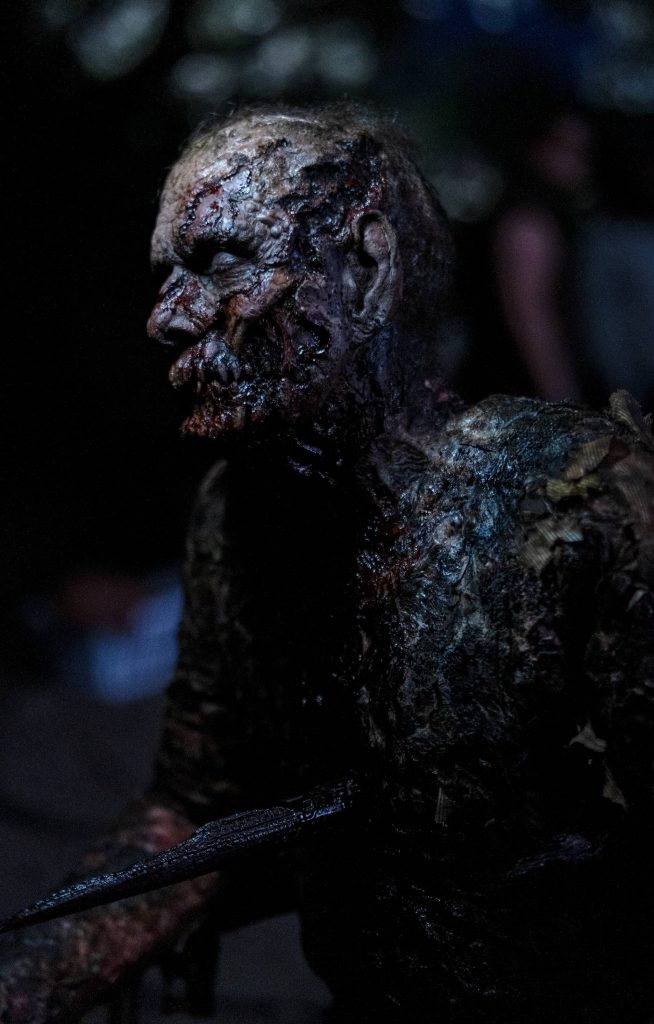
Rather than turning to cinematic precedents, Fontaine and director Ryan Coogler sought inspiration in the natural world. “We really went to nature to start,” Fontaine explained. “We weren’t really looking at other vampire films or even other horror films so much. We were looking at predatory animals.” That research led them to the eerie, reflective eyes of nocturnal creatures, particularly the phenomenon known as tapetum lucidum. We see it in the shimmering glow that appears when light hits an animal’s eyes in the dark. “We were looking at the shimmery eyes of nocturnal animals and recreating that in the vampires,” Fontaine said. They also explored the functional anatomy of predators, designing backward-hooking fangs meant to latch onto prey.
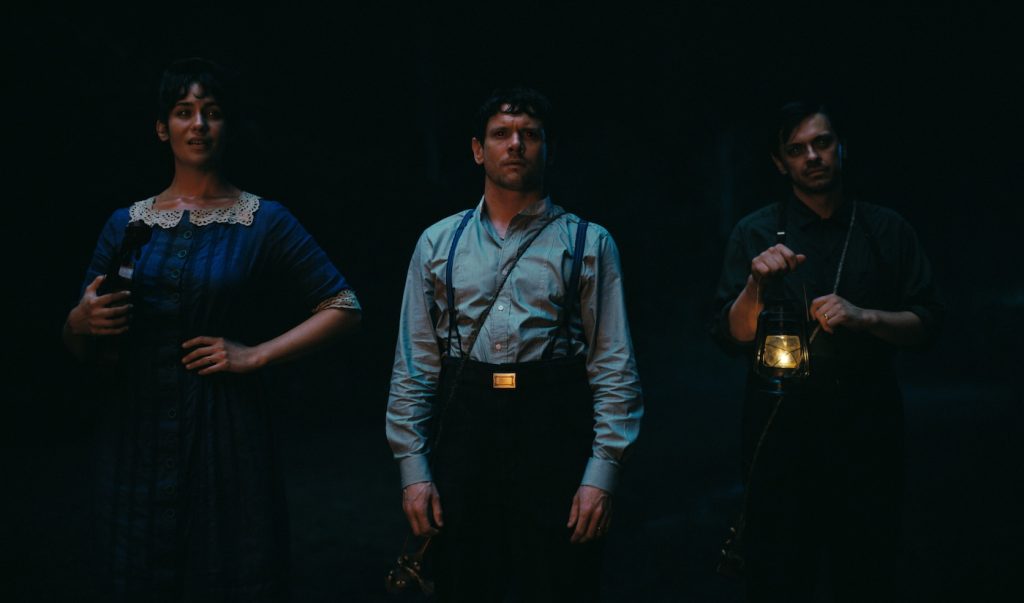
What emerged was an aesthetic rooted in biological plausibility, grounded in reality, yet deeply unsettling. “So we had these ideas that were based in reality,” Fontaine said, “and then technically became very difficult to achieve. Once we knew the direction we were going, it was a matter of making that actually physically possible.”
Perhaps the most striking result of this process is the vampires’ eyes, which appear in the film as hypnotic, luminous, and unmistakably inhuman. Astonishingly, these effects were largely achieved in-camera. “The contact lenses are soft lenses that the actors can wear,” Fontaine explained. “They actually reflect light and create this shimmering, glowing effect, and they color shift. They can go from a greenish blue, then hit a light and turn greenish yellow, and then hit another light and almost have an orange-y tinge, like rust, on the edge.”
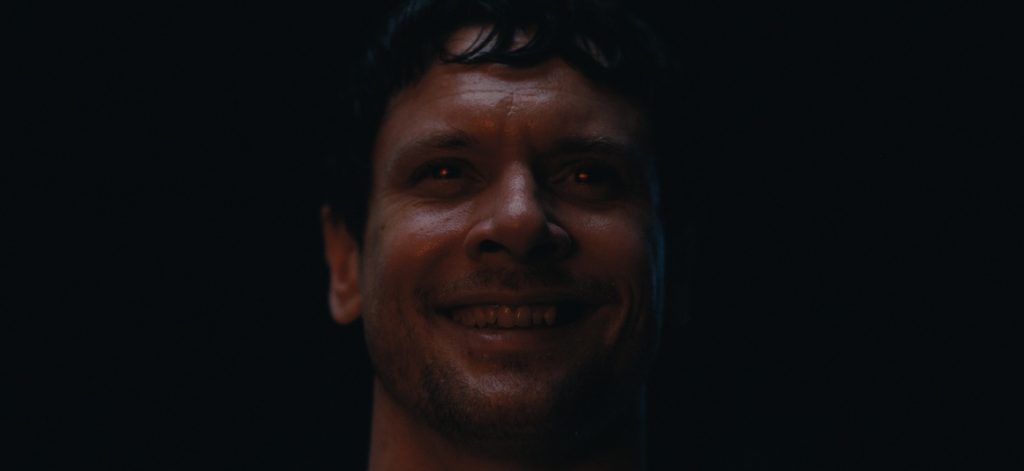
Developed by artist Christina Patterson, the lenses had never before been used on a film. “Sinners was the first time anyone had ever utilized this,” Fontaine said. “To me, the contact lenses really embodied the aesthetic of the vampires in Sinners. They had to be beautiful but also horrifying and threatening.” The duality of that effect, alluring yet sinister, reflects the film’s thematic tension. “When you look into their eyes, they’re very mesmerizing,” Fontaine said. “They’re seductive, but at the same time, they can be really creepy and unsettling.” It’s a visual metaphor for the internal conflict that runs through the story, where vampirism represents both temptation and damnation.
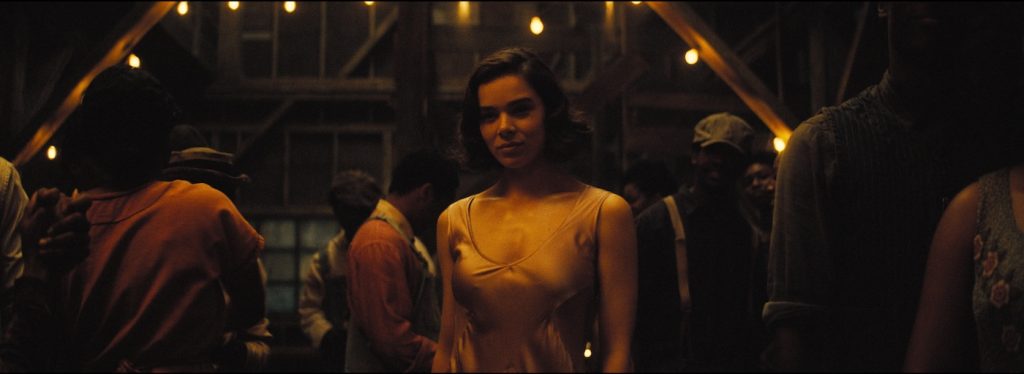
Even so, the eyes were just one part of a deeply collaborative process. Fontaine credited visual effects supervisor Michael Rolla and cinematographer Autumn Durald Arkapaw with helping translate the look across different technical demands. “We did these screen tests in IMAX before we even shot the first day of filming,” he said. “We experimented with the lighting and how Autumn needed to light the eyes so that they reflected. So it’s a combination of Ryan’s idea, our creation, and then Michael and Autumn extending it and lighting it so the eyes alone are an example of the collaboration we had to have through all the departments.”
That collaborative spirit defined Fontaine’s approach to balancing practical effects and visual effects, a foundational aspect of Sinners’ tactile realism. When asked whether the presence of VFX changed his practical design approach, Fontaine replied assuredly. “Not at all. Michael Rolla and I started having conversations very early in pre-production, and those conversations were right up until the end of post. We were always closely collaborating and having a conversation about where the overlaps would be.”
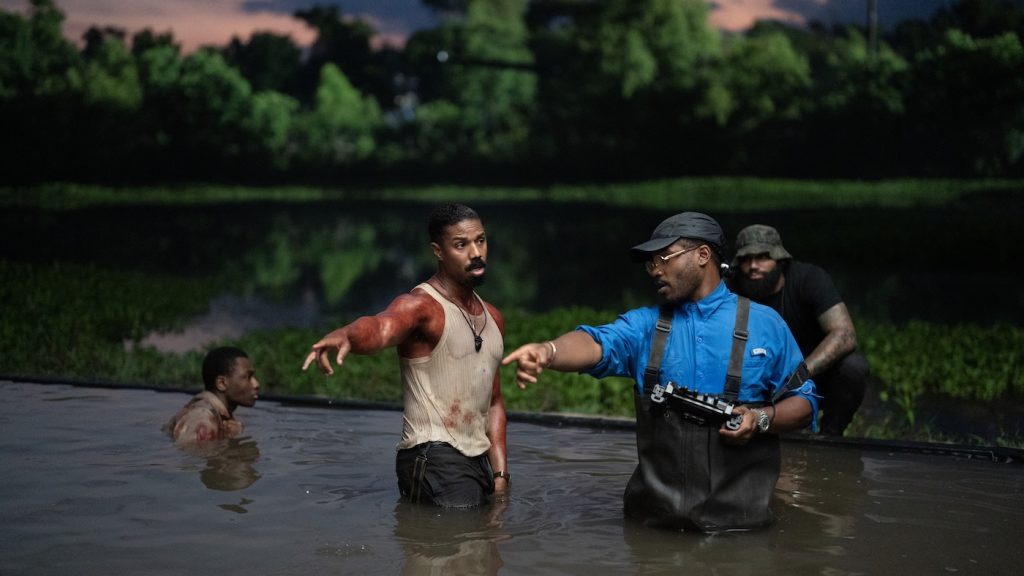
One of the film’s most harrowing sequences exemplifies this hybrid approach. The process for shooting Remmick’s immolation at sunrise involved setting up a filming location in the swamps of Louisiana during a fleeting natural sunrise. The scene required extraordinary coordination. “It’s kind of wild when you think about it,” Fontaine said. “There are IMAX cameras on massive cranes, and we’re all in a tank of water next to a real river where there are alligators swimming just a few feet away from us.”
Because the prosthetic materials were flammable, the production couldn’t safely set actor Jack O’Connell on fire. Instead, Fontaine’s team created multiple prosthetic versions of the character, along with a specialized fireproof suit worn by a stunt performer. “So Remmick burning is really Jack O’Connell, a double, a stunt double, real fire, and CGI fire prosthetic suits,” Fontaine explained. “It’s all these elements, and Michael brought them together.”
Despite the complexity, Fontaine emphasized that nearly everything seen on screen was physically built. “All the design and all the elements you see are actually there,” he said, “They’re all things that we built for real in the shop, with that real sunrise in Louisiana.”
If the burning sequence tested technical limits, the climactic guitar smash demanded creative audacity. “When Sammy smashes the guitar over Remmick’s head, it’s scripted that half his face rips open,” Fontaine recalled. “And then Ryan said, ‘What if it reveals that his molars are actually fangs, as if they’ve been fangs all along, but his cheek was hiding it?’” That insight reshaped Fontaine’s understanding of the character. “I realized that Jack’s actual face is the mask that Jack is always hiding behind,” he said. “He’s always putting on a front. Remmick is the real face of the mask.” The resulting effect required a staggering combination of prosthetics, dentures, fiberglass plates, magnets, blood rigs, and smoke tubes. “There were several silicone prosthetics that overlapped,” Fontaine explained. “There was a fiberglass plate on his head with magnets that the metal guitar resonator could come on and off from. He even had tubes with smoke and blood coming up the back, so that it looked like the silver was melting into his head and bleeding out.”
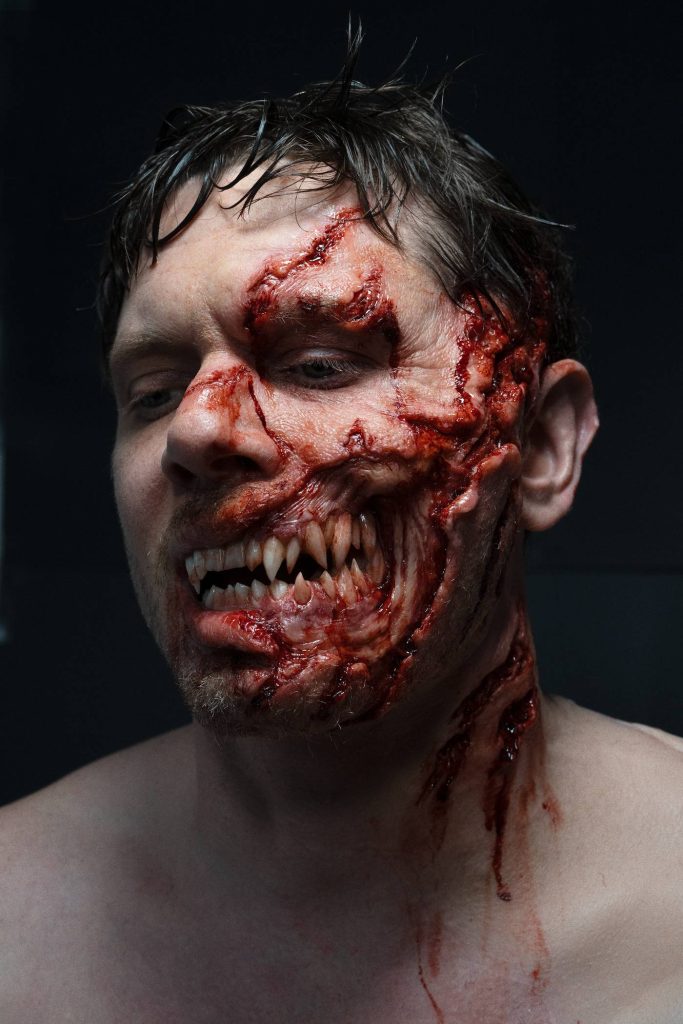
The multi-faceted aspects of the build were daunting, but Fontaine found it exhilarating. “The challenge was very intimidating,” he said, “but it was so rewarding when we shot it, and it all worked so well.” Throughout the film, Fontaine prioritized in-camera effects whenever possible, a philosophy he credits to his trusted collaborators. Effects artist Kevin Wasner, in particular, played a crucial role. “Kevin’s kind of this MacGyver of makeup effects,” Fontaine said with admiration. “I could come to him and say, ‘Do you think we could put a smoking tube up the back of Jack’s neck?’ And Kevin would say, ‘Yeah, we can figure that out.’ And he would build this thing.”
This hands-on ingenuity allowed Fontaine to create effects that feel immediate and visceral, a refreshing contrast in an era dominated by digital enhancement. “Having a heavy hitter like that on my team allowed me to do a lot of the stuff that we’re able to do in-camera,” he said.
Of course, no film of this scale unfolds without chaos. “There’s an inherent chaos to making a film,” Fontaine admitted. Weather delays, location complications, and constantly evolving choreography meant the makeup department had to stay agile. “We had a team of about five artists working in the trailer, and a constant rotation of cast and stunt people coming in,” he said. “There was almost no way to fully anticipate it except to be ready for anything.” That adaptability paid off, contributing to the film’s sense of organic danger. And while Sinners embraces the ornamentation of horror, Fontaine resists the notion that his goal was simply to frighten. “I was never trying to make something that was scary, per se,” he said. “I was always trying to make something that felt authentic and felt beautiful.”
This philosophy extends to his treatment of gore. “Even with the gore effects, I think that there’s some strange beauty,” he reflected. “When I’m sculpting it, I’m thinking, ‘What shapes, what composition, what makes it artistically interesting?’ It’s never really trying to be hideous or repulsive. It just is, by the nature of what it is.” That emphasis on beauty within brutality aligns seamlessly with Coogler’s storytelling sensibilities. “Ryan has so much empathy for these characters,” Fontaine said. “The horror is always serving the greater story.”
This emotional grounding, he believes, is what allows Sinners to transcend genre. “It’s a musical, it’s a period film, it’s a drama, and sometimes it turns into an action film,” he said. “Sinners, to me, is so much more than a horror movie.” Perhaps that genre fluidity explains the film’s unprecedented awards recognition. Horror has historically struggled for institutional validation, despite its cultural impact. Fontaine sees Sinners’ success as part of a broader acknowledgment of the genre’s artistic legitimacy. “Horror films have been among those that have endured the longest,” he said. “Some of the most iconic images of all time come from horror.”
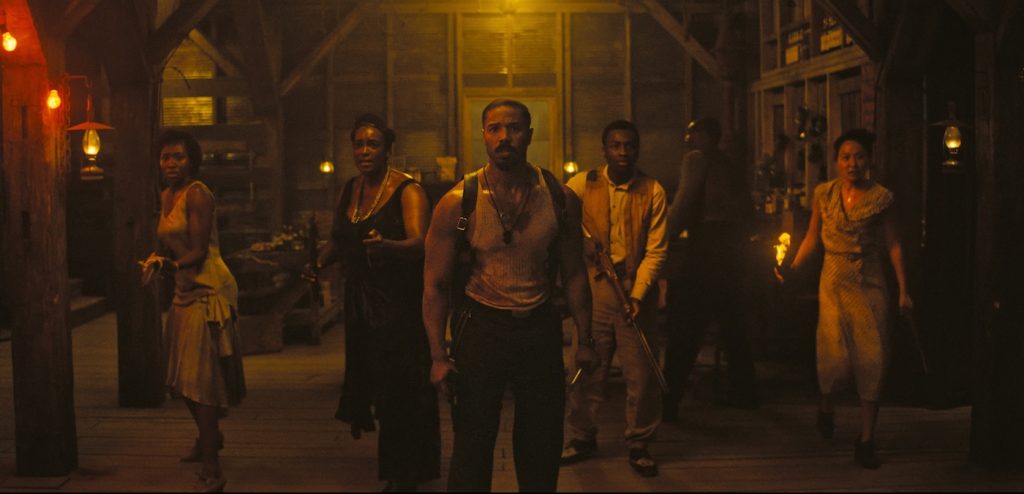
From Nosferatu to The Exorcist, horror’s visual language has shaped cinematic memory, and Sinners now joins that lineage. “I feel so honored that it’s been recognized in all these different ways,” Fontaine said. “Especially that audiences have connected with it so much.” For Fontaine, that connection is the ultimate reward. “So many people have mentioned that they saw it multiple times,” he said. “I don’t know what greater outcome you could wish for than that.”
Even after months immersed in its creation, Fontaine continues to discover new layers in the film. “Every time I’ve seen it, I notice something different,” he said. “There’s so much there to explore. I think people will be analyzing it for a long time to come.”
And perhaps that is the true legacy of Sinners: a film that invites repeated viewings, deeper interpretation, and lasting emotional engagement. Through Fontaine’s exquisitely crafted effects, rooted in nature, elevated by artistry, and executed with extraordinary precision, the film achieves a rare alchemy: horror that is not merely terrifying but profoundly human.
Watch Sinners, now streaming on HBO Max.
Featured image: Mike Fontaine creating Remmick (Jack O’Connell) from “Sinners.” Courtesy Warner Bros.