
Face Off: How Special Effects Maestro Shane Mahan Engineered the Body Horror of “Clayface”
Clayface topped the box office in its opening weekend last month, not because audiences were begging for an origin story about one of DC Comics’ most obscure villains. Instead, moviegoers responded to little-known actor Tom Rhys Harries’s charismatic performance, paired with gruesome special effects designed by Shane Mahan and the Legacy Effects company he co-founded with three other proteges of VFX legend Stan Winston.
This year, Mahan’s studio also made the zombies in Resident Evil and designed Tom Cruise’s creepy Digger cat, Maggie. This 2026 filmography builds on a hit-studded resume Mahan built after moving west from Michigan to study sculpting. That skill set led to special effects work on blockbusters like Terminator 2, Iron Man, and Alien: Romulus. Making those movies, Mahan recalls, “We used to film all the time at Universal, or Warner Brothers, or Sony. But I don’t think I’ve done a movie in Los Angeles, other than pickup shots, in 12 years.”
Mahan says he’s bullish about the Motion Picture, Television, and Entertainment Revitalization Act now being considered by Congress, which would fund a 20 percent tax credit for projects shot in the United States. “I certainly hope it has a positive impact, because it would be a shame for Hollywood to become just a historical landmark of what was once an interesting place.”
Speaking from the Legacy Effects conference room in Los Angeles County’s San Fernando community, Mahan reveals VFX tricks that helped create Clayface‘s riveting transformations.
Practical effects, when done well, connect with audiences in such a visceral way. Clayface seems almost like it had to use physical prosthetics because of the way lead character Matt Hagan interacts with his own disfigured face.
It doesn’t have to be anything, but in this case, there was a distinct choice to use prosthetic makeup. James Watkins, who’s a very thoughtful director, was correct in thinking that the audience would probably respond more to seeing Matt’s disfigurements as a physical thing, as a “wearable” prosthetic.
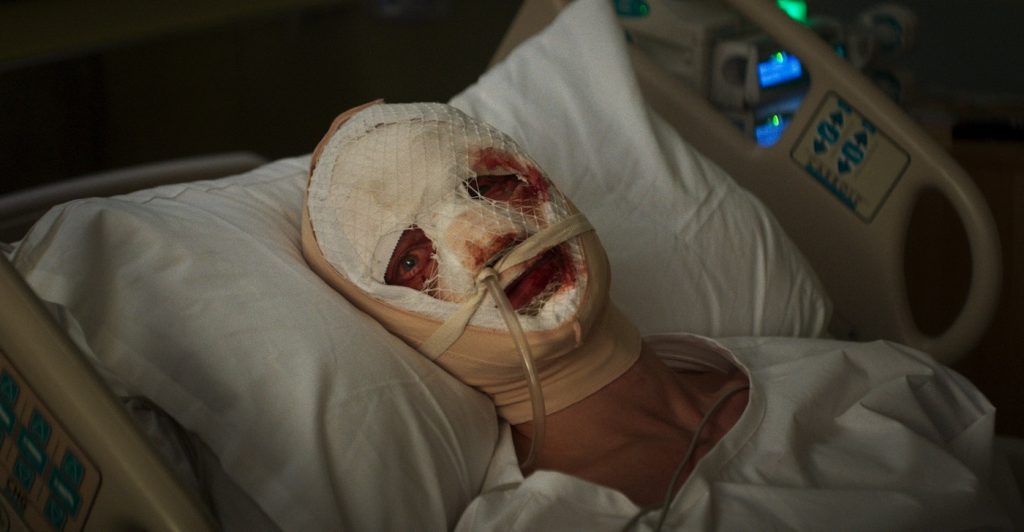
Matt’s face evolves—or devolves—over the course of the story. How did you develop the different looks?
The script was really solid, but the moments of transformation were sort of vague on purpose. It might say “Matt’s face changes,” because they didn’t really know yet where they were going to go with the look. We started from the brutal attack by the mobsters. All the prosthetics for Matt’s face had to be as forensically real as possible, and then we worked on Matt’s operations and the scars leading up to his disfigurement. And by the way, what we did originally with the attack and what was shown in the movie – they toned that down a little bit, because it was pretty, pretty gruesome.
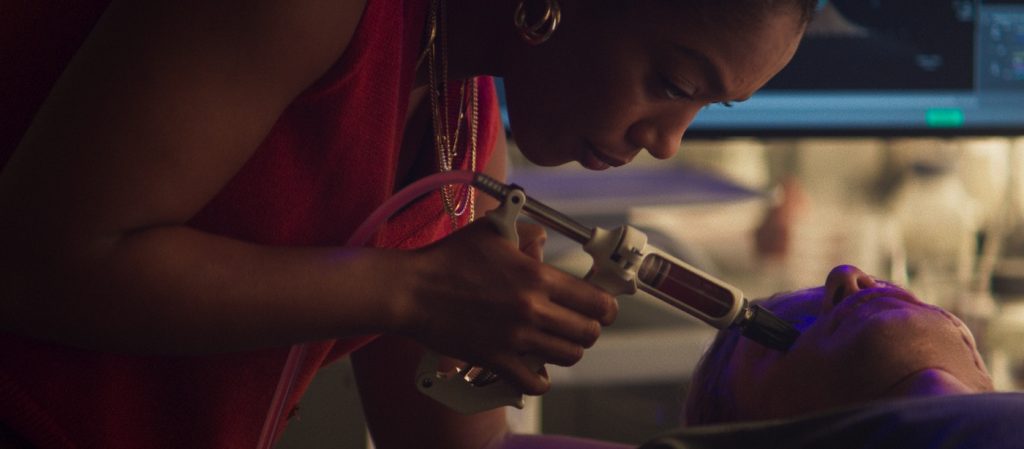
You had a version that actually looked more awful?!
Could have been worse.
You first met the Clayface filmmakers in London while you were working on Supergirl. What happened when you returned to your home base in California?
When we got back to the States, our first order of business at Legacy was to come up with conceptual designs for the whole thing. “His face melts like a burned candle wax.” We were like, “What does that actually look like?”
How did you explore the possibilities?
We did sculptures, working out various looks and key scenes with clay maquettes.
How big were these maquettes?
Some were life-size. Some were quarter scale. We made many models in a short time, and our artists came up with interesting stuff just to see what stuck. From there, James Watkins and [DC Studios co-chairs] James Gunn and Peter Safran would adjust bits of this and bits of that. By the time we met Tom Rhys Harries, who plays Matt, we were testing makeup that could be activated by a pull tab, because we wanted to see Tom’s face actually moving on camera.

“Activated by pull tabs?” – how does that work?
Underneath the makeup, there’s a fabric tab and a line that goes down Tom’s face that you don’t see. He could pull it himself, so basically Tom’s whole face would move or stretch as far down as possible. We found that very satisfying because it harkens back to the great makeups of the past, like when Lon Cheney would kind of torture himself to create these looks. And it was also great because Tom was brilliant at not being afraid to really push himself to the limit by pulling his eyes down and pulling his skin down. He seemed to enjoy it, which is really helpful for people like us. It took a few trial-and-error makeup tests to see where we landed, and from there, things became more and more grotesque.
Speaking of grotesque, you apparently got your start in visual effects as a teenager by experimenting with home-made plaster casts?
When I was 15, my art teacher loaned me this magical formula he’d brought back from Paris called moulage. You’re supposed to heat it up in a double boiler so it melts evenly. I only had a hot plate and an aluminum pan, but I was so excited to do a face cast of myself that I had my younger brother Chris take a rubber spatula and pick up the molten hot moulage, like liquid peanut butter, and splash it on my face. It burned so hot I started screaming like Herbert Lom from The Phantom of the Opera, and my brother was laughing. “Note to self: Let it cool down.” The next day, after the swelling went away, we did it again, and that was my first head cast. I remember sculpting a dead zombie mask.
A little later, you rigged firecrackers to blow up blood squibs for a low-budget movie, then moved to Los Angeles and worked for the great Stan Winston before setting up your own shop. What’s it been like for you over the past few years working in the movie business here?
We’ve managed to work around the nonsensical fact that Hollywood has lost a lot of traction in terms of local filming. There are six major studios in town with pretty much vast empty lots. I don’t begrudge any of my intercontinental colleagues, but it really would be nice to see our home state be more mindful of the business of filmmaking. Just because what we do falls under “entertainment” doesn’t mean it’s any less serious than the car industry, aerospace, or anything else. We employ hundreds of people with families and kids, so the impact of a small business trickles down and affects everybody.
Circling back to Clayface, what stands out as a favorite prosthetic makeup effect?
When we used oversized physical insert pieces in the scene where Matt goes to scissor-cut his own eye. The close-up is a replica of Tom’s eye that’s probably the size of a grapefruit. It allows you to get in closer and see what’s happening, but it intercuts so nicely, you can’t really tell.
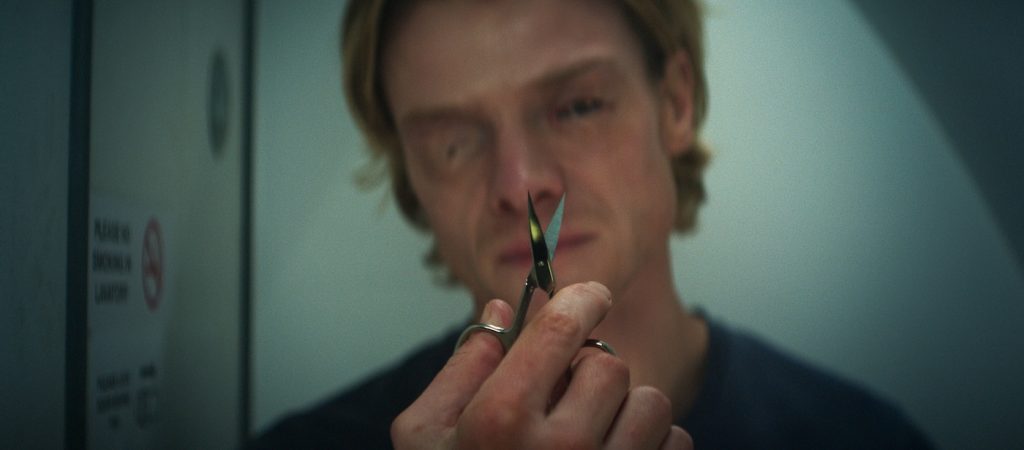
Very inventive.
Well, that’s part of the fun. When you read the script, it doesn’t say, “Now we cut through an oversized eye.” I had to dream up that solution with our team of artists. The idea actually came from Terminator 2 when we did oversized eyes for the Endoskeleton. You see his iris opening and closing, but because the actual eyes are so small, it was better to make them oversized. Working with Stan Winston and with Jim Cameron, things like that become sort of Xeroxed to the back of your brain and you pull them out from time to time because you know they’ll work.
Taking a step back, how do you see Clayface fitting into your overall body of work?
Horror films are my first love, really. We have a gifted group of mold makers, fabricators, painters, and sculptors, and we all feel very lucky to be chosen for Clayface. But then once you get the job, you have to fight hard to make it the very best you can.
Clayface is in theaters now.
Featured image: Caption: TOM RHYS HARRIES as Matt Hagen in DC Studios’ “Clayface,” a Warner Bros. Pictures Release. Photo Credit: Photo Courtesy Warner Bros. Pictures