
Make It So: Remembering Patrick Stewart’s Remarkable Life On Stage and Screen
The legendary, beloved Patrick Stewart died Wednesday at 86, leaving behind a legacy as multifaceted and mercurial as his talents warranted. He’ll be remembered by the legion of Star Trek fans who first met him in Star Trek: The Next Generation as the wise, warm-hearted Captain Picard, yet even the largest Captain’s Log could not contain all his gifts.
The Yorkshireman wasn’t always destined to helm the USS Enterprise. As Sir Patrick himself detailed in his 2023 memoir, “Making It So,” Star Trek creator Gene Roddenberry reportedly said, upon hearing that Stewart might lead Star Trek: The Next Generation, “Patrick Stewart’s name should never, ever be mentioned in my presence again!” Roddenberry eventually conceded he was wrong. By the time Stewart was done, his Jean-Luc Picard was, incredibly, as iconic a character as William Shatner’s James T. Kirk. He pulled off this initially unthinkable coup by approaching the role in a way that contrasted with Shatner’s—his Captain Picard didn’t lead with impassioned bravado; instead, he was thoughtful, precise, urbane, and wise. “Make it so” was his understated catchphrase.
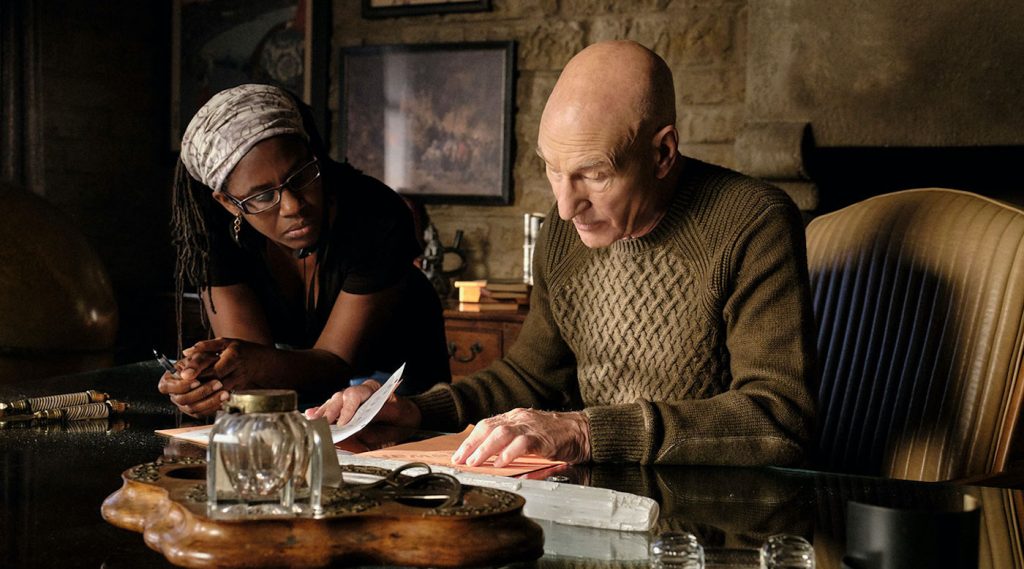
Stewart fans, however, knew his talents long before he stepped onto the bridge of the USS Enterprise. He was a celebrated stage performer, beginning his association with the Royal Shakespeare Company in 1966.
While Captain Picard seemed like a role that would define him forever, Stewart landed another part perfectly suited to his obvious intelligence and empathy: Professor Charles Xavier, the immensely powerful mutant telepath and founder and leader of the X-Men. Stewart first appeared as Professor X in X-Men in 2000, and went on to play him in both leading roles and cameos for the next two and a half decades, up to his final appearance in the upcoming Avengers: Doomsday.
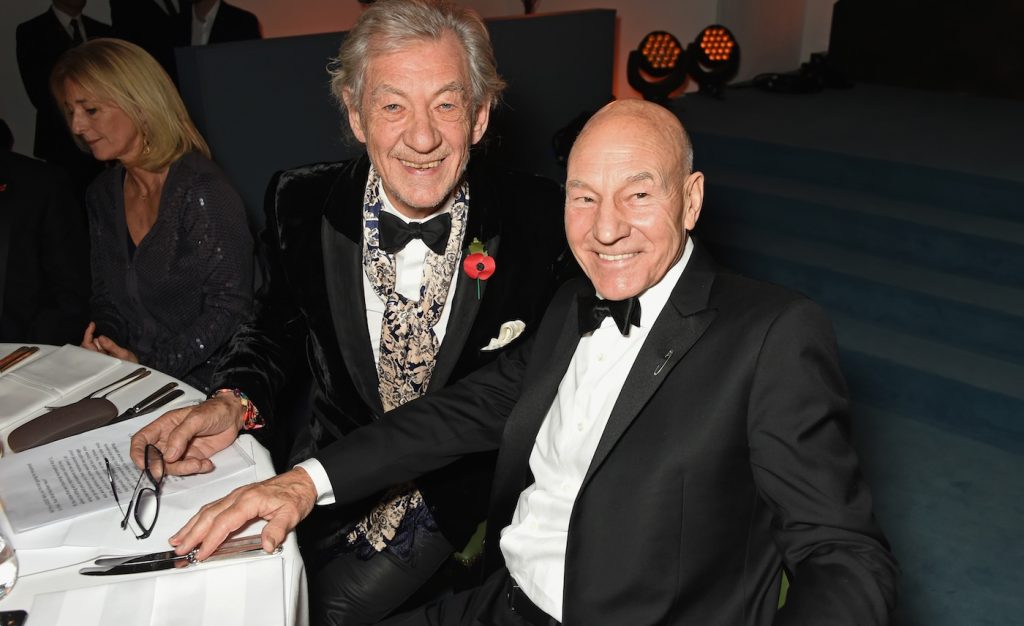
Stewart’s portrayal of Professor X also gave him one of his great on-screen partnerships with that other British icon of stage and screen, Sir Ian McKellen, who played Professor X’s old friend and arch-nemesis, Magneto. To watch the two on screen together, their formidable wits and charms pitted against each other, was a joy, and they formed a lasting friendship and creative partnership that included a fantastic touring production of Samuel Beckett’s Waiting for Godot. McKellen officiated Stewart’s third marriage to Sunny Ozell (they met while she was waitressing at Franny’s pizzeria in Brooklyn).
Stewart was also funny. Very funny. His silliness became legendary, from social media posts, including one of him dressed as a lobster in a bathtub, to the time he, stoned, gave a video tutorial on how to pull off the “quadruple take”, an insane, unnecessarily doubled double take.
Stewart was born in Mirfield, in West Yorkshire, in 1940, and raised in a rowhouse with no indoor plumbing. His mother, Gladys, worked in a textile mill; his father, Alfred, was a physically abusive military man who served in both World Wars. His childhood has been described as Dickensian. As Stewart wrote in his memoir, his dreams were as modest as his upbringing, hoping one day to become a “long-distance lorry driver.” Yet, in keeping with the Dickensian narrative, Stewart had a benefactor: Cecil Dormand, his English teacher, who recognized Patrick’s talent after he read Shakespeare’s “The Merchant of Venice.” Dormand arranged for Patrick to attend an eight-day drama program during holiday break, all expenses paid by the local council’s department of education. This was, to an incalculable degree, a fine investment by the British government.
Stewart left school at fifteen to devote himself full time to acting, and he worked hard for years until he joined the Royal Shakespeare Company in Stratford-upon-Avon. He spent fourteen years with the RSC, rarely getting lead roles, playing jesters, sidekicks, and servants in comedies, and villains in tragedies. Not landing lead roles frustrated him to some degree; his contemporaries included Helen Mirren. He told himself it wasn’t too bad for a boy from working-class Yorkshire, and he was right. Besides, fate (plus a heaping portion of talent) would eventually lead Stewart to those leading Shakespeare roles.
When Stewart came to California to perform selections from Shakespeare for a series of master classes put on by David Rodes, a professor of English at UCLA, he got his biggest break. Robert Juman, a producer on the then-developing Star Trek: The Next Generation, attended one of Rodes’ presentations and was impressed by what he saw.
While Roddenberry might have initially rebuffed him, history has rendered its verdict on Stewart’s place as a Star Trek legend and as a peerless performer. Ironically enough, it was after playing Picard and Professor X that Stewart finally got his chance to play Shakespearean leads. In 2008, he played Macbeth at the Brooklyn Academy of Music, which later transferred to Broadway. Two years later, he was knighted by Queen Elizabeth.
Make it so. Stewart certainly did.
Featured image: BEVERLY HILLS, CALIFORNIA – JUNE 09: Patrick Stewart attends the 84th Annual Peabody Awards at Beverly Wilshire, A Four Seasons Hotel on June 09, 2024 in Beverly Hills, California. (Photo by Kevin Winter/Getty Images)