From “Silence of the Lambs” to “Get Out”: How Horror Became Cinema’s Sharpest Mirror
For much of its history, horror has occupied a unique position within American cinema. Audiences have loved it, studios have relied upon it, and filmmakers have repeatedly used it to explore subjects, themes, and motifs that other genres typically shy away from. Yet the institutions that confer cultural legitimacy have often regarded horror as a genre to be enjoyed but not necessarily critically lauded. For example, in the nearly 100 years of its existence, the Academy of Motion Picture Arts and Sciences has awarded Best Picture to exactly one horror film, The Silence of the Lambs (1991), and thirty-five years later, movie buffs are still debating its appropriate category, with some describing the film as a “crime thriller” rather than a horror movie.
However, despite institutions’ historical tendency to overlook films within the genre, horror has experienced an unusual resurgence in critical esteem within the past decade, with films such as Jordan Peele’s Get Out (2017), Robert Eggers’ The Lighthouse (2019), Coralie Fargeat’s The Substance (2024), Ryan Coogler’s Sinners (2025), Zach Cregger‘s Weapons (2025), and Curry Barker‘s Obsession (2026) demonstrating that horror can operate simultaneously as popular entertainment, serious art, and social criticism. The change is not that horror films have become more sophisticated, but that contemporary audiences and institutions increasingly seem willing to recognize what horror has been doing all along. It takes a culture’s anxieties, gives them teeth, and asks us to look directly at them—while simultaneously taking a bite out of our nervous systems.
The genre’s historic lack of institutional acknowledgment has several explanations. Horror has long been associated with exploitation, low budgets, lurid marketing, and gratuitous violence. These qualities aren’t entirely imaginary, and at times the genre has embraced them with all the subtlety of Leatherface tearing through the forest with a chainsaw. But sometimes it does so brilliantly, inventively, and shrewdly. Yet the assumption that horror is inherently unserious has proved remarkably durable.
The Academy Awards provide an especially revealing example. Horror has periodically broken through, but rarely without disguising itself. The Sixth Sense (1999), Black Swan (2010), and Get Out all received Best Picture nominations, while The Shape of Water (2017), a monster romance with unmistakable horror elements, won the award in 2018. Get Out was particularly significant because it was openly marketed and understood as horror while receiving nominations for Best Picture, Best Director, Best Actor, and Best Original Screenplay. Jordan Peele ultimately won Best Screenplay.

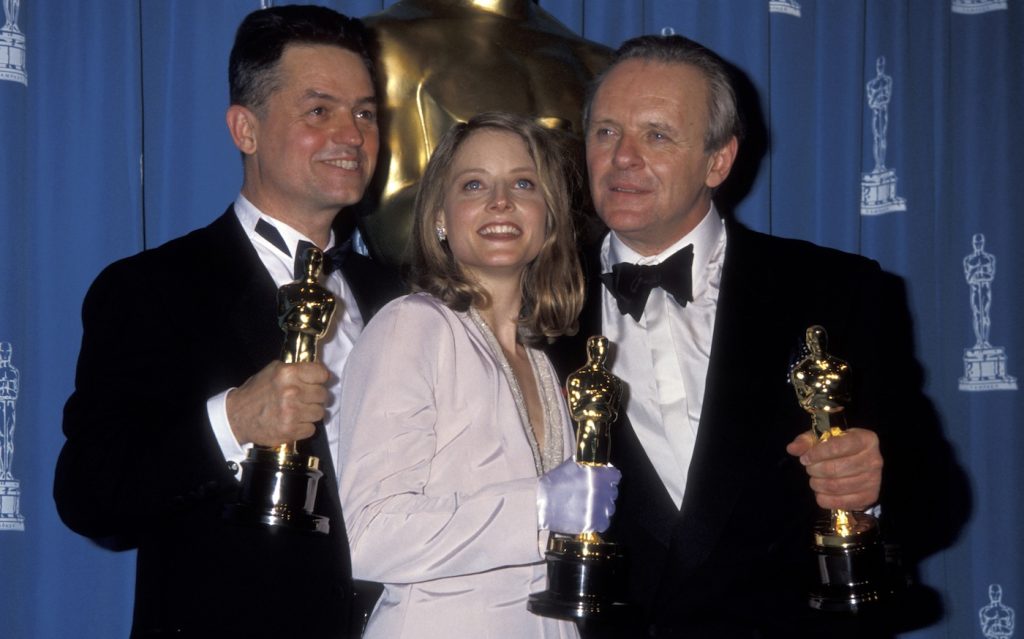
The most notable exception to the Academy’s acceptance of horror within the last three decades is the aforementioned The Silence of the Lambs, which swept the “Big Five” at the 1992 ceremonies, including wins for Best Picture, Best Director for Jonathan Demme, Best Adapted Screenplay for Ted Tally, Best Actress for Jodie Foster’s performance as Clarice Starling, and Best Actor for Anthony Hopkins’s Hannibal Lecter. Yet its victory didn’t significantly transform the Academy’s relationship with horror. As recently as the 2010s, commentators were still observing that the genre was generally confined to technical categories or treated as an exception to the normal awards conversation.
Nevertheless, numerous films over the past thirty years have complicated the assumption that horror and serious filmmaking are mutually exclusive. The Sixth Sense transformed a ghost story into a direct, emotional meditation on grief and childhood. The Blair Witch Project (1999) used the emerging language of internet culture to make uncertainty itself frightening. The Babadook (2014) turned grief and the challenges of parenting a child with behavioral issues into supernatural menace. It Follows (2014) used the mechanics of the slasher film to explore sexual anxiety, intimacy, and the uneasy transition into adulthood. Black Swan blurred psychological breakdown and supernatural horror so thoroughly that the distinction became almost irrelevant.
The decisive shift in critical acceptance of horror, however, arrived during the 2010s. The rise of companies such as Blumhouse and A24 helped create an environment in which relatively inexpensive horror films could provide filmmakers with substantial creative freedom. A24 in particular became closely associated with an auteur-driven strain of horror through films including Robert Eggers’s The Witch (2015), Ari Aster’s Hereditary (2018), and Midsommar (2019), and later films such as Saint Maud (2019), Beau is Afraid (2023), and Civil War (2024).
The frequently used term “elevated horror” is itself revealing. It implies that horror must be elevated to be taken seriously, that a film could not simply be a horror film and also be intelligent. The phrase, however, has lately fallen out of favor, coinciding with the wider critical embrace of horror. There’s something faintly illogical about suggesting that a film like The Witch becomes intellectually respectable if it contains fewer jump scares and more discussion of Puritan theology. Audiences have long known that horror didn’t acquire artistic ambition in 2015. What changed was critics’, distributors’, and broader cultural institutions’ willingness to recognize ambition when it appeared in the genre.
Eggers’s The Witch is a particularly useful example. Its supernatural elements are inseparable from its examination of religious paranoia, patriarchal authority, sexual repression, and the fear of female autonomy. Its horror emerges not only from a supernatural antagonist but from the social structure that dispossessed the family of happiness before the witch arrives. The monster is both a physical presence and the manifestation of fears associated with deeply held religious beliefs. The Puritans have already done most of the work.
Eggers’s work shows where contemporary horror’s broader cultural importance becomes apparent. Horror uniquely translates abstract social anxieties into physical forms. Audiences, from film scholars to casual viewers, have long observed that monsters often represent cultural fears about otherness, technology, sexuality, political instability, and social change. Something threatens the supposedly normal world, and the characters must determine what that threat means.
Jordan Peele understood this exceptionally well in Get Out. Its supernatural premise is almost beside the point. The horror derives from the recognition that polite liberal racism can be more disturbing than overt bigotry because it conceals itself behind compliments, progressive language, and outwardly benevolent intentions. Chris (Daniel Kaluuya) is not entering a world where everyone announces that they hate him. He’s entering one where everyone insists that they do not. That distinction provides the film’s central terror. Racism becomes a physical threat. Social discomfort becomes suspense. The historical commodification of Black bodies becomes literal. Peele doesn’t just tell the audience that racism is dehumanizing. He constructs a horror story in which dehumanization is literally the plot. The Academy’s recognition of the film was consequently important not only because Peele won an Oscar, but because the film forced an institution historically skeptical of horror to acknowledge that the genre could provide an unusually effective vehicle for serious social criticism.
The contemporary horror renaissance has also benefited from a society that appears ever more willing to provide filmmakers with material. The past two decades have supplied an abundance of collective anxieties including economic instability, political polarization, racial injustice, declining institutional trust, and technological surveillance, and the profusion of creative new releases since the turn of the century suggests that the genre’s evolution is closely connected to changing and increasing social anxieties, from concerns about mental illness and isolation to post-9/11 violence and contemporary digital culture.
The pandemic intensified this relationship. Suddenly the familiar world contained invisible threats. Touching a stranger became potentially dangerous. Empty streets looked ominous. Isolation became mandatory. The boundary between ordinary life and catastrophe became unusually thin. It’s hardly surprising that horror continued to flourish in such an environment. It has always understood the unsettling truth that catastrophe rarely announces itself with appropriate cinematic lighting. Sometimes it simply arrives on a Tuesday.
This tendency makes horror particularly relevant to contemporary culture because modern anxieties are often systemic rather than individual. Traditional monsters are comparatively easy to understand. A vampire wants blood. A werewolf wants to eat you. A demon has a contractual relationship with your soul. Contemporary horror increasingly asks what happens when there is no single monster to defeat.
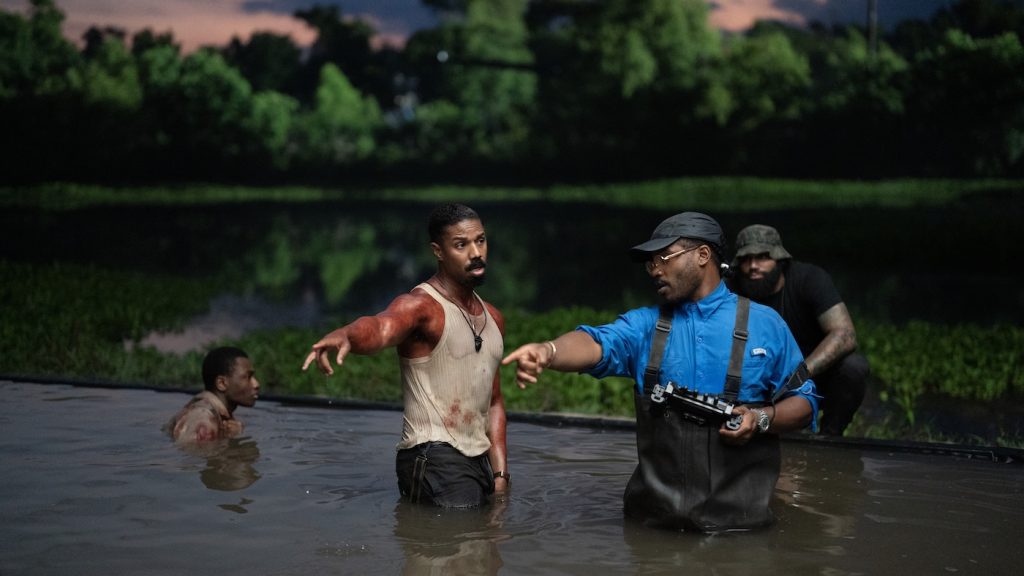
That’s one reason Ryan Coogler’s Sinners represents an important recent development. Released in 2025, the film combines supernatural horror with questions surrounding Black culture, American history, music, exploitation, and racial violence. Its reception at the 2026 Academy Awards was extraordinary not only by the genre’s historical standards but by Academy standards in general. Sinners received 16 nominations, including Best Picture, Best Director, Best Actor, and Best Original Screenplay, while ultimately nabbing wins for Best Actor for Michael B. Jordan, Original Screenplay for Coogler, Best Cinematography for Autumn Durald Arkapaw (making history as the first woman and first Black winner in the category), and Original Score for Ludwig Göransson.

The significance of Sinners isn’t that horror has finally been invited to the awards ceremony. It’s that the film doesn’t have to conceal its genre identity in order to enter the conversation. Its vampires are not decorative metaphors pasted onto an otherwise conventional prestige drama. The horror is fundamental to the film’s understanding of history and exploitation. The supernatural becomes a means of discussing the ways culture itself can be stolen, commodified, preserved, and transformed, which may ultimately explain horror’s resurgence better than the notion that audiences have suddenly developed more sophisticated taste. Horror has always been sophisticated when filmmakers have treated it as such. What has changed is fear’s cultural usefulness.
That has always been horror’s great asset. It tells us that the threat is hiding in the house, beneath the bed, inside the body, or waiting in the woods. Then, when we’ve become sufficiently frightened, it quietly suggests the threat may never have been entirely outside us. The genre’s newfound critical legitimacy therefore represents less a transformation of horror than a transformation in the willingness to listen to it. Institutions may finally be embracing what horror audiences have understood for generations. Fear is not the opposite of seriousness. Sometimes fear is the shortest route to it.
Featured image: L-r: CIRCA 1991: Actor Anthony Hopkins and actress Jodie Foster on set of the movie ” The Silence of the Lambs “, circa 1991. (Photo by Michael Ochs Archives/Getty Images); DANIEL KALUUYA as Chris Washington in Universal Pictures’ “Get Out, courtesy Universal Pictures; Demi Moore in “The Substance.” © MUBI & Working Title! Caption: MICHAEL B. JORDAN as Smoke and as Stack, in Warner Bros. Pictures’ “SINNERS,” a Warner Bros. Pictures release. Photo Credit: Courtesy of Warner Bros. Pictures