Turning Up the Heat: Cinematographer Celiana Cárdenas on Helping Craft the Sultry, Suffocating Look of “Cape Fear”
A member of the Asociación Mexicana de Cinefotografía (AMC), Celiana Cárdenas is the cinematographer behind supernatural revenge thriller Brand New Cherry Flavor (2021) and one of the DPs behind true crime drama A Friend of the Family (2022). She collaborated on both series with showrunner Nick Antosca. Now, the showrunner and cinematographer have combined forces again for the crime series Cape Fear, executive produced by Steven Spielberg and Martin Scorsese and inspired by the film that Scorsese directed in 1991.
Cárdenas alternated as director of photography with Eben Bolter ASC BSC. While Bolter made episodes 1, 3, 5, 7, and 9, Cárdenas made episodes 2, 4, 6, 8, and 10.
In the series, two married lawyers, Anna Bowden (Amy Adams) and Tom Bowden (Patrick Wilson), seem to be enjoying married life: They have a beautiful home in Savannah, two children named Natalie (Lily Collias) and Zach (Joe Anders), and successful careers. But the past returns to haunt them in the form of Max Cady (Javier Bardem), a dangerous criminal who blames Anna and Tom for his incarceration many years ago. When Cady manages to overturn his prison sentence, he insinuates himself into the Bowdens’ lives. Although Anna and Tom suspect Max has a nefarious purpose, they doubt whether they can prove it in time to protect their family.
Cárdenas, who splits her time between Mexico City and Toronto, spoke with The Credits to discuss the series, which brought her back to Atlanta, the filming location for A Friend of the Family. Cárdenas described her fruitful collaboration with Antosca, now spanning several years, as well as her work with the Cape Fear team, including BAFTA award-winning director Jonathan van Tulleken (Shōgun), who directed the finale.
Discussing creative choices, Cárdenas spoke as a skilled artist who clearly relishes her craft. At one point, she rubbed her hands together and said, “I have a lot of tools to play with, but how are we going to play it?” Listening to her was not only a delight but also a masterclass in cinematography.
Note: This interview has been edited for length and clarity.
How did you begin collaborating with showrunner Nick Antosca?
Around 2017, Nick came looking for me to do a series called Channel Zero in Winnipeg. I had a lot of feature films but not a series. The network didn’t approve me. A year passed, and I did my first series in Canada. To my surprise, Nick came back to offer me Brand New Cherry Flavor. I was approved, thanks to the Canadian series. Because I had mostly done drama in feature films, it was liberating to do something different, with a look in a series that I had never seen before. That series brought me my first agents in the United States, and then I did A Friend of the Family. During that series, Nick told me his next project was going to be Cape Fear. It has been incredible! Nick is the kind of showrunner who really appreciates that you bring ideas. I love collaborating with him because I have grown with him a lot. He has liberated me in ways that I never expected. Horror and thrillers were never my thing. I was more about drama. With him, I have found another voice in me that has come out in a way that I never expected, so I am very thankful for that.
How long were you in Georgia for Cape Fear, and what was it like to film in and around Atlanta?
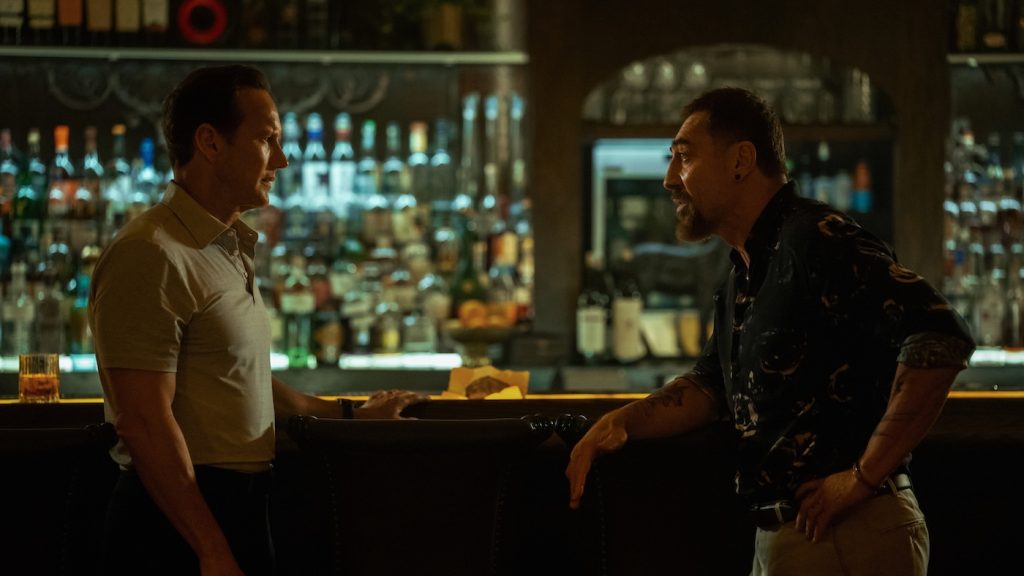
I was there for seven months. It was my second time, because I also shot A Friend of the Family in Atlanta. The thing I knew very clearly was that we would face a very bright sun, which became a very important part of the series. Even in the interiors, one of the important things was to feel the sun. The sun is always a part of our story. It creates the sweating, the humidity. As you probably noticed, we did wet-downs in daylight. We wanted to give the sensation that a storm has passed and maybe another is coming. As the series keeps progressing, the humidity and heat start to be suffocating.
Could you tell me about the main camera that you used and why you chose it?
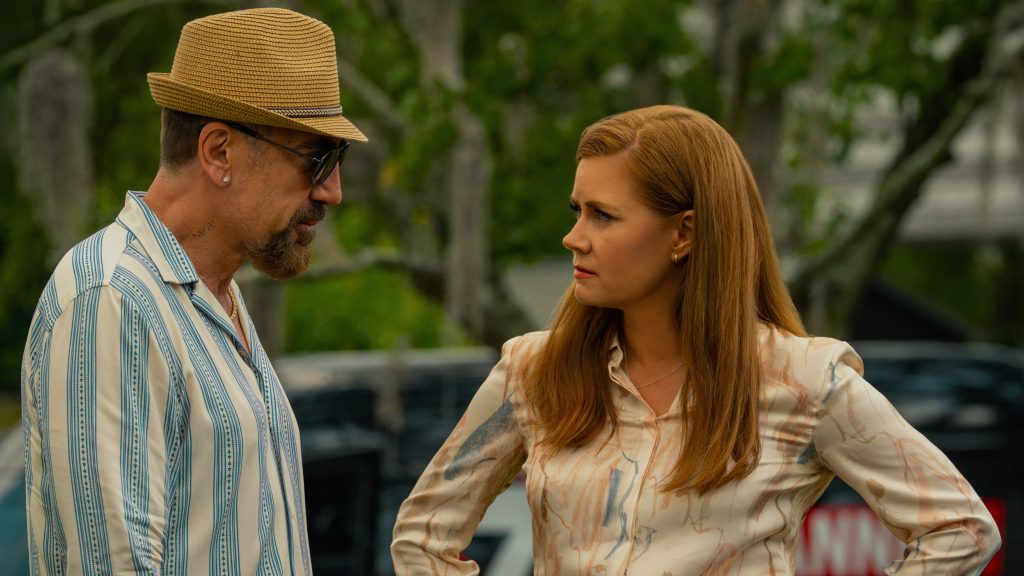
For the principal camera, we decided to go with the ALEXA 35. The lenses that we used in most of the series were Atlas Mercury. The aspect ratio was 2.35:1, and the squeeze was 1.5 instead of 2.0. That allowed us to pitch to the studio that it was not 2.39:1. It was a little bit more vertical, less horizontal—but you still have the feeling of anamorphic, the flares of anamorphic. We thought it was very good for the sets we were building, the landscapes we were going to see. Also, we were talking about a family, so we wanted not to be so far away from the family when we had the four characters together. That sometimes happens with anamorphic, that you need to be so far away, because the actors’ heights are different. These lenses gave us the opportunity to be closer. The texture also was important for us. We wanted to evoke films from the ‘90s like Body Heat, Do the Right Thing, and of course the 1991 Cape Fear. They create this feeling of heat, of humidity. We also had in our base kit a set of zooms, because the feeling of voyeurism was very important, the feeling that characters are always being looked at by someone that we don’t see. We had a zoom that was 70–100mm anamorphic. Then, we had a 25–50mm from Angénieux, and the short zooms, too, also from Angénieux, the Optimos. Finally, we had a very, very long zoom—if I’m not mistaken, it was 24-340mm. We would add a doubler to make it even longer. That was the base kit.
I am also curious about special cameras that you used.
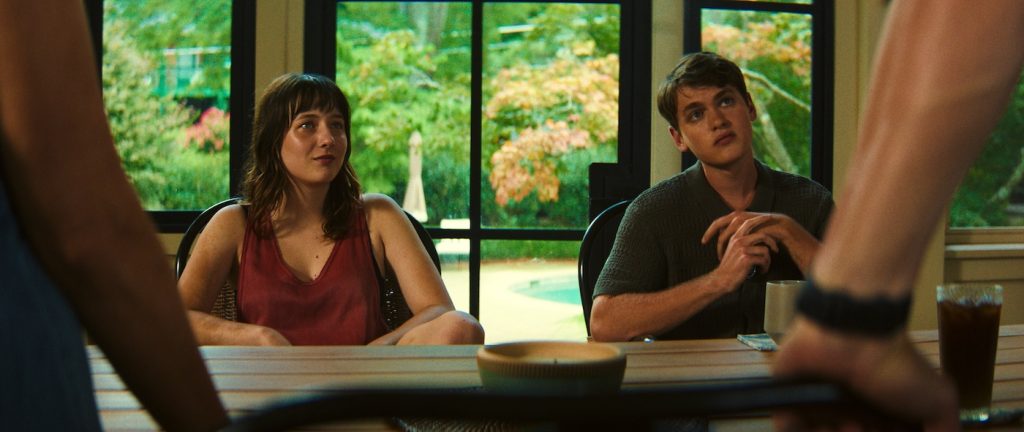
As a specialty camera, we used the FX3. Many times, we have points of view from the security camera, and we didn’t want to use the GoPros. The GoPros, to me, sometimes break the reality, so we agreed to do the FX3 with 14mm lens. But in episode 6, we had the acid trip of the family. In that scene, I proposed changing the aspect ratio from 2.35:1 to 2:1. The characters were seeing differently, and I wanted to have that also in the camera. And I changed the optics. I went for Super Baltar. It’s creamier, softer, dreamier than Atlas Mercury, which is more clean-cut.
Occasionally, the regular flow of scenes gets interrupted by a sudden flash to a reverse negative or a heat map. What effect do those images create?
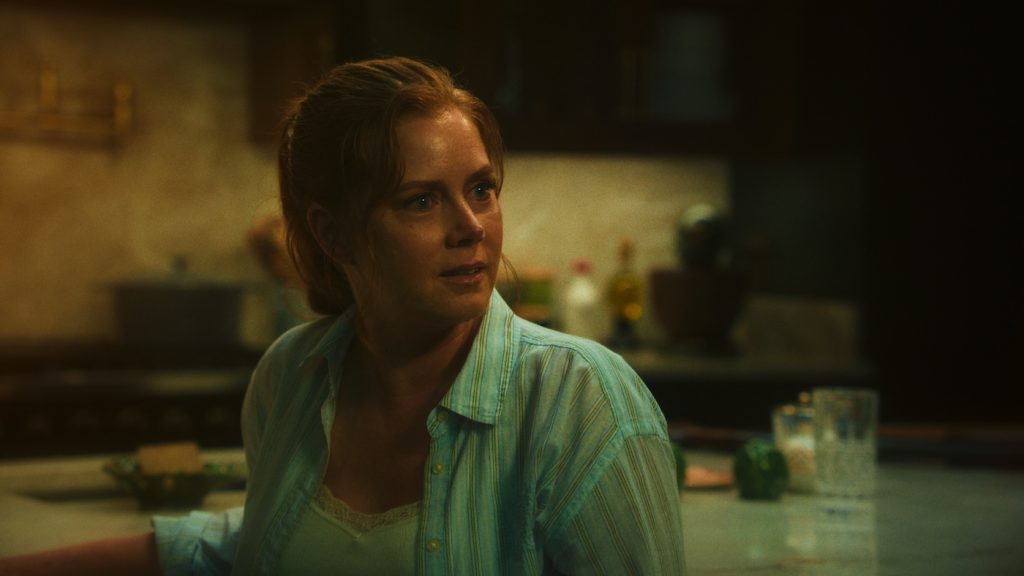
Of course, we wanted to pay homage to the 1991 movie. If you remember, there is the shot of Juliette Lewis’ eyes. As her voiceover is playing, we move close, and then we go into color negative. At the beginning of episode 1, we used that effect in the swimming pool to create the feeling that something was going to destabilize this family, which seems perfect and united. By episode 2, we start using the effect in drama scenes, instead of more oneiric scenes like the swimming pool. The idea was to make the audience a little uncomfortable and give a hint that something is not quite right.
Could you tell us about some of the black-and-white flashbacks? I was particularly interested in Max Cady’s initiation into the prison cult.
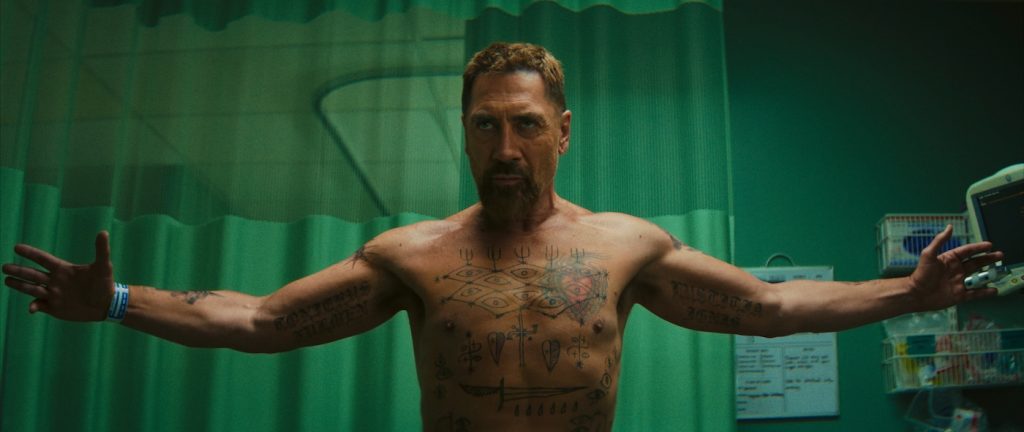
I love that scene! I also love the fight in the weight room in episode 2 because we see Max Cady’s capacity for violence, which we haven’t seen. In episode 6, when that initiation scene comes in, even though it has the same look—it’s black-and-white, it has this bleach bypass treatment that I created to make it starker, stretching the highlights, making the blacks deeper—it felt like magic happened! The framing makes it look like The Last Supper, with Javier in the middle and the inmates around him. It wasn’t on purpose. It just happened! And then the way that the flare from the door sometimes hit Javier in the head made it look mystical! The brutality that I set up in episode 2 for that flashback somehow evolved into something mystical. It’s one of my favorite scenes.
The finale takes place at night during the approach of a hurricane. Could you share how you filmed that amazing, dramatic climax?
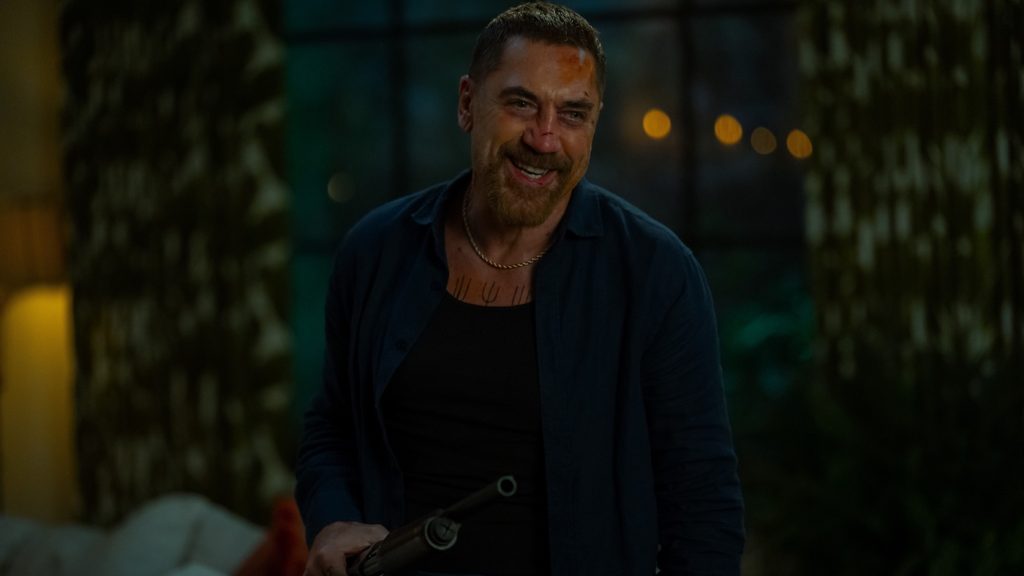
You’re talking, of course, about the trial scene. The conception of that scene was very long: it was close to 20 pages. We rehearsed to know very clearly how the actors felt about the scene. It’s the climax of everything. It’s about Max looking for justice, but also the revealing of secrets. I watched the rehearsal with my director, Jonathan van Tulleken. I heard what the actors wanted to do in that scene. I went through the script bit by bit, now knowing how the scene was going to progress in the blocking. I planned to escalate lighting and other effects. It was like DJing! To my light board operator, I would shout, “Flickering now! Okay, stop! Let’s go to dark!” I was exhausted by the end of that scene because it was so emotional! But I’m very happy because I think it works organically with the scene. With the lighting and camera movements, I felt like a companion to the actors in the emotional beats.
Featured image: “Cape Fear” key art. Courtesy Apple TV.