Mud, Mist, and Mortality: DP Gustav Danielsson on Shooting Westeros’ Most Intimate Battle in “A Knight of the Seven Kingdoms”
When you think about the greatest battles and smash-ups in Westerosi history, a few come to mind immediately. In Game of Thrones, you might think first of The Battle of the Bastards, when Jon Snow and Sansa Stark brutally recovered Winterfell from House Bolton and finally put an end to the scourge that was Ramsay Bolton. Or perhaps you’re a Lannister girl, and you think of the Battle of the Blackwater, when Tyrion Lannister defended King’s Landing against Stannis Baratheon’s fleet. There was, of course, the ultimate battle, the Long Night, when the living made their stand against the Night King’s army of the dead and Arya Stark danced her way to the ultimate kill shot against the Night King himself. More recently, in House of the Dragon, the Battle at Rook’s Rest and the Battle of the Gullet were two massive affairs, the latter including a dragon battle over the sea.
For more personal yet no less brutal dust-ups, there’s Oberyn Martell (Pedro Pascal) vs. Gregor Clegane, aka the Mountain (Hafþór Júlíus Björnsson), a trial by combat that Oberyn could have won had he not showboated. Instead, he had his head crushed. The great sibling duel in Game of Thrones was the long-awaited clash between the Hound (Rory McCann) and the Mountain. That ended up with both of them dead, but the Hound can be declared the victor for having decided on the sacrifice himself. Earlier in the series, Brienne of Tarth (Gwendoline Christie) proved her mettle in fights against Jaime Lannister (Nikolaj Coster-Waldau) and the Hound, earning both of their respect and, in the case of Jaime, ultimately his loyalty and friendship.
Okay, all of the above was very well and good, but what if I told you the best fight sequence that’s occurred anywhere in or beyond the Seven Kingdoms didn’t happen in either Game of Thrones or House of the Dragon, but instead, in A Knight of the Seven Kingdoms? Created by George R.R. Martin and Ian Parker, A Knight of the Seven Kingdoms is a delightfully condensed tale, concerned not with great, squabbling houses or existential threats to the Seven Kingdoms, but the attempt of one lowly, would-be knight, Ser Duncan “Dunk” the Tall (Peter Claffey), to find his place in Westeros. Set a century before the events in Game of Thrones, Ser Duncan and his eventual squire, Egg (Dexter Sol Ansell), make their way to Ashford, where Dunk, after much effort, manages to get himself signed up for the most brutally lopsided and wild battle of them all. After defending a Dornish puppeteer named Tanselle (Tanzyn Crawford) from the venal Prince Aerion Targaryen (Finn Bennet), he’s pulled into the Trial of the Seven, a rare, high-stakes form of trial by combat rooted in the Faith of the Seven, where two teams of seven fighters each battle on behalf of the accused and accuser. On one side stands Dunk and his men; on the other, the far better-trained Prince Aerion and his.
Cinematographer Gustav Danielsson captured the gonzo action, including a first-person view of the lunacy of armed combat, and was nominated for an Emmy for his work in Episode 5, “In the Name of the Mother.” Using rare Panavision Ultra Panatar anamorphic lenses with a 1.3 squeeze, handheld shots close to the character, and a helmet POV shot shot on a DJI Ronin 4D and operated by the stunt coordinator, Danielsson pulls the viewer into the action with gruesome immediacy.
We spoke to Danielsson about crafting the year’s best, most brutally intimate fight sequence.
Before we get into the Emmy-nominated episode, what were your thoughts when you first came on board a show set in this universe?
It’s such a big universe, and it’s been immensely successful with both Game of Thrones and House of the Dragon. It was a huge challenge. How do we make something that can stand alongside those shows? The bar is incredibly high because fans will naturally compare it to what came before. One thing director Owen Harris and I talked about a lot was how to make this series feel different. When you read the scripts, you immediately realize it’s a very different take on this world. It’s much more intimate. It’s really centered on one or two characters, Dunk and Egg. It’s a smaller world in terms of scale, and the story begins with a lighter, more humorous tone.
How do you capture that lighter, more humorous tone visually?
We wanted to create something very naturalistic, raw, and simple in the photography. We also had a smaller budget than the previous shows, which meant we had to make things work in-camera whenever possible. Almost nothing was shot against green screens. What you see is largely what we captured on set. Of course, we had an excellent VFX department that helped clean things up, but the show is very much grounded in practical photography. I think that suits the story. It’s such an intimate tale about two characters, and it allowed us to create something that felt fresh within this universe.
Okay, let’s talk about the outrageously brutal fight that centers Episode 5, “In the Name of the Mother.” Throughout the season, the story builds toward this trial by combat. What’s remarkable is how invested we become in Dunk and Egg before we get there. Then, when the fight begins, you immediately make an unexpected choice. Instead of sweeping battlefield imagery like the famous “Battle of the Bastards,” you put us inside Dunk’s helmet. Can you talk about that decision?
We thought about it a lot. This battle is really about one person. It’s a man-to-man story, even though it’s a larger conflict. We knew we didn’t have the resources to create enormous battle sequences full of huge crane shots and massive armies. Instead, we decided to go completely inside the character’s experience. We wanted the audience inside that helmet, holding their breath alongside Dunk. There were many choices that contributed to that feeling. When I first read the script, I genuinely thought, “This is where our hero dies.” That’s what Game of Thrones taught us. You never know who survives. So when you enter the lists, and this seven-on-seven battle begins, I think it’s important that the audience believes Dunk could die at any moment.
Game of Thrones and House of the Dragon have never stinted on the brutality of battle, but we’ve never before felt how confusing it can be, how horrifically random, even.
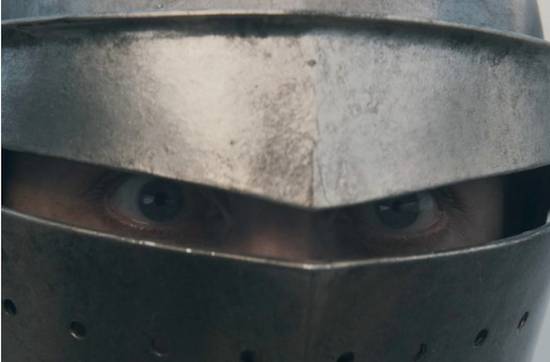
The subjective point of view was critical. You’re hearing his breathing inside the helmet. You’re looking out through a narrow visor. There’s mist everywhere. You can barely see anything except shapes emerging from the fog. Suddenly a mace is flying toward your face, and you’re slammed into the mud. And that’s only the beginning. Rather than going bigger, we went closer. We focused on what it feels like to be one person trapped inside that situation. The handheld camera work, helmet POV shots, dawn lighting, and heavy mist all contributed to that sense of disorientation and fear.
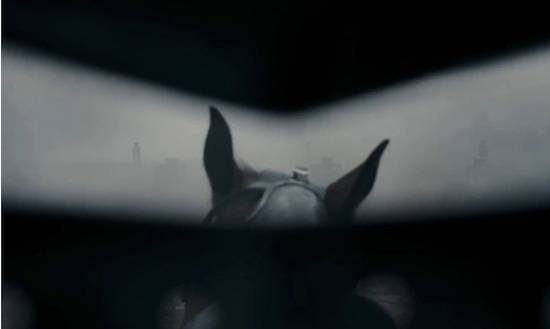
One thing that really struck me was the helmet design itself. Your peripheral vision is almost completely cut off. Dunk is constantly turning his head, trying to figure out where danger is coming from. It totally destabilizes you. From a practical standpoint, how long did that sequence take to shoot, and where were you filming?
We shot the series in Northern Ireland around Belfast, and that sequence was filmed outside Belfast near the coast. The battle took at least two weeks to shoot. We were also split between multiple units, so we had a lot of decisions to make about who was shooting what. We had an incredible second unit led by Rob Inch and stunt coordinator Florian Robin. They did fantastic work. Something viewers may not realize is that the battle is supposed to take place in early morning light. Of course, we can’t shoot everything during actual dawn. We’re shooting throughout the day, from morning until evening, while trying to maintain that look. The mist was another enormous challenge. Special effects created it using long smoke tubes, but keeping it consistent was incredibly difficult. The wind changes constantly. You fill one area with smoke, and suddenly the wind pushes it somewhere else.
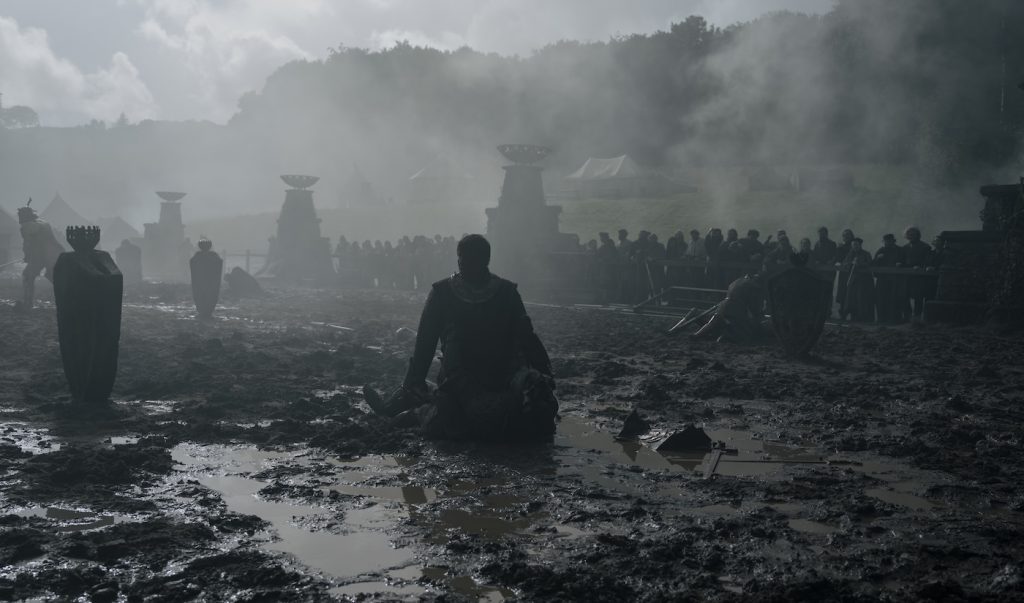
I was going to ask about the mud specifically. It adds so much to the sequence because once Dunk falls from his horse, he’s practically trapped by it. Was that all real mud?
Yes. Almost everything was done in-camera, and the mud was absolutely real. What I learned is that filming in mud is an endless battle. You create the mud using sand, dirt, and water. But as people walk through it all day, it starts hardening almost like concrete. We had crew members constantly breaking it up and adding more water. As soon as one setup finished, another team would move to the next position and begin preparing that section of ground. The mud, the light, the smoke—everything was extremely challenging. But no, that’s not VFX mud. That’s proper mud. The visual effects work mainly helped maintain consistency with the smoke. They did an incredible job cleaning things up. The final result looks as though the smoke was perfect in-camera, which definitely wasn’t always the case.
Speaking of practical challenges, between the mud, smoke, horses, stunt performers, and flying debris, how did you protect your equipment while capturing such visceral imagery?
The vast majority of the episode was shot on the ARRI Alexa Mini LF with Panavision Ultra Panatar anamorphic lenses. For the helmet POV shots, however, we used a much smaller camera. The second unit shot those sequences using a DJI Ronin 4D. It’s a very compact camera mounted on a stabilizing system. The camera was attached directly to the operator’s body with the visor positioned in front of the lens. As for debris, things were constantly flying into the camera. Dirt, mud, blood effects. In this case, we embraced it because it heightened the subjective feeling. If blood splashes onto the lens, it may not be exactly how human vision looks, but it makes you feel like you’re there. It also reinforced the messy nature of Dunk’s fighting style. He’s not elegant. He’s big, he’s strong, he has a huge heart, but he’s not a graceful fighter. The handheld movement and the grit all support that feeling.
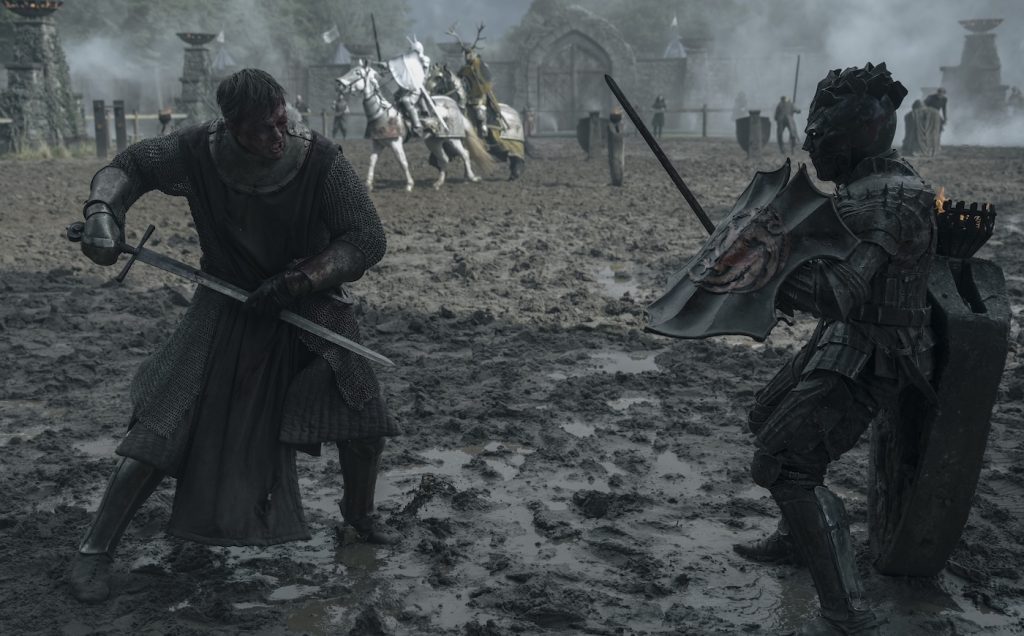
The battle works not only as action but as a complete story with a beginning, middle, and end. Dunk gets knocked from his horse, fights through the mud, survives one challenge after another, and finally confronts Aerion. How much planning went into constructing that narrative progression?
Months. The sequence was fully storyboarded. Every major beat was planned in advance. Sometimes you discover during filming that certain ideas work better than expected and others don’t, so you make adjustments. But the structure was there from the beginning. We relied heavily on storyboards and detailed planning documents. The script supervisors also tracked continuity, including things like blood levels and costume damage. A nice moment happened near the end of filming. Throughout the battle, we were fighting against the sun, trying to maintain the overcast morning look. Then, at the very end, when Dunk is holding Aerion and demanding that he yield, the sun briefly broke through. That wasn’t planned. It was simply one of those gifts nature sometimes gives you. We embraced it because it felt like the perfect visual note to end the battle. Planning is critical, but filmmaking is also about taking advantage of opportunities when they appear.
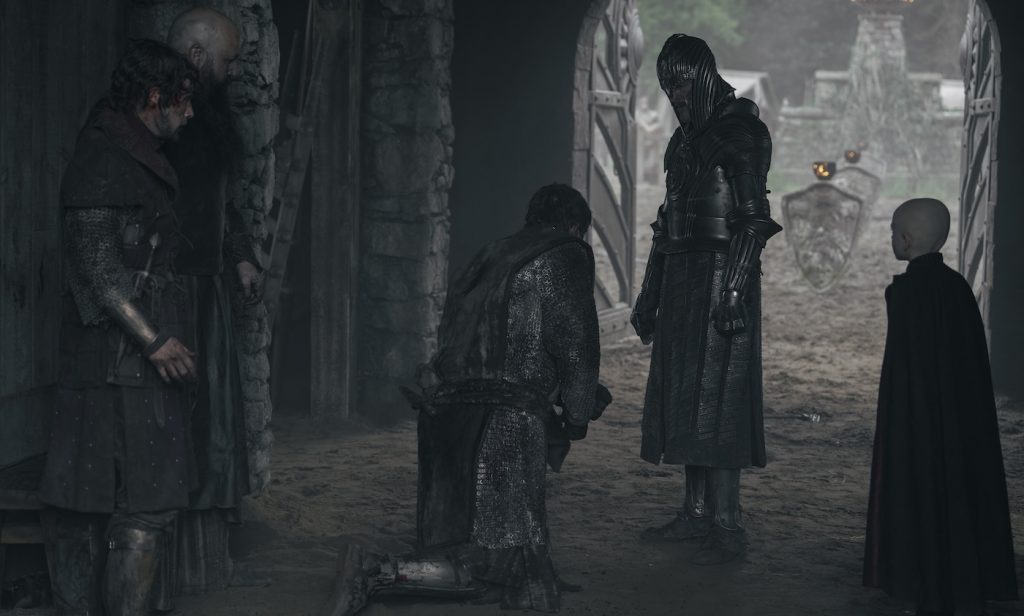
My final question is about the aftermath. Dunk survives, wins the trial, and receives validation from someone he admires, only for that moment to become devastating when Baelor removes his helmet. That sequence is incredibly effective. What was it like shooting that scene?
I loved that scene in the script. Dunk wins the fight, but in a way he still loses because he still loses because he loses the person who believed in him [Prince Baelor ‘Breakspear’ Targaryen, played by Bertie Carvel]. Those scenes are emotionally demanding, but they’re wonderful to shoot because everyone arrives fully engaged. Peter Claffey knew exactly where the scene was heading emotionally. Bertie Carvel’s performance added tremendous weight to it. We also found a beautiful location. The scene takes place beneath the royal stands, inside that tunnel-like space. It’s subtly backlit, with a little fill from the front, and all the armor catches the light in a really beautiful way. Of course, Baelor’s injury required visual effects work. There were practical elements and tracking markers that were completed in post. It was a really satisfying final scene for my block of episodes.
Featured image: Peter Claffey. Photograph by Steffan Hill/HBO