
From Personal Loss to Emmy Nomination: Writer/Director Jim Rash’s Journey With “Miss You, Love You”
“I really enjoyed the idea that I’m going to succeed and fail on my own,” says Jim Rash of his first solo directing job, Miss You, Love You, starring Allison Janney as Diane Patterson, a widow planning her husband Henry’s funeral, only for her estranged son to send his assistant Jamie (Andrew Rannells) in his place to help his mom with his stepfather’s passing. What unravels is a heartfelt journey of loss and healing, showing how grief can open the door to unlikely connections and forgiveness. Rash should feel pretty good about the effort—Miss You, Love You is nominated for an Emmy for Outstanding Television Movie.
The multi-hyphenate Rash may be best known for co-writing The Descendants, for which he shares an Oscar, but he’s voiced and appeared in well over one hundred television series and movies, including the Friends finale, Community, Glee, Reno 911, and Abbott Elementary. For Miss You, Love You, Rash pulled from personal experience, attending his father’s funeral eight years ago. His father had Parkinson’s, and his sister couldn’t attend, so he brought her assistant to help. “It was personal in writing it myself,” says The Way Way Back scribe, who often collaborates with Nat Faxon but wrote this screenplay alone.
In preparation to direct the production, which shot over 17 days in New Mexico, Rash leaned into advice. “Tate Taylor is a friend, and he had just directed The Help at the time, and he said don’t be afraid to say, ‘I don’t know.’ It’ll change your experience because everyone will come to the table.”
Below, the writer/director shares his approach to filming long takes, finding the rhythm in the cutting room, and that fantastically awful owl painting Janney’s Diane makes in a rage.
Your mother was in the entertainment industry. How much influence did she have on your creativity growing up?
My exposure to her time at the affiliate of PBS in Charlotte, when she was on air with a membership drive, I would have to be there doing homework in the back. But I think that early exposure where I kept seeing the lights and cameras and then even the level of PBS storytelling I was definitely a creature of TV. So all of it sort of combined itself to where I wanted to go, I think.
I mention her because it seems you took her spirit and wrote the opposite for Diane Patterson, played by Allison Janney.
I have to say that Diane is not my mother. I have to defend her, but I would be lying if I didn’t always pull something. I don’t think any writer out there doesn’t want to find something, even when it’s science fiction or whatever outside this realm, to find a way in.
What inspiration did you pull for Miss You, Love You?
I definitely took what I experienced in Albuquerque when my mother lived there working for a different PBS affiliate and spent a summer there. I really was using things I could latch on to where a New Yorker would feel the most exposed. And Albuquerque feels polar opposite, or just the Southwest in general. The rest of it is more built out of my imagination about who would be the toughest adversary for Jamie in this. And I also wanted to tell the story of a parent who was there, who raised her child with love, and who now has grown resentful that there’s no reward for it, like she’s being penalized for being a good mom.
The first act unravels almost like a play. How did you and cinematographer Daniel Moder want to approach coverage as Diane and Jamie meet for the first time?
That first act is 25 pages, and it is essentially one scene from when Jamie enters the doorway. A lot of it was discovery, and we lucked out even on a tight schedule and tight budget to get a couple of days for that scene. On the first day, Danny, our 1st AD [Dan Ringey], and I just watched them. Allison and Andrew are from theater, and I wanted to see where they went and what they lived in. Then Danny and I tried to break it into three chunks. We did the scenes in order so we could pick up where we left off.
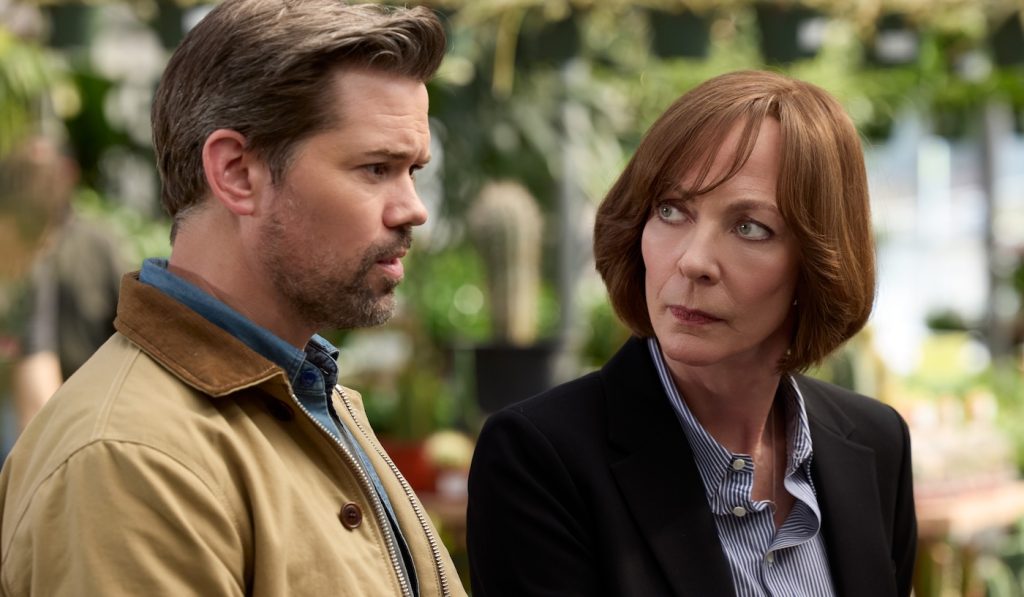
During that opening scene, Diane talks about the feeling of loss, saying, “You put it aside, despite how you feel…you ungrateful, selfish dickhead.” What was your intention behind that moment?
I think it means a couple of things to me. Think about how we talk about people in our lives when someone leaves our world. And let’s say it was a difficult relationship. But then we speak slightly differently when they have passed, as if we feel like we need to let go of some of that and say, here’s this person, despite everything.
But I feel like with this, she felt like she did all these good things. And here she is brokenhearted. And that’s what you have to do. You have to take this thing and put it to the side and just be with me as I grieve, warts and all. At least for me, I think it’s about how we speak of people who have passed, who may or may not have been the easiest of relationships for us.
How did you see Jamie’s character arc? And did you give Andrew any direction in how to play the character before we find out his truth?
Since he’s hiding behind a kind of lie, and because I think it hurts him psychologically to admit it, I remember a lot of things with Andrew just sort of clicking for him right away. And you’re sort of like, I’m not going to mess that up. You got it. You understand Jamie. And then you just find nice little things. So with anything you’re crafting, it’s about the between.
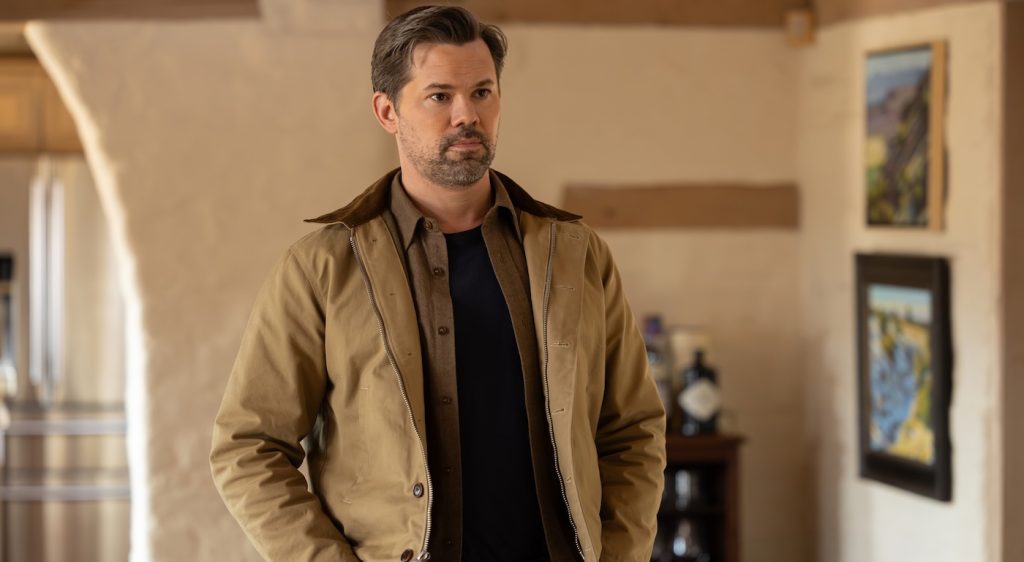
Since the budget and schedule were tight, how did you and editor Doc Crotzer collaborate during production?
As great as it is to have your editor on the ground, that’s not always possible. But I remember already working things out while I was in the middle of shooting and calling him because I was prepping him for it. It was nice to be able to call him and say, here’s what I’m thinking, will this work? Then when I landed in L.A. afterward, it was just lovely working with Doc. It was the same sort of process: seeing where his brain went with his first cut, then going in there and exploring it together. That’s one of my favorite parts of the process.
One of Henry’s dying requests is for Diane to finish a painting. In a bit of rage, she splatters stick figure animals on it, claiming it’s done. Did you reach out to local artists in Albuquerque for the artwork?
We had Mark Ricker, our production designer—thank goodness for him. He was able to find three different artists for all the art in the house. All the New York artwork was by a New York painter. He also found this painter in Placitas, New Mexico, just outside Albuquerque. She painted the bottom part and gave us five of those. Then Allison painted the rest. I think that was her favorite part. I’m sure she had others, but I’m just saying the cathartic enjoyment of it. And to her credit, those quick but wonderfully awful owl and cat paintings were something that she perfected pretty fast.
Miss You, Love You is available now on HBO/HBO Max.
Featured image: Andrew Rannells, Allison Janney. Photograph courtesy of HBO.