
Inside the Sound of “Backrooms”: How Camel Screams, Clipped Audio & Empty Rooms Fueled the Fear
When a 14-year-old boy first discovered the cryptic image of a yellow-carpeted room on the nerd-friendly 4chan website seven years ago, nobody could have predicted that the now grown-up Kane Parsons would wow the movie-going world by directing one of the year’s most celebrated releases. Based on Parsons’ YouTube series, Backrooms, made for about $10 million, has raked in more than $300 million at the box office since its May release, while garnering critical plaudits for its David Lynchian creepiness and cinematic flourishes.
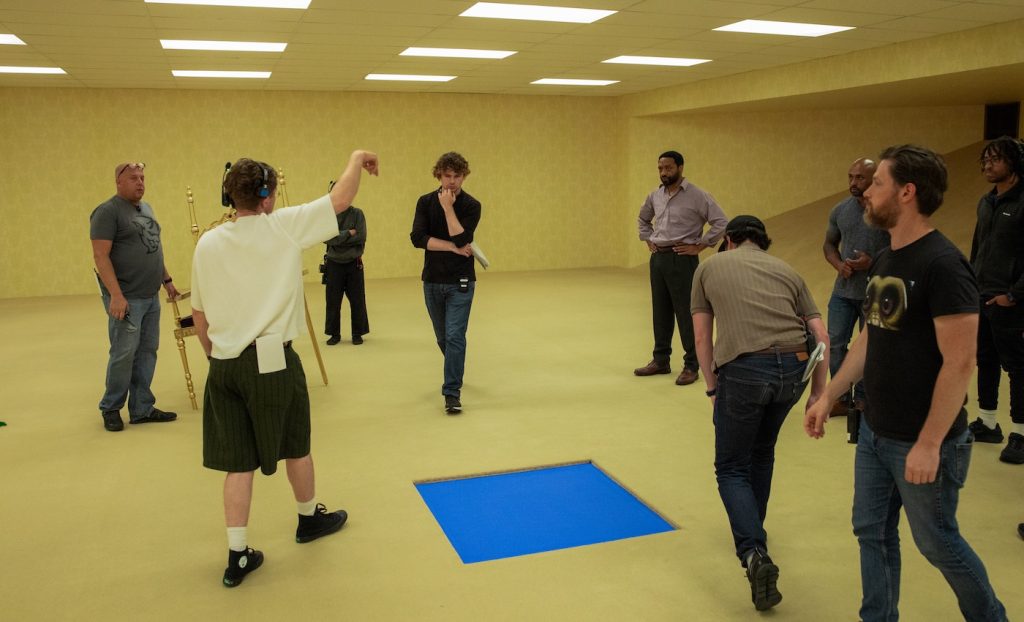
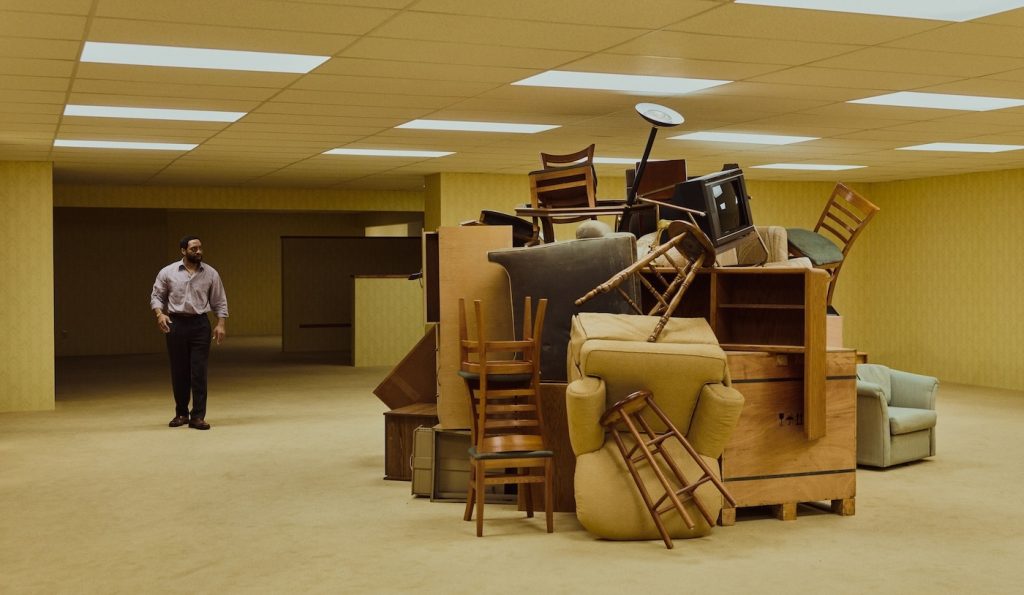
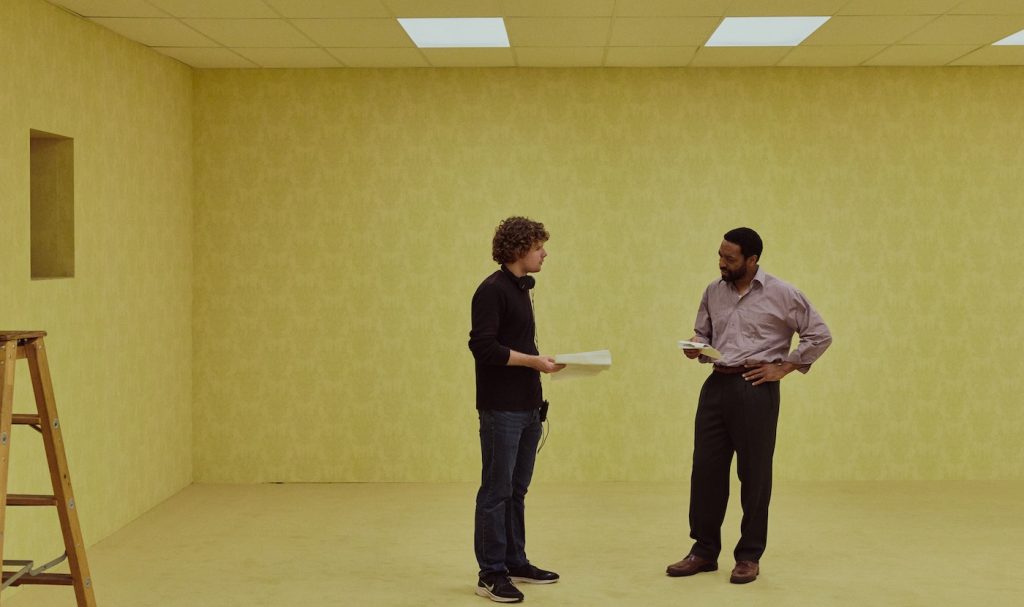
Shot mainly on three huge soundstages in Vancouver—built by production designer Danny Vermette and his team—Backrooms follows frustrated carpet store owner Clark (Chiwetel Ejiofor) and his therapist Mary (Renate Reinsve) as they try to make sense of a subterranean labyrinth of yellow rooms, tunnels, and violent dead ends. Sacrificial lambs include carpet store employees Bobby (Finn Bennett) and Kat (Lukita Maxwell). Contributing mightily to the film’s immersive dread are production sound mixer Jan Hetmer and re-recording mixer/sound designer/supervising sound editor Eugenio Battaglia, who previously teamed on Osgood Perkin’s recent adaptation of Stephen King thriller Monkey. For Hetmer, Backrooms left an indelible impact. “The feeling of being on these massive empty rooms pulled everybody into the atmosphere and really gave me the shivers,” he says.
Speaking from Vancouver, Hetmer and Battaglia unpack the scariest scenes they recorded, reveal the terror-inducing animal sound borrowed from The Lord of the Rings, and detail their collaboration with 20-year old director Kane on his feature film debut.
It’s amazing to think that Kane Parsons directed such an accomplished feature film at the ripe age of 20. Jan, what was your first impression of this guy?
Jan Hetmer: I met Kane on a small demo shoot that took place four to five months before principal photography. Half of the crew and I were not informed that it was a test for the upcoming Backrooms project. They were trying to do it in secrecy. When I showed up, I kept wondering, “Who is this young man?” A couple of hours later, I find out from a couple of crew members that his name is Kane Parsons, so that night | watched most of his YouTube stuff.
What were your thoughts?
Hetmer: I was like, “How are we going to shoot all these things and keep dialogue going on with all the tilts and quick turnarounds with the camera,” because I’d been told his YouTube series had been made with Blender [animation software] or something.
Eugenio, what about you?
Eugenio Battaglia: I was already a fan of Kane’s work because I’m constantly on YouTube, and I’m big into horror and found-footage style. When the post supervisor for the production company I’d been working with told me I was going to be on some project called Backrooms, I completely freaked out. When Kane came to Vancouver, I swarmed him with all my questions, and we hit it off.
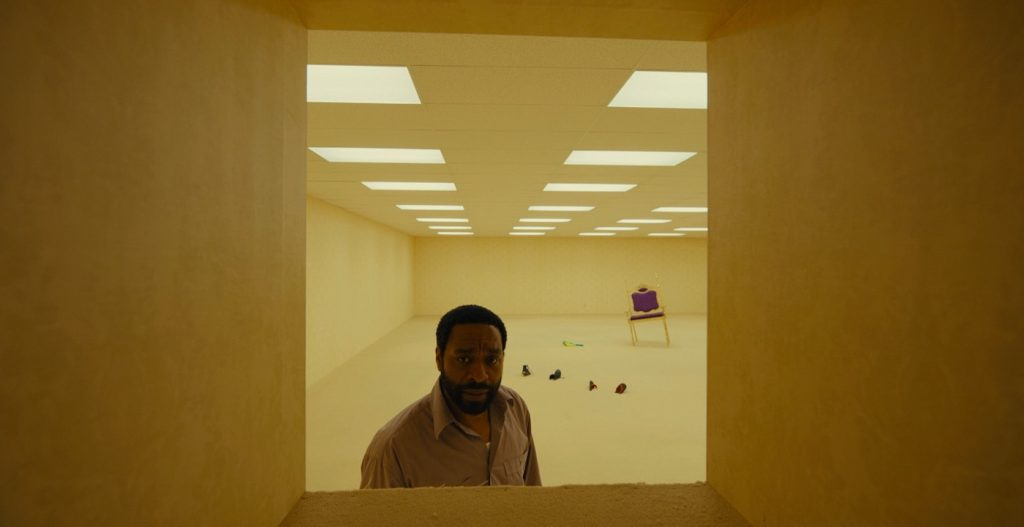
In Backrooms, we often see a single character or two in huge empty rooms surrounded by vast expanses of yellow carpet, where there’s no place to hide boom mics. Jan, how did you capture the dialogue?
Hetmer: The camera operator let me put this miniature shotgun mic made by DPA, which is probably this small [holds fingers an inch apart].
How’d you attach the mic?
Hetmer: I either Velcroed it on camera, used a couple of bungee ties, or taped it right underneath the lens, away from the noisy lens motor. And It’s a very directional little mic that connected to my Lectrosonics transmitter. From the small handheld to Steadicams, or to the camera on a big crane dolly pushing in, they were able to tilt the camera up and swivel left. And of course, we also used radio mics, the lavalier microphones, which are always there, sounding as good as they can for whatever situation is happening.
Besides recording dialogue, the mics also captured heavy breathing and grunts from the actors, which adds a lot of tension. Jan, you captured live on set?
Hetmer: Yeah. When there was no dialogue, even if the actors had nothing scripted, I preferred to get them wired just to capture their breathing and all those efforts.
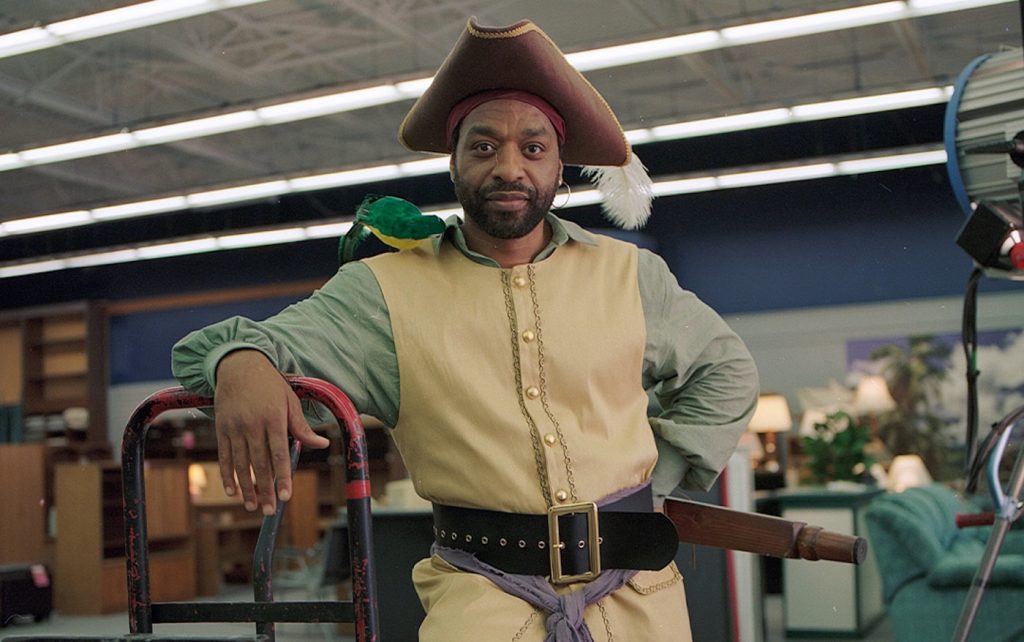
Eugenio, there are so many sounds—the lights buzzing, the shriek of a bird, rumbles, droning sounds, pings, clanks, thumps, rumbles, and static that create this sense of dread. Like when we see a deranged pirate marching across the floor with his peg leg going thump, thump, thump. What was your biggest challenge in putting the soundscape of Backrooms together?
Battaglia: The found footage segments were the most challenging. I found it to be pretty restrictive in a good way, because you have to sell the idea that everything is coming from that one microphone on the camera. You can’t have aggressive sounds coming from the surround speakers in a movie theater because that would break the illusion of being confined to the realism of the POV camera, sort of like The Blair Witch Project. I found that the unstable nature of harsh audio, where the microphone itself is clipping and breaking, and it’s not properly mixed, and the audio is jumping in and out – that brings your defenses down and, in my opinion, those are probably the scarier parts of the film.
Jan, what do you remember as the most disturbing sequence you recorded?
Hetmer: The kitchen scene, where Mary’s tied to a chair and Clark opens the fridge, and there’s a head inside. Then he cuts off the belly of the guy with multiple eyes and says, “I’m the fucking architect!” After we shot that, all of us crew members were just saying, “I’m the f**king architect.” That scene stuck in my mind for a long time. They were long takes, really tense, going from a whisper to very loud.
SPOILER ALERT
There was also a peak terror sequence in which seven-foot-tall “Captain Clark,” with his peg leg, went on the attack. Eugenio, how did you put him together vocally?
Battaglia: It was important to Kane that we make Pirate Clark sound kind of crunchy, as if he were made out of wood or twigs, like a dried corpse. That was the first element. And obviously, the peg leg was super important because it’s the auditory cue we have throughout the movie telling you some entity is coming at you. Kane had already done the vocal design for the creatures, so we started with his voice, doing a whole pass of Chiwetel grunting in anguish or crying, and then we’d pitch him up and down to make it interesting. Later on, when Pirate Clark is on top of Mary, and he’s going full monster, it was pretty hard to get that right, but I remembered seeing a Lord of the Rings video with one of my favorite sound designers, David Farmer, and he explained how he used camel sounds for that winged creature, the Fell Beast.
Camel?!
Battaglia: Yeah, so a couple of days before we were done with the mix, I was kind of bummed out that I couldn’t get the sound right. But then I remembered seeing the video and immediately started experimenting with camel sounds. They connected right away, especially because Kane recognized the sound from one of his favorite video games, so we were both like, “Okay, it’s a camel.” We pitched it down, pitched it up, and spliced it with Chiwetel’s vocals from ADR [Automated Dialogue Replacement, recorded post-production]. The amalgamation of all those elements made it interesting.
Eugenio, of course, you had a library of sound effects, but did you also record original Backrooms sounds with your Foley team?
Battaglia: Yeah. It’s my favorite aspect of sound design, and I like to do my own Foley. I would do hazmat suits, men walking through spaces, or if a body falls, things like that.
How do you foley a body fall?
Battaglia: You just straight up jump into the air and fall. You try to make it as dramatic as possible, kind of sloppy, you know? Like, maybe kick the wall for a little hollow bump action.
Jan, you were on set every day, recording intense performances from these very experienced actors, Chiwetel Ejiofor and Renate Reinsve, who are being directed by this very young filmmaker. What was the atmosphere like on set?
Hetmer: Everybody on set got very quiet when Kane was talking, because he’d already created this world and we were all just trying to be a part of it. And my memory is that Kane was the humblest person of all on set.
The guy running everything—humble?
Hetmer: Yeah. Kane’s very respectful and listens to everybody, and doesn’t jump on anyone. Everybody’s just trying to give back to him and the art that we’re all working on. Maybe that’s part of the secret for why the film ended up doing so well.
Featured image: Renate Reinsve. Credit: Courtesy of A24