
How Production Designer Danny Vermette Made “Backrooms” Real—Portals, Platforms, & Practical Terror
This interview contains spoilers.
Backrooms, director Kane Parsons’s horror film based on his YouTube shorts inspired by one very creepy internet photo, is a breakout hit for A24. Set in 1991, failed architect and furniture emporium owner Clark (Chiwetel Ejiofor) discovers a portal in the basement of his store and becomes obsessed with this alternate world, a seemingly never-ending series of liminal spaces lined with carpet and yellow wallpaper. Business is bad for Clark; he’s divorced, he’s making little progress in sessions with his therapist, Mary (Renate Reinsve), and moving into the backrooms seems to be the answer.
After bringing a young couple who film his ads across the portal, Clark calls Mary and lets her know he’s found a window, a reference to the therapist’s book. She crosses into the backrooms looking for Clark and finds a man undone, eating morphed versions of what appear to be formerly human backrooms residents. One of these, a pirate version of Clark, chases her through the backrooms until she is finally apprehended by representatives from Async, the research institute responsible for the backrooms’ creation.
Parsons’s original shorts already had a committed following by the time production designer Danny Vermette (Longlegs, The Monkey) joined the feature project, and one of the biggest challenges of the film became recreating the backrooms world as practically as possible. Vermette and his crew filled four sound stages, used elevated platforms to create vertical height, and figured out how to keep even shots like portal crossings in-camera. We got to speak with Vermette about the complex process that made Backrooms a tactile, visual success.
What was the jumping-off point for creating a physical version of the Backrooms world?
I dove into watching Kane’s YouTube stuff and went down a rabbit hole of everything that’s online. It was eye-opening that there was this movement out there that I knew so little about. I knew it was something people were attached to. It wasn’t exactly clear how much until I got on a call with Kane. Then I realized, this was very well thought out, he’s very articulate, he’s very passionate about this world. Getting into the theology behind everything and what his expectations were didn’t come until a little later. I was left with a couple of weeks of just digesting this. After that, Chris Ferguson, our producer here at Oddfellows, and I created a pitch package for Kane and really got into how we were going to do this. How are we going to sell this to an audience that is already so passionate about it, and also make it viable for people who don’t know anything about it? We came to the idea that Kane should bring me a wishlist of what he would want to build. He created a 100,000-square-foot map, sent me a giant file, and it was so big that it crashed my computer. We had to break it apart to look at it.
What was your experience, matching what we see on screen to the source material, like the original creepypasta photo?
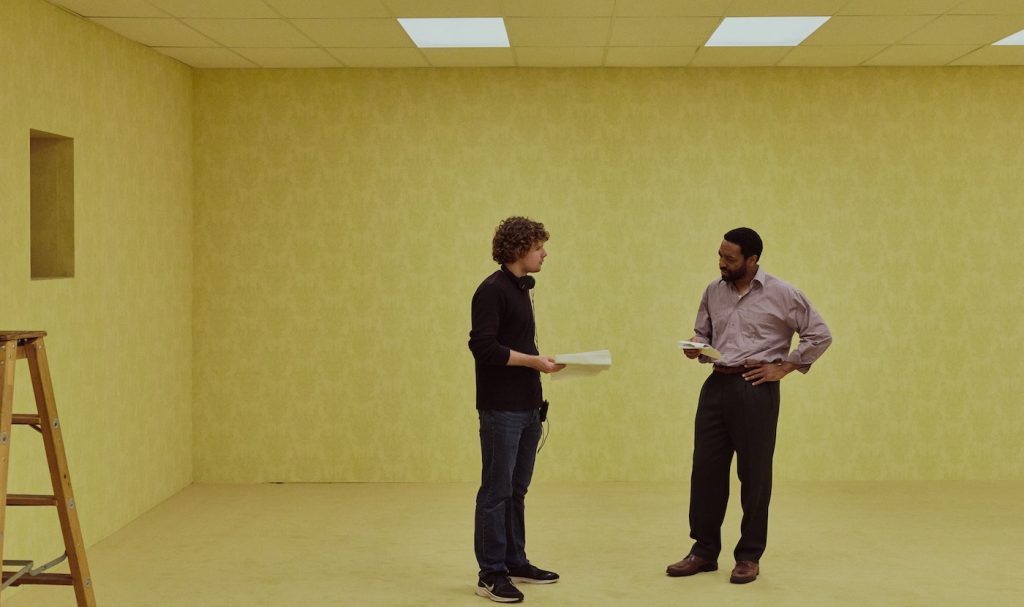
As far as the actual photo, the space wasn’t yellow. It’s just a bad photo. It’s a white balance issue. This world is spawned from this yellow image, but the real space was probably beige. It was an undertaking to figure out how to make everything work. We’ve got different skin tones up against our massive amount of wallpaper, carpet, and dropped ceiling, and having all the elements work together to suit the needs of different camera work, and have it still feel like a Blender rendering, that was the real challenge. We did a ton of legwork to make sure it all worked.
The sets look deceptively simple. Is it more of a challenge when they’re so empty?
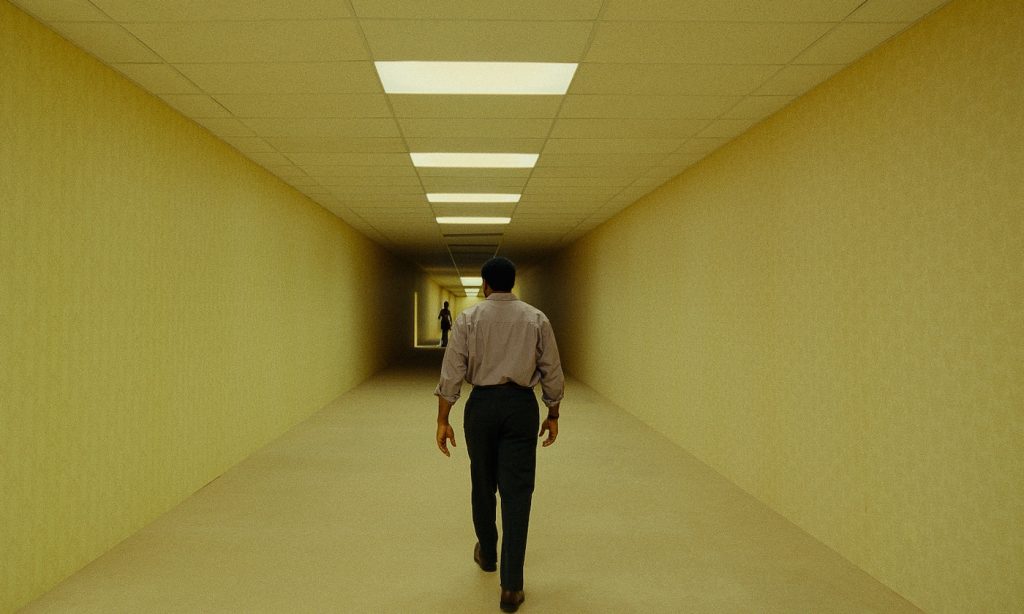
In a sense, you’re not hiding anything. It was challenging. You’ve got big expanses of dropped ceiling that have to be supported by the infrastructure above. Everything has to work in concert and unfold in a linear fashion, including the lighting and the breakpoints in the set. It was really down to figuring out what we were building practically and how that translates into visual effects, and how we were going to fit it all and make it make sense from an actual cinematic standpoint, allowing the camera and cuts to help us tie everything together. It was a lot of strategic pacing to make everything work.
In particular, how did you make the portal work?
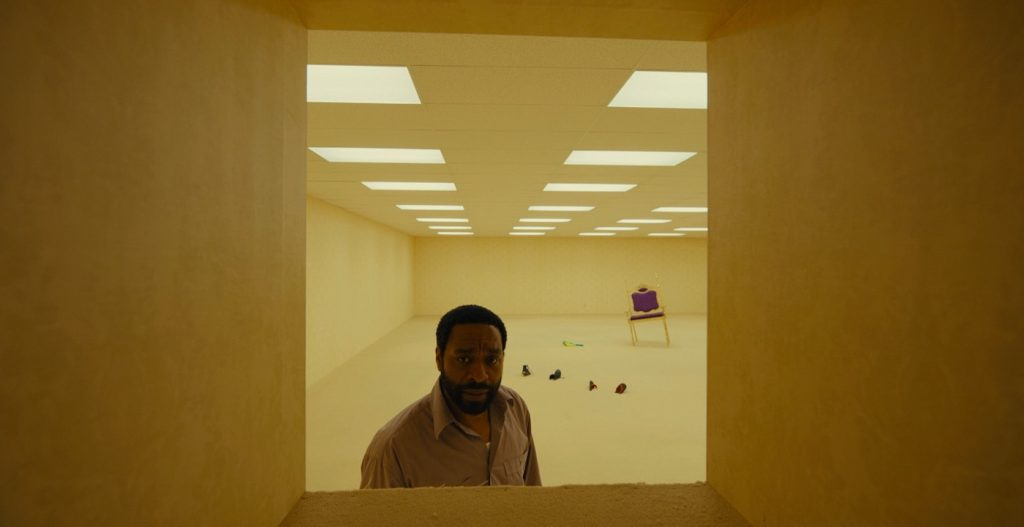
The basement was a build. The whole basement was our first transition point into the Backrooms. We ended up creating two portals, one for the talent and one for the camera, and we just dollied with them. It was a matter of tying that in with VFX. We were basically trying to make as little work for VFX as possible. It was still a very complicated shot, with the rotoscoping and everything. But in essence, it was a basic concept that the camera travels through a wall at the same time as a person.
What was the approach to spaces we see disappear in the Backrooms, like Mary’s childhood home?
To sell the ethos of how the Backrooms work, it was a very well thought-out design. The more we sink into this world, the more things are less remembered and become less of their original state. It’s really selling [the idea] that that could maybe go on forever. The idea that we’re pulling things in from the real world was a really strong anchor for us as well.
How did you build so that the actors interact with the environment?
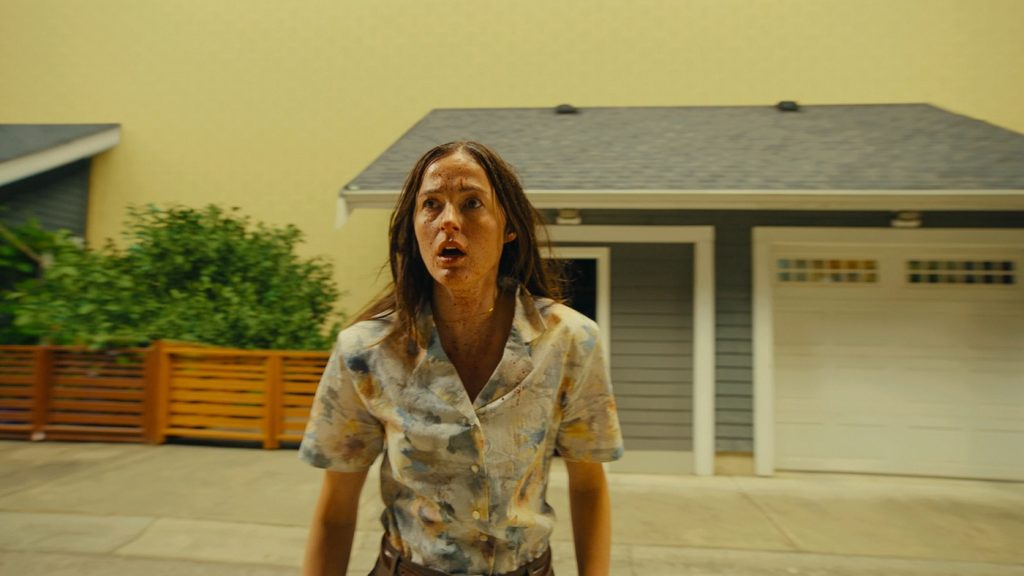
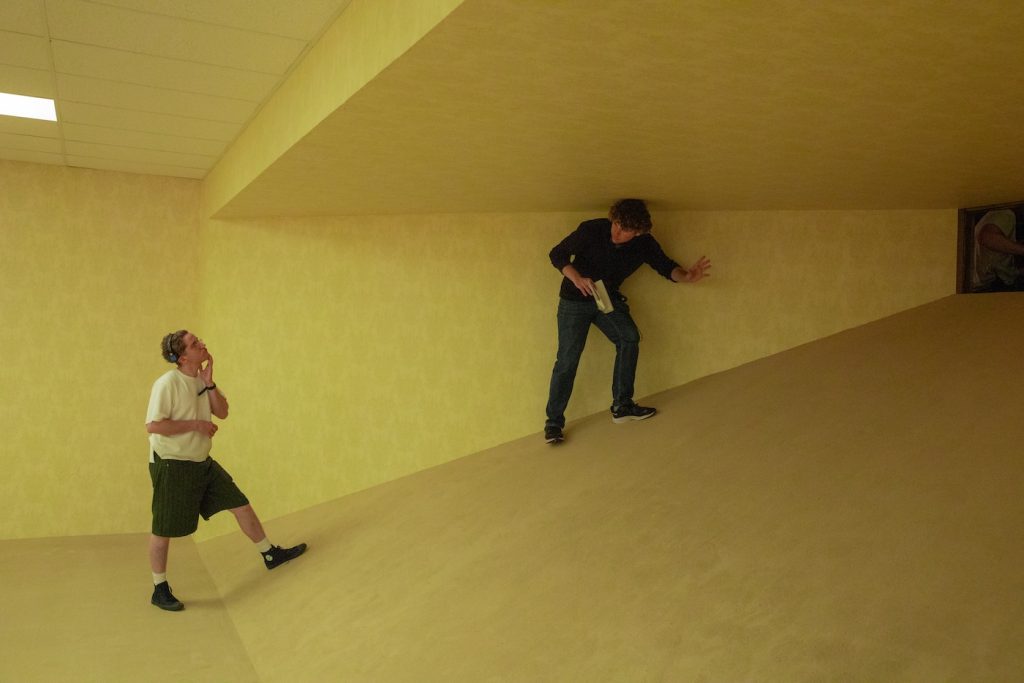
Early on, we wanted to create a sense of verticality. We did not want to be on just a single plane. This limitless space has a sense of layers. So how were we going to sell that? A practical solution was to put sets on platforms. We built a lot of elements practically, where we’re going down slopes and weird angles. As soon as the actors are interacting with it, it’s taking them out of their comfort zone. It’s enabling it to feel real and tactile and is placing them even more realistically into that environment.
Outside the Backrooms, what went into recreating 1991?
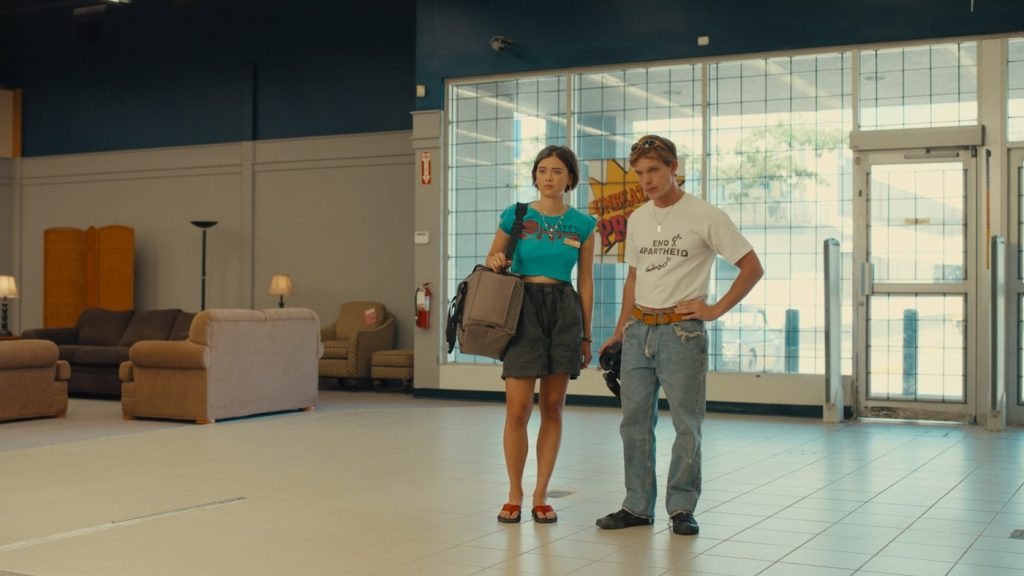
A lot of the influences that Kane had were something that he was nostalgic for, photos from his childhood, maybe certain parts of his neighborhood. It’s almost a representation of an emotion that you’ve had. Era pieces for me are always great. You can pick and choose what you want to represent from that era, and it gives you a little bit of license to play. We were really adamant about making sure that we weren’t putting anything in the movie that didn’t exist after that time. What we created for Async, for example, had to be 100 percent era-correct. It was very important for Kane that we stuck to our guns on that.
How is shooting in Canada?
Here in Vancouver, I’m a local. We are basically a family making these movies. I have the great pleasure of working with my best friends. That’s the producers, that’s within my crew. People should realize that although 10 million dollars seems like a lot, it’s not. The fact that this has picked up the steam it has, and people are enjoying it and relating to it, or escaping for a minute, I’m so happy we’re able to do that as this little collective up here in Vancouver.
Backrooms is in theaters now.
Featured image: Renate Reinsve. Credit: Courtesy of A24