“The Mastermind” & “The Alto Knights” Sound Mixer & Proud Ohioan Geoff Maxwell on the Power of Production Incentives
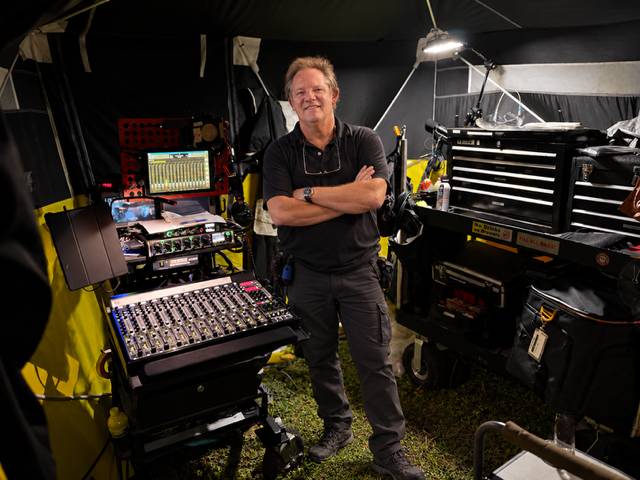
If you want to learn the nuts and bolts of how filmmaking fuels local growth, why state production incentives matter, and why a national policy would be a game-changer, Geoff Maxwell would be a perfect person to start with.
It’s been a long and winding road for the Ohio-based production sound mixer. After gigging as a professional bass player for 15 years, he helped produce TV commercials and worked as a rep for the once-dominant Nagra tape recorder company, visiting film sets to advise sound technicians about their gear. Finally, he found his footing as a mixer on shows made in Cincinnati, where he was born and raised.
As a member of IATSE Local 209, Maxwell fondly remembers recording dialogue and sound effects close to the late Robert Redford (The Old Man & the Gun), Robert De Niro (The Alto Knights), and Cate Blanchett (Carol). “When that level of actor walks on set, everything rises,” he muses. “You realize you’re part of something special, so everybody knows that they’ve really got to be on their game.”
Movie stars personify the glamorous aspect of his job, but Maxwell, a father of five, likes to understand the nuts and bolts of movie financing. He holds out high hopes for the Motion Picture, Television, and Entertainment Revitalization Act, which Congress is considering, that would provide a 20 percent tax credit for productions made in the United States.
“I think a federal incentive bill would lift all ships,” Maxwell says. “If everybody could add another 20 percent onto their individual state incentives, it would be wonderful, and if they could make the law statutory for a long enough period of time that it resonates with producers, that would be even better.”
Speaking from his home office in Cincinnati, Maxwell navigates the nuances of state tax incentives and reveals the secret behind Cincinnati’s ability to attract New York-based period pieces like Lost in Yonkers, Little Man Tate, A Rage in Harlem, Carol, Miles Ahead, and Gotti.
Your report is packed with details and clearly took a lot of work. What motivated you to assemble these facts in such a well-organized way?
I’d be on a location somewhere talking to other technicians, and nobody really knew what was going on in terms of tax incentives. The landscape’s constantly changing, and there are a lot of rumors that just aren’t correct.
You’re educating yourself and your colleagues about all these variables.
I wanted to zoom out and compare one market to another, explore why a producer would shoot in Kentucky instead of Ohio or Pennsylvania. Then I expanded it a little further because we have a lot of connection with Louisiana, so I wanted to know what was going on down there. Georgia has been the gold standard for a long time. And then the real bombshell is the New Jersey incentive.
How so?
Well, New Jersey has a 35 percent tax credit, which is expandable to 40, and they’re building 12 or 14 stages there, doing deals with Netflix and Amazon. It’s really hard to compete with that.
You worked as the production sound mixer on The Alto Knights, a movie about Mafia gangsters set in 1940s-1950s Manhattan. Why was it shot in Cincinnati?
One unique thing about this city is that Cincinnati can play for New York. For a long time, that was our claim to fame, because we have a section of town that looks like a period of New York in the ’40s and ’50s. In Cincinnati, we have the largest collection of Italianate architecture in the country, over 900 buildings that look like vintage New York neighborhoods.
No kidding!
When you combine that architecture with the cooperation filmmakers get from the city, they’ll shut down streets, move telephone poles and electric lines, and take down modern signs. That became one of the keys to our success for several years. But we don’t have any stages here.
No sound stages?
That’s just the way it’s panned out. Nobody’s been able to invest in a stage here [1] [Cincinnati].
What happens, economically speaking, when a big-budget movie like The Alto Knights comes to town?
It’s very significant. A $90 million movie is a lot different than a $15 million movie, you know? There are a lot of technicians here, and when there’s work, everybody makes money and spends money—all the Home Depots, restaurants, and hotels. Even the police department is providing security during their off-hours. Everybody’s making money. But from my perspective, the most compelling thing about The Alto Knights was being able to work with the caliber of technicians brought in for the film.
Barry Levinson and other directors typically bring in their own department heads from L.A. or New York.
That’s correct, but there are still a lot of grips, electricians, and production assistants. The Alto Knights made a huge contribution to the community in terms of its scale because of the general support systems. For example, the props department will employ four or five people, and they will hire locally.
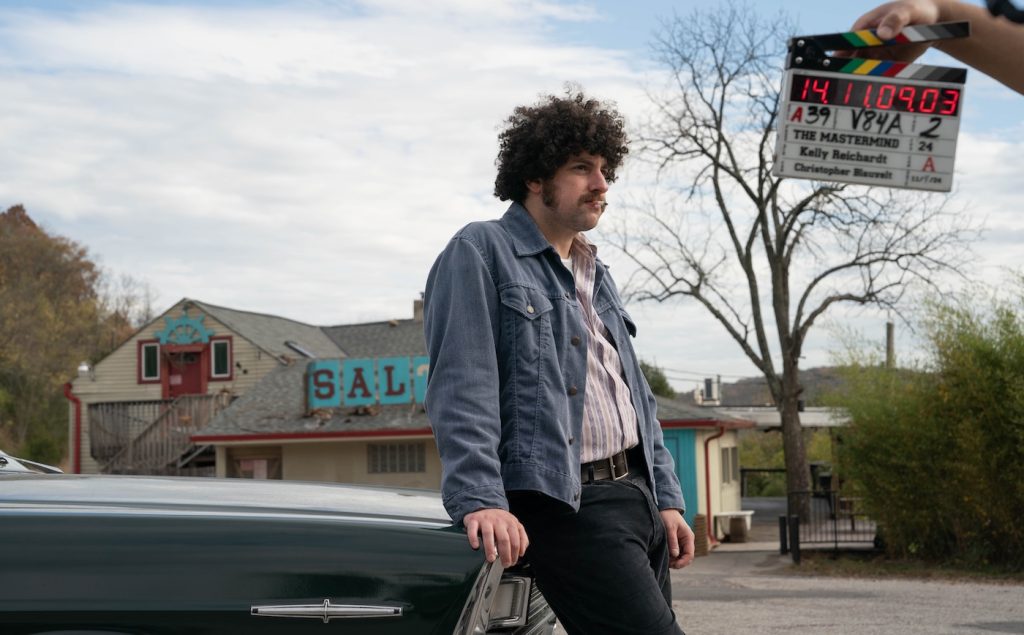
The Alto Knights had a pretty big budget, but you’ve also worked alongside indie auteur Todd Haynes, who made Carol in Ohio, and Kelly Reichardt, who recently shot The Mastermind (set in Massachusetts in the 1970s) in your neck of the woods. What would you like to see in the federal production incentive that might encourage more modest productions?
Our bread and butter here is independent shows, some low-budget and some medium-budget. Those projects often take years to line up financing because an indie film might have ten or fifteen producers. Things change; investors drop in, and they drop out. That’s why the longevity of the federal credits program would really count for a lot. If they pass a national incentive, I hope it isn’t tied to a specific administration. I’d want the program to become something producers can depend on, just as they can depend on Canada’s programs. Their systems aren’t going anywhere. To be effective, this federal production incentive needs a long timeline. Yes, there are some people who move fast and would take advantage of more ephemeral programs, but in general, producers are looking at the long game.
Judging from your resume, it seems you’ve dipped in and out of film work over the years.
As soon as I kind of figured out what I was doing, I started with movies at first. But then I had a bunch of kids, and it just wasn’t working out, so I backed off the movies for a while. One advantage of living in a smaller market like Cincinnati is that you don’t have to specialize. I did a lot of commercials, did broadcast news stuff, did a little bit of sports, and all of that gave me a wonderful palette of skills to draw from. In 2012, around the time my kids were in college, that’s when I really started getting back into the movies again.
You mentioned having “a bunch of kids.” How many?
I have five kids. My son was my boom operator for about 10 years.
Keeping it in the family.
But when the business got shaky, he bailed. He said, “Look, I need to know that I’m working.” It’s a rare breed of people who can survive in this industry with its “chicken today, feathers tomorrow” situation.
Featured image: Writer/director Kelly Reichardt and Josh O’Connor on the set of “The Mastermind.” Courtesy MUBI