Web of Loss: Composer Michael Giacchino on Rebuilding Spider-Man’s Theme Note by Note
Michael Giacchino has scored Spider-Man for nearly a decade, beginning with Spider-Man: Homecoming and continuing through the latest hit in the franchise, the record-smashing Spider-Man: Brand New Day, which is now the fourth highest-grossing movie of all time. Giacchino ensures that the score always grows with Peter Parker (Tom Holland), as Peter grows before our eyes. In the latest chapter of the Marvel franchise, the composer brings a melancholy to the adventure that befits Peter’s isolation as he navigates New York City without the support of his girlfriend, MJ (Zendaya), and best friend, Ned (Jacob Batalon). These two aren’t gone, per se, but they’ve forgotten Peter, a price he had to pay to fix the mess he created in Spider-Man: No Way Home.
At first, though, Giacchino wasn’t certain if he was the right man for the job. There is plenty of new story to tell, with the world having forgotten Spider-Man’s true identity and a mysterious and powerful new foe (Sadie Sink) wreaking some revenge-driven havoc in New York City. Giacchino took some time before leaping in and reflected on where he stood with Peter Parker.
“When I found out they were doing another Spider-Man,” Giacchino told The Credits, “I was like, ‘I don’t know, should I even do this one? I’ve never done four of anything before.’ Kevin said, ‘Meet with [director] Destin Daniel Cretton.’ Immediately I was struck by what he wanted to do. I kept thinking, Spidey’s going to be in a fragile place. All he has is his work essentially. I was like, ‘Oh, that’s a melancholy version of the character. I would love to do that, but they’ll never want to do that.’ Destin was like, ‘Nope, he’s very sad. He’s not happy.’ So, the character is in a place where I was like, okay, I’m in.’”
Once the Academy Award-winning composer was in, he began putting together the “puzzle pieces” of reworking old themes and introducing new characters in the highest-swinging Spider-Man yet.
The score begins with “Web Letter Days.” It’s a fragile, gentle note to kick off a big superhero movie. How’d you land on that note to strike?
I went back to the old theme, and I was like, “Well, what can we do with this?” I started changing some of the chords in the progression. I started removing notes from it, too, to get it to be as simple a thing as I could. The removal of the notes was reflecting the pieces now missing from Peter’s life, like his best friends and his family. I stripped out every note I could until it was just those notes that you hear when the movie starts. It was one of those things we played with throughout the movie. In moments of the film, you get hints of the old Spider-Man when he’s doing something that feels like what it used to be, but it always comes back to the missing notes, the things that are missing. But by the end of the movie, when he sees Ned and all of that, well, I guess I can’t give up.
Given the success of the film, to put it mildly, I think you’re safe talking spoilers.
The idea was to get the theme back into fighting shape by the end of the film. So then it feels like Peter again. But there is one major change in the melody, which is in the second chord, which gives us a slightly different feel. It’s a little bit more mature Peter, a little bit more of a mature Spider-Man, and he’s heading into this new era of his existence. We’ll see what happens after that.
Given how low Pete is in this movie, how else did you want the score to express his inner conflict?
The action stuff here is much harsher than the action stuff I’ve done for Spidey in the past, which was more geared towards fun and adventure. I wanted the action-oriented music to be much more intense. I leaned a lot more into synths and rhythm. There are these kinds of nonstop, heavy, low brass things that would highlight the strength that is trying to emerge from this new version of who Peter’s going to be and all that crazy spider stuff that’s going on inside of him.
The synth work is absolutely new in the sequel.
It’s definitely different, but not so different that you didn’t know where you were anymore. It balances trying to figure out certain themes from the past three movies. Obviously, MJ—how does she fit in there? She doesn’t even know who he is anymore, so can you really play their love theme from the last one?
Which other themes or cues did you rework?
Even the theme that plays at the end of No Way Home, when the spell is cast and they forget who he is, is there when in Brand New Day May (Marisa Tomei) is finally sitting down with Peter, and Jean enters his mind. That theme even evolves, and it belonged to May. It then became Peter’s spell theme that played when they’re all saying goodbye to each other in the last movie. Here, the chord changed and the melody changed. Again, it’s all evolving to hopefully show growth in all of the characters in the story itself and the feeling of what Spider-Man can be beyond where he was after No Way Home.
How’d you approach Jean Grey’s theme?
Jean definitely has her own theme, which is a very simple three-note theme. Each note is half a step off from the others. If you play the three notes at once, it creates a dissonance. But there’s also a way to create a thematic version of that theme. So that was her wrestling with where the good part of her is and where the part that wants to lash out and destroy is.
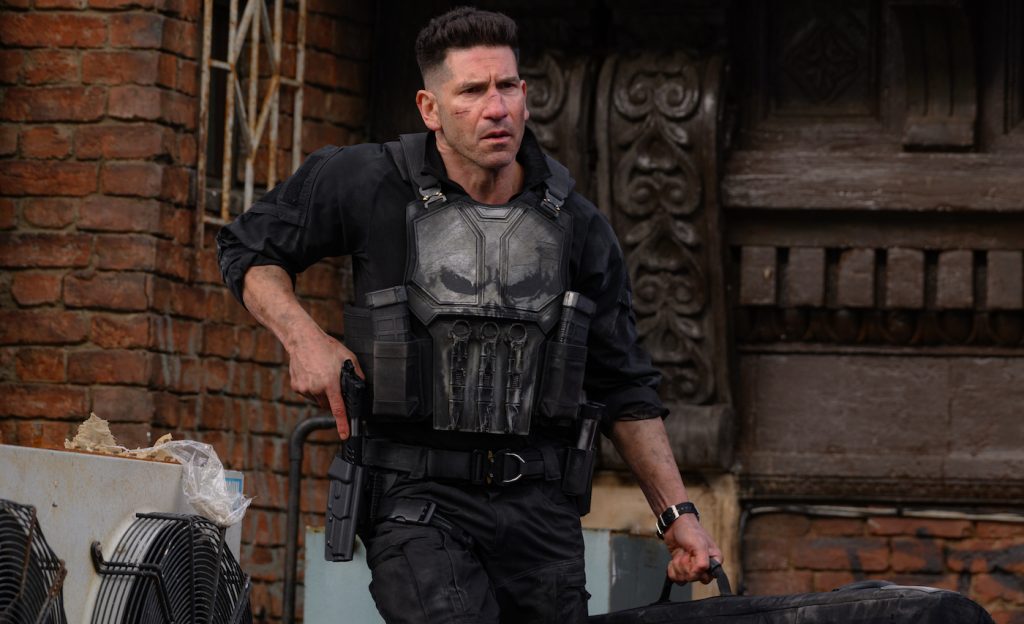
You get to score The Punisher (Jon Bernthal) for the first time, too. What did Frank Castle call for?
The Punisher was more straightforward in terms of what he did. He has an eight-bar theme. Motif is more the word. There wasn’t much real estate to create an entire thing for him. But he definitely has a motif that plays whenever he’s around. It’s sort of a muscular feeling with a twinge of this tragedy that’s mixed in there a bit.
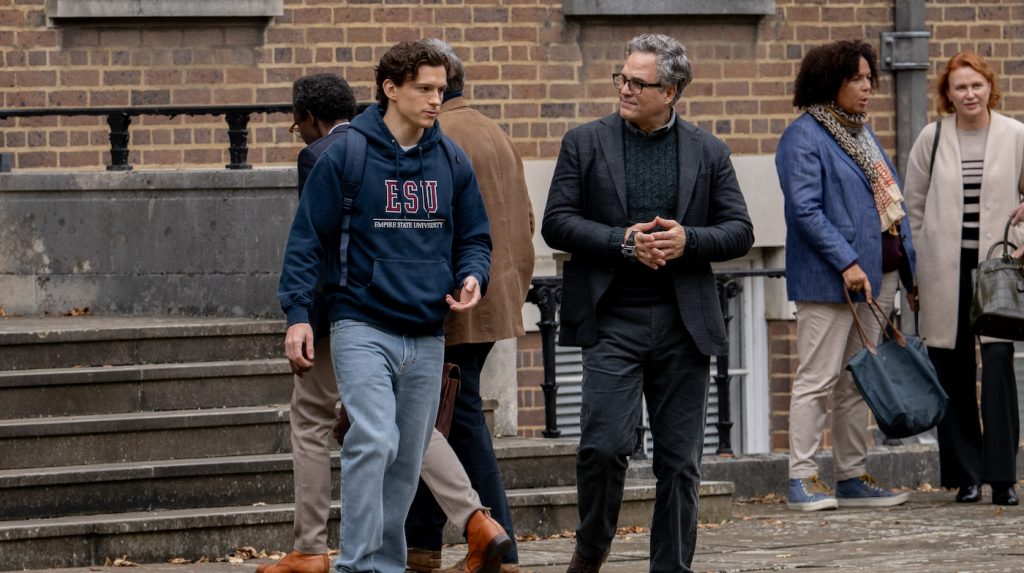
As the director of Werewolf by Night, and a writer of a comic in the series, did Bruce Banner (Mark Ruffalo) transforming into The Hulk have you tapping into your love of monsters and classic horror scores?
Those are always fun. There was no real theme developed for Hulk. It was more tone and what is going to happen next? The Hulk was basically being puppeted through this whole portion of the film. So, if that’s true, I shouldn’t write a theme for him. It should just feel like, “Oh sh*t, this guy’s coming at me, and I have no way to stop him.” That’s how I wanted that whole scene to play out. Otherwise it would be too much to ask – to give themes to every single person, especially. Now, if this were a Hulk movie, 100%, I would lean into that. But it’s still a Spidey movie. POV is very important to me.
You wanted to do a monster version of the Spider-Man theme here too, right?
Oh yeah. There’s a full-on monster version of the Spidey theme. You notice it when he goes back to his room after falling, and there are webs everywhere. It plays during the attack with Scorpion once he just loses it. It shows up in a lot of places when he’s either confused about what is happening in terms of the webs, the new, the organic webs, or the fight with Scorpion. There were a few different versions of Spidey’s theme trying to fit in wherever they could, as he tried to understand what was happening inside him. The music was really doing the same thing to come out at the very end with, okay, here’s where we are now. From here on, this will be the new Spider-Man theme, which is only slightly different from the old one.
Something great about Peter Parker is he fails a lot. In this sequel, he mostly faces disappointment. As a composer very in tune with POV, how much do you draw on your own life experiences when scoring Peter Parker’s life?
Always. The best part of this job is finding things you identify with, because then you can put something truthful into the work you’re creating, and that always makes it better. In the way that good actors rely on their own personal experiences for the part that they’re playing, I do the same thing. It’s important for me to make sure these characters with extraordinary abilities stay emotionally grounded. The most important thing about these films is that you forget the whole hero part and relate to them as people.
Spider-Man: Brand New Day is in theaters now.
Featured image: Peter Parker (Tom Holland) walks through spider webs in Columbia Pictures SPIDER-MAN™: BRAND NEW DAY. Photo by Jay Maidment.