“Hacks” Co-Creator and Co-Showrunner Jen Statsky on Giving “Hacks” the Perfect Last Laugh
Hacks stuck the landing. After five seasons, the series finale closed the curtain on 47 roller-coaster episodes’ worth of show business misadventures by bringing comedians Deborah Vance (Jean Smart) and Ava Daniels (Hannah Einbinder) to Paris for a poignant farewell inside the Louvre. During their visit (spoiler alert, mind you), an ailing Deborah tells Ava she’s got ideas for one more stand-up special, saying “I may not have thirty years, but I think I’ve still got one more hour.” Tears flowed, fans emoted, critics reveled, and Emmy voters recognized the show’s deft blend of pathos and humor by rewarding Hacks with a record-breaking 24 nominations.
“We envisioned the show from start to finish and then actually got to make it that way,” says Emmy-winning showrunner/writer/director/producer Jen Statsky, an NYU film school graduate who met Hacks co-creators Lucia Aniello and Paul W. Downs at New York’s storied Upright Citizens Brigade comedy troupe. Later, while forging a writing career that encompassed Parks and Recreation, Broad City and The Good Place, Statsky kept in touch with Aniello and Downs. “We would talk about this idea, and it just stayed in our brains,” she recalls. “I often find that the ideas worth pursuing kind of tell you when they’re worth pursuing because they don’t leave you alone.”
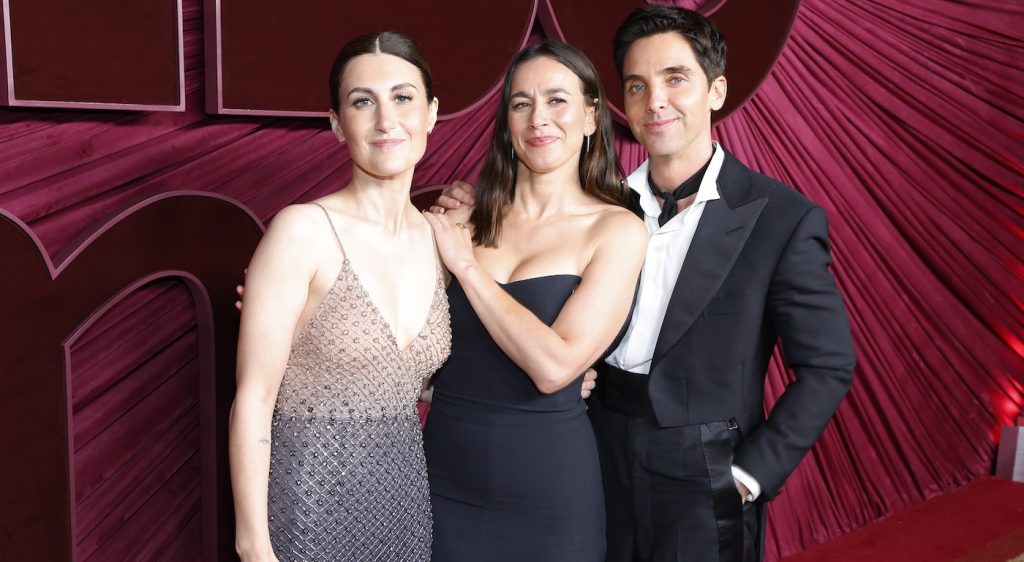
Speaking from her home office in Pasadena, Statsky dives into the episode she directed about AI in Hollywood, explains the show’s consistently brilliant casting choices and makes the case for keeping TV production in Los Angeles.
Hacks earned the most Emmy nominations in history for a comedy series. Are you resting on your laurels?
No, never. Never, never, never.
Hacks is funny as hell, but it can also be seriously smart about deep topics, as we see in the AI episode that you directed. After Ava gives this impassioned speech, she falls off her chair because her skirt is too tight. You guys are very good at undercutting heartfelt moments with a bit of comedy to keep things from getting too heavy. Did you always have that tonal balance in mind?
Well, since day one, we wanted the show to be a comedy first and foremost, but we were not scared of darker, more difficult conversations. Over the years, we’ve dealt with suicide and sexual assault, even up into the finale, which is about dying with dignity. We’ve always strived to make sure that these topics felt organic to what our characters would encounter.
In your AI episode, a tech billionaire wants to license Deborah Vance’s material to train AI programs. Ava argues that AI-generated comedy is bad. Speaking here as a member of Hollywood’s creative community, what are your thoughts on Artificial Intelligence?
What Ava says is very much how I feel about AI in the industry.
Just to recap…
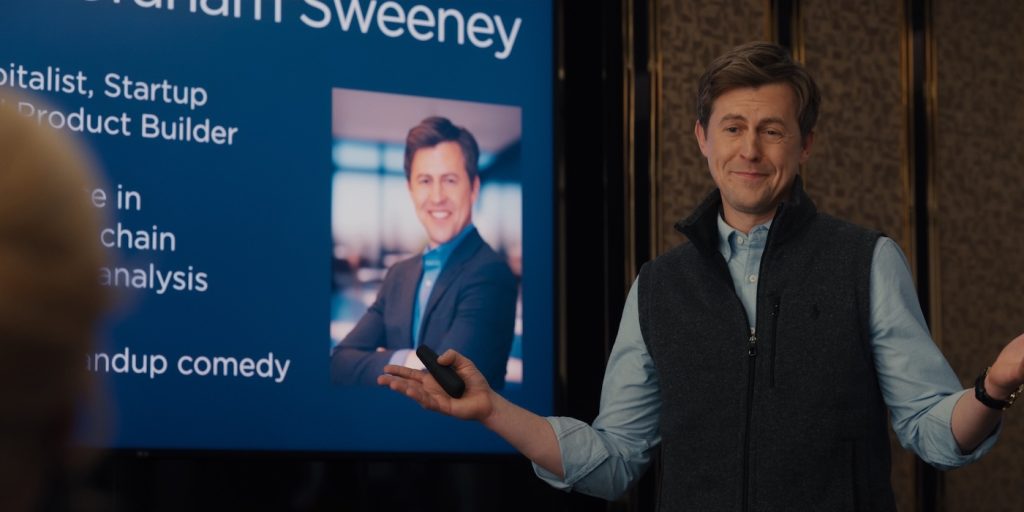
The tech developer, played by Alex Moffatt, tells Deborah, “Soon AI will be so good that you’ll even use it to write jokes,” and she says, “Well, I won’t. I like doing the work myself.” Because for her, you just don’t get the result without the work. And what scares me so much about AI and the creative industry, well, it’s a few things. I think the very act of creation is iterative. It’s about someone having an idea, working it, and figuring out what resonates and what’s true. That process is sacred to Deborah, and I believe it should be sacred to all artists. If there’s a tool where you put in the prompt: “What’s a funny line someone could say about grief?” then you’re not investigating your own soul, your own brain, your own creative personhood. Not to sound too Pollyanna or highfalutin, but the creative process really is a beautiful, sacred tradition that started with people in caves telling stories about bears. There’s beauty in the fact that storytelling connects me, as a human in 2026, to a caveman who lived hundreds and hundreds of years ago. It’s an important fabric of humanity, and anything that threatens that is scary to me.
Well said.
And then the second point I’ll make, after that very long-winded point, is that we’re at a critical time in this industry—and here’s the part I can apply to other industries— where this country is working better and better for the people at the very top and worse and worse for everyone else. When you introduce a tool that can possibly remove humans from the workflow, that means fewer people get paid to do the job, and more people at the top reap the benefits. That’s another reason why AI is really disturbing to me.
You guys filmed the series finale in Paris, and for Season 4, you shot a bit in Singapore, but Hacks is mainly produced out of Los Angeles, right?
Yes. Los Angeles is very much our home base. We’ve also shot a decent amount in Las Vegas over the years but far less than people might think. They’d go, “How long did you move to Vegas for?” And we’d say, “Oh, we just did a week in Vegas.” We are very proudly an L.A. show.
During a period when fewer shows are being made in Southern California, are you mindful of the impact a project of this scale has on the local filmmaking economy?
Definitely. It saddens us that there’s this movement away from Hollywood, and listen—film and TV is expensive, so there is a cost thing—but there needs to be people who are fighting to say, like, “Let’s find those savings elsewhere. Let’s get creative. Let’s do whatever we can to keep production in Los Angeles.” It’s important for the health of the city both on a human level and on a history level.
You experienced a chapter of Hollywood television history early in your career when you wrote for Parks and Recreation. What was that like?
Doing 22 episodes of network TV each season, we shot Parks and Rec at the CBS Radford production lot and wrote the show a two-minute walk from the stages where we shot it. That system worked really well for a long time. As a writer, you’d be on set for your episode, and then you could be in the edit for your episode. It was a wonderful way to learn how to make TV. Now we do half-hours in different ways, Hacks included. We’re more cinematic, shooting more on location, and doing 10 episodes a year. I love that there’s room in the ecosystem for shows like Hacks and also network comedies like Abbott Elementary.
Hacks’ fifth and final season concluded Deborah and Ava’s story in such a satisfying way, just as you, Paul and Lucia imagined it many years ago. Can you just elaborate on the Hacks origins story?
We conceived of the idea for Hacks way back in 2015. One reason we were able to plan a five-season arc so thoughtfully was that from 2015 to 2019, Paul, Lucia and I were working on different things, but every time we got together, which was often because we’re good friends, we would talk about this idea.
The idea being a mature female comedian?
Not just a mature female comedian but also a younger comedian, where they have much to learn from each other, despite the fact that they didn’t want to admit that at first.
Who inspired the Deborah Vance character?
Our very first conversation about Hacks started with us talking about wonderful female comedians that we respected and loved but had never gotten their due because in 2015, in the years before, there had been so many shows about male comedians. We said, like, “Where’s the half-hour show about a female comedian? There was a time when the Phyllis Dillers and the Joan Rivers fought, and they scratched, and they clawed to get to the places they did, so we thought a really interesting lens on that would be to have a much younger comedian who thinks this person is hacky. And it just spiraled from there, but the idea was always about how these two women would crack each other open and make each other better.
The actual craft of doing stand-up comedy is portrayed with a level of detail that feels like the scripts are informed by personal experience. Did you work as a stand-up comedian yourself?
“Work” is an interesting way to say it, because that would imply I got any sort of monetary compensation for it, which I did not. So yes, I did stand up very briefly. I didn’t love it. I just am not a performer.
Well, when you’re Deborah Vance telling jokes to a roomful of strangers, it’s understandable that you’d want the material to be bulletproof. But it takes a while for Ava to appreciate how hard it is to write a good joke.
Very much so. Deborah has this old-school mentality about crafting a joke that Ava learns over the course of the series. In the show’s second episode, they get into it when Deborah tells Ava, “Your jokes don’t have punch lines!”
Deborah scorns Ava’s notebook writings as “Thought poems.”
And then we call that back later in season five when one of the Little Debbies [fans] screams at Ava that her old tweets don’t have punch lines. So yes, Ava’s thought poems damned her for a long time.
Hacks earned nine actor nominations this year, including five in the guest actor category. After the show became a hit, could you pretty much pick and choose your guest actors?
You’d be surprised at how many “no’s” we also still got [laughing]. But we’re definitely lucky in terms of the wonderful actors we’ve had on the show over the years. We sometimes joke that the three of us should start a casting agency because it’s such a joy when you cast an actor, and they bring something to the role where you’re like “I didn’t think the line would be delivered that way, but it’s so much better!”
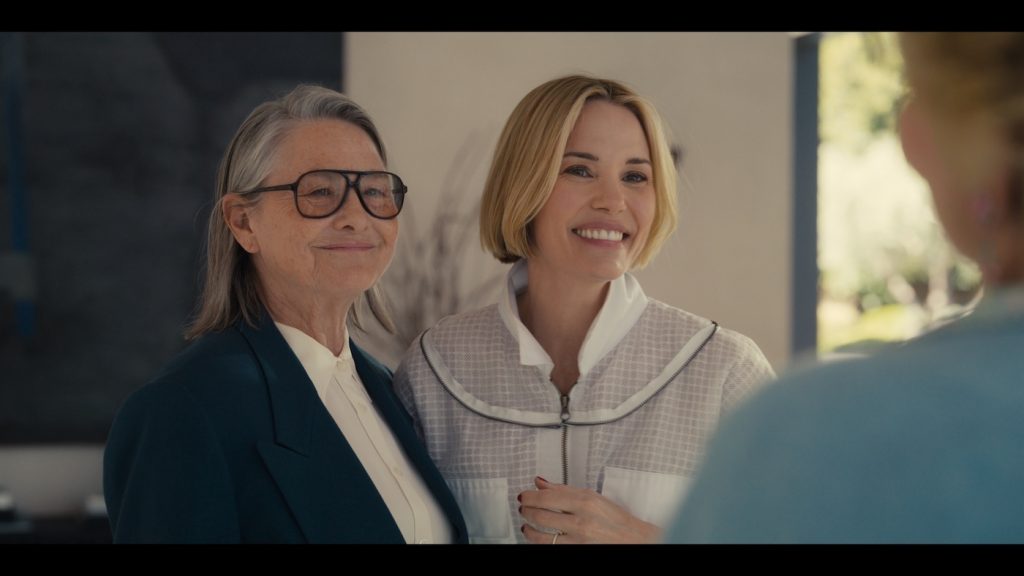
Kaitlin Olson adds so much pathos and hilarity as Deborah’s neglected daughter, DJ.
We were all massive fans of Kaitlin Olson from It’s Always Sunny in Philadelphia, so we wrote DJ for her in a way that was funny but also shows her incredible range. Our favorite kinds of actors are the ones who can make you laugh, and then, two seconds later, they’re making you cry.
Hacks essentially discovered Megan Stalter, who’s now appearing on Broadway, to play the very peppy Kayla opposite Paul Downs’ Jimmy, the agent. Together, they’re everything you want in the way of comic relief. But in the end, it all comes down to the chemistry between Jean Smart and Hannah Einbinder. How did you pair them up?
Jean was already an incredibly accomplished actress when we cast her, while Hannah was someone who’d never acted before, but they both have the thing where they can go hard funny and also be deeply dramatic and emotional. We knew that with the material we gave them, Jean and Hannah would have to walk that tightrope, and they did it in spades.
Featured image: Jean Smart, Hannah Einbinder. Courtesy HBO Max.