Prague Pride: Why the City of a Hundred Spires is Drawing Filmmakers Like Martin Scorsese, Robert Eggers & More
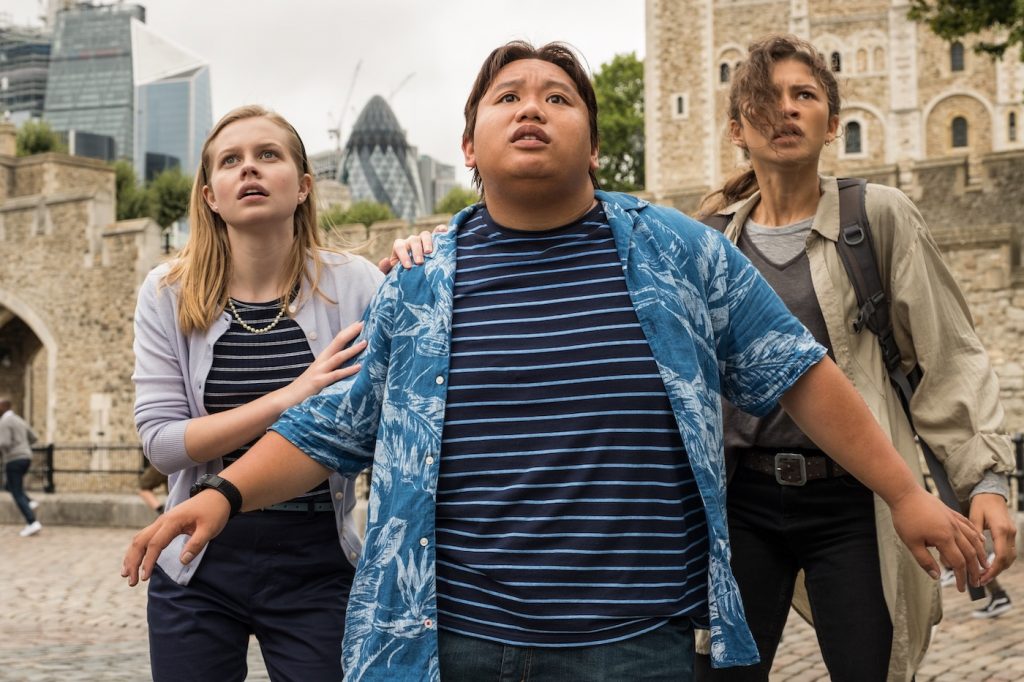
On the big screen, Prague has become the backdrop for everything from Ethan Hunt’s espionage adventures in Mission: Impossible to Spider-Man’s battle with the Molten Man in Spider-Man: Far From Home. Now, with Martin Scorsese and Robert Eggers bringing prestige, star-studded productions all the way to the Czech Republic’s capital city, interest in Prague’s film scene has reached a new peak, motivated by excitement, curiosity, and national pride.
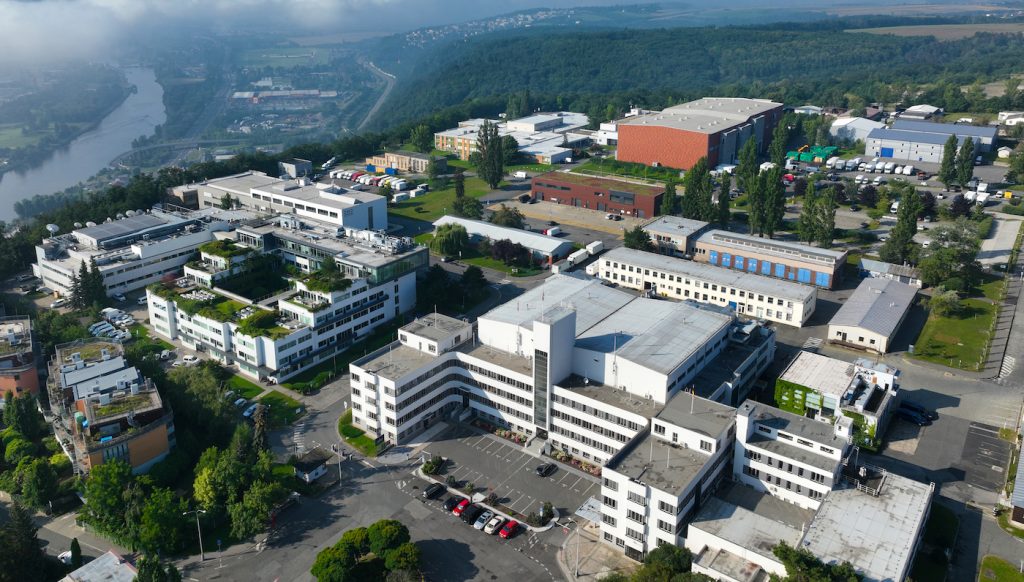
Nestled within the historic city of Prague are top-of-the-line studio facilities, the big three being Barrandov Studios, Jordan Studios, and Prague Studios. “Between all of that, those studios are always full. They each offer a different package of things that attract movies depending on their needs,” Stillking Films head of production David Minkowski says. Barrandov is the largest, oldest, and arguably best-known studio space in the country, most recently adding two new soundstages, bringing its total to 18; Blade Runner 2099, Nosferatu, and Ballerina all filmed there.
When Minkowski joined Stillking, the production company that works directly out of Barrandov’s office spaces, ‘90s productions mainly came to shoot medieval period pieces set in old Europe; Prague is well-suited for period shoots because its architecture is well-preserved after hundreds of years of history. But in recent years, the genre of films shot in the capital city has expanded, Minkowski says: “You can even do stuff set in contemporary U.S. because there’s a lot of very modern development here outside the historical city.”
In addition to Scorsese and Eggers productions filming large portions of their films in Prague, the Oscar shortlist mention for 2024’s Waves in the best international feature category (the first shortlist mention for the country since 2020’s Charlatan) and recent Oscar win for Mr Nobody Against Putin—which Czech Republic co-produced through PINK Productions with the support of the Czech Film Fund, alongside Denmark and Germany—are contributing to a notable moment of growth for the country.
Minkowski spoke to The Credits about the evolution of Prague-based production over the years, the production challenges many European countries are facing due to both the Russo-Ukrainian and Iran wars, and why Czechs are feeling a “sense of pride” following Scorsese’s most recent film, What Happens at Night? which is expected to be released in 2027. This interview has been edited and condensed.
Has the number of productions in Prague grown since the ‘90s, when Stillking was founded?
It’s definitely cyclical; it goes up and down. Production has increased due to a combination of factors. It’s especially been turbo-charged in the age of streaming when Netflix, Apple, and the streamers came into play; suddenly, there’s so much production going on. In the 2000s, bigger studio movies started discovering the attraction of shooting here. We may have gotten action movies that were set in part of this world, like XXX with Vin Diesel, Mission: Impossible — Ghost Protocol, or the first Bourne Identity.
And because Prague is so well preserved, you must get a lot of period pieces…
We also got historical movies that needed historical European locations, but were also big studio movies. It was around that time that they realized the infrastructure and enough expertise were in place to come in and meet all their creative needs. In the 2010s, that’s when streaming came into play, and you started to see a lot more TV, these eight-to-ten-episode streaming series, and even network procedurals. In between these periods, there were slowdowns due to strikes and COVID, or when tax credits were put on hold for financial reasons. But by and large, I think we can say that from decade to decade, there’s been more production.
That’s very exciting. How big is the team you work with? Are they all Prague-based?
When production started coming here from the U.S., the U.K., and elsewhere, productions tended to bring in a lot of people because the local expertise wasn’t here. You might have seconds and third [units] here, but you might not have heads of departments and key crew; on the bigger shows, over 100 people could come on a show [from outside the Czech Republic]. With training and experience, those numbers have started to decrease, as we now tend to always provide heads of department, to some degree, depending on the show.
Having local crews capable of working on these large-scale films must be crucial.
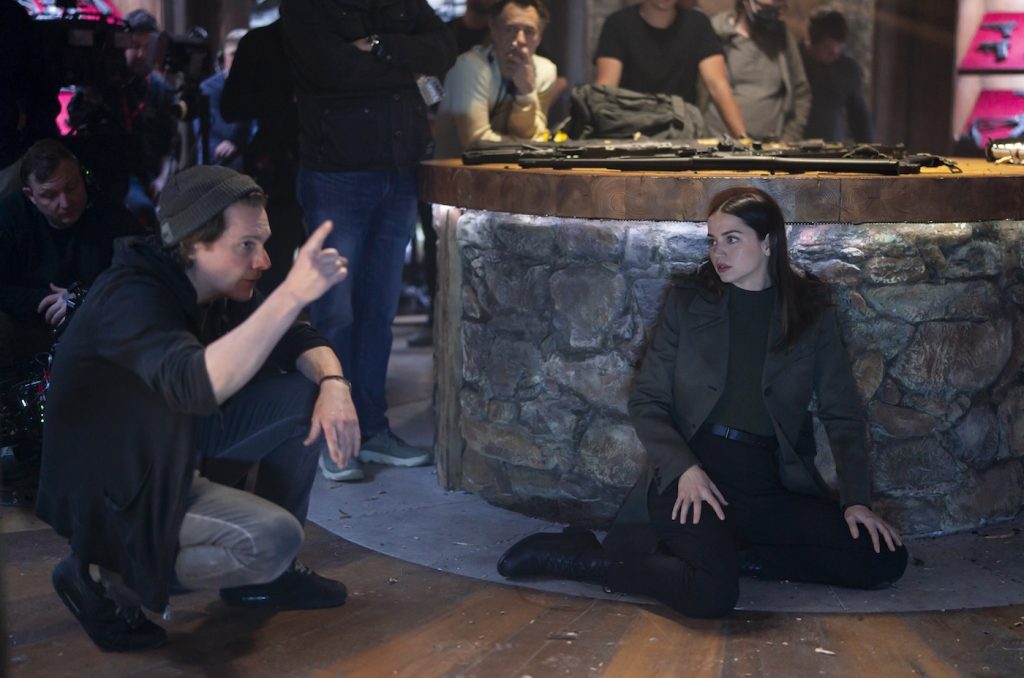
Having a local crew and cast is a huge factor in making these shows and movies successful. There’s been a real development of crew experience, knowledge, and creative talent. As more movies come in, local entrepreneurs and craftspeople start to invest themselves — that could be anything from bigger enterprises like studios and stages, to more suppliers, whether it’s caterers, equipment, or trailers. You start to build a community.
How would you assess the current state of production in Prague, especially compared to other European countries? What makes a production want to film in Prague?
We began doing movies, and now it tends to be more about TV since there’s just more being made. The trend over the last six years has been more production wanting to come here than can actually fit—Prague is not the biggest city in the world, its infrastructure is limited. But what we’ve seen is that it can really grow to meet the demand. Every year, it surprises me how the crew develops and expands, and how more stages are built to meet the demand. Surprisingly to me, even in a small city like ours, compared to New York, Los Angeles, or London, the amount of production we can handle is large.
Why do you think that is?
Because it’s such a nice city to be in, people like to come here. They can have a quality of life while they’re here working, especially with talent. If you’re an actor away from home and you have to go for six months on a TV series, you’d like to be here! It’s a beautiful city; it’s a safe city. There’s lots to do here culturally, with restaurants. People are very comfortable here. If you can creatively make your project here, people will try to do so. And Prague can work for many different kinds of stories, which is why we get such a range of stuff coming in. You can even do stuff set in contemporary U.S. because there’s a lot of very modern development here outside the historical city. You have great studios, crew, and all the support infrastructure that comes with that.
I don’t blame actors for loving Prague. The history preserved in the city is so incredible. Are productions primarily filming on location, or are they coming to the studio spaces at Barrandov?
It’s really a combination. Most shows honestly do a bit of both. If it’s a series, a show will have three to four stages, maybe more, and they’ll have location work, so the schedule might be 60-40 in terms of location and stage. Occasionally, you get a show that’s 100% stage, and they’re just looking for a good place to build, and then sometimes you get a show that’s 100% location, they want to be on the streets. It’s really driven by the script.
What are some of the biggest benefits of filming in Prague when it comes to tax incentives and the country’s Audiovisual Fund?
We have a very competitive tax incentive or credit. You can always tax credit shop and find a better one — somebody can always say, “Oh, Australia has 5% more.” You can always find a stronger one somewhere, and they’re always changing from year to year. But in principle, those here in the Czech Republic are stable and offer good value. Labor costs here tend to be less than in other countries west of here. Prague is not the cheapest country in Europe, but it’s good value for the quality of what you will experience here. It’s this combination of effects. People aren’t always just looking for the cheapest place to shoot something.
As a European country, what challenges have you faced due to rising costs caused by the Russo-Ukrainian war? How have you overcome these challenges and found creative solutions to keep production growing?
We’ve definitely been hit by inflation. In recent times, there were two huge shocks to our system — the first was the Ukraine and Russia war, because a lot of the natural resources that we get in Prague came from Russia; lumber for construction and building sets came from Siberia; and gas, as everybody knows, was supplied by Russia. All of those things were suddenly turned off when the war started, and the country as a whole began looking for them elsewhere. The inflationary effect from that alone was massive and affected all of Europe. The cost of food, utilities, and fuel rose, and so did salaries because people needed to be compensated; otherwise, they couldn’t live. Now it’s happening again with what’s going on in Iran.
And this will have trickle-down effects, of course, for production?
This is not going to kill production, but it’s just weird things you suddenly realize are dependent on raw materials that suddenly aren’t shipping. Even shipping, in general, is totally disrupted by these wars. If we’re having a container shipped of something we bought from China or Asia, it can’t get here now, or it costs twice as much. We do our best to mitigate it, but this is a reality of what’s going on. Interestingly, connected to that is the whole concept of sustainability, which is a really big thing everywhere. We’re trying to catch up with that and be as aggressive as they might be in other countries like the U.S., Canada, or elsewhere. Electrifying production in terms of getting EVs and solar-powered trailers, that’s all coming here too. That protects you to a certain degree, or starts to protect you a bit, from these ongoing events. These are positive developments that are forcing the industry to change and become more responsive to sustainability.
Finally, the new Scorsese film (starring Leonardo DiCaprio and Jennifer Lawrence), which was recently filmed in Prague, has put a huge spotlight on production here and gotten people interested. What is the attitude among Czechs like?
Czech society was very excited. You could feel that the city and the country loved having them here and took pride in being able to welcome them. Generally speaking, having American and international movies come here is well appreciated and well liked by people from all walks of life. They find it exciting, they find it a source of pride that they can host movies of that scale and quality, and have such legendary performers come here.
Featured image: (l-r.) Director Robert Eggers, actor Emma Corrin, director of photography Jarin Blaschke and actors Lily-Rose Depp and Aaron Taylor-Johnson on the set of their film NOSFERATU, a Focus Features release. Credit: Aidan Monaghan / © 2024 FOCUS FEATURES LLC