Casting the Revolution: Margery Simkin on Finding an All-Star Barnyard for “Animal Farm”
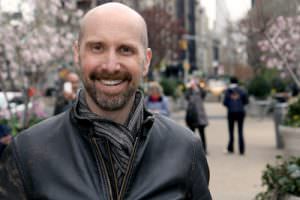
Casting director Margery Simkin is so passionate about people’s “essences” and the distinctive qualities of their voices that I can’t help asking her who she would cast me as in her latest project, an animated adaptation of George Orwell’s political fable, Animal Farm.
I would be joining the movie’s deep bench of heavy-hitters, including leads Seth Rogen and Gaten Matarazzo, Glenn Close, Woody Harrelson, Kathleen Turner, and Jim Parsons.
“Your voice is a little laconic-sounding,” Simkin reflects, “Maybe the drunk farmer?” I don’t drink a lot, but I know immediately that she’s spot-on.
Simkin feels no need to flatter me or, in general, keep up appearances. During a SAG-AFTRA masterclass, she cheerfully recounted lying to get her first casting job and revealed that, amazingly, she’s never worked for another casting director, instead making it up as she went along. When I ask her about the new Academy Award for casting, she observes wryly, “We all got invited to a lot more things.”
Since that first casting job (she lied at the behest of a friend, who bailed for a better gig), Simkin has probably cast at least one of your favorite movies or TV shows during her 40-plus-year career. Think: Beverly Hills Cop, Mermaids, Erin Brockovich, Avatar, Star Trek: Strange New Worlds, Blue Eye Samurai, just for starters.
To cast Animal Farm, she once again went her own way, using a technique that she invented specifically for animated projects. “There weren’t really auditions,” she says. Instead, Simkin combed the Internet for actor interviews, especially what she calls “couch interviews” – late-night talk show appearances.
“You get people telling stories, and usually, they are telling an entertaining story, so you see humor and hear their sound, and sometimes they do other sounds,” she explains. “There’s an energy to it that I find very useful.”
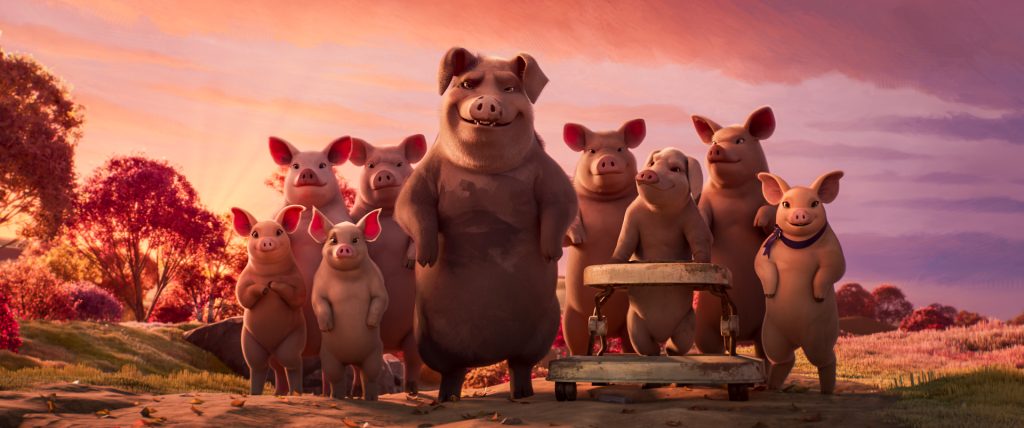
Simkin submitted batches of clips to Animal Farm director Andy Serkis, a polymath talent best known for his award-winning performance-capture roles, including his legendary turn as Gollum in the Lord of the Rings trilogy.
Simkin was drawn to Animal Farm in part because of Orwell’s “never not timely” story of the catastrophic perils of political personality cults. (Orwell had Joseph Stalin in mind; without saying so, the film clearly aims at Trump.) In the book, a group of barnyard animals, led by the pigs Napoleon and Snowball, revolt and depose their abusive human owner. They briefly live in a communist paradise until Napoleon, corrupted by power, terrorizes his political opponents into submission, embezzles from the farm for himself and his fellow pigs, and ultimately colludes with humans to re-enslave the animals.
That said, Simkin may have been even more drawn by the opportunity to work with director Serkis.
Having cast the performance-capture blockbusters Avatar, Avatar: Fire and Ash, and that series’ upcoming fourth installment, Simkin says she was already “in awe” of Serkis. He also had a reputation for being a joy to work with. That proved true.
Says Simkin, “He is so open-minded and you see that – we have male roles like Benjamin [a cynical donkey skeptical of all political -isms], who is voiced by Kathleen Turner. Andy had sounds that he wanted, but beyond that, we could all let our imaginations roll.”
One of the hallmarks of Serkis’ Animal Farm–the third film adaptation of the novel–is how it plays with gender. In Orwell’s story, Mr. Pilkington is the opportunistic capitalist villain. In the new film, the character is the slick corporate overlord Frieda Pilkington, voiced by a delectably evil Glenn Close. The character of Snowball, based on the communist revolutionary Leon Trotsky, is played by transgender actor Laverne Cox.
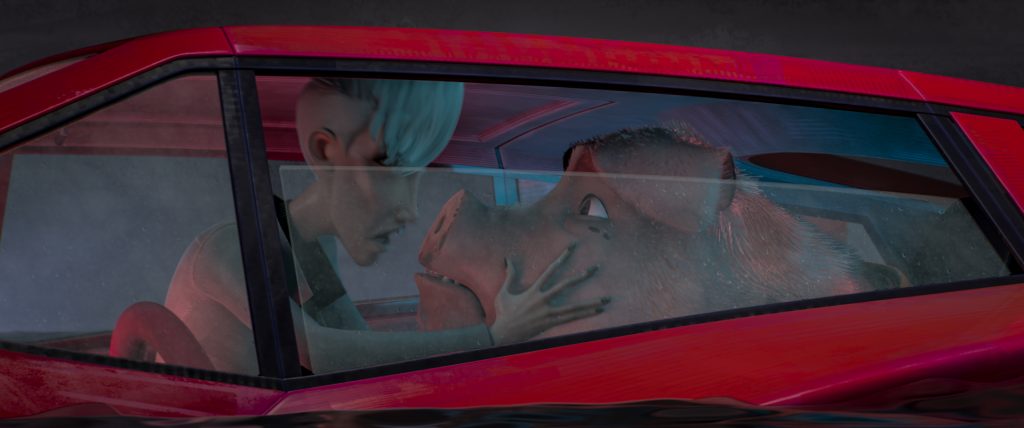
“I feel like Glenn did an unctuous capitalist that felt fresh. The southern woman, the steel magnolia,” Simkin says with a laugh. Cox as Snowball has “a warmth to her along with her strength, which is, for me, audibly very interesting.”
Simkin won’t have to ask twice if she wants to work with Serkis again. “He’s so appreciative, which sounds normal but isn’t always. He’s now on the list – Terry Gilliam, James Cameron, there’s a bunch of people I feel very lucky to have worked with, and I would do anything for them, and he’s in that group now,” she says.
Simkin, who casts the highly acclaimed 2023 Netflix anime series Blue Eye Samurai (a second season is in production), actually sidestepped animation projects for years, not for lack of offers. It didn’t rhyme with her whole idea of casting.
“Part of my [live action] process is the physicality of an actor and matching their physicality to something that is viable for that written character. It’s also their performance and their essence, and all kinds of other things come into play with that,” she says.
By contrast, on an animated project, a casting director matches an actor to an existing image. “You look at the character – I sort of prop them up on my desk, and I think, Does that work? Does that make sense?” she says in a dubious tone. “When you listen to voices by themselves, they sometimes tell different stories than the whole package.”
Simkin now has a different understanding of the power of a voice in isolation. “That whole thing of ‘They’re an actor, and they can do everything,’ I don’t think is true. ….There are certain bodies that certain voices just can’t come out of. I’ve come to appreciate the limitation of the animation.”
Within those limits, however, Simkin found a liberating logistical freedom. “The wonderful thing about animation is that pretty much no one is never not available. You’re not worried about their other projects – if they say yes, you can always find a day to get them into a booth, no matter where they are in the world,” she says with excitement. “During the pandemic, you could even send them kits, and they would go into their closet and have a director on an iPad.” As a result, “Animation gives you this enormous flexibility to do the thing that you always do at the beginning of a project, which is just bat ideas around.”
With the tractor beam of Rogen’s and Serkis’ star power in place, Simkin knew that finding great actors who wanted to work on Animal Farm wouldn’t be the issue—getting through to them would be.
“We had to be persistent,” she says. “Animation is not that big a payday for them—sometimes for some of the reps, this isn’t the top-of-the-pile thing. Or actors don’t want to look at other material when they’re shooting, and you have to figure out when they’re going to be out. Woody [Harrelson], everyone in his life has to be persistent to get a hold of Woody!” (In 2024, the actor revealed that he doesn’t have a cell phone).
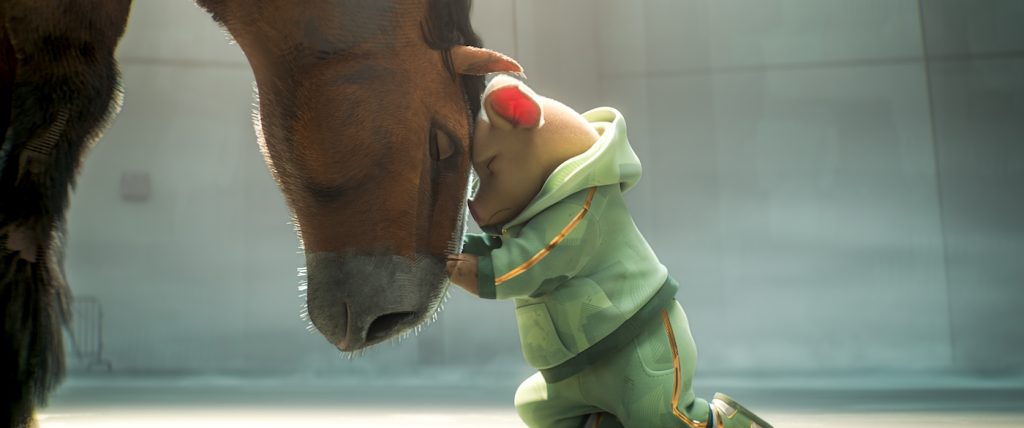
An easier ask was Gaten Matarazzo, who plays a new character, Lucky, a young pig who initially has faith in Napoleon but ultimately topples his regime in a spectacular and very unexpected finale (Orwell’s story is not so hopeful). Matarazzo had participated in a reading of the project, and Serkis knew he wanted the young star for the part.
“Lucky is us,” says Simkin, “Gaten has a very unique sound and a sweet innocence about his sound. He’s incredibly likable. That was key.”
In our interview, Simkin’s own voice conveys her obvious likability – a vehicle for her humorous forthrightness that she agrees has played a role in her success. “I do think that the directors and agents and managers I work best with do appreciate [forthrightness]. We are all busy – especially directors during prep for a film! – so it helps to cut to the chase,” she says. “And thanks for saying forthright instead of blunt. Much nicer word!”
Animal Farm is in theaters now.
Featured image: “Animal Farm.” Courtesy Angel.